The Lost Continent (1968) ***

Hammer had struck gold revisiting ancient civilization in One Million Years B.C. (1966) and with its adaptation of Dennis Wheatley’s The Devil Rides Out (1967). The Lost Continent was another Wheatley number (source novel Uncharted Seas) mixing dangerous voyage, hints of the legendary Atlantis, and monsters. While the first half could have been marketed as The Wages of Fear At Sea the second half would come under the heading  “The Greatest Oddball Film Ever Made.”

It boasts one of the most intriguing setting-the-scene openings not just of a Hammer picture but of any film – a camera pans along a steamship on whose deck are: people dressed in furs, others in modern clothing and – Conquistadors. Attention is focused on a coffin.  How and why they got there is told in flashback. A first half of taut drama, mutiny, sharks, a ferocious octopus, and lost-at-sea a thousand miles from land segues into sci-fi with carnivorous weeds, monsters, and a weird, weird world.

It’s hard to know what’s worse, Captain Lansen (Eric Porter) with a cargo of toxic chemicals made combustible when touched by water or the equally combustible passengers all with murky pasts, so determined to escape their previous lives that they refuse to turn back in the face of a hurricane. Heading the Dodgy Half-Dozen is dictator’s mistress Eva (Hildegarde Knef) with two million dollars in stolen securities and bonds. Dr Webster (Nigel Stock), a back-street abortionist, is at odds with daughter Unity (Suzanna Leigh), who has cornered the market in backless dresses. Harry (Tony Beckley)  (The Penthouse, 1967) plays a conman while Ricaldi (Ben Carruthers) is trying to recover the pilfered bonds.

But the arrival of cleavage queen Sarah (Dana Gillespie) as an escapee from the weird world signals a shift to Planet Oddball. The only way to navigate the weeds trapping the ship is with a primitive version of snowshoes with balloons attached to the shoulders. Soon they are trapped in the past, not as prehistoric as One Million Years BC (1966), just a few centuries back to the Spanish Conquistador era. The film steals the idea from the Raquel Welch picture of giant creatures locked in battle but without going to the necessity of hiring Ray Harryhausen.

You couldn’t legislate for the movie’s logic and you shouldn’t even try, just go with the weird flow. It’s on safe enough territory until like The Hangover (20090  it has to explain the bizarre opening sequence. If ever a film has bitten off more than the special effects can chew, it’s this, but it’s still fun watching it try.

The casting relied heavily on actors best known from television or rising stars. Eric Porter was straight from BBC television mini-series mega-hit The Forsyte Saga (1967). Nigel Stock essayed Dr Watson in the BBC Sherlock Holmes series (1964-1968). Falling into the emerging-star category were:  Tony Beckley (The Penthouse, 1967), Suzanna Leigh (The Pleasure Girls, 1965) Neil McCallum (Catacombs / The Woman Who Wouldn’t Die, 1965), and Dana Gillespie (Secrets of a Windmill Girl, 1966). Hildegarde Knef (Mozambique, 1964) was just about the most experienced.

In this kind of picture, without being sexist about it, if a woman is required to do more than just scream, it often indicates she has the better part. And so it is here. Leigh and Knef hog the dramatic highlights while Gillespie, courtesy of her outfit and footwear, can’t help but steal the show.

On board ship, director Michael Carreras, fresh from Prehistoric Women (1967), does well, the characters are all solidly presented with decent back stories, but once he enters weird world budget deficiencies sabotage the picture. Even so, it’s worth a look just to see what you’re missing. If you’re looking for a genuine freak show, this ticks the boxes.

Beach Red (1967) ****

Strangely neglected in part I guess because the violence is countered by humanity. Despite the visceral images it lacks the narrative drive of a World War Two picture like The Dirty Dozen (1967), Cross of Iron (1977), Saving Private Ryan (1998) or Inglorious Bastards (2009). But the violence removes it from arthouse consideration when, in fact, the unusual combination and the cinematic techniques involved suggest it is ripe for reassessment.  

There’s nothing particularly different about the storyline. Bunch of U.S. grunts land on a Philippine island occupied by the Japanese. The rookies are caught between caring  commander Capt MacDonald (Cornel Wilde) and the uncaring tough Sgt Honeywell (Rip Torn). Some live, some die.

What was unusual for the time was the intensity of war. You can just imagine Steven Spielberg watching this to see how to out-do its 30-minute opening sequence when he came to film the D-Day section of his film. Where Spielberg placed more emphasis on sound and had the budget for more gruesome special effects, nonetheless director Cornel Wilde serves up the most brutal conflict of the decade.

From the outset, however, Wilde gets inside the head of the terrified soldiers. Some are just so scared they collapse on the sand and are unable to move.  Told to fix bayonets, Cliff (Patrick Wolfe) is traumatised at the fear of being bayoneted himself. But, intriguingly, most of what we learn about the soldiers comes not from dialogue but internal monologue, as their minds are bombarded with memories of better times, wives, girlfriends and children left behind.

There’s also the stupidity of the inexperienced. The hapless Cliff shoots a Jap without realizing he had just been captured by Sgt Honeywell who had been sent on a mission to secure an enemy soldier for Capt MacDonald, with the aid of a Japanese-speaking soldier, to interrogate.

The captured soldier’s arms have been broken by Honeywell, not simply to incapacitate him, but out of brutal intent. The sergeant has no struck with MacDonald’s humanity, it’s kill or be killed, “It’s him or you, baby,” is his mantra.

But for director Wilde, the enemy is not faceless. And he spends far more time than any other even-handed director of the era in ensuring the Japanese are seen as first and foremost as human beings with the same feelings as the Americans, staring at photos of their beloved, or accorded brief flashbacks where they are shown laughing with their children, loving their wives, one caught in such a reverie being humiliated by a furious commanding officer.

What in a more ordinary war picture would be deemed a piece of flagrant sentimentality, wounded rival soldiers sharing water and cigarettes, here takes on another dimension, as each recognizes in the other their common humanity.

Nor are the women window dressing. Cliff desperate to lose his virginity before going off to war has to contend with a frightened girlfriend. MacDonald recalling an intimate moment with wife Julie (Jean Wallace) remembers mostly her fear that she will be left a widow.

And the director is not above irony. The Japanese, initiating a clever rearguard maneuver to  catch the Americans off-guard, are slaughtered on the same beach as had originally been taken by the landing troops.

In some respects, the director’s vision is compromised by critical reaction. Less of the violence, concentrating more on the thoughts and memories of the soldiers on both sides, and it would have been hailed as visionary. But the violence was viewed in many quarters as driven by commercial imperative, this being the year when screen violence (the spaghetti westerns, The Dirty Dozen, Bonnie and Clyde) ignited controversial debate.

Because of that, Wilde’s many stylistic innovations went unnoticed. He makes superb use of stills, flashbacks detailed in a series of photographic montages rather than moving images. And there’s a technique I’ve never seen before where the director focuses on a face only for it to dissolve within the frame, rather than the whole frame dissolve as would be the norm to indicate transition. And life goes on even as soldiers rampage, every now and then insects are shown in close-up going about their ordinary business regardless of the conflagration all around, their worlds too tiny to be overly disturbed.

In his directorial capacity Wilde  (Sword of Lancelot / Lancelot and Guinevere, 1963) indicates intention with the theme song. Rather than the stirring music to which we are usually accustomed, this is a lament (sung, incidentally by his wife, Jean Wallace).

As well as acting and directing, Wilde had a hand in the screenplay along with previous collaborators Clint Johnson and Don Peters who both worked on Wilde’s earlier The Naked Prey (1965)

As much as we are struck by the intensity of the performances by the thoughtful and often glum Wilde, the rapacious Rip Torn (Sol Madrid, 1968) and the bewildered Patrick Wolfe (his only movie appearance and, incidentally, son to Jean Wallace from her first marriage to Franchot Tone), this is a director’s picture and easily stands comparison with the quartet of classics mentioned above.

The title, while indicative of slaughter, had in reality a much more prosaic meaning. The U.S. Army had the habit of assigning colors to differentiate between certain sections of beaches scheduled for invasion. This could as easily have been entitled Beach Blue or Beach Yellow but you have to concede Beach Red has a certain ring to it.

Definitely worth watching.

The Long Ships (1964) ***

Decent hokum sees Vikings ally with Moors to seek a mythical giant bell made of gold, “the mother of voices.” There are stunning set-pieces: a majestic long ship coming into port, superior battles, the Mare of Steel, the discovery of the bell itself, while a clever ruse triggers the climactic fight. There’s even a “Spartacus” moment – when the Vikings declare themselves willing to die should their leader be executed.

Rolfe (Richard Widmark) is the wily Viking, second cousin to a con man, demonstrating his physical prowess although he does appear to spend an inordinate amount of time swept up ashore after shipwreck. Moorish king Aly Mansuh (Sidney Poitier) is his rival for the legendary bell.  The diminutive Orm (Russ Tamblyn), Rolfe’s sidekick, appears to be in a constant athletic duel with the Viking.

Although handy with a sword, both are equally adept at employing seduction, Aly Mansuh making eyes at Viking princess Beba Loncar (in her Hollywood debut) while Rolfe targets Poitier’s neglected wife Rosanna Schiafffino (Two Weeks in Another Town, 1962). The story is occasionally put on hold to permit the Viking horde to pursue their two favorite pastimes – sex and violence – and they make the most of the opportunity to frolic with a harem.

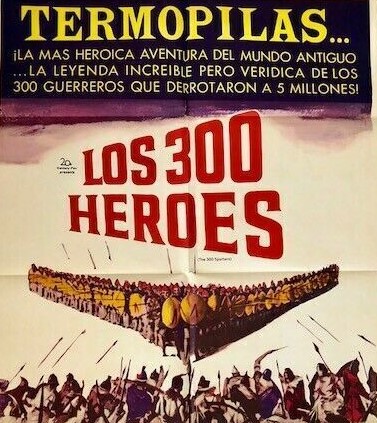
One of the marks of the better historical films is the intelligence of the battle scenes. Here, faced with Muslim cavalry, the Vikings steal a trick from The 300 Spartans by lying down to let the horses pass then rising up to slaughter their riders. But there is also an unusual piece of intelligent thinking. Realising, as the battle wears on, that they are substantially outnumbered and have their backs to the sea, Widmark takes the sensible option of surrendering.

Richard Widmark (The Secret Ways, 1961) makes the most of an expansive role. Instead of seething with discontent or intent on harm as seemed to be his lot in most pictures, he heads for swashbuckler central, with a side helping of Valentino, gaily leaping from high windows and engaging in swordfights. Sidney Poitier (Duel at Diablo, 1966), laden down with pomp and circumstance rather than immersed in poverty as would he his norm, is less comfortable as the Islamic ruler. (Widmark and Poitier re-teamed in The Bedford Incident, 1965, also reviewed in the blog.)

The puckish Tamblyn (The Wonderful World of the Brothers Grimm, 1962) almost steals the show. Both Loncar and Schiaffino have decent parts.

Director Jack Cardiff, Oscar-nominated for Sons and Lovers (1960), brings to bear his experience of working on The Vikings (1958) for which he was cinematographer. He is clearly at home with the action and equally there is some fine composition. However, the story in places is over-complicated, and he fails to rein in the mugging of one of the industry’s great muggers Oscar Homolka (Joy in the Morning, 1965) and there is a complete disregard for accent discipline.  Edward Judd (The Day the Earth Caught Fire, 1961), Scotsman Gordon Jackson (The Great Escape, 1963) and Colin Blakely (The Private Life of Sherlock Holmes, 1970) have supporting roles.

Berkely Mather (Dr No, 1962), Beverly Cross (Jason and the Argonauts, 1963) and, in his sole movie credit, Frans G Bengtsson, collaborated on the screenplay.

Good fun and great to see Widmark and Poitier turning their screen personas upside down.

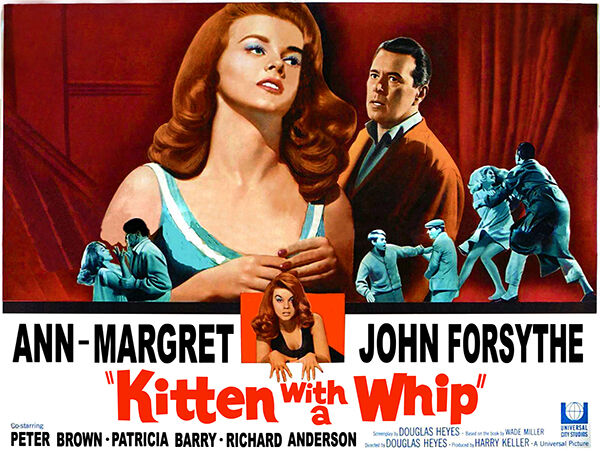
The Groundstar Conspiracy (1972) ****

Gripping thriller that set up the template for the decade’s later conspiracy mini-genre exemplified by The Conversation (1974), The Parallax View (1974) and Three Days of the Condor (1975). Under-rated compared to that trio, and considerably less cinematically self-conscious, it nods in the direction of The Manchurian Candidate (1962), The Mind Benders (1963) and Seconds (1966) while clearly influencing Memento (2000), The Bourne Identity (2002) and Inception (2010).

Touches on themes of surveillance, brainwashing, amnesia, invasion of privacy and government control,  and for good measure may even have invented water boarding. Brilliantly structured with superb twists right to the end and peppered with red herrings. Audiences these days will be more easily misled than back in the day by references to an alien. Innovative and extensive aerial footage, and like Figures in a Landscape (1970) helicopters play a major part in pursuit.

A series of explosions at a secret government facility kills six men. One other, Welles (Michael Sarrazin), badly disfigured, escapes, potentially with vital secrets. Security chief Tuxan (George Peppard) leads the investigation. From the off the case is shrouded in mystery, not least because Tuxan refuses government high-ups access to the site and the ongoing probe, instead relying on government PR man Carl (Cliff Potts) as a conduit.

Of course, if Welles was innocent he’d hand himself in rather than running away to the house of Nicole (Christine Belford).  Naturally, although she calls an ambulance, she is deemed guilty, too, for providing just too handy a hideout. Under extreme interrogation, Welles, claiming complete amnesia, refuses to talk.

Without the benefit of a trial Welles is shipped out to a maximum-security unit but the transportation is driven off the road and he escapes, returning to Nicole. Passion ensues, but even she, conceivably from the audience perspective a government plant, fails to elicit much information from him beyond that he speaks Greek and had some unnamed life-changing experience in that country, possibly involving water.

Turns out Welles is bait. Tuxan has arranged the escape. Nicole’s house is bugged – for sight and sound and nobody has the decency to cringe when watching the couple make love. Tuxan reckons that at some point Welles’ co-conspirators will surface. But when they do, they are a good bit smarter than Tuxan anticipates. The plot thickens when, even to them, Welles sticks to his story of being an amnesiac.

And the plot continues to twist and turn right to the very end which contains a just fantastic twist, two actually. Audiences these days more accustomed to the clever climax might guess the twist, but I really doubt it.

By this stage both George Peppard (Rough Night in Jericho, 1967) and Michael Sarrazin (The Sweet Ride, 1968) were finding a perch at the top of the Hollywood tree hard to hold onto, the fact that the movie, not notably highly budgeted, featured two supposed top stars proof of that. But it wouldn’t work unless Welles was played by an actor whose screen persona would make an audience both question his innocence and guilt. Sarrazin wouldn’t be the first actor to play on audience expectation to portray a bad guy.

In fact, both are excellent. Sarrazin is able to drop the fey aspect of his character and the narrative helps enormously, puzzlement and confusion an ingenious assist, to depict him as a person of more depth. The disfiguring of a handsome movie idol shifts audience expectation from the off.

I’ve become a bigger fan of George Peppard than I ever imagined after watching a series of quite different portrayals that tossed around his screen persona from The Third Day (1965) through The Blue Max (1966) and the unsettling mystery trilogy of P.J / New Face in Hell (1967), House of Cards (1968) and Pendulum (1968).

Directed with considerable assurance and occasional elan by Lamont Johnson (A Covenant with Death, 1967), this avoids the cinematic indulgence of  The Conversation (1974), The Parallax View (1974) and like Three Days of the Condor (1975) sticks more to narrative. Water, more normally associated with tranquility, takes on a disturbing quality. Sometime writer-director Douglas Heyes (Beau Geste, 1966) discarded half that hyphenate to turn in a slick screenplay based on the bestseller by Leslie P. Davies.

Minor gem.

Act One (1963) ****

Highly enjoyable and surprisingly good. Could be viewed as a companion piece to Two Weeks in Another Town (1962), swapping movies for Broadway. I have to confess I had only seen the writing team of George S. Kaufman and Moss Hart in the context of movies – Frank Capra’s Oscar-winning You Can’t Take It With You (1938) and The Man Who Came to Dinner (1942). I hadn’t realized these had begun as plays and the movie tells the story of the beginning of their partnership when Kaufman was an established playwright and Hart a neophyte.

Perhaps because this was the only directing gig for Dore Schary, better known as a screenwriter (Boys Town, 1939), producer and head honcho at MGM, there’s none of the melodrama of Two Weeks in Another Town. In fact, except for an occasional appearance by Kaufman’s exasperated wife, there’s hardly a woman in sight and certainly no complicated nuptials or even romance.  It’s basically a two-hander, the relationship between the two writers and their struggle to turn the play Once in a Lifetime (1930) into a hit.

It’s helped along by what must be most subdued and subtle performances in the careers of either George Hamilton (Two Weeks in Another Town) or Jason Robards (Once Upon a Time in the West, 1969). This is easily Hamilton at his finest and it is one of Robards’ better performances. Rather than gung-ho turns, all sturm and drang, emotions out of control, the two actors inhabit their characters. Once only is Hamilton let off the leash, in an unfair tirade against buddie Joe (Jack Klugman) and is far more effective in a scene where he doesn’t say a word, and Schary has employed a film noir technique of leaving a face, apart from the eyes, in darkness, as he comes to terms with the realization he has a hit on his hands.

The story simple enough. In 1929, cigar-maker father out of work, family struggling to cope with the onset of the Great Depression, Hart is a struggling playwright, first five serious works rejected. But turning to a comedy about Hollywood, he strikes gold. Or at least some gold dust. Because a play on paper is scarcely the finished work. Teamed up with a recalcitrant, grumpy, introspective, monosyllabic Kaufman, Hart finds out the hard way just what it takes to turn prospect into success.

Mostly, it’s rewrites. And more rewrites. What’s wrong with the initial play is everything bar the idea. What’s wrong after that is everything they haven’t been able to fix. Gets to the stage where Kaufman – remember, the more experienced one – is ready to quit.

So once Kaufman appears, it’s mostly two guys in a room or backstage trying to sort out a myriad of problems. There’s some nice interaction. Kaufman never eats, so Hart is constantly famished. Kaufman hates Hart’s cigar smoke. Eventually, they come to an agreement, constant food in exchange for extinguishing the cigars (a pipe deemed an acceptable substitute).

There’s a cast of interesting characters, famous producer (Eli Wallach) and Hart’s support network, talented unsung writers and actors (including Archie Leach before he went Hollywood and became Cary Grant, his attraction to females a constant refrain), and a scene-stealing George Segal (The Quiller Memorandum, 1966). At a party we briefly meet the Alqonquin Round Table set, all insufferable and barely a bon mot between them.

Movies about the stage invariably involve an actor so this makes a refreshing change. And most films about writers concern the literary artist rather than the more overtly commercial variety. But I’m guessing the level of endeavour is much the same.

But it’s the lack of grandstanding that makes this work. Rather than lading down characters with tons of dramatic dialogue much of the piece is carried by small bits of business, the fastidious Hart snipping loose threads from a shirt, pressing his trousers under his mattress, the equally finicky Kaufman constantly washing his hands and the scourge of sentimentality. Sure, it’s showtime, so there’s a measure of bitchiness, a marvellous scene where Kaufman imagines a producer’s positivity is intended to put him off.

Unexpectedly excellent acting lifts this. Not easy to find, Ebay would be the best place.

Two Weeks in Another Town (1962) ****

Unholy triumvirate of director Vincente Minelli, star Kirk Douglas and screenwriter Charles Schnee had been here before, eviscerating Hollywood in The Bad and the Beautiful (1952). Now, while the locale has shifted to Rome, Hollywood-on-the-Tiber, the behind-the-scenes battles are, if anything, even more fraught since careers are on the slide.

Burnt-out washed-up star Jack (Kirk Douglas) is duped by washed-up director Maurice (Edward G. Robinson) into thinking he is going to revive his career with a supporting role in a low-budget movie made at Cinecitta. In reality, Maurice wants Jack to oversee the dubbing, time restraints preventing the director doing this. Jack and Maurice have history, good and bad, making some fine pictures together, but inveterate womanizer Maurice bedding Jack’s wife Carlotta (Cyd Charisse).

Carlotta, divorced from Jack, now living in Rome and married to a shipping magnate, wants Jack back, if only to keep her bed warm while her husband is away. Young beauty Veronica (Daliah Lavi) dumps temperamental boyfriend and fading star Davie (George Hamilton), in favour of Jack. Maurice is having an affair with his latest find, the tempestuous Barzelli (Rosanno Schiaffino), so brazen she strokes his legs while he toasts his wife Clara (Claire Trevor) at a dinner to celebrate their tenth anniversary. Clara is prone to attempting suicide.

So far, so melodramatic. But instead of explosive melodrama, it’s more about insecurity and the honing of the cutting line. We know enough about vicious Hollywood in-fighting so none of this will come as a surprise, but it’s still astonishing the depth of self-deception on display that occasionally flowers into genuine insight. Maurice may be ducking and diving in the last chance saloon but he still knows how to disarm a young man with a knife. Not sure Jack giving Barzelli a kick in the pants would be deemed an acceptable method of calming down a screeching star. And you won’t get much kudos for a line like “all women are monster.”

But there are nuggets of Hollywood lore. Barzelli being forced to keep her arms in a certain position for a shot, for example, that actors doing the dubbing require direction, the shifting around of scenes, the producer already guaranteed profit through pre-sales before the movie is released, the endless rewrites, and of course that career rejuvenation brings actors a sudden jolt of power. And there’s a car ride that matches Hitchcock for sheer terror, regardless of the fact it is shot with back projection.

Fame as we all know is an illusion, but so is success. The famous are notoriously lonely. What’s hardest to get your head round is failing to notice when your career is on the slide. Being so wrapped up in your notion of invincible self, to which, while you are successful, all pander. There’s some lovely stuff about the collusion of audience and moviemaker, both hiding from reality.

But it’s a true adult drama, far superior in many ways to Once Upon a Time in Hollywood (2019) or Babylon (2022), avoiding the excesses of both, while homing in on character fragility, weakness exacerbated under pressure. In the end all make concession, some beating a tune of self-awareness. Even Maurice accepts he needs his wife to provide him with grounding and self-belief. The aloof arrogant Davie has to beg Jack not to steal his girl. Jack learns to ignore adulation.

If you like long speeches and elegant camerawork and confident direction this is for you. There’s plenty attendant glamor, but mostly it’s characters coming apart and putting themselves back together again, with or without a side order of bitchiness.

The acting is uniformly top-notch. Kirk Douglas might be auditioning for The Arrangement (1969), in which he essays a similar ambitious talent coming unstuck, but here he underplays, to the picture’s benefit, the early scenes when he’s still working out why he has fallen out of favor, and who he now is, just outstanding. But Edward G. Robinson’s (Seven Thieves, 1960) callous insecure monster runs him close. And the petulant performance by George Hamilton (Angel Baby, 1961) had critics purring and the industry predicting great things.

But it wouldn’t be anything without the believable women, all convinced their version of themselves will win favor. Cyd Charisse (Maroc 7, 1967), the female equivalent of the predatory Maurice, Claire Trevor (The Cape Town Affair, 1967) with suicide the preferred option to divorce, and especially Daliah Lavi (Some Girls Do, 1967) who gives Hollywood splendid notice of what she can do away from the sex symbol persona she was later lumbered with. Rossano Schiaffino has a ball as the sex symbol who views powerful men as playthings.

This was Vincente Minnelli’s fourth film with Kirk Douglas and just like Anthony Mann with James Stewart and John Ford with John Wayne or, more recently, Antoine Fuqua with Denzel Washington, draws a greater maturity from the actor. Charles Schnee wrote the screenplay based on the Irwin Shaw bestseller.

Sure-footed, bitchy as hell, hard-hitting, honest and unmissable.

Made in Paris (1966) ***

She sings, she dances, she shakes her booty. What else would you expect from Ann-Margret in light comedic mode (i.e. The Swinger, 1966) rather than serious drama (i.e. Stagecoach, 1966). While appearing as free-and-easy as in The Swinger, she’s actually a dedicated virgin, as was par for the course before the Swinging Sixties kicked in. But the way she lets it all hang out, you’d be forgiven (if you were a predatory male) for guessing the opposite.

Maggie (Ann-Margret) is a career girl, assistant fashion buyer in a New York store, having come up the hard way, small-town-girl then model then salesperson. When the Paris buyer Irene (Edie Adams) quits her job to get married, Maggie is shipped out as her replacement, not as a reward for all her hard work but as punishment because she refuses to sleep with the boss’s cocky son Ted (Chad Everett). The idea is she’ll be so out of her depth, she’ll return humiliated and only too happy to jump into bed.

What do poster designes have against certain colors?
In the movie Ann-Margret dances in blue. In the poster, the dress turns red.

Turns out Irene quit so fast she didn’t have time to tell her Parisian boyfriend and fashion designer Marc (Louis Jourdan) so on Maggie’s first night in the company’s luxurious apartment he turns up. Naturally, he expects a bit of the old-fashioned quid pro quo, je ne sais quoi, whatever they call sex when they are being coy about it, and when she refuses to play ball he cables New York to demand her dismissal. Even when the New York boss (John McGiver) relents, she is banned from Marc’s fashion shows, meaning she can’t buy clothes she is forbidden to view.

Enter Ted’s buddy Herb (Richard Crenna), from the same lothario mold. Just to even things up or add further complication, Ted realizes he is actually in love with a girl who said no after a thousand boring girls who said yes. Trying to win her way back into Marc’s good books, with Herb as her guide she tracks the designer through the night clubs, eventually putting on the kind of sexy wild impromptu dance exhibition that the more staid Maggie could only have achieved if she’d taken lessons from Ann-Margret.

That does the trick and they share an impromptu number (“Paris Lullaby”) on the banks of the Seine although Marc still insists she shed her inhibitions before marriage if she wants to be considered a true Parisienne. The arrival of Mark and then Irene, abandoning her husband on their honeymoon when called in to retrieve the situation, adds fuel to the fire and then it’s one mishap after another, especially when Maggie discovers the pleasures of absinthe and ends up in Herb’s bed (yep, she has a hell of a time wondering not just how she got there but if, Heavens to Murgatroyd as Snagglepuss would say, she committed the terrible deed).

Unbelievably, and just as well perhaps from the narrative perspective, Herb isn’t a love rival. Maggie isn’t his type, its transpires. Shoot that man on sight – doesn’t fancy Ann-Margret?  Lock him up!

You won’t be surprised to learn that it all sorts itself out in the end but you might be a bit taken aback how quickly a dedicated career girl throws away her career once a marriage proposal comes her way.

You might have expected from the title that Maggie would be a model, the best excuse you could find for the actress to cavort in a series of skimpy costumes, as she does in the pre-credit sequence, an exquisite dialogue-free montage with a clever pay-off  that makes you think this is going to be much more stylish – excluding the fashion show of course – than it is.

Ann-Margret has such a dazzling screen persona she makes light work of even the lightest of confections. She does all that her most fervent fans would want but it’s not her fault she’s been cast in a Doris Day comedy that ensures she can only properly express her character by acts of exhibition. Louis Jourdan (Can-Can, 1960) keeps creepy entitlement at bay with lashings of Gallic charm. Despite his character’s playboy tag, Chad Everett (The Impossible Years, 1968) is the squarest of squares.

Richard Crenna (The Midas Run, 1969) spins his normal hard-ass screen persona into something a bit more sympathetic. Edie Adams (The Honey Pot, 1967) and John McGiver (Fitzwilly/Fitzwilly Strikes Back, 1967) add a bit of dash in support.

You’d never guess the director was Boris Sagal of The Omega Man (1971) fame. Stanley Roberts (Come September, 1961) wrote the screenplay.

Ann-Margret at her zingiest. What more could you ask?

Ukryta Siec /Hidden Web (2023) *** – Seen at the Cinema

What appears a routine conspiracy thriller fleshed out with contemporary hooks about body shaming, victim shaming and the dark web suddenly explodes in the third act as consequence gets personal. If you’re of an arthouse bent you’ll equate Polish cinema with Andrzej Wadja (Man of Marble, 1977), Roman Polanski (Knife in the Water, 1962), Jerzy Kawalerowicz (Pharaoh, 1966) Krysztof Kieslowski (Three Colours Trilogy, 1993-1994) or Pawel Pawlikowski (Ida, 2013) and you’ve probably turned a blind eye to the boom in commercial Polish cinema of recent years, mostly concentrating on corrupt cops, gangsters, the Mafia, and strong-minded women.

Luckily, my local multiplex, which lacks arthouse inclination, has been running the biggest hits from Poland on a regular basis. The latest arrival lacks the bombast and outlandish narrative of previous entries and while following a standard investigative narrative eventually twists into a more personal reflection on crime.

Adapted from this Polish bestseller.

Journalist Julita (Magdalena Kolesnik) investigating the suicide of well-known television presenter Gustaw  (Mariusz Czajka) finds evidence of a murder plot. After publishing her story, she becomes an even bigger story when her sex video is made public. Her outraged editor demands she apologise for embarrassing the news website. When she refuses, she is fired. Widowed father Henryk (Andrzej Sweeryn) – wife committed suicide way back – disowns her, older sister Magda (Wiktoria Gordecka) chucks her out of her flat.

The journalist ploughs on, but hunting down her own hacker puts her back on target to uncover a man who could conceivably possess the computing skills – that once upon a time could have only existed in the fictional James Bond/Fast and Furious universe but now with the driverless car upon us less a figment of the imagination – to force the television presenter’s vehicle over a bridge. She’s more determined than resourceful, tempting a security guard out of his office by setting off a smoke alarm, escaping from another security guard by ramming his hands with a car door.

She is assisted by Chinese chef Emil (Piotr Trojan), a part-time computer whiz, whose Army background makes him a suspect. Eventually, with more digging and a good deal of luck, she finds the hacker. Instead of turning him in, she agrees to give him a stay of execution.

For why? He has evidence Gustaw was part of a child sex abuse ring of which the hacker was an early victim.  He wants to employ more computer wizardry vigilante style to knock off another member of the abuse ring. He promises to stop after that, leaving it to Julita to make a decision on whether to go to the police.

I’m going to have to issue a spoiler otherwise this will just seem too routine a thriller. This is where it gets emotionally harrowing and spins completely on its axis, away from standard investigative journalism and into another realm entirely. The twist is that the hacker’s next victim, murdered by tampering with a dialysis machine, is her father. He was another legendary television figure.  Now her mother’s suicide makes sense as does her sister’s reluctance to let her son anywhere near her grandfather.

Now what? Not enough to be the already humiliated daughter of a sex offender, but to realize the hidden role this has played in her family, and to decide whether further exposure would be in anybody’s interest.

Despite a car chase and being hounded, this doesn’t quite get to the boil in terms of conspiracy thriller as though director Piotr Adamski (Eastern, 2019) knew that the final act would blow everything that went before out of the water. But given this is the director’s sophomore outing and he didn’t want to go the all-out violence-ridden crime route, it’s tense enough and with some interesting news-room background, sniping colleagues, an editor pumping breast-milk at her desk, electronic scorecard ranking journos by the minute. Surprised, to be honest, some of the images that the censor passed.

But Magdalena Kolesnik (Sweat, 2020) plays this just right. Too self-reliant to be out of her box with fear, too independent to let her emotions get the better of her, meaning that when the big reveal hits she can dive into all that repressed emotion.

If you’ve not dipped into modern commercial Polish cinema, this is as good a place to start as any. If you’re already a fan, you’ll know what to expect, and come up somewhat shaken at how this pans out.

Worth a look.

The Equalizer 3 (2023) **** – Seen at the Cinema (three times)

Stylish, triumphant, conclusion to a vigilante series that stands comparison with John Wick as the best of the new century. Oddly enough, the pair share some motifs, not least a mountainous stairway to a medieval church. And there are nods to The Godfather, killings against the backdrop of a religious procession and fruit spilling onto a corpse, a dagger pinning a hand to a table. And you might find shades of Apocalypse Now in the brooding remorseful figure of Robert McCall (Denzel Washington) convalescing in a remote fishing village in southern Italy. And it’s fully contemporary with a nod to the power of the mobile phone in depicting live events.

For an actioner it’s chockful of mystery. To begin with, you think we’re at the end, the aftermath of some gun battle, but, in fact, it’s just the start. Quite why McCall has ended up in a Mafia fiefdom in Sicily is held back till the end as is explanation regarding helping young C.I.A. agent Emma (Dakota Fanning) track down Mafia drug dealers, both narrative hooks adding to the subtlety and nuance that filters through this reflective actioner. Sure, there’s brutality, when is there not with McCall around, but there’s also reality, marvellously evocative scenes of village life, the vigilante sipping his trademark tea in a café, buying fresh-caught fish, joining exuberant locals celebrating a famous win at soccer.

Assisted by local physician Enzo (Remo Arisio) and local cop Gio (Eugenio Mastandrea) in recovering from a life-threatening bullet-wound, it’s all McCall can do to hobble down the steps with the aid of a walking stick. No Rocky-style reinvention dynamics here, no weight-training or running regime, no taking to the target range. When McCall struggles up a flight of steps your heart is in your mouth.

Meanwhile, a story unfolds of a power grab, legitimate and illegitimate, by Mafia chief Vincent (Andrea Scarduzio). But when the gangster’s younger brother Marco (Andrea Dodero) pushes his weight around once too often in McCall’s presence the rumbling volcano starts to erupt. But in temperate fashion to begin with, McCall relying on being able to locate a particular nerve (a physical one) enough to send the young thug scarpering.

Worth noting that the movie avoids two obvious traps. Agent Emma isn’t fighting a gender war, she’s no feminist battling for approval from male counterparts; in fact, if anything, she’s accorded full praise for her work and makes sure that she never acknowledges McCall’s input to her superiors, which seems even more realistic.

You might expect by now that widower McCall would be ripe for romance but though waitress Aminah (Gaia Scodellaro) takes a shine to him that goes little further than a pleasant walk along the beach sampling local delicacies. So you might also expect that, sticking to the core, this would be just a lean rip-off sequel. Instead, it’s rich in composition and detail. Many scenes play out in what appears to be atmospheric black-and-white. While not in the operatic league of John Wick 4, it’s a joy to watch.

Plenty bang for your buck but an interesting storyline that meshes drugs, terrorism and the Mafia. Deceptively subtle performance from Denzel Washington (The Magnificent Seven, 2016). He could have coasted home with his brooding persona. Instead, he walks like a man half-dead, reacts as if bewildered to still be alive, and finds he is no longer an outsider. Dakota Fanning (Once Upon a Time in Hollywood, 2019) plays down her role, there are no dramatic fireworks, she’s a confident individual, not giving an inch in her quiet duel with McCall, but no histrionics either.

Long-lasting director-actor teamings generally bring richer rewards as the partnership grows. This is the fifth film for Washington and Antoine Fuqua, beginning with Training Day  (2001) and incorporating The Magnificent Seven and the two previous Equalizer outings. It has the feel of a famous partnership along the lines of John Wayne-John Ford, James Stewart-Anthony Mann and Gregory Peck-Henry King.

Nod to Richard Wenk, third time in the writer’s chair, for the screenplay and espcially to Marcelo Zarvos (Emancipation, 2022) for a score that combines haunting theme tune and screeching guitar for the action.

I was so taken with this I’ve already seen it three times. Might well head back a fourth time next week for more nuance – and more bang.

The Loved One (1965) ***

If only British director Tony Richardson had seen fit to add some meat to the bones, this satirical look at the American funeral business might have emulated the dramatic impact of Elmer Gantry (1960). As it is, the director is so preoccupied with the funereal inanities that it doesn’t so much lose sight of the plot as pretty much ignore it.

So, yes, the burying of a loved is big business and just like weddings some of the trimmings would make your toe curl. But even when reality intrudes, feet swell after death so require larger shoes and the only way to fit a suit on a corpse is to slit open the back, these are treated in humorous fashion.

And that would all be fine if this was the laff-fest Richardson intended but even with a puffed-out roster of cameos – Liberace as a salesman and James Coburn (Hard Contract, 1969) as a truculent customs officer the pick – this ends up as more documentary than movie. And that’s it’s main attraction for a contemporary audience who might be less concerned about the director’s almighty fall from grace after the stunning critical and commercial success of Tom Jones (1963).

In fact, it’s a shame the story goes anywhere near internment because the initial section concentrating on Hollywood is more successful in achieving a modicum of gentle satire. Wannabe poet Dennis (Robert Morse) has won a trip to America as a prize and lands on upper crust uncle Sir Francis, a Hollywood veteran, tasked with improving the elocution of cowboy Dusty (Robert Easton) so that he can play a British spy akin to James Bond.

That section entails gorillas turning up outside telephone booths, all sorts of monsters dawdling through the studio canteen, and head honcho (Roddy McDowell) running his father’s studio by the seat of his pants until he comes unstuck, resulting in Sir Francis being fired after 31 years. There’s some interesting, almost British, issue-dodging and Sir Francis in true British style, unable to deal the embarrassment of being sacked, commits suicide, leading the nephew into the arms of Whispering Glades funeral operative Aimee (Anjanette Comer). She’s in love with the creepy Joyboy (Rod Steiger) leaving Dennis to woo her using other people’s poems.

There’s another nutcase dropping out of the woodwork every two minutes, and occasionally there’s a mild piece of slapstick or physical comedy. Of course, using rampant sex as the basis for comedy, as with Tom Jones, works far better than death. In the absence of a decent narrative or interesting characters, once the initial heavy-handed points have been made there’s nowhere else to go except be more heavy-handed.   

Until Brideshead Revisited (1981) was turned into a triumphant mini-series, the works of British author Evelyn Waugh had difficulty being transferred to the screen. In part, this was due to his idiosyncratic style and in part that, even at his most serious, he was viewed as a comedy writer.

Screenwriter Terry Southern (Candy, 1968) wouldn’t have been my first choice to translate the Waugh essence for the big screen, but co-writer Christopher Isherwood (Cabaret, 1968) was no more successful.

Robert Morse (Guide for the Married Man, 1967) offers little beyond mild buffoonery. While Anjanette Comer (Guns for San Sebastian, 1968) is surprisingly good as the angelic ditzy object of his affections, she can’t carry the entire picture. Robert Morley (Genghis Khan, 1965) manages to keep a straight face while delivering his lines.

Without doubt hits the immediate target but somehow misses the bulls-eye.

Even so, there’s one element of the picture that would have contemporary Hollywood salivating. And that is a producer not frightened of taking risks, willing to go outside the envelope in a bid to deliver the different kind of movie that audiences obsessed over with Barbie and Oppenheimer.

Martin Ransohoff had an enviable track record in the 1960s. For MGM, he was the mastermind behind movies as offbeat as The Americanization of Emily (1964), The Cincinnati Kid (1965) Eye of the Devil (1966) and Castle Keep (1969) as well as big-budget offerings The Sandpiper (1965) and Ice Station Zebra (1968). His name was on such later diverse titles as The Wanderers (1979) and Jagged Edge (1985). As you can see from this random selection, his movies didn’t always come off, but at least they were different.

Discover WordPress

A daily selection of the best content published on WordPress, collected for you by humans who love to read.

The Atavist Magazine

by Brian Hannan

WordPress.com Blog

News, Tips & Website Tutorials