Borderlines / The Caretakers (1963) ****

Two sequences set this apart from the mini-cycle of films Hollywood was temporarily producing on the theme of mental illness and the institutions set up to treat it such as the Frank Perry’s empathetic and occasionally lyrical David and Lisa (1962), Robert Rossen’s Lilith (1964) – both essentially romances – and Sam Fuller’s more brutal The Naked Kiss (1964).

Both sequences come early in the picture, setting, visually, the tone. In the first, crusading psychiatrist Dr Donovan MacLeod (Robert Stack) goes onto a ward to see a patient. It’s old-fashioned in the way of hospitals back then, patients in metal-framed beds. But as the camera pulls back, we see it’s not just a ward, it’s so big it’s a warehouse crammed full of sedated mental patients.

In the second scene, chief nurse Lucretia Terry (Joan Crawford) has her female staff in a room kitted out in leotards. And such attire is not for the titillation of the audience, equivalent to the kind of changing room sequence in later films designed to provide glimpses of female flesh. Instead, it’s a judo class. Terry is teaching the nurses how to defend themselves against attack.

The narrative focuses on MacLeod trying to change treatment of mental illness away from sticking patients full of sedatives or submitting them to the ubiquitous electroshock and locking them in a giant warehouse, keeping them well out of sight of the rest of the world who can’t understand why a loved one has gone mad. Terry wants to stick to the current method.

MacLeod crosses verbal swords all the way through with Terry and despite his persuasive tones no sign that she’s going to agree with his new idea of group therapy to attempt to cure those patients who have not yet fully succumbed to their illness, those who are still on the “borderline.”

There’s certainly plenty evidence to back up Terry’s fears that any slacking in security will result in harm to both nurses and patients given that among the group given substantial leeway by MacLeod are those who will try to stab people, set fire to the ward and break the golden rule of entering a male ward.

While the arguments are going on about the need to take a new approach to dealing with mental illness, the main focus is on the ragbag of patients in group therapy, people with much the same bunch of problems – although highly exacerbated – as you’d find within a group on a sinking ship or going to war. Issues with parents, children, sex and alcohol have brought these patients in the national care.  

While there are moving moments, as you’d expect, there is no resolution at the end, and nothing in the way of miraculous cure. The best that can be hoped for is that if huge steps forward are made in patient’s understanding of their illness then perhaps they can be shifted from this appalling warehouse to a day center, spending nights at home, being treated during the day, much of their rehabilitation depending on reconnecting with the world rather than being shut off from it.

Lorna (Polly Bergen) hasn’t recovered from the death of her child, sees every consoling move from husband Jim (Robert Vaughn) as an attempt to instigate sex. Sex worker Marion (Janis Paige) is intent on getting drunk, from cocktails of any item that could contain alcohol, Edna (Barbara Barrie) is mute. New nurse Alison (Diane McBain), coming up against the old school Nurse Bracken (Constance Ford), is given a savage reality check.

Much of the tale is just about permitting the patients humanity, to see each other not as terminal victims of their illness, but to have human contact and interaction with others in the same boat. Naturally, feelings run high and the incidents I have mentioned recognize the dangers inherent in exploring new methods and the freedom that involves.

Joan Crawford (Berserk, 1967), permed within an inch of her life, has a ball as the tough cookie, the Nurse Ratched of her day, and would steal the show except for the sympathetic playing of Robert Stack (The Corrupt Ones/The Peking Medallion, 1967) and for the fact that Janis Paige (Welcome to Hard Times, 1967) is hellbent on stealing the show. It’s left to Polly Bergen (Kisses for My President, 1964) to put in the hard yards of showing the bewilderment and confusion that affects anyone struck down by mental illness.

Hall Bartlett (All the Young Men, 1960) is triple hyphenate here – writer, producer and director – and does a swell job of putting forth the argument without giving in to sentimentality.

Worth a watch.
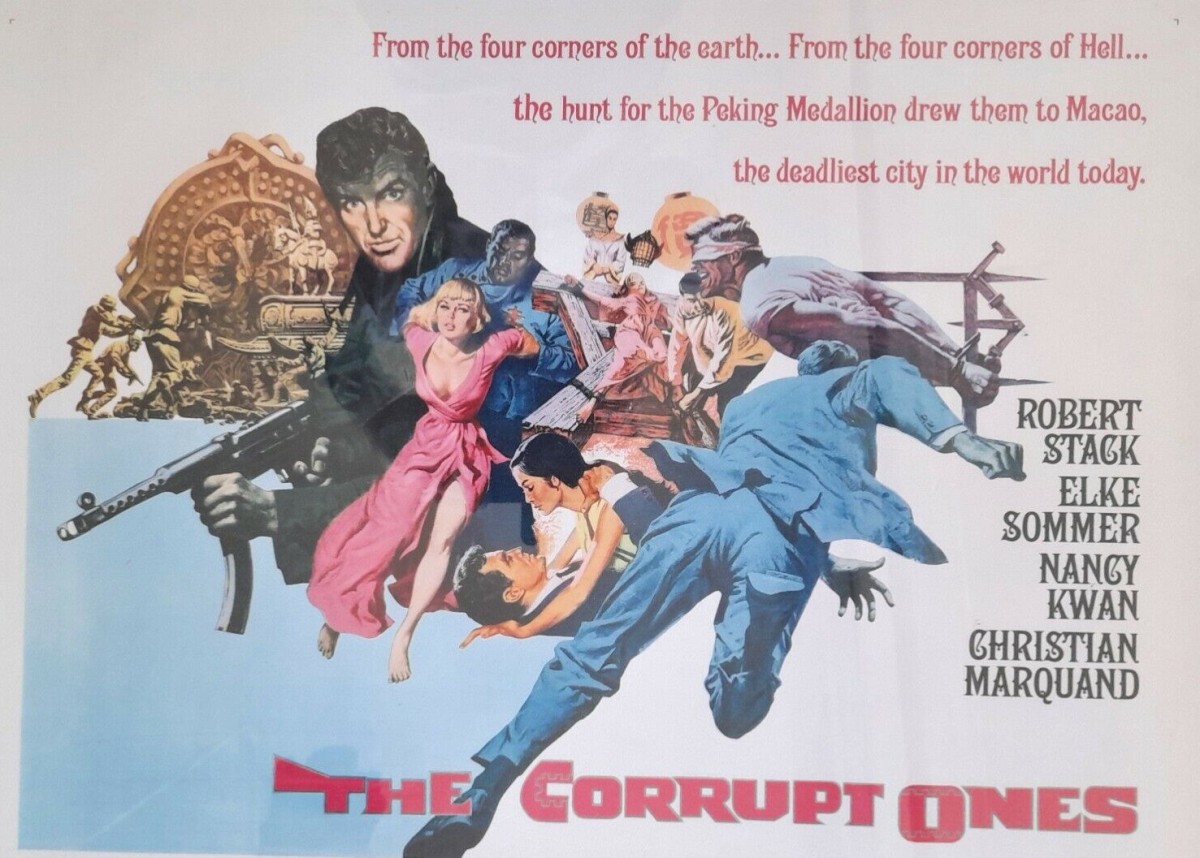
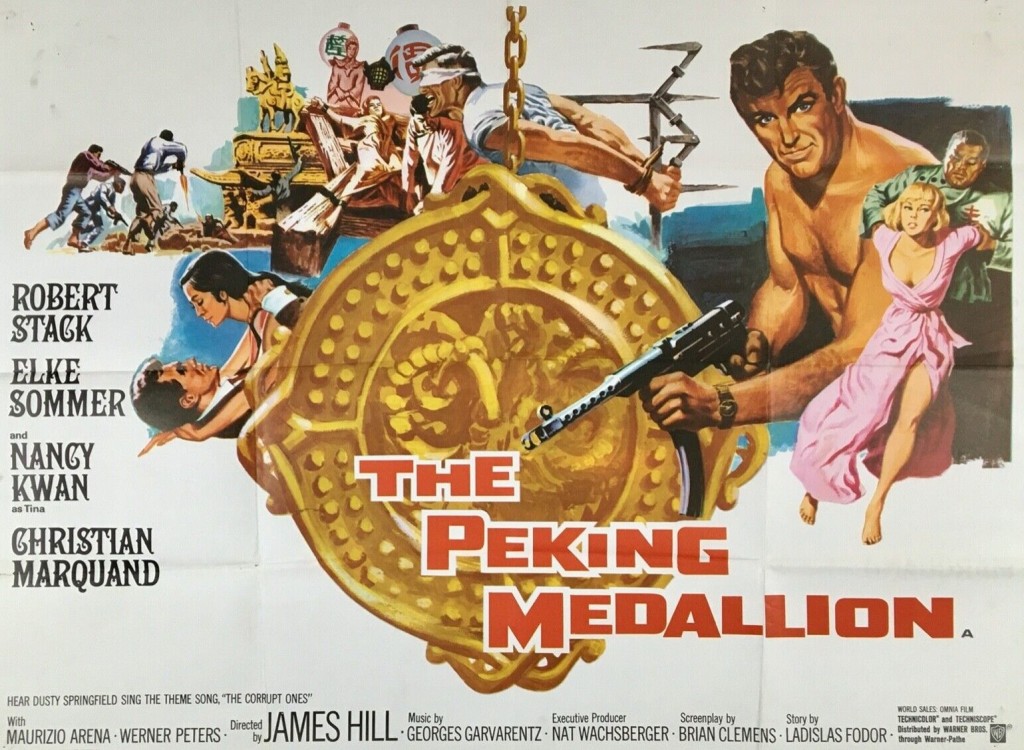
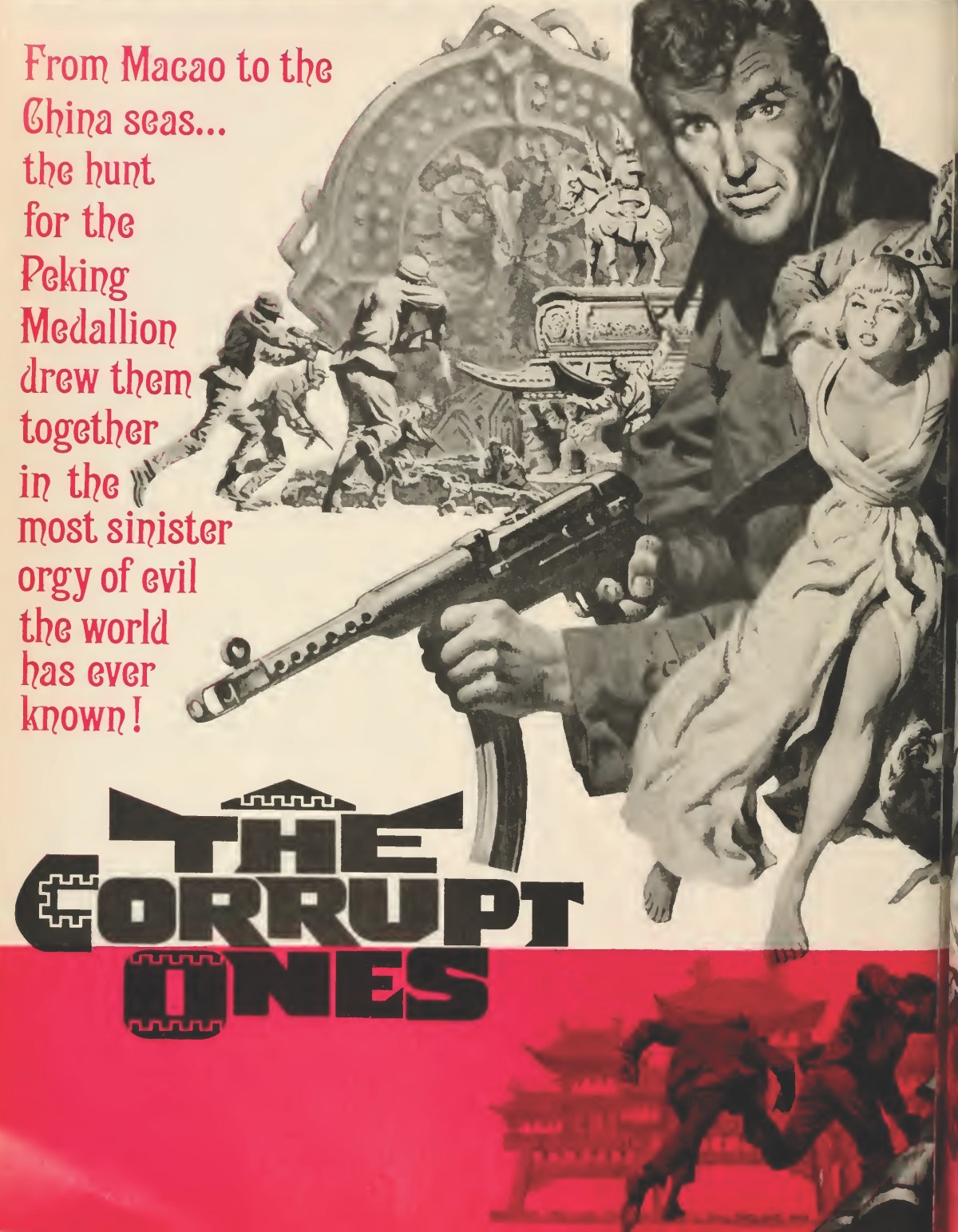
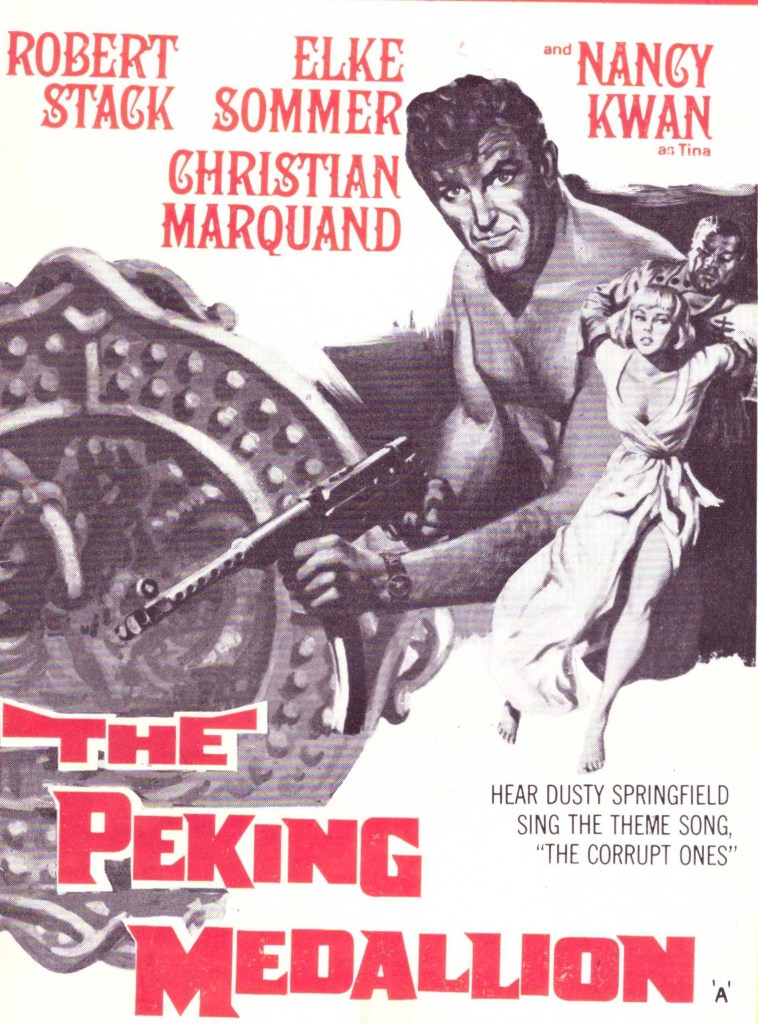
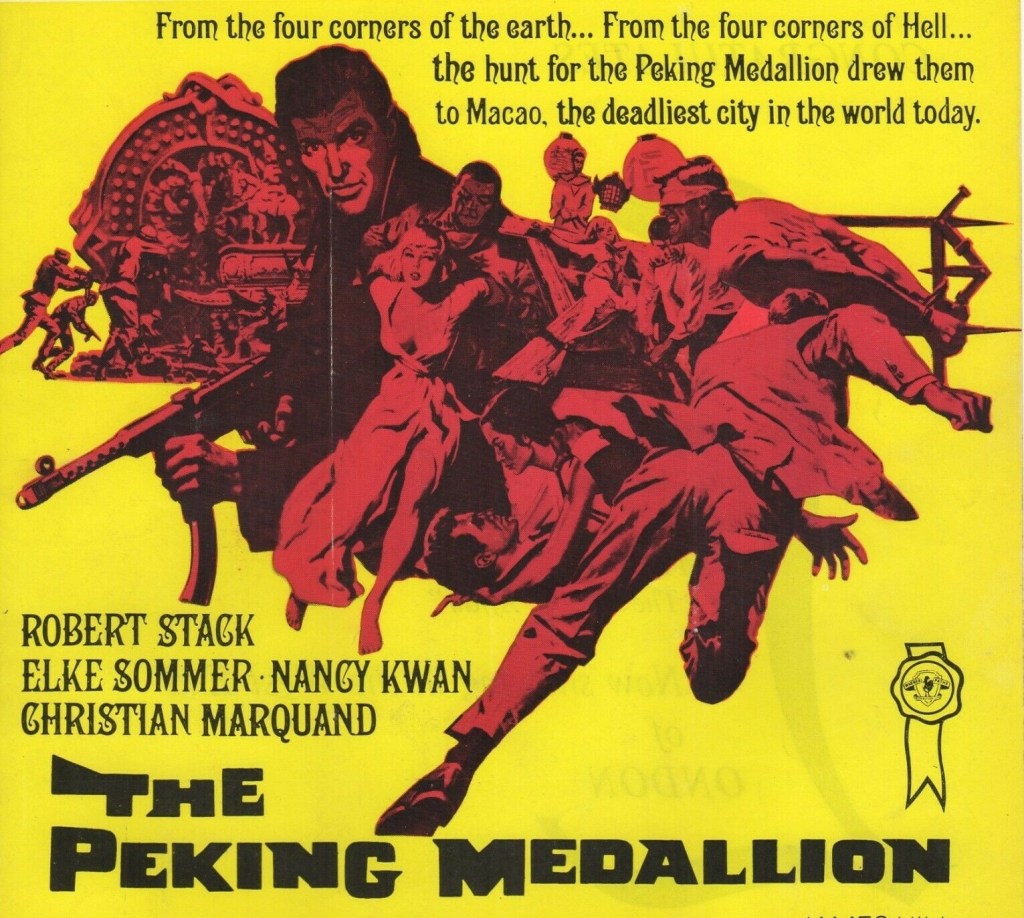
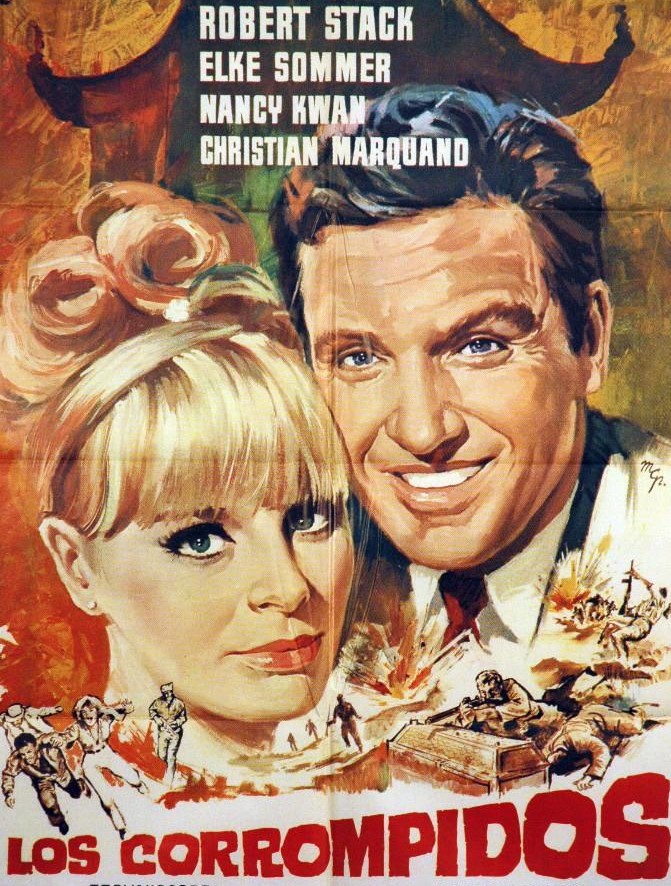
The Corrupt Ones / The Peking Medallion (1967) ****

Non-stop action as spy Cliff Wilder (Robert Stack) battles a variety of crooks in Macao on the Chinese border as they seek to recover the legendary Peking medallion. Wilder hails from the James Bond school of espionage, duty bound to kiss every girl he meets. He might wonder at their compliance until he realizes they are only after his knowledge of the missing medallion.

The violence is criminally brutal – punch-ups, gunfights, samurai swordfights, murder and torture by blowtorch and acid and being dragged behind a motorboat. The string of sexy women is matched by handsome men, Brandon (Christian Marquand) and Danny (Maurizio Arena) in addition to Stack. The thriller pitches helter-skelter through nightclubs, casinos, caves, temples and palatial mansions, the pace only slowing down for, naturally, a scene in a stately rickshaw.

As well as Wilder who briefly – and unknowingly – has the medallion in his hands, others in the hunt include Lilly Mancini (Elke Sommer), wife of Danny who had passed it to Wilder before being killed. Mancini is on the wrong side of the femme fatale equation. Once Wilder  is wise to her seductive charm,s he quips, “Maybe you’re telling the truth but I can’t trust you.”

Also in hot pursuit are gangster Brandon and a Chinese mob headed by Tina (Nancy Kwan) That’s on top of a corrupt cop (“I have never feared death, only poverty” is his mantra) who doesn’t care who wins the prize as long as he gets his share. Double cross is the order of the day, alliances forged then broken. The action never stops long enough for one of those tension-building scenes of which Alfred Hitchcock or imitators like Stanley Donen (Charade, 1963, and Arabesque, 1966) were so fond.

Wilder faces danger with a quip, a kiss or gritted teeth, an old-fashioned tough guy without the James Bond self-awareness. He carries out his manly duties until his brain kicks in and he realizes this isn’t a spy picture after all but a genuine treasure hunt with clues that have to be deciphered. After that, the pictures sidetracks down another route. For a moment, the movie seems to have lost the plot. But then all hell breaks loose and we are back on the safe ground of fistfights, double-crossing and shooting.

Fans of improbable storylines, exotic settings, action, interesting bad guys and twists and turns will love this. How can you fail to love a movie with a samurai vs camera tripod swordfight?

An exemplary cast for this kind of malarkey, a French-Italian-German co-production with English as the mother tongue. Scarcely creditable that Robert Stack, in his biggest picture since The Untouchables tv series (1959-1963), was once Oscar-nominated given subtlety is never required. Nancy Kwan (The World of Suzie Wong, 1960) steals the show as the villainess but she’s run close by Elke Sommer (The Prize, 1963). In supporting roles are Werner Peters (Istanbul Express, 1968) and Christian Marquand (The Flight of the Phoenix, 1965).  

Might seem a considerable change of pace for director James Hill after Born Free (1966) but that’s only if you ignore his work on the equally complicated A Study in Terror (1965).  Screenplay punched out by Englishman Brian Clemens (And Soon the Darkness, 1970), Hungarian Ladislas Fodor (best know for the Dr Mabuse series) and Harald Bloom, his only known credit.

Great fun.

PREVIOUSLY REVIEWED IN THE BLOG: Robert Stack in Is Paris Burning? (1966); Elke Sommer in The Prize (1963), The Art of Love (1965), The Money Trap (1965), The Oscar (1966), The Venetian Affair (1966), Deadlier than the Male (1967), They Came to Rob Las Vegas (1968) and The Swiss Conspiracy (1976); and James Hill’s A Study in Terror (1965); Nancy Kwan in Tamahine (963), Fate Is the Hunter (1964), The Wild Affair (1965).

The Corrupt Ones / The Peking Medallion (1967) ****

Non-stop action as spy Robert Stack (The Untouchables tv series) battles a variety of crooks in Macao on the Chinese border as they seek the legendary Peking medallion. Stack hails from the James Bond school of espionage, duty bound to kiss every girl he meets. He might wonder at their compliance until he realizes they are only after his knowledge of the missing medallion.

The violence is criminally brutal – punch-ups, gunfights, samurai swordfights, murder, torture by blowtorch and acid and being dragged behind a motorboat. The string of sexy women is matched by handsome men (Christian Marquand and Maurizio Arena in addition to Stack). The thriller pitches helter-skelter through nightclubs, casinos, caves, temples and palatial mansions, the pace only slowing down for, naturally, a scene in a stately rickshaw.

As well as Stack who briefly – and unknowingly – has the medallion in his possession, others in the hunt include Elke Sommer, wife of the man (Arena) who passed it to Stack before being killed. Sommer is on the wrong side of the femme fatale equation. Once Stack is wise to her seductive charms he quips, “Maybe you’re telling the truth but I can’t trust you.”

The original title of the picture was “Hell in Macao” and that was used in Germany for example. It was called “The Peking Medallion” in the UK, Italy and Mexico and “The Corrupt Ones” in the US, France and Spain.

Also in hot pursuit are gangster Brandon (Marquand) and a Chinese mob headed by Nancy Kwan (The World of Suzie Wong, 1960). That’s on top of a corrupt cop (“I have never feared death only poverty” is his mantra) who doesn’t care who wins the prize as long as he gets his share. Double cross is the order of the day, alliances forged then broken. The action never stops long enough for one of those tension-building scenes of which Alfred Hitchcock or imitators like Stanley Donen (Charade, 1963, and Arabesque, 1966) were so fond.

Stack faces danger with a quip, a kiss or gritted teeth, an old-fashioned tough guy without the James Bond self-awareness. He carries out his manly duties until his brain kicks in and he realizes this isn’t a spy picture after all but a genuine treasure hunt with clues that have to be deciphered. As this causes the movie to sidetrack down another route, it looks like the picture has lost the plot. But then all hell breaks loose and we are back on the safe ground of fistfights, double-crossing and shooting.

The script by Brian Clemens deftly mixes a variety of genres. What might have been a definite change of pace for British director James Hill given his previous effort was Born Free (1966) was anything but since he was responsible for the most recent Sherlock Holmes thriller A Study in Terror (1965).

Fans of improbable storylines, exotic settings, action, interesting bad guys and twists and turns will love this. How can you fail to love a movie with a fight featuring a samurai sword versus a camera tripod?

Many of the films from the 1960s are to be found free of charge on TCM and Sony Movies and the British Talking Pictures as well as mainstream television channels. But if this film is not available through these routes, then here is the link to the DVD and/or streaming service.

Discover WordPress

A daily selection of the best content published on WordPress, collected for you by humans who love to read.

The Atavist Magazine

by Brian Hannan

WordPress.com Blog

News, Tips & Website Tutorials