Behind the Scenes: The Mirisch Meltdown

Independent production company Mirisch had enjoyed spectacular success in the 1960s both at the box office and the Oscars. Commercial successes included The Magnificent Seven (1960) and sequels, The Apartment (1960), West Side Story (1961), The Great Escape (1963), Hawaii (1966) despite its huge budget, and In the Heat of the Night (1967). Walter, who did the legwork on the production side – his brothers Harold and Marvin were more backroom boys – picked up the Oscar for In the Heat of the Night and two other films he was involved in won Best Picture. Their films were solely distributed through United Artists, with whom they had a profitable relationship for most of the decade. But cracks were beginning to show in the 1970s and in the final reckoning after a meltdown at the box office Mirisch and UA went their separate ways in 1974. Harold had died in 1968 and Marvin pulled back, leaving Walter to go it alone with Universal, with some success – Midway (1976) and Same Time, Next Year (1978).

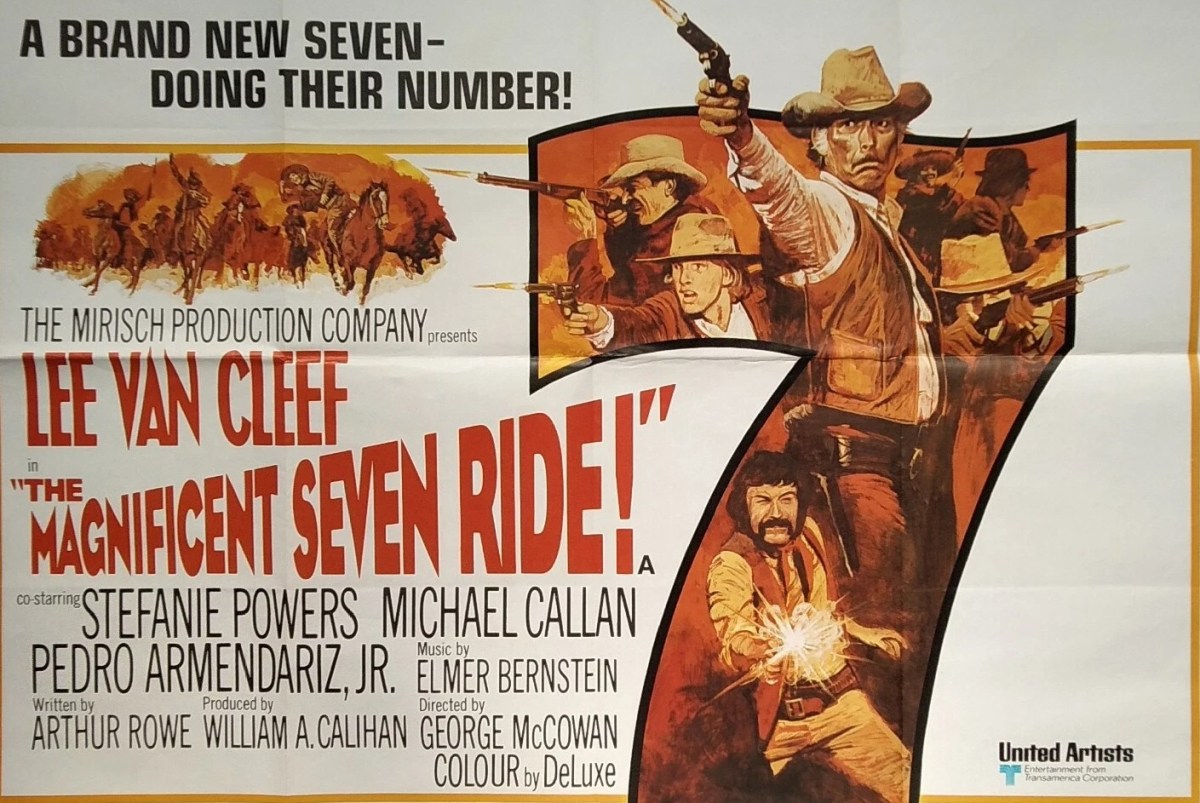
The demise of the original Mirisch came as their business was spiralling out of control. With a total loss of $32.6 million covering 13 films made for United Artists between 1966 and 1972, it was small wonder it spelled the end of the road for the independent company. Norman Jewison musical Fiddler on the Roof, an adaptation of the Broadway hit, was one of only three movies to end up in the black, clocking up $6.8 million profit. Return of the Seven (1966) starring Yul Brynner earned a meager $37,000 in profit from cinema exhibition and its overall profitability of $588,000 depended on $1.6 million from sales to television. The Magnificent Seven Ride! (1972) with Lee Van Cleef only made a small profit of $236,000 thanks to television and even counting in sales to the small screen Guns of the Magnificent Seven (1969) didn’t reach that benchmark.

Television played a significant role in keeping losses down to $32.6 million. Fiddler on the Roof went to television for $3 million, The Hawaiians / Master of the Island (1970) starring Charlton Heston, a sequel to Hawaii, and They Call Me Mister Tibbs for $1.3 million and The Organization $1.1 million, respectively, the latter two films relying on Sidney Poitier reprising his role from In the Heat of the Night.

Various deductions, not always obvious to outsiders, come off the top of rentals and television sales. First there are the distribution fees paid to United Artists, then marketing costs, finance, and profit shares – Brynner and Poitier were on percentages as was Jewison (on a whopping 20 per cent), and these were often paid out against overall rentals rather than actual profits.

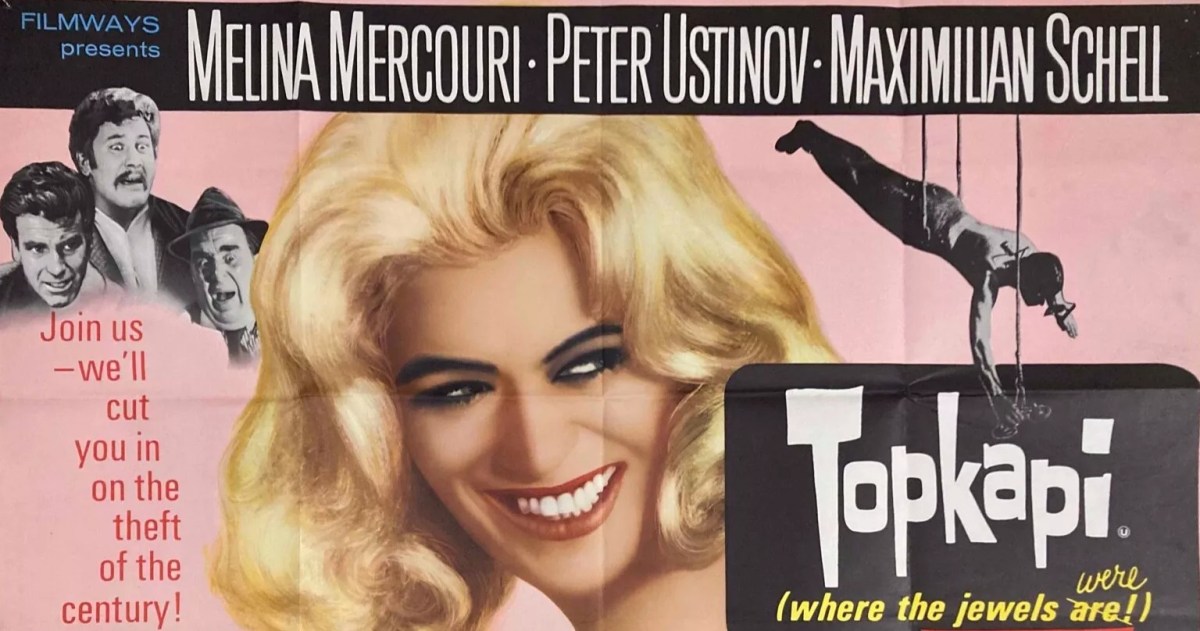
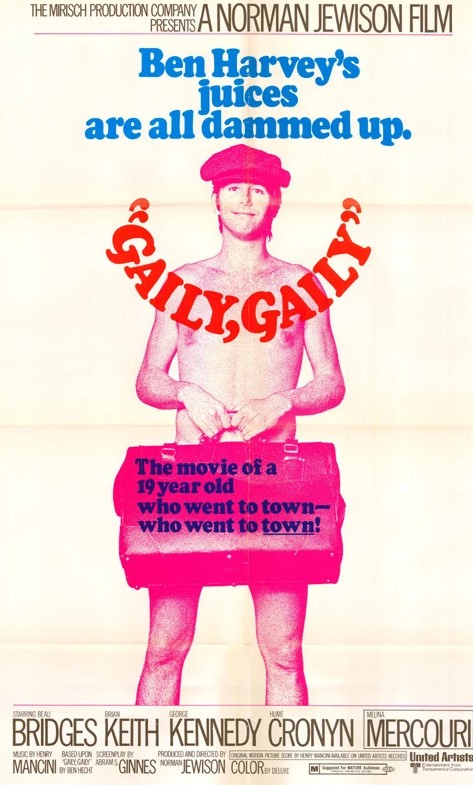
In an alarming shift from the glory days of the 1960s, Mirisch presided over some out-and-out disasters. Jewison’s rites-of-passage Gaily, Gaily / Chicago, Chicago (1969) starring newcomer Beau Bridges (The Fabulous Baker Boys, 1989) in his first top-billed role and Greek Oscar nominee Melina Mercouri (Topkapi, 1964) went completely down the tubes, racking up a colossal $10.3 million loss. The Hawaiians / Master of the Islands directed by Tom Gries (Will Penny, 1968) wasn’t far behind – $8.3 million in the red.

The Billy Wilder (The Apartment) touch couldn’t save The Private Life of Sherlock Holmes (1970) starring Robert Stephens (The Prime of Miss Jean Brodie, 1969) from plummeting to a $7.5 million deficit. George Peppard western Cannon for Cordoba (1970) co-starring Giovanni Ralli (Deadfall, 1968) haemorrhaged $3.1 million. Heist comedy Some Kind of Nut (1969), directed by the renowned triple Oscar nominee Garson Kanin (Where It’s At, 1969) and toplining Dick Van Dyke (Divorce American Style, 1967) and Angie Dickinson (Jessica, 1962) faced a shortfall of $3 million.

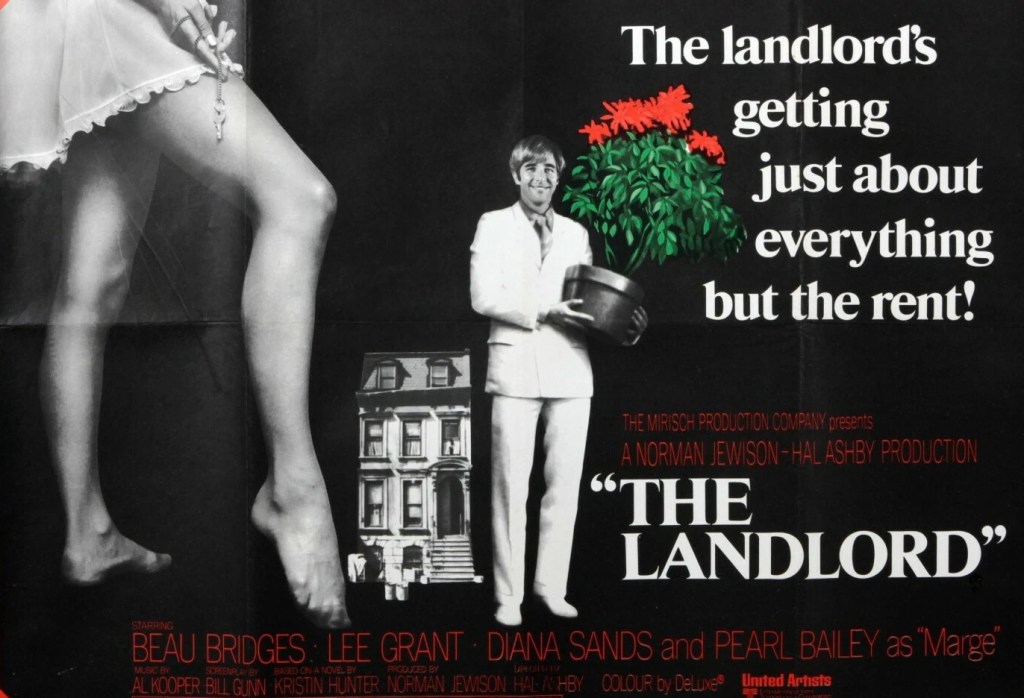
Beau Bridges was also the luckless star of Hal Ashby’s debut The Landlord (1970) which went down to the tune of $2.5 million. School drama Halls of Anger (1970) starring Calvin Lockhart (Cotton Comes to Harlem, 1970) as a tough teacher was $1.8 million in the red. Jacqueline Bisset (Bullitt, 1968) in her first top-billed role in The First Time (1969) wasn’t a big enough attraction to prevent this tumbling into a $973,000 quagmire.

Even Sidney Poitier at the peak of his fame was no hedge against box office calamity. They Call Me Mister Tibbs was $1 million below breakeven and The Organization $500,000.

It didn’t help the Mirisch bottom line that it had invested $5.1 million in projects that were never made, although half of this was accounted by The Bells of Hell Go Ding-A-Ling-A-Ling, a Gregory Peck (Mackenna’s Gold, 1969) starrer directed by David Miller (Lonely Are the Brave, 1962) that was abandoned in 1966 in the face of extreme weather conditions with $2.7 million already spent. The studio has also lavished $1.2 million on I Do, I Do without a single foot of film shot. John Sturges spent $267,000 unsuccessfully trying to put together The Yards of Essendorf in 1969 that would have, variously, starred Steve McQueen or Warren Beatty (plus Ursula Andress and Jean-Paul Belmondo) in another World War Two venture. Sturges also wasted $68,000 on Richard Sahib to feature  Spencer Tracy and Alec Guinness and $15,000 on The Artful Dodger, a sequel to The Great Escape.

Other projects sucking the well dry with nothing to show for it were Bandoola with an elephant as an unlikely World War Two hero to be filmed in Pakistan ($208,000 spent), Chinese Detective Story ($82,000) aka The Dragon Master with George Peppard lined up, The Egyptologist ($140,000), The Judgment of Corey ($185,000) with director Peter Yates (Bullitt), The Mutiny of Madame Yes ($110,000) with Ronald Neame (The Prime of Miss Jean Brodie)  attached, Nothing to Lose ($92,000) to be helmed by Franklin Schaffner (Planet of the Apes, 1968), Andrew V. McLaglen (Bandolero! 1968) signed up for Warhorse ($39,000) and Snatch ($239,000).

The poor run continued into 1972 when Billy Wilder’s Avanti (1972) with Jack Lemmon, while not in the dire financial straits of the famous sleuth, still dropped $1.8 million.

SOURCE: William Bernstein, “United Artists Office Rushgram,” July 16 1973 (United Artists Archive, Wisconsin University.)

Topkapi (1964) *****

The mother of all heists directed by the father of all heist pictures. Films as diverse as The Italian Job (1969), Mission Impossible (1996) and Ocean’s Eleven (1960) owe director Jules Dassin a massive debt since he pretty much invented this genre with the French-made Rififi (1955). But that involved professional criminals. Outside of masterminds Elizabeth (Melina Mercouri) and Walter (Maximilian Schell), this crew are amateurs, deliberately chosen for their lack of criminal records and with a mind to the specific tasks required. So we have acrobat Giulio (Gilles Segal), upper-class English gadget inventor Cedric (Robert Morley), strongman Hans (Jess Fisher) and driver Arthur (Peter Ustinov).

The target is the impenetrable, complete with sound-sensitive floor, Topkapi Palace in Istanbul where they plan to steal a priceless emerald-encrusted dagger. The plan is ingenious. Arthur is initially only hired to smuggle the weapons essential to the audacious heist across the border. But when he is caught and forced to cooperate with the Turkish secret police, he is enlisted as a replacement for Hans. Minus the rifles and grenades which at first appeared indispensable to the plan, the thieves come up with an even more inspired alternative involving among other things scampering across rooftops, abseiling, a parrot and slowing down the revolutions of a lighthouse.

Originally intending to betray his colleagues as soon as possible, Arthur falls under the seductive spell of Elizabeth and finds himself recruited as the replacement muscles. Elizabeth exudes such sexuality she has the entire gang in her thrall and makes the cowardly, weak acrophobic Arthur believe he can overcome all his fears. Walter engages in a cat-and-mouse game with the police, always one step ahead, with a bagful of red herrings at his disposal, eventually giving the pursuers the slip during a wrestling competition held in a massive outdoor arena.

Interestingly, too, this doesn’t have the trope of gangsters at each other’s throats, planning to double-cross one another or bearing old grudges. Nobody challenges the leader. In fact, the entire crew could not be more docile, content to sit at the feet of Elizabeth and Walter, lapping up the former’s flirtation, wondering at the latter’s skill, as if they are all honored to have been chosen.

The climactic heist, carried out with no musical soundtrack and lasting over 30 minutes, is absolutely superb, setting a very high bar for future imitators, and there is a twist ending. Dassin mixes light comedy and high tension with the sultry attractions of Elizabeth to produce an at times breathtaking picture. As well as the heist itself, the wrestling sequence is stunning and the transition of Arthur forms the acting highlight (Ustinov won the Best Supporting Actor Oscar).

But all four main stars are superb. Audiences accustomed to a more uptight Maximilian Schell (The Condemned of Altona (1962) will have been surprised by his performance. Melina Mercouri (Oscar-nominated for Never on Sunday, 1960) is the archetypal blonde bombshell, liberal with her favors but careful not to favor just one. Although Walter devises the plan, she is actually the criminal supremo, selecting the targets, and then delegating to ensure the tasks are carried out. Robert Morley is having the time of his life. Akim Tamiroff (Lord Jim, 1965) has a cameo as a chef.

A film noir star after Brute Force (1947) and The Naked City (1948) Dassin’s Hollywood career collapsed in the wake of the anti-Communist McCarthy hearings and he was blacklisted. Rififi opened few doors but even the success of Never on Sunday (1960) brought little respite.  Despite returning to the mainstream with such elan through the conduit of Topkapi, albeit with a European cast, he remained on the Hollywood periphery and although Uptight (1968) – previously reviewed in the Blog – involved another heist that was primarily the wrapping for social documentary.

More at home with comedies screenwriter Monja Danischewsky (The Battle of the Sexes, 1960) draws out more humor than the source material, Light of Day by noted thriller writer Eric Ambler, would ostensibly suggest.

A delight from start to finish, the crème de la crème of the heist genre, this is unmissable. Dassin can lay claim to being the John Ford of the crime picture.

A Man Could Get Killed (1966) ****

An unexpected delight. More farce than spoof and more Hitchcockian thriller than espionage adventure, but bursting with laughs. Spinning on the premise of mistaken identity, a New York banker becomes mixed up with diamond smugglers while being pursued by a posse of Europe’s shadiest characters and a very determined femme fatale. All the more enjoyable because identity confusion is very difficult to pull off unless you have a top class cast like Cary Grant and Eva Marie Saint in North by Northwest (1959).

Landing in Lisbon, New York banker William Beddoes (James Garner) is mistaken for the emergency replacement for a recently-deceased British spy. It’s not just embassy officials like Hatton Jones (Robert Coote) who are afflicted by this notion, the villains are so determined to get rid of their man two bombs are planted in his car. Attending his supposed predecessor’s funeral brings Beddoes into contact with glamorous Aurora (Melina Mercouri). Smuggler Steve (Anthony Franciosca) offers his service to Beddoes to help recover $5 million in stolen industrial diamonds. To complicate matters, identity is also an issue for Steve, who while working under an assumed name is outed by Amy (Sandra Dee) who recognizes him as her family’s former gardener.

Unable to convince anyone he is not who he says he is, Beddoes is swept into the conspiracy, his every move under surveillance by rival villains, including Florian (Gregoire Aslan) and Milo the Murderer (Arnold Diamond), while Aurora attempts seduction to bring him to heel.  Eventually, while never ruling out double-cross, Beddoes, Aurora, Steve, Amy and embassy officials work together to decipher a series of clues revolving around rice, azaleas, a red pig and a man who sneezes, none of which align with obvious meanings and naturally are interpreted as something to do Red China or the Iron Curtain.

A picture based on a simple premise is better than a spoof that labors to create a plot and so it’s true here. Everything springs from the mistaken identity and the diamond hunt, and as one twist effortlessly follows another characters with conflicting agendas collide. Beddoes spends all his time trying to escape from kidnap, assassination or seduction. It’s helter-skelter stuff, so no surprise that chases, of the Buster Keaton variety, produce laughs. I found myself laughing out loud at the scene where Steve can’t find anywhere to sit in a café that is not next to a villain, Beddoes getting attacked by drapes, an ambassador (Cecil Parker) more concerned with knotty chess problems than espionage, and a great visual gag where Beddoes  wallops a cop. Escaping pursers, Steve takes a short cut that leads him straight back into danger.

Naturally, the whole enterprise is loaded with confusion, not least because making the wrong decision, taking the wrong turn and making the wrong assumption sets up the next gag. Throw in ambulance theft, Beddoes sitting in a row of hookers in jail, a tape recording turning up in a bread roll and you get the idea.

The cast could have been hand-picked for this kind of picture. James Garner (The Hour of the Gun, 1967) is the  natural successor to Cary Grant in the double-take department. This role is a play on previous ones where he was the trickster and not the patsy. He’s more stiff-upper-lip than the Brits. Comedy skills honed on this one that were put to terrific use in Support Your Local Sherriff (1969). And while Melina Mercouri (Topkapi, 1964) is more than a little over-the-top, the dominant woman from whom ordinarily Beddoes would run a mile, but also possessing the cunning survival instincts lacking in an innocent like him. One scene that depicts their contrasting characters so well is when she runs around half-naked to create a diversion and he chases after trying to cover her up, clearly no idea that distraction is necessary.

Tony Franciosca (The Swinger, 1966) leads with his teeth, his smarminess undercut by Sandra Dee reminding him he is a glorified gardener. Dee (Tammy and the Doctor, 1964), however, never manages to stray from her ingénue roots. An excellent supporting cast includes Robert Coote (The Swinger), Gregoire Aslan (Moment to Monet, 1966), Cecil Parker (A Study in Terror, 1965). This was British actress Dulcie Gray’s final film.

The movie had a fractured genesis. Original director Cliff Owen (The Vengeance of She, 1968) fell out with the stars and was shunted aside in favor of Ronald Neame (Gambit, 1966), more adept at male-female chicanery. The screenplay originated from comedic masters – Richard Breen (Do Not Disturb, 1965) and T.E.B. Clarke (The Lavender Hill Mob, 1951)  – based on the book Diamonds for Danger by David E. Walker. And there are many delightful lines. “I’m my own bait,” spouts Aurora. Trying to placate Amy, Steve explains “It’s unusual to find this many dead spies in one day.”

The movie failed to register with the public which was astonishing. At a time when theme songs helped turn other films like Alfie (1965) into successes, the movie contained the tune that would give Frank Sinatra his first number one single in over a decade, “Strangers in the Night.” Unfortunately, the movie did not carry Sinatra’s imprimatur. The music in the film was an instrumental. Had Sinatra’s voice been heard in the movie it might have turned it into a hit.

For a long time, this under-rated delightful comedy was hard to find. There still is not a Region 1 DVD, but you can find it on Region 2 and YouTube has kindly provided a free copy.
Discover WordPress

A daily selection of the best content published on WordPress, collected for you by humans who love to read.

The Atavist Magazine

by Brian Hannan

WordPress.com News

The latest news on WordPress.com and the WordPress community.