Behind the Scenes: The Mirisch Meltdown

Independent production company Mirisch had enjoyed spectacular success in the 1960s both at the box office and the Oscars. Commercial successes included The Magnificent Seven (1960) and sequels, The Apartment (1960), West Side Story (1961), The Great Escape (1963), Hawaii (1966) despite its huge budget, and In the Heat of the Night (1967). Walter, who did the legwork on the production side – his brothers Harold and Marvin were more backroom boys – picked up the Oscar for In the Heat of the Night and two other films he was involved in won Best Picture. Their films were solely distributed through United Artists, with whom they had a profitable relationship for most of the decade. But cracks were beginning to show in the 1970s and in the final reckoning after a meltdown at the box office Mirisch and UA went their separate ways in 1974. Harold had died in 1968 and Marvin pulled back, leaving Walter to go it alone with Universal, with some success – Midway (1976) and Same Time, Next Year (1978).

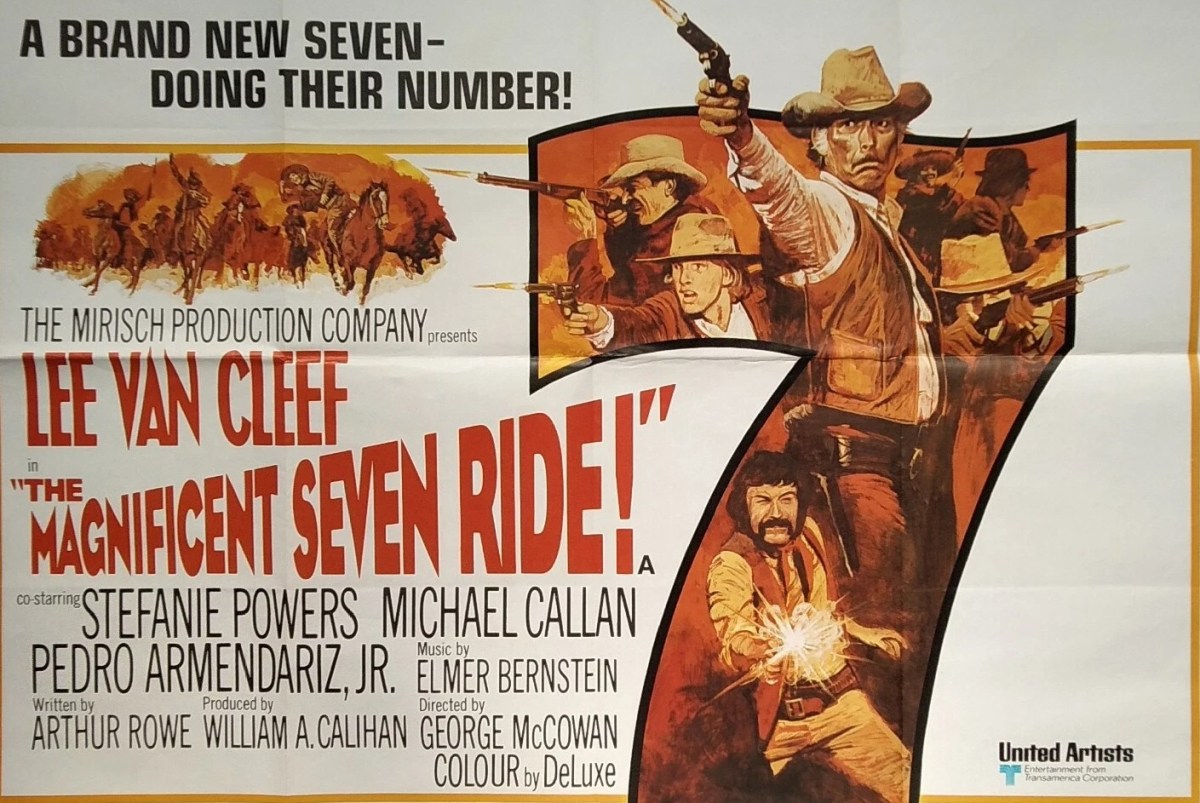
The demise of the original Mirisch came as their business was spiralling out of control. With a total loss of $32.6 million covering 13 films made for United Artists between 1966 and 1972, it was small wonder it spelled the end of the road for the independent company. Norman Jewison musical Fiddler on the Roof, an adaptation of the Broadway hit, was one of only three movies to end up in the black, clocking up $6.8 million profit. Return of the Seven (1966) starring Yul Brynner earned a meager $37,000 in profit from cinema exhibition and its overall profitability of $588,000 depended on $1.6 million from sales to television. The Magnificent Seven Ride! (1972) with Lee Van Cleef only made a small profit of $236,000 thanks to television and even counting in sales to the small screen Guns of the Magnificent Seven (1969) didn’t reach that benchmark.
Television played a significant role in keeping losses down to $32.6 million. Fiddler on the Roof went to television for $3 million, The Hawaiians / Master of the Island (1970) starring Charlton Heston, a sequel to Hawaii, and They Call Me Mister Tibbs for $1.3 million and The Organization $1.1 million, respectively, the latter two films relying on Sidney Poitier reprising his role from In the Heat of the Night.

Various deductions, not always obvious to outsiders, come off the top of rentals and television sales. First there are the distribution fees paid to United Artists, then marketing costs, finance, and profit shares – Brynner and Poitier were on percentages as was Jewison (on a whopping 20 per cent), and these were often paid out against overall rentals rather than actual profits.

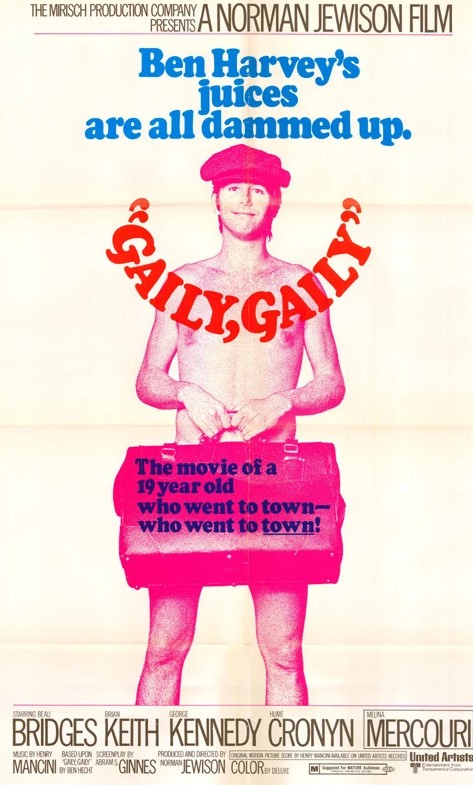
In an alarming shift from the glory days of the 1960s, Mirisch presided over some out-and-out disasters. Jewison’s rites-of-passage Gaily, Gaily / Chicago, Chicago (1969) starring newcomer Beau Bridges (The Fabulous Baker Boys, 1989) in his first top-billed role and Greek Oscar nominee Melina Mercouri (Topkapi, 1964) went completely down the tubes, racking up a colossal $10.3 million loss. The Hawaiians / Master of the Islands directed by Tom Gries (Will Penny, 1968) wasn’t far behind – $8.3 million in the red.

The Billy Wilder (The Apartment) touch couldn’t save The Private Life of Sherlock Holmes (1970) starring Robert Stephens (The Prime of Miss Jean Brodie, 1969) from plummeting to a $7.5 million deficit. George Peppard western Cannon for Cordoba (1970) co-starring Giovanni Ralli (Deadfall, 1968) haemorrhaged $3.1 million. Heist comedy Some Kind of Nut (1969), directed by the renowned triple Oscar nominee Garson Kanin (Where It’s At, 1969) and toplining Dick Van Dyke (Divorce American Style, 1967) and Angie Dickinson (Jessica, 1962) faced a shortfall of $3 million.
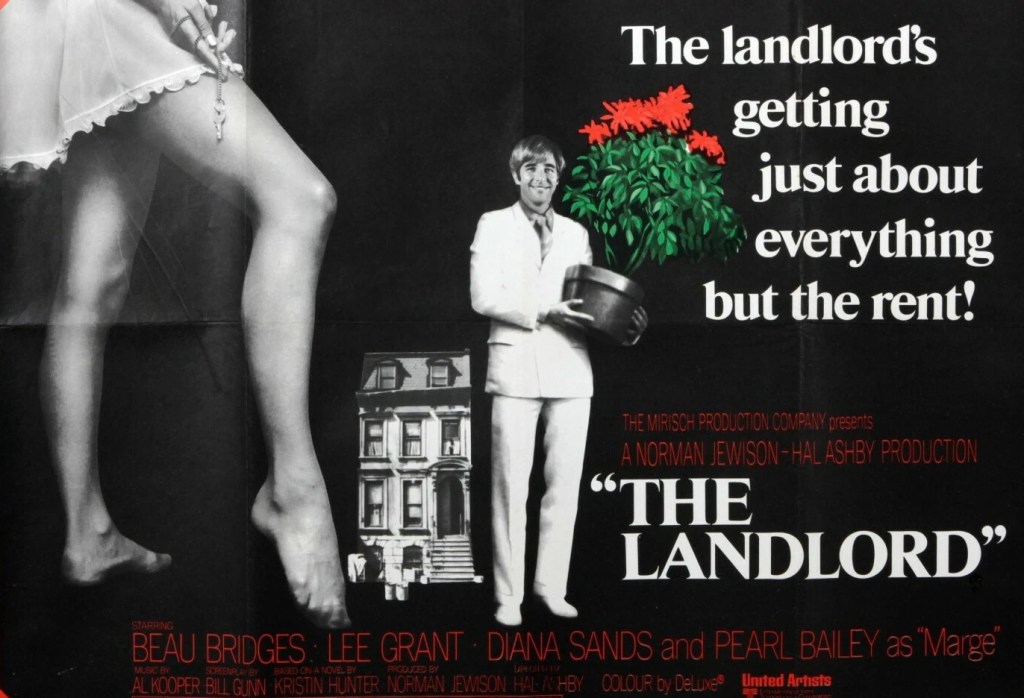
Beau Bridges was also the luckless star of Hal Ashby’s debut The Landlord (1970) which went down to the tune of $2.5 million. School drama Halls of Anger (1970) starring Calvin Lockhart (Cotton Comes to Harlem, 1970) as a tough teacher was $1.8 million in the red. Jacqueline Bisset (Bullitt, 1968) in her first top-billed role in The First Time (1969) wasn’t a big enough attraction to prevent this tumbling into a $973,000 quagmire.

Even Sidney Poitier at the peak of his fame was no hedge against box office calamity. They Call Me Mister Tibbs was $1 million below breakeven and The Organization $500,000.

It didn’t help the Mirisch bottom line that it had invested $5.1 million in projects that were never made, although half of this was accounted by The Bells of Hell Go Ding-A-Ling-A-Ling, a Gregory Peck (Mackenna’s Gold, 1969) starrer directed by David Miller (Lonely Are the Brave, 1962) that was abandoned in 1966 in the face of extreme weather conditions with $2.7 million already spent. The studio has also lavished $1.2 million on I Do, I Do without a single foot of film shot. John Sturges spent $267,000 unsuccessfully trying to put together The Yards of Essendorf in 1969 that would have, variously, starred Steve McQueen or Warren Beatty (plus Ursula Andress and Jean-Paul Belmondo) in another World War Two venture. Sturges also wasted $68,000 on Richard Sahib to feature  Spencer Tracy and Alec Guinness and $15,000 on The Artful Dodger, a sequel to The Great Escape.

Other projects sucking the well dry with nothing to show for it were Bandoola with an elephant as an unlikely World War Two hero to be filmed in Pakistan ($208,000 spent), Chinese Detective Story ($82,000) aka The Dragon Master with George Peppard lined up, The Egyptologist ($140,000), The Judgment of Corey ($185,000) with director Peter Yates (Bullitt), The Mutiny of Madame Yes ($110,000) with Ronald Neame (The Prime of Miss Jean Brodie)  attached, Nothing to Lose ($92,000) to be helmed by Franklin Schaffner (Planet of the Apes, 1968), Andrew V. McLaglen (Bandolero! 1968) signed up for Warhorse ($39,000) and Snatch ($239,000).

The poor run continued into 1972 when Billy Wilder’s Avanti (1972) with Jack Lemmon, while not in the dire financial straits of the famous sleuth, still dropped $1.8 million.

SOURCE: William Bernstein, “United Artists Office Rushgram,” July 16 1973 (United Artists Archive, Wisconsin University.)
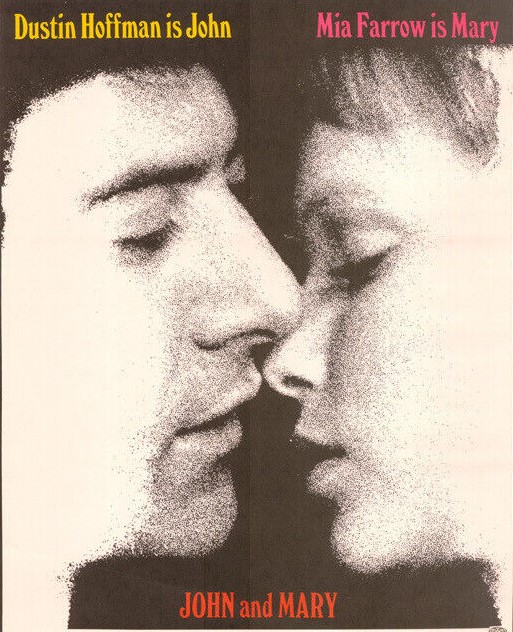
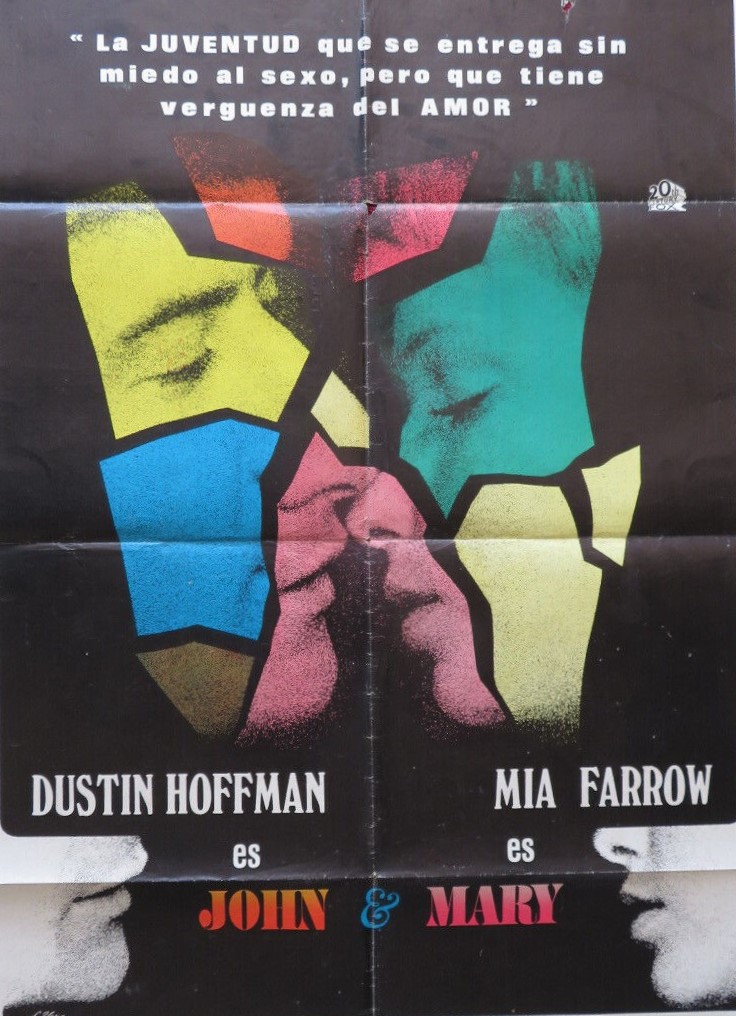
John and Mary (1969) ****

Woefully underrated. Remove the weight of expectation and you’re left with a bittersweet romance. This just wasn’t what critics anticipated from stars Dustin Hoffman, coming off the back of Midnight Cowboy (1969), and Mia Farrow, previous film the coruscating Rosemary’s Baby (1968), and certainly it seemed there was resentment at the audacity of British director Peter Yates attempting to switch from his action roots, best shown in Bullitt (1968). Worse, that Yates was trying to introduce a New Wave vibe.

In the end-up it’s sweet, but getting there is a prickly affair and it’s precisely this unique approach that creates its appeal. Where the standard set-up comprises meet-cute, break-up, back together, for the most part this looks as if actual romance, as opposed to sex, will never get off the ground, the pair smothered by doubt expressed in internal monologue.

Whereas, in The Fixer (1969), for example, hearing a character speak of their feelings outside of dialogue almost torpedoes the picture, here it works a treat, because it’s dealt with as if it was dialogue of the unspoken variety. Past experience that forces both characters to make suppositions about the other’s intent creates a very amusing and essentially true barrier to progress.

Back in the day, at the dawn of the singles generation, the idea of two young people hooking up for one-night stands filled the moral majority with shock, not just that widespread use of the Pill in avoiding pregnancy invoked promiscuity, but that random encounters immediately ended up in the bedroom rather than the becoming the start of a wooing (and discovery) process. These days, of course, Tinder and other such social media inventions, create umpteen opportunities for attraction to translate into instant sex.

But it doesn’t reduce the type of anxieties that are so well addressed here.

You can start with the basic morning-after notion of “how do I get rid of her?” all the way through to assuming such easy attitudes to sex on either side would destroy an ongoing relationship, and along the way dipping into such minefields as how to get to know another person, does he/she even like me or would they fall into bed with the first person to ask them, are they even as attractive in the cold light of day than when perceptions are muddied by alcohol and excitement, and, of course, the ultimate, was performance up to scratch.

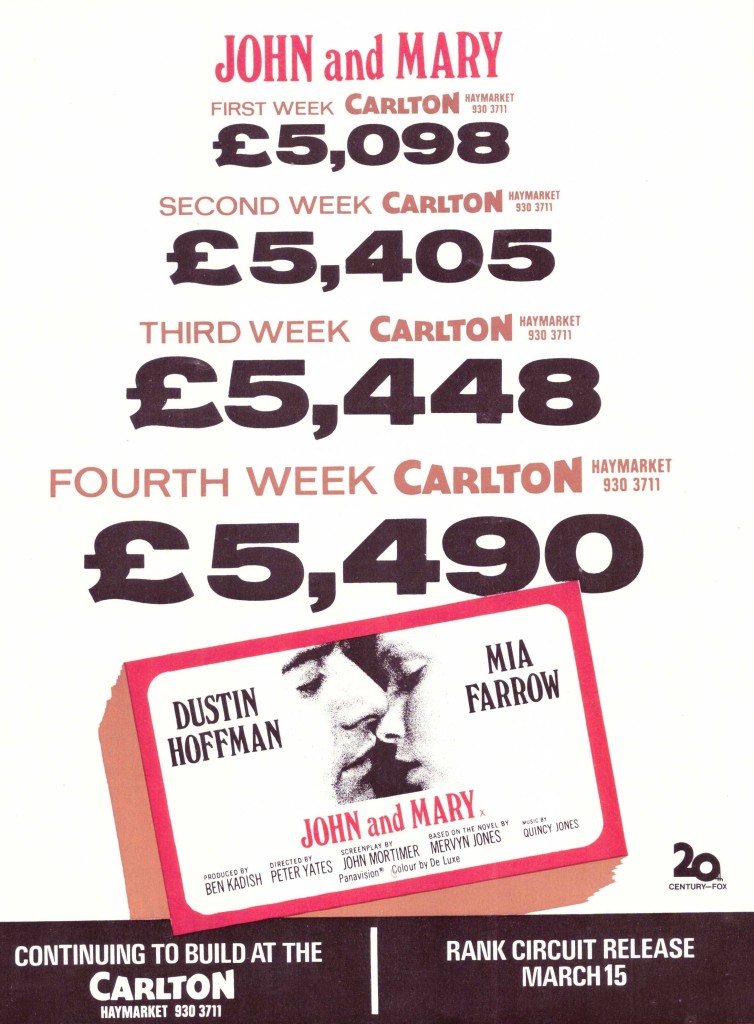
The Carlton was one of the smaller London West End cinemas and often used for prestigious openings to create the hold-overs that would build audience awareness and, such as here with box office increasing week-on-week, encourage cinema bookings.

This takes the unusual route of being peppered with flashback while the pair engage in spikier dialogue than you would find in the standard Hepburn-Tracy Hudson-Day romcom. And often what they say is the opposite of what they feel. Setting off in several directions at once – back a year or so, taking in the activity of the previous night and ploughing through the current day – could be off-putting but I found it worked a treat.

Anal retentive domesticated furniture designer John (Dustin Hoffman) hooks up in a singles bar with untidy politically-motivated sometime-actress Mary (Mia Farrow). His first reaction on waking up is to explore the apartment (rather large for New York), wonder when his wife will return, and think of all the deceptions he could pull. His first reaction borders on pure fear: she’s already planning to move in.

That neither has a genuine idea of the other person’s feeling provides the movie’s dynamic and the entire movie consists of them adjusting their expectations against a very contemporary backdrop of protests, politics, cinema verite and sex. Though primarily non-sexist and quite gender-equal, she isn’t looking to become a kept woman, for example, it does touch upon the notion that an easily-available woman is not far short of a whore, whereas, naturally, a promiscuous male is entitled to a free pass.

Her last relationship was with a married man (Michael Tolan), but she dropped him once he started talking about divorcing his wife. For John, girlfriend Ruth (Sunny Griffin) dramatically upped the stakes, arriving at his apartment with luggage, items of furniture and a rampant dog, enforcing on John responsibilities he did not want. Unusually, for the era, he is not politically involved and can cook, both of which attributes/skills we discover are the result of a mother so committed to politics that she neglected her children, never stocked her fridge and left her children to fend for themselves.

Each could press the nuclear button at any time. They’re attractive singles so more sex is just round the corner, going their separate ways the easier option, building a relationship far more difficult.

Dustin Hoffman shakes off a lot of the tics that were already showing and would inhibit later performances in a character far removed in sexual confidence from The Graduate (1967), but in some ways still touchingly naïve, and delivers a very believable performance. That it doesn’t fall into the usual Tracy-Hepburn battle of the sexes with witty put-downs owes much to the highly-nuanced performance of Mia Farrow who isn’t, as you might expect, in the least fragile and expresses her independence and challenges his views in a non-aggressive fashion.

Completely ignored by the Oscars, technically it won plaudits from Bafta, bracketed with Midnight Cowboy for Dustin Hoffman picking up the Best Actor Award, and with Rosemary’s Baby and Secret Ceremony for Mia Farrow in  being nominated for Best Actress – such arcane rules later changed.

In small parts look out for Cleavon Little (Blazing Saddles, 1974), Tyne Daly (Cagney and Lacey TV series 1981-1988), Don Siegel’s son Kristoffer Tabori (Journey through Rosebud, 1972) and Olympia Dukakis (Moonstruck, 1987). John Mortimer (Bunny Lake Is Missing, 1965) wrote the screenplay from the Mervyn Jones bestseller.

Cinematically and narratively refreshing, manages to be entertaining and thoughtful at the same time.

Robbery (1967) ****

The explosive gut-wrenching high octane car chase that kicked off this thriller – and provided British director Peter Yates (Bullitt, 1968) with a Hollywood calling card – is somewhat out of place in this intriguing documentary-style fictionalised account of the British heist of the century, the Great Train Robbery of 1963. Setting aside that the chase would have been better employed as the climax, it does provide the cops with enough leads to keep tabs on some of the criminals, ensuring the authorities become aware of the gigantic theft planned.

But Yates’ unusual approach takes us away from the usual crime picture. You can say goodbye to the cliched villain for a start. Mastermind Paul Clifton (Stanley Baker) dresses like a suave businessman. Wife Kate (Joanna Pettet) rails against him for betrayal, not sexual infidelity, but for pretending he had given up the life of crime. And there is any amount of nuance. We don’t discover that Clifton lives in a huge mansion with a massive drive until the very end, we don’t know who else the police are tailing until they are picked up, we are not let in on the secret of Clifton’s escape until suddenly he is taking off in a light airplane. And there is the unexpected. A suspect is identified in a line-up by a witness slapping his face, a message sent to Kate from Paul via a dog.

Cop James Booth questions gangster’s moll Joanna Pettet.

Nor, beyond the basics, are we let in on the details of the plan, more time spent on recruitment, and not the usual suspects either, Robinson (Frank Finlay) – broken out of prison for this specific job – brought unwillingly on board because, as a former bank employee, he can check the stolen notes. I should point out, which may not be obvious to a contemporary audience, that banks shifted money over the weekend via the London-Glasgow night train that carried the mail. Given the £3 million being transported, the train is staffed not by a regiment of security guards but by postal workers sorting letters.

There’s nothing desperately clever about the plan anyway beyond its audacity. Signals are changed to make the train stop at the allotted point, the robbery takes place in military fashion, timed to the minute, some sacks left behind when time is up.

What’s cleverest is the hideout, an abandoned airfield, with underground passages. The gang doesn’t intend to run while the heat is at its hottest but some time later, the cash divvied up, Clifton’s share sent as cargo overseas. Clifton knows the consequences will involve road blocks, house searches, cars impounded, arrests but “without the money they can’t prove anything.” A junkyard owner is paid – too handsomely as it transpires – to clean the vehicles used of fingerprints and other potential giveaways (not much else in the days before DNA). And no matter Clifton ruling with a rod of iron, there is always the idiot who doesn’t quite stick to the plan.   

Most of the picture is detail, not just the meticulous planning but the equally meticulous hounding by the cops, interrogating getaway driver Jack (Clinton Greyn), identity parades, telephones tapped (or a crude version of it), with only the occasional hunch to keep the police, led by the dogged Inspector Langdon (James Booth),  on the right track. A few years before cops in movies were uniformly identified as either corrupt or useless, sometimes both, this bunch are shown to be relatively efficient, though still prone to underhand means.

Dominating proceedings is the moustached figure of Stanley Baker (Sands of the Kalahari, 1965) whose brusque no-nonsense manner sets the tone. He’s a cut above the normal criminal not just in ambition but ingenuity and while he rules the roost in the gang he’s less at home at home where Kate gives him a hard time. James Booth (Fraulein Doktor, 1969) is impressive as the pursuer, well-versed in gangland lore, inclined to look beyond the obvious. With only  a few scenes Joanna Pettet (The Best House in London, 1969) makes a mark.

In supporting parts you will spot Barry Foster (The Family Way, 1966), who seems to have the knack of catching the camera’s attention with a look or the turn of his head, and Frank Finlay (A Study in Terror, 1965), and a host of British character actors like George Sewell (The Vengeance of She, 1968) and Glynn Edwards (The Blood Beast Terror, 1968).

But the honors go to Peter Yates (Summer Holiday, 1963), not just for the stunning car chase which Hollywood would forever emulate, but the constant tension, the cutting back and forth between cops and robbers, and between the overtly dramatic and the subtle. He also had a hand in the screenplay along with George Markstein (The Odessa File, 1974) and in his only movie Edward Boyd (The View from Daniel Pike, 1971-1973).

Discover WordPress

A daily selection of the best content published on WordPress, collected for you by humans who love to read.

The Atavist Magazine

by Brian Hannan

WordPress.com News

The latest news on WordPress.com and the WordPress community.