Below (2026) ***** Seen on Netflix

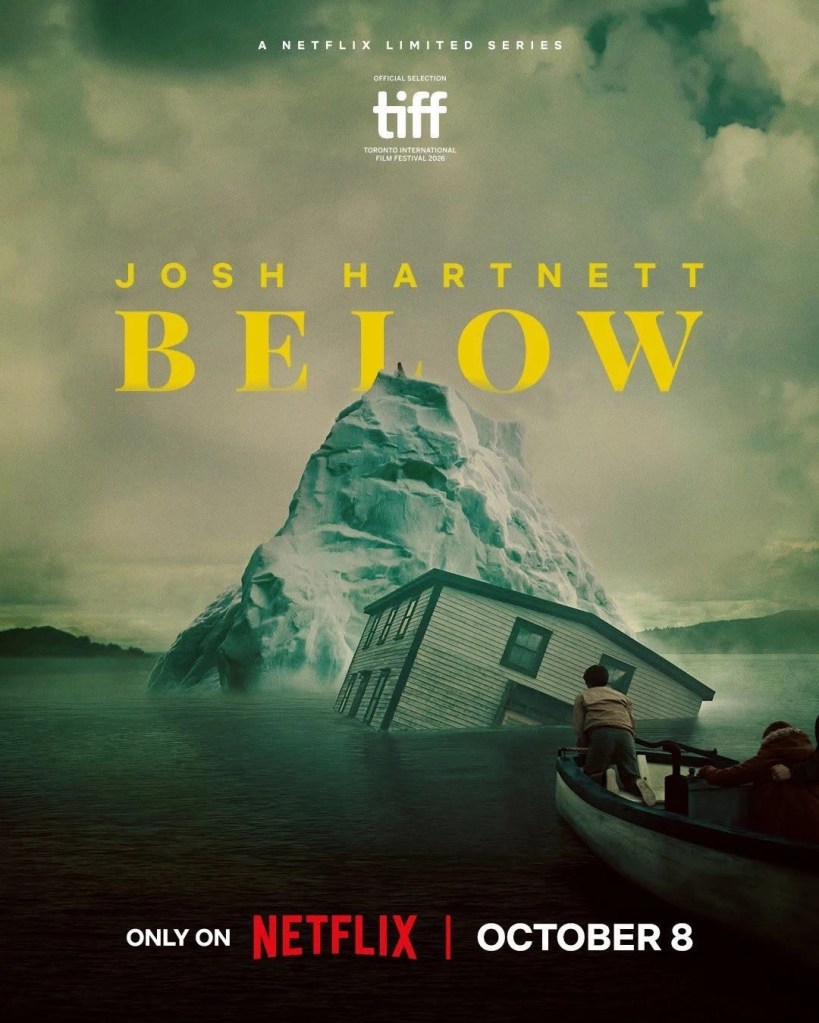
One of the most brilliant, almost surreal, openings in recent years, and probably the best to come from a streamer. A wooden house is being towed across the water by a very small boat. The image is just stunning. But it doesn’t last long because the house doesn’t last long. Something in the water triggers its collapse with a father inside. On the boat his small son Calvin has to frantically saw through the towing rope otherwise the entire family is going to be dragged under. So he’s left with the guilt of dooming his father.

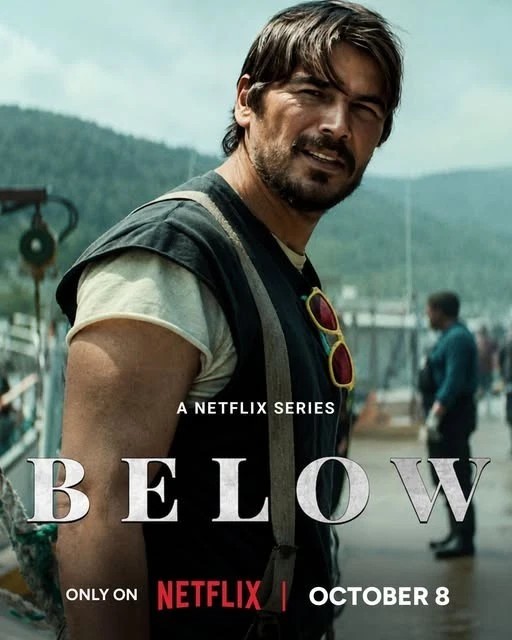
But that was 40 years ago and now the widowed Calvin (Josh Hartnett) is struggling to survive in a small fishing village which no longer has any fish to catch. Fisherman make a living hauling up  ice. Quite why the undersea monster has waited four decades to put in another appearance is anyone’s guess and it’s a big niggardly with its presence, an eye glimpsed through dark waters, bits of bone washing up on the shores, a long arm like a whiplash dragging people to their doom, long arms clutching the bottom of, of all things, a big iceberg that’s washed up close to the village. Mostly, what you see is the aftermath or are told of havoc wreaked. .
But what makes this so enjoyable is that it avoids the quick-fire jump-scares of most of the genre and with six episodes to spare takes it time telling its story. You’re not going to encounter scream queens either or anyone screaming for that matter because this is the kind of hardy environment where men and women learn not to scream from an early age and hold tight onto their emotions.

So much of this is told with incredible restraint. Calvin has to turn his house into an airbnb to make ends meet and the only way you know the domestic pressure this creates is when you see family members sleeping on the floor to make way for visiting guests. And more to the point, nobody complains. This isn’t, as with other pictures, an opportunity to vent, show emotion and find a cheap way to cover the injustices of the past.

Calvin would like to be able to buy a proper fishing boat and looks to his grown-up kids to share the load and when they knock him back, all you need is the look in his eyes, and not even a close-up of the same, to fill in all the grief of the years.
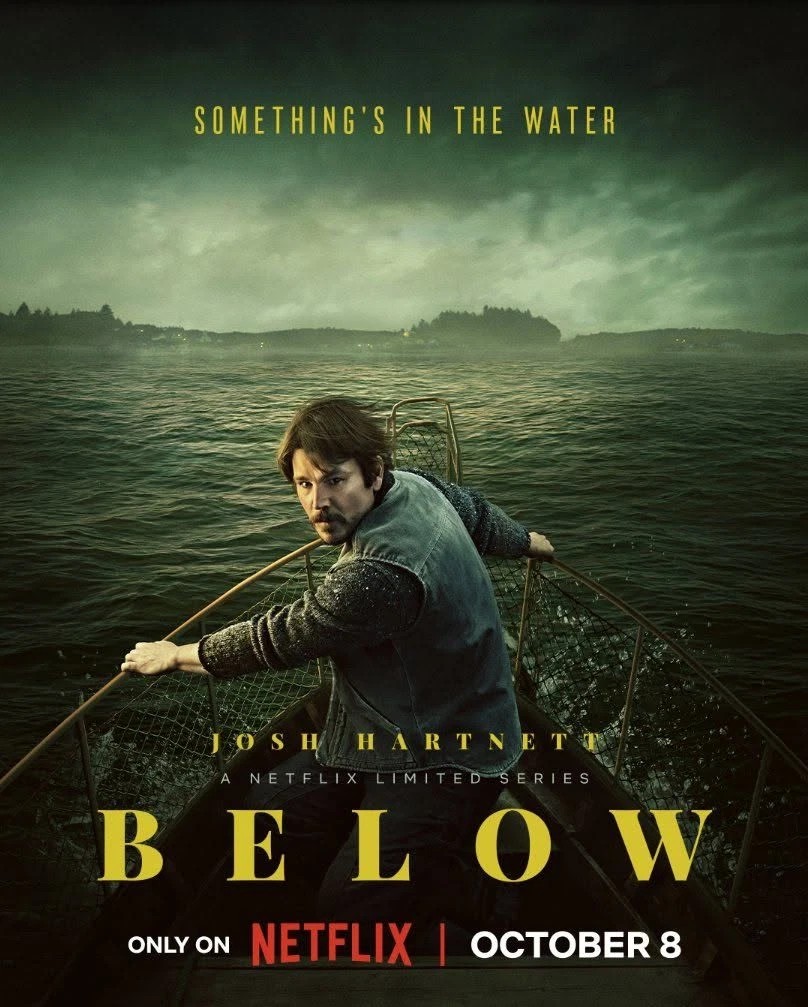
There’s a marvellous scene when the youngest child Wade (Charlie Heaton), a nervous wreck since the premature death of his mother, watches with envy his father enjoying a hearty drink with his eldest son Jay (Rohan Campbell). And that’s the same again, a brief snapshot, no outpouring of emotion.

Nor is there incipient romance once Calvin has to call in scientist Dr Fonda Howander (Mackenzie Davis) to investigate a diseased load of ice. The ice is infectious, just breathing in the age-old ammonia-smelling stuff is enough to trigger tremendous thirst and hallucination. Again, it’s the visuals, not the verbals, that make this work. When Wade is suddenly compelled to swallow an entire gallon of water, nobody turns a hair or makes a connection.

Like Jaws, the community relies on the water and the traditionally quaint village to attract tourists so no one’s going to be broadcasting that there’s something in the water and the ice – two different threats as we shall soon see. But again the watchword is restraint. The audience knows that infected ice will result in madness but the inhabitants and visitors knocking back the melted ice in their drinks haven’t a clue.

So the build-up is incredibly well judged. Wade turns a bit crazy but he’s crazy already so nobody’s much bothered. The sub plots are interesting. Noah (Kaleb Horn), boyfriend of Calvin’s daughter Mary (Ruby Stokes), is mostly the awkward suitor trying to fit in with the man’s man dad. He does fit in, but you’ve have to be quick to spot him playing guitar with the saloon band. He’s planning to propose but has lost the ring.

The thief, I’d wager, is Jay who has the kind of money troubles you get beaten up for. But he’s also swiped right and landed the village’s sexiest woman Jan (Natasha Henstridge) who doesn’t take getting beaten up as a good enough excuse to stand her up.

It does take a wrong turn when Calvin, surviving a shipwreck, ends up on a remote uninhabited island only to discover it is inhabited but by the psychotic. The real purpose of this is to find a narrative trick to expose the big bad bosses, the ruling Crocker family, of whom Jan proves one, and with her own set of dastardly skills, who are trying to get everyone out of the village so they can extract its mineral wealth.

But that heavy-handed approach, involving bringing in the Army, backfires, as it allows Calvin and his family to regroup and bond again and sort everything out.

This is exemplary, from the undemonstrative direction to the controlled playing, and from the authentic atmosphere to the slow build-up of tension. And especially to not getting carried away with the monster and ruining the whole shebang. The various back stories and sub-plots, which appear initially too woke, finally gell and that adds an authenticity that’s rare in the genre, and sits well with other contemporary issues as well as homing in on what home is and the need to belong.

The backstory and subplots all add rather than detract. There is a relgious supernatural element, people who treat the monster as a god, a young woman attracted to Wade because of the tentacle marks on his back. The hysteria of the local epidemic recalls the pandeomium of the pandemic. And the solution is ecological. It’s not blowing up or bombing the monster. It’s helping it to get clear by towing the iceberg back to sea. (You wonder why Digger never thought of simply stopping its iceberg in its tracks and taking it back where it belonged.) And there’s a wonderful coda explaining that in the natural cycle of the pregnant squid she sacrifices herself for her children.

I’ve just watched Josh Hartnett in the excellent Verdict, but this is a more subdued, and winning, performance. Mackenzie Davis (Speak No Evil, 2024) is good as the nerdy awkward scientist. Charlie Heaton from Stranger Things (2016-2025) and Ruby Stokes (Jay Kelly, 2025) are also good. I’ve not seen Natasha Henstridge (Species, 1995) for quite a time so welcome back.    

Kudos to series creator Jesse McKeown, a television writer and to the directors for following his unshowy vision.

It had me at Below and I binge-watched over two nights.

Great fun, but thoughtful, a difficult combination to achive.

Top of the class.

The Naked Kiss (1964) ****

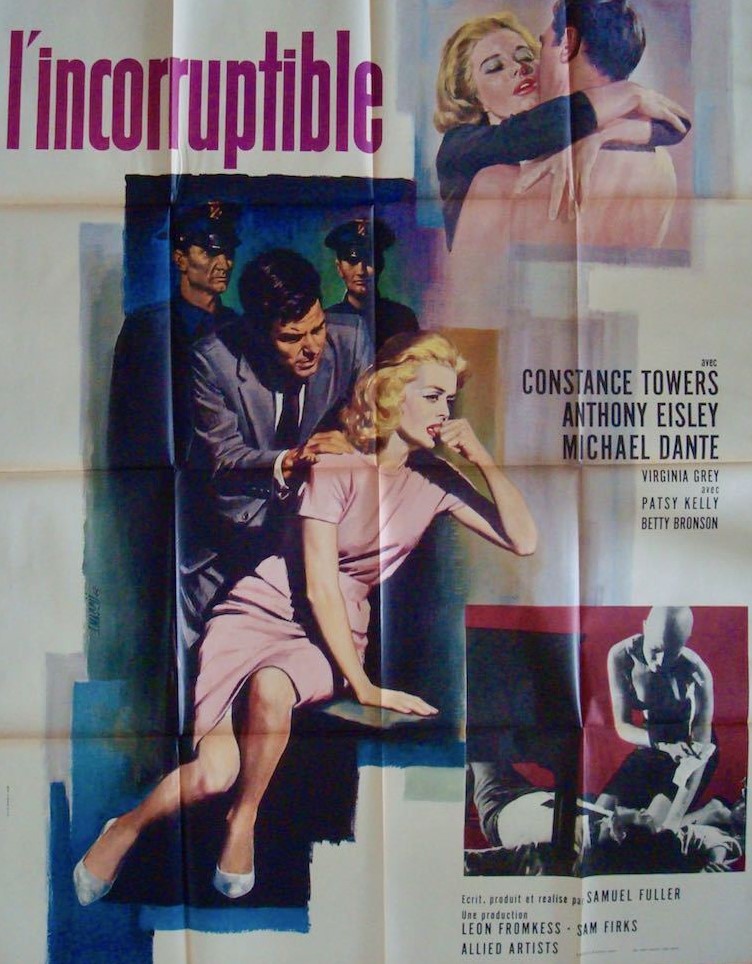
Certainly doesn’t start off as your standard entry to the criminal-trying-to-go-straight mini-genre when a bald woman beats up and robs her pimp.  Kelly (Constance Towers), who knows “your body is your only passport,” nonetheless sets out to create a new life for herself as a salesperson (hawking overpriced champagne) in a small town where prostitution is outlawed.

She could easily settle for being the mistress of corrupt cop Griff (Anthony Eisley), but he’s something of a pimp, sending girls-off-the-bus across the river to the joint run by Candy (Virginia Grey). Instead, she takes up nursing, in an institute for crippled children, providing tough love to the kids. In due course, she hooks up the town’s handsome philanthropic millionaire Grant (Michael Dante), a relationship which Griff threatens to wreck.

However, she fesses up to Grant, now her fiancé in double-quick time, about her past and, remarkably, he forgives her. And you think, my goodness, she’s going to get away with it, new life, new career, a job she loves in which she is adored by the kids. You could be tootling along Sentimental Boulevard: Kelly forms the kids into a choir, she coaxes slightly mad  landlady Josephine (Berry Bronson) back to reality, determines to make her own wedding dress rather than be beholden to the millionaire, and takes under her wing nurses Buff (Marie Devereux) and Dusty (Karen Conrad) who have fallen victim to life’s traps.

You could be in Movie of the Week territory, another hooker with a heart of gold, except while she’s been turning her life around, there’s the inherent tension that she must fail. But this being a Sam Fuller (Shock Corridor, 1963) picture, Kelly is one tough cookie, outsmarting for a start Griff, who sees her as another in his assembly line of sex workers, and beating up Candy for daring to seduce Buff away from nursing by the promise of big money. Kelly ain’t sentimental. She views herself as a “broken down piece of machinery” with a future beckoning of “nothing but the buck, the bed and the bottle.” This is partly a shrew observation of herself but also of the production line nature or prostitution.

So there’s a catch. And it’s just plain awful. Grant is a paedophile. He has chosen Kelly because, as a sex worker, she is a deviant who will “understand my sickness.” And she’s sickened that despite her best efforts, that’s how she’s viewed, as a woman who would condone such behavior, and that he somehow believes she is complicit, in encouraging young girls from the hospital to visit him.   So she kills him.

And then reality strikes with a vengeance. She finds herself embroiled in the worst kind of small town corruption. Griff, who’s gunning for her anyway, refuses to believe her accusation against Grant, his best pal. Candy, who’s also gunning for her, says Kelly planned to blackmail Grant. There’s money missing, so she’s branded a thief as well. And nobody can find the little girl Grant had lined up.

An absolutely terrific film, constantly switching gear, twist after twist, but incredibly humane. There’s probably never been a better portrayal of the working girl, here all shown as vulnerable rather than predatory, as victims caught in a man-made web, and although dealt with in subtle fashion many clearly suffering from mental illness.

Kelly is cultured, reads Byron and Goethe, embraces the classical music education a relationship with Grant promises, but is unusually self-analytical. When she looks in a mirror she’s not seeking physical flaws but shortcomings of character. She understands all too well how men play women. Her tragedy is that when she sets aside her inbuilt cynicism, the man she trusts turns out to be as untrustworthy as they come.

Constance Towers (Shock Corridor) carries the picture, revealing several shades of personality, from hard-bitten woman to tender nurse, from avenger to pragmatic problem-solver. Michael Dante (Harlow, 1965) pulls off the difficult role of being persuasively a good guy gone bad. Veteran Virginia Grey (Jungle Jim, 1948) is all veneer.

But it is Sam Fuller’s movie. He was a triple hyphenate, writer-producer-director, so his vision was never in doubt. The dialog is terrific – the explanation of the title alone is extremely creepy – often cutting to the bone, but the best sequences lack words at all, the black-and-white photography bringing an air of film noir, and for all the striking toughness of the heroine, several moving scenes.

It’s not shocking in Fuller’s normal manner. As I can testify, it suggests to the viewer it’s going one way, and the core terrible act creeps up upon the audience. But it is brilliantly directed, even with a B-picture cast. Pulp reinvented as art. You could possibly argue in its vision and subject matter this was the birthplace of the indie.

Fantastic Voyage (1966) ****

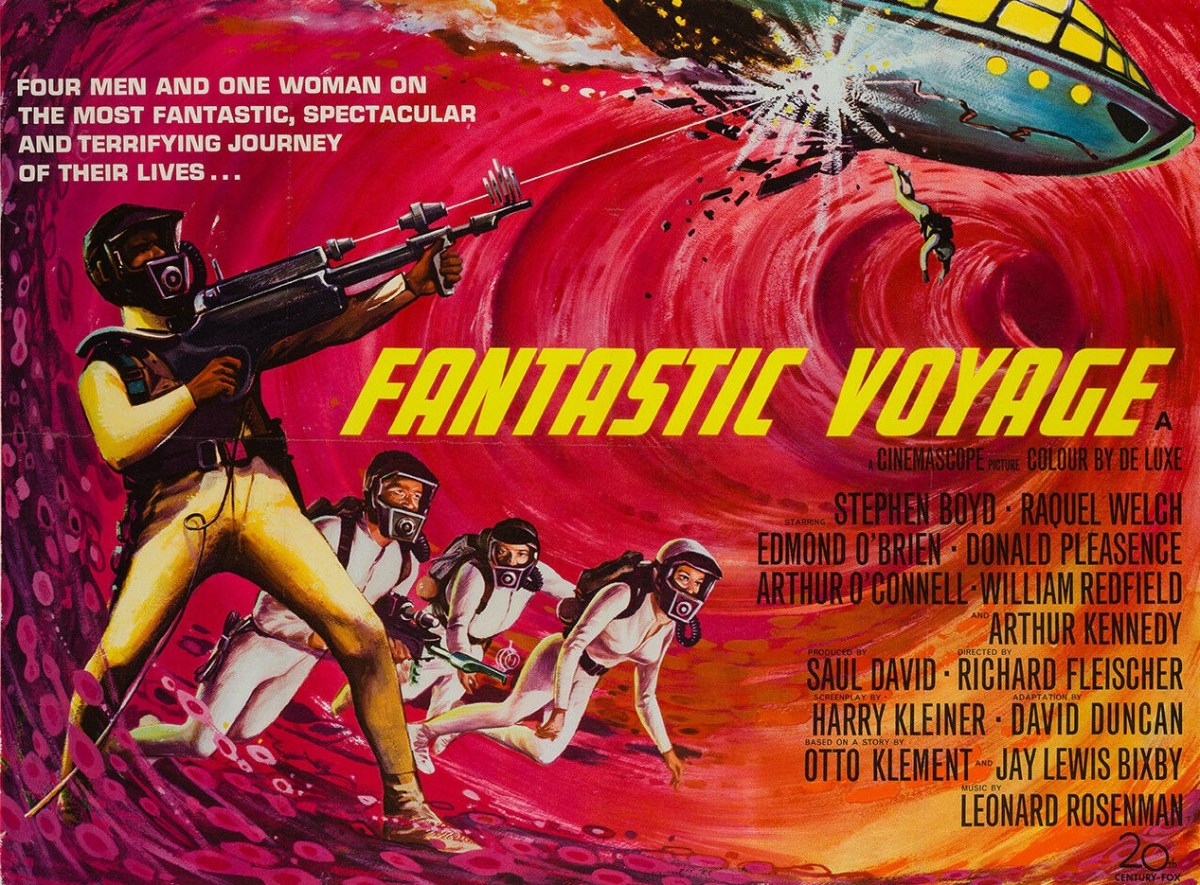
If this had appeared a couple of years later after Stanley Kubrick had popularised the psychedelic in 2001: A Space Odyssey (1968), and with his budget, it might have been a bigger hit. As it is, the ground-breaking sci-fi adventure, going in the opposite direction from Kubrick, exploring the mysteries of the body rather than the universe, is a riveting watch.  

Before we even get to the science fiction, there’s a stunning opening 15 minutes or so, a thriller tour de force, the attempted assassination of scientist Dr Jan Bedes (Jean Del Val), vital to the development of embryonic new miniaturization technology, baffled C.I.A. agent Charles Grant (Stephen Boyd) transported to a futuristic building (electronic buggies, photo ID) where he is seconded to a team planning invasive surgery, entering the scientist’s bloodstream and removing a blood clot from his brain. They only have 60 minutes and there’s a saboteur on board.

Heading the mission are claustrophobic circulation specialist Dr Michaels (Donald Pleasance), brain surgeon Dr Peter Duval (Arthur Kennedy) and lovelorn assistant Cora (Raquel Welch). Backing them are up Captain Bill Owens (William Redfield) who designed the Proteus submarine.  

The high concept is brilliantly delivered with ingenious improvisations, of the kind we have come to expect from the likes of Apollo 13 (1995) and The Martian (2015) that save the day. I’ve no idea how accurate the anatomical science was but it sounded very convincing to me. There’s a brilliant sequence when the scientist’s heart is slowed down and the heartbeat is reduced to a low thump but when the heart is reactivated the sub literally jumps.

The bloodstream current proves far stronger than imagined, taking them away from their planned route. After unexpectedly losing air, they need to literally suck air in from the scientist’s body. Swarms of antibodies attack. Claustrophobia and sabotage up the ante, not to mention the anxious team overseeing the operation in the control room, the minutes ticking by.

It’s not a fantastic voyage but a fantastic planet, the visualisation of the human interior – at a time when nobody could call on CGI – is as fascinating as Kubrick’s meditations on outer space. They could have landed on a distant planet judging by what look like rock formations. It’s wondrous. Sometimes the world takes on a psychedelic tone. The special effects rarely fail, the worse that occurs is an occasional flaw in a process shot, and a couple of times the actors have to fall back on the old device of throwing themselves around to make it look like the vessel was rocking.  The craft itself is impressive and all the gloop and jelly seems realistic. There’s a gripping climax, another dash of improvisation.

The only problem is the characters who seem stuck in a cliché, Grant the action man, Duval blending science with God, Michaels the claustrophobic, an occasional clash of personality. But given so much scientific exposition, there’s little time for meaningful dialogue and most of the time the actors do little more than express feelings with reaction shots. Interestingly enough, Raquel Welch (Lady in Cement, 1968) holds her own. In fact, she is often the only one to show depth. When the process begins, she is nervous, and the glances she gives at Duval reveal her feelings for him. It’s one of the few films in which she remains covered up, although possibly it was contractual that she be seen in something tight-fitting, in this case a white jump suit.

If you are going to cast a film with strong screen personalities you couldn’t do worse than the group assembled. Stephen Boyd (Assignment K, 1968), five-time Oscar nominee Arthur Kennedy (Nevada Smith, 1966) ), Donald Pleasance (The Great Escape, 1963), Edmond O’Brien (Rio Conchos, 1964) and William Redfield (Duel at Diablo, 1966) aren’t going to let you down.

But the biggest credit goes to Richard Fleischer (The Big Gamble, 1961, which starred Boyd) and his Oscar-winning special effects and art direction teams. While not indulging in wonder in the way of Kubrick, Fleischer allows audiences time to navigate through the previously unseen human body simply by sticking to the story. There are plenty of set pieces and brilliant use of sound. Harry Kleiner (Bullitt, 1968) created the screenplay based on a story by Otto Klement and contrary to myth the only part Isaac Asimov played in the picture was to write the novelization.

A joy from start to finish with none of the artistic pretension of Kubrick. This made a profit on initial release, knocking up $5.5 million in domestic U.S. rentals against a budget of $5.1 million according to Twentieth century Fox expert Aubrey Solomon and would have made probably the same again overseas plus television sale.

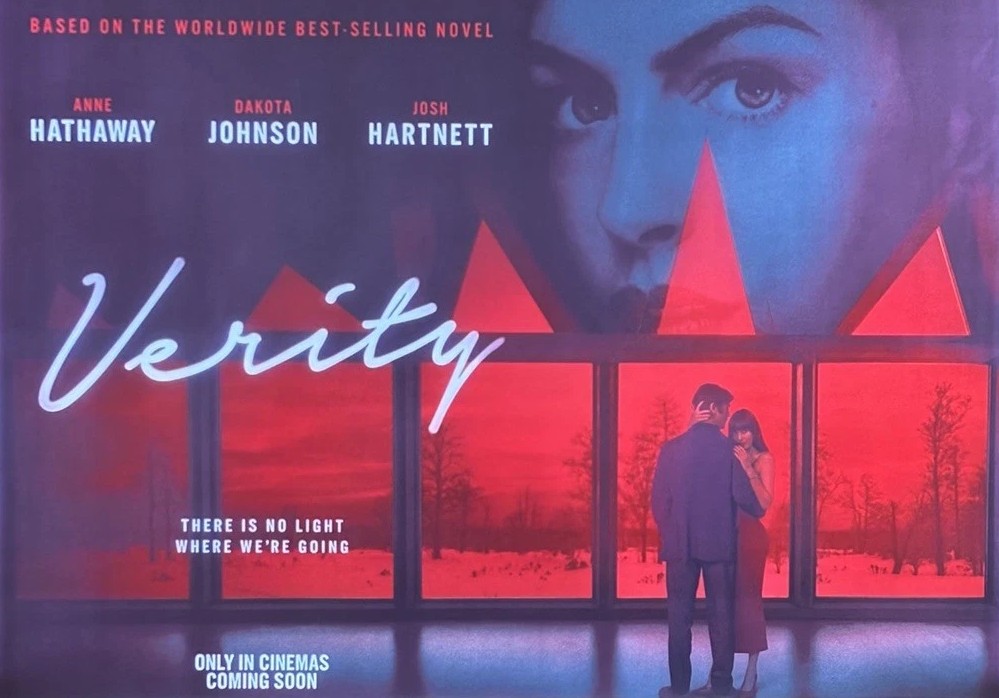
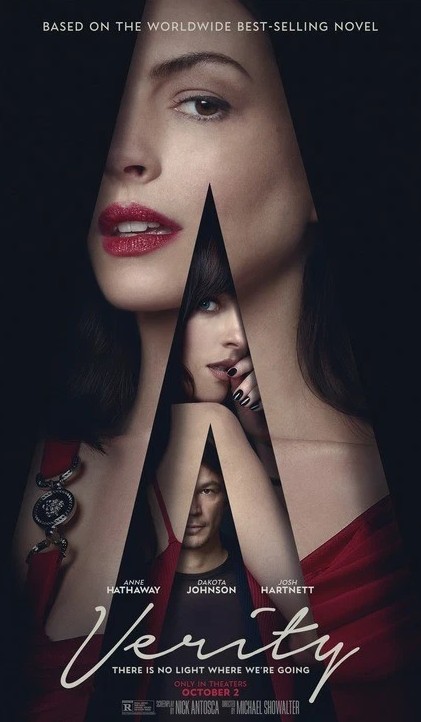
Verity (2026) **** – Seen at the Cinema

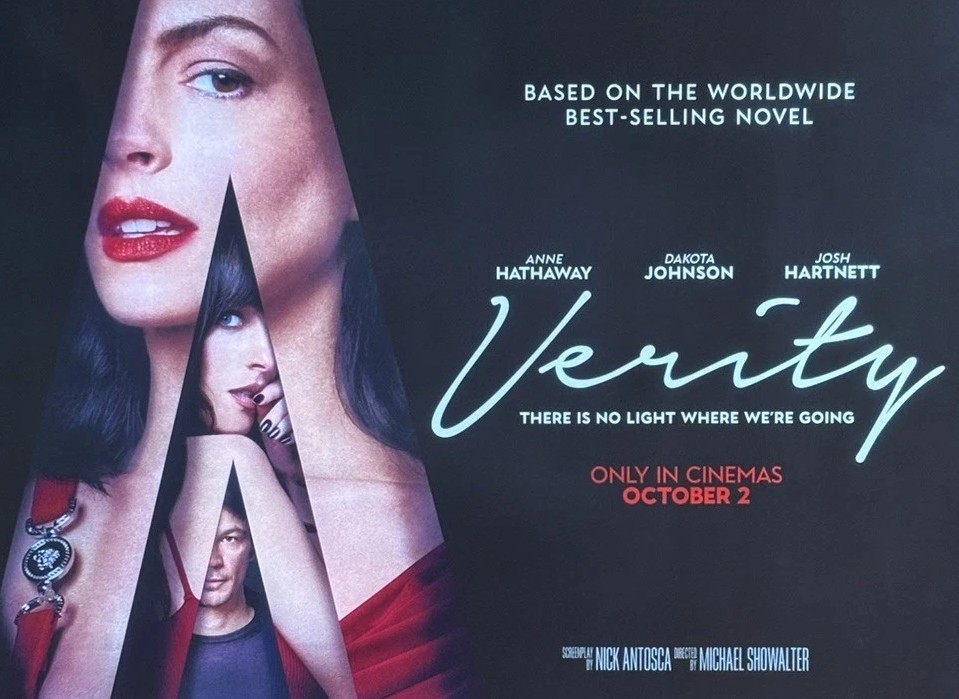
The Housemaid set a very high bar for the glossy, slick, twisty, female-led thriller. With the same background of wealth and privilege – and the underdog staring through the shop window – this terrific three-hander more than meets the bill. (I saw this on the same day as Digger and there was scarcely a seat left).

Given the twistiness of the genre now, the audience is aware nothing is what it seems and like me from the outset starts to wonder what the reality really is behind the glitzy façade. When you begin to out-think yourself, you know the movie has done its job.

I had a different scenario in mind, one where impoverished ghost writer Lowen (Dakota Johnson) has set it all up, inveigled herself into the household of bestselling crippled author Verity Crawford (Anne Hathaway) and conspired to write a tale, purportedly an autobiography, that would make husband Jeremy (Josh Hartnett) want to kill her. I was wrong, as it turned out, but the screenwriter’s line was just as twisty. In the end the pun on the author’s name, Verity, ensures that we can never know the entire truth.

Given Verity has made fortune imagining villainous heroines, it’s not long before the apparently innocent Lowen begins to fall under some kind of villainous spell, or the self-justification that amounts to the same thing.

The stunning meet-cute sets the tone. When Jeremy comes across Lowen her face is dripping with blood, the result of being too close to a city center car crash. He’s the ultimate gentleman, gives her his shirt in place of her despoiled top, and just as well because she’s going in to interview for the job of a lifetime. Verity needs someone to write three books, based on her voluminous notes, and learn to write in her distinctive style.

I should point the meet-cute between Verity and Jeremy is equally accomplished, Jeremy commandeering someone else’s limousine to make out with Verity.

Lowen is little more than a literary wannabe, published but without commercial success. She’s emotionally raw, too, having just buried her mother and inclined to self-medicate on a combination of her mother’s medication and alcohol. .

Naturally, with the wife out of action and confined to bed, paralyzed, unable to communicate, a romantic vacuum has opened up, a romantic job opportunity if you like, a sort of bonus to the writing gig, and maybe even an opening for a new wife. Kicking off the it’s-not-what-it-seems business, Lowen by accident discovers a memory stick containing, ironically, too much memory, the retelling of Verity’s life minus the fairy tale aspects that appears to cast Verity as a calculating mother resentful of her two children, fearing they are coming between herself and her husband.  There’s a tragic accident in which one of the children dies. But is it an accident or convenient murder?

Meanwhile, either Lowen is going barmy with guilt, what with playing around with the husband, or going mad, because she begins to see the paralyzed woman watching her. There’s a terrific scene where Lowen sticks a pin in Verity’s hand, drawing blood, hoping to force the wife out of her stupor and admit her supposed paralysis is all part of some kind of sadistic plan, the aim of which is unclear, unless, like her villainous heroines, this is just the kind of fun Verity enjoys.

Thanks to the autobiography, Verity very much comes alive in flashback. But whose version of her life are we seeing? By the time Lowen and Jeremy had made their own judgements, they have already devised a construct which permits villainous action under the guise of self-justification.

You’ll find a few plot holes if you look hard enough, but I doubt if anyone will be anything but swept along in the dazzling tale with convincing characters. This wouldn’t be a twisty thriller if it didn’t come with a couple of dynamite twists at the end.

This is the fourth adaptation of novels by Colleen Hoover (It Ends With Us, 2024) and I’ve enjoyed every one, and each quite different from the other. Nick Antosca (Cape Fear mini series, 2026) wrote the screenplay while Michael Showalter (The Idea of You, 2024 – also with Hathaway) directed but I reckon they followed Hoover’s guidelines.

This is turning out to be the Year of Anne Hathaway, with two big hits – The Devil Wears Prada 2 and The Odyssey – in the bag. All three actors are superb. I’ve not been that impressed with Dakota Johnson (Madame Web, 2024) before – although admittedly I skipped the Shades movie series – but this works for me, and Josh Hartnett’s delicious turn in Trap (2024) turned my preconceptions of him on their head.

Thoroughly enjoyable.

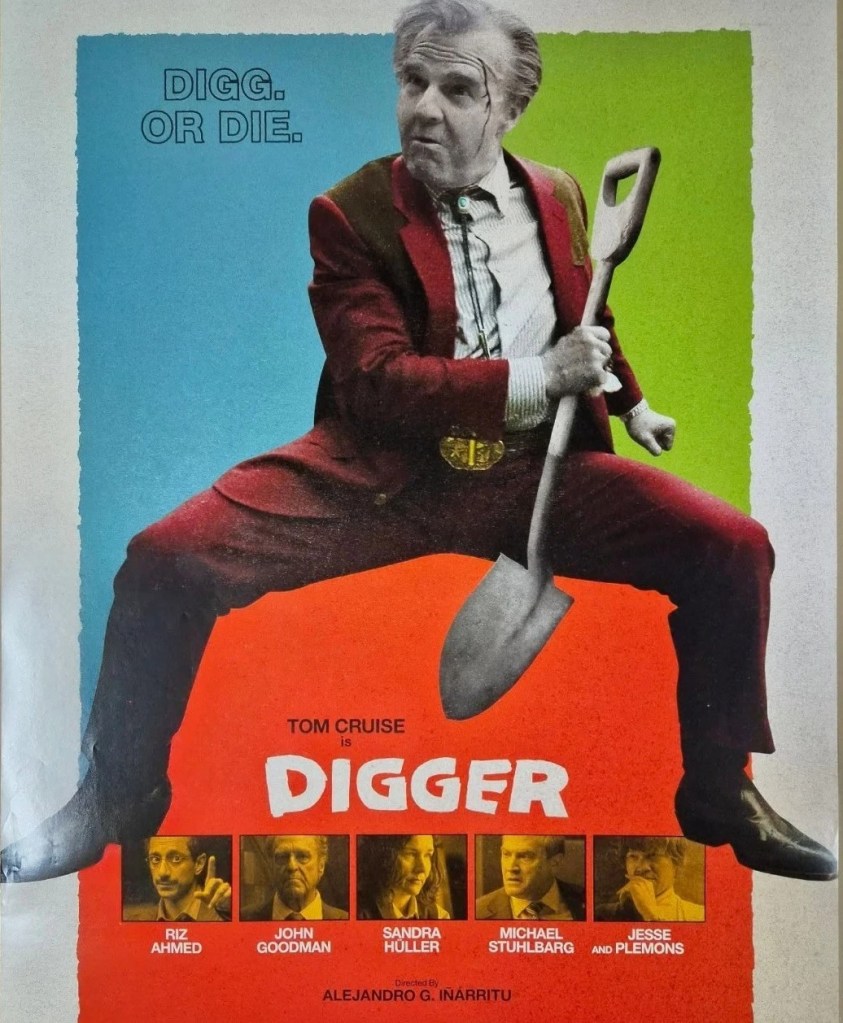
Digger (2026) * – Seen at the Cinema

This year’s Anora. Makes a heavy-handed Trump-sized point. Then makes it again. And again. And again. Until we’re reeling from a mega-budgeted bout of virtue signalling. Vanity project thy name is Digger. A couple of cinematic body swerves halfway in and, more potently, at the end can’t save this. And neither will streaming which occasionally digs a calamity out of its financial hole. Small-screen audiences are going to switch off in droves just as cinemagoers avoided it like the plague (I was the only person in my early evening screening on Monday).

We’re in standard disaster movie territory without any of the special effects, tidal waves, tsunamis etc which would normally account for the budget. Instead, it’s gone the other way, and more or less stuck us in endless rooms with the kind of politicians and money men scientists try to avoid like the plague.

It plays more like a bedroom farce without the sex, doors constantly opening and closing, people tripping over props (in this case a shovel) until you realize in what the director clearly thinks is a coup de theatre that it actually is a play, which partly explains the ultra-hammy performances, as if only the only idiots in power are shouty-shouty bombastic ones. So this is a play, that in itself given the staging and the huge cast, must have cost millions to put on, that concerns what happened years ago when billionaire oil magnate Digger (Tom Cruise) dug so deep into the Arctic ice shelf that he loosened an iceberg big enough to drift down into the North Sea and swamp most of Europe with, as we discover at the very end, global cataclysm.

In the “reality” part he’s obsessed with his cat, his oil, his billions and not taking the rap for exploitative exploration. In the play, Rockwell (Tom Cruise) playing Digger is obsessed with his daughter who has gone missing and with his understandable actor’s insecurity, constantly at war with the director. The ending, which is the best part, and not because this long trudge of a heavy-handed never-ending saga, is over has the audience don gas marks and emerge from the theater into a swamped city.

Tom Cruise has been here before, when he wanted to prove he was an “actor” and not just an action hero. Remember Lions for Lambs (2007), his first independent production, which targeted the U.S. Government’s involvement in Middle East wars and despite Cruise, Robert Redford and Meryl Streep sank like a stone because, guess what, audience don’t like to be lectured.

Guess what, audiences don’t like to be lectured to any more now. The interesting aspect is that audiences sniffed the wind well before this movie opened. Even suggestions in the media that Cruise was odds-on for an Oscar couldn’t tempt them in over the opening weekend. Had Warner Bros not already been taken over by Paramount Skydance, this is the kind of box office opening that could have sunk it, much as Michael Cimino’s misjudged western Heaven’s Gate (1980) did to United Artists.

So, yes, I can see this is making a point about eco threat and a plea not to allow the greed of nations and individuals to create catastrophe, but it’s not as if this is anything new. When Dr Strangelove (1964) warned about the dangers of nuclear warheads it had a lot more laffs.  This might have passed muster had it been populated with great jokes and laugh-out-loud lines but the jokes you can coming a mile off and the stagey playing kills off any chance the lines have of creating a laugh.

I’m not even sure why Tom Cruise had to put on a fat suit to play Digger, as if all rich megalomaniacs are fat. Steve Jobs, Elon Musk, paper thin the pair of them. Perhaps Cruise wanted to disguise the fact that he is, in fact, an old man. He’s 64 for goodness sake. The hairpiece and the kooky clothing would have done it.

So, sorry, this didn’t do it for me. I already knew this stuff and didn’t need someone spending $160 million to tell me.

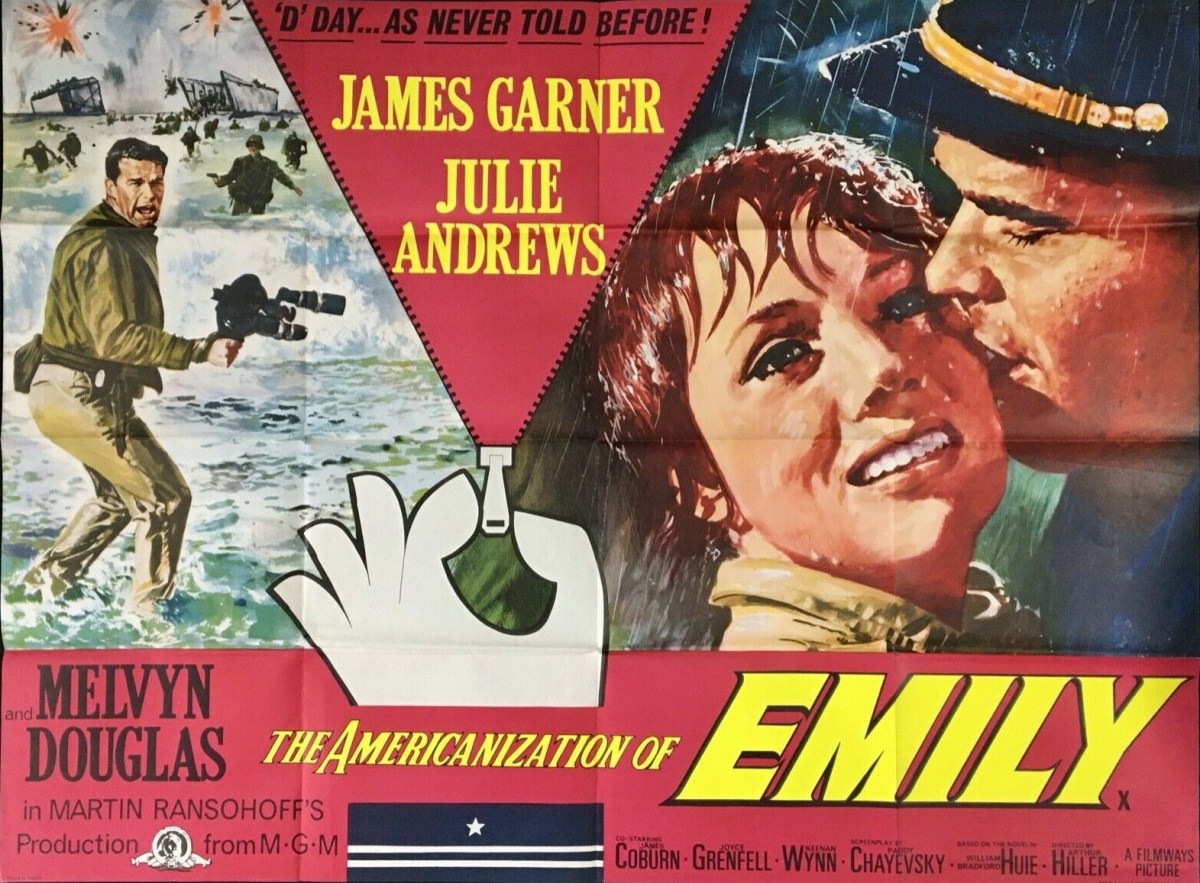
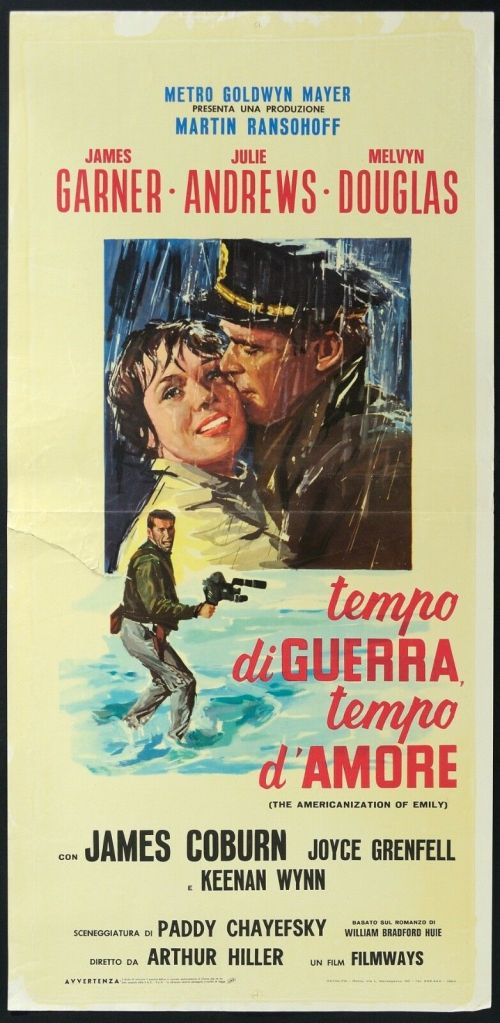
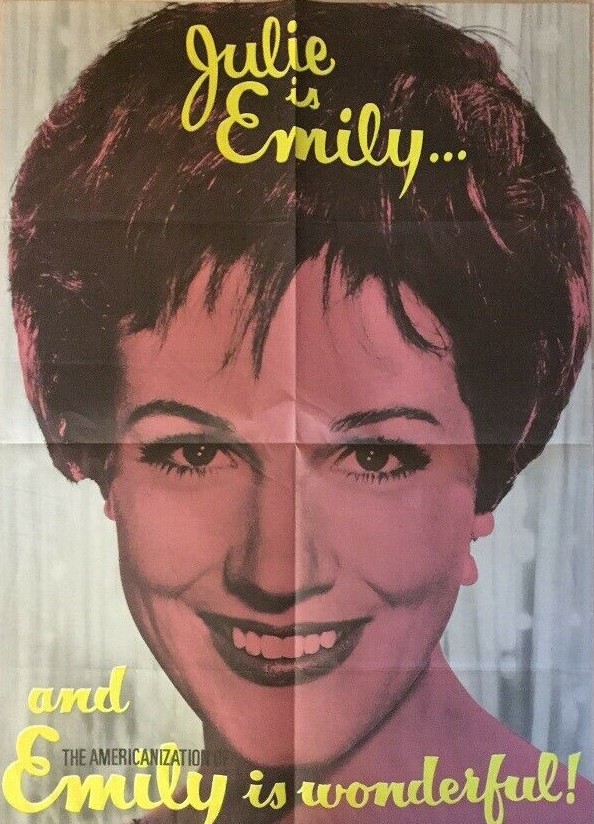
The Americanization of Emily (1964) ****

It’s an immoral job but someone’s got to do it. In wartime, generals need their perks – Winston Churchill with his cigars and champagne the best advocate. And those who supply the perks – Dog-Robbers in American parlance – expect their own perks in the form of a backroom job where they are never exposed to danger. Top U.S. Navy dog-robber in World War Two London on the eve of D-Day is Lt. Commander Edison (James Garner) who can spirit up whisky, steaks, nylon stockings and women, happy even to deliver shoulder massages for boss Admiral Jessop (Melvyn Douglas).

And like the recently-reviewed The Charge of the Light Brigade (1968) what’s mostly on the minds of top commanders is jostling for power, how to win the public relations battle on D-Day and prevent the politicians considering scrapping the service post-war. So Jessup comes up with a brilliant wheeze. What if the first man to die on Omaha Beach was a sailor? Allowing for the construction of a memorial to the “unknown sailor,” a feasible proposition given the Navy demolition unit is scheduled to land on French shores in advance of the invasion force. Edison is enlisted to film the anticipated death.

But Edison, whose brother died at Anzio, is a coward and does everything possible to avoid the job. He struggles to get English girlfriend Emily (Julie Andrews), whose father and brother died in the war, to share his perspective and is counting on buddy Lt. Commander Cummings (James Coburn) to get him out of it. But Cummings has his own ideas and Edison ends up the sacrificial lamb.

And it would be a brilliant black comedy except that, in the interests of a happy ending, Edison, despite being shot on the beach by Cummings, turns up alive.

In that case it becomes a fascinating exploration of the realities of war, the moral and immoral coming to grief in a moral vacuum that ensures that the higher up the food chain the less likelihood there is of dying and, ironically enough, the better opportunity to enjoy, while the masses are on strict rations, the good things of life. Emily would act as the movie’s conscience except that Edison is having none of war’s hypocrisy. He doesn’t want to die for his country and may be following to the letter General Patton’s dictat of making the “other poor bastard die for his country.” He doesn’t so much take a stand against the absurdities of war as stand up for the sanctity of life, in particular his own life, unwilling to fall for the “futile gesture of virtue.”

There’s plenty of what you should and shouldn’t do during wartime, arguments passionately argued for and against duty, though even the self-appointed conscience Emily stops short of turning her nose up at the finer things of life, no matter by what dodgy means they fall her way. that her life teeters on hypocrisy is scarcely explored.

And it does its utmost not to fall into the trap of the wartime romance genre, will-he-won’t-he survive the dangerous mission, precisely because you could never mistake Edison for a hero. And you need a hero not an ordinary joe for that particular genre to work. So what you’re left with is something else entirely, a man brave enough to be seen naked, exhibiting exactly the same lack of scruples in saving his own life as his commanders would employ to have him lose it. It’s kind of complicated that way.

Throw in another get-out clause on behalf of the Allied command, the notion that no high-up would embark on such a selfish vainglorious action, and that Jessup only does so because he is temporarily unhinged after the loss of his wife, when in fact history is littered with generals committing troops to wholesale slaughter for their own reasons.

Ediuon is such a charming character that if you wanted someone to plead the case on behalf of the cowardly you couldn’t make a better choice. The whole idea shouldn’t work at all because it’s only the bad guys, the shifty ones that turn up in every war movie, who  carry the cowardice flag. The film is so cleverly structured, with examples of the impact of loss all around, that it’s virtually impossible to vote against Edison. And part of the cleverness is the casting. If such a good egg as Emily can fall in love with Edison it somehow makes him a less despicable character. He’s certainly not as shifty as Jessup who dreamed up the bizarre stunt in the first place or Cummings, intent on exploiting it.

James Garner (36 Hours, 1964) excelled at playing the morally dubious, the cowardly sheriff played for laughs in Support Your Local Sheriff (1969) his biggest box office hit, but this isn’t far short of his very best work, and an exceptionally bold role for a star. Julie Andrews was already trying to move away from her goody-two-shoes debut in Mary Poppins (1965) that would be further enhanced by The Sound of Music (1965) and while her characterisation is not, on the surface, that far away from either role, the depth she displays here, the sorrow and the soulfulness, give this a edgier riff.

Good support from James Coburn (Dead Heat on a Merry-Go-Round, 1966), Melvyn Douglas (Hotel, 1967), Keenan Wynn (Man in the Middle/The Winston Affair, 1964) and Joyce Grenfell (The Yellow Rolls Royce, 1964).

Director Arthur Hiller (Tobruk, 1967) most of the time walks a very fine line but manages to create a very thoughtful movie that humanized what other anti-war pictures failed to make personal. Oscar-winner Paddy Chayefsky (Marty, 1955) based the screenplay on the bestseller by William Bradford Huie (Wild River, 1960). 

Another in the mini-genre concerning power politics in the Armed Forces. Would make a good triple bill if teamed with The Charge of the Light Brigade and Man in the Middle.


The Charge of the Light Brigade (1968) ****

It’s worth remembering that Britain, led by roughly the same type of commander lampooned here, won the Crimean War and that initially this particular engagement, despite the deaths, was celebrated for its valour by poet Lord Tennyson, in much the same way as famous defeats like Dunkirk and The Alamo somehow managed to achieve the status of some kind of victory in the public perception. It’s also worth noting that the documentary-style realisation of Dunkirk, (2017) and to that extent Coppola’s Apocalypse Now (1979) owe much to Tony Richardson’s approach, both films more interested in the bigger picture than individual acts of heroism.

And our conscience here, dashing cavalry officer Nolan (David Hemmings), is not quite saintly, engaged in an affair with the wife Clarissa (Vanessa Redgrave) of a friend. Despite the director’s rush to judgement, his approach displays a refreshing change to a genre where acts of selfless courage were the norm. Setting aside the occasional self-reverential artistic lapse, it’s an excellent depiction of class-ridden Britain at war in 1854, an era when military advancement was purchased without any consideration to the leadership skills such high-ranking officers required. I’m never sure if John Ford invented the camaraderie of his Cavalry in westerns, where at dances  the officers mixed with the ordinary soldiers, but here the two classes are kept apart.

And while Richardson clearly wants to blame the class system for the military calamity, the outcome is a no-holds-barred ultra-realistic portrayal of war in in all its sordid glory. At its heart are the machinations of senior commanders jostling for position and control and, much as with Field Marshal Montgomery and General Patton in World War Two, allowing personal enmity to affect decisions.

The two biggest culprits are Lord Cardigan (Trevor Howard) and brother-in-law Lord Lucan (Harry Andrews) in charge of the ill-fated charge who openly spout bile at each other, remain deliberately obtuse, and are, nonetheless, a joy to watch. Cardigan is irascible to the point of apoplexy, incredibly brave, vainglorious, a vindictive sex-mad peacock, with an odd selection of principles (refuses to deal with spies, for example). Nothing can beat a quite marvellous spat between the pair over how to pitch tents. Both, however, are a vast improvement on the ineffectual commander-in-chief Lord Raglan (John Gielgud) whose idea of tactics is to “form the infantry nicely” and another commander who refuses to let the simple matter of being under attack ruin his breakfast.

At the other end of the scale are the poor recruits, drawn from the lower classes, so ill-educated they don’t know their left foot from their right (something of a necessity in obeying orders in the field), lured by the promise of glory and a job, and find themselves turned into horsemen in the most brutal fashion.

In the middle is the effete Nolan, initially introduced as the good guy, who believes horses should be treated with kindness and stands up to Cardigan. His romance with Clarissa is a masterpiece of nuance, all furtive glances, hardly a word spoken. And he has a pivotal role in sending the cavalry in the wrong direction at the Battle of Balaclava, causing the fatal charge.

It’s episodic in structure, characters bobbing in and out, some for comedic purposes, and without the battle it’s doubtful the picture would have been made for, excepting the high-level squabbling, there’s little inherently dramatic. And possibly that’s to the movie’s benefit for it clears the way to concentrate on how an army operates and goes to war, the focus, unlike most war or historical pictures, being as much on what goes wrong as goes right. So the horses dying during the voyage and callously dumped overboard and the men marching through Crimean heat and afflicted by cholera take centre stage rather than lavish sequences of soldiers on splendid parade.

On the downside, you have to accept the director’s version of the war’s causes, British imperialism don’t you know, rather than Russian aggression as a result of religious conflict in the Middle East. And there’s narrative indecision, various characters permitted interior monologue for no particular reason except artistic impulse. Mrs Duberley (Jill Bennett) wife of the paymaster (Peter Bowles) is permitted to accompany the expedition for the sole purpose it would appear of being shagged by Cardigan.

The detail of what exactly went wrong on the battlefield is obscured by the fact that Nolan, who hand-delivered the famous order to attack, itself unclear, died in battle, so it’s like one of those Netflix documentaries about unsolved murders, fascinating but ultimately annoying. If incompetence is measured in casualties, apart from this one charge the British came out better than the other participants, 40,000 dead compared to three times as many among their French allies and more than ten times as many among the Russian enemy.

The acting is of a very high quality, David Hemmings (Alfred the Great, 1968) as good as I’ve ever seen him, Vanessa Redgrave (Blow-Up, 1966), except for her deception a Stepford Wife Victorian-style, Trevor Howard (Von Ryan’s Express, 1965) brilliantly outrageous and John Gielgud (Sebastian, 1968) who turns befuddlement into a high art.

Tony Richardson (Tom Jones, 1963) makes some bold choices, not least in what is included and what is left out, the battle of the tents, fake news (from The Times!), soldiers facing the lash, the dashing charge and its terrible aftermath, the animated sequences, and his revolutionary soundtrack. Sergio Leone might have claimed the artistic high ground with the buzzing fly at the start of Once Upon a Time in the West (1969) but there’s little in film music of the time – beyond Bernard Herrmann’s Psycho score – to compare with the sound of a fly playing over the end credits or its inclusion during the march when men are literally dropping like flies. This is a very different kind of curate’s egg, absolutely brilliant in parts, and never dull.

Unfortunately, there’s a topical parallel, Crimea having been invaded several years back by Russia and now the whole region aflame.

This was the first home-grown excursion into the all-star-cast business – other British movies in that ilk, originating from these shores, previously headlined by a Hollywood star like Gregory Peck (The Guns of Navarone, 1961),  Kirk Douglas (The Heroes of Telemark, 1965) or George Peppard (The Blue Max, 1966). And I can see why the new box office stars David Hemmings and Vanessa Redgrave, repeating their Blow-Up (1966) teaming, would have, in the narrative sense, occupied center stage. But given nobody knew for certain what caused the disastrous charge and that it would taken place anyway in the picture, the far more entertaining approach would be to concentrate entirely on the likes of the feuding Cardigan and Lucan, two characters who leapt off the screen. Outside of the battle itself, Nolan’s sole purpose, it would seem, was to point out that the army treated its horses badly, a point the audience would have easily picked up without Nolan’s display of alternative horsemanship. Still, all told, at the risk of repeating myself, an excellent watch.

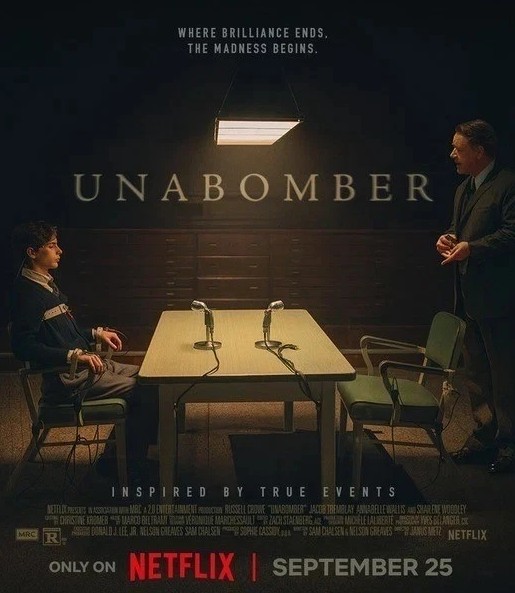
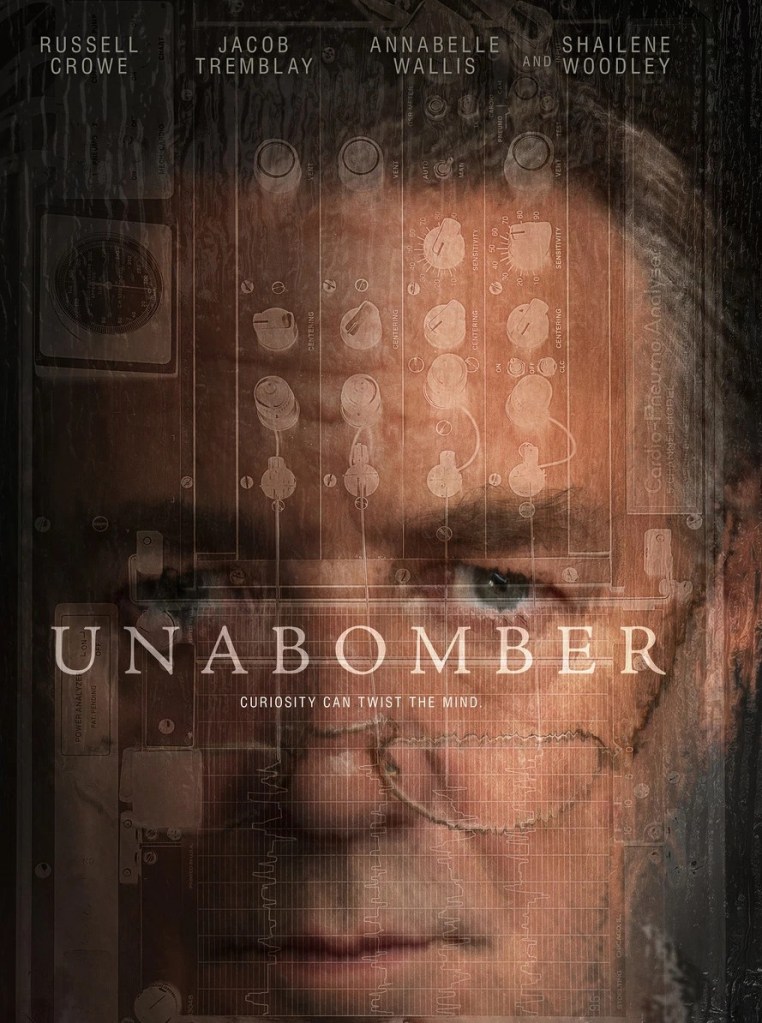
Unabomber (2026) **** – Seen on Netflix

I’ve got mixed feelings about this one because it’s effectively two films in one, the sections separated by 38 years. The first part, set in 1958, explores the early life at Harvard of the Unabomber, the second part, set in 1996, the investigation leading to his arrest. The first part is superb, with Russell Crowe, devoid of his usual bombast, in superb form and telling as cruel a tale as you’ll ever come across.

The second part is the kind of True Crime drama which has become a Netflix trademark. And interesting though it is, it’s pretty much standard for the genre, but gets itself into trouble by establishing Joanne Miller (Shailene Woodley) as the FBI investigator who effectively tracks down the criminal, battling the department and male misogyny to do so. And although this is too reminiscent of Clarice Starling from Silence of the Lambs (1991), the big problem is that Joanne Miller didn’t exist, she’s a figment of someone’s imagination, and the gender switch comes off first of all as an insult to the guy who actually did the solving and a crude attempt to inject unnecessary feminism into the tale.

And once you learn that, you start to question the truth of the first section. Which I very much hope has not been fictionalized because it’s just terrific.

Theodore (Ted) Kacynski, son of a butcher, is a pretty smart guy to get into Harvard in the first place, but he’s your standard misfit nerd, doesn’t feel he fits into society, reacts badly to women coming on to him, falls out with his dominant father and meek mother. He’s meant to be studying maths but has taken a class in philosophy taught by eminent professor Henry Murray (Russell Crowe) who uses, unusually, Herman Melville’s Moby Dick to introduce students to his subject, and takes a fancy to young Ted, on account purportedly of his brainpower (I should point now there are no sexual undertones) and invites him to take part in an unique experiment, ostensibly to discover how well people can perform in a debate. Murray is a kind, warm, character who empathizes with Ted’s travails at home, explaining that he, too, was victimized as a child, called defective by his father because he didn’t fit in. Murray also has an alluring sidekick, Christiana (Annabelle Wallis), who is both a high-up assistant for the experiments and his girlfriend.

But the debate is a two-person affair in a private room, a lab of some kind because Ted is harnessed up to all sorts of electronic equipment to measure how he responds during the exercise. It’s not the usual kind of debate, his opponent, known only as Mr C, is cruel, vindictive, arrogant, and whose main weapon is not argument but character assassination. It’s not a debate but a tongue-lashing. But Ted constantly comes back for more. But no matter how much he stands up to his opponent, the stakes are always tilted against him.

Eventually, we discover that Professor Murray is working for the Government, conducting a brain-washing experiment. He’s already headed up an investigation into the U.S. soldiers brainwashed by the Chinese in Korea and now the men in black want to understand how to use brainwashing themselves. Murray is under some pressure to deliver results and it turns out that Ted, initially viewed as an ideal candidate for brainwashing, becomes an impediment. So Murray decides to “break him” himself. Except our supposedly submissive student turns the tables and we get a glimpse of his devious criminal mind.

I know nothing about the Unabomber but I suspect the producers know too much and probably feared the tale of how Ted terrorized America for 15 years using bombs through the post is already too well known to make an intriguing thriller, especially as the older Ted is only seen as a heavily bearded fellow living in a cabin in the woods.

For people like me, ignorant of the facts of the case, which is ancient history by now, and this serial killer downgraded in the public eye by far worse serial killers, I was pretty taken by the investigation which centered on one agent, Miller, standing up to the rest of the department as she follows a different clue, using linguistics to catch the killer. Effectively, the person who uncovered the link between Ted and the Unabomber was Ted’s younger brother’s wife who noted the connection between the written language Ted used in general correspondence to the killer’s manifesto published in the newspapers.

Anyway, even with my reservations about the clumsy gender switch, I found this totally engrossing. Russell Crowe (Nuremberg, 2025) is very much back on mild-mannered form. Shailene Woodley (Ferrari, 2023) is at last given a leading role to do her talents justice,  Jacob Tremblay (The Life of Chuck, 2024) sizzles as the troubled student and Annabelle Wallis (Mutiny, 2026) shows how easy it is to switch from the horror movies with which she made her name.

Directed by Dane Janus Metz  (All the Old Knives, 2022) from a screenplay by debutant  Sam Chelson and Nelson Greaves (Unfriended, 2014).

All told, compelling stuff.

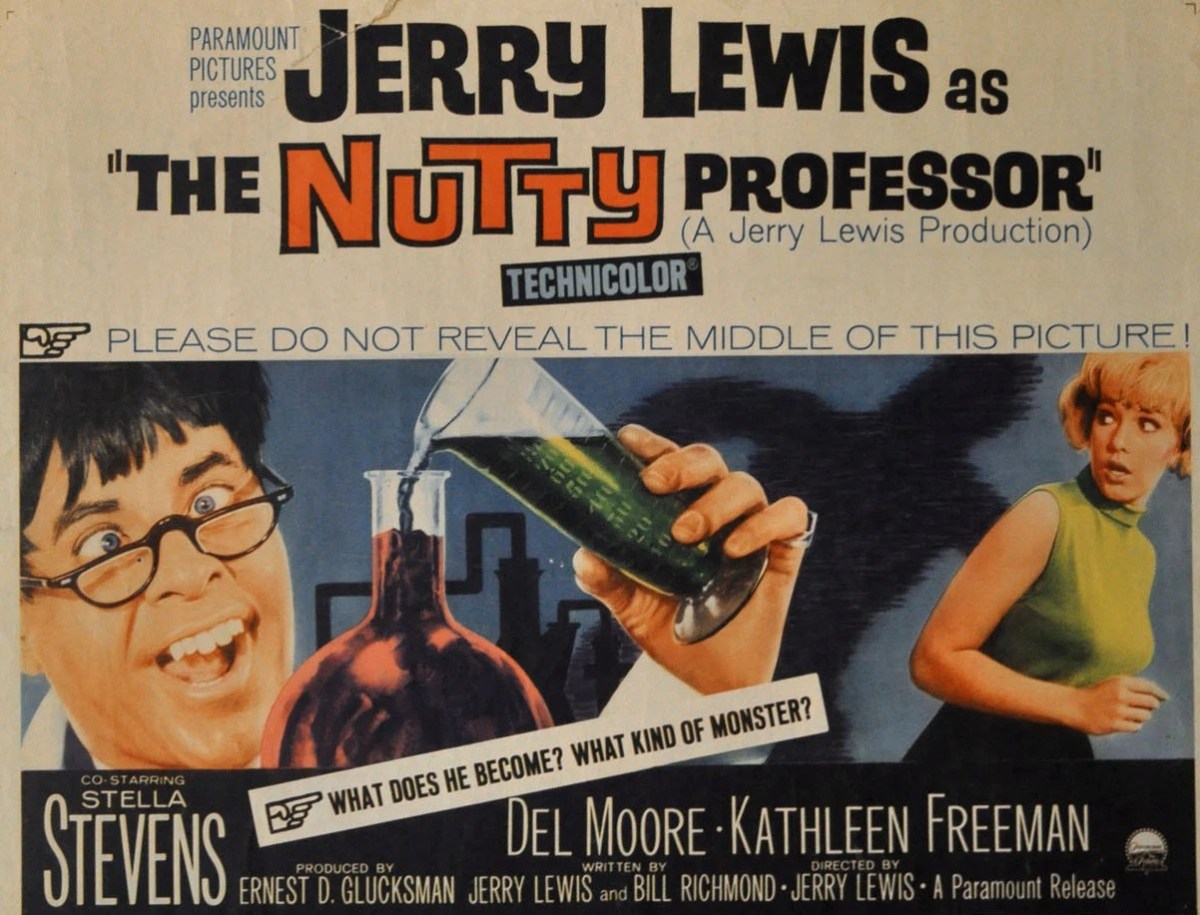
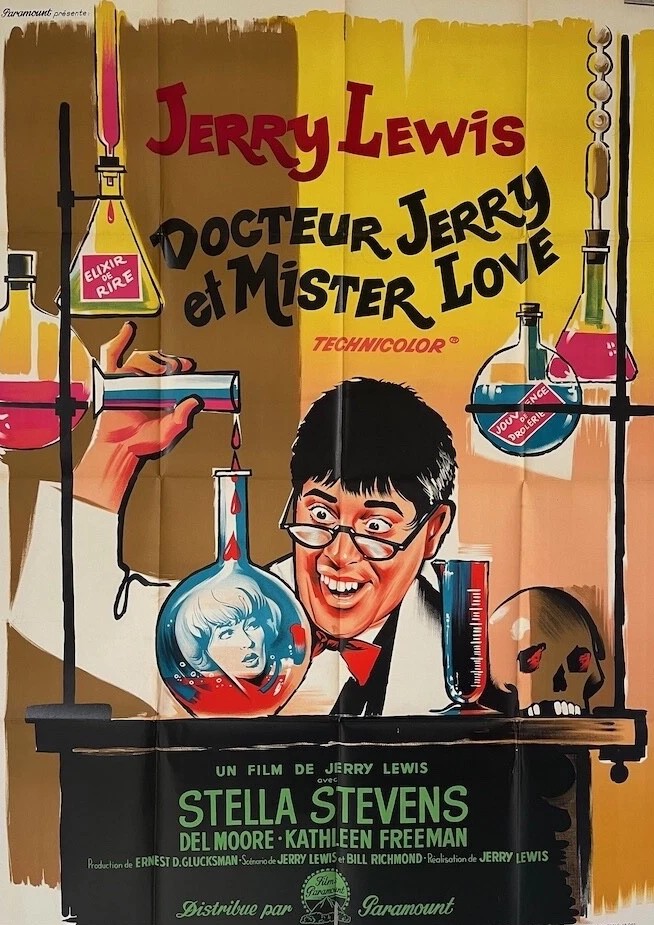
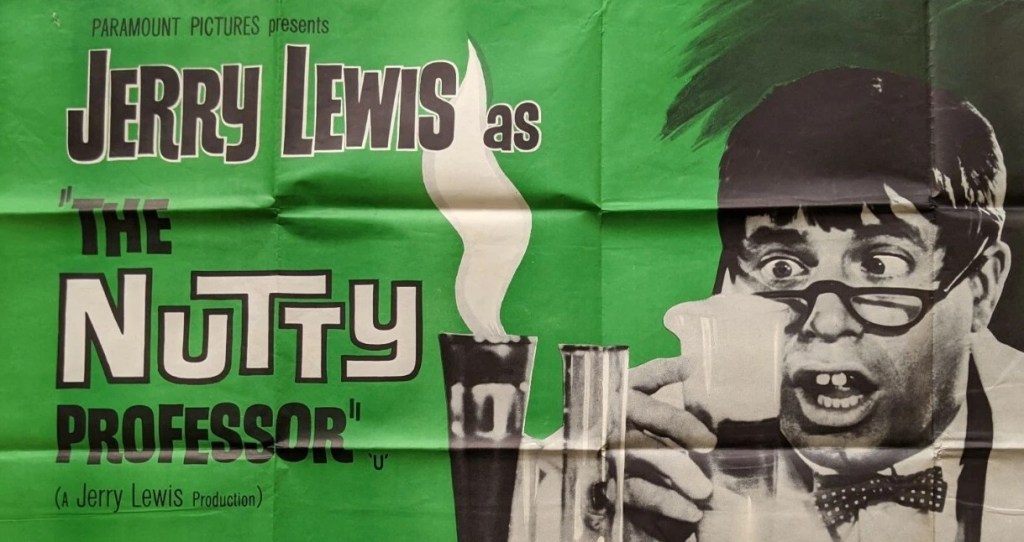
The Nutty Professor (1963) ****

Not many, outside of France, fell in with the notion that Jerry Lewis was some kind of cinematic genius. But this was the era of the auteur and the French revered the idea of a creative being in complete control and of placing a distinct imprint on their work. Given Jerry Lewis (The Bellboy, 1960) was not only star, but director, producer and co-writer you could see how neatly he ticked this box.

There are precious few actors turning to direction show any great aptitude for that particular skill. And while Lewis isn’t waiting days for the perfect ray of sunshine or tormenting his actors by insisting on endless takes, Lewis the director does know what makes Lewis the actor work. And it shows.

While this depends largely on sight gags, some quite brilliant, what really makes it tick are the twists, the kind of plot devices that so shift audience perception that they wouldn’t be out of place in a thriller. The concept certainly plays around the with audience, taking it on quite a wild ride.

White, initially, it looks like it’s going to be a weak parody of the awkward nerd, in this case Professor Kelp (Jerry Lewis), getting the sweet-natured girl, in this case student Stella (Stella Stevens), it quickly switches into a more contemporary issue, the question of identity, and deeper still, in an era these days of too much self-reflection being bad for you, of learning to like yourself.

When Kelp is humiliated by a football jock in his own class, he determines to get revenge. When the obvious course of action of body-building doesn’t work, the scientist resorts to science, devising a concoction that will change his personally. The first twist is you are left thinking he’s going to turn into a werewolf. So when he turns up, instead, as an arrogant punk-cum-pop-star with girls swooning all around him, and the kind of tough guy patter that James Cagney would envy, all bets are off.

The entrance of the new-look Kelp is brilliantly done, firstly the camera doing a POV number and registering public reaction to the new Kelp, who we are led to believe, is the said werewolf. So when he saunters into a nightclub dressed to the nines, a smoke in his hands, you can ee why he has attracted such a reaction.

Stella is the kind of sweet girl who is attracted to a tough-talking punk very much against her wishes. Kelp is born again as Buddy Love with plenty lip to exert his authority as the alpha male and a swagger that gets him out of any situation, even one where, a la Cinderella, the potion wears off and he has to abandon Stella in the middle of the night just as romance beckoned.

As if Lewis has seen too many Dr Jekyll pictures, he doesn’t take the visual approach to show the spell is wearing off. Instead, it’s verbal. Kelp’s tough-guy voice reverts to the timid professor’s original whine. Of course, you know the brew is going to wear off from the changes in his voice. And you know crisis is coming. But instead of resorting to slapstick to make the most of the situation, Love/Kelp turns philosopher, owning up to his scam, explaining that he wanted to be someone other than a weak nerd. And while confession is always in movie terms a good way to get a flawed hero out of a jam, this takes a more interesting route, expounding on the need to be true to your own personality, learning to like yourself and not get lost in a mess of self-inflicted anxiety.

There’s a lot less slapstick than I expected, much more in the way of visual gags: Kelp almost disappearing into a lounge seat, the unexpected knock coming from the floor where Kelp has been buried under a door, the squeak that still occurs when the squeaky shoes have been removed, laden down with an armful of books Kelp dumps them into a car loaded with books. It’s as though director Lewis is one step ahead of the audience.

You think Stella Stevens (The Mad Room, 1969) is just there as eye candy until she’s called upon to act with her eyes, bringing emotion to the screen.

Jerry Lewis at the top of his game. I caught this on Amazon Prime.

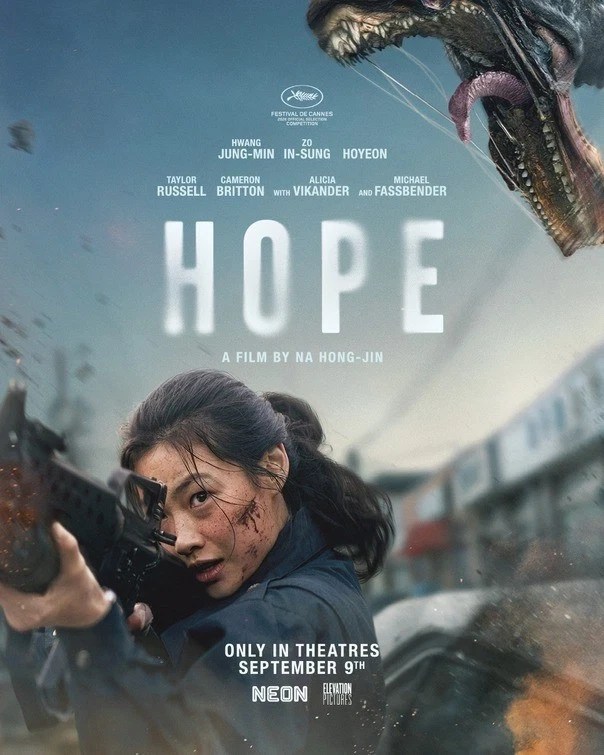
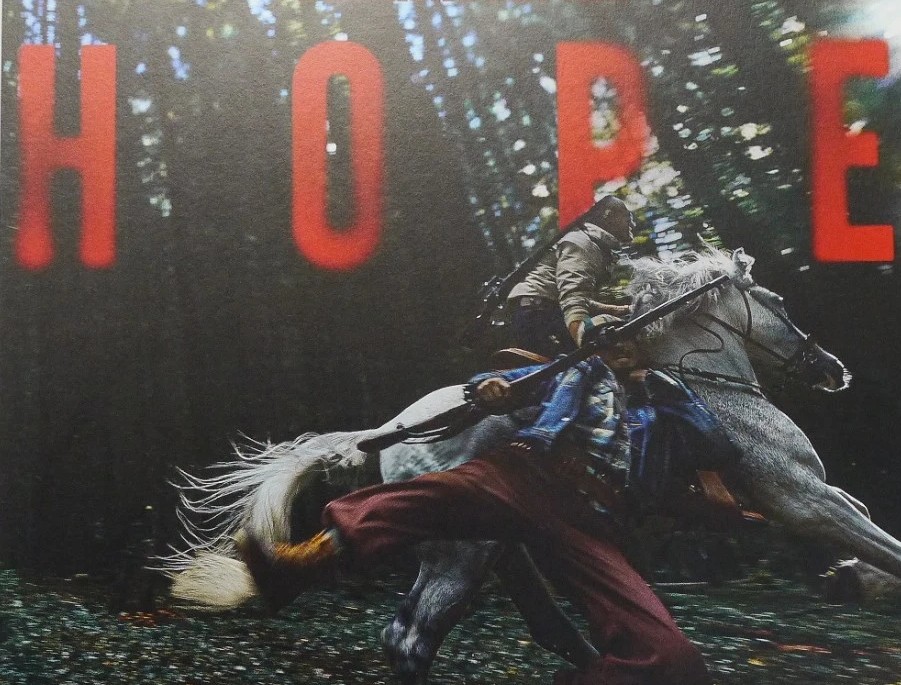
Hope (2026) **** – Seen at the Cinema

Heck of a wild, sometimes insane, ride with, in the stunt work, shades of Indiana Jones. But its length is a drawback. And that’s a shame because even I with no cinematic editing skills could see how easily it would be to trim 20-25 minutes from its unwieldy running time. There’s too many characters for a start, too much unnecessarily exposition and I’d chuck out wholesale all the business at the end of anything falling from the sky. And while we’re at it, I’d add one word to the title. Hope Harbour, where the action is set, is more prosaic and honest than Hope which carries pretentious symbolic and metaphysical undertones.

Part of what makes this so much fun is both the characters and the lack of characters. No scientists fill us full of mumbo-jumbo and no interfering pompous government officials get in the way of this narrative. The local inhabitants are, on the whole, gleefully gung-ho. Let’s show this critter, appears to be their watchword, as amateur hunters and a vengeful junior cop plan to show the invaders who’s boss. All the characters, that is, except for police chief Beom Seok (Hwang Jung-min) who spends most of the time crapping in his pants.

But it’s the action and mystery we’ve come for and this doesn’t disappoint. After discovering some creature has wrecked the town, the chief tries to hunt it down, only to find the roles are reversed and this scampering alien terror, even faster than a Ridley Scott alien, is coming after him. Having, between them, rendered the town a complete shambles, the action shifts to the forest where a small family of aliens has made their home.

Headstrong and to a large extent dumb hunters just fancy a more interesting trophy than a tiger and set off in hot pursuit, some on horseback. Rookie officer Sung Ae (Hoyeon) is the pick of the vengeful forces, having raided the armory for topline weapons including a grenade launcher.

Usually, by now, the place would be swarming with militia, helicopters, airplanes, thousands of crack troops armed to the gills, but all the help the cop can call on are all away dealing with wildfires. It takes a while to untangle the mystery. The aliens are anatomically related to humans but have a tendency to sprout antlers and maybe even turn themselves into trees though trees are hardyl safe when they’re around, any hunters they collect are liable to be sent hurtling straight through a tree by the force of their throw.

A child alien has gone missing and turns up dead in the freezer of a numbskull who killed it with the aim of selling it to the highest black market bidder. The police chief has detected anguish in the monster ripping the town apart and he reckons the alien is a mother searching for the lost child. The other two aliens are mistress and obedient servant.

The aliens are not just hard to kill but don’t observe the rules of the road thus triggering a mad chase that also involves a hunter on horseback who tries to do one of those action tropes of jumping from some thing moving very fast, in this case a horse, to something moving as fast, a cop car.

There are none of the traditional character cliches you usually find in the genre. No power struggle, no romance, unspoken or otherwise, no considering the fate of the universe, no deep thinking. In fact, like the new-look Resident Evil the characters are distinguished, if that’s the word, by being all too human, with frailties exaggerated in the heat of battle. They spend all their time annoying each other or arguing.

I’m not familiar with the work of Korean writer-director-producer (that level of control probably the reason why it’s overlong) Na Hong-jin who’s hardly prolific given his previous picture The Wailing was a decade ago. But this is certainly worth the wait. The set-up is  imaginative, the narrative inventive, the characters appealing and once it gets going a pure pedal-to-the-metal actioner.

Foolishly, this has been sold via the arthouse festival vibe which will put off the audience of action fans it is aiming for. Catch it while you can because it won’t last long in cinemas and the action will be depleted on the smaller screen.

Well worth seeing.

Discover WordPress

A daily selection of the best content published on WordPress, collected for you by humans who love to read.

The Atavist Magazine

by Brian Hannan

WordPress.com Blog

News, Tips & Website Tutorials