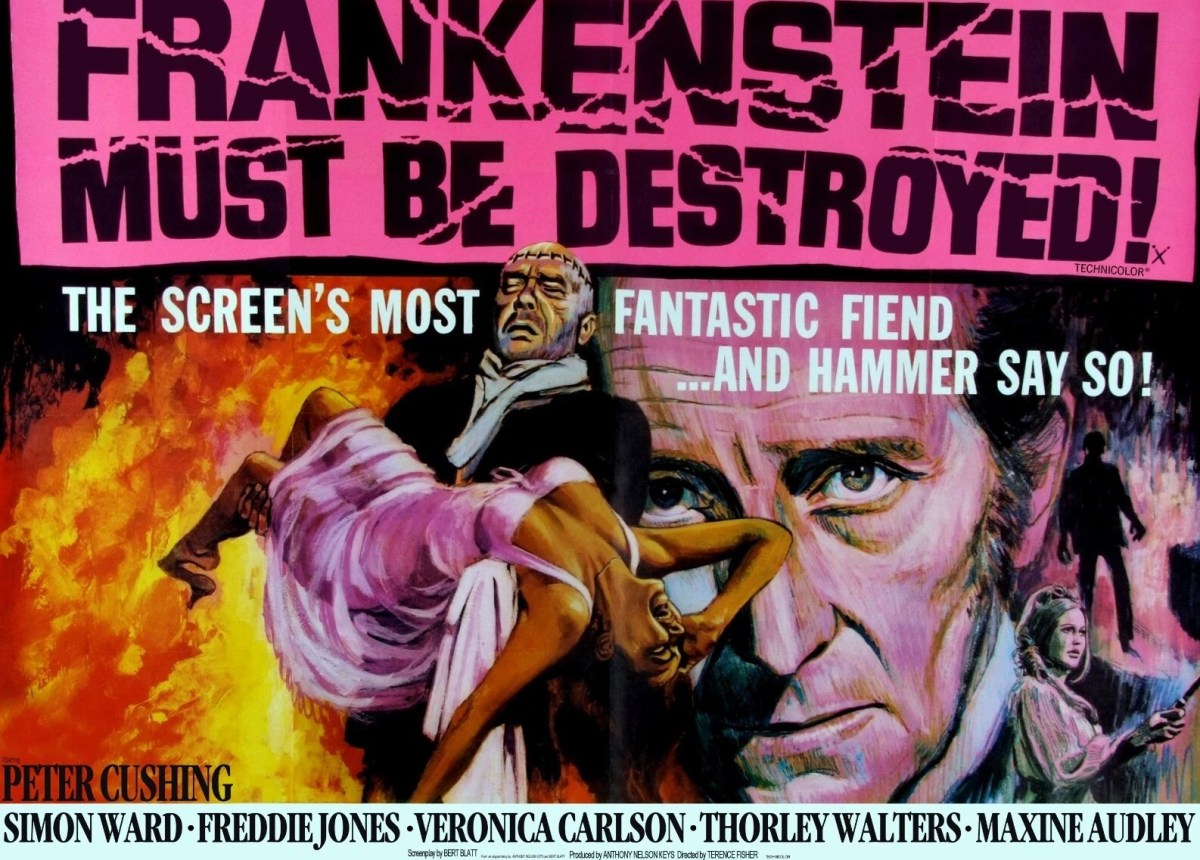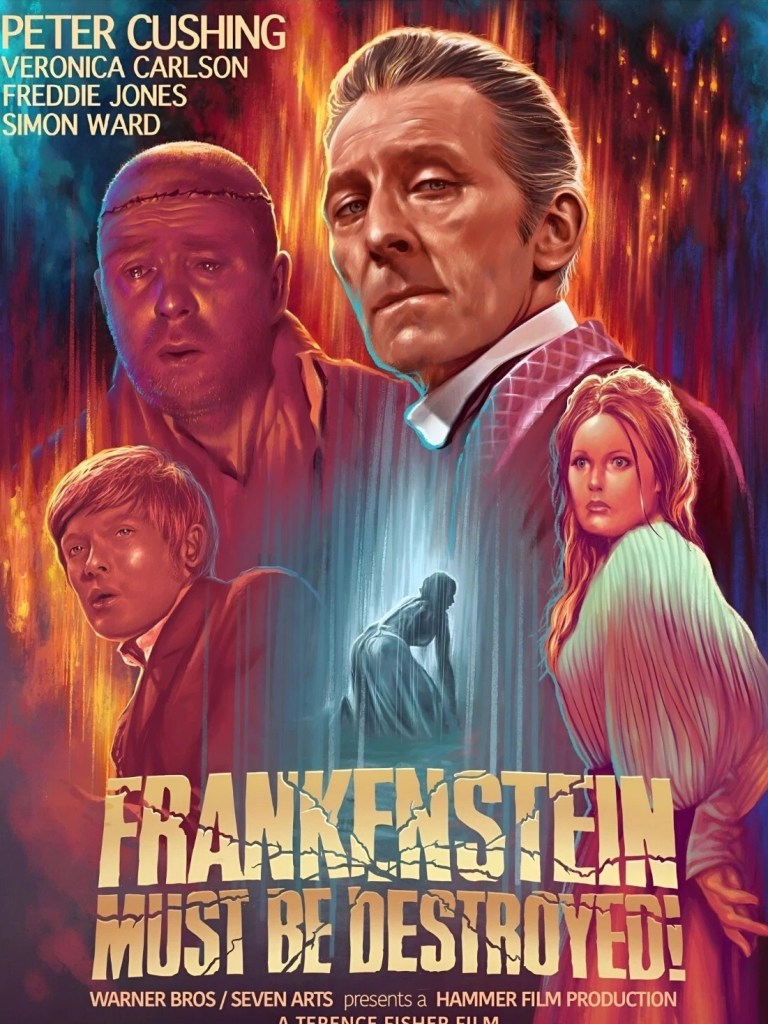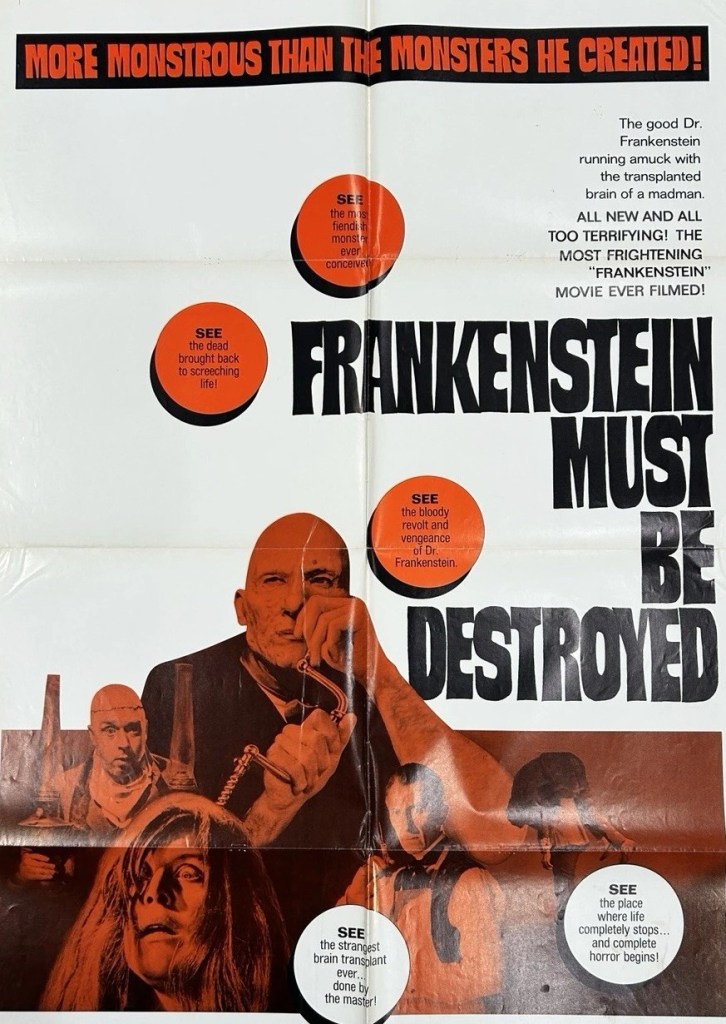
Fanboys these days wouldn’t accept the sudden shift in the series without some far-fetched backstory. But in those days audiences never seemed to question why the new iteration of Frankenstein was less than half the age of the previous one (Frankenstein Must Be Destroyed, 1969). Call this a remake or a reimagining or just trying to pull a fast one on a loyal moviegoer.
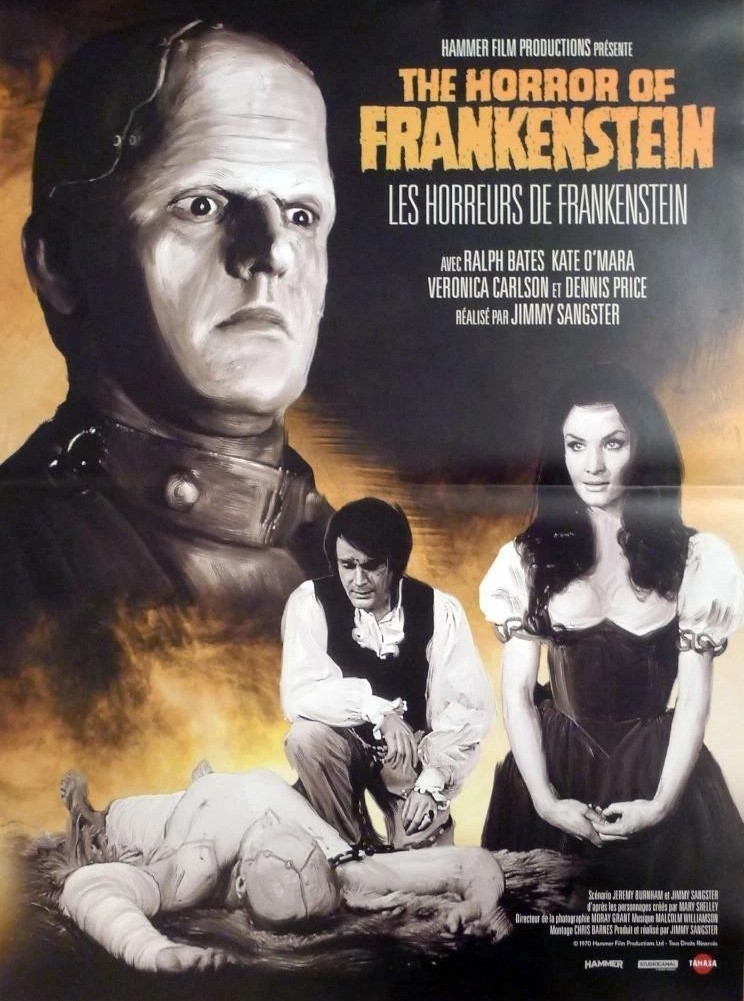
In fact, this goes pretty much back to basics – and beyond the addition of sex and gore it’s claimed in some quarters to be little more than a retread of The Curse of Frankenstein(1957) – and without Peter Cushing to provide chilling gravitas. Instead, Hammer have corralled in a younger rising star in Ralph Bates – who had made his movie debut in Taste the Blood of Dracula (1970) and would form part of the studio’s horror stock company for the next few years – and in keeping with his age taken us back to the teenage Frankenstein, besting schoolmasters with his arrogance and scientific brain, before dropping out of university to concentrate on experiments with human life.
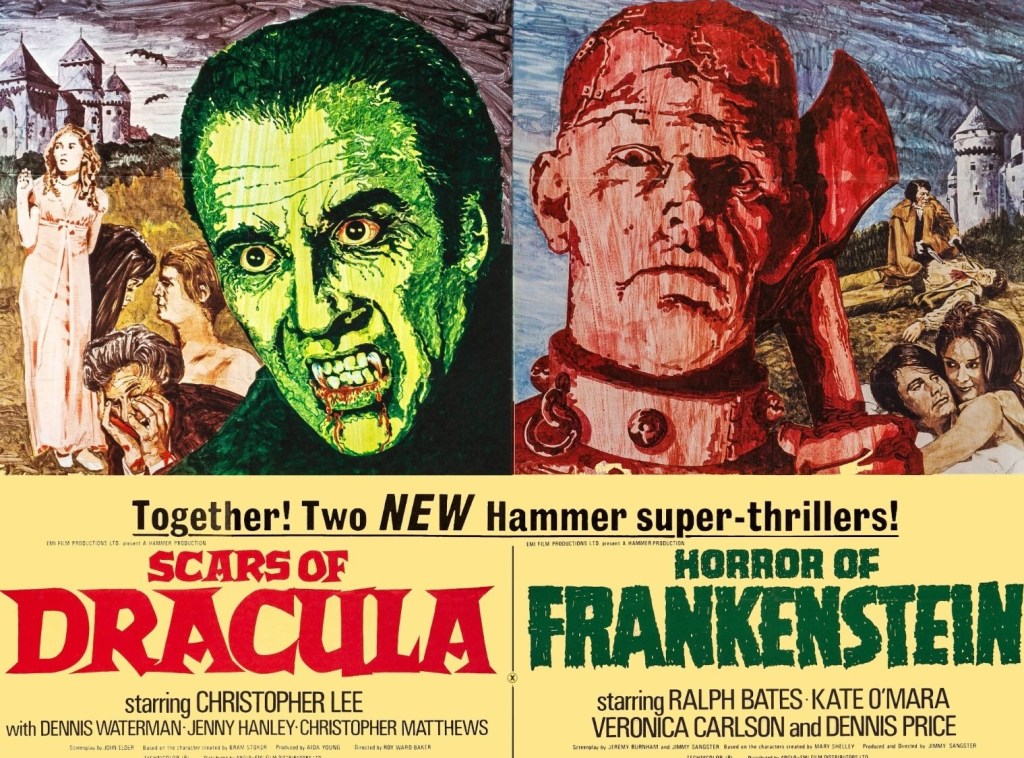
By this point he’s bumped off his father to inherit the fortune he requires to kit out his castle with the most modern equipment, including the not-so-advanced vat of acid. This time out there’s no suspicious cops breathing down his neck. And while there also no compromised youngsters representing innocence, his medical colleague goes along so easily with the ghastly experiments that his innocence would be called into question.
The tale is exceptionally lean, with none of the moral complexity of its predecessor. Primarily, the focus is on the baron building his monster piece by piece with the help of corpses delivered by unctuous graverobber (Dennis Price) though in an unusual gender twist for the period it’s his wife (Joan Rice) who does the actual work of digging up the graves.
Theoretically, there’s some sexual tension between Frankenstein’s mistress, housemaid Alys (Kate O’Mara). and the high-born Elizabeth (Veronica Carlson) who takes up residence with him after she’s left destitute following the death of her father.
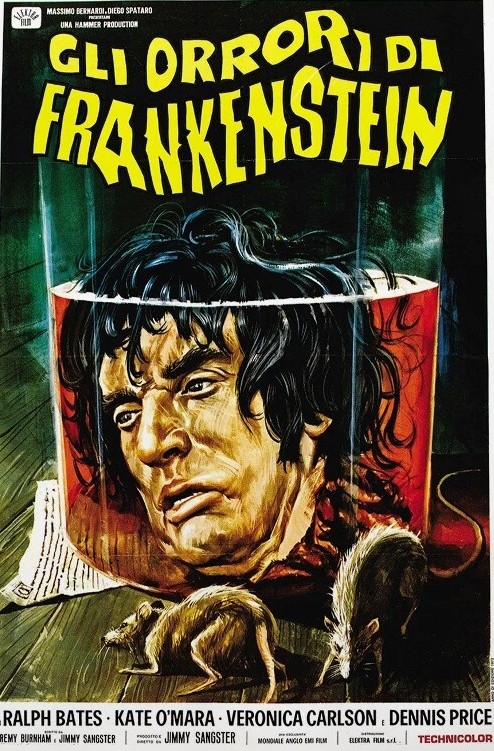
Elizabeth had turned down over a dozen marriage proposals while waiting for Frankenstein to get down on bended knee, but he shows little interest in her and seems to thoroughly enjoy humiliating her by allowing her to stay but only as an employee.
Anyone who gets in Victor’s way ends up in the vat or is thrown to the monster. The monster (Dave Prowse) is the best thing in it. He looks like a real person, huge, tall and strong, and doesn’t react well to being chained up, preferring to go on a murderous rampage. No time is spent enlisting audience sympathy for any of the characters.
There’s an excellent twist at the end where the monster ends up in the vat, therefore relieving the authorities of anyone to blame for the serial killing, and priming, I would have thought, a sequel with Bates – Cushing returned in 1974 with Prowse again as the monster, though this Cushing appears to have managed to escape from the burning house in Frankenstein Must Be Destroyed. Go figure.
It was a big ask to expect Ralph Bates to step into the shoes of Peter Cushing. The movie is better viewed as Hammer’s attempt to revitalize its various horror franchises, and having dipped its toes into the world of the female vampire it would shortly invest in lesbian vampires and a sex-change Dr Jekyll (a concept light years ahead of its time).
None of the women auditioning for the title of Hammer Scream Queen have much to offer beyond cleavage. Kate O’Mara (The Vampire Lovers, 1970) has the better part, given she has the sense to try her hand at blackmail, but she’s generally insipid. In acting terms, Veronica Carlson hasn’t improved on Frankenstein Must Be Destroyed. It doesn’t take much for Dennis Price to steal the show.
So, mostly a series of scientific experiments with a modest amount of gore and none of the nudity Hammer threw into the revamped female vampire series.
I was surprised to find I preferred Michael Carreras’ take on the legend in Frankenstein Must Be Destroyed rather than that of writer-director Jimmy Sangster (Lust for a Vampire, 1971) making his directorial debut but with a bigger reputation as a writer among the horror cognoscenti. Hammer continued playing its role in blooding rising stars -this time round its Jon Finch (Frenzy, 1972).
I’ve seen this described as a parody but I didn’t find much to laugh about.