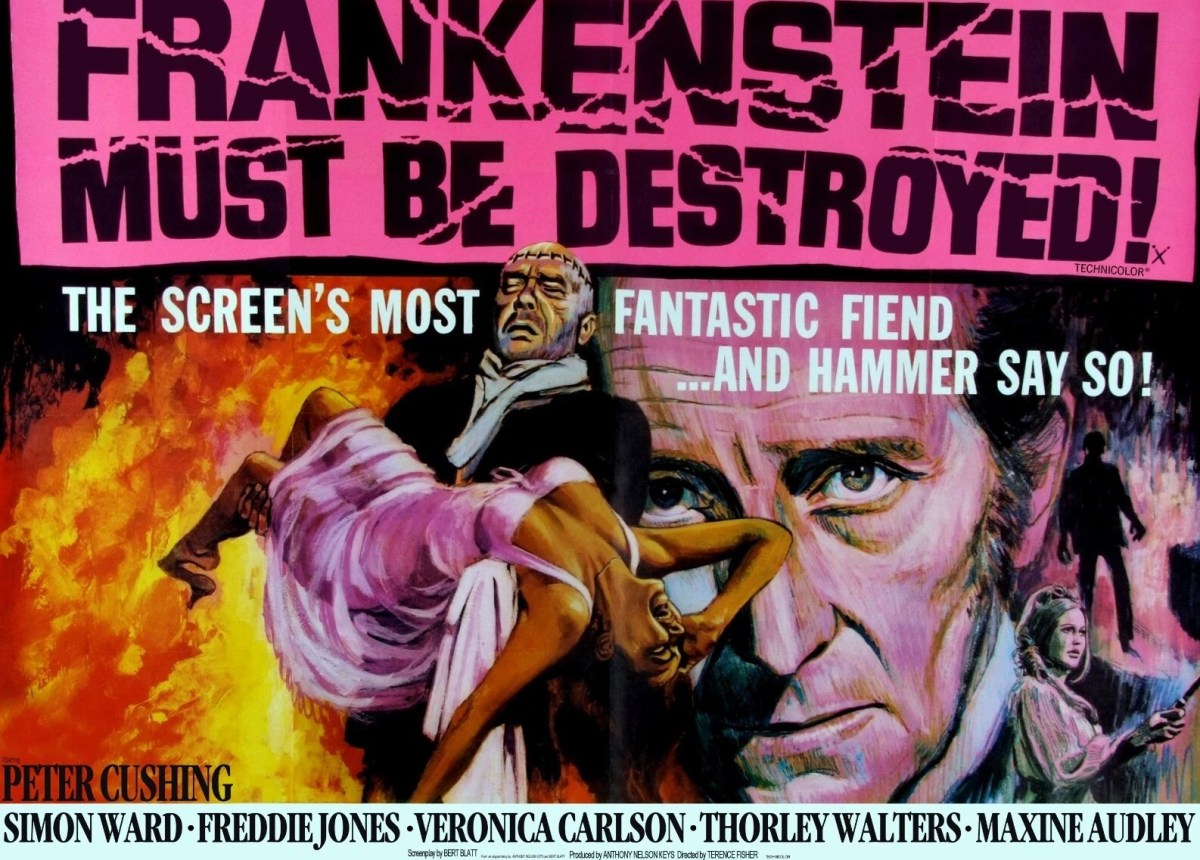
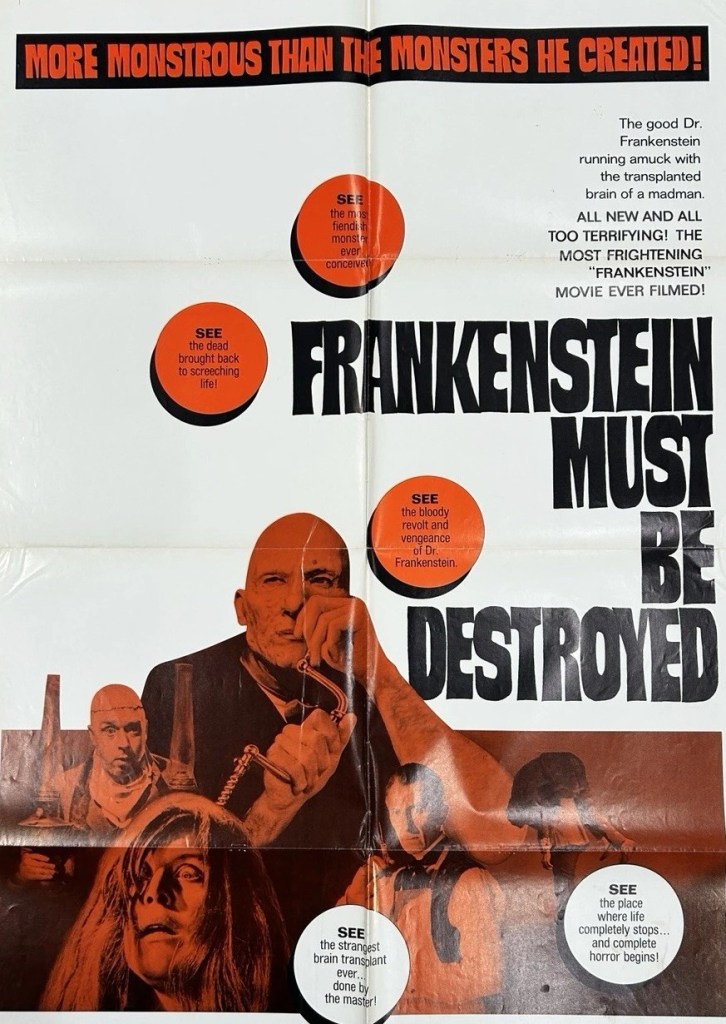
Frankenstein Must Be Destroyed (1969) ****

Hugely enjoyable, mainly because it throws away the standard template for this kind of horror picture. Long before Hollywood got into the habit or remaking or reimagining hit films, Hammer was constantly finding a reason to revive a character who in his previous iteration had met a sticky end. Even though Baron Frankenstein was not one of those villains who always managed to escape at the end of every episode, audiences had no trouble accepting him in whatever guise, era or location he turned up in.

But this is a considerable reinvention of the accepted characterization. Usually, Frankenstein is represented as somewhat academic arrogant scientist, not suffering fools gladly, but rarely has he been given such a wealth of finely tuned insults to offer. Nor has he ever exhibited what you might term passion. You’d never wonder, for example, who he fancied. But that’s all changed here. When he takes a woman here, it’s an extension of his power as much as his passion, and although the sex takes the form of rape, it does reveal him (if that’s not too awful to contemplate) as more human than before.
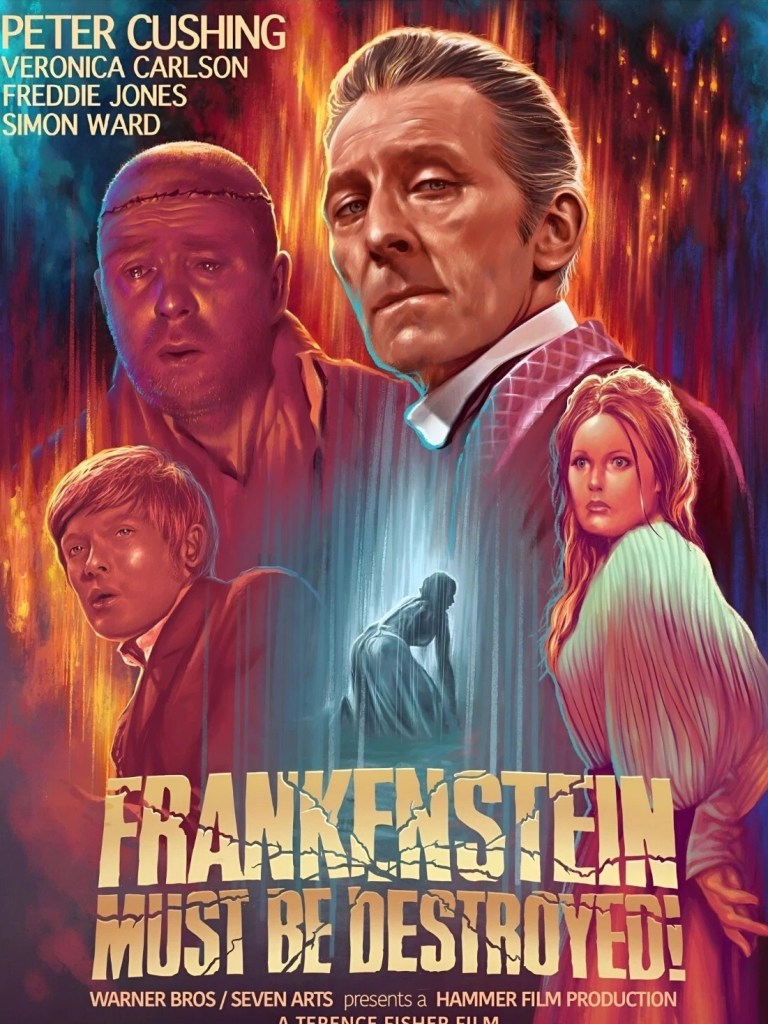
And the young couple in love, dragged into his web, are far from the usual innocents. On top of that, there are scenes of tremendous pathos when a wife cannot accept the husband brought back from the dead. And there’s quite a brilliant, if ironic, climax that you would not see coming.

In addition, at times the direction by Terence Fisher exhibits tremendous confidence, not just following a structure that brings out far more emotion than is generally accorded the genre, but surprises with flashes of humor and the kind of editing that would generate acclaim had it been in anything other than this.

This time round Baron Frankenstein (Peter Cushing) is in London, haunting the streets with a scythe to lop off the heads of passing pedestrians on dark nights. While he’s employed in this endeavor a burglar discovers the secrets of the baron’s cellar and inadvertently destroys the monster undergoing creation. Frankenstein hides out in a boarding house run by Anna (Veronica Carlson), whose fiancé Dr Holst (Simon Ward) is stealing drugs from the mental asylum where he works, thus making him easy prey for blackmail. The baron wants to kidnap asylum inmate and former colleague Dr Brandt (George Pravda) to find the secret formula for their previous work together.

With Holst soon knee-deep in murder, Anna an accessory to the drug theft, the “innocent” pair are dragged further into the baron’s web. When Holst pleads with Frankenstein, “Let her go, you don’t need here,” the baron replies in deliciously supercilious tones, “I need her to make coffee.”
During the escape from the asylum, Brandt has a heart attack so Frankenstein arranges to transplant his brain into the body of Professor Richter (Freddie Jones). Brandt’s wife Ella (Maxine Audley), initially delighted to find her husband not just alive but cured of insanity, nonetheless is later repulsed by this “creature”, even though in appearance he is not awful, just not the husband she knew.

The plot quickly turns. Frankenstein rapes Anna. In turn, she wounds the creature. And the baron murders Anna, meanwhile realizing that Holst cannot be trusted. The creature, turned away by Ella, and now determined to gain revenge, sets a fiery trap for Frankenstein and in a superb ending hauls the baron into a burning house.

As I said, the structure takes a considerable detour from the standard Frankenstein picture, in particular taking time out from the main plot of the “innocents” escaping and/or thwarting the baron in order to focus on the relationship between Ella and the creature. Her rejection of him, his disgust with his new appearance, and the emotional loss of his wife moves into territory you wouldn’t normally associate with the genre, much closer to the more contemporary reading of the original tale.

Every now and then we dip into a subplot of a police investigation aided by the thief and Ella as witnesses. At first the pompous Inspector Frisch (Thorley Walters) seems little more than a comedic diversion, but actually he’s more switched-on than you’d expect and his detective work adds more tension.

Making Frankenstein more human – even if it’s just him giving into evil impulse – works to the movie’s advantage, as it allows him to pepper his lines with rapier wit. Peter Cushing (The Skull, 1965) has never been better but Freddie Jones (Otley, 1969) as the victim steals the show with a performance of tremendous pathos.

Simon Ward should count himself lucky that Richard Attenborough overlooked his performance and saw something in him that made him the ideal candidate to play Young Winston (1972). Veronica Carlson (Hammerhead, 1968) became the latest Hammer Scream Queen.

Occasionally inspired direction from Terence Fisher (The Devil Rides Out, 1968) in allowing the characters to develop and relationships to foster. Screenplay by Bert Batt, in his debut, and producer Anthony Nelson Keys (Pirates of Blood River, 1962) and based, somehow, on the original by Mary Frankenstein.

Surprised how much I appreciated it.

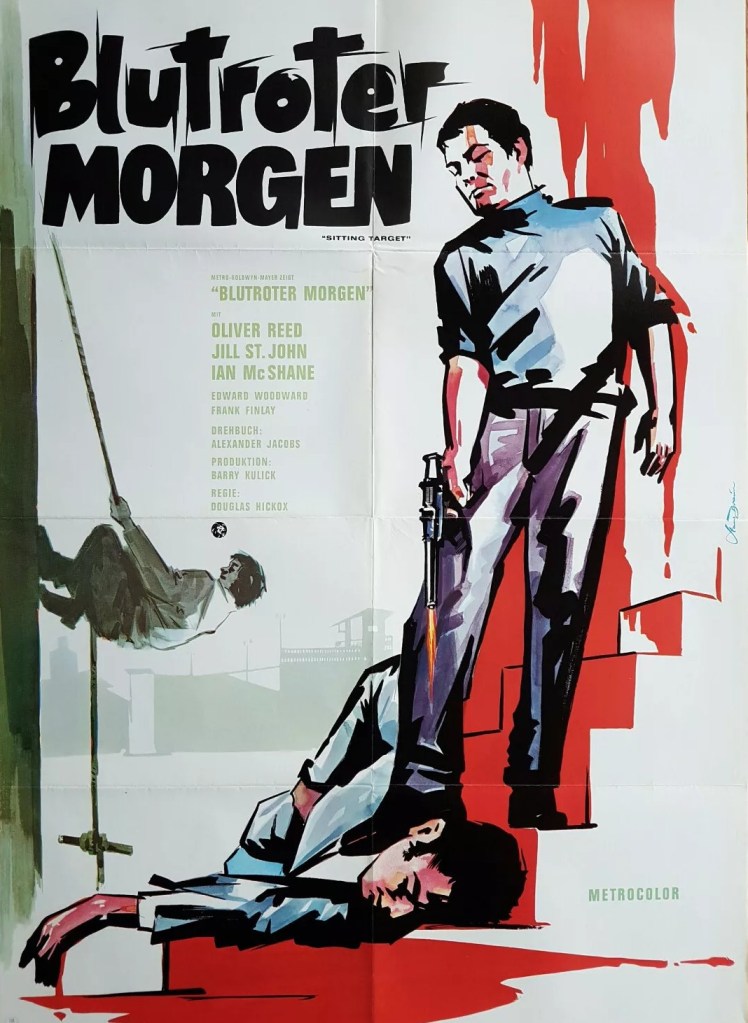
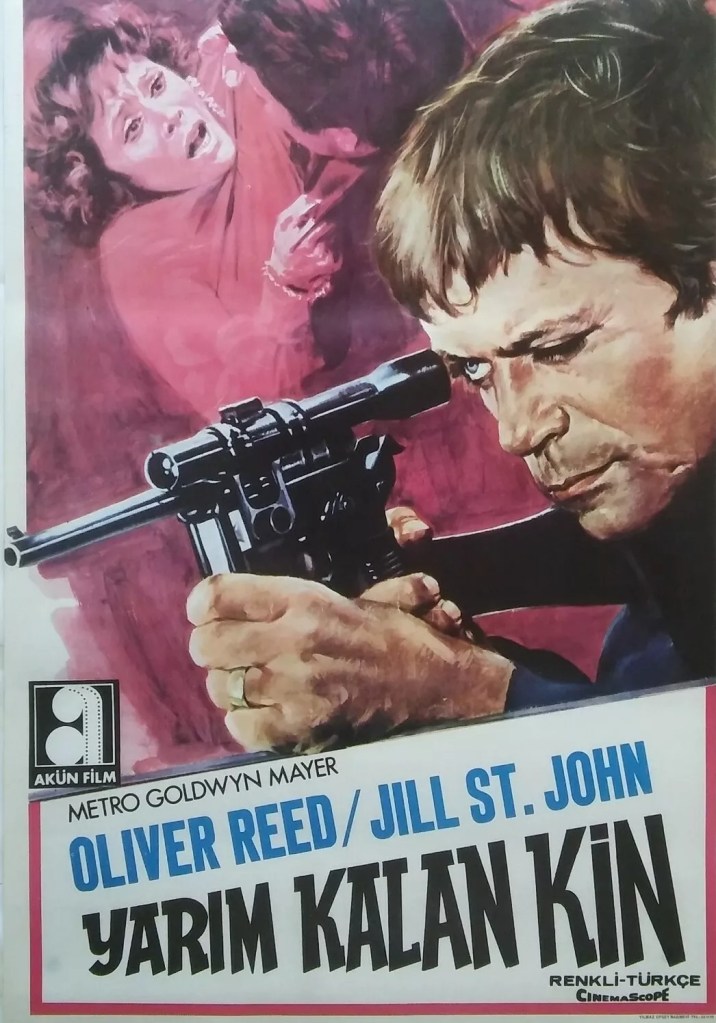
Sitting Target (1972) ****

Forms a neat trilogy with British Noir New Wave gangster pictures Get Carter (1971) and Villain (1971) both with topline stars attached in the form of Michael Caine and Richard Burton. Laden with atmosphere and intrigue, this carries hefty emotional power as a very tough guy struggles to show his gentler side. The moral of the story is that brains always trump brawn. And it’s one of these movies where the truth only unravels when you hit the twist at the end and every character is shown in quite a different light.

Like Get Carter, this is a revenge picture. Discovering girlfriend Pat (Jill St John) is pregnant by another guy, imprisoned bankrobber Harry (Oliver Reed), serving a 15-year stretch for murder, is turned into a “lethal weapon” by the very thought and determines to break out and kill her. And at the same time collect the loot from his last bank robbery.

His escape, masterminded by the gentlemanly MacNeil (Freddie Jones) and accompanied by long-time buddy Birdy (Ian MacShane), is a tense, exciting sequence. First stop outside is to strongarm another gangster into supplying a Mauser that can be turned, a la Day of the Jackal, into a long-range rifle.

And while the movie brings into play the standard trope of villains seeking their share of the loot, it also hangs on another standard wheeze of the 1960s B-picture of the woman as bait. Anticipating that Harry will make a beeline for his loved one, but unaware of his nefarious intent, Inspector Milton (Edward Woodward) has her under police guard. But the likes of Harry always finds a way to sneak in, which triggers police pursuit, in the course of which Harry commits the unpardonable crime of shooting a cop – the villain world only too aware of the severe repercussions.

There’s a stop-off at the apartment of the moll (Jill Townsend) of Mr Big, Marty (Frank Finlay). That doesn’t go as planned, but still they manage to uncover a hidden sack of cash leaving Harry to knock off, sharpshooter style, the unfaithful girlfriend.

And then the pair make a getaway….Not quite. Birdy turns out to be greedy and wants all the robbery cash for himself and attempts to shoot Harry. That would be enough of a twist to be getting on with but there are a few stingers to come. Pat’s not dead – Harry (too far away to identify  her face) just shot a policewoman on protection duty standing in her window. Pat’s not  pregnant either, just stuffed a cushion down her jumper to complete the pretense. And she and Birdy are an item. And it’s clear that Birdy simply purloined Harry’s rage to get him to do the dirty work involved in the escape and dealing with the other gangsters.

Except in the case of being willing to knock off his longtime business partner, Birdy, you see has always been averse to violence, cowardly not to put too fine a point on it, though quite capable of pouring a bowl of urine down a captured guard’s throat, or rape.

Villains are as conflicted as anyone else, otherwise how to explain that Harry climbs into the burning car containing his dead girlfriend, gives Pat a gentle kiss and waits for the car to explode and take him to a fiery grave. We’ve seen the softer side of Harry in flashes. He turns down the chance to bed a sex worker in the getaway lorry, doesn’t take advantage of the moll, and buries his face in the moll’s fur coat. The furthest he gets to expressing his feelings is to explain to Birdy that he was very happy with Pat. He’s almost – perish the thought – got a feminist side. And presumably it takes a lot for a tough gangster like him to open up to a woman, which explains why he takes her betrayal so badly.

The fact that he still kills her is somehow beside the point. As I said, gangsters are complex, witness the gay Richard Burton in Villain.

This is Ian MacShane (The Wild and the Willing, 1962) still in matinee idol mode, minus the gravitas and husky tones of John Wick (2014). Once the twists kick in, you look back and realize he’s stolen the film, a weaselly charmer, able to bend Harry (not that hard, mind you) to his will, which was to help him escape, lead him to the money and send him off to live happily ever after with Pat. Where Harry clearly believes in true love, Birdy has no moral scruples. Even with a beauty like Pat waiting for him, he’s happy to indulge in sex with the sex worker and help himself to the helpless moll. (MacShane was equally dubious in Villain).

Oliver Reed’s Thug we’ve seen countless times before, Oliver Reed’s Softie less so. Jill St John (Tony Rome, 1967) manages a British accent and proves herself capable of a better  role than usual. Actors often say they build up a character from their walk. Watch Edward Woodward (The Wicker Man, 1973) for a classic example of it.

Douglas Hickox had essayed delicate romance via his debut Les Bicyclettes des Belsize (1968) and it’s to his credit that he touches on Harry’s sensitivity in such subtle fashion. Otherwise, some terrific standout sequences – Harry’s fist battering through the glass into the prisoner’s visiting room, the escape, the duel with motorcycle cops through a fog of washing strung out on lines, the final car chase.

Written by Alexander Jacobs (Point Blank, 1967) from the bestseller by Lawrence Henderson. Superb score by Stanley Myers.

Not quite in the league of Get Carter or Villain but not far short.

Discover WordPress

A daily selection of the best content published on WordPress, collected for you by humans who love to read.

The Atavist Magazine

by Brian Hannan

WordPress.com News

The latest news on WordPress.com and the WordPress community.