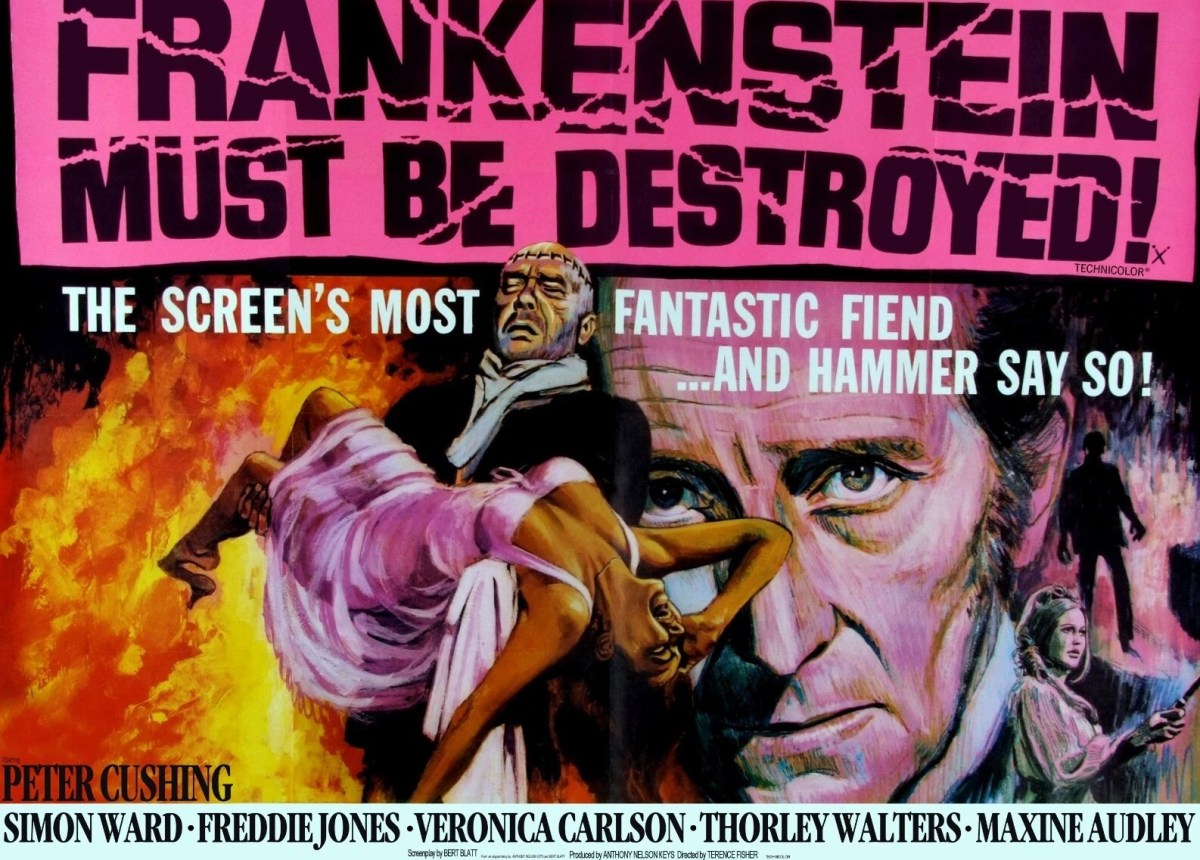
Frankenstein Must Be Destroyed (1969) ****

Hugely enjoyable, mainly because it throws away the standard template for this kind of horror picture. Long before Hollywood got into the habit or remaking or reimagining hit films, Hammer was constantly finding a reason to revive a character who in his previous iteration had met a sticky end. Even though Baron Frankenstein was not one of those villains who always managed to escape at the end of every episode, audiences had no trouble accepting him in whatever guise, era or location he turned up in.

But this is a considerable reinvention of the accepted characterization. Usually, Frankenstein is represented as somewhat academic arrogant scientist, not suffering fools gladly, but rarely has he been given such a wealth of finely tuned insults to offer. Nor has he ever exhibited what you might term passion. You’d never wonder, for example, who he fancied. But that’s all changed here. When he takes a woman here, it’s an extension of his power as much as his passion, and although the sex takes the form of rape, it does reveal him (if that’s not too awful to contemplate) as more human than before.
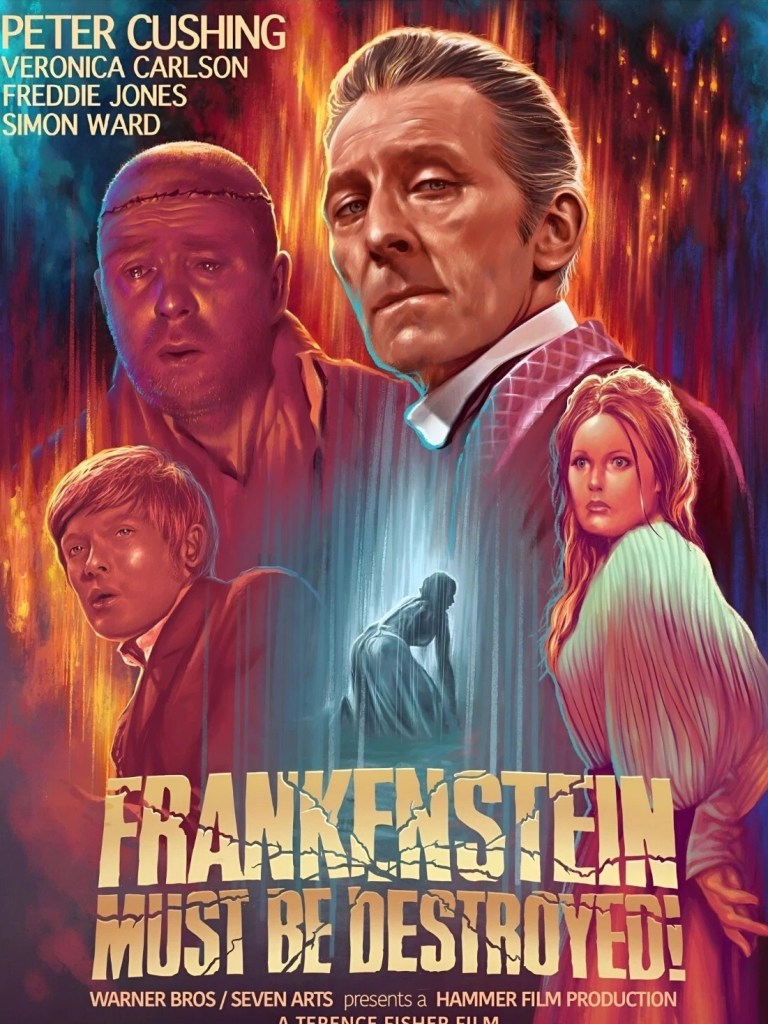
And the young couple in love, dragged into his web, are far from the usual innocents. On top of that, there are scenes of tremendous pathos when a wife cannot accept the husband brought back from the dead. And there’s quite a brilliant, if ironic, climax that you would not see coming.

In addition, at times the direction by Terence Fisher exhibits tremendous confidence, not just following a structure that brings out far more emotion than is generally accorded the genre, but surprises with flashes of humor and the kind of editing that would generate acclaim had it been in anything other than this.

This time round Baron Frankenstein (Peter Cushing) is in London, haunting the streets with a scythe to lop off the heads of passing pedestrians on dark nights. While he’s employed in this endeavor a burglar discovers the secrets of the baron’s cellar and inadvertently destroys the monster undergoing creation. Frankenstein hides out in a boarding house run by Anna (Veronica Carlson), whose fiancé Dr Holst (Simon Ward) is stealing drugs from the mental asylum where he works, thus making him easy prey for blackmail. The baron wants to kidnap asylum inmate and former colleague Dr Brandt (George Pravda) to find the secret formula for their previous work together.

With Holst soon knee-deep in murder, Anna an accessory to the drug theft, the “innocent” pair are dragged further into the baron’s web. When Holst pleads with Frankenstein, “Let her go, you don’t need here,” the baron replies in deliciously supercilious tones, “I need her to make coffee.”
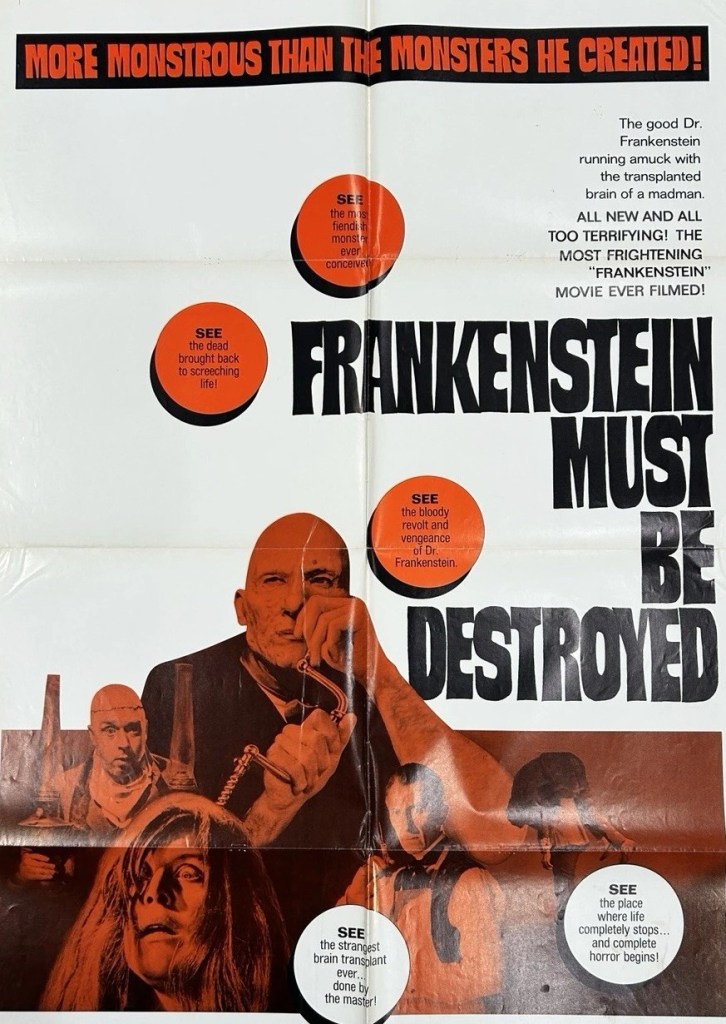
During the escape from the asylum, Brandt has a heart attack so Frankenstein arranges to transplant his brain into the body of Professor Richter (Freddie Jones). Brandt’s wife Ella (Maxine Audley), initially delighted to find her husband not just alive but cured of insanity, nonetheless is later repulsed by this “creature”, even though in appearance he is not awful, just not the husband she knew.

The plot quickly turns. Frankenstein rapes Anna. In turn, she wounds the creature. And the baron murders Anna, meanwhile realizing that Holst cannot be trusted. The creature, turned away by Ella, and now determined to gain revenge, sets a fiery trap for Frankenstein and in a superb ending hauls the baron into a burning house.

As I said, the structure takes a considerable detour from the standard Frankenstein picture, in particular taking time out from the main plot of the “innocents” escaping and/or thwarting the baron in order to focus on the relationship between Ella and the creature. Her rejection of him, his disgust with his new appearance, and the emotional loss of his wife moves into territory you wouldn’t normally associate with the genre, much closer to the more contemporary reading of the original tale.

Every now and then we dip into a subplot of a police investigation aided by the thief and Ella as witnesses. At first the pompous Inspector Frisch (Thorley Walters) seems little more than a comedic diversion, but actually he’s more switched-on than you’d expect and his detective work adds more tension.

Making Frankenstein more human – even if it’s just him giving into evil impulse – works to the movie’s advantage, as it allows him to pepper his lines with rapier wit. Peter Cushing (The Skull, 1965) has never been better but Freddie Jones (Otley, 1969) as the victim steals the show with a performance of tremendous pathos.

Simon Ward should count himself lucky that Richard Attenborough overlooked his performance and saw something in him that made him the ideal candidate to play Young Winston (1972). Veronica Carlson (Hammerhead, 1968) became the latest Hammer Scream Queen.

Occasionally inspired direction from Terence Fisher (The Devil Rides Out, 1968) in allowing the characters to develop and relationships to foster. Screenplay by Bert Batt, in his debut, and producer Anthony Nelson Keys (Pirates of Blood River, 1962) and based, somehow, on the original by Mary Frankenstein.

Surprised how much I appreciated it.
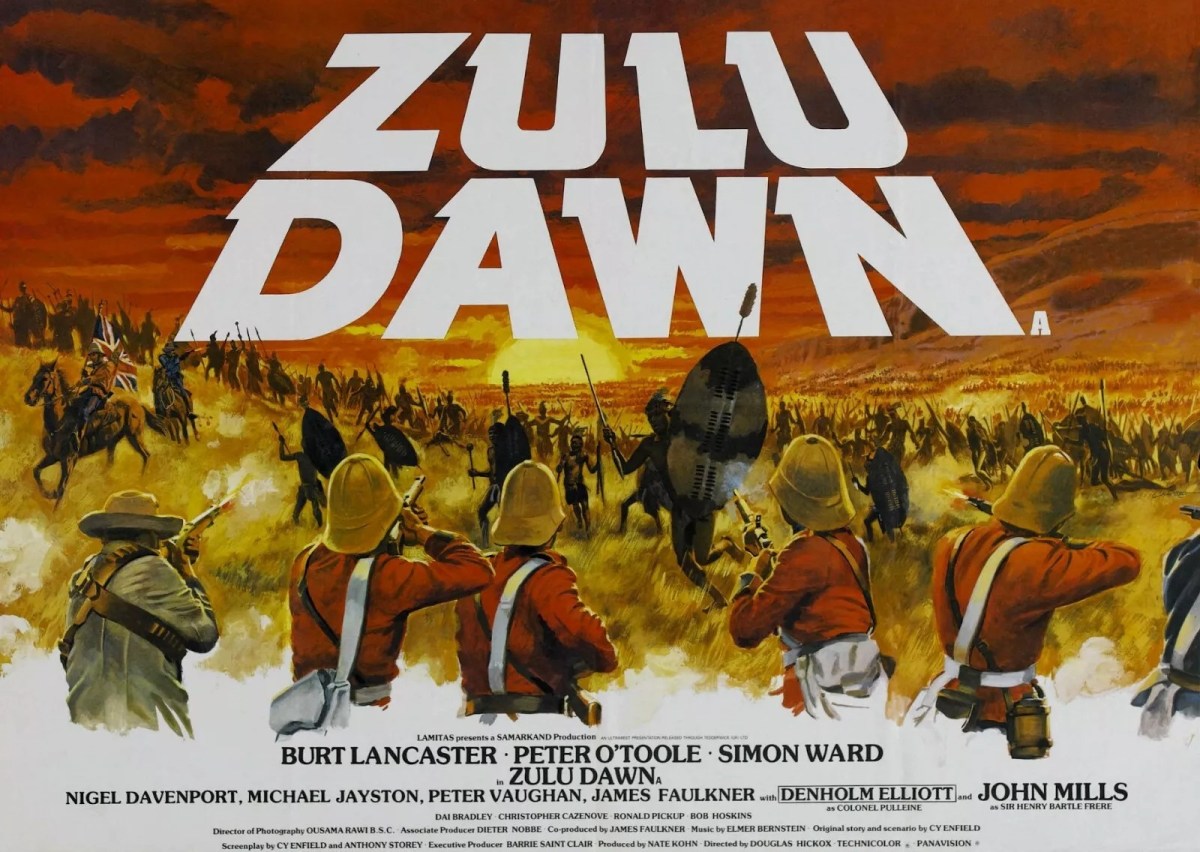
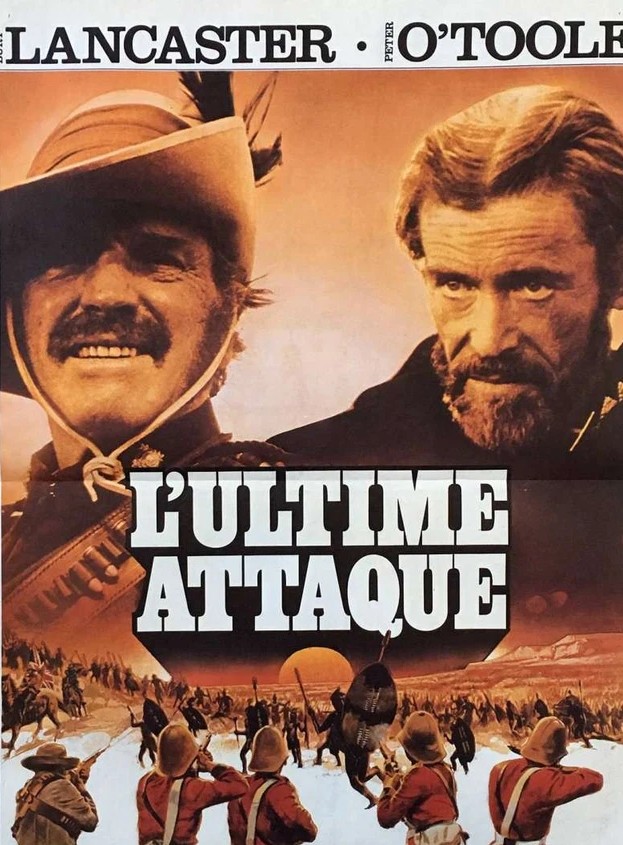
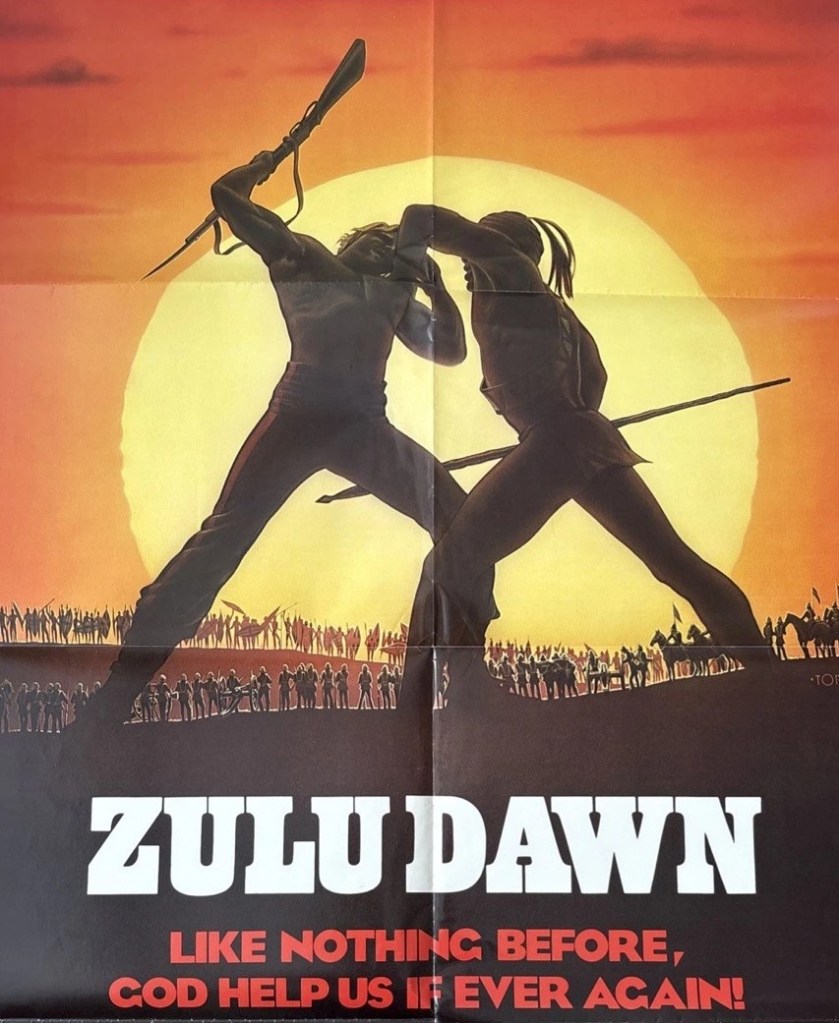
Zulu Dawn (1979) ****

You’d wonder why anyone would want to make a film about this calamitous military disaster, the Battle of Isandlwana in 1879. Yet, such subjects have always attracted Hollywood, especially if some kind of triumph can be snatched from defeat – Dunkirk (1958 and 2017) – or some charismatic figure of the order of General Custer is involved – They Died With Their Boots On (1941), Custer of the West (1967).   Or you can make something mythical such as The Charge of the Light Brigade (1936) and with the assistance of the screen presence of Errol Flynn tilt it towards glory or you can take the same subject (the 1968 version) and make merry with satire should you wish to poke fun at the British Empire.

The latter could easily have been the starting point for Zulu Dawn, a prequel to the majestic Zulu (1964). However, although the Brits were outthought, out-maneuvered and outnumbered, the errors made on the battlefield were generally not through hubris or commanders competing for glory. And you would have to assume that no matter what the British Army could do, in terms of size it was minute compared to the Zulus, and even armed with rifles and artillery was hardly going to withstand a sustained attack.

So it’s fairly solid stuff, buoyed up by decent performances, though Burt Lancaster playing an Irishman seems tacked on to increase marquee appeal. The final shot of the eyes of Peter O’Toole would easily stand in the annals of war pictures as one of the best testaments to the horror of defeat and impending humiliation.

There is certainly some unsavory business at the start as British commander Lord Chelmsford (Peter O’Toole) and diplomat Sir Henry Bartle Frere (John Mills) unwittingly poke the lion of Zulu King Cetawayo whose rising strength they perceive as a threat to the British colonies in the southern regions of Africa. Chelmsford makes the mistake of invading Zululand.

Hoping to pin down the enemy to the traditional pitched battle on territory that would give him an advantage, he finds he’s chasing ghosts. They can’t locate the Zulus until the enemy wants to be found. And in an echo of the later Lawrence of Arabia, Cetawayo does the impossible and leads his troops on what was considered an unlikely line of attack.

The British strategy of lining up troops in two lines and shooting alternately certainly reduces the oncoming force, but four times the amount of firepower would still have had trouble preventing the onslaught. Critically, in search of more favorable ground, Chelmsford splits his forces, but, again, even had the British been one unit, it would have made little difference.

I’m not sure how true is the portrayal of the officious quartermaster Bloomfield (Peter Vaughn) who, even in the heat of battle, demands soldiers form an orderly queue to receive a supply of bullets, and that may just be a potshot at overbearing bureaucracy.

The narrative flits from various characters, dashing cavalry types like Col Durnford (Burt Lancaster) and Lt Vereker (Simon Ward), commanders Chelmsford and Col Pulleine (Denholm Elliott), those representing different points of view such as Col Hamilton-Brown (Nigel Davenport) and Col Crealock (Michael Jayston), and lowly grunts in the form of Colour Sergeant Williams (Bob Hoskins) and Boy Pullen (Phil Daniels).

There’s certainly a sense of the higher-ups still enjoying the pleasures of life, wine served at dinner, plated service, but the lesser ranks still have largely an easy time of it, when they are not marching spending most of the time in idleness. It’s a very civil environment. Commands aren’t barked out. “I say, would you mind…” is the tone.

But it’s the marching that’s the killer. The heat’s not as bad as in Crimea and there’s no disease decimating the ranks but they still have to do a lot of walking on uneven terrain. There’s enough difference of opinion at all levels of the Army to keep tensions high.

And there’s more of a focus on the brutality of war – Lt Vereker laments the death of a Zulu child, you can easily be killed by your own troops and truth is viciously beaten out captives (who, as it happens, have been sent to become captives and mislead the Brits.) I was wondering if audiences had come to expect a scene with native girls dancing half-naked, as had occurred in the sequel, and the censor turned a blind eye to.

Peter O’Toole (The Lion in Winter, 1968) has the best role, especially when he counts the cost of defeat. Burt Lancaster (Valdez Is Coming, 1971) offers some star power but little else and the rest of the cast is virtually a roll-call of Who’s Who in British acting.

Luckily, the picture is more than even-handed and while not pillorying the Army and the Establishment in the manner of The Charge of the Light Brigade (1968) plays fair with the circumstances and exalts Zulu victory as much as British defeat.

Directed by Douglas Hickox (Les Bicyclettes de Belsize, 1968) with perhaps overmuch concentration on marching. Zulu director Cy Endfield had shot his bolt by this point and wasn’t invited back except in the capacity of screenwriter along with Anthony Storey making his movie debut.

Much better than I expected.

If you fancy checking out how it compares to Zulu (1964), you can check out my review on the Blog.

You can catch Zulu Dawn on the big screen beginning week of March 19 at a variety of cinemas including Odeon and Picturehouse in the UK and in other countries thanks to Munro Films. Here’s the link to the showings.

https://www.munrofilmservices.co.uk/movie/zulu-dawn

Discover WordPress

A daily selection of the best content published on WordPress, collected for you by humans who love to read.

The Atavist Magazine

by Brian Hannan

WordPress.com News

The latest news on WordPress.com and the WordPress community.