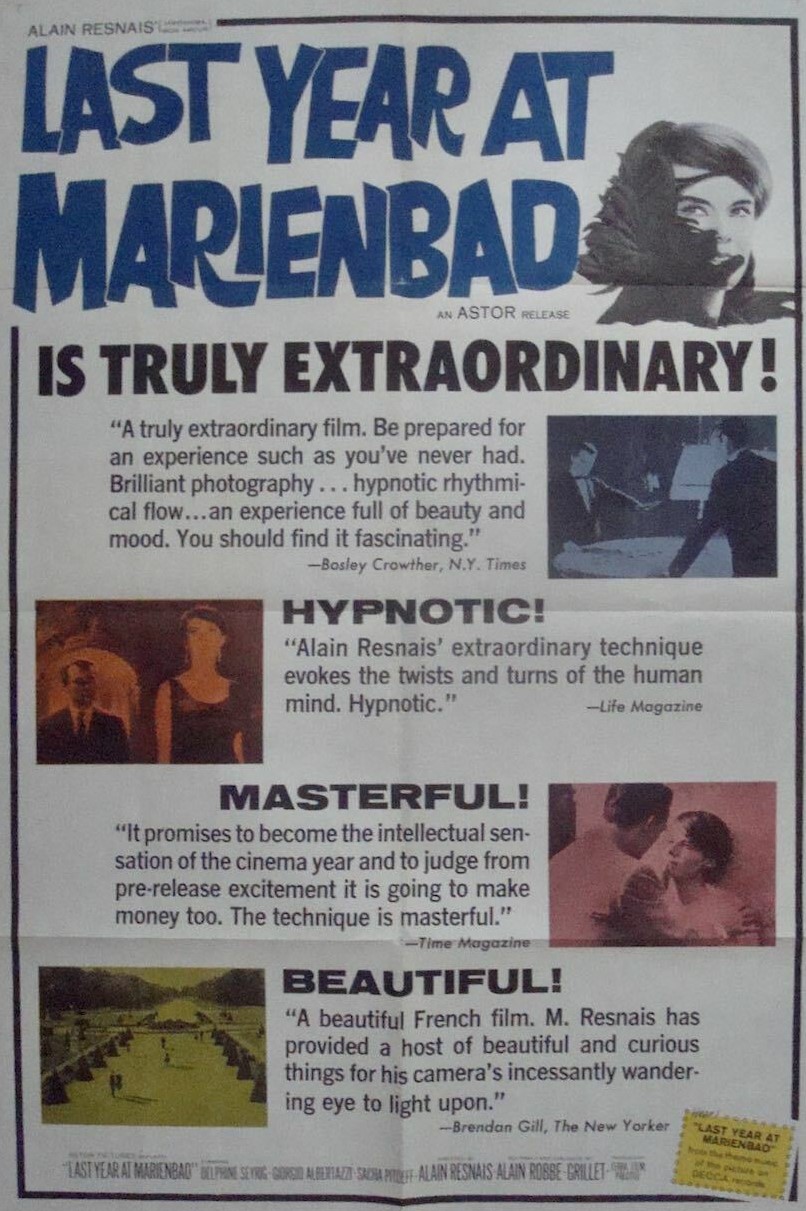
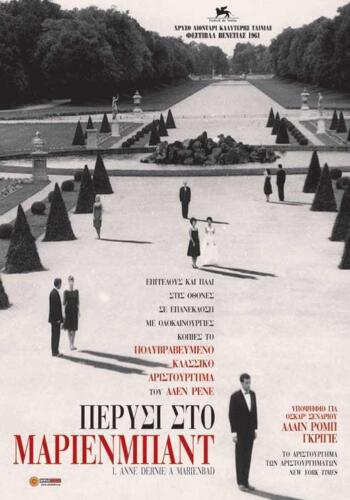
The late British Queen Elizabeth II put it succinctly, “Recollections may vary.” Or as director Alain Resnais, in reference to his masterpiece Last Year in Marienbad, explained, “It is quite possible that all the characters are speaking the truth…what is presented as the present or the past is simply a reality that exists while the character is speaking.”
However, Resnais was keen to dismiss other theories. “As far as I am concerned Marienbad contains no symbols or allegories.” He suggested that anyone looking for such meanings “will arrive at a correct interpretation 60% or 80% of the time but your interpretations will never hold good for the film as a whole.” Nonetheless, even Resnais was susceptible to such possibilities, for example, there is a Breton legend of Death coming to fetch his victim but allowing him a year’s respite.
It was unusual for a director to admit he has no clue what his film was actually about. Resnais confesses that “the game (Nim) is the only point about which I am unable to tell you anything…Robbe-Grillet (the screenwriter) invented a variation without knowing it (the game) existed. My personal impression is that Albertazzi (the would-be lover) loses it consciously and deliberately.”
Offering an alternative view to the film’s meaning, Resnais added, “The whole thing is possibly a part of the woman’s stream of consciousness, as, on the point of deciding what to do, she recalls all the various factors in a few seconds.”
The last pages of the script had barely been written before shooting began. And while that was scarcely unusual, nor for pages to be rewritten during filming, what was singular in this approach was that when the editing could offer dozens of ways of putting it back together, “we always fell back on our original ideas.”
“We wanted the film to work quite differently from a conventional entertainment: by a sort of contemplation, of meditation, a series of advances and retreats from the subject. We wanted to feel ourselves in the presence of a sculpture which one studies first from one angle, then from another, from near or farther away.”
In one sense the movie, as Resnais accepted, can be seen as the man playing the role of a psychiatrist forcing his patient to accept events she has deliberately suppressed. Resnais also introduced other psychoanalytic themes: “the ostentatiously large rooms indicating a tendency to narcissism.”
Resnais added, “It is also attractive to conceive of her (Delphine Seyrig) as an invalid. First of all, the hotel has a special air. And I have always been intrigued by (potential husband) Sacha Pitoeff’s words to the woman as she lies on the bed, ‘You must rest, remember that is why we came here.’ Perhaps the hotel is really a clinic.”
Resnais’s directorial method included making sketches to elucidate his thoughts. “It helps in my relationships with the actors and the cameramen. They save the actor from getting panicky eight or ten days before the shoot. If he has read the shooting script and has a clear idea of it and then while shooting I place him in a position or composition which hasn’t been foreseen he is apt to worry.
“And as I like everyone to be relaxed as possible on the set, I prefer arguments to be over before shooting. I’m all in favor of rehearsing the entire film before shooting begins.
“For Marienbad we drew up a complete chronology on squared paper. And before beginning any scene with the actors, we said, ‘in the editing this scene follows such and such a scene, but in actual chronology it follows another scene which will appear later in the film.’ I frequently recorded a fragment of the preceding scene so as to work from the continuity rather than from the cue.”
He hesitated to adapt his ideas to suit the cinematographer. “I would be reluctant to transform a setting, even in small details, to suit the camera. It is up to the camera to present the décor in the right way, it’s not for the setting to conform to the camera. The same holds good for the actor. I have an immense respect for an actor’s work. (But) how rarely we alter the shooting to suit an actor’s feelings, whereas we are constantly changing it on account of the weather.”
SOURCE: Alain Resnais, “Trying To Understand My Own Film,” Films and Filming, February 1962. P9-10, 41; translated from Cahiers du Cinema by Raymond Durgnat.
Six decades later this miraculously emerges as a compendium of contemporary themes. Starting off with “my truth,” and segueing through unreliable narrator, false memory, parallel universe, stream of consciousness, dream vs. reality, repetitive voice-over, and still the most tantalising – or infuriating – movie ever made. A cinematic jigsaw with every piece of the puzzle highly stylized.
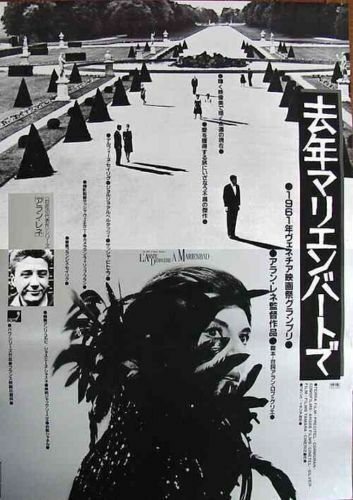
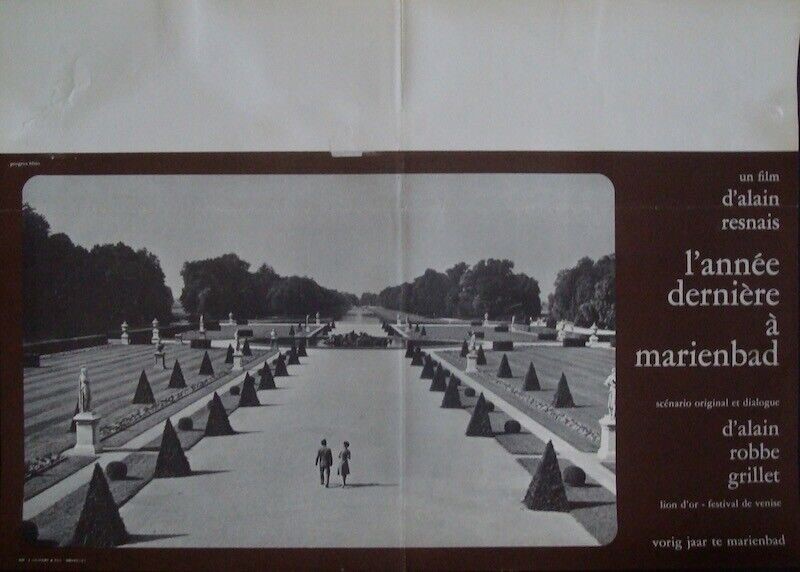
People have shadows but not the trees, the interpretation of a statue is disputed, characters in backgrounds are as frozen as mannequins, there’s a game you cannot win, no one has a name, and every now and then a row of men as if choreographed by Busby Berkeley wivel in turn and shoot at targets. Set in a huge baroque chateau with fabulous meticulous grounds, this fantasy building proves the ideal locale for an endless discussion of reality. And whatever happened last year in Marienbad could have occurred instead in a number of other locations.
The trees have no shadows. These days CGI would rid trees of shadows but in those days it was the other way round and the shadows of the characters were painted on the ground.
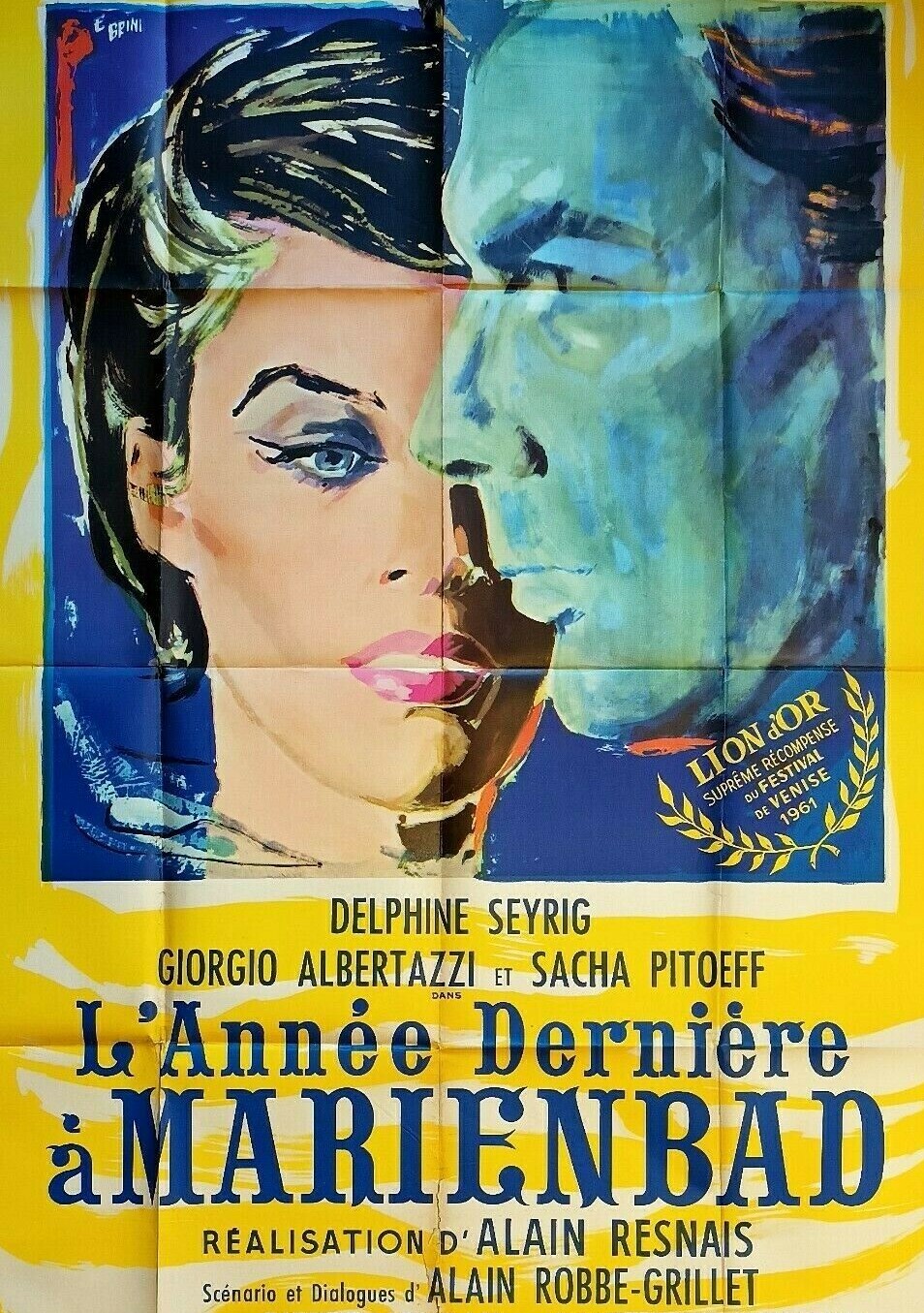
Two men, a prospective lover (Giorgio Abertazzi) and potentially a husband (Sacha Pitoeff), buzz around a woman (Delphine Seyrig). The would-be lover conjures up a tremendous amount of detail about when he met the woman, only for her to deny all knowledge of the incident, to the extent of failing to recall the reason they are meeting again, one year on. According to him, she had refused to enter into an affair the previous year but vowed to consider his ardent proclamations of love a year later. He has come to claim his reward.
That plot, slim as it is, is all you’re going to get. The movie goes all around the houses trying to establish not only was such an agreement actually struck but also whether she has ever met him at all and where exactly this supposed event might have taken place.
And were it not for the hypnotic tone, the mastery of camerawork, the cleverness of the situation, and the long tracking shots – for me an enormous plus – you might have given up the moment the man repeats, with mild differences, sentences he has already uttered. It’s the equivalent of the crime novel’s closed room mystery, except there is no solution.
So you either dismiss it as a typical French New Wave farrago, fall out with your friends over its meaning, or just sit back and enjoy it, as I did.
For a start, it’s one of the best films ever made in black-and-white, the contrast between the two so striking, the white glowing, the black occasionally ethereal, the lack of dialog almost insisting this is in reality a silent film. There are all sorts of pieces of experimental cinema, flash cuts in conflict with the languorous stately progress of the tracking camera, the aforementioned shadows and mannequins, greater emphasis given to the ceilings and corridors than to the people.
Time and place are distorted, different versions of events presented, the initial story given substance by the husband attempting to put the lover in his place by continuously beating him at an obscure game of cards (the Japanese Nim). And much to my astonishment, just as I was well settled in to letting the director take me where he wanted and expecting no conclusion, there is a climax of sorts that may point the audience in the direction of the correct reality.
By that point, did we even care, the whole essence of the movie being the inability to detect truth, the slipperiness of meaning, the elusiveness of intent and the certainty that what was clear one year is not the next. Cinema is built on conflict, and the most obvious one is difference of opinion. What one person regards as fact, the other dismisses as supposition. This could have been played out in dialog, endless discussion about meaning and veracity, we see it all the time in crime pictures and romance, what exists in one mind not having the same resonance in another, but instead we are treated to one long glorious cinematic essay.
Director Alain Resnais had already set cinema alight with Hiroshima Mon Amour (1959) and there can have been few artists who hit the arthouse ground running in such style. That the script had been written by eternal bad-boy and future director Alain Robbe-Grillet (Trans-Europ Express, 1966) ensured that it was always going to be controversial. Unusually, Resnais, apparently, stuck very close to the script, so in that sense it was a collaboration rather than the usual loose interpretation of a screenplay.
The stars all took different subsequent routes. Delphine Seyrig, in her debut, would go on to become an arthouse darling in Accident (1966), Francois Truffaut’s Stolen Kisses (1968) and Jacques Demy’s La Peau Deuce/Donkey Skin (1970). Italian Giorgio Albertazzi did not become an arthouse darling, more likely to turn up in bit parts in a historical drama like Caroline Cherie (1968) or in a supporting role in giallo Five Women for the Killer (1974). You might remember Sacha Pitoeff from The Golden Claws of the Cat Girl (1968) and he, too, headed down the support/bit part route.
You might end up resistant to what you see, but everyone with an interest in cinema should see Last Year at Marienbad at least once.
How is that the British, way down now in the rankings of global movie production, have come up with a successful genre all of their own – the national treasure. Maggie Smith and Helen Mirren to be sure first came to prominence in the same year, 1969, with The Prime of Miss Jean Brodie and Age of Consent respectively, but whereas Hollywood has turned its back on the ageing female contingent, the British film industry has wrapped its most famous stars in cotton wool and proceeded to give them roles they can take to the Oscar bank.
Mirren was in her early 60s when she romped home in The Queen (2006); you only have to say Downton Abbey and Smith, already two Oscars to the good, is regarded as screen royalty. And that’s before Judi Dench enters the equation, a few years older than Mirren when she nabbed the Oscar for Shakespeare in Love (1998). You can pretty much count on getting funding for any picture if you can rustle up any of this trio. Want to bring back the older crowd? Dangle these carrots!
Elevated into this category now is Lesley Manville, the 66-year-old star of the delightful Mrs Harris Goes to Paris. While largely escapist, there’s enough of a contemporary vibe, a Paris redolent of filth, the downtrodden going on strike, to provide an edge, and a narrative that continually punctures dreams any time fantasy looks like running away with itself. Set in 1950s London and Paris where the poor know their place, and are rigidly kept in it by the arrogant rich, but where aspiration can at any moment take flight.
Cleaner Mrs Harris, dreaming of buying a £500 dress – we’re talking the best part of £14,000 these days – scrimps and saves, and through a couple of more than fortuitous events, finds her way to the House of Dior where she is despised by haughty manager Claudine (Isabelle Huppert), adored by philosophic model Natasha (Alba Baptista) for having such aspirations, and manages to cast a spell, although not for the reasons expected, over rich widower the Marquis de Chassagne (Lambert Wilson).
There’s not much plot. She has to remain in Paris for a fortnight for fittings and whiles away the time helping along the romance between under-manager Andre (Lucas Bravo) and Natasha, assisted by their existentialist leanings, eventually overcoming hostility and putting everything to rights in the Dior empire. But you don’t need plot when you’ve got charm. The English notion of fair play initially comes a cropper when facing French egalitarianism out of whack, when the rich can jump the queue and basically make everyone jump to their tune. But when a character like Mrs Harris settles for second best you can be sure she’ll come up trumps. Whether it’s icing on the cake or to make a rubbish-strewn Paris more palatable, there’s a good ten minutes of oo-la-la devoted to parading the latest fashions.
Not content with conquering one city, Mrs Harris developed sequelitis and headed for New York.
And there’s not just a philosophical undertone – people not what they appear on the surface – but a feminist one, women holding the world together while men whistle. But by and large it’s joyous entertainment, a confection straight out of the Hollywood top drawer, a poor woman having her day in the sun through sheer strength of character.
Unless you’re British or a big fan of arthouse director Mike Leigh or noticed her Oscar nomination in the largely unnoticed The Phantom Thread (2017) Lesley Manville will probably have passed you by. She nabbed a cult following as the dumped-upon lead in comedy series Mum (2016-2019) and picked up a wider audience as Princess Margaret in The Crown, but mostly she’s known for a certain kind of acting, where she can change expression 20 times in a minute without ostensibly doing anything different. Just like her predecessors, Smith, Dench and Mirren.
You can’t take your eyes off her, which is quite feat when she’s up against French screen royalty (perhaps a “tresor national”) Isabelle Huppert (Elle, 2016). Alba Baptista (Warrior Nun series) could well be the breakout star here though Lucas Bravo definitely runs her close. I saw Bravo in Ticket to Paradise (2022) and the characters there and here could not be more different. Ellen Thomas (Golden Years, 2016), Lambert Wilson (Benedetta, 2021), Anna Chancellor (For Love or Money, 2019) and Jason Isaacs (Operation Mincemeat, 2021) have smaller roles.
Director Anthony Fabian (Skin, 2008) adds deeper issues to a movie that was crying out to be all surface. He co-wrote the screenplay with Carroll Cartwright (What Maisie Knew, 2012) based on the classic Paul Gallico novel.
Contemporary perspectives occasionally raise a film in the estimation. Here, our knowledge of the psychology behind serial killers sheds quite a different light. The idea that a killer can blame outside forces over which he has no control was one of the original tenets when the ordinary mind could not take in that some folks just enjoyed the act of murder so much they were inclined to do it over and over again.
Where I come there there’s a saying – “a big boy did it and ran away” – a device used by small boys in big trouble. And that’s pretty much the idea here. The innocent can be taken over by an evil entity, rather than admitting to surrendering to their most heinous desires.
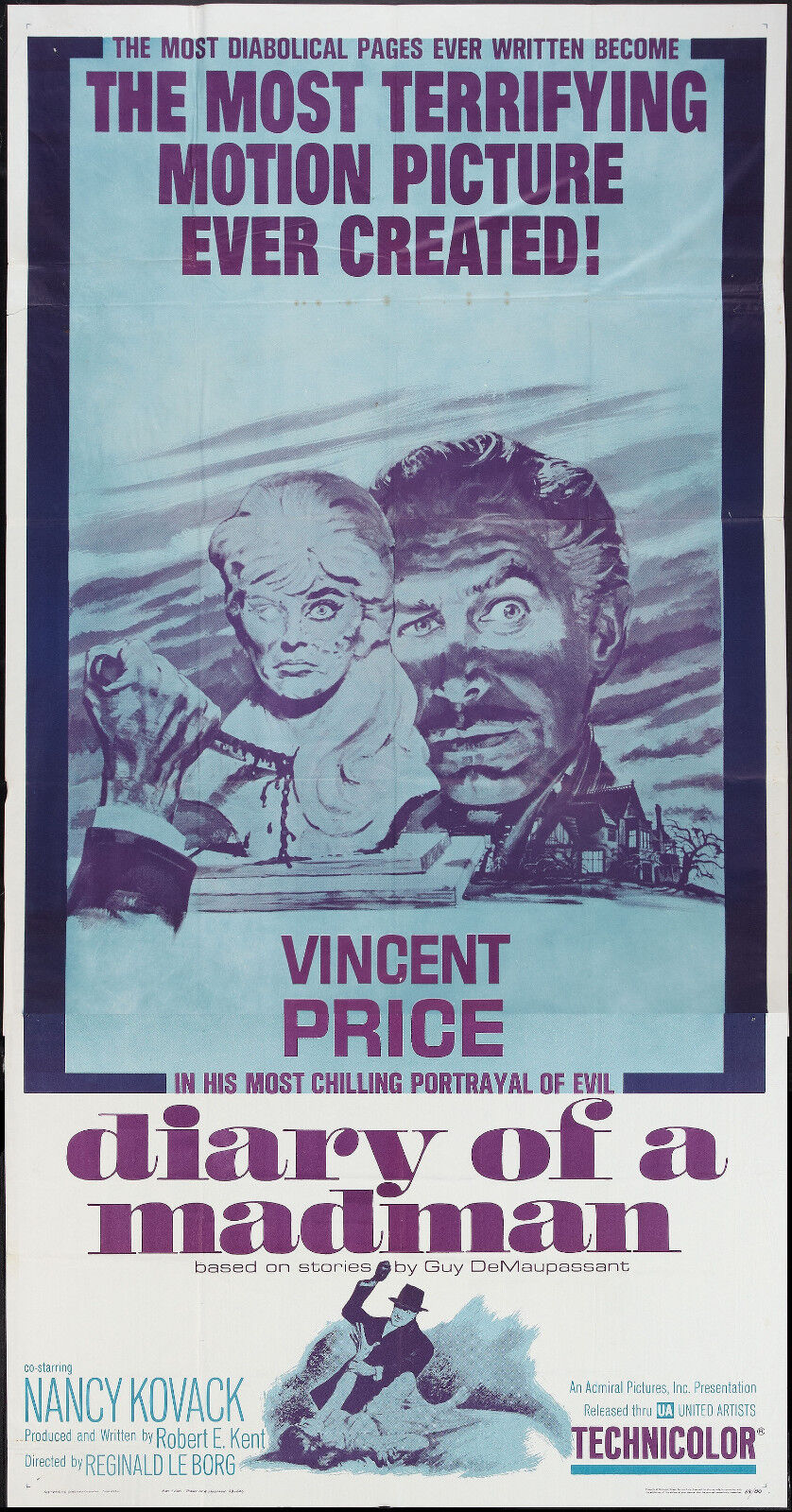
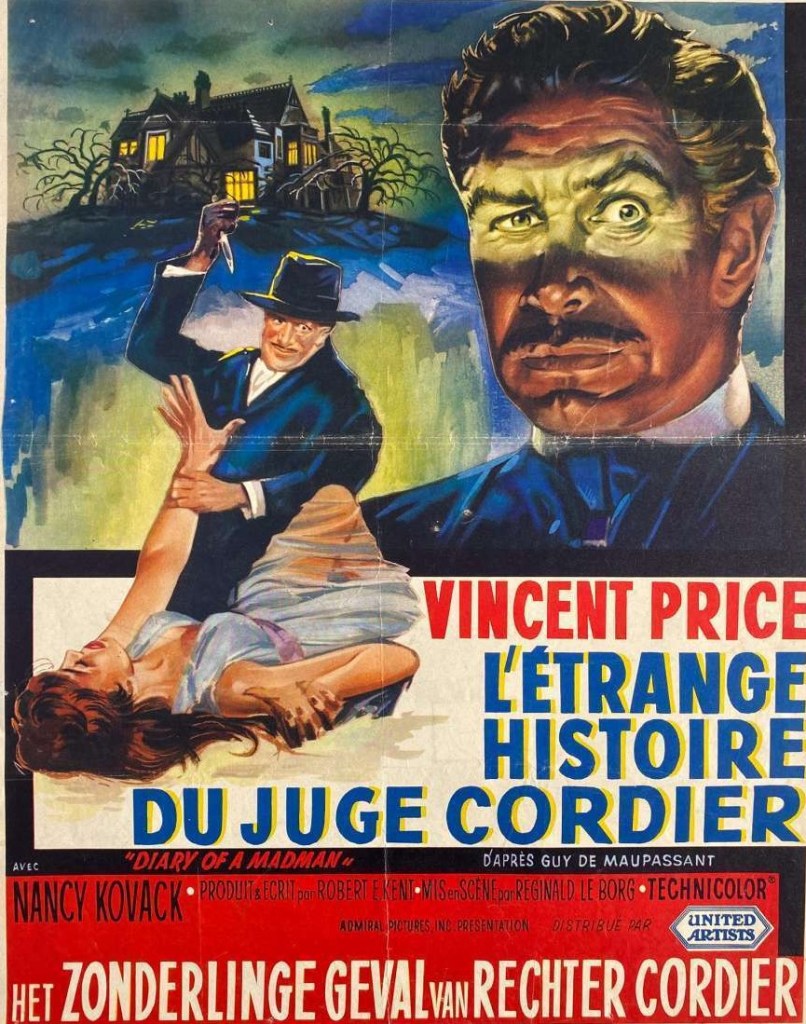
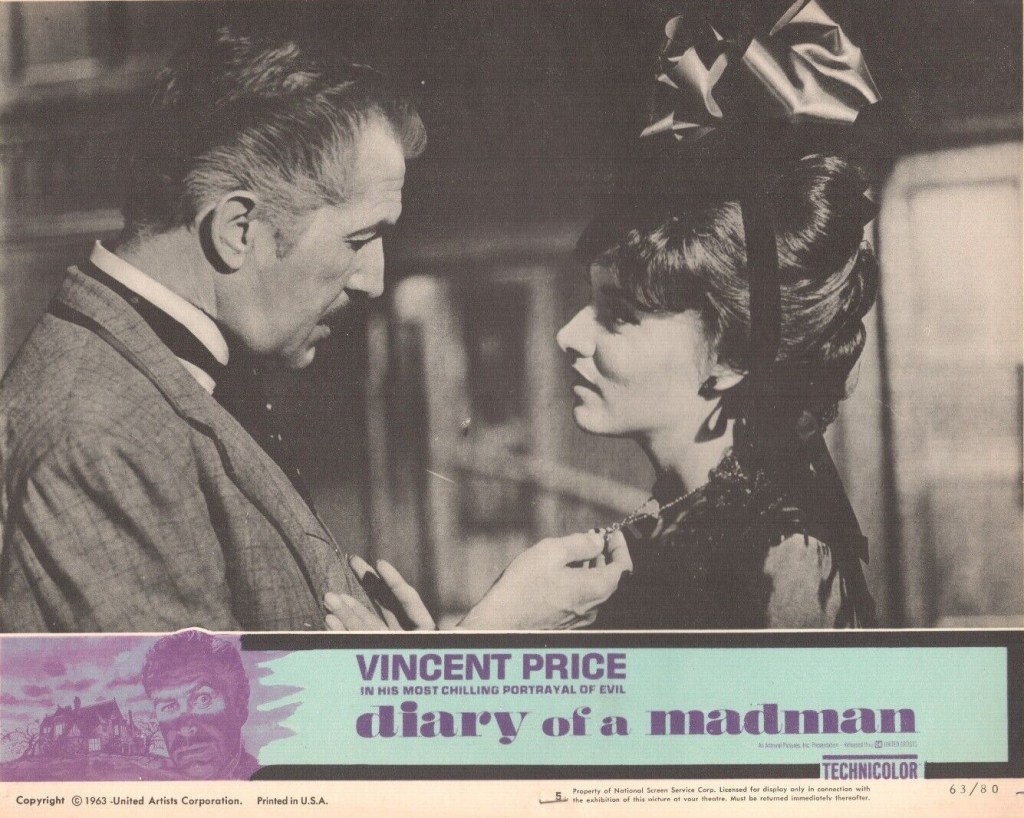
A prisoner condemned to death in 19th century France confides in magistrate Simon Cordier (Vincent Price) that his murdeorus acts were the result of direction by the mysterious and, unhelpfully, invisible “Horla.” Naturally, Cordier dismisses the notion until, in self-defence, he kills the prisoner. Disturbed by his action, he seeks counsel and is advised by a psychiatrist (an “alienist” as such a person was known at the time) to spend more time on his hobby, sculpting.
Although Cordier appears to be a model citizen, there lurks in his past a suicidal wife who killed their child, and the notion that somehow he was responsible. Into his world comes woman-on-the-make Odette (Nancy Kovack) who earns more money as an artist’s model than her husband Paul (Chris Warley) does for his paintings. Unaware that she is already committed, Simon proposes marriage. It doesn’t take long for him to suspect she is not what she seems and he does away with her only for Paul to become the main suspect and be condemned to death.
Cordier, discovering by accident that the Horla, is frightened of fire, lures the entity into his deserted house (servants sent away) and plans to destroy the entity but in the process the fire melts the door handles and Cordier can’t escape, dying in the process.
Price and Kovack.
A modern reading of course would set it up a different way, putting greater emphasis on the past, trying to uncover what drove Cordier’s wife to suicide. That he gives in to overwhelming urges might well be followed by periods of guilt until he realises that the only way out is his own suicide.
But the 1960s moviegoer – possibly still recovering from the murderous goings-on at the Bates Hotel, and grateful that it was fiction, and The Boston Strangler only just getting into his stride – was not quite ready to put any faith in a landscape filled with predators and victims, so it would make more sense for outside forces, voices or the like, to be controlling the ordinary person.
An eerie glowing light comes over the eyes of Cordier (and the earlier convict) any time the urge to kill dominates. But if you were going to set this up as a picture of innocence driven to dark deed you would not populate it with Vincent Price (Witchfinder General, 1968), who had form for dastardly deeds. Nor is Price quite able to pull it off, those sepulchral tones always seeming to indicate something lurking, and he’s hardly in the debonair category so at the very least he belongs to the caste of entitled rich taking advantage of a poor woman to press his case for marriage.
Nancy Kovack (Jason and the Argonauts, 1963) is more convincing as the manipulative object of his desire. I half-expected her to turn into a murderer in order to rid herself of her the husband getting in the way of her chance at a new, wealthier, life. Chris Warfield (Dangerous Charter, 1962) is the talentless dupe, whichever way you cut it, and you have to admire his wife for sticking with him for so long.
Given that director Reginald Le Borg’s career dated back to the 1940s and he had been lumbered with the Joe Palooka series and any number of B-movies, it was perhaps surprising that horror, although still strictly on B-movie budgets, became a forte – The Black Sheep (1956) and Voodoo Island (1957). While this one was clearly filmed on a studio backlot, he does a good job of bringing a bit of lushness to the proceedings.
Perhaps the most interesting element is that the idea originated in the mind of famed French short story writer Guy de Maupassant – you might be surprised to learned that nearly 300 movies and television adaptations have been made from his works, a dozen alone in 1963 including Mario Bava’s Black Sabbath. Worth comparing with Maniac out in the same year where the idea of the mad killer is exploited for a different end.
If anybody in Britain told you they saw Wild Angels (1966) when it came out that year you could safely accuse them of being liberal with the truth for that was one of the many films banned by the censors there. Global censorship remained a major issue for studios during the 1960s, every country imposing its own system, and very rarely did they conform with each other. At the beginning of the decade, the biggest issue was sex, by the end it was joined by violence and drugs.
Films were rarely banned in the United States since scripts for movies liable to violate the agreed guidelines tended to be submitted in advance and a compromise reached prior to production. However, local U.S. censorship bodies acting independently prevented some films being shown, This Rebel Breed (1960) in Memphis, Room at the Top (1959) in Atlanta. Movies banned in different countries included: Operation Eichmann (1961) in Israel and Germany, Queen Bee (1963) in Italy, The Collector (1965) in New Zealand, Wild Angels (1966) in Denmark, Lady in a Cage (1964) in Sweden and Geneva, Ulysses (1967) in Glasgow and Edinburgh, and Easy Rider (1969), despite winning a prize at Cannes, in France. Doctor Zhivago (1965) was banned in Thailand for being pro-communistic and in India for the opposite reason. Ireland banned 56 movies in 1960, Finland 12 in 1962, Sweden 10 in 1963 and West Germany 19 that same year. In South Korea in 1962 you still could not see any Japanese movies.
Being banned of course became a promotional tool. It was a regular joke in America that a low-budget picture had no chance of box office success unless it was banned in Boston. In France, Les Teenagers (1968), Young Wolves (1968), The Nun (1966) and Paris Secret (1965) all benefitted from being released after tussles with the censor and the controversy over Ulysses saw it break box office records in Dundee in Scotland.
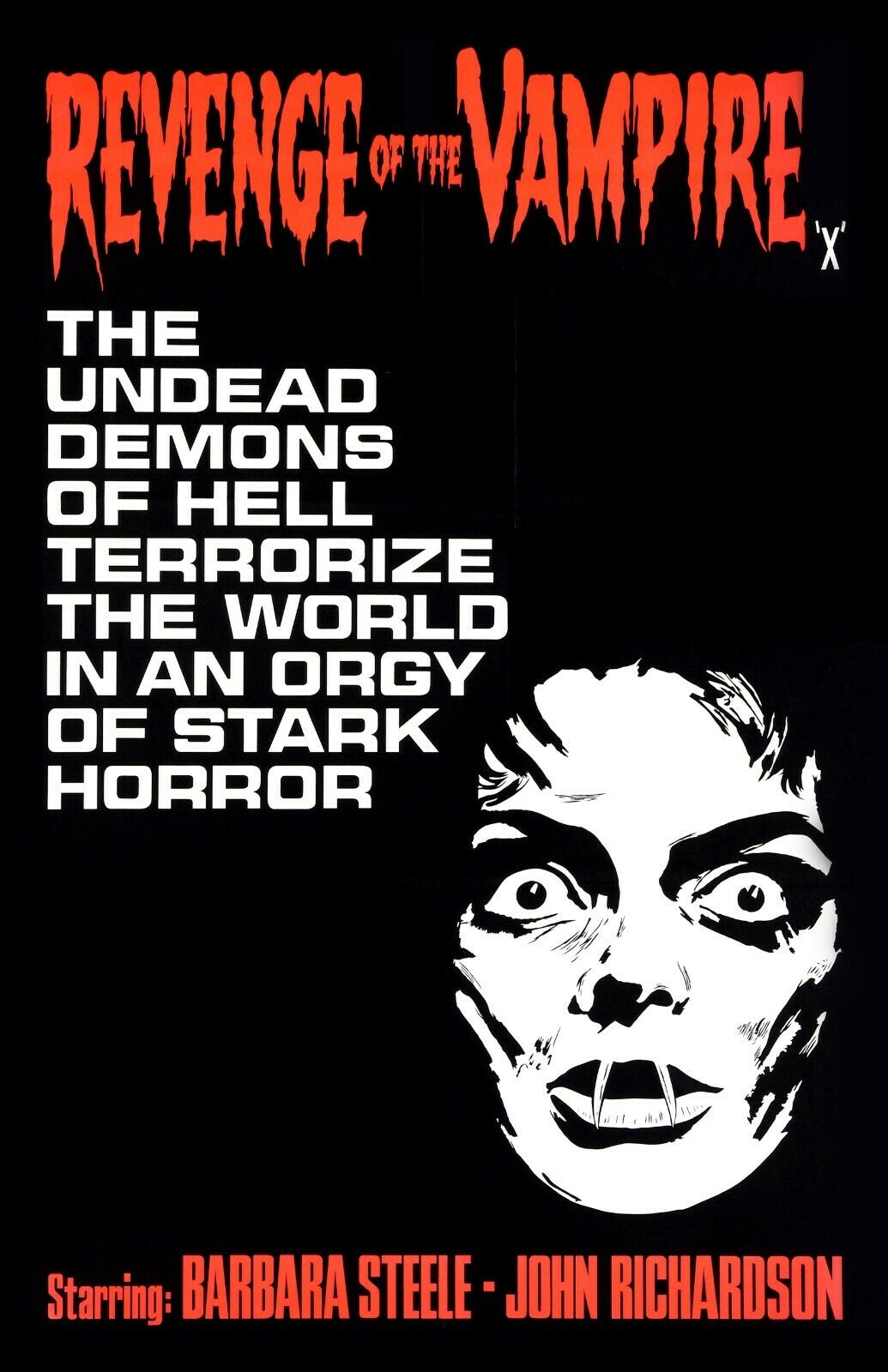
The British censor prevented screening of films deemed too violent including The Couch (1962) about a serial killer, Samuel Fuller’s Shock Corridor (1963), Violent Midnight (1963), The Thrill Killers (1963), Shock Treatment (1963) – despite a cast that included Lauren Bacall and Stuart Whitman – Fuller’s The Naked Kiss and Weekend of Fear (1966). Among horror films denied a showing were Blood Feast (1963), Two Thousand Maniacs (1964) and, initially, Mario Bava’s Black Sunday (1960) which was later reprieved and shown as Revenge of the Vampire.
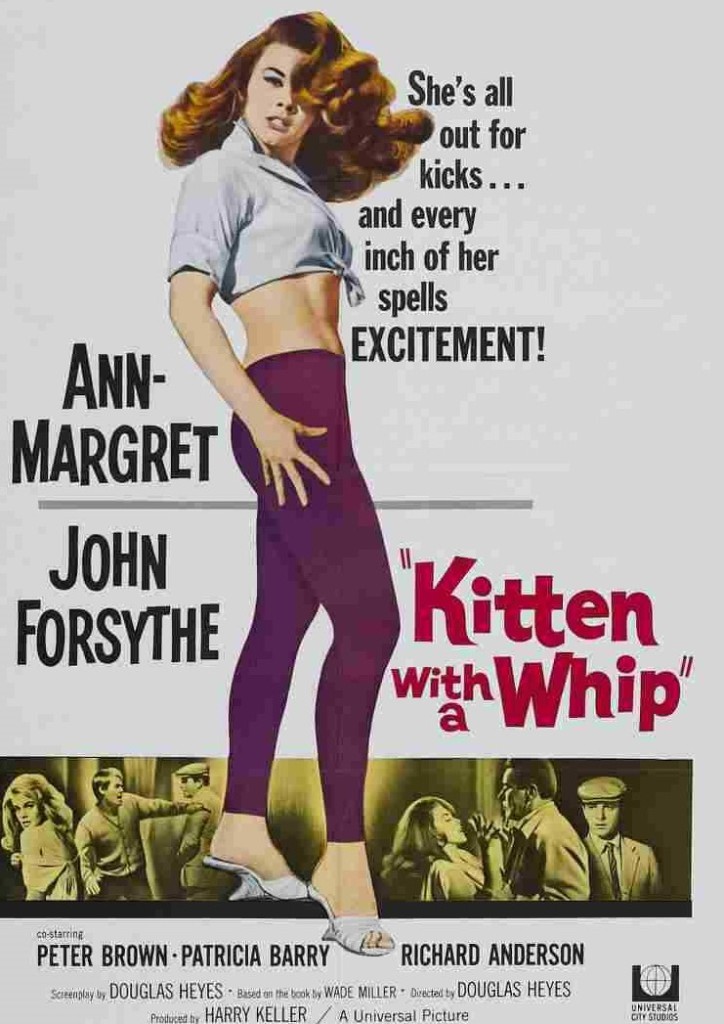
Juvenile delinquency, often straddling the biker world, was another subject to fall foul of the British Board of Film Censors. Among them The Choppers (1961), Jacktown (1962), The Cool World (1964), Kitten with a Whip (1964) starring Hollywood sensation Ann-Margret, the aforementioned Wild Angels (1966), Rat Fink (1966), Hot Rods to Hell (1966) with Dana Andrews and Mickey Rooney, Riot on the Sunset Strip (1967), Born Losers (1967), Devil’s Angels (1967) and virtually anything that mentioned Hell’s Angels.
Drug taking was also forbidden to be seen, thus accounting for the absence on British screens of The Trip (1967), Hallucination Generation (1967), Mary Jane (1967), LSD Flesh of the Devil (1967) with Guy Madison and Revelation – The Flowering of the Hippies (1967). Easy Rider (1969) was passed for “being actively concerned with human beings and the effect of drug taking.” Films considered too morally dubious or too sexually open to let loose on British audiences included Sinderella and the Golden Bra (1964), 3 Nuts In Search of a Bolt (1964) starring Mamie Van Doren, 90 Degrees in the Shade (1965) with Anne Heywood, Russ Meyer’s Motorpsycho (1965), Good Morning…And Goodbye (1967) and Lee Frost’s The Animal (1968). Explicit language was the objection to Warrendale (1967) and Ulysses (1967), homosexuality the problem for Deathwatch (1965) starring Leonard Nimoy and Shirley Clarke’s documentary Portrait of Jason (1967).
In Britain, to get round the censor’s strictures, the “cinema club” was invented in 1960 by Gala Film Theatres, an offshoot of a distributor specializing in racy fare, and within a month had 7,500 members, the operation launching with a showing of The Wild One (1953). Local authorities could also take exception to the national censor’s findings and grant a reprieve for various films, Wild Angels and The Trip eventually achieving exposure in this fashion. Most cinema clubs would eventually segue into becoming outlets for soft porn but some stuck with the original concept of showing arty movies considered too risqué by the censor. The New Cinema Club in London, for example, in August 1969 programmed Wild Angels and Kenneth Anger’s Scorpio Rising (1963)
But the censor was not the only reason why films were not shown and ended up either ignored by the distributors or stuck on the shelf and we’ll come to those in another article.
David McGillivray, “The Crowded Shelf,” Films & Filming, September 1969, 14-15; “High Cost of Censor Fights vs. Principles,” Variety, March 2, 1960, 1;“If Banned in Britain, All Is Not Lost,” Variety, April 20, 1960, p48; “Theatre, Not Censors, Banned Breed,” Variety, June 1, 1960, p24; “Room at the Top Ban,” Variety, July 27, 1960, 4; “Operation Eichmann Banned in Germany, ” Variety, May 3, 1961, 1; “211 Pix Scissored, 56 Banned in Ireland,” Variety, May 3, 1961, p15; “Operation Eichmann Banned by Israeli,” Variety, November 1, 1961, p2; “12 Pix Banned by Finland Censors,” Variety, March 28, 1962, 17; “Singapore Censor Gets Tough with U.S. Pix; Satan, Suzie Banned,” Variety, August 8, 1962, 21; “Japanese Pix Still Banned by S. Korea,” Variety, December 12, 1962, p16; “Bee Banned by Italian Censor,” Variety, January 23, 1963, p18; “W. Germany Claims Only 19 Pix Banned, “ Variety, December 4, 1963, p11; “Swedish Censors Banned 10 in ’63,” Variety, February 5, 1964, p2; “The Group Banned,” Variety, April 8, 1964, p84; “Lady in Cage Banned by Sweden Censors,” Variety, July 15, 1964, 2; “New Zealand Censors Turn Down Collector,” Variety, November 3, 1965, 11; “Cage Banned By Geneva Censors,” Variety, January 19, 1966, 16; “Can’t Second Guess Global Censors,” Variety, November 30, 1966, 20; “Banned in Australia,” Variety, May 24, 1967, 26; “Scot Exhib, Whose Town Disapproves Censorship, Cleans Up with Ulysses,” Variety, May 1, 1968, 27; “Film Censors in France Spark B.O.,” Variety, May 8, 1968, 131; “Dracula Sole Film Banned in Israel Last Year,” Variety, May 28, 1969, 39; “Britain gives ‘X’ Tag to Fonda’s Rider Pic,” Variety, June 18, 1969, 30; “Eire Banned 35 Films in ’68,” Variety, August 20, 1969, 32.
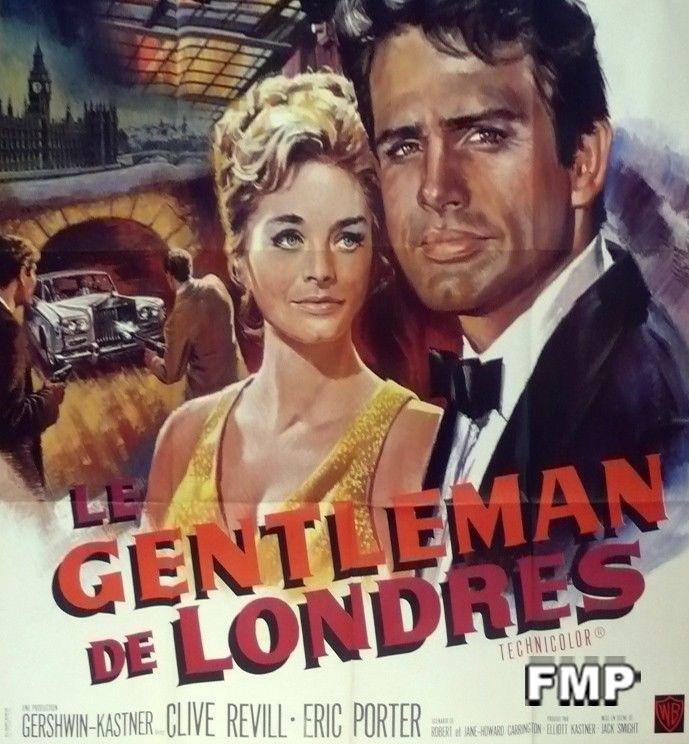
Amazing the tension that can emanate from one turn of a card. Or, more correctly, waiting for one. Only problem is we’re two-thirds through the movie before high-stakes poker begins – the pot nudging £250,00 (close on a cool £5 million now). Mostly, the earlier tension derives from not knowing what the hell is going on in this enjoyable thriller made at the height of the Swinging Sixties as playboy gambler Barney (Warren Beatty), a walking Carnaby St model driving an Aston Martin DB5, tilts the odds dramatically in his favor.
Barney is a gambler but the problem with gambling is the odds. They can be against you too much. So Barney decides to turn himself into a burglar, the kind that can clamber over rooftops, abseil between buildings, and break into – a printing business called Kaleidoscope. This just happens to print the playing cards supplied to all the major European casinos. So Barney does a little doctoring of the master printing plates. Bingo, the odds are a bit more even now that he knows what cards are coming out of the shoe – he plays chemin de fer (as it is known in posh casinos; pontoon or 21 to you and me).
While cleaning up he bumps again into fashion designer Angel – their original meet-cute taking place in a traffic jam – who he dated once in London. Unbeknownst to him, she is on a scouting mission, looking to snare the kind of high-rolling gambler who can take on and completely fleece drugs kingpin Harry (Eric Porter) being pursued by her father Manny (Clive Revill), a cop who, rather than waste so much time collecting the required evidence to put the villain behind bars, decides it would easier done by making him broke. Unable to pay his debts, some other villain would put him out of business in the traditional cemented-boot fashion.
It takes a while for the movie to line up all its ducks in a row, mainly by holding back the vital information the audience requires. But the audience is privy to details of the way Manny works that Barney is not. Even for ruthless villains, Manny has a peculiar calling card, one that would make any gambler think twice about entering his lair. Of course, it doesn’t take long for Manny to rumble Barney’s game so the stakes are much higher than the charmer imagines.
Throw in as much fashion as London was capable of generating at this time, the burgeoning romance, some exotic European locations, a castle with a moat, and the usual tourist guide stuff of red buses, Big Ben, Piccadilly Circus, pubs and Tower Bridge and you have all the ingredients of an easy on the eye thriller.
A bit over-reliant on star power. That is, if you don’t need Beatty to do much more than be Beatty, all teeth and charm. At this point Beatty’s career looked as if it was fast approaching its end. The box office success of Splendor in the Grass (1961) had been followed by a string of flops, romantic dramas and comedies that should have had audiences queuing up plus an occasional wild card like Arthur Penn’s Mickey One (1965), the biggest flop of all. He does make an engaging crook, and he never loses his screen charisma here, but there ain’t quite the right number of twists that moviegoers weaned on the likes of Topkapi (1964) had come to expect.
Hollywood had been doing its best to position Susannah York as a top box office attraction and she had snagged leading female roles in The 7th Dawn (1964) opposite William Holden and Stanley Baker in Sands of the Kalahari (1965) but she was recovering from the colossal flop of Scruggs (1965) by ‘poet of the cinema’ David Hart. Kaleidoscope offered the kind of role York could do with her eyes closed. So while the screen pair were not exactly sleep-walking it was not the kind of story that was going to create sparks.
Character actor Clive Revill (Fathom, 1967) and Eric Portman (The Pumpkin Eater, 1964) take more leeway with their roles, the latter almost chewing he scenery, the former content with just chewing his lips. Look out for Jane Birkin (Blow-Up, 1966) and British television stalwarts Yootha Joyce, George Sewell and John Junkin.
The title would have been more enigmatic, original meaning of images twisted out of shape, had it not also applied, straightforwardly, to the card-making company. Giving Harry the surname of Dominion seems overkill.
Director Jack Smight (No Way to Treat a Lady, 1969) came to this after twisty private eye picture Harper/The Moving Target (1966), a big hit starring Paul Newman, but this is too lightweight a feature to command such interest, but he does keep the story rolling along and it’s an effortless watch and it has a certain offbeat quality. The screenplay was fashioned by Robert Harrington and Jane-Howard Hammerstein, making their movie debut, who also co-wrote Wait until Dark (1967). It was also the debut for Winkast Productions, the Jerry Gershwin-Elliott Kastner production team who went on to make Where Eagles Dare (1968).
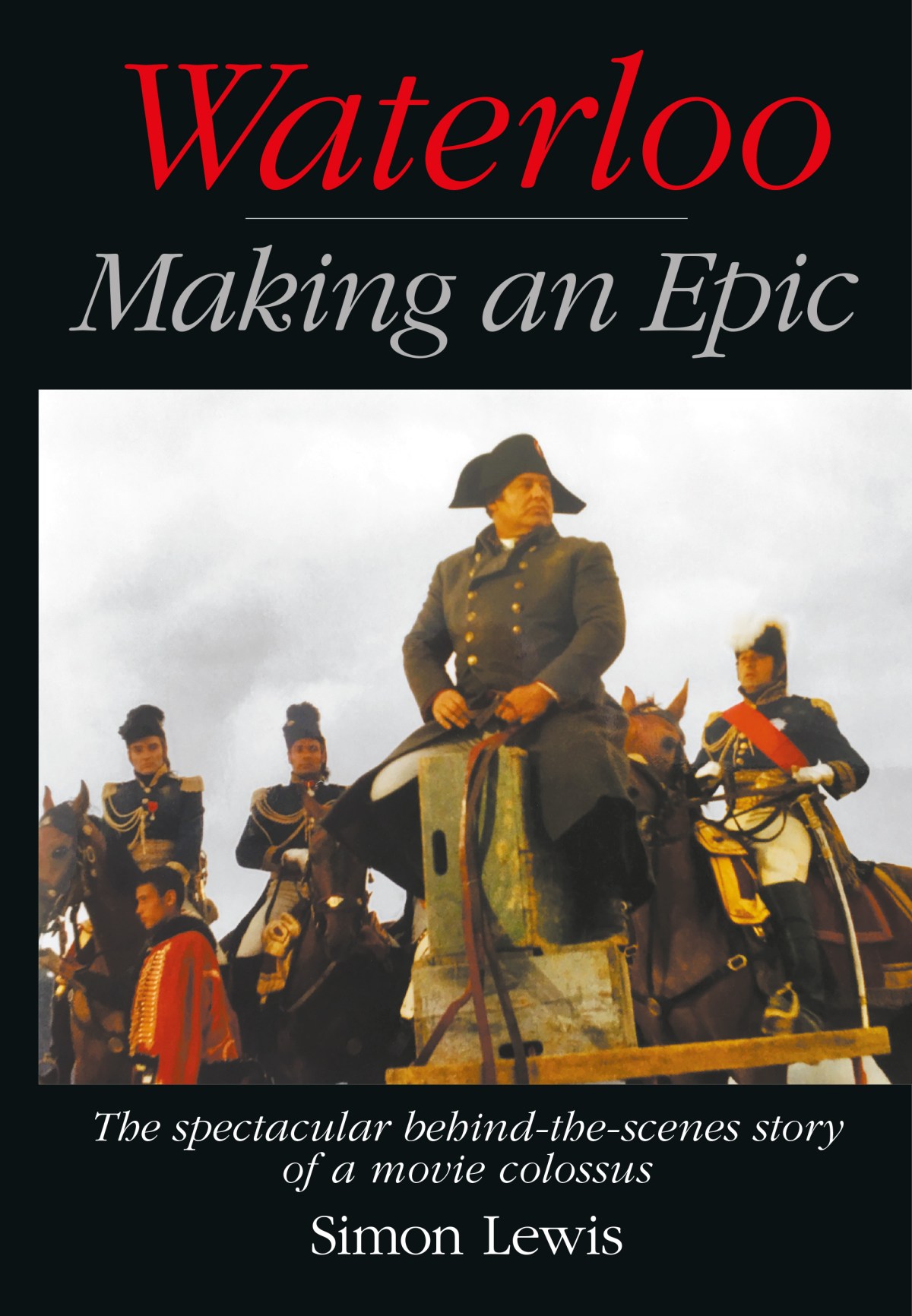
As dramatic a box office flop as this movie scarcely deserves a book as superb.
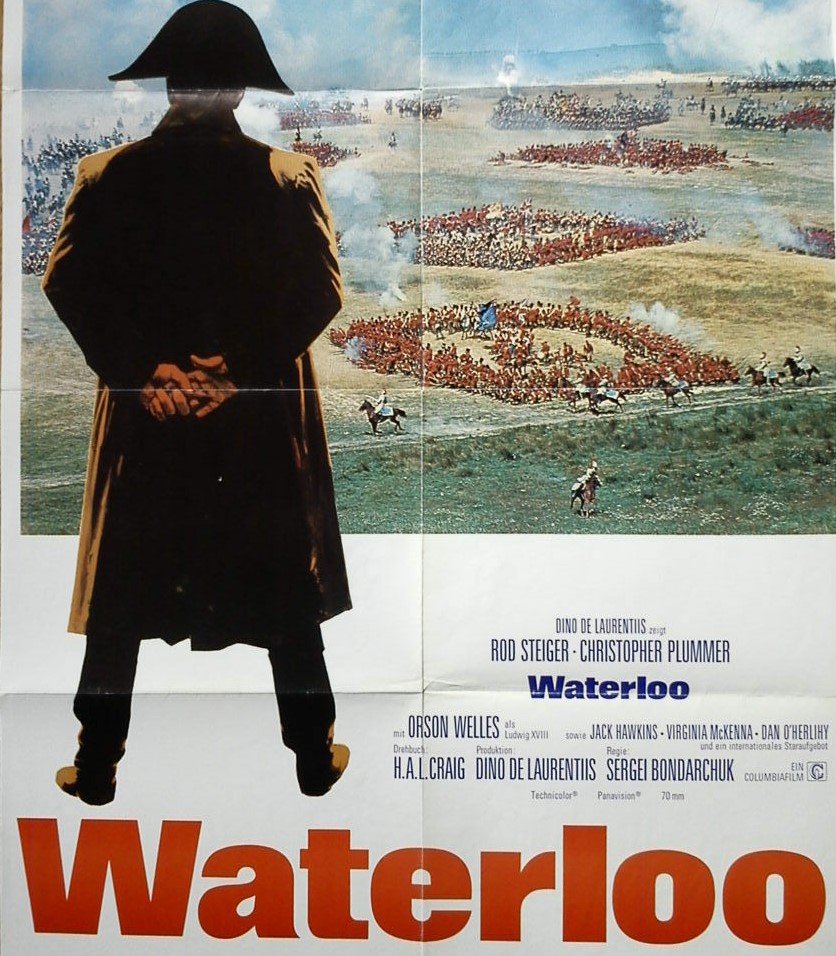
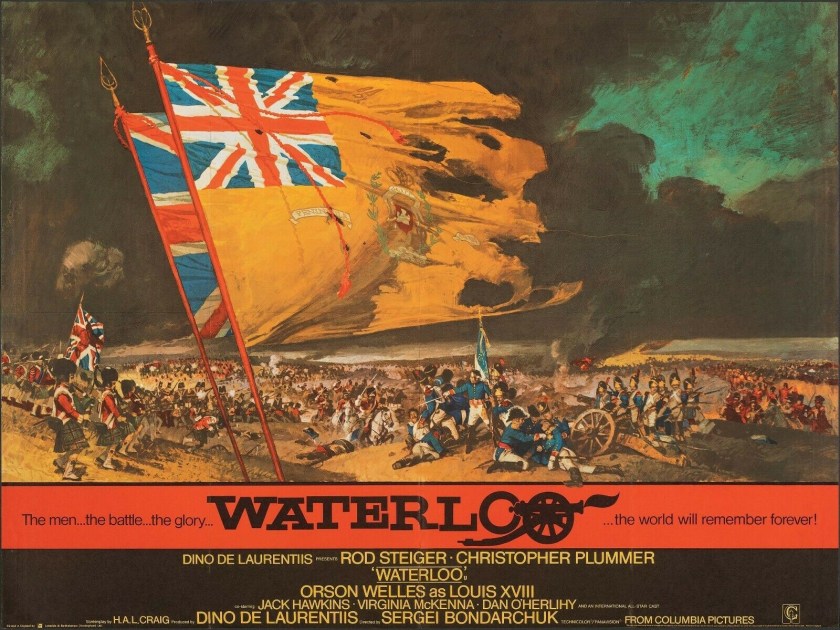
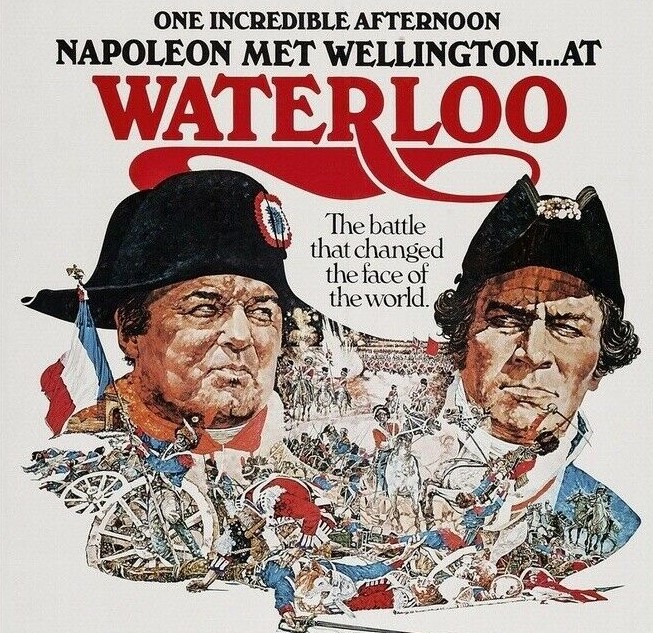
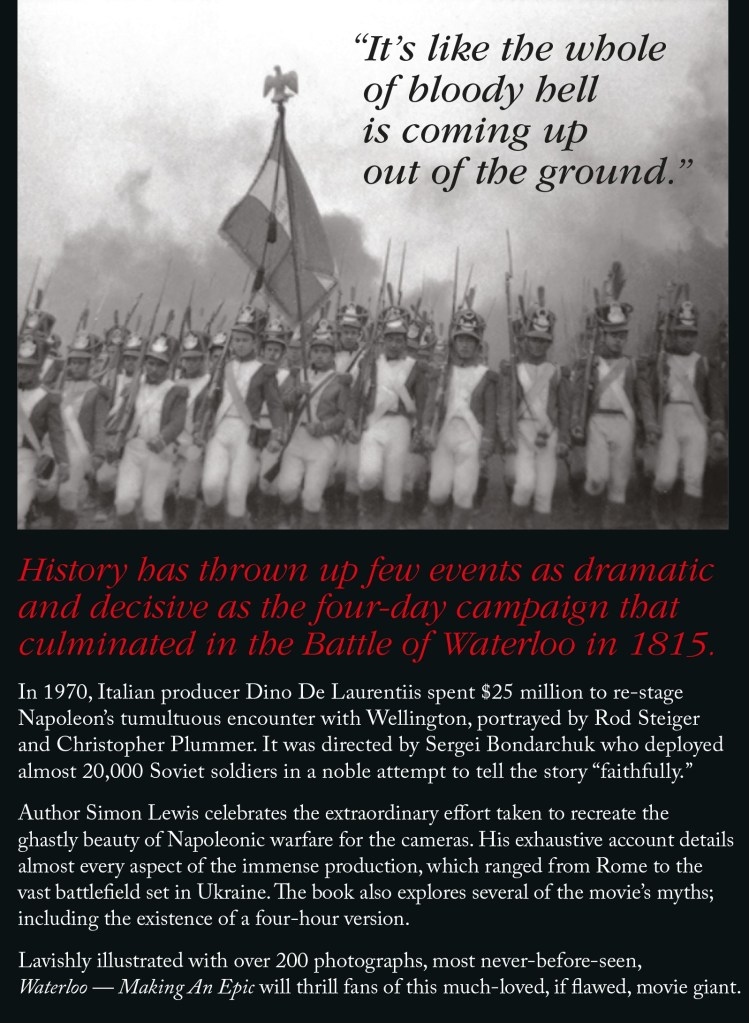
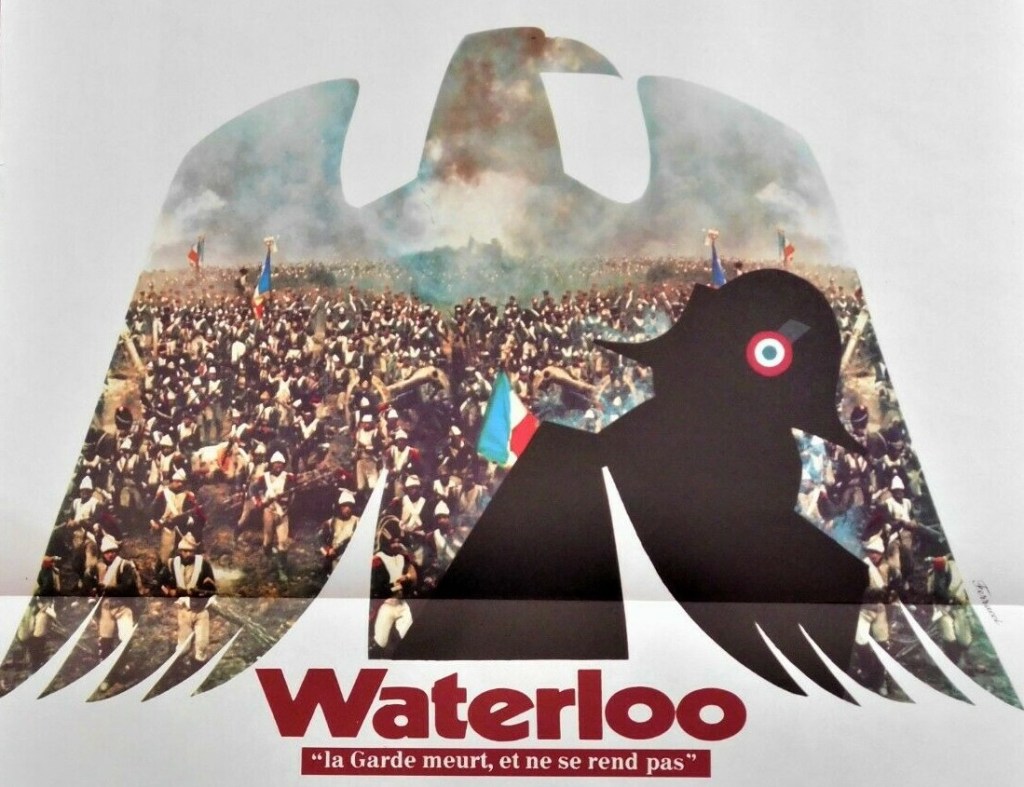
In quite extraordinary detail, author Simon Lewis discusses every aspect of the making of the film, from initial set-up to release, by way of analysis of dozens of separate scenes through to rarely discussed elements like the editing and mixing, and even the myth of the missing longer version and the importance of wooden boxes (as illustrated by the front cover). It might have helped the movie’s commercial chances, and not put too much of a dent in the ultimately massive budget of $26.1 million, if producer Dino De Laurentiis has snagged original dream team of Richard Burton (Napoleon) and Peter O’Toole (Wellington), both of whom carried much greater box office marquee than Rod Steiger and Christopher Plummer.
Burton was never really a possibility but by 1968 O’Toole was “practically set” although turning it down because he thought it would flop. John Huston, who had just completed The Bible (1966) for De Laurentiis, was original choice for director and got so far as being involved in the screenplay being written by H.A.L Craig (Anzio, 1968). When he dropped out, Gilles Pontecorvo (The Battle of Algiers, 1966) was briefly in the frame. However, a six-hour version of War and Peace (1965) put Sergei Bondarchuk in pole position.
Requiring thousands of properly trained and preferably “celluloid-seasoned” troops to carry out disciplined manoeuvres rather than extras, De Laurentiis was in negotiation with Turkey, Hungary, Yugoslavia and Bulgaria before plumping for Russia, whose production arm Mosfilm pumped in $8 million (later rising in line with budget increases). Paramount and Columbia contributed a combined $7 million with worldwide rights selling for a total of $25 million. Once filming began, Paramount chiefs Charles Bludhorn and Robert Evans, watching elements of shooting, were so taken with what they saw they wished they had invested more. Evans was reportedly “enthralled by hours of film material.” Craig’s screenplay was augmented by the director and Vittorio Bonicelli as well as uncredited contributions by Jean Anouilh (Becket, 1964), Samuel Marx and Edward O. Marsh, not to mention additions by the two main actors. Steiger pocketed $385,000, Plummer $300,000, Craig $121,000 but Anouilh only $21,000. Gordon Highlanders pipers and drummers picked up £7 a day.
Lewis is at his best when forensically examining particular scenes, for example, the Duchess of Richmond Ball which used 4,000 candles inserted into candelabras, the slightest draught causing these to melt and drip wax on performers, a carpet used to get camera shots from a very low level.
Steiger played Napoleon almost as a dead man walking, having got hold of a copy of the French Emperor’s autopsy which revealed advanced cirrhosis and gonorrhoea. Steiger and Bondarchuk met the night before to iron out ideas for the following day but Steiger was not above forcing the director’s hand by in one instance the actor removing his trousers to ensure he could only be shot in close-up. Orson Welles matched Steiger in trickery. Only hired for two days, Welles extended his employment by insisting on doing his own make-up which of course was never up to scratch and required amendment. And in terms of movie trickery, Steiger was required to sit on a wooden box on his horse to ensure he could be kept in focus. Jack Hawkins dispensed with the horse altogether – he was either atop a box or on top of stilts, as he was unsteady on an animal.
In the absence of CGI of the kind Ridley Scott could employ for his battle scenes, the real soldiers were occasionally augmented by mannequins. Five thousand were made, two real soldiers at either end of a row held eight mannequins in place by the use of a single wooden plank which “allowed all regiments to march forward.” Among the many wonderful candid pictures in this lavishly illustrated tome – 200 photographs, many never seen before – is one of three girls staring at the mannequins as well as photos of Steiger and Hawkins on their boxes.
The Waterloo battlefield had one of the biggest sets ever built. A total of 17,000 soldiers, mostly from Siberia and including 2,000 cavalry, lived in a tented city a mile away. Steiger noted: “It would have taken assistant directors three days to put untrained men, mere extras, into position. When they broke for lunch it would be another three days to arrange them again. These guys are superb.” Real soldiers working with their actual commanders was the difference between waste and superb. Having a general in charge of the troops often created issues. Bondarchuk would select the horses he wanted based on the effect he wished to achieve with the light, demands often obstructed by the commander if it meant the chosen horses had not been properly fed. “I will order soldiers – but how do I order animals?” was the dry comment from the army chief. .
Although the battlefield was primarily authentic – mud for one scene created by pumping two days’ worth of water into the soil before cavalry churned up the area – there were occasions when filming conformed to the Hollywood norm. “The use of fiery explosions had been cinematic shorthand for battle scenes long before Waterloo” when in reality these would be minimal. “Most ammunition that was fired comprised large iron balls and so low was its speed it was possible to watch their progress.”
The famous charge of the Scots Greys was described thus in the script: “they came straight into camera – like centaurs in their magnificence.” The sight of 350 Arabian mounts travelling at breakneck speed was captured by use of a specially constructed railway powered by a diesel locomotive. Five cameras were sited in different positions on the train. The famous slow-motion effect – possibly the most exhilarating moment in the picture – was achieved by over-cranking the camera at 100 frames per second which slowed down what you saw by a factor of four.
Perhaps the best reveal regarding movie trickery was the moon above Wellington as he rode past the carnage. It comprised “special silver paper for front projection – 3M – like shark skin. You put one light on it and it reflects ten times brighter.” The moon was shown as one quarter less than full since the effect of a full moon would be harder to carry off. “Blue ink made some spots as moon craters.” The fake moon was suspended with one wire on top and two left and right to prevent it from moving, then one light was projected onto it.
Back cover of the book.
Lewis rebuts the myth of the missing longer version. He reckons this probably came about because over 300,000 feet of film – 55 hours – was shot and the first rough cut was five hours long. The final cut was 133 minutes – not much longer than if you had worked out the length by counting the pages of the screenplay – and release cuts varied because, for example, the British censors cut out 28 seconds of horse falls and the ending includes 50 seconds of music over the credits. It was never shown with the intermission which was de rigeur at the time for longer roadshows and would have, artificially, inflated the running time. There was some confusion over the final print because a novelisation by Frederick E. Smith included some scenes that didn’t make it into the final print, and Smith’s book, written of necessity before the film appeared, would have used as its main reference tool the screenplay. But Lewis spends a whole chapter explaining why a longer cut never existed.
The world premiere was held on 26 October 1970 in London where the movie released as a roadshow (i.e. separate performances) was a huge success. It ran for a few weeks short of an entire year in the London West End, breaking box office records at the Odeon Leicester Square and the Metropole where it opened on December 3rd, 1970, before shifting to the Columbia on June 17, 1971, and then a final week at the Odeon Kensington from September 30 1971. But audience appeal in the United States was at the other end of the spectrum. It went from a strong opening week of $25,436 at the Criterion in New York to just $1,775 in its fourth week, and nationwide racked up only $1.4 million in rentals (the studio share of the box office). It was derided in France in part because the film was about the defeat of a legend and the French could not come to terms with the idea that it was directed by a Russian.
Where most “making of” books concentrate on the stars and the director, Lewis goes into fantastic detail about all aspects of the production, the chapter on editing and mixing an education in itself. There’s a chapter on how historically accurate the film actually was. The author was helped by the discovery of a diary kept during production by actor Richard Heffer who played the small part Mercer. But Lewis also managed to make contact with Dino De Laurentiis’s daughters, Raffaella and Veronica, and around two dozen people connected with the film in some way, and clearly examined every scrap of information available on the picture. The Notes are another mine of information.
Even if the film is not at the top of your must-watch list, this book should go to the top of your must-read list.
Waterloo, The Making of An Epic, The Spectacular Behind-the-Scenes Story of a Movie Colossus by Simon Lewis is published by Bear Manor Media, 534 pages, illustrated (B&W), Hardback, Paperback & Ebook, ISBN 978-1-62933-832-3 .
A new episode in the James Bond legend began on February 23, 1966, when a plasterer from Scotland made an audacious bid for movie stardom. His name was Neil Connery, currently earning $10 a week, shooting for a $5,000 payday as he took part in a screen test in Rome for producer Dario Sabatello (Seven Guns for the MacGregors, 1966) for a film entitled Operation Casbah that would later be tagged Operation Kid Brother (O.K. Connery in Italy).
Sabatello was an experienced producer beginning with The Thief of Venice (1950) starring Hollywood legend Maria Montez. Connery was a skilled laborer living in the four-year shadow of elder brother Sean and with little intention of moving out of that shadow. However, as a result of a work-related incident, he became the subject of a newspaper article and then a radio interview. Nobody was much interested in the reason for the interview – stolen tools – but everyone was impressed by the sound of Neil’s voice. “Sean’s brother spoke exactly like him.”
Archers Assemble! Connery on the bowstring.
The newspaper interview caught the eye of Sabatello, who noted the actor’s likeness to his brother and who flew over to Edinburgh to interview Neil and in so doing becoming aware of his athletic attributes, height and good looks. A month later came an invite for the screen test. Neil’s agent, who had no right to make such a claim, promised that if Neil got the part big brother Sean would play a cameo. For the test, Connery had to “embrace a girl, sing, dance and finally end up in a hand-to-hand fight with a guy with a knife.” However, the test was so successful that the presence of Sean was not required. Sabatello signed the neophyte actor to a six-picture deal that would generate a six-figure salary if the film turned the Scot into a star.
Italian production giant Titanus sold the world rights (except for Italy) to United Artists, ironically the distributor of the James Bond pictures, thus securing the funding for the $1.2 million three-month shoot that kicked off in Cinecitta in Rome on December 14, 1966. Locations were scheduled to include Monte Carlo, San Remo, Turin, Barcelona, Malaga and Tetuan.
The supporting cast was dominated by actors with a Bond connection including Adolfo Celi, Daniela Bianchi, Anthony Dawson, who had all worked with director Alberto De Martino on Dirty Heroes (1967) and Lois Maxwell and Bernard Lee. Ennio Morricone, another De Martino aficionado, was brought in to do the score.
Affiliates Assemble! Connery with Bond regulars Bernard Lee and Lois Maxwell.
Connery’s boxing training in the British Army came in handy when he had to become an archer. Pulling a bow takes considerable physical exertion. Target practice was held at Adolfo Celi’s house outside Rome. “I had remembered everything about putting the bow down, bringing it up, pull and push, as there was quite a pull on it,” he said. Celi’s arrow managed just a few yards but Connery hit the target. His luck did not hold when filming the real thing in Monte Carlo. Celi’s shot did not go far again but this time Connery’s arrow missed the target.
Although Connery had read the script he was only given his lines in the morning as he went into make-up. He acquitted himself well in the fight scenes, except for one scene which ended with him being taken to hospital.
The film opened in Britain at the Pavilion in London’s West End on April 25, 1667, with a general release slated for May 5. But it didn’t get a circuit release. That is, it didn’t go out on either of the two main cinema chains, ABC or Odeon, or the lesser Gaumont circuit, so its bookings would have been restricted. It didn’t appear in the United States until November, 1967, having been reviewed without much enthusiasm in Variety which posited “at best the film deserves bottom half bookings”, i.e. the bottom half of a double bill, which means it would play for a fixed rental rather than a percentage.
It did open in first run in a number of city center picture houses in November and December, to occasionally decent but hardly lush box office. Its $20,000 week in Chicago was deemed “good”, as was the $4,000 in Providence, while $13,000 in Philadelphia was considered “brisk” but $5,000 in St Louis considered only “fair.” There was a first run showing in New York but only at a 600-seater arthouse.
But when it went wider in “Showcase” releases the box office collapsed. In New York it managed only $67,000 from 25 theatres compared to, in the same week, British film The Family Way on $223,000 from 26, and the second week of Point Blank with $145,000 from 25. Business was worse in Los Angeles, just $49,000 from 26 compared to $125,000 from 29 for Barefoot in the Park, and it was dire in Kansas City, only $9,000 from eight houses.
Given the relatively low budget, the film globally may well have broken even but it certainly did not send Neil Connery’s box office status into the stratosphere. He had small parts in two more low-budget movies, The Body Stealers (1969) and Mad Mission 3: Our Man from Bond St (1984) plus some television.
SOURCES: Brian Smith, “Bond of Brothers,” Cinema Retro, Vol 4 Issue 12 2008, p13-19; Allen Eyles, Odeon Cinemas 2, (CTA 2005), p212; Allen Eyles, ABC (CTA, 1993), 123-124; Allen Eyles, The Granada Theatres (CTA 1998)’ p247; Allen Eyles, Gaumont British Cinemas, (CTA 2005), p197; William Hall, “Big Brother Is Watching Him,” Photoplay, June 1967; “International Soundtrack,” Variety, February 23, 1966, p33; “Titanus Sets Pre-Prod Deals for Two UA Pix,” Variety, December 14, 1966, p24; “International Soundtrack,” Variety, December 21, 1966, p24; “Hollywood and British Production Pulse,” Variety, December 28, 1966, p17; Advertisement, Variety, January 4, 1967, p65; “Connery Pix a Family Affair with UA,” Variety, March 8, 1967, p24; Review, Variety, October 11, 1967, p22; “Picture Grosses,” Variety November 1, November 8, November 15, November 29, December 13, 1967.
Films that reach the screen two years after filming was completed are generally stinkers. Ken Annakin caper movie The Biggest Bundle of Them All wrapped production in summer 1966 and was not released until January 1968. But the reason was not the usual.
The cause of the unseemly delay was a temper tantrum by Oscar-winning uber-producer Sam Spiegel (Lawrence of Arabia, 1962) who had been working on a similar project about incompetent amateurs kidnapping a gangster kingpin – The Happening (1967) starring Anthony Quinn (previously reviewed in the Blog). After bringing a charge of blatant plagiarism, Spiegel was mollified by being permitted to bring his movie out first, with an inbuilt eight-month gap between both releases, the deal sweetened by a 15% cut of The Biggest Bundle’s profits and the right to vet the script.
Despite success with Those Magnificent Men in Their Flying Machines (1965) and Battle of the Bulge (1965) British director Annakin was at a career impasse. The Fifth Coin written by Francis Ford Coppola and starring George Segal failed to get off the ground. He turned down western Texas Across the River (1966) at a time when Catherine Deneuve and Shirley Maclaine were slotted in for the female roles and was fired from The Perils of Pauline (1967). The Italian Caper as it was then known, recalled Annakin, “did not seem a world-shattering movie but I found the caper fascinating and the cast irresistible.”
Let them eat cheesecake.
It marked the movie debut for producer Josef Shaftel of The Untouchables television fame and for screenwriter Rod Amateau (The Wilby Conspiracy, 1975), also then a television regular although the final script was attributed to another neophyte Sy Salkowitz. The film made the most of Italian locations, Naples and Rome, as well as the South of France and Provence. Annakin caught pneumonia just as shooting was to commence. Shaftel took over for five days only for his material to prove unusable.
Both veteran actors proved easy to direct. “Robinson was like putty in my hands, completely trusting.” And while Vittorio De Sica was every bit as amenable he was inclined to fall asleep on the set as the result of entertaining his mistress the night before. Di Sica was also a compulsive gambler and at one point lost half his salary in a casino.
Raquel Welch, in only her second picture after One Million Years B.C. (1966) – which contained minimal dialogue – was initially a handful. Primarily, this was due to inexperience and her desire to present herself in as alluring a fashion as possible, with impeccable hairstyles and make-up. After she had kept the crew waiting once too often Annakin threatened to eliminate her close-ups unless she respected the shooting schedule.
“On the whole I was quite pleased with the results because she really applied herself and so long as one broke up the scenes into a couple of lines at a time she became able to handle them quite adequately…I was getting along excellently with Raquel – even to the extent of trying to find another picture with her,” Annakin noted in his autobiography. Since this was written three decades after the movie was made, it would have given him ample time to get rid of any latent hostility to the actress. This reaction, it has to be said, is contrary to much of what has been written about Welch’s behavior on the picture. At the time of filming he reported that “she has a marvelous flair for comedy.”
But it appeared that Annakin was the only one who spotted her star potential. “The rest of the cast, especially Bob (Robert Wagner), regarded her as a pin-up girl on the make…none of them thought she was particularly sexy at this time.”
Otherwise, the only other trouble came from Godfrey Cambridge who “had a chip on his shoulder” and from Robert Wagner’s insistence on wearing false eyelashes. Problems arose over the cinematographer’s determination to employ powerful lights even at the height of a Mediterranean summer and a massive dust storm interrupted filming of the final scenes. Annakin also benefitted from the locations and using his experience was able to shift 35 pages of script from interiors to outdoors, completely altering the look of the picture. This made the $2 million movie “look like it cost three or four million,” according to Annakin.
At this point Welch, best known for having been sued by her publicist, was in the process of turning herself into a star in demand. In 1966 Welch was something of a Hollywood secret. She had three pictures in the bank, was working on a fourth and had signed up for a fifth before any of her movies had been released. On the other hand, she was fast becoming one of the most famous faces (and bodies) in the world, on the cover of of hundreds of magazines in Europe, many for the fourth or fifth time.
Having set up a company, Curtwel, managed by husband Patrick Curtis, she would earn $15,570 a week on loan to MGM for a second film Italian movie Shoot, Loud…Louder, I Don’t Understand (1966), considerably more than through her contract with Twentieth Century Fox. A year later she collected £100,000 for two weeks on portmanteau picture The Oldest Profession (1967).
Curtwel was also moving into the production arena, in 1965 attempting to set up No Place for the Dead and the following year optioning the musical comedy The Opposite Sides of the Fence and taking a quarter share in the mooted The Devil’s Discord to star Peter Cushing and Edd Byrnes under the direction of Michael Reeves (Witchfinder General, 1968). None of these ventures materialzed.
As well as having to contend with audience disinterest in the clumsy crook scenario as witnessed by the flop of The Happening, the enforced time gap allowed a second picture featuring bungling criminals called Too Many Crooks (1967) to reach cinemas prior to The Biggest Bundle. However, by January 1968, Welch was a much bigger name on movie marquees, having appeared on 400 international magazine covers and selected by U.S. exhibitors for the International Star of the Year Award while The Biggest Bundle had been preceded by another seven pictures including hits One Million Years B.C. and Fantastic Voyage (1966).
SOURCES: Ken Annakin, So You Wanna Be a Director, (Tomahawk Press, Sheffield 2001), pages 187-194; “Raquel Welch and Manager Form Curtwel Co,” Box Office, May 3, 1965, pW3; “Raquel Welch, Pat Curtis Form Curtwel Prods,” Box Office, October 5, 1965, pSE6; “Toutmasters Sue for 5% of Raquel Welch,” Variety, October 6, 1965, p14; “Raquel Welch in Rome,” Box Office, April 25, 1966, page SE1; “MGM’s Bundle Wrapping at Nice, Orders On Set in 3 Languages,” Variety, July 6, 1966, p7; “8 Pix for 2 Unseen Actresses,” Variety, August 17, 1966, p5; “Businesswoman Side of Raquel Welch,” Variety, November 2, 1966, p20; “Oldest Profession Gets New Locale in West Berlin, Raquel Welch’s 100G Job,” Variety, January 18, 1967, p24; “Columbia-Spiegel Holds 25% Share of MGM’s Bundle,” Variety, December 6, 1967, p3.
The making of The Picasso Summer was an odyssey in itself but what happened to the picture on completion generated a crisis in Hollywood.
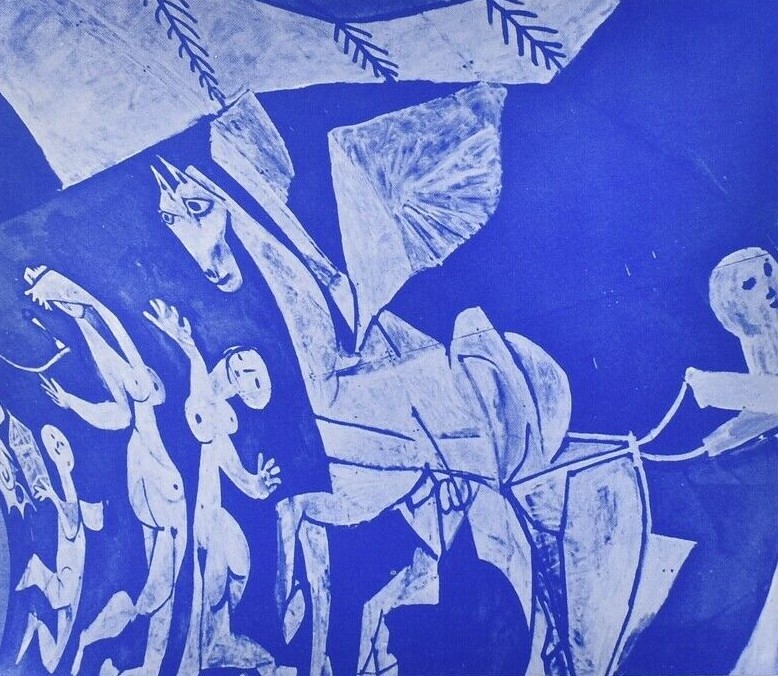
Pablo Picasso in the early 1960s had apparently given “an enthusiastic endorsement” to American layout artist Wes Herchendson to animate some of his paintings. Some time afterwards, Hershendson came across sci-fi writer Ray Bradbury’s short story In a Season of Calm Weather about an American tourist meeting Picasso on a beach. Developing the scenario with the author, the pair turned the idea into an American couple attempting to meet the artist in the south of France.
Originally, the project was modest. It would run only an hour and be shown on television, sponsored by an airline company to promote foreign travel. But once the idea attracted the likes of British star Albert Finney (Tom Jones, 1963) , who had recently filmed Two for the Road (1967) in France, and Yvette Mimieux (The Time Machine, 1960), who had a percentage of the picture, it became bigger. It was the first film for a fledgling production company part-owned by Bill Cosby and when Warner Brothers-Seven Arts stumped up $1.6 million – a reasonable budget since a WB picture three years averaged just $1.75 million – it turned into a full-length feature intended for theatrical release. Filming began in November 1967 in San Francisco and France without a finished screenplay, working in almost improvisational style to a sketchy 20-page treatment.
Herchendson took care of the animated sequences with the “live-action” section in the hands of Oscar-winning French director Serge Bourguignon. Although making his name with the French arthouse-oriented Sundays and Cybele (1962) he had also made mainstream western The Reward (1965) starring Mimieux and Max von Sydow and romantic drama Two Weeks in September (1967) with Brigitte Bardot, so his credentials appeared strong enough.
But something went very badly wrong. “The resulting footage was completely unsatisfactory,” went one report. Another claimed it was “incomprehensible.” So WB-7 Arts scrapped the first version and, because the movie, often filmed outdoors, had taken advantage of the seasons, the film was pushed back a year to ensure footage matched. WB hired a new director Robert Sallin to salvage the picture with the principals returning for reshoots.
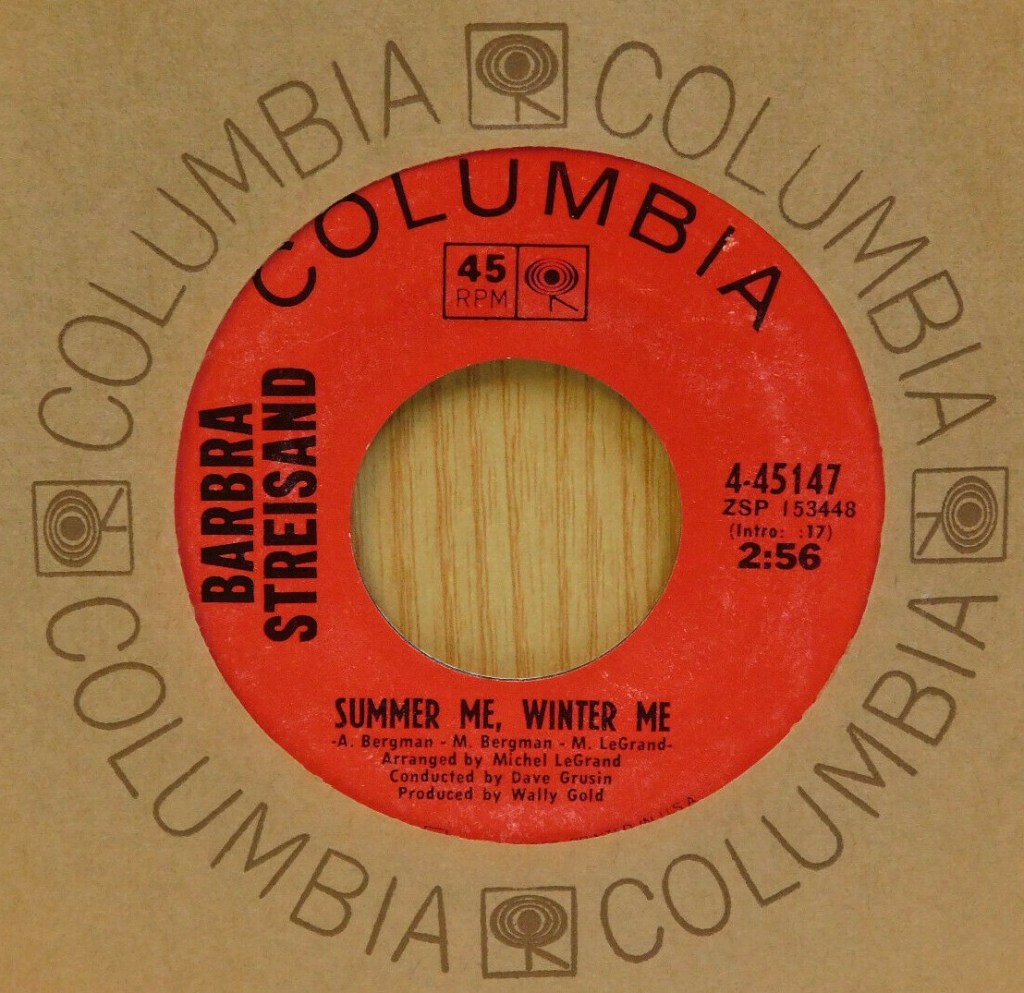
Initially, that appeared to have done the trick. WB announced it was considering launching the film as part of a big junket aimed at journalists in February 1969, and then screening it “in whole or in part” at a major conference in June with a view to a late 1969 release. A launch date was pencilled in for December 1969 – the original “X”-certificate issued in the same week as Easy Rider by that time had been amended to an “M” – with the intention of “finally getting it on the market.” And there was the signs of some promotional tie-ins with Barbra Streisand recording the theme tune “Summer Me, Winter Me.” But it didn’t appear. Officially, it was on the shelf.
The shelf, at that time, was not necessarily a bad place to be. Many pictures had been held back for a more convenient release spot during the 1960s, even more had been forcibly delayed when successful movies ate up preferential first run movie theatre space. It was nothing, for example, for The Biggest Bundle of Them All (1968) to wait eight months to be released.
But there was waiting and there was waiting. It soon became apparent that The Picasso Summer was not going to find a release date any time soon and that it was, officially, in limbo. Which was an astonishing state of affairs at the end of one troubled decade and the beginning of another. The hundreds of millions lost in big budget roadshows had seen a dramatic cutback in production. Cinemas were crying out for product, anything with a star, rather than being forced to make do with a flood of imports, spaghetti westerns of the here-today-gone-tomorrow variety and sexploitation vehicles featuring unknowns.
Hollywood had been known for routinely throwing stinkers into the marketplace and while exhibitors might complain about poor quality generally they had little option but to screen what was available because there was nothing else. But the harsh financial climate facing studios meant that every dollar spent had to be weighed up. Releasing a bad movie cost as much as releasing a good one with no guarantee that further expenditure in advertising, promotion and prints would generate profit. No point throwing good money after bad.
So Warner Brothers did the unthinkable. Even as Albert Finney recovered his box office status after Scrooge (1970) and Yvette Mimieux starred in hit sex comedy Three in the Attic (1969) and The Delta Factor (1970) the studio kept The Picasso Summer in the vaults. Even throwing it out in a wide release with no premiere or a trial run in an arthouse was considered too risky.
The number of movies that were completely unrelease-able, as opposed to being withdrawn after failing to attract an audience or turning into big flops during their run, was actually very small – Fade In (1967) coming closest to achieving that notoriety even though it had been occasionally shown in cinemas, and it was also low-budget.
But, suddenly, at the end of the 1960s that number started growing. MGM’s The Appointment (1969) was also shelved. And that had more apparent box office cachet with Oscar-nominated director Sidney Lumet (The Pawnbroker, 1964) and featuring Oscar-nominated Omar Sharif (Doctor Zhivago,1965), an even bigger star than Albert Finney, and Anouk Aimee (Justine, 1969) also Oscar-nominated with greater box office clout than Yvette Mimieux. After it was booed at Cannes, MGM cancelled the American release after one U.S. test date .
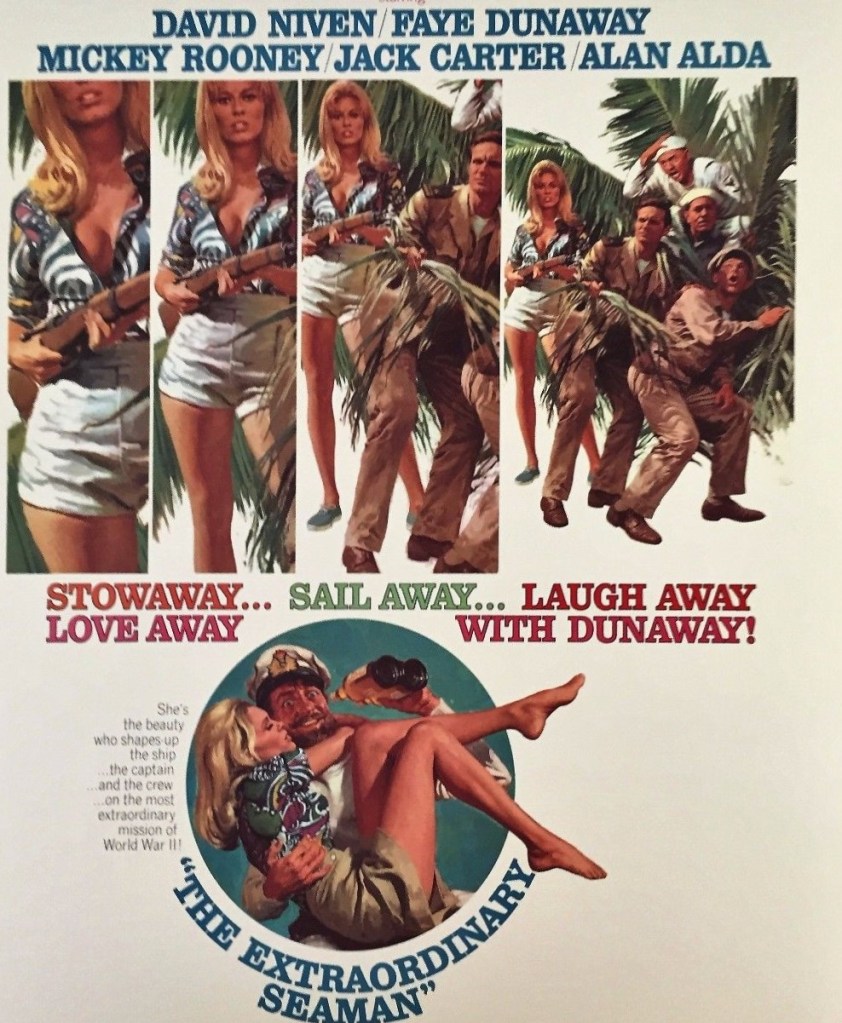
But the trickle of shelved movies was becoming a flood. Into that category fell John Frankenheimer’s The Extraordinary Seaman (1969) starring Faye Dunaway (Bonnie and Clyde, 1967) and Oscar-winner David Niven fresh from hit comedy The Impossible Years (1968). Courtroom drama Hostile Witness (1969) starring another Oscar-winner Ray Milland (Dial M for Murder, 1954) was denied a release as was comedy western A Talent for Loving (1969) with Richard Widmark, on a career high after Madigan (1968), and Adam’s Woman (1970) with Beau Bridges, who would strike a box office mother lode with Gaily, Gaily (1969) and John Mills (The Family Way, 1967). Swelling out the list was Crooks and Coronets / Sophie’s Place (1969) starring Telly Savalas (The Heroin Gang, 1968) and Hammer sci-fi Moon Zero Two (1969).
At a 1970 press conference, questioned about the shelving of The Picasso Summer, a Warner Brothers executive admitted: “We don’t know what to do with it, but not in the sense marketing is a problem; completion into a releasable form would seem to be the nub.”
By 1971, The Picasso Summer was not alone in failing to meet expectations. Some 80 movies funded by the majors had either still to be screened or had already been yanked off screens after poor test showings or minor playoffs failed to garner an audience. A year later Warner Brothers alone had ten completed movies on its books that would never see the light of theatrical day.
There had been one get-out clause for under-performing movies – television. A sale to the networks could bring in a substantial amount, sometimes enough to balance the books. But television was beginning to look askance at product that, in subject matter and in relation to violence and nudity, did not suit the Big Three channels. It was soon obvious that the networks had “lost their omnivorous feature film appetite.”
But there a light on the horizon. One network was interested in more unconventional fare and pictures that it could present as U.S. “premieres.” The CBS “Late Night Movie” slot airing on a Thursday aimed to attract an adult audience seeking more adult material. The conventions of television would still minimize nudity but the films themselves would have an adult theme. Thus, in 1972 The Picasso Summer, The Appointment, The Extraordinary Seaman and Adam’s Woman were shown on CBS.
The version of The Picasso Summer shown on American television was not the completed version. Herchendson complained to CBS about the “massacre of my film.” The network had deleted the entire bullfight sequence, the entire animated Eroica sequence and “chopped up the War and Peace” section. In fact it was well known in advance that one of the four animated sequences, the one considered “more sensual than erotic,” would go.
But there was one big plus for Warner Brothers. CBS paid $1.6 million for the movie, making it, according to one wag, the most expensive made-for-television movie. That turned a potential loss into break-even.
SOURCES: Quentin Falk, Albert Finney in Character, (Robson Books, 1992) p122-124; “WB Pacts Cosby Company,” Variety, January 17, 1968, p7; “Yvette Mimieux: Many-Phased Career,” Variety, February 5, 1969, p24; “W-7 Bahamas Junket,” Variety, February 26, 1969, p3. “WB-7 Arts First Global Sales Conference in LA June 8-14,” Box Office, April7, 1969, pW1; “Not Just Passing, WB Bets,” Variety, November 5, 1969, p7; “No “X” for Xmas,” Variety, December 3, 1969, p7; “Press Peek at Calley,” Variety, April 22, 1970, p7; “Unsalvageable Cupboard Item Lucky for WB,” Variety, August 19, 1970, p[3; “Pix in the Shortage Era,” Variety, December 22, 1971, p21; “TV-Bearish WB Cupboard,” Variety, March 29, 1972, p3; “Cannes Jeered Pic Recut By MGM,” Variety, July 19, 1972, p7; “Picasso Summer Twice Shelved Will Be Seen AT Last, CBS Aug 4,” Variety, August 2, 1972, p22.