The Millionairess (1960) ***

The movies lost a brilliant comedienne when Sophia Loren was lured (by a million-dollar fee no less) into historical drama. Having previously demonstrated her flair for comedy in Houseboat (1958), turning Cary Grant’s life upside down, she repeated the formula here. Cultural appropriation by Peter Sellers is the main issue getting in the way of full appreciation, not just the actor essaying an Indian, but the fact that this is a very cliched  attempt.

The narrative runs along two parallel twists and coming from the politically-aware mind of George Bernard Shaw contains a streak of social commentary. Beautiful millionairess Epifania (Sophia Loren) can only marry a man able to demonstrate business acumen. Dr Kabir (Peter Sellers), who caters to an impoverished clientele, must marry a woman capable of existing in poverty, eking out an existence for 90 days on the daily equivalent of less than a couple of pounds sterling.  

At the foot of the poster note the advance warning of the initial stab at “Cleopatra” that was to star Feter Finch and Stephen Boyd rather than Richard Burton and Rex Harrison.

Epifania, presented in that generation as somewhat imperious but to today’s generation would be viewed as the epitome of the independent woman resisting the notion that she choose a mate based on someone else’s criteria, is not above a bit of jiggery-pokery to win the man of her dreams. Technically, all said lover has to do is turn £500 into £15,000 and since no detailed information needed accompany those transactions, Epifania feels justified in simply handing over the dosh to her lover to fulfil the requirements.

She falls into Dr Kabir’s orbit after attempting suicide by drowning following the discovery of her feckless lover Alistair’s (Gary Raymond) affair with Polly (Virginia Vernon). Kabir, mind on other more important matters, fails to rescue her. But when she ends up in the water again, this times as rescuer, he is more responsive especially when she manages a physical connection.

However, he is not going to be bribed into love, not even when she modernises his dilapidated surgery. Naturally, she is viewed as headstrong and controlling rather than a philanthropist and so they enter into the double bargain.

This splits the narrative, as Epifania returns to Italy to work in a sweatshop. And although she reveals not just newfound humanity, defending her exploited fellow workers, and demonstrates the business skills to reverse the factory’s declining productivity, this still isn’t enough for Kabir who, with no head for money and no inclination to go through any rigmarole to please Epifania, manages to insult her, thus triggering the normal romantic comedy breakup.

In the meantime, wily attorney Julius Sagamore (Alistair Sim) and opportunistic psychiatrist Dr Adrian Bland (Dennis Price) muddy the waters.

Mostly, the film gets by on old-fashioned charm – and while, as noted, Sellers’ performance is outmoded in his impersonation of an Indian he is quite believable as an honorable man unlikely to fall for the first beautiful woman to come his way.

Sophia Loren (Arabesque, 1966) carries the picture with her exquisite comedy timing and even when the posters emphasized her various states of undress there is much more to her ability, as audiences were already aware, than taking off her clothes. She is an absolute delight, both as the demanding haughty heiress and the spurned lover and in any other movie her romantic enterprise would be applauded and just as with Houseboat she drives the narrative, the object of her affection not quite putty in her hands, and with the bonus of a song, a duet this time (“Goodness Gracious Me”) rather than the two solos of the previous picture.

Peter Sellers (The Pink Panther, 1963) was still in search of his screen persona and to some extent is blown off the screen by Loren who seems much more comfortable with the material, extracting humor without needing to rely on funny voices. Sellers changed the character of the doctor in the original play from an Egyptian to an Indian for no particular reason and in fact the nationality of the doctor would have made little difference to the story, it was a character, disinterested in woman and contemptuous of wealth, that provided the narrative impetus. Oddly enough, although at the time the deceased George Bernard Shaw was considered one of the world’s greatest playwrights the 1936 play on which this is based had never been a big success, reception so lukewarm on its out-of-town opening that it did not reach the West End,  Broadway run delayed till 1949 and then only lasting 13 performances (i.e less than two weeks).  

Director Anthony Asquith had made a huge success out of the author’s Pygmalion (1938) (the source material for musical My Fair Lady) and specialised in bringing stage plays to the cinema – The Browning Version (1951) and The Importance of Being Earnest (1952) – so was acquainted with handling big stars and opening up plays for cinema audiences. He shows a sure grip on the action and allows Loren to build up a beguiling character so that audience sympathy for her dilemma never runs dry. Wolf Mankowitz (The Two Faces of Dr Jekyll, 1960) and the debuting Riccardo Arragno wrote the screenplay.

The material would have more suited the colder, sharper tongue of a Katharine Hepburn (who did at one time play the character on stage) but Loren’s portrayal avoids the temptation of adopting a more spinsterish approach.

Watch it for Loren and the clever Alistair Sim and try not to cringe at Peter Sellers.

The Pink Panther (1964) ***

You would have to be a fan of farce and slapstick to appreciate much of the debut of the celebrated Pink Panther franchise. I enjoy slapstick, though this is limited here to mishaps with items of furniture, but farce tends to pass me by (although I laughed myself silly at One Man, Two Guv’nors on stage). And you should be aware that this is really a dry run for the Clouseau character later hilariously perfected by Peter Sellers.

The premise is clever. Bumbling detective Clouseau (Peters Sellers, minus the pronounced French accent that appeared later) is on the trail of ace cat burglar The Phantom (David Niven), unaware that his wife Simone (Capucine) is not only in cahoots with the jewel thief but his lover. The trail leads to Switzerland where the robber plans to steal the titular diamond owned by The Princess (Claudia Cardinale). The Phantom, aka Sir Charles Lytton, attempts to get to know her better by stealing and then rescuing her dog.

Danny Kaye or Peter Sellers?

Meanwhile, to add to the confusion, Lytton’s conman nephew George (Robert Wagner) has arrived in town, and soon attempts to purloin his uncle’s mistress and on realising Lytton’s true identity stals his equipment with the intention of turning thief himself.

Lytton has the tendency to take a suite adjoining the Clouseau bedroom complete with linking doors to make it easier to make hay with Simone while the complaisant detective is lured elsewhere.

Cue a series of bedroom farces of the kind where Lytton attempting to make love to a drunken Princess in the lounge of his suite does not realise his nephew is in the bedroom and Simone expecting the uncle and finding the junior. And the classic of Simone, pursued by both men in her own room, having to hide them, on her husband’s return, in bed, cupboard, shower and bath.  

There’s a fancy dress party where competing gorillas target the famed jewel and Clouseau, clunking around in armour, knocks into or knocks down anything in sight. And finding one of his men, dressed as a zebra, drinking on duty, harangues him with the threat of having his stripes (best joke by far).

But the bulk of the laugh out loud comedy originates from the inspector’s tussles with inanimate objects, doors, even approached cautiously, appearing to be capable of springing surprises.

The original cast – Ava Gardner in the Capucine role and Peter Ustinov as Clouseau.

Unfortunately, the first Pink Panther outing was not designed with Sellers expressly in mind and so the plot, necessitating accommodating the other stars via romantic interlude, does not play to his strengths. You get the impression of Sellers improvising his way into stealing every scene he is in with his brilliant physical comedy as there’s only limited value in his role as the duped husband.

After the sequel A Shot in the Dark (1964) where Sellers took center stage Blake Edwards would go all-out slapstick in his next venture The Great Race (1965) but here there’s neither sufficient Keatonesque or Chaplinesque buffoonery or Laurel and Hardy antics to maintain the comedic momentum.

David Niven (Bedtime Story, 1964) is perfectly serviceable as the master criminal especially as it calls mostly for his legendary charm, though he brings his double take quickly up to speed. Claudia Cardinale (Once Upon a Time in the West, 1968) is surprisingly good in a light-hearted role while Robert Wagner (The Biggest Bundle of Them All, 1968), a rising star at this point, comes over as slippery ingenue. Capucine (The 7th Dawn, 1964) has the most difficult part since she is in effect playing two roles, faithful wife and wanton lover.

Despite priceless roles in Ealing comedies and various attempts to embrace the Hollywood dynamic, this was the picture that turned Peter Sellers (Heavens Above!, 1963) into a bona fide star. It says a lot for the director that, having found a comedy genius on his hands, he did his best to accommodate him without allowing him to over-dominate what was in effect a carefully-orchestrated piece.

In small roles you will find John Le Mesurier (The Liquidator, 1965) and Brenda de Banzie (A Matter of Innocence, 1967) and the chanteuse in the ski chalet you might be interested to know was Fran Jeffries (Sex and the Single Girl, 1964).  And of course the memorable theme tune, as celebrated as the movie itself, was composed by Henry Mancini (Hatari!, 1962).  The film also spawned the famous cartoon series. Edwards wrote the screenplay with Maurice Richlin (Pillow Talk, 1959).

You could do worse than splurge on a five-disc box set.

In the News Sixty Years Ago: April 1961

HOLLYWOOD CASHING IN ON EICHMANN TRIAL  

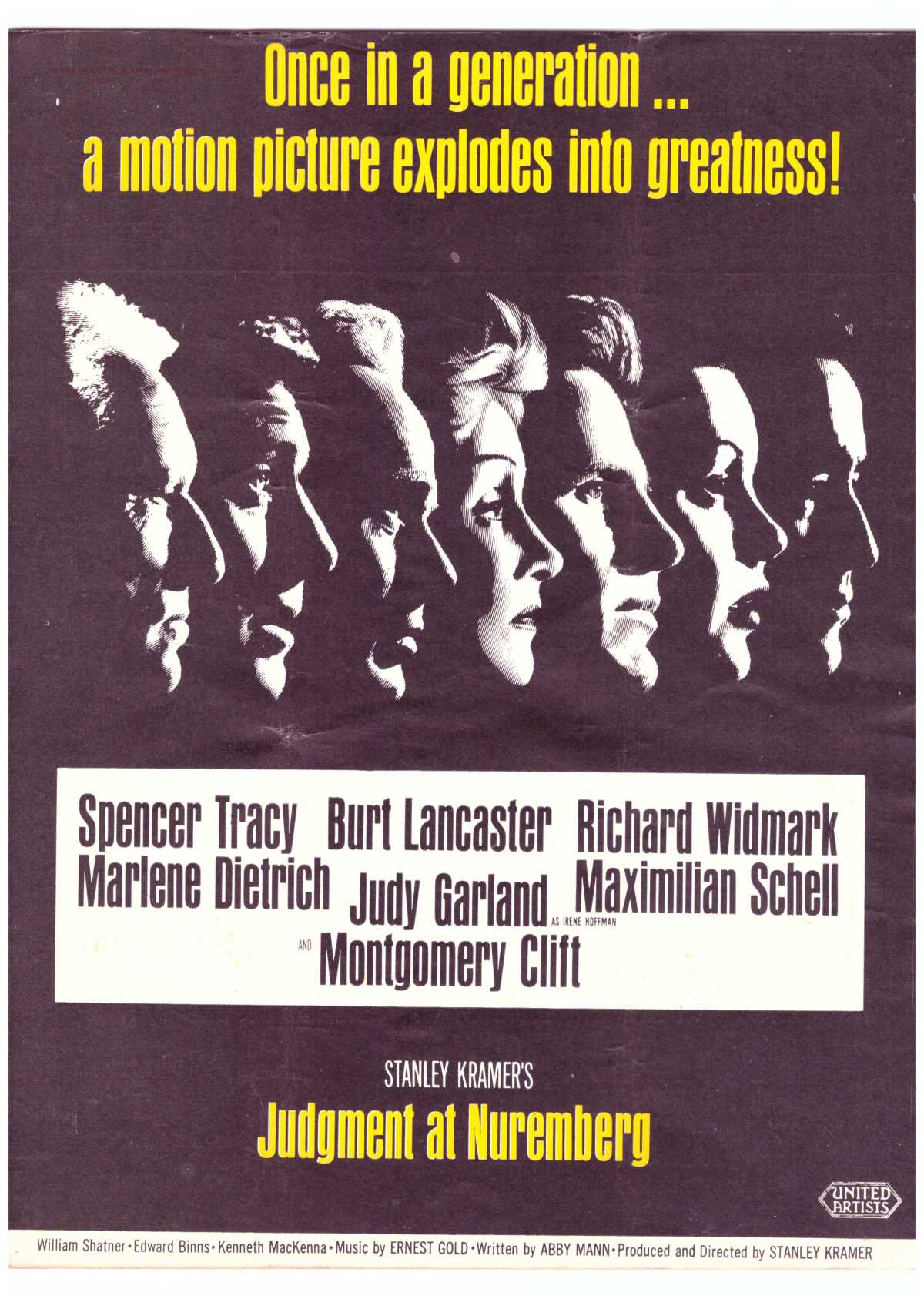
With the upcoming trial of Nazi Adolf Eichmann dominating the media for weeks, and publishers enjoying a boom with titles on Eichmann and Hitler, and with Life magazine’s biggest issue so far in the year being one with Hitler on the cover, movie studios had at last wakened up to the opportunities. A Swiss documentary Mein Kampf was due to open as was Operation Eichmann and Stanley Kramer’s big-budget Judgement at Nuremberg with Spencer Tracy and Burt Lancaster heading an all-star cast. Also in the offing were a Hitler biopic from Allied Artists, Hitler’s Women, a movie based on John Hersey novel The Wall and French director Roger Vadim with an idea to update De Sade as a Nazi.

BRITISH STARS MAKE ‘EM LAUGH

At a time when the Steve Reeves musclemen pictures had dominated the foreign film market, nine British comedies had taken the U.S. by storm. While their box office figures were not colossal by U.S. standards, they were extremely hot compared to the numbers normally racked up at the American ticket wickets by British films. For the 1960 season the British beat all other foreign film contenders. A total of 135 British movies released generating $22.9 million in rentals, well ahead of the nearest rival Italy whose 116 pictures took in $12.2 million (rentals being what the studios received from the overall box office gross). Carry On Nurse was one of the hottest British comedies as well as The Mouse That Roared and I’m Alright, Jack both starring Peter Sellers, Alec Guinness in Our Man in Havana, and Ted Ray in Please Turn Over. Brigitte Bardot was single-handedly the biggest foreign attraction with eight movies on show.

KING AND I REISSUE FLOPS

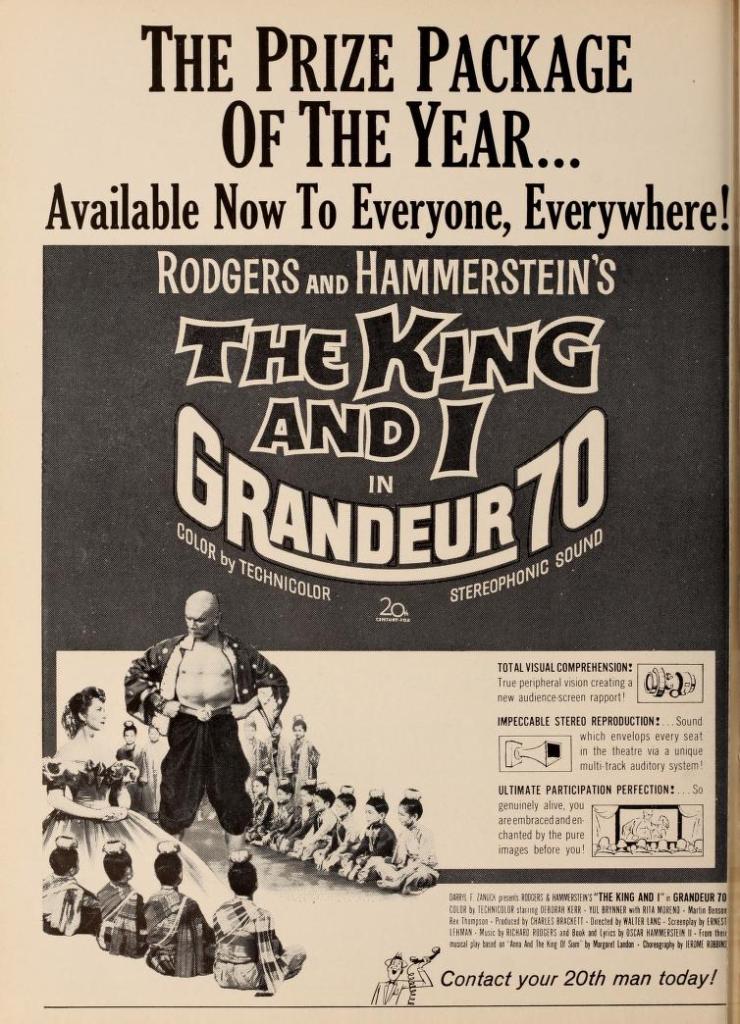
Twentieth Century Fox had brought back The King and I (1956) in 70mm in its Grandeur format as a two-a-day roadshow at the upscale Rivoli in New York on March 23 only to discover that audiences would not bite and a week later it was shifted to “grind” (continuous performance). Meanwhile, Columbia was backing a revival of Picnic (1955) starring William Holden and Kim Novak, promising a new campaign and artwork.

FIRST PURPOSE-BUILT CINERAMA THEATER OPENS

Although the Cinerama phenomenon had been all the rage for nearly a decade, the movies had always been shown in specially-converted cinemas. Now the first purpose-built theater had opened, the Cooper, in Denver, Colorado, at a cost of $1 million with seating for 814.

TRIPLE NAME CHANGE FOR THE HUSTLER

The Robert Rossen movie featuring Paul Newman as a poolroom shark had already started filming in New York when it changed its title first to Stroke of Luck and then quickly to Sin of Angels and under that title – to confuse potential moviegoers – had snagged considerable coverage in Time, the New York Times and the New York Herald-Tribune before reverting back to the original title.

BARDOT BIOPIC

Although the French sex symbol had barely been a star for half a dozen years, she was already lining up a biopic to be directed by one of the leading New Wave exponents 28-year-old Louis Malle. Co-starring Marcello Mastroianni, it appeared as A Very Private Affair in 1962.

WB SHELLS OUT FOR CAMELOT

Six years before the Lerner and Loewe musical finally hit the screens, Jack Warner paid $1.5 million for the screen rights plus 25% of the net profits.

Sources: “New Nazi Beast Film Cycle” (Variety, April 5, 1961, p1); “British Humor Scores in the U.S.” (Variety, April 26, 1961, 1); “Hard Ducat Not For Reissue?” (Variety, April 5, 1961, p3); “Advert, Picnic” (Box Office, April 3, 1961, 10); “World’s First Theater Built Specially for Cinerama Opens in Denver” (Box Office, April 3, 1961, p28);  “Brave Young Director Faces Bardot Playing Herself in Her Own Biopic” (Variety, April 12, 1961, p1); “WB’s Camelot Buy” (Variety, April 12, 1961, p1).

Discover WordPress

A daily selection of the best content published on WordPress, collected for you by humans who love to read.

The Atavist Magazine

by Brian Hannan

WordPress.com Blog

News, Tips & Website Tutorials