Variety’s revolutionary new box office tracking system, introduced in 1969, allowed it to include far more films in an annual assessment of performance. The “Annual Rentals” chart that appeared every January still covered how much of the box office pie was returned to studios and therefore gave a good indication of potential profit. But that was limited to only those pictures that met that chart’s criteria i.e. they had to return $1 million rentals. That usually meant only 80-odd films.
But now, in addition, from the computerized information gathered every week from hundreds of cinemas, Variety was able to give a pretty accurate estimate of the box office gross for ten times as many movies. In 1969, the survey covered 1,028 pictures. This wealth of information was of enormous value to exhibitors. Not only did it cover the obvious titles – the roadshows and those with top stars – but also the run-of-the-mill movies on which most cinemas now depended. In the current severe product shortage, reissues played a vital role. As did sexploitation.
Among films reviewed so far in the Blog annual grosses were shown for: They Night They Raided Minksy’s $1.9 million, Mafia picture The Brotherhood $1.9 million, Anthony Newley number Can Hieronymous Merkin Ever Forget Mercy Humpeand Find True Happiness $1.3 million, Hard Contract $1 million, Mayerling $980,000, Justine $536,000, Les Biches $391,000, Assassination Bureau $146,000, Fraulein Doktor $114,000 and The Sisters $50,000. (Multiply these figures by 50% for an accurate estimate of their rentals).
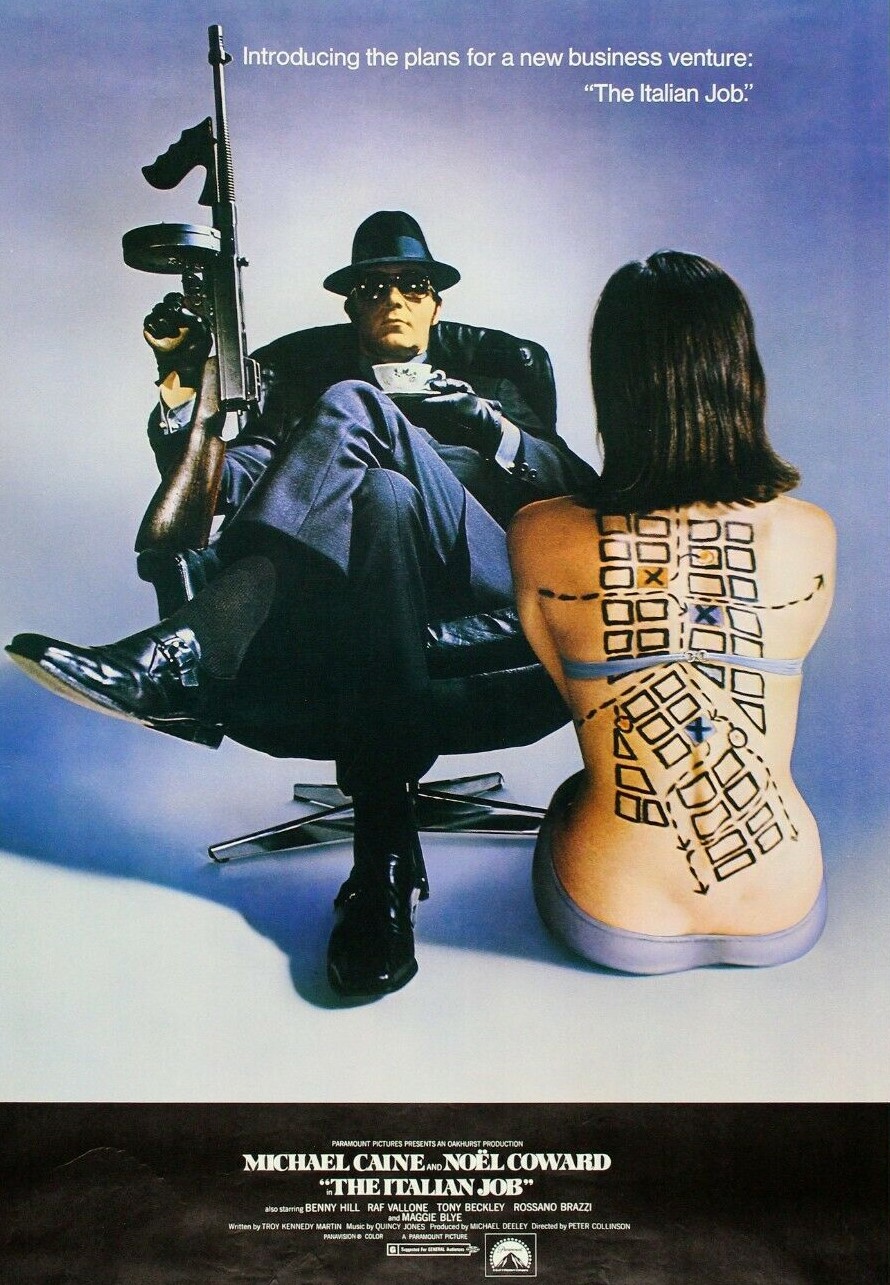
Other figures worth noting were: The Fixer $1 million, Secret Ceremony $1 million, The Italian Job $614,000, Marlon Brando in The Night of the Following Day $424,000, Shalako $78,000 and The Extraordinary Seaman $61,000. Bottom of the box office pile was motor racing documentary Hot Rod Action with just $1,000.
Given it was widely considered a flop, these are interesting figures for Hieronymous Merkin, rentals now estimated as being in the region of $2 million against a budget of $1.6 million – although other sources put the budget as low as $500,000 thus making it extremely profitable. Secret Ceremony had grossed $617,000 the previous year so its rentals would have approached $2.5 million, far more than was previously assumed. Fans of cult British thriller The Italian Job will perhaps be astonished how poorly it did in the U.S.
The top-grossing reissue was Bonnie and Clyde/Bullitt ($1 million) followed by a pair of Clint Eastwood double bills – A Fistful of Dollars/For a Few Dollars More ($912,000) and Hang ‘Em High/The Good, The Bad and The Ugly ($740,000). Also in the mix were Goldfinger/Dr No ($323,000), A Man and a Woman ($226,000), Belle de Jour/A Man and a Woman ($199,000), a revival of Lola Montes from 1955 with $148,000 and less successfully, from 1961, A Cold Wind in August with just $21,000.
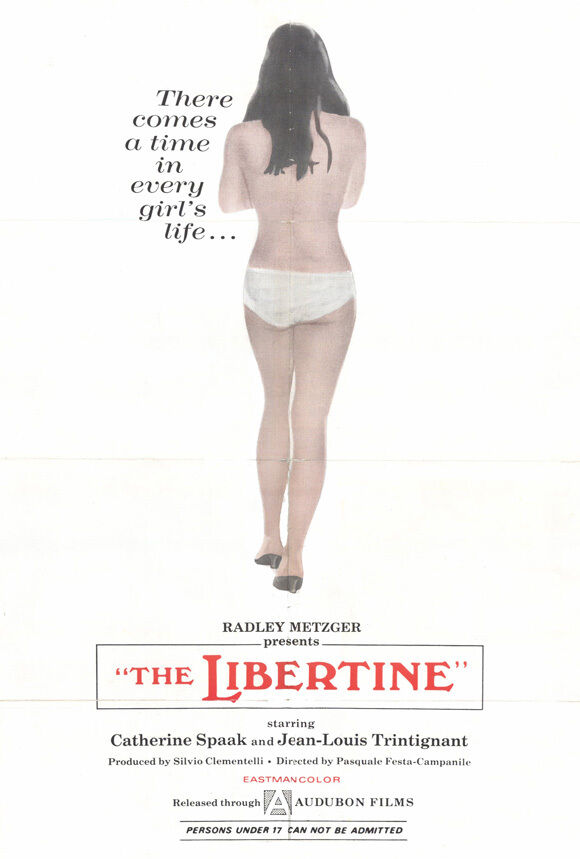
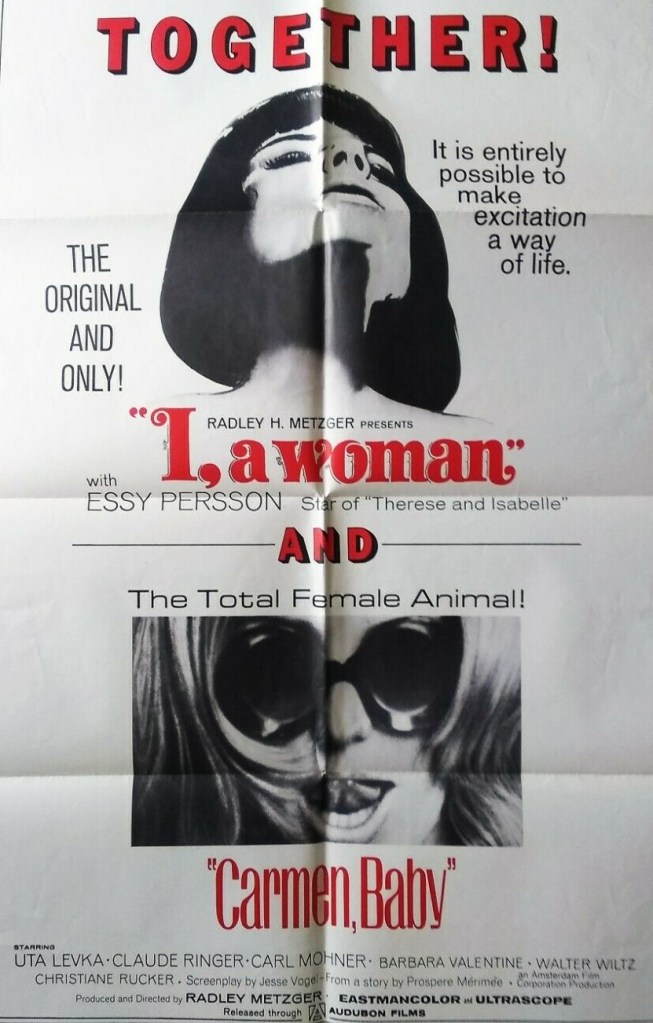
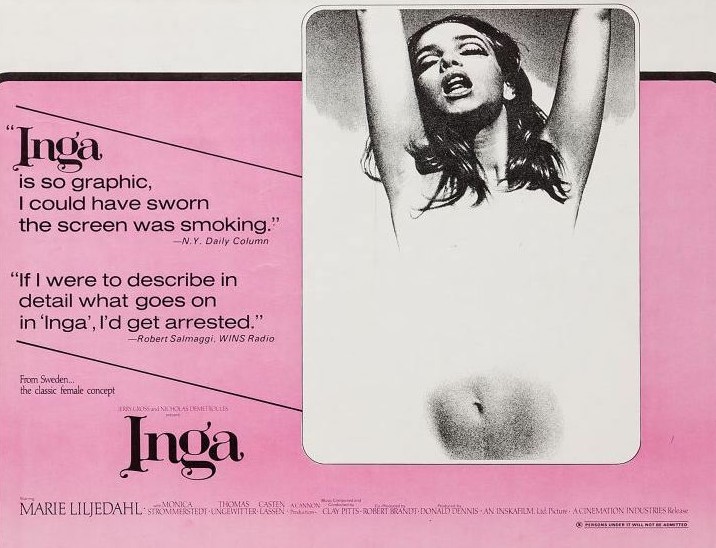
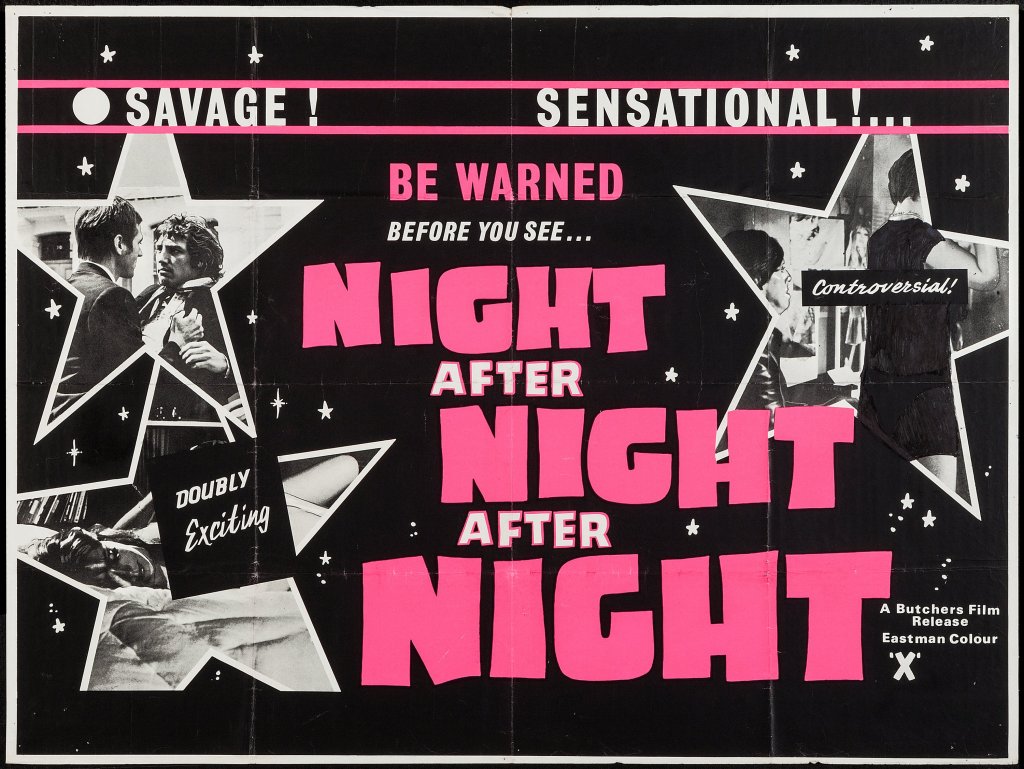
As previously noted, the impact of sexploitation was becoming more obvious. The biggest hit was The Libertine which crossed the $1 million mark followed by Camille 2000 ($868,000), Inga ($819,000) – bringing in three times as much as the previous year – Swedish Heaven and Hell ($458,000) and The Female ($279,000). Others charting included Vibrations, Without a Stitch, Erotic Dreams and The Sex Perils of Pauline. In addition, sexploitation movies were ripe for reissue, I, A Woman/Carmen Baby clocking up $363,000.
More importantly, what the chart did show and what the new weekly Top 50 was beginning to recognize was how often cheaply-made exploitation pictures held their own or even outgrossed big studio pictures for which exhibitors were often held to ransom. If ever there was a sign of the direction in which the business was now heading, this annual survey was it.
Dream Team Number One: Clark Gable and Jean Harlow. This was of course a good 30 years before the movie actually got made. The Horace McCoy novel was purchased in 1935 by MGM as a big-budget project teaming Clark Gable and Jean Harlow. This was despite Variety proclaiming it was “not screen material.” The premature death of Harlow put paid to the idea. Next, actor Wallace Ford (Freaks, 1932) bought it with Broadway in mind. A production was scheduled to open in 1939, but never did.
Dream Team Number Two: Charlie Chaplin and Marilyn Monroe. When the comedian purchased the rights in the early 1950s he intended Marilyn Monroe to play the leading female. Although she was a mere starlet Chaplin had form in building up newcomers. Author McCoy had by that point become an accomplished screenwriter with over 30 credits including Gentleman Jim (1942), film noir Kiss Tomorrow Goodbye (1950) and The Lusty Men (1952) That concept fell by the wayside when Chaplin was effectively banished from America while launching Limelight (1951) in Britain.
It was another 14 years before interest in the novel was revived by screenwriter James Poe, who purchased the rights from the McCoy estate. Although most famous within the trade for being accused of fraudulent behaviour in relation to his screenplay for Around the World in 80 Days (1956). Despite an Oscar for the film he was sued for $250,000. However, he had a sterling body of work including Cat on a Hot Tin Roof (1958), Sanctuary (1960), Lilies of the Field (1963), The Bedford Incident (1965) and Riot (1969) and two other Oscar nominations.
In 1965 he had signed a multi-picture writer-director deal with Columbia. He was either going to make his directorial on The Gambler or They Shoot Horses, Don’t They. It turned out to be the latter. Failing to get the movie off the ground with Columbia or under his own steam, he turned to new studio Palomar, which was a production entity set up by the ABC television network, which bought over his rights as well as his script but kept Poe on as director.
Dream Team Number Three: Faye Dunaway. Yep, one big star, not two. Poe’s screenplay, while not eliminating the male lead, spun on a female star. Dunaway, hot after Bonnie and Clyde (1967), was offered $600,000 to play the role. Mia Farrow was also in contention, for $500,000. The only problem was, the budget could not remotely stretch to that. As helmed by Poe, it was to cost no more than $900,000. The film was scheduled to begin shooting in spring 1968 but a month later the start date shifted to June.
Two relative newcomers Robert Chartoff and Irwin Winkler were brought in as producers to move the project along. Later they would be responsible for such classics as Rocky (1976), The Raging Bull (1980), The Wolf of Wall Street (2013) and The Irishman (2018), but at this point they had just three pictures under their belt, although that included Point Blank (1967), Their first task: persuade Poe to rewrite the script. They felt the third act needed work with restructuring elsewhere to make the pay-off work.
But Poe, believing his position was sacrosanct, refused to discuss a rewrite. He refused to discuss anything, period, treating the producers as his assistants rather than people with some power within the studio. According to Irwin Winkler, “Poe seemed unaware of the of the normal process of preparation, even though he’d been around movie sets for decades.”
Realising that getting a star on their budget was impossible, Chartoff and Winkler changed tack and talked to good actors, but even then few were interested. A less dramatic star than Jane Fonda you could not imagine, her resume filled with light comedies, French films that utilised her sexuality or the extravaganza that went by the name of Barbarella (1968). But the pregnant Fonda was keen on change. The film was delayed until after she had given birth. Michael Sarrazin should have been out of the equation. John Schlesinger had lined him up for the Jon Voigt role in Midnight Cowboy (1969) but Universal, to whom he was under contract, asked too much to send him out on loan.
With no sign of the rewrites, the producers became antsy about the director. However, they showed their true mettle as producers, convincing Palomar there was no way the original budget would cover the ballroom set, huge number of extras, live orchestra and salaries. It would need to at least triple.
In a picture of one predicament following another, there was one crisis the producers had not foreseen. They were going to be fired. Apart from anything else, they were only executives on the picture with any experience, it being not only Poe’s first movie but that of Chartoff and Winkler’s superiors at the studio. The outcome – the guy who had told the pair they were being fired was shown the door instead.
Susannah York was cast after the producers saw a sneak of The Killing of Sister George (1969) at the Robert Aldrich studios. She had committed to Peter O’Toole vehicle Country Dance/Brotherly Love (1970), written by her cousin James Kennaway (Tunes of Glory, 1960). After too many delays on They Shoot Horses she planned to pull out in favour of the other film. Although Sally Kellerman (Mash, 1970) was set as a last-minute replacement, the issue was resolved by asking MGM to delay the start on the rival picture.
Believing Poe was in no position to helm such a big-budget picture enterprise, Chartoff and Winkler began the process of removing him only for Jane Fonda to dig her heels in. She changed her mind after witnessing first-hand Poe’s directorial skills – or lack of them – when she took part in a screen test for Bonnie Bedelia. Winkler recollected, “On the set Jane asked Poe questions about the blocking of the scene, why she moves in one direction rather than another, why in front of a sofa rather than behind it etc. He couldn’t answer her questions and told her to talk to the cameraman.” Exit Poe.
In terms of a replacement, Chartoff and Winkler set their sights of Sydney Pollack (The Scalphunters, 1968) with whom they had previous dealings, and William Friedkin, then being hailed for The Homecoming (1968) – luckily The Night They Raided Minsky’s (1968) had yet to be released. But studio executives had a third director in mind, Jack Smight (No Way to Treat a Lady, 1968). Friedkin should have been in pole position, having only received $75,000 for The Homecoming. His agent, sensing an opportunity, demanded $200,000. Jack Smight’s agent also got greedy and wanted $250,000. Pollack’s agent was happy with the $150,000 on offer.
When Poe was eased out, filming was announced as beginning on February 17, 1969, the budget having now increased to $3.2 million – including $400,000 for extras. However, acoustic issues – seawater had eaten away the bottom of the pier – prevented use of the old Aragon ballroom in Santa Monica. That set was constructed on the Warner lot.
Pollack then turned it down. He had reservations about the script, which had still never been rewritten. When Robert E. Thompson, a television writer but “a Horace McCoy expert,” was mooted, Pollack changed his mind. The new script contained the “flash forward” scenes that prepared audiences for the shock ending. However, the new scenes and delays in starting increased the budget which now ballooned to $4.7 million.
It turned out the director was the best actor of all. “I was impressed with Sydney Pollack’s ease on the set,” recalled Irwin Winkler. “He never seemed to be working hard and yet was able to get marvelous performances out of the actors. Everybody in the company adored him.” Asked by Winkler how he remained so calm dealing with the actors and all the extras and the complicated camera set-ups, he replied, “it was really quite easy.” That same afternoon he collapsed on set and was diagnosed with “nervousness.”
The studio, the stars, the producers, all seemed confident about the picture. All they had to do was convince the audience. But at the first preview in San Francisco the audience roared with laugher at the climactic scene. That shocked the studio to the core until the producers were able to reassure the head honchos that the “fast forwards” would smooth over that problem. Which they did.
It was nominated for nine Oscars – Best Director, Best Screenplay, nods for Jane Fonda, Gig Young and Susannah York among others. Only Gig Young won.
SOURCES: Irwin Winkler, A Life in Movies, (Abrams Press, New York, 2019) p34-47; “Tough Stuff,” Variety, August 7, 1935, p59; “Ford Buys for B’Way,” Variety, September 11, 1939, p42; “Dance Marathon Reprise,” Variety, August 3, 1966, p24; “IT&T In No Way Slowing Down Theatrical Feature Program of ABC,” Variety, January 10, 1968, p4; “Crowded Slate for Palomar,” Variety, February 28, 1968, p18; “Bob Evans Chips-Service To Writers As Stars At Paramount,” Variety, May 1, 1969, p19; “Jane Fonda Gets Top Role in Palomar’s Horses,” Box Office, July 22, 1968, pW1; “Palomar Horses on W7 Space,” Variety, October 23, 1968, p3; “Jan 6 Filming Date for They Shoot Horses,” Box Office, December 16, 1968, pW5; “Cheery Side of Delay on Horses,” Variety, January 15, 1969, p21; “Winkler Wants Films With Social Comment,” Box Office, January 19, 1970, pW1.
Variety’s experiment in extending its box office coverage beyond main city roadshow and first run showed its first results when analysis of a full year of statistics for 1968 produced data for over 700 pictures rather than the hundred or so that qualified for its annual rentals chart.
The drawback with the existing annual chart was limitation – films had to earn more than $1 million in rentals (the amount returned to studios from the overall gross) to qualify. The tabulation process simply ignored how hundreds of other films performed and therefore as far as Variety was concerned failed to offer the information exhibitors required to run their businesses in more complicated times when increased product shortage was exacerbated by long runs of either roadshow pictures or movies held over for months on end in first run in the big cities.
The business still primarily operated on a stepped released basis. Movies that opened in roadshow or first run remained in their initial theaters until demand was exhausted and only then moved into second-run or multiple run (Showcase) or the drive-ins, leaving those cinemas further down the food chain crying out for fresh product. What companies were meeting that demand and how their films performed at the box office was generally a mystery.
The expanded chart for 1968 covered grosses rather than rentals (the former the overall take, the latter the part of that that went back to the studios). A sample of up to 800 cinemas nationwide first of all cast light on a whole section of mainstream underachievers. To come to an accurate assessment of how these grosses reflected overall a film’s overall annual performance, Variety suggested tripling the numbers. To reach a rental figure, the measurement of profit, you would need to halve that. (More straightforwardly, add 50% to the figures below to work out the annual amount returned to studios in rentals in 1968 and multiply by eight – for inflation – to put these figures into perspective from today’s point of view.)
Among the films mentioned were Burt Lancaster in The Swimmer which was now shown to have grossed $1.314 million, Burton-Taylor fiasco Boom ($557,000), Albert Finney as Charlie Bubbles ($526,000) and films reviewed in the Blog such as The Shoes of the Fisherman ($611,000), P.J./New Face in Hell($415,000), The Lost Continent ($338,000), Sol Madrid ($268,000), Hammerhead ($233,000), Sebastian ($162,000) and The Girl on a Motorcycle ($104,000).
Others worth mentioning were Duffy ($709,000), Elizabeth Taylor, Mia Farrow and Robert Mitchum in Secret Ceremony ($671,00), Michael Caine in Deadfall ($614,000), Lee Marvin in Sgt Ryker ($417,000), How I Won the War ($321,000), Night of the Living Dead (318,000). When we casually refer to movies as flops, we often have no idea just how big a failure they were – these figures redress that balance.
Reissues pulling in decent business included Thunderball ($867,000), The Carpetbaggers/Nevada Smith ($244,000) and on the back of Sidney Poitier’s elevation to box office peaks the seven-year-old A Raisin in the Sun ($159,000)
Much further down the line came Danger: Diabolik on $24,000 and Subterfuge with just $8,500. At rock bottom, ranked 729th, was Tony Richardson’s The Sailor from Gibralter with $1,000 in the kitty.
The survey also served to highlight the impact of the growing number of foreign imports. While sophisticated fare like Therese and Isabelle ($2.19 million), Francois Truffaut’s The Bride Wore Black ($511,000), Claude Lelouch’s Live for Life ($495,000) and Scandinavian medieval drama The Red Mantle ($396,000) had broken out into the mainstream from their arthouse launchpads, the various strands of the spaghetti western genre would have headed straight for the drive-in or Showcase led by A Minute to Pray, A Second to Die ($865,000) and Any Gun Can Play ($230,000).
In part what Variety sought to show by covering such a wider stream of releases was to assess the growing dominance of the sexploitation picture. Around one-third of the movies featured fell into this category. The Female ($492,00), The Filthy Five ($322,000), Inga ($267,000) and Aroused ($168,000) boasted impressive numbers, especially given the limitations of the survey. The fact that many others – Alley Tramp, Touch of Her Flesh, I, A Woman, Hot Spur, Professor Lust and Brand of Shame – even made an appearance on the extended chart showed inherent demand for this kind of product. That most of these achieved only low grosses in the Variety chart was an indication more of the types of cinemas surveyed. It would be a rare first run house that would book a sexploitationer and even the Showcases steered clear. But that they were mentioned at all was indication of a sea change.
Sources: Syd Silverman, “Computerized Tally of 729 films,” Variety, May 7, 1969, pages 34, 36, 198, 213.
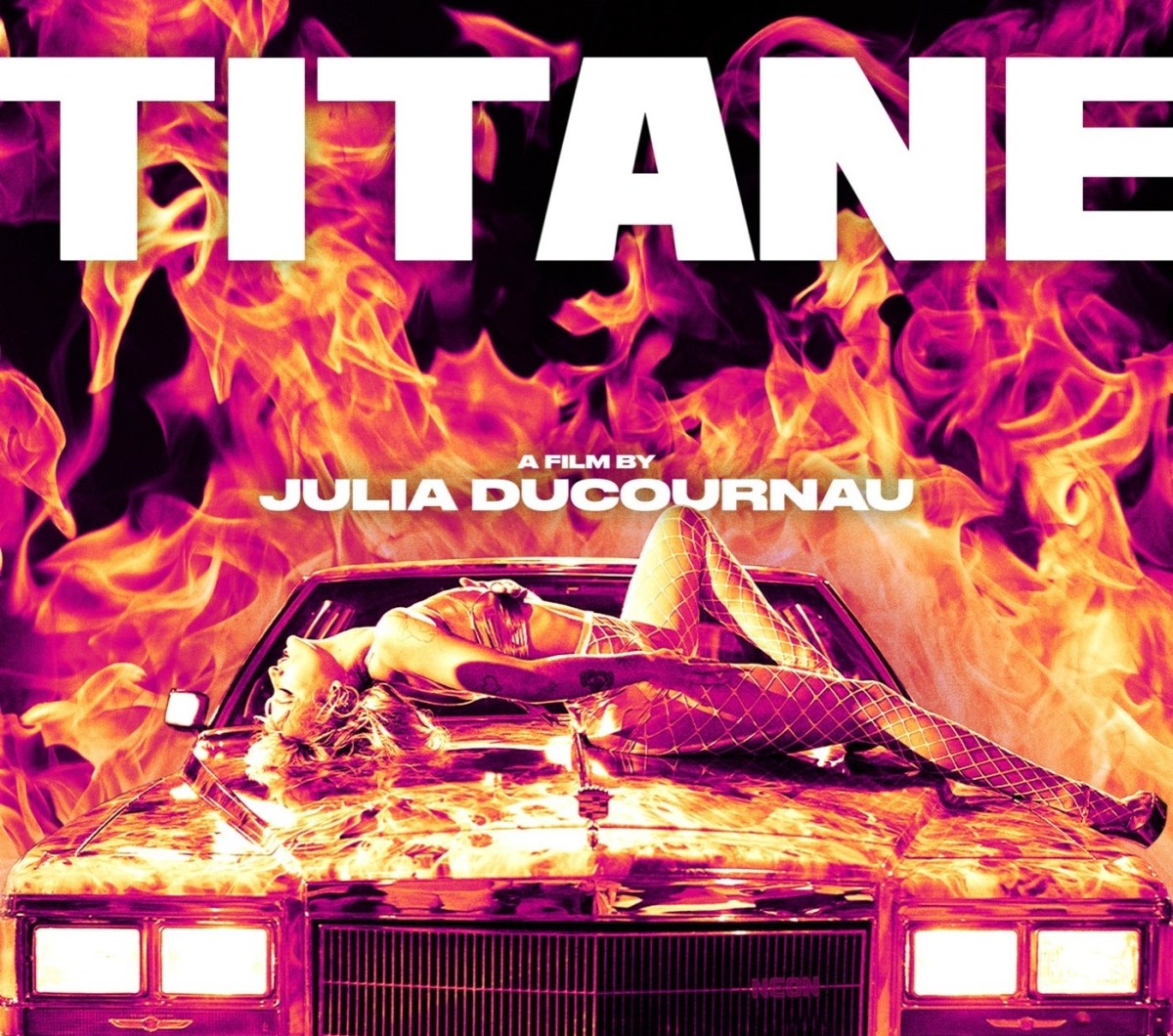
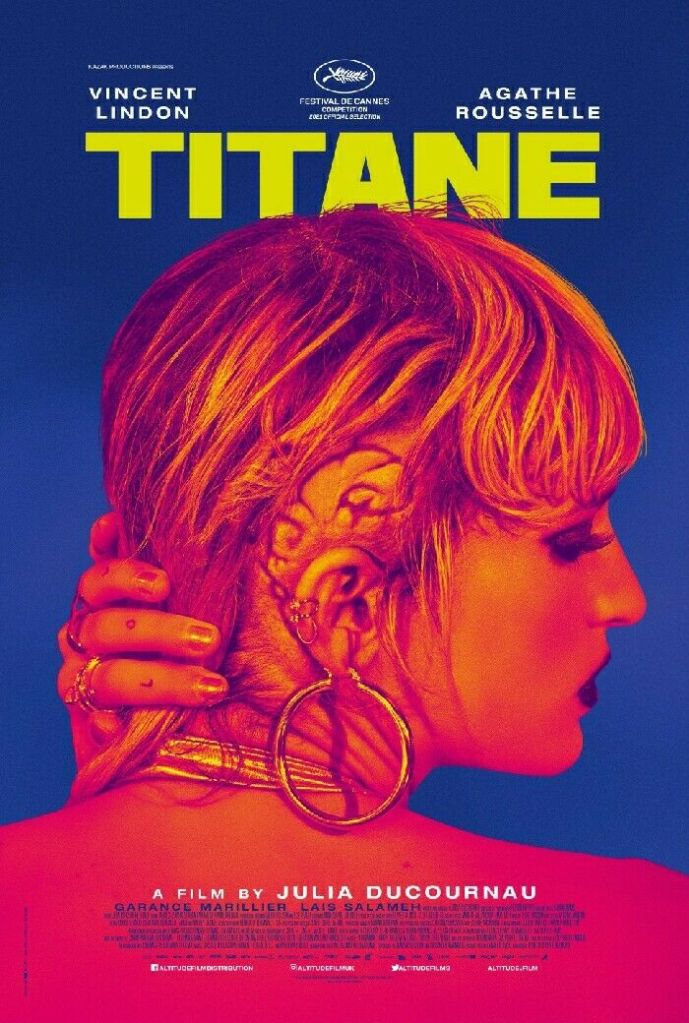
Perhaps the most unforeseen development of this startling picture is that ruthless serial killer Alexia (Agathe Rousselle) develops a caring relationship with an anguished fire chief father (Vincent Lindon) when masquerading as his long-lost son. Even when it becomes increasingly clear he is harbouring an imposter his naked need for familial intimacy forces continued acceptance. Of course, given Alexia has been impregnated by an automobile, the cinematic wild ride is hardly over. Not just that the father is inclined to pump himself full of steroids to maintain his failing virility and the firemen let off steam by dancing, with no homoerotic overtones, of dancing among themselves.
But tension never slackens due to the off-the-wall off-the-scale opener that saw her enter the realms of the serial killer and the fact that her nipples start leaking oil. A relationship that could have been creepy and/or unbelievable becomes incredibly tender especially when the so-called boy, as teenagers will, causes his father major embarrassment only this time by revealing a more feminine side to his dancing.
While exploring similar territory to David Cronenberg’s Crash (1996), this shifts into a completely league. With the exception of what she undertakes to create the transformation into a boy, binding her breasts and breaking her nose, the violence is less about self-harm than straight-out murder, weapon of choice being a handy hatpin. The most bizarre aspect about the enterprise is not the victims mounting up, but the hilarity the film engenders. When Alexis discovers that she has chosen the wrong locale for one of her killings and with a shrug of frustration has to embark on hunting down an entire household you can’t help but laugh. And the meet-cute with a female model is one of the funniest ever put on the screen.
We never find out what has turned her into a murderer especially as she is not gender-specific in this department. A car accident as a child that resulted in her being fitted with some metal has clearly created some affinity with vehicles and she earns a living as a bikini model who drapes herself over motors at car shows to the delight of leering men. Automobiles are more generally seen as expressions of male eroticism so it’s something of a twist that Alexia takes such love to the ultimate extreme.
Outside of superhero and fantasy movies, it’s rare to find a picture that creates its own world and maintains it in consistent fashion. What we learn about this vicious killer is that she needs care as much as anybody else. As the movie shifts from her selfish enjoyment to filling a gap in the fireman’s life it takes us on quite a different journey to that initially suggested.
Director Julia Ducournau (Raw, 2016) presents an unflinching vision that may be too brutal for most tastes. It won the Palme d’Or at Cannes but looks like being ignored by the Oscar fraternity. But the surface is deceptive. If the ending comes as a shocker then you haven’t been paying attention because enough hints are provided as to the potential outcome. And it also means you’ve been ignoring the film’s development which is heading in the direction of togetherness and paternal understanding rather than individual insanity.
In her movie debut Agathe Rousselle is quite astonishing, giving herself up to the needs of a picture that forces tremendous physical demands. It’s a tour de force in what it means to be a committed actor, action driven by character. Oscars have been handed out for a lot less and what makes her characterisation stand out is the transition from woman trapped by a fetish whose only emotional outlet is murder to someone accepting love without question or vicious rejection.
Vincent Lindon (Rodin,2017) is at the other end of the career scale, with nearly three decades in the business, highlighted by a previous Cannes and Cesar win for The Measure of a Man/ La Loi du Marche (2015). His is a thankless role, at the very least a willing dupe, as much a self-harmer judging from the bruises on his exterior, as likely to be lost and flailing in his jab – a sequence of a forest fire is outstanding – as in his empty emotional life. Hats off also to Lindon, as one of France’s biggest stars, for supporting this project. Without his involvement, funding would have been more difficult.
Titane is a true original with surprising emotional depth.
One of the biggest-ever movie follies, an overblown vanity project with Fellini-esque overtones – written, directed, produced and starring British crooner Anthony Newley (Doctor Dolittle, 1967) – that turned into the first X-rated musical. Bob Fosse mined a similar, almost as seedy, sex-obsessed autobiographical vein in All That Jazz (1979) to critical acclaim whereas the Newley effort met with critical coruscation.
Although primary known as a Broadway star (Stop the World, I Want to Get Off), he had a small but reasonable movie portfolio, star of The Small World of Sammy Lee (1963) and male lead to Sandy Dennis in Sweet November (1968), so in a sense he was ready for the leap into movie stardom, though perhaps not in such grandiose fashion. Had the movie shown the slightest touch of irony, that might have been its saving grace, but the main theme is that women queue up to bed a star who is fed up with bedding women yet appears to revel in his own moral decadence.
The story is so slim it defies belief or arrogance. Hieronymous Merkin (Newley) is preparing to make a film about his own life though he feels he has been controlled from the outset, his child view is that of a marionette with someone else pulling the strings. Once Goodtime Eddie Filth (Milton Berle) sets him on a stage career beauties flock to his side. Although married to Polly Poontang (Joan Collins) he longs to be reunited with earlier lover Mercy Humpe (Connie Kreski). Basically, he keeps asking the universal question besetting all men – if I can have all the sex in the world, why am I not happy?
On the plus side it is certainly audacious, surreal, pretentious, unconventional and gives a good idea of what would happen if a director turned up on a beach in Malta with $1.25 million to spend on whoever happened to be available plus assorted nudes and rolled the camera to see what would happen and then argued with his crew or critics about what was taking place. One big minus is the songs. Newley was a talented lyricist (Goldfinger) and composer as well as performer. But the material here is poor and Newley, despite his Broadway experience, has no idea how to stage a musical.
Cameos abound. You can spot famed comedian George Jessel, singer Stubby Kaye, British entertainer Bruce Forsyth, Tom Stern (The Devil’s Brigade, 1968), and British character actors Patricia Hayes, Victor Spinetti and Judy Cornwell. You may be surprised to learn that the script written in tandem with Herman Raucher (Sweet November) was named Best British Original Screenplay by the Writers Guild of Great Britain.
Theoretically, this is now regarded as a cult classic but I’ve yet to come across a review that treats it as anything other than a self-indulgent curiosity rather than a must-see.
Studio Universal was so embarrassed by the final outcome that it released it in the U.S. under its Regional Film unit “which handles product Universal doesn’t care to go out under its own banner.” The picture was not quite the box office disaster many anticipated after poor runs in New York and Los Angeles. Helped along by a 10-page spread in Playboy it scored substantial business in cities as diverse as Detroit, Louisville and Minneapolis, though not enough, ultimately, to break even.
Given Newley did not make another picture for six years, you might have imagined Hieronymous Merkin spelled the death-knell for his career. But that was not so. After the film opened, he signed a $1 million four-year deal at Caesar’s Palace in Las Vegas, was lining up a Broadway musical about Napoleon and Josephine with Barbra Streisand and was in talks to star in a movie adaptation of his hit musical The Roar of the Crowd.
Afraid you’ll have to dig around on Ebay to find this.
SOURCES: “Newley Making Vegas Bow Aug 7 at Caesar’s Palace,” Variety, June 11, 1969, p76; “Newley-Streisand for B’way Tuner on Nappy-Josie,” Variety, July 2, 1969, p1; “Merkin Dates Overcome Jinx,” Variety, July 9, 1969, p3; “Jack Haley Jr. Setup To Produce, Direct,” Variety, December 24, 1969, p6.
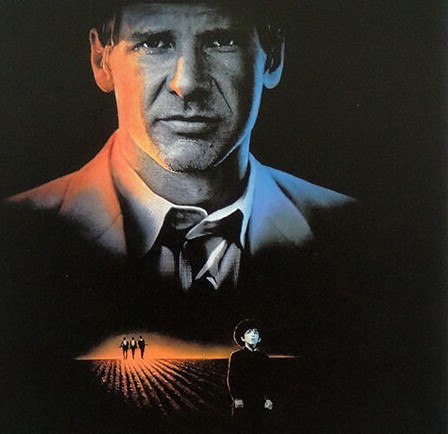
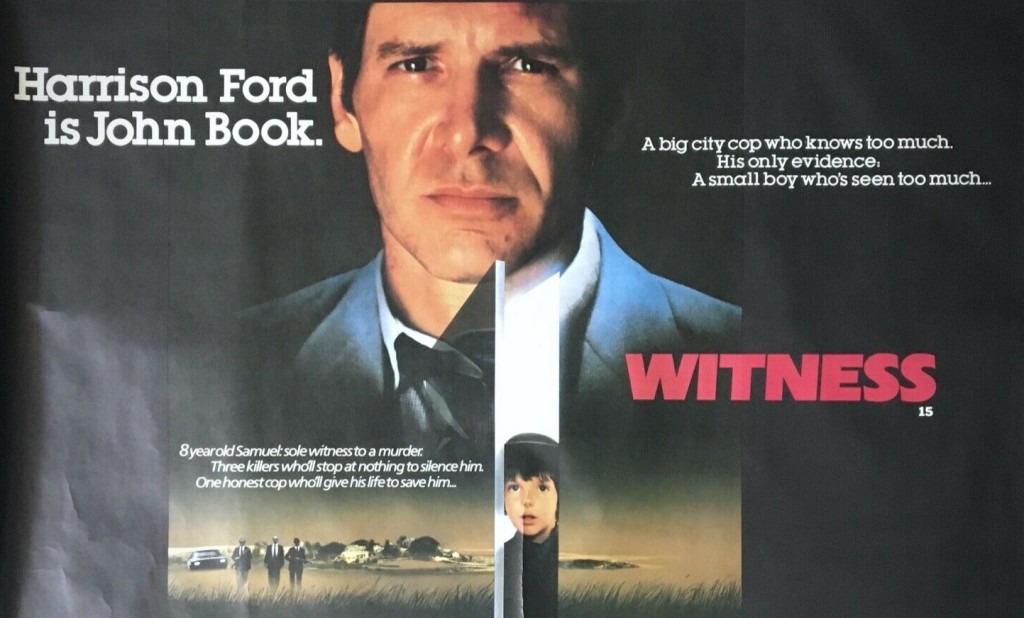
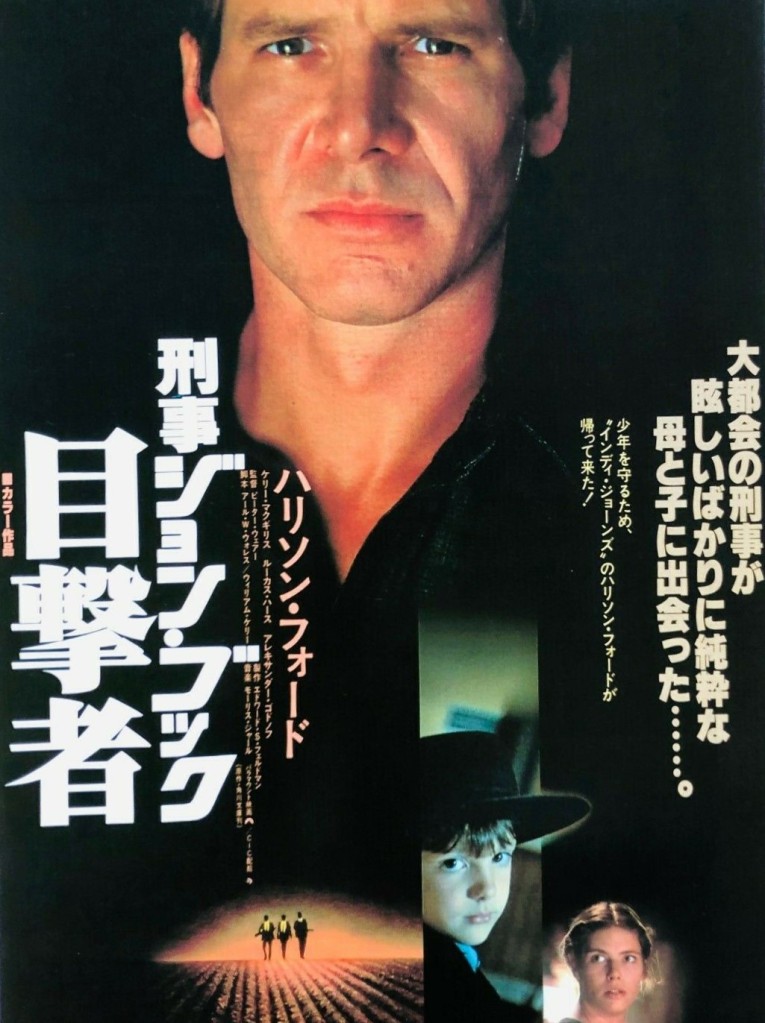
The Casablanca of the crime thriller, a stone cold classic in which impossible love takes precedence over unusual situation. In the Bogart-Bergman picture it is expatriates in war-torn North Africa, here a cop protecting an innocent boy hides out among the Amish. Like The Rock, this is so good the director makes the audience wait for a first sighting of the star while exploring the other main characters and the unique backdrop, in this case the customs and dress code of a religious cult that shuns the modern.
Adding to the paranoia rampant in American cinema in the 1970s/1980s is a further element – the hunted man or, in this case, boy. There’s no mystery in this thriller, 20 minutes in we know the culprit, involved in a criminal conspiracy so powerful it cannot be fought. And unlike the bulk of cop movies it’s not set in a city but in the country.
Just-widowed Rachel Lapp (Kelly McGillis) and eight-year-old son Jacob (Lukas Haas) set out by train to Philadelphia where the boy witnesses a brutal murder. Questioned by Detective John Book (Harrison Ford), we discover by accident the killer is cop Lt McFee (Danny Glover). Reaching out to trusted mentor Police Chief Paul Schaeffer (Josef Sommer) only to discover he is implicated, Book flees back to Amish country, where a gunshot wound prolongs his stay.
Distrusted as an uncouth “English,” liable to violence the Amish abhor, Book, with a range of carpentry skills, soon finds himself at home. Drawn to Rachel, passions simmer, but in this collision of cultures she cannot leave and he cannot stay. Without the cop background this would be a beautifully rendered love story, but the daily danger of the hidden being located heightens already tense emotions.
The examination of the Amish lifestyle is faultless. Transport is horse and cart, though sometimes that is with almost balletic assurance, there is no electricity, the community works together but threatens exclusion for disobeying strict rules. In compliance, Book dons the typical Amish outfit of plain black jacket and straw hat, buttons forbidden. And it is only when he breaks out of such strictures that his charges are threatened.
While the violence is powerful and when the time comes Book has a ruse or two up his sleeve, the most memorable scenes are as far removed from the crime thriller genre as possible. First is when Rachel enjoys a tentative forbidden dance with Book. Then there is the love scene where he watches her wash her naked torso, desire written over each face. Finally is building the barn where in quiet but obvious ways Rachel reveals her growing feelings for Book while with hammer and saw he helps put together the structure to the soaring strains of Maurice Jarre’s most magnificent composition.
Director Peter Weir (Dead Poets Society, 1989) excels in observation, a scene between Rachel and wooing farmer (Alexander Gudonov) takes place in silence, women whispering declaim attitudes to Rachel, her father Eli (Jan Rubes) waking Book before dawn, and several scenes of meals. Since restraint is the watchword, Weir draws exceptional performances from both principles, Harrison Ford (Blade Runner, 1982) receiving his only Oscar nomination, McGillis (Top Gun, 1986) nominated for a Bafta, likewise her only recognition at this rarified strata. Josef Sommer (Silkwood, 1983) is good as the ruthless but tormented corrupt cop, and both ballet dancer Alexander Gudonov and Viggo Mortensen (Green Book, 2018) make Hollywood debuts. Lukas Haas is as wide-eyed as they come.
Although nominated for eight Oscars, including Best Picture, Director and Music, it only picked up two, for editing and for an outstanding screenplay by William Kelley and Earl W. Wallace, both known almost exclusively as television writers.
An authentic, heartbreaking, multi-layered, adult picture like this is very hard to come by.
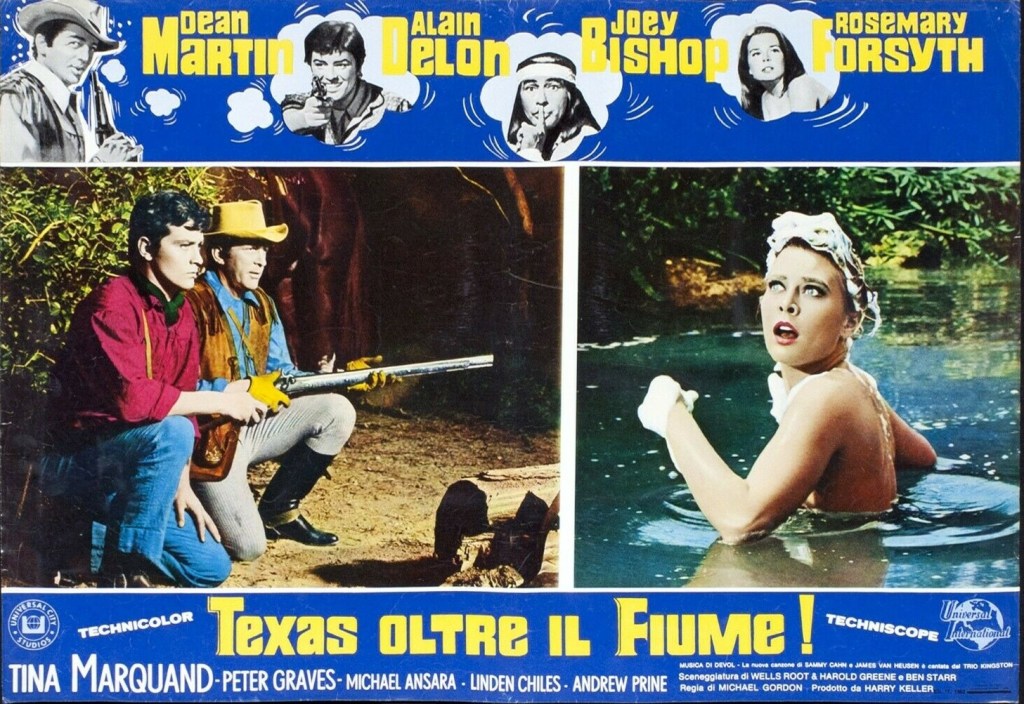
Excellent comedy western mixing dry wit and occasional slapstick to joyous effect. The wedding between Spanish duke Don Aldrea (Alain Delon) and Louisiana belle Phoebe (Rosemary Forsyth) is interrupted by her previous suitor Yancy (Stuart Cottle) who is killed in the resulting melee. Escaping to Texas, Don Aldrea’s marksmanship leads settler Sam (Dean Martin) to recruit him to help fight raiding Commanches. Romantic entanglement ensues when the Don rescues Native American Lonetta (Tina Marquand) and Sam has more than a passing interest in Phoebe.
It is so tightly structured that nothing occurs that doesn’t have a pay-off further down the line. Bursting with terrific lines – including a stinger of a final quip – and set pieces, it pokes fun at every western cliché from the gunfight, the cavalry in hot pursuit, and fearsome Native Americans to the snake bite and the naked bathing scene. Incompetence is the order of the day – cavalry captain Stimpson (Peter Graves) issues incomprehensible orders, chief’s son Yellow Knife (Linden Chiles) cannot obey any.
The Don, with his obsession with honor and his tendency to kiss men on the cheeks, is a comedy gift. Despite his terrific head of hair, he is stuck with the moniker “Baldy” and every time he is about to save the day he manages to ruin it. Sam is the kind of guy who thinks he is showing class by removing his spurs in bed while retaining his boots. His sidekick Kronk (Joey Bishop), a mickey-take on Tonto, mostly is just that, a guy who stands at the side doing nothing but delivering dry observations.
Lonetta is full of Native American lore and has enough sass to keep the Don in his place. “What is life with honor,” he cries to which she delivers the perfect riposte, “What is honor without life?” Phoebe is a hot ticket with not much in the way of loyalty.
Two sequences stand out – the slapping scene (whaat?) and a piece of exquisite comedy timing when Sam, Phoebe and the Don try an iron out a complicated situation.
Good as Dean Martin (Rough Night in Jericho, 1967) is the picture belongs to Alain Delon (Once a Thief, 1965) and I would argue it is possibly his best performance. Never has an actor so played against type or exploded his screen persona. Delon was known for moody, sullen roles, cameras fixated on his eyes. But here he is a delight, totally immersed in a role, not of an idiot, but a man of high ideals suddenly caught up in a country that is less impressed with ideals. If he had played the part with a knowing wink it would never have worked.
Martin exudes such screen charm you are almost convinced he’s not acting at all, but when you compare this to Rough Night in Jericho it’s easy to see why he was so under-rated. Joey Bishop (Ocean’s 11) is a prize turn, with some of the best quips. Rosemary Forsyth (Shenandoah, 1965) is surprisingly good, having made her bones in more dramatic roles, and Tina Marquand (Modesty Blaise, 1966) more than holds her own. Michael Ansara (Sol Madrid, 1968) played Cochise in the Broken Arrow (1956-1958) television series. Under all the Medicine Man get-up you might spot Richard Farnsworth. Peter Graves of Mission Impossible fame is the hapless cavalry leader.
Director Michael Gordon (Move Over, Darling, 1964) hits the mother lode, the story zipping along, every time it seems to be taking a side-step actually nudging the narrative forward. He draws splendid performances from the entire cast, knowing when to play it straight, when to lob in a piece of slapstick, and when to cut away for a humorous reaction, and especially keeping in check the self-indulgence which marred many Rat Pack pictures – two of the gang are here, Martin and Bishop. There’s even a sly nod to Sergio Leone spaghetti westerns when the electric guitar strikes up any time Native Americans appear. Frank De Vol (Cat Ballou, 1965) did the score.
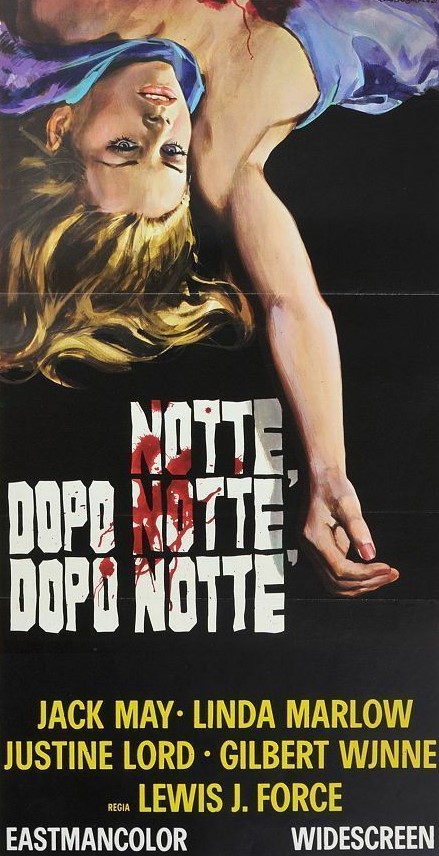
British giallo sets tough London cop Bill Rowan (Gilbert Wynne) hunting a Jack-the-Ripper type serial killer who has slaughtered his wife (Linda Marlowe). Chief suspect is leering cocky jack-the-lad Pete (Donald Sumpter) of the wham-bam-thank-you-ma’am school of seduction. In an era when pornography and “perversion” were beginning to shake off the shackles of comformity and strippers, prostitutes, voyeurs and transvestites condemned as evils to be stamped out, this skirts the boundaries between sexploitation and heavy moralising.
Chief among those embarking on a moral crusade is hypocritical puritan Judge Lomax (Jack May) who spurns his attractive wife (Justine Lord) while indulging in cross-dressing. Needless to say, his clerk, ostensibly another upholder of the moral fabric, is a porn addict. As the body count grows, Pete manages to needle Rowan sufficiently for the cop to consider any nefarious means to put him behind bars.
Knives flash in the dark, the killer wears black leather, victims writhe on the ground as they are slashed to pieces, and coupled with the unusually high nudity quotient it is surprising that this picture passed the British censor. The movie never drags and there is enough incidental sleaze to keep the viewer interested. As a historical document, it details the point at which the country hovered between reined-in respectability and full-on sexual freedom.
Operating here under the pseudonym Lewis J. Force, Canadian director Lindsay Shonteff (The Million Eyes of Sumuru, 1967) conjures up a darker vision of a London so often presented in glorious tourist tones with nastiness seeping into every corner of society. Veteran Jack Lord (A Twist of Sand, 1968) captures well the double life of a decent man undone by what is perceived to be indecency and his later scenes are quite moving. Donald Sumpter (The Black Panther, 1977) is excellent as the taunting petty criminal while Gilbert Wynne makes a decent debut as a leading man. In small roles are Justine Lord (Deadlier than the Male, 1967) and Linda Marlowe (Big Zapper,1973 – directed by Shonteff).
Jack the Ripper was such an ingrained element of British culture that any movie featuring a similar villain gave audiences the creeps. British television cops were beginning to move out of the shadow of Dixon of Dock Green and into the new age of The Sweeney and while giallo did not catch on among home-grown filmmakers there was considerably more focus on hardened criminals such as Get Carter (1971) and Villain (1971).
While the British B-film was moving increasingly towards sex comedy, this fits more succinctly into the Pete Walker sex’n’violence pictures of the 1970s which have attracted retrospective critical interest and for all its flaws, which can mostly be attributed to a low-budget, this is surprisingly impressive in places.
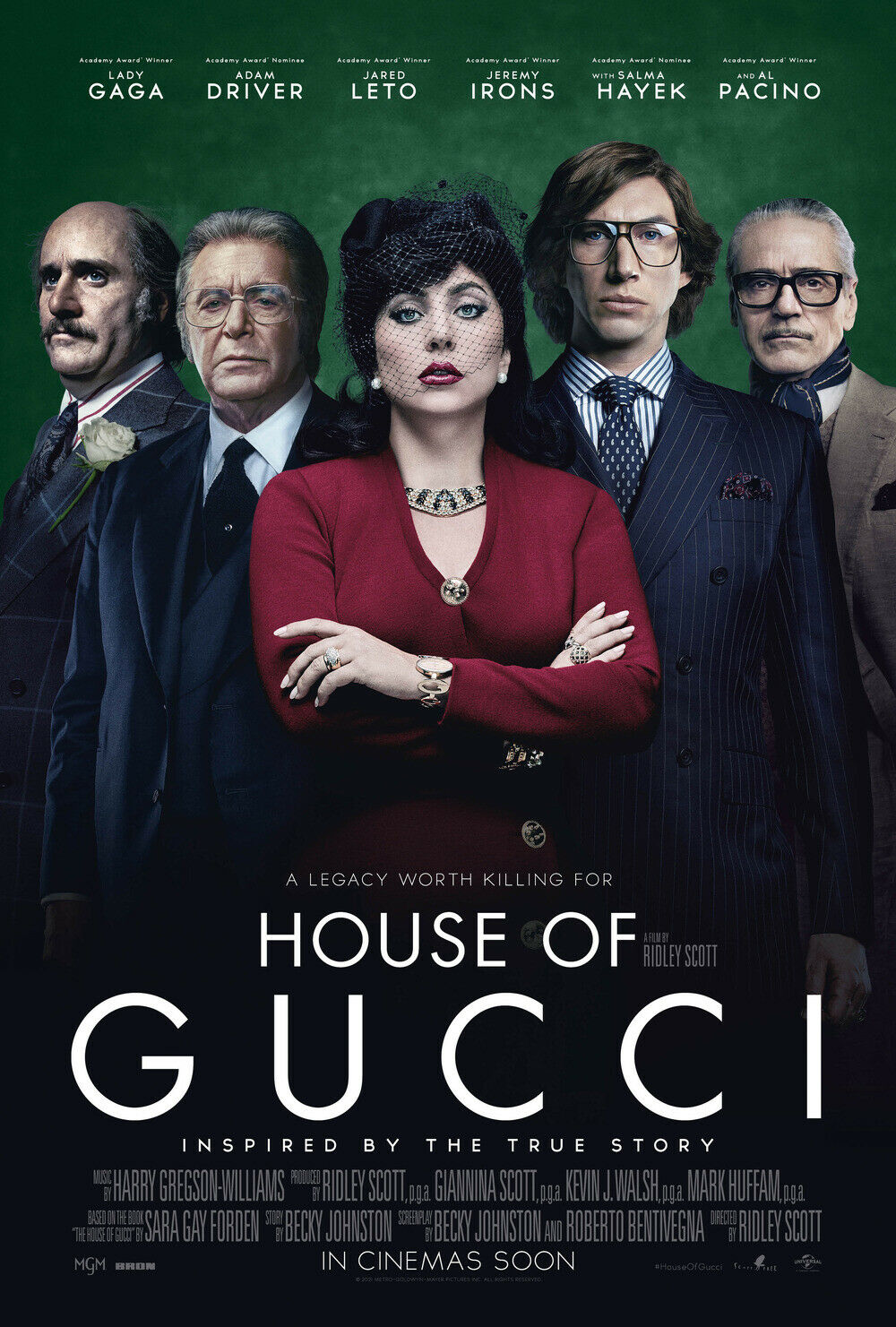
Beautifully constructed, stylish, compelling narrative about passion, betrayal and the death of a dynasty. Just as The Godfather is not just about the Mafia, this is not just about fashion; rather, both fit into the niche of movies about family. In each, there are principled fathers and both weak and strong sons. While decisions are driven by character, ambition clogs the mind and ultimately it is the clear-sighted who win.
In a beautifully-played love story outsider Patrizia (Lady Gaga) manages to snag Gucci heir Maurizio (Adam Driver), her lowly status driving a wedge between him and ill patriarch Rodolfo (Jeremy Irons), who shares control of the company with his brother Aldo (Al Pacino). Almost a geek poster-boy, Maurizio nonetheless fits easily into her world. But when Aldo draws Maurizio into the family business, it triggers conspiracy and betrayal.
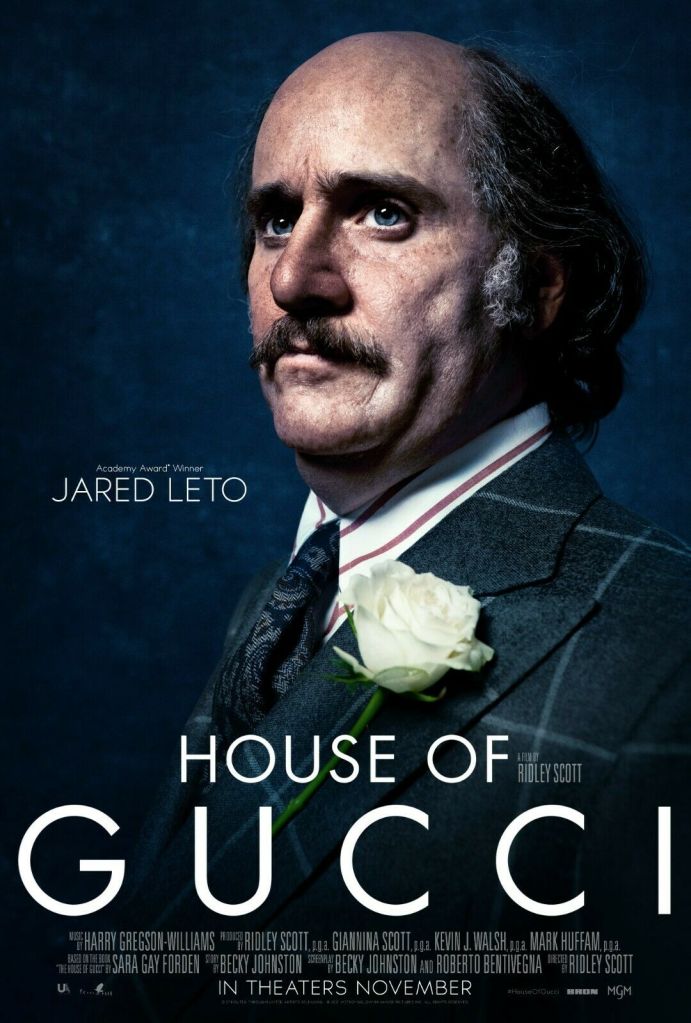
Aldo and Rodolfo are polar opposites, the former willing to dilute the brand in the race for profit, the latter seeing himself as the curator of a more sedate way of doing business. While Rodolfo pines for his dead wife in his palatial Italian sanctuary, Aldo has an eye for the ladies in New York. The weak link in the family chain is Aldo’s “idiot” son Paolo (Jared Leto) who considers himself a fashion genius. But, in reality, they are all weak, seduced by wealth and power, believing themselves untouchable despite wholesale fraud, business folly and self-delusion on a colossal scale.
The quest for power is ostensibly driven by Patrizia, but she proves no match for a flinty-eyed Maurizio. And for his all self-aggrandisement, Maurizio proves no match for the circling predators, his rampant self-indulgence a death wish in a boardroom.
Over-acting could have sent this picture off the rails but everyone is terrific and the soap-opera tag is unfair. In the best Shakespearian style, hubris accounts for tragedy. Few characters escape humiliation. Paulo may be a figure of fun, but his mortification at the hands of Rodolfo renders him extremely human. Aldo may exalt in his business skill but in the face of betrayal is destroyed. Patrizia receives a massive put-down by Maurizio in front of his high-class friends.
Lady Gaga, who demonstrates the onscreen radiance and incandescence of a latter-day Elizabeth Taylor, is superb as the woman whose prize is snatched away. Adam Driver puts in his best performance yet, so natural, and his scenes with Gaga are electrifying. Al Pacino encompasses a massive range, man in his pomp, loving father, and in the depth of agony at betrayal. Jared Leto is a revelation, and an early Oscar favourite, as the ridiculous and ridiculed son. Jeremy Irons and Jack Huston as the conniving lawyer are excellent
There are so many brilliantly-wrought scenes – seduction on a rowing boat, a rugby match that gets out of hand, a snake-pit of a boardroom, Aldo lavishing attention on his cows, Patrizia indulging a psychic (Salma Hayek), Maurizio leaping around a room for a Vogue photo shoot. A weighty look at the corruption of power but also a fabulously entertaining picture. Better known for visual tropes, here Scott displays his mastery of narrative as we sweep in and out of unbridled egos hell bent on triumph at any cost. And it is the best film about business since Wall St (1987).
When I first watched this, I was inclined to give it a four-star rating but after seeing it a second time on the big screen that appeared niggardly for a work of such awesome majesty. (Now that I’ve seen it a third time, the five-star ranking still stands). Just like American Gangster (2005) and Thelma and Louise (1992), when Scott moves outside his self-appointed sci-fi and historical treasure trove, he does so with effortless style. This just zipped along. I hardly noticed the time at all. Second time around, I just did not want it to finish, I was so immersed. I even found myself laughing at the same jokes and situations.
What a banner year for the 83-year-old British director. The Last Duel could have bookended this piece – wronged woman proved innocent compared to wronged woman found guilty. Given Scott is synonymous more with the historic than anything approaching the contemporary, I thought I would have preferred The Last Duel, but I now consider House of Gucci the greater film.
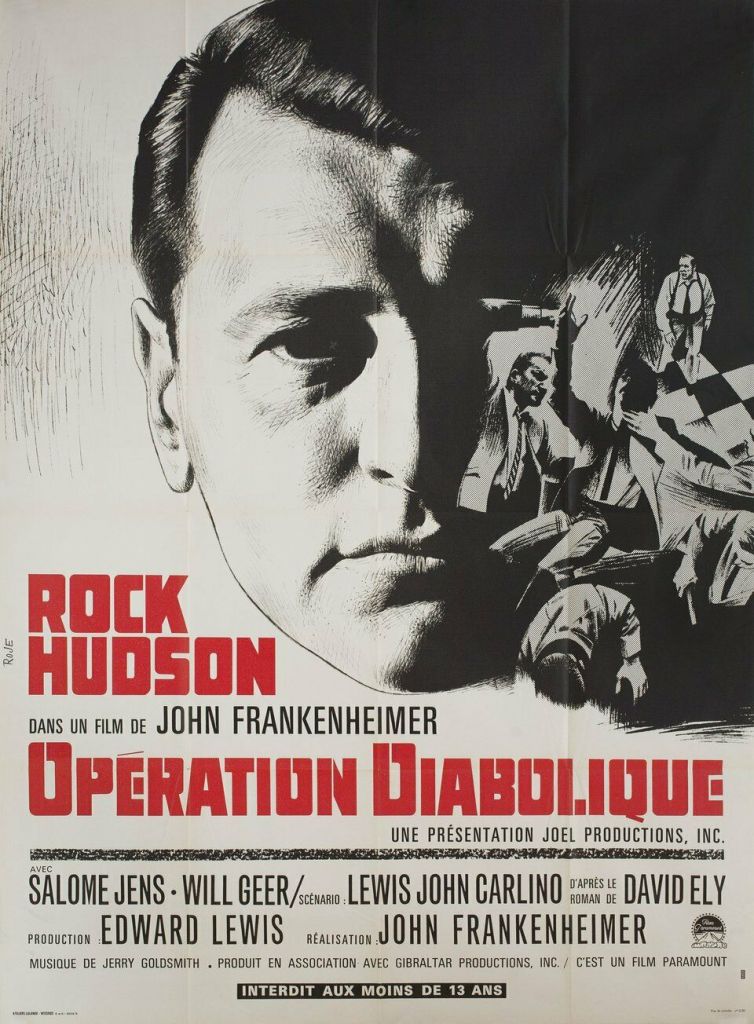
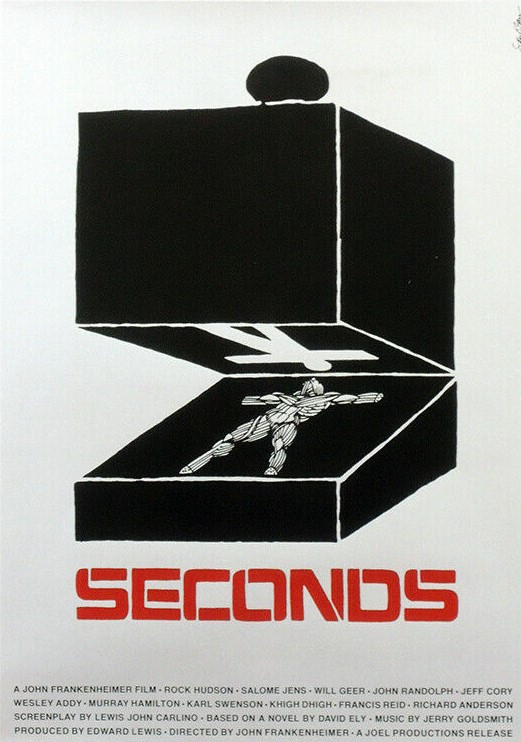
John Frankenheimer’s censor-baiting and game-changing paranoia drama was decades ahead of its time – it created the template for Blade Runner (1982), The Swimmer (1968), The Stepford Wives (1975), The Parallax View (1974) and The Truman Show (1998) to mention just a few – and underneath the sci-fi surface asked deeper questions about identity, reality and depression. And it might well qualify as reaching for the impossible dream. Kafkaesque aspects intrude. It’s as much an essay on hopelessness as it is on hope, a scorching portrayal of the human condition. Unusual camera angles and depth of field make this a visual, if occasionally challenging, delight.
Disillusioned banker Arthur (John Randolph), marriage off-kilter, reacting to a call from someone he believes is dead, gets hooked into a deal which promises rebirth. After plastic surgery and a faked death, he is reborn as a much more handsome figure (Rock Hudson), pursues a new career as an artist, is sexually re-born during an orgy, but finds memories of his old life resurfacing at inopportune moments and takes against the notion that he has to recruit friends or colleagues to go through the same process.
Although audiences had been treated to some paranoid impulses like The Manchurian Candidate (1962) and films dealing with mental health such as Lilith (1964), this was the first film to touch on paranoia about big business, the unseen conglomerates controlling lives in unseen ways that directors in the 1970s pounced upon. Although a piece of breakthrough technology, the rebirth business is now just that, a business, wherein an anonymous corporation, known here only as The Company, seeks to maximize profit from human misery.
You could almost view the men who had more successfully undergone the experiment than Arthur as Stepford Husbands, guys who had created an ideal version of themselves. They could be body snatchers who have stolen a more convenient body. In another respect, the conventional Arthur turns into the rebel in society, refusing to accept this new creed. And he is gullible enough to believe his employers will accommodate his demands.
On the one hand it is a self-destructive horror story. Arthur willingly gives in to his desire for a better life regardless of the emotional cost and is somewhat surprised to find that the community in which he lives is a construct, almost as fictional as any computer game.
It is an amazing mixture of sci-fi and horror. But the sci-fi has the bleakness of Blade Runner, the hospital and offices where the future unfolds are drab, while the beach locations have an uncanny unreality. The horror is for the most part confined to two scenes – the new Arthur waking up swathed in bandages and later, strapped to a gurney, realizing too late his destiny.
But mostly what I found resonating was the examination of male psyche and its inability to deal with adversity and depression. Arthur isn’t so much desperate to wake up as a handsome hunk as to enter a new existence where he does not feel so lonely and displaced, where he can discover the humanity he has lost. It is not that he wants to be absolved of all responsibilities but wishes to be free of his current joyless life. While he becomes an improved physical specimen, he finds to his consternation that he has not shaken off the gloominess lurking in his brain.
The futuristic aspects are compounded by brilliant down-to-earth scenes. Company executive Ruby (Jeff Corey) goes into all the details of their contract while eating a chicken dinner, an old friend Charlie (Murray Hamilton) is deskbound, when Arthur arranges in his new skin to meet wife Emily (Frances Reid) he discovers his old true self had been only too apparent, cursed with unspoken longing and divorced from reality. Even romance with the outgoing Nora (Salome Jens) only offers brief reinvigoration after he partakes in an orgiastic grape-stomping event.
This is Frankenheimer’s masterpiece, and given he also directed The Manchurian Candidate, that is some accomplishment. He exercises total control in a film about total control but he is indebted to cinematographer James Wong Howe for developing new techniques to achieve a quite different, often austere, look.
It incurred the wrath of the Production Code – the U.S. censor – with scenes of full-frontal female nudity. These were all cut (though you will find them on the DVD). Whether their inclusion would have turned the film into a hit – rather than being booed at the Cannes Film Festival and a big flop at the American box office – is a moot point since, at that time, films as obscure as Blow Up (1966) had attracted big audiences due their more permissive approach. This should have been a late career transition for Rock Hudson (Strange Bedfellows, 1965) into more mature work but his excellent and brave performance was dismissed by the critics.