The idea of opening a “summer” picture in the middle of winter would have appeared anathema to movie distributors. A movie that relied on sun, sea and sand might prove a bit of brightness in the gloom of a British winter, but a movie that relied for its effect on that critical element of summer, that thousands of people would have be happy to swim in the sea and potter around on boats, might have lost a considerable part of its market by such poor timing. Except the movie in question was Jaws.
Although it opened in the summer in the United States, it didn’t reach British shores until December 1975, one of the greatest examples of building on the phenomenon of the longer you make an audience wait the bigger the response. By 1975 in Glasgow, Scotland – as with everywhere else in the U.K. – the new era of movie distribution was long consolidated. Big movies were held over in the city center’s biggest cinemas until fully played out, and only then moving into the suburbs or the surrounding towns. But as much as Jaws followed the new distribution path, it also broke the rules.
Paramount had decided not so much to limit the movie’s exposure at the ABC1 but to temper it. It could carry on at that cinema as long as it wished, but after a 13-week run in 1976 (it had opened a few days before the end of 1975) at the ABC1, other cinemas were permitted to book it. But on one condition. They had to agree to an unprecedented four-week run. That didn’t stop the ABC1 trying to milk more from the golden goose and it continued there for another five weeks.
By this point, Glasgow was accustomed to blockbuster movies playing like gangbusters. In 1974, The Sting re-teaming Paul Newman and Robert Redford had lasted 15 weeks at the ABC1, while the La Scala had hosted 13-week runs of both The Exorcist and Papillon starring Steve McQueen and Dustin Hoffman (all three pictures, it should be pointed out, had opened in the U.S. the previous year. Swashbuckler The Three Musketeers had enjoyed 10 weeks at the Odeon complex. Notching up seven weeks were Robert Redford as The Great Gatsby at the ABC2 and an unexpected hit, the double bill of Busting/I Escaped from Devil’s Island at the Odeon.
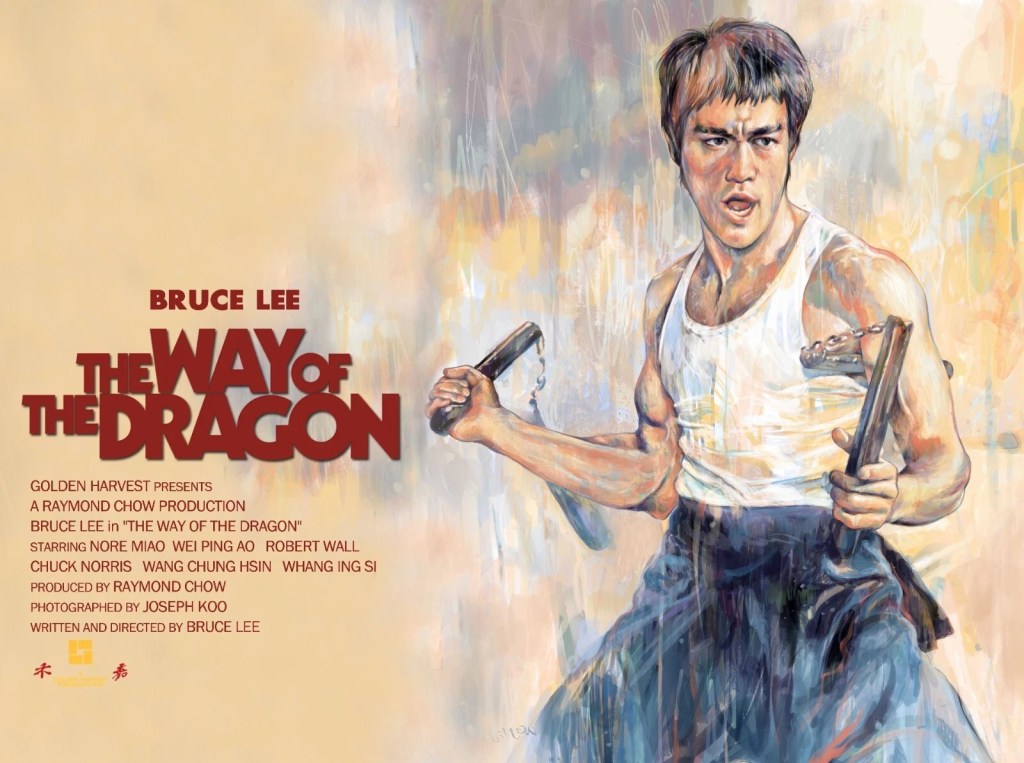
Clint Eastwood’s first Dirty Harry sequel Magnum Force raced to six weeks at the ABC1, as did compilation feature That’s Entertainment at the ABC2 and Disney’s new animated feature Robin Hood and, separately, a reissue of Peter Pan (1953) at the Odeon. Hitting the five week mark in 1974 in Glasgow were movies as diverse as Don’t Look Now starring Donald Sutherland and Julie Christie doubled up with The Wicker Man at the Odeon 1, Bruce Lee epic Way of the Dragon at Odeon 2, Barbra Streisand comedy For Pete’s Sake at the Odeon 1, Roger Moore in Gold at the Odeon 2, and another in Odeon 3 sexploitation category Secrets of a Door to Door Salesman/Climax.
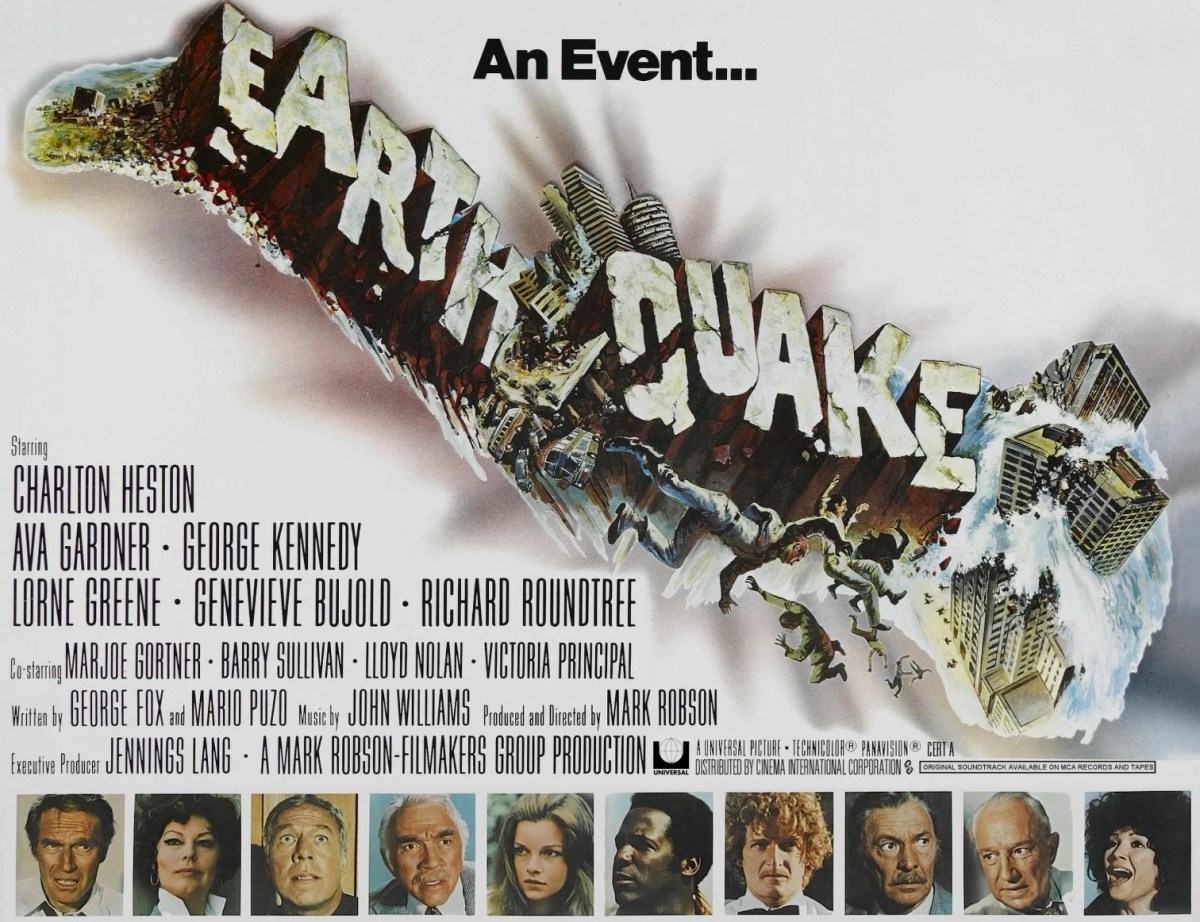
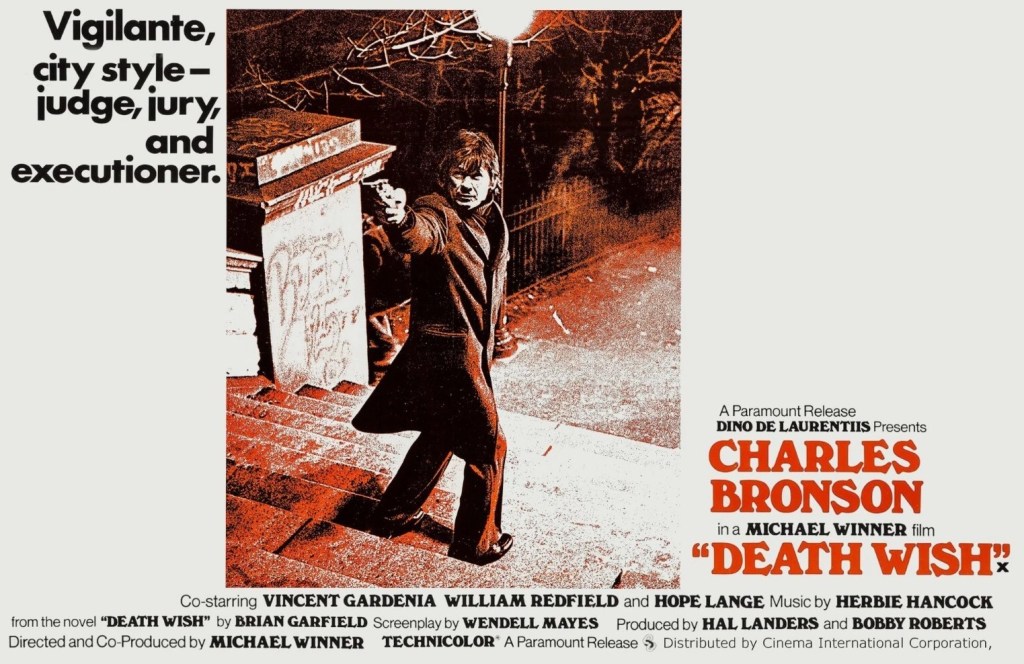
Prior to the arrival of Jaws, the notion of the extended long run had been established in Glasgow thanks to the short-lived disaster movie boom. Earthquake, in Sensurround, starring Charlton Heston and Ava Gardner and an all-star support attracted audiences for 30 weeks at the ABC2 while it was 21 weeks at the ABC1 for Paul Newman and Steve McQueen fighting The Towering Inferno with William Holden and Faye Dunaway providing even more stellar support. Charles Bronson’s vigilante killer in Michael Winner’s Death Wish shot up 12 weeks at the La Scala while The Who’s rock opera Tommy directed by Ken Russell with an all-star cameo cast notched up three fewer weeks there.
Charlton Heston headed up another disaster movie, sequel Airport 1975, which crash landed for eight weeks at the ABC1. The latest James Bond opus The Man with the Golden Gun in Odeons 1 and 2 lifted seven weeks. The Odeon 3 drafted in further dubious movies – The Night Porter with artistic aspirations and starring Dirk Bogarde and Charlotte Rampling, and, separately, The Devil Within Her with no artistic credentials and the unlikely casting of Brits Juliet Mills and Richard Johnson for seven-week stints. Norman Jewison’s violent sci fi Rollerball starring James Caan hit six weeks at Odeon 1. At the five-week level were Albert Finney as Hercule Poirot and an all-star cast in Murder on the Orient Express (ABC2), Mel Brooks’ Blazing Saddles (La Scala), sequel The Four Musketeers (Odeon 1), a second Mel Brooks’ offering Young Frankenstein (Odeon 3), John Wayne as Chicago cop Brannigan let loose in London (Odeon 1), another Disney reissue Lady and the Tramp (1955) and Mandingo (ABC1).
Jaws was not, in fact, the longest-runner in Glasgow city center in 1976. That honor went to Jack Nicholson’s Oscar-winning turn in One Flew over the Cuckoo’s Nest which clocked up 23 weeks at the Odeon. An unusual long-run contender appeared out of left field. Low-budget weepie The Last Snows of Spring without any marquee names ran for an unprecedented 14 weeks at the Classic. The 70mm reissue of Gone with the Wind (1939) returned in style to the ABC2 for a further 10 weeks. Robert Redford and Dustin Hoffman investigating All the Presidents’ Men scored seven weeks at ABC2 and then a further five at the Scala 2 (the La Scala having been twinned and renamed the Scala.)
Demonic adventure The Omen with Gregory Peck and Lee Remick stung the Odeon 1 and Odeon 2 for a total eight weeks. A rerun of The Exorcist lingered for seven weeks at Scala 2. Lee Marvin and Roger Moore in Shout at the Devil were good for six weeks at Odeon 1, as was Charles Bronson as The Streetfighter at the Odeon 1 and 2 combined, Clint Eastwood western The Outlaw Josey Wales at ABC1 and Dustin Hoffman thriller Marathon Man at ABC2. King Kong five weeks plux X from previous year.
Five-weeks runs were achieved by Peter Sellers vehicle The Return of the Pink Panther at Odeon 1 and another crime spoof Murder by Death at the Odeon 3
Taking three weeks as the definition of the long-run, this form of exhibition had grown exponentially during the decade. In 1970 only three movies enjoyed runs of three weeks or more. The following year the number had jumped to 11 and then nudged upwards to 13 in 1972. Growth in 1973 remained modest – a total of 17 movies hitting the target or better. But by 1974 the number was 25 and the following year it rocketed to 35, with 36 the total in 1976.