When Time Ran Out (1980) / Earth’s Final Fury ***

The Director’s Cut, can you believe? Or less pompously, The Expanded Version. An extra 30 minutes added to the general release version that traveled the world to general disfavor. (The original 121-minute cut was edited to 109 minutes and this version clocks in at 144 minutes.) Was it a sense of disgruntlement – or sheer opportunism – that led to the Director’s Cut, so many of which scarcely improved on the original version. How many versions can an audience take of The Exorcist (1973) or Blade Runner (1982)? And even where extra length definitely added depth to Kingdom of Heaven (2005) that couldn’t overcome its major flaw, in a massive case of hubris, director Ridley Scott believing he could get away with casting Orlando Bloom instead of waiting till Russell Crowe became available.

When Time Ran Out killed off the disaster cycle and the Hollywood career of uber-producer Irwin Allen who had started that particular ball rolling with The Poseidon Adventure (1972), upped the ante with The Towering Inferno (1974) and dropped the ball with The Swarm (1978) and Beyond the Poseidon Adventure (1979).

This doesn’t feel so much like a disaster movie as a picture tying up all the knots, various relationships coming asunder, and having to accommodate a bunch of well-known supporting actors of dubious all-star-cast status before they suddenly spring into dramatic narrative view.   Audiences had never been particularly keen on volcanic pictures, after all what can the trapped characters do but dodge a sludge of soup and hope they don’t run straight into a tidal wave or, worse, have to negotiate a rickety/rope bridge. The chances of you having a tightrope walker coming to the rescue would generally be remote but that’s what we have here (step forward Burgess Meredith).

I had thought from the title and some guy in a hazmat suit wandering over a desolate area that this might be a prophetic eco-disaster, but excepting that there’s, for reasons best known to the scriptwriters, an oil well being drilled close to a volcano and that hotel investor Shelby (William Holden) has the bright idea of using the volcano as a marketing prop, there’s nothing much going on. The special effects are okay on the small screen, but even if they had been spectacular on the big screen their effect on the much smaller environs of DVD would in any case have been diminished.

So, basically, it’s reliant on working up sufficient audience interest in the relationships to make us care for the characters. We’re offered a pair of two-timing teams. First up, we’ve got Shelby’s secretary and marketing guru Kay (Jacqueline Bisset) who’s just turned down the offer to become his sixth “or seventh” wife, but who, presumably is enjoying, this being the 1980s and not the 1930s, some kind of sexual dalliance with him. When Kay meets up with oil driller old flame Hank (Paul Newman), they rekindle their romance, although with doom impending there’s not much time to take it forward beyond a picnic on the beach.

Next up, hotelier Bob (James Franciscus) is cheating on wife Nikki (Veronica Hamel), Shelby’s god-daughter, with staff member Iolani (Barbara Carerra) who is due to be married to childhood sweetheart hotel manager Brian (Edward Albert). To flesh out the tale, both Shelby and Bob have daddy issues, Tom (Ernest Borgnine) is a New York cop on the tail of swindler Francis (Red Buttons), and no doubt audiences will be desperate to find who wins a  cockfighting contest being held in a local saloon.

Modern transport proves no match for an eruption, so in quick succession we see a car and a helicopter tumbling down the mountainside. The tsunami wipes out a good chunk of the actors that didn’t make it into the all-star-cast bracket and everyone else takes to the hills, no doubt hoping they won’t encounter a rickety/rope bridge. Disaster turns enemies into pals, Tom and Francis, for example, though it’s only now that Nikki comes across her husband’s infidelity.

And this would be a disaster all round except that having hooked myself into watching this, courtesy of a freebie on YouTube, and nothing of real dramatic interest going on, I found myself, oddly enough, concentrating on the three principals and was treated, even more odd I guess, to fine examples of just what these stars do to earn their crust. Paul Newman (The Prize, 1963) in particular, with very little to react to, does very little but with incredible facial agility, to genuine effect, portraying emotion with infinitesimal gesture. Sure, he’s always had the shrug and the walk, both far more suggestive of inner turmoil than any other actor I can name, but here, with very little dialog coming to his aid, you can tell exactly what’s going on in those baby blues.

Jacqueline Bisset (The Cape Town Affair, 1969), too, dressed a good bit less suggestively than in the posters, essays a confident woman coming unstuck when confronted with a romantic error. The scenes between the pair are not meant to be scorching, so there’s none of the screen charisma audiences might feel they’ve been sold, but instead it’s a slow-burn, a couple trying to come to terms with each other, passing through disappointment and hopefully onto something better. And you can’t find anyone better to carry disillusion than William Holden (The Devil’s Brigade, 1968).  

Abject swansong for director James Goldstone (Winning, 1969) and Oscar-nominated screenwriter Carl Foreman (The Guns of Navarone, 1961) but Oscar-winning co-writer Stirling Silliphant (Marlowe, 1969) carried on longer. Who wrote the most effective scenes, Shelby’s engagement ploy and Hank’s initial rejection of Kay, is anybody’s guess but there is some quality writing here. Probably the strangest part of the whole debacle was that the source was a piece of non-fiction, The Day the World Ended by Gordon Thomas and Max Morgan Witts, about a 1902 eruption on Martinique that had nothing to do with oil wells or hotel construction.   

There’s always something wrong with a disaster picture if you suggest watching it for the acting, but happily, this is the case.

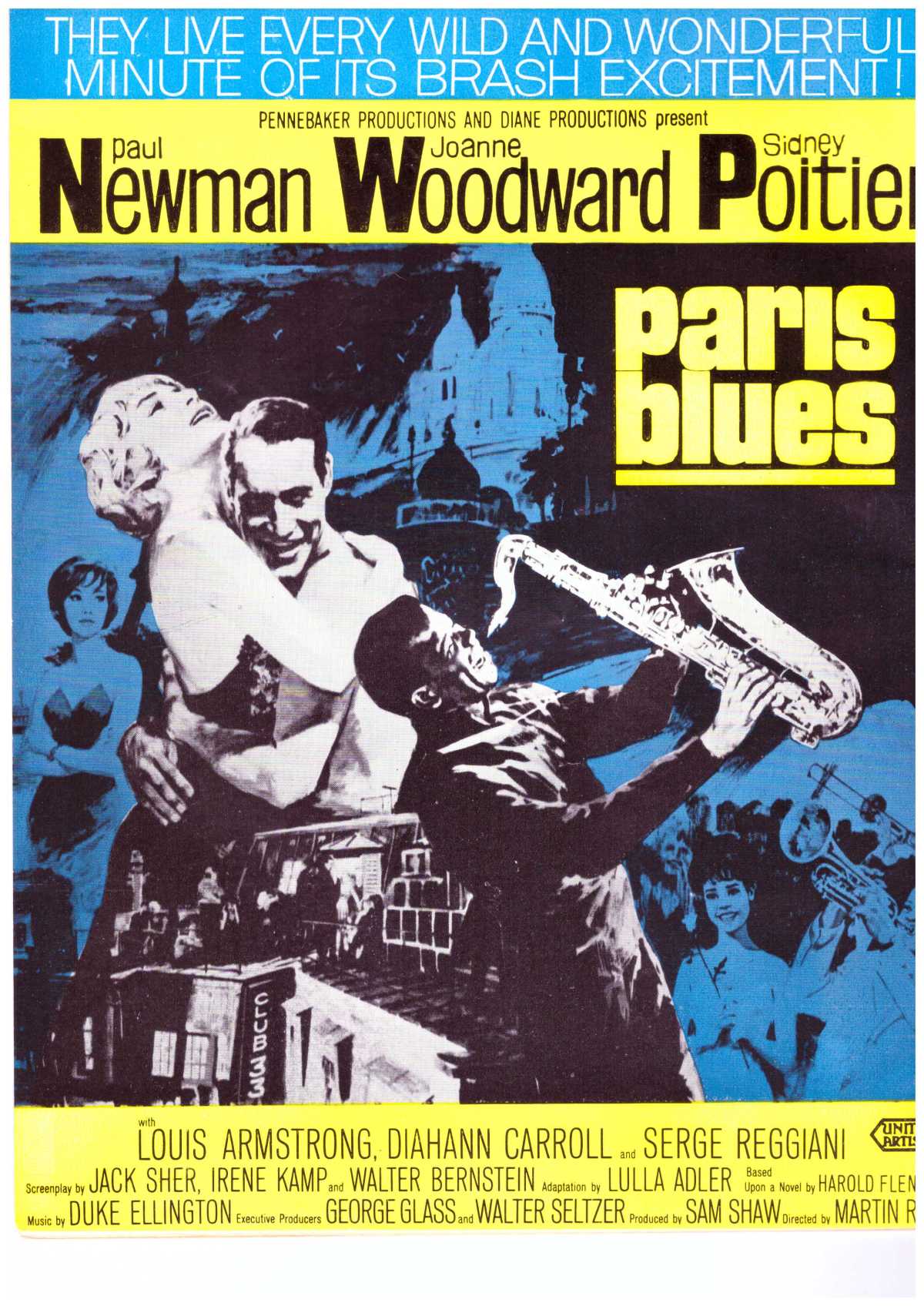
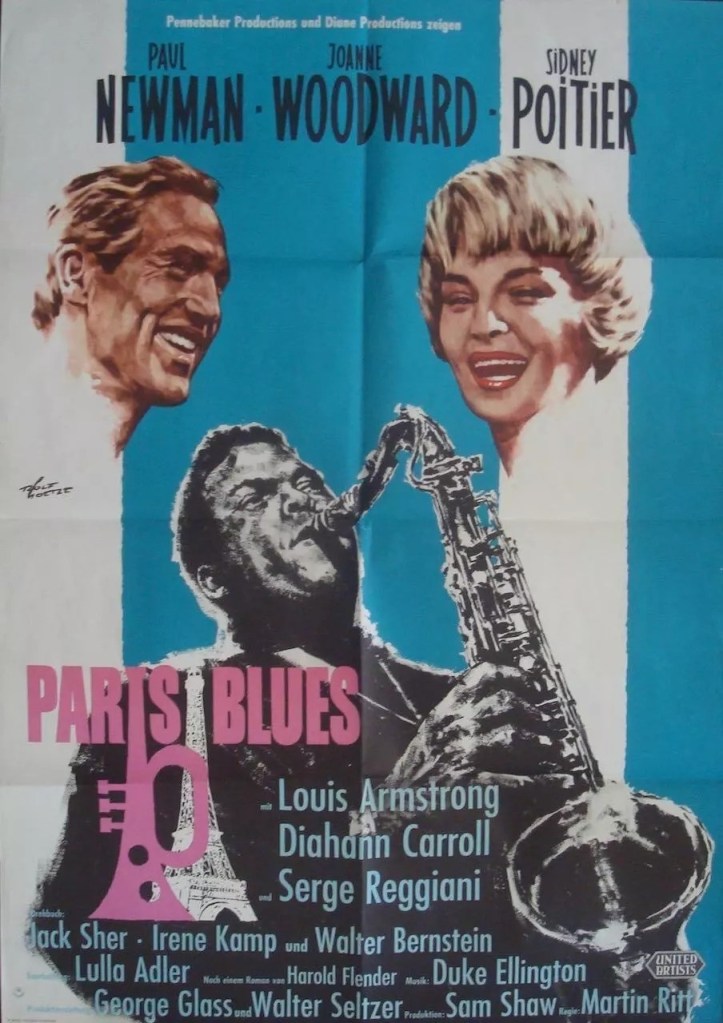
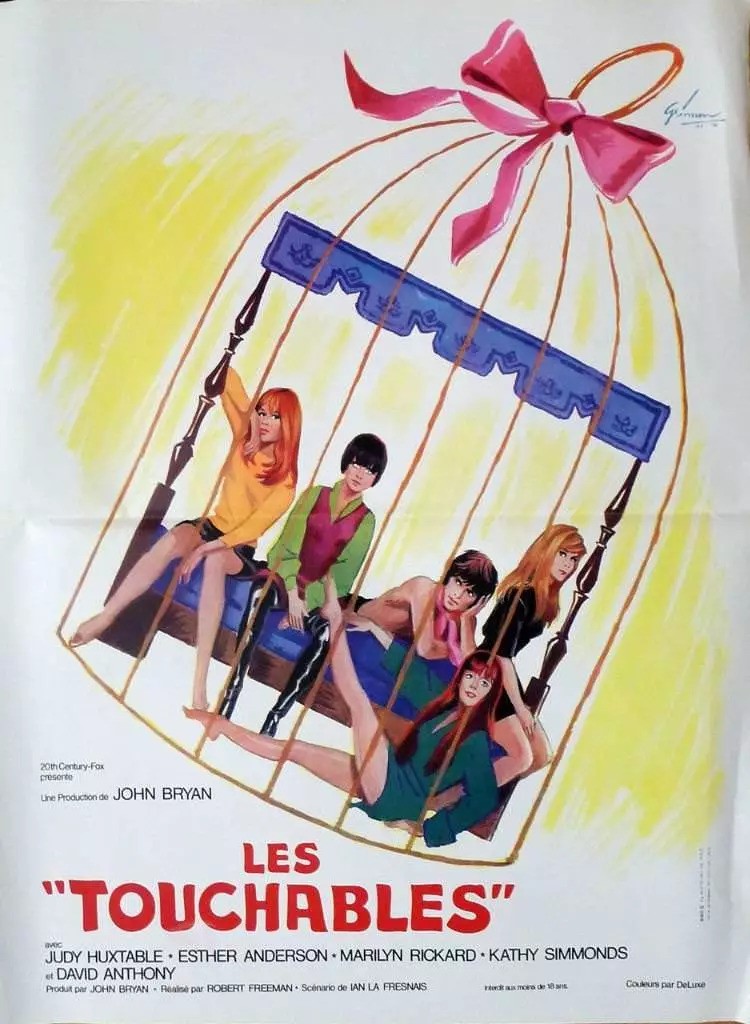
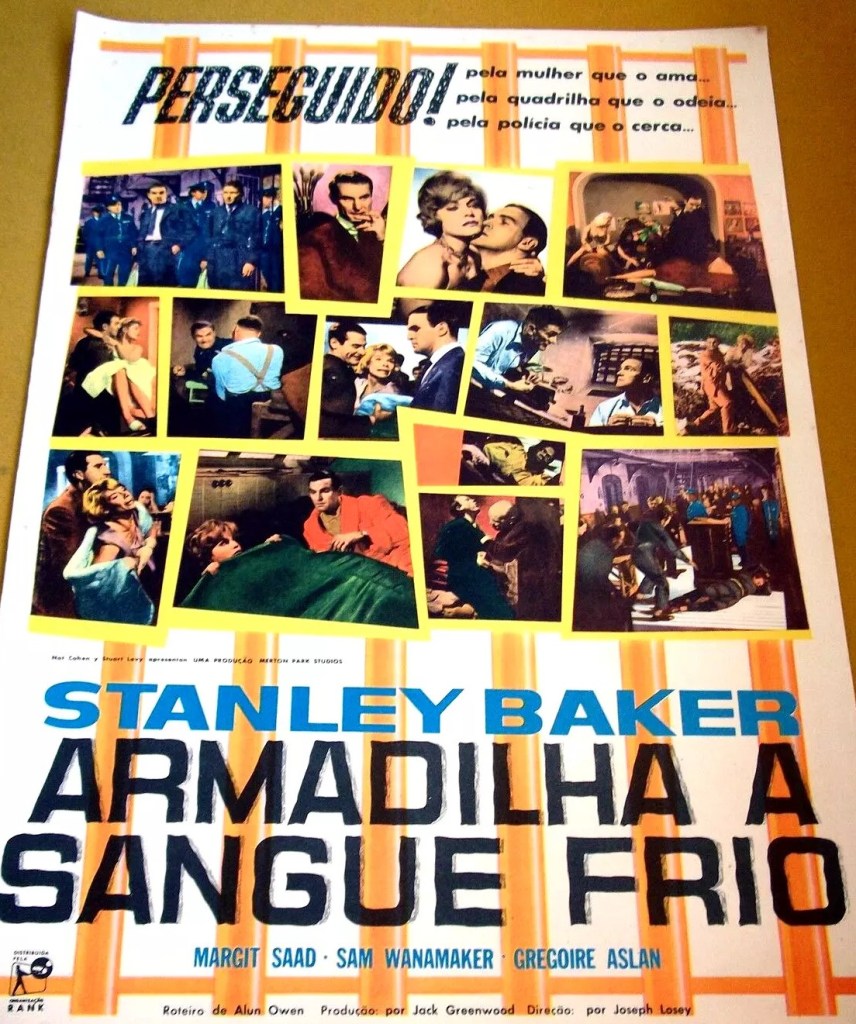
Bachelor Flat (1961) ****

Stereotypical Englishman reinvented. Where the suited-and-booted traditional British gent, umbrella at the ready, moustache awaiting twirling, bristling with pomposity, usually of military background and inclined towards the pedantic, was treated as a figure of fun, here in a marvelous conceit he is instead catnip to the ladies. You could imagine this was somewhat prophetic given the imminent arrival on Hollywood shores of such testosterone-charged figures as Sean Connery, Richard Harris et al.

All the elements that previously pointed to mickey-taking – impeccable manners, a sense of fair play anathema in the cut-throat American world, respect extended towards the opposite sex – are here presented as such ideals that the entire female population of a small town is swooning at the feet of its only known Englishman.

What’s more, director Frank Tashlin (The Glass Bottom Boat, 1966) doesn’t ask star Terry-Thomas (Arabella, 1967) to lampoon himself, as would often later be the case, where the actor was called upon to play an overstuffed romantic fantasist of the Bob Hope variety or presented as comedic villain or overacting butler. Instead, Terry-Thomas plays it straight, oozing astonishing charm that allows the slapstick and farcical ingredients to work a treat.

Sure, it’s mostly a dressed-up farce, people hidden in cupboards and under beds, doors slamming in faces, faces drenched in cake, and in a sharp swipe-left on gender equality, the man, rather than the woman, mostly seen in a state of undress.

Professor Patterson (Terry-Thomas) throws his adoring mostly adorable students into a tizzy when they discover he is engaged to actress Helen (Celeste Holm) currently residing in Paris. They met when the academic rented her beach house which is where Libby (Tuesday Weld) comes in. Astonished to discover a stranger in her mother’s house, Libby doesn’t let on she’s Helen’s daughter and instead pretends to have escape from juvenile detention. Helen has so far balked at telling her lover she has a 17-year-old daughter by a previous marriage.

Professor’s young neighbor, law student Mike (Richard Beymer), takes a shine to his unwelcome guest, but he’s mostly there to add complication to complication.

Usually, in these farces, it’s the guilty man trying to hide his various lovers from one another, hence stowing them away in cupboards and beds and whatever. But here the professor is a determined innocent who has to stoop to such shenanigans to pretect his integrity. But not only is he assailed by Libby but also by student Liz (Ann Del Guercio) who lets down his tyres so she can run him home and neighbor Gladys (Francesca Bellini) who makes eyes at Mike as a way of infiltrating Patterson’s defences. Added complications are a suspicious cop and a rival academic.

So when Patterson is not trying to keep the various female invaders from discovering one another, or the cop or Mike from finding them stashed away, he’s trying to fruitlessly explain how he has been snagged by the aforesaid predatory women. And of course when his fiancee returns there’s no queston she’ll catch him in some questionable act.

In some senses this is pretty formulaic stuff but it is brightened immeasurably by some choice lines (“I don’t take money from strangers unless I steal it” and “either you get a smaller bone or I get a bigger dog”), the occasional madcap situation (one of his suitors eating a slice of cream came while on a vibrating slimming machine and Mike discovering how Libby fed him a line), but mostly by the spirited playing of Terry-Thomas and Tuesday Weld. Apart from a small part in Tom Thumb (1958) this was the actor’s introduction to Hollywood and it says a lot for his talent that he’s entirely believable as the kind of charmer that women flock to.

Tuesday Weld (Pretty Poison, 1968) is more than glamor on legs and finesses her first top-billed role into surprising depths beyond the obvious enthusiastic ingenue, especially given her Ann-Margret-style shake-your-booty introduction, suggesting talent to burn. Richard Beymer (West Side Story, 1961), who was holding a real-life candle for Ms Weld, is little more than eye candy for the female gaze. And if none of this trio is sufficient to hold your attention, there’s a cute dog.

Frank Tashlin occasionally made films with more acerbic bite, but this isn’t one of them. It sticks to a magic formula that works mostly thanks to the two principles.

Raised up a good notch by the revelatory performance by Terry-Thomas, his drunk scenes are just superb and unusually played, and you probably can guess from this where Four Weddings and a Funeral (1994) got its rain-soaked proposal scene.

Tremendous fun.

In Search of Gregory (1969) ***

Off-beat examination of the fantasy vs. reality conundrum with an ever-watchable Julie Christie as the woman on the titular hunt. The only film of acclaimed British theater director Peter Wood is a more whimsical cousin to the more deliberately obscure works of Alain Resnais (Last Year at Marienbad, 1961) and Michelangelo Antonioni (Blow-Up, 1966) which pivoted upon the question of whether events presented actually occur or exist only in the head of the leading character.    

Catherine (Julie Christie) is enticed to Geneva by her father (Adolfo Celi) for his latest wedding on the basis that she will meet the impossibly handsome Gregory (Michael Sarrazin). On arrival she discovers the agoraphobia of younger brother Daniel (John Hurt) has been temporarily lifted by Gregory. Catherine appears set to meet Gregory on a number of occasions, but either he does not turn up (the wedding) or somehow, they miss each other, even at one point occupying adjoining phone booths. And it would have been a pretty dull picture if that was all that was going on. But whether the result of reality or Catherine’s imagination, the Gregory we see is a vivid screen presence. The world the characters inhabit is unusual to say the least, so unique that it is either obviously real or fake, but virtually impossible to determine which.

The best Gregory sequence, of which Steve McQueen would be proud, involves the character moving by means of the windscreen from one side to the other of a car driven at high speed. In another scene Gregory plays the equally perilous game of Autoball, a kind of polo with stock cars. As convincing is Gregory’s avant-garde orchestra consisting of two guitars, bottles, a bicycle wheel, a waste bin and coins in a glass. 

The detail is so extraordinary that it must be real. The brother seems real enough, too real if anything, close to enjoying (or pining for) an incestuous relationship with his sister. But for every moment that appears questionable – did she really witness Gregory making love to her future mother-in-law – there are others where doubts are immediately quelled (an address which appears non-existent is not). And long before anybody came up with the idea of selling bottled water, Gregory is apparently in the business of selling tinned Alpine air. Other moments she does not witness – Daniel riding a Lambretta/Vespa with feet on the handlebars – add to the prospect of genuine reality.

Catherine might even have met Gregory except that in going to bed with the man who looks very much like what we believe Gregory to look like she determines that he shall remain anonymous. So it’s anybody’s guess whether Gregory is a figment or phantom of her imagination. And why, of course, should such invention be necessary? Does it mean that her father and brother do not exist either?

It’s an entertaining mystery. There’s no great angst. Antonioni had the sense or cunning to ensure that consequence mattered in Blow-Up – a murderer escaping justice. But there’s no such tension here. While Catherine is tabbed a nympho by her brother (who never questions her father’s predilection for multiple marriages), the suggestion that she’d fly from Rome (where she lives with her boyfriend) to Geneva is the hope of a hook-up seems too far-fetched.

Despite the presence of Julie Christie – who can certainly carry even as slight a picture as this – and a quixotic turn from John Hurt (Sinful Davy, 1969) it’s neither obscure enough to be arthouse nor sufficiently plot-driven to be mainstream and remains an oddity. If you are going to be irritated beyond belief that will occur in the first fifteen minutes or so, but if you stay the course, you may find it a worthwhile watch rather than a cinematic car crash. Written by Bonnie Golightly (her only screenplay), Oscar-nominated Tonino Guerra (Blow-Up, 1966), and  Lucile Laks (The Black Belly of the Tarantula, 1971).

Once Before I Die (1966) ****

Nobody ever took Ursula Andress seriously as an actress. Ditto the directorial skills of her one-time husband John Derek (Bolero, 1984). Their combination was viewed as a cosmic joke. And it doesn’t start well here, the credits little more than a paean to her beauty, hair rippling in the wind etc, so much so you wouldn’t be surprised to find her later on running in slo-mo through a cornfield. The opening sequence couldn’t be more Raquel Welch, Andress sporting a white bikini as she shoots the rapids. And the premise looks like little more than a wartime western.

Instead…

Technically, this is surprising, ocasionally astounding, as the director makes use of the kind of image layering that attracted kudos for Francis Coppola in Apocalypse Now (1979) and with one stunning sequence shown entirely, in close-up, through the eyes of the actress. Andress is far from eye candy. Opportunities to show her naked or at least soaked to the skin, obligatory scenes set in water, are passed over. Instead, she is the camera’s conduit. The innocent bystander responding to war, and sharing in the shock of the youngsters, mostly virgins, who will never see a naked woman before they die.

Having to literally deal with the title should be the only false note and yet strangely enough there’s a haunting lyrical quality in the contrast between her, in the midst of battle,  acquiescing to the shameful desire of a 22-year-old soldier to be kissed and his colleagues’ glee at burning to death the occupants of an enemy tank. An act of humanity set off against raw brutality.

The set-up is simple enough. Just after Pearl Harbor, a group of polo playing soldiers in the Phillippines are strafed by Japanese planes. Cavalry leader Bailey (John Derek) and his troop set off by horseback cross country for Manila. He sends his girlfriend Alex (Ursula Andress) off in the same direction in her ritzy car. Against instructions, she loads up her car with puppies and refugees, an old lady and a child, and when she gets stuck, Bailey allows the trio to accompany the soldiers to safety. When they reach a village, her linguistic skills come in handy, pinpointing a Frenchman and his native girl, purportedly translating, as lying about food supplies.

In rooting out a bloodied teddy bear, Bailey is accidentally killed and for the rest of the picture Alex is in something of a catatonic state, but doing her best to keep up soldier morale, as attendant to the worries of the young, fearing death, as to the more experienced  gung-ho shaven-headed Custer (Richard Jaeckel) who welcomes a hero’s demise. By the end, she is a combatant, shooting an enemy soldier.

By taking Alex as the cinematic focus, the director can dispense with the usual tropes of a battle-weary squad in wartime. So, beyond the youngster’s confession, we learn nothing of the soldiers’ lives, and that, too, is somehow refreshing, as going down that route at best seems like a vain attempt to make audiences sympathize with unsympathetic characters, and at worst, is a delaying device.

All you need to know is that guys who would otherwise be larking about, drinking beer, telling tall stories or playing polo, are vicious in war, gunning down as if a communal firing squad a captured grunt, so trigger happy they shoot one of their own in the middle of the night, so careless they are liable to drop a grenade at their own feet.

And, much to my astonishment, there’s dialog and scenes Tarantino would be proud of. Custer explaining that he shaves his head “to get rid of every hair” is the kind of line that in a more acclaimed picture would be noted. Custer again, accused of making up a story that he has killed a bundle of Japs, looks initially as if he believes himself guilty of too fertile an imagination until he interrupts a chat between two disbelieving officers by chucking an enemy corpse onto their laps.

And there’s genuine screen charisma between Alex and Bailey, a wonderful scene where she takes gentle umbrage at being scolded for refusing to obey orders, but nothing played out to the brim, everything understated, the actions of a couple who don’t need to display their love to the world because they are already committed.

The Virgin Soldiers (1969) played the central theme for laffs but didn’t achieve an ounce of the truth expressed by the raw youngster, who’s ashamed to be revealing such fears to a woman, and to be even asking her to relieve them, and of the dumbness to be muddying his thoughts in a life-and-death situation with fantasies about sex. You can certainly argue with the notion that women in wartime are obliged to have sex with any passing soldier (who sometimes take without asking) who could die a virgin, and taking that into consideration, this shouldn’t work at all. It’s only a kiss and hand-holding after all, and she’s not maternal about it, or even pitying, and after all, deprived of a future husband, she also needs solace.

I mentioned before about finding suprises in my trawl through this decade’s movies and there couldn’t be a bigger surprise than this which must have lain unseen on my shelves for years as I dreaded inflicting upon myself another movie by the director of Tarzan the Ape Man (1981).

But astute direction and the determination to allow Andress to act, to show scenes through her eyes, the sign of any great actress, pay off. Career-best performance from Richard Jaeckel (The Devils’ Brigade, 1968), no show-boating here either.  The budget restricts the action, but, oddly enough, that’s to the film’s benefit as it allows it to play off Andress more.

Well worth a watch.

Under Paris (2024) ****

That’s no ironic four-star rating either. While this would easily go straight into the Top Ten Guilty Pleasures the fact that it’s so darn good takes it out of the So Bad It’s Good bracket. Netflix has taken time off from beating down Oscar’s door with $200 million arthouse epics to steal summer. In a Hollywood galaxy a long long time ago this is the kind of unexpected blockbuster that would have sneaked into cinemas on Memorial Day as counter-programming and hit the jackpot.

As well as tearing up with astonishing confidence every trope in the monster playbook and not even stooping to attempt the kind of artistic kudos that lassooed so much critical acclaim for Godzilla Minus One, this is truly a terrific stomp. And it hoodwinks the audience along the way. From the onset it looked more like Jaws Goes Woke with eco warriors determined to save a thriller killer no matter how many humans he gulps down. And then there was a side helping of gaga science of the Moonfall variety, in this case that a shark had beaten evolution by being able to breathe freshwater as well as the saltwater of its natural habitat (in case you don’t know a shark should suffocate in freshwater). Plus it grows at an unprecedented rate and it don’t need no male to replicate and can get pregnant within a month or so of being born.

So it’s not just one shark swimming up the River Seine in Paris, France, and hiding out among the skull-sodden catacombs, but it’s hundreds of the darned monsters. And the mayor of Paris is all set with a giant lunch box when she fires the starting gun for the Triathlon. So you’ve got hundreds of red-hatted swimmers heading in the direction of a giant shark. Not to mention that there’s all these unexploded shells loitering at the bottom of the Seine and what with all the commotion one way or another they are apt to go off and bring down all the pretty bridges across the river, the apocalypse so stunning you’re pretty well astonished that in all the carnage the Eiffel Tower remains standing.

So how the heck did we get to this? Well, three years previously, oceanologist Sophia (Berenice Bejo) has been tracking a particular shark near Hawaii in (eco-nod number one)  the Pacific Garbage Patch only to watch the beastie gobble up her husband and the rest of her diving team. So now, turns out the shark still has an electronic tag and somehow (gaga science of course) it has made its way 7,500 miles to Paris where the beacon is picked up by eco warrior and computer whiz Mika (Lea Leviant) and her girlfriend Ben (Nagisa Morimoto) who head up Save Our Seas which aims to stop sharks being slaughtered.

Sophia alerts disbelieving cops (who, by the way, are really nice to homeless guys) to the problem and eventually, minus cameras of course, they take to the water. Up to this point all we get are brief glimpses of a fin and a flashing shape but once Mika and Ben decide to put into action their own ploy and assemble dozens of their followers in the catacombs where the cops are chasing the shark then all hell breaks loose. The shark’s no respecter of eco-dopes and the eco-dopes prove no respecters of each other, trampling over each other in the water once the feeding bell rings. This is the kind of movie where nobody gets hauled out of water unless they’re going to be missing their legs.

Having assembled all the usual suspects – venal mayor desperate to hide the truth, river instead of beach teeming with potential victims, a great backdrop in the shape of the catacombs – then director Xavier Gens breaks all the rules. There’s no Jason Statham here to knock sense into the beast, and there’s no clever Quint, and there’s no keeping the public out of harm’s way. Instead this is Joe Dante with a bucket of style. Tangle with sharks and you’re gonna get yours is the message here not the usual let’s have a happy ending.

There’s are some stunning images. Torches of dead cops float down to a skull-strewn river bed, an underwater flare reveals just how many sharks there are, a shark dragging a string of yellow buoys heads towards swimmers decked out in red caps, the bridges tumbling down, the ensuing tsumani (bet you never expected that). And on top of that there are some neat scenes. Sophia’s pompous ecology lecture is punctured by giggling kids who, checking her up on social media, point out her credentials are somewhat tarnished given she lost her entire crew to sharks. One sensible cop doesn’t go along with the usual sacrificial nonsense as his colleagues put themselves in harm’s way because his family means more to him than a shark.

This should have been Netflix going DTV. Instead, it’s Netflix showing Hollywood where to go.

Unmissable. You gotta see this.

By Love Possessed (1961) ***

You couldn’t get further away from The Magnificent Seven (1960) than this buttoned-up –Peyton Place melodrama but director John Sturges, struggling to put together a more favored project, ended up here. It’s not that he didn’t have experience in this genre, having helmed Spencer Tracy legal drama The People Against O’Hara (1952) and June Allyson in The Girl in White (1952) but it was only when you turned to this field that you realized how much more freedom there was in a western.

There’s no shortage of pithy dialog courtesy of Charles Schnee (Butterfield 8, 1960). The marriage of Arthur Winner (Efrez Zimbalist Jr) and wife Clarissa (Barbara Bel Geddes) is more “merger” than romance. Opposing lawyers are “friendly enemies.” Arthur’s son Warren (George Hamilton) balks at a “smug career.”

There a couple of marvellous scenes and the characters are well-drawn, too well-drawn perhaps, audience constantly being reminded of personality defects, and it reeks of the formulaic, wealthy lives coming apart in Mansionworld. The biggest problem is there’s way too many characters that suffocate the life out of the picture. The heat the director clearly expected to generate is missing, hardly surprising in a world where duty dominates.

We’re pretty much nearly halfway through the picture before adultery crops up, bitter alcoholic wife Marjorie (Lana Turner) falling for Arthur, the business partner of her husband Julius (Jason Robards). Just around the same time Warren avails himself of a one-night stand with local “tramp” Veronica (Yvonne Craig) because he wouldn’t dare lay a hand on fiancee Helen (Susan Kohner), the town’s richest gal.

Simmering in the background is what today we might recognize as early onset dementia, which in those days was just treated as the frailties of old age, when Arthur discovers his boss  Noah (Thomas Mitchell) has been stealing from a client. So, as you can imagine, the whole set-up is all set to explode as characters rebel against self-imposed restraint.

First to crack in the bigger sense is Helen who commits suicide when a spurned Veronica accuses Warren of rape. Then you can take your pick of various other outcomes. And that’s a shame because there’s interesting material here, mostly left unexplored because we’re wrapped up in a game of consequences.

Ace Harvard law student Warren falls out with his father over the case, just discussed but never played out, of a young mother who has killed her baby. The woman, with a mental age of eight, believed her newborn was dead and so buried it. Warren argues his father should offer a plea of insanity, which Arthur rejects as a legal dodge. The question of how the pregnancy occurred is never discussed, but you can guess it could as easily be incest or at the very least someone taking advantage of an incapacitated youngster.

There’s a great scene – the Majorie A and Marjorie B sequence – where Julius explains how on the one hand his wife runs a great house and is a terrific social adjunct and on the other hand is wild, impulsive, demanding and it’s the second one he fell in love with and, although currently rejected, refuses to give a divorce. And it’s Julius again who has the best character defining scene, when he acknowledges that pity is “a dirty word.”

Some surprisingly raw language is used when it comes to the question of rape. “The law assumes a common tramp like Veronica can still be raped” and the question of consent carries a contemporary sting.

Perhaps the biggest issue is the unspoken. It’s not love the main characters are after, it’s sex. Julius is lame after an auto accident and that appears to hinder his activities in the marital bed.  Warren is too scared of Helen’s reaction to engage in the normal fumblings of youth.

The top-billed Lana Turner (who headlined the original Peyton Place, 1957) is kept at bay for too long as the other factors are brought into play and to be honest she is way out of the league of the likes of Efrem Zimbalist Jr (A Fever in the Blood, 1961). He would scarcely come up to scratch for a woman like her unless she was desperate. And perhaps she is. Turner steals every scene she’s in. The only character who shows screen spark is the vengeful Veronica who refers to herself in the third person – “nobody treats Veronica like a tramp but Veronica.”

George Hamilton (A Time for Killing, 1967) has some moments, but not enough. The same goes for Yvonne Craig (Batgirl in the Batman TV series 1966-1968). Jason Robards (A Big Hand for the Little Lady / Big Deal in Dodge City, 1966) takes an early stab at the simmering tense persona he would make his screen template. Charles Schnee was so annoyed with what happened to his original script, adapted from the James Gould Cozzens bestseller, that he insisted on using the pseudonym John Dennis.

A well turned-out potboiler.

A Big Hand for the Little Lady / Big Deal at Dodge City (1966) ****

An absolute delight. Thrilling too. Knocked sideways in the box office battle of the poker pictures by the purportedly classier The Cincinnati Kid (1965) with Steve McQueen in one of his most iconic roles facing off against Edward G. Robinson and underrated ever since. But this more than holds its own against the Norman Jewison number. In part because of terrific untypical performances from Once Upon a Time in the West alumni Henry Fonda and Jason Robards.

I get my daily movie fix late at night when the rest of the house is abed and disinclined to share my interest in old movies but when at a critical point my DVD gave out instead of, as would be more sensible, giving up and going to bed, I spent ten minutes frantically scouring YouTube for a copy, even glancing hopefully at one in a foreign language, and expended the same time again tearing apart my DVD collection, which at one point had been sensibly arranged alphabetically until too many additions made nonsense of that arrangement, until I found another copy. Finally, I settled down, even later at night, to watch an enthralling finale.

A more blatant example of artistic license you couldn’t find. The movie is set in Laredo, not Dodge.

Fielder Cook (Prudence and the Pill, 1968), with only a handful of movies to his name and generally considered no great shakes as a director, plays this hand brilliantly. It reeks of mystery, as a poker table should. We begin with an undertaker’s coach racing from town to town and  house to house collecting with urgency a disparate collection of people delivered to the backroom of a hotel in Laredo, Texas, where, nonetheless, the townspeople are excited beyond belief. It’s the long-awaited poker game between the five richest men in the territory.

As he stuffs more cash in the safe and pulls out bigger and bigger batches of poker chips, the hotel owner (James Berwick) is constantly badgered by his exuberant customers as to who is winning. He remains mute on that score until Doc Scully (Burgess Meredith), heading out to deliver a baby and a foal, asks the same question. Such is the medic’s local standing, the owner gives a reply. This means something to the onlookers but not to us because we have very little concept of the players.

And that remains largely the case beyond some good-humored and occasionally tense banter when we learn that Drummond (Jason Robards) abandoned his daughter’s wedding to get here and that lawyer Habershaw did likewise in court leaving his client to defend himself. And the game itself is boisterous, devoid of the cathedral-like atmosphere of The Cincinnati Kid.

But when a relatively impoverished newcomer Meredith (Henry Fonda) enters the fray the situation turns ugly as he is besieged by insult and verbal abuse as his paltry stake gets smaller and smaller. When he takes his last $3,000 – the whole sum intended to provide a new future for his wife and son on a farm near San Antonio (“San Antone” he quickly learns is the correct pronunciation) – he discovers that he is undone as his fellow gamblers raise the bidding beyond his amount.

At which point he collapses, potential heart attack. Doc Scully hauls him off on a makeshift stretcher. The money will be defaulted unless upstanding wife Mary (Joanne Woodward) of the anti-gambling fraternity can be called upon to play out his hand in a game of which she is completely ignorant and, more to the point, raise the cash to be allowed to continue.

The players sneer at what she has to offer. The richest men in the territory have no need, even at a cut-price offer, of a gold watch and a new team of horses and wagon. For a moment you think Mary, seeing her family fortunes going downriver, is going to offer herself as collateral, but instead, she decides to try and get a loan, based on the hand she holds, from the bank. You might as well try to get blood out of a stone from bank owner Ballinger (Paul Ford). Maybe she has something worth more to him as collateral than watch and wagon.

I won’t spoil it for you by revealing the ending but it’s well worth the wait and the mystery.

I was knocked out by Henry Fonda’s acting. Usually, he is gritty, upstanding, sometimes the last man standing, and his smile is often more of a grimace. Here, he is nervous, jumpy, anxious, and desperate, the reformed gambler unable to resist temptation, persuading himself that this one last game would be worth all the broken promises given his wife. His smile is so ingratiating you wouldn’t want anything to do with it. As regards the temptation facing addicts it’s on a par with the heroin victim of The Man with the Golden Arm (1955) and the alcoholics of Days of Wine and Roses (1962).

With him removed from the equation, the acting lot falls to Joanne Woodward (A Fine Madness, 1966). She’s the prim opposite and doesn’t overplay her hand, restraining as best possible her confusion and fear. And this is a very fine turn from Jason Robards, most commonly accused of over-acting or under-acting, and here he gets the balance just right, volubility matched by arrogance, and a determination not just to win but to demolish an opponent.

A raw truth is expored here. Winners don’t just like winning – the medal, the lap of honor, the pile of cash, all that jazz – but they enjoy more seeing the defeat of their opponent, savoring that disgrace. This ain’t the kind of game that ends in a handshake or embraces sportsmanship. This is real in a way that The Cincinnati Kid is not.

There are a couple of familiar faces, John Qualen (The Sons of Katie Elder, 1965), and Charles Bickford (Days of Wine and Roses) in his final movie. The rest of the cast is largely anonymous, there to add febrile excitement, with hollering and racing around, desperate to keep up with the action.

Screenwriter Sidney Carroll had been here before, the big stakes, no-hoper taking on the world in The Hustler (1961) but he and Cook had managed a small-screen rehearsal of this picture a few years before on U.S. television in the DuPont Show of the Week series.

Every now and then, as I’ve maybe mentioned before, one of the joys of this little odyssey into the world of the 1960s movie is that you come across a little gem.

This one sparkles.

La Belle Noiseuse (1991) ****

I’m taking the Jacques Rivette test. Aka the bum-on-seat test. How easily can you sit through a four-hour intimate epic is often seen as the true test of your credentials as a critic. I have to confess I’ve failed this test once. Twice, to be truthful. I walked out – twice – of Celine and Julie Go Boating Go Boating (1974). But as I’m partial to tales of creative endeavor, a sucker for any story about an artist, this seemed more promising.

This director does something so clever you wonder why the idea wasn’t applied before. Maybe it was, but nobody fessed up. The star of this show in many ways is neither Michel Piccoli (Topaz, 1968) as artist  Frenhofer nor Emmanuelle Beart (Mission: Impossible, 1996) as model Marianne but the real-life painter Bernard Dufour. We never see Dufour’s face, only his hands. For it’s he who sketches and paints, not the actor. So we don’t have any of that nonsense where an actor purportedly spent a year preparing for the role, learning to play an instrument or whatever and then showing all too obviously that he/she is doing something by rote rather than inhabiting the skin of a true artist.

But that does also mean we don’t have to skate over a lifetime’s worth of painting or music or whatever to get to the painting or piece of music for which the character became famous and we don’t need to dwell on background or career development or any other issue that might have hindered /affected/ charged their progress.

This is, beyond a couple of introductory scenes, the story of how an artist paints and his relationship with the model and how that changes both of them. Rivette, having given himself all the time in the world, takes all the time in the world, so we go from initial sketches, ink on crackling paper, to an outline of an idea, to the false steps, wrong steps and true steps.

The awkwardness between artist and model is cleverly captured. Marianne feels she has been traded. Her boyfriend Nicolas (David Bursztein), a rising artist, hopes to win favor with the established artist by pushing her into the project without first asking her approval. Quite what makes her accept the (unpaid) job is unclear but then there are no academic studies on amateur models to provide clarification beyond a sense of excitement at being asked.

She takes in her stride the perfunctory reality that she will be naked virtually the whole time. That aspect of the film might have been viewed as somewhat prurient, but, in fact, it sheds light on just what a model does, what is asked of her, and why, and the idea is killed off right away that an artist always has a clear idea of his composition before he embarks on a painting.

Here, Frenhofer spends as much time trying to get to the heart and soul of his subject, to understand the shape and lines of her body, as he does on the actual picture. He wants to combine her characteristics with whatever he has in his head. There’s another element to the story. He tried to paint a similar picture a decade before, with his wife Liz (Jane Birkin) as the model. For reasons unstated, he abandoned the painting.

Although there’s a twist at the end, there’s not much more to the story than a painting being created from start to finish, including all the finicky bits like deciding on the pose and the size and shape of the canvas and the colors etc.

Yes, it’s incredibly long and not long in the way of Christopher Nolan or Martin Scorsese or Ridley Scott where length is the result of trying to cram in too much, characters, details, storylines, complications or visualisations a director could not resist. But it’s endlessly fascinating and for many the best movie ever made about the creative process, all the more so because although documentary in style it’s not documentary in execution.

Both actors are superb, not least for the concentration this must have taken, since development would have taken place in minute detail.

I think I passed the Rivette test. Celine and Julie….hmmm, still not so sure.

Well worth four hours of your time.

Topaz (1969) ****

Authentic, atypical, engrossing, this grittier Hitchcock mixes the realism of Psycho (1960) and Marnie (1964) with the nihilism of The Birds (1963), a major departure for a canon that previously mostly spun on innocents or the falsely accused encountering peril. The hunt for a Russian spy ring by way of the Cuban Missile Crisis of 1962 forms the story core but the director is more interested in personal consequence, so much so that even the villain suffers heart-rending loss. Betrayal is the other key theme – defection and infidelity go hand in hand.

The tradecraft of espionage is detailed – dead letter drops, film hidden in typewriting spools, an accidental collision that is actually a sweet handover. In a transcontinental tale that shifts from Copenhagen to New York to Cuba to Paris, there is still room for classic sequences of suspense – the theft of secret documents in a hotel the pick – and Hitchcock at times simply keeps the audience at bay by employing dumbshow at key moments.     

In some respects the director was at the mercy of his material. In the documentary-style Leon Uris bestseller (almost a procedural spy novel), the main character is neither the trigger for the plot nor often its chief participant and is foreign to boot. So you could see the sense of employing using a cast of unknowns, otherwise an audience would soon grow restless at long absences from the screen of a Hollywood star of the caliber of Cary Grant or Paul Newman, for example.

It is a florist (Roscoe Lee Browne) who carries out the hotel theft, a small resistance cell the spying on Russian missiles in Cuba and a French journalist who beards one of the main suspects, not the ostensible main character, French agent Andre Devereux (Frederick Stafford), not his U.S. counterpart C.I.A. operative Michael Nordstrum (John Forsythe) nor Cuban villain Rico Parra (John Vernon).

Unusual, too, is the uber-realism. The main characters are fully aware of the dangers they face and of its impact on domestic life and accept such consequence as collateral damage. It is ironic that the Russian defector is far more interested in safeguarding his family than Devereux. Devereux’s wife (Dany Robin), Cuban lover Juanita (Karin Dor) and son-in-law (Michel Subor) all suffer as a result of his commitment to his country.

And that Juanita, leader of the Cuban resistance cell, is more of a patriot than the Russian, refusing to defect when offered the opportunity. Hitchcock even acknowledges genuine politics: the reason a Frenchman is involved is because following the Bay of Pigs debacle in 1961 American diplomats were not welcome in Cuba.

I have steered clear of this film for over half a century. I saw it on initial release long before the name Hitchcock meant anything to me. But once it did I soon realized this film did not easily fit into the classic Hitchcock and had always been represented as shoddy goods. So I came to it with some trepidation and was surprised to find it so engrossing.  

Frederick Stafford (O.S.S. 117: Mission for a Killer, 1965) was excellent with an insouciance reminiscent of Cary Grant and a raised eyebrow to match that star’s wryness. John Vernon, who I mostly knew as an over-the-top villain in pictures such as Fear Is the Key (1972), was surprisingly touching as the Cuban bad-guy who realizes his lover is a traitor. And there is a host of top French talent in Michel Piccoli (La Belle Noiseuse, 1991), Philippe Noiret (Justine, 1969), Dany Robin (The Best House in London, 1969) and Karin Dor (You Only Live Twice, 1967).

As you are possibly aware, three endings were shot for this picture and I can’t tell you which without spoiling the plot. In any case, this is worth seeing more than just to complete trawl through the entire Hitchcock oeuvre, a very mature and interesting work. Based on the Leon Uris bestseller, screenplay by Samuel A. Taylor (Vertigo, 1958).

Underrated.

Hornets Nest (1970) ****

Given exceedingly short shrift in its day. Viewed as in exceptionally poor taste. Marketed in some respects as Lord of the Flies Meets The Dirty Dozen. Audiences accepting of kids putting on a show or, the modern equivalent, making a movie, not so keen on youngsters going to war. In any case there’s an inbuilt repugnance as you get the distinct impression some of these kids would have been ideal recruits for Hitler Youth or the Mussolini version.  And Italy, one-time ally of Hitler, becoming suddenly heroic seemed to jibe. Not to mention Rock Hudson’s marquee value fading fast after a gigantic turkey called Darling Lili (1969). Despite some distinctly unsavory aspects, bordering on exploitation, this seems enormously underrated, not just as an actioner, but for a raw depiction of war, far more realistic than many in the genre that toplined on violence.

Sure, it’s an odd concept, Italian kids, in the absence of adults, turned into a fighting force by dint of letting loose their innate venality and savagery. But they’ve not been washed up, adult-free, on a desert island. This small bunch have been orphaned and bloodily. Germans on the hunt for local partisans execute an entire village and then, finding a quisling, proceed to massacre the local resistance and for good measure destroy a team of American parachutists dropped into the area to facilitate the Allied advance.

The kids come across the one survivor, Turner (Rock Hudson), hide him from the enemy and dupe German doctor Bianca (Sylva Koscina), sympathetic to the plight of the innocent, into caring for the wounded soldier. Rather than hang around and accept the ministrations of such a beauty and see out the war with a view to possible romance, Turner is intent on single-handedly completing his mission of blowing up a dam.

Given the kids have amassed a secret armory and are trigger-happy, desperate to avenge their parents, and getting down to the gung-ho aspects of war, Turner, with appalling disregard for their safety, decides to commandeer them for his own unit. Bianca objects and watches with horror and for most of the rest of the picture confines herself to the pair too young to be considered combatants and who reek of desolation or to find ways of killing Turner or betraying him to the Germans.

Meanwhile, the kids have their own ruthless leader, Aldo (Mark Colleano), one part John Wayne, one part the creepy Maggott (Telly Savalas in case you’ve forgotten) from The Dirty Dozen, who objects to taking orders. Training consists of little more than a bit of marching in file and learning how to quickly reload a machine gun. Turner’s clever plan is to use their perceived innocence to distract the Germans guarding the dam. The distraught Bianca, stepping out of line once too often, is raped for her trouble.

Oddly enough, Koscina does take a machine gun to the Germans, which you would have thought would be catnip to the marketeers, but that image is excluded from the poster.

Setting aside all audience misgivings about the premise and the sexual undertones, the mission is very well done, plenty tension, a workable plan, and the eventual dam-burst impressive on the budget.

But the misgivings are not glossed over. There’s a dicey moment when it looks as if the kids, crawling all over the nurse, tearing off her clothes, are about to embark on mass juvenile rape. And the bloodlust will only be slaked when, by dint of secreting the detonators essential to the plan, they force Turner to lead them on a raid on the Germans, tossing hand grenades into houses and opening fire from the back of a truck on the unsuspecting enemy.

Aldo, in particular, gets a taste for killing and in a later battle doesn’t hold back when one of his comrades inadvertently gets in his way.

Sold as a junior edition of a mission picture, the trailer would have probably been enough to put off large sections of the audience, uncomfortable with kids being employed in such mercenary fashion. Kids grow up in war but not that fast seemed to be the general reaction. Okay if they’re portrayed as victims, less acceptable as gun-happy butchers.

So, the best elements of the movie is in not avoiding such misgivings. It was soon clear from the American experience – though this is not specifically alluded to – that hordes of kids in Vietnam were going down this route. The point at which kids cross over into bloody adulthood and lose the essence of childhood is dealt with too. That scene on the face of it and in isolation appears maudlin but in the context of the picture works very well. But the violence or its aftermath are not the most striking images. Again and again, the camera returns to the dirty, clothes-tattered, Bianca clutching the two infants, the detritus of conflict.

Setting aside his moustachioed muscle, Rock Hudson (Seconds, 1966) gives a well-judged performance and Sylva Koscina (A Lovely Way To Die, 1968), shorn of glamor, holds the emotional center. Mark Colleano (The Boys of Paul St, 1968) gives a vicious impression of a young hood on the rise. Directed by sometime cult director Phil Karlson (A Time for Killing, 1967) from a script by S.S. Schweitzer (Change of Habit, 1969) and producer Stanley Colbert. Great score from Ennio Morricone.

It’s worth pointing out that the idea of kids taking up arms received positive critical approval when it was applied to such an arthouse darling as If… (1969) but of course they were public schoolboys forced into action by bad teachers and in reaction to “the establishment” and not after seeing their families slaughtered. Double standards, methinks.

Worth reassessment.

Discover WordPress

A daily selection of the best content published on WordPress, collected for you by humans who love to read.

The Atavist Magazine

by Brian Hannan

WordPress.com News

The latest news on WordPress.com and the WordPress community.