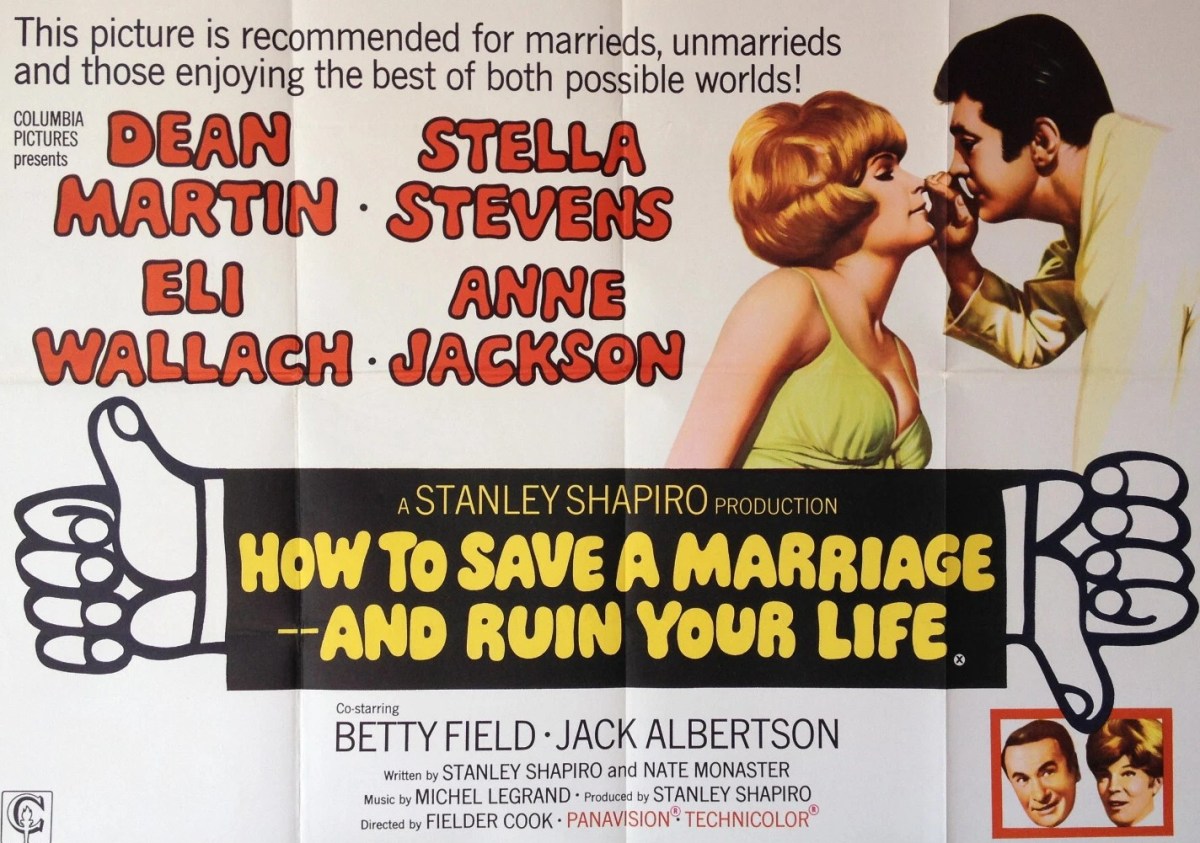
How to Save a Marriage…And Ruin Your Life (1968) ****

Eight years before Michelle Triola struck a legal blow for women’s rights in her ground-breaking “palimony” case against Lee Marvin, this highly under-rated comedy – with none of the highbrow or earnest pontificating usually associated with issue movies – points the world in that direction. This was high concept before the word was invented. Would have made a perfect bittersweet Doris Day-Rock Hudson concoction especially as mistaken identity is at the heart of the matter. And the final half-hour where feminist revenge kicks in achieves more in the male-comeuppance-game than either the meretricious Three in the Attic (1968) or the more high falutin’ Carnal Knowledge (1971).

On top of that it’s hilarious. It’s packed with one-liners, zingers and brilliant repartee and the second section where revenge unwinds is an absolute hoot. Given, star Dean Martin (5 Card Stud, 1968) could have worked a tad harder on his comic timing, While he leans away from the tough guy of his recent spate of westerns maybe he leans too far into his Rat Pack-style persona. But Eli Wallach (The Magnificent Seven, 1960) and Stella Stevens (Sol Madrid/ The Heroin Gang, 1968), scarcely known for their comedic chops, more than make up, with Stevens especially good at channelling her interior Doris Day when that star screwed up her eyes and started given the male what-for.
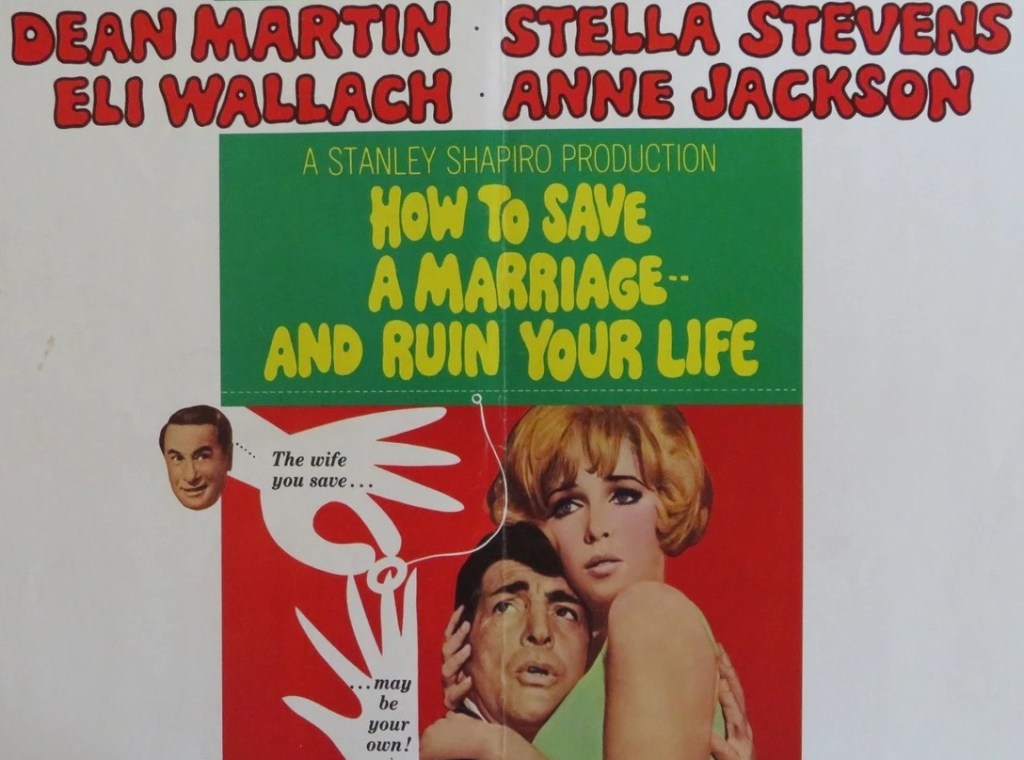
There’s a brilliant sub-plot revolving around a grave that is a delight all on its own. Screenwriter Stanley Shapiro was the genius behind Pillow Talk (1959), Lover Come Back (1961) and That Touch of Mink (1962) and he knew when to play it subtle, embrace slapstick or go straight for the jugular.

Call it “mistress-alimony” or “mistress pension” or just the unfairness of the male gaze when it decides that the recipient of its gaze now lacks the physical attributes which attracted the gaze in the first place. Swollen ankles, a thickening of the waist –  and a decade of service as a mistress is over and the lady in question, a decade older, physical attributes diminished, comes away from the relationship with virtually nothing, certainly nothing like security or the alimony to which a divorced wife would be entitled.

How we get to this point is mistaken identity. Playboy commitment-phobe David Sloane (Dean Martin) tries to help resolve the marital problems of buddy Harry Hunter (Eli Wallach) by taking out of temptation’s way Harry’s mistress. Unfortunately he mixes up Harry’s real mistress Muriel Laszlo (Anne Jackson) with one of Harry’s very attractive employees Carol Corman (Stella Stevens), a woman of principle who refuses promotion when it means sleeping with her supervisor.
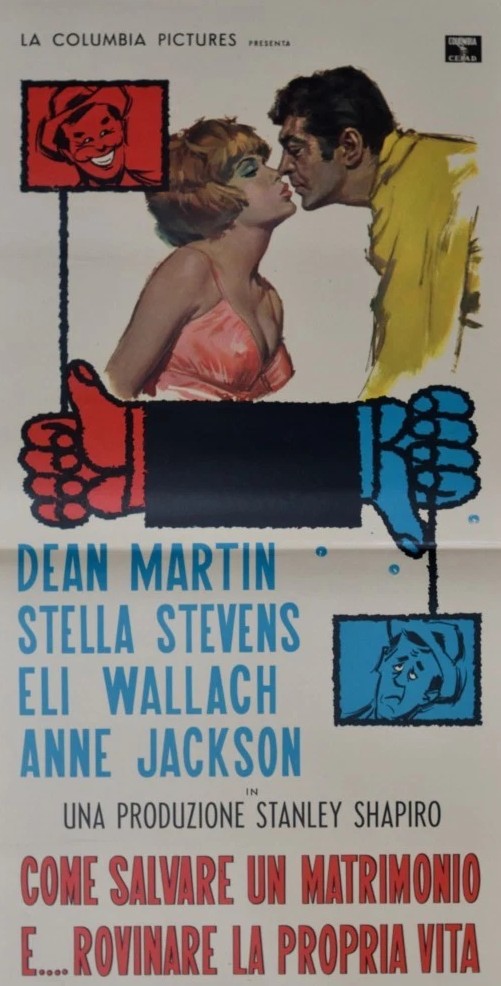
Unfortunately, Carol falls in love with David, especially after he spins her a line that he can’t marry again for fear of betraying his wife Edna, who died the day after they married. Equally unfortunately, Harry decides to make up with wife Mary (Katharine Bard) and take her on a second honeymoon. To ensure no backsliding, David helps Harry draft a nasty legal letter telling Muriel to quit the apartment.

Just about at the same time as David realizes he’s made a mistake over the mistress, Carol discovers that “Edna” is not David’s wife. Egged on by a disconsolate Muriel, who is being turfed out after years of adoring service, Carol takes revenge in hilarious fashion. She pretends to be the easily-seduced woman that David has convinced Harry she is, resulting in her pretending to sleep with David’s business partner and two of his chums, resulting in David, taking physical offence at such perceived betrayal, being jailed and locked up in a sanatorium. Then she launches a one-woman picket line outside his office, standing up for deserted mistresses everywhere.

Meanwhile, Harry’s second honeymoon lasts only a few hours and he tries to get Muriel back, whereupon the women are inspired to force him to sign a mistresses’ charter whereby they are compensated for loss of mistress-hood and heavily rewarded for remaining in the relationship.

The stars have a great time. Director Fielder Cook (Prudence and the Pill, 1968) can’t believe his luck in landing such a sassy script, co-written by Nate Monaster (That Touch of Mink).

Too funny to be tabbed a message picture but it certainly makes its points in style.
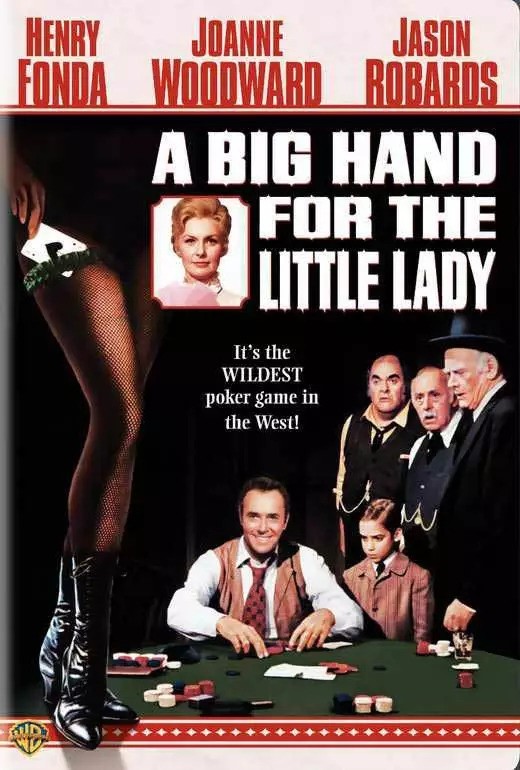
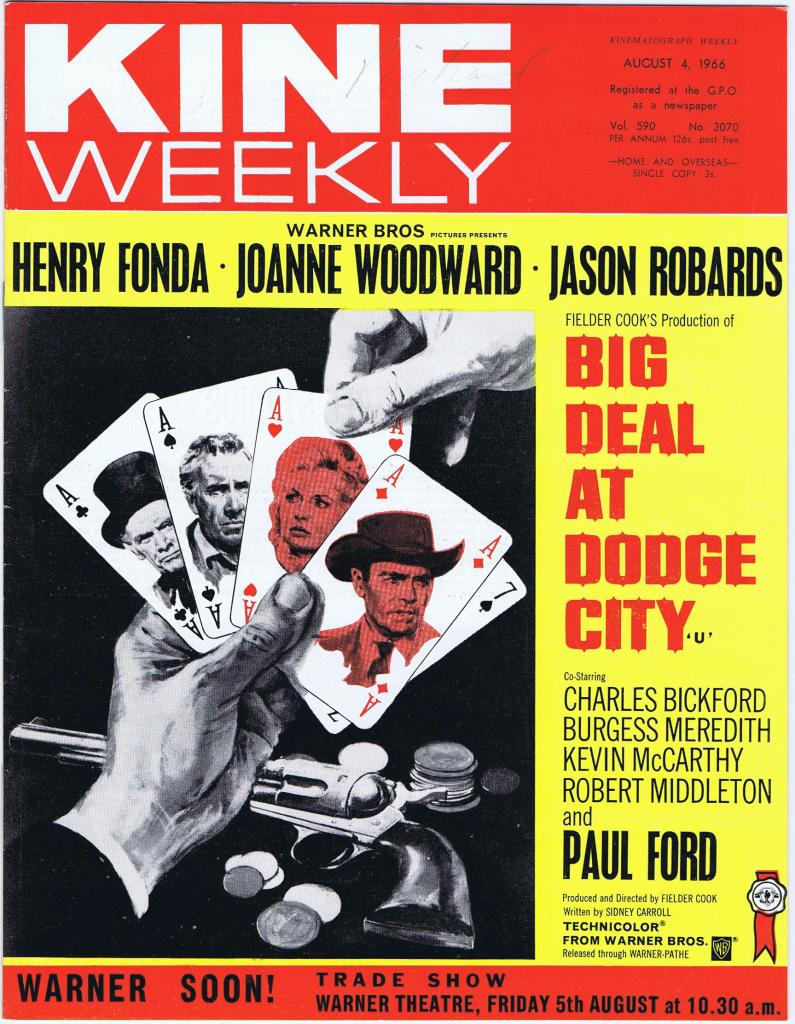
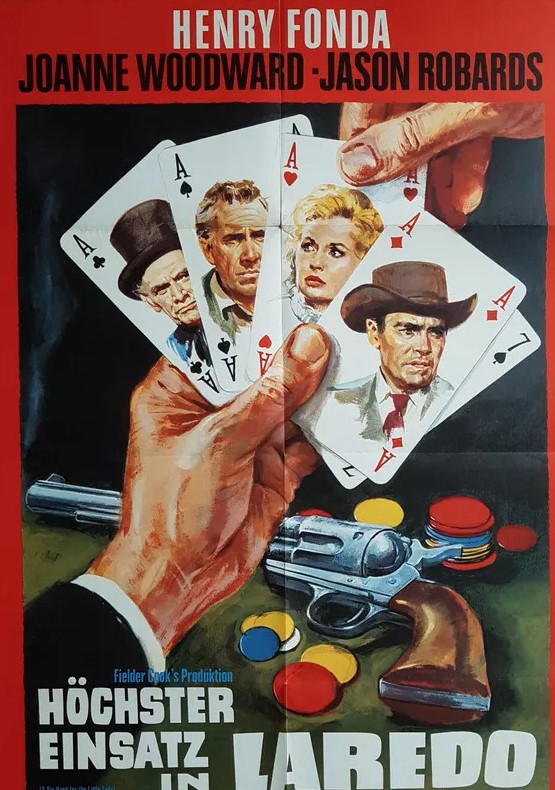
A Big Hand for the Little Lady / Big Deal at Dodge City (1966) ****

An absolute delight. Thrilling too. Knocked sideways in the box office battle of the poker pictures by the purportedly classier The Cincinnati Kid (1965) with Steve McQueen in one of his most iconic roles facing off against Edward G. Robinson and underrated ever since. But this more than holds its own against the Norman Jewison number. In part because of terrific untypical performances from Once Upon a Time in the West alumni Henry Fonda and Jason Robards.

I get my daily movie fix late at night when the rest of the house is abed and disinclined to share my interest in old movies but when at a critical point my DVD gave out instead of, as would be more sensible, giving up and going to bed, I spent ten minutes frantically scouring YouTube for a copy, even glancing hopefully at one in a foreign language, and expended the same time again tearing apart my DVD collection, which at one point had been sensibly arranged alphabetically until too many additions made nonsense of that arrangement, until I found another copy. Finally, I settled down, even later at night, to watch an enthralling finale.

A more blatant example of artistic license you couldn’t find. The movie is set in Laredo, not Dodge.

Fielder Cook (Prudence and the Pill, 1968), with only a handful of movies to his name and generally considered no great shakes as a director, plays this hand brilliantly. It reeks of mystery, as a poker table should. We begin with an undertaker’s coach racing from town to town and  house to house collecting with urgency a disparate collection of people delivered to the backroom of a hotel in Laredo, Texas, where, nonetheless, the townspeople are excited beyond belief. It’s the long-awaited poker game between the five richest men in the territory.

As he stuffs more cash in the safe and pulls out bigger and bigger batches of poker chips, the hotel owner (James Berwick) is constantly badgered by his exuberant customers as to who is winning. He remains mute on that score until Doc Scully (Burgess Meredith), heading out to deliver a baby and a foal, asks the same question. Such is the medic’s local standing, the owner gives a reply. This means something to the onlookers but not to us because we have very little concept of the players.

And that remains largely the case beyond some good-humored and occasionally tense banter when we learn that Drummond (Jason Robards) abandoned his daughter’s wedding to get here and that lawyer Habershaw did likewise in court leaving his client to defend himself. And the game itself is boisterous, devoid of the cathedral-like atmosphere of The Cincinnati Kid.

But when a relatively impoverished newcomer Meredith (Henry Fonda) enters the fray the situation turns ugly as he is besieged by insult and verbal abuse as his paltry stake gets smaller and smaller. When he takes his last $3,000 – the whole sum intended to provide a new future for his wife and son on a farm near San Antonio (“San Antone” he quickly learns is the correct pronunciation) – he discovers that he is undone as his fellow gamblers raise the bidding beyond his amount.

At which point he collapses, potential heart attack. Doc Scully hauls him off on a makeshift stretcher. The money will be defaulted unless upstanding wife Mary (Joanne Woodward) of the anti-gambling fraternity can be called upon to play out his hand in a game of which she is completely ignorant and, more to the point, raise the cash to be allowed to continue.

The players sneer at what she has to offer. The richest men in the territory have no need, even at a cut-price offer, of a gold watch and a new team of horses and wagon. For a moment you think Mary, seeing her family fortunes going downriver, is going to offer herself as collateral, but instead, she decides to try and get a loan, based on the hand she holds, from the bank. You might as well try to get blood out of a stone from bank owner Ballinger (Paul Ford). Maybe she has something worth more to him as collateral than watch and wagon.

I won’t spoil it for you by revealing the ending but it’s well worth the wait and the mystery.

I was knocked out by Henry Fonda’s acting. Usually, he is gritty, upstanding, sometimes the last man standing, and his smile is often more of a grimace. Here, he is nervous, jumpy, anxious, and desperate, the reformed gambler unable to resist temptation, persuading himself that this one last game would be worth all the broken promises given his wife. His smile is so ingratiating you wouldn’t want anything to do with it. As regards the temptation facing addicts it’s on a par with the heroin victim of The Man with the Golden Arm (1955) and the alcoholics of Days of Wine and Roses (1962).

With him removed from the equation, the acting lot falls to Joanne Woodward (A Fine Madness, 1966). She’s the prim opposite and doesn’t overplay her hand, restraining as best possible her confusion and fear. And this is a very fine turn from Jason Robards, most commonly accused of over-acting or under-acting, and here he gets the balance just right, volubility matched by arrogance, and a determination not just to win but to demolish an opponent.

A raw truth is expored here. Winners don’t just like winning – the medal, the lap of honor, the pile of cash, all that jazz – but they enjoy more seeing the defeat of their opponent, savoring that disgrace. This ain’t the kind of game that ends in a handshake or embraces sportsmanship. This is real in a way that The Cincinnati Kid is not.

There are a couple of familiar faces, John Qualen (The Sons of Katie Elder, 1965), and Charles Bickford (Days of Wine and Roses) in his final movie. The rest of the cast is largely anonymous, there to add febrile excitement, with hollering and racing around, desperate to keep up with the action.

Screenwriter Sidney Carroll had been here before, the big stakes, no-hoper taking on the world in The Hustler (1961) but he and Cook had managed a small-screen rehearsal of this picture a few years before on U.S. television in the DuPont Show of the Week series.

Every now and then, as I’ve maybe mentioned before, one of the joys of this little odyssey into the world of the 1960s movie is that you come across a little gem.

This one sparkles.

Discover WordPress

A daily selection of the best content published on WordPress, collected for you by humans who love to read.

The Atavist Magazine

by Brian Hannan

WordPress.com Blog

News, Tips & Website Tutorials