Kaleidoscope (1966) ***

Amazing the tension that emanates from the turn of a card. Or, more correctly, waiting for one. Only problem is we’re two-third through the movie before high-stakes poker begins – the pot nudging £250,00 (close on a cool £5 million now). Mostly, the earlier tension derives from not knowing what the hell is going on in this enjoyable thriller made at the height of the Swinging Sixties as playboy gambler Barney (Warren Beatty), a walking Carnaby St model driving an Aston Martin DB5, tilts the odds dramatically in his favor.

Barney is a gambler but the problem with gambling is the odds. They can be against you too much. So Barney decides to turn himself into a burglar, the kind that can clamber over rooftops, abseil between buildings, and break into – a printing business called Kaleidoscope. This just happens to print the playing cards supplied to all the major European casinos. So Barney does a little doctoring of the master printing plates. Bingo, the odds are a bit more even now that he knows what cards are coming out of the shoe – he plays chemin de fer (as it is known in posh casinos, pontoon or 21 to you and me).

While cleaning up he bumps again into fashion designer Angel (Susannah York) – their original meet-cute taking place in a traffic jam – who he dated once in London. Unbeknownst to him, she is on a scouting mission, looking to snare the kind of high-rolling gambler who can take on and completely fleece the drugs kingpin Harry (Eric Porter) being pursued by cop Manny (Clive Revill), her father who, rather than waste so much time collecting the required evidence to put the villain behind bars, decides it would easier done by making him broke. Unable to pay his debts, some other villain would put him out of business in the traditional cemented-boot fashion.

It takes a while for the movie to line up all its ducks in a row, mainly by holding on to the information the audience requires. But the audience is privy to details of the way Manny works that Barney is not. Even for ruthless villains, Manny has a peculiar calling card, one that would make any gambler think twice about entering his lair. Of course, it doesn’t take long for Manny to rumble Barney’s game so the stakes are much higher than the charming gambler imagines.
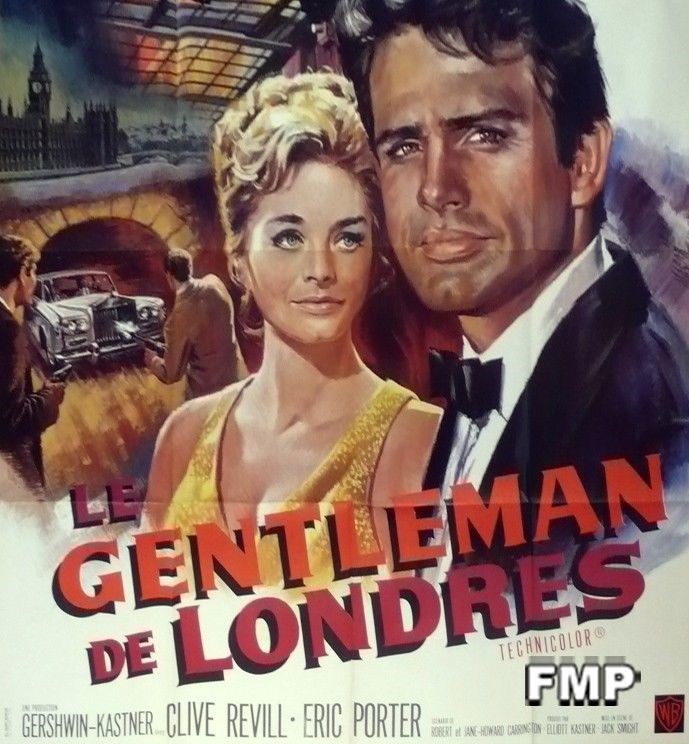
Throw in as much fashion as London was capable of generating at this time, the burgeoning romance, some exotic European locations, a castle with a moat, and the usual tourist guide stuff of red buses, Big Ben, Piccadilly Circus, pubs and Tower Bridge and you have all the ingredients of an easy on the eye thriller.

It’s a movie that relies on star power but Beatty and York deliver. That is, if you don’t need Beatty to do much more than be Beatty, all teeth and charm. At this point in his career Beatty looked as if his career was fast approaching its end. The box office success of Splendor in the Grass (1961) had been followed by a string of flops, romantic dramas and comedies that should have had audiences queuing up plus an occasional wild card like Arthur Penn’s Mickey One (1965), the biggest flop of all. He does make an engaging crook, and he never loses his screen charisma here, but there ain’t quite the right number of twists that moviegoers weaned on the likes of Topkapi (1964) had come to expect.

Hollywood had been doing its best to position Susannah York as a top box office attraction and she had snagged the female lead in The 7th Dawn (1964) opposite William Holden and Stanley Baker in Sands of the Kalahari (1965)  but she was recovering from the colossal flop of Scruggs (1965) by ‘poet of the cinema’ David Hart.  Kaleidoscope offered  the kind of role York could do with her eyes closed. So while the screen pair were not exactly sleep-walking it was not the kind of story that was going to create sparks.

Character actor Clive Revill (Fathom, 1967) and Eric Portman (The Pumpkin Eater, 1964) take more leeway with their roles, the latter almost chewing he scenery, the former content with just chewing his lips. Look out for Jane Birkin (Blow-Up, 1966) and British television stalwarts Yootha Joyce, George Sewell and John Junkin. 

The title would have been more enigmatic, original meaning of images twisted out of shape, had it not also applied, straightforwardly, to the card-making company. Giving Harry the surname of Dominion seems overkill.

Director Jack Smight (No Way to Treat a Lady, 1969) came to this after twisty private eye picture Harper/The Moving Target (1966), a big hit starring Paul Newman. This is too lightweight a feature to command such interest, but he does keep the story rolling along and it’s an effortless watch and it has a certain offbeat quality. The screenplay was fashioned by Robert Harrington and Jane-Howard Harrington, making their movie debut, who also co-wrote Wait until Dark (1967). It was also the debut for Winkast Productions, the Jerry Gershwin-Elliott Kastner production team who went on to make Where Eagles Dare (1968).
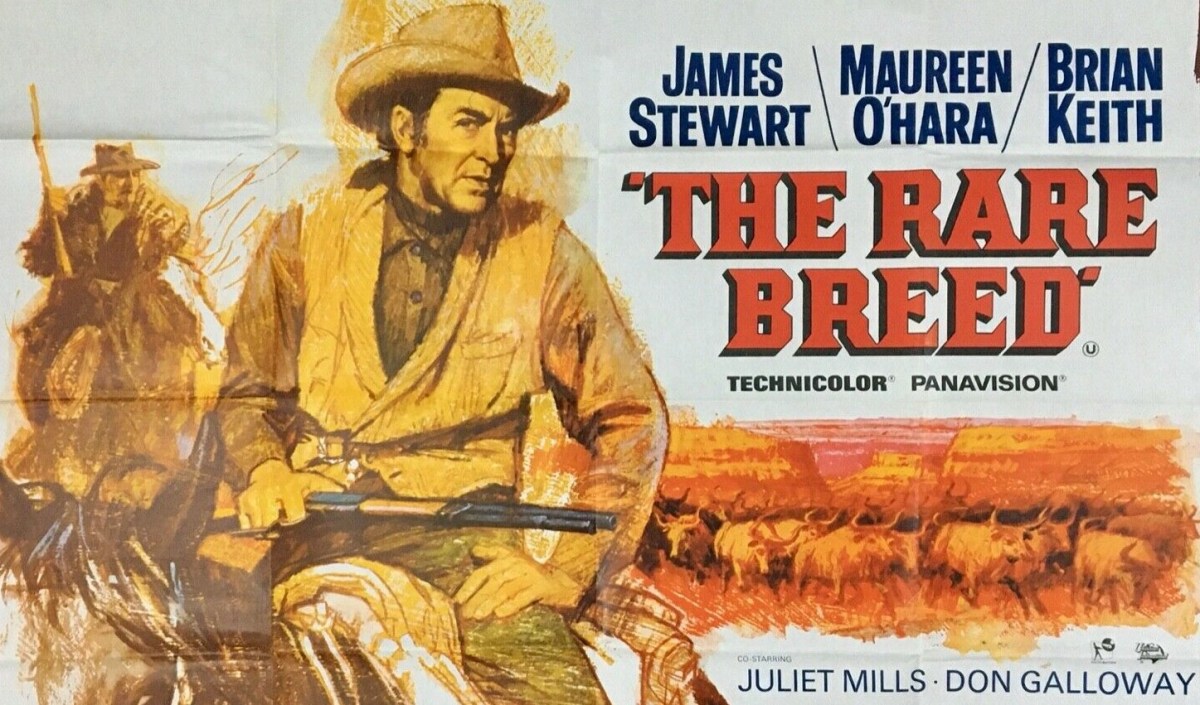
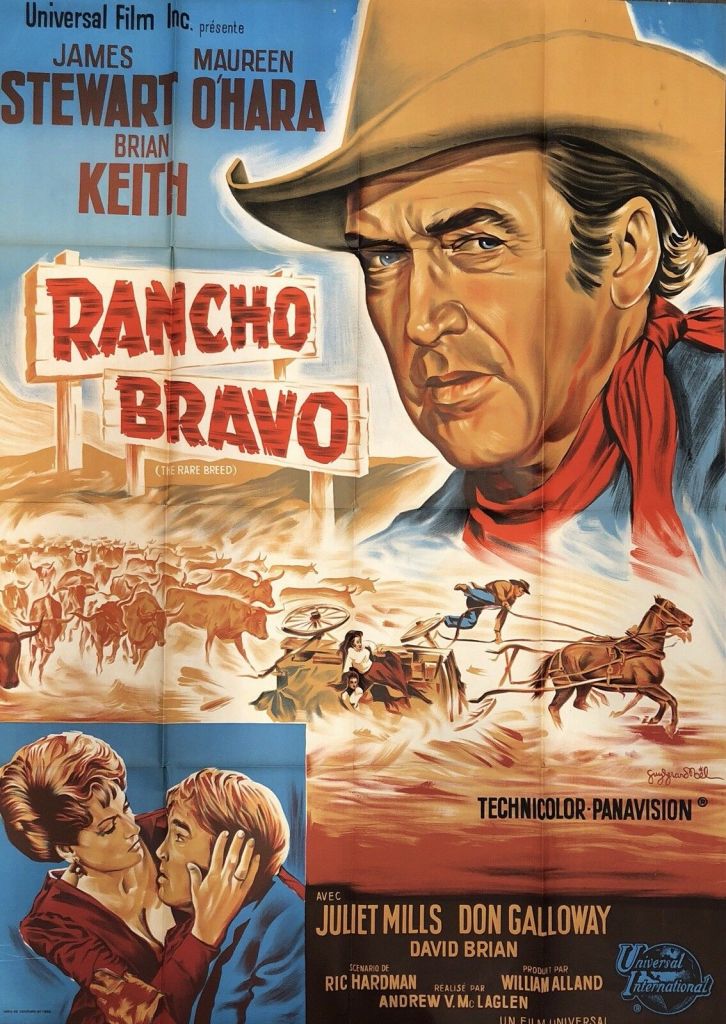
The Rare Breed (1966) ****

Classic themes of hope, resilience and redemption influence director Andrew V. McLaglen’s follow-up to Shenandoah (1965). Add in a battle against widespread misogyny, thieves falling out, a brilliant stampede and a forlorn hunt that has echoes in the decade-old The Searchers. But other more serious issues are explored. At the film’s core is the question of how a nation built on innovation refuses to countenance change, in other words a country where hierarchy (inevitably male) has begun to impose its preference and how those who suggest alternatives must not just buckle to that collective will but admit they are wrong, a problem that in the half century since the film was made has not gone away.

Widow Martha (Maureen O’Hara) and daughter Hilary (Juliet Mills) bring to auction her white-face Hereford bull, a British institution, the first of its kind to be imported (for breeding purposes, you understand) to America where hardy longhorn cattle are the dominant species. Despite being insulted for her temerity in challenging the existing order, Martha is astonished to receive a winning bid of $2,000, only to realize this comes with conditions attached, the buyer assuming his largesse will also win her, a sharp elbow to the ribs dissuading him of this notion.

Determined to see the bull delivered to the Texan ranch, Martha decides to accompany the animal on its journey. Wrangler Sam (James Stewart), hired to transport it instead plans to steal it and to keep the dupe sweet until the time is ripe encourages her to develop romantic ideas towards him. When another cowboy, Simons (Jack Elam), with eyes on the same four-legged prize causes confrontation the game is up, though Sam sees the trip through.

Rancher Bowen (Brian Keith) belittles the Hereford bull although viewing Martha as a better proposition, but the only way to discover whether the beast can survive in the territory is to let it loose on the open range where it was likely to encounter blizzards (not so rare in Texas as you might think). Once the bull is set free, the movie shifts onto a question of endurance, not just of the animal, but of the mindset of Martha and Sam. Her faith in her insane idea is tested to the limit and, almost in compensation, a woman needing security/protection et al, she comes to appreciate the attentions of a less wild Bowen.

Both central characters have much to lose and much to face up to. Martha, in accepting she was wrong and letting Bowen into her life, will almost certainly be surrendering her independence (she can still be feisty but that’s not the same thing). It’s a testament to her acting that you can see that faith wilting. Sam, a conniving thief whichever way you cut it (although the storyline gives him something of a free pass), has to face up to the fact that he was planning to con a woman out of the precious possession on which her precarious future was built.

The scenes between Martha and Sam are superb, especially when he is grooming what he thinks will be an easy dupe. Sam, in a purgatory of his own making, almost certainly an outcast were the truth more widely broadcast, attempts to expiate his guilt.  

James Stewart and Maureen O’Hara had worked together in Mr Hobbs Takes a Vacation (1962) and there is no denying their screen chemistry. But there’s an innocence that O’Hara rarely displays, the woman in love suppressing those emotions not denying them as perhaps in The Quiet Man (1952). She’s both independent and, if the right man comes along, happy to accept his protection (from the male predators of the West), while at the same time keeping him on the right track and sorting out his world of misshapen priorities. There are some brilliant scenes where something else is going on story-wise and O’Hara is internalizing some deeper emotion entirely. It’s an acting coup for an actress like Maureen O’Hara who would never give up to convey so well a character on the verge of surrender.

This is one of James Stewart’s best roles, far removed from the principled hero of Shenandoah (1965) and returning him closer to the shifty character of Vertigo (1958) adept at self-justification. In the scene where he is found out by O’Hara he is outstanding. It’s not a given that the character will find a way to turn things round and his efforts to redeem himself make the latter part of the picture emotionally involving, especially as this is countered by O’Hara’s own internal battle.

It’s worth pointing out that although the narrative mainly concerns the two main characters, the background is filled with ruthlessness. Not only does Sam feel no compunction about stealing a bull worth $2,000, we first encounter Bowen’s son Jamie (Don Galloway) when he is making off with a herd of his father’s longhorns. The cattle barons use their wealth to “buy” a classy woman and cheat cowboys. And there is further murder along the way.

I was going to mark this picture down for the comedy which seems to amount to endless brawls but I wondered if modern audiences, reared on the never-ending fistfights and wanton destruction that usually indicated the finale of a superhero picture, would accept it quite happily, perhaps even welcome it. While Brian Keith (The Deadly Companions, 1961) stands accused not only of one of the worst Scottish accents committed to the screen – and these days of cultural appropriation – that does not take away from a character who, behind the beard, transitions from loathsome father to something more approaching humanity, in other words wild man who realizes the benefits of civilization.  

In fact, the broad comedy serves to obscure a film full of brilliant, cutting, funny lines, generally delivered in scathing tones by the woman.  O’Hara to Stewart: “You may bulldog a steer but you can’t bulldog me.” Stewart to O’Hara: “Can I help you with that” and her response “No, they’re clean and I’d like to keep them that way.” And that’s not forgetting the sight of the cowboys whistling British national anthem “God Save the Queen” in order to bring the bull to heel.

I forgot to mention the romantic subplot involving Hilary – in case you were wondering what role she had in all this – and Bowen’s estranged son, Jamie. Juliet Mills (Avanti!, 1970), older sister of child star Hayley, is excellent as the sassy daughter of a feisty woman, Don Galloway (Rough Night in Jericho, 1967) less of a stand-out in his debut, in part because he has to subsume his rage against his father.

Jack Elam (Once Upon a Time in the West, 1968) is good as always and you will spot in smaller parts Ben Johnson (The Undefeated, 1969), Harry Carey Jr. (The Undefeated), Barbara Werle (Krakatoa, East of Java, 1968) and David Brian (Castle of Evil, 1966). John Williams, masquerading as Johnny Williams, wrote the score.

Setting the comedy aside, this is a more intimate film from director Andrew V. McLaglen compared to the widescreen glory of The Undefeated and the intensity of Shenandoah and for that reason tends to be underrated. There are some wonderful images, not least Sam carrying the injured Jamie in the style of Michelangelo’s La Pieta – an idea stolen by Oliver Stone for Platoon (1986) – but mostly McLaglen concentrates on the actors.

Bus Riley’s Back in Town (1965) ***

Given Ann-Margret receives top billing I had automatically assumed she was the Bus Riley in question. Although decidedly the female lead, her role is secondary to that of a sailor returning to his small town. The backstory is that Bus – no explanation ever provided for this nickname – Riley (Michael Parks) had been too young to marry the gorgeous Laurel (Ann-Margret) before he joined the U.S. Navy and in his absence she married an older wealthy man.  

Bus dithers over his future, re-engages with his mother and two sisters and finds he has not lost his attraction to Laurel. Although a handy mechanic, he has his eye on a white collar  career. An initial foray into becoming a mortician founders after sexual advances by his employer (Crahan Denton). Instead he is employed as a vacuum salesman by slick Slocum (Brad Dexter).  

While his sister’s friend Judy (Janet Margolin) does catch his eye, she is hardly as forward or inviting as the sexy Laurel who crashes her car into his to attract his attention. But the easy sex available with Laurel and the easy money from exploiting lonely housewives trigger a crisis of conscience.

Perhaps the most prominent aspect is the absence of good male role models. Bus is fatherless, his mother (Jocelyn Brando) taking in boarders to meet her financial burden – including the neurotic Carlotta (Brett Somers) – and while younger sister Gussie (Kim Darby) adores Bus the other sister Paula (Mimsy Farmer) is jealous of his freedom. Judy’s father is also missing and her mother (Nan Martin) a desperate alcoholic. The biggest male players are the ruthless Slocum and Laurel’s husband who clearly views her as a plaything he has bought. The biggest female player, Laurel, is equally ruthless, boredom sending her in search of male company, slithering and simpering to get what she wants.   

Scandal is often a flickering curtain away in small towns so it’s no surprise that Bus can enjoy a reckless affair with Laurel or that a meek mortician can get away with making his desires so quickly apparent, or that behind closed doors houses reek of alcohol or repression. A couple of years later and Hollywood would have encouraged youngsters like Bus and Laurel to scorn respectability in favor of free love. But this has a 1950s sensibility when finding a fulfilling job and the right partner was preferred to the illicit.

In that context – and it makes an interesting comparison to the more recent Licorice Pizza that despite being set in the 1970s finds youngsters still struggling with the difference between sex and love – it’s an excellent depiction of small-town life.

While Michael Parks (The Happening, 1967) anchors the picture, it’s the women who create the sparks. Not least, of course, is Ann-Margret (Once a Thief, 1965), at her most provocative but also revealing an inner helpless core. And you can trace her screen development from her earlier fluffier roles into the more mature parts she played in The Cincinnati Kid (1965) and more especially Once a Thief (1965).

In her movie debut Kim Darby (True Grit, 1969) is terrific as the bouncy Gussie and Janet Margolin (David and Lisa, 1962) invests her predominantly demure role with some bite. Jocelyn Brando (The Ugly American, 1963) reveals vulnerability while essaying the strong mother. Mimsy Farmer (Four Flies on Grey Velvet, 1971) also makes her debut and it’s only the second picture for David Carradine (Boxcar Bertha, 1972). Brad Dexter (The Magnificent Seven, 1960) is very convincing as the arrogant salesman.

It’s also the first film for Canadian director Harvey Hart (The Sweet Ride, 1968) and he has some nice visual flourishes, making particular use of aerial shots. The scenes of Bus trudging through town at night are particularly well done as are those of Laurel strutting her stuff.

It was also the only credit for screenwriter Walter Gage. That was because Gage didn’t exist. Like the Allen Smithee later adopted as the all-purpose pseudonym for pictures a director had disowned, this was the name adopted when playwright William Inge (Oscar-winner for Splendor in the Grass, 1961) refused to have anything to do with the finished film.

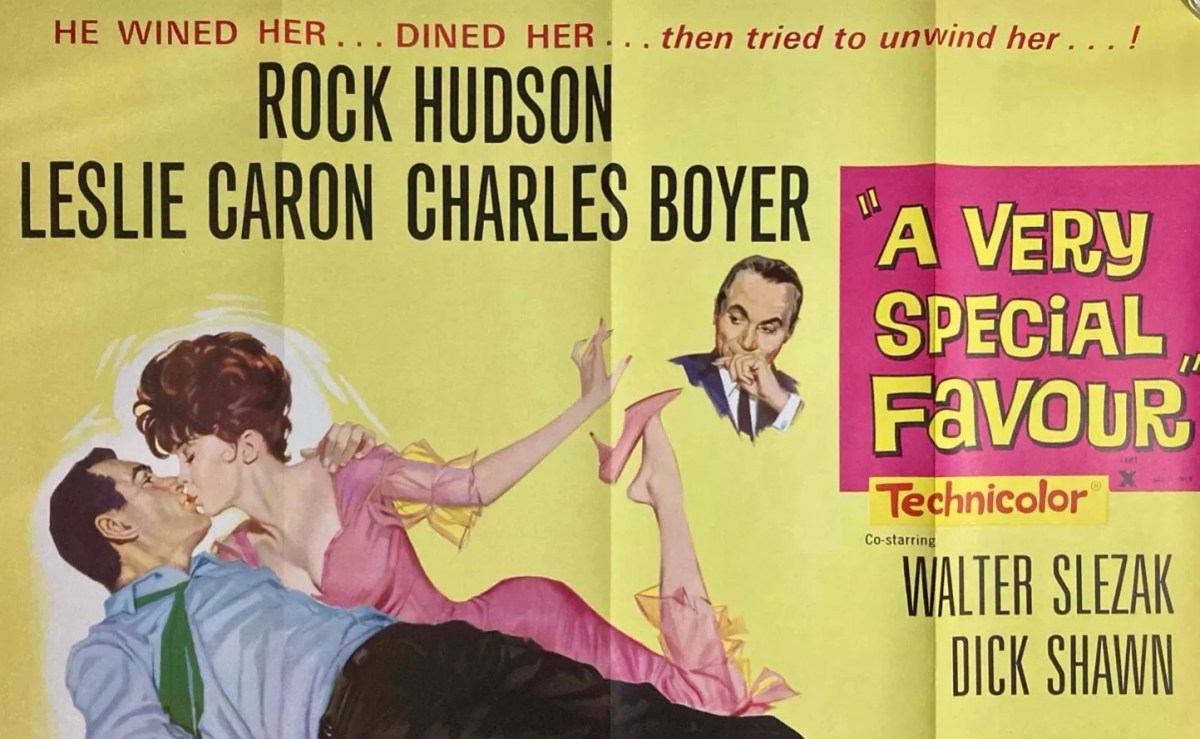
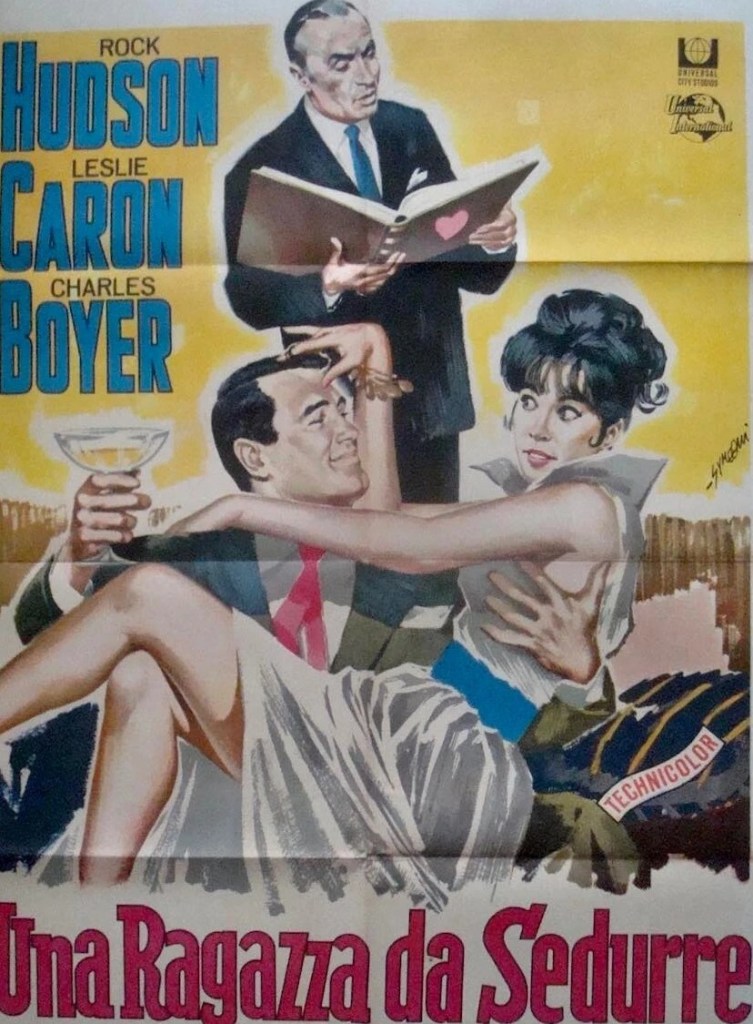
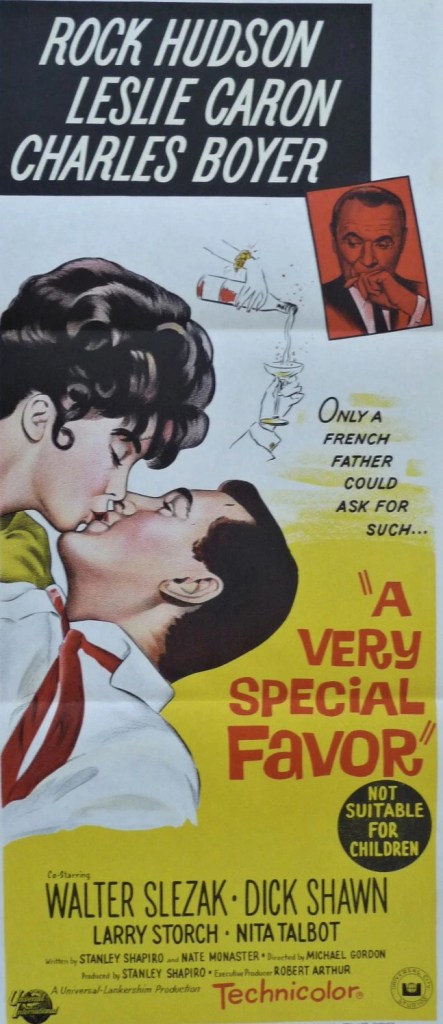
A Very Special Favor (1965) ****

Surprisingly funny for a movie that’s long been out of favor. Starring a Rock Hudson (Seconds, 1966) who was just beginning to lose his grip on the marquee after an incredible run of box office success and Leslie Caron (Guns of Darkness, 1962) who had always seemed to just miss out on the top echelons of audience approval.

You can see why this had rapidly lost whatever appeal it originally possessed and that a contemporary crowd would turn its nose up at a man that has such success with the ladies that he has a whole stream of women carrying out his most basic chores. Except that the tale is really about him getting his come-uppance and everyone enjoys that kind of narrative.

Paul (Rock Hudson) only has to look at a woman and she melts. His job, such as it is, though he is wealthy, is to use his charm to commercial advantage. We open with him in a French court winning a case it transpires because he has seduced the female judge. The opposing lawyer Charles (Charles Boyer) encounters Paul on the way home, observing the American batting back stewardesses with ease, and the Frenchman enlists him to seduce his daughter Lauren (Leslie Caron), so much of a career woman, a high-flying psychologist,  that her father fears she will turn into an old maid.

But Lauren already has a fiancé, Arnold (Dick Shawn) who, like Paul’s harem, is at her beck and call, carrying out the most basic tasks for her. Paul pretends to be a patient, his fake problem being his irresistibility which has caused a girlfriend to commit suicide. Lauren shows very little sign of falling for Paul’s charm. In order to prove that they are making progress, they go to a restaurant. To Paul’s astonishment, Lauren passes out from drinking too much champagne. He takes her back to her apartment and in the morning pretends that she has succumbed to his charms.

So now the twists come. Lauren is upset to discover that she has been seduced by a man she was determined to keep her distance. But when she finds out the truth, the tables are turned. She invents a Spanish lover which knocks Paul’s ego to hell. Plus she accuses him of impotence. Then he turns the tables again, and using one of his many fans – and a ploy that would prove somewhat ironic given Hudson was a closet gay – switchboard operator Mickey (Nita Talbot), makes Lauren so jealous that eventually he contrives to win her back and the two determined singletons, against all odds, get married.

There’s some marvellous stuff here, some slapstick at which Caron is surprisingly adept, but mostly it’s a tale of flustered feathers and vengeance for perceived humiliation, beginning with Boullard who is so annoyed that any of daughter of his is a stuck-up prude. Paul can’t believe Lauren isn’t falling at his feet and equally she is infuriated that Paul isn’t another male slave like her fiancée.

There’s a great turn from Dick Shawn as the slave and his mother (Norma Varden) who keeps on encountering Paul at his least winning. It’s a relief to see Rock Hudson not playing the stuffed shirt of previous comedies and for Leslie Caron not to be a hapless heroine. So it plays as a more effective modern comedy.

Not everyone was so keen on Caron, complaining about the lack of chemistry between the leads and that Paul would never get hooked by such a cold fish. But I disagree. Sure, it called for a lot more from the audience that the leading lady wasn’t the usual ultra-feminine model, but that made the initial romance more believable. Initially, Paul doesn’t fall for her and is seducing her as a “very special favour” to her father but once he sees the other side of her personality he changes his tune.

But I would hazard a guess that, mostly, people were annoyed with Caron because she wasn’t Doris Day and that, while this follows one formula, it steers clear of the Hudson-Day formula in making Caron a high-flying career woman. Dick Shawn (Penelope, 1966) leads an able supporting cast.

Directed by Michael Gordon (Texas Across the River, 1966) from a script by Stanley Shapiro (Bedtime Story, 1964) and Nate Monaster (That Touch of Mink, 1962).

Worth a look.

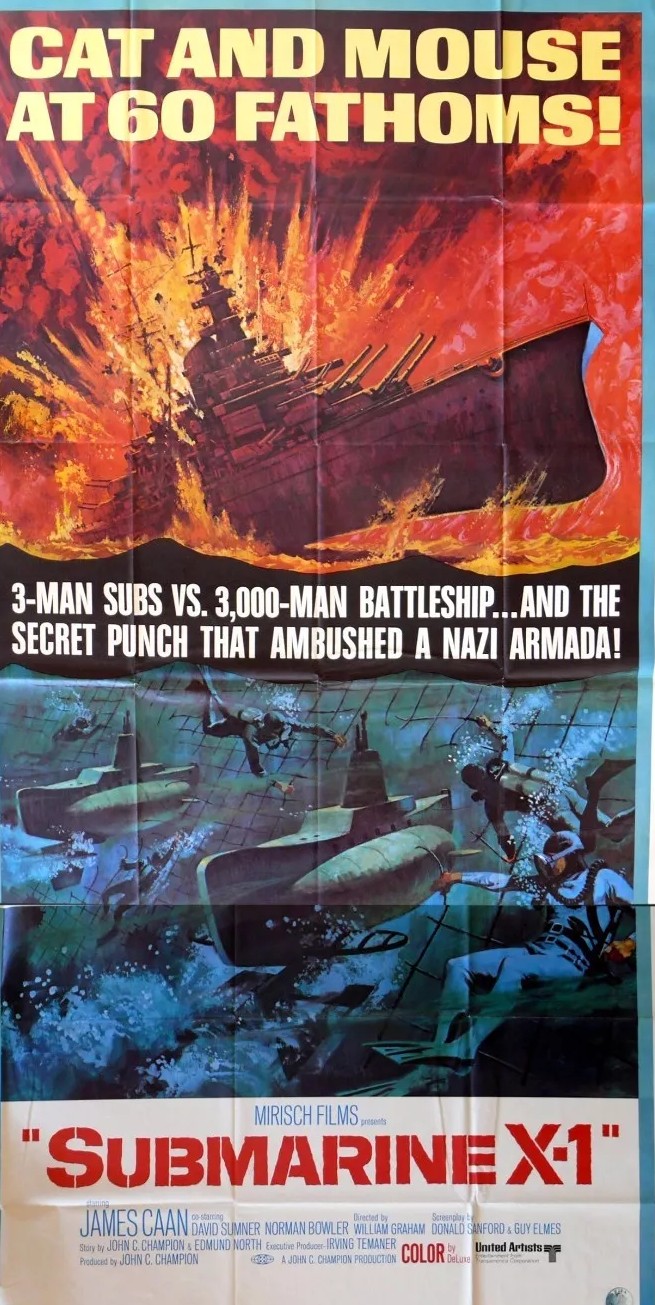
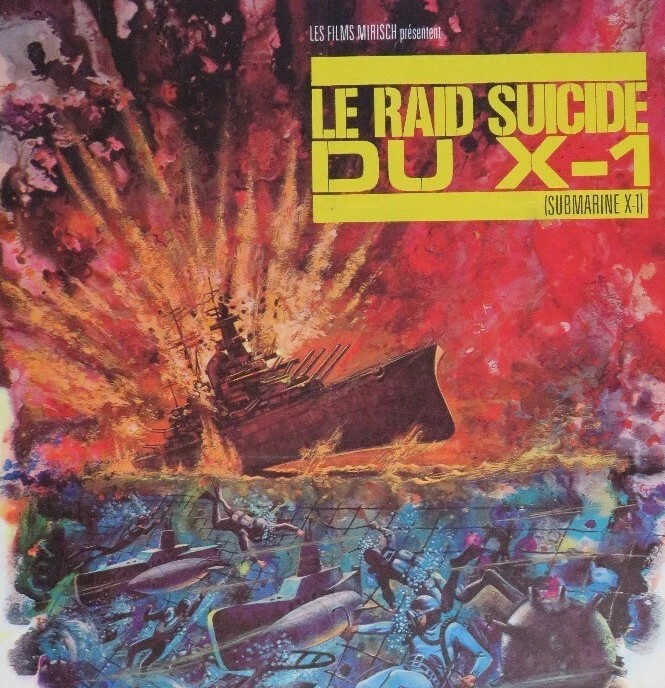
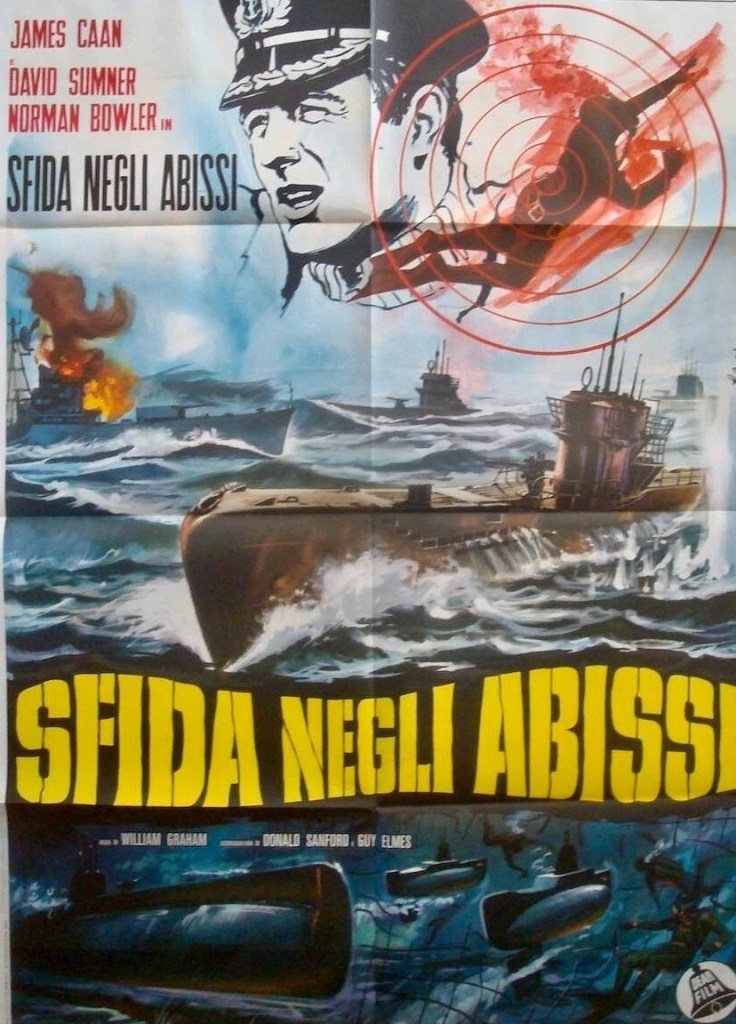
Submarine X-1 (1968) ***

One of the tropes of the World War Two mission picture was that it afforded plenty scope to boost the careers of supporting players – The Dirty Dozen (1967) being the best example given it boasted Charles Bronson, Ernest Borgnine, Donald Sutherland (the denoted breakout star), Jim Brown (another breakout) and Telly Savalas.  Never mind that here you could hardly find an interesting face, never mind well-written character in this one, you were struggling to find the James Caan as defined by The Godfather (1972).

Even with production shrinking and the industry throwing more and more money at the actors who supposedly guaranteed box office, Hollywood was still trying to blood new talent. But most failed to connect – Burt Reynolds was another who took a helluva long time, by movie standards, to find a fanbase.

Though Caan had been chosen by Howard Hawks to headline Red Line 7000 (1965) that had sunk without trace and a supporting role in the director’s El Dorado (1967), while exposing him to a larger audience, had not, as yet, pushed him that far up the Hollywood tree, top billing in neither Robert Altman’s Countdown (1967) nor Games (1967) doing much to bolster his marquee credentials.

His career could go either way – fizz and pop in a part that provided the opportunity to create a defined screen persona or fizzle and die after using up too many Hollywood lives. We all know which way it went so this could be considered a testing ground. And he reins in his screen persona so much he could almost qualify for a Stiff Upper Lip Award.

As ever, Yanks in many World War Two pictures set in Britain had to come in disguise.  Commander Bolton (James Caan) is acceptable in the Royal Navy if he’s Canadian and a volunteer rather than American, though you’d be hard put to distinguish the nationalities by Caan’s accent.

It was also a given of this type of war picture that the recruits hated their leader with a vengeance – Lee Marvin in The Dirty Dozen leading the field, though you could equally point to Frank Sinatra in Von Ryan’s Express (1965) – “why did 600 Allied prisoners hate the man they called Von Ryan more than they hated Hitler” ran the tagline – and William Holden in The Devil’s Brigade (1968). .

Here, Bolton is in hot water for obvious reasons. He was a poor leader, causing the deaths of the majority of his crew on the 50-man submarine Gauntlet after an ill-chosen attack on the German battleship Lindendorf. The movie starts with him and the remainder of the crew staggering out of the water onto dry land. Even when he’s cleared at a tribunal, the stench of incompetence sticks. So it’s any wonder that he’s put in charge of a secret operation with many of the survivors, unless of course it’s the kind of suicide mission that offers redemption.

As it takes forever to reveal, the British have built mini-subs, manned by three men, for a second go at the Lindendorf safely stowed out of the way in the Norwegian fjords. So apart from simmering resentment and mutterings everywhere, the first section is the standard training where, as is par for the course, Bolton is a hard-ass, forcing men dying of exhaustion back into the freezing water to complete the designated exercise.  

Except for incipient rebellion, there’s not much else in the way of plot before we head for the fjords, not even a romance which might make an audience more sympathetic to Bolton. The Germans, somehow, have got wind of this secret mission taking place in a remote part of Scotland (Loch Ness, actually) and send in a parachute team.

On land it’s as dull as ditchwater, but once we head to sea, it’s a more than competent action picture.

If James Caan has learned anything from his first four pictures, it’s not obvious, as mostly what he does is grimace. The supporting stars look as if they knew from the outset that this wasn’t going to do anything for their careers – and with the exception of David Sumner (Out of the Fog, 1962), they made barely a scratch on the movie business.

It didn’t help that the naval operation had been filmed before as Above Us the Waves (1955) starring John Mills (S.O.S. Pacific, 1960) and directed by Ralph Thomas (Deadlier than the Male, 1967).

Directed by William Graham (The Doomsday Flight, 1966) who had just scored a surprising hit with Waterhole #3 (1967). Written by Donald Sanford (The 1,000 Plane Raid, 1969) and Guy Elmes (Kali-Yug, Goddess of Vengeance, 1963).

Torpedoed by the acting, only partially rescued by the action.

One Battle after Another (2025) **

Sorry to be a party-pooper but I didn’t take to this critically-acclaimed shaggy dog story heavy on the satire. It’s partly redeemed by the performances – Sean Penn, in particular – but there’s not much to say that hasn’t already been said, and far more succinctly, about immigration and the rising right-wing influence in America. I’m sure Leonardo DiCaprio’s $20-$30 million standard remuneration fee might account for a good chunk of the $130 million budget but unless rates for extras have soared I can’t see where the rest of the money has gone.

Perhaps Warner Bros, having lost out on cult box office hotshot Christopher Nolan (Oppenheimer), was hoping to replace him with Paul Thomas Anderson, who while generally a critical darling, has none of Nolan’s box office clout. Though let’s not forget Anderson’s highly rated by his peers, otherwise how to explain his three Oscar nominations for direction and four for writing. He should be a good fit for the wild unwieldy sprawling works of Thomas Pynchon, another cult darling, and his previous effort Inherent Vice (2014) made a reasonable stab at capturing, albeit on a smaller scale, the author’s idiosyncrasy, though the writer as often took the blunderbuss approach to his subject.

The only element of directorial bravura that I detected here was the Cinerama effect of mounting and falling down hills in the car chase.

The tale is just lame. Revolutionaries grow old or turn snitch to save their skin. White old guys belong to some secret racist organisation going by the name of the Santa Claus Club or some such. Black gals get to kill people and rattle off machine guns. The nuns, as you might guess, are  another secret organisation. The main element of the narrative appears to be whether racist Col Slackjaw – I mean Lockjaw (Sean Penn) – but I mean, who cares, when you give the bad guy such an improbable name you’re stating from the outset that he’s a joke and not the threat he’s meant to be

Anyway, improbable as it sounds, the avowed racist has a thing for dominant Black women – check out his erection at first sight of gun-toting Perfidia (Teyana Taylor) and his predilection for being anally probed by her. She’s sometime revolutionary, sometime aforementioned snitch, sometime boyfriend of revolutionary-cum-hophead Bob (Leonardo DiCaprio), and definitely not maternal material given she walks out on new-born Deandra (Regina Hall) leaving the hophead to bring her up.

The Santa Claus Club gets wind of the fact that Lockjaw might not be as racist as he pretends so that sets it at odds with its very own top racist as he embarks on a scorched-earth quest to find out if he should have a paternal bone in his body.

All sorts of chases ensue, mostly revolving around one-dimensional characters though Benicio del Toro makes a fair stab at humanizing his revolutionary.

It just went on and on, like a latter-day Anora (2023), making same point over and over again, albeit that presumably it is aimed at the intelligent section of the cinematic audience who shouldn’t need to be battered over the head with the message. This is the kind of picture which complains about the treatment of people by the Santa Claus Club but then expects audiences to burst into a round of applause when the club metes out punishment to one of its own.

File under major disappointment.

Leonardo DiCaprio (Killers of the Flower Moon, 2023) is good, but there’s not much for him to get his teeth into, we’ve seen this deadbeat character so many times before, even ones that form emotional ties with their children.

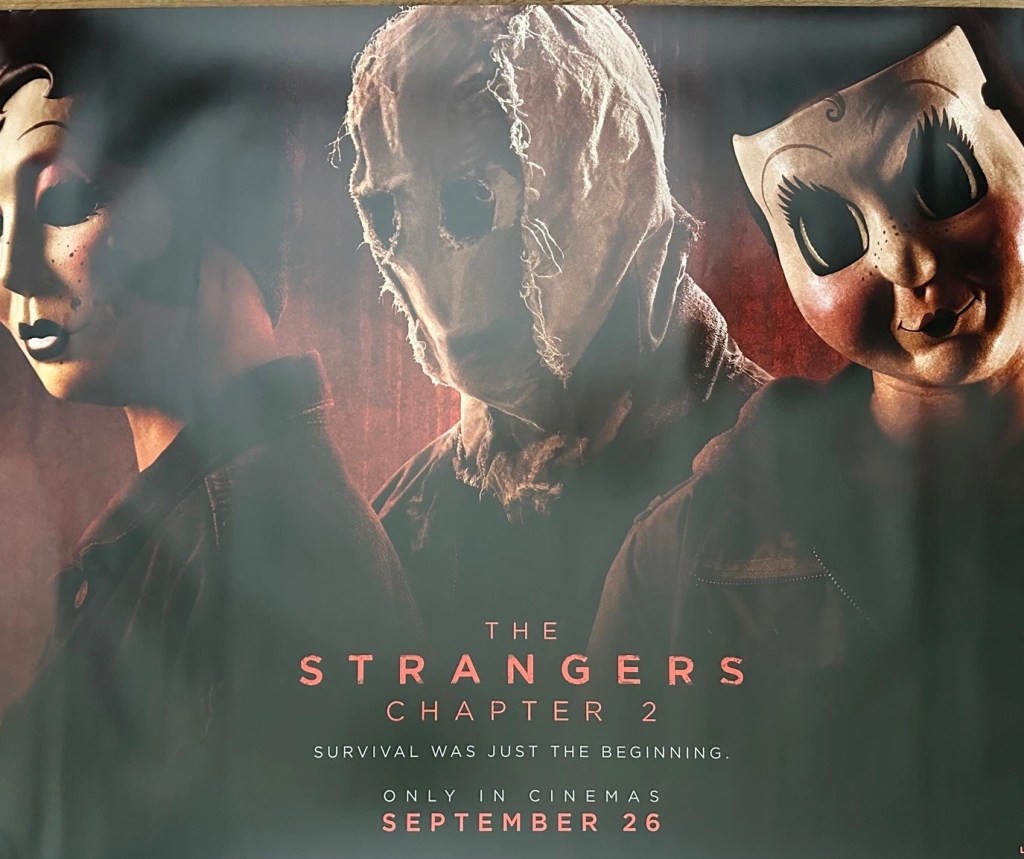
The Strangers Chapter 2 (2025) *

Or The Running, Whimpering and Screaming Film. The laziest horror picture I have seen in a long time and possible even worse than Orgy of the Dead (1965) which at least did not take itself seriously. When the wild boar appeared you were just praying for it to finish off hapless heroine Maya (Madelaine Petsch) with one bite and I was convinced the look in her eyes signalled dread that she would have to return for another sequel. Someone has ideas way above their station imagining this tripe could seriously work as a trilogy.

It’s pretty obvious that director Renny Harlin is far more interested in exploring the backstory of the killers – axe-wielding male decked out in scarecrow mask, crossbow-armed females with doll faces – and making the lamentable error of thinking the audience cared, especially when the origin tale amounts to nothing more than sibling jealousy. This picture stops abruptly, as if he didn’t want to give too much away.

Survivor Maya – boyfriend slaughtered in the previous episode after they inadvertently rented a house in the wrong neck of the woods – wakes up in a hospital, inexplicably deserted. That is simply a device so she can begin her marathon of running, whimpering and screaming while being chased along long corridors or trying to prevent herself being heard while hiding in cupboards, lift shafts and sharing a drawer with a corpse in the morgue.

There’s nothing worse than a dumb heroine – Maya manages to toss away (for narrative purposes you understand) any weapon – gun, knife – that comes her way. Or a dumb bad guy for that matter – he opens a stack of drawers in the morgue but draws the line at opening hers. And soon she’s running barefoot in the rain (which never seems, thank goodness, to soak her flimsy top, so the only sensible directorial decision is to steer clear of blatant leering).

Naturally, she’s suspicious of everyone and runs away from people who can help her, though help is only fleeting because the axe- and crossbow-marauders are on a spree. The wild boar might well, hints a flashback, have been reared by the killers in their childhood, but there’s nothing cute about it now.

This could almost be dialog-free because all Maya does is scream. A couple of cops put in an appearance so the director can hint at a shady past but, unlike the paramedic, they are spared slaughter. I couldn’t quite make out the significance of the ending but I know it was significant because the camera lingered on it. Presumably, Renny Harlin (The Strangers: Chapter 1) thought he was ending on a cliff-hanger because it ended so abruptly.

I felt sorry for Madelaine Petsch (Jane, 2022) because unless she was planning to become the next Scream Queen or auditioning for a marathon she has nothing to do except whimper, run and scream. This was light years from her production debut (Jane) and as many steps backwards.

Please, no more!

**This was the second part of my Monday triple bill that began promisingly with The Lost Bus (see yesterday’s blog). Although this was a dud I had high hopes for the final movie of the day – the highly-acclaimed One Battle after Another which I’m reviewing tomorrow.

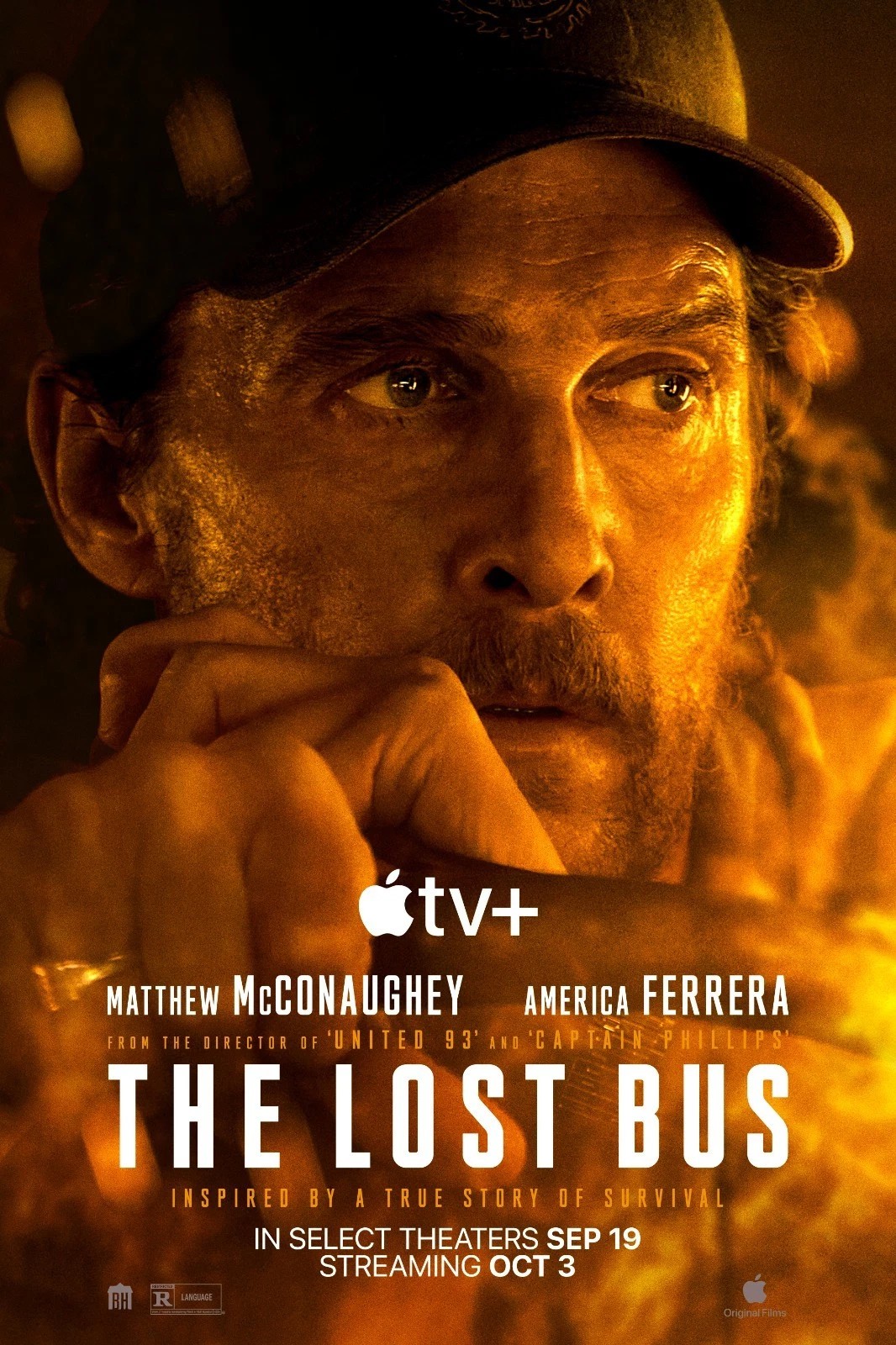
The Lost Bus (2025) ****

What a blast! Director Paul Greengrass (he of the shaky camera) has revived the 1970s disaster movie – and how! I’m not a huge fan of Matthew McConaughey (Interstellar, 2014) but he puts in a terrific shift as an ordinary joe. But you’re going to have to hurry to catch this in cinemas – where it absolutely belongs – because it hits the streamer on Oct 3. And without doubt Apple has made a major blunder in not sticking a huge wodge of dough behind the cinematic release and finding a few Imax screens. The special effects won’t have anything like the required impact on the small screen.

It’s generally considered that The Towering Inferno (1974) was the biggest of the disaster cycle at the box office because it paired superstars Paul Newman and Steve McQueen. But, actually, the real reason was fire. Any other disaster – cyclone, tsunami – doesn’t just spring  out of nowhere. No matter that these are natural disasters, they do follow a largely designated path and through for cinematic purposes twisters can shift around a bit, generally they are not going to switch direction dramatically.

Fire is a primal fear. Smoke itself is bad enough, it can suffocate you in an instant, but fire will just rip through you and destroy everything in its path. And of all the terrible aspects of nature, it’s the most horrific visually – the thick clouds of smoke rising ominously and the red red – bad enough in the distance but close-up looking like some mad archer has unleashed a thousand bolts in a hundred different directions all at once. Backdraft (1991), by comparison, largely dealt with containable fires rather than wildfire.

This doesn’t follow the usual template of sticking a bunch of disparate people in jeopardy and allowing character exposition to suck up a good chunk of the running time. Instead, almost documentary style, we follow harassed fire chief Martinez (Yul Vazquez) as he sets about the impossible task of getting enough waterpower up into the mountains to quell the flames and in the end decides to switch off the hoses and concentrate on getting 30,000 people to safety. There’s an interesting amount of detail on the strategy of containing a fire, but mostly you can see that once the fire takes hold they are fighting a losing battle. We don’t learn a single thing about the personal life of Martinez or any other fireman, so it’s action, action, action.

School bus driver Kevin McKay (Mathew McConaughey) isn’t exactly loaded down with trauma, but he does have an ailing mother and a disaffected son, Shaun (Levi McConaughey), whose unexplained illness can be treated by over-the-counter medicine so he’s not on the point of death. Kevin has clearly relied too much in the past on his charm to get him out of sticky situations and here he’s trying to wheedle his way round boss Ruby (Ashlie Atkinson) whose giving him a hard time for his lack of attention to managing his vehicle.

But he doesn’t really come into the story until he’s given the job of rescuing a bunch of stranded schoolkids who, thankfully, don’t have any back stories either and we’re e not having to worry about kids who’ll die without expert care. And they come with eminently sensible teacher Mary (America Ferrara), who, despite the immediate threat of fire, has them line up in twos to board the bus. Mostly, the kids contribute a soundtrack of squealing while Mary spends her time calming them down and acting as navigator.

Eventually, Kevin finds himself stranded in the heart of the fire, but that looks like the best place to be, like the calm at the heart of a storm, until it doesn’t.

It’s a heck of a terrifying ride and I found myself gripping my seat on occasions. Of course, I knew they’d get out, nobody’s going to barbecue a bunch of small kids on screen, but Kevin’s maneuvers and the storm of flame all round was a very scary experience.

Apparently, this is based on a true story and there’s some unnecessary virtue-signalling at the end when it turns out the fire wasn’t caused by a careless camper but by a careless energy company which was fined billions.

McConaughey is superb. He’s flustered throughout, initially by domestic issues, and then by the task. For the most part he looks worn down to the bone and it’s not heroics but sheet determination that gets him through. And the director avoids the temptation of trying to add romance into the equation. America Ferrara (Dumb Money, 2023) is pretty good, too, as the nit-picking schoolteacher and Yul Vazquez (Tin Soldier, 2025), a new name to me, certainly lends strength to his role. But this picture belongs to Paul Greengrass (The Bourne Ultimatum, 2007), shouldering a disaster tour de force. Screenplay by the director, Brad Inglesby (Mare of Easttown, 2021) and Lizzie Johnson in her debut.

Catch it before it hits streaming.

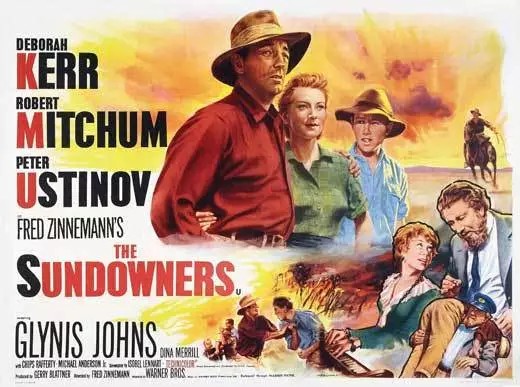
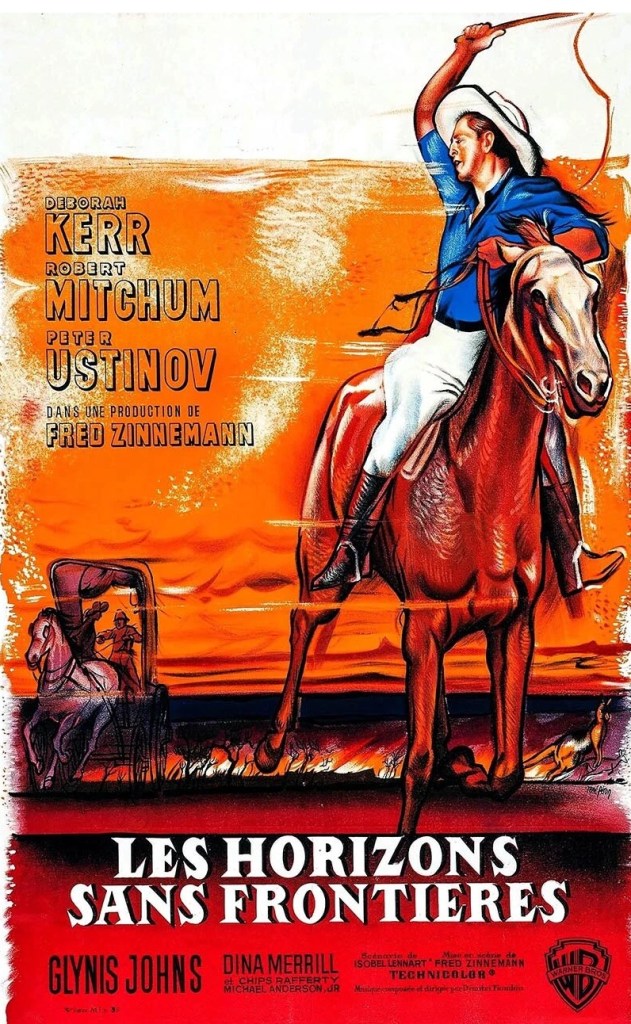
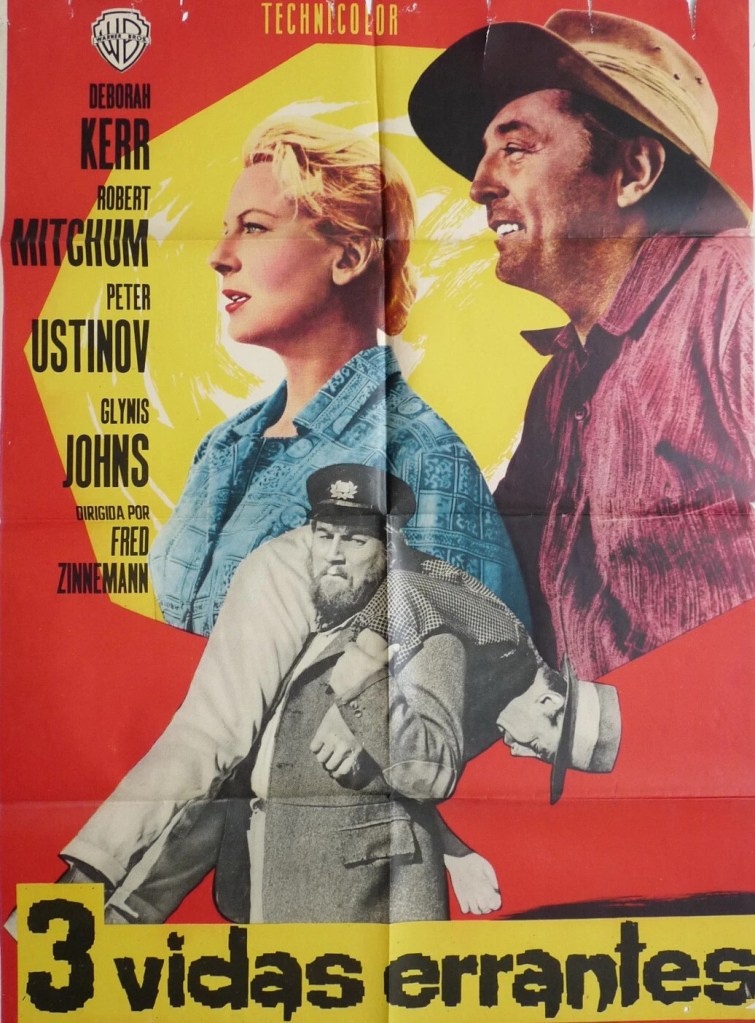
The Sundowners (1960) ****

I kept waiting for Deborah Kerr to turn up and it was a good 20 minutes before I realized that the actress had so immersed herself in the dowdy Ida Carmody that she was turning in what would be recognized as an Oscar-nominated performance. I was less convinced by Robert Mitchum’s Oirish accent but after a time, he, too, buried his normal screen persona under a feckless wanderer. And I was expecting some meaningful point-making stuff from director Fred Zinnemann given he had nursed home such purposeful features as High Noon (1952), From Here to Eternity (1953), A Hatful of Rain (1957) and The Nun’s Story (1959) and would soon be heading back in that virtue-signalling direction with Behold a Pale Horse (1964) and A Man for All Seasons (1966). However, like Day of the Jackal (1973), though for other reasons, this is very much an outlier in the Zinnemann portfolio.

It’s groundbreaking work from the stars. In the first place, Deborah Kerr does the unthinkable for a star of her magnitude – five Oscar nominations so far and a string of hits including From Here to Eternity, The Proud and the Profane (1955) opposite William Holden, The King and I (1956) top-billed ahead of Yul Brynner, An Affair to Remember (1957) opposite Cary Grant and Heaven Knows, Mr Allison (1958) leading Robert Mitchum a merry dance. Here, she is shorn of make-up. Her freckles are everywhere and her cheekbones look as if they are there from hunger not for reasons of fashion. These days, that down-to-the-wire approach would suggest an actress desperately trying to revive her career – Demi Moore in The Substance (2024) or Pamela Anderson in  The Last Showgirl (2024) – rather than a star at the top of her game.

Robert Mitchum, too, dumps his screen persona, and provides his most relaxed and naturalistic performance.

The story is pretty straightforward. Ida wants to settle down, husband Paddy (Robert Mitchum), a born drifter, does not. Paddy enjoys drinking and gambling and wandering through the Australian Outback and ekes out enough as a drover to keep them solvent. The plot, therefore, is episodic. But what could have been a series of loosely-linked sequences is held together by a concentration of the reality of an existence revolving around sheep – droving, shearing, rearing – and trundling along in a horse-drawn caravan, putting up a tent at night, cooking over an open fire, other aspects bordering on the primitive. You can be sure that every minor triumph will be torpedoed.

You could be forgiven for thinking that Wyler had set out to make a western what with the preponderance of sweeping location. Make it sheep instead of cattle and you have Red River (1948) in a minor key with the usual shenanigans once the drover makes his destination.

Livening up proceedings are equally responsibility-resistant itinerant Rupert Venneker (Peter Ustinov), whose more basic skills including pugilism belie his posh accent, and innkeeper Mrs Firth (Glynis Johns) who makes a good stab at trying to hold onto him.

The bulk of the emotion plays through the eyes of Ida, desperately trying to save up enough money to buy a house. A bushfire that temporarily separates the couple unexpectedly acts to strengthen their relationship. While Ida is helping deliver a baby, Frank is getting roaring drunk. The tension between the pair is also a metaphor for growing civilization out of a wilderness, the men who tamed the land becoming redundant, a new educated class taking over. Ida wants to be settled to provide her ambitious son Sean (Michael Anderson Jr) with an education as much as she doesn’t want to be a traveller in her old age.

Offers much about a civilization in the making still relying on the old-timers to put in the hard yards while the guys doing all the work don’t have the sense to seek greater or more stable reward. What’s life if it doesn’t go wrong once in a while? Freedom is its own reward. As Paddy points out, he has no restrictions, the entirety of Australia is his bailiwick.

Wyler makes much of what he’s got, the tensions between the couple undercutting the strength of their affection for each other, and just when it looks as if Ida has got her way Paddy manages to cut loose and destroy her dreams.

There’s drama a-plenty, not just the terrifying bushfire, but a pretty engrossing horse race or two. Paddy’s idea of heaven is to hold court in a saloon singing old Irish songs. Sometimes Ida has little but heartbreak to nurse her along.

And while the various episodes make it a tidy drama, really it’s what one critic described as “a no-story movie – an observation of life” and in that regard more concerned with fallibility and vulnerability. Had it been made by a European director, it would remain one of the most talked-about movies of the decade.

Wyler keeps up a tidy pace. Deborah Kerr (The Arrangement, 1969) steals the show and her peers agreed, putting her up for an Oscar, but it was a close-run thing because Glynis Johns (The Cabinet of Caligari, 1962) was also nominated. Peter Ustinov (Topkapi, 1964) was equally impressive, as was Robert Mitchum (El Dorado, 1967). Wyler was also nominated as was screenwriter Isobel Lennart (Fitzwilly / Fitzwilly Strikes Back, 1967) adapting the Jon Cleary bestseller.

I caught this on Amazon Prime.

Thoroughly involving.

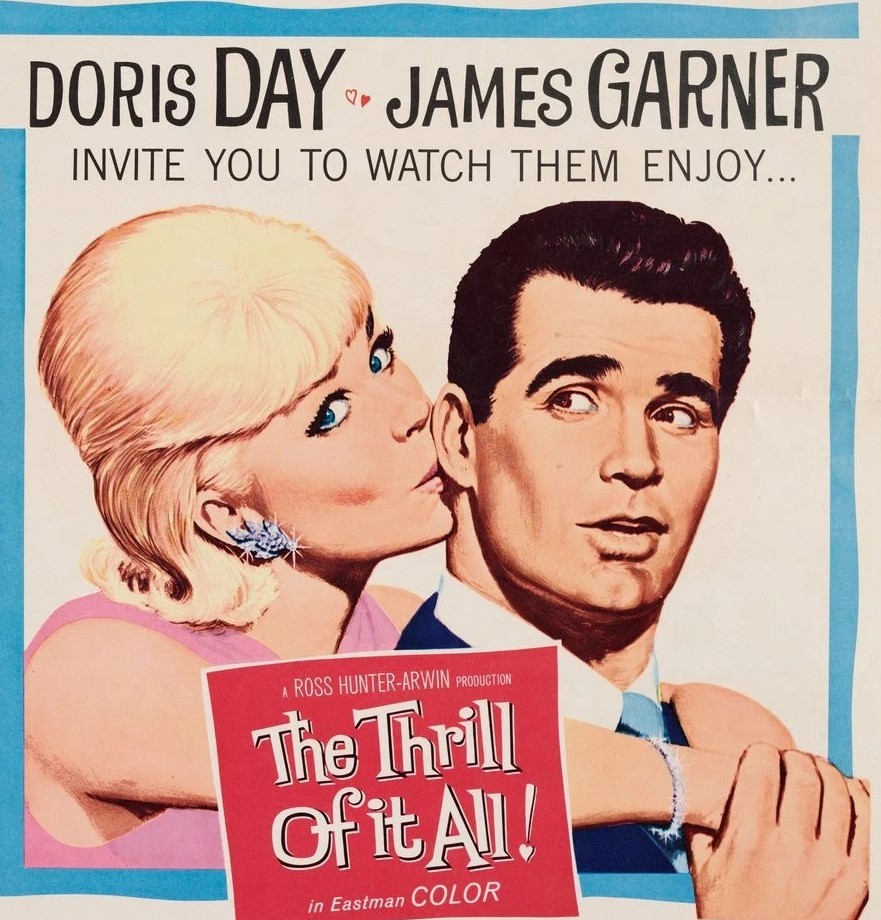
The Thrill of It All (1963) ****

Has three unusual distinctions for a Doris Day comedy. First of all, it’s feminist. Secondly, it’s prophetic. Third, and perhaps most interesting of all, is that it plays exactly into  expectations – for completely different reasons – for audiences sixty years apart. Only the ending would split the audiences.

And this is a somewhat mature Doris Day. Having shucked off Rock Hudson and Cary Grant, she was no longer stuck in a relatively mindless, however charming, love story following the usual formula of girl-meets-boy girl-loses-boy girl-gets-boy. Here she’s contented housewife Beverly Boyer married to successful obstetrician Dr Gerald Boyer (James Garner) with two kids apt to cause disruption but whose main purpose, equally unusually, is to make caustic comment about grown-up behavior. There is one magnificent outlandish set-piece involving soap powder but the slapstick is toned down and there’s a gentle satire of the television industry and advertising.

There’s only one downside to the marriage, her husband is being called out at all hours to deliver babies and that’s such a worthy calling what decent wife could complain about such absences even if it means spoiled dinners and missing events.

However, everything is turned upside down when by pure chance Beverly takes on the role of becoming the onscreen spokesperson for a brand of soap called Happy Soap. This being in the days of live television – so this is set strictly in the 1950s hence the more pronounced tone of a woman’s place being in the home – she has to do the advertisement live on air and her fumbling and inexperience touch a chord with audiences who respond with such vigor that she is offered a contract that puts her in the position of earning substantially more than her husband. How dare she?

Naturally, the demands placed upon her by the advertising company turns the domestic tables. She’s the one coming home late and he’s the one seen as her adjunct. The soap powder boss is so determined to keep her he fulfills every whim – even when such wishes are not made with any seriousness. So she wakes up one morning with a swimming pool in the back yard which virtually demands that a car drive straight into it.

The battle of the sexes comes down a battle of women’s rights (yes, they are mentioned) against men’s rights, in other words freedom vs toeing the line. Rather than delighted at her extra dough, he’s infuriated that she’s infringing on his perceived role as being the sole provider for the family.

Eventually, he decides the only way to bring her to her senses is to arouse her jealousy by being seen in the company of other women. But that only works up to a point. And she only gives in when she is made to realize – by the only narrative misstep as far as the contemporary audience is concerned – that his job is much more important than hers.

While this is the first of two pairings – the other being Move Over, Darling the same year – between Doris Day and James Garner (Hour of the Gun, 1967) is lacks the purer screen chemistry she found with Cary Grant and Rock Hudson and you feel the plot has been written to accommodate this deficit. There’s little requirement for intimacy or proper wooing, much less for the misunderstandings that fueled the previous pairings.

Doris Day’s haplessness is put to a different use, as it is initially the reason why she proves so appealing to television audiences.

Whether women in the 1960s had to keep to themselves their rooting for the career women in Beverly being given a chance to shine, or whether – the beginnings of the modern feminist movement dating from the publication of The Feminine Mystique by Betty Friedan published in 1963 – she was seen as a poster girl for the movement I’m not qualified to judge.

These days, however, Beverly would be viewed as an early champion of women’s rights and that, regardless of how important it was that a man tasked with delivering babies had a woman at home to make his dinner and mop his brow, his demands should not take priority.

While there aren’t as many outright laffs as in previous Doris Day comedies, the feminist angle provides the picture with an unusual worthiness, not something you’d go looking for in Day’s portfolio.

Directed by Norman Jewison (The Thomas Crown Affair, 1968) and written by Carl Reiner (The Art of Love, 1965).

Passage of time has made this more important than the material might suggest. Gets extra marks for serious intent.

Discover WordPress

A daily selection of the best content published on WordPress, collected for you by humans who love to read.

The Atavist Magazine

by Brian Hannan

WordPress.com Blog

News, Tips & Website Tutorials