Behind the Scenes: “Operation Kid Brother / O.K. Connery” (1967)

A new episode in the James Bond legend began on February 23, 1966, when a plasterer from Scotland made an audacious bid for movie stardom. His name was Neil Connery, currently earning $10 a week, shooting for a $5,000 payday as he took part in a screen test in Rome for producer Dario Sabatello (Seven Guns for the MacGregors, 1966) for a film entitled Operation Casbah that would later be tagged Operation Kid Brother (O.K. Connery in Italy).

Sabatello was an experienced producer beginning with The Thief of Venice (1950) starring Hollywood legend Maria Montez. Connery was a skilled laborer living in the four-year shadow of elder brother Sean and with little intention of moving out of that shadow. However, as a result of a work-related incident, he became the subject of a newspaper article and then a radio interview. Nobody was much interested in the reason for the interview – stolen tools – but everyone was impressed by the sound of Neil’s voice. “Sean’s brother spoke exactly like him.”

Archers Assemble! Connery on the bowstring.

The newspaper interview caught the eye of Sabatello, who noted the actor’s likeness to his brother and who flew over to Edinburgh to interview Neil and in so doing becoming aware of his athletic attributes, height and good looks. A month later came an invite for the screen test. Neil’s agent, who had no right to make such a claim, promised that if Neil got the part big brother Sean would play a cameo. For the test, Connery had to “embrace a girl, sing, dance and finally end up in  a hand-to-hand fight with a guy with a knife.” However, the test was so successful that the presence of Sean was not required. Sabatello signed the neophyte actor to a six-picture deal that would generate a six-figure salary if the film turned the Scot into a star.

Italian production giant Titanus sold the world rights (except for Italy) to United Artists, ironically the distributor of the James Bond pictures, thus securing the funding for the $1.2 million three-month shoot that kicked off in Cinecitta in Rome on December 14, 1966. Locations were scheduled to include Monte Carlo, San Remo, Turin, Barcelona, Malaga and Tetuan.

The supporting cast was dominated by actors with a Bond connection including Adolfo Celi, Daniela Bianchi, Anthony Dawson, who had all worked with director Alberto De Martino on Dirty Heroes (1967) and Lois Maxwell and Bernard Lee. Ennio Morricone, another De Martino aficionado, was brought in to do the score.

Affiliates Assemble! Connery with Bond regulars Bernard Lee and Lois Maxwell.

Connery’s boxing training in the British Army came in handy when he had to become an archer. Pulling a bow takes considerable physical exertion. Target practice was held at Adolfo Celi’s house outside Rome. “I had remembered everything about putting the bow down, bringing it up, pull and push, as there was quite a pull on it,” he said. Celi’s arrow managed just a few yards but Connery hit the target. His luck did not hold when filming the real thing in Monte Carlo. Celi’s shot did not go far again but this time Connery’s arrow missed the target.

Although Connery had read the script he was only given his lines in the morning as he went into make-up. He acquitted himself well in the fight scenes, except for one scene which ended with him being taken to hospital.   

The film opened in Britain at the Pavilion in London’s West End on April 25, 1667, with a general release slated for May 5. But it didn’t get a circuit release. That is, it didn’t go out on either of the two main cinema chains, ABC or Odeon, or the lesser Gaumont circuit, so its bookings would have been restricted. It didn’t appear in the United States until November, 1967, having been reviewed without much enthusiasm in Variety which posited “at best the film deserves bottom half bookings”, i.e. the bottom half of a double bill, which means it would play for a fixed rental rather than a percentage.

It did open in first run in a number of city center picture houses in November and December, to occasionally decent but hardly lush box office. Its $20,000 week in Chicago was deemed “good”, as was the $4,000 in Providence, while $13,000 in Philadelphia was considered “brisk” but $5,000 in St Louis considered only “fair.”  There was a first run showing in New York but only at a 600-seater arthouse.

But when it went wider in “Showcase” releases the box office collapsed. In New York it managed only $67,000 from 25 theatres compared to, in the same week, British film The Family Way on $223,000 from 26, and the second week of Point Blank with $145,000 from 25. Business was worse in Los Angeles, just $49,000 from 26 compared to $125,000 from 29 for Barefoot in the Park, and it was dire in Kansas City, only $9,000 from eight houses.

Given the relatively low budget, the film globally may well have broken even but it certainly did not send Neil Connery’s box office status into the stratosphere. He had small parts in two more low-budget movies, The Body Stealers (1969) and Mad Mission 3: Our Man from Bond St (1984) plus some television.

SOURCES: Brian Smith, “Bond of Brothers,” Cinema Retro, Vol 4 Issue 12 2008, p13-19; Allen Eyles, Odeon Cinemas  2, (CTA 2005), p212; Allen Eyles, ABC (CTA, 1993), 123-124; Allen Eyles, The Granada Theatres (CTA 1998)’ p247; Allen Eyles, Gaumont British Cinemas, (CTA 2005), p197; William Hall, “Big Brother Is Watching Him,” Photoplay, June 1967; “International Soundtrack,” Variety, February 23, 1966, p33; “Titanus Sets Pre-Prod Deals for Two UA Pix,” Variety, December 14, 1966, p24; “International Soundtrack,” Variety, December 21, 1966, p24; “Hollywood and British Production Pulse,” Variety, December 28, 1966, p17; Advertisement, Variety, January 4, 1967, p65; “Connery Pix a Family Affair with UA,” Variety, March 8, 1967, p24;  Review, Variety, October 11, 1967, p22; “Picture Grosses,” Variety November 1, November 8, November 15, November 29, December 13, 1967.  

Spy Girls

If you’ve not already come across Cinema Retro magazine – now celebrating 18 years of publication –  or its various Special Issues you are in for a treat. Spy Girls fell under its “Foto Files Special Edition” portfolio and includes over 200 illustrations of the actresses who dominated the wave of espionage pictures in the 1960s and to a lesser extent the 1970s.

As well as focusing on the leading female stars in every series film – James Bond, Derek Flint, Matt Helm, Bulldog Drummond, The Man from Uncle and Harry Palmer – the magazine also pay tribute to the wide variety of starlets who appeared in bit parts such as Zena Marshall (Dr No, 1962), Aliza Gur (From Russia with Love, 1963), Shirley Eaton and Margaret Nolan (Goldfinger, 1964) Molly Peters (Thunderball, 1965) and Gila Golan (Our Man Flint, 1966).

However, in the main the concentration is on the flood of European actresses who set Hollywood agog following multiple appearances in spy pictures. Beginning with original Swiss-born Bond girl Ursula Andress (Dr No and Casino Royale, 1967, the magazine features every actress who had a starring role in the mainstream spy films. Some, of course, seemed very comfortable in the genre with roles in several pictures.

Leading that particular parade were Italian Daniela Bianchi who, after her spy debut in From Russia with Love, was seen in Slalom (1965), Operation Gold (1966), Special Mission Lady Chaplin (1966), Requiem for a Secret Agent (1966) and Operation Kid Brother (1967). Matching her was Austrian Senta Berger, caught in The Secret Ways (1961), The Spy with My Face (1965), Our Man in Marrakesh (1966), The Quiller Memorandum (1966), The Ambushers (1967) and Istanbul Express (1968).

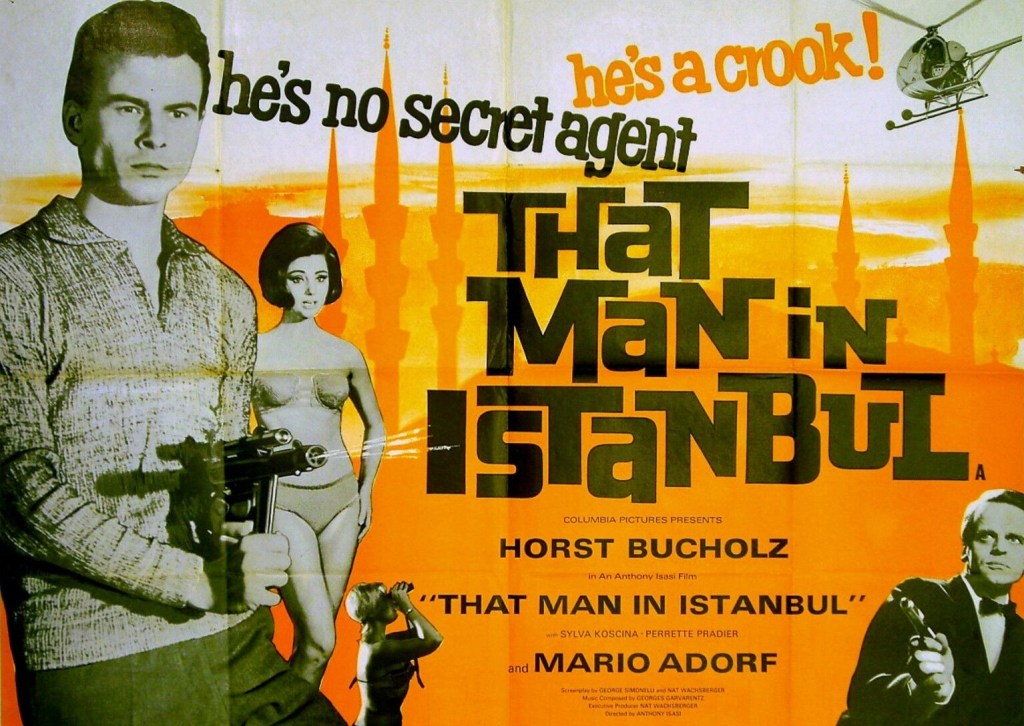
Not far behind came Israeli Daliah Lavi who lit up the screen in The Silencers (1966), The Spy with a Cold Nose (1966), Casino Royale (1967), Nobody Runs Forever (1968) and Some Girls Do (1969). German Elke Sommer was another regular, headlining The Venetian Affair (1967), The Corrupt Ones (1967), Deadlier than the Male (1967) and The Wrecking Crew (1968.) Also a regular in the genre was Yugoslavian Sylva Koscina with Hot Enough for June/Agent 8¾ (1964), That Man in Istanbul (1965), Agent X-77 Orders to Kill (1966) and Deadlier than the Male (1967)

Canadian Beverly Adams featured three times in the Matt Helm series, in The Silencers, Murderers Row (1966) and The Ambushers (1967). Czechoslovakian Barbara Bouchet turned up in Agent for H.A.R.M (1966), Casino Royale and Danger Route (1967) and Austrian Marisa Mell had top roles in Masquerade (1965), Secret Agent Super Dragon (1966) and Danger:Diabolik (1968). Another three-peater was Rome-born Luciana Paluzzi – To Trap a Spy (1964), Thunderball (1965) and The Venetian Affair (1967) – not forgetting Swede Camilla Sparv in Murderers Row (1966), Assignment K (1968) and Nobody Runs Forever (1968).

No study on the girls involved in espionage over these two decades would be complete without mention of Raquel Welch for Fathom (1967), Monica Vitti in Modesty Blaise (1966), Honor Blackman in Goldfinger and Britt Ekland in The Man with the Golden Gun (1974). The occasional American leavened the pot – Jill St John appearing in The Liquidator (1966) and Diamonds Are Forever (1971) and Lana Wood also in the latter. 

The extensive illustrations include stills, and photographs of the stars relaxing on set or setting up a shot, as well as a veritable archive of posters from virtually every country in the world, often with substantially different artwork to the originals. In addition, articles on the main actresses are included as well as snippets of information on the lesser stars.

Priced at just £6.95 / $11.99 this might make a nice Xmas filler.

http://www.cinemaretro.com/index.php?/archives/8048-COMING-FROM-CINEMA-RETRO-SPY-GIRLS-FOTO-FILES-ISSUE-1.html

Selling Ursula Andress – The Pressbook for “She” (1965)

Dr No (1962) had only enjoyed moderate success in the United States so it was far from given that Ursula Andress meant much to American audiences. The first Bond outing had finished 43rd in the annual box office rankings and Andress had not exactly swept Elvis Presley off his feet in her only Hollywood offering so far, Fun in Acapulco. However, she was the immediate beneficiary of one of the most extraordinary pieces of luck to fall to a barely-known star.

The gargantuan success of Goldfinger (1964) had sent studio United Artists back to the vaults to resurrect the first two films in the Bond series and put them out in a double bill – the first of many such Bond pairings – in April 1965, a couple of months before She hit the big screen in the U.S. Dr No/From Russia with Love was a record-breaking sensation, attracting three times the numbers that had attended the first release of Dr No.  So outstanding a performer was the double bill that it hit number five on the annual box office chart.   So by the time She was launched Ursula Andress’s iconic bikini-clad entrance in Dr No was fresh in audience memories.

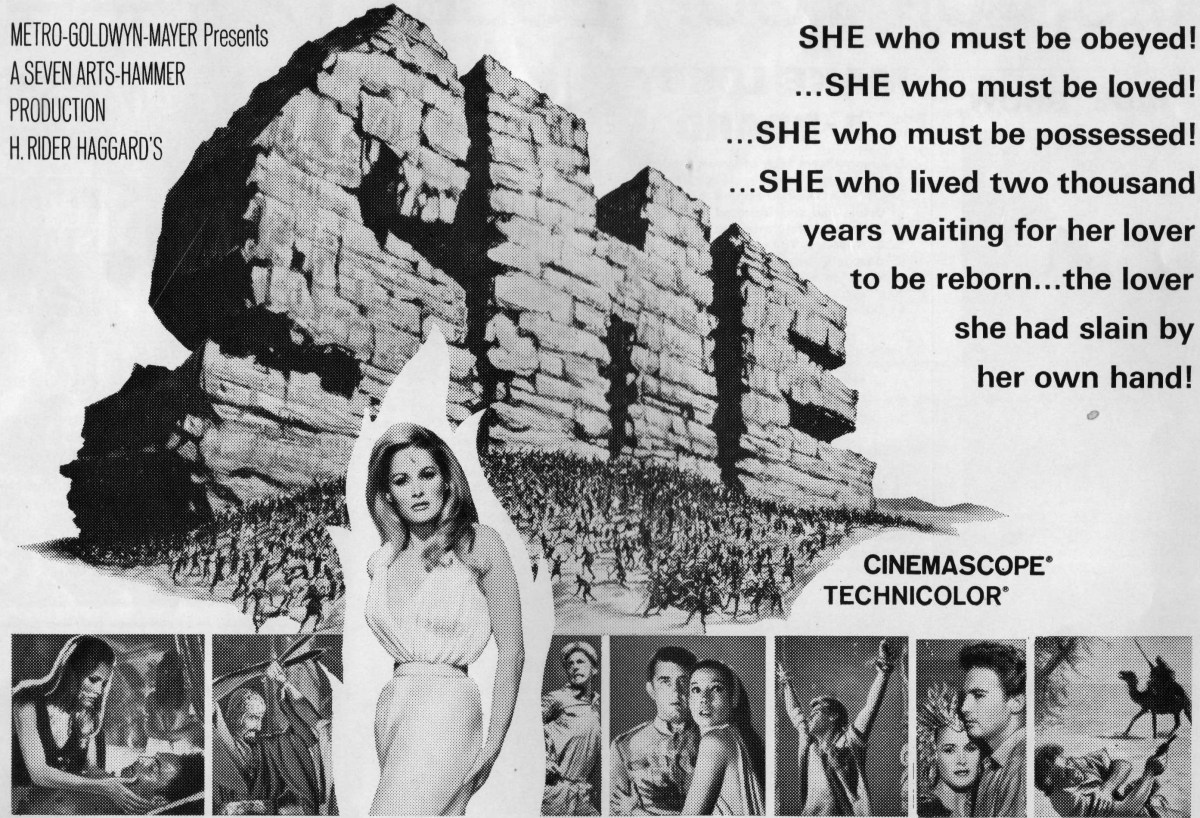
MGM, the U.S. distributor of the Hammer picture, had wisely not counted on the unexpected resurrection of Dr No and had a stack of other promotional wheezes up its sleeve. The 12-page A3 Pressbook kicked off with a “phone stunt” whereby exhibitors would set up a message on a telephone line purportedly from “She-Who-Must-Be-Obeyed.”  The statuesque figure of Ursula Andress in figure-clinging costume was a natural for a standee in a cinema lobby as was the setting up of an artificial flame.

There were any number of ideas for competitions held in conjunction with a radio station or local newspaper: famous women who had ended up as film titles – Cleopatra and so on; famous female rulers; or a list of “love goddesses” to whose ranks it was decreed Andress deserved a place – in posters MGM had no hesitation is calling the actress “the most beautiful woman in the world.”

Journalists were to be hooked into running editorial pieces by a variety of interesting facts that could be cobbled together for an interesting article. The luxurious furs used to decorate the queen’s inner sanctum had been insured for $300,000. Andress had worn a total of nine gowns, designed by Cal Tomms, but none weighed more than a few pounds, the gossamer-like material both free-flowing and clinging to her natural assets. The crown weighed 3lb, a heavy object to carry around on your head for a week, as Andress had. Her cloak contained 3,000 feathers. No doubles were used for the duel between John Richardson and Christopher Lee, both being accomplished swordsmen.

There were human interest items as well. Both Andress and Richardson had previously signed contracts with major studios without ever being given any roles. Andress, shy in real life, had learned to claim to be someone lese when approached by fans.  Filming Dr No, she was grateful it was shot in Jamaica: “I didn’t want anyone to see what a fool I might be making of myself,” she said.

However, she was certainly self-assured in general. Interviewed exclusively for the Pressbook, she said, “Beauty gets you everywhere. It is a gate opener. It takes a long time to discover a good mind, but a beautiful woman attracts attention right away. Only stupid people think that a woman who is attractive must be silly.”

She added: “I will give you a list of the qualities that are most important for a woman – emotional range, beauty, intelligence, education and talent. Emotions are the most important, the ability to feel and love. Beauty next, and intelligence after that. Education is less important than intelligence because if you have the latter you’ll acquire education.

“I have never made a study of acting,” she explained. “I just do it if and when I feel like it. I have no desire to work on the stage and what I do in front of the camera is instinctive and spontaneous. My best takes are the first. Repetition distracts from the quality of my performance. Ayesha in She was a difficult part because this mysterious queen is 2,000 years old  and I had to be very stylized.”

Andress was central to the advertising campaign and although there were a number of different adverts, the actress featured in all, the only difference being her position on the poster, left, right or central. “She had waited 2,000 years waiting for her lover to be reborn – the lover she had slain by her own hand.” To whet audience appetite, a variety of scenes were included at the foot of some posters. 

To grab the attention of the exhibitor, and ensure full cooperation in selling the picture, MGM was offering a treasure chest of rewards for the best local campaign – a total of $10,000 in prize money. To gain additional publicity there was a single record and, more important, a new tie-in edition of the famed novel by H. Rider Haggard, which had already sold 20 million copies in America.

Creating the Theme Music to the 1960s: John Barry and Don Black

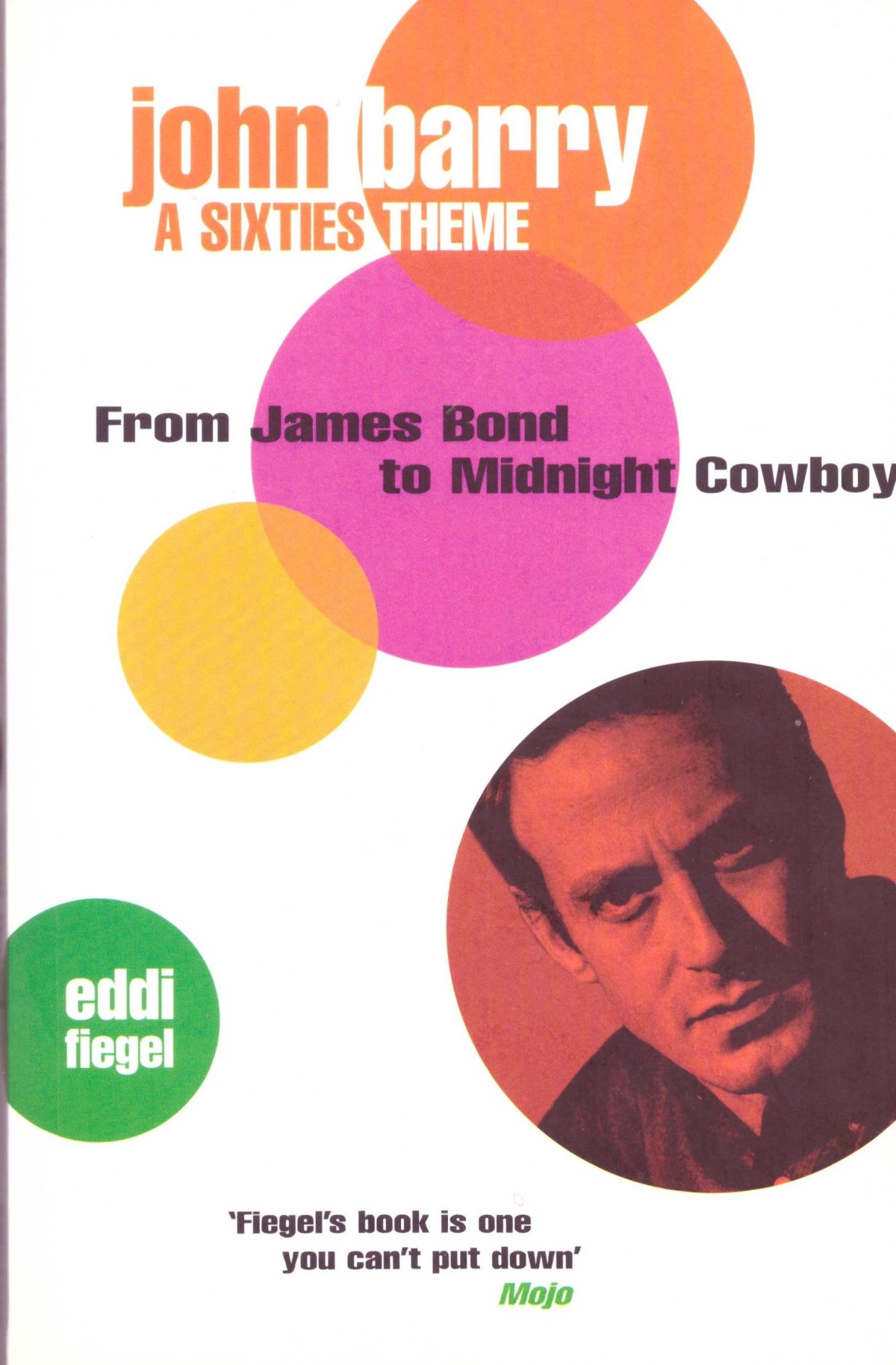
You can’t really write about 1960s films without making some reference to the revolutionary composers and lyricists who penned so many of the decade’s finest music. Rather than concentrate on the films to which the pair made vital contributions, I thought I would point you in the direction of a Eddi Fiegel’s biography of John Barry and this year’s autobiography of Don Black.

Barry, the son of a Yorkshire cinema owner, was a true child of the Sixties, a handsome man in handmade suits, living in Chelsea, driving an E-type Jaguar or a white Maserati, and friend of Michael Caine and David Bailey. He squired some of the most glamorous women of the era like Britt Ekland and Charlotte Rampling and was married to one its most enigmatic actresses Jane Birkin (Wonderwall, 1968, and co-conspirator of the hit single “Je T’Aime”).

After forming jazz outfit the John Barry Seven, regulars on TV program the 6.5 Special, he scored and arranged singles for pop singer Adam Faith who proved his passport to the movie business with Beat Girl (1959). But Dr No (1962) for which he was only paid £250 changed his life and he became the most in-demand film composer in British cinematic history. He followed up with successes such as Zulu (1963), Goldfinger (1964) and The Ipcress File (1965) and although his music sold in enormous quantities in terms of singles and soundtrack albums, his work had not come to the notice of the Oscar voters.

Born Free (1966) changed all that when he linked up with lyricist Don Black. Columbia had initially insisted that an American folk group would write and perform the theme song. But Barry was determined to do it himself. While the theme for Goldfinger had taken many days and nights to complete, Born Free was a different story: “I wrote the whole thing from beginning to end in about ten minutes,” said Barry. He had previously worked with Black on Thunderball (1965). The collaboration clicked from the outset. “John’s very word-conscious,” commented Black, “and that’s unusual for most composers.” However, Black’s socially-conscious lyrics did not initially go down well with producer Carl Foreman and Barry had continuous problems over the way the music should be handled in the film. The theme went to number one in America and Barry picked up two Oscars, for original music and, shared with Black, for best song.

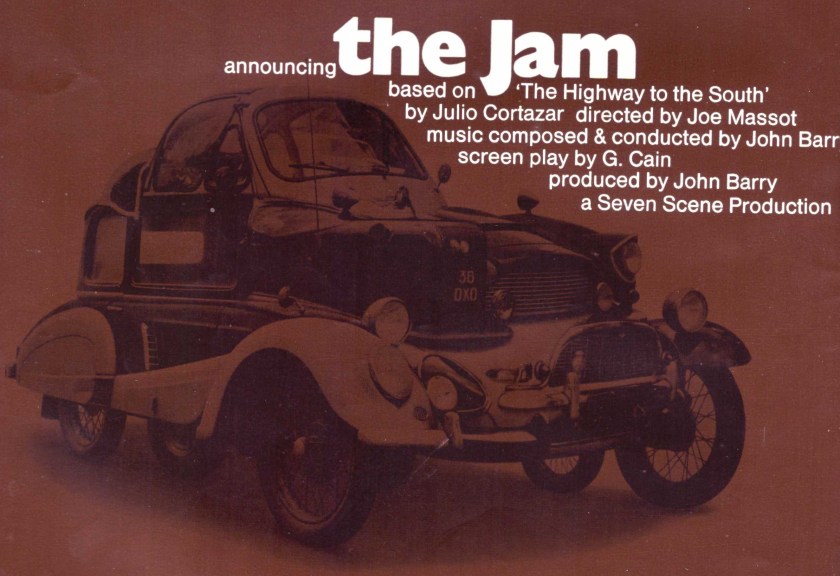
Talking of John Barry, here’s a mystery someone might be able to solve. I came across this advert in “Films and Filming” magazine which listed John Barry as a producer. Joe Massot went on to direct Wonderwall (1968) but George Harrison did the music for that. Any ideas?

Even so, Barry was not welcomed in Hollywood. “I remember in Hollywood,” noted composer Leslie Bricusse, “the fraternity of film composers there being very condescending towards John, talking about him as this pop musician who’d been in a band…the top brass…saw John as this kind of upstart. ” That changed with heist movie Deadfall (1968) – the “Romance for a Guitar and Orchestra” section my favorite piece of Barry music – and The Lion in Winter (1968) for which he won his second Oscar.

The bulk of Fiegel’s book covers the music Barry wrote in the 1960s and it is full of riveting detail about the circumstances surrounding various films. This is not a new book but it’s one I go back to again and again to remind me of John Barry’s genius.

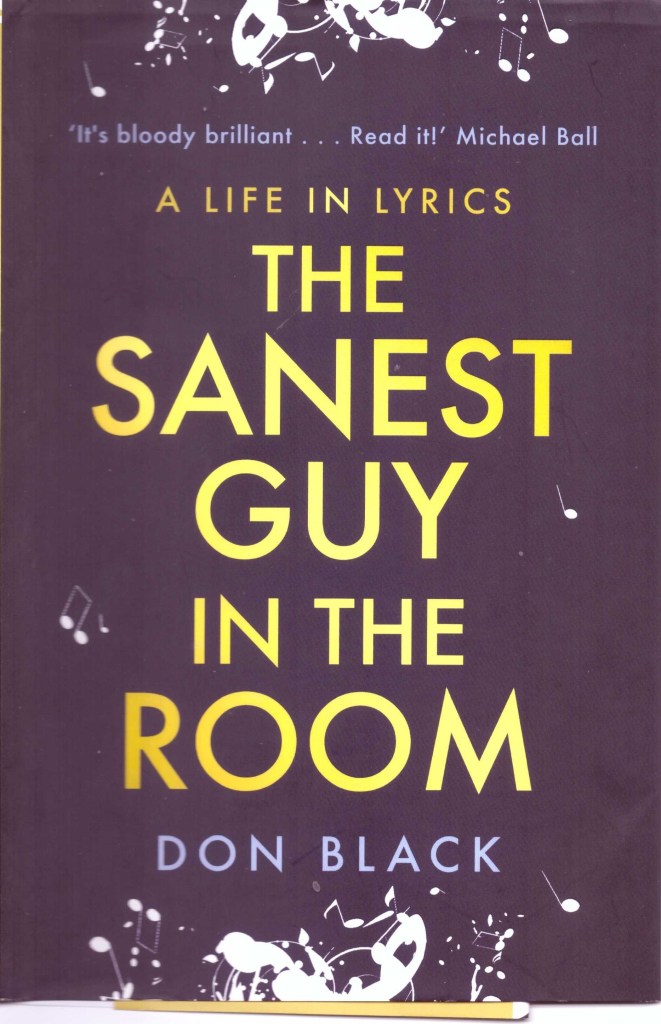
By comparison The Sanest Guy in the Room: A Life in Lyrics by Don Black was published this year. “The first thing you learn as a lyric writer,” says Black, ” is not to waste a syllable” and that is the mantra for this delightful book, full of interesting anecdotes, insights into the work of other famous lyricists, and containing many of his own lyrics. He worked with singers Shirley Bassey and Barbra Streisand, a string of top composers including Maurice Jarre, Francis Lai, Lalo Schifrin, Quincy Jones, Elmer Bernstein and Henry Mancini and wrote musicals including Tell Me on a Sunday with Andrew Lloyd-Webber.

He grew up in council house in Hackney, London. But his initial attempts to become a songwriter floundered and he worked on the weekly music paper New Musical Express before becoming a “plugger” – a publicist – for a music publishing company and then a stand-up comedian.

However, he had become good friends with crooner Matt Monro – whom he would later manage – and the singer encouraged him to give songwriting another chance. When Barry approached him to write the lyrics for Thunderball, his career took off. Normally he wrote the lyrics once the composer had completed the tune. But To Sir, With Love was written first. Canadian Mark London supplied the music. British pop star Lulu, who was in the film, recorded it and it topped the charts in the United States.

But his closest collaborator remained John Barry. “It was easy writing with John – he would hand me a melody and I would go home and put words to it…If you write the words first there is a tendency to ramble, but if you only have a limited number of notes they provide you with a rigid framework.”

You can’t be a lyricist without versatility as proven by some of the songs he wrote in the 1960s – for films as diverse as Yul Brynner adventure The Long Duel (1967), A Matter of Innocence (1967) starring Hayley Mills, Peter Sellers comedy The Party (1968), Burton and Taylor drama Boom! (1968), biopic Isadora (1968) with Vanessa Redgrave, spy thriller Some Girls Do (1969), George Segal-Ursula Andress adventure Southern Star (1969) and The Italian Job (1969) starring Michael Caine.

As well as the Oscar for Born Free, he was nominated for best song for True Grit (1969), Ben (1972), Gold (1974) and The Pink Panther Strikes Again (1976). More recently he has been presenting a show on BBC Radio Two. His autobiography is a very spirited read, whizzing you from one anecdote to the next, and as promised no word wasted.

Link to Don Black book – https://www.amazon.co.uk/s?k=the+sanest+guy+in+the+room+by+don+black&i=stripbooks&crid=2YM0QDSYCZ9Y2&sprefix=the+sanest+guy+in+the+room%2Cstripbooks%2C164&ref=nb_sb_ss_ts-a-p_1_26

Link to John Barry book –

Discover WordPress

A daily selection of the best content published on WordPress, collected for you by humans who love to read.

The Atavist Magazine

by Brian Hannan

WordPress.com News

The latest news on WordPress.com and the WordPress community.