The Carpetbaggers (1964) ****

Likely because the gigantic bestseller by Harold Robbins (Stiletto, 1969) on which this was based made it impervious to critics, the critics determined to slaughter it. Which was a great shame because if they had been at all open-minded, not to mention fair, they would have recognized, outside of a terrific tale with a spellbinding performance by George Peppard (The Blue Max, 1966), a master class in screenwriting from double Oscar nominee John Michael Hayes (Butterfield 8, 1960).

There’s hardly a slack line in the entire ensemble and given he was adapting a monster of a book he cuts to the chase with infinite guile. Scenes demonstrate instant characterization and are littered with quotable lines and the story, even at two-and-half-hours, is told at breakneck speed.

No sooner are we introduced in the opening two scenes to the reckless, arrogant and bedhopping Jonas Cord (George Peppard) than his father has dropped dead and Cord has not only inherited the company but immediately turned from louche spoiled brat into hard-nosed businessman, not just tough but determinedly mean especially in the area of revenge. In a superb scene with his father’s widow Rina (Carroll Baker), we learn that she dumped Jonas for his richer father, and although Jonas appears to be leading her on, that’s only until he can humiliate her by exposing her innate greed.  

Despite her wayward sexuality, Rina is a savvy businesswoman, enough to make sure she is set up for life, although the other men she gravitates towards are not as weak as Jonas’s father, nor as nasty as Jonas, and Nevada Smith (Alan Ladd) has the wisdom to led her down gently when he enters her seductive web. The Nevada Smith backstory, which takes up a hefty chunk of the novel, is dealt with in one clever scene, which could act as a trailer for the later film starring Steve McQueen.

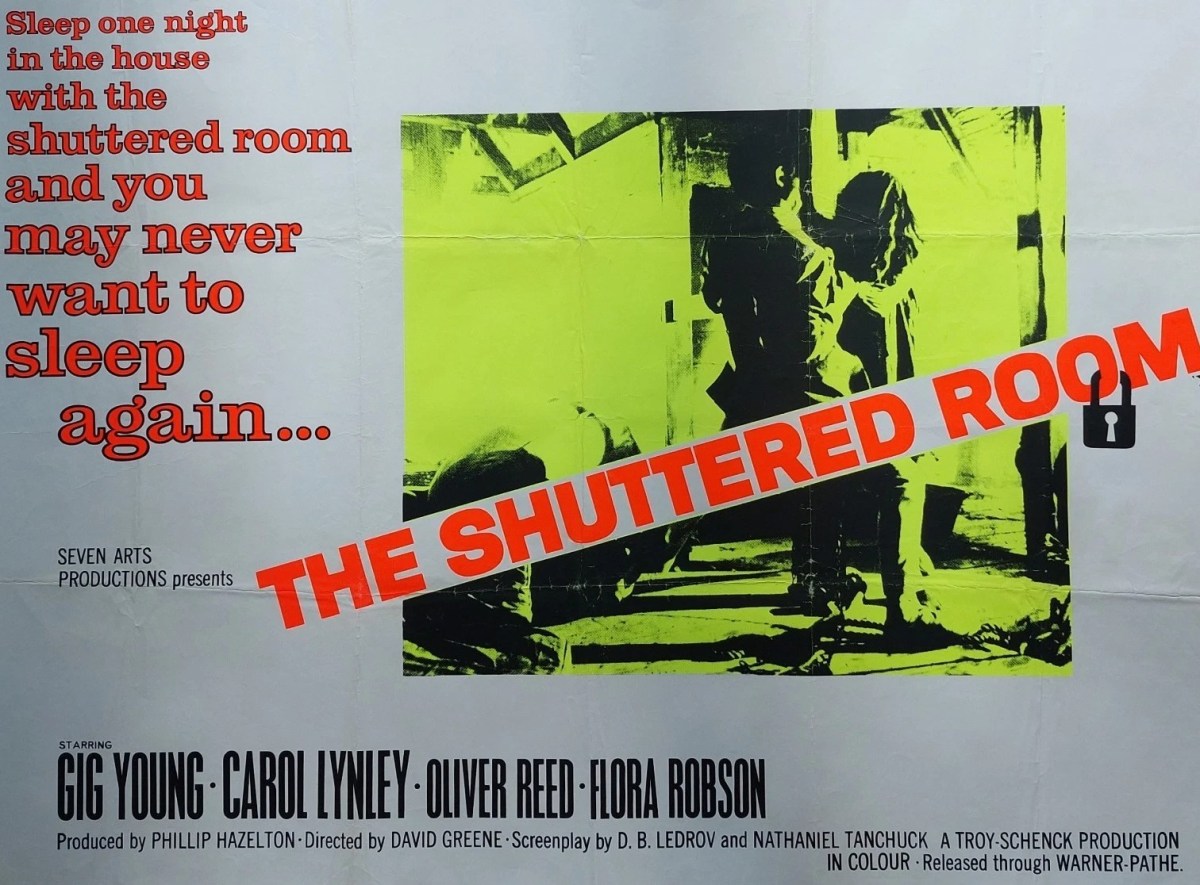
And early on there’s a superb scene, akin to the madwoman in the attic, where Jonas opens a locked door containing a derelict bedroom strewn with children’s toys that belonged to his brother. The reason for the locking away is never explained but it’s the only time Jonas gives in to his vulnerable side.

Both Rina and Nevada segue into successful film careers and eventually have an affair. Cord becomes a movie mogul.

Though it certainly enters soap territory in the second half it’s so true to the characters that it plays out in hugely enjoyable fashion. Jonas remains ruthless – and unhappy – while Rina powers her way through men and booze, the latter leading to her death. Nevada doesn’t turn into a superstar, Jonas abandons wife Monica (Elizabeth Ashley) and child, begins an affair with former porn star Jennie (Martha Hyer) and destroys her.

You will be surprised to learn this has a happy ending. I can’t confess to have read the book so no idea whether or not this was tacked on to keep the studio happy. Whatever, it’s a terrific ride, full of punchy lines and sharply-wrought scenes and enough of the pell-mell structure of the book to keep an audience riveted.

This proved the career breakthrough for George Peppard – Breakfast at Tiffany’s (1961) had done considerably less for his career than it had for Audrey Hepburn – and he offered Hollywood mavens a new kind of hero, not just a tough guy in the Steve McQueen mold, but a mean tough guy that would open the door for the likes of Lee Marvin.

As you will know I’ve got a soft spot for Peppard, who’s generally been under-rated as an actor. This performance, despite the depths he showed, was equally dismissed, but it’s the turn of this career.

Carroll Baker (Harlow, 1965), too, has a part with real meat and makes the most of it, not just a slinky sex god, but devious and smart, and vulnerable. Alan Ladd (Shane, 1953) in his final picture is well out of his comfort zone and might have looked forward to an extended career playing a different kind of character except for his untimely demise.

The females are uniformly good, especially as they all have underlying reasons for their attraction to the wealthy Jonas, Monica desperate to save her father’s business, Jessica desperate to hide her past.

Edward Dmytryk (Mirage, 1965) doesn’t put a foot wrong, allowing insecurities in tough characters to creep through, but the star of the show for me is John Michael Hayes who turns what could have been a routine blockbuster with a built-in audience into a cracking entertainment.

One to catch.

Bunny Lake Is Missing (1965) ****

Otto Preminger (Hurry Sundown, 1967) returns to his film noir roots (Laura, 1944; Whirlpool, 1950) for this crisply-told tale, mixing police procedural with psycho-drama,  of a missing child who may the figment of her mother’s imagination. It’s beautifully filmed and for anyone brought up on modern cinema of short takes and the camera bouncing from one close-up to the next, it will be a revelation, as Preminger favors classic Hollywood style,  long takes, in a single shot the camera often following a person in and out of several rooms, and equally classical composition, scenes containing three or four characters where everyone acts within the frame.

Single-mother Ann (Carol Lynley) turns up to collect her four-year-old daughter Bunny from her first day at a London nursery only to discover not just the child gone but nobody has any recollection of the child being there in the first place. That is, apart from the school cook (Lucie Mannheim), who promised to look out for the child but who has subsequently disappeared. Ann is anxious anyway because she is moving house and in her new apartment has an encounter with her creepy landlord Horacio (Noel Coward), a master of the innuendo and the casual stroke of the arm.  

It’s a very English school with stiff-upper-lip not to mention snippy teachers. “We mustn’t get emotional,” school administrator Miss Smollett (Anna Massey) warns the distraught mother. Ann’s brother Steven (Keir Dullea), a journalist, kicks up more of a stink, arguing with staff, and with a very threatening manner. Things get creepier still. Upstairs, they hear voices but it’s just the school’s founder Ada (Martita Hunt) who records children talking about nightmares. Steven seems over-protective towards his sister, which is understandable, and somewhat over-affectionate, which is not.

Detective Superintendent Newhouse (Laurence Olivier) and sidekick Sgt Andrews (Clive Revill) investigate. He is an unusual cop. A university graduate but not of the excitable Inspector Morse persuasion for one thing, and reasonable to an irritating degree in that he keeps all his options open. But the cops are thorough, descriptions of the missing child issued, search of the premises and surrounding area undertaken. But it turns out there is no record of Bunny in the school ledger, no sign of her existence in the flat, and it transpires that as a child herself Ann had an imaginary companion called Bunny.  

As Steven becomes more obstreperous and the intense Ann verges on the hysterical, not helped by the unwanted attentions of the landlord, a BBC performer with a melodious voice he believes irresistible to women and more than a passing interest in sadism, the case appears to be heading in the direction of a quick visit to a psychiatry ward. The usual anchor in these situations, the policeman, is not as definite as normal, Newhouse not pushing the investigation in a direction the audience will find acceptable, but largely standing back, as if yet to make up his mind, which adds to the sense of mystery.

Carol Lynley with the potential landlord from hell Noel Coward.

Preminger isn’t in the business of piling twist upon twist, but as these arrive in due course, the options they offer are even more psychologically damaging. And from setting off at a steady pace with everything apparently settled down by the steady superintendent, the minute he departs the scene, the story takes on a different dimension and there are three superb chilling scenes, one in hospital, another in a doll’s hospital and the last in a garden as the question of just who is unhinged becomes more apparent. There is certainly madness in the movie but it comes when you least expect it and from a direction you may not have considered. On another level, the world of children is entirely alien to the adult and the reconciliation between the two worlds impossible to bridge.

Preminger extracts a performance from Laurence Olivier (Khartoum, 1966) that cuts the character to the bone, eliminating many of the actor’s tropes and tics, but at the same time making him perfectly human, unable to resist, for example, a traditional school pudding, and finding ways to curb Steven’s excesses while comforting Ann.  By controlling the actor who always exerts screen presence, Preminger makes him come across with even greater authority. It’s an achievement in itself to ensure that Olivier never raises his voice.

Carol Lynley (The Pleasure Seekers, 1964) is excellent as the distraught mother, one step away from losing her mind and Keir Dullea (The Fox, 1967) constantly raises the stakes. Noel Coward (The Italian Job, 1969) possibly does the best job of the lot, his normal high levels of sophistication eschewed in favour of the downright creepy.  In supporting roles look out for Clive Revill (Kaleidoscope, 1966), Finlay Currie (Vendetta for the Saint, 1969), Anna Massey (De Sade, 1969) and Adrienne Corri (The Viking Queen, 1967). Pop group The Zombies featuring Rod Argent and Colin Blunstone put in an appearance.  

Husband-and-wife team John Mortimer (John and Mary, 1969) and Penelope Mortimer (The Pumpkin Eater, 1964) wrote the screenplay from the besteller by Evelyn Piper. But it is most assuredly an Otto Preminger production. He has a surprisingly good grasp of British custom and character, shot all the movie on location, but in black-and-white so it is not dominated by the tourist London of red buses or red pillar boxes, and his probing camera and long takes are a marvel for any cinematic scholar.

Shark! / Man-Eater (1969) ***

The one where Burt Reynolds suddenly alights on his screen persona. At the outset he’s just another B-picture dude hoping to get by on macho posturing. Then, as though his brain has sparked into silver screen intelligence, the cocky grin appears. And we’re off.

If any director was skewered by his insistence on retaining his artistic vision, it’s Samuel Fuller (The Naked Kiss, 1964). He wasn’t one for good guys and bad guys. Everybody’s up to something, if good deeds occur it’s by accident. Such realism would make him catnip for today’s disillusioned generation.

And it’s got cult written all over it because Fuller wanted to take his name off the picture after it was re-edited by the producer, possibly to include more shark footage at the expense of the human flotsam and jetsam trying to make a buck in the shark-infested waters off the Sudan in Africa. (Spoiler alert: it was filmed in Mexico). The shark footage for the era, it has to be said, is pretty damn good and although the sequences of people being gobbled up by a marauding shark must have been staged with a fake shark they look entirely convincing on the small screen.

And this was before the shark exploded on the screen via documentary Blue Water, White Death (1971) and of course Jaws (1975). Even so, the producers managed to make the sharks here sound even more fearsome by duping Life magazine into running some fake news about Burt Reynolds’ stunt double being killed by a shark.

In any other world two partners hunting for sunken treasure who were in sore need of a diver would simply have made an honest approach to their target, offering a share of the loot. Who’d not jump at the opportunity? Except Professor Mallare (Barry Sullivan) and Anna (Sylvia Pinal) only have a license to dive for strange sea specimens, not lost gold, and Caine (Burt Reynolds) is a gunrunner wanted by the police. The local cop Inspector Barok (Enrique Lucero) does his best to keep tabs on things except, short of donning scuba gear, he’s got no way of seeing what they’re getting up to underwater, though, clearly, as the story plays out, he has his suspicions.

Anna reckons she needs to offer Caine a sweetener to come on board, so she hops into bed with him. The only person who has a redemptive bone in his body is the alcoholic doctor (Arthur Kennedy) who spoils his own salvation by demanding dough for saving someone’s life.

So while, what with being unable to resist the delectable Sylvia, Caine signs on for a share of the gold, he is from the outset planning how, in the event of striking it lucky, to get rid of his partners, which is just as well because they’re equally intent on getting rid of him. The climax is a pretty good one, and given I’d just watched Gene Hackman in Night Moves (1975)  being left stranded and dying in a boat going round in circles in the ocean, that notion is matched here where Sylvia makes her escape on a boat she doesn’t know is sinking.

Burt Reynolds (Sam Whiskey, 1969), once the cocky grin puts in an appearance, isn’t the only plus point here. Five-time Oscar nominee Arthur Kennedy (Anzio, 1968)  is slumming it but no doubt having a ball as an incorrigible drunk. This might also be perceived as a bit of a comedown for Sylvia Pinal (Guns for San Sebastian, 1968) after being a regular in Luis Bunuel arthouse offering like Viridiana (1961), The Exterminating Angel (1962) and Simon of the Desert (1965) but her part is too underwritten to do her talents justice. Barry Sullivan (Harlow, 1965) fills in the blanks.

But maybe the star attraction is the shark in the days when such a creature made rare appearances on screen even if it’s not a great white as with Blue Water, White Death or Jaws. The Steven Spielberg blockbuster did Shark! a good turn, and in its wake the Fuller picture was reissued as Man-Eater in both 1975 and 1976 and again in 1978 after Burt Reynolds, cocky grin to the fore, had achieved superstardom thanks to Smokey and the Bandit (1977) and Hooper (1978). Screenplay by the director and television writer John T. Dugan in his movie debut based on the Victor Canning (Masquerade, 1965) bestseller.

It’s a shame Samuel Fuller objected to the end result for as far as I can see, after a slow start, it’s quite a decent picture and as I said the characters will appeal to a contemporary audience.

Give it a chance.

The Magic Christian (1969) ***

Substitute contemporary artwork/installation/performance art for practical joke and this will come up trumps. Taken in the artistic sense, where artists are pillorying society, there are gems – a stage Hamlet performing a striptease, feeding scraps of money to the ducks, ship passengers experiencing an apparent voyage when the vessel hasn’t left land, cutting up a famous work of art. Although I have to point out this will inevitably be remembered by some for a bikini-ed Raquel Welch cracking the whip over a galley of topless oarswomen.

Effectively a series of comedy skits loosely tied together under the theme of money, mostly in the form of bribery. Billionaire Sir Guy Grand (Peter Sellers) sets out to teach adopted son Youngman (Ringo Starr) just what money can buy. Could you pay one of the teams sufficient dough in the annual Boat Race for them to ram the other? Would a parking warden (Spike Milligan) eat the parking ticket he has just issued? In the spirit of fair play is it okay to down a pheasant with an anti-aircraft gun?

When the going slows down, surrealism enters the equation: ship’s captain kidnapped by a gorilla, vampire waitperson, black head on white body, urine-soaked banknotes given away to a crowd, the occasional nun or Nazi, newspapers where apologies are written in Polish.

Plot-wise, there’s not much to it and the satire is merely repetitive as Sir Guy embarks on educating Youngman on the perverse uses of money. It has the feeling not of following a storyline but of “what can we get up to next” and attempting to layer shock upon shock in the manner, it has to be said, of some contemporary directors.

But there’s neither sufficient bite to the satire nor punch to the shock so it remains an elaborate series of disconnected sequences. Luckily, nobody’s having to pretend to put in an acting shift which is just as well because Ringo Starr proves he can’t act.

And it’s not much helped by a host of cameos – Laurence Harvey (A Dandy in Aspic, 1968), Richard Attenborough (Guns at Batasi, 1964), Christopher Lee (Dracula, Prince of Darkness, 1965), Raquel Welch (Bandolero!, 1968), director Roman Polanski (Rosemary’s Baby, 1968), Wilfred Hyde-White (P.J. / New Face in Hell, 1967), comic Spike Milligan and various members of the future Monty Python team including John Cleese (A Fish Called Wanda, 1988) and Graham Chapman.  Harvey and Welch make the biggest splash.

Excepting Dr Strangelove, Hollywood had failed to capture the essence of offbeat novelist Terry Southern (Candy, 1968) and despite input from Chapman, Cleese and Sellers, this never really gets off the ground.

Peter Sellers (The Pink Panther, 1963) was in something of a career rut where very little struck home at the box office and he would continue a dismal losing streak until resuscitating The Pink Panther franchise in 1975.

Director Joseph McGrath’s (The Bliss of Mrs Blossom, 1967) record was spotty. Best known for music videos for The Beatles, he was only well served when his cast was filled with strong actors.

No more than an occasionally humorous trifle with an equally occasional target hitting the bullseye.

Town Without Pity (1961) ****

Long-forgotten courtroom picture that deserves urgent reassessment in the wake of Jeffrey Epstein and especially the casual destruction of Virginia Giuffre. We’re so accustomed to attorneys being shown in a good light – defense lawyers rescuing the innocent, prosecutors putting away the evasive guilty – that we forgot just how brutal a trial is for the unprepared. Even a “fair trial” permits a lawyer to brutalize a witness. Until recently, rape trials came apart once the prosecution could prove the victim was “asking for it.”

Four American soldiers rape a young girl in Occupied Germany at the start of the 1960s. Major Steve Garrett (Kirk Diouglas), defending the quartet, goes on the attack, attempting to demolish the reputation of  banker’s daughter Karin (Christine Kaufman). Unusually, the stakes are the highest they could be. Under a quirk of German law, the soldiers could face the death penalty. Under another quirk, for that to have any chance of occurring, Karin has to take the witness stand. If Garrett can place her and her family under sufficient pre-trial duress she might excuse herself from court.

Turns out Garrett finds many willing accomplices among the townspeople. It’s not so much a town without pity as a town called malice. Some dislike her father, others feel she has already brought the town into disrepute, and there’s the usual generation clash. A voyeuristic neighbor reports that she stands boldly naked at her window. Another has seen Karin and her boyfriend Frank (Gerhart Lippert) spend a weekend together. Her shamed father Karl (Hans Nielsen) discovers a lot he didn’t want to know about his adored daughter, though, even so, he backs her, willing to suck up the humiliation and finger-pointing.

Everyone knows the men are guilty although one of them, Corporal Larkin (Robert Blake), might be technically innocent because he proves to be impotent. Even so, he was present and did nothing to prevent the assault. The men’s defense is that they came upon her naked and, having quarrelled with Frank, she flaunted herself, desiring the sexual attention of men. Since it would be embarrassing to admit that she stood around naked beside the river, she lies and says she was wearing a bikini at the time.

Kirk Douglas was such a dab hand at playing the action hero – Gunfight at the O.K. Corral (1957), The Vikings (1958), Spartacus (1960) – and the misunderstood, as in Lust for Life (1956), that audiences tended to forget his cynical turn in Ace in the Hole (1951) and that he could transition into mean at the drop of a hat. Here, he has the excuse of only doing his job.

But it’s vicious stuff and once Garrett has Karin in the courtroom there’s only going to be one winner at the expense of destroying the loser. She is torn apart as he sets her up as a woman who enjoys showing men her naked body and proves false her contention that the men ripped the bikini from her.

She can’t take the gruelling attack and faints, her father removing her from the witness box, rendering the death penalty inapplicable. There’s a sad coda, which would not have been unexpected.

German director Gottfried Reinhardt, who had worked with Douglas before on The Story of Three Loves (1953), takes an unusual approach, to some extent shielding the audience from Garrett with a voice-over narration from local reporter Inge (Barbara Rutting), with whom Garret initially flirts. But there‘s little grandstanding, any references to the law are not in recognition of its contribution to justice, but in pointing out that it’s not a good idea to get caught in the legal maw because you will be destroyed one way or another.

There’s one shot at the end where Garrett realizes that he’s been instrumental in driving Karin to suicide, but mostly he views himself as a victor, a legal warrior who will do anything to win. He excuses his behavior because he’s not trying to get his clients off the charge of rape but merely determined to avoid them hanging. But you know he’s still belongs to the tribe of men who can brutalize the innocent on the witness box and never feel remorse.

Kirk Douglas is superb, as is Austrian-born Christine Kaufman (Taras Bulba, 1962) in her debut. And although the rest of the cast has little to do, the collection of wannabes includes Robert Blake (Tell Them Willie Boy Is Here, 1969) and Richard Jaeckal (The Dirty Dozen, 1967). Scripted by George Hurdalek (Tread Softly, 1965) and Sylvia Reinhardt (Situation Hopeless But Not Serious, 1965) from the book by Manfred Gregor.

Watching it now, the case of Virginia Giuffre hangs over this. She was reviled on all fronts before reaching an out-of-court settlement but never recovered from the ordeal and took her own life.

Worth reassessment.

Behind the Scenes: “Gray Lady Down” (1978)

Producer Walter Mirisch could have afforded to rest on his laurels – he’d won the Oscar for In the Heat of the Night and been responsible for classics like The Magnificent Seven (1960) – and three sequels – and The Great Escape (1963). The 1970s had proved tougher, resulting initially in a string of pot boilers before hitting a home run with Mr Majestyk (1974) with Charles Bronson and knocking the ball out of the box office park with war picture Battle of Midway (1976), the former pulling in $20 million in rentals on a $2 million budget, the latter $50 million in rentals on a $7 million budget.

He had parted company with United Artists after nearly two decades in partnership and tied up a five-year deal with Universal. With Midway under his belt, he was the go-to producer for pictures on a naval theme. He had been sent a screenplay by James Whittaker about a submarine stranded at the bottom of the ocean. However, it turned out there was already a novel on the same subject, Event 1000 by David Lavallee, which result in various negotiations to determine the screenwriter credit, especially after playwright Howard Sackler (The Great White Hope, 1970) had completed a rewrite.

Charlton Heston, on a box office roll after Airport 1975 (1974), Earthquake (1974), Battle of Midway and Two Minute Warning (1976), was the obvious choice for the lead. But Mirisch had originally contemplated teaming Heston with Sidney Poitier (In the Heat of the Night). “He’s now backing away” from the idea, noted Heston in his diary in February 1976, “though I’m not sure why, save the cost of having us both in the film.” Heston was in strong demand, and turned down The Omen (1976) and The Pack (1977).

The film was slow coming together, “not much progress on the script…casting still slow” and there was the possibility of further delay to “mull” over the project. No director had been assigned by the end of February 1976. Following the Battle of Midway, the U.S. Navy was only too delighted to be involved. As well as following a disaster picture template, the movie was also tech heavy, featuring up-to-date ideas on rescue at sea.

The interior of the submarine, the main set, was constructed on a gimbal so that it could be tilted to achieve the effect of the sailors being thrown about as the sub sunk to the bottom and rolled over on a deep sea trench. Howard Anderson oversaw special effects work with models in a 44ft deep water tank which was filmed at CBS. Exteriors were shot at Universal with some work aboard a Navy escort vessel. Some material was also repurposed from Ice Station Zebra (1978).

To soak up the atmosphere of a real nuclear sub, Heston spent the day on USS Gurnard under the Pacific off San Diego. “I got a lot of useful little stuff,” commented Heston, “about the look and sound of submarine officers at work…the kind of thing nobody could tell you.” The sub contained a “vast array” of disparate and complex technology. “It was a very strange feeling to spend hours charging about under the ocean running mock torpedo attacks on surface vessels.” The experience also included drills for fire and flooding.

As shooting approached, Mirisch still had not done a deal for second lead Stacy Keach (Fat City, 1972). He was, however, “anxious” to recruit Ronny Cox (Deliverance, 1972). Ned Beatty, also form that film, came on board. David Carradine (Bound for Glory, 1976) and future Superman Christopher Reeve were added. Michael O’Keefe (The Great Santini, 1979) also made his movie debut.  

Filming began on September 11, 1976. “I had very little to do,” noted Heston, “which was just as well, breaking in on a new film.” He played his only scene with Keach, “the tag of the picture and a key scene.” British director David Greene (Sebastian, 1968) was applauded for being as meticulous as William Wyler. More importantly, “he gives the actors a great deal and I find myself stimulated by almost all the suggestions he makes,” commented Heston. At one point, Greene decided to reshoot a major scene, bringing back offstage actors Heston thought he could do without. On the minus side, “he runs a rather loose ship.” Of his own contribution, the actor said, “I became preoccupied with giving an efficient performance rather than a creative one. The pressures I feel to be a consummate professional make me focus on getting it right.”

Filmed on a budget of just $5.25 million, it proved a huge hit, pulling in $19 million in rentals.

SOURCES: Walter Mirisch, I Thought We Were Making Movies, Not History (University of Wisconsin Press, 2008) p339-341; Charlton Heston, The Actor’s Life (Penguin, 1980) pp464-481.

Gray Lady Down (1978) ****

The best of the late 70s disaster pictures and possibly the best of the whole short-lived genre, mixing technology, hair-rising tension and restrained emotion on top of a belter of a concept, sailors trapped in a submarine on the seabed with oxygen running out. But what lifts this above the norm is that it doesn’t follow the normal disaster picture template. Men do not rise easily to this challenge. Courage drains away as fast as time. Tempers flare and more than one of these hardy men collapse under the pressure.

The best scene in the picture is a man dealing wordlessly with loss and being a male of a certain era unable to shed a tear. So it’s all on the face. Capt Blanchard (Charlton Heston) has to shut himself away to grieve. And there’s a somber tone throughout. Corpses, covered only in a blanket, are laid out alongside the injured in an improvised sick bay. More than one person cracks. Even in a major crisis, bureaucracy gets in the way.

Blachard isn’t exactly the strong-jawed hero. As the situation grows more serious, his equanimity fails and he gets very snappy with the crew. And he’s also dealing with a heavy dose of guilt. Luckily, his major failing isn’t exposed to the crew, but his second-in-command points the finger.

Although the sub has been sent to the bottom courtesy of a collision in thick fog with a merchant ship boasting faulty radar, the accident should never have occurred. The sub shouldn’t have been on the surface. The only reason for that was Blanchard’s pride. This is his final voyage and he wanted to sail into harbor with is vessel atop the waves.

Now the sub is laid up in a deep trench and subject to “gravity slides”, the technical term for rock falls, which not only shift its position every now and then, pushing it deeper into the trench, but seal up the top of the escape hatch.

So the U.S. Navy’s new-fangled DSRV (Deep Submergence Rescue Vehicle) can’t do its job  and an even more new-fangled experimental submersible, operated by Captain Gates (David Carradine) and his sidekick Mickey (Ned Beatty) is called in. But its operation is sabotaged when officious Capt Bennett (Stacy Keach), tasked with the rescue mission, insists on one of his own men going down instead of the more experienced Mickey.

The underwater scenes are thrilling, and there’s plenty of technical know-how on view and a bunch of impression jargon spouted, as the sub slips further away and the submersible moves into more perilous depths. In the days before CGI, this is superb stuff. And since the sub is now upside down you certainly see more than normal of your typical submarine.

Unlike earlier disaster numbers like Airport (1970), The Poseidon Adventure (1972) and Towering Inferno (1974), no time is wasted setting up the various characters, usually embroiled in emotional entanglement, and for sure there’s no nuns or pregnant women to get in the way of a tight narrative. Comic relief, if that’s what you’re looking for, is provided by the chirpy Mickey.

But when you get right down to it, this holds all the narrative aces. You know rescue is going to get complicated. The unexpected always gets in the way.

But the men under pressure a thousand feet blow the surface are really under pressure and it’s not long before the cracks begin to show and widen.

Unfortunately, this came at the tail end of the disaster cycle when public interest was waning, and perhaps precisely because there was a lack of male-female interaction and no nuns it proved less appealing.

Charlton Heston (Will Penny, 1968) is very impressive, especially when he strains to hold it together and the scene I mentioned is one of his most best pieces of acting. Ned Beatty (Deliverance, 1971) also has a top-notch stiff-upper-lip scene.

Topping the supporting cast are David Carradine (Heaven with a Gun, 1969) and Stacey Keach (Fat City, 1972). You can spot Christopher Reeve (Superman, 1978) in an early role. Rosemary Forsyth (The War Lord, 1965) has a small part, but onshore.

Ably directed by David Greene (Sebastian, 1968) from a screenplay by James Whittaker (Megaforce, 1982)  and Howard Sackler (The Great White Hope, 1970) based on the book by David Lavallee

If you’re in the mood for a thrilling ride, hang on to your hat.

Behind the Scenes: “True Grit” (1969)

Not cut out for the musicals, comedies, historical adventures (let’s not count The Greatest Story Ever Told, 1965), thrillers, dramas, and spy pictures that dominated that 1960s the western was John Wayne’s default. After his initial battle with lung cancer, he enjoyed an extended period of success in Henry Hathaway’s The Sons of Katie Elder (1965), Howard Hawks’ El Dorado (1967) and Burt Kennedy’s The War Wagon (1967) before diversifying in Vietnam war picture The Green Berets (1968), which he directed and was also a hit, and Andrew V. McLaglen oil drama Hellfighters which did, however, fall short of his high box office standards. So when any big western picture was mooted, it was either Wayne or James Stewart to whom producers first came calling. But when the actor particularly wanted a part, he usually got it.

Charles Portis was a journalist with one modern novel, Norwood published in 1966, to his name when he wrote True Grit, published in 1968, which, unusually for a western, spent 22 weeks in the New York Times bestseller list. The main attraction for a reader was the equally unusual first-person narrator, Mattie Ross, towards the end of her life telling the tale of how as a 14-year-old in Arkansas she sought bloody revenge for the death of her father. The narrative voice was highly individual with colorful phrases, punchy dialogue, and a taut storyline.

Producer Hal Wallis snapped it up for $300,000, beating out Wayne’s Batjac operation. Wallis had been making his own pictures for over two decades, having originally overseen films as varied as swashbuckler Captain Blood (1935) and Casablanca (1942). He also had a western pedigree, having set up John Sturges’ Gunfight at the O.K. Corral (1957), The Sons of Katie Elder and Five Card Stud (1968) with Dean Martin and Robert Mitchum.

The movie went into speedy production, barely a year from the novel’s publication to the world premiere. From the start Wallis had Wayne in mind for Rooster Cogburn, with Robert Mitchum as back-up. Mia Farrow turned down the role of Mattie Ross when she found out the director was to be Henry Hathaway. Genevieve Bujold turned it down because she didn’t want to work with Wayne. Wayne favored Katharine Ross (The Hellfighters, 1968) or Michele Carey (El Dorado) or his daughter Aissa whom Hathaway ruled out. Sally Field from the television series The Flying Nun was also considered, but the part finally went to 21-year-old Kim Darby.

 She had been in the movies since 1963 (an uncredited role in Bye, Bye, Birdie) and, excepting small roles in Bus Riley’s Back in Town (1965) starring Ann-Margret, fourth-billing in both the low-budget The Restless Ones (1965) and Arthur Penn television movie Flesh and Blood (1968), confined to guest roles in routine television series such as The Fugitive, Star Trek, Gunsmoke and Bonanza.

Elvis Presley was touted for the role of Le Boeuf but manager Col. Parker insisted his client receive top billing and the role went to another popular singer Glen Campbell, who had made his movie debut in The Cool Ones (1967). Robert Duvall, filling the boots of Lucky Ned Pepper, was also a refugee from television (The Outer Limits, The Fugitive, Combat) although he had delivered a memorable performance as Boo Radley in To Kill a Mockingbird (1962) and had risen to third-billing for Francis Ford Coppola’s The Rain People (1969).

Henry Hathaway, a former child actor, had directed 60 movies beginning in 1932. But he had learned about direction at the feet of Josef von Sternberg and Victor Fleming, both hard taskmasters, and only made the move into megging at the third  attempt. First of all, he had spent nine months touring India with the idea of making a film in the style of silent documentaries Grass: A Nation’s Battle for Life (1925) or Chang: A Drama of the Wilderness (1927). He managed to attract the interest of Irving G. Thalberg but the producer died before funding materialized. Next, Paramount planned to hire him when the studio planned an early 1930s investment in color but got cold feet and the idea was dropped. Finally, when Paramount decided it was going to make its own westerns, rather than buying them in, he was hired to direct Heritage of the Desert (1932) starring Randolph Scott but after six more in that genre – being paid $100 a week for the first two and then $65 a week for the next two after the Depression bit – he hit pay dirt with adventure The Lives of a Bengal Lancer (1935) with Gary Cooper and comedy Go West Young Man (1936) with Mae West.

When Paramount finally embraced three-color Technicolor they chose Hathaway to direct adventure The Trail of the Lonesome Pine (1936) starring Sylvia Sidney and Fred MacMurray. “It cannot be merely accidental that he was selected,” commented historian Kingley Canham, arguing that Hathaway had “more than just an aptitude for freshening familiar material through technical resourcefulness.”

And like John Ford he was economical with the camera. “I only shoot what can be used so the producer has no choice…I always cut in the camera, the cutter just has to put the ends together,” he said. Determined to achieve verisimilitude, instead of using studio hand-made locusts for biopic Brigham Young (1940), he travelled to Nevada where had been a big invasion of the insects. Except for this film and The Shepherd of the Hills (1941), starring Wayne, he steered clear of westerns, preferring action and drama. However, he was instrumental in helping Wayne extend his acting style. For Shepherd of the Hills, Hathaway “added new subtleties to the already characteristic western hero persona – the roiling gait and economy of dialog were still very much in evidence but his acting was more mature, more sensitive, and more assured.”

He was called upon to demonstrate further technical mastery in the first of Twentieth Century Fox’s semi-documentary dramas The House on 92nd St (1945) followed by film noir Dark Corner (1946) and Kiss of Death (1947). He made his first western in a decade with Rawhide (1951) toplining Tyrone Power and Susan Hayward and only two other westerns in the 1950s – Garden of Evil (1954), teaming Cooper and Hayward, and Hell to Texas (1958) with Audie Murphy, the twist in this one being the hero rather than the villain subjected to a manhunt. Another technical innovation came with The Desert Fox (1951), where he “did the whole raid before the titles,” the first time any action had been shown prior to the rolling of the opening credits.

He was so impressed with the acting skills of Marilyn Monroe in Niagara (1953) that he purchased Somerset Maugham’s Of Human Bondage intending to team her with Montgomery Clift, but nothing came of the concept. He worked with Wayne again in Legend of the Lost (1957) co-starring Sophia Loren.

But, like Wayne, he returned in triumph to the western in the 1960s, all bar two of his movies in this decade in this genre, the first four of the decade starring Wayne – North to Alaska (1960), How the West Was Won (1962), Circus World (1964) and The Sons of Katie Elder. He had finished up on Five Card Stud when Hal Wallis invited him to direct True Grit. He had only received one Oscar nomination, four decades previously, for The Lives of a Bengal Lancer, and no avant garde French film critic was reassessing his work, but he was known to bring movies in on time, and had his own distinct style if anyone could be bothered looking for it.

Certain themes did reappear, revenge for one, which was central to The Trail of the Lonesome Pine, Kiss of Death, historical adventure The Black Rose (1950), Prince Valiant (1954) with James Mason, The Sons of Katie Elder and Nevada Smith (1966) starring Steve McQueen. He also focused on disruption within the family, and situations where an older man aids an impetuous youngster, both instrumental to True Grit. “He is the only director I know,” observed Kingsley Canham, “to have specialized in films about backwoods and mountains.”

Screenwriter Marguerite Roberts was also old-school, born in 1905, with over 30 screen credits. She sold her first script while working as a secretary at Fox, had her first screen credit in 1933 for Sailor’s Luck. By 1939 she was earning $2,500 a week at MGM and turned out Honky Tonk (1941) with Clark Gable and Lana Turner, Sea of Grass (1946) with Katharine Hepburn and Spencer Tracy,  Gunga Din remake Soldiers Three (1951) and big-budget historical adventure Ivanhoe (1951) with Robert Taylor and Elizabeth Taylor.

Like Abraham Polonsky she fell out of favor with Hollywood for her left-wing sympathies and was blacklisted for nearly a decade until Daniel Petrie’s The Main Attraction (1962) with Pat Boone and Nancy Kwan, Guy Green’s Diamond Head (1962) with Charlton Heston and Rampage (1963) with Robert Mitchum. She, too, had been working for Hal Wallis on Five Card Stud before receiving the commission to adapt the Portis book.

Roberts was familiar with the Old West, since her father had been a lawman in Colorado. Screenwriter Wendell Mayes, who wrote From Hell to Texas, commented that “Henry Hathaway is very easy for a writer to work with.”  “When a screenplay is finished,” said Hathaway, “I go through it and work on it. I worked on True Grit with Marguerite Roberts because there was a great deal of repetition in the book and I eliminated a lot of things.” John Wayne felt Hathaway “never got the creative credit I think is due him…He was sort of a story doctor…a fine, instinctive, creator.”

Her first problem was how to translate the book’s distinctive first-person style onto the screen without the entire movie sounding too archaic and although many speeches were lifted verbatim from the book it was Roberts who established Mattie Ross as an authority figure from the outset by introducer the teenager  as her father’s “bookkeeper” and inventing the argument about the type of horses he intended to buy.

The result is an unusual composite of tight storyline, exuberant characterization and wonderful dialog.  The movie was filmed mainly in Colorado – Ouray, Owl Creek Pass, Ridgway, Canon City, Montrose, Bishop, and Gunnison – as well as Durango in Mexico and Inyo National Park in California where Hot Creek was used for the outlaw’s cabin and also Sherwin Summit.  

The critics, who had slaughtered The Green Berets the previous year, and been largely indifferent to many of his previous westerns during the 1960s, virtually gave him a standing ovation. Variety called it a “top adventure drama…Wayne towers over everything in the film – the actors, script and even the magnificent Colorado mountains.”

Vincent Canby of the New York Times called it “a triumph…one of the major movies of the year.” The New York Daily News claimed it was “John Wayne’s finest moment.” The New York Post came closest to defining its appeal: “Few westerns will come along this or any other year that can be as fully enjoyed by as many people of varying ages and sex.” Vernon Scott of United Press was not alone in predicting “Wayne should win the Oscar.” 

Joyce Haber of the Los Angeles Times said, “come Oscar time Wayne will be a leading contender.” Norma Lee Browning of the Chicago Tribune informed readers that “there’s already talk that he may, at long last, get an Oscar nomination.” Charles McHarry of the New York Daily News held the same view. Time opined “a flawless portrait of a flawed man.” International Motion Picture Exhibitor found it “the perfect vehicle for Henry Hathaway’s directorial style. He approached the simple western story in the most straightforward manner…garnished it with a delightful humor that springs right out of the vagaries of the homespun characters…and giving it a rhythm that carries the viewer along despite its lengthy running time.”

Allen Eyles in Focus on Film summed up the film’s appeal: “That True Grit could end up being the best western of the year is a tribute to old Hollywood – to a producer, director, star, cameraman and others who’ve been at the top of the film business for more than three decades. Their solid, unpretentious professionalism enables them to meet the challenge of filming a first-rate novel with pleasing assurance and directness…it is far superior to…the poorly-shaped but occasionally striking The Wild Bunch from Peckinpah…(it) is not innovatory in style but the details are communicated with a freshness that is appealing.”

Unusually, for a film of the period, the movie repeated a single image in all of its advertising, Wayne’s face dominating the composition, with below him Mattie Ross standing gun in hand and Glen Campbell behind him. That Campbell sang the title song over the credits led to the release of a record, and there was a New American Library book tie-in. Ancillary promotional items included a t-shirt embellished with the words “This Man Has True Grit,” and buttons announcing “I Have True Grit” and, alternatively, “Give Me a Man with True Grit.” Stetson created a special hat called “The Duke,” with a special one costing $1,500 to be presented to Johnny Carson on his show, with an advertising campaign that included Playboy and Esquire while Aramis created a special line of “Grit Soap.”

Time magazine had raised expectations for the picture by putting John Wayne on the front cover, on August 8, although this was in part retaliation to Life’s joint cover story on Wayne and Dustin Hoffman which ran in the Jul 11 issue, and Paramount took a gamble opening it in New York at the Radio City Music Hall, partly a ploy to boost European revenues, the first western to be so honored, although the theater covered itself by claiming the movie was an “outdoor adventure” rather than a western per se. The picture broke all sorts of records there and went on to conquer America, shattering Dallas records, for example, and then helped along by the Time cover story. For a few months it looked set to become the best performing western of all time, but was soon overtaken by the release of Butch Cassidy and the Sundance Kid. Even so, it took $11.5 million in rentals to finish sixth in the annual chart. It was reissued after Wayne’s Oscar triumph the following year in an unlikely double bill with Oscar-nominated The Sterile Cuckoo and grossed $3.7 million in the twelve days. But Paramount, trying to offset calamitous losses, prematurely sold off the western to television so its reissue value was sharply curtailed.

SOURCE: Brian Hannan, The Gunslingers of ’69: Western Movies’ Greatest Year, (McFarland, 2019).

True Grit (1969) *****

An old-style western with a modernized anti-hero in Rooster Cogburn (John Wayne), nearly as “rapaciously brutal” as the same year’s The Wild Bunch, a script with language that captured the period, a heroine Mattie Ross (Kim Darby) who falls into the robust Barbara Stanwyck/Maureen O’Hara mold, humor and action in equal measure, and an unfussy director (Henry Hathaway) who loved the panorama even more than John Ford.

Although still critically rated as not as good as The Wild Bunch, and still mostly disdained by academics, I would argue that it has been grossly under-rated and fully deserving of a re-evaluation. In the first place, despite direction very much in the old school, Hathaway exhibits many stylistic flourishes, not least the very long shot which has rarely been used to such effect. He also utilizes the shaky-camera point-of-view in a much more effective manner than Mackenna’s Gold (1969) to record Cogburn’s charge at the outlaws and there is even a zoom, to pick out the villain Tom Chaney.

 Also, you know exactly where you are in a Hathaway picture, not just in the narrative sense, but in terms of how people lived and where the towns and farms were in relation to each other (the Ross farm is 70 miles from Fort Smith, the hamlet of McAllister 60 miles from the villains’ hideout). He liked to show many aspects of a town, so we see where the courthouse is in relation to the jail and the stable by the simple expedient of having the characters walk past them. And the movie is littered with sound effects of the most ordinary kind (blacksmith’s hammer, train whistle, footsteps). The film is as much about progress as Once Upon a Time in the West and The Wild Bunch, the name of the town, Fort Smith, where much of the initial action takes place, indicates it was once a frontier town.

Rooster Cogburn feels crowded out by a new generation of lawyers  challenging swift justice, and Mattie Ross, hunting the killers of her father, is well schooled in argument, winning many a confrontation with apparently more experienced and wily men by being more adept at negotiation and like a chess player always one move ahead. The aftermath of the Civil War lingers in the background, demonstrated by Mattie’s weapon and Cogburn’s antipathy to Texas Ranger LaBeef (Glen Campbell). But the story strikes an even balance, no matter how assured Mattie Ross comes across in civilization she almost comes apart in the wilds and without the protection of Cogburn would have met the kind of fate at the hands of men undergone by female characters in The Stalking Moon (1969), Mackenna’s Gold and The Wild Bunch.    

It should be said here that the movie is full of audience direction, we are always told where Mattie will go next or where Cogburn is intending to go, with accompanying plausible reason, especially when later Cogburn calls off the hunt for the outlaws. There is no exploration of mystery, the characters are always upfront, and where characters express regret is it minus the self-pitying of The Wild Bunch. Nobody is defined by something they should have done instead, so, in that respect, the narrative is as clear as the overall direction.

We hear Cogburn’s voice before we see him, as if the director is preparing us for a different John Wayne. This is the actor in a new timbre, the usual slow drawl replaced by a raucous bark. And it is a different Wayne, one eye covered in a black patch, giving him a piratical look. He hustles the prisoners out, kicking one straggler viciously in the butt. Wayne walks differently, too. Instead of the famous slow walk, Cogburn is a man in a hurry, pushing forward with purposeful stride, ignoring Mattie as she comes racing after him, slamming the basement door in her face.

LeBeef is another dreamer, “nobody yet” but aiming to “marry well”, in this case “a well-placed young lady in Waco” who would “look with favor” on him for bringing back Chaney who has also killed a senator. His charm fails to convince Mattie to join forces. She sees right through him: “I have no regard for you but I’m sure you have enough for yourself to go around.”

Then comes a four-minute Mattie tour de force as she confronts Col Stonehill (Strother Martin) and demands $300 in reparation for the loss of her father’s saddle and for selling him dodgy horses. She threatens him with the law in the shape of Daggett, her secret weapon, and she knows enough about legality to beat Stonehill at his own game. Even better, this is no meek woman. It is one thing to be able to score points off an old lawman like Cogburn, who would have been putty in the hands of any capable woman of the Stanwyck/O’Hara variety, but another to outwit a wily old horse-dealer like Stonehill (his title a hangover from the Civil War and one which ensures a measure of respect). Even better again, she knows she will win, so confident that she has already drawn up the papers to sign.

Now neither Cogburn nor LeBeef are witness to this demonstration of her capability, so they will, naturally, treat her as a young girl, “baby sister” in Cogburn’s dismissive term. But Hathaway is setting a trap for the audience. Having witnessed this display, we think she will be able to hold her own in the wilderness, mistaking her willfulness for sagacity, and so are on her side in her attempts to win over the two men, when, in fact, she will prove to be so out of her depth as to  endanger herself and others.

The pursuit is dogged, and everyone at some point is found wanting.  Cogburn smokes the villains out from their cabin and would kill the others without warning except  LaBeef objects out of principle and Mattie wants Chaney alive.

At Mattie’s prompting, we hear Cogburn’s mostly unvarnished, but never maudlin, history, he lost his eye in the war, committed a robbery to fund the purchase of an eating place that had a billiard table, married a grass widow, until she left him for her first husband, taking their son, Horace, hiding his sorrow at the boy’s departure in a grumpy “he never liked me anyway” and berating him as “clumsy.”  When she lies down to sleep, he gazes at her fondly for the first time, perhaps prompted by memory of his loss.

In the climactic shoot-out, in the most famous John Wayne image since his character’s introduction in Stagecoach (1969), first in long shot then from his point-of-view with a shaky camera, he grasps the reins in his teeth and fires two-handed. He kills two but Pepper shoots his horse from under him and Cogburn, in a sign of his age when otherwise traditionally cowboys leap free of a falling horse, is trapped on the ground under the weight of the animal, unable to reach his gun or to shift. The wounded Pepper advances. He towers over Cogburn until LaBeef, whose marksmanship had previously been in question, saves his life.

And that should pretty much have been the end of the picture, roll credits with Chaney being hung, but there is still nearly 15 minutes to go. Returning to collect Chaney, LaBeef is ambushed, cracked on the head by a rock. Mattie shoots Chaney but the recoil sends her into the snake pit. Cogburn arrives in time to kill the wanted man, also sending him into the pit. She has damaged her shoulder and cannot pull herself up on a rope so Cogburn has to descend. He shoots a rattlesnake but another bites her.

She still had enough presence of mind to demand he first collect her fallen gun and her father’s gold piece from Chaney’s corpse. As he hauls himself up, a dazed LaBeef, mounted on a horse, pulls on the tope to ease their ascent, but the effort is too much, and he keels over and dies.

Mattie strokes his head, the first sign of her changed feelings towards him. Alternatively, this could be guilt because it was her wrong-headedness that caused his death, but that seems unlikely, she is not one to covet regret. Cogburn slaps saliva on the wound (rather than, as we might expect from watching other westerns, sucking out the poison), puts her arm in a sling, and sticks her on Blackie, her horse, despite her protests about the little horse carrying such a weight. Cogburn is ruthless, riding the horse so hard it dies. Then he carries her and finally steals a buggy.

Where previously most of the journey had been rendered in long shot, now Hathaway reverts to medium shot and close up of the haggard Cogburn racing desperately to save the girl’s life. When we cut to Cogburn and Chen Lee instinctively we know she has been saved. The lawyer Daggett appears to pay Cogburn what he is owed plus $200 for saving her life, though, typically, she has prepared a receipt for him to sign.

Then she is home. It is winter. Snow lies on the ground. Cogburn explains there was no woman waiting for LaBeef, though the marshal has collected the reward. She shows him her father’s grave and wants Cogburn, the father she has adopted, to be buried in the same burial ground. She gives him her father’s gun and in a final triumphant moment the “fat old man” gloriously rides over a four-bar fence waving his hat in the air.

John Wayne received just reward with his Oscar, Glen Campbell (The Cool Ones, 1967) does better than we might expect from a singer. Kim Darby (Bus Riley’s Back in  Town, 1965) was ignored by Oscar voters but she certainly holds her own. Terrific direction by Henry Hathaway (5 Card Stud, 1968) from a script by Marguerite Roberts (5 Card Stud) based on the bestseller by Charles Portis (Norwood, 1970).

Unmissable.

The Saint: The Fiction-Makers (1968) ****

Hugely enjoyable. Takes high concept to the Moon and back. Deliriously wild idea that, as with the best of movies that riff on the imagination, sticks to its own internal logic. The notion sounds so barmy it shouldn’t work – but it does. I enjoyed it even more than Vendetta for the Saint (1969), which it preceded, because it’s a lot more fun.

A criminal mastermind has taken the work of mysterious bestselling thriller author Amos Klein and not only adopted the characteristics of the author’s characters but follows the plot of the books and utilizes many of the clever ideas. For example, the author has invented a second ignition starter button for cars. And also invented a way to stop cars by fitting them with a technological device. People are so taken with being characters in these books that they want to know what happens to them next. I know, shouldn’t have worked, but it does, and it’s not even really set up as fitting into the sci-fi genre any more than James Bond with all its out-of-this-world machines and gadgets is.

Simon Templar (Roger Moore), aka The Saint, is hired to protect Amos Klein whose publisher believes the author is in danger. It doesn’t help that Klein lives in such anonymity that nobody knows the real name, not even the publisher. Turns out she’s a woman (Sylvia Syms), presumably adopting a male name because she writes such male-oriented books, filled with ingenious ideas.

She nearly shoots Templar because he arrives in the middle of her testing out scenarios for her new book – everything she writes has to work and she’s the one that tries them out. Anyway, Templar proves to be little defense against Warlock (Kenneth J. Warren), who has adopted the main villain of her book who runs a criminal organization called S.W.O.R.D. Warlock assumes Templar is Amos Klein and that she is his secretary.

The members of Sword, excepting Warlock, are an indifferent bunch apart from femme fatale Galaxy Rose (Justine Lord) who not only, following the premise of the books, intends to seduce Templar but believes that he, as the author, can alter her future, by making it a plot point in an as-yet-unwritten book that they fall in love that she will then marry him and live happily ever after.

Using Klein’s imaginative brain, Warlock wants the author’s help to plot a major heist from Hermetico, a giant secret vault which is to diamonds what Fort Knox is for gold. Hermetico is thief-proof, packed with amazing security devices including infra-red beams.

Although watched via CCTV cameras, Templar and Klein make a decent attempt at escape from Warlock’s mansion, tunneling upwards if you like, through the ceiling and the roof, clambering down a drainpipe and escaping in the car containing the second starter button, but also the one, it transpires, with the tech device that can stop it.

When they turn up at a remote cottage covered in mud and seeking help, the inhabitants think they are lunatics and delay them long enough till Warlock and his gang arrive to sedate them. Klein is kept prisoner, threatened with laser extinction, so Templar is coerced in assisting in the heist. In fact, Klein has come up with an ingenious method of ensuring they can find their way through the maze of infra-red beams.

This sequence is really well done, especially the method of getting all the gang through once Templar has negotiated it. Using an oxy-acetylene torch, they cut the top off an extractor vent and enter the vault, overcome the guards, and using another clever device one person manages to do something that usually requires two people.

Naturally, Templar is intent on spoiling the operation, which he does, but then has to get back to the mansion before the alarm is raised and Klein is incinerated. There’s a fisticuffs climax and a very fitting payoff for the villain.

I never thought this would work. It seemed such an improbable idea. But then Hollywood’s full of those. The fact that the S.W.O.R.D. gang are entirely believable as physical incarnations of Klein’s imagination is what makes it work. Plus Klein herself. Instead of being the standard moll or helpless heroine of so many spy pictures, she’s central to the story, and halfway between slinky and sensible.

Roger Moore (Vendetta for the Saint) – and his raised eyebrows – is, as usual, excellent in a role that very much suits his screen persona, and Sylvia Syms (Run Wild, Run Free, 1969) has a ball. Kenneth J. Warren (A High Wind in Jamaica, 1965) is given a more varied character than the normal villain while Justine Lord (Night after Night after Night, 1969) exerts a winsome appeal outside her overt sexiness.

Directed by Roy Ward Baker (Moon Zero Two, 1969) from a script by John Kruse (Vendetta for the Saint) and Harry W. Junkin (Vendetta for the Saint) adapting a novel by Leslie Charteris.

This was originally conceived as a two-parter for television that was then released as a movie instead of someone just editing together two random episodes as was usually the case with The Man from U.N.C.L.E.

Talking Pictures has this so check it out.

Discover WordPress

A daily selection of the best content published on WordPress, collected for you by humans who love to read.

The Atavist Magazine

by Brian Hannan

WordPress.com News

The latest news on WordPress.com and the WordPress community.