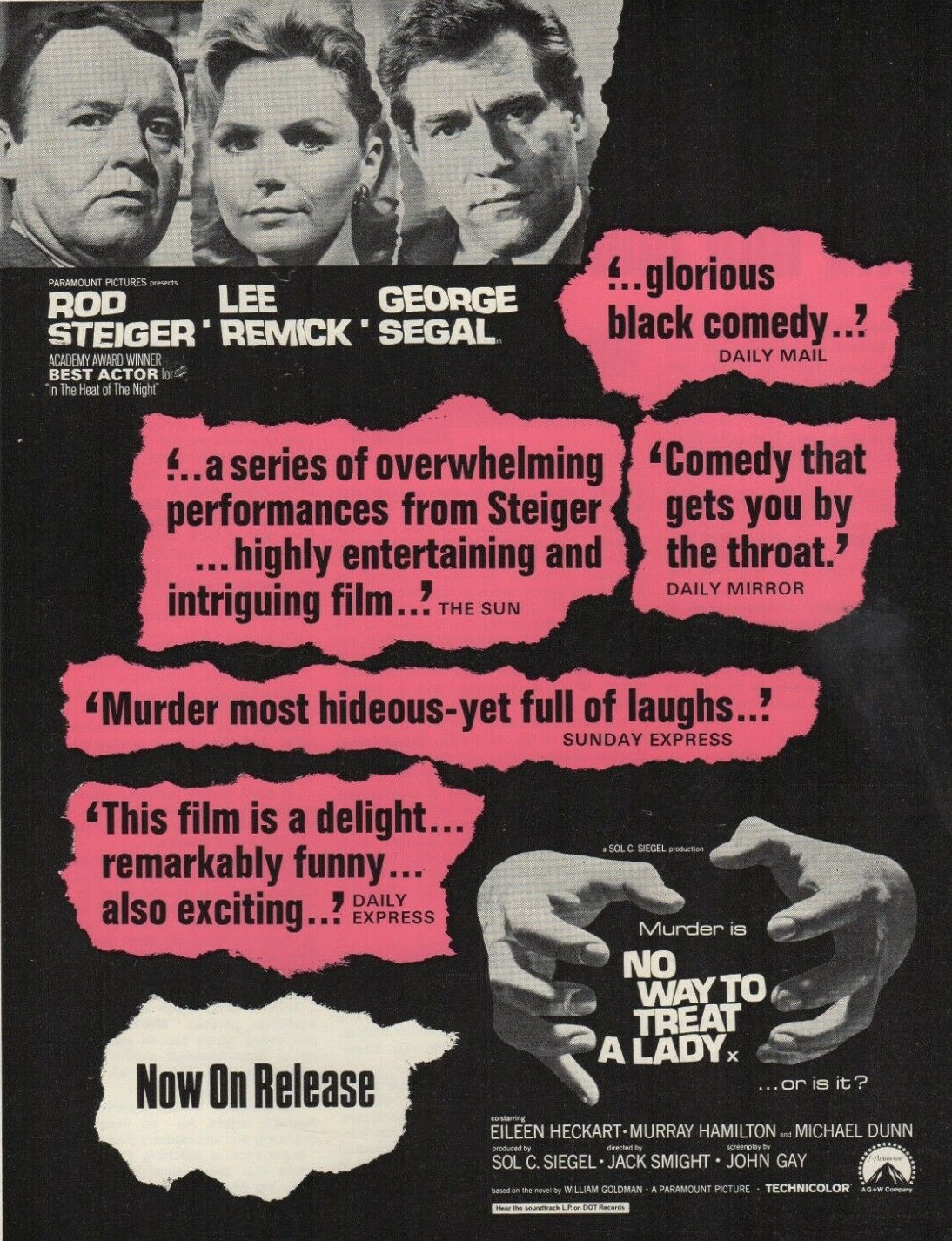
More (1969) ***

Hedonism gets a reality check but not before it’s done a pretty good job of marketing Ibiza as an idyllic setting and just the place to accommodate anyone wanting to get high on drugs. Despite being the directorial debut of French producer Barbet Schroeder (Reversal of Fortune, 1990), the movie’s better known for the soundtrack created by Pink Floyd.

Which is a shame because despite the focus on the beautiful people living in an exotic world, and plugging, it has to be said, the delights of marijuana as the drug du jour, and not wandering down any cinematic cul de sac like visually exploring in subjective fashion the effects of an LSD trip, it fairly captures the free love counter culture paradise of the time where you could chill out in the sun and you didn’t need to be a biker to do it.  

Estelle (Mimsy Farmer) is the lissom siren who hooks the far from innocent Stefan (Klaus Grunberg) – an ex-student, he has indulged in a bit of burglary – and introduces him to pot, Ibiza and heroin in that order. He finds his own way to other indulgences like a menage a trois. There’s an older drug dealer (Heinz Engelmann) in the background and some pals, Charlie (Michael Chanderli) and Cathy (Louise Wink), fleetingly hover into vision, but mostly it’s a two-hander, and there’s none of the despair and nihilism of drug addiction nor the moralistic overtones of a Hollywood picture too frightened of even the more enlightened censor to dare suggest you can have your cake and eat it.

There’s not much story, just the pair falling in love and hanging out, and Stefan wanting to experience the “more” that has made Estelle so impervious to life’s downturns. When he discovers her secret is heroin he wants to turn on in similar fashion and loving lover that she is she obliges. He can’t handle it the way she can and he’s the one that goes over the edge and dies of an overdose. But the director doesn’t resort to any moralizing at the end, this is no wake up call for Estelle, and there’s no sense of guilt, he’s just another handsome ship passing in the night.

The film’s best at exhibiting the easy living, the relaxed lifestyle, of the drug community where ownership is forbidden and life is cheap. It’s filmed as a romance, glorious settings made more glorious by the cinematography of Nestor Almendros (Days of Heaven, 1978).

Mimsy Farmer (Spencer’s Mountain, 1963) is the standout, making the jump into adult roles with ease, presenting an amoral character whose main aim in life to find the deepest sensory experiences. Klaus Grunberg, on his debut, is really just swept along like some flotsam in her attractive wake. Even when Farmer is stoned and really out of it she captures the camera, and while her character is essentially unattractive, it takes some pretty good acting to keep the audience from coming to that conclusion.

The act of shooting up was innovative for the time – and censored in some countries – but it’s not presented as anything but an extension of freedom, liberation of self a la LSD, and even Stefan’s death, the grittiest scene, comes over as mere collateral damage.

That it works is mostly due to Farmer’s performance and Schroeder’s lack of prurience. While there’s abundant nudity, and Estelle makes out with a gal and then enjoys a threesome, there’s no sense of sexploitation, which creates quite a different atmosphere to the more sensational movies of the time. Best of all, in deliberately moving away from heightened drama and turgid instincts that might focus instead on such elements like jealousy or guilt, the director allows the audience to make up its collective mind.

And if you get bored, there’s always the soundtrack and scenery.

Interesting depiction of elusive nirvana.

A Fine Pair (1968) ***

Essentially an Italian take on the slick glossy American thriller in the vein of Charade (1963), Arabesque (1966) and of course Blindfold (1966) which previously brought together Rock Hudson and Claudia Cardinale. Produced by Cardinale’s husband Franco Cristaldi, directed and co-written by Francesco Maselli (Time of Indifference, 1966), it is a cute variation on the heist picture. Fans accustomed to seeing the more sultry side of the Italian actress (as in The Professionals, 1966) might be surprised to see how effective she is in more playful mood apart from one scene where she strips down to bra and pants. The other major difference is that in her American-made films, Cardinale is usually the female lead, that is, not the one driving the story, but here she provides the narrative thrust virtually right up until the end.

The twist here (as in Pirates of the Caribbean nearly four decades later) is that the bad guy (in this case bad girl) wants to return treasure rather than steal it.  Esmeralda (Claudia Cardinale) arrives in New York to seek the help of Capt. Mike Harmon (Rock Hudson), an old family friend, a stuffy married American cop who even has a timer to tell him when to take his next cigarette. She has come into jewels stolen by an internationally famous thief and wishes to return them to a villa in the Alps before the owners discover the theft. The bait for Harmon is to try and apprehend the guilty party.

The audience will have guessed the twist, that she is not breaking in to return jewels, but once Harmon, through his police connections, has been shown the alarm systems, to deposit fakes and steal the real thing. So Harmon has to work out an ingenious method of beating three alarm systems, one of which is heat-sensitive, the whole place “one big safe.”

Most of the fun comes from the banter between the principals and the is-she-telling-truth element essential to these pictures. “I lied – and that’s the truth,” spouts Esmeralda at one point. I disagree with a common complaint of a lack of chemistry between Hudson and Cardinale. What the film lacks is not enough going wrong such as occurred in Man’s Favorite Sport (1962), which makes the audience warm to the otherwise rigid Hudson, or as seen in Gambit (1966) where Michael Caine played a similar stand-offish character. Cardinale is terrific in a Shirley MacLaine-type role, as the playful foil to the uptight cop, and who, like MacLaine in Gambit, knows far more than she is letting on.

What does let the film down is that it is at cross-cultural cross-purposes. As mentioned, this is an Italian film with Italian production values. The color is murky, way too many important scenes take place outside, but, more importantly, the actual heist lacks sufficient detail, and post-heist, although there a few more twists, the film takes too long to reach a conclusion. But for the first two-thirds it is a perfectly acceptable addition to the heist canon, the script has some very funny lines, Cardinale is light, charming and sexy.

The American title of this film was Steal from Your Neighbor, which is weak. A Fine Pair while colloquial enough in America has, however, an unfortunate meaning of the double-entendre kind in Britain.

Lack of films being released – these days due to the pandemic – is not new. A Fine Pair was made during a time of low production. But there was a sickening irony in the story of this film’s production. It was financed by the short-lived Cinema Center owned by the American television network CBS. When television was in its infancy, American studios had been barred by the Government from becoming involved in the new media. CBS got into movie production after studios had suffered from another governmental policy reversal.

In 1948 the Paramount Decree prohibited studios from owning cinemas, a move which led to the end of the studio system and decimated production. The most sacrosanct rule of American film regulations was that studios could not own movie houses. Everyone assumed that applied the other way until in the early 1960s cinema chain National General challenged the ruling.

By this point, production was so low that exhibitors were crying out for new product so the government relented, much to the fury of the studios. That opened the door for television networks like CBS and later ABC (Charly, 1968) to enter movie production. And now, of course, studios have re-entered the exhibition market as have, once again, television companies.

Entertaining enough and the pair have enough charisma to see it through.

Sam Whiskey (1969) ***

You don’t realize the importance of treatment until you see an interesting story mangled. Taking the comedic approach to a heist picture is tricky. You can’t just make it happen because that’s what the script says, you’ve got to prove to an audience that whatever takes place is believeable. And frankly, asking three inexperienced dudes to smelt down a ton of gold and sneak it into a government building in the shape of a bust (the statue kind, not the other) and then smelt it back down again while inside and turn it into gold bars is a stretch too far.

This is amiable enough as far as it goes, and Burt Reynolds gives his good-ol’-boy routine a try-out, Angie Dickinson strays from her usual screen persona, and it does present some interesting screen equality – a Yaqui Indian shown as someone you would pay a debt to, Ossie Davis making a pitch for the African American acting crown.

I saw this double bill at the time of original release.

But it’s bogged down in a cumbersome plot that I guess many in the audience, like me, would have been begging for a switcheroo at the end that made more sense for the genre.

So, bear with me, Laura (Angie Dickinson) hires ex-gambler Sam Whiskey (Burt Reynolds) to retrieve $250,000 worth of gold ingots lying inside a sunken riverboat at the bottom of a river. Fair enough, you think, it’s the nineteenth century, nobody would be able to hold their breath that long to attempt to retrieve it even one gold bar at a time.

But she only wants the gold back to satisfy family honor. You see, her dead husband was in charge of transporting the gold to the local mint and to cover up his calmaity he replaced the gold with ingots made of lead. And hold on, there’s more, a Government inspector is due at the mint.

So, Sam and his buddies, blacksmith Jed (Ossie Davis) and strongman turned inventor O.W. Bandy (Clint Walker) have not just to recover the gold, and resist the temptation to simply spirit it away over the border, but find a method of getting it back inside the mint without anyone knowing and at the same time smuggle out the false ingots.

Of course, Laura has a blueprint of the plans of the mint so that’s okay then. And there’s a bust of her dead husband in the hallway of the mint and if Sam can just find the right excuse to take it away – and bearing in mind he has no obvious mold to use to re-cast it – he can re-make it in gold, return it, sneak it down into the smelting room and turn it back into gold bars.

Yes, the story is that complicated. Sam is only prevented from stealing the haul for himself by the seductive presence of Laura, who also has to act femme fatale enough to waylay the real inspector, whose identity Sam steals. I was praying that Laura, who seemed to be too good to be true what with all that family honor, was actually playing Sam for a patsy and that what was being removed from the mint was the real gold and what was being substituted was the fake.

No such luck. And this might well have worked if it had been treated seriously, if Sam was a famous robber, and if the director hadn’t interrupted proceedings every few minutes with some woeful comedy music and littered it with non-sequiturs or even provided a decent villain apart from Fat Henry (Rick Davis) and his motley crew who suspect something is up and attempt to hijack the gold before it reaches the mint.

And it’s a shame because the leading players are all an interesting watch. Burt Reynolds (Fade In, 1968), still a few years short of stardom, takes a risk in playing his character in light comedy fashion, coming off second best in his opening encounter with Jed. Angie Dickinson (Jessica, 1962) is far too genteel to play the femme fatale and it’s clear she only goes down the seduction route when Sam balks at the barminess of the idea, but it’s equally clear she’s the brains of the operation, and that’s pretty much a first in the western robbing business, and her character is so deftly acted that it’s only later, when you add everything up, you realize the depths of the character and that’s she only allowed audiences a glimpse of the surface.

Ossie Davis (The Scalphunters, 1968) doesn’t attempt the obvious either. He’s not after the Jim Brown action crown. He can look after himself with his fists, but he’s got the intelligence to avoid getting trapped by violence. And Clint Walker (The Great Bank Robbery, 1969), also primarily playing against type, is a muscular version of the crackpot inventor you usually found in a British comedy, but who is capable of coming up with an early version of  diving equipment. And he has a great line that despite endless rehearsal he muffs up, “Aha!” he proclaims, battering in a bedroom door, in best Victorian melodrama fashion, “I caught you trifling with my wife.”

So it’s worth it for the performances and if you ever hankered after the seminal shot of a squirrel overhearing a conversation or wondered how many shots in one movie a director could contrive to make through a small space then this is for you. Screenwiter William Norton (The Scalphunters) had better luck with other directors but here Arnold Laven (Rough Night in Jericho, 1967) takes a wrong turning. Amiable is not enough, certainly not for a complicated heist picture.

Angie Dickinson and Burt Reynolds completists, though, will not want to miss this.

How Sweet It Is (1968) ***

You’d have thought by now leading men would be running shy of Debbie Reynolds, aware just how easily she would steal the picture out from under the top-billed star (witness Goodbye Charlie, 1964). But she had producers clamouring for the fizz she brought. Her comic skills, and willingness to entertain slapstick, were matched only by Doris Day. Especially helpful when she’s saddled with a convoluted plot that’s one-third generation gap comedy, one-third If It’s Tuesday It Must Be Belgium and one-third the kind of creative thinking that determines that somehow or other the female star must end up in a brothel. Throw in some flower power, split-screen, stills montage and slow-mo and you’ve covered all the bases.

In this hit-and-miss line-up, by far the most amusing element is that it’s the adults – photographer Grif (James Garner) and wife Jenny (Debbie Reynolds) – who are sex-obsessed, sneaking away at every opportunity for a bit of hanky-panky, trying to avoid the disapproving eyes of their virginal teenage son Davey (Donald Losby).

An odd example of creative license here. Poster designers had decided that red was the color no matter what. In the last section of the movie Debbie Reynolds parades in a blue – not red – bikini and the book on which it is based is called “The Girl in the Turqoise Bikini.” I’m not sure the color of the bikini is that much of a plot point unless it’s to hook readers of the original novel, but it’s mighty strange for the poster people just to change the color.

The narrative determines that Davey joins girlfriend Bootsie (Hilarie Thomson) and her lithe gal pals on a tour of Europe accompanied by Grif who has been commissioned to photograph the trip. Much to Grif’s horror, Jenny decides she’s going to follow them and hires out a swanky pad where the grown-up lovebirds can make a nest at some undetermined point.

The picture quickly loses interest in Grif and the girls, beyond an attractive tour guide making a pass at Grif and of course their bus getting stuck in the mud. Not only is the Jenny segment more intriguing – turns out she’s been conned by Gilbert Tilly (Terry-Thomas) into handing over a thousand bucks for a chalet he’s not entitled to hire out – because she gets romanced in high French style (champagne and flowers in case you’re bursting to know) by legal lothario Philippe (Maurice Ronet) and every now and then finds herself wearing little more than a bikini and sometimes nothing at all.

Takes a heck of a long time for the two stories to dovetail so that Grif can flounce off in a huff, punch the living daylights out of the Frenchman, and give the screenwriter the excuse to plonk Jenny down in a brothel (that part, I have to admit, is neatly done). There’s also some unusual class comedy at the chateau, Philippe initially being mistaken for a butler, then having to bunk down with his servant because (guess what) this mansion has only one main bedroom.

For no apparent reason there’s an odd section at the start. Instead of flying to Europe, they take the ship and for no apparent reason they’re stuck on C-deck with a lip-pursing purser (Paul Lynde) who insists males and females must sleep apart and share cabins with strangers. Slot into the miss department the opening with the old trope of the husband coming home to find his wife in bed with another man, except it’s Davey and the parental lovers are enjoying some afternoon delight, though quite how you can stretch that to Davey taking a carving knife up the stairs beats me.

James Garner is no more convincing a photographer than he was in The Pink Jungle (1968) and he hardly gives Debbie Reynolds a run for her money, as if he doesn’t know how to bring this character to life. Except for excelling at the risqué, and she a willing accomplice, he’s coming over like the straight man to her comedienne. Debbie Reynolds is superb, reactions honed to the bone, throwing herself into the part, undergoing whatever humiliation will snare a laugh.

Garner briefly resurrected his career with Support Your Local Sheriff (1969) before he hit the slide (see the previous Behind the Scenes article) and to my astonishment this signalled pretty much the end of Reynolds’ screen career, nothing for the next decades except What’s the Matter with Helen (1971) and a bit part (as herself) in The Bodyguard (1992). You can hardly blame her for screenwriters not coming up with the right material to take advantage of her supreme comedic gifts. Alexandra Hay (The Model Shop, 1969) is wasted, you might just as well have dabbed her role “the sexy blonde.”

Director Jerry Paris (Never a Dull Moment, 1968) throws everything he can at the screen without much success. Future director Garry Marshall (Pretty Woman, 1990) and producer Jerry Belson (Fun with Dick and Jane, 1977) in his movie debut formulated the screenplay from the bestseller by Muriel Resnik.

Far from the last comedy hurrah you would have wished for the actress, but all you’re going to get.  

The Hill (1965) ****

Set in a British Army prison camp in North Africa during World War Two ruled by sadistic Sgt Wilson (Harry Andrews) who believes himself above the regulations he forces others to follow, The Hill is a parable about the hypocrisy of totalitarian rule. And much of what is shown would be offensive to modern sensibilities.

Although the commandant and medical officer (Michael Redgrave) are his superior officers, Wilson runs the unit by force of personality. He believes his ruthless treatment of the prisoners turns them into proper soldiers. Into his fiefdom come five new prisoners including coward Joe Roberts (Sean Connery), spiv Monty Bartlett (Roy Kinnear), African American Jacko King (Ossie Davis) – a “different colored bastard” – another Scot Jock McGrath (Jack Watson) and weakest link George Stevens (Alfred Lynch).

Most films about prisons emphasize imprisonment, most scenes taking place in cells or other places of confinement. Sidney Lumet (The Pawnbroker, 1964) directs this film as though it is a paeon to freedom with incredible shots of the vista within which the men are contained. He uses some of the most bravura camerawork you will ever see outside of David Lean.

The film opens with a two-minute crane shot credit sequence that pulls back from a prisoner collapsing on the titular hill to reveal the entire encampment and follows with a one-minute reverse tracking shot of Wilson striding through his domain. And while the camera controls what we see, our ears are constantly assailed by the constant drumbeat of other marching prisoners. 

Climbing the hill in full pack would break any man and those who collapse are roused by buckets of water. The first to crack is Stevens who is constantly tormented by homophobic jibes. Continuous racist abuse is heaped on Jacko King “you blacks don’t have brains – you got it downstairs, we got it upstairs” until driven to the point of madness he begins to behave like a gorilla which frightens the life out of his superiors.

Obeying orders, says Joe Roberts, is “like a dog picking up a bone.”  RSM Wilson is out of control, the commandant spending his nights with a prostitute, the medical officer clearly sent here as punishment for some previous misdemeanor. Of the senior staff only Harris (Ian Bannen) comes away with any dignity, constantly trying to thwart the worst bullying.

When Stevens dies suddenly, the film changes tack and becomes a battle for survival among those who could be blamed for causing his death and those who dare to point the finger.  Wilson has no problem stitching up his colleagues and blackmailing the medical officer while Roberts is beaten up for his effrontery in standing up to authority.

But the astonishing presence and self-confidence and, it has to be said, courage of Wilson lords it over everyone, and there is an extraordinary scene where he forces the entire battalion of prisoners to back down when they are on the brink of open rebellion.

Connery is superb in what is his first dramatic role in a bread-and-butter dramatic production rather than the glossier Marnie (1964) and Woman of Straw (1964) and while he has his moment of defiance he gives enough glimpses of vulnerability and fear to ensure we do not mistake him for his alter ego James Bond. Ian Bannen delivers a touching, assured, performance, far removed from the nasty sarcastic personalities he portrayed in his other desert pictures, Station Six Sahara (1963) and the Flight of the Phoenix (1965). 

Ossie Davies (The Scalphunters, 1968), as defiant as Connery, is brilliant as the man who works out a way to beat the enemy by confusing them; the scene in the commandant’s office where he treats the officer as his inferior is a tour de force.   

Although the Army is meant to run according to established regulation, where obedience to a superior is paramount, it is equally apparent that it can also become a jungle if those who are the fittest assume control. Sgt Wilson demands unquestioned discipline even as he is breaking all the rules in the book. But he retains his authority not just by bullying, but by intelligence, exploiting weakness, coolness under pressure and by welcoming confrontation, his personality as dangerous as any serial killer.   

Harrowing, superb, true.

Riot on Sunset Strip (1967) ***

Catholic high school girls in trouble? Call Sam Katzman. Delinquents, crazed by music or booze or sex or drugs (maybe all four), on the rampage? Call Sam Katzman. Thugs, to quote from Johnny Cash, keen to “watch a man die?” Call Sam Katzman. The new generation threatening to swamp the old? Call Sam Katzman. Require a sensuous lass in tight clothes to perform an Ann-Margret-style number? Call Sam Katzman.

Legendary five-and-dime producer Sam Katzman, with over 200 pictures in his portfolio, had put his stamp on everything from the East Side Kids and jungle flicks to horror, westerns and sci-fi. Any new genre with rip-off potential, he’d be first in the queue. Forget knives and guns and fists, music was the most dangerous weapon, over-exciting the young.

“Girls in Hot Leather” is the bait-and-switch Italian title.

So no surprise then to find the man behind Rock Around the Clock (1955) and Calypso Heat Wave (1957)  also responsible for Teenage Crime Wave (1955), New Orleans Uncensored (1955) and Hot Rods to Hell (1967). Or that he’s an exponent of the old bait-and-switch here – no riot here that I could spot.

And probably over-emphasis on earnestness for a potential exploitationer, from the occasional intrusions of a pseudo-documentary voice-over to the grown-ups debating the causes of the latest outbreak of teenage rebellion, long hair, marijuana, popping pills and energetic dancing. That said, it’s even-handed, adults blamed for the divorce plague that leaves youngsters alone and vulnerable, cops too prone to violence, greedy businessmen and characters with right-wing tendencies causing the problem or making matters worse. “They’re just kids,” spouts earnest top cop Lorrimer (Aldo Ray), “they could be your sons and daughters,” not realizing one of them is.

Away from the grown-up talk-fest, the kids sit either numb listening to loud rock bands in far from sleazy clubs or on the dance floor pounding away to the beat, in either case not having much to say to each other, and inevitably ending up out the back door smoking a quiet joint or gathering in some pretty fancy home for a tripping party

Andrea (Mimsy Farmer), a youngster from a broken home living with her drunken mother, falls in with a bunch of teenagers who hang out in these hard-wired locales. Initially, she resists joining in, and perfectly innocent when caught up in a scuffle. But when supposed cool dude Herbie (Schuyler Hayden) spikes her drink with some acid at a party she turns all Ann-Margret, and is allocated a near six-minute slot to shake her stoned booty, leading the aforesaid Herbie to take her upstairs and take advantage. Doesn’t end well for Herbie as she’s under-age.

Turns out, too, Andrea is not so much the long-lost as abandoned daughter of Lorrimer and when he goes into rescue mode she gives him both barrels. “You left me alone for four years, let’s keep it that way,” she snaps. Apprised of her situation, he sets about the youngsters with his fists.

That supposedly leads to the riot. But it’s no more than the mildest of protests as he has to endure a Walk of Shame a la Game of Thrones (though with clothes on) and, bizarrely, becomes the poster boy for both police brutality and for anti-police-brutality. Natch, there’s a tacked-on happy ending but not before the voice-over can intone in apocalyptic manner: “Half the world’s population is under 25. Where will they go? What will they do?”

I had come at this because I was intrigued to discover Mimsy Farmer as the junior minx in Spencer’s Mountain (1963) and as she was overshadowed by Ann-Margret in Bus Riley’s Back in Town (1965) wondered how her career had progressed. Presumably come to a standstill, otherwise she wouldn’t have ended up in a B-picture cul de sac. She puts in a good performance, however, miles away from the lively youngster of the Henry Fonda picture, withdrawn, anxious, not fitting in.  

A good chunk of the picture is wasted, from today’s perspective, on no-name bands and not much happening, but the talk-fest aspects prove that little has changed in the way the grown-ups misunderstand the young and much the same arguments for reining in the supposedly out-of-control teenagers are still being trotted out today. But it does point a prescient finger at marriage break-up (the fault of the grown-ups doing much of the blaming) as a root cause of teenage misbehavior and contemporary audiences will only be too familiar with predatory males spiking drinks.

Aldo Ray (Welcome to Hard Times, 1967) would be the marquee name, but you try and compete with a lithe teenager who says more in her six minutes of pent-up emotion and the resultant dancing than all the time spent on earnest debate. Laurie Mock (Hot Rods to Hell, 1967) is the wildest of the females.

Director Arthur Dreifuss was a Katzman regular but was also responsible for the movie version of Brendan Behan’s The Quare Fellow (1962). Screenwriter Orville H. Hampton had a surprising pedigree with Cage of Evil (1960) and Jack the Giant Killer (1962) and Oscar-nominated for One Potato, Two Potato (1964).

More absorbing than I expected and Mimsy Farmer’s trip a lot more interesting than Peter Fonda’s.

An American Dream / See You in Hell, Darling (1966) ****

The Stuart Whitman Appreciation Society kicks into high gear with this under-rated drama. A huge flop and critically savaged at the time, its bitterly sardonic existentialist center will appeal more to contemporary audiences.

Norman Mailer, author of the source novel, was a hugely controversial public figure. A magnet for alimony, writer of sledgehammer prose, his filmed bestsellers (The Naked and the Dead, 1958) hit the box office with a heavy thud, climaxing in the disastrous Tough Guys Don’t Dance (1987). Politician, avant-garde film-maker (Maidstone, 1970) and leading exponent of the “new journalism” (The Armies of the Night, 1968), his works were exceptionally tricky to translate onto the screen.

This one picks its way through a flotilla of heavyweight themes – corruption, entitlement, the Mafia – by focusing on a trio of flawed characters dogged by ideals amd let down by reality. War hero crusading journalist and television’s version of a “shock jock”, Stephen Rojack (Stuart Whitman) is weary of beating his head against a legal brick wall in his bid to bring to justice Mafia lynchpin Ganucci (Joe de Santis). But he’s also extremely done in coping with adulterous alcoholic heiress wife Deborah (Eleanor Parker).

When he asks for a divorce she retaliates with violence and scathing verbal abuse. In the scuffle that follows she teeters off the ledge of their penthouse apartment. In his defence Stephen might well have claimed self-defence given she tried to crown him with a huge rock, or at the very least relief (although admittedly that has little legal standing), but instead opts for suicide. In revenge for Stephen’s ongoing slating of the police and because the deceased is daughter to exceptionally important entrepreneur Kelly (Lloyd Nolan), the eighth richest man in America, the cops try to pin on him a murder rap. The charge is really a moral one, and equally as ruinous to a fast-rising career, that while he may not have pushed her he didn’t act to save her.

As it happens, and apparently coincidentally, Ganucci happens to be passing the penthouse at the time the woman hits the deck. Equally, coincidentally, riding with him is his moll Cherry (Janet Leigh) a wannabe singer whose only gigs are in Mob-owned night clubs.

But Ganucci’s presence turns out not to be coincidental after all. He was on his way to straighten Stephen out, possibly intending to use blackmail since Cherry is a stain on Stephen’s supposedly unblemished past. The cops are ferocious in their grilling, and adopt an unusual amount of forensic evidence for the time. Stephen would probably have come apart quicker had it not been for rekindling romance with Cherry, which, unexpectedly, provides the hoods with a lure to reel him in.

The satire is mostly reined in – cops unable to catch the real murderous Mafia pick on the guy who’s picking on them, Stephen’s business partners latch on to his sudden publicity/ notoriety to negotiate a multi-million-dollar pay rise with, natch, a rider in the contract negating it should he be found guilty. The drama is characters racing headlong towards fleeting happiness, the tiny morsels of hope that might filter down from the unacheivable American dream.

The performances carry it. What was it in Stuart Whitman (Shock Treatment, 1964) that drew him towards characters given a hard time? Whatever it was, he rode it in spades and here he presents his most complex character to date, oozing suspicion, suffocated by guilt, believing that all will come right in the end if he has a good woman by his side, not realizing that Kelly knows only too well which side her bread is buttered on. Janet Leigh (Grand Slam, 1967) plays very much against type as the hard-eyed chanteuse but Eleanor Parker (Warning Shot, 1966) essays one of the best – and most vicious – drunks (and lost souls drowning in a sea of wealth) you will ever see.

Not to be outdone, director Robert Gist (Della, 1965), pulls off some neat scenes, opening with a shot of a naked Eleanor Parker clad only in dark sunglasses watching television, using camera movement to put claustophobic heat on Whitman during interrogation scenes (Christopher Nolan’s interrogator in Oppenheimer apes his trick of pushing his chair close to his victim), portraying the flimsy sexiness of Parker in flimsy negligee, all the time not letting Whitman escape from his internal demons.

Perhaps, more boldly, rather than, as would be the contemporary temptation, treating Deborah’s death as a mystery, the details only unfolding bit-by-bit and leading to a hairy climax, Gist shows her death and lets the audience make up its mind what part Stephen played in it. The downbeat ending, too, would sit more easily with the contemporary audience. Mann Rubin (The Warning Shot, 1967) knocked out the screenplay.

This finished off Whitman’s career – he didn’t make another movie for four years and then ended up in B-picture limbo, directors more interested in his square jaw than the inner confusion he was so deft at portraying.  

Well worth a look.  

Spencer’s Mountain (1963) ****

Lot feistier than the heart-warming genre might suggest with the usually restrained Henry Fonda (Advise and Consent, 1961) coming over like he’s had a gagging order lifted, letting rip not just with a plague of cuss words but damning to Hell every hypocrite under the sun. A perfect example of the haves and have-nots where to become elevated to the former you need to know your Latin.

Despite loathing religion, quarry miner Clay (Henry Fonda) has got quite the Biblical spirit, no intention of girding his loins when he can sire nine kids, a heck of a crew to support from meager wages. He enjoys the kind of pleasures – add alcohol and gambling to his lust – that his God-fearing neighbors find objectionable, though they put those aside when he’s neighbourly enough to carry out repairs on their property for no charge.

When wife Olivia wants him to break open the piggy bank to fund a graduation ring for their oldest, Clayboy – what was wrong with just calling your kid Junior, I wonder – (James MacArthur), her dream clashes with his. He’s already spent the money on the power saw he needs to cut down to size the logs with which he is building his dream house, a bigger building, and brand-new, so his offspring don’t need to sleep five or six to a room or on the floor.

Clayboy is astonished to discover he’s the top dog at school but winning the class medal opens doors poverty prevents him getting through. Even when the local pastor Clyde (Wally Goodman) finds a last-minute loophole, Clay’s excellent grades don’t meet qualification criteria for college, he’s lacking in Latin.

But if there’s one thing Clay has learned to overcome, it’s adversity and soon a scheme is hatched. But even that has a drawback. A scholarship won’t cover all the costs. While Olivia accepts the principle that God intended them to be poor, Clay rejects that notion, the kind that keeps the downtrodden in their place, denying them the opportunity for betterment that comes with education.

This ain’t no sermon but it’s not The Grapes of Wrath either. Poverty hasn’t kicked the living daylights out of everyone but nobody seems able to catch a break even when one is floating tantalisingly close. Ain’t a family saga either, covering too short a period of time, and little but a series of loosely-connected episodes that eventually come together.

Clay gets the preacher in the mire for filling him full of booze, telling him it’s a cure for mosquito bites, while the pair are fishing. Public revulsion at the drunk pastor loses the preacher his congregation. Clay sorts it out by berating the churchgoers as hypocrites and threatening to withdraw his free labor when it comes to repairs. Come the Latin crisis, turns out the preacher was an ace scholar in the subject and can do the teaching, on the condition that the anti-religious Clay attends church.

In the meantime, there’s another kind of education required of Clayboy. Claris (Mimsy Farmer), whose training extends to reproduction and pores over the unexpurgated dictionary, gleefully hovering over the dirty words, has to teach the young man that a young woman wants more than whispers in the ear and bunches of flowers. Unfortunately, Clayboy has another suitor Cora (Kathy Bennett) who doesn’t take kindly to him rejecting her advances and when the opportunity arises to sabotage his plans does so with pleasure.

This is a film about working people. Not labor as such, and not about labor unrest or agitation either. In the way of Witness (1985), there’s a great scene (minus the soaring music of course) of constructing a wooden building, there’s men drilling and hammering at the quarry, and a pivotal scene in chopping down a tree. People seeing the benefit of hard work are less convinced by the ephemeral attraction of education, especially when that seems either beyond their reach, out of their league or as likely to find as the end of a rainbow.

So without overly saying anything much about the class divide in the U.S. (which is unspoken anyway and assumed, what with equality and all, not to exist) this says a great deal.

Henry Fonda fills his boots. It’s a plum role and he goes for it. Certainly, it’s the opposite of all those buttoned-up parts he seemed to land. Maureen O’Hara (The Battle of the Villa Florita, 1965) has a smaller part and it’s a mercy after nine kids she managed to keep her figure. James MacArthur (Battle of the Bulge, 1965) has every scene stolen from him by the charming minx Mimsy Farmer (Bus Riley’s Back in Town, 1965). You might spot Donald Crisp (Pollyanna, 1960) in his final role.

If you equate director Delmer Daves with hard-hitting westerns like Broken Arrow (1950) and 3:10 to Yuma (1957), it’s worth remembering he had a strong romantic streak as exhibited in Rome Adventure/Lovers Must Learn (1962). But he deliberately avoids the comedy pratfall of the later Yours, Mine, Ours (1968), also starring Fonda. He wrote the screenplay based on the book by Earl Hamner Jr.

Because this reputedly led to The Waltons TV series, you could be mistaken for thinking it’s as schmaltzy. It’s anything but. Take away the lush background and the idyllic scenery and while it finally gets to a heart-warming climax it’s tougher going and with a sexuality way ahead of its time.

Great watch.  

Seven Days in May (1964) ****

Democracy is a dangerous weapon in the hands of the people. Can they be trusted to make the correct decision? That’s in part the thematic thrust of this high-octane political thriller that pits two of the greatest actors of their generation in a battle to decide the fate of the world. This was the era of the nuke picture – Dr Strangelove (1962), Fail Safe (1964), The Bedford Incident (1965) – all primed by the real-life Cuban Missile Crisis and the growing threat of the Cold War.

Just as the President (Fredric March) is about to sign a nuclear treaty with the USSR, much to the fury of the majority of Americans judging by opinion polls, Colonel Jiggs Casey (Kirk Douglas) uncovers signs of a military coup headed by hawk General James Mattoon Scott (Burt Lancaster). The movie divides into the classic three acts. In the first, Casey investigates the existence of a secret army unit in El Paso comprising 3,600 men trained to overthrow the government and needs to persuade the President the country is in danger. The second act sees the president hunting for find proof of the imminent coup and identifying the conspirators. The third act witnesses showdowns between the President and Scott and Scott and Casey.

At the heart of the story is betrayal – Scott of his country’s constitution, Casey of his friend when he takes on the “thankless job of informer.” Casey proves rather too ruthless, willing to seduce and then betray Eleanor Holbrook (Ava Gardner), Scott’s one-time mistress. Both Holbrook and the President prove to have higher principles than Casey.

For both Kirk Douglas and Burt Lancaster who operate at a high threshold of intensity and could easily have turned in high-octane performances the tension is even better maintained by their apparently initial low-key confrontations. Douglas has a trick here of standing ramrod straight and then turning his head but not his body towards the camera.  

As a pure thriller, it works a treat, investigation to prove there is a conspiracy followed by the deaths and disappearances of vital people and finally the need to resolve the crisis without creating public outcry. The only flaw in the movie’s structure is that Casey cannot carry out all the investigations and when presidential sidekicks Paul Girard (Martin Balsam) and Senator Clark (Edmond O’Brien) are dispatched, respectively, to Gibraltar and El Paso the movie loses some of its intensity. But the third act is a stunner as the President refuses to take the easy way out by blackmailing Scott over his previous relationship with Holbrook.  

Of course, there is a ton of political infighting and philosophizing in equal measure and speeches about democracy (“ask for a mandate at the ballot box, don’t steal it”) and the constitution and the impact of nuclear weapons on humanity. But these verbal volleys are far from long-winded and pack a surefire punch. The coup has been set up with military precision and must be dismantled by political precision.

The film was awash with Oscar talent – Burt Lancaster, Best Actor for Elmer Gantry (1960) and, at that point, twice nominated; thrice-nominated Kirk Douglas; Fredric March, twice Best Actor for Dr Jekyll and Mr Hyde (1931) and The Best Years of Our Lives (1946) plus  three other nominations besides; Ava Gardner nominated for Best Actress (Mogambo, 1953); and Edmond O’Brien named Best Supporting Actor for The Barefoot Contessa (1954).

None disappoint. March is especially impressive as a weak president tumbling in the polls who has to reach deep to fight a heavyweight adversary. Lancaster and Douglas both bristle with authority. Although Lancaster’s delusional self-belief appears to give him the edge in the acting stakes, Douglas’s ruthless manipulation of a vulnerable Ava Gardner provides him with the better material. Edmond O’Brien as an old soak whose alcoholism marks him out as an easy target is also memorable and Ava Gardner in recognizing her frailties delivers a sympathetic performance.

Rod Serling (The Twilight Zone) does a terrific job of distilling a door-stopper of a book by Fletcher Knebel and Charles W. Bailey II.  But the greatest kudos must go to director John Frankenheimer – acquainted with political opportunism through The Manchurian Candidate (1962) and with Burt Lancaster (The Birdman of Alcatraz, 1962) – for keeping tension to the forefront and resisting the temptation to slide into political ideology.

Johnny Cool (1963) ****

The one-man-wrecking-crew activities of the likes of John Wick or your friendly neighborhood beekeeper not to mention that Point Blank (1968) has a similar downbeat ending and the flurry of interest in retro noir should have set the reassessment alarm bells ringing. Audiences and critics have been frankly dismissive, not even wondering how a mere television director managed to hook the likes of Rat Pack dudes Sammy Davis Jr. and Peter Lawford and get an exceptionally dramatic performance from eternally cute Disneyesque Bewitched star Elizabeth Montgomery.

Perhaps it’s because star Henry Silva (The Secret Invasion, 1964) never broke out of a cycle of  B-films or small supporting role in bigger pictures or that director William Asher threw away any kudos he might have earned here by turning to Muscle Beach Party (1964) and How to Stuff a Wild Bikini (1965) and the like. Or perhaps that the makers of the aforementioned John Wick and The Beekeeper learned to leaven the innate violence of the character and render him more audience-friendly by giving him sentimental attachment to pet dogs and old ladies or some old guy robbed of his pension.

Johnny Cool (Henry Silva) has better reason than either to get mad with the world, given that as a child during World War Two he saved his mother from rape from one German soldier only to witness her killed by another. Orphaned, he was taken in by the local Resistance which later reverted back to its Mafia origins. He’s got the murder cojones, for sure, interrupting a wedding to kill off the groom.

Anyway, he’s hired by Mafia bigwig Johnny Colini (Marc Lawrence) to embark on a transatlantic sojourn and wipe out the main men of the U.S. Syndicate. Along the way, he dallies with non-combatant Dare (Elizabeth Montgomery) who later becomes complicit and then, as if this was a 1940s gangster picture seeking to avoid the wrath of the Production code, suffused by guilt turns him in.

Meanwhile, he’s on the slaughter trail. In part the gangsters are easy pickings, because they have all grown fat and in turning legitimate are out of reach of the law and in part because, just like Point Blank, nobody saw him coming or guessed anyone would have such audacity. He’s not in the do-not-disturb category of John Wick or The Beekeeper.

But he does cross a particular line that audience and critics back in the day were generally averse to. His violence is indiscriminate. He kills cops and would have inadvertently killed kids, too, if they had got in the way. There was no shortage of corrupt cops in Hollywood policiers in the 60s and 70s, but generally they weren’t executed.

He’s one step ahead of everyone and even without a standard weapon is a dab hand at improvisation. Colini has preyed upon his lack of parentage, suggesting that Cool will become a surrogate son once he has completed his mission. When that ploy is exposed and Cool realizes he is the worst kind of patsy, the movie takes a sharp right turn into the modern idiom by allowing him not to turn back and get revenge on the Italian godfather but to continue the killing spree to satisfy his own honor.

Few bad guys were as cool or charming as Johnny Cool. While his face can turn rigid and his personality entombed by inner demons, he is an adept ladies man and has the kind of easy-going manner that on the surface ensures access to dangerous area. Most tough guys, who found ways of justifying their killing, or had a soft spot for some dame, couldn’t manage the pretence for long and away from a sympathetic female so completely conceal their true identities.

Henry Silva is just terrific. This is the hit man with more style than redeeming features. And director Willam Asher plays the noir game, clever use of shadows, and a surprising quotient of aerial shots. And the ending is classic. So I won’t spoil that for you, but maybe the best twist ever in a crime picture.

Given contemporary audience and critical antipathy for Elizabeth Montgomery, this should have buried her career, but, as luck would have it, she fell in love with Asher and he handed her the leading role in his next television show – I should have mentioned he was something of a TV whizz-kid – Bewitched (1964-1972). Although she might never have met Asher at all if her first prospective female leading role had come off – she was the replacement for Debbie Reynolds in the $3.5m version of Alistair MacLean’s Night without End directed by George Seaton and a Paramount release. It was scheduled for release in 1962 but was never made.

Asher did move in Rat Pack circles, hence the involvement of Peter Lawford, in a production capacity, and Joey Bishop and Sammy Davis Jr. in small roles, with the latter lending his tonsils to the title tune.  Look out for Brad Dexter (The Magnificent Seven, 1960), Richard Anderson (Seconds, 1966), Telly Savalas (The Scalphunters, 1968) and Wanda Hendrix (The Prince of Foxes, 1949).

The pitiless avenger being in such contemporary vogue, this is worth a look.

Discover WordPress

A daily selection of the best content published on WordPress, collected for you by humans who love to read.

The Atavist Magazine

by Brian Hannan

WordPress.com News

The latest news on WordPress.com and the WordPress community.