The Battle at Lake Changjin II / Water Gate Bridge (2022) **** – Seen at the Cinema

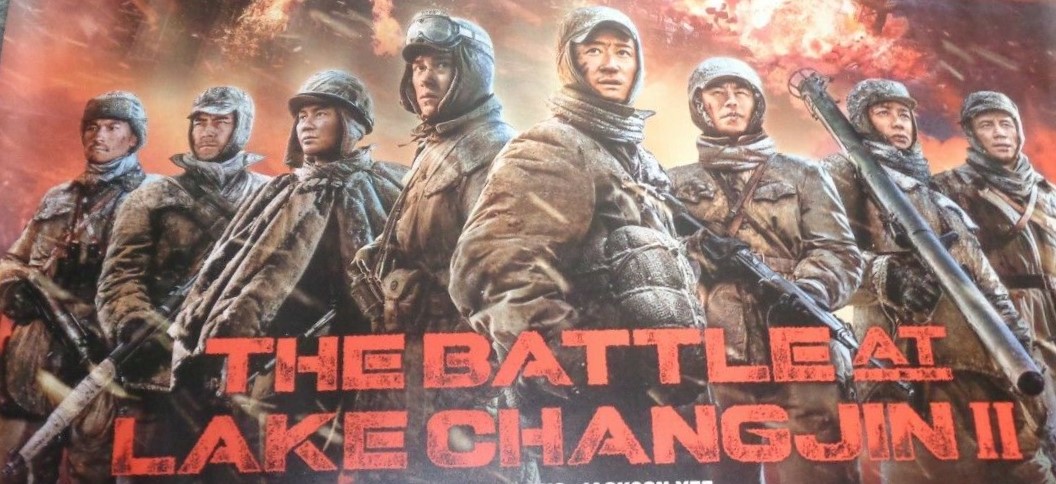
A raw visceral cinematic experience. After defeating superior American forces at Lake Changjin at the start of the Korean War, Chinese soldiers must prevent their retreat – and the arrival of reinforcements – by blowing up the Watergate Bridge in a blizzard. The bitter winter conditions, making it impossible to see more than a few yards ahead as the troops cross a mountain, freeze their weapons, compass and radio batteries. The assault is uphill over exposed ground.

This is non-stop battle told from the perspective of the grunts. Exposition regarding characters is minimal. That first hour or so in most Hollywood war movies where little happens except to build tension between participants and explore romantic elements is eliminated here. It’s all battle, beginning, middle and end, with no respite, brutal, bloody, horrific. The Americans have tanks, flamethrowers  and airpower, the Chinese don’t, so they are strafed, burned and blown up.

Setting aside politics and propaganda, and the questions of historical accuracy that haunt all war pictures, this is the most extraordinary on-the-ground combat as the Chinese seek to employ various strategies against another superior force, knowing U.S. reinforcements are on their way, and the defending Americans seek to suck them into a trap.  The fighting is intense, sacrifice the order of the day.

Best performances are delivered by brothers Wu Qiangli (Wu Jing), commander of the seventh company, and the undisciplined Wu Wanli (Jackson Lee) who grows up during battle. While emotions are necessarily reined in, no time for showboating here, intensity of feelings are still revealed, several wordless scenes between disparate characters show everything with just the eyes. As with all war pictures, comradeship under fire is all that matters, the connections between the band of brothers no less applicable here than when  William Shakespeare invented the phrase.

Like the best war films, strategy is vital. Here, the Chinese employ a variety of diversionary tactics while attempting to destroy key American positions, the HQ, the pump room. There are some brilliant battlefield observations. The Chinese work out the Americans have positioned their forces twenty meters apart because in between are their military supplies, so these are also targeted via mortar rounds. But basically it is scrapping for position inch by inch.

And this is not a film devoid of irony. Using captured American weapons, the Chinese, unable to read English, fire an ineffective piece of artillery against a tank. Seizing the HQ, the Chinese, unable to speak English, ask for the commanding office while the Americans, unable to speak Chinese and intent on surrender, respond they are unarmed, the matter resolved by an explosion. A flamethrower burning to death a wounded soldier melts the ice sufficiently for his companion to slide downhill to safety. And there are rare bursts of humour, one soldier preferring to chew “plastic” – captured chewing gum – in preference to beans so frozen they could chip your teeth.

This is as much a picture about the effect of war, and special effects show the impact of not just the destructive power but the energy imparted by exploding bombs, the part played in dismembering soldiers by the metal and stone of the defences, the flamethrowers that turn men from walking one minute to charred skeletons the next.

There are occasional cuts to the American high command, General Douglas Macarthur (James Filbird) attempts to persuade President Truman (Ben Z. Orenstein) to use the atom bomb. The Americans are not shown as idiots and there’s no upbraiding of their society and there is, among the carnage, at least one American hero in Bradley Bixler (Rudy van Gelderen). And there’s none of the bombastic or poetic influence of Apocalypse Now (1979) or The Thin Red Line (1998), no attempt to glamorize war, except of course that for the victors victory is always unforgettable. But the cost here is easily measured, the mortality rate enormous, at least two-thirds of the attackers died in the assault and in one company, out of 137 men involved, only one man was left standing.

I never saw the first film so I’ve no idea how this compares, but generally that movie got poor reviews, I guess as much to do with political stances as anything else. I suspect this picture will get as derisory a stack of reviews and, without taking sides, that would be unfair from a cinematic perspective because this is a wholly immersive encounter, with some brilliant action direction and stunning visuals in the main by Tsui Hark (The Taking of Tiger Mountain, 2104) with some assistance from the uncredited Kaige Chen (Farewell My Concubine, 1993) and Dante Lam (The Stool Pigeon, 2010).   

This is what comes of being an inveterate moviegoer and on those weeks when you have seen virtually everything else worthwhile on offer and still want to go to a movie, you end up seeing anything. Usually, this turns out to be some bedraggled horror picture or a lame rom-com like Marry Me (2022) but occasionally it means that you stumble across something exceptional.

The Ugly American (1963) ***

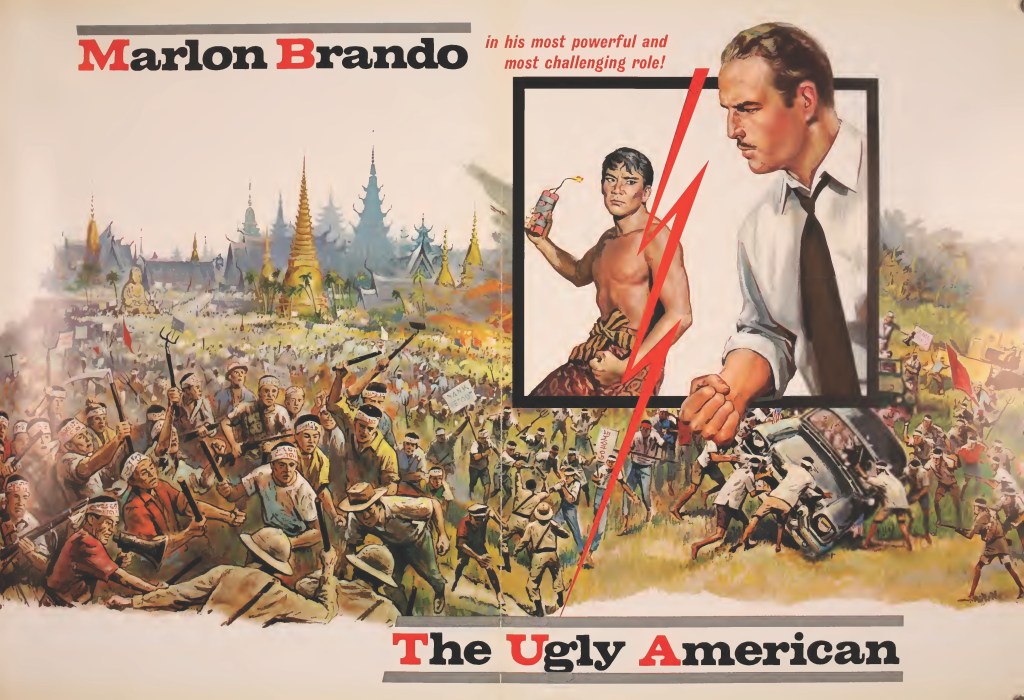
Terrific performance from Marlon Brando saves this prescient but preachy meditation on Vietnam. Harrison MacWhite (Marlon Brando) is the new ambassador, whose political credentials are questioned by many,  parachuted into the fictional South-East Asia country of Sarkhan, knee-deep in civil war, communist north versus westernized south. The battleground is the American construction of a “Freedom Road” north to China which dissenters fear will be a conduit for the military. MacWhite owes his appointment to his friendship with Deong (Eeji Okada), a charismatic leader.

On arrival, the ambassadorial car is engulfed in a riot, car rocked, windscreens smashed. MacWhite shakes up a complacent embassy and though articulate and scholarly believes he holds the solution to the tricky situation while unwilling to accept that national self-determination does not necessarily mean complete hatred of the Americans. There is duplicity on both sides, rebels blaming U.S. truck drivers for deaths they caused, the Americans so used to getting their way they don’t stop to think if it is the right way.

Anxious not to be seen as a lapdog for Communism, MacWhite’s actions inflame the situation, while Deong falls victim to internal forces. Construction boss Homer Atkins (Pat Hingle) promotes the clever use of building hospitals along the road, thus encouraging locals to back it, but nobody falls for such honest skull-duggery masquerading as well-meaning intent.

Friends turning into enemies is a decent premise for any movie but this is over-burdened with debate that while interesting and providing a reflection of the times is basically a mixture of virtue-signalling and apportioning blame and, most heinous of failings, doesn’t really advance the story.

First-time director George Englund handles the action sequences well and captures the essence of a country about to explode against a background of growing tension and political machination. Use of Thailand as a location added authenticity.

The movie was based on a controversial novel by political scientist Eugene Burdick (who also wrote a more straightforward cold War thriller Fail Safe) and William Lederer, navy veteran and CIA officer, so it carried the stamp of authority in terms of putting forth the arguments for both sides. However, while the film bore only a “passing resemblance” to the book, according to co-author Burdick, he deemed it a superior achievement on the basis of its more dramatic treatment. Stewart Stern (Rebel Without a Cause, 1955) was the screenwriter who received blame and praise in equal measure.

Marlon Brando (Bedtime Story, 1964) exudes authority, broad shoulders packed into a suit, and brilliantly captures the anguish of a man led into disaster by arrogance. Coming off back-to-back flops One-Eyed Jacks (1961) and Mutiny on the Bounty (1962), this was a considerable change of pace for the actor, the first of several excursions into political territory. Eeji Okada (Hiroshima, Mon Amour, 1958) proves a worth opponent. Pat Hingle (Sol Madrid, 1968), Arthur Hill (Moment to Moment, 1965) and Jocelyn Brando (The Chase, 1966) provide sterling support.

The movie did not just predict what would happen if the U.S. lost the battle for hearts and minds but a similar situation confronting the U.S. Ambassador to Indonesia in 1965 whose appointment was unwelcome in that country.

You can catch this on Amazon Prime.

Castle Keep (1969) ****

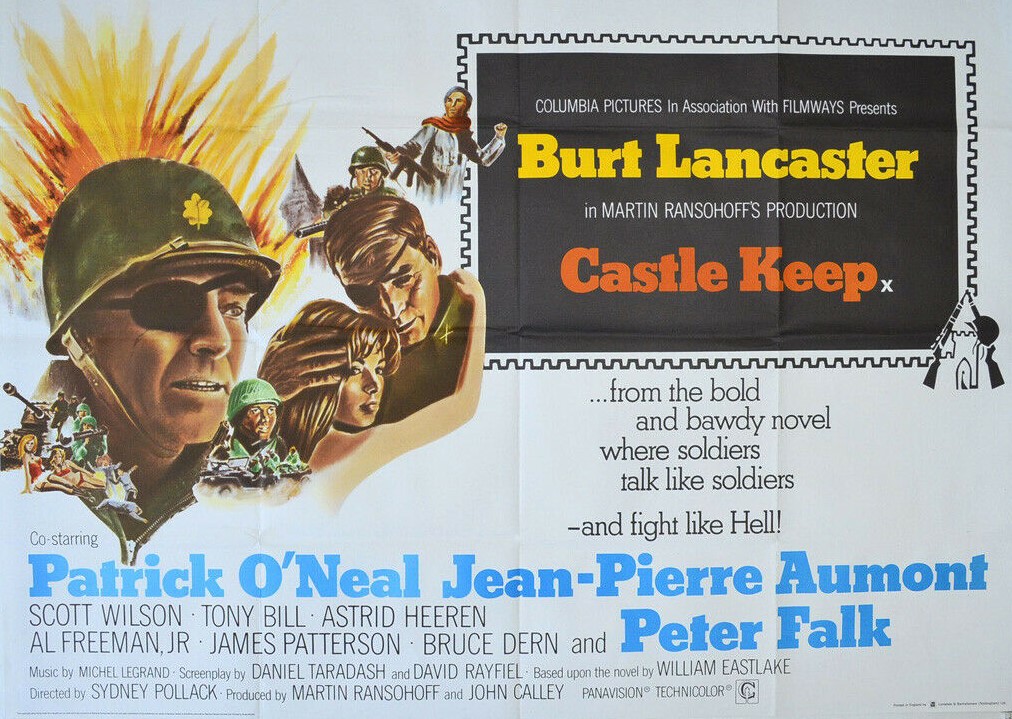
A bit more directorial bombast and this could have matched Apocalypse Now (1979) in the surrealist war stakes. Never mind the odd incidents surrounding a small unit of G.I.s  taking over a magnificent Belgian castle towards the end of World War II prior to what turned out to be the Battle of the Bulge, this has on occasion such a dreamlike quality you wonder if it is all a figment of the imagination of one of the characters, wannabe writer Private Benjamin (Al Freeman Jr.). Throw in a stunning image, for the beleaguered soldiers at the start, of a horsewoman charging by in a yellow cloak, so out of place that it carries as much visual impact as the unicorn in Blade Runner (1982), and we are in definite cult territory.

One of the unusual elements is that, in this unexpected respite from battle, the soldiers are defined by character traits rather than dialogue or bravery as would be the norm. This ranges from baker Sergeant Rossi (Peter Falk) taking over the village boulangerie and bedding the baker’s wife (Olga Bisera), mechanic Corporal Clearboy (Scott Wilson) diving into a lake to rescue a Volkswagen he has adopted and the troops receiving a lecture on art history from Captain Beckman (Patrick O’Neal).

Commander Major Falconer (Burt Lancaster) is not only brilliant in the art of war, but calmly  mentors Beckman through a firefight with an enemy airplane, teaches local sex workers how to make Molotov cocktails and, evoking ancient aristocratic tradition, enjoys conjugal relations with the conquered countess (Astrid Heeren), whose impotent husband (Jean-Pierre Aumont) encourages the relationship since the castle needs an heir.   

There is wistful revelation, Beckman clearly hankering after his turn with the countess, a trainee minister who wishes he had the courage to join the boys in the brothel, the young soldiers there being treated as children rather than customers. And there are juvenile pranks – moustaches are painted on statues, wine bottles used for ten-pin bowling practice.

But the surreal moments keep mounting up. The Volkwagen, though riddled with bullets, refuses to sink in the lake, a hidden German reveals himself by playing the same tune on a flute as one of the enemy, the countess often appearing as an ethereal vision.

Through it all is rank realism. Falconer knows a German previously shared the countess’s bed. The count will do anything to safeguard his castle and maintain the family line, even to the extent of incest, since his wife is actually his niece. But above all, while his troops believe the war is at an end and enjoy the pleasures at hand, Major Falconer prepares for rearguard action by the Germans, filling the moat with gasoline, planning to pull up the drawbridge and control the high ground. The battle, when it comes, is vivid and brutal, the initial skirmish hand-to-hand in the village before the Germans advance to the castle.

Burt Lancaster (The Swimmer, 1968) is superb, far removed from his normal aggressive or athletic persona, slipping with pragmatic ease from the countess’s bed to battle stations. War films in the 1960s were full of great individual conflicts often won on a twist of ingenious strategy but seldom have we encountered a soldier like Falconer who knows every detail of war, from where and how the enemy will approach, to the details of the range of weaponry, and knows that shooting dead four soldiers from a German scouting mission still leaves one man unaccounted for.

Patrick O’Neal (Alvarez Kelly, 1966) also leaves behind his usual steely-eyed screen persona, here essaying a somewhat timid and thoughtful character. Peter Falk’s (Machine Gun McCain, 1969) baker is a beauty, a man who abandons war, if only temporarily, for a second “home,” baking bread, adopting a wife and child. In a rare major Hollywood outing French actor Jean-Pierre Aumont (Five Miles to Midnight, 1962) carries off a difficult role as a count willing to accept the humiliation of being cuckolded if it improves his chances of an heir. In one of only four screen appearances German actress Astrid Heeren (The Thomas Crown Affair, 1968) makes the transition from a woman going to bed with whoever offers the greatest chance of saving the beloved castle to one gently falling in love.

There is an excellent supporting cast. Bruce Dern (Support Your Local Sheriff, 1969) makes the most of a standout role as a conscientious objector.  You will also find Scott Wilson (In Cold Blood, 1967), Al Freeman Jr. (The Detective, 1968), future director Tony Bill (Ice Station Zebra, 1968) and Michael Conrad (Sol Madrid / The Heroin Gang, 1968).

Two top-name writers converted William Eastlake’s novel into a screenplay – Oscar-winning Daniel Taradash (Hawaii, 1966) and newcomer David Rayfiel who would work with Lancaster again on Valdez Is Coming (1971) and with Pollack on Three Days of the Condor (1973) and Havana (1990)

Sydney Pollack (This Property Is Condemned, 1966), who had teamed up with Lancaster on western The Scalphunters, 1968), does a terrific job of marshalling the material, casting an hypnotic spell in pulling this tantalising picture together, giving characters space and producing some wonderful images, but more especially for having the courage to leave it all hanging between fantasy and reality.

Expressions like  “we have been here before,” “once upon a time,” “the supernatural” and “a thousand years old” take solid root as the narrative develops and will likely keep spinning in your mind as you try to work out what it’s all about.

The Secret War of Harry Frigg (1968) ***

Except for an ingenious escape attempt and Paul Newman spoofing his Cool Hand Luke  persona, this World War Two POW number falls into the “sounded like a good idea at the time” category. Harry Frigg (Newman), the American army’s most notorious escapee (though from British military prisons), is promoted from buck private to two-star general and parachuted into northern Italy to organize a breakout of five one-star generals.

The premise that the war effort is hampered by embarrassment at the generals being captured seems far-fetched as is the notion that the quintet are hopelessly incompetent when it comes to doing anything that sounds like proper army stuff. Adding another offbeat element is that they are being held in effectively a deluxe POW camp, an ancient castle run by Colonel Ferrucci (Vito Scotti), a former Ritz hotel manager with a lapdog attitude to the rich and powerful.

Almost immediately Frigg discovers an escape route through a secret door but is disinclined to go any further since it leads into the boudoir of the countess (Sylva Koscina). New Jersey inhabitant Frigg feels out of the place with the high-falutin’ generals and proceeds to get himself a cultural education. Meanwhile, the countess, obtaining her position through marriage rather than birth, trying to bolster his confidence naturally triggers his romantic impulses.

The humor is of the gentlest kind – Frigg taking advantage of his superiority, Italians speaking tortured English – and not much in the way of bellylaffs either. Director Jack Smight, who collaborated so well with Newman in Harper (1966) and manages to achieve a tricky balance in No Way to Treat a Lady (1968), loses his way here, not least structurally, as the movie pingpongs between the generals, the commandant and Frigg and, thematically, issues of power. Crucially, he fails to rein in Newman.

The generals, squabbling among themselves for power, would be caricatures except that their characters are rounded out by the players, the pick being Charles Gray (The Devil Rides Out, 1968) as Cox-Roberts and Tom Bosley (Divorce American Style, 1967) as Pennypacker. The other generals are played by Andrew Duggan (Seven Days in May, 1964), John Williams (Harlow, 1965) and Jacques Roux (The List of Adrian Messenger, 1963). Representing the American top brass in England are James Gregory ( a repeat role in the Matt Helm series) and Norman Fell (The Graduate, 1967).

After her excellent turn as a mischievous and vengeful villain in Deadlier than the Male (1967), Yugoslavian Sylva Koscina comes down to earth with a less rewarding role as charming leading lady with a sly sense of humor rather than the femme fatale of A Lovely Way to Die (1968). Werner Peters (The Corrupt Ones, 1968) makes a late appearance as a Nazi and you might spot screenwriter Buck Henry (The Graduate) in a bit part.

The screenplay by Peter Stone (Arabesque, 1966) and Oscar-winner Frank Tarloff (Father Goose, 1968) is an odd mixture of occasional sharp dialogue and labored story. The set-up takes too long and you keep on wondering when it is going to get to the pay-off.

No doubt looking for some light relief after a quartet of heavier dramatic roles – Harper (1966), Torn Curtain (1966), Hombre (1967) and Harper (1967) – Newman acts like he has escaped the straitjacket of a considered performance and instead indulges in mugging and hamming it up, his body freeing up a barrage of mannerisms previously held in check.

Fraulein Doktor (1969) ****

Surprisingly good World War One spy yarn full to bursting with clever ruses and pieces of deception and ending with a stunning depiction of carnage on the Western Front.  Loosely based on the life of Elsbeth Schragmuller, it fell foul on release to British and American hostility over the Germans actually winning anything.

The film breaks down into three sections: the unnamed Doktor landing at the British naval base in Scapa Flow in Orkney to plan the death of Lord Kitchener; a flashback to France where she steals a new kind of poison gas; and finally on the Western Front where, disguised as a Red Cross nurse, she masterminds an attempt to steal vital war plans. She is hampered by her emotions, romance never helpful for an espionage agent, and her addiction to morphine.

Duelling spymasters the British Colonel Foreman (Kenneth More) and the German Colonel Mathesius (Nigel Green) both display callousness in exploiting human life. The films is so full of twists and turns and, as I mention, brilliant pieces of duplicity that I hesitate to tell you any more for fear of introducing plot spoilers, suffice to say that both men excel at the outwitting game.

I will limit myself to a couple of examples just to get you in the mood. Foreman has apprehended two German spies who have landed by submarine on Scapa Flow. He knows another one has escaped. The imprisoned Meyer (James Booth) watches his colleague shot by a firing squad. Foreman, convinced Meyer’s courage will fail at the last minute, instructs the riflemen to load up blanks. Before a shot is fired, Meyer gives up and spills the beans on the Doktor only to discover that Foreman faked the death of his colleague.

And there is a terrific scene where the Fraulein, choosing the four men who will accompany her on her final mission, asks those willing to die to step forward. She chooses the ones not willing to die. When asking one of these soldiers why he stayed back he replied that she wouldn’t want to know if he could speak Flemish if he was so expendable.

The Fraulein is always one step ahead of her pursuers, changing clothes and hair color to make redundant any description of her, and knowing a double bluff when she sees one. In France as a maid she turns seductress to win the trust of scientist Dr Saforet (Capucine) who has developed a new, deadlier, strain of poison gas. It’s unclear whether, appalled at the potential loss of life to her fellow Germans, this is her motivation to turn spy or whether at this point she is already an accomplished agent. In the final section she takes command of the entire operation.

What distinguishes this from the run-of-the-mill spy adventure is, for a start, not just the female spy, how easily she dupes her male counterparts, and that the British are apt just to be as expedient as the Germans, but the savage reality of the war played out against a British and German upper class sensibility. When a train full of Red Cross nurses arrives at the front, the wounded men have to be beaten back; Foreman thinks it unsporting to use a firing squad; a German general refuses to award the Fraulein a medal because Kitchener was a friend of his; and the Doktor’s masquerade as a Red Cross nurse goes unchallenged because she adopts the persona of a countess.

Far from being an evil genius, the Doktor is depicted as a woman alarmed at the prospect of thousands of her countrymen being killed and Germany losing the war. In order to cram in all the episodes, her later romance is somewhat condensed but the emotional response it triggers is given full vent. And there is tenderness in her affair with Dr Saforet, hair combing a prelude to exploring feelings for each other.

Apart from King and Country (1964), The Blue Max (1966) and Oh, What a Lovely War (1969), depictions of the First World War were rare in the 1960s, and the full-scale battle at the film’s climax is exceptionally well done with long tracking shots of poison gas, against which masks prove little deterrent, as it infiltrates the British lines. The horror of war becomes true horror as faces blister and, in one chilling shot, skin separates from bone and sticks to the barrel of a rifle.

If I have any quibbles, it’s a sense that there was a brilliant film to be made here had only the budget been bigger and veteran director Alberto Lattuada (Matchless, 1967) had made more of the suspense. Suzy Kendall (The Penthouse, 1967) easily carries the film, adopting a variety of disguises, accents and characters, yet still showing enough of her own true feelings. Kenneth More (Dark of the Sun, 1968), in more ruthless mode than previous screen incarnations, is excellent as is counterpart Nigel Green (Deadlier than the Male, 1967) but James Booth (Zulu, 1963) has little to do other than look shifty. Capucine (North to Alaska, 1960) has an interesting cameo.

Ennio Morricone (Once upon a Time in the West, 1969) has created a masterly score, a superb romantic theme at odds with the discordant sounds he composes for the battles scenes. Collectors of trivia might like to know that Dita Parlo had starred in a more romantic British version of the story Under Secret Orders (1937) with a German version, using the same actress, filmed at the same time by G.W. Pabst as Street of Shadows (1937), both revolving around this infamous secret agent.

This is far from your normal spy drama. Each of the main sequences turned out differently to what I expected and with the German point-of-view taking precedence makes for an unusual war picture. I enjoyed it far more than I anticipated.

Another freebie on YouTube. I could not find a DVD so you might need to check out secondhand dealers on Ebay.

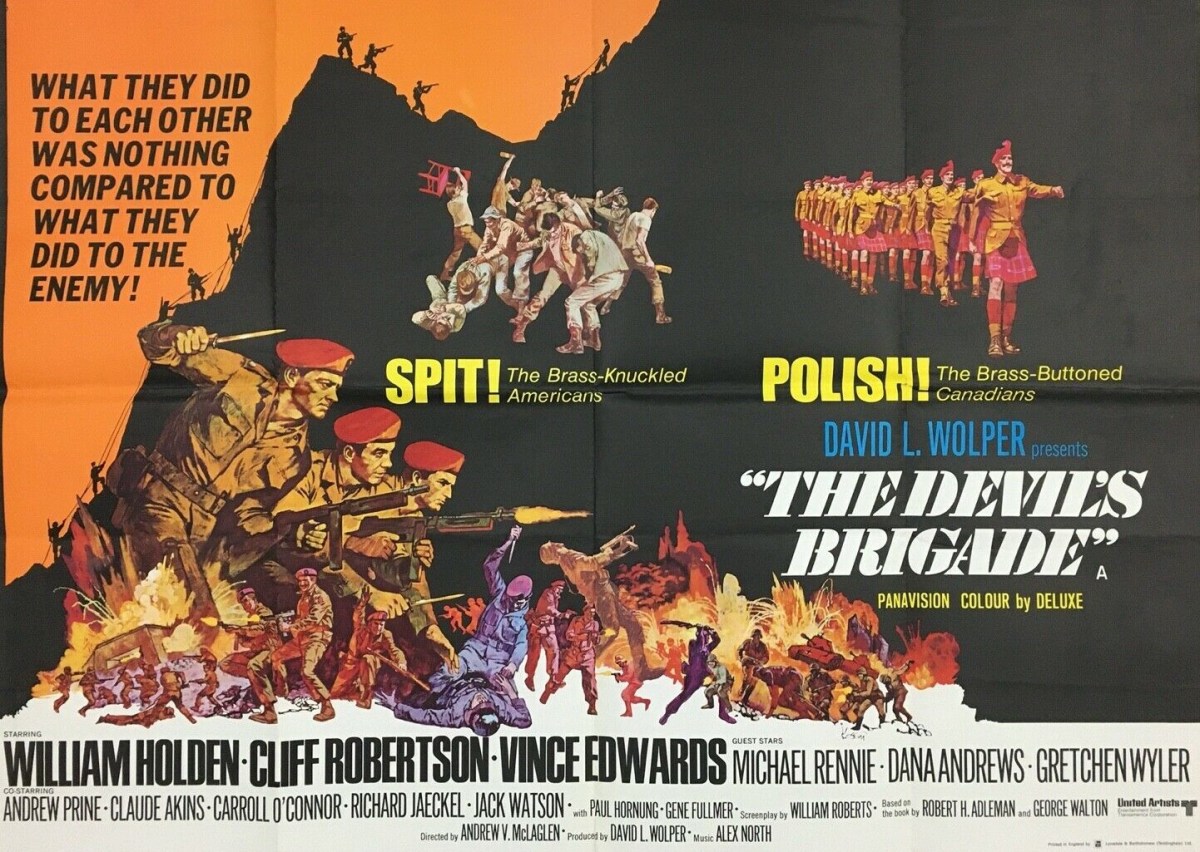
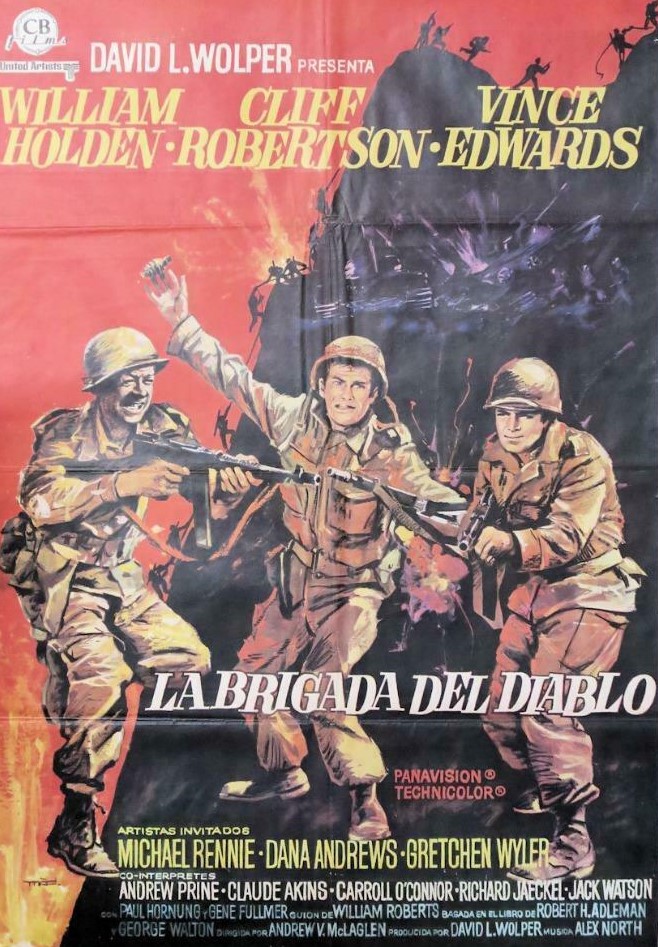
The Devil’s Brigade (1968) ***

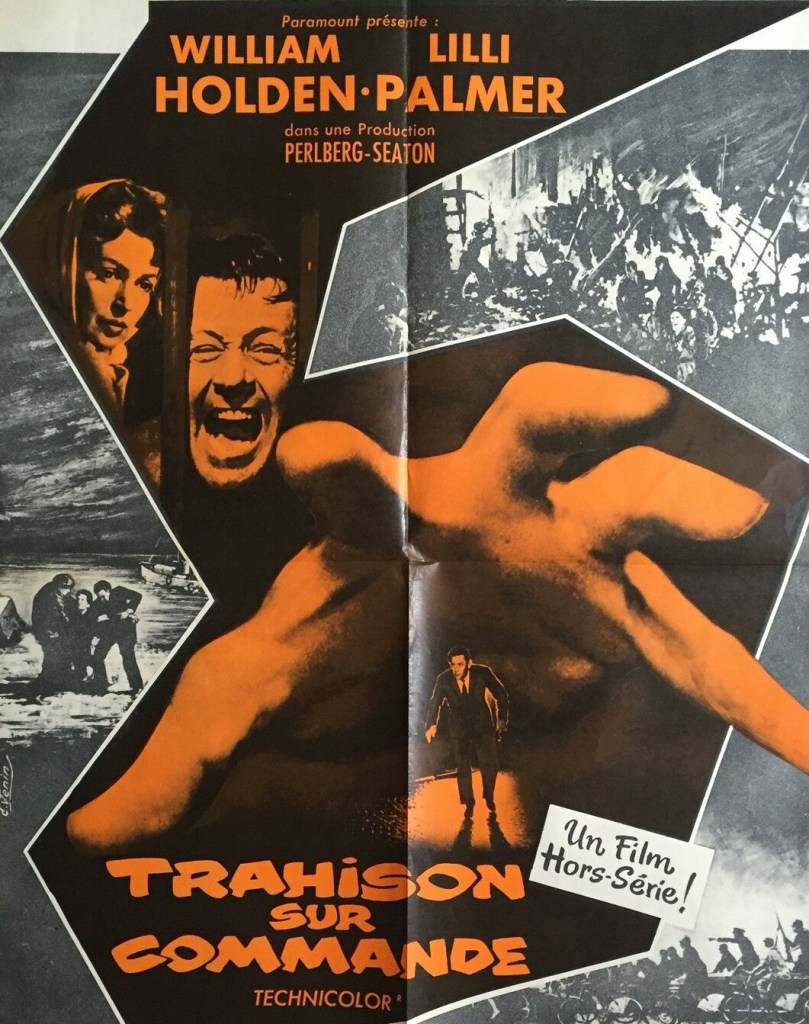
I couldn’t get my head around the idea of the U.S. Army recruiting a bunch of undisciplined misfits, many with jail time, in order to link them up with a crack Canadian outfit. Turns out this part of the film was fictional, the Americans in reality responding to advertisements at Army posts which prioritized men previously employed as forest rangers, game wardens, lumberjacks and the like which made sense since the original mission was mountainous Norway.  I should also point out the red beret the soldiers wear is also fictional and while depicted on the poster sporting a moustache commanding officer Lt. Col. Frederick (William Holden) is minus facial hair in the film.

But, basically, it follows a similar formula to The Dirty Dozen (1967), training and internal conflict followed by a dangerous mission. The conflict comes from a clash of cultures between spit-and-polish Canucks and disorderly/juvenile Yanks though, as with the Robert Aldrich epic, the leader taking some of the brunt of the discontent.  Collapsible bunk beds, snakes under the sheets and a tendency to fisticuffs are the extent of the antipathy between the units, which is all resolved, as with The Dirty Dozen, when they have to take on people they jointly hate, in this case local bar-room brawlers in Utah.

The movie picks up once they are sent to Italy. Initially employed on reconnaissance, Frederick challenges Major-General Hunter (Carroll O’Connor) who wants to do things by the book and sets out to take an Italian position by trekking two miles up a riverbed, creeping into town by stealth and capturing the location without firing a shot. 

Next up is the impregnable Monte la Difensa. Taking a leaf out of the Lawrence of Arabia playbook, in a brilliant tactical move, the Americans attack the mountainous stronghold from the rear by way of a mile-high cliff.  But that’s the easy part. The rest is trench-by-trench, pillbox-by-pillbox, brutal hand-to-hand fighting.

The battle scenes are excellent and the training section would be perfectly acceptable except for the high bar set by The Dirty Dozen. That said, there is enough going on with the various shenanigans to keep up the interest, but we don’t get to know the characters as intimately as in The Dirty Dozen and there is certainly nobody in the supporting cast to match the likes of Telly Savalas, Charles Bronson, Jim Brown and John Cassavetes. That also said, the men do bond sufficiently for some emotional moments during the final battle.

At this point William Holden’s career was in disarray, just one leading role (Alvarez Kelly, 1966) and a cameo (Casino Royale, 1967) in four years, and although his screen persona was more charming maverick than disciplined leader he carries off the role well, especially solid when confronting superiors, exhibiting the world-weariness that would a year later in The Wild Bunch put him back on top. Ironically, Cliff Robertson was coming to a peak and would follow his role as the strict disciplinarian Major Crown, the Canadian chief, with an Oscar-winning turn as Charly (1968). Vince Edwards (Hammerhead, 1968) as cigar-chomping hustler Major Bricker makes an ill-advised attempt to steal scenes.

This was the kind of film where the supporting cast were jockeying for a breakout role that would rocket them up the Hollywood food chain – as it did with The Dirty Dozen. Jack Watson (Tobruk, 1967) is the pick among the supporting cast, but he has plenty of competition from Richard Jaeckel (The Dirty Dozen), Claude Akins (Waterhole 3, 1967), Jeremy Slate (The Born Losers, 1967), Andrew Prine (Texas Across the River, 1966), Tom Stern (Angels from Hell, 1968) and Luke Askew (Cool Hand Luke, 1967). Veterans in tow include Dana Andrews (The Satan Bug, 1965) and Michael Rennie (Hotel, 1966).

William Roberts (The Magnificent Seven, 1960) adapted the bestselling book by Robert H. Ableman and George Walton. Director Andrew V. McLaglen (Shenandoah, 1965) was more at home with the western and although there are some fine sequences and the battle scenes are well done this lacks the instinctive touch of some of his other films.

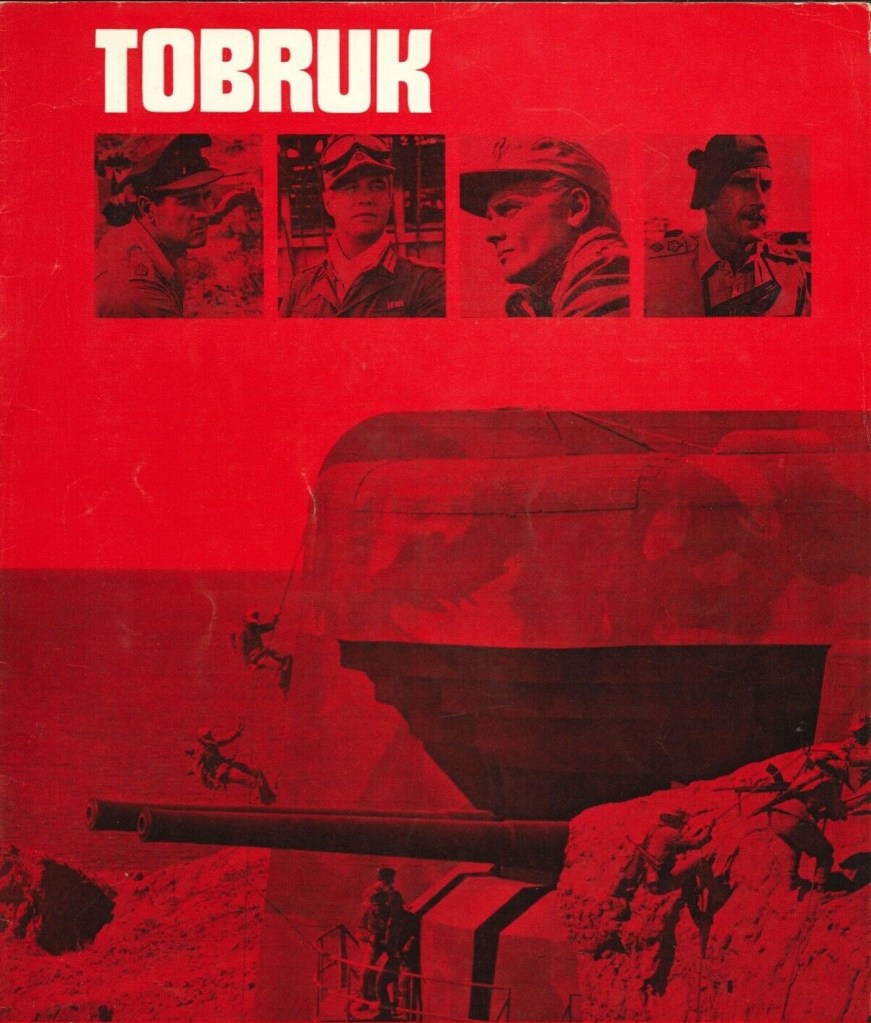
Tobruk (1967) ****

Occasionally ingenious action-packed men-on-a-mission picture that teams reluctant hero Major Craig (Rock Hudson) with Captain Bergman (George Peppard) who heads up a team of Jewish German commandos (i.e good guys). You might think the idea of German-born Jewish commandoes was a dramatic flight of fancy. But, in fact, these guys existed. They were called X-Troop although whether they actually took part in something close to this fictional operation is of course open to question.

Arthur Hiller (Promise Her Anything, 1966) directs with some skill and to increase tension often utilizes silence in Hitchcockian fashion. He meshes innate antagonism between the two principals and stiff-upper-lip British Colonel Harker (Nigel Green), two subplots that have a bearing on the final outcome, and explosive battle scenes. In addition, in supporting roles is a Sgt Major (Jack Watson) unusually solicitous of his troops and a grunt (Norman Rossington) with a fund of one-liners.

Craig is liberated by frogmen from a prison ship and flown into the Sahara on the eve of the Battle of El Alamein to guide a strike force 800 miles across the desert to blow up Rommel’s underground fuel tanks in Tobruk, Bergman’s outfit providing the perfect cover as Germans escorting British prisoners. “It’s suicide,” protests Craig. “It’s orders,” retorts Harker.

Most action pictures get by on action and personality clashes against authority but this is distinguished as well by clever ruses. First off, hemmed in by an Italian tank squadron on one side and the Germans on the other, Harker’s unit fires mortars into each, convincing them to open fire on one another. Craig, on whose topographical skills the unit depends, goes the desert version of off-piste, leading the group through a minefield, personally acting as sweeper with a bayonet as his rudimentary tool, his understanding of how the enemy lays its mines allowing him to virtually explode them all at once. But, ironically, their cover is so complete that they are strafed by a British plane, and equally ironically, have to shoot down one of their own.

Along the way they pick up a stranded father-and-daughter Henry (Liam Redmond) and Heidy Hunt (Cheryl Portman) who are on another mission entirely, to help create a Moslem uprising against the British in Egypt. Their arrival reveals the presence of a traitor in the camp. Naturally, this isn’t the only complication and problems mount as they approach Tobruk and, finding it vastly more populated with German troops than expected, they now, in addition to tackling the virtually impenetrable fuel dumps, have to knock out the city’s radio mast and neutralize the German big guns protecting the beaches.

So it’s basically one dicey situation after another, ingenuity solving problems where sheer force is not enough, and twists all the way to the end.

All the battles are particularly well done, pretty ferocious stuff, flamethrowers especially prominent, but the team are also adept at hijacking tanks, and in another brilliant ruse capturing one without blowing it up. The screenplay by Leo Gordon (The Tower of London, 1962) supplies all the main characters with considerable depth. While Craig isn’t exactly a coward, he is not interested in laying down his life for a cause. Although Harker seems a typical officious British officer, he, too, has surprising depths. But it is Bergman who is given the weightiest part, not just a German seeking revenge against his own countrymen for the treatment of Jews but a man looking to a future when Jews will fight for their own homeland in Israel.  

Hudson had begun his career in action films, mostly of the western variety, before being seduced by the likes of Doris Day and Gina Lollobrigida in romantic comedies and this is a welcome return to tough guy form. George Peppard made it two Germans in a row after The Blue Max (1966) but this is a far more nuanced performance. There are star turns from Nigel Green, Guy Stockwell (Beau Geste, 1966) as Peppard’s sidekick and the aforementioned Jack Watson (The Hill, 1965) and Norman Rossington.

This was pretty much dismissed on initial release as a straightforward gung-ho actioner and one that tipped Rock Hudson’s career in a downward spiral, but I found it both thoughtful and inventive and had much more of an on-the-ground feeling to it, with nothing going according to plan and alternatives quickly need to be found. Under-rated and well worth a look.

Cast a Giant Shadow (1966) ***

In some respects a sequel to the film Exodus (1960) as Israel, on the eve of independence in 1948, prepares to repel invasion from neighboring Arabs. Colonel Mickey Marcus (Kirk Douglas) is recruited to help organise the Jewish forces even though he has little actual combat experience, having sat out the Second World War behind a desk until D-Day, and having already resumed his legal career.  

To facilitate entry to Palestine, he is met at the airport by Magda (Senta Berger), herself a soldier, pretending to be his sister. The journey from the airport in armored bus reveals the perilous reality of the situation, the vehicle strafed as they pass through towns. He finds a rabble of a fighting force, lacking in weaponry, disorganised, and made up of various groups at each other’s throats, and focused on defense rather than attack. Initially, Marcus is strictly an advisor, writing training manuals until he encourages a commando raid and is eventually, at the behest of Asher (Yul Brynner) put in complete command of all the units, effectively the country’s first general.

In the background, General Mike Randolph (John Wayne) is helping organise support in the United States to recognise Israel’s independence. Marcus organises a campaign to lift the siege of Jerusalem, first through direct attack, but then through an incredible foray into impassable mountains, building the “Burma Road,” equivalent in the tactical sense to Lawrence of Arabia’s trek through the desert to attack Aqaba.

A fair bit of the early part of the picture is flashback to establish Marcus’s military credentials, which are scant, in sum total no more than a week of active combat, and it would have been better to concentrate on why he was recruited in the first place, because of the name the real-life Colonel had made for himself in organizing the war crimes trials in Germany.

Apart from the action and military politics, the drama concerns Marcus abandoning wife Emma (Angie Dickinson) in New York, embarking on a romance with Magda and establishing a sense of identity with his adopted country. The action is particularly good, audacity the Israeli’s major weapon.

It is mostly through Magda that we view the Jewish experience. She married Andre (Michael Shillo) in order to save his life, although she did not love him. A veteran of many skirmishes, she suffers a breakdown when trapped in her vehicle during one particularly vicious battle. In what is possibly the most imaginative scene in the film, when Marcus encourages her to keep driving her stalled truck with cries of “Come on, Magda,” in cruel torment the surrounding Arabs take up the cry until it echoes round the hills. Once she falls for Marcus, of course, she never knows if he will return safe from battle.

Kirk Douglas (A Lovely Way to Die, 1968) leads mostly with his chin, never letting subtlety get in the way of his performance, but given the character assigned he has little option and is nonetheless effective as a leader and believable as a man torn between wife and lover. Senta Berger (Major Dundee, 1965) has never been better (or not so far in the films thus reviewed) with a meaty role that shows soldiering from a female perspective in a country where sacrifice is a given.

John Wayne (The Undefeated, 1969) has a small role as a grumpy general and Frank Sinatra (The Naked Runner,1967) a cameo as a commercial pilot who finds himself dragged into the war. Angie Dickinson (Fever in the Blood, 1961) is the long-suffering wife and singer Topol (Sallah, 1964) has a small role. The smattering of Brits includes Michael Hordern (Khartoum, 1966), Gordon Jackson (Danger Route, 1967), Jeremy Kemp (The Blue Max, 1966) and James Donald (The Great Escape, 1963).

Melville Shavelson wouldn’t be your first choice for an action picture given he made his name with comedies like It Started in Naples (1960), but does a fair job of directing, especially the action, the “Come on, Magda” scene and the confrontation with the British when immigrants land. He wrote the screenplay based on the biography by Ted Berkman.

Readers’ Top 30

I’ve been writing this Blog now for one year, beginning July 2020, so I thought I’d take a look at which posts proved the most popular (in terms of views) with my readers. So here’s the annual top 30 films, ranked in order of views.

  1. The Secret Ways (1961) – Richard Widmark and Senta Berger – making her Hollywood debut – behind the Iron Curtain in gripping adaptation of the Alistair Maclean thriller.
  2. Ocean’s 11 (1960) – Frank Sinatra, Dean Martin, Sammy Davis Jr. and the Rat Pack in entertaining heist movie set in Las Vegas.
  3. It’s Not All Rock’n’Roll (2020) – remarkable documentary about the other side of the music business as ageing rocker Dave Doughman tries to keep his dreams alive.
  4. Age of Consent (1969) – British actress Helen Mirren makes her movie debut as the often naked muse for painter James Mason in touching drama directed by Michael Powell.
  5. The Venetian Affair (1966) – Robert Vaughn shakes off his The Man from Uncle persona in taut Cold War thriller also starring Elke Sommer as his traitorous wife and Boris Karloff in a rare non-horror role.
  6. The Golden Claws of the Cat Girl / La Louve Solitaire (1968) – French cult thriller starring Daniele Gaubert as sexy cat burglar forced to work for the government.
  7. Pharoah / Faron (1966) – visually stunning Polish epic about the struggle for power in ancient Egypt.
  8. The Swimmer (1968) – astonishing performance by Burt Lancaster as a man losing his grip on the American Dream.
  9. Stiletto (1969) – Mafia thriller with hitman Alex Cord and and illegal immigrant girlfriend Britt Ekland hunted by ruthless cop Patrick O’Neal.
  10. The Naked Runner (1967) – after his son is taken hostage businessman Frank Sinatra is called out of retirement to perform an assassination.
  11. Marnie (1964) – Sean Connery tries to reform compulsive thief Tippi Hedren in Alfred Hitchcock thriller.
  12. Our Man in Marrakesh / Bang! Bang! You’re Dead (1966) – Entertaining thriller sees Tony Randall and Senta Berger mixed up in United Nations plot involving the likes of Klaus Kinski and Herbert Lom.
  13. The Happening (1967) – Anthony Quinn locks horns with Faye Dunaway and a bunch of spoiled rich kids in kidnapping yarn.
  14. Dark of the Sun / The Mercenaries (1968) – Rod Taylor and Jim Brown head into the heart of darkness in war-torn Africa with a trainload of diamonds and refugees including Yvette Mimieux.
  15. The Guns of Navarone (1961) – men-on-a-mission Alistair Maclean World War Two epic with all-star cast including Gregory Peck, David Niven, Anthony Quinn, Anthony Quayle, Stanley Baker, Irene Papas, James Darren and Gia Scala.
  16. The Sicilian Clan (1969) – three generations of French tough guys – Jean Gabin, Lino Ventura and Alain Delon – clash in Mafia-led jewel heist.
  17. 4 for Texas (1963) – Frank Sinatra and Dean Martin as double-dealing businessmen in highly entertaining Robert Aldrich Rat Pack western starring Ursula Andress and Anita Ekberg.
  18. Five Golden Dragons (1967) – Innocent playboy Robert Cummings becomes enmeshed with international crime syndicate led by Christopher Lee, George Raft and Dan Duryea.
  19. Duel at Diablo (1966) – James Garner and Sidney Poitier team up to protect Bibi Andersson in Ralph Nelson western.
  20. Move Over Darling (1963) – after years marooned on a desert island Doris Day returns to find husband James Garner just married to Polly Bergen.
  21. Pressure Point (1962) – prison psychiatrist Sidney Poitier is forced to treat paranoid racist inmate Bobby Darin.
  22. Wonder Woman 84 (2020) – in one of the few films to get a cinematic screening during lockdown, Gal Gadot returns as mythical superhero to battle supervillain Kristen Wiig.
  23. Genghis Khan (1965) – Omar Sharif as the Mongol warrior who conquered most of the known world, tangling with rival Stephen Boyd and Chinese mandarin James Mason on the way.
  24. A Fever in the Blood (1961) – Warner Bros wannabes Efrem Zimbalist Jr, Angie Dickinson, Jack Kelly and veteran Don Ameche in tough political drama.
  25. The Prize (1963) – Paul Newman and Elke Sommer investigate murder in the middle of the annual Nobel Prize awards in Sweden.
  26. In Search of Gregory (1969) – wayward Julie Christie embarks on pursuit of Michael Sarrazin who may – or may not – be a figment of her imagination.
  27. Justine (1969) – Dirk Bogarde and Michael York become entangled in web woven by Anouk Aimee in corrupt pre-World War Two Middle East.
  28. The Girl on a Motorcycle (1968) – singer Marianne Faithful in a hymn to the open road and sexual freedom.
  29. Blindfold (1965) – psychiatrist Rock Hudson and dancer Claudia Cardinale in highly entertaining mystery thriller about missing scientists.
  30. Hammerhead (1968) – secret agent Vince Edwards and goofy Judy Geeson on the trail of evil mastermind Peter Vaughn.

My Five-Star Picks for the First Year of the Blog

It’s a been a fabulous year for watching the movies and my pictures of the year (the first full year of the Blog running from July to June, I hasten to add) make up an eclectic collection ranging from historical epics, dramas and westerns to horror, thrillers and comedy. Although this is my chosen decade, many of the films I was seeing for the first time so it was interesting to sometimes come at a film that had not necessarily received kind reviews and discover for one reason or another cinematic gems. There was no single reason why these pictures were chosen. Sometimes it was the performance, sometimes the direction, sometimes a combination of both.

The westerns I most enjoyed came from either ends of the decade – John Wayne and Rock Hudson in magnificent widescreen spectacle The Undefeated (1969) and Yul Brynner, Steve McQueen, Charles Bronson, James Coburn and the team in The Magnificent Seven (1960).

There was another ensemble all-star cast in J. Lee Thompson war film The Guns of Navarone (1961) one of the biggest hits of the decade with Gregory Peck, Anthony Quinn, David Niven, Stanley Baker et al.

Horror brought a couple of surprises in the shape of Daliah Lavi as the Italian peasant succumbing to The Demon (1963) and Peter Cushing menaced by The Skull (1965).

Not surprisingly perhaps Alfred Hitchcock headed the ranks of the five-star thrillers, but surprisingly to some, this was in the shape of Marnie (1964) with Sean Connery and Tippi Hedren rather than some of his decade’s more famous / infamous productions.  Heading the romantic thrillers was the terrifically twisty Blindfold (1965) with Rock Hudson and Claudia Cardinale teaming up to find a missing scientist. The Sicilian Clan (1969) proved to be a fine heist picture in its own right as well as a precursor to The Godfather with a topline French cast in Alain Delon, Lino Ventura and Jean Gabin.

Only one comedy made the five-star grade and what else would you expect from Billy Wilder’s Some Like It Hot (1959), slightly outside my chosen remit of films from the 1960s, but impossible to ignore the chance to see Marilyn Monroe, Tony Curtis and Jack Lemmon strutting their stuff on the big screen. For the same reason I had the opportunity to re-evaluate Ridley Scott’s Oscar-winning historical epic The Gladiator (2000) that gave Hollywood a new action hero in Russell Crowe. Stylish contemporary sci-fi chiller Possessor (2000), from Brandon Cronenberg,  was another one seen on the big screen, one of the few in this year of the pandemic.

Most people would certainly put Paul Newman as prisoner Cool Hand Luke (1967) in this elevated category but, to my surprise, I found several other dramas fitted the bill. The clever sexy love triangle Les Biches (1968) from French director Claude Chabrol made his name. Burt Lancaster turned in a superlative and under-rated performance in the heart-breaking The Swimmer (1968) about the loss of the American Dream. Rod Steiger, on the other hand, was a hair’s-breadth away from picking up an Oscar for his repressed turn as The Pawnbroker (1964).

Two films set in the Deep South also made the list – Marlon Brando in Arthur Penn’s depiction of racism in small-town America in The Chase (1966) with an amazing cast also featuring Jane Fonda and Robert Redford, and Michael Caine as a more than passable arrogant southerner in Otto Preminger’s Hurry Sundown (1967) opposite rising star Faye Dunaway. Dennis Hopper and Peter Fonda’s hymn to the freedom of the motorbike in Easy Rider (1969) turned into a tragic study of attitudes to non-conformity.

For only eighteen films out of a possible two hundred to make the cut indicates the high standards set, and I am looking forward to as many, if not more, brilliant films in the year to come.

Discover WordPress

A daily selection of the best content published on WordPress, collected for you by humans who love to read.

The Atavist Magazine

by Brian Hannan

WordPress.com Blog

News, Tips & Website Tutorials