The Golden Claws of the Cat Girl / La Louve Solitaire (1968) ****

A sheer delight, a twisty thriller with a standout sexy burglar. It might put you immediately in mind of To Catch a Thief (1955) but this takes the Hitchcock embryo and molds it in something effortlessly stylish and not just to keep the audience on the hop. A second viewing has raised it in my estimation.

Unless you were a fan of the more permissive pictures at the end of the 1960s or kept a close eye on the gossip columns – or for that matter Playboy magazine – you were unlikely to have come across slinky blonde Daniele Gaubert. A former teen model and supporting actress in a number of French and Italian films at the start of the 1960s, she had a brief brush with Hollywood as Yul Brynner’s girlfriend in United Artists’ Flight from Ashiya (1964) but then married Rhadames Trujillo, son of the Dominican Republic dictator.

The year after The Golden Claws of the Cat Girl she starred in Radley Metzger’s provocative Camille 2000 which set pulses racing especially at the censor’s office. Then marriage beckoned again, this time to French Olympic triple gold medallist skier Jean-Claude Killy with whom she made her last picture The Snow Job (1972) also known, depending on where you lived, as The Ski Raiders and The Great Ski Caper.

She only made eighteen movies but The Golden Claws of the Cat Girl is by far the standout. A taut thriller with plenty of twists and stylish action scenes, the French-Italian co-production  was the only film of documentary film maker Edouard Logerau and that background helps shape the movie with many of the most thrilling sequences lacking musical accompaniment.

Female empowerment is not normally associated with crime, given that organized crime is generally organized by men. But burglary is a different matter, lending itself to non-gender-specific individual enterprise. Though there are safes to break, there’s no glass ceiling in this brand of thievery.

Gaubert plays a cat burglar ironically known as “the lone wolf” (as in the original title) who is forced to trade her freedom by stealing a cache of drugs for the police in order to apprehend a criminal mastermind (Sacha Pitoeff). (Maybe this notion inspired Luc Besson’s Nikita.)  Her sidekick is Michael Duchaussoy, seconded from his usual job as an embassy press attache, on the grounds that he can lip-read (which proves more than a gimmick as the plot unfolds).

Given that this was all shot “in camera” – Christopher Nolan’s favourite phrase – without the benefit of CGI or, so it would appear, much in the way of bluescreen, the burglary scenes are pretty impressive. For a kick-off, Gaubert is a sexy as you can get in a skin-tight cat-suit. Furthermore, her character calls on skills from her previous occupation as a trapeze artist. While the director doesn’t match Hitchcock’s in the tension-racking stakes, the sheer verve of the burglary takes the breath away.

The first burglary – before she is caught – takes place at a fancy chateau where a party is in full swing (owners in residence less likely to take extra precautions to hide their valuables), Gaubert nips over a wall, slips up a tree,  uses a line thrower (a type of harpoon) to connect tree to building, and then proceeds to walk along the tightrope. Mission accomplished, she zooms off in a sports car, only stopping to remove false tyre treads and strip out of her costume before hiding her ill-gotten gains in a secret compartment at the back of the fridge.

The police burglary is in an office block. She and the lip-reader are holed up in an apartment opposite watching via a telescope. Although they pass the time in gentle flirtation, especially as she favours revealing outfits, she is not quite as imprisoned as it might seem and is already hatching her own plans to outwit her captors. This burglary is even more dangerous, in the pouring rain for a start, across Parisian rooftops, and involving a trapeze and ropes.

Thereafter, plot twists come thick and fast after this. She escapes to Switzerland, pursued by lip-reader (to whom she has clearly formed an attachment), cops and furious drug runners. Eventually re-captured she agree to another official burglary as a way of finally trapping Mr Big.

The tone is lightened by repartee and some interesting characterization. The lone wolf turns out to have very strong principles that prevent her just running off. Mr Big is a stamp aficionado. A lava lamp is turned into a weapon. Instead of counting to five before killing someone, a bad guy does the countdown according to the number of people diving into a swimming pool. Gaubert fools her captors into thinking they have a flat tyre by dangling her handbag over the edge of the door until it bumps into the tyre and makes the thwock-thwock of a burst tyre. “Survivors give me goose flesh,” quips a thug.

The closest comparison is not Hitchcock but Danger: Diabolik (1968) featuring John Philip Law which has a definite comic book riff. And you might also point to Joseph Losey’s Modesty Blaise (1966) or even, for a self-contained independent woman, to Raquel Welch’s Fathom (1967. But this lone wolf is ice-cold. Blonde is not enough. She is one step ahead of the law and the criminals. There are hints of a tragic past – a trapeze artists requires a partner, for example.

The last shot has Genault triumphant on a Paris rooftop. There is a nod to Hitchcock (think Rear Window) in the use of a telescopic framing device for many scenes, giving them a voyeuristic aspect. Sure, a bigger budget and a better supporting cast – and perhaps a more obvious romance – might have lifted the picture but Genault’s presence ensures that the film does not lack style. Gaubert dominates so much you could imagine she harldy needed direction but it is the cleverness of Edourd Logerau (Paris Secret, 1965) that makes it appear seamless.

Definitely deserves a more appreciative audience.

Behind the Scenes: “Shalako” (1968)

If you ever wondered just how a producer earns his crust, the convoluted process to make Shalako would provide a test case. British publicist turned producer Euan Lloyd had little on his calling card to gain entry to Hollywood, not even with the stars in tow for the project. Having worked for several years as a production assistant with Warwick Films, the British-based outfit headed by Cubby Broccoli and Irving Allen, he transitioned to associate producer on The Secret Ways (1961) but didn’t earn the moniker of producer until he pulled together an all-star cast for The Poppy Is Also A Flower (1966). Although released theatrically in Europe it was in reality a made-for-television number and screened as such in the United States.

So, actually, he was very much a neophyte producer. But early in his career he had become fast friends with Alan Ladd (Shane, 1953) and since they shared a love of westerns the actor had put him in touch with bestselling western author Louis L’Amour who was so taken with the Englishman’s enthusiasm he granted him a free option on any one of his un-filmed novels. Lloyd chose Shalako. “I could identify with that subject as it’s about a bunch of Europeans on safari in the West,” said Lloyd. (In fact, though as yet unfilmed, it was not as though nobody had tried. A report in Box Office magazine dated August 19, 1963, stated that Richard Carr was working on a screenplay for producer George Golitsin set for Universal).

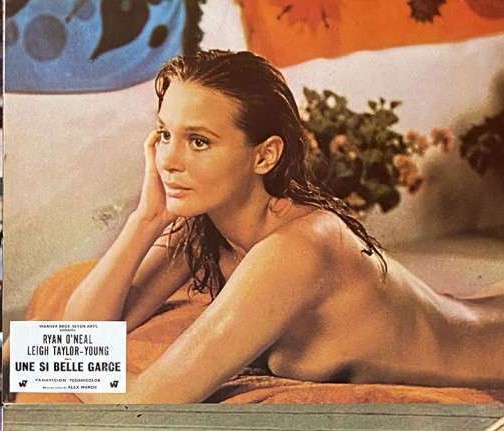
No connection to Shalako but little excuse necessary to showcase BB’s figure apparently.

On the production side, it would give him the excuse he required to put together a cast of non-Americans, stars from different nationalities who could open the distribution doors to significant European countries like France and Germany. His original starring pair were Henry Fonda (Firecreek, 1968) and Senta Berger, whom he knew from The Secret Ways and The Poppy Is Also A Flower. “Privately, she was the antithesis of the character she played in The Secret Ways…she came to mind as a very likely countess.”

He recruited Edward Dymytrk (Mirage, 1965), having got to know the director, a fugitive from the Communist witch hunt in the U.S., on the set of the British-made So Well Remembered (1947). Dmytryk had worked with Fonda on Warlock (1959). While appreciating Lloyd’s interest and keen to work again with Dmytryk, Fonda warned that he was not a strong enough marquee name to get the project off the ground.

To cover his back and using the names of his two stars and director, Lloyd set about pulling together finance from European sources. Although such co-productions were becoming  more common, Lloyd must have set some kind of record by pre-selling the movie, in the end, to 36 different bodies. But still it wasn’t enough. Without an American partner, the movie was no-go. Fonda proved the sticking point and in 1967 Lloyd decided to go for broke with a bigger cast (Fonda was pretty gracious about being dumped, “I did warn you,” he said).

Sean Connery was not even initially on the list of proposed stars until Louis L’Amour alerted Lloyd to the length of the queues to see the latest Bond blockbuster (quite how a producer didn’t know that might be considered a mystery). Connery was incommunicado, filming a documentary in Scotland, but Lloyd managed to get in touch and seven weeks later he had what he believed, based on the Bond box office, was the biggest star in the world.

Part of the attraction for Connery of course was that for the first time he was receiving a salary ($1.2 million in total) commensurate with his box office. But it turned out as far as Hollywood was concerned, Connery had been taken in by his own publicity, studios pointing out that his non-Bond movies, Marnie (1964),  The Hill (1965) and A Fine Madness (1966) had not approached his Bond box office.

Nor was Brigitte Bardot a golden name on the U.S. cinema scene. Until the mid-decade reissue of La Dolce Vita (1960), her first starring role And God Created Woman (1956) held the record for the biggest imported movie. But since them, except for Viva Maria (1966), her movies had been relegated to arthouses, hardly worth risking for a $400,000 salary – she was in Variety’s list of Top Ten Overpriced Stars.

Three major studios rejected the movie. Assuming all the majors would take the same view that “Connery will never make it away from Bond,” Lloyd targeted a mini-major, the kind of neophyte outfit that might pony up to get a big name on its forthcoming schedule, a way of proving it could play with the big boys. ABC, an offshoot of the television network, was hooked, paying $1.4 million for the privilege.

Trevor Howard, Karl Malden, Claire Bloom and Ingrid Pitt was all considered for roles. Even without them, as well as Bardot, the movie, in terms of credits, had the look of one of those all-star epics so beloved in the 1960s: Jack Hawkins (Lawrence of Arabia, 1962), Stephen Boyd whom Lloyd knew from being associate producer on Genghis Khan (1965) and German star Peter van Eyck (Station Six Sahara, 1963). And if Bardot wasn’t enough to get journalist tongues wagging, Connery would also be reunited with Honor Blackman from Goldfinger (1964). The cast also included Woody Strode (The Professionals, 1966), famed 1940s western star Don ‘Red’ Barry (The Adventures of Red Ryder, 1940) and English comedian Eric Sykes (The Plank, 1967).

Mexico was first choice of location until the devalued peso rendered it too expensive. Almeria in Spain, location of choice of many a spaghetti western, was the alternative. The biggest problem pre-shooting was that, to get into character, Connery had decided to grow a Mexican moustache, presumably not aware that moustaches were verboten for stars after The Gunfighter (1950) sank at the box office reputedly because Gregory Peck wore one.  In the end, without the subject becoming a thorny issue, Connery shaved it off. He spent two weeks learning to ride under the tuition of Bob Simmons, a stunt arranger on the Bond pictures, so he could, indeed, sit as tall in the saddle as the great western stars. “He was a very proficient horseman by the time we started,” commented co-star Eric Sykes, “He looked as if he had been riding all his life.”

Meanwhile, Jack Hawkins (Masquerade, 1965) had undergone an operation for throat cancer and though he could speak his words were accompanied by a kind of belch and the voice for which he was so famous had disappeared. By coincidence Lloyd heard what he thought was Hawkins voicing a beer commercial. The distinctive tones belonged to Charles Gray (The Devil Rides Out, 1968) and he re-voiced Hawkins’ lines.

Despite Connery’s assertions to the contrary – his famous quote “she’s all girl but…all on the outside” was viewed as a detractory statement – Lloyd insisted it was a happy set. “I had absolutely no trouble from the cast during shooting and Sean and Brigitte performed perfectly and in harmony. Eddie Dmytryk was a man who knew exactly what he wanted and how to get it. The co-stars liked him enormously.”

Other sources paint a different picture, pointing to tension between Connery and Bardot over who was the bigger star, between Bardot and former lover Boyd, and between Connery and Dmytryk over the script. According to Eric Sykes, sitting beside Connery in between takes, the actor “would tear half a page or even a whole page of dialog out of his script…He was editing his part as he went along, apparently without reference to the director…One scene in particular with him and Brigitte Bardot, a long scene where they were sitting around a pool….it went on and on for about eight minutes…Sean’s editing turned it not a slick two- or three-minute scene…Eddie (Dmytryk) did not challenge it because when he saw what Sean had done he knew it was right.”

A big success in UK and Europe, it was a flop in the U.S. where ABC recorded a $1.2 million loss, but since every area was sold separately it is doubtful this shortfall would need to be repaid by the producer so counting the income from other sources it would have gone into profit. Incidentally, Connery was pictured wearing a moustache when the movie had its premiere and he was actually one of the few major stars who regularly wore a moustache in pictures and there are those who attribute his career longevity to cultivating a beard while still in his prime.

SOURCES: John Parker, Sean Connery, 1930-2020, The Definitive Biography (Bonnier Books, 2020) p171-176; Mac Mcsharry and Terry Hine, “The Way West,” Cinema Retro, Issue #2 May 2005, p38-42.

Shalako (1968) ***

It’s a gripping and unusual opening. The jangling noise of metal beating upon metal. A trapped mountain lion surrounded by a posse of unkempt men. The beast driven into a killing zone. The camera ends up on a classy blonde in a top hat, Irina (Brigitte Bardot), drawing a bead on the animal. But as she shoots so does rugged cowboy Bosky (Stephen Boyd) and you can be sure his aim is more deadly. It wouldn’t do to have an upper-class European lady to be mauled to death by a vicious creature just because her ego got the better of her.

Except that’s not the opening. Instead, that’s sacrificed for a dumb theme tune and a few minutes over the credits watching titular hero Shalako (Sean Connery) doing what exactly? Nothing exciting that for sure. We see him riding I guess to prove he can sit as tall in the saddle as the stars of the genre like Alan Ladd, John Wayne, Gary Cooper, James Stewart, as if nobody expected James Bond to be able to complete such a transition. There’s a bit of waking up, more riding, drinking from a dirty stream, and more riding while composer Jim Dale struggles to find lyrics that rhyme with Shalako.

There’s a bit more exposition before Shalako does anything meaningful. We are introduced to a fistful of Europeans on a hunting party complete with butler (Eric Sykes) and guzzling champagne and escorted by a bunch of mean-looking cowboys looking on in envy though I doubt any would acquire a taste for champagne.

Then the real action starts. A bit’s been missed out explaining just why Irina took off on her own with just one man as escort to continue hunting and nobody thought fit to warn her this was Apache country. We know she’s in trouble because her escort is just about dead and Apaches are gathering. Enter Shalako to save the day. The first piece of dialogue between the most handsome man in the world and the screen’s most beautiful woman, a movie made just so Connery, at his Bond peak, and Bardot, in her most expensive picture, could strike sparks off each other,  is hardly something to treasure. It’s almost priceless for its mundanity. “You all right?” grunts Shalako. “Yes,” replies the breathless heroine.

But trust the British to bring that epitome of British moviemaking, the class war, to that most democratic of movie species, the western. It’s ironic that in the country where freedom is a given  – slavery long since abolished in the period this movie was set – members of the hunting party are fettered. Irina is little more than bait. You might as well have staked her out, hoping to snare German aristocrat von Hallstatt (Peter van Eyck). Marriage would cure the financial woes of her debt-ridden sister Lady Daggett (Honor Blackman) and husband Sir Charles (Jack Jawkins). Von Hallstatt doesn’t believe in making romantic overtures, it would be, like so many aristocratic marriages, a contract of convenience; he acquires beauty, she gets wealth.

To complicate matters Lady Daggett has a roving eye which has settled on Bosky, and to complicate matters even further, nobody should be firing rifles, even if only for sport, in Apache territory. It’s not long before the Apaches take umbrage and launch an attack. And it takes even less time for Bosky and his buddies to take off, leaving their charges poorly defended in a makeshift fort.

It takes way too long to sort out all these plot machinations and get to the meat of the story which is finding a way of putting Connery and Bardot together and when they are not the movie trundles along without much in the way of screen sparks. It could have done with an entirely different scenario. Something akin to Soldier Blue (1970) would have worked a treat, with roles reversed of course back to the traditional of experienced male tending the inexperienced female as they battle through enemy territory.

You needed to get this pair together – and quick – for the movie to find any steam at all. As it is, it’s somewhat laborious. While the action sequences are well done and Shalako scores in the western lore department, you wouldn’t have thought a mountaineering subplot could have produced so few thrills, its only purpose, plot-wise, to ensure that von Hallstatt acquires some credibility (he’s the mountaineer) and that the group can reach a plateau whose main attraction, as lovers of westerns will already be aware, is a pool where in the great Hollywood tradition a woman can disport herself half-naked. Shalako, in sneaking up on her, comes across like a bit of a peeping tom.

Sean Connery (The Hill, 1965) is convincing enough as a cowboy. He certainly doesn’t look out of place on a horse but it takes far too long for the expected romance to begin. Brigitte Bardot (Viva Maria!, 1965) is better than you might expect as a sharpshooter, but not quite in the fiery class of a Claudia Cardinale (The Professionals, 1966) or even Maureen O’Hara (The Rare Breed, 1965) and she’s not really given the dialog necessary to fully establish the independence of her character.

Director Edward Dmytryk (Mirage, 1965) does his best with an overly-complicated script and some cumbersome set-pieces and it would have worked far better if a few characters and reams of sub-plot had been chucked aside to bring the stars together quicker. While Connery does the riding and shooting well enough he lacks the grizzled lived-in face of his famed western predecessors and I get a sense of him trying too hard. And, as I said, it wouldn’t have taken much to pep up Bardot.

Having complained about the subsidiary characters, they are all well-drawn. Stephen Boyd (The Big Gamble, 1961) makes on helluva mean cowboy, Honor Blackman (Moment to Moment, 1966) is excellent as a predatory female. Aristocratic pair Peter van Eyck (Station Six Sahara, 1963) and Jack Hawkins (Masquerade, 1965) are the kind of actors who can denote fallen status with facial expression rather than requiring lumps of dialog. But Eric Sykes (The Plank, 1967) is really a British in-joke.

James Griffith and screenwriting partner Hal Hopper had previously worked on Russ Meyer epics like Lorna (1965). The original story came from  a novel by Louis L’Amour (Catlow, 1971).

Out-with his guise as James Bond, Connery – excepting Robin and Marian (1976) and Cuba (1979) – was not one of the screen’s great lovers so this would have been the perfect chance  to hone those particular credentials. But like the entire picture this was a missed opportunity. When the best scene is the brutal suffocation of Honor Blackman and not the two stars canoodling, you can see the target was missed by miles.

Blow-Up (1966) ****

Movies can break all sorts of rules but they can’t cheat.

A film has to stick to an internal logic. For example, it can’t portray a photographer so obsessed with his calling that he even takes a camera with him to an antique shop and starts shooting off roll and after roll capturing the area’s rundown streets but then the one time he really could do with a camera – to prove there is a corpse at his feet – he is somewhat remiss. Especially when that the movie turns on that plot point.

Setting aside what’s a somewhat contrived snapshot of “Swinging London” there’s a lot to admire here. The absence of music for one thing. Most of the movie runs without musical accompaniment, a bold move since so often we rely on the soundtrack to provide guidance for a scene or an overlay for the entire film. Here, Michelangelo Antonioni (Zabriskie Point, 1970) makes us falls back on our own interpretation.

David Hemmings (The Charge of the Light Brigade, 1968), all mop-top and intense stare, is a high-flying high-living fashion photographer in the David Bailey mold (casual sex with wannabe models a perk) who turns investigator on being confronted in a park by Vanessa Redgrave (Hemmings’ adulterous love interest in The Charge of the Light Brigade) after taking snaps she wants back. Tension is sustained by her sudden appearance at his studio, willing to pay with her body for the return of the photos, and then by Hemmings’ careful, photo-by-photo blow-up-by-blow-up analysis that slowly comes closer to the truth.

Everything in his world is judged through a lens, as if he can capture elusive truths, and he has aspirations to being more than a mere fashion adjunct, having spent time taking portraits of down-and-outs. He judges Redgrave as he would a model, she has a good stance and sitting posture. Even by the standards of the permissive society, he is a bit of sexual predator, taking advantage of two giggly model wannabes – Jane Birkin (Wonderwall, 1968) and Gillian Hills (Three, 1969).

But the photography scenes are well done and Antonioni captures the intimacy between model and photographer that create the best images. If you want to see what a model brings to modeling check out real-life model Veruschka posing in an outfit held together by the thinnest of threads, bringing to life the much-touted notion that a model makes love to a camera. If you can get past the cheat and the deliberate obtuseness this creates – and the tsunami of artistic interpretations it inspired about the director’s intent – then it remains intriguing.

This isn’t Hemmings’ greatest work – Fragment of Fear is much better – but it certainly provided him with a marketable movie persona. Redgrave is excellent as the nervy woman willing to do what is required and the movie might have worked better had she had been allocated more screen time and their duel had continued through other scenes. But then that would have been Hitchcock and not Antonioni.  

Sarah Miles (The Ceremony, 1963), Peter Bowles (The Charge of the Light Brigade) and John Castle (The Lion in Winter, 1968) have small parts. The film certainly captures the electricity of a photo shoot between a skilled photographer and pliant model, but it also works as an extended metaphor about the elusiveness of cinematic truth.

Despite my misgivings about the “cheat,” an intriguing and satisfying exploration of an artist seeking to jettison the fripperies of his art yet unable to avoid the temptation of enjoying the easy sexual benefits.

Planet of the Apes (1968) *****

Still astonishing that the two movies that rocked sci-fi to its core came out the same year. Initially beloved mostly by dopeheads 2001: A Space Odyssey quickly achieved ultra-academic status. But it’s difficult to ignore the fact that that Planet of the Apes had the greater long-term effect, given it spawned umpteen sequels and two sets of remakes.

You could also argue that the concept is even bolder than the Kubrick, not just man’s treatment of animals, but the idea of man being subject to a superior species, and inside an action-packed picture there’s plenty of time to digest the unimaginable and engage in debate about the nature of man. The elevator pitch might have been: “Take Hollywood’s strongest hero and torture him one way or another.”

Part of the movie’s genius is the unsettling opening, swirling, almost deranged, camerawork, a discordant score, the confident occupants of a spacecraft heading into the unknown finding the kind of unknown that fills them with dread rather than awe. Two thousand years into the future a spaceship doesn’t gently touch-down on a strange planet, but crashes into it, luckily landing in a lake, the three survivors escaping the sinking craft.

The audience knows a great deal more than they do, that the arid desert in which they find themselves stretches everywhere. But then they realize, with supplies that will last only three days, the soil here will not support life. But they are quickly upbeat when they find a small plant followed by substantial greenery. The sight of crucified figures on a hill is put to one side when they hear running water and rush to dive naked into a pool, confidence restored that they won’t die of thirst and should at least be able to eat vegetable matter.

The pool is a clever reversal. Usually open water is there for a female to disport herself. Now we’re seeing Charlton Heston’s bare backside. And another reversal: when clothes disappear it’s usually so a female has to come out of the water exposed.

But from the sight of the crucified apes, for the next seven minutes, their world is completely turned upside down. Chasing after their clothes they find inhabitants, automatically assumed to be inferior because they are mute and dressed like cavemen. But then the tribe hears a noise and panics. We see horses hooves, the tops of the flailing sticks used to beat prey out from the undergrowth, rifles, the natives, like dumb beasts, being driven into nets.

Then the first sight of an ape astride a horse wielding a gun. There can’t have been a more astonishing image, not even from the mind of Stanley Kubrick, in the whole of Hollywood sci-fi. Man is not just an alien in a world ruled by apes, but treated like an animal and only kept alive for scientific experiment. That man is rendered mute is hardly surprising because the apes don’t expect their captives capable of uttering an intelligent word.

From then on we’re in familiar and unfamiliar territory. There’s little more cliched than a captive trying to escape, success and failure the next beats. There’s little more cliched than a captive striking up a relationship with an imprisoned female, the pair contriving to achieve freedom.

Where this breaks new ground is that, in addition to making a connection with Nova (Linda Harrison), Taylor (Charlton Heston) woos a female ape scientist Zira (Kim Hunter) who tries to help him become accepted by her people. In the opening section, Taylor had opined, “somewhere in the universe there must be something better than man” but in the arrogance of humanity had assumed he be treated as an equal rather than an inferior.

So it becomes a duel of words. Taylor forced into being told how terrible humans are, and it’s hard to argue with the ape conclusion, while at the same time making the case for mankind, and especially himself, as a special type of species. There’s more than enough meat in the script, riddled with brilliant lines, to make audiences think deeply about the impact of man on the world. You could cast your mind back to the slaves of Spartacus (1961), trying to be accepted as equals, forced into revolt when that is denied. And to some extent that’s the imagined set-up here: Taylor will escape and establish some kind of resistance movement.

But that’s not what director Franklin J. Schaffner (The War Lord, 1965) has in mind at all. He’s been leading us by the nose to the most stunning ending in all of sci fi, and one of the most astonishing climaxes in the entire history of the movies, a shock wrung through with irony.

The movie is a supreme achievement, in springing its multitude of audience traps, turning  the world upside down. Jarring soundtrack and discomfited camerawork add to the stunning images. The ape world is revealed as complex, filled with engaging characters.

Outside of Number One (1969), this is Charlton Heston’s best performance as he moves through a range of emotions, cocky, puzzled, confident, baffled, captive, pleading, arguing the case for humanity, before spilling out into straightforward heroic mode of escapee. For the first time ever Hollywood now had a genuine box office star to headline sci-fi pictures and Heston would carry the torch for The Omega Man (1971) and Soylent Green (1973)

At every level a masterpiece.

Soldier Blue (1970) ****

Except for the visceral violence and the gender reversal almost plays like a traditional western, mismatched pair, army private Honus (Peter Strauss) and white squaw Cresta (Candice Bergen), trekking through Indian Country until finally ending up where they started, he at the cavalry fort, she back with her Native American husband Spotted Wolf (Jorge Rivero). Initially viewed as an allegory of Vietnam, specifically the My Lai massacre of 1968, no less powerful for that element not resonating so much.

From the outset this U.S. cavalry troop has little in common with the polished units of the John Ford era, the alcoholic commander, sex-obsessed soldiers, while the Cheyenne are considerably smarter, knocking off the unit not to rescue Cresta but to steal the money being ferried to the fort in order to buy rifles. The soldiers are so raw they don’t even post “flankers” to warn of imminent danger, are taken by surprise and decimated within minutes.

Cresta, who has a better grasp of the terrain, is first to find safety, later joined by Honus. Usually, it’s the male who is dominant, the female weak, needing rescued, tended and escorted home across perilous territory. There’s nothing innocent about Cresta who shocks Honus with her cursing and the way she strips off underwear that will hold her back over their long journey. While he makes his bones, defeating a Kiowa chief in a knife fight and demonstrating his marksmanship by shooting a rabbit, largely it’s down to Cresta to plot their course, tutor the young man in the ways of the wild, and get them out of scrapes.

There’s not much to the plot except them growing closer, eventually huddling together for warmth, while she fills him in on the genocidal tendencies of the U.S. government and how life on a reservation will ruin the indigenous people. But the preachy stuff takes second place to their relationship, the virginal Honus surprised by his own feelings, made more difficult by the fact that his more worldly companion has a fiancé back in camp.  

There’s an interlude of sorts when they are captured by the itinerant Cumber (Donald Pleasance), uncovering and destroying his cache of rifles intended for the Native Americans, and pursued as a result.  

Although theoretically, the action takes place after Little Big Horn in 1876, the references are to the Sand Creek Massacre of 1864. We’re given no backstory as to how Cresta came to be welcomed in the Native American camp and was accepted as the wife of Spotted Wolf, and she is regarded almost as a traitor for succumbing. The narrative drives the audience towards Honus as the shocked observer on one side of the battle and Cresta as part of the Native American camp outnumbered by the massed Cavalry and massacred.

The film is more remembered for the violence than the performances which is a shame because Candice Bergen (The Magus, 1968) is particularly good as the far-from-typical Western woman, not just in her defence of the Native Americans, but in her gutsiness and know-how, and in a superb gender reversal becoming the protector of the male rather than the other way round. Peter Strauss (Hail, Hero, 1969) makes the transition from youth to maturity, from staunch  defender of American policy to outraged witness of its barbarity.

While you would need to track back in history to get the Vietnamese references, you will need little reminder of the atrocities armies can visit on the defenceless. The movie appeared at the same time as Dee Brown’s non-fiction book Bury My Heat at Wounded Knee, the first major work to take a different perspective on the Indian Wars. I’ve just finished reading The Earth Is Weeping by John Cozzens, published in 2016, who had greater access to historical data and presented the story in less black-and-white terms and which would have challenged a narrative that placed Cresta as a loved and loving wife in a Native American camp.

Whichever version you read, the outcome is still the same – unforgivable genocide.

The U.S. commander here, Col Iverson (John Anderson) is a pitiless creature. Once the main Native American force has been wiped out, he does nothing to prevent the subsequent raping and killing, some of the scenes filmed too strong for audiences weaned on the violence of the spaghetti westerns and The Wild Bunch (1969).  

Director Ralph Nelson (Duel at Diablo, 1966) almost employs the bait-and-switch approach, lulling us with minimal violence in a tale of the couple’s journey across the wilderness, before revealing the appalling unstoppable climax. John Gay (No Way to Treat a Lady, 1968) wrote the script based on the Theodore V. Olsen novel Arrow in the Sun.

Still retains its power half a century on.

The Magus (1968) ***

Mind-games and unreliable narrators give this considerable contemporary appeal. Throw in Anthony Quinn back in Zorba the Greek (1964) territory and Michael Caine as a lothario in the Alfie (1965) mold plus Candice Bergen (Soldier Blue, 1970) in preppy mode and you have nothing short of ideal casting.

Nicholas (Michael Caine), escaping a failed romance with Anne (Anna Karina) by teaching English at the Lord Byron School on a Greek island, becomes entangled with millionaire Conchis (Anthony Quinn). The action primarily takes place on Conchis’s fabulous villa stuffed full of art treasures.  Conchis initially presents himself as a psychic who can summon up the past, namely in the shape of Lily (Candice Bergen) who talks and dresses like the young girl Conchis previously loved.

But every time Nicholas rumbles a ruse he is presented with a different version of Conchis’s self. These include a psychiatrist, conjurerer-up of the mythic past and Second World War  collaborator. All of these identities carry sufficient personal truth for Nicholas to doubt his doubts.

Is he the victim of some elaborate game, one which caused the mysterious death of his predecessor? Is he smart enough to expose the millionaire as a dangerous fantasist? Is Lily genuinely falling in love with him and will this be yet another romance which makes him feel trapped? Is he actually put on trial in front of the entire village or is that all a dream? Is Conchis intent on stripping him of his core identity? And if so, why?

It should have been a cracking film but somehow misses the target. In theory, this is because Michael Caine is miscast. Caine is usually in charge and here is anything but. But actually, flipping over an actor’s screen persona, especially this cocky one, works. You might keep on wishing the real Michael Caine would stand up, and the fact that he doesn’t gives the film its strength.

Anthony Quinn initially overdoes the flamboyance to the point of being hammy – what magician is not – but you can see the point of that when he turns into the sober mayor forced to deal with invading Germans during World War Two and faced with making life-or-death decisions. The general consensus is Candice Bergen is the weak link, but I’d challenge that too since she is playing a role, that of an easily-duped actress.

The main problem is the picture is loaded down with flashbacks. And all to do with the various reinventions of Conchis’s life. In keeping with the film’s style you are never sure how much of this is true. Caine’s character has little to do except ask questions. (A modern film would have him chasing after physical clues to uncover a riddle.) So it becomes very stagey, with Conchis like a frustrated teacher with an aberrant pupil.

Of all the misleading ads! This lost a fortune for Fox.

John Fowles adapted his 300,000-word cult novel, removing the bulk of the philosophizing, but not realizing that what works in a book, especially in the hands of a gifted narrator, is not so easily translated onto the screen. For the adaptation of his previous bestseller The Collector (1965), director William Wyler brought in screenwriters to make the book work as a film.

Either screenwriters balked at the problems of dealing with a masterpiece or Fowles insisted on writing the screen version or director Guy Green (Pretty Polly/A Matter of Innocence, 1967) believed him the best person to reconstitute his work. Quinn, rather than Caine, has the movie’s pivotal sequence, forced into an action on a par with Sophie’s Choice (1982) and it might have helped if that element had been brought in sooner.

As it is, the movie is no more than interesting when it should have been fascinating.

Wonderwall (1968) **

While psychedelic forays were all the rage in the late 1960s it’s hard to see how that excuses a movie that appears to exalt a peeping tom. Or at the very least appear to give him a free pass because he’s a barmy scentist and, more likely, because he saves the object of his spying from suicide. And you have to wonder what prompted George Harrison (at the time still a Beatle) to volunteer to provide the soundtrack.

Of course, the title has been popularised by the catchy Oasis song and star Jane Birkin achieved notoriety also on the musical front when her single “Je T’Aime” was banned by the BBC the following year (censorship having the opposite effect and sending it to the top of the charts, as any good marketing analyst could have predicted).

But there’s not much going on here that purports to be narrative and the psychedelics and fantasy sequences fail to remove discomfort over the context.

Professor Collins ( a wild-haired Jack MacGowran) spends his days glued to a microscope studying amoebas and perhaps in a nod to other less than savoury literary characters (Lolita, 1962 and The Collector, 1965, in case you haven’t guessed) collects butterflies and spends the evening in a chaotic apartment stacked high with old magazines (their content, given his later behavior, not what you might expect).

Disturbed by the noise of a party upstairs, he throws something at the wall, knocks something loose and finds a hole-sized light streaming into the darkness of his apartment. With nothing else to keep himself occupied, he peers through and is entranced by the long legs of model Penny Lane (Jane Birkin). Soon, he is checking out a photo shoot, a party, Penny making love to boyfriend (Iain Quarrier), the model rejecting her lover’s suggestions of a threesome with another equally lithe model (Anita Pallenberg), and later discovering she is pregnant.

In between, Collins has various fantasies about challenging the boyfriend to a duel. Initially, this is in the formal manner, with duelling pistols or rapiers, but soon takes the form of giant fountain pens or giant cigarettes. Occasionally, there’s a butterfly motif. Once, he imagines Penny as a mermaid swimming among the amoebas. His dead mother appears in a puff of smoke to tell him off.

And he didn’t get to being a professor without showing some initiative. So when he realises that a tiny hole limits his viewing pleasure, he starts to knock the wall down and watch the woman in widescreen, though somehow the wall is made of glass, thus preventing him intruding, and equally somehow the neighbors never seem to notice.

Of course, you could take it all as fantasy, that a lonely old man just wants to befriend a young woman, as if there was anything less creepy about that.

Naturally, if you’re inclined to ignore the creepiness, you might be tempted to start to praise the psychedelic, but I’m not sure that’s a very good starting point. If you’re into sitar music or George Harrison you will probably enjoy the score.

Jack MacGowran (Age of Consent, 1969) didn’t seem to feel he needed to do any more with the character than dress him as an eccentric. There’s certainly no sense of shame. If anything, thanks to the ending, he is afforded redemption. Jane Birkin (Blow-Up, 1966) isn’t called upon to do anything except appear soulful, and, of course, from time to time, nude. British character actors like Irene Handl and Richard Wattis appear in stock roles.

Joe Massot (The Song Remains the Same, 1976) directed and Gerard Brach (Repulsion, 1965) and Guillermo Cain (Vanishing Point, 1971) wrote the screenplay. But while Massot was a debutant, Brach’s involvement would have indicated something perhaps creepier still but with a more relevant outcome. A case study on how this got the green light in the first place would be most appreciated.

The System / The Girl-Getters (1964) ***

Surprisingly subtle performance from Oliver Reed (Hannibal Brooks, 1968), eschewing the trademark quick inhalation of breath and steely glare, as leader of a gang seducing impressionable young girls during the summer season in an English seaside town.  Surprisingly artistic touches – swipes, montage, a meet-cute involved blowing bubbles – from the more usually heavy-handed director Michael Winner (Hannibal Brooks). Surprising amount of rising talent including cinematographer Nicolas Roeg (Don’t Look Now, 1971).

And unlike the previous The Damned / Those Are the Damned (1963), the impromptu gang headed by Tinker (Oliver Reed) is not hell-bent on violence and destruction, and the various seducers, thankfully, could hardly be described as sexual predators. Young girls away on their own for the first time, disappointed not to find the love of their lives,  are still happy to settle for a holiday affair.

The American title is more appropriate and only an overbearing parent would dream of marketing it – effectively from the male perspective – as girls entering perilous territory rather than with the lightness of tourist romance a la The Pleasure Seekers out the same year. The “system,” a misnomer if ever there was one, involves the guys finding various ways of getting tourists’ addresses – Tinker as a beach photographer has the advantage here – in order to seduce them.

Sometimes the plan goes wrong and a girl gets pregnant leaving Nidge (John Alderton) not only abandoning the frolics but doing the decent thing by proposing. Oddly, there’s no sense of the guys competing with each other for the biggest tally of notches on a bed-post; in fact they’re a democratic bunch, dividing up the potential prospects equally.  Equally oddly, I guess, none of the women come across as virgins, no first-timer angst.

Tinker, who spends most of his time avoiding telling compliant girls what they are desperate to hear, i.e that he is in love with them and that the holiday affair might turn into something more permanent, falls for posh model Nicola (Jane Merrow).

There is some, for the time, risqué material, a view in very long shot of a nude woman, a girl in bra and panties (getting dressed after sex, so perhaps where Roeg got the idea from for the famed montage in Don’t Look Now), a brutal fight between rival photographers, camera smashing on the stairs. But there’s also Tinker’s humiliation by the jet set as he tries to fit in, thumped at tennis, and dumped by the married lover he ignores during the season. There’s surprising inventiveness, a demonic parade where effigies of bride and groom are burned on a pyre, a soulful scene of a bubble salesman blowing bubbles on a deserted beach at night.

The twist is of course that some girls come to the seaside town to find boys from whom they want no commitment, instead just the enjoyment of a casual fling. Should a man like Tinker happy to fall in love, more fool he.

Naturally, with a film aimed at the young crowd, there are snatches of pop performers – the Rockin’ Berries the most prominent – and a rock arrangement of Khachaturyan’s Sabre Dance that would four years later become, for someone else, a hit single.

Oliver Reed proves very engaging, especially when in playful mode, benefitting from lengthy screen time rather than being forced into a supporting actor’s scene-stealing. Jane Merrow (The Lion in Winter, 1968), excellent as the self-aware boy-getter, heads a raft of rising talent that includes David Hemmings (Blow-Up, 1966), almost unrecognisable with a side parting rather than the trademark mop of hair, and really a bystander here. John Alderton (Hannibal Brooks) is also permitted more artistic leeway, and takes it, rather than the comedic gurning of later years.

Look out for Julia Foster (Half a Sixpence, 1967), Barbara Ferris (Interlude, 1968), and Ann Lynn (Baby Love, 1969). Even Harry Andrews (The Hill, 1965) tones down his usual screen persona.

Considerably more thoughtful and visually interesting – and occasionally playful, for goodness sake – than anything else Winner produced during the decade. A good script by Peter Draper on his screen debut makes its points without either being too clever or too forceful.   

Taste of Excitment (1969) **

Must-see for all the wrong reasons. An epic of confusion, appalling acting and dodgy accents make this thriller a prime contender for the “So-Bad-It’s-Good” Hall of Fame. Director Don Sharp (The Devil-Ship Pirates, 1964) jibed at star Eva Renzi (Funeral in Berlin, 1966) when he should have concentrated on a script that is over-plotted to within an inch of its life. A couple of kidnaps, casino visit, a sniper, and a vertiginous cliff-top maneuver are thrown in before a truth serum lights up the climax in spectacularly hilarious fashion.

Promising material goes badly awry. English tourist Jane Kerrell (Eva Renzi), floating around the South of France, is being targeted for unknown reasons. A white Mercedes has tried to drive her off the road, mysterious phone calls and visions make her believe she is going mad, that prognosis helped along by handy psychiatrist Dr Forla (George Pravda). And before you can say Surete, Scotland Yard and NATO she is the chief suspect in the murder of a man called Chalker on the ferry to France. Assistance comes in the form of handsome artist David Headley (David Buck) – preposterously famous “I’m David Headley” “The painter?” – who nearly does what’s she’s been complaining everyone else is trying to do, namely knock her down with his car. He specialises in painting nude women and for no reason at all, given he is identified immediately as a lothario, he resists her attempts to take her to bed.

Turns out Jane is something of a boffin, as any self-respecting computer expert would be known in those days, and a millionaire businessman Beiber (Paul Hubschmid), one of Headley’s rich clients, enlists the painter to offer her a job. Of course, he has something else in mind. His company is being accused to shipping unnamed goods to the unnamed opposition, hence the involvement of NATO chap Breese (Francis Matthews).

But nobody is to be trusted, especially as the French police have dismissed her fears as nonsensical. Scotland Yard’s Inspector Malling (Peter Vaughan) throws flames on the fire by not coming to her rescue but planning to arrest her since she is the last person to see Chalker alive. Then it turns out Chalker must have given her a code or secret message before he died. The police take apart her red Mini Cooper in clinical French Connection style but find nothing. That just shows how dumb they are. It never occurred to them, as it does instantly to Headley, to check the carburretor.

By now you’ll have guessed consistency is not this movie’s strong point. You never even know who the sniper Gaudi (Peter Bowles) is targeting his aim is so appalling. There’s even a sinister secretary Miss Barrow (Kay Walsh) with a pronounced Scottish accent in the Jean Brodie class. Headley comes up with an idea to disguise her – by changing her hairstyle (that’ll fool them!! – and astonishingly, in keeping with the bizarre tone, it does).

For someone who is meant to be paranoid Jane is surprisingly trusting, toddling off with clearly-identified villains when fed a line.

Most of the advertising, including this spread in “Films and Filming” magazine, made play of the sight of Eva Renzi’s naked derriere but ignored the unusual gender equality when it came to the nudity since in this scene David Buck gets out of bed and stands as equally starkers by the window.

You won’t be surprised when Jane ends up trussed and gagged, in her bikini naturally, in a fabulous house with an electrified fence. I can’t resist telling you about the truth serum. Before the evil psychiatrist has the chance to question her he is bopped on the head, Headley having sneaking in before (the dolts!) Gaudi thought to switch on the electric fence. (The electric fence is nullified by the police who just switch off all the electricity in the area.) But when she escapes, still full of the truth drug, when Gaudi calls out to find out where she is hiding, the serum forces her to give the correct answer. In the midst of the danger, Headley takes the opportunity to get an honest answer to the question of whether she loves him. And that’s not the best bit. The final line, given there hasn’t been a decent line all the way through, is a cracker. “Never believe a woman when she is telling you the truth” certainly gives you something to ponder.

So much is held back from the audience that there is never a chance, unlike Charade (1963), of genuine tension. Even the one gripping moment, taking a shortcut along a perilous cliff road, which is well done, is undercut by their pursuer beating them to their destination. The whole thing has an air of being improvised or being devised by someone who thought that twists counted more than characterisation, plot development or relationships.

The acting is so uniformly bad that Eva Renzi actually looks good. David Buck (Deadfall, 1968) is miscast in the slick Cary Grant role. While it is entertaining to see Peter Bowles (The Charge of the Light Brigade, 1968) drop his plummy English accent, his Italian accent fails to pass muster. Peter Vaughan (Alfred the Great, 1969), saddled with the bulk of the murky exposition, does his best. In a bit part, veteran Kay Walsh (A Study in Terror, 1965), holds the acting aces but she doesn’t have much competition.

Director Don Sharp also had a hand in the screenplay so it’s difficult to know who must take most blame, him or colleagues Brian Carton and Ben Healey. This was the alpha and omega of this pair’s movie career.

If you want to see how not to handle a potentially classy thriller tune in.  Can’t make up my mind whether to give this two stars for being so bad or four stars for being so bad it’s good. You decide.

And you can do so for free on Flick Vault. Be warned that you have to get past some adverts first. And if you’re wondering what happened to the opening credits, there ain’t any.

Discover WordPress

A daily selection of the best content published on WordPress, collected for you by humans who love to read.

The Atavist Magazine

by Brian Hannan

WordPress.com News

The latest news on WordPress.com and the WordPress community.