The Swinger (1966) ***

Pure confection. There was a sub-genre of romantic comedy pictures that spun on a simple plot device to throw together actors with terrific screen charisma. Doris Day, Rock Hudson and Cary Grant did little more than meet a potential new partner, fall out with them and then resolve their differences. The importance of actors of this calibre was the difference between a high class piece of froth and mere entertainment. This falls into the latter category, neither Ann-Margret nor Anthony Franciosca reaching the high standards of the likes of That Touch of Mink or Pillow Talk.

That said, this was clearly custom-made for Ann-Margret and her growing fan-base. Despite displaying unexpectedly serious acting chops in Once a Thief (1965) this plays more obviously to her strengths. She gets to sing, dance and generally throw herself around. The face, hair, smile and body combine in a sensational package.

Kelly Olsson (Ann-Margret) plays a budding writer so naïve she tries to sell her stories to Girl-Lure, a Playboy-type magazine, owned by high-class Brit Sir Hubert Charles (Robert Coote) and run by Ric Colby (Anthony Franciosca). When her work is rejected, Olsson writes an imitation sex-novel, The Swinger, purportedly based on her own life. Sir Hubert buys the idea and Ric sets up a series of accompanying photo-shoots using Kelly as the model until he discovers her book is pure fiction.

The setting is an excuse to show an avalanche of young women in bikinis. The slight story is justification enough for Ann-Margret to strut her stuff as a singer and dancer. Since her stage show depended more on energy than singing, this effectively showcases her act.

So two-dimensional are the principals, you are not going to mistake any of these characters for actual characters. The film lacks such depth you would not be surprised if the likes of Elvis Presley or Cliff Richard popped up. The comedy is very lite, an initial attempt at satire soon dropped, the few bursts of slapstick seeming to catch the stars unawares.  

But that’s not to say it’s not enjoyable, Ann-Margret is a gloriously old-fashioned sex symbol and certainly knows how to shake her booty. The standout (for lack of a better word) scene revolves around body painting. She even gets the chance to ride a motorcycle, one of  her trademarks. Anthony Franciosca (Go Naked in the World, 1961) has little to do except smile. Yvonne Romain (The Frightened City, 1961) has a thankless role as Ric’s girlfriend.

Director George Sidney teams up with Ann-Margret for the third time after Bye Bye Birdie (1963) and Viva Las Vegas (1964). This was his penultimate outing in a 20-year Hollywood career whose highlights included Anchors Aweigh (1945), The Three Musketeers (1948), Annie Get Your Gun (1950), Showboat (1951) and Pal Joey (1957). So he certainly had the musical pedigree to ensure the songs had some pizzazz but clearly less impact on the script which was reputedly scrambled together at short notice by Lawrence Roman (McQ, 1974) to fulfil a studio commitment to the star.

The film is available on Youtube.

CATCH-UP: Previous Ann-Margret films reviewed in the Blog are The Cincinnati Kid (1965) and Once a Thief (1965).

Three (1969) **

More interesting for the stars involved – in particular Sam Waterston and Charlotte Rampling as well as an ex-fighter pilot, an Australian pop star and a model – than the film itself, which presents a European arthouse take on youngsters freewheeling around Europe looking for their share of the free love purportedly available everywhere.

There’s not really any story, mostly it’s scenery, and whatever tension there is rarely rises to the point of drama. However, it is refreshing to see a picture not steeped in angst that reflects the normality of life rather than superficially-imposed heightened confrontation. On a tour of Italy, American college buddies Taylor (Sam Waterston), the shy gawky one, and Bert (Robie Porter), the better-looking confident one, take up with British girl Marty (Charlotte Rampling). The guys make a pact not to compete for the girl’s attentions, but that idea doesn’t last long. The title suggests she might end up with one – or both. In trying to sell the film, the marketeers felt obliged to make that idea more implicit.

The guys make plays for other girls they meet but seem to find little genuine action and in that sense it is more true to life than other films of the period which suggested sex was there for the asking. But none of the characters are particularly interesting and while that is also more realistic it diminishes enjoyment. The highlight is a naked Taylor attempting to save a girl from drowning in the sea, but in keeping with the film’s tone he is beaten to it by a boat.

There’s not much sign here of the intense dramatic style Oscar nominee Sam Waterston would later bring to the movies. This was his third film after small parts in The Plastic Dome of Norma Jean (1966) and Dick Van Dyke vehicle Fitzwilly (1967) and he wouldn’t hit his stride until The Great Gatsby (1974).

Perhaps the oddest movie fate befell Charlotte Rampling, also a later Oscar nominee. How else to explain that she followed up this picture with Luchino Visconti’s The Damned (1969) and preceded it with Roger Corman’s Target: Harry (1969). With a career that at this point appeared to follow no particular pattern, after making an impact in Georgy Girl (1966) as a libidinous flatmate, she took a small role in The Long Duel (1967) before reaching leading lady status opposite Franco Nero in Italian thriller Sequestro di Persona (1968). Her languid screen persona was turned on its head with The Night Porter (1974).

Who was Robie Porter you might very well ask? And why did he only make two pictures, the other being The Carey Treatment (1972)? He was an Australian pop star, specializing in instrumentals on a steel guitar, with a series of hits including two at number one. He chanced his arm in Britain, without repeating that success, then moved to the U.S. and landed parts in television series Daniel Boone and Mannix. After Three, he returned to the music business, as part-owner of record label Sparmac and producing for the band Daddy Cool.

Other names in Three, in bit parts only, none making any discernible impact in the picture, included model Edina Ronay (daughter of celebrated food critic Egon Ronay) who had appeared in A Study in Terror (1965) and Prehistoric Women (1967). Equally as celebrated, if for other reasons, was Gillian Hills, best known as one of the girls cavorting naked with photographer David Hemmings in Blow Up (1966) and as the titular Beat Girl (1960)

Writer-director James Salter was a genuine Hollywood curiosity. He hit a peak of cinematic activity in 1969, with two other screenplays filmed – Downhill Racer (1969) and The Appointment (1969). This is pretty much a companion piece to Downhill Racer (1969) which has a bunch of professional skiers on a similar scenic tour and often sitting around with not much to do although that film builds in confrontation and a more standard love affair.

Generally considered a “writer’s writer” – i.e. adored by his peers more than the public – his first novel The Hunters (1958), based on his Air Force experiences, was turned into a movie starring Robert Mitchum. He dabbled in documentary film-making, whose impact can be seen in his feature films, but was better known for a short erotic novel A Sport and a Pastime set in Europe. None of his 1969 trio were hits, he ended up in Hollywood limbo, and he didn’t reappear on the movie credits list until Richard Pearce’s sci-fi Threshold (1981) starring Donald Sutherland.   

It’s not a stinker, but it’s not much of anything else either.

The Cincinnati Kid (1965) *****

Steve McQueen had little trouble identifying with this role. He was the Hollywood contender, trying to knock current kingpin Paul Newman off his perch, and in Norman Jewison’s tense, often heart-stopping, drama he has the ideal vehicle. For the most part this is a winner-take-all face-off, as much a showdown as any western shootout, in darkened rooms under the harsh light of a New Orleans poker table between a rising star always referred to as The Kid (Steve McQueen) and the unofficial world champion, the urbane cigar-smoking Lancey Howard (Edward G. Robinson).

Broadened out in the initial stages to include scenic diversions – the Mississippi at dawn, a cockfight, some jazz – plus romance and intrigue, this is essentially pure sport, a game of stares, where bluff holds the ace and women exist on the perimeter only to fill in the time before the next hyped-up encounter. There’s no trophy to be won, not even glory, just the right to call yourself “The Man.” The Kid feels the pressure of punching above his weight, Lancey of getting old.

Farmer’s daughter and arty-wannabe Christian (Tuesday Weld) is the Kid’s main squeeze until she gets between him and his game. When she takes off, he makes do with Melba (Ann-Margret), girlfriend of dealer Shooter (Karl Malden) who was somewhat preoccupied with giving the Kid more than a helping hand to satisfy the vengeful Slade (Rip Torn), a rich businessman.

Although it finally comes down to a confrontation between the Kid and Lancey, subordinate characters like sweating poker player Pig (Jack Weston) and stand-in dealer Ladyfingers (Joan Blondell) help dissipate the tension. But in fact anything that occurs only seems to increase the tension as it comes down to the one big final hand. 

This is McQueen (The Magnificent Seven, 1960) in transition, from the loner in The Great Escape (1963) to an actor exuding charisma and on top of his acting game. While on the face of it little more than a sporting lug, the Kid is an appealing character, engaging with a little shoeshine boy, winning over Christian’s truculent parents with what appears a card trick but is actually a demonstration of the phenomenal memory necessary to excel in his chosen field. There’s a winsome child in there among the macho persona. The poker face that McQueen developed would become one of his acting traits over the years.

Edward G. Robinson (Seven Thieves, 1960) gives a rounded performance as the reigning poker champ accepting emotional loss as the price for all his financial gains. Tuesday Weld is an appealing waif. Karl Malden (Pollyanna, 1960) essays another tormented soul and Rip Torn (Judas in King of Kings, 1961) a sleazy one. Also look out for a host of great character actors including Jack Weston (Mirage, 1965), Oscar nominee Joan Blondell (Advance to the Rear, 1964) and Jeff Corey (Once a Thief, 1965) plus composer and bandleader Cab Calloway.

Ann-Margret, all eye-shadow and cleavage, is in her best man-eater form. But, thankfully, there is more to her character than that. It is unclear whether she simply latches on to a potential winner or is pimped out by Shooter, but just hooking up with that older man (i.e. Shooter) makes her interesting, since looks are far from his attraction. Her ruthlessness is spelled out in simple fashion. She is determined to win, cheating at solitaire and she slams the wrong pieces into a jigsaw just for the satisfaction of making it look complete. You can sense a depth in this character which the film does not have time to fully explore.

Although often compared to The Hustler (1962), and in many eyes considered both its inferior and a crude rip-off, this is in some respects a greater achievement. At least in The Hustler, there actually was action, players moving around a pool table, clacking balls racing across the surface.  Poker is all about stillness. Any gesture could give away your thoughts. Unlike any other sport, poker requires silence. There is no roaring crowd, just people dotted round the room, some with vested interest if only through a wager, some wanting to say they were there when a champion was toppled.

So the ability to maintain audience interest with two guys just staring at each other, interspersed with minimal dialog, takes some skill. Building that to a crescendo of sheer tension is incredible.

The first four pictures of Canadian director Norman Jewison (Send Me No Flowers, 1964) did not hint at the dramatic chops, confidence, composure and understanding of pacing required, especially as he was a last-minute replacement for Sam Peckinpah, to pull this off. That he does so with style demonstrated a keen and versatile talent that would come to the boil in his next three films: The Russians Are Coming, The Russians Are Coming (1966), In the Heat of the Night (1967) and The Thomas Crown Affair (1968).  

The former blacklisted Ring Lardner Jr. (Tracy-Hepburn comedy Woman of the Year, 1942) was credited with his first screenplay since The Forbidden Street in 1949 and he shared the chore with another iconic figure, Terry Southern (Dr Strangelove, 1964), basing their work on the original novel by Richard Jessup. Not sure who contributed the classic line: “Read ’em and weep.” Mention should be made of a terrific score by Lao Schifrin.

Two for the Road (1967) ***

This film had everything. The cast was pure A-list: Oscar winner Audrey Hepburn (Breakfast at Tiffany’s, 1961) and Oscar nominee Albert Finney (Tom Jones, 1963). The direction was in the capable hands of Stanley Donen (Arabesque, 1966), working with Hepburn again after the huge success of thriller Charade (1963). The witty sophisticated script about the marriage between ambitious architect Mark Wallace (Albert Finney) and teacher wife Joanna (Audrey Hepburn) unravelling over a period of a dozen years had been written by Frederic Raphael, who had won the Oscar for his previous picture, Darling (1965). Composer Henry Mancini was not only responsible for Breakfast at Tiffany’s – for which he collected a brace of Oscars – but also Charade and Arabesque. And the setting was France at its most fabulous.

So what went wrong? You could start with the flashbacks. The movie zips in and out of about half a dozen different time periods and it’s hard to keep up. We go from the meet-cute to a road trip on their own and another with some irritating American friends to Finney being unfaithful on his own and then Hepburn caught out in a clandestine relationship and finally the couple making a stab at resolving their relationship. I may have got mixed up with what happened when, it was that kind of picture.

A linear narrative might have helped, but not much, because their relationship jars from the start. Mark is such a boor you wonder what the attraction is. His idea of turning on the charm is a Humphrey Bogart imitation. There are some decent lines and some awful ones, but the dialogue too often comes across as epigrammatic instead of the words just flowing. It might have worked as a drama delineating the breakdown of a marriage and it might have worked as a comedy treating marriage as an absurdity but the comedy-drama mix fails to gel.

It’s certainly odd to see a sophisticated writer relying for laughs on runaway cars that catch fire and burn out a building or the annoying whiny daughter of American couple Howard (William Daniels) and Cathy (Eleanor Bron) and a running joke about Mark always losing his passport.

And that’s shame because it starts out on the right foot. The meet-cute is well-done and for a while it looks as though Joanna’s friend Jackie (Jacqueline Bisset) will hook Mark until chicken pox intervenes. But the non-linear flashbacks ensure that beyond Mark overworking we are never sure what caused the marriage breakdown. The result is almost a highlights or lowlights reel. And the section involving Howard and Cathy is overlong. I kept on waiting for the film to settle down but it never did, just whizzed backwards or forwards as if another glimpse of their life would do the trick, and somehow make the whole coalesce. And compared to the full-throttle marital collapse of Who’s Afraid of Virginia Woolf (1966) this was lightweight stuff, skirting round too many fundamental issues.

It’s worth remembering that in movie terms Finney was inexperienced, just three starring roles and two cameos to his name, so the emotional burden falls to Hepburn. Finney is dour throughout while Hepburn captures far more of the changes their life involves. Where he seems at times only too happy to be shot of his wife, she feels more deeply the loss of what they once had as the lightness she displays early on gives way to brooding.

Hepburn as fashion icon gets in the way of the picture and while some of the outfits she wears, not to mention the sunglasses, would not have been carried off by anyone else they are almost a sideshow and add little to the thrust of the film.

If you pay attention you can catch a glimpse, not just of Jacqueline Bissett (Bullitt, 1969) but Romanian star Nadia Gray (The Naked Runner, 1967), Judy Cornwell (The Wild Racers, 1968) in her debut and Olga Georges-Picot (Farewell, Friend, 1968). In more substantial parts are William Daniels (The Graduate, 1968), English comedienne Eleanor Bron (Help!, 1965) woefully miscast as an American, and Claude Dauphin (Grand Prix, 1966).

Hepburn’s million-dollar fee helped put the picture’s budget over $5 million, but it only brought in $3 million in U.S. rentals, although the Hepburn name may have nudged it towards the break-even point worldwide.

Pendulum (1969) ****

It’s better to come at this as a drama rather than the thriller it was marketed as. That the name of George Schaefer, the last to make a movie of the directors who shot to fame in television in the 1950s, is attached should be indication that this is character- and issue- rather than action-driven. It’s more about people being sucked into the system, about the vulnerable members of society, who, whether cop or criminal, have no recourse to some kind of higher power to sort their lives out. As such, it’s a satisfying drama.

A-list male stars playing emotionally vulnerable characters was a growing trend in the late 60s. Think of Burt Lancaster in The Swimmer (1968) and Kirk Douglas in The Arrangement (1969) – all reviewed in the Blog, incidentally. Here top Washington detective Frank Matthews (George Peppard) goes through the personal and professional wringer, suspecting wife Adele (Jean Seberg) of an affair then becoming a suspect himself in a murder case. Underlying these plot-driven aspects is an exploration of the political issue of civil liberties, in particular the constitutional rights of criminals, setting this up as one of the earliest law’n’order movies, a trope that would take center stage in films like Dirty Harry (1971).  

At a peak of professional success, having been awarded a medal and promoted to consultant on a subcommittee on Law and Order headed by Senator Augustus Cole (Paul McGrath), Matthews’ ethics come under scrutiny when alleged murder/rapist Paul Sanderson (Robert F. Lyons), whom Matthews had arrested, is freed on a technicality thanks to the efforts of civil liberties attorney Woodrow Wilson King (Richard Kiley).

Matthews appears distracted much of the time trying to keep track of his wife’s whereabouts.  After delivering a speech in Baltimore, he walks the streets in a fug of depression. Meanwhile, King is disturbed by the fact that a man he clearly believes guilty refuses to seek psychiatric help. The question in the audience’s mind is where he will strike next. There’s an excellent scene in King’s office where his secretary Liz (Marj Dusay), delighted at the lawyer’s success in overturning Sanderson’s case, instinctively pulls away from the freed man.

When Adele and lover are murdered in Matthews’ bed, he finds himself on the opposite side of the law, undergoing the kind of treatment he has meted out to so many criminals, quickly aware that circumstantial evidence could find him guilty. Front-page news himself now, suspended from his job by a quick-to-judge senator, emotionally isolated and a laughing stock, he retreats further inside himself. Naturally, he evades subsequent arrest, setting out to track down the killer himself, that leads him into the murkier depths of society from which emotionally-abused villains easily spring. 

Other issues are explored in passing, the independent woman for a start, whether it is wanting to have her own career and not play the stay-at-home wife or considering it fair game – as with Gwen (Faye Dunaway) in The Arrangement – to upturn accepted morality and take a lover.

But the focus remains squarely on Matthews struggling to cope with life running away from  him, falling deeper into despair and into the maw of the criminal justice system which has the knack of bending its own rules. He has never been the saintly cop and there are moments where violence seems the best option, although not the vicious kind later espoused by Inspector Harry Callaghan. It’s ironic that the only solid detection the cop does in the first part of the film is tracking down his wife’s whereabouts.

George Peppard (Tobruk, 1967), generally a much-maligned actor, excels in a part where he can neither charm his way into an audience’s heart, nor confide in someone else about his marital problems, nor resort to action to define his character. That his pain is all internalised shows the acting skills he brings to bear. Oddly enough Jean Seberg (Moment to Moment, 1966), a specialist in emotional pain, takes a different path, coming across as a devious minx, keeping Matthews on the hook while enjoying relations with an ex-lover, whose career, as it happens, has panned out a lot better than her husband.

I only knew Richard Kiley, an American theatrical giant and primarily in the 1960s a television performer, through that mention in Jurassic Park (1993), but he is solid as the attorney who has qualms about releasing a prisoner he knows is guilty. Robert F. Lyons, making his movie debut, brings jittery danger to the unbalanced criminal. Look out also for Charles McGraw (The Narrow Margin, 1952) as the cop determined to take Matthews down and Frank Marth (Madigan, 1968) as the subordinate who gives the suspect too much leeway – to his cost. Madeleine Sherwood (Hurry Sundown, 1967) is excellent as the disturbed, needy mother.

George Schaefer, at this point a four-time Emmy award-winner, specialized in thought-provoking drama such as Inherit the Wind (TV, 1965) and Elizabeth the Queen (TV, 1968).  This fits easily into that pattern. The title is a giveaway, too, referring to the pendulum swinging, “perhaps too far,” from all-powerful police to the rights of the accused taking prominence.

This was the only screenplay from Stanley Niss, who died shortly after the film’s release. He was also the producer. And better known as the writer-producer of television series like Jericho (1966-1967) and Hawaiian Eye (1959-1961).

Catch-Up: George Peppard pictures reviewed in the Blog are Breakfast at Tiffany’s (1961), Operation Crossbow (1965), The Blue Max (1966), Tobruk (1967), and P.J. / New Face in Hell (1968).

Pendulum is best sourced on Ebay.

A Home of Your Own (1964) ***

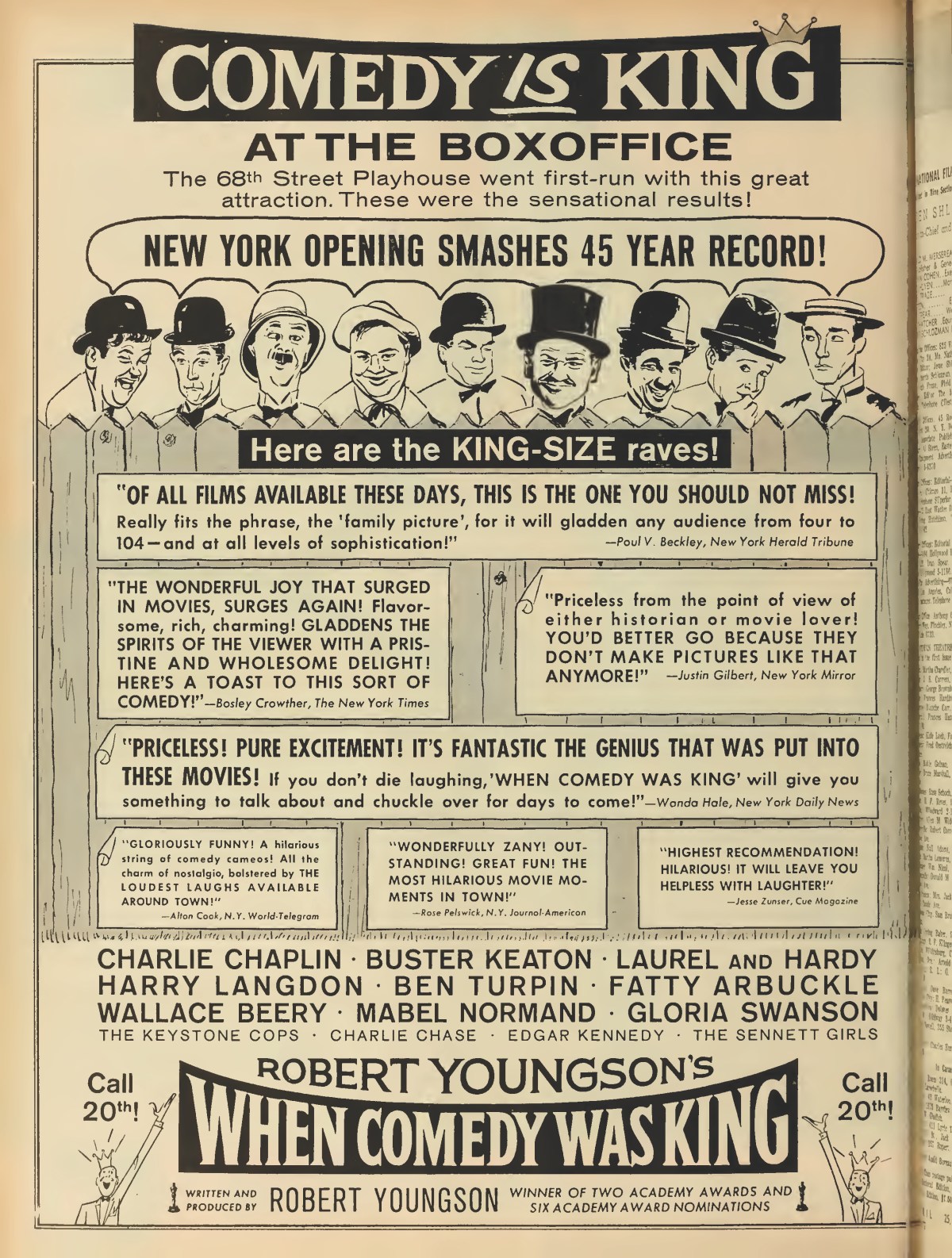
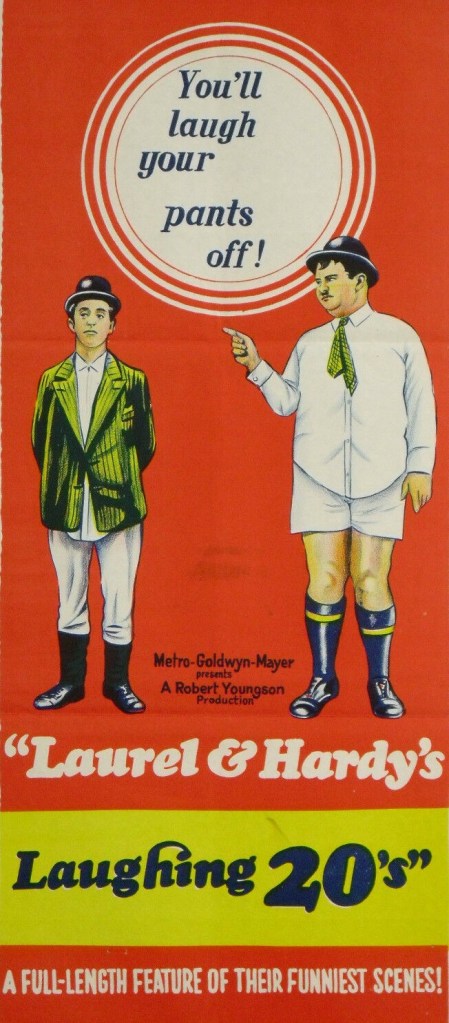
The phrase “classic silent British comedy” isn’t one that naturally trips off the tongue. Add in “of the 1960s” and you can guarantee furrowed brows. Thanks to the boom in recycling Hollywood silent classics in the early 1960s – which I may come back to in a later Blog –  there was a subsequent mini-boom in what were called “wordless” pictures, as if using the term “silent” was blasphemous. The oddity is that so many emerged from Britain, primarily in shortened format – not more than one hour long – as the second feature in a double bill.

Blame for this development lay in the hands of producer and later writer and later still director Bob Kellett, Britain’s unsung comedy king.

A Home of Your Own is beautifully structured, following the mishaps in building a block of new apartments. A credit sequence covers the stultifying bureaucracy involved so that what was a pristine site at the beginning of the endeavor turns into a waterlogged dump before the first brick is laid. Sight gags and slapstick abound with mostly everyone getting in each other’s way, or not, the traditional approach of the work-shy British builder being to provide an audience for someone else to dig up a road or a trench.

No paddle goes unsplashed, mud only exists to drench people, and in pursuit of comedy gold most of building materials end up misused. The gatekeeper’s main job is to make tea and there is naturally an union official whose chief task is to obstruct.

Pick of the gags is Ronnie Barker’s laying of cement, delivered with exquisite comedy timing, followed by Bernard Cribbin’s stonemason delicately chiselling out a plaque only to discover at the end in a laugh-out-loud moment that he has misspelled one word, and the carpenter who appropriates the closest implement with which to stir his tea. Some of the jokes grow legs – the morning tea break, a ham-fisted carpenter, the pipe-smoking architect arriving in a sports car, and a patch of ground on the road outside constantly being dug up by different contractors representing water board, gas, electricity.

Once the building is complete, the job has taken long enough for the aspiring apartment-owner, a mere fiancé at the outset, to lift his wife over the threshold accompanied by three kids. Any sense of personal accomplishment – the British thirst for owning property quenched – is undercut by problems the young couple now face thanks to the shoddy workmanship we have witnessed.  

All this is accompanied by a very inventive Ron Goodwin score which provides brilliant musical cues. As a bonus, the film features a roll-call of British television comedy superstars  including Ronnie Barker (The Two Ronnies, 1971-1987), Richard Briers (The Good Life, 1975-1978) and Bill Fraser (Bootsie and Snudge, 1960-1974).  Peter Butterworth and Bernard Cribbins were Carry On alumni. Janet Brown achieved later fame as an impressionist while Tony Tanner hit Broadway as the star of Half a Sixpence before expanding his career to choreographer-director, Tony-nominated for Joseph and his Amazing Technicolor Dreamcoat.

A Home of Your Own went out as the support to the Boulting Brothers’ comedy Rotten to the Core (1964) which gave a debut to Charlotte Rampling. Despite being effectively a B-film, primarily made to take advantage of the Eady Levy (a cashback guarantee for producers), it was surprisingly successful.  “Will delight arthouse patrons” commented Box Office magazine in America (“Review,” October 4, 1965, p160) as British comedy films in those days tended to end up in the arthouses. In part, this was because it was the official British entry to the Berlin Film Festival. It was distributed in the U.S. there by Cinema V in a double bill with Rotten to the Core and launched in what was misleadingly called a “world premiere engagement” at the prestigious Cinema 1 in New York.

Jay Lewis (Live Now, Pay Later, 1962) directed and co-wrote, along with Johnny Whyte, the mini-feature. Kellett continued in this enterprising vein with the 55-minute San Ferry Ann (1965) – which he wrote – about a group of British holidaymakers going abroad and the 49-minute Futtock’s End (1970) – which he directed – featuring a bunch of guests descending on an ancient country house owned by Ronnie Barker.

Television stars showcased in these two featurettes included Wilfred Bramble (Steptoe and Son, 1962-1974), Rodney Bewes (The Likely Lads, 1964-1966), Warren Mitchell (Till Death Do Us Part, 1965-1975) and Richard O’Sullivan (Man About the House, 1973-1976). Ron Moody composed the Oscar-winning Oliver! (1968) while Joan Sims and Barbara Windsor made their names in the Carry On series and theatrical knight Sir Michael Hordern appeared in Khartoum (1965) and Where Eagles Dare (1968).

Though disdained by critics, Kellett went on to become by far the most influential British comedy director of the 1970s. His output included the Frankie Howerd trilogy Up Pompeii (1971), Up the Chastity Belt (1972) and Up the Front (1972), as well as The Alf Garnett Saga (1972). He was well ahead of his time with the transgender comedy Girl Stroke Boy (1972) and female impersonator Danny La Rue in Our Miss Fred (1972).

You can find all four films in a compilation released by Network under the title Futtock’s End and Other Short Stories.  Thanks to Dolphin PR for a copy. You can catch it on DVD, Blu-Ray and digital services.

Black Widow (2021) **** – Seen at the Cinema

Like Skyfall, that rarity, an action film with a solid emotional core. Take away the action and you would still have an absorbing story of a loss, family tension, bickering siblings and an ego-driven pompous father. The action brings family together, initially the two girls, Natasha (Scarlett Johansson) and Yelena (Florence Pugh) rescuing papa Alexei (David Horsburgh) from a Russian maximum-security prison then with the addition of brainy mum Melina (Rachel Weisz) tackling criminal mastermind Dreykov (Ray Winstone) in an exceptionally clever secret location.

If you’ve come looking for simple action, this is the wrong movie for you. Family complication, on a par perhaps with the criminal clan of The Godfather and imbued with the darker hues of Christopher Nolan’s Batman, adds far more depth than normal for a superhero picture. And even for Dreykov, the issue is family. He is the repairer-in-chief, on the one hand putting back together as well as he can his own familial loss, and on the other giving a home for countless orphans worldwide, albeit to suit his own plans.

Natasha has run the gamut of raw emotion. Orphaned twice, forcibly ejected from the one place she called home, i.e. The Avengers family, her feelings about being reunited with  adoptive Romanoff parents are noticeably negative.  Yelena is more willing to embrace the errant parents. Never mind that this is the one superhero picture in The Avengers catalogue where the superhero, as fit and agile as Natasha is, has no demonstrable superhero powers. And even those powers are mocked by Yelena who makes fun of the pose we have so often seen Natasha adopt. Nearly stealing the show is the self-pitying Alexei, the over-ripe overweight over-emotional father who would always be embarrassing you, inflated with his own self-importance, as bereft now as his daughters, having been stripped of his own superhero status as the Red Guardian. Whenever any of his family are in danger you can be sure his ego will get in the way.

The story is simple enough. By accident, Yelena, a member of the Dreykov army of female orphans, accidentally discovers she is enslaved, teams up, but only after a knock-down scrap Jason Bourne would have been proud of, with on-the-run Natasha, and eventually her parents. The action is terrific, especially the jailbreak, which has time to steal the central riff from Force Majeure (2014) just to ramp up the tension. And there are plenty surprises along the way, especially apt reward for Natasha’s ruthlessness as a do-gooder.

This is an entire family up for redemption, forced to confront their pasts, and for once it is not action that provides the solution. In some respects it is the family that clings together that stays together. The Avengers aspect is mostly redundant here, so what’s left is a more solid action-fueled thriller with superb characters, each, including villain, with their own emotional story arc. And it’s not always dark either, the family scenario studded with comedy nuggets.   

Visually stunning, as you might expect, this is a welcome big-budget showcase for Cate Shortland (Berlin Syndrome, 2017) who brings emotional intelligence to bear on a genre in which that is often in short supply. Eric Pearson (Godzilla vs Kong, 2021) was the wordsmith.

Johansson (Marriage Story, 2019) has rarely been better and it says a lot for the performance of Florence Pugh (Little Women, 2019) that in their scenes together she is rarely overshadowed. Hopefully, this is the breakout picture for David Harbour (No Sudden Move, 2021), and maybe even the MCU team might recognize the comedic opportunities in a stand-alone based on his character, so effortlessly has it been constructed. And it’s a welcome return for Rachel Weisz, absent from the big screen since The Favourite (2018).  William Hurt (Avengers: Endgame, 2019) makes an expected appearance and Olga Kurylenko (The Courier, 2019) a surprise one and The Handmaid’s Tale’s O-T Fagbenie provides an interesting cameo.

This is definitely not going to work as well on the small-screen so if you’ve got the chance to see it in the cinema – where I saw it on my weekly Monday night outing – grab it while you can.

A Study in Terror (1965) ****

Excepting Sherlock Holmes and the Deadly Necklace (1962) and The Hound of the Baskervilles (1959) the world’s most famous fictional detective had been absent from the big screen for over two decades so it seemed an inspired decision to set him on the trail of the world’s most infamous serial killer – Jack the Ripper. The result is high-class comfort food – the first of the series made in color – classic deduction coupled with barbaric murders in a fog-bound London replete with cobbled streets, Dickensian urchins and sex workers apop with cleavage and corset. Throw in sensitivity towards the abject poverty of the period, female exploitation and a nod towards an upper-class cover-up and you have a movie with a surprisingly contemporary outlook.

This is a tougher Holmes, handy with his fists, sporting a spring-loaded knife in his walking stick. The investigation draws in the Prime Minister (Cecil Parker) and the Home Secretary (Dudley Foster) as well as Sherlock’s pompous brother Myron (Robert Morley) and the ubiquitous Inspector LeStrade (Frank Finlay).

Pretty quickly it is Suspects Assemble. Due to a scalpel being the murderer’s instrument of choice, doctors are immediately implicated, the most likely candidate the philanthropic Dr. Murray (Anthony Quayle) who operates a soup kitchen. Publican Max Steiner (Peter Carsten), with a sideline in blackmail, is another possibility. And there is the mysterious disinherited son of a lord, Michael Osborne who has married sex worker Angela (Adrienne Corri).

The Italian ad campaign combined a more conservative Sherlock Holmes
with exploitative illustrative detail.

As ever, the plot is complicated by red herrings and sleights of cinematic hand. But the highlight of a Holmes picture is the sleuth’s mastery of deduction based on clues missed by the ordinary mortal and every now and then the story comes to a halt to allow time for the detective to demonstrate genius. Occasionally he dons a disguise. And thoroughly enjoyable these scenes are before he gets down to the main business of uncovering the killer.

A Study in Terror introduces social depth to the Holmes saga. When the crimes focus the media spotlight on Whitechapel, Dr. Murray draws attention to the constant “murder by poverty” ignored by the state. Female exploitation is of course the norm in the sex worker business and small wonder that such women are easy targets for the Ripper and although that is an overdone trope in this case a different angle comes into play. 

Shakespearian actor John Neville (Oscar Wilde, 1960) handles the main character with considerable aplomb with Donald Houston (The Blue Lagoon, 1949) as his often baffled sidekick Watson. Robert Morley (Genghis Khan, 1965) is a splendid Mycroft although Anthony Quayle (East of Sudan, 1964) fails to nail down his Scottish accent.

The considerable supporting cast includes Judi Dench making her second film appearance, Barbara Windsor of Carry On fame, John Fraser (Operation Crossbow, 1965), John Cairney (Jason and the Argonauts, 1963), Peter Carsten (Dark of the Sun, 1968),  singer Georgia Brown (Nancy in the original stage production of Oliver!), Edina Ronay (The Black Torment, 1964), Corin Redgrave (The Girl with the Pistol,1968), former British leading lady Kay Walsh (Oliver Twist, 1948) and future television comedy writer Jeremy Lloyd (Are You Being Served?, 1972-1985).

The picture was unusual in that it was not drawn from the existing Holmes canon but as an original devised by Derek and Donald Ford (The Black Torment), the former going onto a more extensive career as a director of British sexploitation pictures such as Suburban Wives (1972). Production company Sir Nigel Films had been set up as an official vehicle to exploit the Holmes legacy.

Director James Hill (The Kitchen, 1961) had won an Oscar for the short Giuseppina (1960) and was a year away from his breakthrough Born Free. Given the low-budget this is a highly watchable picture.

Flick Vault has this for free on Youtube or if you want to own it forever there’s a DVD.

Go Naked in the World (1961) ***

Under-rated at the time and ever since, and overshadowed at the box office by MGM’s other venture into the world of the good-time-girl Butterfield 8 (1960), this raw slice of emotion delivers on every front and may be even more pertinent today in its unashamed depiction of paternal love.

Spoiled brat Nick Stratton (Anthony Franciosca), trying to escape controlling millionaire Greek father Pete (Ernest Borgnine), falls in love with widow Julie (Gina Lollobridgida), unaware that she is a high-class hooker, among whose clients number Pete.

Three tales run in parallel – the main love story, Pete’s attempts to drag his son into the family construction business, and the father’s undying love for his son. Julie is only too aware that her profession prohibits the development of true love, her world consisting of putting on a happy face for grey-haired men, while avoiding commitment. Where Butterfield 8 evaded the reality of prostitution, that is not the case here, Julie tormented by the prospect of bumping into former clients or her lover unable to accept her past. Overwhelmed by guilt, she believes she is beyond forgiveness. Nick wants none of the commitment of a rich man’s son but all the entitlement. 

Never mind the story, which was always going to tumble into tragedy, it’s the performers who steal the picture. Lollobrigida (Strange Bedfellows, 1965) gives a terrific performance, carrying the emotional baggage of the love story, devastation only inches away, self-destruction possibly the only path open, constantly aware that taking the easy path to riches and independence now stands in the way of happiness. The scenes where her self-loathing breaks through the patina of sexy gloss are tremendous as is her touching belief that somehow she can escape destiny.

While this might appear to be nothing but an over-the-top performance from Borgnine (The Split, 1968), it is anything but, and any man in an early 1960s picture who can demand a kiss from his grown-up son and constantly tells him how much he loves him is a pretty unusual character for the period. Of course, this overt show of emotion is explained by his nationality, but it’s clearly more than that. While attempting to control all around him, with hypocrisy in full spate, as heavy on religion as playing away from home, this is actually a superb piece of characterization, of a powerful man rendered impotent by the loss of love. He has the two best scenes, almost having a heart attack as he watches his son walk across a sky-high girder and later begging Julie’s forgiveness for attempting to wreck the romance.

Anthony Franciosca (Fathom, 1967) is the weak link. For all that he is saddled with a spineless character, moping and running away his default, he never quite seems worthy of romance with Julie nor for that matter of equality with his father. Former child star Luana Patten (Song of the South, 1946) makes an impact as the rebellious daughter while Nancy R. Pollock (The Pawnbroker,1964) brings dignity to her role as the doormat wife.

This was the fourth outing as a hyphenate for writer-director Ranald McDougall (The World, the Flesh and the Devil, 1959) but he was better known for screenplays such as Mildred Pierce (1945), The Naked Jungle (1954) and, later, Cleopatra (1963) and you can see he is accustomed to creating great roles for independent women and filling his picture with sharp dialogue and lines that sound like epithets. There’s more than enough going on to keep the various plots spinning and emotions teetering over a cliff edge.

Cast a Giant Shadow (1966) ***

In some respects a sequel to the film Exodus (1960) as Israel, on the eve of independence in 1948, prepares to repel invasion from neighboring Arabs. Colonel Mickey Marcus (Kirk Douglas) is recruited to help organise the Jewish forces even though he has little actual combat experience, having sat out the Second World War behind a desk until D-Day, and having already resumed his legal career.  

To facilitate entry to Palestine, he is met at the airport by Magda (Senta Berger), herself a soldier, pretending to be his sister. The journey from the airport in armored bus reveals the perilous reality of the situation, the vehicle strafed as they pass through towns. He finds a rabble of a fighting force, lacking in weaponry, disorganised, and made up of various groups at each other’s throats, and focused on defense rather than attack. Initially, Marcus is strictly an advisor, writing training manuals until he encourages a commando raid and is eventually, at the behest of Asher (Yul Brynner) put in complete command of all the units, effectively the country’s first general.

In the background, General Mike Randolph (John Wayne) is helping organise support in the United States to recognise Israel’s independence. Marcus organises a campaign to lift the siege of Jerusalem, first through direct attack, but then through an incredible foray into impassable mountains, building the “Burma Road,” equivalent in the tactical sense to Lawrence of Arabia’s trek through the desert to attack Aqaba.

A fair bit of the early part of the picture is flashback to establish Marcus’s military credentials, which are scant, in sum total no more than a week of active combat, and it would have been better to concentrate on why he was recruited in the first place, because of the name the real-life Colonel had made for himself in organizing the war crimes trials in Germany.

Apart from the action and military politics, the drama concerns Marcus abandoning wife Emma (Angie Dickinson) in New York, embarking on a romance with Magda and establishing a sense of identity with his adopted country. The action is particularly good, audacity the Israeli’s major weapon.

It is mostly through Magda that we view the Jewish experience. She married Andre (Michael Shillo) in order to save his life, although she did not love him. A veteran of many skirmishes, she suffers a breakdown when trapped in her vehicle during one particularly vicious battle. In what is possibly the most imaginative scene in the film, when Marcus encourages her to keep driving her stalled truck with cries of “Come on, Magda,” in cruel torment the surrounding Arabs take up the cry until it echoes round the hills. Once she falls for Marcus, of course, she never knows if he will return safe from battle.

Kirk Douglas (A Lovely Way to Die, 1968) leads mostly with his chin, never letting subtlety get in the way of his performance, but given the character assigned he has little option and is nonetheless effective as a leader and believable as a man torn between wife and lover. Senta Berger (Major Dundee, 1965) has never been better (or not so far in the films thus reviewed) with a meaty role that shows soldiering from a female perspective in a country where sacrifice is a given.

John Wayne (The Undefeated, 1969) has a small role as a grumpy general and Frank Sinatra (The Naked Runner,1967) a cameo as a commercial pilot who finds himself dragged into the war. Angie Dickinson (Fever in the Blood, 1961) is the long-suffering wife and singer Topol (Sallah, 1964) has a small role. The smattering of Brits includes Michael Hordern (Khartoum, 1966), Gordon Jackson (Danger Route, 1967), Jeremy Kemp (The Blue Max, 1966) and James Donald (The Great Escape, 1963).

Melville Shavelson wouldn’t be your first choice for an action picture given he made his name with comedies like It Started in Naples (1960), but does a fair job of directing, especially the action, the “Come on, Magda” scene and the confrontation with the British when immigrants land. He wrote the screenplay based on the biography by Ted Berkman.

Discover WordPress

A daily selection of the best content published on WordPress, collected for you by humans who love to read.

The Atavist Magazine

by Brian Hannan

WordPress.com News

The latest news on WordPress.com and the WordPress community.