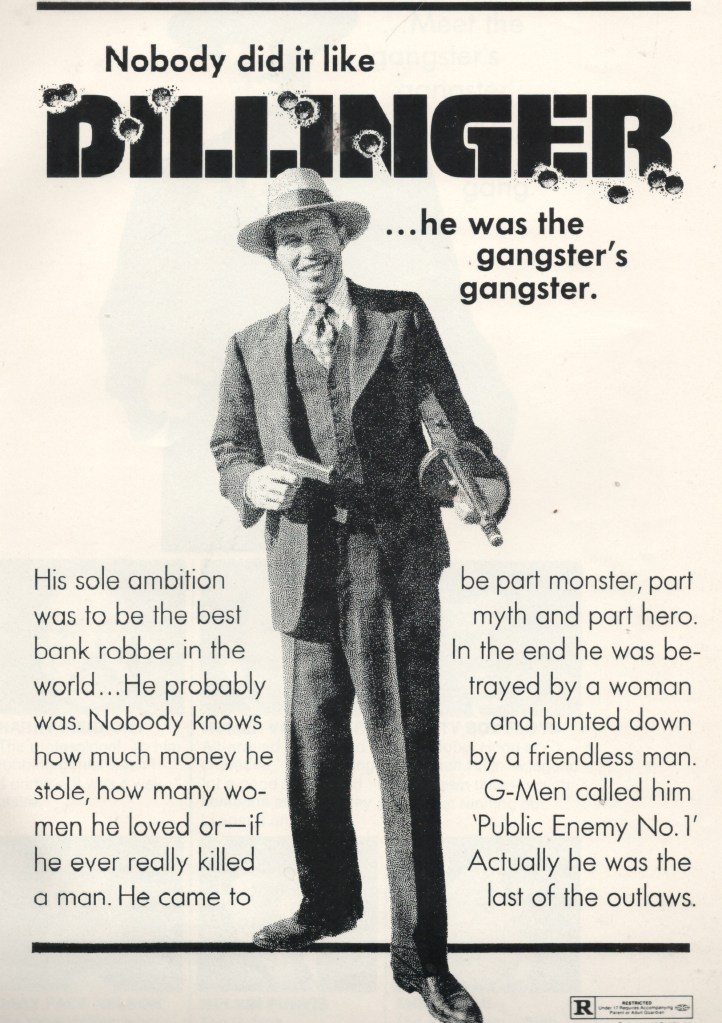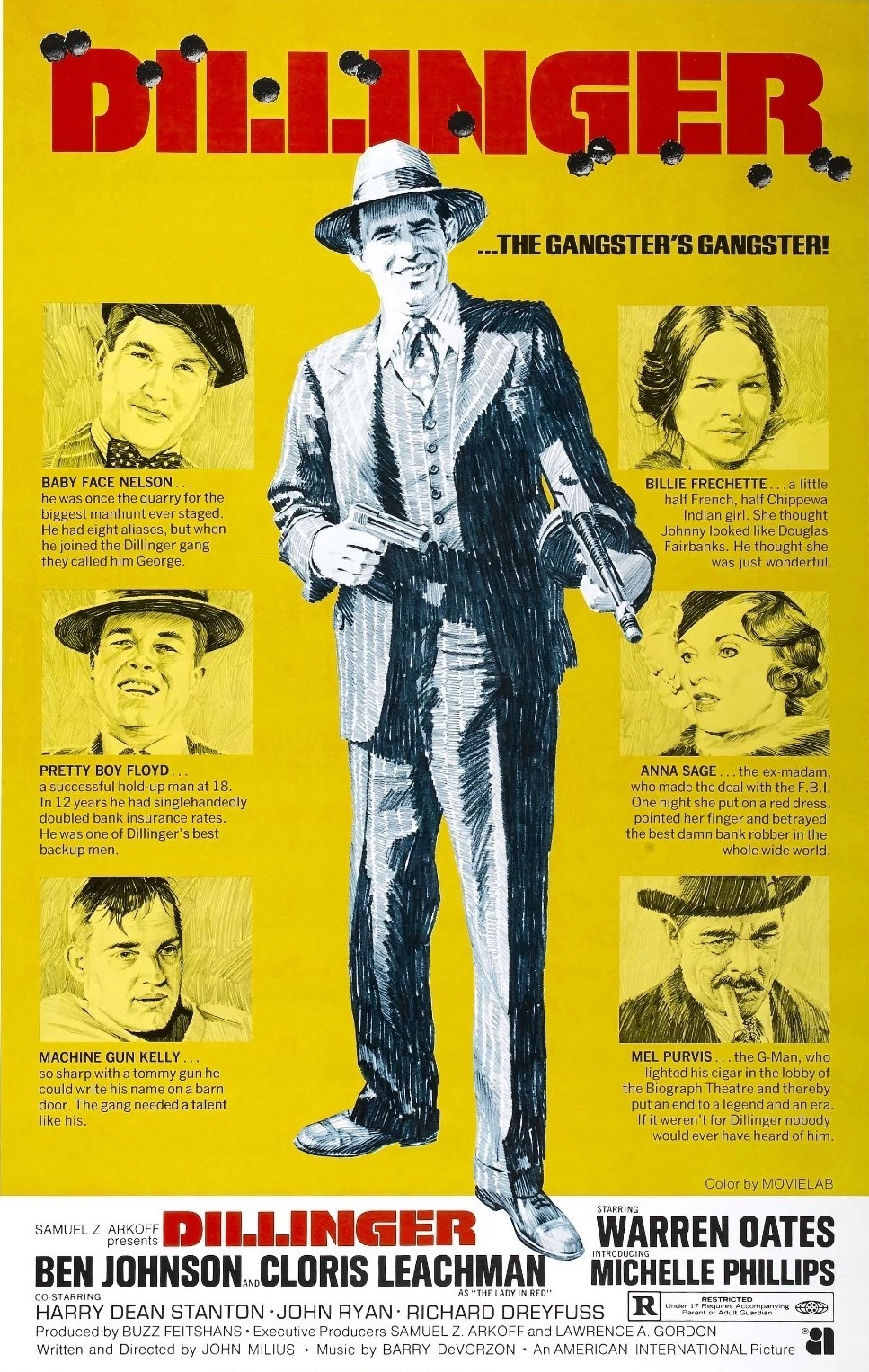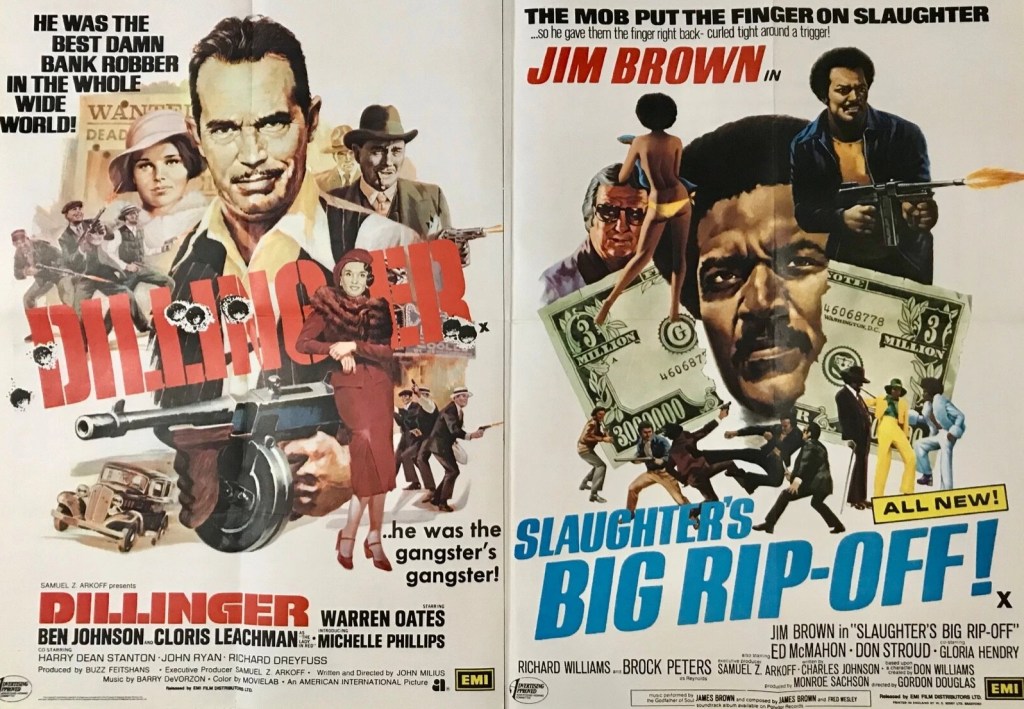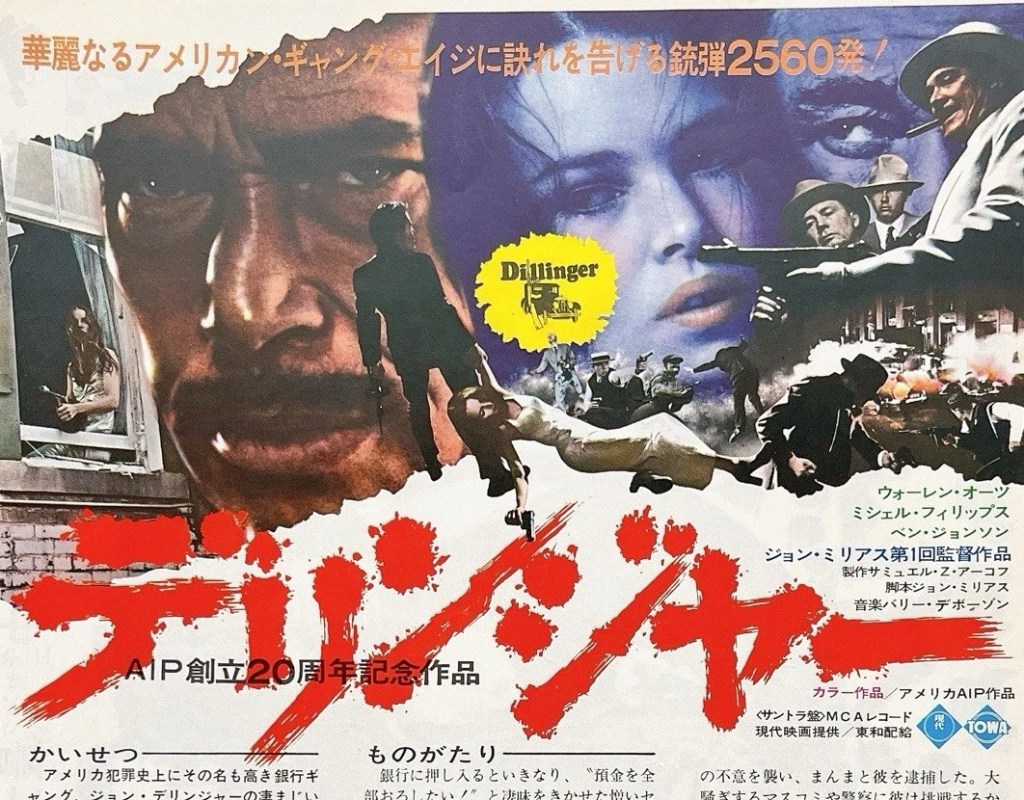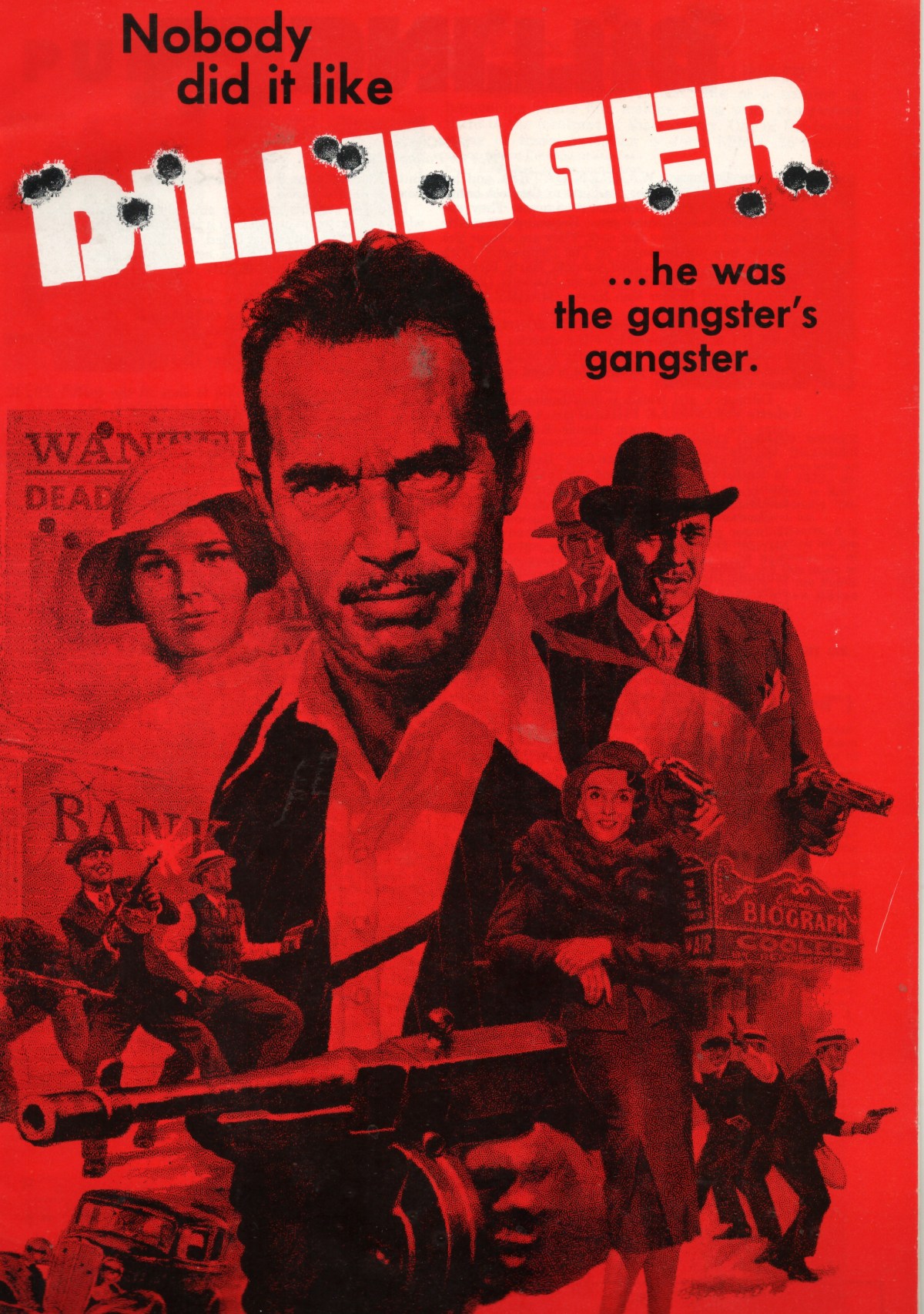
Dillinger (1973) ****

How to make a cult movie. Well, you can start with an uber-macho gun-loving director in the form of John Milius (instrumental in the making of Apocalypse Now, 1979, for which he wrote the script). Then throw in the kind of actor who would never have been a star except for the chisel-faced likes of Lee Marvin and Charles Bronson changing what audiences appreciated in a leading man, as opposed to a supporting character – step forward Warren Oates (Bring Me The Head of Alfredo Garcia, 1974).

Throw in two of the best supporting actors who ever lived. The first one, Ben Johnson, has by pure chance stepped up from the John Ford Stock Company and by golly snaffled himself an Oscar in The Last Picture Show (1971) and made the unlikely leap, in his mid-50s, to just about top-billed status. The second is Harry Dean Stanton (Cool Hand Luke, 1967), just about everyone’s favorite cult actor.

For good measure chuck in another actor, Cloris Leachman (Butch Cassidy and the Sundance Kid, 1969) who had barely had a movie career and now in her mid-1940s it was taking off thanks, oddly enough, also to an Oscar for The Last Picture Show. And a couple of fresh faces in Richard Dreyfuss (Jaws, 1975) and pop singer Michele Philips of The Mamas and the Papas.

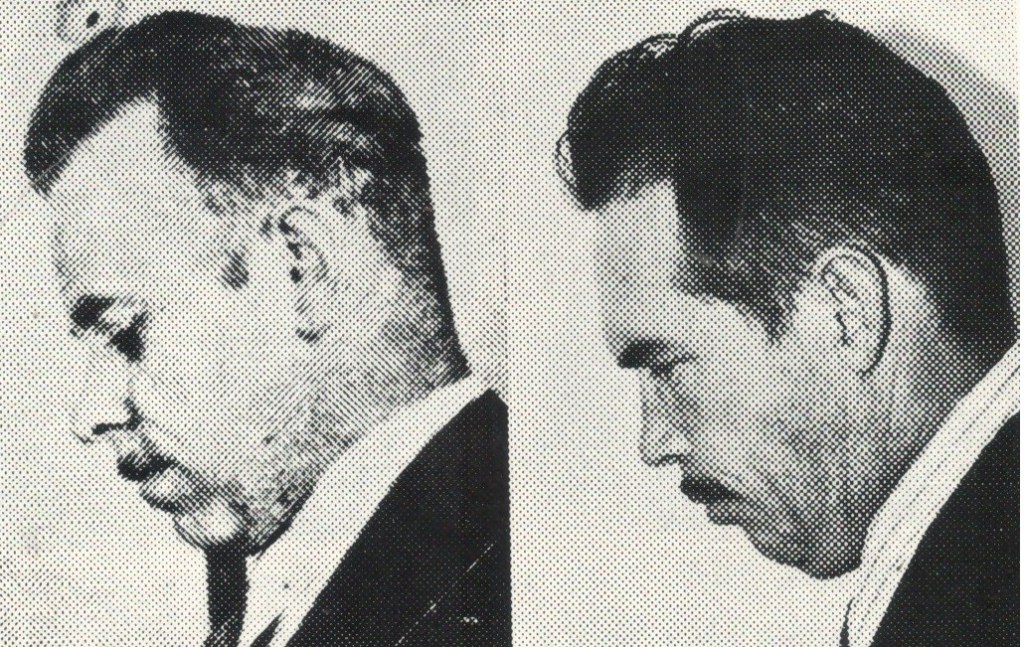
That the tale happens to revolve around the second most popular – after Bonnie & Clyde – of the hero bandits of the Great Depression, John Dillinger, and cult is home and dry.

As with the later Michael Mann version, we’re telling two stories at once. Publicity hound John Dillinger (Warren Oates) would have been a social media god these days – you bet he would have filmed every damned bank robbery on his phone, not to mention all the innocent bystanders filming him on theirs. He just loved appearing on the front pages of newspapers and on wanted posters. And he had a set of terrific catch phrases, mostly revolving around thinking people would remember forever being in his presence.

Then we’re following F.B.I. kingpin Melvin Purvis (Ben Johnson) tasked by J. Edgar Hoover to rid the country of these murderous varmints. All of this to the rat-a-tat-tat soundtrack of blazing machine guns mowing down gangsters and cops alike and the equally rat-a-tat-tat tones of a voice-over intent on creating high drama the way they used to on newsreels. The voice-over seemed particularly beloved by makers of gangster movies, though this avoid the biographical excesses of The St Valentine’s Day Massacre (1967).

Purvis and Dillinger are battling it out in more ways than one. Purvis appears equally determined to steal the headlines. He’s the one that goes in and captures single-handedly a bunch of notorious killers armed only with a bulletproof jacket and a cigar and weapon of some sort. He’s delighted when a gangster fashions the moniker “G-Men”, a nickname that seems to elevate the F.B.I. in the eyes of the media which have a tendency, for the sake of easier-to-write headlines, to shorten names.

You wouldn’t have needed an F.B.I. except for a peculiarity. In the U.S. state law meant that you could escape pursuit in one state if you hopped over into the next state where the law wouldn’t bother you one hoot because your crime wasn’t within your jurisdiction. If you were smart enough you could even evade the F.B.I. if you stuck to doing all your robbing in one state and all your hiding-out in another. But should you be dumb enough, as here, to truck a stolen car over the state line, then the F.B.I. could come gunning for you.

Dillinger isn’t likely to let the little matter of jurisdiction get in the way of his aim to become the best bank robber in the world, a claim that could be contested if he limited his sprees to one little state. Although his fame grows momentously when he escapes from a high-security prison that is supposed to be escape-proof.

Then Dillinger formed the gangster equivalent of the rock star Supergroup, bringing together Baby Face Nelson (Richard Dreyfuss) and Pretty Boy Floyd (Steve Kanaly) and  others.  .

If anyone could improve on the Raymond Chandler adage of when a narrative is in trouble bring in a man with a gun, it’s here. Dozens of men with dozens of machine guns, shotguns and pistols are apt to arrive at any point – every male in any godforsaken town totes a shotgun into the bargain. Dillinger might have been a great robber but he wasn’t much good at hiding out – he was always getting ambushed.

The gun battles are certainly lively and occasionally inventive.

Dillinger is eventually captured because, as one of his crew cautions, he’s a sucker for women. With Billie (Michele Philips) in irons he gallivants around with illegal immigrant Anna (Cloris Leachman) who snitches him out to Purvis leading to the legendary shootout at the Biograph cinema in Chicago.

As now, media (including social media) has their cake and munches it down, giant headlines describe the robbers in detail to sell copies while at the same time hypocritical editorials complain about their exploits to satisfy the more moralistic readers.

Characterization is sketchy to the point of cartoonish, but the characters, including the cop, are so cocky they only need to chuck out a few catchphrases to keep our interest.

Warren Oates and Ben Johnson make a decent stab at stardom, Richard Dreyfuss steals a few scenes, Harry Dean Stanton has some great lines.

Given the derisory budget, this is a great debut by John Milius, who also wrote the script.

Behind the Scenes: Coppola, Lucas, Speielberg, “The Last Kings of Hollywood”

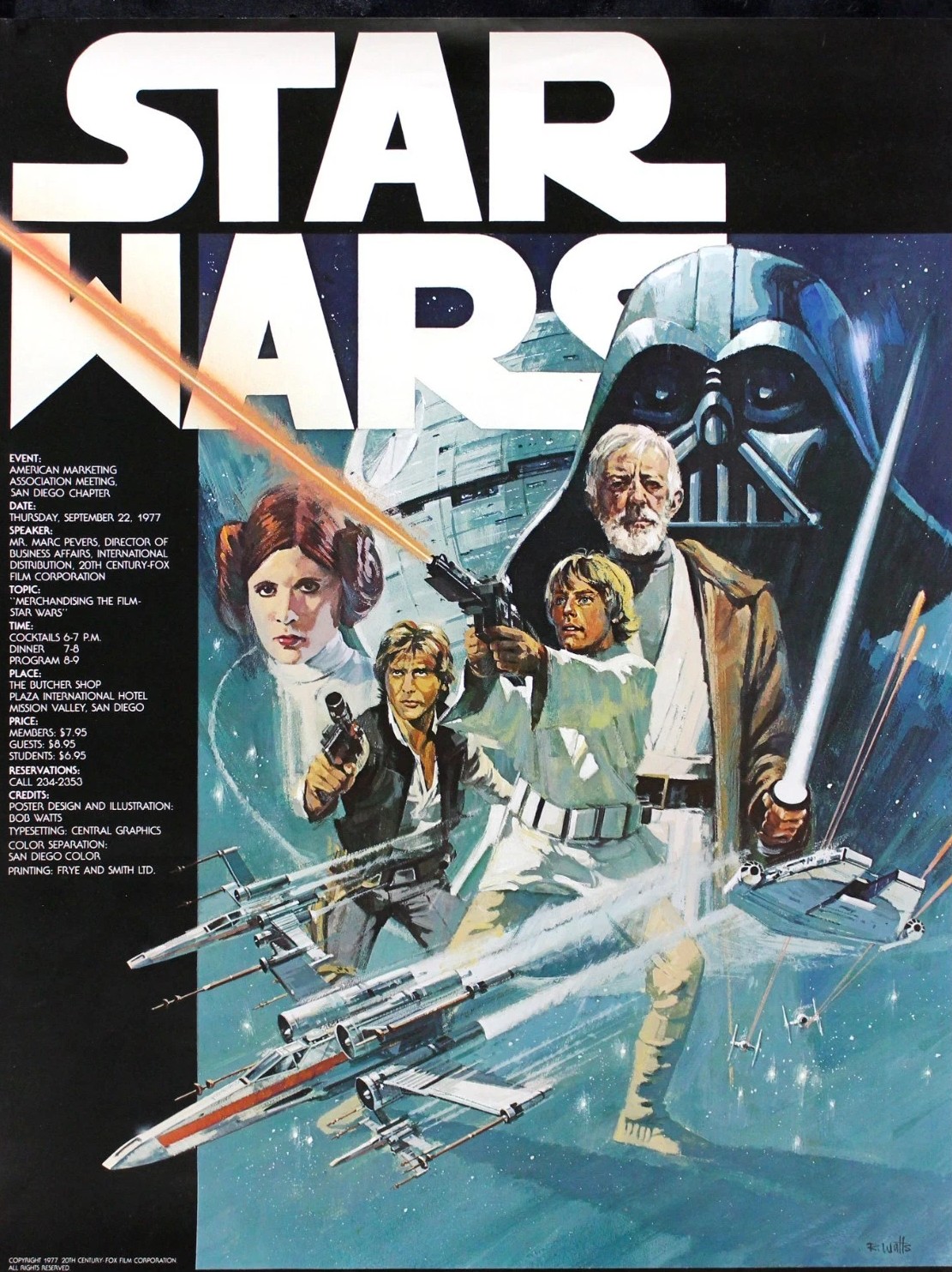
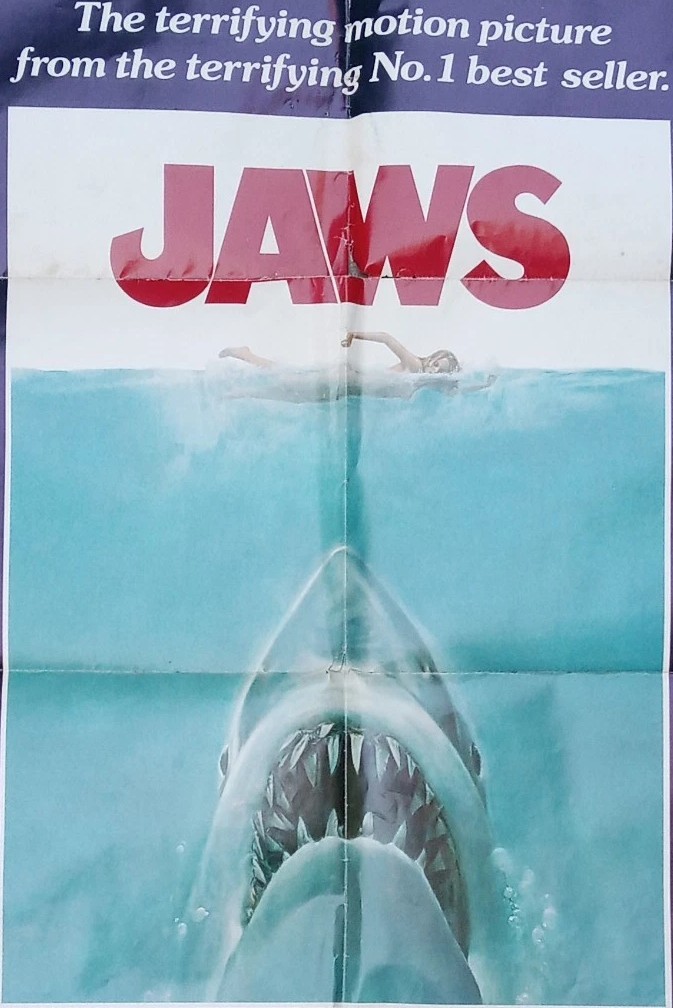
There’s no connection between Robert Wise, Mike Nichols and David Lean, responsible for the three biggest  movies of the 1960s, respectively The Sound of Music (1965), The Graduate (1967) and Doctor Zhivago (1965). No ostensible link these days between uber directors James Cameron and Christopher Nolan. Yet the three directorial gods of the 1970s – makers of the three biggest films of that decade namely The Godfather (1972), Jaws (1975) and Star Wars (1977) – lived out of each other’s pockets for a considerable period, relied on each other for support, encouragement and even finance, and while aiming to create a new path for the independent director ended up inventing the blockbuster which, ironically, made directors even more dependent on studios.

Paul Fischer’s new book The Last Kings of Hollywood, The Battle for the Soul of American Cinema delves into the background that saw Francis Ford Coppola bankroll George Lucas and Steven Spielberg and George Lucas work together, examining the ruptures, fallouts and lingering resentments that fueled their incredible rise.

All three were the hot kids in the cinematic sense. Coppola and Lucas were held up to generations of film school students for what they had achieved in film school, Spielberg’s juvenile attempts at movie making were incredibly accomplished.

Coppola was “something of a legend” after studying at Hofstra University in New York, “he’d won awards for his directing and all but remodeled the college’s entire drama department after himself. At UCLA film school he’d made all the best films” and then skipped out without graduating to work on Roger Corman pictures, learning by work rather than by attending lectures. Lucas’s student film THX 1138 was hailed as the best student film ever made. As a sophomore in high school, Spielberg made his calling card, Firelight.

Coppola was the visionary entrepreneur, persuading Warner Brothers to cough up the best part of $7 million for the director to set up his own independent operation American Zoetrope in San Francisco, distant from the prying and interfering eyes of Hollywood. All he had to show for the dough for the feature film version of THX 1138 (1971), which was a flop.

At USC, Lucas befriended John Milius and encouraged him to adapt Joseph Conrad’s novel Heart of Darkness into a Vietnam film that became Apocalypse Now and originally was being written for Lucas to direct. Lucas and Coppola fell out when the latter took over the film, even after Lucas had made a deal with Columbia. Screenwriter Robert Towne watched four hours of dailies from The Godfather and not only told the beleaguered director “this is without question the best footage I’ve ever seen” but suggested the film needed another scene between Brando and Pacino, the one where the father tells the son “Barzini will move against you first.”

After American Graffiti (1973) was rejected by United Artists, Universal was interested but only if  Coppola lent his name to it. After The Godfather, Coppola could have afford to finance it himself – the budget was only $777,000. But his wife Eleanor didn’t like the script so he passed and lost out on a fortune. Harrison Ford, who legend says was making a living as a carpenter, was actually doing better dealing dope.

Coppola had an affair with his babysitter Melissa Matheson, who turned into a screenwriter though after the failure of The Black Stallion (1979) had given up until Spielberg approached her to write E.T. (1982), having rejected John Sayles original script except for two ideas, the tip of the alien’s finger glowing and the notion of the alien left behind.

Other figures like Martin Scorsese and Brian DePalma are brought into the compelling narrative that touches upon every major creative player of the era. Many of the gang were present for the first showing of Star Wars, in Lucas’s plush screening room – Spielberg, Milius, DePalma, Gloria Katz and Willard Huyck who’d written American Graffiti, Hal Barwood and Matthew Robbins who’d written The Sugarland Express (1974). Scorsese had an excuse not to attend perhaps out of fear of “hating the film and having to break George’s heart.” The communal response was not what Lucas expected.  

“The silence afterward made George uneasy.” DePalma was the most vocal, not just making fun of the movie but of its essential ingredients such as the concept of The Force and the stormtroopers. But his tirade did spur Lucas into introducing the film with the same kind of text that used to crawl up the screen at the start of a Flash Gordon episode. Spielberg was encouraging, but not in public, only after taking Lucas aside.

As well as the special effects making the film and conjuring up a script that worked, Star Wars triggered huge rows between Lucas and his wife Marcia over the editing. This is probably the first book about the making of the movies where time is spent on editing, and its importance to the finished film. “Marcia shaped scenes around the characters’ emotions…George, on the other hand, was motivated by a mixture of cerebral logic and a subject sense of rhythm.”

Fischer covers the making of every important film in the early careers of the trio plus Scorsese and DePalma and a few others in a way that’s totally absorbing by mixing together the behind-the-scenes information and technical aspects with gossip about their love lives, drug habits and creative development. We get Spielberg laughing out loud when he first hears John Williams’ idea for the score of Jaws, that Coppola hid his affair with Matheson for a decade, how Spielberg turned his original ideas for what eventually became E.T. into Poltergeist (1982), whose idea it was to add the climactic twist to Carrie (1976), how Kathleen Kennedy became a dominant producer in a misogynistic business, at the Oscars we see The Godfather producer Robert Evans and Coppola standing side by side “hating each other’s guts.”

While you may have read dozens of articles or books about all movies like The Godfather, Jaws, Taxi Driver (1976), Carrie, Star Wars and Apocalypse Now (1979), what they lack is context. These movies did not appear out of nowhere. As well as camaraderie there was creative rivalry, peer pressure and its partner peer acceptance. Although everyone made big bucks, money was never the driving force. Film was. They ate and slept movies and all they wanted to do was make another, better, one.

The only part of Fischer’s argument I disagree with is the notion that somehow these directors were bucking the system when, in fact, in displacing the old system they replaced it with a new one that didn’t necessarily mean a better one. The blockbuster, the idea of the summer “tent-pole” grew out of not just what profits these movies made but set up the concept of sequels – two for The Godfather, three for Jaws, four for Raiders of the Lost Ark, ten for Star Wars, not to mention side hustles like computer games and television series. While Lucas has cashed in his lucrative chips, Coppola and Spielberg are still making movies.

It’s a long time since I’ve enjoyed a book as much.

The Last Kings of Hollywood, The Battle for the Soul of American Cinema by Paul Fischer is out now, from Faber & Faber in the U.K. and Celador in the U.S.

Discover WordPress

A daily selection of the best content published on WordPress, collected for you by humans who love to read.

The Atavist Magazine

by Brian Hannan

WordPress.com News

The latest news on WordPress.com and the WordPress community.