A post-WW2 operation to save a handful of Japanese adrift at sea in a storm is endangered when three members of the U.S. Air Force Air Rescue Service confront conflicts from their past. Despite tense rescue action, this is basically a three-hander about guilt and how men deal – or fail to deal – with emotions. Extended flashbacks illuminate the tangled relationships between Sgt Takashima (Yul Brynner), Lt Col Stevenson (Richard Widmark) and Second Lieut Gregg (George Chakiris). Unusually, for the period, tough guys actually emote.
So really it’s like one of those portmanteau films that are occasionally popular – like Trio (1950) made up of Somerset Maugham short stories or similar to something like the Oscar-winning Crash (2004) where characters interconnect after an accident. While each of the episodes stands up in its own right, the thrust of the narrative revolves around actions taken in the past having a direct bearing on the present situation.
Gregg is haunted by causing an avalanche after flying his helicopter too close to a mountain and, as a result, by having to leave behind many of the victims, due to restricted capacity on board, and now he is terrified of flying solo. As a consequence Stevenson has no faith in abilities as a pilot.
Stevenson also has an abiding hatred of Japanese – colleague Takashima of Japanese ancestry also bears his wrath – because his ill wife Caroline (Shirley Knight) and child died in a Japanese prisoner-of-war camp because medical supplies were reserved only for the Japanese. Faced with rescuing Japanese, he is enraged.
For his part, Takashima, a paratrooper during the war, inadvertently caused the death of his Algerian girlfriend Leila (Daniele Gaubert). It’s not so much an examination of tough guys under pressure as about their inability to deal with the consequences of action. There’s certainly a sense that the only way men like these have of dealing with trauma is to throw themselves into dangerous action.
Yul Brynner (The Double Man, 1967) gives a more thoughtful performance than you might expect while Richard Widmark (The Secret Ways, 1961), himself dabbling in production elsewhere, was good value. Goerge Chakiris (The Young Girls of Rochefort, 1967) was a weaker link. The presence of Suzy Parker (Circle of Deception, 1960) and especially Daniele Gaubert (The Golden Claws of the Cat Girl, 1968) strengthen the film.
Unusually, at a time when product was in short supply and for a film boasting a strong cast, the picture was shelved for two years after completion. Presumably explained by the demise of Harold Hecht’s production company after he split with Burt Lancaster. Michael Anderson (The Shoes of the Fisherman, 1968) directed from a screenplay by Waldo Salt (Midnight Cowboy, 1969) based on the novel by Elliot Arnold (Kings of the Sun, 1963).
The title’s a bit of a misnomer, suggesting someone is trying to escape from Ashiya when, in fact, that is just the name of the air base where the rescue team are located.
Critics complained it was neither one thing nor the other, but in fact I found it a perfectly satisfactory combination of action and drama, especially as it dealt with rarely-recognized male emotions.
Although a truly innocent movie about young love, wrapped up in a sunken treasure scenario, the marketeers then and now could not resist trying to inject elements of sexuality, the poster for the original movie highlighting what would be Hayley Mills’ second screen kiss (following a smacker from Peter McEnery in The Moon-Spinners the year before), the poster for the DVD sticking the star in a bikini that she does not wear in the film.
The film was based on the 1921 novel Satan: A Romance of the Bahamas (filmed as Satan’s Sister in 1925 with Betty Balfour) by Henry de Vere Stacpoole, who had previously dallied with young love in The Blue Lagoon. Despite the title, there was a complete absence of the demonic. In the book, she is sailing with her brother. That character was eliminated in favour of a father.
The 1960s teen movie that could as easily morph into angst (Splendor in the Grass, 1961), blackmail (Kitten with a Whip, 1964) or madness (Lilith, 1964) was generally more at home with innocence. The beach party movies and series like Gidget rarely involved more than a stolen kiss, the characters all clearly virgins, and certainly did not go down the brazen sexuality route that would mark the second half of the decade.
Hayley Mills is on charming form as tomboy Spring Tyler (hence the title) sailing the Caribbean as mate to her conman father Tommy (played by her real-life father John Mills). Their idyllic life is heading for the rocks since the father didn’t “figure on the little girl growing up.” With one eye on providing a suitor for his daughter, the skipper takes on board a Harvard Law School graduate William (James MacArthur) ostensibly to give him experience of fishing.
True love takes its time since the girl has no intention of growing up and prefers a life of independence. Initially, they are sparring partners – she mocks the fact that he wears pyjamas. But once the story kicks off, they find they have more in common.
The sunken treasure element, while slim, is enlivened by some over-the-top acting by Jose (Lionel Jeffries) and Judd (Harry Andrews). The three leads are actually quite good, John Mills (Tunes of Glory, 1960) totally convincing as a effectively a spiv on the high seas with Hayley Mills (The Family Way, 1966) as the independent woman (“I’m me so don’t expect anything else”) and the confident sailor becoming entangled in unexpected emotions.
Surprisingly, James MacArthur, also a graduate from the Disney acting school, though a decade older than Hayley Mills, shows unexpected subtlety, and this would be a springboard to more demanding roles in cold war thriller The Bedford Incident (1965) and WW2 epic Battle of the Bulge (1965). Cocky and rich, he is quickly brought down earth when she proves a faster swimmer and plays tricks on him. But he soon proves his worth.
Director Richard Thorpe’s career was winding down after four decades in the business and this was a far cry from MGM spectaculars Ivanhoe (1952) and Knights of the Round Table (1953) and even Jailhouse Rock (1957) but he keeps a tight rein on the narrative, makes good use of the scenery (Spain doubling for the Caribbean) and walks the delicate line of allowing the adolescents to explore their feelings with tipping over into anything more overt.
He was a better director than the material deserved, but then so was writer James Lee Barrett who the same year would receive screen credit for The Greatest Story Ever Told and western Shenandoah. However, their involvement made it an accomplished little picture and gave audiences a taste of what Hayley Mills could do in a film that did not tether her to child star mode.
The New York Times second-string reviewer Howard Thompson, in tagging the star “this delectable miss, now all of 18” opined (review, June 17, 1965) that the “two young people are the most winning advertisement for young love in a long time.”
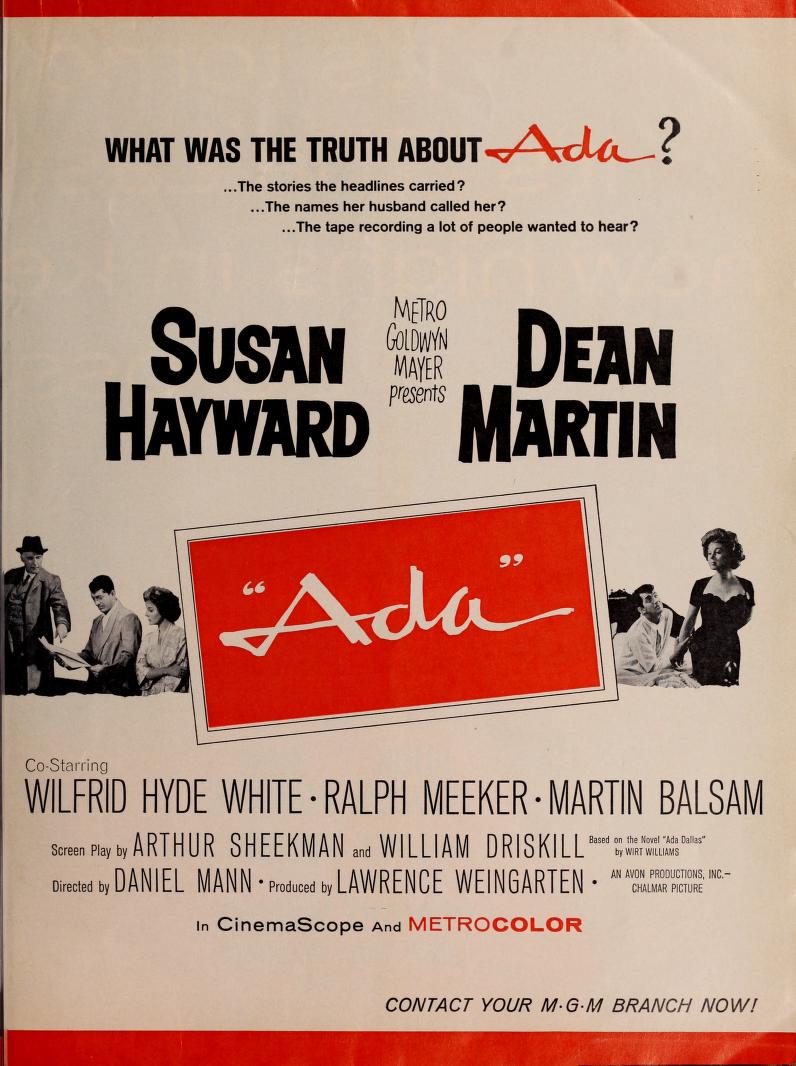
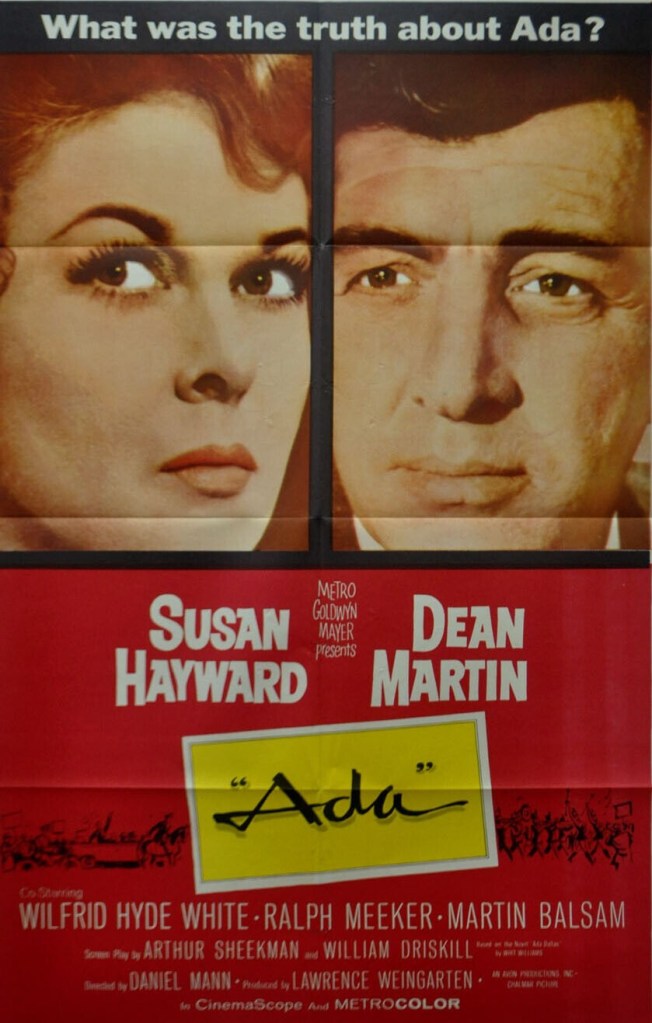
Oddly enough, this shares some elements with Killers of the Flower Moon. For a start Sylvester (Wilfrid Hyde-White), the political fixer, comes over as Robert DeNiro’s benign uncle, both so low-key, charming and persuasive you’d never believe them capable of wicked manipulation. In the second place Bo (Dean Martin) is every bit as charming and baffled as Leonardo DiCaprio.
And just as the latter’s role is to worm his way into wealth and power via marriage, so too that’s the route taken by Ada (Susan Hayward), who would be euphemistically known in those days as a “good-time girl.”
You’d figure this for a mild political satire except for the fact that stooges/buffoons have consistently made their way to the highest political office. As Ada pointedly points out, public appeal is the greatest qualification of any candidate, opportunism a close second. Bizarre as it seems, Bo is a popular local guitar-playing-singer of the Hank Williams variety, a well-meaning dumb-as-they-come sort, whom Sylvester persuades to run for Governor. In the course of the campaign, as “a present in a back-room saloon,” he is served up Ada with whom he unexpectedly falls in love and marries.
His campaign path is smoothed when one of Sylvester’s hacks leaks news that his rival’s wife is an addict, the woman conveniently shooting her brains out. Naturally, Bo soon realizes he’s the sap, his only job to sign hundreds of legal documents every day, pieces of legislation that as it happens fill the pockets of Sylvester and his buddies.
When Bo’s long-time chum Ronnie (Frank Maxwell) threatens to expose the river of sleaze he is quickly eased out. That leaves an interesting vacancy for Ronnie was Lieutenant-Governor, Bo’s deputy. So, Ada, with a good bit more between the ears than her husband, throws her hat into the ring.
She’s to politics born, a particularly wily creature, able to bring into line the society dames who look down their nose on her, and keep tabs on Sylvester. What she doesn’t realise of course is that once you’ve got a very amenable deputy, that person becomes Acting Governor, and in effect Governor, should anything happen to the incumbent. And should she then decide she’s had enough of the sleaze, then a little poking around in her background should bring her to heel.
So, all the corruption you ever dreamt of, all the smart back-slappers ponying up thousands in campaign contributions in order to seek future reward, all that tax-payers money heading in the rich man’s pocket. Not a lot that’s new there.
What makes this stand out are the performances and the narrative arc. Wilfrid Hyde-White (The Liquidator, 1965) is a sensational casting coup. The British actor specialized in characters oozing wry charm, sometimes verging on the dotty, sometimes a tad idiotic, but never an outright swine. There are a couple of scenes where those mellifluous tones turn in an instant into a sharp crack, the avuncular replaced by the sinister.
And I’m not saying DeNiro copies his aging trick, you know the bit later on in Killers of the Flower Moon, when body no longer as sharp as the mind, the actor begins to drag his leg, and with no reference to that impairment. Well, here, similarly, the fit-as-a-fiddle Sylvester later on, still at the height of his mental powers, is seen being transported in a wheelchair.
The performance of Dean Martin (Rough Night in Jericho, 1967) was oddly dismissed at the time. And yet it was bold playing. He goes from ebullient star, enjoying being feted by all, lousy speeches lapped up by an adoring crowd, to withdrawing into himself as he realizes he has been duped. That doesn’t just take some acting skill, but considerable self-belief, to play a character who undergoes the wrong kind of transformation, not the general redemptive kind, nor sinking into some Oscar-worthy illness, but coming to terms with your own lack of ability.
Of course, Susan Hayward (Stolen Hours, 1963) delivers, as always, her screen wattage burns brighter than virtually any other female star of the period. You know the character expects her past to be exposed at any time, but she dives straight in, determined to tackle the sleaze. There’s a wonderful scene where, her background challenged by the hoity-toity society dames, she puts them in their place with a clever piece of political maneuvering.
Ada totally turns on its head the idea of the political do-gooder. She has none of the usual innocence, nor the ability to capture the crowd by seizing upon an ideal, but she’s more at home by dealing with the sleaze-merchants straight-on, taking apart their schemes in the comfort of the government’s back rooms where until now such deals have been dreamt up.
Director Daniel Mann (Judith, 1966) was known as a woman’s director. Under his direction in the Oscar stakes, Elizabeth Taylor had won for Butterfield 8 (1960), likewise both Anna Magnani for The Rose Tattoo (1955) and Shirley Booth for Come Back, Little Sheba (1953), while Hayward was nominated for I’ll Cry Tomorrow (1955). He not only chose grittier dramas but had the knack of encouraging actresses to let loose, without going overboard, on a part.
Considerably overlooked and substantially under-rated, but not only prescient regarding future political candidates and the kind of corruption they got involved in (land deals ring a bell?) but elevated by the role of his career by Wilfrid Hyde-White, an unexpectedly good one from Dean Martin and Susan Hayward in top form.
Ann-Margret was a late arrival on the scene. The voluptuous Mamie van Doren (3 Nuts in Search of a Bolt, 1964) had bought the rights to the novel by Wade Miller in September 1959 before selling them on the Universal a couple of months later, possibly in exchange for the starring role.
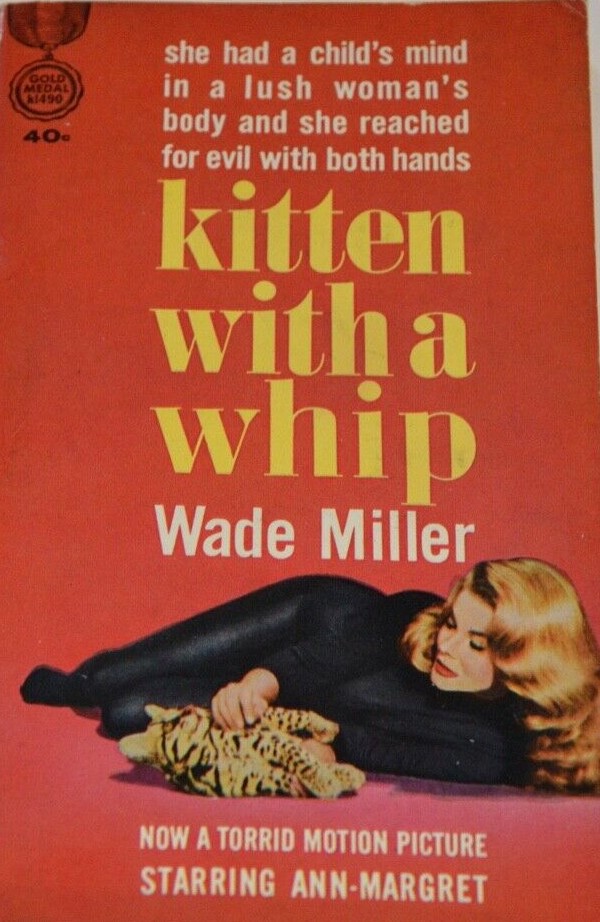
Wade Miller was the pseudonym of writing team Robert Wade and H. Bill Miller, who had teamed up at the age of 12, and wrote screenplays under another pseudonym, Whit Masterson. Together they had turned out 30 novels, and hundreds of short stories and their work had been the basis for, most famously, A Touch of Evil (1958). The later Yellow Canary (1963) and Warning Shot (1966) were based on their novels. The moment Hollywood came calling Fawcett publishing, through its Gold Medal paperback division. rushed out a movie tie-in edition, adding another when the film was due for release.
The second movie tie-in edition.
Laszlo Gorog (Too Soon to Love, 1960) was initially allocated the screenplay, but was quickly replaced by Alfred Benner (Key Witness, 1960). Nancy Kwan (Tamahine, 1963) and Steve Forrest (Yellow Canary) entered the frame when Richard Rush (Too Soon To Love) was being tipped to direct. Brigitte Bardot turned it down. And it languished in limbo for a couple of years before being handed to television director Douglas Heyes – a journeyman known for episodes of Laramie, Cheyenne, The Twilight Zone, TheVirginian, et al.
It wasn’t meant to be his debut feature. That was intended to be If One Is To Die from his own original screenplay, announced in 1961. But that was for Twentieth Century Fox. When that failed to materialize, and after a short spell back in television, he did double duty – writer and director, a role he had carried out countless times for television – for Kitten with a Whip
It was the last of the 11 movies scheduled by Universal for production in 1963, shooting beginning on December 27. The studio, at the forefront of developing new talent, put new recruit Patrica Barry (Send Me No Flowers, 1964) in the secondary female role.
That this got into the mix for Ann-Margret must have taken some determined wheeling and dealing for by 1963 the actress was in phenomenal demand, especially for someone with so little experience. She had contracts for over a dozen pictures. In part, she was the most exciting addition to a growing pool of new talent that included Michael Callan (The Interns, 1962), Alex Cord (Stagecoach, 1966), George Segal (The Quiller Mmorandum, 1966) and Peter Fonda (Lilith, 1964), but the fact that she could sing and perform made her doubly attractive since Hollywood had now worked out that hit singles and live performances were “the fastest route to the showbiz area…and the springboard to…film fields.”
Film adaptations of hit musicals, benefitting from the “broader pull of Hollywood productions” and “wider audience exposure,” boosted sales not just of the original soundtrack but also the original Broadway cast recording. Columbia’s Bye, Bye Birdie (1963) sold two million copies of the movie soundtrack and album and 1.5 million of the Broadway version.
There was a three-picture deal with Frank Sinatra’s Essex Productions that should have included Marriage on the Rocks (at that time known as Community Property, its original Broadway title) delayed until 1965 when the original director pulled out. Columbia was owed three movies, Twentieth Century Fox five. Every time she signed a new contract her price went up. She was the object of a bidding war. MGM appeared to be in the lead when it raised her going rate, ponying up $275,000 plus a percentage for two movies – Viva Las Vegas (1964) and Say it with Music (shelved). But Universal trumped that, $250,000 per picture for six movies, the first being Kitten with a Whip.
Her arrival in showbiz had triggered whirlwind of promotion. She snaffled her first headline in December 1960, at the age of 19, when Jack Benny added her to his nightclub act in las Vegas. Four months later her face adorned a full-page ad in Hollywood Reporter that announced her television debut on the Jack Benny Show on CBS April 2, 1961. By then Twentieth Century Fox was sniffing around and she landed a $1,000 a week contract. The studio set her as female lead in State Fair (1962) but she was abruptly dropped and when reinstated it was as second female lead.
At this stage, publicity focusing around her voice. Signed to RCA Victor, she quickly became a top-selling artist. In return for delivering 12-24 singles and a number of albums over three years, the label committed to spending $50,000 a year in promotion. Columbia assigned George Sidney, director of Bye, Bye Birdie, to make an eight-minute promotional film.
After well-received turns in A Pocketful of Miracles (1962), Bye, Bye Birdie and female lead to Elvis Presley in Viva Las Vegas, Kitten with a Whip represented departure, her first dramatic role. Although some observers later criticized her management team, in retrospect it’s clear that a sensible strategy was in operation, alternating lighter fare where she could sing and dance with more serious works (Once a Thief and The Cincinnati Kid, 1965, and Stagecoach the following year) where she did neither.
Exhibitors were so convinced she was the real deal that she was the youngest-ever winner of their Star of the Year Award, previous holders of the trophy including the more established likes of John Wayne, Gregory Peck, William Holden, Deborah Kerr and Doris Day, but only after they had been in the business for several years with umpteen box office hits to prove their worth.
Male lead John Forsythe, after years on television in Bachelor Father (1957-1962), was making a movie comeback. But he had signed an unusual contract with Universal, suggesting nobody was confident he was as genuine a prospect. The studio offered him a deal for two pictures a year, but one that also included television work for its television arm Revue.
Reviews were better than the actress might have expected. Eugene Archer, the second-string critic on the New York Times said “she demonstrated enough untrained talent to suggest interesting dramatic possibilities in better films.” Box Office opined that Ann-Margret delivered “a realistic and surprisingly effective characterization” but pleaded for studios to “let her return to lighter fare.” Variety was dismissive: “display of over-acting.”
Exhibitors took a negative view. “Does this popular star a great deal of harm,” was typical of the response. Others were more forthright, describing the movie as a “glaring example of the type of show that shouldn’t be made.” Overall, it was not what anybody – critics, audiences, cinema managers – expected and not in a good way. The St Paul Evening Dispatch took the MPAA’s Production Code to task for passing a picture of “sheer sadism, depravity without redeeming reason.”
In some first run situations, it was the solo feature. Other cinemas paired with Lolita (1962), a somewhat obvious choice, or Lilith (1964) or British film Young and Willing (1962), Faces in the Dark (1960) with Mai Zetterling and Audie Murphy western Bullet for a Badman (1964). In some cities, it bypassed first run and went straight into the drive-ins. In smaller locales it went out on the lower half of a double bill.
Only in Pittsburgh did it score at the box office, “lofty” the assessment. It was deemed “sluggish” Washington, “slow” in Chicago and Los Angeles, and “slim” in Columbus, Ohio. Of 21 movies released in the Winter Quarter, it was ranked lowest where it mattered most, at the ticket wickets, according to Box Office. It didn’t rake in $1 million in rentals, the amount required to earn a place on Variety’s annual box office chart.
Kitten with a Whip didn’t appear to harm the star’s career. Critics praised her work on Once A Thief and The Cincinnati Kid. But as her career first prospered and later crashed and burned it was considered something better not mentioned. John Forsythe fared less well. Outside of television, he only made five movies in five years.
Heyes’ movie career stuttered. He had been due to write and direct The 12th of Never, based on his own novel, to star Sandra Dee, one of Universal’s top marquee names, in June 1964, but when that was cancelled returned to television until called back to direct Beau Geste (1966).
There might have been reassessment of the value of the original film when Gus Van Sant announced he planned a remake in 2007. On the other hand, that it was Lindsay Lohan’s favorite picture didn’t do it much good.
Twisty Carol Reed thriller pivoting on emotional entanglement that keeps you guessing right up to the end. In revenge for losing his business after an insurance company failed to cough up for his crashed plane, entrepreneur Rex (Laurence Harvey) fakes his own death and flees to Malaga in Spain.
But when girlfriend Stella (Lee Remick) joins him she discovers he has assumed the identity of an Australian millionaire whose passport he has purloined and completed the transformation by changing his black hair to blond. Rex has a mind to repeat the experiment by killing off himself (under the new identity) and claiming the insurance. Stella, complicit in the original scam, not only balks at this idea but finds disconcerting his change of personality and clear attraction to the opposite sex.
Tensions mount when mild-mannered insurance investigator Stephen (Alan Bates) appears on the scene. Anyone watching the film now has to accept that in the days before social media every face was not instantly tracked and accept that Stephen is unaware of what Rex looks like.
The couple cannot run because they are awaiting a bank draft. Stephen immediately sets the tone for suspicion when he pronounces that their vehicle “looks like a getaway car.” Forced to follow “The Godfather” dictum of keeping your enemies closer, the pair befriend Stephen with the intention of finding out what he knows and what are his intentions. Rex and Stella have to pretend they have only just met, separate bedrooms et al, leaving the door open for Stephen to gently woo Stella, an action endorsed by Harvey. They are caught out in small lies. Rex’s Australian accent falters. Stephen keeps on making notations in a notebook. Rex foils his pursuer’s attempts to photograph him.
The ensuing game of cat-and-mouse is complicated by Stephen’s romantic inclinations towards Stella. Is this as genuine as it appears? Or is he trying to get her on her own to admit complicity? Both Rex and Stella are, effectively, forced to adopt the new identities they have forged to dupe Stephen, with unforeseen results. There are red herrings aplenty, a race along mountainous roads, and some marvelous twists as the couple find the tale they have woven is turning too tight for comfort until murder appears the only solution.
As with his international breakthrough The Third Man (1949), Carol Reed grounds the whole Hitchcockian enterprise in local culture – this being unspoiled Malaga prior to the tourist deluge – Spanish churches, a wedding, fiesta, the running of the bulls, with an occasional ironic twist – “gypsy” musicians watching ballroom dancing on television. Reed resists taking the material down a darker route – Hitchcock would undoubtedly have twisted the scenario in another direction until Stella came under threat from Rex – but instead allows it to play out as a menage a trois underwritten by menace.
The acting is sublime. Laurence Harvey (A Dandy in Aspic, 1968) wallows in his part, Remick (Days of Wine and Roses, 1962) quietly anxious scarcely coming to belief that she had played a part in the original crime, Alan Bates (The Fixer, 1969), his deceptively pleasant inquisitive demeanor the ideal foil to Harvey. Unusually, they all undergo change, Harvey uncovers a more ruthless side to his character, Remick responds to the gentler nature of Bates, while Bates shrugs off his schoolmasterly aspects to become an attractive companion.
A couple of footnotes – special mention to Maurice Binder for the opening credits and this was the final score of British composer William Alwyn (The Fallen Idol, 1948). John Mortimer (Bunny Lake Is Missing, 1965) wrote the screenplay based on the Shelley Smith novel.
Robert Redford rarely took the easy option. Even his big romantic number, The Way We Were (1973), with Barbra Streisand had a serious center, Jeremiah Johnson (1972) focused on ecology and he used his star power to get studio backing for All the President’s Men (1976). Even starting out, and before Butch Cassidy and the Sundance Kid (1969) anointed him a star, when he could, or should according to some observers, have been capitalizing on his good looks he did not shrink from playing unlikeable characters.
Idealizing heroes is endemic. Most films which portray sport stars with feet of clay generally begin with an attractive personality who presses the self-destruct button through alcohol, sex or drugs (or all three) such as Number One (1969) with Charlton Heston. The general consensus is that this approach to the sports movie was not rescinded until the brutal boxer exposed in Scorsese’s Raging Bull (1980).
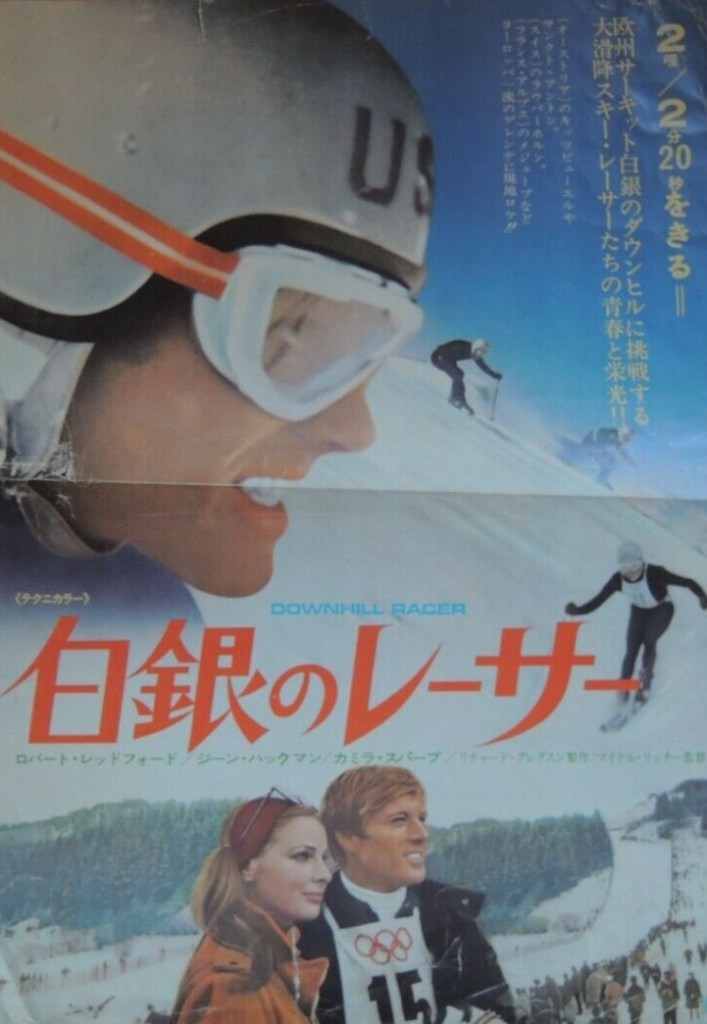
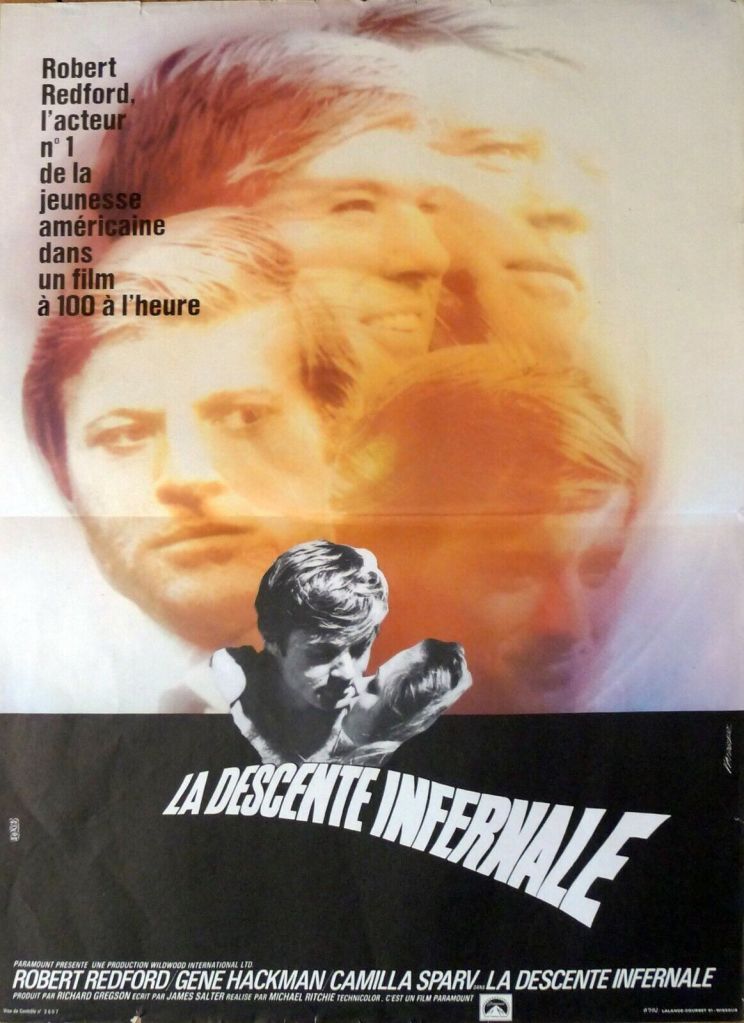
But it turns out Scorsese was not the first. In this ski drama Chappellet (Robert Redford) is a loner who cares for no-one but himself. Alienated from his father (Walter Stroud), his girlfriend at home little more than a sex object, the obsessed skier proves a constant source of friction for his national team manager Claire (Gene Hackman) and not above the kind of dirty tricks as typified in Slap Shot (1977). He sees nothing wrong with making no bones about the fact that he is in the game for fame.
Totally lacking in self-delusion, he’s a farm boy and few steps up from being illiterate. The world of the professional skier was hardly the obvious subject for a sports drama. There’s certainly an excitement in the action that couldn’t be captured on television, but the essential competitive element, the race against the clock, is not so riveting as the last-minute touchdown or winning home run.
Pretty much Chapellet’s only attractive feature is that he is played by Robert Redford, and the film plays upon the conceit that as handsome a man as this will at some point turn into a good guy. There’s an interesting debate – and one that would last decades – about whether Redford’s looks got in the way of the characters he portrayed. Imagine Robert Duvall in the part, for instance, and relentless determination would not be called into question.
This leaves the film with only pity as a way to provide the character any sympathy, the sense that if he turns into a loser the audience will warm more to him than if he is a champion, but that arrives outside the competitive circle, and perhaps is even more touching, when his hopes of genuine romance with top-notch blonde Carole (Camilla Sparv) are dashed.
Michael Ritchie (The Candidate, 1972), making his directing debut, opts for a documentary-style approach, so minimalist it’s almost perfunctory. This is a decent option given there’s very little going on beyond lonely hotel rooms, and an endless round of competitions and an occasional outburst from the manager. The skiing scenes, sensational at the time, are boosted by Blu Ray. Although it gained good reviews, audiences failed to respond although Redford was on a career high after Butch Cassidy and the Sundance Kid (1969).
While it was a brave choice for the actor, the script by James Salter (Three, 1969), based on the Oakley Hall bestseller, doesn’t bring enough insight, though you could argue it was intended to keep the character at arm’s length. A novel can be engaging enough just by opening up an unusual world, but a movie needs to do more. This is pre-chuckle Gene Hackman (The Gypsy Moths, 1969) and at this point you would probably have bet on him remaining a supporting player.
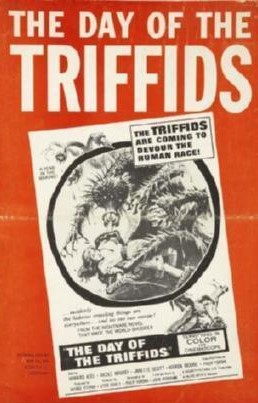
Pandemic means panic and these are by far the best scenes in the adaptation of John Wyndham’s famed sci-fi novel. Virtually everyone in the world is struck blind by the fierce brightness emitted from a bombardment of meteorites.
When passengers on a plane realize their pilot is blind, the panic is breathtaking. Ditto a train crashing into a station. While those with sight intact such as a busload of convicts can terrorize the blind, forcing them to submit to sexual overtures. On top of that are terrific scenes of deserted cities – very familiar to us all during the current pandemic – and of those unable to see trying to walk hands outstretched or attach themselves to anyone still blessed with sight.
One of the standouts is patient Bill (Howard Keel), saved from seeing the dazzling light display because his eyes were bandaged, walking through a deserted and trashed hospital. And perhaps Jurassic Park found useful the scene where the plants test an electrified fence.
And on top of that, of course, are the unstoppable monstrous man-eating plants whose growth has been triggered by the comets. Steven Spielberg over a decade later showed how to maintain tension by showing a terrifying predator in small doses and indicating its presence through musical cues and especially, when your monster ain’t quite up to scratch, keeping it hidden for as long as possible.
Interestingly, this film uses sound cues, specific noises attributable to the creatures, though the plants are shown too soon and too often but, in terms of special effects, not at all bad for their time and the low budget. And the sheer normality of the locations works very well – a caretaker having his sandwich, hard-boiled egg and flask of coffee the first victim. Some deft humor undercuts the terror. “Once you’ve tasted this coffee of mine,” remarks a character, ”you’ll know nothing worse can happen.”
Leading the fight against the monsters are sailor Bill (Howard Keel), ironically recovering from an eye operation, hotel proprietor Christine (Nicole Maurey) and in an isolated location alcoholic scientist Tom (Kieron Moore) and his wife Karen (Janette Scott). Bill and Christine are initially intent on mere escape, but in the end have to fight.
A lean 93 minutes (the same as Gravity, 2013), tension is the key. That in itself is astonishing, given cinematographer Freddie Francis was called in at the last minute to puff out what would have been a too-short-to-release feature (under one hour at that point) directed by Steve Sekely (Kenner, 1968). Philip Yordan (El Cid, 1961) and Bernard Gordon (55 Days at Peking, 1963) knocked up the screenplay.
But once again a film like this shows how much more powerful is imagination. We can imagine being blind and walking in a vacuum with the vulnerability and helplessness that fear entails. As the recent pandemic has shown, the unknown is terrifying and fear of the unknown even worse.
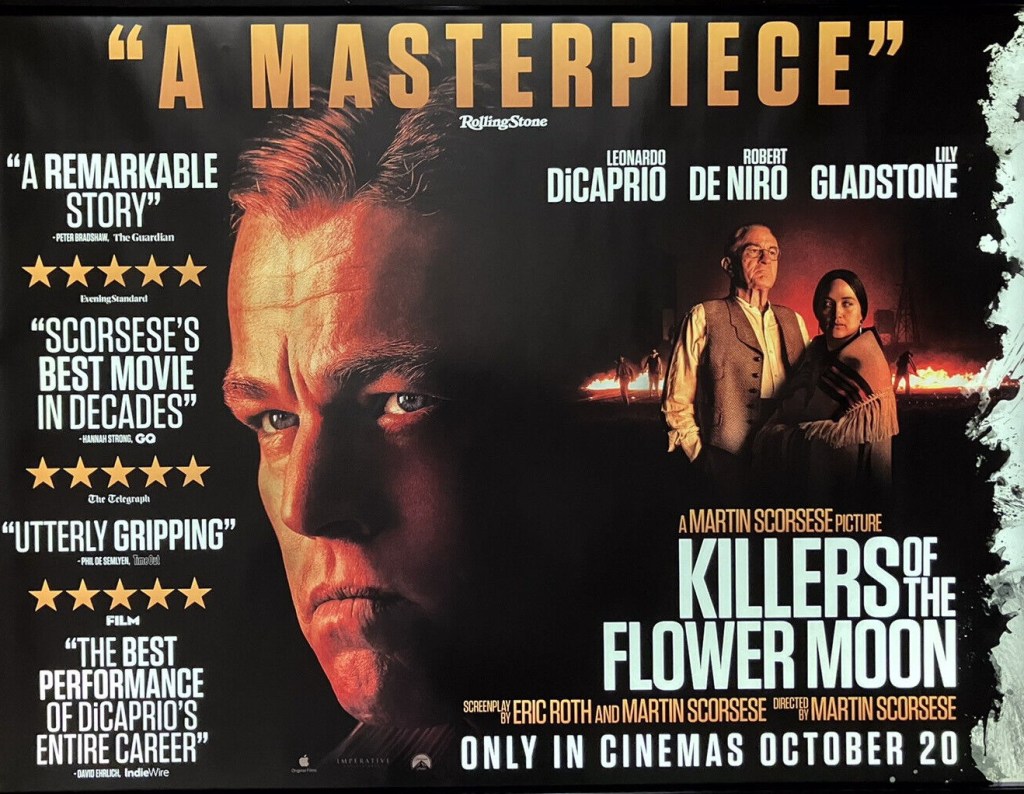
Let me stop you right there. This isn’t a review of this particular movie, you’re probably sick to death of those already, and it’s not some kind of Scorsese retrospective, but an expression of what it’s like to live through the transformation of one of the greatest directors Hollywood has ever produced. That zipping excitement when you first encounter a new Hollywood animal and when he charges down a different track or seems to lose control.
Catching up on a director’s life work via a carefully-curated retrospective hasn’t got an ounce of the flavor of living through it, from the days when film festival break-outs were not the carefully-orchestrated distribution and publicity machines they are now.
I first encountered Scorsese before a clever journalist had coined the rather derisory notion of a Brat Pack, when the director was just another new voice clamoring for attention in a world of considerably more cinematic noise than exists today, when MCU and streaming didn’t exist, and audiences could find massive variety every time they attended the cinema.
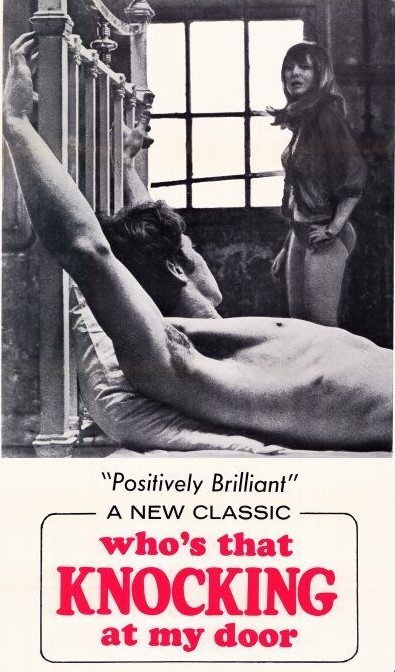
Who’s That Knocking at My Door slipped through the arthouse cracks in 1967 – the year of The Graduate, Guess Who’s Coming to Dinner, In the Heat of the Night, The Dirty Dozen and El Dorado. I didn’t see it then. I would be surprised if anyone did. Nobody was ready for that brash style with its insistent use of pop/rock music. I caught up with a few years later when the Scorsese we know now was still in embryo form.
Sure, Mean Streets (1973) gave strong indication of the gangster path towards which Scorsese was inclined, but it wasn’t so obvious then that he would make that genre his own, not when he interspersed that with a tale of Depression-era hobos, Boxcar Bertha (1972), and Alice Doesn’t Live Here (1974), a proto-feminist narrative whose stunning tracking opening set out his technical directorial credentials. And it was anybody’s guess which way he’d go from here.
And I doubt if anyone expected Taxi Driver (1976), the moody glimpse of the New York underbelly with a psychopath hero, and certainly after that exploded at the box office and had critics purring, nobody would guess his career would take a musical turn, New York, New York and The Last Waltz in consecutive years. You might consider Raging Bull (1980), prototypical Scorsese. But the truth is, he was never typical. He jumped from project to project in a manner that only appeared to make sense to himself.
Some choices were so atypical you wondered if there had been any through-thread – what possibly connected King of Comedy (1982) to The Age of Innocence (1993) and Hugo two decades later. Certainly, when he imbibed a deep spiritual draft, you could make a thematic connection between The Last Temptation of Christ (1988), Kundun (1997), and Silence (2016).
But by this point he had achieved Hollywood nirvana, the mixture of critical adulation that put him top of the hitlist of those studios with one eye on the Oscars and bouts of box office glory that kept the same studios sweet. If he ever felt the need to revive a fading career he could churn out the likes of apparently mainstream but dark-tinged Cape Fear (1991), The Aviator (2004), Shutter Island (2010) and The Wolf of Wall Street (2103). And at the back of your mind, as a fan, was the question of how long would it take him to return to the gangsters. If you had Goodfellas (1990) forever etched on your mind, Casino (1995), Gangs of New York (2002), The Departed (2006) and The Irishman (2019) seemed almost always within reach.
Of course, he can hardly be separated from Robert DeNiro, his go-to star, ten teamings in all including the current number. And for a DeNiro substitute, Scorsese didn’t go far wrong with Leonardo DiCaprio, six including the new one. Stars with an edgy side were attracted to Scorsese and vice-versa.
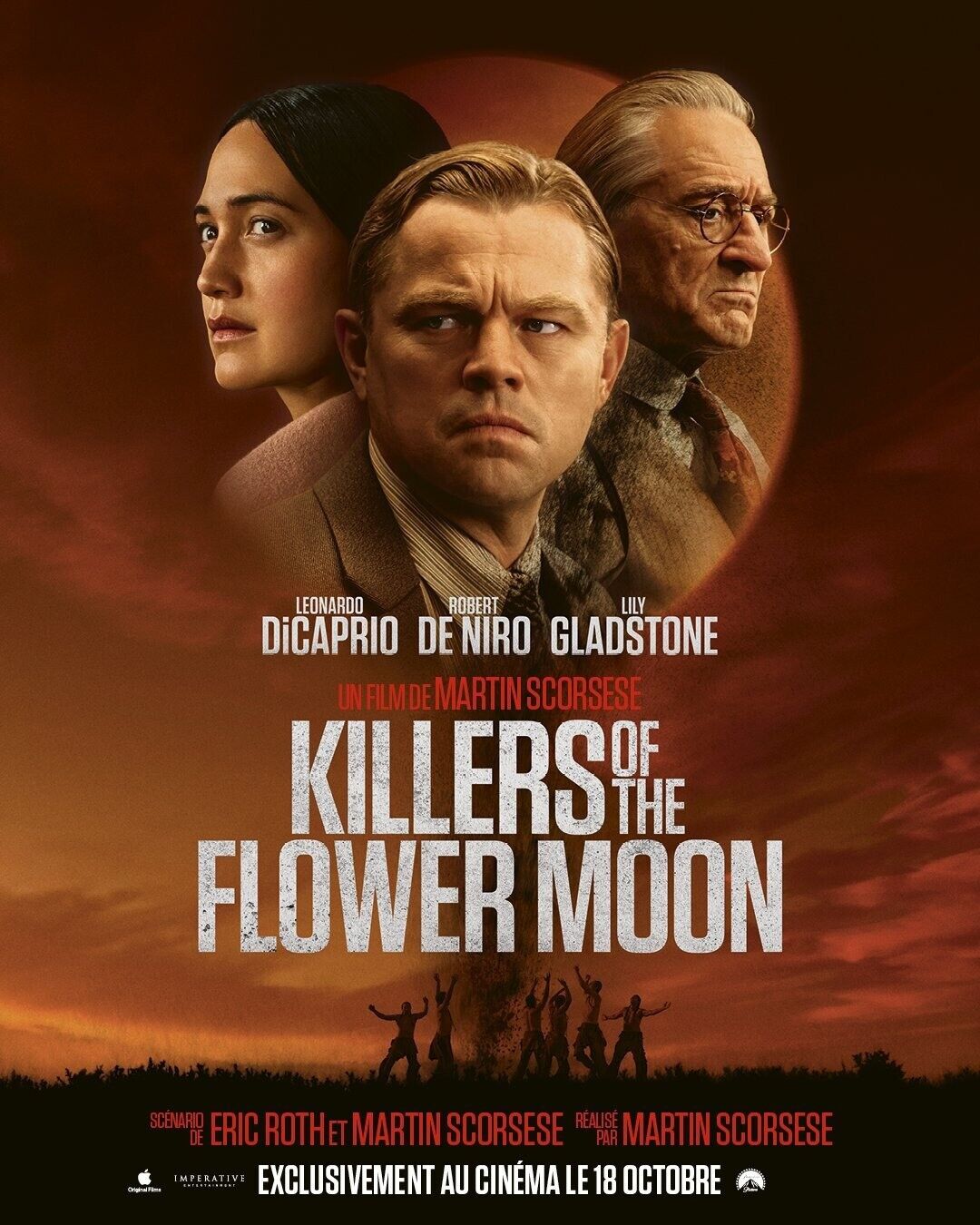
It’s perhaps no coincidence that DeNiro and DiCaprio play murderous relatives in Killer of the Flower Moon, but the performances both deliver are so subtle, so far removed from what Scorsese’s asked of them before, as to point them both in the direction of the Oscar.
You think you kind-of know what you’re going to get with Scorsese, but, more than any other director, he whips the ground out from under you. Killers of the Flower Moon is bereft of the Scorsese trademarks, voice-over, exuberant violence, thumping soundtrack.
So when you’ve been watching his movies for over half a century, you look on him as you might a favored son, delighted in his achievement. But you don’t want him to stop, you want him to keep going. There must be one more film in him. Like Ridley Scott, he’s more bankable than ever, especially if the streamers are looking for a short-cut to hooking up with the best talent available.
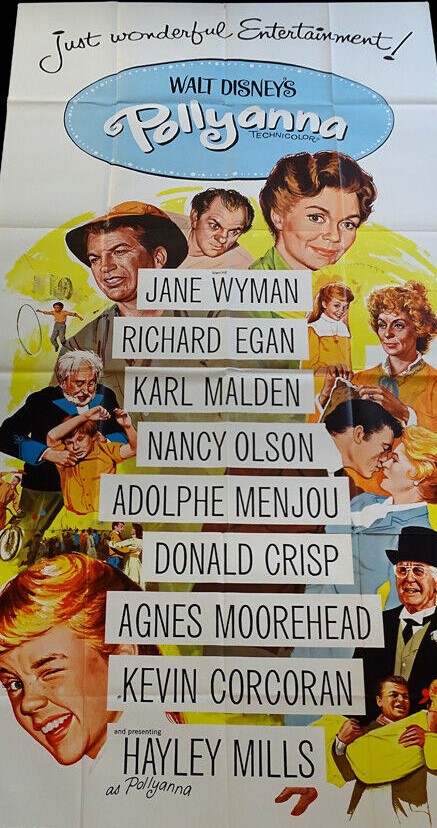
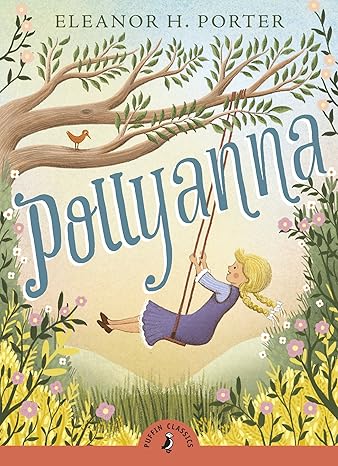
Walt Disney discarded much of Eleanor H. Porter’s original best seller not to mention a great deal of the tear-jerking section that played to superstar Mary Pickford’s strengths in the silent 1920 adaptation. Pickford was in her late 20s at the time and a movie mogul to boot (having launched United Artists) so had a depth of emotion Hayley Mills (aged 13 during filming) could not hope to match.
The screenplay, by David Swift (Love Is A Ball, 1963) is an object lesson in how to retain the essential element of a story – a positive-thinking orphan alleviates the gloom in an embittered town – while providing enough worthwhile for adult audiences. Disney assembled an awesome cast with three Oscar-winners – Jane Wyman (Best Actress, Johnny Belinda, 1948), Karl Malden (Best Supporting Actor, A Streetcar Named Desire, 1952) and Donald Crisp (Best Supporting Actor, How Green Was My Valley, 1942) – plus four-time nominee Agnes Moorehead and Adolph Menjou.
Despite no Oscar recognition Nancy Olsen had been leading lady to the likes of Bing Crosby (Mr Music, 1950), John Wayne (Big Jim McLain, 1952) and William Holden (Force of Arms, 1951). In effect, parents would be very familiar with the stellar supporting cast.
Orphan Pollyanna (Hayley Mills) – British accent explained by parents being missionaries – , majoring on optimism, tries to enliven a town torn apart by dissent and petty feuds and in thrall to her intimidating aunt and fading spinster Polly Harrington (Jane Wyman). While she tries to see the good in everyone, the rest of the population is forever pointing out the bad. The main source of contention is a derelict orphanage. The townspeople want it demolished and a new one erected. Polly Harrington wishes it preserved in its dilapidated state as a monument to her father who had built it. It’s the kind of attitude someone would take who was just plain determined to get their own way. Pollyanna tries to sway opinion against her aunt, resulting in no end of trouble.
Various sub-plots include stifled romance, Harrington has driven away boyfriend Dr Chilton (Richard Egan), fire-and-brimstone preacher Rev Ford (Karl Malden),another orphan Jimmy (Kevin Corcoran), the reclusive Mr Prendergast (Adolphe Menjou) coaxed back into communal life, and the mayor (Donald Crisp) trying to repair the rifts.
Unusually for a kid’s picture, Wyman, Malden and Crisp each are given a reflective moment to prove they are doing more than taking an easy salary cheque, bearing some of the weight of the narrative, Malden especially allocated more screen time than would be normal in a movie aimed at kids.
I have never read the book nor (to my shame) seen the Pickford version, so I came to the movie with low expectations, anticipating a lazy, maudlin effort. So I was quite surprised to discover how much I enjoyed it and was shocked by the final piece of action which turned the movie on its head. Sure, it relies on a feelgood drive but there is some decent stuff here – Pollyanna’s determination to find goodness in every event and every person takes her into some strange avenues, the rainbow playing on the walls, the “good parts” of the Bible – that these days makes for an entertaining matinee.
At least in Hollywood terms (Mills made her debut the year before in the British Tiger Bay, 1959) Pollyanna falls into the a-star-is-born category. The actress acquits herself well, with her expressive face, while hearing the emotion she packs into the word “gorgeous” is word admission alone. Being older than the usual child star, she was one of the few who made the transition into adult roles. Karl Malden is the pick of the supporting cast but he is given a good run for his money by Jane Wyman. Disney’s trick of peppering a children’s film with actors well-known to the adult audiences was one he would use again.
Swift, in dual capacity as director (and making his movie debut) played down the saccharine nature, making the main character less just automatically bouncing with happiness and more striving to make the best of difficult situations.
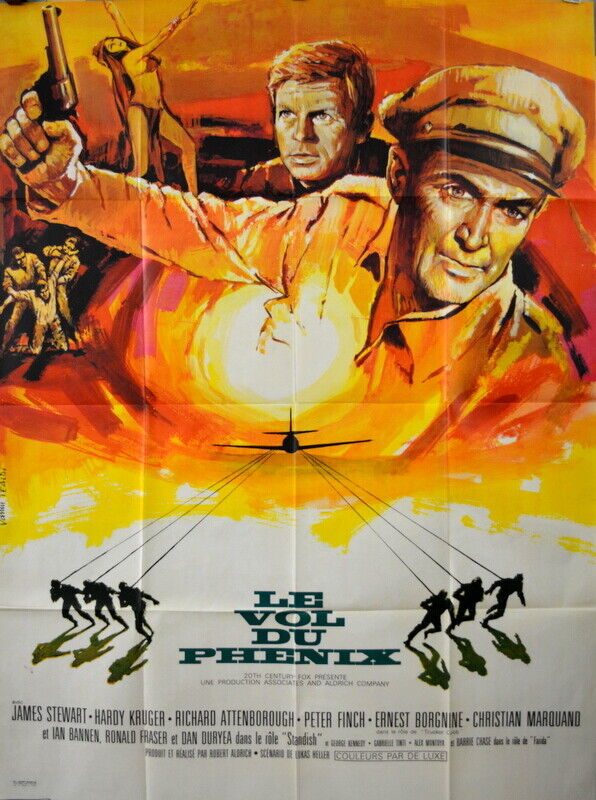
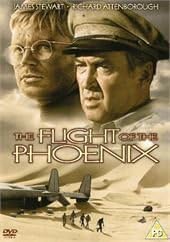
Take twelve condemned men, drop them in the desert hundreds of miles from safety with only enough water to last two weeks, and nothing to eat but dates, and make them work together to effect salvation from their predicament. Not exactly the premise for The Dirty Dozen (1967) but not far off. The Flight of the Phoenix appears a dummy run for director Robert Aldrich’s more ambitious war picture, not least because in terms of structure it is only eight minutes shorter. There are no women in the picture (except those appearing in a mirage) and the men, of all different types, must come together or die in the savage heat.
You might argue that the audience for this kind of picture no longer exists. In the 1960s there was a big market for the Nevil Shute/Hammond Innes/Elleston Trevor type of novel which contained a lot of practical detail at a time when heavy industry – mining, shipbuilding, oil, car manufacture – was a massive employer and the ordinary man had an easy understanding of – and was often fascinated by – the principles of engineering. Bear in mind that this was the era of space rockets and there was excitement about man’s planned flight to the moon.
During a sandstorm a small twin-engined plane carrying passengers from an oil field crash lands in the Sahara. James Stewart as the pilot was a casting trick. In a previous aerial adventure No Highway (1951), Stewart was the ordinary joe challenging authority. Here he is the authority figure, pilot Frank Towns, challenged and part of the film’s guile is the way he has to concede that authority to the one person on board everyone hates, arrogant German aircraft designer Dorfmann (Hardy Kruger).
The global job lot of passengers includes: two soldiers, martinet Capt Harris (Peter Finch) and his mutinous Sgt Watson (Ronald Fraser); alcoholic navigator Moran (Richard Attenborough); oil worker Cobb (Ernest Borgnine) on the brink of insanity; sarcastic Scots troublemaker Crow (Ian Bannen); French Dr Renaud (Christian Marquand0; company accountant Standish (Dan Duryea); Italian Gabriele (Gabriele Tinti); Bellamy (George Kennedy) and Carlos (Alex Montoya); plus a monkey of no fixed abode. The monkey, incidentally, is cleverly utilised. He’s not a sentimental or cute device, there to soften a hard guy or for comic relief, but Aldrich often cuts to his squeals or his face when there is imminent danger.
Two passengers are already dead, one is seriously injured. They have been blown so far off-course they will be impossible to locate. There is only enough water for ten or eleven days. It is a given in such circumstances that tempers will explode and hidden secrets surface. Were they guaranteed rescue those two pegs would be enough to hang a movie on. Since there is no such guarantee, this becomes a picture about survival. The obvious maneuver comes into play on the fifth day. Capt Harris determines to walk to safety, over 100 miles in deadly heat. But it’s not a trek picture either, the engineers present know the risks. Mountains will cause false compass readings and those going will walk around in circles.
Trevor Dudley-Smith wrote under nine other pseudonyms including Elleston Trevor and Adam Hall for the “Quiller” spy series.
What? I can get that magnetism in the mountains can affect a compass but where does the walking round in circles enter the equation? Because, explains Moran patiently, a person does not automatically walk in a straight line if there is no actual road. If right-handed then you’ll walk in a left-hand direction because the right leg is more developed than the other and takes a longer stride and there’s nothing you can do about it. This doesn’t matter if you are walking along an actual path but in the desert with no road markings it’s lethal. And this is the beginning of a bag of what would otherwise be deemed trivia except that such facts are a matter of life and death. This is a movie about reality in a way that no other realistic or authentic picture has or will be. Physics is the dominant force, not imagination.
Finch’s sergeant fakes an injury to avoid going. The mad Cobb, originally prevented from leaving, sneaks away in the night. Towns, in courageous mode, goes after him. While he is away, Dorfmann carries out a character assassination. And continues on his return – “the only thing outstanding about you is your stupidity.” By now though, Moran has warmed to Dorfmann’s insane idea of building a single-engined plane out of the wreck of the twin-engined one. And that becomes the crux of the story. Can they build this weird contraption? Will they manage it before they die of thirst? Will rising tensions prevent completion? Are they fit enough after days in the boiling heat to manage the herculean tasks involved?
Aldrich keeps psychological tension at fever pitch, helped along by the pessimistic Towns and the wildly pessimistic Crow, needling everyone in sight, who delivers lines like “how I stopped smoking in three days.” Towns and Moran have to come to terms with the parts they played in the plane crashing, Sgt Watson with his cowardice. Issues arise over leadership and water theft.
I won’t spoil it for you by mentioning the incident that threatens to demolish the entire project. But the finale is truly thrilling, edge-of-the-seat stuff and the skeletal monstrosity being constructed looks hardly capable of carrying the monkey let alone a full complement of passengers. Aldrich is a master of the group shot with unerring composition and often movement within the frame or just a simple bit of business by an actor, for example George Kennedy at one point tapping his hand against his leg, ensuring that the film does not solely focus on a couple of characters. Sometimes all Aldrich needs to make his points are reaction shots.
Terrific performances all round with Ian Bannen Oscar-nominated. Aldrich called on Lukas Heller for the screenplay, based on Elleston Trevor’s novel, having worked with him on Whatever Happened to Baby Jane (1962) and Hush, Hush Sweet Charlotte (1964). Aldrich’s son William and son-in-law Peter Bravos had bit parts, killed off during the crash.
Flight of the Phoenix virtually invented the self-help rescue genre that relied on ingenious mechanical ideas – rather than more simplistic notions – such as later absorbed in movies like Apollo 13 (1995) and The Martian (2015). Aldrich’s mastery of group dynamics would stand in him in good stead for The Dirty Dozen.
The 2004 remake isn’t a patch on the original.
A terrific movie and well worth seeing.
Turning the novel by Elleston Trevor into a movie is illustrative of the process by which the screenwriter eliminates, changes and adds. The Flight of the Phoenix (published in 1964) was a lean 80,000 words, a far cry from the blockbuster airport reads like Exodus by Leon Uris and James Michener’s Hawaii. But its length made it an ideal subject for a film, the shorter novel tending to stick close to the main story. The author’s speciality was authentic detail, an early career as a racing driver and flight engineer inspiring in him a love for all things mechanical.
He knew what made things work and gaps in his knowledge were filled by assiduous research. He was an assiduous man, with 36 books since 1943 under ten pseudonyms, one being Adam Hall whose bestselling spy tale The Berlin Memorandum would be filmed as The Quiller Memorandum. He had tackled aviation before, most prominently in Squadron Airborne (1955).
The film follows the book’s structure with only a couple of deviations. The main one was changing the nationality of the aircraft designer from British to German. Originally named Stringer he was a testy young individual prone to taking offence and going off in big sulks. There was a German in the Trevor version, Kepel, a young man who is injured in the crash. But there was no handy doctor on board and fewer different nationalities.
To build up James Stewart as the heroic pilot and as a consequence to add meat to his clash with German designer Hardy Kruger, in the film he bravely goes out into the desert to find one of the passengers, but that does not occur in the book. Other changes were minor – in the book the passengers are occasionally able to supplement their drinking rations by scraping night frost off the plane and at a later point in the book they drain the blood from a dead camel in order to dilute their drinking water.
While there is an encounter with Arab nomads in both book and film, the book’s approach to this incident is much more straightforward, ignoring some of the detail supplied in the book.
Of course, a novel allows for the inclusion of far greater detail. And while that provides the skeleton for story development, Trevor gives greater insight into the characters than can be achieved on screen. The author allows each character an internal monologue, through which device we discover their motivations, history and fears.
This approach combines the present with the past, presenting a more rounded cast of characters. While the inherent tension of the situation drives the story along, the author switches between characters to keep the reader fully engaged. The cowardly sergeant (played by Ronald Fraser in the film) is the biggest beneficiary, portrayed as a more sympathetic person than in the film.
The book is a stand-alone enjoyment, Trevor’s writing skills, his grasp of character, creation of tension and his engineering knowledge (bear in mind he invented the idea of building another plane out of the wrecked one) make the novel every bit as enthralling as the film.