Behind the Scenes: “The Cardinal” (1963)

Otto Preminger was beaten to the punch on this one, the scandalous Henry Morton Robinson bestseller snapped up in 1955 by producer Louis de Rochemont (The Roman Spring of Mrs Stone, 1961) who had a tie-up with Columbia. Due to interference from the Catholic Church, de Rochemont dropped his option which Preminger picked up in 1961 while working on Advise and Consent (1962).

The last section of the novel, set in Austria during the Anschluss, reverberated with the director who was born in what was then the Austro-Hungarian Empire and although a Jew was well acquainted with Catholic society.  One of his most significant changes to the book was introducing the Austrian cardinal who endorsed Hitler.

The first two screenwriters James Lee (Banning, 1967) and Daniel Taradash (Castle Keep, 1969) failed to whittle down the complex novel to cinematic proportions. So Preminger brought in Robert Dozier (The Big Bounce, 1969) and began working with him in summer 1962 making other alterations to heighten the drama. The incident involving the unborn child of the sister of Fr Fermoyle (Tom Tryon) acquires greater emotional power in the film, touching on the ambiguities inherent in any institution and provoking the priest’s guilt.

Gore Vidal (The Best Man, 1964) also worked on the script, swapping the novel’s Italian countess for the Viennese Annemarie (Romy Scheider) who, abandoned by the priest had married and was reunited with him prior to the Anschluss, and is sympathetic to Hitler until her husband’s faith endangers them both. Ring Lardner, who had satirized the Catholic church in a recent novel, was the final screenwriter added, his main task to rewrite scenes “to achieve what he (Preminger) wanted,” and, more importantly, to introduce the flashback structure. Ironically, both Vidal and Lardner were atheists.

Tom Tryon and Romy Scheider meet again in Vienna.

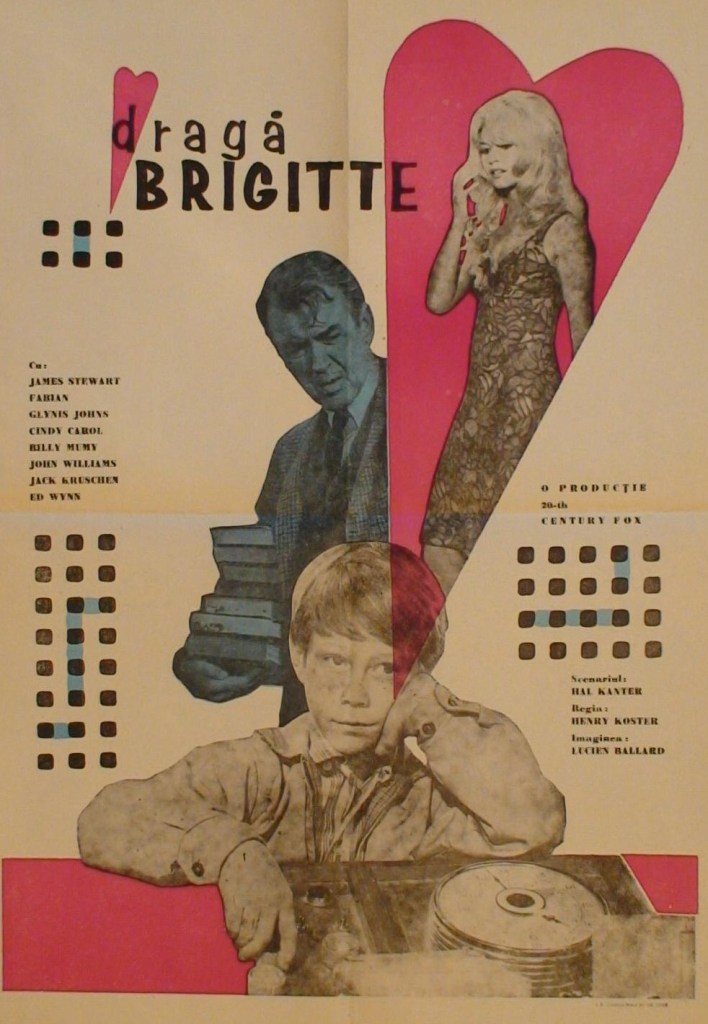
The director considered five actors for the leading role – Hugh O’Brian (Africa – Texas Style, 1967), Stuart Whitman (The Commancheros, 1961), Cliff Robertson (The Devil’s Brigade, 1968), Bradford Dillman  (Circle of Deception, 1960) and Tom Tryon (In Harm’s Way, 1965), the latter three advancing to the screen-testing stage. The 34-year-old Tryon won the role and a five-picture contract he would later regret. Carol Lynley (Bunny Lake Is Missing, 1965) who plays the priest’s sister also pacted for five movies.

Romy Scheider’s (Triple Cross, 1966) part was enhanced by the work of cinematographer Leon Shamroy who “fell madly in love with her,” resulting in the actress virtually shimmering on screen, never before “looking as beautiful.” Held in warm regard by the director, she was exempt from his tirades.

It took considerable persuasion on the part of Preminger for John Huston to participate. Curd Jurgens, initially cast as the Austrian cardinal, pulled out and was replaced by character actor Josef Meinrad whose lack of English meant he had to learn his lines phonetically.

Tom Tryon described Preminger as “tyrant who ruled by terror.” He was fired on the first day and probably wished the director had not rescinded the decision, for thereafter the actor was tabbed “lazy…a fool…stupid and unprofessional.” Commented Tryon, “I was so frightened he was going to scream that…I (just) wanted the experience to end.”

One scene with John Huston took 78 takes because Tryon could not deliver what the director wanted. And at one point first assistant director Gerry O’Hara (later director of The Bitch, 1979) found the star in tears and refusing to return unless the director agreed not to shout at him. Eventually, during the Italian section of the shoot, Tryon collapsed from nervous exhaustion, and was prescribed two days rest, and after this incident Preminger let up on his demands of the actor. 

Explained Preminger, “I probably chose him without deliberation because he is weak.” He felt than an ordinary person would not side with the Church against a family member in a predicament, and that only a person “with weakness in his character” would be believable in the role. The character “fails because when you become a priest you substitute your own judgement and your own feelings for the law of the Church…The big decisions are made for him.” (Quite why he never chose an actor who could portray such weakness is not known.)

Tryon admitted that he owed a brief let-up in the bullying to “Schneider’s benign presence.” He commented, “The only fun I ever had on The Cardinal was a (ballroom) scene I did with Romy.” Prior to turning the cameras, Prior called both over, appeared ready to issue instructions, but instead waved them away “you know what to do.”

Added Schneider, “Preminger taught me an important thing: work fast. It’s true that it greatly helps our acting. Each of his directions, whether of gesture or of intonation, is precise and correct. Even better, it’s the only one possible…Each phrase, each world, each syllable are minutely weighed.” That dexterity applied to his positioning of the camera. He made decisions immediately, never hesitating “over the placement of the camera and each time…it was the simplest, the most natural and, dramatically, the best.”

Ossie Davis (The Scalphunters, 1968),  who professed to have enjoyed a marvellous relationship with the director, observed:  “I met actors whom Otto liked, I met actors that had no relationship or feelings one way or the other and I met actors who were almost absolutely destroyed, almost literally in panic because of Otto Preminger (who) was always looking for a spark…whether you had the spark or not, he was going to find it and even put it in you.”

But Patrick O’Neal stood his ground. “I woiuld not take it from him.” And they became friends.

The unit shot for five weeks in New England before heading to Vienna, Preminger choosing to stay in the same suite in the Hotel Imperial as appropriated by Hitler when visiting the city. Permission to shoot in the National Library, “one of the most beautiful monuments in the city” was attacked by the current minister of education who wanted the Hitler era erased from memory. And he was barred from using other government buildings for spurious reasons.

After four and a half months in Austria, the unit shifted to Rome, locations including St Peter’s Square and inside St Peter’s Cathedral and the Santa Maria sopra Minerva church, with priests and monks hired as extras for the various ceremonies. The Georgia scenes were shot in Hollywood on the Universal back lot.

Although generally dismissed by the critics and given a hard time as you might expect from the Catholic Church, The Cardinal hit a chord with audiences, who turned it into Premigner’s second-biggest hit of the decade.

The Cardinal (1963) ****

Would appear resolutely old-fashioned except for Forrest Gump (1994) adopting same premise of the main character present at major events. Here it’s issues affecting the Catholic Church between last century’s two world wars and the protagonist is an American priest, Father Stephen Fermoyle (Tom Tryon) of Irish stock,  who rises to the position of Cardinal.

So we move at a relatively stately pace through abortion, inter-denominational marriage, racism, a miracle, challenging church philosophy, and Hitler’s annexation of Austria on the eve of the Second World War, in which the church played an inglorious part. Along the way Fr Fermoyle is afflicted so badly by doubt that he takes a sabbatical only for his flesh to be sorely tempted.

Astonishingly, I saw this on YouTube (it’s still there) in a beautiful 70mm print preserved by the National Film and Television Archive. The roadshow print, to be exact, which begins with a marvellous five-minute overture. Oddly enough there’s something very settling about sitting in the darkness with the curtains drawn watching a blank (black) screen and listening to the majestic score by Jerome Moross (The Big Country, 1958).

And then it’s another few minutes of a stunning credit sequence, all sunlight and shadow, before the movie begins. The movie itself is over three hours long, so if you are put off by this kind of epic now’s the time to check out. But if you do, you will miss something genuinely to be savored.

For Otto Preminger (Hurry Sundown, 1967) certainly knows how to tell a story, even one as sweeping as this. For all its pomp, he manages to retain intimacy.

Immediately after his ordination just as America enters the First World War, Fr Fermoyle faces a crisis. His sister Mona (Carol Lynley) wants to marry a Jewish dentist (John Saxon) who refuses to convert to Catholicism. Fermoyle’s advice, in keeping with the church’s stringent rules: give him up.

A noted intellectual, Fermoyle is astonished to be sent by the worldly piano-playing cigar-chomping Archbishop Glennon (John Huston) to an impoverished parish to learn humility. There, he encounters the blind faith of parishioners and a pastor, Fr Halley (Burgess Meredith), so inclined to put others first that he will not seek help for a debilitating disease.

Meanwhile Mona, now a dancer and drinker, has become pregnant, and not by the dentist. But complications arise and she is forced to choose between herself and the unborn child. According to Church doctrine, as Fermoyle, advises, abortion being illegal, the mother must die to save the baby. Mona, not the sacrificial kind, does the opposite. Fermoyle, racked with guilt, wants to quit the church. Instead, he is promoted to Monsignor, and given a two-year timeout which he spends lecturing in Vienna.

There he falls in love with Annemarie (Romy Scheider). In the nick of time, he is recalled to the States and sent to the Deep South to help the black Fr Gillis (Ossie Davis) who is being harassed by the Ku Klux Klan. In standing by his colleague, Fermoyle undergoes a brutal whipping. Promoted to bishop, he is despatched to Austria “to instruct the princes of the church in the realities of the modern world.” Unfortunately, the clergy, siding with the Nazis, presides over the marriage of Germany and Austria.

Meanwhile, he is reacquainted with Annemarie, who has married a Jewish banker, and witnesses at first-hand Nazi treatment of the Jews, her husband so fearful of his future he jumps out a window.   When a mob ransacks a church, Fermoyle isn’t so intent on facing up to them and instead, with Annemarie, manages to escape.

At its best and its worst by the narrative being forced through the prism of an individual. His reactions to issues are regulated by his employers, the Church, which exerts as much control over personal thought as the Communist Party, so, in effect, it becomes a tale of a person initially bristling against authority until, it turns out, the Church shares the same antipathy to the worst of the century’s scandals, the Ku Klux Klan and the Nazis.

Father Fermoyle hardly seems suited to high office, given he is so often inclined to temptation, either in a sexual sense, or in taking the opposite view of the Church. And it’s almost as though the splendid backdrop as represented by the immense wealth of the Church has only been achieving by subjugation of the individual. That the worldly Glennon appears as the poster boy for the Church hierarchy is almost Preminger playing with the audience.

It might be sumptuously mounted, but once again Preminger takes no prisoners, showing up an institution that while purportedly set up for the benefit of mankind so often sabotages noble endeavor.

Tom Tryon (In Harm’s Way, 1965) is excellent in the leading role, personal conviction getting in the way of the easy path to the top. But the pick of the performers are the supporting stars, especially John Huston, more famous as a director (The Night of the Iguana, 1964) and here making his acting debut, and Romy Scheider (Triple Cross, 1966). Look out for Carol Lynley (Bunny Lake Is Missing, 1965), silent film star Dorothy Gish in her final movie appearance, Maggie McNamara (The Moon Is Blue, 1953) in her first picture in eight years, and John Saxon (The Appaloosa, 1966) before he was typecast as a heavy.

Otto Preminger (In Harm’s Way) directs in stately fashion from a screenplay by Robert Dozier (The Big Bounce, 1969) and Ring Lardner Jr. (The Cincinnati Kid, 1965).

Thoughtful and striking.

The Train (1964) ***

Director John Frankenheimer (The Gypsy Moths, 1969) tackles the movie’s off-putting central issue straight on. At various points, characters argue whether it’s worth risking lives to save a bunch of paintings, even if they are by masters like Cezanne, Matisse and Manet and even if they do constitute the “pride of France.”

Had this been an ordinary heist, some master criminal conspiring to steal a trainload of paintings, the loot would not have been so contentious, as there was little chance of lives being lost. And in any case, thieves, in the act of stealing, do have to accept that they might fall prey to the cops or, as commonly, fellow members of the gang.

There was another point. Art, then and now, was commonly perceived as a high-class aspect of life, especially once it diverted away from easily understood portraits and still lifes into the specific styles of a Monet or Picasso. Working-class people had little interest in it and felt excluded from it.

So, from the French perspective, coming towards the end of World War Two, post-D-Day and Paris close to being liberated, upper-class German Col von Waldheim (Paul Schofield) decides to hijack the contents of a museum and take hundreds of masterpieces to Germany, ostensibly to fund the fightback against the invaders, but more likely just a final act of a conqueror who has enjoyed, rather than destroyed, the captured French capital.

At first, station master Labiche (Burt Lancaster), while complicit in minor sabotage, has no interest in becoming personally involved, especially with liberation so close and the threat of death lifting by the hour. Others take a much more patriotic stand over the paintings and endeavor in small ways to prevent the trainload’s departure and slow down its progress to Germany.

A whole battalion of German soldiers, including Von Waldheim, who has commandeered a train in the first place, and railway workers, are aboard. But not all are in agreement with their commander’s aims, his deputy Major Herren (Wolfgang Preiss) outspoken in his opposition to this waste of manpower and diversion of energy.

Von Waldheim blames Labiche for the minor sabotage and forces him to take personal control of the train. And it turns out Labiche is much more than a bureaucrat, and knows everything there is to know about driving a train and how the tracks operate. And eventually it becomes a game of cat-and-mouse between Labiche and Von Waldheim.

But before that occurs and the movie really takes off, there’s tons of stuff that come into the sub-genre of a sub-genre category, to the delight of a railway-spotter but the irritation of the general audience as we are treated to endless scenes of the train running through the country or stopping and starting and points being switched. All very fascinating in its own way, but tending to the tedious.

I’m a bit pernickety when it comes to the heist picture and I’m just wondering how the Resistance, in what appears to be very short notice (in real time the movie only lasts a few days) to arrange for railway stations and towns along the route to manage to make massive signs, some I would guess 30-40ft long, to convince Von Waldheim he is taking the route he expects rather than being diverted along a different track. And then to get word to the Allied forces not to bomb a train that had a whitewashed roof. Try explaining the contents to an Army that is trying to get on with winning the war and couldn’t be less concerned about what might be interpreted as misplaced pride.

You would imagine that if those actions could be so easily carried out that there might have been a proper Resistance troupe ready to assist in blowing up the engine, but safeguarding the coaches, along the way. As the toll of ordinary Resistance members mounts, it’s left to Labiche, decidedly not an art lover, to save the day.

And that’s when the film does take off. He’s the most enterprising of individuals, managing, despite being wounded, to single-handedly derail the train twice, even with soldiers hounding him over the hills and patrolling the track.

Burt Lancaster (The Gypsy Moths, 1969) is superb as the doubter who becomes committed to the cause. It’s easy to forget just what a range Lancaster has. There’s not every actor you would believe when he’s twisting wires in the complicated business of setting an explosion or hammering loose sections of track. To slip effortlessly from the nuance and privilege of Luchino Visconti’s  The Leopard (1963) to the hard muscular graft of this is quite an achievement.  

Paul Schofield (A Man for All Seasons, 1966) was far more virile than his later screen persona suggested. He was a classic example of why Hollywood raided Britain, especially for villains. Outside of the stage, he was virtually unknown, only two previous films in the 1950s, so he was a fresh face. He didn’t quite master the art of cinema, a bit prone to shouting and facial expressions verging on the combustible. But he proves an excellent and inventive adversary.

It’s another for the futility of war department and it’s ironic that it’s the mutinous Maj Herren rather than the French who decides lives are not worth losing over a bunch of paintings.  

The action, when it finally emerges from the trainspotting, is excellent. But a bit of judicious pruning in the earlier stages would have worked wonders.

Book Into Film – Puppet on a Chain (1970)

In the Alistair MacLean book there’s no speedboat chase through the canals of Amsterdam. There’s not one female assistant but two, Maggie (Barbara Parkins in the film) joined by a Parisian, Belinda, (played by Suzanna Leigh, except her part was cut) on her debut assignment. The espionage newcomer’s role in the book is to question the actions of boss Paul Sherman (the film’s Sven Bertil-Taube), provide more of an outsider’s perspective on his character, since, as his lover, Maggie is much more accepting of his behavior. I can see why Belinda never made it into the film, the movie’s emotional heart, little as it is, coming from Sherman’s relationship with Maggie.

Needless to say, Paul Sherman is British in the book, not American, as is Maggie. Amsterdam cop Inspector Van Gelder (Patrick Allen) doesn’t have a niece, Trudi (Penny Casdagli), addicted to heroin but an adopted daughter. In the book, he is far closer to her than in the film, to the extent of conducting an illicit affair.

It’s always fascinating to see what changes from book to film especially since, as in this case, author Alistair MacLean has a screenplay credit, and that, from Where Eagles Dare (1968) onwards, he tended to write his books with movies in mind.

Like many Alistair MacLean characters, Sherman has a physical disability, the two sides of his face not matching following plastic surgery after a plane crash. So that’s the first element from the narrative of the novel (it appears on the opening two pages) excised from the novel. Nor does the book begin with an anonymous assassin gunning down three addicts. Instead, it starts at the airport where Sherman witnesses a colleague murdered.

Maggie doesn’t meet him in Amsterdam (as in the film) but is his companion on the plane along with Belinda. The novel sees Sherman attempting to prevent the shooting of his colleague Duclos rather than being a mere observer to the airport slaying. And again, rather than keeping out of the way to safeguard his anonymity, he pursues the killer and in so doing knocks over Astrid Lemay (Ania Marson).

On leaving his hotel (via the roof as in the movie) Sherman dodges his follower by nipping into a restaurant not (as in the film) the room of a sex worker. His pursuer is old not young. Sherman follows him on the subway not by foot.  But when the tables are turned and Sherman is the pursuer, the man does enter the Morgenstern premises (trimmed from the book’s more unwieldy Morgenstern & Mugganthaler and with only one owner rather than two partners). The man he finds in his room is not the assassin but the hotel floor-waiter, an addict. After a fight, Sherman dangles him over the balustrade before killing him.

The paperback movie tie-in – see below – was virtually identical to the original cover of the first edition of the hardback.

Sherman’s first meeting with Colonel de Graf (Alexander Knox) is in the latter’s office not the more scenic canal boat as in the film. Understandably, the movie attempts to cash in on Amsterdam’s tourist and more sordid elements. The movie makes much more of the canals and not just the aforementioned prostitute-in-the-window (the only capital in the world where sex workers are a tourist attraction). The nightclub is tamer in the book, little more than an old-fashioned bait-and-switch type of strip club, and certainly lacking the panache of the more modern variety with topless waitresses and cool sexy dance routines worthy of a Bob Fosse or at least Pan’s People. But Morgenstern isn’t one of the club’s customers in the book and neither does Astrid reject his advances. In fact, one of the sub-plots of the book is that Astrid makes herself scarce, flying out of Amsterdam.  

Obviously, a book can invest more in characters.  Trudi is introduced as having “the nicest voice for speaking bad English I’d come across in a long time” but rather than, as with the film, just speaking of her addiction, Sherman simply leans over and rolls up her sleeves. 

With two female assistants rather than one, the job of tailing various characters can be split. So it’s Belinda who follows Astrid from the church. Although the notion of the puppet dangling on a chain is a major theme, it’s not the way Maggie dies as in the film. Instead she is pitchforked to death by a bunch of women in what appears, in true Hitchcock fashion, initially to be little more than a harmless pagan rite. And the impotent Sherman gets to watch rather than just discovering the corpse as in the movie.

That’s about the most horrific scene in the book but it’s closely matched by Sherman sticking two recalcitrant villains, the nightclub owner and a slimy associate,  in a safe until they decide to spill the beans. These two guys are part of a sub-plot the movie just doesn’t have time to fit in.

The purpose of having a pair of girls in the book is to heighten the tension when Maggie dies, leaving Belinda, betrayed and captured, ready to endure hanging by hook.

Alistair MacLean is clearly a student of heinous ways to die, topping hanging and murder by pitchfork with torture by the high-pitched amplified sound of chiming clocks. Quite why a villain sophisticated enough to dream up such means of death would tie a captive up with electrical wire is anybody’s guess. You couldn’t expect a criminal to imagine that his opponent would have the  brainpower to consider sticking the exposed wires in a plug, thus shorting the power supply and ending the torture. But film follows book in anointing this unlikely escape. Once free, there’s no thought in Sherman’s head, as in the film, of making use of a speedboat and pursuing the villain through the canals. He merely takes the more normal route back to the puppet premises.

As I mentioned, the film makes greater use of the canals. When Sherman is trying to find the boat, Marianne, in the film he takes to the water, in the book he remains on shore and locates it via binoculars. The scenes of Sherman getting aboard the barge and the clandestine collection of contraband from the sea are largely lifted entirely from the book, although there’s no helicopter involved as in the film.

The climax of the film, as in the book, involves Trudi revealed as not an addict and Van Gelder trapped on the hauling chain. Shame they left out the wonderful MacLean line, “Her mental age is not eight, it’s older than sin itself.”

Behind the Scenes – “Puppet on a Chain” (1970)

There was always money involved. For an author whose string of bestsellers made him a fortune, Alistair MacLean found it particularly hard, in part due to poor investment and advice, to hold on to his millions. Victimhood was his default position for he tended to view himself as underpaid, not to mention ripped-off, by filmmakers, especially when the likes of The Guns of Navarone (1961) and Where Eagles Dare (1968) scored so highly at the box office.

That Puppet on a Chain arrived in cinemas the way it did was the result of the financial complications inherent in the novelist’s life. He had been too busy to write a screenplay for  When Eight Bells Toll (1971) mostly because he was consumed with unravelling his finances and setting up a more lucrative template for his movie ventures.

He planned to form a partnership whose sole aim was the production and exploitation of his books as vehicles for films. To this end, MacLean alighted on budding director Geoffrey Reeve, then merely a highly sought-after helmer of commercials and promotional films for industry.

You might accuse Reeve of a bit of double-dealing himself since at the time he met MacLean he was working for the author’s nemesis Carl Foreman, producer of The Guns of Navarone. Foreman had adapted that book for the screen, considerably altering the source material in the process. Excluding MacLean from the party, Foreman had his eyes set on a sequel with the dull and very un-MacLean title of After Navarone

But the instigator of the Reeve-MacLean partnership came from an unusual source, London wine merchant Lewis Jenkins, who in alliance with the other two formed the equally un-MacLean-named Trio Productions.

Jenkins was more than a wine seller. He was a high-flier who moved with a grace the grumpy Scotsman envied in the kind of classy circles that were, despite his fame, closed off to a mere novelist. He had come across details in a trade paper of MacLean’s deal for Ice Station Zebra (1968) and felt the author was being underpaid and, in a letter, he said so.

You couldn’t get MacLean’s attention more easily than plugging into his sense of victimhood. But it wasn’t movie talk that first made Jenkins indispensable. Horrified at the state of the author’s financial affairs, Jenkins put MacLean in touch with international tax lawyer Dr John Heyting who in turn handed him over to David Bishop, one of whose first tasks was to upbraid Foreman about his temerity on jumping the gun on Navarone and excluding the author.

While the triumvirate’s first notion was of approaching Columbia to fund a sequel, soon they  were dealing with a much bigger fish. As unlikely as it sounds,  David Lean (Doctor Zhivago, 1965) had expressed considerable interest in turning the threesome into a foursome. But the tantalizing possibility of a Lean-MacLean movie fell at the first hurdle as the director was tied up in developing Ryan’s Daughter (1970)..

It cost MacLean £100,000 to extricate himself from a financial muddle in which his advisers raked in more money than the man they supposedly represented. But it wasn’t just money that was wreaking havoc with his life. Though married, MacLean had a complicated love life and was a very heavy drinker, so it was testament to his discipline that he got any writing done at all.

The idea for Puppet on a Chain originated from a trip to Amsterdam with Reeve, who had mooted the notion of a thriller with a drugs background, during which by chance MacLean alighted on the image that sparked the title. What the author saw was harmless enough, a puppet dangling like a toy from a warehouse in the docks, its purpose probably nothing more than advertising the goods inside. It took an imagination like MacLean’s to turn it into something more sinister.

Once MacLean had written Puppet on a Chain, published in 1969 to commercial and critical  acclaim, he handed the rights over to Reeve to negotiate a deal with a major studio. And it says something for the solidity of their partnership that it hit the screens one year later, quicker than When Eight Bells Toll, published in 1966, which took five years to be turned into a film.

Although critics tended to argue that little altered from one book to another, most failed to comprehend that Puppet on a Chain represented a subtle evolution. “It was a change of style from the earlier books. If I went on writing the same stuff, I’d be guying myself,” he said.

But the New York Times noticed and in a lengthy review elevated him to stand comparison with Graham Greene and Eric Ambler, the doyens of the literary thriller. “It’s a top-drawer effort,” commented critic Thomas Lask “If you have any red corpuscles in your blood, you will find your heart pumping triple time…The writing is as crisp as a sunny winter morning and MacLean has provided a travelog for a part of Amsterdam the ordinary tourist is not likely to go.”

But to his intense disappointment, the author discovered that his name alone, while it opened doors, did not unlock sources of funding. One of the two top British studios, ABC, its film arm trading as the Associated British Picture Corporation, which also owned the country’s largest cinema circuit (a state of affairs outlawed in the U.S, since 1948), was interested.  ABPC wasn’t entirely avowed of MacLean’s potential, having purchased his debut novel H.M.S. Ulysses but left the project on the shelf.  

MacLean was so keen to get the green light he sold the project, including the screenplay and Reeve’s fee, for $60,000, a substantial drop from the $100,000 (plus significant profit share) he received for screenplay alone for Where Eagles Dare. There was a caveat. If the rushes didn’t appeal, ABPC could replace Reeve.

Since advertising scarcely qualified as filmmaking at all, the number of directors who made the jump from making commercials (itself in its infancy) to making movies was virtually nil. This was long before the Scott Brothers, Ridley (Blade Runner, 1982) and Tony (Top Gun, 1986), and Adrian Lyne (Fatal Attraction, 1987) established commercials as a feeder route for Hollywood,

Having purchased the script for a bargain basement price, ABPC’s Robert Clark sought to offset the costs by involving an American partner. After softening up MGM’s Maurice Silverstein over lunch about the prospects of a joint production, Clark sent him a rough script of Puppet on a Chain. Silverstein was not impressed. The plot was too familiar. “Thanks ever so much for letting us have a look at the script,” wrote Silverstein. But that was as far as he went. No enthusiasm, no money.

But the MacLean name was sufficient to interest independents. Israeli Kurt Unger, former United Artists European production chief, whose father had been a distinguished producer, was in the market for a prestigious production, having cut his teeth on Judith (1966) starring Sophia Loren and Jack Hawkins. His sophomore effort was less successful, The Best House in London (1969) starring David Hemmings, a feminist comedy set in a brothel.

But he set up the picture, albeit with a good bit less funding than had been available for Where Eagles Dare and unlikely to even approach the $1.85 million it cost to make When Eight Bells Toll.

Lack of finance limited the talent available. There was no question of approaching a Richard Burton, much less a Clint Eastwood. And it’s more likely that Swede Sven Bertil-Taube was approved as a name with European appeal and following The Buttercup Chain (1970) could easily be sold as the next big thing in America, bearing in mind that espionage had paved the way in the previous decade for stars like Sean Connery and James Coburn.

Barbara Parkins (Valley of the Dolls, 1967) would also help guarantee media attention in the U.S.  You might be surprised to learn rising British star Suzanna Leigh (The Lost Continent, 1968) was also on board. Her part was cut from the final film. Supposedly, she played a villain, but it’s more likely she was hired for the role of Belinda, one of the hero’s sidekicks in the book.

While hardly a big name, Brit Patrick Allen (The Devil Rides Out, 1968) brought dependable support and was well-known enough in the home market. Pole Vladek Sheybal (Women in Love, 1969) was always good copy, having twice escaped concentration camps in World War Two. Another Pole, Ania Larson, was making her movie debut and is still working – you might have caught her in The Witcher (2021) mini-series. A maiden movie outing for Greek actress Penny Casdagli was also her last.  

One of the names in the aforementioned David Bishop’s contact book was Piet Cleverings, Amsterdam’s police chief, so permission for use of locales and, more importantly, the city’s extensive canals, was readily granted. Unusually, and presumably due to his backing of the partnership, MacLean intended to spend time in Amsterdam observing the filming. He brought over quite a party including his brother and wife and publisher Ian Chapman and wife plus Bishop.

But any sense of triumph at his role in putting the picture together was dashed by the news that his protégé Reeve had been replaced. “It was Geoff  Reeve’s first film on this scale,” reported Unger, “and there some things not right. We brought in Don Sharp as a second unit director responsible for such scenes as the motor-boat chases.”

Unger had already taken steps to re-shape the script, calling on television writer Paul Wheeler and Sharp to add an extra dimension. In the producer’s view, MacLean “was a good writer but he was not a screenwriter. And what he wrote as a screenplay for Puppet on a Chain, I’m afraid, had to be rewritten.”

Understandably, MacLean was incandescent with rage at this “rubbishy travesty of what I wrote.” You could almost feel his spleen dripping onto the page as he wrote to Unger, complaining about Wheeler’s involvement. “If he can improve on practically everything I write and is clearly of the opinion that he is so much the better writer, why is it I’ve never heard of him?”

He went on: “I feel like a doctor who has been called in after a group of myopic first-year medical students with hacksaws have completely misdiagnosed and performed major surgery on a previously healthy patient.”

It was a poor introduction to the role of co-producer, although clearly MacLean didn’t think he had to protect his screenplay in the way that someone like Foreman would. If surrendering the rights for a low price furnished him with any power, he didn’t know how to use it.

Sharp was an unusual addition. Rather than being a go-to second unit director he was an experienced director in his own right, a favorite of Hammer and independent producer Harry Alan Towers, for whom he had helmed such films as, respectively, The Devil-Ship Pirates (1964) and Our Man in Marrakesh / Bang! Bang! You’re Dead (1966).

Unfortunately, his movie career had turned turtle, film work drying up after The Violent Enemy (1967) – television (episodes of The Avengers and Champion in 1968) paid the bills – and again after the lackluster Taste of Excitement (1969). In fact, aside from Puppet on a Chain, he remained in movie limbo for another four years.

Sharp argued that the script for the boat chase was “not good enough,” especially if it was to be the highlight of the film. “I chose the location,” recalled Sharp, “I talked to the police, got the boats and worked with a wonderful bloke there called Wim Wagenaar, who ran a restaurant.” As well as driving one of the boats, Wagenaar orchestrated jumping the boats in the canal.

“We sketched out a whole sequence, and some of the things, other boatmen said you can’t do this. I wanted his boat to run up on to the back of another boat and push it along. They said it won’t… I said, all right, let’s try it. And it did work. And we ran into bridges and came spinning round the corner.

“One time we had to wait for a little while because I had broken, I think it was, four boat hulls and smashed about eight Mercury engines. And they couldn’t get another one, they had to fly them in from Canada. It got a bit expensive.”

Part of what made the chase so thrilling was the unusual manner in which it was shot. Rather than shooting it in small sections and then editing it all together, Sharp took the advice of his camera operator Skeets Kelly. “(He) said to me, don’t cut it into pieces if you can do it all in one. . . . I had considered doing it in a couple of cuts, and Skeets talked me out of it. He said no, there’s so much more impact if you don’t  because the audiences are very intelligent these days, so au fait with cinema, that they will know . . . But to go and do it in the one [shot], it’s  absolutely for real.

Four weeks had been allocated for the boat chase and once it was complete Sharp received another call from Unger who was dissatisfied with the Reeve version. Sharp met with Unger and Lenny Lane, who had provided American funding. His opinion was: “bit of a mess.” Unger was a bit more forthright. “We’ve either got to spend more money and fix it or we’ve got to cut our losses and not release it.”

Sharp’s response was: “It’s a great shame because the boat chase is good and there are some good things in it. So I said, first of all, give me a couple of days in the cutting room with it, to look at it and make some notes, then I’ll tell you whether I think you can save it.”

After spending time in the cutting room, Sharp drew up a list of amendments. Unger talked to the financiers, sorted out the extra cash and commissioned Sharp to reshoot certain sequences, alter the plot and change the ending. Working with a Moviola of the original footage, Sharp could ensure new footage matched whatever was in the can.

He noted that Reeve “didn’t have a story sense then, as a director…and each set-up…looked like part of a television commercial and wasn’t there for the drama of it or just to let the audience know what was going on.”

For example, Sharp had to re-edit and re-film parts of the nightclub sequence. “Seventy-five per cent of it was fine…I did have to go and reshoot it because to shoot a couple of really good, important, dialog lines to do with the plot (were shown) in a shot between the legs of a dancer… done for a visual effect” rather than to tell a story.

MacLean went off in the huff to the extent that he failed to show up for a press conference in Amsterdam only to be later found to be so inebriated that addressing the world’s media would have proved an embarrassment.

MacLean, however, had the last laugh. The movie was a huge hit in Britain on initial release, “making a mint of money,” an automatic candidate in 1973 for a reissue double bill with When Eight Bells Toll.

You couldn’t get higher praise that a James Bond producer finding inspiration in your picture. Added Sharp, “The funny thing was that, when it came out, Harry Saltzman and Cubby Broccoli, who knew Kurt Unger, said, how did you do that boat chase? Because they’d never thought of one, and from that they did Live and Let Die. And they spent on the boat chase in Live and Let Die more than we spent on the whole film, both units and the reshoot, on Puppet. They did it marvellously, there’s  no doubt about it, but cut, cut, cut . . .”

SOURCES: Jack Webster, Alistair MacLean, A Life (Chapmans Publishers, paperback, 1992) p142-145, 152-157; Dean Brierley, “The Espionage Films of Alistair MacLean Part 2,” Cinema Retro, Issue 14, p36-38; Thomas Lask, “End Papers,” New York Times, November 4, 1969, p43; Barry Norman, “Alistair MacLean, Occupation: Storyteller,” Daily Mail, April 27, 1970; Eddy Darvas and Eddie Lawson, Don Sharp, The London History Project, November 1993; John Exshaw, “Don Sharp, Director, An Appreciation,” Cinema Retro, Issue 20.

Inside Daisy Clover (1965) ***

Exploitation Hollywood. Cautionary tale of young singer in the 1930s seduced by the movies only to discover she is regarded as a plaything and a profit center rather than a human being. Not highly regarded at the time despite being directed by Oscar-nominated Robert Mulligan (To Kill A Mockingbird, 1962), gained greater traction since #Me Too!

At the time the central performance by Natalie Wood (Cash McCall, 1960) seemed too much one-note, but on reflection, despite the endless popping and swivelling of her eyes (you can always see the whites, often to her detriment in acting terms), it appears a much truer reflection of a teenager caught in the headlights of the fame- and money-making machine. Christopher Plummer (Lock Up Your Daughters, 1969) delivers a devilishly restrained performance and there’s the bonus of an over-the-top turn by Robert Redford (The Chase, 1966), named Most Promising Newcomer in some parts.

The odds are stacked against Daisy Clover (Natalie Wood) from the start, living in a shack on a beachfront with an insane mother (Ruth Gordon), earning a living forging signatures on movie star portraits, but with a secret yen to become a singer. After sending a demo disk, cut in a fairground booth, to Swan Studios she finds doors opening. Raymond Swan (Christopher Plummer) turns her into a star. Having committed her mother to an institution, and for public consumption announced her dead, greedy Aunt Gloria (Betty Harford), now her legal guardian, signs her niece’s life away.

It’s almost docu-style in the telling, very few close-ups, most long shots, even in groupings the camera seems awfully far away, and the Hollywood we are shown is mostly the giant empty barns of shooting stages and the never-seen elements, like post-synching in a booth. Daisy never seems to be enjoying herself, except when, although underage, is seduced by movie idol Wade Lewis (Robert Redford) who abandons her the morning after their wedding and can’t resist a “charming boy.”

Mostly, she is the puppet, dressed in glamorous outfits, her life re-invented for the fan magazines, freedom curtailed, living in a suite in the grand mansion of Swan and wife Melora (Katharine Baird), who, it transpires, is an alcoholic and at one point cut her wrists. Most of the time Daisy just seems frozen, locked into a character she doesn’t recognize, kept at one remove from her mother, turned into a money-making machine.

She’s too young to be a Marilyn Monroe and too old to be a Shirley Temple. The most likely template in Deanna Durbin (Mad About Music, 1938), who after being rejected by MGM, struck gold with Paramount as a 15-year-old, but, ironically, in terms of this picture, proved as hard as nails, not only negotiating contracts that turned her into the highest-earning star in Hollywood but quitting the business before it ate her up.

Except she doesn’t put anyone down. She’s nobody’s idea of a winner despite this clever piece of publicity.

Daisy shifts from being able to fend off unwelcome attention from an erstwhile boyfriend while poor to being seduced, while rich and theoretically more powerful, by anyone who shows her the slightest kindness, including her boss after she’s dumped by Wade. Swan bears a close resemblance to Cash McCall, making no bones about his money-making intentions and viewing every employee in terms of profit, but using charm to mask his ruthlessness. When the façade breaks, it’s one of the best scenes.

The odds are also stacked against anyone looking good. This is a parade of the venal, everyone destroyer or destroyed. The fact that actors with no other talent earned vast fortunes from a business that was willing to underwrite their flops (Natalie Wood, herself, a classic example) and must have enjoyed some aspect of their wealth, if not in just being rescued from abject poverty, doesn’t enter the equation.

Although there is no doubt there is a Hollywood publicity machine, a lot less attention is paid to the power of the Actors PR which has managed to convince the public that no matter how much the stars earn ($20 million a picture for some) they are still poor wee souls at the mercy of terrible studios  willing to gamble enormous sums ($295 million on the latest Harrison Ford, more for Fast X) on their box office potential.

But let’s not digress.

While the picture-making style is unusual, it’s worth appreciating the deliberate effort Robert Mulligan has put in to de-glamorize the star system. Brit Gavin Lambert (Sons and Lovers, 1960) wrote the screenplay from his own, more brutal, bestseller.

This cold-hearted expose is just what Hollywood deserves. That Daisy is a minor when taken advantage by Wade is mentioned just in passing, and from the actor’s perspective (it could damage his career). That vulnerable women are kept in that position was no more heinous then than it is now.

Cash McCall (1960) ***

As time wore on and attitudes to corporate skull-duggery hardened – Wall Street (1987), Other People’s Money (1991), The Big Short (2015)  – it was no longer necessary to soften a venal character with romance. And I guess the ruthless Cash McCall (James Garner) falling in love with Lory (Natalie Wood), daughter of takeover target Grant (Dean Jagger), provides the movie with a soft underbelly, intended presumably to show the inhuman businessman’s more human side, but instead diverting the picture away from delivering a massive punch against the asset-stripping proliferating too fast in American business.

Otherwise, it is a good assessment of the double-dealing and pitiless behavior of business sharks preying on weaker businesses. Then complaining when the tables are turned. Anti-Trust investigators would have a field day, but I’m not sure if the U.S. Securities & Exchanges Commission, set up in the wake of the 1929 Wall St Crash, was as powerless as today, usually turning up when the damage is done rather than stepping into prevent it.

Grant decides to sell up when his biggest customer Schofield Industries, run by retired Army General Danvers (Roland Winters), holds him to ransom. Cash McCall swoops in but, after finding a flaw in Schofield Industries, determines through clever maneuver to add that to his mountain of companies and make an immediate $1 million profit on Grant’s company which he purchased for $2 million.

The romance resistance that is standard for such pictures pivots on Lory having been rejected (on a stormy night) by Cash the previous summer. Ironically (though I doubt if the makers noticed the irony), Lory is viewed as a bonus in the deal, Cash’s wealth making him an ideal catch in the eyes of her parents, despite the abhorrence he inspires.

A contemporary audience might expect her to be the fly in the ointment, especially as she owns ten per cent of her father’s company, offering an opportunity to stand up to Cash on  principle. But that’s not envisaged here. And you can’t expect her, in those sexist times, of complaining that her father is depriving her of her inheritance and the chance to run a big company.

It’s at its best in the financial chicanery. Danvers comes unstuck when Cash discovers that Grant holds an unexpected ace and can run his company into the ground. Every time anyone tries to get the drop on Cash it turns out he owns their company or nullifies their intent by knowing what they’re up to. He recruits or increases the salary of anyone who stands in his way. Money not only talks it minimises and even forgives or elevates heinous action.

The only person who bests him is a hotel assistant manager Maude (Nina Foch) who, misreading the signals, believes herself to be his love interest. In revenge, she scuppers his  burgeoning romance with Lory.

In fairness, Cash is as upfront about his intentions as Gordon Gekko in Wall Street. He describes himself as a “thoroughly vulgar character – I enjoy making money” while confessing he doesn’t buy businesses to run them but to sell them or break them up into more viable smaller pieces.

But the James Garner (The Americanization of Emily, 1964) charm gets in the way. He wants to have his cake eat it. Move into serious roles without falling foul of the public. Romance is seen as the tool.

Garner evolved a sneaky screen persona, attempting to be rascal who got away with it thanks to his charm, best personified in The Great Escape (1963) and The Americanization of Emily, in both films his escapades endorsed by the authorities. But it would be hard to find any redeeming qualities in a ruthless business buccaneer who exalted in the chaos he caused, little regard for the wrecked lives left in his wake.

The film attempts to get by this via the romance – a beautiful woman couldn’t possibly end up with a scoundrel, could she – and by setting up virtually every other character excepting Grant as dodgy (and even Grant ends up congratulating him on his clever schemes).

As an insight into corporate malfeasance, it’s interesting enough, and bold for the times, and certainly gets points for not falling back on the old trope of the little guy fighting big business. This features grown-ups knowing exactly what they are letting themselves in for.

A couple of sections jar – the flashback and a labored explanation that “Cash” is not a nickname but a Christian name. On the other hand, it could as easily be perceived as a romance that just happened to take place against the unusual backdrop of the boardroom.

It’s worth noting that Garner himself was not above unscrupulous dealing. Having convinced Warner Brothers to fund his first three movies, he then proceeded to sue the studio over his contract, leaving them with the bill for his flops.

Nina Foch (Spartacus, 1960) and Dean Jagger (Firecreek, 1968) are the pick of the supporting actors. The most interesting aspect of Joseph Pevney (The Plunderers, 1960) was that he directed a quartet of films in this single year and then not another for the rest of the decade.

The final screenplay from celebrated writer Lenore Coffee, whose career spanned forty years, an astonishing feat for a female in Hollywood, and was at one time the highest-paid screenwriter in the industry. It was co-written by Marion Hargrove (40 Pounds of Trouble, 1962) from the bestseller by Cameron Hawley.

Would have been a better picture if it had stuck to the knitting and not wandered into romance, so good in parts rather than a major success.

H.M.S. Defiant / Damn the Defiant! / The Mutineers (1962) ****

Had the audacity to take on Mutiny on the Bounty (1962) at the ticket wickets, beating that much-delayed production into cinemas in both Britain (where it was hugely successful, the ninth biggest film of the year) and the U.S. (less so). While in some respects young officer Lt Scott-Pagett (Dirk Bogarde) fits the Fletcher Christian template as the arrogant upstart, he is actually more of a Captain Bligh, mercilessly flogging his crew.

While Scott-Pagett is loathed by all, he is not the real cause of a mutiny. That had been a long time coming, thanks to inflation, poor conditions and a change in equipment that kept sailors at sea far longer than before.

Set in 1797 at the beginnings of the Napoleonic War, Captain Crawford (Alec Guinness) is tasked with escorting ships from Italy to England. He abhors unnecessary punishment and will even reduce the number of strokes to minimize human damage for a miscreant. But in taking his young son along on his first trip to sea, he becomes a hostage to fortune as Scott-Pagett finds any excuse to beat the lad.

Crawford has to tread carefully for his junior officer has powerful friends in London and been responsible for ensuring his previous commanders fell foul of the Admiralty. Even so, Scott-Pagett continually over-steps the mark, challenging his superior’s decisions, even disobeying orders, until he is finally brought to heel, humiliated and confined to quarters. That makes him even more determined to get his own way and bring down the captain. When Crawford is wounded in a battle with an enemy ship, Scott-Pagett takes over, only to unleash the wrath of the crew.

Never shying away from exposing the harsh life aboard – the actually mutiny sparked by a sailor forced to eat food riddled with worms – it also in mellower moments offers a fascinating glimpse of life at sea, the racing up the rigging, the dancing to a hornpipe. The sea battles, especially in the absence of CGI, are exceptionally well done, Captain Crawford’s men enduring terrific fusillades as they draw close enough to inflict damage.

Oddly enough, the situation only escalates into mutiny after a lesser rebellion, the equivalent these days of a strike, with a call for the entire Navy to down tools, fails to materialize. Rebel ideas clash with patriotism when the mutiny prevents delivery of vital information about a French invasion of England.

But the film also depicts the uneven power struggle. Sailors are completely impotent, on board a ship there’s no appeal to a higher power, while a captain hesitates before over-ruling an officer for fear it sends out the wrong signals about hierarchy and obedience to the general recruits.

The crux of the film is the duel between captain and lieutenant. Crawford can be undermined as long as his son is under the command of Scott-Pagett. Fellow officers would think twice about upsetting a man of such high breeding who has the ear of the powerful ashore.    

The role was a very bold choice for British matinee idol Dirk Bogarde (The High Bright Sun, 1964). Having rid himself of his Rank contract, he had determined to act against type, a role as a sadistic officer, face twisted in constant sneer, was so far from the dashing heroes of previous films that there was a fair chance it would alienate his legion of fans as much as its predecessor Victim (1961) in which he played a blackmailed homosexual.

It was a bit of a swap for Alec Guinness who in Tunes of Glory (1960) had played the arrogant bully determined to bring down a superior officer. Both are excellent and the scenes between them are superb, one of the few times when two British actors of the highest caliber were affordable in  a non-roadshow picture. But there’s also a rich supporting cast. Anthony Quayle (East of Sudan), more normally associated with officer roles, tones down the bombast to play an ordinary seamen, split between fomenting agitation and keeping his own supporters in check.

A bunch of rising stars making the most of the opportunity include Nigel Stock (The High Bright Sun), Ray Brooks (The Knack, 1965), Tom Bell (Lock Up Your Daughters!, 1969) and Johnny Briggs (The Devil-Ship Pirates, 1964) – all of whom would make bigger career strides in British television through, respective, Owen M.D. (1971-1973), Big Deal (1984-1986), Out (1978) and Coronation Street (1974-2006).

Lewis Gilbert (The 7th Dawn, 1964) directed from a screenplay by Edmund North (Patton, 1970) and Nigel Kneale (Quatermass and the Pit, 1967) based on Mutiny by Frank Tilsley and completed by his son Vincent Tilsley. With a wealth of material, Gilbert proves adept at moving through the gears while not losing sight of the main drama.

Well worth a watch.

Behind the Scenes – “Eye of the Devil / 13” (1966)

It would have been a different movie entirely with Kim Novak (The Legend of Lylah Clare, 1968) in the lead and directed by Sidney J. Furie (The Ipcress File, 1965). He was one of three directors – the others being Arthur Hiller (The Americanization of Emily, 1964) and Michael Anderson (Operation Crossbow, 1965) – to pass on the picture (then known as 13) before it ended up in the lap of J. Lee Thompson (Return from the Ashes, 1965). Terry Southern (Dr Strangelove, 1964) also hnded the screenwriting torch over to Robin Estridge (the author under a pseudonym of source novel Day of the Arrow) and Dennis Murphy.

Possibly because of the potential involvement of Hiller, and that Martin Ransohoff, producer of The Americanization of Emily, was funding this film through his Filmways shingle, Julie Andrews was mooted for the lead. Instead, the part went to Kim Novak, who had just finished another British production The Amorous Adventures of Moll Flanders (1964). She had signed a three-picture deal with Ransohoff who was firming up productions with a number of Hollywood studios  

According to co-star David Niven (The Extraordinary Seaman, 1969), Novak was insecure about acting the part. “I don’t think I’m betraying any confidences,” said Niven, betraying her confidence to a reporter, “if I said that Kim often told me ‘I think I’m not right for this part. I think I’m a sex-pot.’ ” Given she was playing a mother-of-two, it’s doubtful that she was intended to be overtly sexy, although that would certainly provide a different reading for the role.

Some of Novak’s concerns could be ascribed to any Hollywood-trained actress. “While highly professional,” observed Niven, “Kim worried about her looks, her scenes, her individual lines, everything.” Novak’s professionalism included arriving at the studio at 4.30am and often doing her own make-up accompanied by an “entourage of dialog coach, press agent and personal secretary, with whom she rehearsed her lines before going on set.” (I’m sure she practiced her lines with her dialog coach rather than secretary.)  

As if British actresses prepared for a movie with ease and turned up on the set without a care in the world. However, that was Niven’s conclusion. As if little preparation was involved, “Deborah Kerr,” said Niven, “just walked before the camera and did them (her lines); stand-in Esmee Smythe would occasionally hear her lines – very occasionally because she always knew them – and once in a while would help out if the dresser was not on the spot.”

Four-fifths of the picture was completed when Novak pulled out. The standard reason given was because of a back injury. Initial filming had taken place in fall 1965 in France at the main location of Chateau de Hautefort in Dordogne before Novak fell from her horse. Production was suspended for two weeks. But the actress proved unfit to rejoin the unit.

Title changed to “13.” It’s worth noting that the main images of the poster refer to Sharon Tate. It’s her eyes that are hypnotic
and she’s the one being whipped.

Supporting star David Hemmings (The Charge of the Light Brigade, 1968) offered a different reason for her departure. This was the actor’s first big-budget international full-scale picture. His career was in reverse, from starring in Be My Guest (1964) he had tumbled to fourth billing in Two Left Feet (1965). As if forever destined to be the ingenue, here he was billed eighth.

Hemmings knew the director from No Trees in the Street (1959) and had worked with Donald Pleasance in Wind of Change (1961). He recalled “the comparatively unknown but totally ravishing Sharon Tate who was the same age and had done about as much as I did.”

Given his lack of knowledge of American television it was understandable he believed he was in the same bracket as Tate. In fact, she was such a hot prospect, coming off a role in the wildly successful series The Beverly Hillbillies she was given an “introducing” credit and had far the superior part.

“ I loved the setting and my part which demanded skills in riding and toxophily (archery),” said Hmmings. He found all the time wasted in playing darts in pubs assisted him in his archery training. “But I found it quite odd that a young lad of 24, dressed in black leather and riding a white horse, albeit with my toxophilic advantages, should have been thrown together with such a distinguished cast.”

The fact that he presented such a visual treat in his blonde curls and black leathers appeared not to occur to him. “The older actors were astonishingly kind to me. Niven’s charm was profound and genuine.”   

One of the older stars who reached out to him proved to be Kim Novak. Although only eight years older she had been a star for more than a decade, leading lady to William Holden in Picnic (1955), Frank Sinatra in the Man with the Golden Arm (1955) and Pal Joey (1957), James Stewart in Vertigo (1958) and Bell, Book and Candle (1958) and Kirk Douglas in Strangers When We Meet (1960) while in most of her films in the 1960s she had received top billing ahead of the male star.

When Hemmings took to riding his white horse through the French countryside Novak became his companion. “We would stop somewhere to sit and chat. Easily and at great length almost about everything…and to begin with no hint of physicality…after a while I began to detect that strangely attractive wicked look in her eye that an experienced woman gives to an inexperienced man.”

One day, though staying in different hotels, she asked to meet him in a large park in the centre of Brive. “It wasn’t a suggestion, it was a command,” he recollected, “and being the young man it was a command I knew would lead inevitably to possibilities.” The assignment in the park led to a short affair conducted in her hotel room.

Shorty afterwards, at a press conference, “I can’t recall what Marty (Ransohoff) said to upset Kim or if it justified her reaction but I have an indelible vision of her stubbing out a cigarette in his one good eye which led to an ugly scene…and Kim being sacked.”

But it would be hard to convince the completion guarantee bonding companies and the insurance company that a back injury had been faked to cover the embarrassment of the producer. Original budget of £1 million was supplemented by another £600,000 from the insurers to complete the movie. Deborah Kerr had been holidaying at Klosters in Switzerland when she received the call and began work as a replacement at the Borehamwood studio in Britain over Xmas 1965.

Since Novak had not been in every scene, the opening scenes and the beguiling of the children by Sharon Tate, for example, it wasn’t a case of starting completely from scratch. And the director and cinematographer would have the advantage of already having made  decisions regarding camera placement, while the other actors would be well-rehearsed. However, weather for the previous filming had been cold so there would have been a worry about matching exteriors since conditions in France in January-February 1966 were “like summer.”

It was Niven who had suggested Deborah Kerr as the replacement. This was the third of the five pictures they made together, preceded by Bonjour Tristesse (1958) and Separate Tables (1968),  followed by Casino Royale (1967) and Prudence and the Pill (1968). Niven welcomed her presence. “Playing opposite Deborah is as delightful an experience as an actor can have,” he said. “I’ve always felt I won my Academy Award (Best Actor Oscar for Separate Tables) because she made me look so good. That sort of thing makes for a warm and relaxed screen relationship.” Niven was clearly ignoring the fact that, although happily married, the relationship of the couple on Eye of the Devil was tense and strained.  

But the France reshoot took place at a different location, Brives Les Gaillards in Perigord, an overnight train journey from Britain. Perhaps in a bid to save money, Esmee Smythe was eliminated from the personnel intended to be shipped abroad. After a few words from Kerr –  who otherwise would effectively be acting as her own stand-in for scenes involved horse-riding, driving and standing on the parapets – Ransohoff changed his mind. Despite the pressures to complete and ensure that Kerr’s work – a “daunting job of re-shooting” – would fit in with what had come before, shooting was deemed “pleasant.” Kerr again stood up to the producer when informed further work in Borehamwood would begin immediately on the morning of the overnight train journey home.

The original stars were paid twice, for Hemmings “the most lucrative job I’d ever done.” Nonetheless, there was clealry doubt about its box office potential and, unsually for a film with denoted stars, it sat on the shelf for over a year.

Despite MGM’s best marketing efforts the movie fizzled out in the United States where it opened in fall 1967. Prospects proved poor. It waited another  seven months before a British premiere at the Ritz in London’s West End in March 1968, that showing possibly the result of the unexpected success for MGM with David Hemmings’ breakout movie Blow-Up (1966).

But the West End opening counted for nothing when it came to general release it the UK. On the ABC circuit it was only the supporting feature to The Heroin Gang (1968) starring David McCallum and Stella Stevens. It might have done better had it been delayed further and taken advantage of the successful comedy pairing of Kerr and Niven in Prudence and the Pill.

Like many a horror movie, the production was considered jinx. Filming on Prudence and the Pill was delayed when Kerr, who “had never had a day’s illness in her life,” was diagnosed with labyrinthitis, a condition which destroyed her sense of balance. While she recovered, others involved in Eye of the Devil were not so fortunate. Not only was Sharon Tate slaughtered by the Manson gang but a member of the location crew was crushed by a car and the chateau burned down a few years later.

SOURCES: Eric Braun, Deborah Kerr (WH Allan, 1977) p198-202; David Hemmings, Blow-Up and Other Exaggerations (Robson Books, 2004) p123-126.

Behind the Scenes: “The Comancheros” (1961)

The making of this could have been a movie in itself. The novel, published in 1952, suffered from a long gestation involving four directors with seven actors at various points either signed up or mooted for the two top main roles.

Journalist-turned-author Paul Wellman specialized in westerns and historical non-fiction with a western bent. The Comancheros was the last of the half-dozen of his near-30 novels to reach the screen, following Cheyenne (1947) with Jane Wyman, The Walls of Jericho (1948) with Cornel Wilde and Linda Darnell, Alan Ladd as Jim Bowie in The Iron Mistress (1952), Burt Lancaster as Apache (1954) and Glenn Ford as Jubal (1956).

Originally earmarked by George Stevens as a follow-up to his Oscar-nominated Shane (1953), it was scheduled to roll before the cameras on completion of Giant (1956) in a Warner Bros production that contemplated re-teaming Vera Cruz (1954) pair Gary Cooker and Burt Lancaster.  When that failed to gel, next up were Gary Cooper and James Garner. That was kind of a tricky proposition given that Garner had taken on the might of Warner Brothers in a lawsuit in a bid to extricate himself from his contract.

But the producer didn’t seem to care as the day the actor won the lawsuit he received the script. “I didn’t like it, I didn’t want to do it,” recalled Garner, “but a couple of days later I heard Gary Cooper was going to do it,” resulting in a speedy change of heart. However, despite his verbal acceptance, no contract appeared and never hearing from Fox again assumed foul play from Warner studio head Jack Warner.

Meanwhile, Stevens’ interest had cooled and after settling on The Diary of Anne Frank (1959) he sold the film rights off to Twentieth Century Fox for $300,000, more than he had originally paid the author. Fox hired Clair Huffaker (Hellfighters, 1968) to write the script with Cooper’s sidekick role assigned to the up-and-coming Robert Wagner (Banning, 1967). But Cooper’s ill-health prevented that version going ahead.

Comic specialist Dell was a bit slow on the uptake, it’s tie-in copy (Issue 1300)
not appearing until three months after the movie opened.

Television director Douglas Heyes (Beau Geste, 1966) was set to make his feature film debut with the plum cast of John Wayne and Charlton Heston, fresh off global monster hit Ben-Hur (1959). Ironically, Wayne could have made this movie years before, in 1953 having been sent the novel by then-agent Charles Feldman (who had clearly also contacted Stevens).

Wayne had come back into the equation after signing a three-picture deal with Fox. But Heston,  on reflection, decided it would not be in the interests of his career at this point to take second billing and dropped out.

Wayne’s involvement meant re-shaping the script. In the novel the main character was Paul Regret, the Louisiana gambler wanted for murder for killing a man in a duel. Wayne was too old to play him so to puff up his part the Huffaker script was rewritten by James Edward Grant, better known originally as a short story writer, who had begun working for Wayne on The Angel and the Badman (1947) and would continue to do so for another 11 projects ending with Circus World (1964). 

Another newcomer, Tom Tryon (The Cardinal, 1963), was lined up to play Regret. Then Heyes dropped out leaving the way clear for the final teaming of Hungarian director Michael Curtiz (Casablanca, 1942), now a freelance after decades with Warners, and John Wayne.  

Stuart Whitman (Murder Inc, 1960) arrived from left field. While starring as Francis of Assisi (1961) he was shown the script by that film’s director, Curtiz. Tryon was eased out after Whitman managed to secure an interview with Wayne and the pair hit it off.

That Curtiz was already suffering from cancer was obvious to Whitman. Whatever sympathy his illness might have attracted was scuppered by the director’s rudeness. He had a predilection for sunbathing in the nude and blowing his nose on tablecloths, the actions of a powerful figure letting everyone know he could get away with it. His illness meant he restricted working to the mornings. After lunch he fell asleep in his chair, the crew placing umbrellas over his head to protect him from the sun.

While the director dozed, Wayne took over the directorial reins. When Curtiz was hospitalized, the actor finished the picture. It is estimated that he filmed over half of it, including the climactic  battle.

Ina Balin, a Method actor, found her acting style cut little ice with Wayne. When she demanded rehearsals and long discussions about her character, he simply shot the rehearsal. “Cut. Print. See how easy this is,”  explained the actor after wrapping her first scene with him using the rehearsal take.

“Duke was a terrific director,” observed Stuart Whitman, “as long as you did what he wanted you to do. Shooting with him was very easy although Ina Balin…pissed him off. Before each shot, she’d dig down and get emotional and he was a little impatient: get the goddam words out, he’d mutter to himself.”

Jack Elam, playing one of the heavies, had won in a poker game with their handler a pair of camera-trained vultures. The daily fee for the birds to sit on a branch was $100. Elam thought he’d get cute and ramp up the price to $250. That notion didn’t sit well with Wayne and he soon reverted to the original price.

While on the set, Curtiz fired third assistant Tom Mankiewicz, later a screenwriter, but currently  just a lowly nepo, owing his job to the fact he was son of director Joseph L. Mankiewicz. Tom’s downfall was arguing with Curtiz over his plans for the stampede scene for which he had rented dozens of Wayne’s prized longhorns. Asking the cattle to go over a 5ft drop and scramble up the other side was a good way of breaking their legs. Having informed Wayne of the director’s proposal, he was told by the star to turn up for work the next day, by the time the actor had finished chewing out the director that would be the least of his problems.

Despite friction with Curtiz, Wayne was surrounded by old friends and colleagues, including producer George Sherman, cinematographer William Clothier and screenwriter James Edward Grant. “Duke and George Sherman grew up together working at Republic for $75 a week and all the horses you could ride,” explained Clothier. “They were old friends. Duke didn’t understand old Mike Curtiz very well and I must say he didn’t try very hard. Mike was just plain out-numbered and I felt sorry for him.”

Although set in Texas in 1843, parts of the film were shot in Utah and the cast used weapons such as the Winchester lever-action rifles and the Colt Peacemaker which were not in production for another three decades.

Michael Curtiz, after nearly half a century directing movies, died shortly after the film’s release. The Comancheros, a box office smash, helped balance Wayne’s finances after the financial hit of The Alamo and solidified the notion that as far as is career went he was better concentrating on westerns than anything else.

For some reason, U.S. box office figures are sketchy but it was a huge hit around the world, finishing seventh for the year at the British box office for example, and re-emphasizing the Duke’s resounding global popularity.

SOURCES: Scott Eyman, John Wayne, His Life and Legend, (Simon and Schuster paperback, 2014) p352-357; Howard Thompson, “Wagner Steps Up Work In Movies,” New York Times, January 21, 1961, p18; Lawrence Grobel, “James Garner, You Ought To Be in Pictures,” Movieline, May 1, 1994

Discover WordPress

A daily selection of the best content published on WordPress, collected for you by humans who love to read.

The Atavist Magazine

by Brian Hannan

WordPress.com News

The latest news on WordPress.com and the WordPress community.