Readers’ Top 30

I’ve been writing this Blog now for one year, beginning July 2020, so I thought I’d take a look at which posts proved the most popular (in terms of views) with my readers. So here’s the annual top 30 films, ranked in order of views.

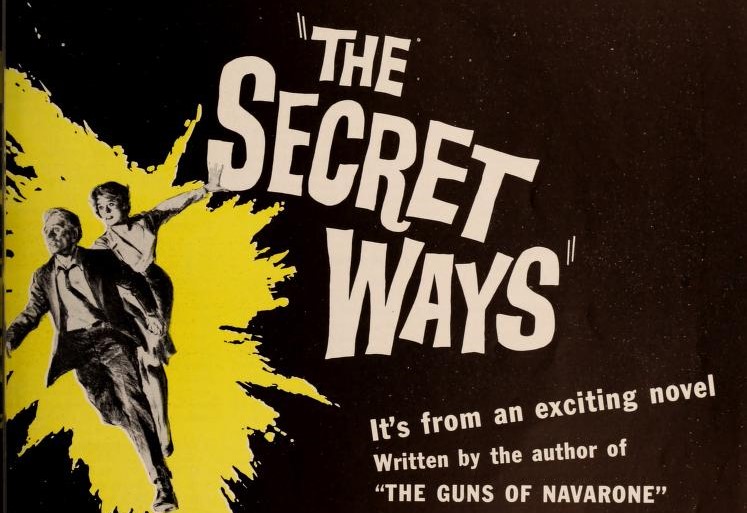
  1. The Secret Ways (1961) – Richard Widmark and Senta Berger – making her Hollywood debut – behind the Iron Curtain in gripping adaptation of the Alistair Maclean thriller.
  2. Ocean’s 11 (1960) – Frank Sinatra, Dean Martin, Sammy Davis Jr. and the Rat Pack in entertaining heist movie set in Las Vegas.
  3. It’s Not All Rock’n’Roll (2020) – remarkable documentary about the other side of the music business as ageing rocker Dave Doughman tries to keep his dreams alive.
  4. Age of Consent (1969) – British actress Helen Mirren makes her movie debut as the often naked muse for painter James Mason in touching drama directed by Michael Powell.
  5. The Venetian Affair (1966) – Robert Vaughn shakes off his The Man from Uncle persona in taut Cold War thriller also starring Elke Sommer as his traitorous wife and Boris Karloff in a rare non-horror role.
  6. The Golden Claws of the Cat Girl / La Louve Solitaire (1968) – French cult thriller starring Daniele Gaubert as sexy cat burglar forced to work for the government.
  7. Pharoah / Faron (1966) – visually stunning Polish epic about the struggle for power in ancient Egypt.
  8. The Swimmer (1968) – astonishing performance by Burt Lancaster as a man losing his grip on the American Dream.
  9. Stiletto (1969) – Mafia thriller with hitman Alex Cord and and illegal immigrant girlfriend Britt Ekland hunted by ruthless cop Patrick O’Neal.
  10. The Naked Runner (1967) – after his son is taken hostage businessman Frank Sinatra is called out of retirement to perform an assassination.
  11. Marnie (1964) – Sean Connery tries to reform compulsive thief Tippi Hedren in Alfred Hitchcock thriller.
  12. Our Man in Marrakesh / Bang! Bang! You’re Dead (1966) – Entertaining thriller sees Tony Randall and Senta Berger mixed up in United Nations plot involving the likes of Klaus Kinski and Herbert Lom.
  13. The Happening (1967) – Anthony Quinn locks horns with Faye Dunaway and a bunch of spoiled rich kids in kidnapping yarn.
  14. Dark of the Sun / The Mercenaries (1968) – Rod Taylor and Jim Brown head into the heart of darkness in war-torn Africa with a trainload of diamonds and refugees including Yvette Mimieux.
  15. The Guns of Navarone (1961) – men-on-a-mission Alistair Maclean World War Two epic with all-star cast including Gregory Peck, David Niven, Anthony Quinn, Anthony Quayle, Stanley Baker, Irene Papas, James Darren and Gia Scala.
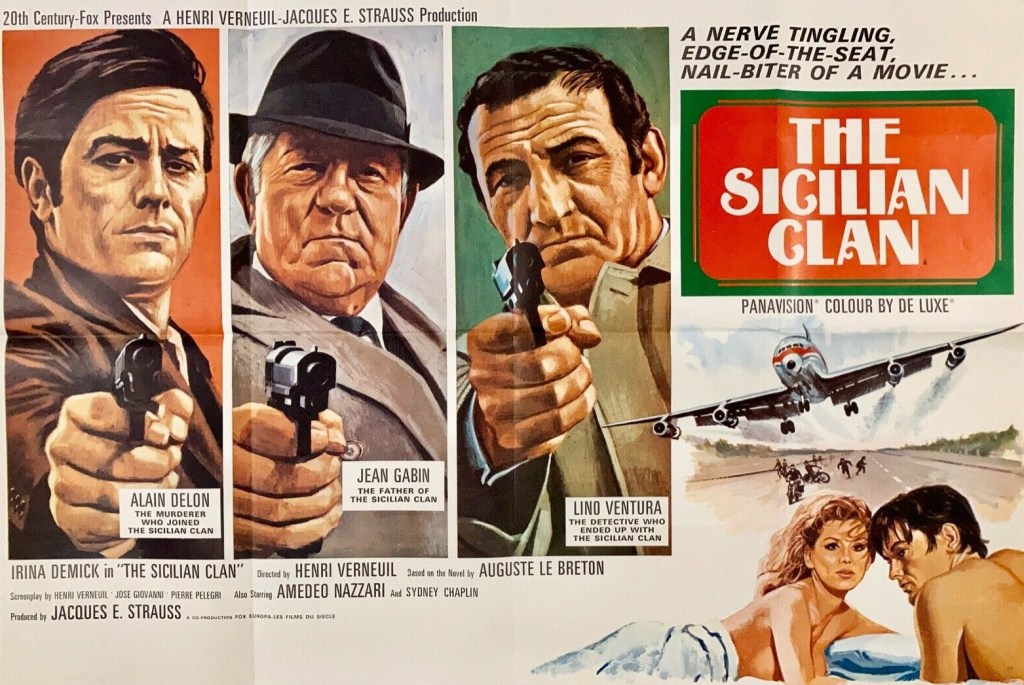
  16. The Sicilian Clan (1969) – three generations of French tough guys – Jean Gabin, Lino Ventura and Alain Delon – clash in Mafia-led jewel heist.
  17. 4 for Texas (1963) – Frank Sinatra and Dean Martin as double-dealing businessmen in highly entertaining Robert Aldrich Rat Pack western starring Ursula Andress and Anita Ekberg.
  18. Five Golden Dragons (1967) – Innocent playboy Robert Cummings becomes enmeshed with international crime syndicate led by Christopher Lee, George Raft and Dan Duryea.
  19. Duel at Diablo (1966) – James Garner and Sidney Poitier team up to protect Bibi Andersson in Ralph Nelson western.
  20. Move Over Darling (1963) – after years marooned on a desert island Doris Day returns to find husband James Garner just married to Polly Bergen.
  21. Pressure Point (1962) – prison psychiatrist Sidney Poitier is forced to treat paranoid racist inmate Bobby Darin.
  22. Wonder Woman 84 (2020) – in one of the few films to get a cinematic screening during lockdown, Gal Gadot returns as mythical superhero to battle supervillain Kristen Wiig.
  23. Genghis Khan (1965) – Omar Sharif as the Mongol warrior who conquered most of the known world, tangling with rival Stephen Boyd and Chinese mandarin James Mason on the way.
  24. A Fever in the Blood (1961) – Warner Bros wannabes Efrem Zimbalist Jr, Angie Dickinson, Jack Kelly and veteran Don Ameche in tough political drama.
  25. The Prize (1963) – Paul Newman and Elke Sommer investigate murder in the middle of the annual Nobel Prize awards in Sweden.
  26. In Search of Gregory (1969) – wayward Julie Christie embarks on pursuit of Michael Sarrazin who may – or may not – be a figment of her imagination.
  27. Justine (1969) – Dirk Bogarde and Michael York become entangled in web woven by Anouk Aimee in corrupt pre-World War Two Middle East.
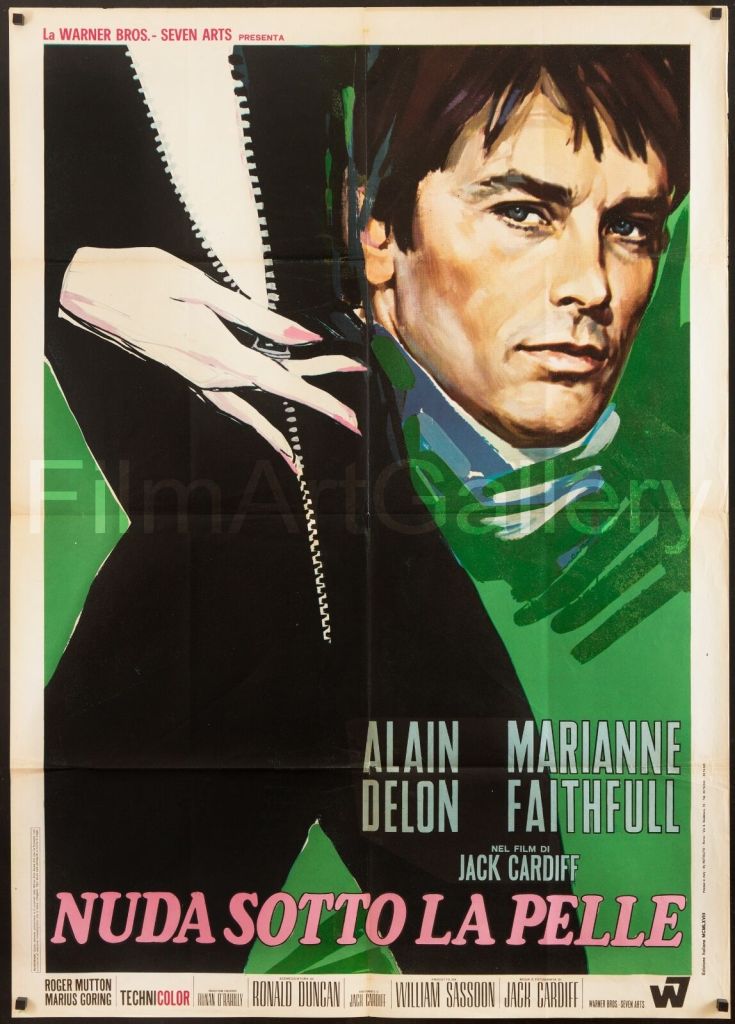
  28. The Girl on a Motorcycle (1968) – singer Marianne Faithful in a hymn to the open road and sexual freedom.
  29. Blindfold (1965) – psychiatrist Rock Hudson and dancer Claudia Cardinale in highly entertaining mystery thriller about missing scientists.
  30. Hammerhead (1968) – secret agent Vince Edwards and goofy Judy Geeson on the trail of evil mastermind Peter Vaughn.

My Five-Star Picks for the First Year of the Blog

It’s a been a fabulous year for watching the movies and my pictures of the year (the first full year of the Blog running from July to June, I hasten to add) make up an eclectic collection ranging from historical epics, dramas and westerns to horror, thrillers and comedy. Although this is my chosen decade, many of the films I was seeing for the first time so it was interesting to sometimes come at a film that had not necessarily received kind reviews and discover for one reason or another cinematic gems. There was no single reason why these pictures were chosen. Sometimes it was the performance, sometimes the direction, sometimes a combination of both.

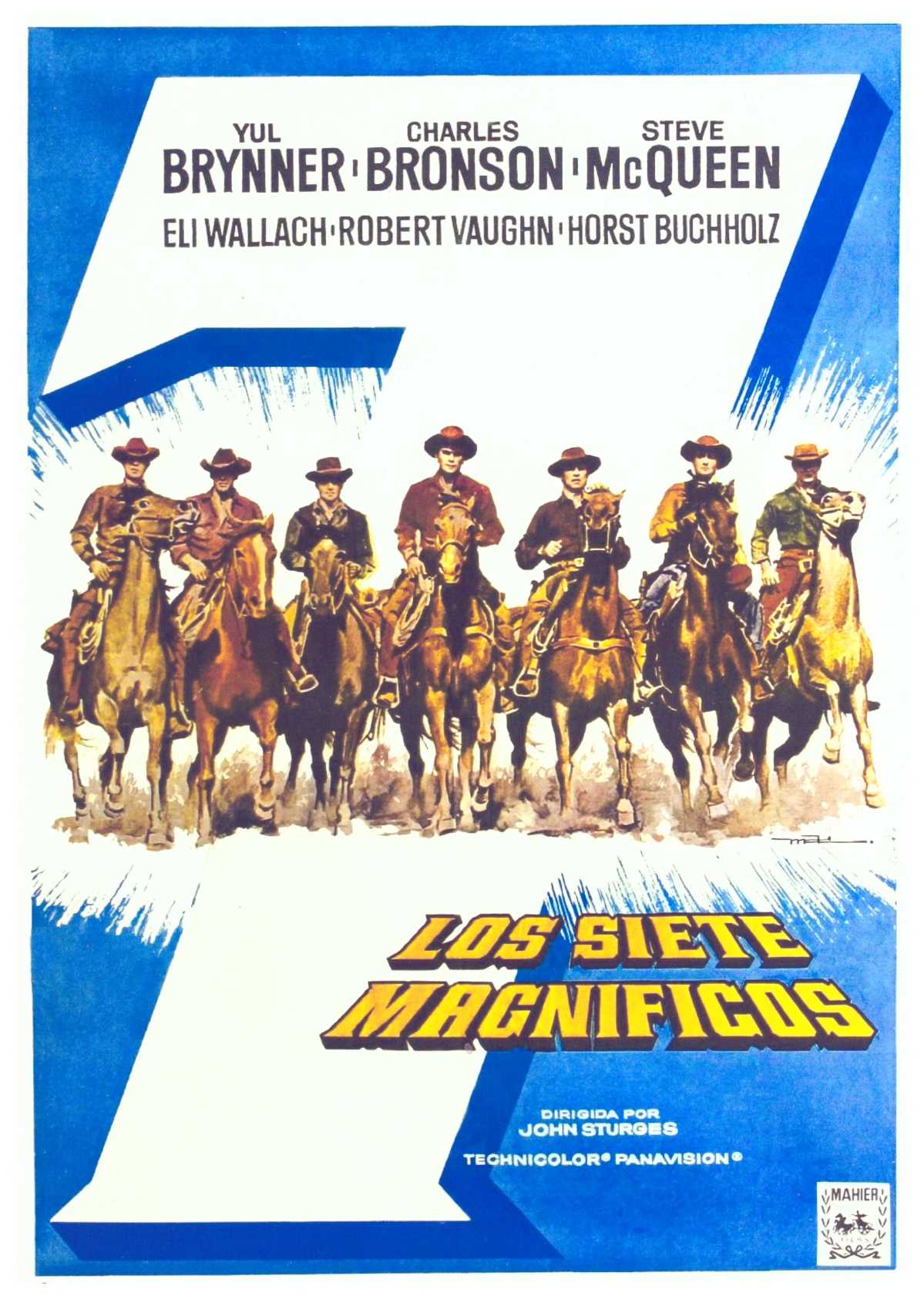
The westerns I most enjoyed came from either ends of the decade – John Wayne and Rock Hudson in magnificent widescreen spectacle The Undefeated (1969) and Yul Brynner, Steve McQueen, Charles Bronson, James Coburn and the team in The Magnificent Seven (1960).

There was another ensemble all-star cast in J. Lee Thompson war film The Guns of Navarone (1961) one of the biggest hits of the decade with Gregory Peck, Anthony Quinn, David Niven, Stanley Baker et al.

Horror brought a couple of surprises in the shape of Daliah Lavi as the Italian peasant succumbing to The Demon (1963) and Peter Cushing menaced by The Skull (1965).

Not surprisingly perhaps Alfred Hitchcock headed the ranks of the five-star thrillers, but surprisingly to some, this was in the shape of Marnie (1964) with Sean Connery and Tippi Hedren rather than some of his decade’s more famous / infamous productions.  Heading the romantic thrillers was the terrifically twisty Blindfold (1965) with Rock Hudson and Claudia Cardinale teaming up to find a missing scientist. The Sicilian Clan (1969) proved to be a fine heist picture in its own right as well as a precursor to The Godfather with a topline French cast in Alain Delon, Lino Ventura and Jean Gabin.

Only one comedy made the five-star grade and what else would you expect from Billy Wilder’s Some Like It Hot (1959), slightly outside my chosen remit of films from the 1960s, but impossible to ignore the chance to see Marilyn Monroe, Tony Curtis and Jack Lemmon strutting their stuff on the big screen. For the same reason I had the opportunity to re-evaluate Ridley Scott’s Oscar-winning historical epic The Gladiator (2000) that gave Hollywood a new action hero in Russell Crowe. Stylish contemporary sci-fi chiller Possessor (2000), from Brandon Cronenberg,  was another one seen on the big screen, one of the few in this year of the pandemic.

Most people would certainly put Paul Newman as prisoner Cool Hand Luke (1967) in this elevated category but, to my surprise, I found several other dramas fitted the bill. The clever sexy love triangle Les Biches (1968) from French director Claude Chabrol made his name. Burt Lancaster turned in a superlative and under-rated performance in the heart-breaking The Swimmer (1968) about the loss of the American Dream. Rod Steiger, on the other hand, was a hair’s-breadth away from picking up an Oscar for his repressed turn as The Pawnbroker (1964).

Two films set in the Deep South also made the list – Marlon Brando in Arthur Penn’s depiction of racism in small-town America in The Chase (1966) with an amazing cast also featuring Jane Fonda and Robert Redford, and Michael Caine as a more than passable arrogant southerner in Otto Preminger’s Hurry Sundown (1967) opposite rising star Faye Dunaway. Dennis Hopper and Peter Fonda’s hymn to the freedom of the motorbike in Easy Rider (1969) turned into a tragic study of attitudes to non-conformity.

For only eighteen films out of a possible two hundred to make the cut indicates the high standards set, and I am looking forward to as many, if not more, brilliant films in the year to come.

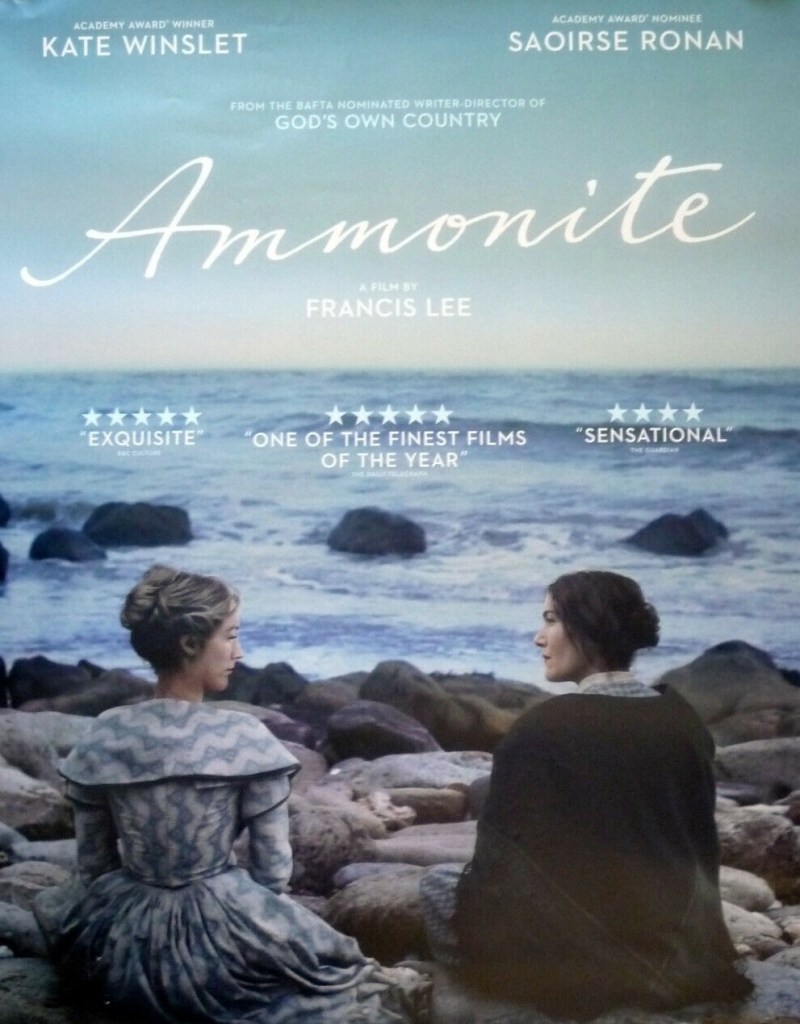
Ammonite (2020) ****

I came at this picture with some trepidation and in truth only watched it at the cinema because I had seen everything else worth a look in the few weeks since the picture houses have reopened. Although initially attracting Oscar buzz, that failed to materialize when it mattered and it was left out of the Oscar loop. While kate Winslet was a proven commercial box office draw, this appeared to have arthouse sensibilities and the few reviews I had read promised a turgid evening.

The reality was something different and as a result of what I can only describe as the magic of the big screen. Watching a film in a cinema is automatically more involving than on the small screen: there are fewer distractions, the dominating size of the screen is unavoidable and it is dark. Had I watched it at home I could well have switched it off after fifteen minutes in reaction to the slow pace. But in a cinema, slowness did not matter, and until it widened out in the final few scenes it was like an absorbing chamber piece, featuring a handful of characters.  In approach it was closest to a film about an artist, Pollock (2000) and Mr Turner (2014) come to mind, where obsession is the driving force, narrative and plot merely subservient. We are exposed to considerable detail about the character’s archaeological work, which is often filthy and undertaken outside in all sorts of weather, requiring the constitution of a miner or farmer rather than a painter, as well as the patience of a saint to brush, wash or poke clean her discoveries.

Mary Anning (Kate Winslet) was not an attractive personality, downright truculent and rude for the most part, given that she depended for her living on selling the archaeological items she had found in the Lyme Regis area to tourists and collectors. That her major archaeological discoveries resided in the British Museum brought no personal satisfaction because thanks to the male archaeological hierarchy they were presented there under the names of the purchasers rather than the finder. What she earned for major pieces could keep herself and her ageing and infirm mother (Gemma Jones) for a year. By and large, they lived in poverty, existing on soup mostly, the mother at least as obsessive as the daughter with her collection of knick-knacks, one for each of her eight children who had died prematurely, which she washed and polished every day. Mary spurned any male overtures and indeed appeared to resent any friendship, the hint of some kind of betrayal in brief scenes with Elizabeth Philpot (Fiona Shaw), a local worthy.

Mary is hired by wannabe archaeologist Roderick Murchison (James McArdle) to look after his insipid, annoying, depressed wife Charlotte (Saoirse Ronan). Gradually a friendship forms, leading to desire. Nothing is more illustrative of the Victorian attitude to sex than that the idea of a lesbian relationship ran counter to all imagination. Perhaps one of the more refreshing aspects of the picture is that while Victorian women clearly resented having sex with their husbands that was largely down to the fact the men had no idea how to satisfy a woman. That is not the case here and though the sex scenes have been criticised in places as “too strong” I thought it was essential just to be sure that the women did know what they were doing and clearly derived enormous satisfaction from the sexual act if properly performed. A chaste kiss and cuddle would hardly do justice to the passion suddenly erupted.

While Mary experiences jealousy when Charlotte is entranced by Elizabeth, romance does not produce complete fulfilment and when Charlotte, as if she were a man, appoints herself Mary’s protector that independence for which the archaeologist had fought so hard is imperilled. Love miraculously changes Charlotte’s outward demeanour, the same is not true of Mary.

This isn’t the picture-postcard version of a Victorian seaside town, rather its harsher cousin. Writer-director Francis Lee (God’s Own Country, 2017) refuses to soften the rude edges of life and the best a true romanticist can expect is that the storms occasionally abate and the surf does not pound so heavily.

Powerful roles have been in short supply of late for Kate Winslet (Blackbird, 2019) and she is superb as the stoic woman in a male-dominated world, unable to express passion except in whittling away at pieces of ammonite. Saoirse Ronan (Little Woman, 2019) moves from bitter and confused child-woman to finding joy and from then to taking charge. Veteran British character actors Gemma Jones (Rocketman, 2019) and Fiona Shaw (My Left Foot, 1989) are impressive while James McArdle (Mary, Queen of Scots, 2018) and Alec Secareanu  (Amulet, 2020) offer different interpretations of the entitled male.

To be sure there is no conclusive proof that Mary Anning was this way sexually inclined but in these days of Hollywood reinvention or reimagining for little more than comic-book glory it would be hard not to allow the director some leeway in providing his love story with an interesting backdrop and a fascinating character. At times it is a painful watch, but a rewarding one.

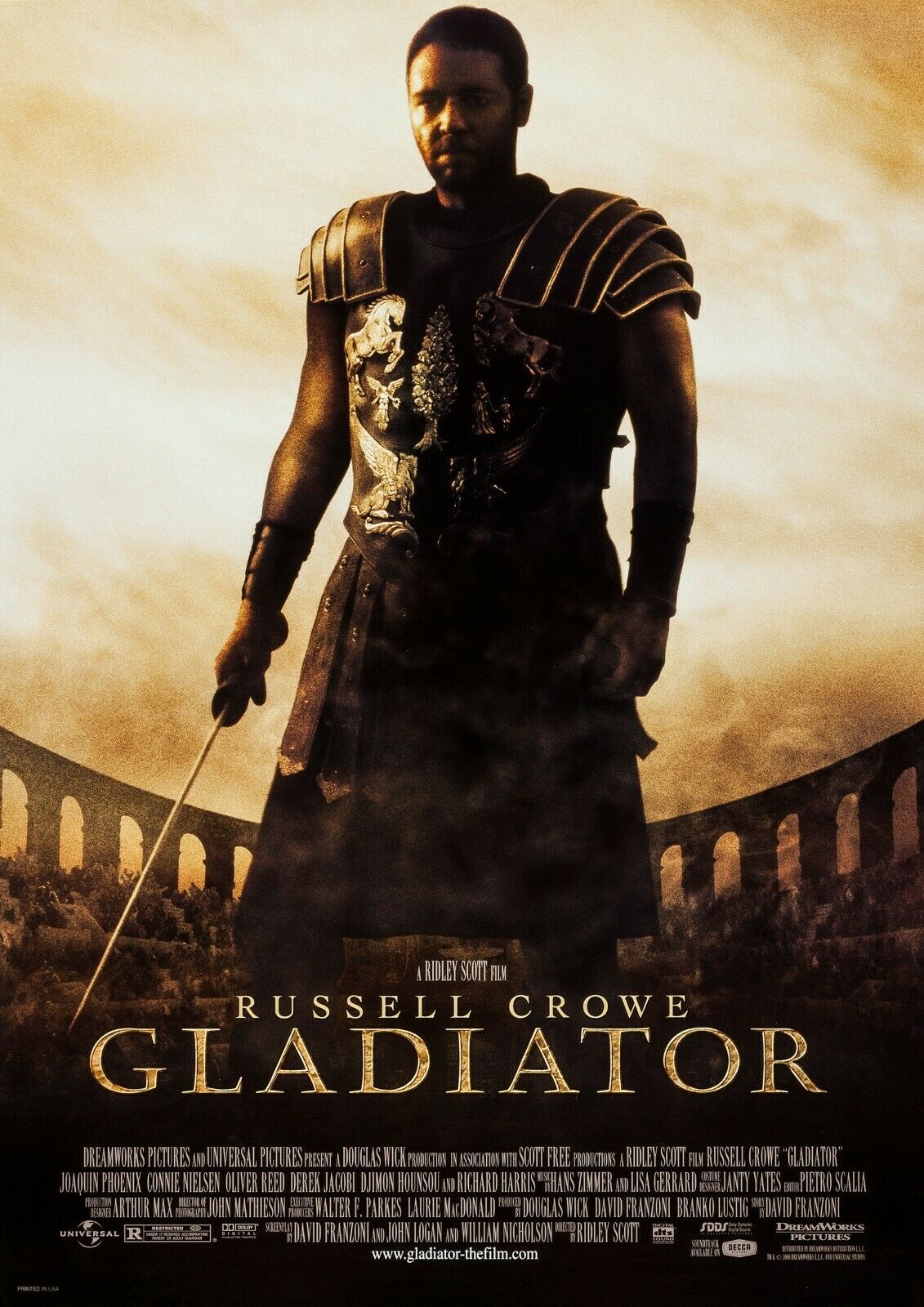
Gladiator (2000) *****

As well as being first in the queue to see The Gladiator on original release over two decades ago and enjoying countless viewings since on DVD and television, the chance to see a big-screen revival (as part of this week’s cinematic triple bill) was not to be missed. There’s always some worry in going back to see a movie you adored that time will have caught up with it or that the big screen will magnify flaws. Instead, this was a pure blast, one of the greatest epics of all time and definitely one of the most brilliant scores.

I always feel kind of sorry for people who’ve only see this kind of picture on a small screen – no matter how big your television it comes nowhere near the cinematic experience. I’m not even sure why it was showing on the big screen – the 20th anniversary has passed so maybe the draw was the upcoming British Father’s Day.

If you’re quick, you will be able to see it until June 17 at the Showcase cinema chain in the U.K. This is a new 4K print. It may run longer if it picks up sufficient demand.

Director Ridley Scott was in something of a career lull after the highs of Blade Runner (1982) and Thelma and Louise (1991) and his previous historical adventures – The Duellists (1977) and 1492: Conquest of Paradise (1992) – had been box office duds, so this was a considerable big-budget gamble for Dreamworks and Universal.

Few historical epics begin with action. Directors tended to want to build up the various characters before any battle got under way. But apart from a few seconds of an idyllic pastoral setting establishing how much Roman General Maximus (Russell Crowe) wants to get back to his Spanish farm, we are immediately, with foot-tapping music by Hans Zimmer, into one of the best battles ever filmed, not just for the tactical detail, and the sense of danger – an emissary is returned missing his head – but the ferocity of the action.

Backgrounding this is politics. Dying Emperor Marcus Aurelius (Richard Harris) distrusts his son Commodus (Joaquin Phoenix) and want to make Maximus the power in Rome. The reaction of Commodus is to smother his father and murder his rival. Maximus escapes but ends up a slave in a gladiator camp in North Africa and eventually returns to Rome plotting revenge.

Into the mix comes Commodus’s sister Lucilla (Connie Nielsen) who had romantic yearnings for Maximus in the distant past and various senators plotting to remove Commodus from office. The story basically shifts from dramatic action in the arena to outside intrigue with Maximus being seen as a man who could potentially unseat the emperor.

But Ridley Scott has such a fine eye for everything, genuine locations mix in brilliantly with CGI, the action sequences are astonishing, and emotions are kept at a peak. Even when the main narrative pauses here and there to allow philosophic and patriotic speeches they are so deftly written they often amount to the best pieces of dialogue in the picture.

Few movies have as many memorable lines. Sample: “what we do in life echoes in eternity;” “death smiles at us all, all we can do is smile back;” “people should know when they are conquered;” “father to a murdered son, husband to a murdered wife, I will have my vengeance in this life or the next;” the “little bee” sequence;  and the lines that ended up as taglines on the advertising posters” a general who became a slave, a slave who became a gladiator, a gladiator who defied an emperor.”

While he could easily have let the action speak for itself and who would not have welcomed more battles with Roman foes or more combat in the arena – and many other movies with a character in a similar predicament have succumbed to that temptation – Scott ensures that the tensions between the characters are never lost. So Commodus is driven both by wishing to please his father and desiring an incestuous relationship with his sister. Lucilla is torn between protecting her son (Spencer Treat Clark), her growing attraction to Maximus and trying to keep her brother at bay while plotting against him. Maximus, who has no head for politics, finds himself involved in intrigue as a way of gaining revenge on Commodus.   

Nor does Scott get bogged down with too much exposition or the intricacies of character as has often been the downfall of epics. The story has been whittled down to essential conflict.

It’s hard to pick a winner from the various action scenes – the opening clash in the forests of Germania with snow beginning to fall; the first gladiatorial combat where Maximus takes control; a small band of gladiators fighting what seems a losing battle against chariots; Maximus being unexpectedly attacked by tigers in the arena; or his climactic fight with Commodus.

And there are substantial cameos for British stars – Richard Harris, Oliver Reed, David Hemmings – who have lost their box office luster but not their acting ability. Connie Nielsen was a revelation.

Russell Crowe became instant superstar with his majestic portrayal. His name had already been on the lips of Oscar voters, having been nominated the previous year for The Insider (1999), but he took the Best Actor Oscar here. Although the film was named Best Picture Ridley Scott lost out – unfairly I felt – in the Best Director category to Steven Soderbergh for Traffic. (How do the two films compare now, I wonder). Joaquin Phoenix and Hans Zimmer were also nominated and the movie also picked up nominations for cinematography and screenplay (David Franzoni, William Nicolson and John Logan.) All told it won five Oscars and seven nominations.

This was the climax to my cinematic triple bill this week and since it also included Nobody and The Father, it could well turn out to be one of the best days I have ever spent at the cinema.

CATCH-UP: I reviewed The Fall of the Roman Empire (1964) a while back and if you compare both pictures you can clearly see how much Ridley Scott owes a debt to the previous film.  

There’s a company called Park Circus – http://www.parkcircus.com – which has the rights to show on the big screen virtually all the old movies made by Hollywood studios and it’s worth checking out whether this might be coming your way soon.

Dr Syn, Alias The Scarecrow (1963) ****

The mysterious masked Scarecrow was the creepiest character thus far put on celluloid by Disney. A lot of the action takes place at dusk so it is soaked in crepuscular atmosphere. Filmed against the sky, every horse seems to thunder past. Gallows swing ominously. Coupled with a strong storyline and clever ruses by alter ago the mild-mannered clergyman Dr Syn (Patrick McGoohan), this is one for the Under-Rated Hall of Fame.  

While the character has antecedents in folk-hero Robin Hood, the Scarecrow is more rooted in the brutal reality of Britain in the mid-1700s when to fund a host of foreign wars King George taxed already-impoverished peasants to the hilt, making smuggling essential to survival. The Scarecrow is not just the underworld kingpin but has operational skills a spy would be proud of, coded messages, secret rendezvous et al.  

Ruthless General Pugh (Geoffrey Keen), sent to rid the countryside of this menace, makes no bones about putting the squeeze on the wives of villagers to force them into providing the information he requires. Outwitted from the off by Dr Syn, the infuriated general begins torching houses. Helped unwittingly by local squire and judge Thomas Banks (Michael Hordern), the general acquires an informer Joseph Ransley (Patrick Wymark).

This is not the bucolic England of Robin Hood or other historical yarns of Hollywood invention featuring glorious scenery and ample female cleavage. Here, a barmaid is likely to use a meat cleaver to defend herself. This was also the era of press gangs, where government-appointed hoodlums would raid a village and carry off young men as unwilling recruits for the Royal Navy. It was a time of imminent insurrection, the King’s subjects in the North American colonies on the point of sedition. And when money – or its lack – infected every area of society.       

Although like any super-hero the Scarecrow occasionally comes to the rescue, the movie is distinguished by the fact that is more often Dr Syn who subverts the General through cunning subterfuge. Victory through force of arms is impossible since violence visited on the king’s troops would result in a multiplication of their numbers. So it is more a battle of wits. In addition, the Scarecrow faces a dilemma – how to punish a traitor with such severity his authority is never questioned again while at the same time upholding the principles of Dr Syn. Just how these issues and others are resolved make for a very involving picture.

Minor subplots – a romance between the squire’s daughter and an officer, a deserter from the Navy and the presence of an American (Tony Britton) – serve the main story. So the narrative remains taut. And, interestingly, that hangs upon what characters have to lose rather than gain. It is not about greed but survival.

For a Disney picture there is considerable directorial vigor, not just the depiction of the smuggling and pounding hooves accompanying peril or escape, but two terrific trial scenes, a masterly escape conducted in the complete absence of on-screen music and, of course, the terrifying vision of the Scarecrow himself.

The acting has a sterling quality. While Michael Hordern was a stage star, the film primarily called upon actors who later achieved fame on British television programs. Patrick McGoohan headlined The Prisoner (1967-1968), George Cole was in Minder (1979-1994), Patrick Wymark and Alan Dobie in The Plane Makers (1963-1965) Geoffrey Keen in Mogul (1965-1972), and Tony Britton in Robin’s Nest (1977-1981). McGoohan had a previous television incarnation as Danger Man  (1960-1961) and Cole had been a con man in the St Trinian’s films. You can also spot in small roles Kay Walsh, a former British leading lady, and a young Richard O’Sullivan, later star of Man About the House (1973-1976).

Director James Neilson was a Disney favorite, having helmed Moon Pilot (1962), Bon Voyage! (1962) and Summer Magic (1963). But these were all lightweight features and it is to his credit he met the challenge of turning Dr Syn, Alias the Scarecrow into a dramatic actioner. British writer Robert Westerby (The Square Ring, 1953), who also created the source material for Kali-Yug, Goddess of Vengeance (1963),  fashioned the screenplay from the books of William Buchanan and Russell Thorndike

Although Disney had cannibalized the Davy Crockett television series in the 1950s, stitching together episodes for feature films, this was something of a reversal. As part of its The Magical Wonderful World of Disney U.S. television program the studio had shown The Scarecrow of Romney Marsh as a three-part mini-series while Dr Syn, Alias the Scarecrow was released as a movie in Britain.  

You will need to go onto ebay or other secondhand sources to find the movie. The television mini-series can be found below.

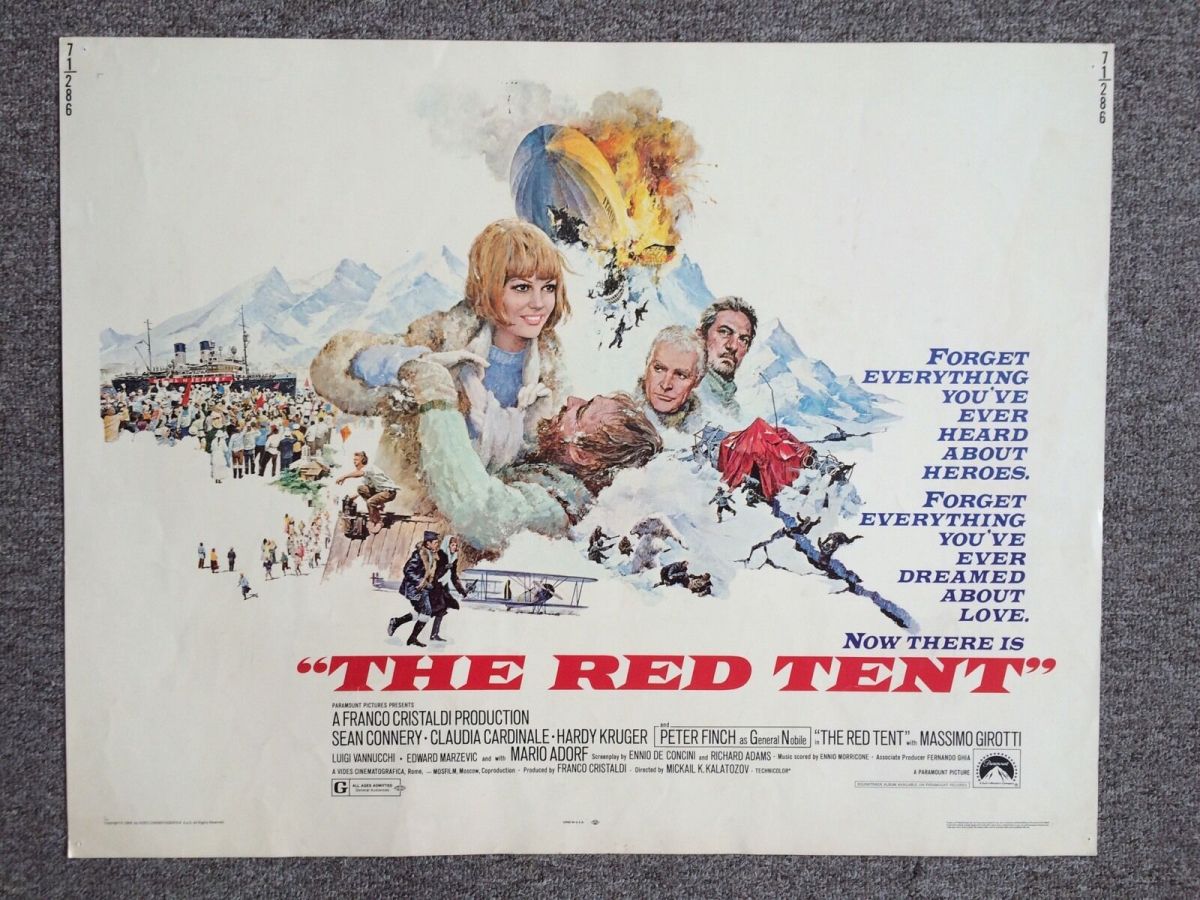
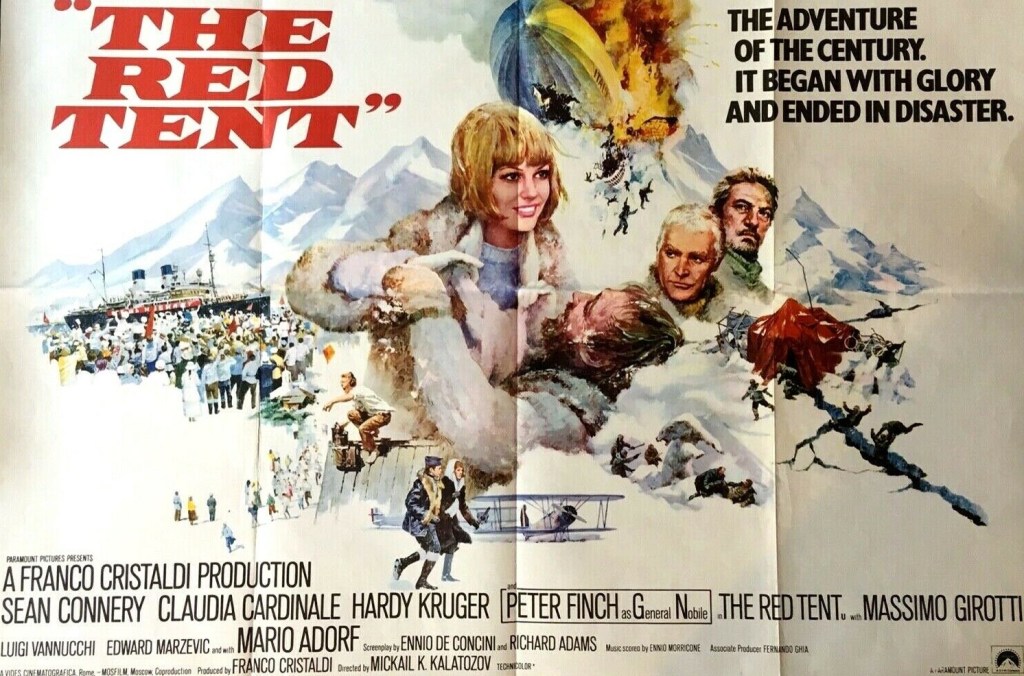
The Red Tent (1969) ***

If you’re unfamiliar with the abortive Italian airship expedition to the North Pole led by General Umberto Nobilo (Peter Finch) in 1928, you’ll find this an absorbing tale. If you are familiar then you will probably appreciate the film-makers’ attempts, via an unusual framing device, to carry out a post-mortem and to apportion blame for the disaster. If you know your history you’ll also be aware both poles had already been conquered, American Robert Peary first to the North Pole in 1909, Norwegian Roald Amundsen (Sean Connery) claiming South Pole bragging rights two years later. So you’re also probably wondering what was the point nearly two decades later of the Nobilo operation?

But the sled-led efforts of Peary and Amundsen were feats of endurance i.e. man vs.  nature. This was science vs. nature. The dirigible was the apex of aviation advancement and nations still battled for exploration glory. So to travel in some comfort and fly over the North Pole in a few days would be a demonstration of scientific supremacy. Conquest of one of the most inhospitable places on earth was almost a PR exercise. With no intention of landing it was also a glorified tourist trip.

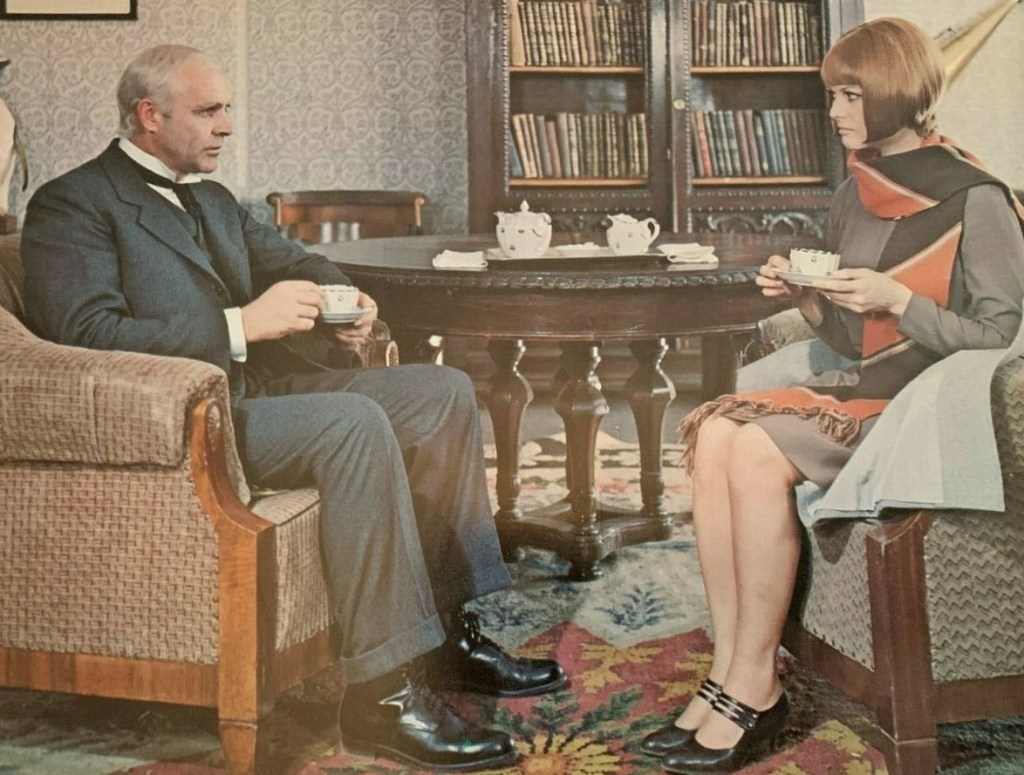
Connery and Cardinale lock horns over tea.

However, the science was flawed. Nobody had counted on the build-up of ice. The airship crashed and since this was a joyride nobody was equipped to walk their way out. Just surviving would be difficult enough. Loss of radio transmission (science) indicated a problem to those waiting back at the base so rescue airplanes were deployed. But without a location to pinpoint, the searchers had about two million square kilometers cover. Luckily, a brilliant scientific deduction by expedition member Finn Malmgreen (Eduard Martsevich) saves the day and a ham radio user (amateur science) picks up the location. Game on!

Except airplanes are too easily thwarted by blizzards, fog and the inhospitable. Home base, set up simply to welcome home a successful jaunt, is not capable of organizing a proper rescue. A Russian ice-breaker joins the rescue attempt. Taking greater risks is aviator Einar Lundborg (Hardy Kruger), fired up by the promise of sex with desperate nurse Valeria (Claudia Cardinale), who happens to be Malmgreen’s girlfriend, and a bounty from Nobilo’s insurers. The redoubtable Valeria does not have to sell her body to persuade the more highly-principled Amundsen to join the rescue effort.

So it’s gripping clock-ticking-down stuff, action shown in considerable detail, almost over-populated in one sense as director Mikhail Kalatozov (The Cranes Are Flying, 1957) covers multiple storylines, the various disjointed rescue efforts, the survivors weakening by the day, imperiled by marauding polar bears and the ice cracking up beneath their feet.

In the main it’s a true story, Valeria the only fictional element, inserted for dramatic purpose, to give the audience someone to emotionally root for back on land and for her character to guide us in almost contemporary fashion through the ghoulish carnival onshore as thousands gather to witness first-hand news of disaster.

What’s patently untrue is the framing device, given that it shows the still-living Nobilo summoning up the ghosts of others involved in the event for a post-mortem, in which his guilt drives him into the position of sacrificial lamb. Although on first encounter it appears a bizarre idea, that, too, soon achieves dramatic purpose. Clearly there was intense discussion at the time and in the immediate aftermath by those who survived the disaster and there must have been high-level talks behind closed doors that usually excluded the main characters of the kind that was played out in a host of historical pictures made during the decade. Lawrence of Arabia (1963) and Khartoum (1965) had many such set-pieces where reputations were shredded.

This approach permits opportunity for all the principals to come together for confrontational purposes in the one room. Not all discussion follows the expected path and there is an interesting argument between Nobilo and Amundsen about leadership. From an audience perspective, it is, of course, quite satisfying to see Sean Connery facing off against Peter Finch with Hardy Kruger and Claudia Cardinale embroiled in the debate.

All eyes on Claudia Cardinale in the Japanese poster.

There is the bonus of fabulous cinematography of the majestic Arctic, the icy waste and breaking up of ice floes and collapsing icebergs never before captured in such widescreen glory. Further pluses are in the performances, especially Connery as an aged Amundsen, Finch as the glorious pioneer bewildered the sudden turn of events and Cardinale as a woman willing to go to any lengths to save her lover. Ennio Morricone provided the score.

However, you are best going into this to be aware that while Finch has a goodly amount of time onscreen, Connery and Cardinale (the ostensible stars judging by the credits) are not seen so frequently. That said, the movie happily falls into the survival sub-genre. The DVD version I saw was just a shade over two hours – cut by about 30 minutes from original release – but reportedly the longer version adds little more than some extra angst.

The Viking Queen (1967) ***

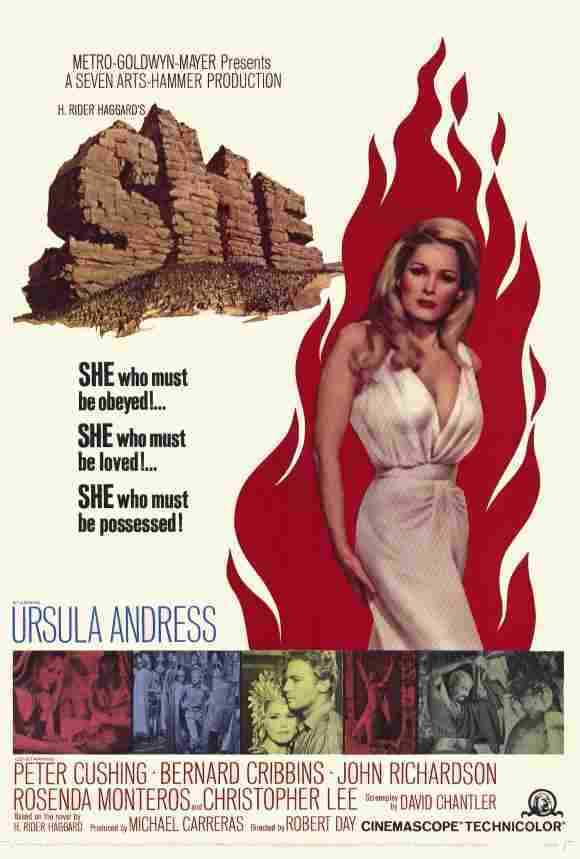
Politics, conspiracy, thwarted romance and historical inaccuracy take center stage in this Hammer romp that attempted to create another sex symbol to follow in the footsteps of Ursula Andress (She, 1965) and Raquel Welch (One Million Years B.C., 1966) in the shape of Finnish model Carita. Let’s put the dodgy historical elements to one side given Hollywood trampled over history all the time, but the title is a misnomer, the story owing more to British folk heroine Boadicea than anyone who came from longship land.

On his deathbed British tribal king (Wilfred Lawson), against the wishes of powerful Druid chieftain Maelgan (Donald Houston), signs a peace treaty with Roman governor general Justinius (Don Murray) against the wishes of his lieutenant Octavian (Andrew Keir). In different ways, the Druid and Octavian conspire to end the peace. Had new queen Salina (Carita), after falling in love with Justinius, been permitted to marry him that would have created a peaceful bond, but that is also prevented.

There’s a lot more sex and violence than you would have expected for the period, plenty scantily-clad slaves administering to the rich and the Romans, an extended brutal flogging sequence involving Salina, an offscreen rape, a cageful of Roman prisoners dropped into a burning pit, and when the British strap scythes onto the wheels of their chariots it’s a bloodbath. (Quite why the Romans never thought of importing their own chariots, given their popularity in the Colosseum, is never explained.) The chariots, whether in a race or battle, are the best thing about the picture, adding tremendous energy.

It takes quite a while for Salina to take up arms but when she does the film catches fire. She leads from the front, tearing through the Roman legions, and handy too with a sword. Ambushes appear the order of the day so any marching column or peaceful village soon ends up in a spot of bother.

There’s some of “what did the Romans ever do for us” with a snatch of Robin Hood thrown in – Justinius takes from the rich to give to the poor – plus religious fanaticism to stir the pot into a heady brew.  But mostly it’s hokum, if rather plot-heavy. Quite how the Oscar-nominated Don Murray (Advise and Consent, 1962) was talked into this is anybody’s guess. Carita, of course, would have believed she was on a surefire route to stardom but in fact this was her last picture. They two stars don’t really have that much to do and do it well enough. In supporting roles you will spot Patrick Troughton (a BBC Dr Who), Nicola Pagett making her movie debut and Adrienne Corri (Africa – Texas Style, 1967). Director Don Caffey (One Million Years B.C., 1966) is better at action than drama.

The Four Feathers (1939) ****

After I had written my review of East of Sudan, I discovered the action scenes that open the picture were filched from Zoltan Korda’s The Four Feathers (1939) so, out of curiosity rather than intent to stray from my designated decade, I took a look to see how much had been stolen and, to my surprise, kept on watching.

Setting aside the outdated attitudes, this is a pretty amazing picture to have come out of Britain at a time when color was in its infancy and when the Brits were not known for producing watchable historical epics with full-blown battles and thousands of extras on a desert location. Released on the eve of the Second World War, it also takes a remarkably sympathetic view of conscientious objectors. The story mostly concerns the fall of Khartoum (1885) and then a decade later events surrounding the Battle of Omdurman (1898).

Advert that appeared in American trade magazine “Box Office” in 1939.

Story concerns Harry Faversham (John Clements), pacifist scion of a military family who, having being called into war, tears up his commission and is branded a coward by three army friends and by implication his fiancée Ethne (June Duprez), daughter of a general (hence the four white feathers). Eventually, Faversham determines to make amends and, donning a disguise, spies on the enemy, enduring endless hardship and torture before finally rescuing his friends and contributing to the battle. While it all sounds too stiff-upper-lip for its own good, it’s still quite a feat of direction, tracking cameras measuring the battle charges, the enemy racing forward on thousands of camels, the traditional British square reminiscent of Waterloo  holding firm. While Korda lacks David Lean’s visual flair, and Miklos Rozsa’s score too often intrudes on intimate moments, there are still plenty of stunning sequences, boats being towed up the Nile by slaves on shore, the prison sequences, the destruction of the arsenal, the blaze of color on military parade and ballroom, and the sheer wonder at the desert and an innate cinematic understanding of its perils.

Ralph Richardson steals the show as an officer blinded by the sun in the desert and there are a couple of good twists at the end, the fiancée realizing that she, too, was guilty of immoral act in branding Faversham a coward because he objected to the senselessness of war, and a crusty old general of Crimean vintage getting his come-uppance.

It’s always difficult to come to a proper assessment of the 1930s British movie, since so many of the voices sound upper class and the directors lack the skills and understanding of pace of their American counterparts, while the actors too often fall short of Hollywood standards. This was the year of Stagecoach, Gone with the Wind, The Wizard of Oz and Wuthering Heights, for example, and no British picture came close to that quartet, but this is an exceptionally decent effort especially in terms of historical detail. It was a commercial and critical success at the time (nominated for the Palme d’Or at Cannes, Oscar nomination for cinematography) and more recently reappraised by Criterion.

East of Sudan (1964) ***

Remembering this picture as a summer holiday matinee of stiff-upper-lip-ness entangled in all sorts of Khartoumery, I came at this film with low expectations. Given producer Charles H. Schneer’s (First Men on the Moon, 1964) involvement, there were no Ray Harryhausen magical special effects. I was only aware of star Anthony Quayle as a bluff supporting actor in epics like Lawrence of Arabia (1962) and The Fall of the Roman Empire (1964) and Sylvia Syms as a willowy supporting actress (The World of Suzie Wong, 1960). So I was in for a pleasant surprise. Take away the back projection, stock footage and the unlikely zoo of wild animals and there is a fairly decent action film set in the Sudan on the fringes of the Mahdi uprising (that story filmed as Khartoum the following year).

Quayle is a former army sergeant awaiting court martial when he escapes from a battle near Khartoum, ends up saving governess Syms, her charge Jenny Agutter (making her debut), officer Derek Fowlds (BBC Yes, Minister) and a wounded soldier. The motley crew flees down the Nile in a boat. You know you are in for something quite different when the soldier dies and Quayle wants to toss him overboard. Overruled by prim Syms and stiff upper lip Fowlds, this good deed is rewarded by losing their beached boat while burying the dead. A picture like this only survives on twists. Burning the remainder of their boat to attract the attention of the British relief force only brings in their wake a mob of Arabs, who we are informed, in a spicy exchange, don’t know the ten commandments, especially “thou shalt not kill.”  It turns into a battle of the sexes, with Syms’ innocence and good breeding quickly eroded in the face of danger, her natural antipathy towards a scallywag like Quayle softening. Lacking due deference, said scallywag is given some choice lines which spark up proceedings. It being Africa, the animals have nothing better to do than torment them, so cue snakes, crocodiles, charging rhinos, hippos, elephants without even an entertaining monkey to lighten proceedings. Quayle sets his ruthless tendencies to one side to take a tender, paternal interest in young Agutter. Ongoing action prevents the usual male-female meet-cute African Queen-style banter and it’s all the better for it.

Capture by African tribesman takes the story on an interesting detour. Quayle, attempting to make friends, shouts out despairingly (and without irony), “Don’t any of you even speak English?” only for chieftain Johnny Sekka (The Southern Star, 1969) to stride out of the bushes with the reply, “I speak, English, Arabic and Swahili.” Quayle explains, “We come in peace.” Sekka retorts, “With gun in hand?” Game on! The plot goes offbeat when we become involved in Sekka’s life. A former slave, his village presents an unusually realistic alternative world not least for Agutter, ill by this time, saved by an African witch doctor.  There are further surprises, clever ruses to foil the enemy, revelations about Syms and a surprising but very British ending.

Quayle is convincing, reveling in the opportunity to create a fully-formed character rather than  confined to a small chunk of a picture. Syms, too, with more on offer than normal, Agutter (Walkabout, 1971) not a precocious Disney cut-out, and Fowlds revealing what did for all those years before turning up on television as puppet Basil Brush’s sidekick. As a British B-picture making do on a small budget, it overcomes this particular deficiency with some sparkling dialogue and attitudes that go against both the time in which it was set and the era in which it was made.

NOTE: Khartoum, The Southern Star, The Fall of the Roman Empire, The Southern Star and First Men in the Moon (with Harryhausen effects) have all been reviewed on this blog.     

Villa Rides (1968) ***

Best viewed as Charles Bronson’s breakout movie. Yes, he had played supporting roles in The Magnificent Seven, The Great Escape and The Dirty Dozen, but these had all been versions of the same dour, almost monosyllabic, persona. Here, though somewhat ruthless, he steals the show from the top-billed Robert Mitchum and Yul Brynner with many of the best lines and best situations with an extra slice of humor (make that first-ever slice of humor) to add to the mix. He is the most interesting of the three main characters, in part because he does not have to spout any of the “good revolution/bad revolution” dialog that falls to the other two.

Villa (Brynner) is fighting the Colorados but his superior General Huertas (Herbert Lom) is planning to overthrow President Madero (Alexander Knox). Mitchum is an aeronautical gun-runner from El Paso, initially against the revolutionaries, stranded in Mexico when his plane breaks down. He has just about time to romance a local woman Fina (Maria Grazia  Buccello) before the Colorados arrive, take over the village, start hanging the leaders and raping Fina. Villa saves them, Bronson slaughtering the Colorados with a Gatling gun on the rooftop. Faced with the one-man firing squad that is Bronson, Mitchum turns sides. His  plane comes in handy for scouting the enemy, then bombing them.

The actions sequences are terrific especially Villa’s attack on a troop train. To get Villa out of the way, Huertas puts him in the front line in a suicidal attack on a heavily-defended stronghold which turns into another brilliant set-piece with cavalry charges.  The plot is constantly interrupted by politics of one kind or another and comes to dead stop when Villa is arrested by Heurtas and Villa demands a proper trial. It’s kind of hard to take when a murdering bandit, no matter how legendary, decides that he has been hard done by in the justice department.

That aside, there are interesting attempts to build up his legend. He doesn’t want power for himself, but to give it to the people, although he has sat back and let the first village be attacked so that the people there learn to hate the Colorados enough to join the fight. There’s not really any good guys – Brynner and Bronson are stone-cold killers, Mitchum a mercenary. But Brynner does marry Fina in order to prove that a raped woman should not be treated with dishonor, though he has a tendency to marry other women as well.

Bronson’s unusual one-man firing squad involves him laying on the ground with a pistol in each hand and giving prisoners the opportunity to escape before he shoots them. After all that hard work, he bathes his hands. Then he decides he can kill three men with one bullet, lining them up exactly so he can drill them all in the heart. But he’s also the one who shoots a molester in a cantina, then delivers the classic line: “Go outside and die, where are your manners?” He is at the heart of some well-judged comedy – continually sending back his meals and trying to get out of getting into a plane with Mitchum. Without him, there would be too much justification of slaughter (Brynner) and arguments against (Mitchum). This is the first time in the kind of action role that suits him that he has an expanded characterization.

Brynner did not like Sam Peckinpah’s original script so Robert Towne (Chinatown) was brought in to present Villa in a more appealing light.  Jill Ireland (Mrs Bronson) has a small part and you can also spot Fernando Rey.  

The links below seem somewhat dodgy but you could try the Talking Pictures channel which is free.

Discover WordPress

A daily selection of the best content published on WordPress, collected for you by humans who love to read.

The Atavist Magazine

by Brian Hannan

WordPress.com News

The latest news on WordPress.com and the WordPress community.