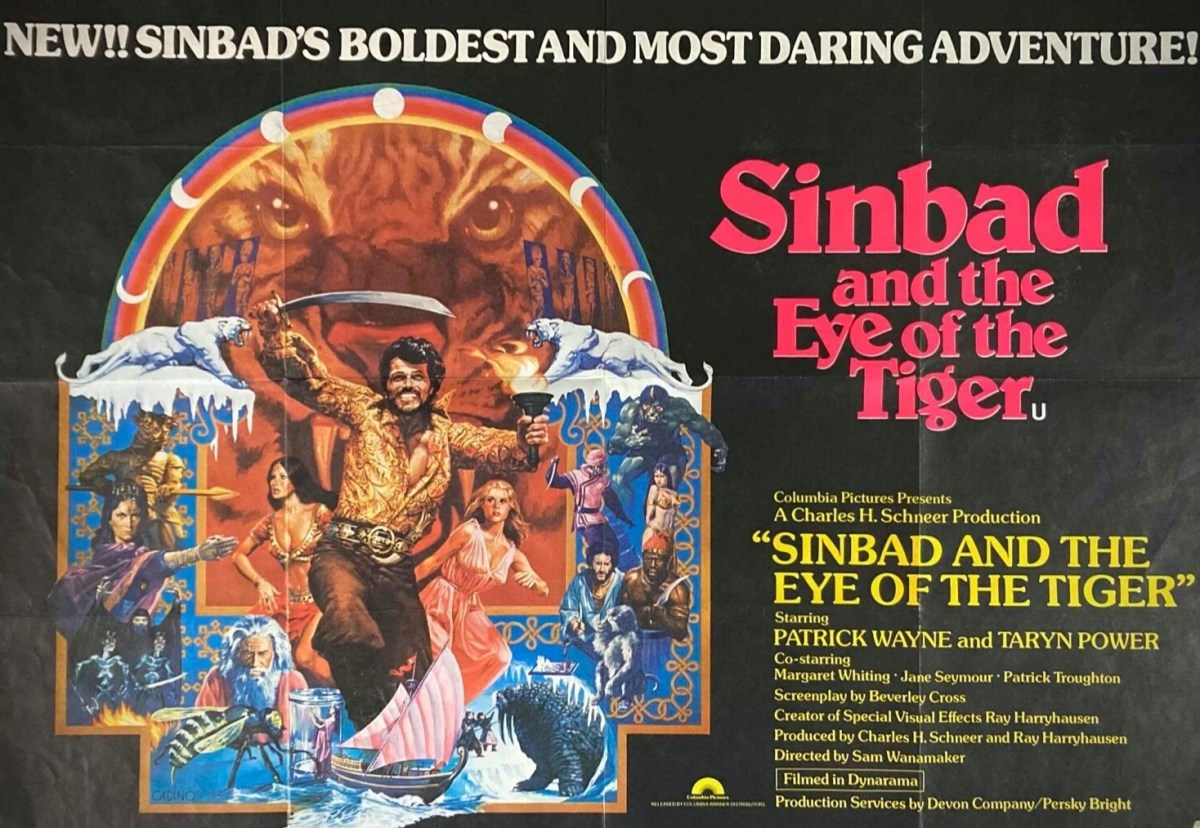
Sinbad and the Eye of the Tiger (1977) ***

You can usually rely upon Ray Harryhausen to rescue any picture. But he’s got his work cut out in this leaden enterprise weighed down by nepo kids. One nepo kid would be bad enough but some bright spark had the terrible idea of pairing the son (Patrick) of John Wayne with the daughter (Taryn) of Tyrone Power, only to discover that neither could act. That’s not usually necessarily a massive drawback in an adventure picture, but they have zilch to compensate in the way of screen personas.

To make up, rather than periodic interventions by Harryhausen, this time we’ve got two of his  creations with us virtually every step of the way – a baboon and a minotaur. The baboon playing chess is the highlight in terms of technical advances of Dynamation. To keep us on our toes when the narrative gets lost in exposition, every now and then we cut to the minotaur single-handedly rowing a ship or taking time out from such routine activity to spear some unwelcome visitor.
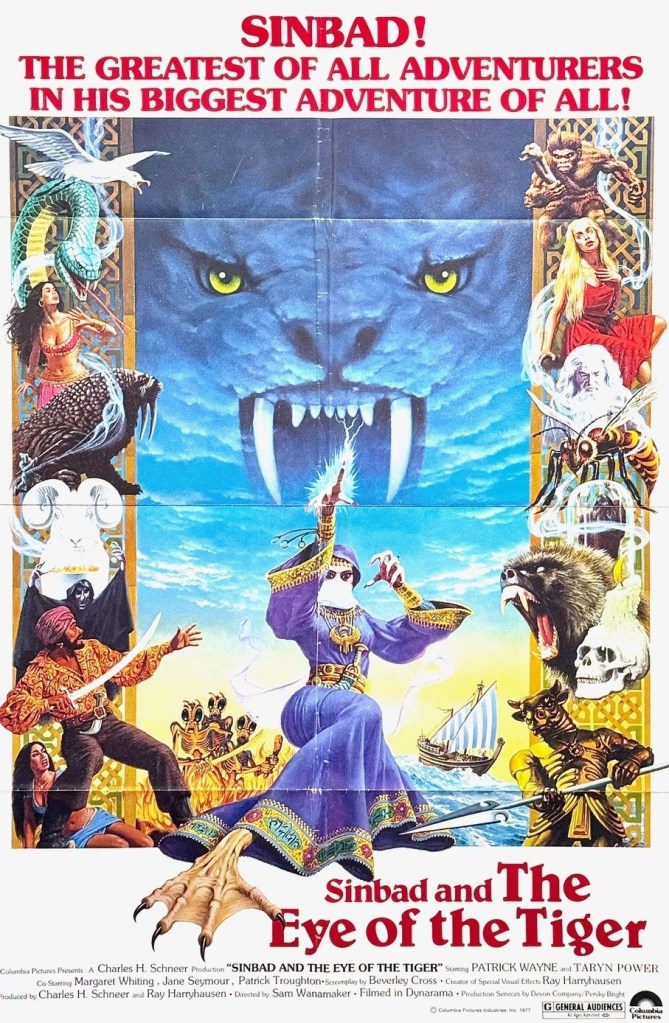
Given Harryhausen’s output switches from the mythical (Jason and the Argonauts, 1963) to the prehistoric (One Million Years B.C., 1966), he’s decided to mix it up this time round, with examples from both sub-genres. There’s a battle between a troglodyte (cave-man with what looks like a rhinoceros horn sticking out of his head) and a Smilodon (a sabre-toothed tiger)- and the baboon is so large it counts as prehistoric. Fulfilling the mythical end of the bargain a trio of ghouls with bulbous insect-like eyes arise from a fire, reminiscent of the skeleton army of Jason and the Argonauts. Halfway in between there’s a giant seagull, giant wasp, a miniature human and a very nasty cat.

Sinbad (Patrick Wayne) travels to the Arctic with sorcerer Melanthius (Patrick Troughton) who knows how to break the spell cast by the evil Zenobia (Margaret Whiting) that turned Prince Kassim (Damien Thomas), heir to the throne, into a baboon. Accompanying are the necessary ingredients for a love triangle – Kassim’s sister Farah (Jane Seymour) and Melanthius’s daughter Dione (Taryn Power).

Reversing the spell involves a sojourn to the icebound waste land of Arismaspi where the doors of temples look as if they have been constructed out of leftovers from King Kong (1976). Luckily, Zenobia isn’t as powerful as she thinks and after her outing as a seagull the witch can’t shake off the magic and is left with a bird’s foot. Every now and then her eyes glow like a cat.
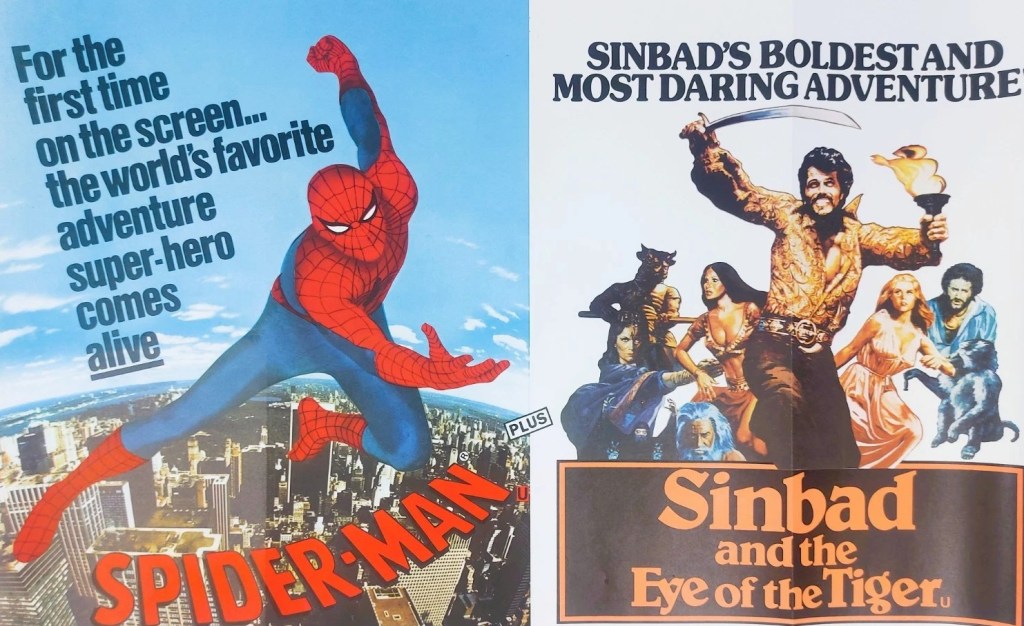
There must have been some optimism at Columbia that Patrick Wayne could step into the shoes of John Philip Law (The Golden Voyage of Sinbad, 1973) and that Bond girl Jane Seymour (Live and Let Die, 1973) could be the equal of scream queen Caroline Munro. And while Wayne had some form in the fantasy line via Beyond Atlantis (1973) and been acting since 1950 with routine appearances in his father’s westerns, in terms of quality roles he would be hard put to come close to Law whose portfolio included Otto Preminger’s Hurry Sundown (1967), and cult items Death Rides a Horse (1967), Barbarella (1968) and Danger: Diabolik (1968) and top-billed in admittedly more trashy ventures like The Love Machine (1971).

As you know being a Bond girl can be a curse as much as a blessing – Seymour had been offered little since. And although she would later make her mark, all that was on show here was promise, and not much of that. Taryn Power hadn’t capitalized on her starring role in the Spanish-made romance Maria (1972).

Nobody would accuse Errol Flynn of being a great actor but he more than compensated for any deficiencies with his screen charisma. Since neither nepo had much to offer in that department it was left to older hands like Patrick Troughton (Dr Who, 1966-1985) and Margaret Whiting (The Password Is Courage, 1962) to provide the gravitas. Even so, there’s not they can bring as the movie lumbers – and sometimes slumbers – towards its endpoint.

It’s as much as director Sam Wanamaker (The File of the Golden Goose, 1969) can do to keep the ship above water. Screenplay by Beverley Cross (Jason and the Argonauts).

On the other hand this movie is very much like the westerns I watched as a kid where I couldn’t wait for the grown-ups to stop quarrelling with each other or kissing and cuddling so that we could get on with the meat of the movie which was a gunfight or a battle between the Cavalry and Native Americans. Here, everything in between the Harryhausen elements just gets in the way.

Harryhausen rules – just.
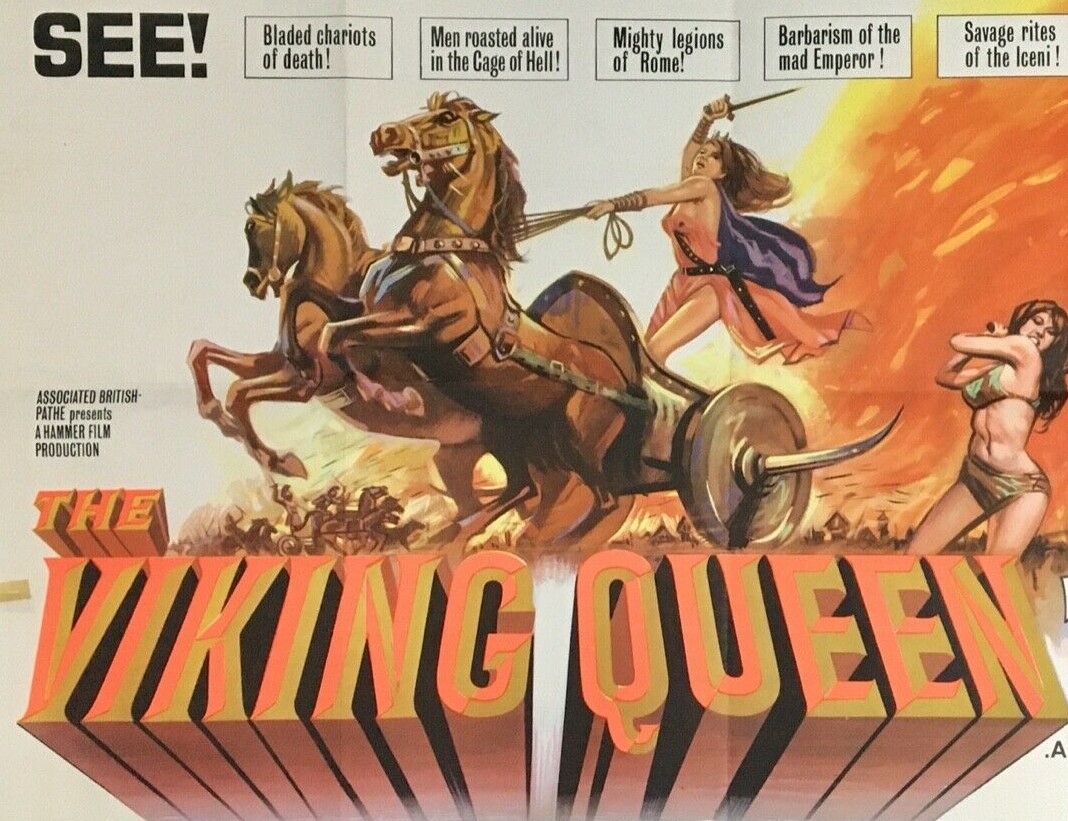
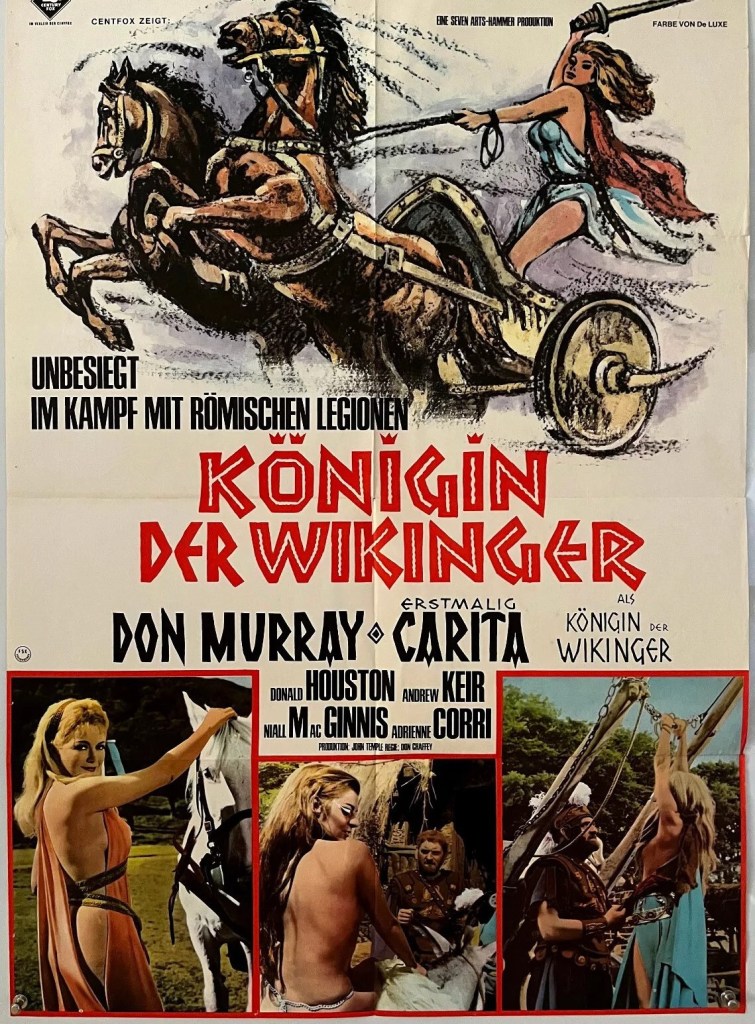
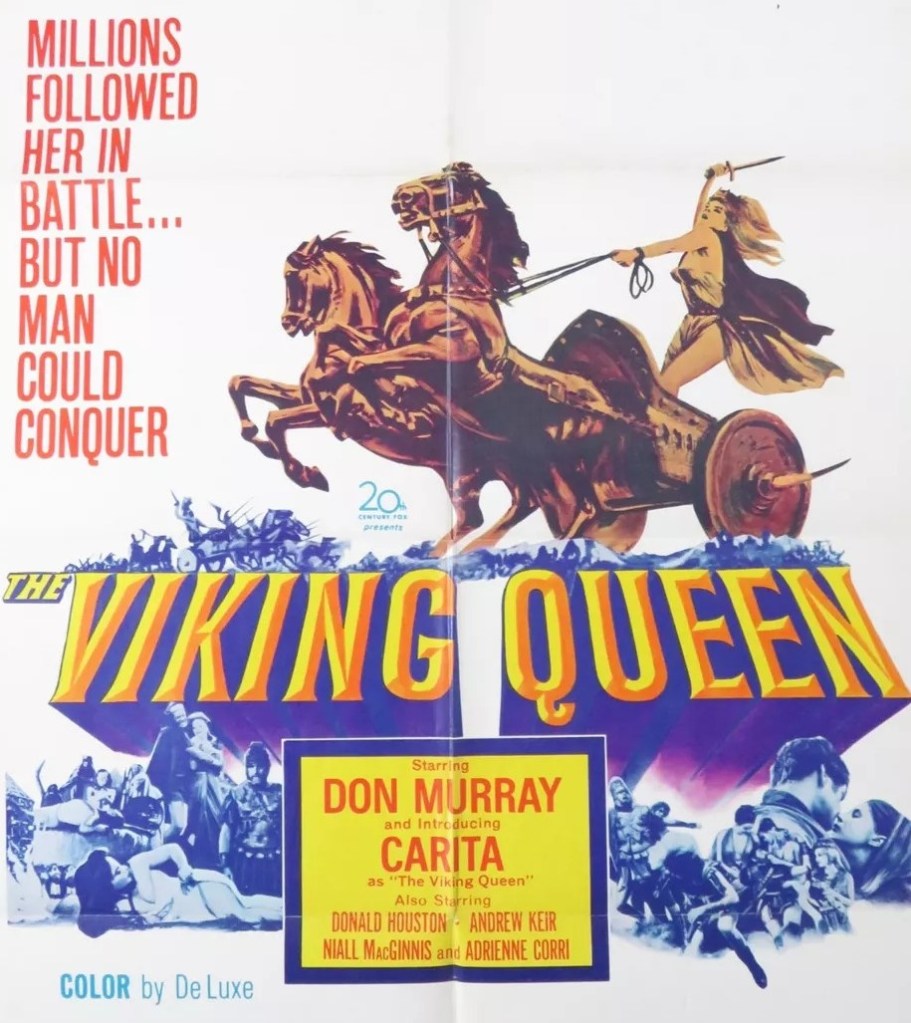
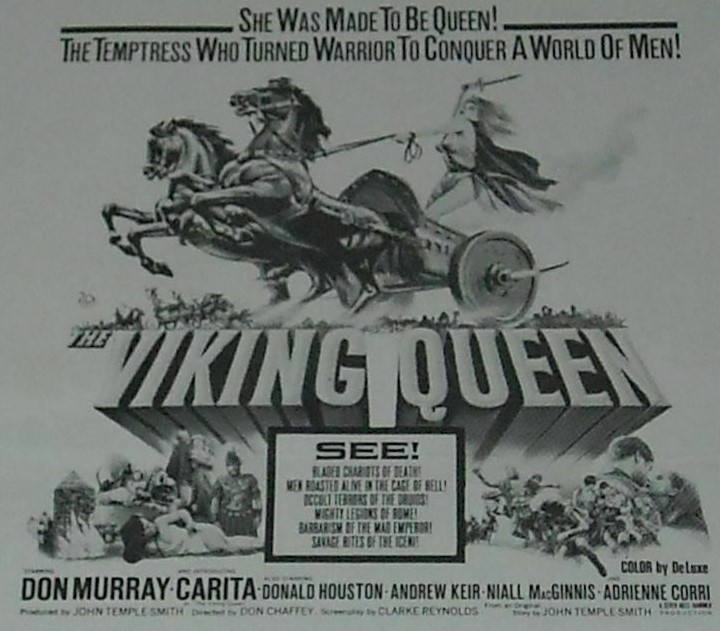
The Viking Queen (1967) ***

Politics, conspiracy, thwarted romance and historical inaccuracy take center stage in this Hammer romp that attempted to create another sex symbol to follow in the footsteps of Ursula Andress (She, 1965) and Raquel Welch (One Million Years B.C., 1966) in the shape of Finnish model Carita. Let’s put the dodgy historical elements to one side given Hollywood trampled over history all the time, but the title is a misnomer, the story owing more to folk heroine Boadicea than anyone who came from longship land.

On his deathbed British tribal king (Wilfred Lawson), against the wishes of powerful Druid chieftain Maelgan (Donald Houston), signs a peace treaty with Roman governor general Justinius (Donald Murray) against the wishes of his lieutenant Octavian (Andrew Keir). In different ways, the Druid and Octavian conspire to end the peace. Had new queen Salina (Carita), after falling in love with Justinius, been permitted to marry him that would have created a peaceful bond, but that is also prevented.

There’s a lot more sex and violence than you would have expected for the period, plenty scantily-clad slaves administering to the rich and the Romans, an extended brutal flogging sequence involving Salina, an offscreen rape, a cageful of Roman prisoners dropped into a burning pit, and when the British strap scythes onto the wheels of their chariots it’s a bloodbath. (Quite why the Romans never thought of importing their own chariots, given their popularity in the Colosseum, is never explained.) The chariots, whether in a race or battle, are the best thing about the picture, adding tremendous energy.

It takes quite a while for Salina to take up arms but when she does the film catches fire. She leads from the front, tearing through the Roman legions, and handy too with a sword. Ambushes appear the order of the day so any marching column or peaceful village soon ends up in a spot of bother.

There’s some of “what did the Romans ever do for us” with a snatch of Robin Hood thrown in – Justinius takes from the rich to give to the poor – plus religious fanaticism to stir the pot into a heady brew.  But mostly it’s hokum, if rather plot-heavy. Quite how the Oscar-nominated Don Murray (Advise and Consent, 1962) was talked into this is anybody’s guess. Carita, of course, would have believed she was on a surefire route to stardom but in fact this was her last picture. The two stars don’t really have that much to do and do it well enough. In supporting roles you will spot Patrick Troughton (a BBC Dr Who), Nicola Pagett making her movie debut and Adrienne Corri (Africa – Texas Style, 1967). Director Don Caffey (One Million Years B.C., 1966) is better at action than drama.

Directed by Don Chaffey (Jason and the Argonauts, 1963) from a screenplay by Clarke Reynolds (Genghis Khan, 1965) and the movie’s producer John Temple-Smith.

More Olinka Berova than Ursula Andress.

The Viking Queen (1967) ***

Politics, conspiracy, thwarted romance and historical inaccuracy take center stage in this Hammer romp that attempted to create another sex symbol to follow in the footsteps of Ursula Andress (She, 1965) and Raquel Welch (One Million Years B.C., 1966) in the shape of Finnish model Carita. Let’s put the dodgy historical elements to one side given Hollywood trampled over history all the time, but the title is a misnomer, the story owing more to British folk heroine Boadicea than anyone who came from longship land.

On his deathbed British tribal king (Wilfred Lawson), against the wishes of powerful Druid chieftain Maelgan (Donald Houston), signs a peace treaty with Roman governor general Justinius (Don Murray) against the wishes of his lieutenant Octavian (Andrew Keir). In different ways, the Druid and Octavian conspire to end the peace. Had new queen Salina (Carita), after falling in love with Justinius, been permitted to marry him that would have created a peaceful bond, but that is also prevented.

There’s a lot more sex and violence than you would have expected for the period, plenty scantily-clad slaves administering to the rich and the Romans, an extended brutal flogging sequence involving Salina, an offscreen rape, a cageful of Roman prisoners dropped into a burning pit, and when the British strap scythes onto the wheels of their chariots it’s a bloodbath. (Quite why the Romans never thought of importing their own chariots, given their popularity in the Colosseum, is never explained.) The chariots, whether in a race or battle, are the best thing about the picture, adding tremendous energy.

It takes quite a while for Salina to take up arms but when she does the film catches fire. She leads from the front, tearing through the Roman legions, and handy too with a sword. Ambushes appear the order of the day so any marching column or peaceful village soon ends up in a spot of bother.

There’s some of “what did the Romans ever do for us” with a snatch of Robin Hood thrown in – Justinius takes from the rich to give to the poor – plus religious fanaticism to stir the pot into a heady brew.  But mostly it’s hokum, if rather plot-heavy. Quite how the Oscar-nominated Don Murray (Advise and Consent, 1962) was talked into this is anybody’s guess. Carita, of course, would have believed she was on a surefire route to stardom but in fact this was her last picture. They two stars don’t really have that much to do and do it well enough. In supporting roles you will spot Patrick Troughton (a BBC Dr Who), Nicola Pagett making her movie debut and Adrienne Corri (Africa – Texas Style, 1967). Director Don Caffey (One Million Years B.C., 1966) is better at action than drama.

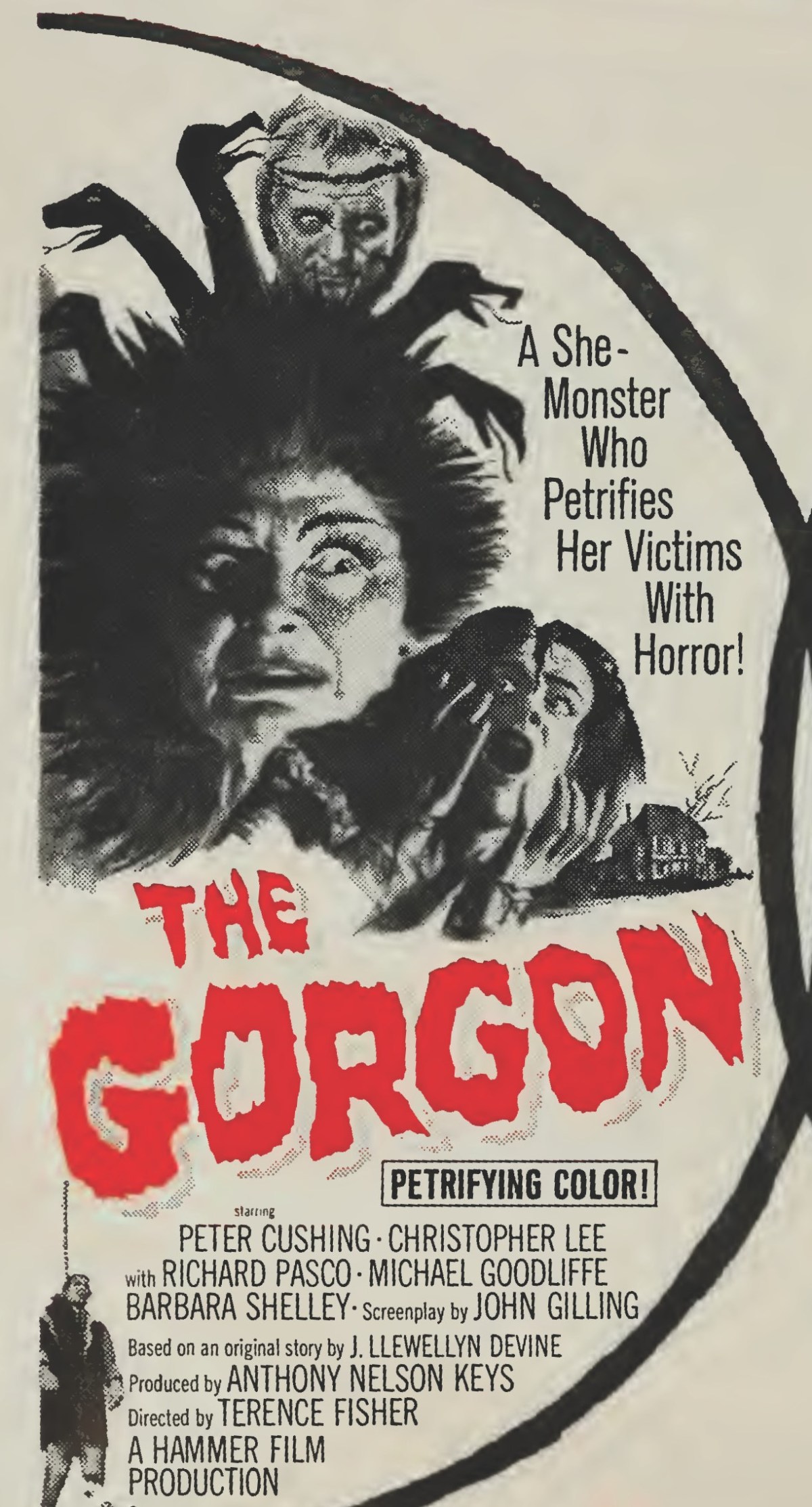
The Gorgon (1964) ****

This impressive Hammer conspiracy-of-silence slow-burner, more thriller than horror, features the triumvirate of Christopher Lee (The Devil Ship Pirates, 1964), Peter Cushing (The Sword of Sherwood Forest, 1960) and Barbara Steele (Black Sunday, 1960) in untypical roles. Lee and Cushing, of course, had locked horns before, namely in Hammer’s reimagining of the classic Dracula, with the former the charismatic fiend and the latter his nemesis.

Here Cushing is a  doctor in a an unnamed European turn-of-the-twentieth-century police state who knows more than he is letting on about seven inexplicable deaths in five years and the possibility of a 2,000-year-old myth coming to life and taking on a human form. And with quite a human side, jealous when his assistant Steele falls for a younger man. Lee is a professor coming late in the day to investigate. Steele, a gentle beauty, initially introduced as merely the love interest, becomes central to the story but without sucking up all the available horror oxygen by over-acting.   

Director Terence Fisher, who had shepherded the studio’s Dracula, Frankenstein, The Mummy and Dr Jekyll franchises through the starting gate, builds up the atmosphere with full moons, haunting voices, fog, sudden sounds, drifting leaves and an abandoned castle forever in shadow. The camera is often a weapon of stealth. Shock is kept to a minimum, fleeting ghostly apparitions and a finger falling off a corpse. Given the limitations of special effects in this era, that was a smart move. Far better to concentrate on fear of impending doom, a man knowing he is turning to stone, a woman living in terror of being taken over by the phantom. The title gives away the story somewhat – even if you didn’t know the Gorgon was a mythical monster with a headful of snakes and the ability to turn people to stone, that is soon explained. 

Death remains the trigger for action, the suicide of an artist after he has apparently murdered his pregnant girlfriend bringing his father onto the scene and then his brother accompanied by Lee. But all investigation hits a wall of silence after police chief (Patrick Troughton) refuses to instigate detection. At the heart of all the relationships is betrayal. The artist leading his girlfriend on, Cushing willing to endanger Steele, whom he professes to love, rather than revealing the truth. Even Steele spies on the brother, with whom she is falling in love, in order to gather information for Cushing. 

Forgive the pun, but Steele steals the picture. An amnesiac, a victim and finally the lure, she remains enigmatic, a whisper of a woman. It is a haunting portrayal far removed from Hammer’s traditional cleavage queens. This is a very human character who nonetheless must stand guard over herself. Cushing embroiders his character with little touches, smoking a cigarette in a holder, for example, but Steele’s character, her distrust of herself, shows in every move she makes.

Many of the films from the 1960s are to be found free of charge on TCM and Sony Movies and the British Talking Pictures as well as mainstream television channels. But if this film is not available through these routes, then here is the link to the DVD and/or streaming service.

Discover WordPress

A daily selection of the best content published on WordPress, collected for you by humans who love to read.

The Atavist Magazine

by Brian Hannan

WordPress.com News

The latest news on WordPress.com and the WordPress community.