Eagles over London (1969) ***

Presumably intended to capitalize on/rip-off the same year’s big-budget roadshow The Battle of Britain manages to cram in a pack of action beginning with a tank ambush in Normandy, the Dunkirk evacuation, the Battle of Britain, rooftop shoot-outs, ending up with an audacious attack of RAF High Command by a team of German saboteurs. As notable for technical achievement, split screen – sometimes split diagonally or quartered – in the manner of The Boston Strangler (1968) and The Thomas Crown Affair (1968), shots through various tiny holes, scenes filmed overhead, and a dazzling swirling camera sequence that would normally presage intimacy but here means death.

Somehow manages to squeeze a surprising number of dramatic moments focusing on relationships, a brief nod to homosexuality, and emulating Fraulein Doktor (1969) in giving the Germans credit for astute and effective espionage. Obvious use of stock footage for the air fight sequences, but you wonder what else has been cobbled out of the vaults given the preponderance of scenes requiring massive numbers of extras. Throw in Hollywood veteran Van Johnson (Divorce American Style, 1967)  and a particularly good Cockney sergeant (Renzo Palmer) and it hardly lets up.

So, Captain Stevens (Frederick Stafford) heads up a unit delaying the German blitzkrieg in France in 1940. The Germans, led by Donovan (Francisco Rabal), meanwhile, are in disguise, assuming the identities of dead British soldiers with the intention of infiltrating Britain and destroying its radar installations. Inadvertently, Stevens saves Donovan’s life, thus giving the German accepted entry into British high command. Equally inadvertently Stevens allows the German access to his girlfriend Meg (Evelyn Stewart) who needs a shoulder to cry on. Donovan has his own girlfriend, Sheila (Teresa Gimpera) on tap, an undercover agent working as a barmaid, well-trained at collecting loose talk and seduction.

Elements of giallo keep popping up as the Germans need to embark on a murderous rampage to continue to acquire new identities to keep ahead of the pursuing investigation, one strangulation taking place in a gay sauna. Every now and then we pop into RAF High Command where Air Vice Marshal Taylor (Van Johnson) is helping thwart the German aerial attacks and in the end, since more bodies are required, elects to go into battle himself.

The small screen allows laughable moments – model airplanes crashing into the sea, cardboard radar installations toppling – to pass almost unnoticed since most of the rest of the action is well rendered, the rooftop scene especially, and the other various shoot-outs where – shock to the system – the British are constantly outwitted and outgunned.

Mostly, you’ll note how stylish a concoction this is given the low budget. Excellent sex scene against the background of exploding bombs, the duping of our hero by the enemy, and one terrific scene where Sheila is deemed surplus to requirements, calmly accepting her fate on condition that it’s her lover who pulls the trigger.

This would have been solid support material in English-speaking countries but most likely a main feature in its Italian homeland. Might have even done better if distributors waited until Afred Hitchcock’s Topaz (1969) appeared since he recruited Frederick Stafford as his leading man. Stafford was always under-rated but he keeps this afloat, though the Germans have the more interesting roles, especially Francisco Rabal and Teresa Gimpel. Evelyn Stewart (The Whip and the Body, 1964) has a smaller part.

Not content with introducing far more style and, shall we say, flamboyance, than the material might suggest director Enzo G. Castellari (Any Gun Can Play, 1967) has the audacity to end by using Winston Churchill’s “the few” speech to halt the traffic so the British lovers can catch up with each other.

A classic example of what an interesting director can do with what in other hands would be more mundane material. Not quite sure why it took five screenwriters.

Surprisingly fun watch overloaded with style.

REVIEWED PREVIOUSLY IN THE BLOG: Frederick Stafford in Topaz (1969), Evelyn Stewart in The Whip and the Body (1964), Van Johnson in Divorce American Style (1967).

Ten Little Indians (1965) ***

This is more like it. Classic Agatha Christie mystery told in classic fashion but devoid of either of her major sleuths, Hercule Poirot or Miss Marple, and set in the grander equivalent of the country house locale that had become something of a trademark. Here it’s the kind of castle perched atop a mountain, accessible only by cable car unless you have mountaineering skills, that you would need the combined services of Clint Eastwood and Richard Burton to affect a rescue, and as with Where Eagles Dare (1968) the conditions are distinctly wintry.

Ten strangers, including the two servants, have been invited to this retreat by the mysterious Mr Owen. They soon learn they are cut off, telephone lines down, cable car out of commission for a couple of days, nearest village a straight drop 15 miles down a perilous cliff.

All they have in common, as they discover via a taped message delivered by their host, is that they all got away with murder or at the very least a dubious death. There is a private eye on hand, former cop Blore (Stanley Holloway), but he’s lacking in the little grey cells that Poirot put to such clever use in such circumstances. So, like a troupe of actors let down by some stage entrepreneur, they have to get the show on the road themselves, a combined effort to solve the problem.

Not so much why they are gathered here, but why they keep on getting bumped off, and rather in the fashion of the titular song. The movie business wasn’t awash with serial killers though this decade would see nascent interest in this sub-genre, witness Psycho (1960) and The Boston Strangler (1968). But Ms Christie mysteries never really seemed to get going until the death toll had reached multiple figures.

The good element of this kind of movie with a large cast is that each character gets a moment in the sun, here that spotlight largely concerned with what crime they committed for which they were never truly punished. Pop singer Mike (played by pop singer Fabian) gets the ball rolling, explaining that his only punishment for killing someone while driving under the influence was a temporary withdrawal of his license.

And so it goes on, everyone wondering who will be next to be despatched and going from the initial conclusion that Owen is responsible and is hidden somewhere in the house to the obvious one that Owen is one of them. I have to confess I’m easily gulled by the murder mystery and I hadn’t reached that conclusion myself.

The movie’s not necessarily filled with that kind of twist – although there certainly are a good few, some people not as guilty as they might appear, not quite who they appear to be –  more you glancing at the cast list and wondering, by dint of billing or box office pull, who will be next for the chop and unless the director has got the Hitchcock vibe it’s not going to be one of the leads.

So it’s a choice of Hugh Lombard (Hugh O’Brian), secretary Ann Clyde (Shirley Eaton), actress Ilona Bergen (Daliah Lavi), General Mandrake (Leo Genn), Judge Cannon (Wilfrid Hyde White), Dr Armstrong (Dennis Price) and the aforementioned Blore plus servants the Grohmanns (Marianne Hoppe and Mario Adorf). And this isn’t your standard serial killer either with a constant modus operandi that will eventually, through standard detection, trap him or her. Instead, variety is the key. Death by fatal injection, knife, poison, slashed rope.

As the numbers whittle down, and you even feel sorry for the actions of some, the actress, for example, whose husband committed suicide when she left him, the tension mounts. You won’t be on the edge of your seat because there are just too many characters involved for you to become overly concerned with their plight but it’s still has you on the hook. You do want to know whodunit and why and you can be sure Ms Christie, as was her wont, will have some clever final twist.

At least, unlike the later variations on the genre, nobody’s been bumped off because they are too fond of sex, and the violence itself is restrained, almost dignified, and there’s no sign of gender favoritism.

All in all, entertaining stuff, though since by now this kind of murder mystery, given we’ve been through various iterations of Poirot – Albert Finney, Peter Ustinov, Kenneth Branagh et al, not to mention numerous Miss Marples – a lot of this feels like cliché (though that’s a bit like a contemporary audience considering John Ford’s Stagecoach old hat, not realizing this was where many of those western tropes were invented or polished to a high level). And I had to say I had a sneaky hankering for some of the out of left field goings-on of The Alphabet Murders (1965).

Sad to see Hollywood not taking advantage of Daliah Lavi’s acting skills, under-estimated in my opinion after her terrific work in The Demon (1963) and The Whip and the Body (1963). But then this wasn’t Hollywood calling but our old friend producer Harry Alan Towers (Five Golden Dragons, 1967) who specialized in dropping a biggish American name into a B-list all-star-cast.

George Pollock, who helmed this decade’s four Miss Marple movies, enjoys keeping the mystery alive without resorting to a central know-it-all. Everyone cast does what they’re expected to do. Towers wrote the screenplay with his usual partner Peter Yeldham.

Worth considering alongside The Alphabet Murders, but stands up well on its own.  

PREVIOUSLY REVIEWED IN THE BLOG: Hugh O’Brian in In Harm’s Way (1965), Texas: Africa Style (1967); Daliah Lavi in The Demon (1963), The Whip and the Body (1964), Lord Jim (1965), The High Commissioner (1968), Some Girls Do (1969).

The Alphabet Murders (1965) ***

Just about the barmiest idea ever. Just about works. Tony Randall (Bang! Bang! You’re Dead / Our Man in Marrakesh, 1966), a cross between David Niven’s younger brother and a distant relation of Inspector Clouseau, would be nobody’s notion of a perfect Hercule Poirot. But back in the day, Agatha Christie’s famed detective was not a hallowed concept.  

In fact, in movie terms he was pretty much a nobody, not a single big screen appearance in three decades, the forgotten man of cinema sleuths, not a patch on Sherlock Holmes or Maigret who had enjoyed umpteen iterations. So that character, if you like, was there for the taking, up for grabs, not one so sacrosanct it was imprinted on audience minds.

You could do what you liked as long as he had a moustache, spoke with an exaggerated foreign accent and every now and then pointed to his head and mumbled something about little grey cells.

MGM had had some fun and box office success with Christie’s other famous criminal creation Miss Marple in a quartet of low-budget pictures in the light comedy vein starring Margaret Rutherford beginning with Murder, She Said (1961) and clearly believed the same recipe would work wonders with a character generally considered too stiff to work at all.

This is a chucklesome broth, some astute detective work mixed up with all sorts of sight gags. Frank Tashlin (The Glass Bottom Boat, 1966) is at the helm and the writing team of Jack Seddon and David Pursall who reimagined Miss Marple adapt the mystery.

It kicks off with the very contemporary trope of talking to the camera as real-life actor Tony Randall walks off an MGM set and transforms himself into Poirot. Hastings (Robert Morley), who in the novels is more an amiable companion, a kind of Dr Watson, is here portrayed as somebody high up in the British Secret Service trying to whisk Poirot out of the country. Mostly, he acts as a comedy foil.

After being attacked by a beautiful masseuse, Poirot finds himself on the trail of a serial killer who conveniently leaves an ABC London Guide at the scene of the crime and kills in alphabetical order (with a bent for alliteration) which would make the attempt on the detective’s life a bit of an aberration (that even Poirot doesn’t apparently notice). Anyway, the first victim is an Aquabatic, the second Betty Barnard (Grazine Frame). Poirot is on the case by the time the third likely victim Sir Carmichael Clarke (Cyril Luckham) hoves into view.

As luck would have it, a fourth contender Duncan Doncaster (Guy Rolfe) is both psychiatrist to chief suspect Amanda Beatrice Cross (Anita Ekberg) and lover of Clarke’s wife Diane (Sheila Allen). Inspector Japp (Maurice Denham) of Scotland Yard and Poirot are invariably at cross purposes.

The detective has a special set of skills, including cooking to restaurant standard, being able to vanish in a trice, horse-riding, and knocking down two sets of ten-pin bowling pins at the same time.  

That the comedy works is mostly thanks to the likes of Airplane (1980) which has accustomed contemporary audiences to barmy, almost literal sight, gags, faces elongated via shaving mirrors, while a cop elucidates a clever plan we are only shown the back of the map he’s pointing to, a conversation takes place over the sleeping body of a snoring wife, a business card tossed nonchalantly onto a desk ends up in a coffee cup, Hastings is trapped in the trunk of a car with a comely wench

You still get your London tourist features – the docks, bus stops, military parade, horse riding in Hyde Park – but these are invariably set-ups for sight gags. A naked Hastings invades the parade, fog shrouds the docks, Poirot’s horse leaps over (wait for it!) a park bench.

This version of Poirot might be heresy to some, and too jaunty by half, but there’s too much serious detection – and some classic Poirot intuition – to dismiss it as entirely a spoof, and I spent too much time chortling to dismiss it as a waste, so it lands in an odd halfway house, but I suspect that’s very much where Tashlin intended it to land.  

Worth a look if only to suspend your disbelief.

PREVIOUSLY REVIEWED IN THE BLOG: Frank Tashlin’s The Glass Bottom Boat (1966); Tony Randall in Let’s Make Love (1960), Lover Come Back (1961), Send Me No Flowers (1964), Bang! Bang! You’re Dead (1966); Anita Ekberg in 4 for Texas (1963); Robert Morley in Oscar Wilde (1960), Nine Hours to Rama (1963), Hot Enough for June (1964), Of Human Bondage (1964), Topkapi (1964), Genghis Khan (1965), The Loved One (1965), A Study in Terror (1965), Some Girls Do (1969).

The Corrupt Ones / The Peking Medallion (1967) ****

Non-stop action as spy Cliff Wilder (Robert Stack) battles a variety of crooks in Macao on the Chinese border as they seek to recover the legendary Peking medallion. Wilder hails from the James Bond school of espionage, duty bound to kiss every girl he meets. He might wonder at their compliance until he realizes they are only after his knowledge of the missing medallion.

The violence is criminally brutal – punch-ups, gunfights, samurai swordfights, murder and torture by blowtorch and acid and being dragged behind a motorboat. The string of sexy women is matched by handsome men, Brandon (Christian Marquand) and Danny (Maurizio Arena) in addition to Stack. The thriller pitches helter-skelter through nightclubs, casinos, caves, temples and palatial mansions, the pace only slowing down for, naturally, a scene in a stately rickshaw.

As well as Wilder who briefly – and unknowingly – has the medallion in his hands, others in the hunt include Lilly Mancini (Elke Sommer), wife of Danny who had passed it to Wilder before being killed. Mancini is on the wrong side of the femme fatale equation. Once Wilder  is wise to her seductive charm,s he quips, “Maybe you’re telling the truth but I can’t trust you.”

Also in hot pursuit are gangster Brandon and a Chinese mob headed by Tina (Nancy Kwan) That’s on top of a corrupt cop (“I have never feared death, only poverty” is his mantra) who doesn’t care who wins the prize as long as he gets his share. Double cross is the order of the day, alliances forged then broken. The action never stops long enough for one of those tension-building scenes of which Alfred Hitchcock or imitators like Stanley Donen (Charade, 1963, and Arabesque, 1966) were so fond.

Wilder faces danger with a quip, a kiss or gritted teeth, an old-fashioned tough guy without the James Bond self-awareness. He carries out his manly duties until his brain kicks in and he realizes this isn’t a spy picture after all but a genuine treasure hunt with clues that have to be deciphered. After that, the pictures sidetracks down another route. For a moment, the movie seems to have lost the plot. But then all hell breaks loose and we are back on the safe ground of fistfights, double-crossing and shooting.

Fans of improbable storylines, exotic settings, action, interesting bad guys and twists and turns will love this. How can you fail to love a movie with a samurai vs camera tripod swordfight?

An exemplary cast for this kind of malarkey, a French-Italian-German co-production with English as the mother tongue. Scarcely creditable that Robert Stack, in his biggest picture since The Untouchables tv series (1959-1963), was once Oscar-nominated given subtlety is never required. Nancy Kwan (The World of Suzie Wong, 1960) steals the show as the villainess but she’s run close by Elke Sommer (The Prize, 1963). In supporting roles are Werner Peters (Istanbul Express, 1968) and Christian Marquand (The Flight of the Phoenix, 1965).  

Might seem a considerable change of pace for director James Hill after Born Free (1966) but that’s only if you ignore his work on the equally complicated A Study in Terror (1965).  Screenplay punched out by Englishman Brian Clemens (And Soon the Darkness, 1970), Hungarian Ladislas Fodor (best know for the Dr Mabuse series) and Harald Bloom, his only known credit.

Great fun.

PREVIOUSLY REVIEWED IN THE BLOG: Robert Stack in Is Paris Burning? (1966); Elke Sommer in The Prize (1963), The Art of Love (1965), The Money Trap (1965), The Oscar (1966), The Venetian Affair (1966), Deadlier than the Male (1967), They Came to Rob Las Vegas (1968) and The Swiss Conspiracy (1976); and James Hill’s A Study in Terror (1965); Nancy Kwan in Tamahine (963), Fate Is the Hunter (1964), The Wild Affair (1965).

Shock Corridor (1963) *****

Sam Fuller’s (The Naked Kiss, 1964) masterpiece, targeting every conceivable taboo subject – incest, sexual abuse, racism, the atomic bomb – under the guise, as with the later Shock Treatment (1964), of a sane man entering a mental asylum with the aim of uncovering criminality. In this case, uber-ambitious journalist Johnny Barrett (Peter Breck), with his eyes on a Pulitzer Prize, undergoes training from psychiatrist Dr Fong (Philip Ahn) to pass himself off as insane in a bid to find the killer of an inmate called Sloane.

Apparently, in those days in the U.S., incest, while viewed as sexual deviation, was also considered a mental illness. So when Barrett’s girlfriend, stripper Cathy (Constance Towers), turns up at a police station masquerading as his sister and complaining of sexual molestation, he is packed off to the nearest asylum. That he passes muster is not only down to his acting (or over-acting) but to the release of his own inner demons.

Tormented by jealousy and insecurity, he imagines Cathy, dancing as a demonic miniature in his dreams, her mouth a “lush tunnel,” will abandon him for another man or just play the field, no shortage of unsuitable suitors in her line of work. For her part, Cathy finds it hard to maintain the pretence, and clearly starts to crumble under the pressure, almost giving the game away, and soon enough almost compelled to do so after seeing the impact of incarceration – and its various treatments including electric shock therapy – upon her lover.

But what a difference a director with an agenda and a knack for stunning imagery makes. While Denis Sanders with Shock Treatment (1964) and George Englund in Signpost to Murder (1964) take the melodramatic tack to mental illness, which robs the subject matter of some of its power, Sam Fuller takes a two-fisted approach. Sure, there are shades of noir in the lighting, and the internal corruption of personality, but this is a world twisted upside down, filled with intentional and accidental malevolence, often from people who don’t know the difference.

The simmering violence can explode from a minor tiff over vitamin pills, or from the wrong man entering the female quarters at the wrong time, or from deep-seated hatred, while torture is visited upon inmates from the best of intentions as psychiatrists attempt to subdue or quell the worst instincts. Best of all is the depiction of obsession. People are only committed to an asylum because they are a danger to themselves or others, in other words when what is going on in their minds has got out of control and they can think of little else but the thoughts that consume them and are condemned to play out again and again perverse versions of reality.

So we have the patient constantly singing opera who likes to stab inmates with his hands and stuff their mouths full of chewing gum, another obsessed with hide-and-seek, a third with the Civil War, yet another who steals pillowcases in order to turn them into Ku Klux Klan masks. Mental warping renders some relatively harmless and others lethal. But there are also those with nothing left on the surface, reduced to catatonic state, arms stretched out, bodies draped over a bed or a chair, and you can guess that those who still act out will eventually end up silent, helpless and rigidly comatose.

Soon you realize, as Barrett clearly does not, the futility of attempting to carry out an investigation under these circumstances. He has three witnesses to pursue, none of whom a prosecutor would ever consider putting into the witness box in a court, and eventually of course Barrett does find the murderer – the victim killed for threatening to expose an attendant preying on female patients – but by that point his mind is so jumbled up by a combination of treatment and his own psychiatric problems that he either can’t locate the name in his memory or finds himself struck dumb and hallucinating.

When he is mauled by a pack of predatory females he can just about retain his dignity, but once he visualises water pouring in from the ceiling and almost drowns in the subsequent flood, and struck by imaginary lightning to boot, he has only a few shreds of his personality left.

This is brutal stuff and even now an incredible shock to the cinematic system so you wonder how it ever managed to get released. In retrospect, not so much an expose of the treatment methods in asylums as an insight into the power of mental illness once it exerts control on hapless humans.

You won’t forget the long corridor either empty or filled with individuals bent out of shape, or Barrett battered by torrential downpour or buried under a mob of savage women, or the African American white supremacist hunting for a victim or the agony of the outsider Cathy forced into playing this terrible game.

One of those films that creates its own visual grammar. I remember the rediscovery of Sam Fuller by the cognoscenti, a director whose work stood so far outside the accepted masters of cinema like John Ford or Sergei Eisenstein or Howard Hawks that he was the very definition of cult. Critics (Phil Hardy in 1970 and Nicholas Garnham in 1972) even had the temerity to write books about him as if he was fitting company for directors who produced acknowledged masterpieces and he was lionised, in the words of Peter Cowie, “by a posse of film commandos at the Edinburgh Films Society” who hailed him as a cinematic god.

All that acclaim, driven by the French New Wave, was hard to accept because his movies were impossible to find outside of a festival retrospective, unlikely to be screened on television and in the days before VHS and DVD just nowhere to be seen. But eventually, as the books and critical articles accumulated and the films became more readily available, the attraction was obvious.

Without much in the way of Stuart Whitman’s sensitivity in Shock Treatment, Peter Breck (The Glory Guys, 1965) delivers a stunning performance, perhaps all the more so because he is blatantly on the make at the start. There’s nobody to equal Lauren Bacall for ice-cold heart in the later film, but Constance Towers (The Naked Kiss, 1964) quivering with vulnerability runs her close. Special mention in the acting stakes for Hari Rhodes (Mirage, 1965) as Trent.

Ever the multi-hyphenate, Fuller dreamed up the whole thing.

A must see.

PREVOUSLY REVIEWED IN THE BLOG: Sam Fuller’s Underworld USA (1961) and The Naked Kiss (1964); and Constance Towers in The Naked Kiss.

Shock Treatment (1964) ***

The Stuart Whitman (The Mark, 1961) retrospective sees another great performance as an inmate in a mental institution but perhaps put in the shade by Roddy McDowall (5 Card Stud, 1968) as a murderous gardener and Lauren Bacall, in her first movie in five years, as a psychiatrist in the Nurse Ratchet mold.

Though killing his wealthy boss earns Martin (Roddy MacDowall) a return to the mental asylum, the dead woman’s executor Harley Manning (Judson Laire) believes the gardener is faking it and has hidden a million dollars he says he burned. So Manning hires actor Dale (Stuart Whitman) to fake insanity, thus gaining entrance to the institution and finding out whether Martin is pretending.

Dale is pretty good at the mad act and appears initially to fool resident psychiatrist Dr Beighley (Lauren Bacall). On the other hand, he is sane enough to develop a relationship with another inmate Cynthia (Carol Lynley) whose rejection of men is equally an act.

Turns out Beighley is not fooled by either Martin or Dale. The former she takes under her wing, hoping to discover for herself the missing million bucks, the latter she had sussed out from the start, pointing to the obvious flaws in his role playing. She has a bunch of nasty medicines up her sleeve and when that doesn’t pipe Dale down she has the recourse of sending him in for electric shock treatment.

That doesn’t seem to go so far as the lobotomy in One Flew over the Cuckoo’s Nest (1975) but it renders our hero helpless, or put him out of the picture long enough for her to engage in her unscrupulous scheme of hypnotising Martin to get to the truth.

In reality, this isn’t so much an expose of the goings-on in mental hospitals so much as portrait of femme fatale going overboard. You might think Beighley would be better off getting treatment herself rather than dishing it out so deluded is she in convincing herself that Martin is sane. And there’s an absolutely fabulous pay-off in that department.

For the rest of it, she is the antithesis of the liberal psychiatrists we have mostly seen during this decade, the ones that try to find the good in their patients, helping them along to sanity, or at the very least getting them to understand the depth of their problems. That Beighley and Dr Fleming in Signpost of Murder (1964) conspire to give psychiatrists a bad name is an anomaly when mostly, as with The Mark (1961), they are of an encouraging rather than venal disposition.

Perhaps it was the very nature of the gentle psychiatrist as depicted in Hollywood that gave vent to movies that showed the darker side of the mental institutions where inmates are not only robbed of their freedom but are powerless to prevent being treated either as guinea pigs or being drugged to just shut them up or lobotomised to rid society of their unnerving instincts.

That said, seeing the patients strapped down in gurneys or incapacitated in other ways while the psychiatrist plays God is pretty strong stuff, even viewing it now nearly sixty years later. Some of the other inmates are cliché material, but by concentrating on the three characters with charisma, the enigmatic gardener, the actor attempting to put on the performance of his life and the charming duplicitous psychiatrist there’s enough meat for an entertaining drama with a powerful twist.

Of course, one of the tropes of any prison drama is that someone is innocent of their perceived guilt, and here only Dale really fits that bill, but equally since the rules relating to incarceration in this facility differ entirely from those of a prison, there is every chance that someone sane could be locked up for ever, especially if a powerful psychiatrist deems it so.

Stuart Whitman certainly plays around with his screen persona, the dandified actor entrancing a courtroom and police station with his performance, but fooling them proves easier work than duping the psychiatrist so there’s a couple of great scenes where he realizes this could be a trap of his own making – and there’s a twist in his tale, too. You might well  accuse Roddy  McDowall hamming it up, but actually, although he appears extrovert in fact he is introverted, concerned only with his flowers and plants, his violent side only emerging when that existence is threatened.

But Lauren Bacall (Harper, 1966) steals the show, cleverly concealing her true nature behind a convincing professional front and undone by greed.

Denis Sanders (One Man’s Way, 1964) directs from a screenplay by Sidney Boehm (Rough Night in Jericho, 1967) based on the bestseller by Winifred von Atta.

Riveting performances drive this one more than the expose elements.

PREVIOUSLY REVIEWED IN THE BLOG: Stuart Whitman in Murder Inc (1960), The Mark (1961), Rio Conchos (1964), Signpost to Murder (1964) and Sands of the Kalahari (1965); Joanne Woodward in From the Terrace (1960) and A Fine Madness (1966); and Carol Lynley in The Cardinal (1963), The Pleasure Seekers (1964), Harlow (1965) Bunny Lake is Missing (1965); Danger Route (1967) and The Maltese Bippy (1969).

Signpost to Murder (1964) ****

Very tricky home invasion thriller. And not just from the narrative perspective and my guess is you’ll work out what’s going on long before the end, but that’s deliberate, you’re meant to, because the final twist isn’t plot but emotion, unexpected pent-up release.

Deftly directed by George Englund (The Ugly American, 1963), distinguished camerawork, long shot and overhead put to exceptional use. Biggest surprise is Stuart Whitman (Rio Conchos, 1964) taking the acting plaudits from Oscar-winner Joanne Woodward (A Fine Madness, 1966).

Slightly throws you because the interesting questions it asks about the treatment of the insane and the rehabilitation of criminals could, in retrospect, just be a contrivance to serve the plot. Basically, it’s a one-set show but thrumming continually in the background is a working water mill, the location being an English mill house belonging to American Molly (Joanne Woodward) awaiting the return of her husband from a business trip to Amsterdam. She’s got quite the hots for her lover because she’s planning to greet him at the door all decked out in a swimsuit.

But that’s in the future, takes 20 minutes of this exceptionally short picture (just 78 minutes) before we get to her. First of all, we’ve got the set-up. Confined within an asylum surrounded by high electric fences is wife killer Alex (Stuart Whitman), five years into his stretch, whom resident psychiatrist Dr Fleming (Edward Mulhare) not only believes is sane but also innocent, the convicted man having no memory of killing his wife and, as it later transpires, no motive.

The asylum officials ain’t so crazy on Fleming’s theories but by this time the good doctor has fed Alex a line, a loophole in English law dating back to the Victorian Lunacy Act, which, bizarre though it may seem, allows a man who escaped from an institution and remained free for 14 days to be permitted a re-trial.

When Fleming’s request for leniency is turned down, Alex escapes, heads for the river to elude hound dogs picking up his scent and ends up at the mill. The siren has sounded so everyone in the village is on the alert. From his cell high on a hill, Alex has previously scoped out the village, and with the help of Fleming, identified various houses, and from his own observations learned about the community, such as that the mill owner is handy with a shotgun, killing rabbits with abandon.

The original play enjoyed a successful tour of the British provinces after a West End run,
though the characters skewed older in the stage version,
Margaret Lockwood approaching 50, Derek Farr just past 50.

So it’s Alex who is greeted by the swimsuit. And then it’s the familiar duel of minds. Though we’ve just seen him knock out the doctor and an electrician, when Alex enters this house he’s a changed man. Sure, he has the shotgun but he’s planning to only hide out for a night, till the search expands away from the village and he can sneak through the gaps and hide out for the fortnight necessary to implement the loophole.

We know he’s not exactly a maniac, or a tough guy in the Lee Marvin mold, because we’ve seen what a sensitive and intelligent character he is through his conversations with Fleming, and he’s trusted enough by the officials to be allowed an axe to chop wood. But Molly doesn’t know that. She’s expecting a maniac and is thrown when he’s calm and gentle, not to mention tender.

He seems to shed nine lives when he enters this realm of domestication. She’s not half as confident as her sophistication might suggest. Her marriage has not brought her the comfort or the love she expected. The countryside is shrouded in fog, so her husband’s not going to be back till morning, which removes one complication, but adds another, a growing feeling that they are kindred souls, lost and vulnerable.

His story appears to make sense to her and when he espies a corpse trapped on one arm of the wheel it’s she who comforts him when he thinks its imagination run wild and then in the more obvious sense they console each other.

Comes the twist. That was a real body. Her husband.

This where you think. Uh-oh. The old story of the femme fatale and the patsy and you wonder were any of her feelings true or was she just acting the part to gull him. So, when the police and Dr Fleming arrive, the finger is most obviously pointed at a man who has no memory of killing before. Remember, this is in the days when the simple detection methods available now would have easily cleared him, so you have to go with the flow.

When Alex defends himself and declares that they slept together and sounds so utterly confused, one of the cops, for no desperate reason it has to be said in the absence of the usual clues on which we rely, thinks something foul is afoot.

And it’s her who confesses. She had expected a maniac not a gentle man who touched her soul in a way that neither husband nor lover, Dr Fleming, managed. Totally turns the picture on its head. And instead of the usual plethora of clever sleuthing, we have a resounding emotional climax.

Full marks though to George Englund, not just for the outstanding use of the camera, creating distance between characters even in intimate situations, one great shot where through separate windows Alex and Molly stare at each over the rolling watermill, and to offset the tension some excellent  comedy as the Yank comes to terms with British tradition after a death. He cleverly opens up the original stage play by Monte Doyle, and there’s a strong hint of irony in the opening section which sees a car-load of kids point to two loonies on the hill. We quickly learn only one is designated as such, Alex, but the other one, the sane one, Dr Fleming, turns out to be every bit as mad.  

But this is Stuart Whitman’s tour de force. He had earned an Oscar nomination for The Mark (1961) but appeared to exert more box office appeal when he went all square jaw in action pictures. I’m not the first observer to mention that one of the key points in a performance is an actor’s reaction to their surroundings. Like you or me, they should look round. I noted that with David Janssen in The Swiss Conspiracy (1976). But here is an even better example. When Alex sees the lounge and all the elements of domesticity, he’s not just having an ordinary look, he’s soaking it up and it’s taking him back to the life he lost, one he can’t understand why it was taken away from him. You look at a modern film. The camera does all the work. The director uses a habitat to guide you into the mind of the inhabitant but rarely, as in the old days, to allow reflection on the part of a visitor.

There’s a huge range of emotion for Whitman to pack in, not to mention a convincing British accent, and he does it all. Woodward nearly steals the picture away from him with that final, unexpected, scene. Molly knows that by confessing she’s about to lose the love of her life and if she doesn’t be condemned to live with a man who doesn’t come close.

In the stage play Molly was clearly the top role and always attracted the bigger star. Same here, Woodward is billed above Whitman. The last scene is a peach for any actress. But Whitman’s is the more difficult role.  Should maybe be a split decision but I come out for Whitman.

Superb minor gem.

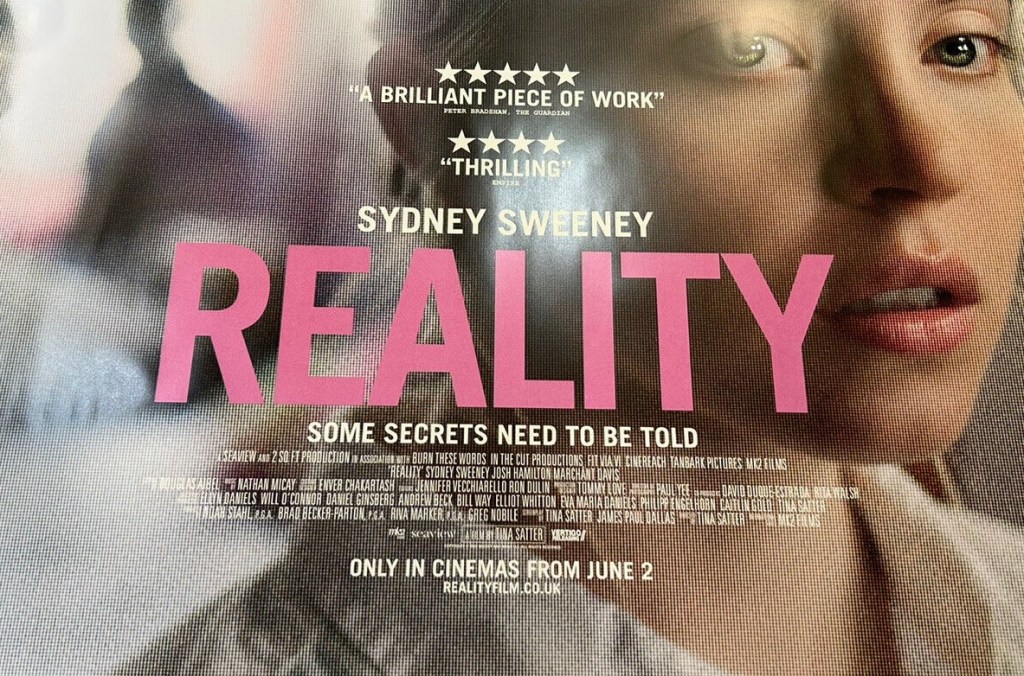
Anyone But You (2023) **** – Seen at the Cinema

Hey, I’m going back to Anyone but You because I went back to see it again. Blame Oppenheimer, or its lack thereof –  the reissue had been scheduled for showing on Monday but was pulled presumably because it was already on streamer and not enough customers showed up over the weekend – so I took a chance on this substitute. If you recall, I’ve already reviewed it and gave it three stars. But on re-view, I’m upping that to four stars. As is often the case on first viewing, you get snagged down by the narrative, but for second viewing, once you know which way it’s headed you can sit back and enjoy the other ingredients.

I’m not alone in thinking this has been under-rated – in the U.S., box office has gone up by over 11 per cent rather than down in the third weekend of release – and, in fact, the take has increased every weekend – indicating strong word-of-mouth.  

The rom-com has kind of faded away from the glory days of Tom Hanks-Meg Ryan / Richard Gere-Julia Roberts / Hugh Grant-A.N. Other  and if you find it at all these days it’s likely to be wrapped in an adventure or thriller. In truth it’s been on a sticky wicket for over five decades when studios preferred straight-out romance or straight-out comedy rather than a hybrid, but more importantly because, for it to work, you need stars of equal importance who can generate that extremely rare onscreen chemistry.

And not either male or female stars so big that nobody cares who plays the leading man or leading female opposite them. While movie pairings ain’t so unusual – think Tracy-Hepburn, Rock Hudson-Doris Day, Burton-Taylor, Bogart-Bacall, Clark Gable-Lana Turner – it’s worth remembering that it’s only the first two of these teamings that fitted the rom-com mold, the rest being more high octane dramas or thrillers.

Most comedies that have hit the contemporary button have been raunchy boozed-up affairs whose characters have been waylaid by self-destructive tendences, insecurity and body shaming. This one is a throwback to Hollywood gloss. Nobody’s out of work, even temporarily, nobody’s poor, nobody’s moaning about their bodies, nobody’s out of their mind on drink or drugs. The male members may have a predilection for displaying torso, ass and, er, members, and the gals are equally fit, prancing about as likely as not in bikinis or even just the bottom half.

It’s woke enough, it’s a gay wedding they’re attending, they all do yoga and are fit enough to undertake a hike into the wilderness, you can take a break (a la Friends) from a relationship and hook up with someone else, and the worst that can be said is that the older guys like an occasional joint while someone takes peppermint tea with sugar and the male lead, despite being buffed-up-to-hell, is scared of flying and swimming. But it’s a very nifty script, with a bucket of little character-defining cameo moments, the brides-to-be compete to place plates in the correct position on a table, one boyfriend too keen on booze, helicopter parents.

And you could say it is as contemporary as they come, pivoting on effectively tittle-tattle, what otherwise might be an indiscreet comment on social media that turns the world upside down is here just overheard. And it’s a pretty intelligent picture that puts the ability to have a decent fight in a marriage above peace and harmony, reality in other words over romantic fiction gibberish.

The basis of any rom-com is of course meet-cute followed by any number of reasons to keep the couple apart. Most of those ideas have been used up already, so the chances of digging up anything original is rare. What they come up with here is pretty fair, and plays on the necessity of a warring couple required to cosy up in order not to cause chaos at the wedding.

But a rom-com ain’t going to work unless the audience takes to the central couple. And my first question after seeing Glen Powell (Top Gun; Maverick, 2022) and  Sydney Sweeney (The Voyeurs, 2021) is when are they going to team up again? They’re far from cloying or schmaltzy, but believable human beings. Individually, they are stars in the making. Together, they are dynamite..

I’m not sure you’d go for the other Sydney (the one in Australia) as your ideal wedding venue unless Australia was helping you foot the movie production bill, and although interesting use is made of the harbor I’d not be keen on a river so shallow that boats can’t turn around in it (a plot point) but if you’re going to stage a Titanic homage (not the sinking I hasten to add but the King of the World malarkey) probably this is as good a place as any.

Anyway, the story focuses on the disgruntled participants of a one-night stand forced to pair up at a wedding where they encounter an abundance of exes and various interfering family members. While skipping the raw rudeness of its immediate predecessors, there are still a couple of slapstick moments centering on the discarding of items of clothing, but mostly the narrative follows the dictat of the will-they-won’t-they scenario, cleverly finding ways to  keep them apart just when they look set.

Apart from Powell and Sweeney, worth looking out for Hadley Robinson (The Boys in the Boat, 2023), Alexandra Shipp (Barbie, 2023), MTA Charlee Fraser in her movie debut, and old-timers Dermot Mulroney (My Best Friend’s Wedding, 1997), Rachel Griffiths (Muriel’s Wedding, 1994) and Bryan Brown (Cocktail, 1988). Directed by Will Gluck (Friends with Benefits, 2011) from a script by himself and Ilona Wolpert (High School Musical: The Musical, 2021-2023) but pretty much drawn from Shakespeare’s Much Ado about Nothing.

Has charm in abundance, and the script has plenty of bite especially when the couple are trading bitter remarks.

An updated version of the old-fashioned enjoyable rom-com.

The Boys in the Boat (2023) ***** – Seen at the Cinema

Remarkable. I never thought George Clooney (Good Night and Good Luck, 2005) had it in him. His previous offerings had all been worthy but dry. Here, he conjures up a gripping drama of underdogs pitted against the rich and powerful of the USA and then the  might of Nazi Germany at the 1936 Olympics.

Rowing is generally considered an elite sport, contestants plucked from elite universities – in Britain it was always associated with the annual Oxford vs Cambridge Boat Race though from 1984 the country has won at least one gold at the Olympics and Sir Steve Redgrave, who lacked an alma mater, won five on the trot.

Except for athletics and golf, most popular sports are team games – football/soccer, American football, baseball – but the media and Hollywood tends to treat them as opportunities for individual excellence, the striker scoring the winning goal, the quarterback the winning touchdown, the baseball player the winning home run. The team aspects of these sports are rarely touched upon, even though you need a specific quantity of personnel working in tandem in order to compete.

What makes rowing so unusual is that, as one of the characters comments, you don’t have eight men in an eight-man crew you have one – in other words the guys have to be so in synch that they act as one. I probably learned more about the technicalities of sport from this one picture than any other sports-related movie I’ve ever seen and yet that information is passed out in dramatic form.

In terms of the feel-good factor, this comes closest to Chariots of Fire (1981), but in some regard exceeds that because it’s not about individuals coming good or coming from behind to win a medal, but about group dynamics. And it’s quite astonishing that with the narrative covering three key races, none much different from the other, just boats on water, that director Clooney manages to rack up so much tension.

And like Oppenheimer (2023) it’s a throwback, to those old days of men with hats. Unusual, too, that, like Moneyball (2011) or Any Given Sunday (1999) as much concerned with management as playing.

So, in the middle of the Great Depression, the young men who queue up to battle for a place on the eight-man rowing squad at the University of Washington (in Seattle not the national capital) are kids desperate to feed themselves, not those born with a silver spoon in their mouths, because making the team comes with a scholarship, a bed and meals. But qualifying is a massive attack on the human physique, not to mention psyche, as the combatants need to learn to breathe different and wear out muscles in a way no human being should.

There’s not room to showcase all the athletes so the narrative weight drops on Joe Rantz (Callum Turner), the hobo, abandoned by parents when young, living in a car wreck, skimping on food. He’s got a crush on well-to-do Joyce (Hadley Robinson) who has to do most of the running to get their romance over the line. Next in line is Don (Jack Mulhern), with a Charles Bronson haircut and taciturnity, no social skills but a handy piano player, his respiratory illness threatening to torpedo the team’s chances. In any other picture the cox Chuck (Thomas Elms) would hog the limelight because he’s the one who disobeys the coach’s commands and beats verbal hell out of the team.

Al Ulbrickson (Joel Egerton) is the coach fighting for his career, taking on the shady politics and rules-rigging and a system that wants to only reward the rich. Sidekick boatbuilder George (Peter Guinness) is the kind of backroom character who is mostly silent unless he has a pithy word of wisdom. Al manages two teams, the veterans if you like, who’ve been training together for three years and the juniors, comprising the Depression kids, but it’s the driven newcomers who impress the most and against all odds are selected to represent the university.

I had always assumed there was nothing to do in Poughkeepsie except “pick your feet.” Turns out its river is the locale for the annual rowing championships and so popular it’s not just a huge gala event but there’s even some kind of railway cars packed with passengers that runs along the side of the water so the elect can keep up with the rowers.

Most reviews of this picture have been on the niggardly side but I found it not only deftly done, but very moving, a couple of heart-tugging tear-snagging moments as it pounds its way to feel-good conclusion. The women, who are relegated to bit parts, are exceptionally good, Hadley Robinson (who I had just seen in a completely different role in Anyone But You, 2023) dances across the screen while Courtney Henngeler, as the coach’s wife, has a couple of the best lines in the entire picture. But probably the absolute zinger has to go to a blink-and-you-miss-it moment featuring Jesse Owens (Jyuddah James) when asked if he was going to “show” the Germans what he could do, replies that, no, he was going to show his countrymen back home, indicating the racial prejudice he had to overcome to win selection.  

Terrific turn from Joel Edgerton (Red Sparrow, 2018) who has been hovering around for donkeys without delivering a career-defining performance. Breakthrough, too, for Callum Turner (Divine, 2020) and Jack Mulhern (Pet Sematary: Bloodlines, 2023) though I have a sneaky feeling you’ll go away thinking British character actor Peter Guinness has stolen the picture. Top notch script by Mark L. Smith (The Revenant, 2015) from the bestseller by Daniel James Brown.

All the elements that appear essential to a contemporary sports picture, namely sex, drugs and violence, are missing and what a difference that makes, allowing the picture to streamline forward without getting bogged down. And critics, believing something critical is missing, are missing the point. At the opposite end of the pizzazz scale from Oppenheimer but with as interesting and adult-oriented tale to tell. And for once allows audiences the chance to let their hearts rule their head. And at just over two hours, doesn’t overstay its welcome. This ain’t made by a streamer so catch it in the cinema where it belongs.

Instant classic.

Behind the Scenes: Dear Mr Scorsese…or Mr Nolan

Should you be in the mood for atonement after a lifetime of deifying gangsters, Mr Scorses, you might wish to consider a biopic of the greatest cop, outside of Elliott Ness and Serpico, in American history. I’m sure Leonardo DiCaprio, who was at one time attached to a filmization of the bestseller The Black Hand (2017) by Stephen Talty, has brought the subject matter to your attention. Although Pay or Die (1960) covered similar territory, its budget and restrictions of length denied it the opportunity to properly explore the historical depth and social comment, for which in Killers of the Flower Moon (2023) you now seem more at home.

After the success of Oppenheimer (2023) audiences might be receptive to a true story about a cop who took on the Mafia a.k.a. the Syndicate a.k.a. the Cosa Nostra before it was known by any of those names and there is, to boot, a heart-rending romance that the Ernest Borgnine picture barely touched upon.

I’ve even dreamed up an opening.

A horse pulls a wagon laden with oranges and apples through a congested New York street circa 1883. As the driver pauses to make a delivery, a child, Claudia, watches from the window of her father’s shop – F. Fellini Jeweller. The horse collapses. The fruit scatters. Malnourished kids race to scoop up the merchandise. Claudia races out and strokes the horse’s mane.

We cut to a man in brown overalls striding towards the camera armed with a cleaver. The crowd parts. The child clings to her father in terror. The man raises the cleaver high over his head and slams it into the horse’s haunch. The child screams. The jeweller remonstrates with the man. The man removes his cleaver and says, “Not dead enough.”

As the credits roll, we see Claudia chasing away the flies that gather over the corpse, being pushed away by a man chiselling out the horse’s hoof, another sawing off its tail. Some days later as she is trying to pick off wriggling maggots, the man returns, this time driving a wagon. She hides behind her father.

His cleaver flashes in the sun as he hacks away at the horse. By now decomposition is so bad that the legs easily part from the body and the man is able to drag the horse bit-by-bit onto the back of his cart. Claudia watches as he leaves with the steaming carcass. We follow the wagon through the streets down to the river. A boat is waiting. The man heaves the meat onto the boat. The boat sets sail. Far out in the channels, the man begins chucking the meat overboard.

Back on dry land, the man cleans his cleaver and removes his brown overalls. Underneath he is wearing the uniform of a cop.

This is Joe Petrosino.

In those days cops also ran the Sanitary Dept in New York. Removing dead horses – they were too heavy to lift manually so you had to wait till the meat rotted sufficiently to fall from the bones – was a job for new recruits.

When Petrosino reaches the police precinct you’ll notice two things about him. He is short, well below the standard police requirement, and all the accents except his are Irish. In fact, he’s the only Italian cop on the force and only recruited because he can speak Italian and get information from all those immigrants who still can’t speak a word of English.

But he’s also very unusual especially to a contemporary audience because we’ve all been acclimatized to thinking that all Italians of this and successive generations accepted the Mafia rather than as Petrosino hating them and all they stood for. So this is effectively the tale of a silent majority who came from the same locale as the Mafia, understood their position in society in the home country, but loathed the fact that they had been allowed to infiltrate American society in part at least because they spoke a secret language (Italian) that few Americans understood or made an effort to understand with all the underlying racism that suggested.

But Petrosino’s not like a contemporary cop, forced to work within the tight constraints of the law and he’s not even like the cops of the 1930s-1960s who might have lawyers breathing down their necks and in the later decades accused by the media of breaching civil liberties. Petrosino was a good old-fashioned two-fisted cop, think James Cagney or Lee Marvin or Clint Eastwood but on the side of law and order. He thought nothing of beating up hoods, humiliating them in public as a way of showing that society was not going to stand by and let them terrorize the public.

Eventually, Petrosino was able to set up a specialist Italian-speaking squad to tackle The Black Hand/Mafia.

But he was also a superb detective. The Black Hand’s main line of business was kidnapping – little Claudia would come back into the story as a victim. Don’t pay the ransom and your business or your house would be blown up, the kidnappee killed. You may remember from old kidnapping movies that the kidnappers always cut out words from newspapers to write their demands.

Well, the only reason they ended up doing that was because of Petrosino. Prior to that, they just wrote out their demands in pen and ink. But he started to round up suspects by the hundreds and find an excuse to get samples of their handwriting. And then using the samples on file, whenever a new demand appeared he would scout the files to match the samples and go an arrest an astonished hood. So the gangsters wised up and started using newspapers.

He was also the guy who worked out that immigrants didn’t suddenly take up crime on arriving in America but they may well have criminal records back home and therefore could be extradited.

On top of that was the heart-rending love story. Petrosino had fallen for the daughter, Adelina, of a restaurant owner. Every night he dined in the restaurant. But she had been married before. She was a widow. Her husband had died young and she couldn’t contemplate marrying again to someone who was in such constant peril. So it took years of wooing, nightly meals, before she agreed to marry. The marriage lasted a year, ended by his death. He was assassinated while going into the lion’s den, the Mafia strongholds of Italy.

And all this is before you deal with the social issues of immigrant integration, of racism, of finding the new world as guilty of betrayal of trust as the old, of those complicit in murderous actions of the Mafia by turning a blind eye.

I’m suggesting Martin Scorsese because he’s covered this ground before but on second thoughts this might appeal more to the likes of Christopher Nolan who is comfortable with complexity and constantly seeks a wider perspective and who, whether through the Batman chronicles or Oppenheimer, is happy for his principal character to be in the main an upholder of justice.

Discover WordPress

A daily selection of the best content published on WordPress, collected for you by humans who love to read.

The Atavist Magazine

by Brian Hannan

WordPress.com News

The latest news on WordPress.com and the WordPress community.