Deathstalker II (1987) *** – Seen at the Cinema

Boldest sequel I’ve seen in a long time. Sure, the genre was biting the dust what with Legend (1986) and Highlander (1986) joining the flop parade, but still you’d think Part II would not so obviously poke fun at the original. Not in an all-out Mel Brooks or Naked Gun way, but just seriously determined not to take this particular world seriously.

By this point, while a cinematic release seemed doubtful – over one-third of independent productions in 1987 were denied theatrical distribution – there was a booming market for VHS, the U.S. enjoying spectacular growth, Germany video income of $550 million outgrossing cinema, and British sales topping $800 million, so the market was big enough to accommodate any genre falling by the big screen wayside.

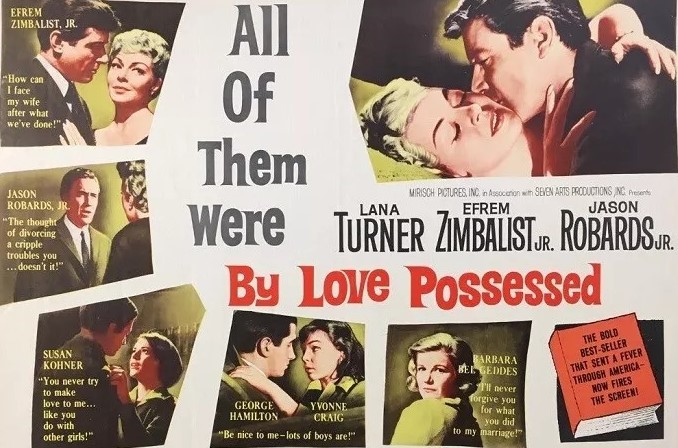
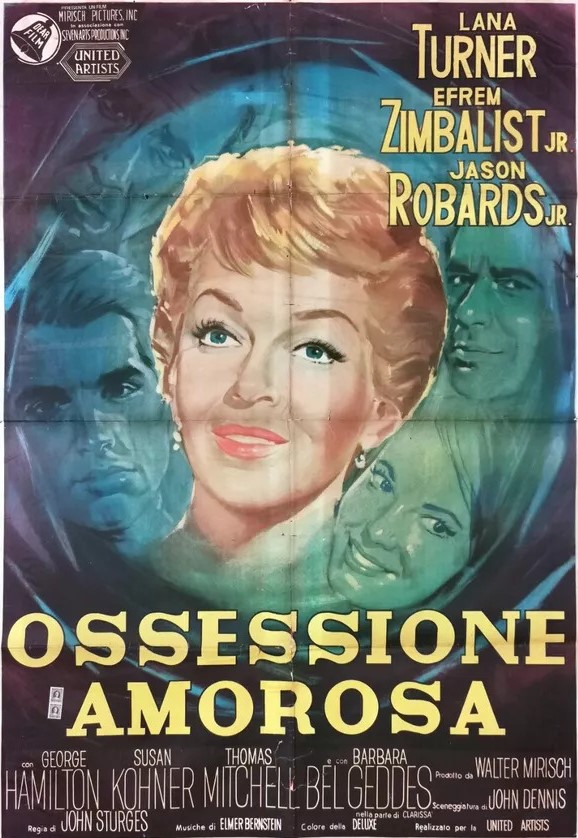
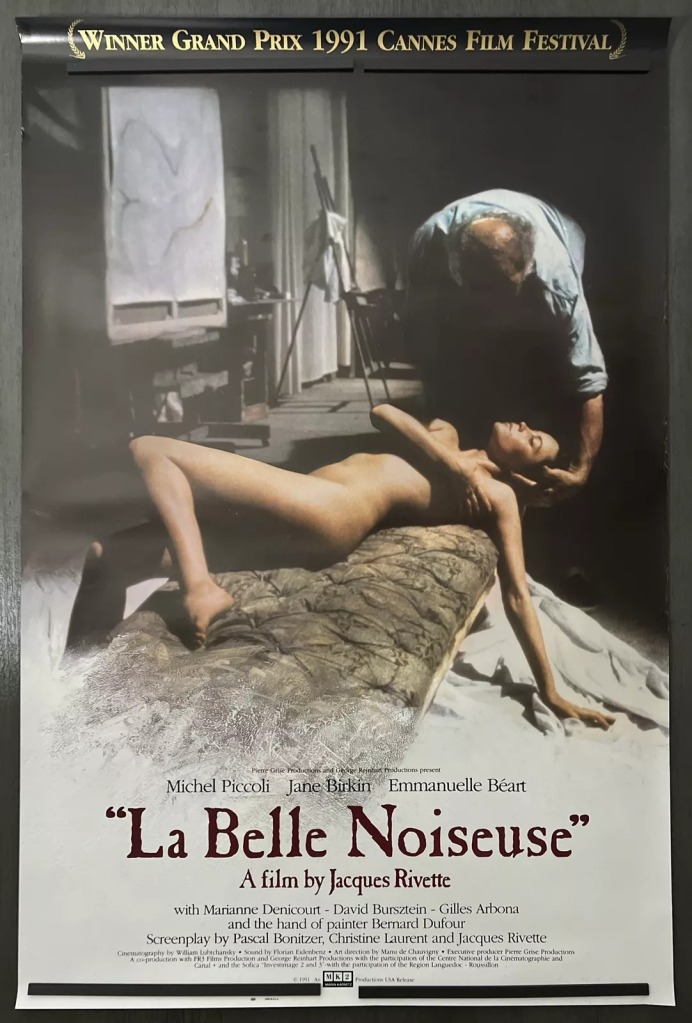
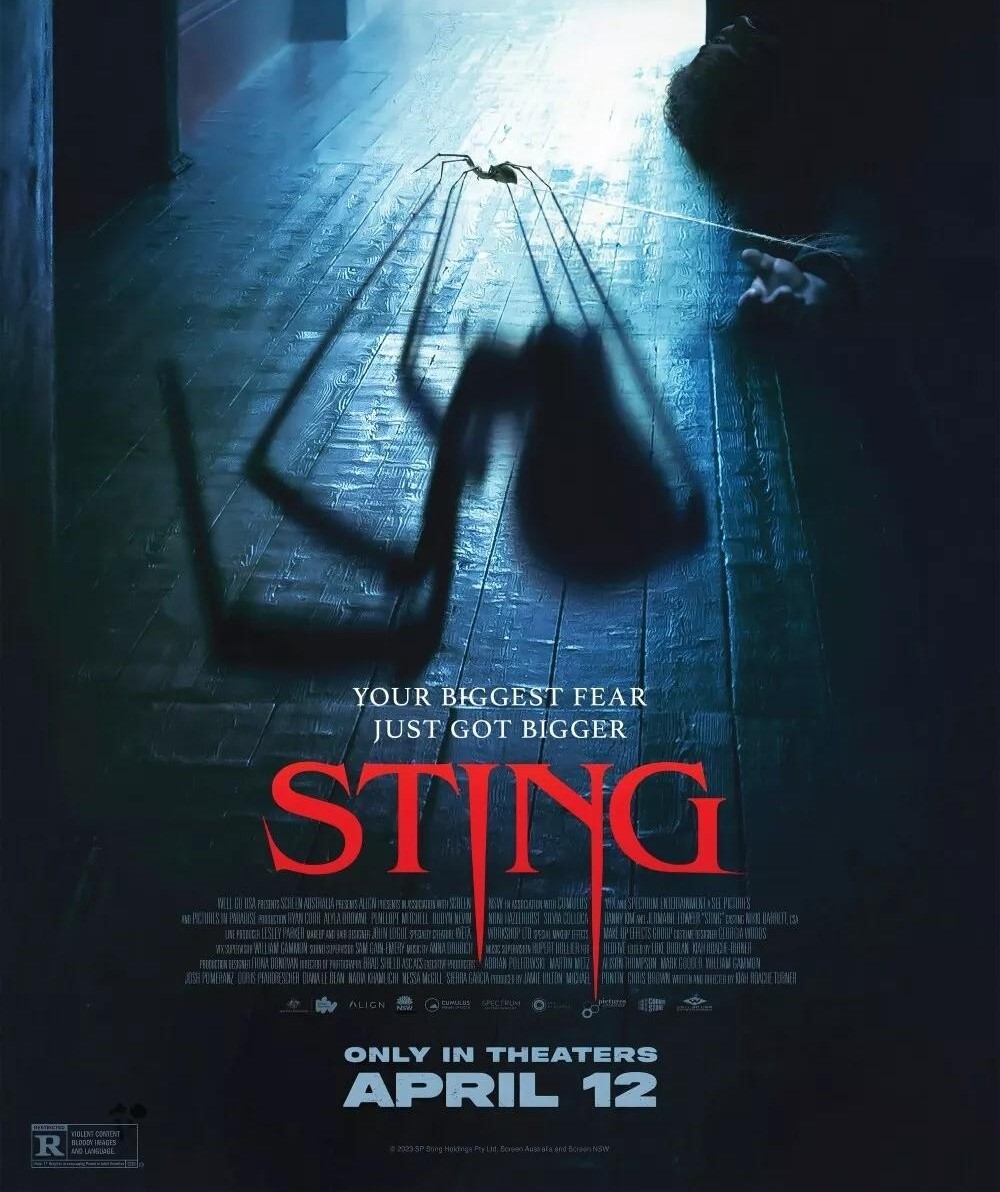
Yep, as with “Deathstalker I” not much in the way of supplementary posters. And, as you might expect, misleading. Monique, you’ll be astonished to learn, lacks sword skills and Tarlevsky ain’t so ripped.

Our hero (John Terlesky) is still disinclined to perform any heroic acts and gets duped by runaway princess masquerading as seer Reena (Monique Gabrielle) – her lack of smarts no pretence, “Deathstalker, is that your first name or your last name?” one of her priceless gems – into tackling evil sorcerer Jarek (John Lazar) who has gone all doppelganger and created a murderess princess clone (Monique Gabrielle again). Of course, there are potions and spells and quite a few of the ogres and hog-faced guards of the previous outing turn up looking as though they’ve just been sliced out of the original. And he’s got a sidekick Sultana (Toni Naples) who goes in for the old head-on-a-platter routine.

But before they reach the castle there’s a zombie (rejects of the rejects from the Star Wars cantina) encounter as Deathstalker takes a notion to enter a mausoleum which has been rigged out with Indiana Jones traps while the living dead erupt from the cemetery to poke around with Reena. And there’s a bunch of inglorious bastards who are so bad they have been outlawed by the likes of Genghis Khan or Attila the Hun but who really have not been handed the correct weaponry for the job.

Finally, there’s Trial by Amazon – while decked out in the old One Million Years B.C. bikini oddly enough none manage to lose their scanty clothing. Deathstalker trounced in the ring as punishment for his “treatment of womankind” by a giant female wrestler (Queen Kong) and having, somewhat against the run of play, managed to win that bout, is ready to get merry with an adoring queen (Maria Socas) when commitment phobia intervenes, so then it’s on to the castle.

There’s still plenty blood-and-thunder – actually way more effort has gone into the swordplay – but (spoiler alert) the rampant nudity has been toned down. Celestial choir is gone, too, and little reference to the power of the sword. Deathstalker this time has acquired a sense of humor so instead of eyebrows denoting emotion it’s a grin or smile. And the clone princess is a piece of work, the villain’s cruella du jour, mounting the faces of victims above her bedpost, and, with nothing better to do, snaps out sarcasm. Jarek has the time of his life as a villain, though there’s a feeling he’s got his genres mixed up because the worst he can do to Reena is dangle her over a pot of boiling water as if he’s in a jungle picture.

Still, it all comes good in the end. It’s funny in a wink-to-the-audience kind of way, plenty intentional gags, this Deathstalker would struggled to bulge a muscle, and has more in common with the common-or-garden charming con man. Monique Gabrielle (Emmanuelle 5, 1987) gets two chances to prove she can act and if going from dumb to nasty is proof of acting then she’s got it down to a fine art. Gabrielle and Terlesky – real-life lovers – have a natural screen chemistry that’s rarely achieved in this genre and her dumb lass is believable. John Lazar (Beyond the Valley of the Dolls, 1970) manages to keep campness at tolerable arm’s length. Directed by Jim Wynorski (100 credits, who am I to choose one?)

Even without the blooper reel tacked on at the end, a hoot.

Deathstalker (1983) *** – Seen at the Cinema

Back in ye olde times before streaming killed off the ancillary market, you could make a decent buck from Z-list pictures that made no attempt to target the entire world but were quite content to feed the maw of a limited genre. Sword-n-sorcery never required anyone who could actually act, just topless beefcake and cheesecake, skin glistening as much as possible, special effects limited to an occasional explosion, monsters little more than rejects from the Star Wars cantina.

Chuck them out to an exhibition industry not so much starved of product as waiting an age to get their hands on a big-budget number, which like roadshow a couple of decades before remained in the biggest cinemas for months, and you would turn an easy profit. This one set the makers back a mere half a million bucks and picked up $1.2 million (in rentals) on U.S. release alone and, more importantly, another $2 million from video rental and the same again likely from sell-through and the same again when DVD appeared and again when cable started to run out of A-list and B-list features and scrabbled about for anything that could fill a slot. And that’s before you started talking about the overseas market, this kind of adventure, with heads, arms, eyes and fingers lopped off (and occasionally fed to pet monsters)  more acceptable worldwide than comedies or musicals

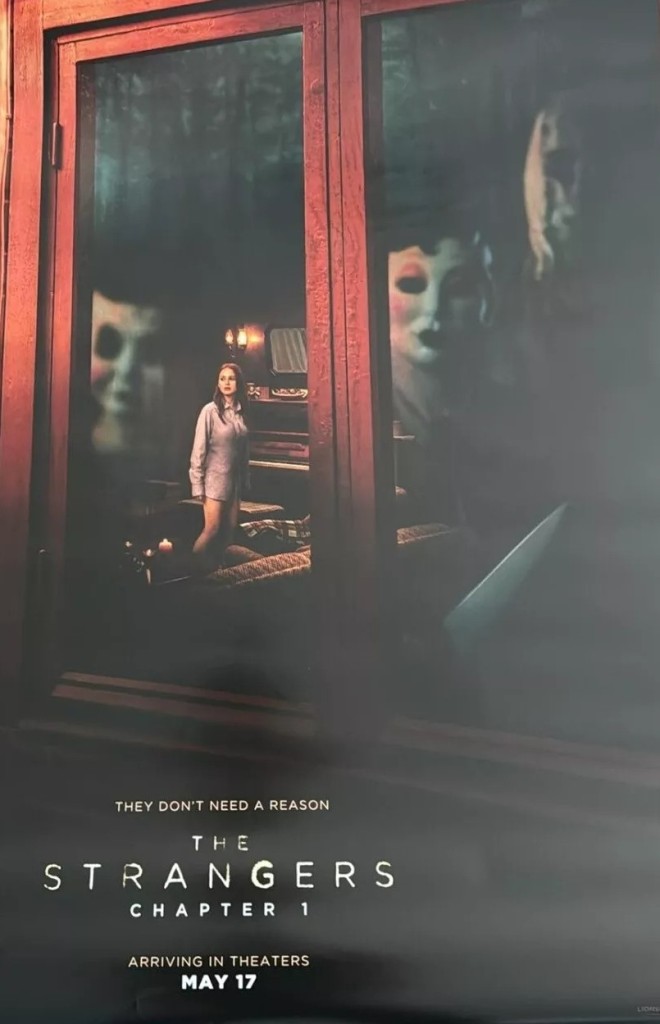
Yep, you’re right, this is exactly the same advert with the title color changed.

Heck, you didn’t even need much of a plot – any Lord of the Rings rip-off would do, a series of inanimate objects that combined to invest the owner with immeasurable power – and you didn’t even require to hide nudity under the guise of “sexposition” a la Game of Thrones, any passing gal liable to have her clothes ripped off or belong to some half-naked harem or be happy to step up for a bout of mud-wrrestling.

Must be World Deathstalker Day because a pair from this series turned up at my local multiplex courtesy of the people at DMP, who otherwise specialize in sci-fi and horror all-nighters or mini-festivals. Or it could be that Lana Clarkson attracted a cult following after being murdered by Phil Spector. Deathstalker, filmed in Argentina since you ask,  originally came out when my cinemagoing habit took a back seat to parenting so would have passed me by and I don’t remember getting a VHS/DVD fix, so I thought I’d toddle along and see why this deserved the reissue treatment along with this week’s other revival fave, Interstellar, which could at least claim tenth anniversary status.

Plot – since you insist – has our eponymous hero (Rick Hill) – no, hero’s too strong a word because he’s reluctant to put himself out for anybody unless it involves womanizing and financial reward – setting out, having been handed a powerful sword by a passing witch, to relieve the sorcerer Munkar (Bernard Erhard) of his power. Along the way he encounters a similar heroic hunk Oghris (Richard Brooker) and female warrior Kaira (Lana Clarkson) and gets sidetracked into attempting the rescue of kidnapped Princess Codile (Barbi Benton) and then taking part in a gladiatorial tournament and of course can’t help but get distracted by the half-naked women.

Munkar is a Machiavellian villain. He uses the tournament to get rid of any challengers to his throne, since they’ll kill each other in combat and he can murder the winner. Only Deathstalker is an obstacle, since his sword renders him invulnerable, and Oghris is easily tempted to turn traitor to solve that little problem. Contemporary audiences might run shy of this type of picture because, essentially, it’s Misogyny Central and there are three attempted rapes in the first five minutes and there’s hardly a minute goes by without some female losing their clothes.

Still, presumably, it does what it says on the tin, plenty action, ogres, imps, hog-faced warriors and naked women in abundance, and the usual narrative malarkey that you won’t need a degree to keep up with (unlike Interstellar, for example). And if you’re a fan of the celestial choir this one’s for you as any time Deathstalker raises the sword to the sky that comes on to indicate he’s not getting electrocuted by the sudden bolts of light saber stuff. You can come to scoff or enjoy for the genre romp it is, laugh at intentional and unintentional jokes, and sit back in wonder at the ten minutes of animated Intermission adverts that arrive at the rate of one a minute that were served up back in the day to entice Drive-In patrons to the delights of the Refreshment Counter.

Director John Watson (Under the Gun, 1987) stuck to the admittedly limited knitting, throwing in close-ups whenever the action stalled, allowing his star to demonstrate his array of knitted eyebrows and drawn lips.  Howard B. Cohen (Barbarian Queen, 1985) dreamt this one up.

Can’t say I complained too much once I knew what I was letting myself in for and a joy to see, in some eyes, a less-than-worthy vehicle being restored to the big screen.

Behind the Scenes: When Bestsellers Ruled Hollywood

Originality was rarely the key to open the box office door in the 1960s. Though considerably more expensive than original screenplays, books and Broadway musicals were viewed as a better bet, in part because they came with a perceived built-in audience of readers and theatergoers. And the figures prove that, for once, Hollywood got it right.

All except one, the top ten movies for the decade at the box office derived from bestsellers or stage hits. The exception was Guess Who’s Coming to Dinner (1967), an original screenplay by William Rose who received a then-record sum for his efforts. The decade’s out-and-out winner, The Sound of Music (1965) was based on both a book, The Story of the The Trapp Family Singers and a West German film The Trapp Family (1956), as well as the Rodgers and Hammerstein musical.

The biggest bestseller since “Gone with the Wind.”

Though substantially altered for the screen, runner-up The Graduate (1967) was based on the bestseller by Charles Webb. Doctor Zhivago (1965), Gone with the Wind (1939)* and Ben-Hur (1959) ** were based on bestsellers by, respectively, Boris Pasternak, Margaret Mitchell and Lew Wallace. Mary Poppins (1964) which placed sixth for the decade, despite the musical additions of the Sherman Brothers, was based on a series of much-loved children’s books by P.L. Travers, who didn’t much care for the Disneyfication.

Multiple Oscar-winner My Fair Lady (1964) followed The Sound of Music template, based on a 1913 play Pygmalion by George Bernard Shaw, and a subsequent film of the same name a quarter of a century later, before falling into the hands of Broadway team Lerner and Loewe. The biggest box office surprise was that it didn’t beat The Sound of Music at the movie box office because it had trounced it on Broadway, racking up nearly double the performances. The Sound of Music wasn’t even the best performing of the Rodgers and Hammerstein Broadway portfolio, lagging in third place, a long way behind South Pacific and Oklahoma!.

British author Ian Fleming was the single-best argument for buying novels over screenplays. Books could be purchased for relatively small sums, if the well was tapped early on, and thanks for the development of the sequel business, Thunderball (1965) snapped up ninth spot. You might imagine Cleopatra (1963), especially with its emphasis on the racy Elizabeth Taylor-Richard Burton romance, was an original work, but that, too, was based on previous publications of the non-fiction variety.

William Rose’s original screenplay was as instrumental in Guess Who’s Coming to Dinner reaching tenth place as he was in It’s A Mad, Mad, Mad, Mad World (1963) becoming one of only two original screenplays to feature in the next ten movies on the box office chart, that madcap comedy targeting eighteenth. Robert Benton and David Newman’s original screenplay (with a little help from Robert Towne) helped Bonnie and Clyde (1967) after a faltering start to cling on to 13th spot.

You might also imagine James R. Webb delivered an original screenplay for the Cinerama roadshow How the West Was Won (1962) – which finished 12th in the rankings – but while not based on a bestseller it was adapted from an extensive series of non-fiction books on The Old West published by Time-Life.

Of the other films registering in the top 20, five originated as novels, and two were first seen on the stage.  The fiction quintet featured another deuce from the pen of Ian Fleming – Goldfinger (1964) and You Only Live Twice (1960). Jacqueline Susann was responsible for the bestseller Valley of the Dolls (1967), E. M. Nathanson for The Dirty Dozen (1967) and  E.R. Braithwaite for To Sir, With Love (1967). West Side Story (1961) was another adaptation  of a Broadway musical while The Odd Couple (1968) was from prolific playwright Neil Simon.

It probably escaped your notice but this iconic image is taken from the scene where they die.

There was similar reliance on proven hits in the next 20 movies. Only two pictures  – Those Magnificent Men in their Flying Machines (1965) by Ken Annakin and Jack Davies and Butch Cassidy and the Sundance Kid (1969) – were original screenplays, though Twentieth Century Fox shelled out a record $400,000 to secure the rights to the latter from writer William Goldman.

Even movies like The Love Bug (1968) and Bullitt (1968) were originally novels. The bulk of these next twenty came from publishing, though Funny Girl (1968), Romeo and Juliet (1968), Who’s Afraid of Virginia Woolf (1966) and Thoroughly Modern Millie began on stage, the latter not from Broadway but the British West End.

Of course, not much has changed. Half this year’s Best Picture Oscar candidates are based on published works. Poor Things was based on the book by Scottish novelist Alasdair Gray, Zone of Interest from the novel by Martin Amis, Killers of the Flower Moon by the non-fiction work by David Grann, Oppenheimer on the biography American Prometheus by Kai Bird and Martin J. Sherwin, American Fiction from Percival Everett’s novel Erasure.

*Gone with the Wind was reissued in 1967 as a 70mm roadshow and, coupled with a 35mm wider release the following year, cleaned up at the box office, making more money than it any of its previous four revivals put together.

**Ben-Hur (1959) ran in Nov-Dec 1959 in only a select number of cinemas, collecting, by my calculations no more than $1 million in rentals. Therefore, I deduced that in reality the vast bulk of its box office was taken in the 1960s and therefore in any accounting of that decade’s movie rentals was more fairly to be included then than in the previous decade.

SOURCE: The Magnificent 60s, The 100 Most Popular Films of a Revolutionary Decade by Brian Hannan (McFarland, 2019).

Seven Days in May (1964) ****

Democracy is a dangerous weapon in the hands of the people. Can they be trusted to make the correct decision? That’s in part the thematic thrust of this high-octane political thriller that pits two of the greatest actors of their generation in a battle to decide the fate of the world. This was the era of the nuke picture – Dr Strangelove (1962), Fail Safe (1964), The Bedford Incident (1965) – all primed by the real-life Cuban Missile Crisis and the growing threat of the Cold War.

Just as the President (Fredric March) is about to sign a nuclear treaty with the USSR, much to the fury of the majority of Americans judging by opinion polls, Colonel Jiggs Casey (Kirk Douglas) uncovers signs of a military coup headed by hawk General James Mattoon Scott (Burt Lancaster). The movie divides into the classic three acts. In the first, Casey investigates the existence of a secret army unit in El Paso comprising 3,600 men trained to overthrow the government and needs to persuade the President the country is in danger. The second act sees the president hunting for find proof of the imminent coup and identifying the conspirators. The third act witnesses showdowns between the President and Scott and Scott and Casey.

At the heart of the story is betrayal – Scott of his country’s constitution, Casey of his friend when he takes on the “thankless job of informer.” Casey proves rather too ruthless, willing to seduce and then betray Eleanor Holbrook (Ava Gardner), Scott’s one-time mistress. Both Holbrook and the President prove to have higher principles than Casey.

For both Kirk Douglas and Burt Lancaster who operate at a high threshold of intensity and could easily have turned in high-octane performances the tension is even better maintained by their apparently initial low-key confrontations. Douglas has a trick here of standing ramrod straight and then turning his head but not his body towards the camera.  

As a pure thriller, it works a treat, investigation to prove there is a conspiracy followed by the deaths and disappearances of vital people and finally the need to resolve the crisis without creating public outcry. The only flaw in the movie’s structure is that Casey cannot carry out all the investigations and when presidential sidekicks Paul Girard (Martin Balsam) and Senator Clark (Edmond O’Brien) are dispatched, respectively, to Gibraltar and El Paso the movie loses some of its intensity. But the third act is a stunner as the President refuses to take the easy way out by blackmailing Scott over his previous relationship with Holbrook.  

Of course, there is a ton of political infighting and philosophizing in equal measure and speeches about democracy (“ask for a mandate at the ballot box, don’t steal it”) and the constitution and the impact of nuclear weapons on humanity. But these verbal volleys are far from long-winded and pack a surefire punch. The coup has been set up with military precision and must be dismantled by political precision.

The film was awash with Oscar talent – Burt Lancaster, Best Actor for Elmer Gantry (1960) and, at that point, twice nominated; thrice-nominated Kirk Douglas; Fredric March, twice Best Actor for Dr Jekyll and Mr Hyde (1931) and The Best Years of Our Lives (1946) plus  three other nominations besides; Ava Gardner nominated for Best Actress (Mogambo, 1953); and Edmond O’Brien named Best Supporting Actor for The Barefoot Contessa (1954).

None disappoint. March is especially impressive as a weak president tumbling in the polls who has to reach deep to fight a heavyweight adversary. Lancaster and Douglas both bristle with authority. Although Lancaster’s delusional self-belief appears to give him the edge in the acting stakes, Douglas’s ruthless manipulation of a vulnerable Ava Gardner provides him with the better material. Edmond O’Brien as an old soak whose alcoholism marks him out as an easy target is also memorable and Ava Gardner in recognizing her frailties delivers a sympathetic performance.

Rod Serling (The Twilight Zone) does a terrific job of distilling a door-stopper of a book by Fletcher Knebel and Charles W. Bailey II.  But the greatest kudos must go to director John Frankenheimer – acquainted with political opportunism through The Manchurian Candidate (1962) and with Burt Lancaster (The Birdman of Alcatraz, 1962) – for keeping tension to the forefront and resisting the temptation to slide into political ideology.

American Fiction (2024) *** – Seen at the Cinema

I thought we were in for a treat when our hero is told not to be rude to anyone important. Kick ass, here we go. Nope. Worthy but dull. One part cosmic joke, three parts soap opera, only relieved by the kind of subdued acting that’s become very much the contemporary Oscar-nominated trend (see The Holdovers, Oppenheimer). And with a narrative thrust that is, unfortunately, laughable. I grew up in Glasgow, Scotland, which for generations lived under the cloud of No Mean City, a portrayal of the city as gangster heaven, and we are nothing on what Hollywood did to the Native Americans so, spare me, anyone saying they have been unfairly treated by any part of the media.

Let’s get the soap out of the way first. Monk (Jeffrey Wright) is an out-of-fashion literary novelist eking out a living as a English professor whose students are on the verge of cancelling him. He hives off to the family home where he discovers – discovers! – his mother (Leslie Uggams) is suffering from Alzheimer’s, brother Clifford (Sterling K. Brown) is gay and a coke addict and his sister Lisa (Tracey Ellis Ross) is so ill from heart disease she drops down dead in front of him.

When his latest novel is rejected he decides he will rip off current bestseller Sintara Golden (Issa Rae) and write a book in gangsta patois. Lo and behold it works and what began as him cocking a snook takes on a more serious dimension when he is offered a $750,000 advance. And guess what, suddenly his principles go hang, and not because he’s just a greedy skunk like everyone else but because he’s been handed a get-out-of-jail-free card in that how, otherwise, with a divorced coke addict brother more interested in his latest lover and a dead sister – both I hasten to add high up in the medical profession, sister a consultant, brother a plastic surgeon – is he going to pay for his mother’s care. So he goes along with the gig and the problems multiply as he lives the hypocrisy he claims to abhor.

The idea of someone duping the publishing industry is hardly new. Bestselling British literary author William Boyd sent in a novel under a pseudonym but written in his own style that had attracted a gazillion sales and that was rejected. Polish novelist Jerzy Kosinski sent in one of his own award-winning novels without a word changed and had that rejected. So the publishing industry, like Hollywood and like the media, is just too easy a target unless the weapon is a lot sharper than this.

And hopefully this is a short-lived trope (Argylle went down a similar route), but we see his characters come alive in front of him and play out terrible scenes from his joke fiction.

Source novel.

Yep, so someone is making a point, that Black Literature has lost its way and why can’t Black authors be heralded for writing about ancient Greece (obviously not in your typical blood-sex-and-thunder fashion) or other arcane subjects or even, as shown here, take as their subject matter well-off university-educated rather than poverty-stricken characters and explore their issues (the same as everyone else’s since you’re asking).

Outside of Monk who spends most of the time locked in his head with a bit of light relief with fan-turned-lover Coraline (Erika Alexander), the only person who doesn’t take this stuff seriously is the sister who died too soon, deflating our literary hero by telling him his books come in handy for steadying loose table legs. Debut offering by writer-director Cord Jefferson based on the novel Erasure by Percival Everett.

Kept afloat, just, by Jeffrey Wright (No Time to Die, 2021) mainlining on repression but that’s about it.

Johnny Cool (1963) ****

The one-man-wrecking-crew activities of the likes of John Wick or your friendly neighborhood beekeeper not to mention that Point Blank (1968) has a similar downbeat ending and the flurry of interest in retro noir should have set the reassessment alarm bells ringing. Audiences and critics have been frankly dismissive, not even wondering how a mere television director managed to hook the likes of Rat Pack dudes Sammy Davis Jr. and Peter Lawford and get an exceptionally dramatic performance from eternally cute Disneyesque Bewitched star Elizabeth Montgomery.

Perhaps it’s because star Henry Silva (The Secret Invasion, 1964) never broke out of a cycle of  B-films or small supporting role in bigger pictures or that director William Asher threw away any kudos he might have earned here by turning to Muscle Beach Party (1964) and How to Stuff a Wild Bikini (1965) and the like. Or perhaps that the makers of the aforementioned John Wick and The Beekeeper learned to leaven the innate violence of the character and render him more audience-friendly by giving him sentimental attachment to pet dogs and old ladies or some old guy robbed of his pension.

Johnny Cool (Henry Silva) has better reason than either to get mad with the world, given that as a child during World War Two he saved his mother from rape from one German soldier only to witness her killed by another. Orphaned, he was taken in by the local Resistance which later reverted back to its Mafia origins. He’s got the murder cojones, for sure, interrupting a wedding to kill off the groom.

Anyway, he’s hired by Mafia bigwig Johnny Colini (Marc Lawrence) to embark on a transatlantic sojourn and wipe out the main men of the U.S. Syndicate. Along the way, he dallies with non-combatant Dare (Elizabeth Montgomery) who later becomes complicit and then, as if this was a 1940s gangster picture seeking to avoid the wrath of the Production code, suffused by guilt turns him in.

Meanwhile, he’s on the slaughter trail. In part the gangsters are easy pickings, because they have all grown fat and in turning legitimate are out of reach of the law and in part because, just like Point Blank, nobody saw him coming or guessed anyone would have such audacity. He’s not in the do-not-disturb category of John Wick or The Beekeeper.

But he does cross a particular line that audience and critics back in the day were generally averse to. His violence is indiscriminate. He kills cops and would have inadvertently killed kids, too, if they had got in the way. There was no shortage of corrupt cops in Hollywood policiers in the 60s and 70s, but generally they weren’t executed.

He’s one step ahead of everyone and even without a standard weapon is a dab hand at improvisation. Colini has preyed upon his lack of parentage, suggesting that Cool will become a surrogate son once he has completed his mission. When that ploy is exposed and Cool realizes he is the worst kind of patsy, the movie takes a sharp right turn into the modern idiom by allowing him not to turn back and get revenge on the Italian godfather but to continue the killing spree to satisfy his own honor.

Few bad guys were as cool or charming as Johnny Cool. While his face can turn rigid and his personality entombed by inner demons, he is an adept ladies man and has the kind of easy-going manner that on the surface ensures access to dangerous area. Most tough guys, who found ways of justifying their killing, or had a soft spot for some dame, couldn’t manage the pretence for long and away from a sympathetic female so completely conceal their true identities.

Henry Silva is just terrific. This is the hit man with more style than redeeming features. And director Willam Asher plays the noir game, clever use of shadows, and a surprising quotient of aerial shots. And the ending is classic. So I won’t spoil that for you, but maybe the best twist ever in a crime picture.

Given contemporary audience and critical antipathy for Elizabeth Montgomery, this should have buried her career, but, as luck would have it, she fell in love with Asher and he handed her the leading role in his next television show – I should have mentioned he was something of a TV whizz-kid – Bewitched (1964-1972). Although she might never have met Asher at all if her first prospective female leading role had come off – she was the replacement for Debbie Reynolds in the $3.5m version of Alistair MacLean’s Night without End directed by George Seaton and a Paramount release. It was scheduled for release in 1962 but was never made.

Asher did move in Rat Pack circles, hence the involvement of Peter Lawford, in a production capacity, and Joey Bishop and Sammy Davis Jr. in small roles, with the latter lending his tonsils to the title tune.  Look out for Brad Dexter (The Magnificent Seven, 1960), Richard Anderson (Seconds, 1966), Telly Savalas (The Scalphunters, 1968) and Wanda Hendrix (The Prince of Foxes, 1949).

The pitiless avenger being in such contemporary vogue, this is worth a look.

North Sea Hijack / ffolkes (1980) ****

Shouldn’t work at all not with star Roger Moore gussied up like a maiden aunt, fussing over needlepoint and cats, dolled up in tweeds and sporting an unkempt beard and a ginger wig. Our only clue in the early stages that he’s anything approaching a tough guy is that he knocks back whisky like soda pop.

And bear in mind this was a couple of years before the Brits could blithely call in the SAS (Who Dares Wins, 1982) for a ticklish rescue op and more than a decade before it became the norm to rely on a handily-available one-man band of the Die Hard persuasion and even longer before you had to worry about upsetting the pet or elderly neighbor of your local retired assassin.

When the movie flopped in the U.K. it was re-branded as some kind of James Bond number with scantily-clad women.

That it does work is very much down to Moore as the opposite of the standard Hollywood hero, avoiding rather than provoking trouble for strategic reasons, and realizing that, even with the deadliest of deadlines, time could be on his side and be used to un-nerve his opponent. After the film flopped spectacularly, Moore claimed he was miscast, but, in fact, despite the box office failure, the opposite is true. Without him brilliantly treading a very fine line this would have easily teetered into spoof.

A bunch of gangsters – not terrorists, plain cash the motive not some obscure cause – led by Kramer (Anthony Perkins) take over an oil platform supply ship, force Capt Olafson (Jack Watson) and crew, including, unusually for the time a female chef Sanna (Lea Brodie), to park under the oil platform while a couple of the gang plant explosives – to be set off as a warning – under the smaller drilling rig located some distance away, threatening to blow the whole operation sky-high if the British government doesn’t meet a ransom demand of $25 million.

As it happens the mysterious section of government that sometimes even Prime Ministers don’t know exists (as with beekeeping within the C.I.A.) has already recognized such a potential issue and hired ffolkes (Roger Moore) and his self-styled team of “fusiliers” to come up with a solution. Once the female Prime Minister (Faith Brook) – Margaret Thatcher was already in power at this point – is apprised of the cost in loss of revenue and human lives, she gives the go-ahead.

Ffolkes is despatched by helicopter with Admiral Brinsden (James Mason) and a high-ranking lackey. The supply ship crew, meantime, led by Sanna, have attempted to poison the invaders but that’s thwarted by the ruthless Kramer who by now has been chucking any dissenters over the side.

Kramer’s a clever guy. His ploy is smart. Theoretically, the drilling rig is financially worth a lot more than the platform, but that loss would account for a fraction of the lives of those on board the platform, and measured in public relations terms by any government deemed the smaller catastrophe. The platform will only be destroyed if the government is foolish enough not to meet his second deadline – if they fail to hit the first it’s just the rig that ends up in Davy Jones’ Locker.

But ffolkes is as cunning and plans a fake destruction of the rig to remove that ace in Kramer’s pack. The resulting explosion is so convincing, especially since it takes place at night, that the stakes are raised in ffolkes favor. But that’s only until Kramer smells a rat and refuses to allow ffolkes on the supply boat, ensuring the cat-lover has to resort to the more dangerous and potentially deadline-breaching Plan B. Nor, despite early action pointing to ffolkes’ efficiency, is he invulnerable in the tough-guy department, needing rescued twice, once by Sanna, hiding in a lifeboat after her failed poisoning mission.

And it does rely on the occasionally dense Admiral learning a simple trick with a cigarette packet.

This probably flopped because audiences expected some version of James Bond (it appeared within Moore’s stint as 007 in the two-year gap between Moonraker and For Your Eyes Only) or at least the cigar-chomping mercenary in The Wild Geese (1978). If Moore had carried out the required action in tweeds or naval uniform it might have been more easily accepted than dressed in a bright red frogman’s outfit (choice of that color a flaw in an op intended as subterfuge).

The irrepressible sexist character he represented might be more of a challenge to a contemporary audience but it’s delivered without malice and, theoretically at least, his aversion to women (and no overt hint of homosexuality I might add, though you could make your own mind up on that score) is explained. And Sarah (Jennifer (Hilary) , the oil platform skipper’s secretary, is his match, though that’s mostly with dry asides and rolling eyes.

There’s a bit of a sexist joke – although somewhat of a cliché – when our man discovers one of the crew is a woman and not a man. But that’s far better than the out-and-out misogyny of one of the gangsters whose reaction to cornering Sanna is attempted rape.

So, not the all-action yarn you – and audiences back in the day – might have expected, but, still pretty good fun. Director Andrew v. McLaglen melds elements of his The Wild Geese, and Shenandoah (1965), Moore’s performance reminiscent of the slow-burn of the James Stewart character. Screenplay by Jack Davies (Gambit, 1966) based on his bestseller.

Scarcely a lifted eyebrow in sight. Great fun – you couldn’t get more retro – and certainly had me chuckling – and free on YouTube.

The Four Horsemen of the Apocalypse (1962) **

Hollywood isn’t known for its sensitivity, and this is one of those major misjudgements. An incredibly rich family, ripe with entitlement, find World War Two tough going, in the main because as in Counterpoint (1968), they consider themselves exempt. Being Argentinians, they are neutral.

Unfortunately, it just so happens, with that wealthy person’s penchant for flaunting their wealth in the world’s richest cities, they end up in Paris on the eve of war, ignoring the warning of family patriarch (Lee J. Cobb) who is convinced the titular “four horsemen of the apocalypse” (war, conquest, death and pestilence, in case you don’t know your Bible) are on the march. Not that we see much of that in the French capital, except in newsreel, details of the war delivered in snippets of dialog (“haven’t you heard about Dunkirk?”), and street-loads of refugees.

Because, don’t you know it, our major players, the Desnoyers and Laurient families, are largely immune. Man-about-town and Argentinian art connoisseur Julio Desnoyers (Glenn Ford) – ignoring the entreaties of his father Marcelo (Charles Boyer) to scarper – is making a move on married Frenchwoman Marguerite Laurient (Ingrid Thulin), bored by newspaper editor husband Etienne (Paul Heinreid) who spends way too much time worrying about impending war.

Julio is so rich that even after the German invasion sends the poor of the city – and its Jewish population – racing about terrified for their lives, he can swan around, enjoying fine food in top-class restaurants much as before and even has the temerity to tell a high-ranking German General von Kleig (George Dolenz) that his wealth makes him immune. The general reckons that his rank gives him any woman he wants. “She’s mine,” is Julio’s rather misogynistic retort when the general attempts to appropriate Marguerite.

Meanwhile, though Julio is still slow to catch on, his sister Chi Chi (Yvette Mimieux) has only gone and joined the Resistance and Etienne has also upset the new masters, so Julio has to go begging cousin Heinrich (Carl Boehm), who has exploited his German origins to achieve military high rank, to provide them with a get-out of-jail-free card.  

When Etienne is released, Marguerite is initially inclined to stick with Julio until guilt gets the upper hand. Julio, with no lover to keep him happy, eventually throws his lot in with the Resistance, but there’s no happy ending for anyone.

Director Vincente Minnelli (Two Weeks in Another Town, 1962) is terrific at marshalling his set pieces, using widescreen to excellent advantage, cramming extra bodies in at the edges, but since these sequences tend to be little more than extended talk-fests – the activities that got Chi Chi and Etienne imprisoned are ignored – no amount of directorial skill in the world is going to salvage a movie so weighted down with dead wood.

Glenn Ford (Rage, 1966) does his very best to give the viewer something to hold onto. He avoids every shade of angst in his determination to have as much as fun as possible regardless of any situation. He’s scarcely had the chance to be so carefree on screen and he is at his charming best, and he does lift what is otherwise a somber encounter.

Ingrid Thulin (Return from the Ashes, 1965) has her moments, especially when her diplomatic skills prevent a party being ruined, and she enjoys some flighty repartee with Ford, but once the romance gets heavy her personality undergoes a U-turn and she’s holding onto angst for dear life. And there’s a twist in her character that makes no sense. When Etienne emerges from prison a broken man, she gives him both barrels, and declares her love for Julio only for shortly after to recant and dump Julio. Seems mighty insensitive and bordering on cruelty to deal her husband such a blow when he has been tortured by the Nazis. Though she might not have been so forgiving had she worked out just why Etienne was freed and Chi Chi not.

After the colossal success of Ben-Hur (1959), which set the roadshow ball rolling, MGM was on a remake crusade. As well as Ben-Hur, it had remade Cimarron (1960) – the original 1931 version an Oscar-winner and hot box office. The fact that that flopped didn’t deter the studio. The silent version of The Four Horsemen of the Apocalypse (1921), set against the background of World War I,  transformed Rudolph Valentino into a superstar and netted MGM a fortune. The new version sank like a stone, perhaps because it was too wordy for roadshow, or perhaps, more likely, Judgement at Nuremberg (1961) had taken a bolder look at World War Two.

A mis-hit.

REVIEWED PREVIOUSLY IN THE BLOG: Glenn Ford in Experiment in Terror (1962), Love Is a Ball (1963),  Advance to the Rear / Company of Cowards (1964), Fate Is the Hunter (1964), The Money Trap (1965), Is Paris Burning? (1966), Rage (1966), The Last Challenge / The Pistolero of Red River (1967), A Time for Killing (1967), Day of the Evil Gun (1968), Heaven with a Gun (1969; Ingrid Thulin in Return from the Ashes (1965); Yvette Mimieux in The Time Machine (1960), The Wonderful World of the Brothers Grimm (1962), Diamond Head (1962), Joy in the Morning (1965), The Reward (1965), The Caper of the Golden Bulls (1967), Dark of the Sun (1968), The Picasso Summer (1969); Vincente Minnelli directed Two Weeks in Another Town (1962) and Goodbye Charlie (1964).

The Pawnbroker (1964) *****

Director Sidney Lumet (The Group, 1966) could have made an excellent film just about the customers of a pawn shop, the haunted individuals haggling for more cash than they will ever be paid, the sad sacks, junkies, lost souls and general losers whose stories are told in the items they pawn or redeem – candlesticks, lamps, radios, musical instruments, occasionally themselves. You don’t need to be a pawnbroker to know that three tough guys turning up with a pricey lawnmower are dealing in stolen property.

And it comes as something of a surprise to learn that the pawnbroker is involved in some kind of money-laundering scam for a local gangster. Clearly shot on location on a bustling low-rent area, north of 116th St in East Harlem, New York, there’s enough going on in the streets – the markets, the tenements, poolrooms, the bustle, the eternal noise – to keep you hooked.

But you might think twice about positing as your hero an “absolute bastard” as Lumet himself described shop owner Sol Nazerman (Rod Steiger). He is more haunted than any of his clientele, a Holocaust survivor, plagued by flashbacks to the concentration camp where he witnessed his son die and his wife raped. He is devoid of life, completely shut down to any emotion, rejecting overtures of friendship, and his life is played out in tiny elliptical shreds.

He does not even derive any enjoyment out of his affair with a widow and although he claims to worship money – according to him the only absolute outside of the speed of light – that brings no fulfillment either. He is accused of being among “the walking dead.” It is surprising he has lasted so long without imploding After his war experience, you would have to wonder at a man who spends his life behind the bars of the grille in his shop and just in case he considers escaping from his predicament designer Richard Sylbert (Chinatown, 1973) incorporates other visual aspects of imprisonment into the production.

Around Sol are a set of very lively characters, his ambitious assistant Jesus (Jaime Sanchez) trying to go straight and his girlfriend (Thelma Oliver), a very smooth and wealthy gay gangster (Brock Peters), and a trio of small-time hoods with whom the assistant is friendly. But also the deranged and the lonely. A widowed social worker Marilyn (Geraldine Fitzgerald) who suffers from the “malady of loneliness” offers him friendship but is rejected.

There is little plot to speak of but just enough to teeter him on the brink of self-destruction. So it is primarily a character study. Unusually, Lumet observes without any sentimentality those around Steiger. “Sol has buried himself in this,” Lumet wrote in Films and Filming magazine (October 1964, p17-20) “because he needs to be with people that he can despise…This is a man who is in such agony that he must feel nothing, or he will go to pieces.” There is no redemption and he lacks the courage to commit suicide. It’s a stunning, bold picture, as raw as you can get without turning into a bloodsucker.

The film had a few firsts. It was the only mainstream American picture to deal with the Holocaust from the perspective of a survivor (although films like Judgement at Nuremberg, 1961, had shown aspects of the camp victims). It broke mainstream conventions on nudity, bare breasts being seen for the first time. Lumet experimented with incredibly short cuts – just one-frame and two-frames in places (a technique he had first used in television)- when the standard assumption was that audiences required three frames to register an image.

Rod Steiger (No Way to Treat a Lady, 1968) gives a very restrained performance, especially for an actor known for his volubility and over-acting. He seems to sink into the role. Brock Peters (Major Dundee, 1965) plays not just the first openly gay person in a mainstream picture, but the first gay African American.

Excellent support includes Jaime Sanchez (The Wild Bunch, 1969), Thelma Oliver (Black Like Me, 1964) and Geraldine Fitzgerald (Rachel, Rachel, 1968). Quincy Jones made his debut as a movie composer. If you listen closely you might detect a piece of music later made famous by the Austin Powers pictures and if you look closely to might spot a debut sighting of Morgan Freeman. Screenplay by the writing team of David Friedkin and Morton Fine (The Fool Killer, 1965) based on the bestseller by Edward Lewis Wallant.

Unmissable.

Some People (1962) ***

Bet you didn’t know the Duke of Edinburgh (yep, that one, the recently deceased husband of the recently-deceased Queen Elizabeth II) was involved in the movies. Or that a film set up with the express purpose of promoting his Duke of Edinburgh Award Scheme could actually be any good.

A slice-of-life British picture that steers clear of the “kitchen sink,” so lives not blighted by alcohol, sex, abuse, unemployment which means no single mothers, no out-of-their head drunks, no railing at the government, no bloody violence. Instead, you’ve got kids in dead end jobs, refusing to conform, and then finding responsibility isn’t such a trial after all.

Not sure this notion qualifies as a promo for the Duke’s Scheme, but the movie’s probably best known for showing young women how to shrink their jeans skin-tight and, surprisingly, passing on the notion that your father would happily tolerate such behavior.

Three tearaways involved in an accident with their motorbikes lose their licences and at a loose end stumble across a benevolent choir master Smith (Kenneth More) who lets them use his church hall to rehearse their band. This is pre-Beatles so no mop-tops and screaming, but music with shades of Helen Shapiro and The Shadows, and the fancy footwork that was all the rage at the time.

The line-up is Johnnie (Ray Brooks) on piano and third guitar, Bert (David Hemmings) and bespectacled Tim (Timothy Nightingale) – a replacement for the disgruntled Bill (David Andrews). And they are joined by drummer Jimmy (Frankie Dymon) and singer Terry (Angela Douglas). The Award Scheme – a way of giving young people something to do and encouraging them to try an activity outside their usual sphere – malarkey is eased cleverly into the script, eventually becoming a challenge, though it’s somewhat gender-defined, Terry taking up knitting, while Bert helps make a canoe and plans the kind of outbound expedition with which the scheme was most associated.

There’s a punch-up and (gosh!) tables and tablecloths and crockery are destroyed, but mostly it’s just teenagers getting rid of their angst in ways that don’t define their lives (i.e. pregnant girlfriend or spell in jail.) The bulk of the aggravation comes from Bill, who refuses to join in, gets cross at being called a “teddy boy” and that his girlfriend Terry is making a play for Johnnie.

However, Johnnie is sweet on Smith’s daughter Anne (Anneka Wills), so there’s some sexual tension. Though the sexual element, despite the jeans scene, is conspicuously underplayed. Johnnie doesn’t even get to what was misogynistically referred to as “first base” in those days, restricted to kissing and a gentle hug. His romance is inevitably doomed because Anne wants to go away to college, but, by this time, despite an initial angry response, he’s grown-up enough to accept it and realize how much he’s benefitted from the relationship.

Although the actual music is supplied by The Eagles (no, not those ones), it helps that the actors look as if they know their way around music, although what they play is hardly sophisticated by the later standards of the decade.     

Critics might have preferred the more violent motorbikers of The Damned (1962) or The Leather Boys (1964) and the working class milieu of Saturday Night and Sunday Morning (1960), but this depiction of suburban life (it’s set in Bristol) is more in line with director Clive Donner’s later Here We Go Round the Mulberry Bush (1968).

You could have a high old time arguing which film is the more realistic, the ones over-teeming with violence, disillusionment  and sex, or ones where real ordinary life rarely touches such dramatic heights and relies more on people working their way through real or imagined difficulties. The slice-of-life elements involve a cigarette factory, fish-and-chips, blaring television, a father (Harry H. Corbett) out of touch with this son (one of the best scenes), roller skating, youngsters drinking Coca Cola and not booze (Johnnie has to be introduced, against his wishes, to alcohol by his father), hire purchase and a deluge of advertising promising a better life.

And it’s anchored by Kenneth More (The Comedy Man, 1964), who did this film for nothing with the unexpected bonus of meeting his third wife, Angela Douglas. On the basis of this performance, you wouldn’t be expecting David Hemmings (Blow-Up, 1966) to become the break-out star – he’s billed sixth – rather than young male lead Ray Brooks (The Knack, 1965). Angela Douglas popped up in Maroc 7 (1967) but was better known as a Carry On semi-regular. Anneke Wilks was one of The Pleasure Girls (1965) but more at home in television.

On a side note, I realized that the council-run buses in every big city had their own primary colors. Red, obviously, for London, but Bristol chose a virulent green while I remember the vehicles in my home town of Glasgow being yellow-and-green and I wondered if there was some official body that assigned color in this fashion. An idle thought.

Much better than you might expect from a movie whose main aim was to promote a scheme set up to help teenagers find their feet.  

Discover WordPress

A daily selection of the best content published on WordPress, collected for you by humans who love to read.

The Atavist Magazine

by Brian Hannan

WordPress.com News

The latest news on WordPress.com and the WordPress community.