I am a published author of books about film - over a dozen to my name, the latest being "When Women Ruled Hollywood." As the title of the blog suggests, this is a site devoted to movies of the 1960s but since I go to the movies twice a week - an old-fashioned double-bill of my own choosing - I might occasionally slip in a review of a contemporary picture.
Many thanks to all who took the time to enter the first-ever competition run by the Blog. The idea was to guess which of the films reviewed in the April Blog received the highest number of views. How many did you get correct?
Here’s the Top Five in ascending order:
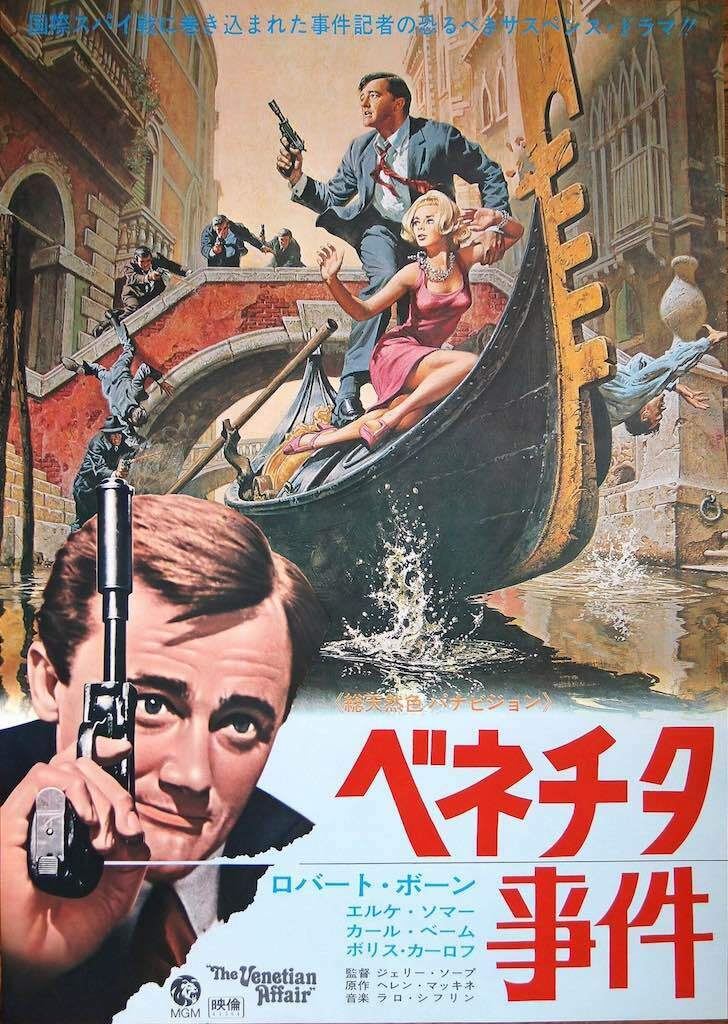
The Venetian Affair (1966)- Robert Vaughn, Elke Sommer and Boris Karloff in espionage drama, adapted from the Helen MacInnes bestseller.
The Secret Ways (1961) – Richard Widmark behind the Iron Curtain in Alistair Maclean thriller.
Stiletto (1969) – Mafia assassin Alex Cord hunted by cop Patrick O’Neal with Britt Ekland providing the glamor. From the Harold Robbins novel.
Duel at Diablo (1966) – action-packed western starring James Garner and Sidney Poitier, both playing against type.
The Secret Partner (1961) – Stewart Granger on the run in mystery thriller also starring Haya Harareet.
If I had not restricted the films in the competition to those that were just reviewed in the April edition of the Blog, I would have had to find room for another picture that was originally reviewed last year. Polish epic Pharaoh/Faraon (1966) would have taken fifth place if I had changed the criteria to just total views for the month.
I am delighted to see readers digging back into the Blog to ferret out great films.
The winner has requested that I respect his anonymity. He writes a movie blog under the pseudonym “Over-The-Shoulder” and has asked I don’t reveal his full name. But if you want to know what he writes about, check out his blog.
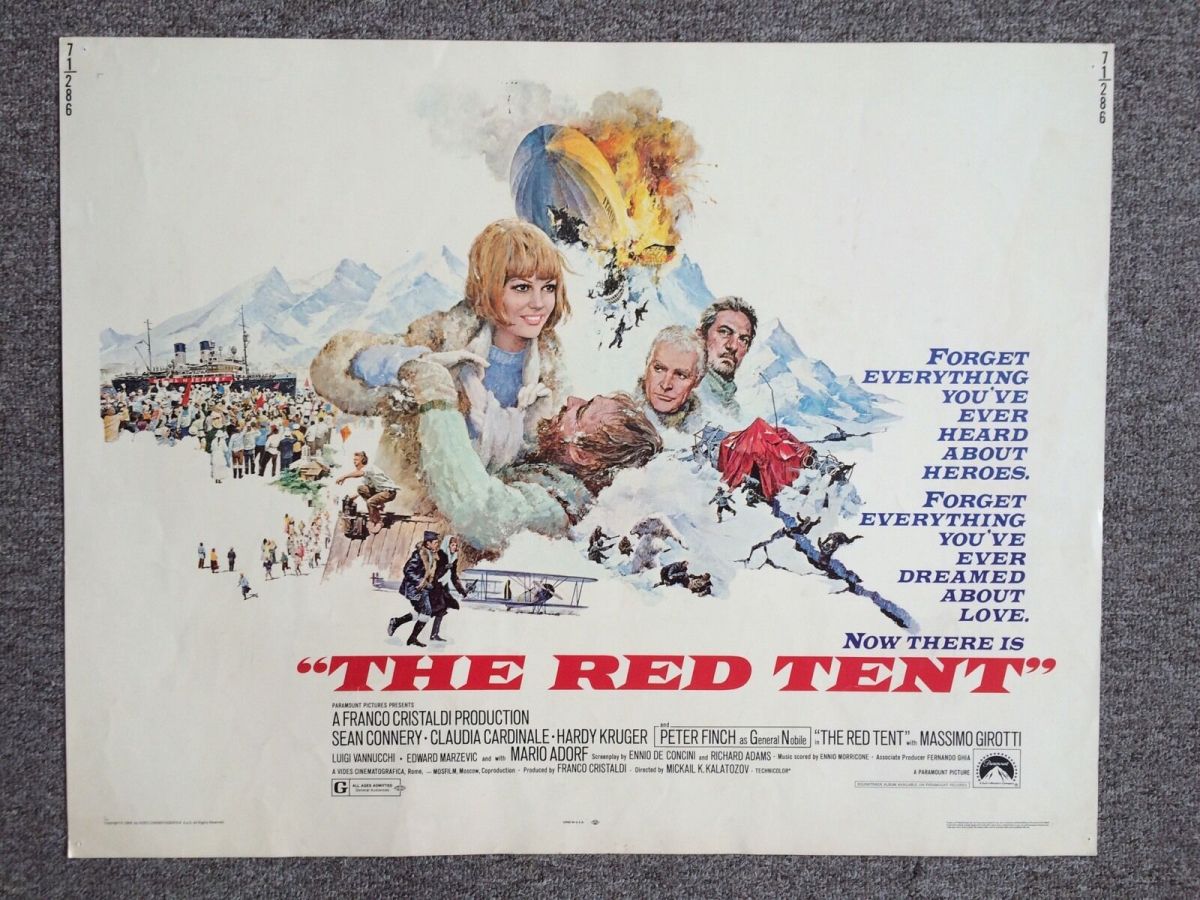
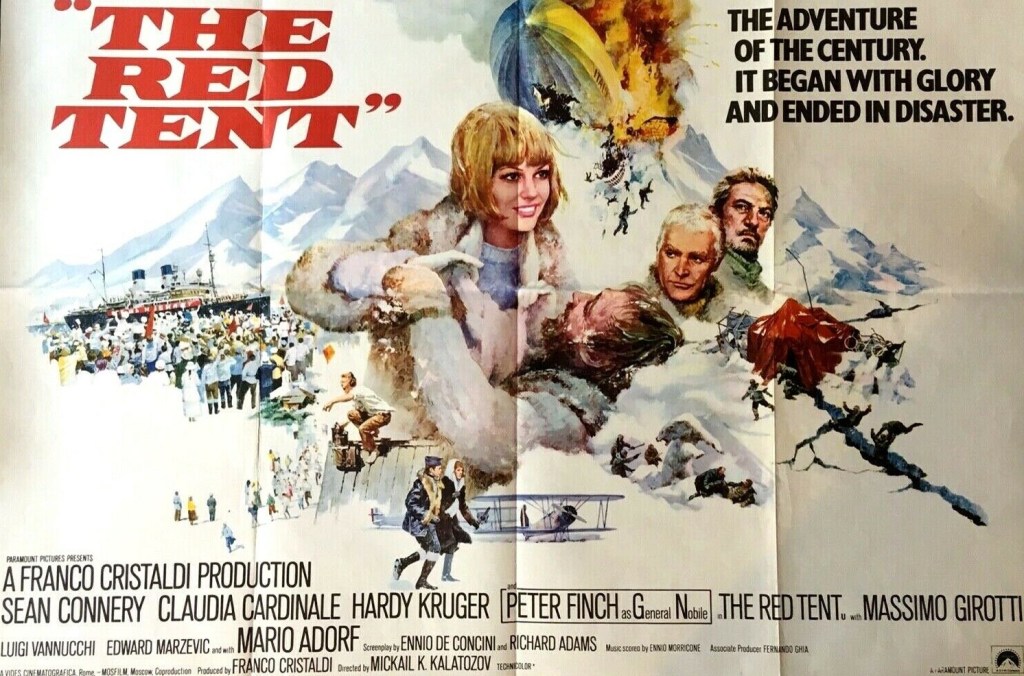
If you’re unfamiliar with the abortive Italian airship expedition to the North Pole led by General Umberto Nobilo (Peter Finch) in 1928, you’ll find this an absorbing tale. If you are familiar then you will probably appreciate the film-makers’ attempts, via an unusual framing device, to carry out a post-mortem and to apportion blame for the disaster. If you know your history you’ll also be aware both poles had already been conquered, American Robert Peary first to the North Pole in 1909, Norwegian Roald Amundsen (Sean Connery) claiming South Pole bragging rights two years later. So you’re also probably wondering what was the point nearly two decades later of the Nobilo operation?
But the sled-led efforts of Peary and Amundsen were feats of endurance i.e. man vs. nature. This was science vs. nature. The dirigible was the apex of aviation advancement and nations still battled for exploration glory. So to travel in some comfort and fly over the North Pole in a few days would be a demonstration of scientific supremacy. Conquest of one of the most inhospitable places on earth was almost a PR exercise. With no intention of landing it was also a glorified tourist trip.
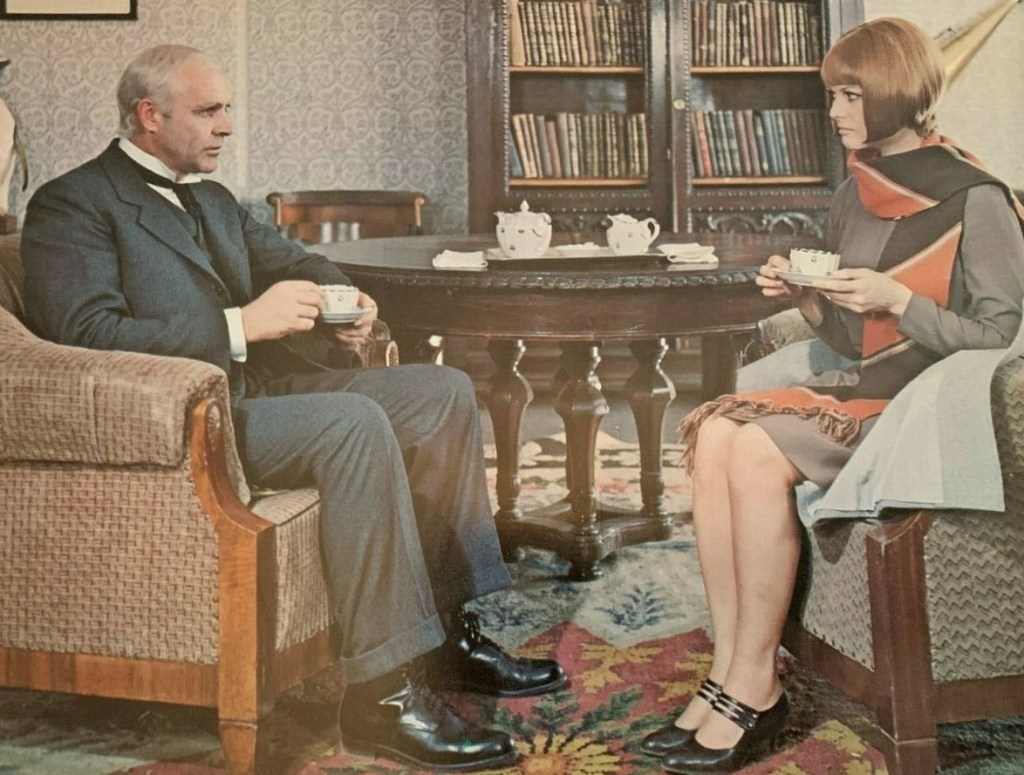
Connery and Cardinale lock horns over tea.
However, the science was flawed. Nobody had counted on the build-up of ice. The airship crashed and since this was a joyride nobody was equipped to walk their way out. Just surviving would be difficult enough. Loss of radio transmission (science) indicated a problem to those waiting back at the base so rescue airplanes were deployed. But without a location to pinpoint, the searchers had about two million square kilometers cover. Luckily, a brilliant scientific deduction by expedition member Finn Malmgreen (Eduard Martsevich) saves the day and a ham radio user (amateur science) picks up the location. Game on!
Except airplanes are too easily thwarted by blizzards, fog and the inhospitable. Home base, set up simply to welcome home a successful jaunt, is not capable of organizing a proper rescue. A Russian ice-breaker joins the rescue attempt. Taking greater risks is aviator Einar Lundborg (Hardy Kruger), fired up by the promise of sex with desperate nurse Valeria (Claudia Cardinale), who happens to be Malmgreen’s girlfriend, and a bounty from Nobilo’s insurers. The redoubtable Valeria does not have to sell her body to persuade the more highly-principled Amundsen to join the rescue effort.
So it’s gripping clock-ticking-down stuff, action shown in considerable detail, almost over-populated in one sense as director Mikhail Kalatozov (The Cranes Are Flying, 1957) covers multiple storylines, the various disjointed rescue efforts, the survivors weakening by the day, imperiled by marauding polar bears and the ice cracking up beneath their feet.
In the main it’s a true story, Valeria the only fictional element, inserted for dramatic purpose, to give the audience someone to emotionally root for back on land and for her character to guide us in almost contemporary fashion through the ghoulish carnival onshore as thousands gather to witness first-hand news of disaster.
What’s patently untrue is the framing device, given that it shows the still-living Nobilo summoning up the ghosts of others involved in the event for a post-mortem, in which his guilt drives him into the position of sacrificial lamb. Although on first encounter it appears a bizarre idea, that, too, soon achieves dramatic purpose. Clearly there was intense discussion at the time and in the immediate aftermath by those who survived the disaster and there must have been high-level talks behind closed doors that usually excluded the main characters of the kind that was played out in a host of historical pictures made during the decade. Lawrence of Arabia (1963) and Khartoum (1965) had many such set-pieces where reputations were shredded.
This approach permits opportunity for all the principals to come together for confrontational purposes in the one room. Not all discussion follows the expected path and there is an interesting argument between Nobilo and Amundsen about leadership. From an audience perspective, it is, of course, quite satisfying to see Sean Connery facing off against Peter Finch with Hardy Kruger and Claudia Cardinale embroiled in the debate.
All eyes on Claudia Cardinale in the Japanese poster.
There is the bonus of fabulous cinematography of the majestic Arctic, the icy waste and breaking up of ice floes and collapsing icebergs never before captured in such widescreen glory. Further pluses are in the performances, especially Connery as an aged Amundsen, Finch as the glorious pioneer bewildered the sudden turn of events and Cardinale as a woman willing to go to any lengths to save her lover. Ennio Morricone provided the score.
However, you are best going into this to be aware that while Finch has a goodly amount of time onscreen, Connery and Cardinale (the ostensible stars judging by the credits) are not seen so frequently. That said, the movie happily falls into the survival sub-genre. The DVD version I saw was just a shade over two hours – cut by about 30 minutes from original release – but reportedly the longer version adds little more than some extra angst.
I stopped watching this mid-drivel so don’t count on me for a balanced assessment. But it does point up the dangers of the current Netflix obsession. In the cinema, no matter how bad a picture, I would always stay to the end. Particularly with Netflix’s movie joblot I found myself switching off in frustration that it was ever given the green light. I bet, though, Twentieth Century Fox were delighted to have been able to offload it onto Netflix, which provides no acceptable measure of audience response, rather than watching it sink like a stone at the movie box office.
It’s also a cautionary tale about the problems of snapping up a bestseller supposedly in the Gone Girl (2014) and The Girl on a Train (2016) vein, both featuring as here an unreliable narrator, without working out how such fiction might translate to the screen. Buying bestsellers is usually an astute piece of business from the Hollywood perspective. Both the novels mentioned sold in excess of 20 million copies. Even if only 10 per cent of the book buyers went to see the movie, you are talking about $20 million already at the box office. If it’s 20 per cent, then that’s a flat $40 million, and so on.
Bestsellers tended to get snapped up quickly, often in pre-publication, and although they might come with riders attached relating to copy sales, generally you are looking at a movie sales tag of around $1 million. That’s a tiny fraction of the cost of any movie budget with the double bonus that readers will more than offset the purchase price and that the bestseller angle provides an easy marketing hook.
I go to the movies once a week and watch at least two films and sometimes as many as four. And I pay to go. I buy my ticket rather than, as a movie critic, gaining free access. So I’m a sucker for almost anything and if you’ve been reading my Blog you’ll see that I have a pretty high tolerance level and enjoy a wide variety of pictures. So it takes a lot for me to get a downer on a particular movie.
So what’s gone wrong here? The book pivoted on the notion that the protagonist Anne Fox (Amy Adams), imprisoned by agoraphobia in her apartment, views the world through the prism of old Hollywood movies. So old pictures inform much of the writing, they are referenced all the time, almost in the sense of “what would Humphrey Bogart do.” That’s just not an option for a movie, so we are only given a few glimpses of films like Spellbound and they do not play any part in explaining her mental state.
So then it’s basically a re-run of Rear Window (1954) with instead of voyeuristic proclivities being deemed acceptable because it’s James Stewart doing the peeking we have what is effectively a creepy “cat lady” (minus the cats of course) who moons around her apartment drinking. She employs a psychiatrist but he’s redundant in movie terms because we already know she’s loopy and we don’t need to be told that, and that no matter what she did it’s not going to make us look upon her with any more kindness. Why? Because she has a singularly unattractive personality.
Amy Adams (Arrival, 2016) can normally be relied upon to deliver a good performance, but she is hopeless, generating not an ounce of sympathy for her predicament, not helped by going spare at kids doing nothing more dangerous than enjoying Halloween. But she’s not alone in producing audience antipathy. Of the couple across the street whom she spies upon, Jane Russell (Julianne Moore) has obnoxiousness down to a tee while husband Alistair (Gary Oldman) is over-the-top. And if an audience can’t find anyone to like it’s not going to like the film.
For a film boasting two Oscar-winners – Gary Oldman for Darkest Hour (2017) and Julianne Moore (Still Alice, 2014) – plus six nominations for Adams and one for Jennifer Jason Leigh and stars Anthony Mackie and Wyatt Russell from current television mini-series The Falcon and the Winter Soldier (2021), this is a hatful of talent waiting for a rabbit to jump out and perform a miracle cure on a thriller with no thrills. A packet of exposition gets in the way of audience involvement and director Joe Wright (Pride and Prejudice, 2005) fails to make any headway in the Hitchockian department.
Perhaps the most bizarre aspect of his movie car crash is that its timing could not be more apposite. A film about not being able to go out during a pandemic that confined global populations to their homes should have struck some kind of chord. Of course, it’s been sitting on the Twentieth Century Fox (now rebranded as “20th Century Movies”) shelf since 2019 and it might have been better for all concerned had it stayed there.
What were the most popular films of last month on the Blog in terms of views? Was it Julie Christie hunting for a lover in In Search of Gregory, Doris Day comedy Move Over, Darling, James Garner and Sidney Poitier is all-action western Duel at Diablo, British newcomer Carol White under threat in Daddy’s Gone A-Hunting or twisty thriller The Secret Partner with Stewart Granger?
Or was it none of these? Would you pick instead Britt Ekland as an unlikely Amish stripper in The Night They Raided Minskys or a depressed Anne Bancroft in The Pumpkin Eater or Robert Vaughn in spy thriller The Venetian Affair?
Or would your choice be Mafia thriller Stiletto with Alex Cord or Claude Chabrol’s French love triangle Les Biches or Richard Widmark in The Secret Ways, an adaptation of the Alistair Maclean bestseller?
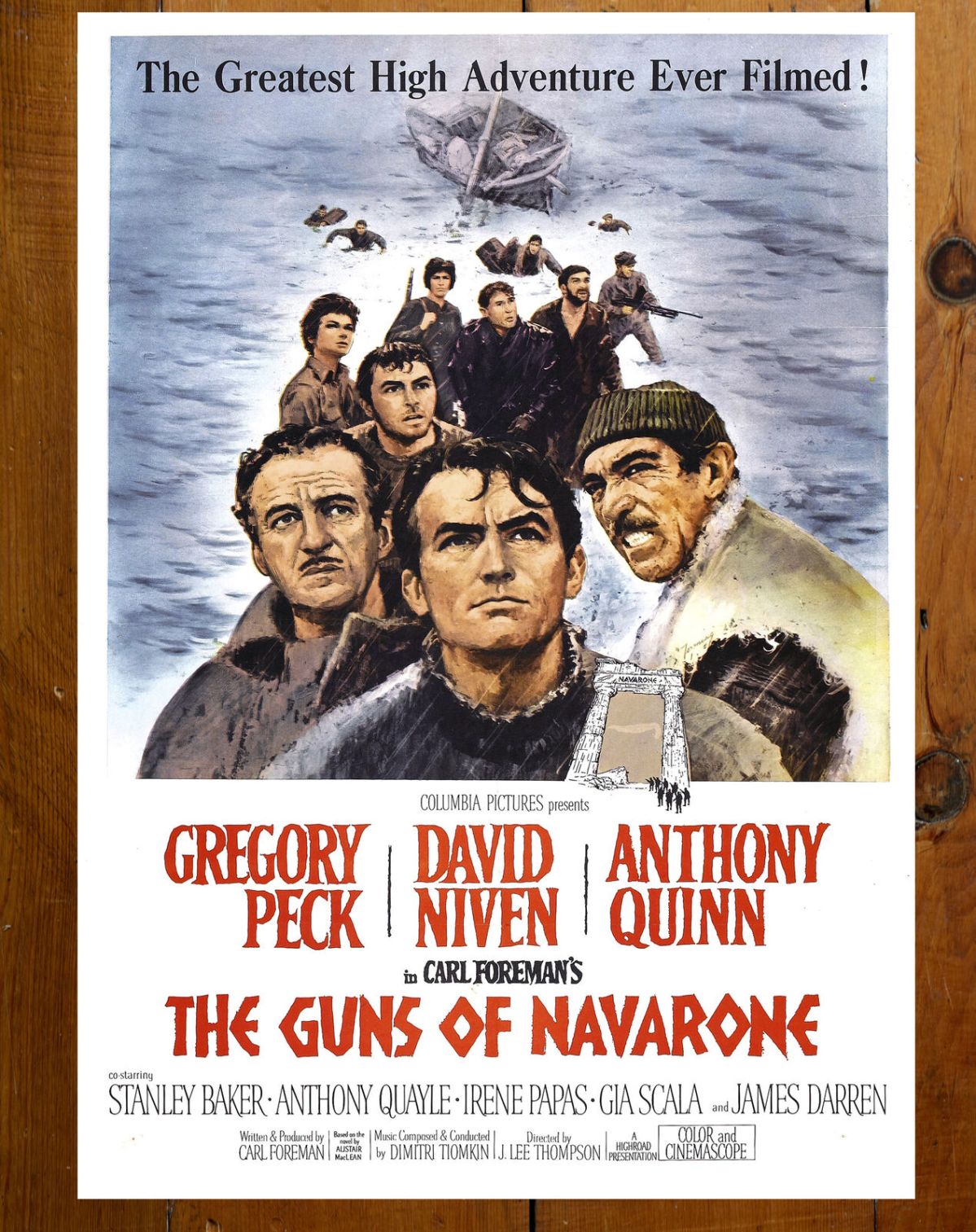
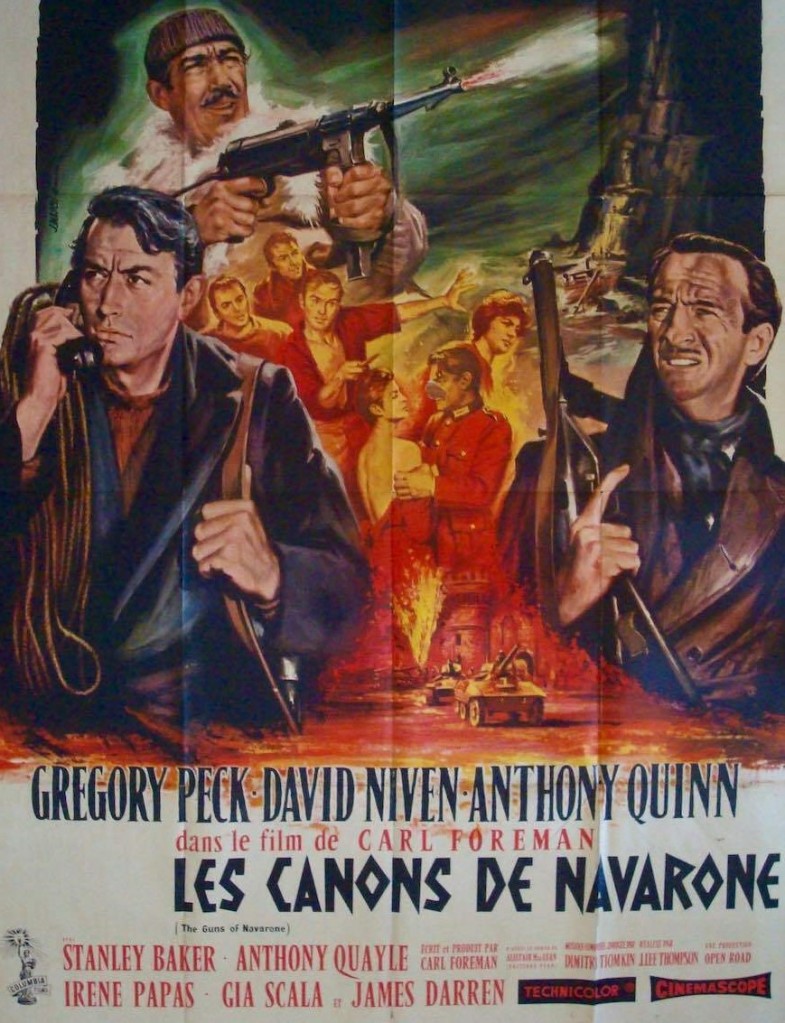
Guess which were the top five films last month in terms of views in ascending order and you could win a signed copy of my book The Making of The Guns of Navarone. This is the revised edition with for the first time over 30 illustrations.
Brilliant premise, brilliant execution, brilliant acting. The best send-ups are driven by their own internal logic and this is no exception: spy boss, known simply as The Chief (Wilfred Hyde White), determines in most un-British fashion to get rid off a mole in the operation by eliminating all potential suspects. Bristling Colonel Mostyn (Trevor Howard) recruits Boysie Oakes (Rod Taylor) for the job, believing Oakes showed particular gallantry during World War Two, unaware this was pure accident. Oakes is given all the perks of a super spy – fast cars, fashionable apartment – and attracts women in a way that suggest this is also a perk and once realizing that being a killer is outside his comfort zone delegates the dirty work to another hit man Griffen (Eric Sykes).
The sweet life begins to unravel when Oakes takes a weekend abroad with Mostyn’s secretary Iris MacIntosh (Jill St John) and is kidnapped. Forced to battle for survival, another Oakes emerges, a proper killer. Cue the final section which involves trapping the mole.
Where films featuring Matt Helm and Derek Flint imitated the grand-scale espionage they aimed to spoof, the laughs here come from small-scale observation and attacks on bureaucracy. According to regulations, Oakes’ liaison with MacIntosh is illicit. There is endless paperwork. Apart from an aversion to needless killing, Oakes has terrible fear of flying. Nobody can remember code names or passwords. Oakes’ automobile numberplate is BO 1 (the letters in those days being a standard acronym for “body odor”). It is all logical lunacy. And even when the story gets serious, it follows logic, a ruse, a dupe, a climax pitting resolve against human weakness.
Best of all, the parts appear custom-made for the players. Rod Taylor (The Birds, 1963), in his first venture into comedy, displays a knack for the genre without resorting to the slapstick and double takes requisite in the Doris Day pictures to follow. And he is a definite screen charmer.
By this point in his career the screen persona of Trevor Howard (Von Ryan’s Express, 1965) had been shorn of subtlety. He was generally one choleric snort away from a heart attack. Here, while the narrative pricks his pomposity, he remains otherwise ramrod certain. The audience is in on the joke, but nonetheless his genuine ability as a spy master is not in question. On the other hand Jill St John (Who’s Minding the Store, 1963) is allowed considerable leeway in the subtlety department, as a demure English rose rather than the sexier roles into which she was later typecast. In some respects British television comedian Eric Sykes is miscast. It is a particular English joke to present him as a killer since on television (in shows unlikely to be shown in America) he was hapless.
And it is worth mentioning Akim Tamiroff whose villainous stock-in-trade is allowed greater depth. David Tomlinson (Mary Poppins, 1964) and Gabriella Licudi (You Must Be Joking!, 1965), have small parts. Aso watch out for future British television stars Derek Nimmo (Oh, Brother, 1968-1970) and John Le Mesurier (Dad’s Army, 1968-1977) as well as Jennifer Jayne (Hysteria,1965) and Betty McDowall (First Men in the Moon, 1964).
Director Jack Cardiff had tried his hand at comedy before with My Geisha (1962) starring Shirley Maclaine but was better known for Oscar-nominated drama Sons and Lovers (1960) and action picture The Long Ships (1964). John Gardner, who wrote seven books in the Boysie Oakes series, later penned James Bond novels.
It is well worth considering whether The Liquidator would have punctured the success of both Our Man Flint (1966) and The Silencers (1966) and sent spy spoofery in a different direction. It had premiered in the U.K. prior to both but litigation held up its American launch until long after that pair had gone on to hit box office heights.
Catch-Up: Previously reviewed in the Blog are Jack Cardiff’s The Long Ships, Rod Taylor in The Glass Bottom Boat (1966) and Hotel (1967) and Trevor Howard in Operation Crossbow (1965) and Von Ryan’s Express (1965).
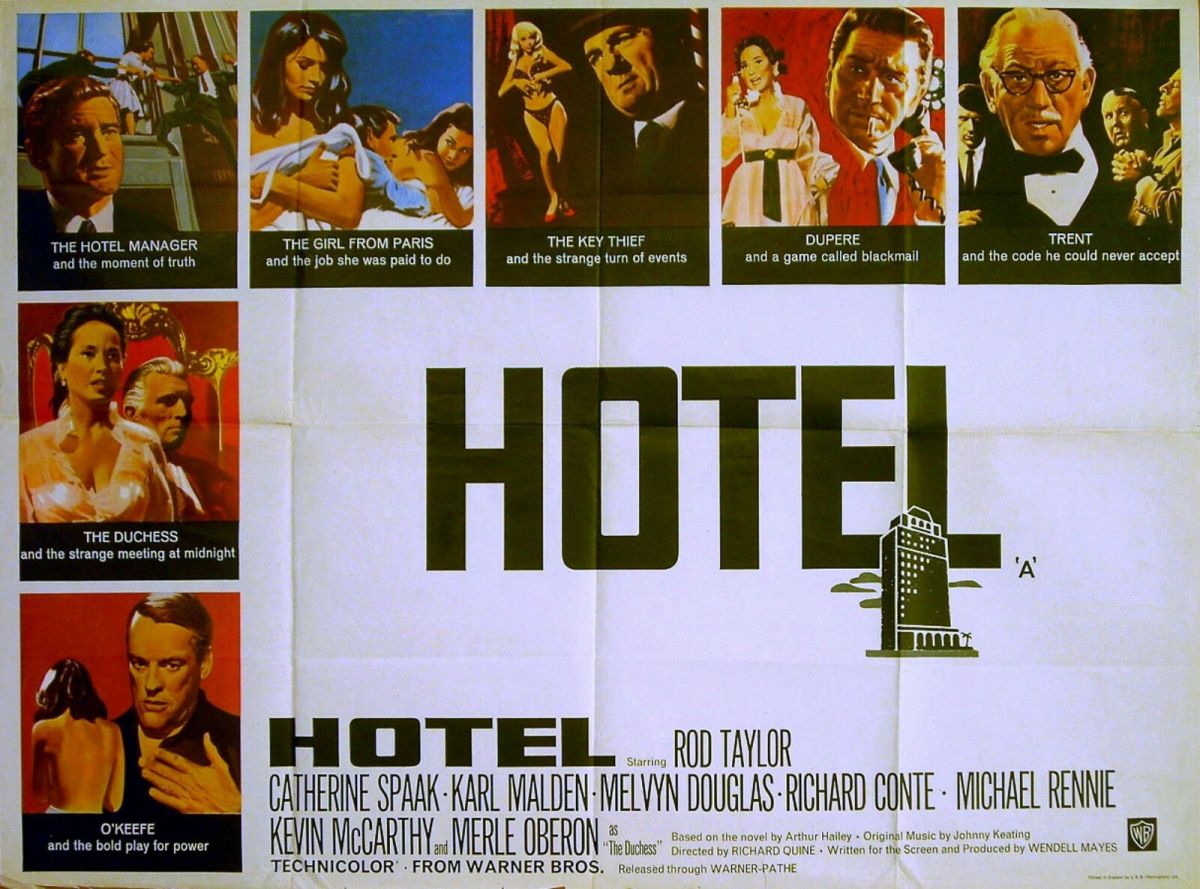
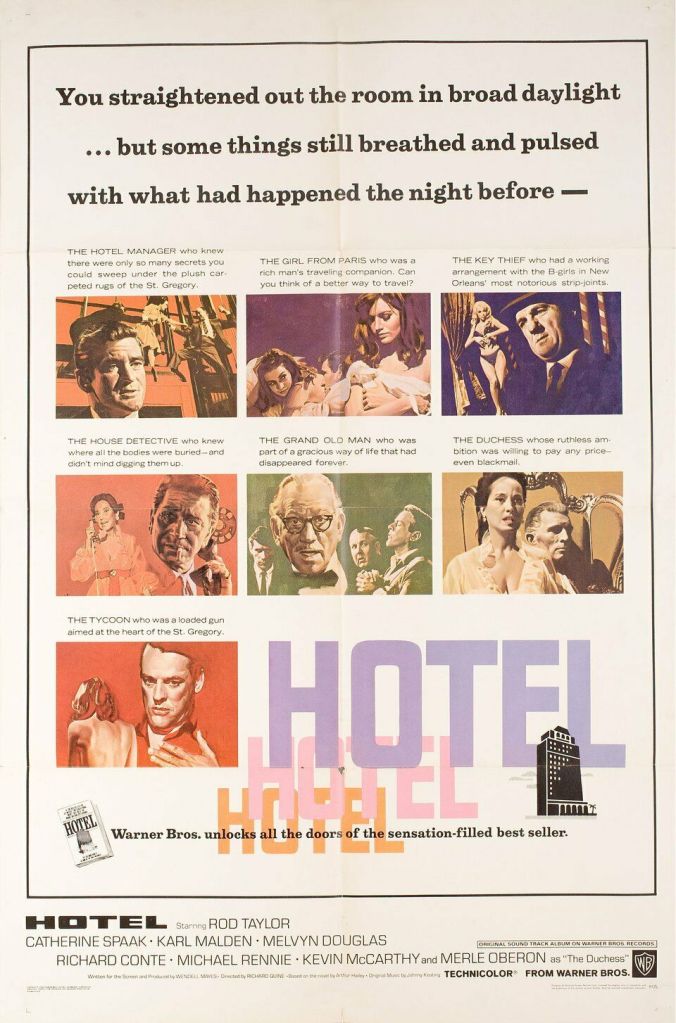
The cardinal rule of the grand hotel picture was that it featured major stars. That is not so much the case here although the portmanteau of stories is up to scratch. Traditional hotel manager Peter McDermott (Rod Taylor) and boss Warren Trent (Melvyn Douglas) battle ruthless financiers, aristocrats Geoffrey (Michael Rennie) and Caroline (Merle Oberon) are involved in a fatal car accident, hypocritical God-fearing businessman Curtis O’Keefe (Kevin McCarthy) has a mistress Jeanne Rochefot (Catherine Spaak) on the side. Added into the mix are hotel thief Keycase Milne (Karl Malden) and hotel detective Dupere (Richard Conte). Not forgetting a dodgy elevator (you know where that’s headed!).
None of the stars mentioned comes up to the marquee standard set by the original in the subgenre – Grand Hotel (1932) boasted Jean Harlow, Greta Garbo, Joan Crawford and Wallace Beery – while an offshoot of the same idea The VIPs (1963) had Elizabeth Taylor, Richard Burton Orson Welles and the later Airport (1970) would rustle up top attractions Burt Lancaster, Dean Martin and Jean Seberg.
Top British film critic Alexander Walker espoused the movie.
It’s a fair bet that Warner Brothers felt audiences would be satisfied that the storylines were augmented by the behind-the-scenes insider information promised by the Arthur Hailey bestseller on which the film was based, such as how B-girls stole hotel keys, the tricks employed by a hotel thief and the various corrupt opportunities open to hotel staff. But it’s a major miscalculation to assume an audience cares that much who owns a particular hotel. And in the year in which In the Heat of the Night and Guess Who’s Coming to Dinner dealt with racism head-on, it was odd to see desegregation parlayed as a device to lower the asking price for the business or introduced out of economic necessity rather than high-minded principle.
Such gripes aside, this is movie comfort food, a picture that moves at a leisurely pace among its interwoven tales. Kevin McCarthy’s ruthless arrogant businessman steals the show, closely followed by Merle Oberon’s scheming duchess. To use a soccer analogy Rod Taylor is more like an old-fashioned center half rather than a midfield maestro, holding the picture together rather than setting it alight and his romance with McCarthy’s mistress (half his age) is an unlikely diversion, although the soft-spoken French actress, confronted by conscience, is particularly good. Melvyn Douglas as the aging owner mixes curmudgeon with affection and it’s hard not to feel sorry for Conte, outwitted by an older woman, and especially for Malden as the thief finding out how much the credit card has cut into the larceny business.
This was the last big-budget production for director Richard Quine whose career had been on the slide since box office highs The World of Suzie Wong (1960) and Sex and the Single Girl (1964). But he may have been somewhat restrained by having screenwriter Wendell Mayes (Von Ryan’s Express, 1965) as his producer. While well-crafted affair and glossy it lacks the inherent tension of an Airport.
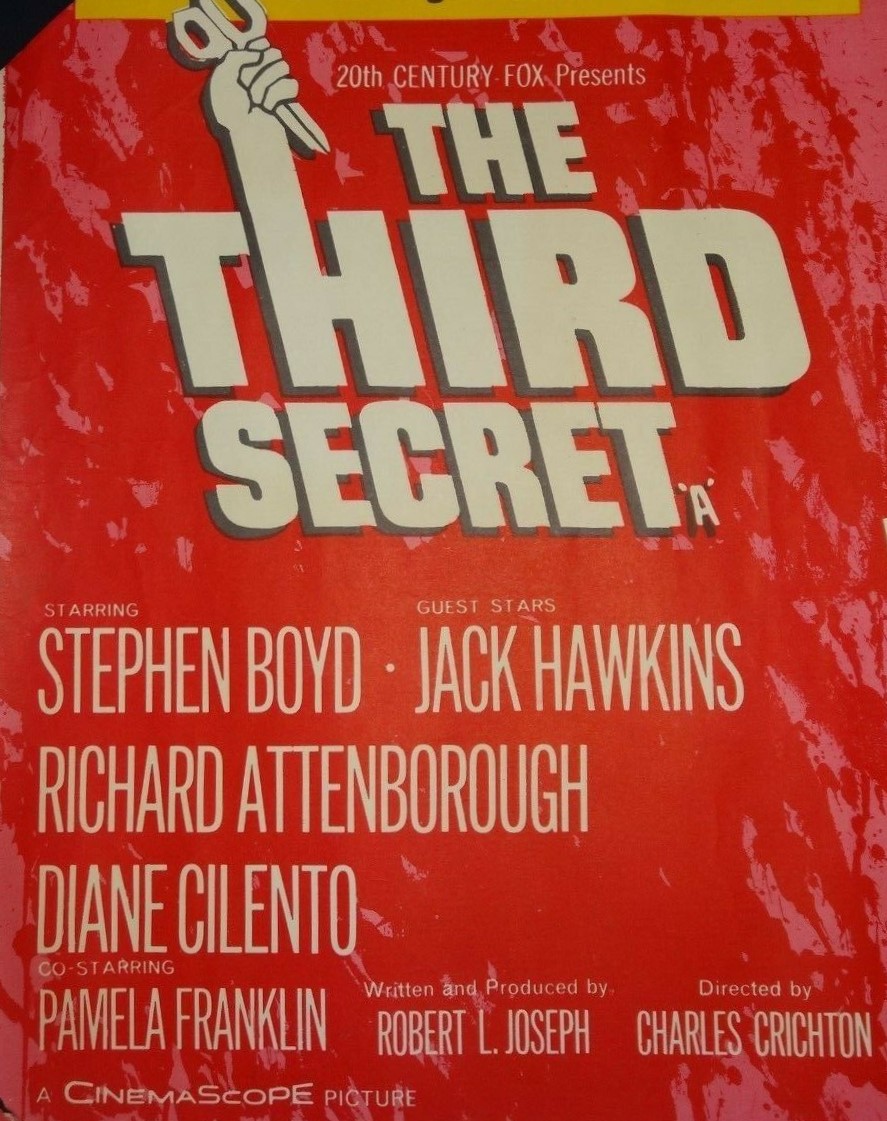
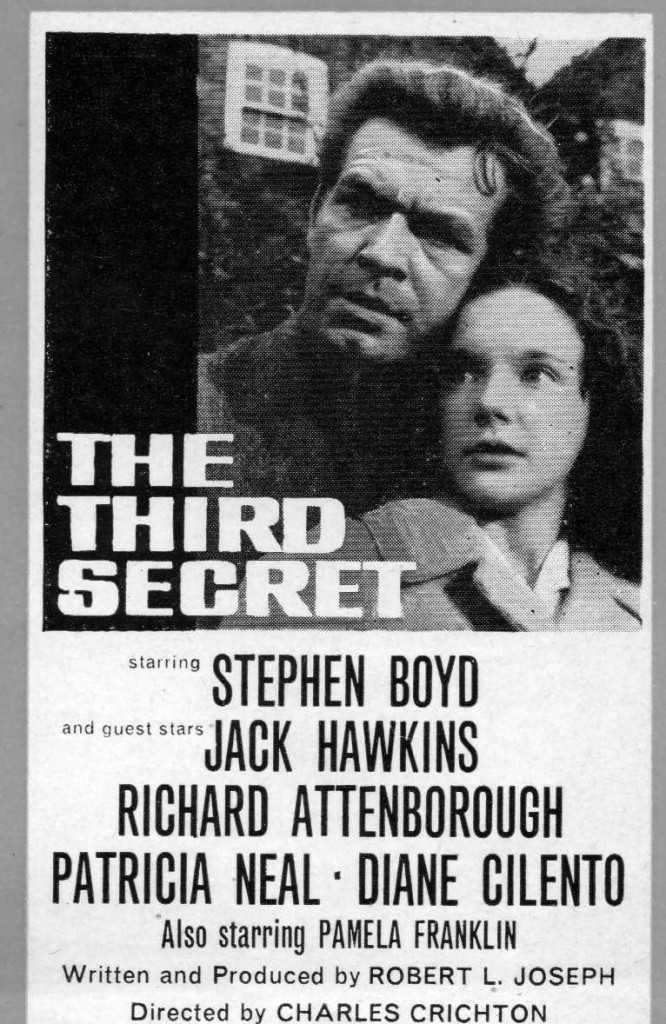
Non-exploitative films about the psychologically vulnerable were thin on the ground during the 1960s and although The Third Secret is a bit talky nonetheless it does explore issues normally dealt with in heavy-handed fashion. Catherine Whitset (Pamela Franklin) the young daughter of a famous psychiatrist convinces television journalist Alex Stedman (Stephen Boyd) to investigate her father’s supposed suicide. Whitset needs the murder verdict because otherwise she will lose her home (no insurance payout on suicide). Stedman, Whitset’s patient, wants a similar outcome because his world would be turned upside down if the psychiatrist had committed a deed which he appeared steadfastly opposed.
The main suspects are all patients of the dead doctor – judge (Jack Hawkins), gallery owner (Richard Attenborough) and secretary (Diane Cilento). Although all outwardly successful socially-functioning upstanding members of society each is mired in mental agony – anger management, sexual inadequacy, depression, low self-esteem among problems addressed – defenses against which are perilously thin. Under sustained pressure each of the individuals will crack to reveal the cowering creature underneath.
But are they the killer or just condemned to torment? With the one man who could keep them sane removed from their lives, who knows what carnage they can self-inflict. All, even Stedman – given to bouts of terrible rage and drunkenness – seem capable of murder and there is every likelihood (as any viewer will guess) that his investigation could lead back to himself.
Director Charles Crichton (The Lavender Hill Mob, 1951) might have been suffering from low self-esteem himself having been unceremoniously dumped from The Birdman of Alcatraz (1962) and certainly the atmosphere is one of severity, not just characters teetering on the brink, but the black-and-white photography rendering London a wasteland, the tide on the Thames always out so the shore is just mud. However, his compositions do have style. The title’s explanation by the way is that the first secret is what you keep from the public, the second is what you hide from yourself, but the third is the truth.
Boyd (Ben-Hur, 1959) and Franklin (The Innocents, 1961) appear often on the point of hysteria, the girl’s high-pitched voice set against his growling outbursts. Attenborough (fresh from the heroics of The Great Escape, 1963) plays against type as a hand-wringing wannabe artist stuck in a role he despises. Hawkins, too, more used to heroic roles, is convincing as a man trying to escape his past. The neurotic Cilento has the best scenes, touching in her efforts to cling to normality. Judi Dench makes her debut in a bit part. The investigation takes the form of character analysis rather than “where were you on the night of…” which gives the picture an unique flavor, but best to know that going in rather than complain about the slow pace. If the psychological does not keep you hooked, there are sufficient twists to keep you watching.
To celebrate the 60th anniversary of the opening of The Guns of Navarone I am offering a copy of my book “The Making of The Guns of Navarone.” This is a revised and enlarged edition – the first time with illustrations (over 30 of them) – of the original version which was published in 2013.
The Royal World Premiere of the film took place at the Odeon Leicester Square, London, on April 27, 1961. But it was not released in the U.S. until June, opening at the Criterion and Murray Hill cinemas in New York. At all three cinemas it broke the box office record.
All you have to do to enter is guess from all the films reviewed in the Blog in April which five proved the most popular (judged from the number of views).
Put the five you have chosen in ascending order.
Email your answers to me at bhkhannan@aol.com
The person who gets the most right in the proper order will be declared the winner.
The book will be posted free of charge anywhere in the world and, being the author, I can arrange for it to be signed. The closing date is Monday, May 17.
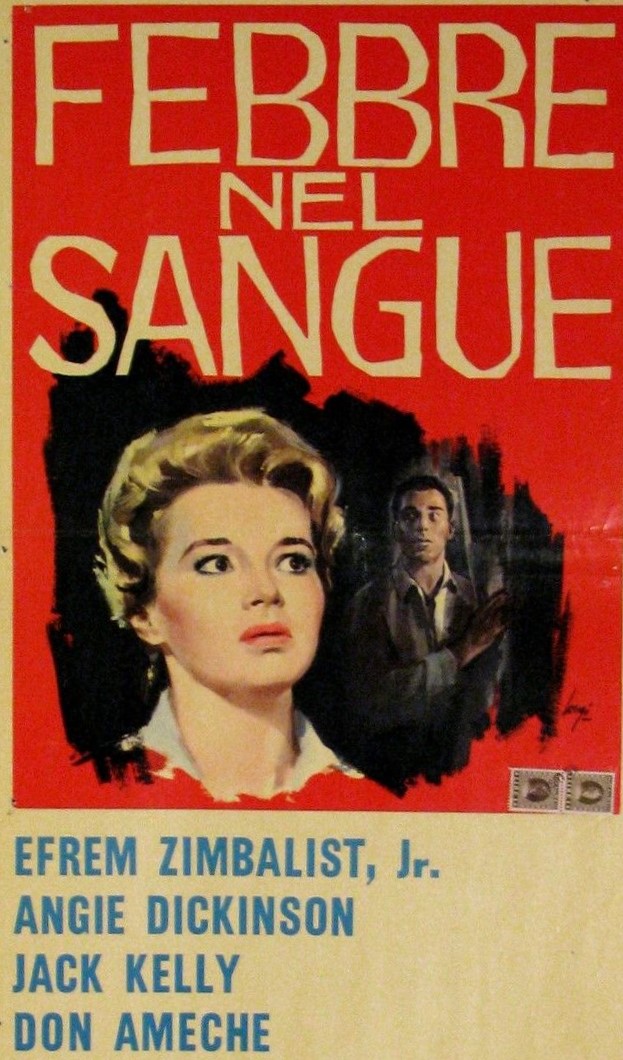
Blistering B-film from writer Roy Huggins (TV’s The Fugitive) that marries political chicanery to legal jiggery-pokery in a movie that races from one twist to another. In his role as producer Huggins calls upon actors he made stars from the television series he created – Efrem Zimbalist Jr. (77 Sunset Strip), Jack Kelly (Maverick) – and gives Angie Dickinson (Oceans 11) the female lead. Huggins’ brilliant premise is to ignore the dilemma of the man, Walter Thornwall (Rhodes Reason), nephew of a former Governor, wrongly accused of the murder of his wife. Instead the film concentrates on accuser District Attorney Dan Callahan (Kelly) and Judge Lee Hoffman (Zimbalist Jr), both of whom, running for the vacant Governor post, stand to make massive political capital from the publicity surrounding a sensational trial.
Former buddies, Callahan and Hoffman are now bitter rivals after the former had reneged on a promise to support the latter’s bid for the political post. Also throwing his hat into the ring is Senator Alex Simon (Don Ameche) whose wife Cathy (Dickinson) once had romantic yearnings for Hoffman. The only one of the trio who had anything approaching a conscience is Hoffman and that is immediately tested when the Senator offers him a bribe to stand down from the race, which the Judge, after an appeal from Cathy, does not report to the authorities. There is another ploy open to Hoffman. Should he find reason to declare a mistrial, that would sabotage Callahan’s bid since he would not be riding high in the media after convicting a celebrity killer.
The picture jumps from intense politics, the wheeling-dealing and the wrapping up of votes, to a trial in a packed courtroom very much in the Perry Mason vein with surprise witnesses, shocks, objections sustained or overruled, clever arguments, dueling attorneys, and last-minute evidence. A witness has Thornwall running away from the scene of the crime and when his wife is painted as a nymphomaniac that provides ample motive. Further evidence pushes the defendant into a worse corner. But all the while over the trial hangs the stink of political machination.
There are another half-dozen brilliant twists not least of which is Judge Hoffman letting conscience go hang and embarking on a couple of dodgy endeavors himself including what amounts to sheer blackmail. The District Attorney, one of the sharpest tools in the box, reacts to every setback with a cunning that would have been criminal had it not been legal. Also hanging there is potential adultery between Cathy and the widowed Hoffman.
The writer in Huggins is a past master at shifting the cards in the deck and this has so many twists and turns it feels like a whole series of The Fugitive crammed into one episode. There is as much self-awareness of the underbelly of politics as in Advise and Consent (1962), as much deceit and corruption, as much principle disguised as honor. But the plot here is so tight, the characters dealing with twists and turns that the movie has no requirement for the depth of characterization that would have been brought to the picture by a Henry Fonda or Charles Laughton. Huggins proves you can have just as much fun without the big boys. None of the stars with the exception of Angie Dickinson made a dent on the Hollywood A-list but they are all perfectly acceptable, and once Huggins tightens the screws plot-wise the last thing on your mind is wishing for a better cast.
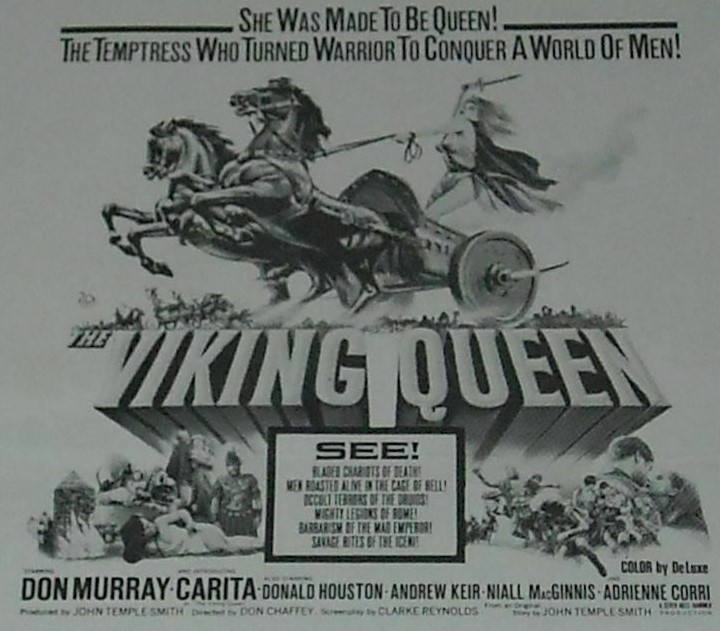
Politics, conspiracy, thwarted romance and historical inaccuracy take center stage in this Hammer romp that attempted to create another sex symbol to follow in the footsteps of Ursula Andress (She, 1965) and Raquel Welch (One Million Years B.C., 1966) in the shape of Finnish model Carita. Let’s put the dodgy historical elements to one side given Hollywood trampled over history all the time, but the title is a misnomer, the story owing more to British folk heroine Boadicea than anyone who came from longship land.
On his deathbed British tribal king (Wilfred Lawson), against the wishes of powerful Druid chieftain Maelgan (Donald Houston), signs a peace treaty with Roman governor general Justinius (Don Murray) against the wishes of his lieutenant Octavian (Andrew Keir). In different ways, the Druid and Octavian conspire to end the peace. Had new queen Salina (Carita), after falling in love with Justinius, been permitted to marry him that would have created a peaceful bond, but that is also prevented.
There’s a lot more sex and violence than you would have expected for the period, plenty scantily-clad slaves administering to the rich and the Romans, an extended brutal flogging sequence involving Salina, an offscreen rape, a cageful of Roman prisoners dropped into a burning pit, and when the British strap scythes onto the wheels of their chariots it’s a bloodbath. (Quite why the Romans never thought of importing their own chariots, given their popularity in the Colosseum, is never explained.) The chariots, whether in a race or battle, are the best thing about the picture, adding tremendous energy.
It takes quite a while for Salina to take up arms but when she does the film catches fire. She leads from the front, tearing through the Roman legions, and handy too with a sword. Ambushes appear the order of the day so any marching column or peaceful village soon ends up in a spot of bother.
There’s some of “what did the Romans ever do for us” with a snatch of Robin Hood thrown in – Justinius takes from the rich to give to the poor – plus religious fanaticism to stir the pot into a heady brew. But mostly it’s hokum, if rather plot-heavy. Quite how the Oscar-nominated Don Murray (Advise and Consent, 1962) was talked into this is anybody’s guess. Carita, of course, would have believed she was on a surefire route to stardom but in fact this was her last picture. They two stars don’t really have that much to do and do it well enough. In supporting roles you will spot Patrick Troughton (a BBC Dr Who), Nicola Pagett making her movie debut and Adrienne Corri (Africa – Texas Style, 1967). Director Don Caffey (One Million Years B.C., 1966) is better at action than drama.






 The Magnificent 60s