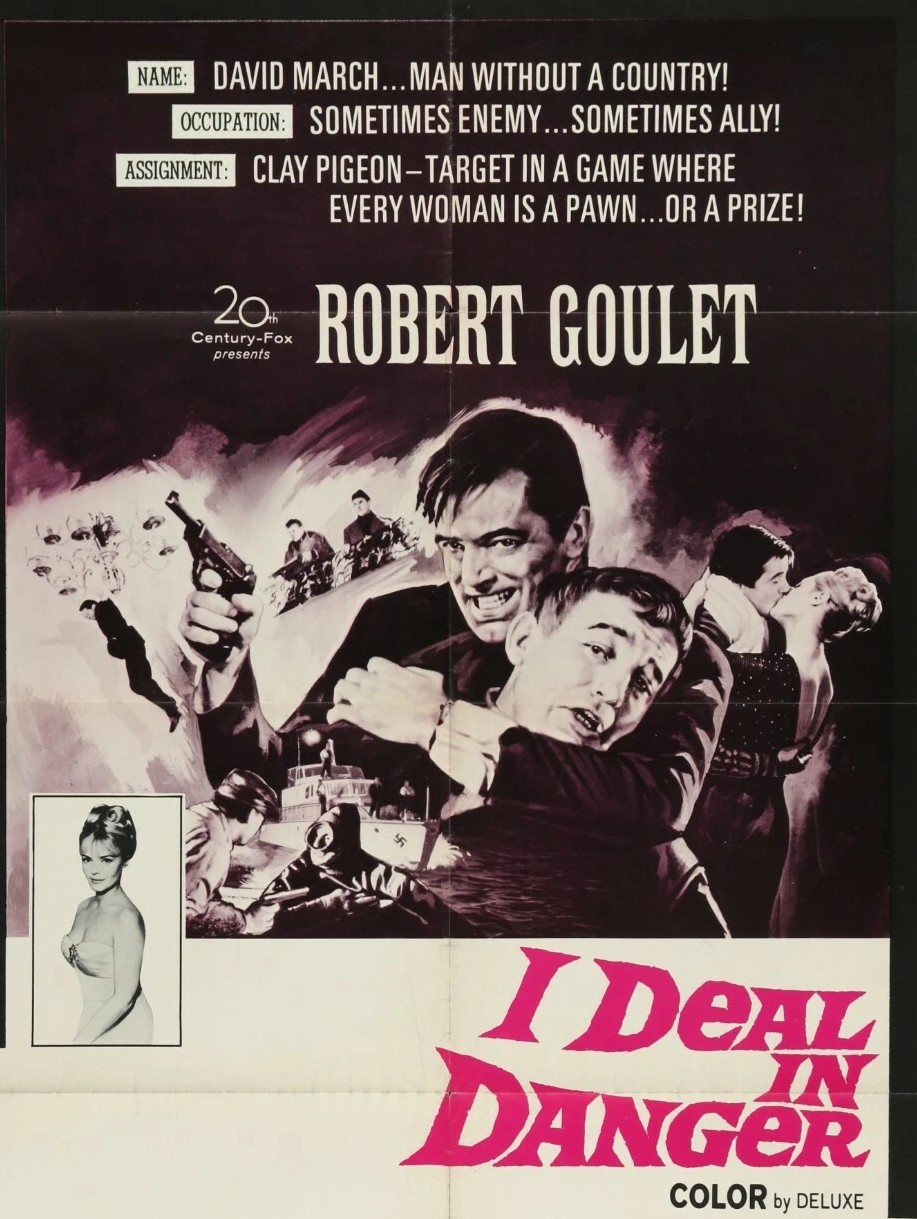
Crooner Robert Goulet, winner of the 1963 Grammy for best new star, was going down a familiar route of transition to the big screen. Bing Crosby and Frank Sinatra, Oscar-winners both, had led the line for singers who made it big in films. And they wouldn’t be the last – Barbra Streisand (Funny Girl, 1968), Kris Kristofferson (Convoy, 1978), Jennifer Lopez (Hustlers, 2019) and Lady Gaga (Joker: Folie a Deux, 2024) would also achieve the crossover.
Goulet has the looks and delivery to fit into the burgeoning espionage market, though this is set in World War Two. As well as action, it is packed full of crises to be overcome, double agents, triple agents, dirty tricks, and clever maneuvers. You never know which way it’s going to go at any given moment.
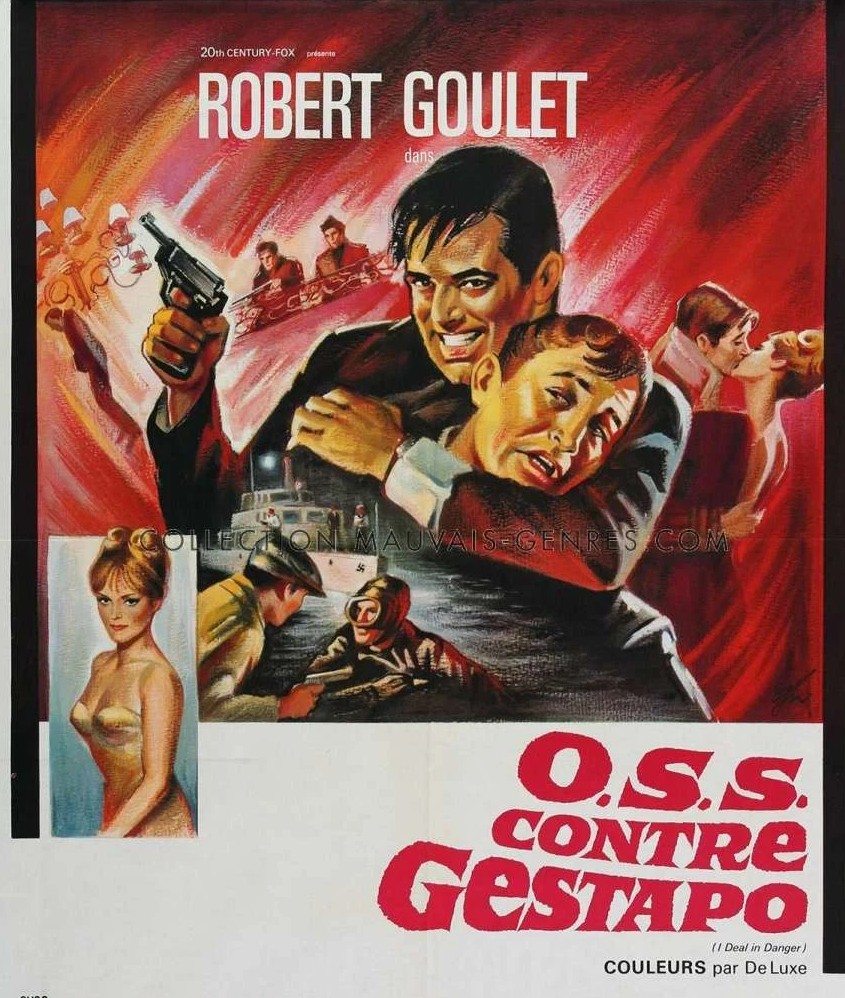
David March (Robert Goulet) is an American double agent who has infiltrated the Third Reich at a very high level – he acts as a kind of Lord Haw-Haw, predicting the Germans will come out on top and sneering at Allied efforts to stop them. But he’s under suspicion from Gestapo officer Elm (Werner Peters) who’s convinced the Yank is the last of an 18-strong espionage operation called Blue Light.
Having passed on information to the Allies, via a hole in a bar of soap, about the Germans working on a new secret weapon, March is later tasked with destroying it. But first he has to deal with another Yank traitor, Spauling (Donald Herron),who, ostensibly, could break March’s cover. Instead, it turns out Spauling’s job is to sacrifice himself to enhance March’s cover.
March is horrified at the prospect of having to shoot his old friend stone dead, even if Spauling is suffering from an incurable illness and only has weeks to live, so more like a mercy killing than murder. Instead, with a clever ruse, March turns the tables on Elm, convincing his own colleagues that the Gestapo officer is the last member of Blue Light, leaving March in the clear to concentrate on sabotage.
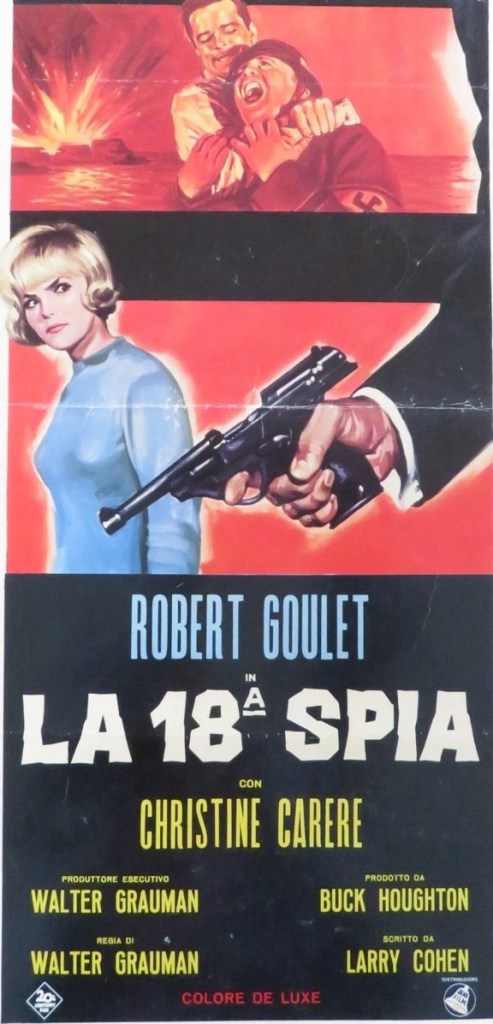
Naturally, as a spy, he must have an affair and who better than with fellow double agent Suzanne (Christine Carere) who convinced the Germans she was a collaborator after her French father, a World War One hero, was hanged by his own countrymen in World War Two.
So now we’re into The Heroes of Telemark (1965)/The Guns of Navarone (1961) territory except the secret weapon is a submarine that can cross the Atlantic fitted with enough missiles to take the USA out of the war without going to all the bother of an invasion.
But the sabotage operation is far from straightforward. March and Suzanne enrol in their mission German scientist Gretchen (Eva Pflug), whose scientist father has been denounced by the Germans but, in one of the best scenes, draws the line at treachery. And soon Gretchen has qualms about betraying her colleagues. Suspicious guards foil March’s attempts to smuggle in items essential to explosions. March’s own principles are called into question.
And with his initial plans hampered, March aims for implosion rather than explosion, turning the weapon on the factory building it.
Very passable entertainment and would have suited a marketplace desperate for the supporting material that could make up a decent double bill. You can’t quibble with Robert Goulet (I’d Rather Be Rich, 1964) especially as the espionage game threw up lots of worse actors. French actress Christine Carrere and German Eva Pflug bring a Continental air to proceedings while Werner Peters (Battle of the Bulge, 1965) continues his run of bad guys.
You might be more attracted by director Walter Grauman who helmed 633 Squadron (1964) and cult writer-director Larry Cohen (Black Caesar, 1973). This was, in fact, culled from four out of seven episodes of a US television series Blue Light (1966), created by Grauman and Cohen and swiftly re-edited to hit the overseas market.
Basically, a better class of B-picture.


One thought on “I Deal in Danger (1966) ***”