
Director Sidney Lumet didn’t have an easy time of it in the late 1960s. Like The Appointment (1969), this went missing in action. And you can see why. While The Secret Life of Walter Mitty (1947) was straightforward in mixing fantasy with reality, this is more tricksy – in a contemporary way. The fantasy elements verge so much on the realistic that it’s difficult at times to work out what is real.
And to add a bit of more substantial culture to the mix, there are shades of James Joyce, in the idea of someone going to a funeral and imagining their own death. And while there are actually a quartet of buddies in early middle age heading for the funeral of their friend, the titular Braverman, luckily there’s only one, Morroe Rieff (George Segal) who appears to live in his imagination.
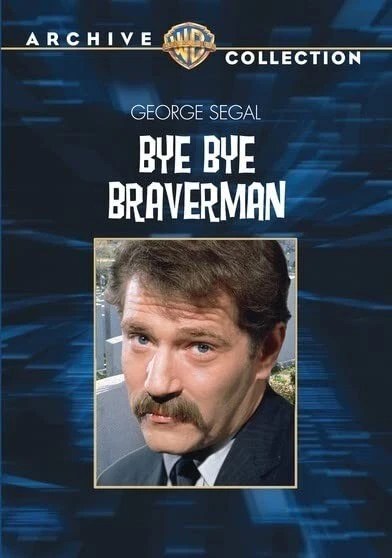
Morroe makes a living working in public relations, his novels not sufficiently commercial. You don’t realize this at first because you think he’s the cop who’s had to bring the news of her husband’s death to his wife Inez (Jessica Walters). Then you might think that he and Inez have the hots for each other and literally the moment the road is clear, she’s jumping his bones. But it’s pretty clear, from the way his wife Etta (Zohra Lampert) is annoyed about him running to Inez’s side at the slightest emergency, that he’s got more (unrequited) interest in her than a married man should have.
That last is the trickier one. It seems like it could be real. After all, the husband was notorious for his philandering, while Inez has played the dutiful wife. But you soon realize that any time Morroe is outside the strict confines of talking to his mutinous girlfriend or with his pals, virtually every other scene he appears in is manufacture.
The other three are well-drawn. Their occupations are largely irrelevant, because in Seinfeld fashion what they actually mostly do is talk, and often about things that are as inconsequential as Seinfeld, and they bond over communal memory of even odder things.
Felix (Joseph Wiseman) is the pick, in part because he has the best lines. He tells his feckless son, “I wasn’t crazy about your mother, and I like you even less.” He refuses to get into a Volkswagen because he’s Jewish and the car was made in Germany.
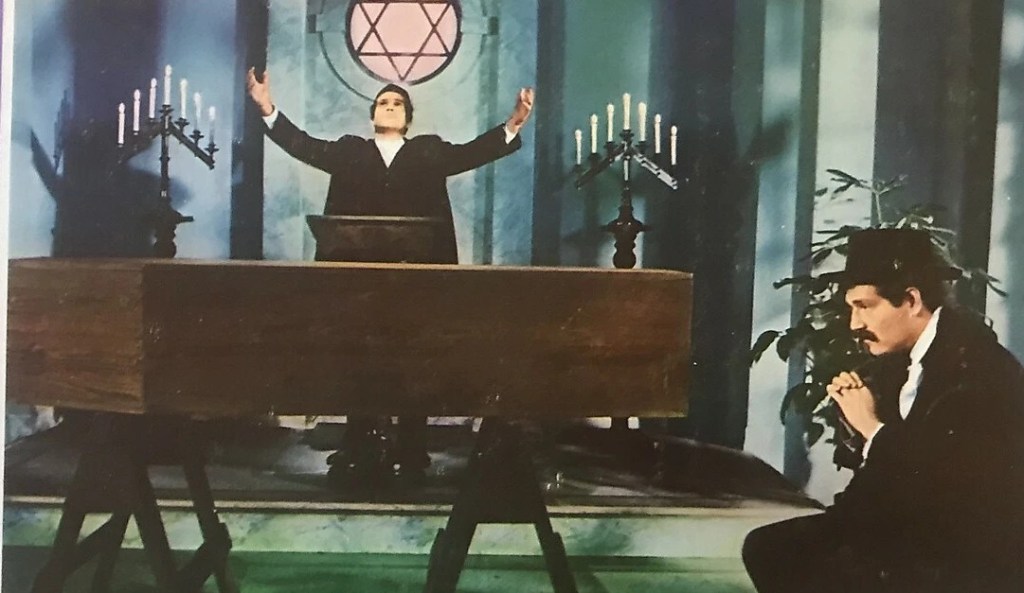
So mostly what you’ve got is the kind of inconsequential chatter that a bunch of intellectuals will indulge in, some of it intellectual, some of it not. That’s just the kind of movie it is. And either you’re going to sit back and let it work, or you’re going to switch off early once you realize what type of picture it is.
There were a lot of movies back in the day that concentrated far more on dialog and character than story and moving a story along. In part this was due to Hollywood drawing far more on the talents of playwrights, when William Inge (Bus Riley’s Back in Town, 1965), Tennessee Williams (Night of the Iguana, 1964) and Arthur Miller (The Misfits, 1961) were considered marquee attractions. The kind of story-driven action picture that proliferated from the 1970s onwards didn’t exist to make spectacle more important than dialog or character.
Making up the quartet are Barnet Weinstein (Jack Warden) who sports a toupee that comes off in a crisis and Holly Levine (Sorrell Brooke) and they’re all past masters at niggling each other and trying to niggle out the meaning of life.
Getting to the funeral isn’t straightforward. Inez’s directions prove difficult to follow. There’s an interaction with a taxi driver (Godfrey Cambridge) and they turn up at the wrong funeral.
Sidney Lumet steers clear of the grandiose, he’s not trying to make any visual points, and the fantasy inserts take the place of the inner monolog of James Joyce.
But it’s all dialog, so be prepared.
George Segal (The Bridge at Remagen, 1968) almost reinvents his screen persona, Jack Warden (Blindfold, 1966) revels in a more outgoing less choleric character, but Joseph Wiseman (Dr No, 1962) steal the show. Look out for Jessica Walters (Number One, 1969) and Zohra Lampert (A Fine Madness, 1966).
Screenplay by Herbert Sargent, in his debut, from the novel by Wallace Markfield.
You can see why this has gone missing but if you know what you’re going into it’s worth a look.
I have my own copy but you can get a good flavor of it – the first hour at least – on YouTube.


One thought on “Bye, Bye, Braverman (1968) ***”