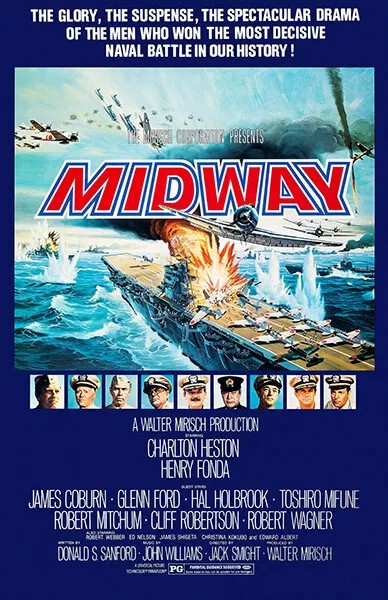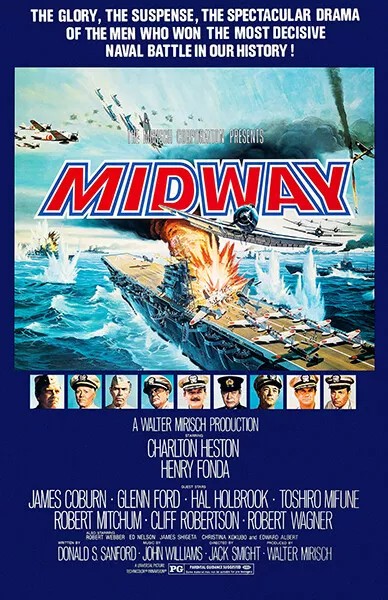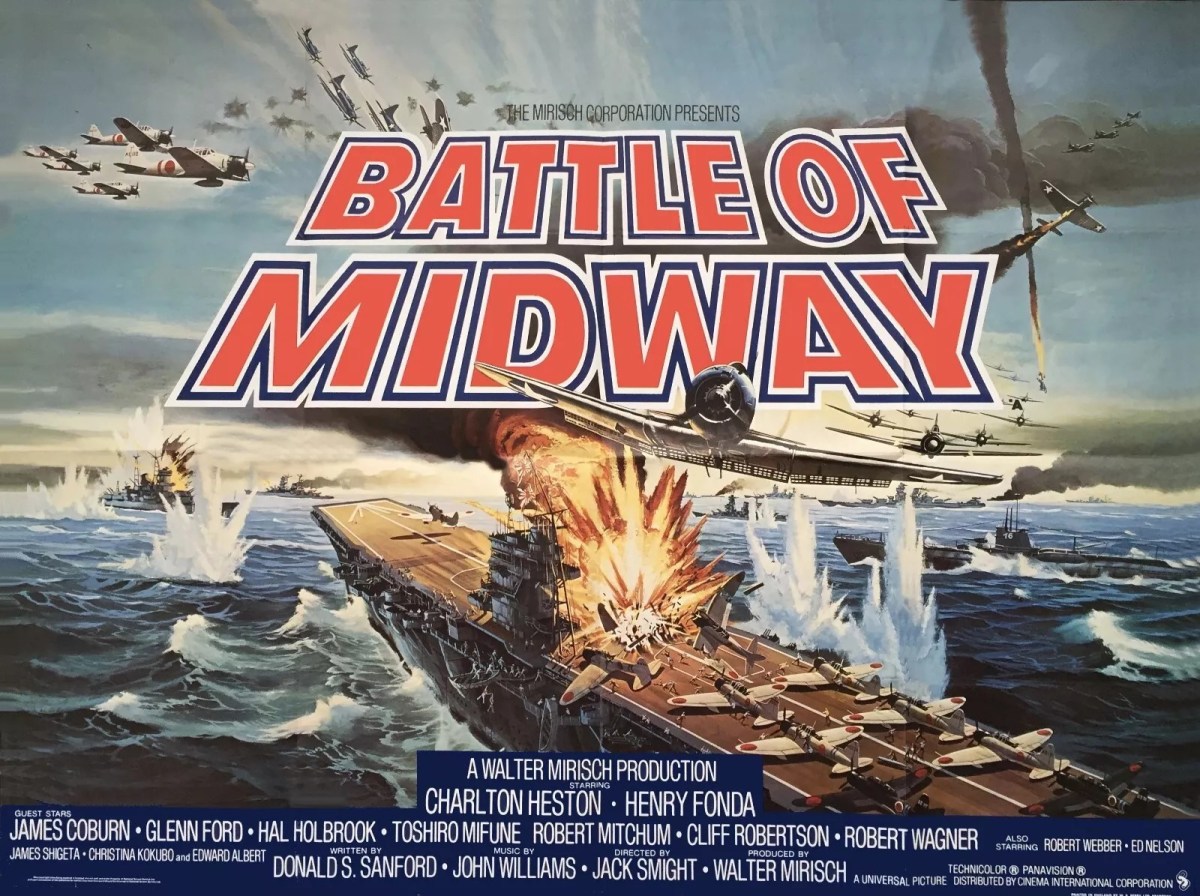
Behind the Scenes: “Battle of Midway” (1976)

Mirisch could easily lay claim to be the top independent production outfit of the 1960s generating hits like The Magnificent Seven (1960),  West Side Story (1961), The Great Escape (1963), The Pink Panther (1964) and its sequel A Shot in the Dark (1964), The Russians Are Coming, Russians Are Coming (1966), In the Heat of the Night (1967) and The Thomas Crown Affair (1968) plus a shelf load of Oscars and Oscar nominations. But dependence on a partnership with Billy Wilder in the 1970s and a more lackluster performance at the box office – with the noted exception of Fiddler on the Roof (1971) – spelled the end of its 17-year relationship with United Artists, which was reeling from financial losses and under new management.

The company found a new partner in Universal which had a series of deals with other major producers like Alfred Hitchcock, Zanuck and Brown (Jaws, 1975) and George Seaton (Airport, 1970). Mirisch was not in any financial trouble, having severed ties with UA after Mr Majestyk (1974), a major success abroad, and recovered its development costs for Wheels, based on the Arthur Hailey novel but the script rejected by UA, from Universal which turned it into a mini-series.

The Universal deal was initially not as good as that enjoyed at UA. Universal charged a twenty-five per cent overhead whereas UA had charged nothing and Universal was now doing direct deals with directors rather than relying on the likes of Mirisch to tie up the talent.

Many years before, Mirisch had commissioned a script on the Battle of Midway from Donald S. Sanford who specialized in war pictures but of the distinctly low-budget variety – Submarine X-1 (1968), The Thousand Plane Raid (1969) and Mosquito Squadron (1969), none of which had enjoyed any success. 

Though all of the Mirisch war pictures had concentrated on Europe, Walter Mirisch, generally the creative driving force for the production company, in his previous incarnation with Allied Artists had some experience of the Pacific War, having produced Flat Top / Eagles of the Fleet (1952), set around an aircraft carrier during the Battle of Leyte Gulf, and was an avid reader of books about the Second World War.

John Ford and Louis de Rochmont had made documentaries about the Pacific naval battles. UA rejected the script twice, a shrewd move in the end because Tora! Tora! Tora! (1970) lost a packet for Twentieth Century Fox. The Sanford screenplay had initially taken more of a documentary approach but after gaining the interest of Charlton Heston, who had starred in Mirisch’s The Hawaiians (1970), the script was tweaked.

Programming a war picture was a risk for the studio. There hadn’t been a big-budget war picture in five years. And while Patton (1970) and Kelly’s Heroes (1970) ended up on the right sight of the ledger book, Tora!, Tora! Tora! and Too Late the Hero (1970) were stiffs.

Mirisch signed a two-picture deal with Universal, for Midway and Wild Card with a screenplay by Elmore Leonard (Mr Majestyk). Mirisch proposed to reduce costs by using footage from naval archives, converting the original 16mm film to 35mm. The producer also  took footage from Japanese film Storm over the Pacific / I Bombed Pearl Harbor (1960) – the rights cost him $96,000. Footage of the Pearl Harbor attack in Tora! Tora! Tora! doubled for shots of the attack on Midway Island.   A clip of the Dolittle raid on Tokyo from Thirty Seconds over Tokyo (1944) was used in the credit sequence after “subjecting it to a sepia bath.”

After the success of Earthquake (1975), Heston was back in the top ranks of box office stars and his involvement guaranteed the green light. The U.S. Navy offered its support, not surprising since Midway was considered its greatest success.

John Guillermin (The Towering Inferno, 1974) was hired to direct and Stirling Silliphant (In the Heat of the Night) signed up for a screenplay rewrite. Mirisch had determined to employ the all-star-cast device that had been an essential ingredient of many of the 1960s roadshow pictures, kicking off with Henry Fonda (The Boston Strangler, 1968), by now pretty much a spent force at the box office – he hadn’t made a picture in three years – but still a well-known name. 

The amount of work involved for the other stars was minimal – mostly just one day – and, astutely, Mirisch called on stars who had worked for him in the past and who, like James Coburn (The Great Escape), Cliff Robertson (633 Squadron, 1964) and Christopher George (The Thousand Plane Raid) owed him something in terms of a career leg-up. Others included Robert Mitchum (The Sundowners, 1960), Robert Wagner (The Biggest Bundle of Them All, 1968) and Tom Selleck in an early role. Mitchum was the first of these stars to sign up, in March 1975, six weeks before the scheduled start date of April 27, followed two days later by Coburn.

Toshiro Mifune (Red Sun, 1971) headed up the Japanese cast and proved so meticulous in his preparations that he had his uniform made by Japanese tailors. The white gloves he wore had a finger shortened on the left hand because his character Admiral Yamamoto was missing a pinky. However, despite coaching in English by actress Miko Taka (Walk, Don’t Run, 1966), his dialog was revoiced by Paul Frees. 

Guillermin demanded a bigger budget to accommodate more airplanes and equipment and a longer shooting period. Two months before filming was due to start, Mirisch put his foot down and told the director he couldn’t accommodate his requests as Universal had only provided funding on the basis of Mirisch’s original idea. Guillermin walked. As far as the public was concerned, the parting of the ways was due to a “conflict of schedules.” Jack Smight, who had directed Airport ’75 (1974), a box office success and also starring Heston, was his replacement.

The Navy lent aircraft carrier U.S.S. Lexington – the last remaining World War Two carrier – while it was at sea training pilots as long as the shoot didn’t interfere with those exercises. A limited number of World War Two vintage planes – in great condition having been cared for by their owners – were permitted on board. The Navy charged the crew for accommodation – Mirisch was housed in Admiral Strean’s quarters – and meals. “We had a detailed contract with the Navy,” recalled Mirisch, “in which we agreed to stay out of their way when asked.”

On board, the crew filmed scenes, some silent and others with dialog, and “made plates for rearview projection and aerial shots of our vintage planes so positioned that we could print them into flights of six or nine.” Charlton Heston, Glenn Ford (Rage, 1966) and Hal Holbrook (The Group, 1966) were aboard and the shoot went well.  A scene involving Henry Fonda was shot at Pensacola. The Florida coast stood in for the Pacific. Additional exteriors were filmed in Los Angeles at Long Beach and Point Dune with interiors at Universal.

The construction of the interiors for the Japanese aircraft carriers was so authentic Mirisch was later asked to reassemble the set for the Smithsonian Institute for a presentation there. The interpolation of the old footage was crucial and it was planned in advance where such shots would appear. The old footage was precut and scenes were shot with actors with “scene missing” in those sequences into which the old footage could be dropped. Other devices were used to ensure the background in the old footage was more lively.

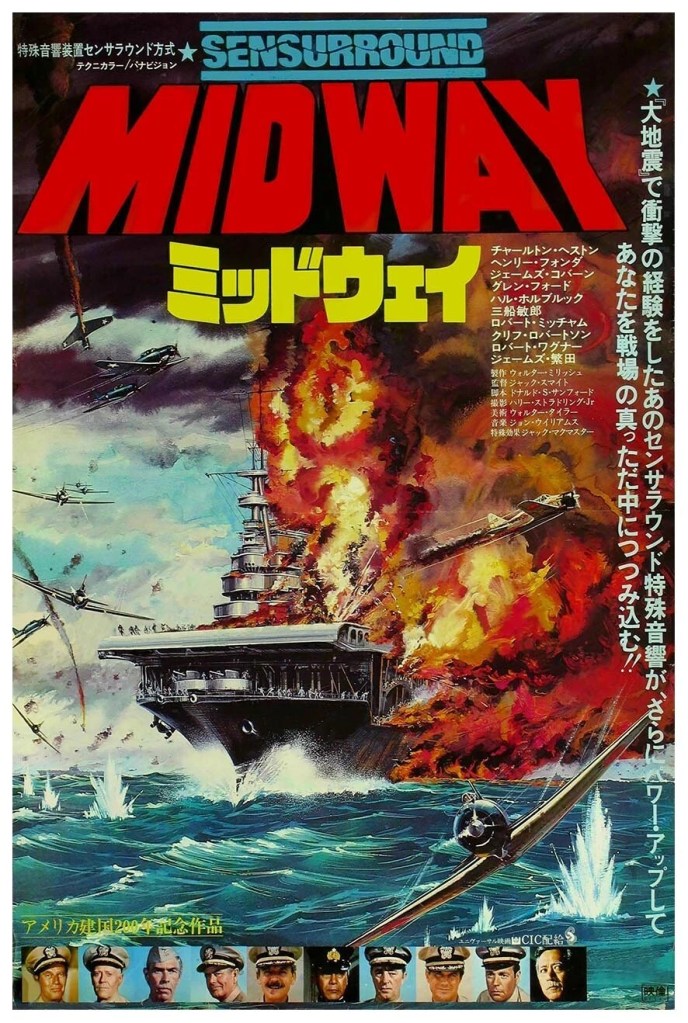
The final element was in cinematic presentation. Sensurround, a precursor of Imax, had been introduced with great success by Universal to Earthquake and this added greater realism to the battle scenes. While limited to those theaters which had installed the expensive equipment, and although the roadshow was long gone, it created an “event” aspect to those viewing it in that system. In his autobiography Mirisch suggested the addition of Sensurround was last minute and sparked  by the success of Earthquake. But, in fact, Universal had announced a year in advance of opening that Battle of Midway would utilize Sensurround.

Some cinema owners were outraged at the stock footage, whose proposed inclusion had been kept from them when they went into the blind-bidding process at the start of the year. Mirisch countered that there was no alternative. “A great many aircraft,” he argued, “used in the battle no longer exist.” Universal’s terms were stiff – a minimum nine-week run starting at a 70/30 split for the first three weeks in the studio’s favor, a $75,000 advance guarantee from cinemas and 5% of the gross for use of Sensurround.

With the budget kept as low as a reported $4 million it was a massive hit, picking up $20.3 million in rentals (what the studio retains of the box office gross) – sixth in the annual box office league beaten only by Oscar-winner One Flew over the Cuckoo’s Nest, All the President’s Men with Robert Redford and Dustin Hoffman, demonic The Omen, Walter Matthau baseball comedy The Bad News Bears and Mel Brooks’ Silent Movie and just ahead of such offerings as Sidney Lumet’s Dog Day Afternoon with Al Pacino, and comedy Murder by Death but nearly doubling the take of the more critically-acclaimed Taxi Driver, Clint Eastwood western The Outlaw Josey Wales and thriller Marathon Man also starring Hoffman. The final domestic figure amounted to $21.8 million.

Foreign figures were astonishing, especially in Japan, where its gross exceeded $4 million. The benefits of the promotional tour undertaken by Heston in the Far East were soon obvious – in Manila it beat both Jaws and Earthquake. In the annual box office league there and Hong Kong, it ranked third. In Italy it proved a “big surprise”, coming in fourth behind King Kong, Taxi Driver and a local offering.

While a successful movie could expect to benefit from television viewings – this was before the video revolution – the movie had an unusual afterlife. NBC, which had bought the rights, wanted the film to be longer, so it could be shown over two nights, thus increasing advertising and setting it up as a more prestigious event. Largely by adding plotlines to the Heston character, the running time increased by nearly an hour, which proved a bonus for the future home screening revolution. 

“Of all the films that I have made,” noted Mirisch, “it produced the greatest amount of profit.”

SOURCES: Walter Mirisch, I Thought We Were Making Movies Not History (University of Wisconsin Press, 2008) pp324-339; “Readying Midway,” Variety, February 5, 1975, p6;  “Universal in New Shake,” Variety, July 23, 1975, p3; “Admiral Mitchum,” Variety, March 12, 1975, p18; ”Jap Feature Footage Inserted into Midway,” Variety, June 6, 1976, p7;  “Midway Big in Manila,” Variety, August 11, 1976, p24; “Big Rental Films of 1976,” Variety, January 5, 1977, p14; “Jaws Led Bangkok,” Variety, February 9, 1977, p39;  “International,” Variety, June 29, 1977, p35.

Battle of Midway (1976) ****

Even-handed documentary-style tale recounting of the most famous U.S. naval battle of all time, a turning point in the struggle for control of the Pacific in 1942. Both sides make mistakes, luck and judgement play an equal part.

I’d always assumed Midway was some abstract geographical position without any idea of its strategic importance – did the name mean it was halfway between the U.S. (or Hawaii) and Japan? But here I learned it was an actual island that the Japs planned to invade and the Americans intended to stop them. In some senses, it was bait, a way to draw the U.S. Navy out of Pearl Harbor. But the bait ran both ways. If the Yanks could coax the enemy out into the Pacific, they had a chance of gaining an advantage, even though the Americans were inferior in shipping tonnage.

The Japs have been stung into action by the audacious American bombing of Tokyo. Admiral Yamamoto (Toshiro Mifune) uses the perceived threat of further attacks to gain official approval for his plan to invade Midway.

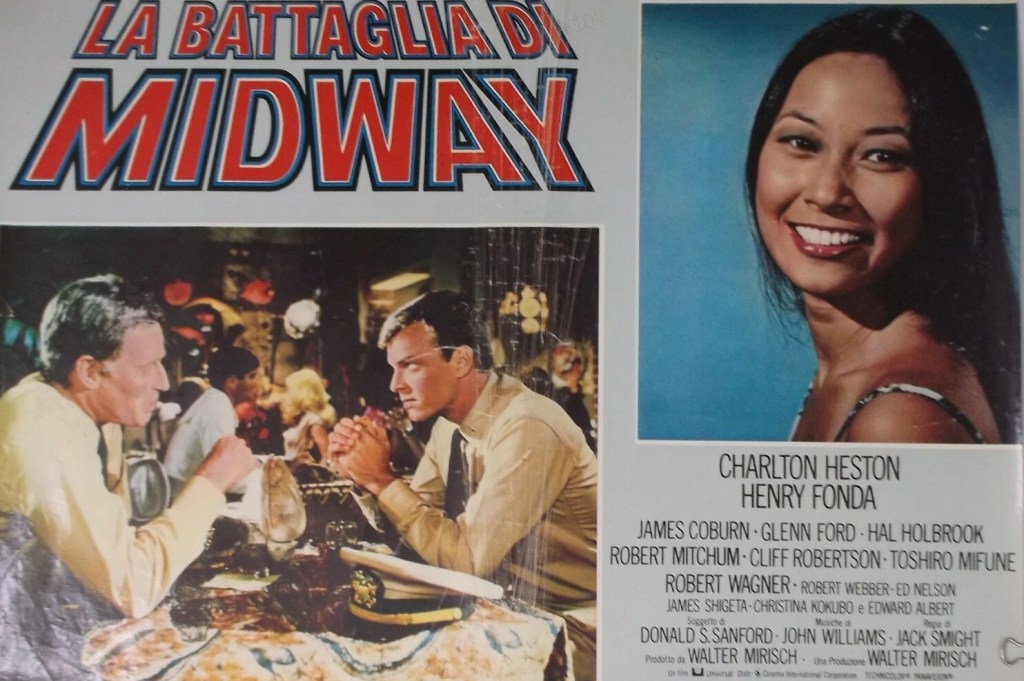
This is strictly a male show. However, in a bid to lower the testosterone levels a romantic subplot is inserted. The aviator son, Lt Thomas Garth (Eddie Albert), of top aide and former pilot Captain Matthew Garth (Charlton Heston) has an American-born lover Haruko (Christina Kobuko) of Japanese descent who’s being investigated for espionage and subsequently interned. On intervening, the father digs up a hodgepodge of racism – from both sides, Haruko’s parents against her forming a relationship with a non-Japanese. But the plan backfires causing a breakdown between father and son.

But that’s very much on the fringes and although it raises interesting cultural aspects, the movie concentrates mostly on the nuts-and-bolts of heading into a major engagement.

American intelligence, headed by Commander Joe Rochefort (Hal Holbrook), gets wind of the planned attack. But the clues are scant – the old trope of increased radio traffic not enough to convince – and while the audience knows the Japs are on the move with a mighty naval force including four top-class airplane carriers, the Americans remain ignorant almost until it’s too late.

Luckily, Admiral Nimitz (Henry Fonda), heading up the American naval contingent, is keen to inflict a blow on the enemy, even though he’s limited to two carriers and another just out of the repair yard. Each side relies on spotter planes to detect the enemy. But the Japanese, by imposing radio silence, shoot themselves in the foot, unable to switch tactics until too late. The hunch plays an important part.

There’s rarely much opportunity for individual heroics on a ship under fire, beyond rescuing someone. The fighter pilots are a better bet, especially since some of their forays are nearly suicidal given the firepower they attract. Matt Garth, who for most of the picture is an upscale backroom boy, is called into action with unexpected results.  

Most battle films tend to concentrate on the heroics often at the expense of understanding in any detail what’s going on. Thankfully, this is different. We are kept informed of every change in the conflict. And whereas you might think that dull, in fact I wouldargue that it adds substantially to the tension, and the fact that the only one of the commanders who looks as if he could throw a punch (Robert Mitchum) in the manner of John Wayne is confined to his bed thus forcing the movie to concentrate as much on brain as brawn.

Audiences at the time welcomed all the talking and this was a substantial hit. Snippets of old war footage were carefully sewn into the lining of the action, bringing the kind of authenticity that moviemakers reckoned moviegoers craved. For me, there was more than enough going on already.

Nimitz’s decision to go for broke rather than dive for cover results in victory but he’s no gung-ho commander, rather presented as a thoughtful but determined individual. The lack of backstage effort especially in the communications department was partly to blame for the humiliation of Pearl Harbor but here these guys share the glory.

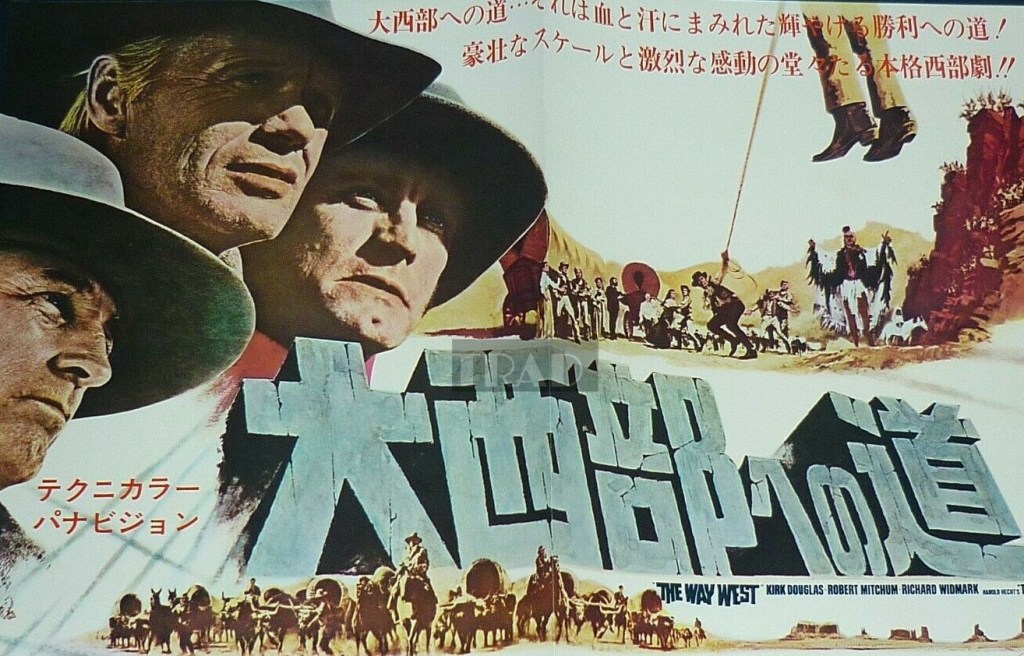
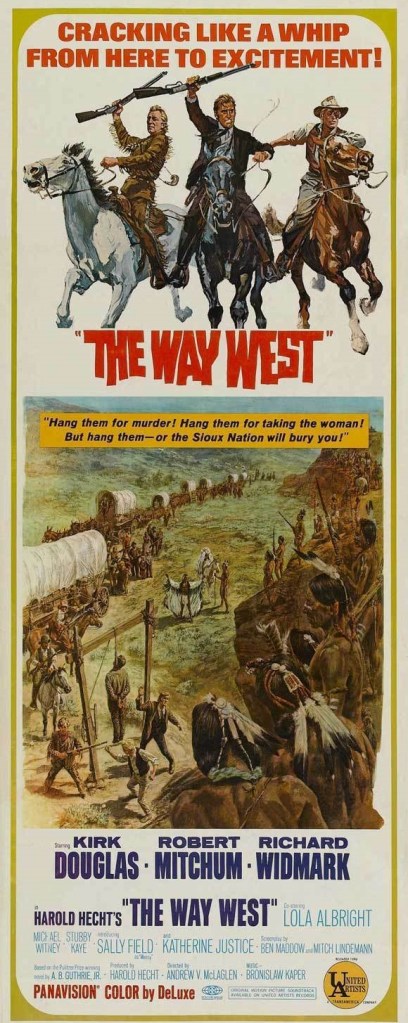
Boasting the kind of all-star cast that used to be the hallmark of the 1960s roadshow, this has a bunch of top-notch actors, albeit most just flit in and out of the picture. Charlton Heston (Planet of the Apes, 1968) effortlessly shoulders the main burden with Henry Fonda (Once Upon a Time in the West, 1969) the fulcrum of all decision-making. Robert Mitchum (The Way West, 1967) , James Coburn (Our Man Flint, 1966), Glenn Ford (Rage, 1966), Cliff Robertson (The Devil’s Brigade, 1968) and Toshiro Mifune (Red Sun, 1971) all feature.

Jack Smight (Harper / The Moving Target, 1966) directs from a script by Donald S Sanford (Mosquito Squadron, 1969).

Thoroughly engrossing.

  • I’m doing a Behind the Scenes tomorrow.

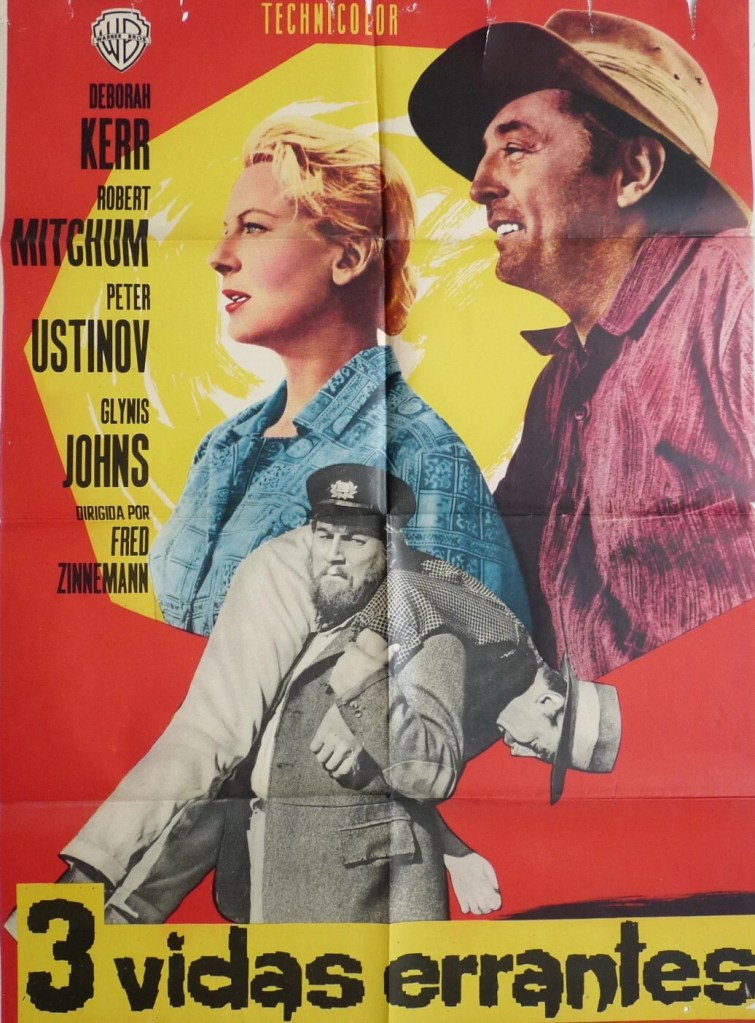
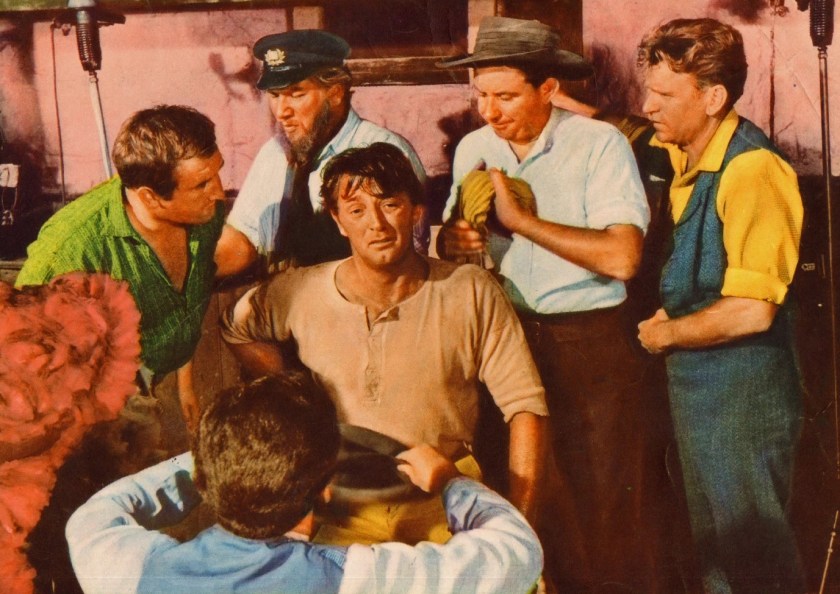
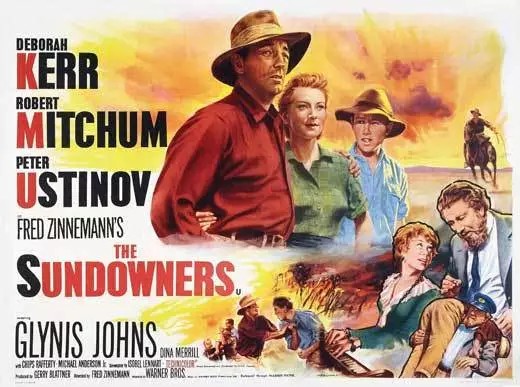
Behind the Scenes: “The Sundowners” (1960)

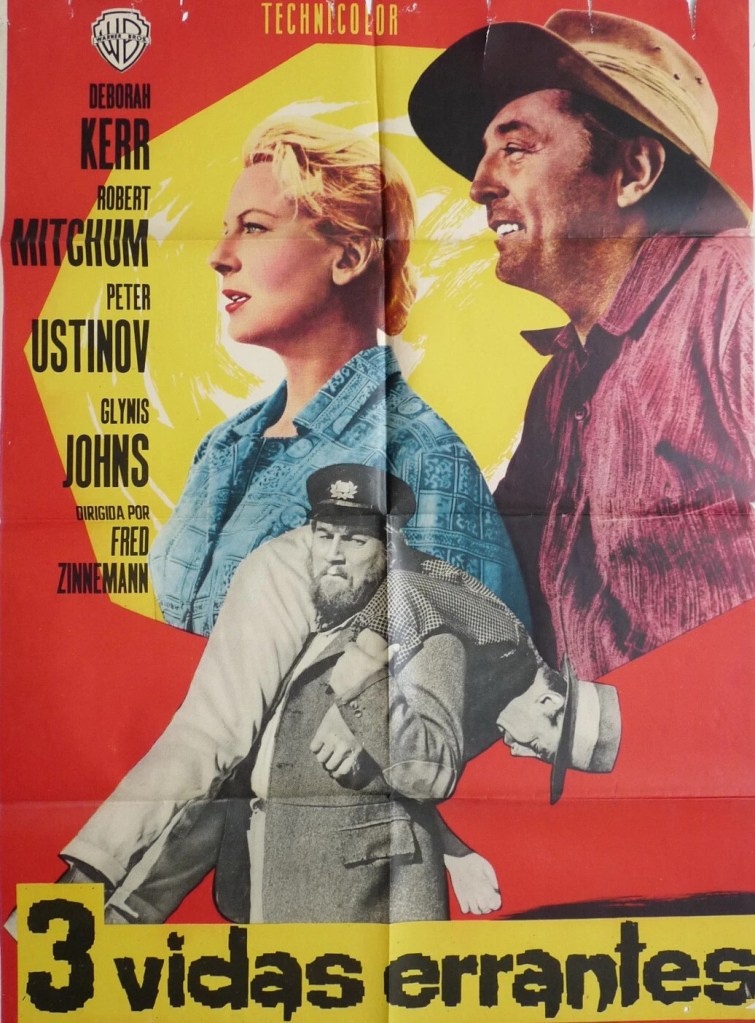
Whereas Deborah Kerr had always been first choice from the moment in 1957 Fred Zinnemann – he had directed her in From Here to Eternity (1953) –  announced plans to film the Jon Cleary bestseller about itinerants in the Australian Outback, Robert Mitchum was third choice. Despite having been successfully paired with Kerr for John Huston’s box office hit Heaven Knows Mr. Allison (1957), he was passed over in favor of, initially, William Holden with whom she had starred in the equally successful The Proud and the Profane (1956). When Holden dropped out, he was immediately replaced by Gary Cooper who had scored a big success with William Wyler’s Oscar-nominated Friendly Persuasion (1956)

And rather than Peter Ustinov (Topkapi, 1964) and Glynis Johns (The Cabinet of Caligari, 1962) in the major supporting roles, Zinnemann had hoped to secure the services of Claudette Colbert and Errol Flynn, both of whom had once been substantial box office attractions, though Colbert had been offscreen since Texas Lady (1955) and Flynn’s marquee appeal was spotty to say the least, though he had just signed up John Huston’s Roots of Heaven (1958). That decision was taken out of Zinnemann’s hands by Flynn’s premature death in 1959.

At this point Peter Ustinov was an all-purpose supporting actor and had not appeared in a major Hollywood production in six years but was just about to make a name for himself in Spartacus (1960) while Glynis Johns, at one time a major British star, had lost much of her marquee allure. Kerr and Johns had worked previously on Perfect Strangers (1945) and remained friends.

Nor was Zinnemann first to pounce on the tale. After the novel – based on the lives of the author’s parents – was published in 1952, rights were acquired by producer Joseph Kaufman who commissioned a screenplay from Kay Keavney. But when he failed to secure funding, Zinnemann scooped the rights after being persuaded by Tasmanian-born Dorothy Hammerstein, wife of the lyricist, that Australia would be a great location.

Screenplay duties then fell to Aaron Spelling (Guns of the Timberland, 1960), best known later as an uber-producer in television. After his draft was deemed “unsatisfactory,” he was replaced by Isobel Lennart (Please Don’t Eat the Daisies, 1960), though Zinnemann later claimed that her dialog was “not Australian enough” and author Jon Cleary (uncredited) was called in to solve “these problems.” .

Studio boss Jack Warner wanted Arizona to stand in for Australia but gave in to Zinnemann’s insistence on reality in part because the director had shot the successful The Nun’s Story (1959) in Africa, even though it added $500,000 to the budget. In fact, Warner gave in relatively easily. He understood that “were we to shoot in Arizona,” Zinnemann explained, “it would emerge as a half-assed Western with bars instead of pubs, cowboys instead of sheep-drovers – they move differently, walk and react differently.” It was the first major Hollywood film to be shot there.

In the second half of 1959 the director spent 12 weeks in advance of the stars arriving filming scenery and most of the scenes involving the sheep – 2,000 of them transported 800 miles to the location. Rather than hiring them, Warner Brothers bought them wholesale and afterwards sold them for a profit.  Despite their reputation for docility, sheep proved difficult to wrangle. A whole day was lost when the leader of the sheep just decided he would move no further and the entire flock did the same.

The crew was initially based in Cooma, a small town in New South Wales. Second unit camera operator Nicolas Roeg would return to Australia a decade later to director Walkabout (1971). The movie was hit by unseasonal bad weather – heavy rain and hailstones – which added several weeks to the schedule.

“There’s a good deal of Ida in me,” said Kerr, “I can settle anywhere and call it home.” Her second husband, screenwriter Peter Viertel (The Old Man and the Sea, 1958), made life more palatable by venturing out into the backs streets and finding German and Italian makers of foodstuffs and thereafter the stars took turns to cook for each other. “Bob Mitchum had a way with steaks,” noted Kerr, “but we all decided Peter was the best and most imaginative cook.”

It’s worth killing off the canard that Kerr only gained top-billing in this picture thanks to the generosity of Robert Mitchum. In fact, Kerr was by far the bigger star. She had been top-billed in Heaven Knows Mr. Allison ahead of Mitchum, The King and I (1956) ahead of Yul Brynner, Count Your Blessings (1959) ahead of Rosanna Brazzi, The Journey (1959) ahead of Brynner again, Bonjour Tristesse (1958) ahead of David Niven, Tea and Sympathy (1956) and The End of the Affair (1955) ahead of Van Johnson. She only ceded top billing to the likes of William Holden and Cary Grant (An Affair to Remember, 1957). Although many commentators these days assume that Elizabeth Taylor was the top British star of the decade, Kerr was easily her equal and outranked her – five versus two – in terms of Oscar nominations.

In fact, in terms of marquee appeal, Robert Mitchum could not compete with Kerr. Heaven Knows Mr. Allison was his biggest hit since River of No Return (1954) with Marilyn Monroe. The work with which he is most commonly associated, Night of the Hunter (1955), was a flop, and he was in the main reduced to a diet of westerns and war films.

He was more associated with the wrong sort of headlines than box office. His previous film The Night Fighters / A Terrible Beauty (1960) attracted more attention from journalists for his fight in a bar than from audiences. But Zinnemann was a fan and had tried to hire him for From Here to Eternity.

Mitchum’s notoriety went ahead of him and at the airport he was deluged by reporters, most determined to know, for such a renowned hard drinker, what he thought of Aussie beer. He crossed swords with journalists a few days later, complaining that he was misunderstood and nothing like his screen personality. “I’m no tough guy,” he argued, “all the public knows is some silver, chromium-plated jerk. How could they know what I’m really like?” When he pointed out that his marijuana bust had been expunged from the record, one frustrated newspaperman recorded, “He isn’t a jailbird, he isn’t a drunk, he isn’t a brawler.”

Mitchum had no trouble with cast and director. Zinnemann was astounded by the actor’s mastery of the accent, pronouncing it  “perfect” and adding “he had the uncanny knack of making any accent sound as though he had been born with it.” Mitchum and Kerr renewed their non-sexual love affair. “It was an honor to feed her lines,” said Mitchum. Zinnemann summed him up, “He has a problem with people who take themselves too seriously.”

But Mitchum was hounded by fans and autograph hunters. An audience gathered to watch him eat in local restaurants, his mood not helped by the solitary confinement imposed when rain prevented filming. One journalist, having inveigled his way into Mitchum’s rented home, was astonished to discover the actor could cook. Jon Cleary sprung to his defense. “Robert Mitchum is anything but a droopy-eyed slob once you get to know him. He is extremely well read and writes beautiful poetry.

When it came to horses, Ustinov was the bigger problem. “He was scared of them and they of him,” said Zinnemann, “and the moment he got in the saddle he would forget all his lines.”

Shooting a bush fire was relatively straightforward since they were a “frequent and devastating occurrence”, so the second unit simply flew near to the area in question, hired a taxi and started shooting. But these fires, fueled by the eucalyptus trees they were burning, moved at terrific speed, jumping along the tops of trees “and scattering their burning fragments fast and wide like projectiles.” But if the fire suddenly switched direction – and it moved at 30 miles per hour – there was a danger, as once occurred, that the crew could be cut off.

When the unit headed for Port Augusta in the south, it was a 45-minute commute to the sheep station at Iron Knob where many scenes were shot. Mitchum had had enough of being an object of curiosity and chartered a luxury cruiser, although he was still fending off young ladies who took to swimming out to the boat.

There was little scenic in the journey to the location. “The dust flew along the whole road,” said co-star Dina Merrill, and Mitchum was taken aback by the size of the sheep and found daunting the task of shearing a 400lb Merino sheep in one go. One mistake and you could cut into a vein and the animal would bleed to death. Mitchum relied on Dutch courage. Interiors were filmed in the more hospitable atmosphere of a London studio. There was an unwelcome sting in the tail for Mitchum – he was sent a tax demand from the Australian authorities which he refused to pay.

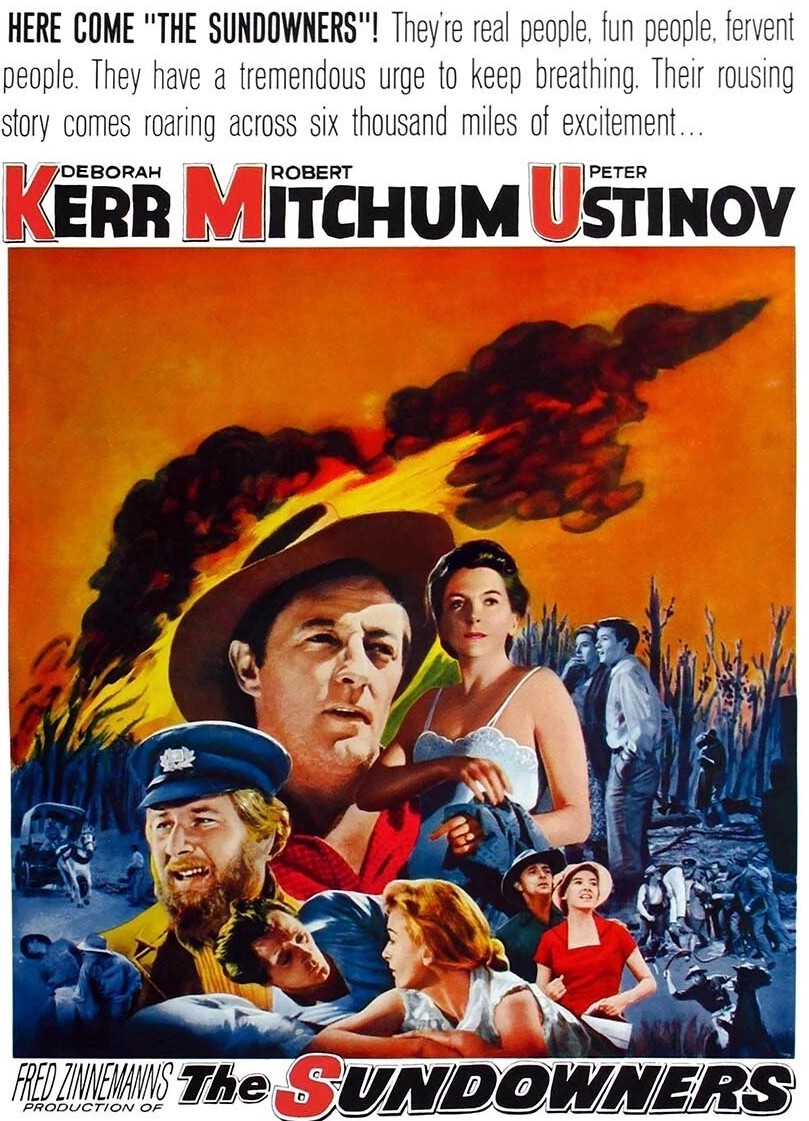
Although Jack Warner had given his assent to the overseas shoot, he was incapable of directing the advertising department to produce a poster that didn’t focus on the notion that this was the frisky Deborah Kerr of From Here to Eternity, “a highly-sexed lady who could harldy wait for the sun to go down so she could lay her hands on Bob.” Audiences were naturally disappointed when the projected love affair failed to materialize.  

While the critics were generally in favor of the movie and audiences in the U.S. big cities responded well, its attraction faded as it set out across the U.S. However, it did better abroad  and not surprisingly was a massive hit in Australia. Mitchum and Kerr re-teamed for Stanley Donen comedy The Grass Is Greener (1960) – with Kerr again billed before Mitchum.

SOURCES:  Eric Braun, Deborah Kerr (WH Allen, 1977) pp173-177; Lee Server, Robert Mitchum, Baby I Don’t Care (Faber & Faber, 2001) pp422-429; Fred Zinnemann, An Autobiography (Bloomsbury, 1992) pp173-183.

The Sundowners (1960) ****

I kept waiting for Deborah Kerr to turn up and it was a good 20 minutes before I realized that the actress had so immersed herself in the dowdy Ida Carmody that she was turning in what would be recognized as an Oscar-nominated performance. I was less convinced by Robert Mitchum’s Oirish accent but after a time, he, too, buried his normal screen persona under a feckless wanderer. And I was expecting some meaningful point-making stuff from director Fred Zinnemann given he had nursed home such purposeful features as High Noon (1952), From Here to Eternity (1953), A Hatful of Rain (1957) and The Nun’s Story (1959) and would soon be heading back in that virtue-signalling direction with Behold a Pale Horse (1964) and A Man for All Seasons (1966). However, like Day of the Jackal (1973), though for other reasons, this is very much an outlier in the Zinnemann portfolio.

It’s groundbreaking work from the stars. In the first place, Deborah Kerr does the unthinkable for a star of her magnitude – five Oscar nominations so far and a string of hits including From Here to Eternity, The Proud and the Profane (1955) opposite William Holden, The King and I (1956) top-billed ahead of Yul Brynner, An Affair to Remember (1957) opposite Cary Grant and Heaven Knows, Mr Allison (1958) leading Robert Mitchum a merry dance. Here, she is shorn of make-up. Her freckles are everywhere and her cheekbones look as if they are there from hunger not for reasons of fashion. These days, that down-to-the-wire approach would suggest an actress desperately trying to revive her career – Demi Moore in The Substance (2024) or Pamela Anderson in  The Last Showgirl (2024) – rather than a star at the top of her game.

Robert Mitchum, too, dumps his screen persona, and provides his most relaxed and naturalistic performance.

The story is pretty straightforward. Ida wants to settle down, husband Paddy (Robert Mitchum), a born drifter, does not. Paddy enjoys drinking and gambling and wandering through the Australian Outback and ekes out enough as a drover to keep them solvent. The plot, therefore, is episodic. But what could have been a series of loosely-linked sequences is held together by a concentration of the reality of an existence revolving around sheep – droving, shearing, rearing – and trundling along in a horse-drawn caravan, putting up a tent at night, cooking over an open fire, other aspects bordering on the primitive. You can be sure that every minor triumph will be torpedoed.

You could be forgiven for thinking that Wyler had set out to make a western what with the preponderance of sweeping location. Make it sheep instead of cattle and you have Red River (1948) in a minor key with the usual shenanigans once the drover makes his destination.

Livening up proceedings are equally responsibility-resistant itinerant Rupert Venneker (Peter Ustinov), whose more basic skills including pugilism belie his posh accent, and innkeeper Mrs Firth (Glynis Johns) who makes a good stab at trying to hold onto him.

The bulk of the emotion plays through the eyes of Ida, desperately trying to save up enough money to buy a house. A bushfire that temporarily separates the couple unexpectedly acts to strengthen their relationship. While Ida is helping deliver a baby, Frank is getting roaring drunk. The tension between the pair is also a metaphor for growing civilization out of a wilderness, the men who tamed the land becoming redundant, a new educated class taking over. Ida wants to be settled to provide her ambitious son Sean (Michael Anderson Jr) with an education as much as she doesn’t want to be a traveller in her old age.

Offers much about a civilization in the making still relying on the old-timers to put in the hard yards while the guys doing all the work don’t have the sense to seek greater or more stable reward. What’s life if it doesn’t go wrong once in a while? Freedom is its own reward. As Paddy points out, he has no restrictions, the entirety of Australia is his bailiwick.

Wyler makes much of what he’s got, the tensions between the couple undercutting the strength of their affection for each other, and just when it looks as if Ida has got her way Paddy manages to cut loose and destroy her dreams.

There’s drama a-plenty, not just the terrifying bushfire, but a pretty engrossing horse race or two. Paddy’s idea of heaven is to hold court in a saloon singing old Irish songs. Sometimes Ida has little but heartbreak to nurse her along.

And while the various episodes make it a tidy drama, really it’s what one critic described as “a no-story movie – an observation of life” and in that regard more concerned with fallibility and vulnerability. Had it been made by a European director, it would remain one of the most talked-about movies of the decade.

Wyler keeps up a tidy pace. Deborah Kerr (The Arrangement, 1969) steals the show and her peers agreed, putting her up for an Oscar, but it was a close-run thing because Glynis Johns (The Cabinet of Caligari, 1962) was also nominated. Peter Ustinov (Topkapi, 1964) was equally impressive, as was Robert Mitchum (El Dorado, 1967). Wyler was also nominated as was screenwriter Isobel Lennart (Fitzwilly / Fitzwilly Strikes Back, 1967) adapting the Jon Cleary bestseller.

I caught this on Amazon Prime.

Thoroughly involving.

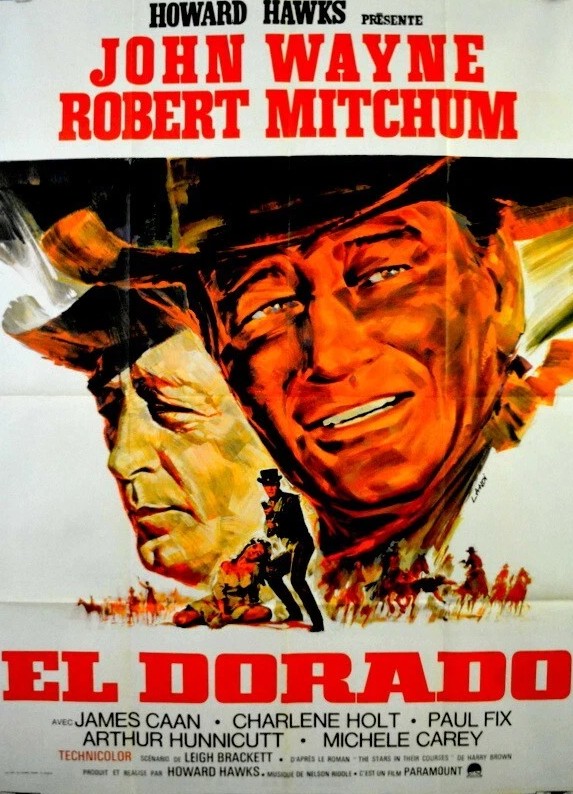
El Dorado (1966) ****

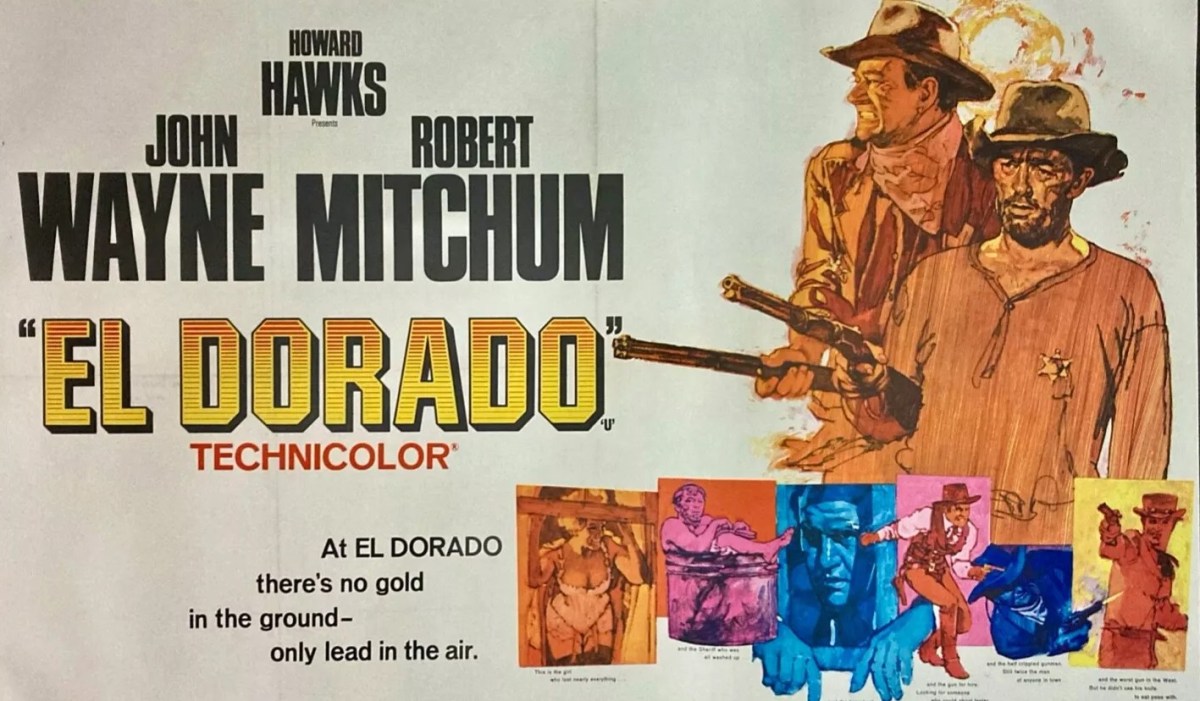
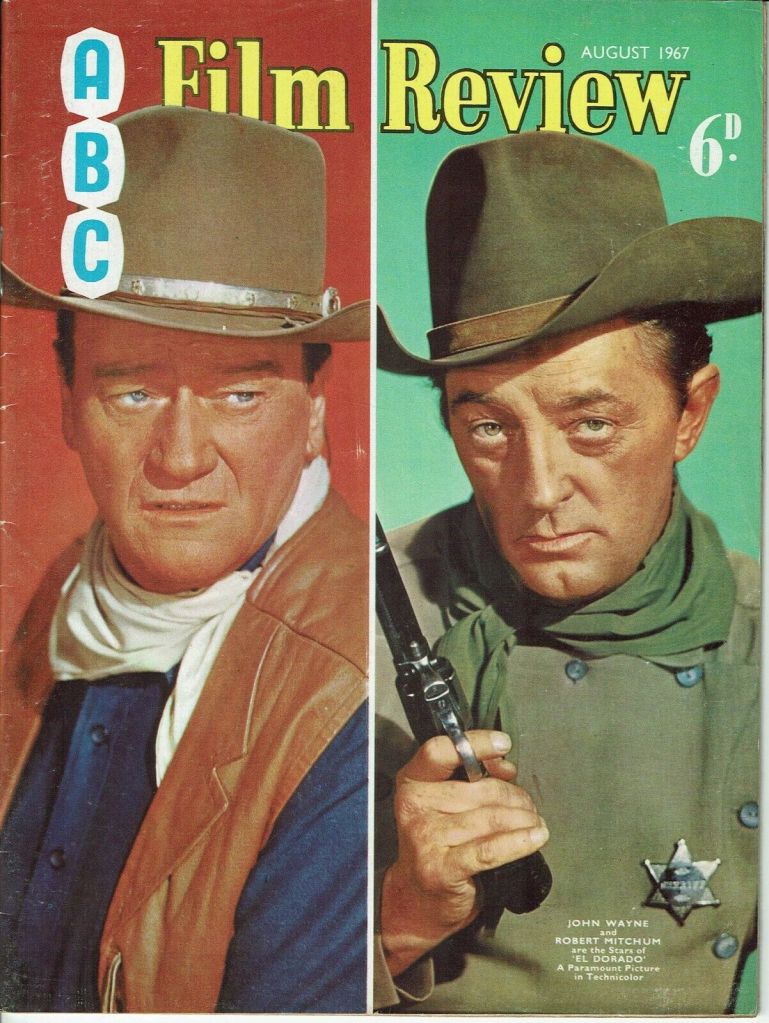
John Wayne incapacitated? Robert Mitchum a liability? The hell you say! You bring together two of the greatest male action figures only to turn the genre upside down and inside out. And I know it’s tradition for heroes to be unable to listen to their hearts, never mind deal with emotion, but it’s a heck of a stretch for them to just completely fall apart when spurned. And I know also that Duke is not invulnerable, this isn’t the MCU for heaven’s sake, and he’s been known in his long career to take a bullet, but to be shot by a woman! That’s very close to taking the proverbial.

Also, westerns usually operate on fairly tight timeframes. If the situation takes place over a longer period that’s usually because it involves a journey. Here, there’s a split of six months between the opening section and the main action, and it does kinda defy belief that the bad guys don’t make the necessary hay while the sheriff is drunk and his main assistant has scarpered.

There’s hardly a word spoken here – between the good guys again for heaven’s sake – that isn’t an insult. Never mind The Magnificent Seven (1960) this is teed up as The Bickering Quartet. And I do have to point out a couple of elements that won’t go down so well with a contemporary audience, one character imitating a Chinese, and a scene where one of our heroes is constantly interrupted in the bath by females, a twist to be sure on the usual scenario of the female lead skinny dipping in a handy pool or river, but it’s like a lame comedy sketch.

This won’t have been influenced by the spaghetti western, the first Sergio Leone game-changer wasn’t screened in the U.S. until the following year, so it’s also worth pointing out that some of the action is pretty savage, both John Wayne and Robert Mitchum indulging in the kind of mean behavior that was usually the prerogative of the villains. Wayne even cheats when it comes to the traditional shoot-out. And while there’s none of the blood-letting that later became synonymous with the genre, director Howard Hawks does something else that is far more realistic than anything that has gone before and would count as a genuine shock to our senses. The gunfire is incredibly loud. Imagine that on Imax and you’d be jumping out of your seat every few minutes.

And just in case you think this is nothing more than a remake of Rio Bravo (1959) where a gunslinger and a drunken sheriff are holed up in jail, here the jail is mostly used as a base, the good guys racing out every now and then to pick someone off. That running, too, by older guys certainly prefigures later action pictures like Taken (2008).

We need the time gap to allow Sheriff J.P. Harrah (Robert Mitchum), one of the three best gunslingers alive, to disintegrate. He goes from tough lawman keeping an unruly town in order and holding back the worst instincts of land-owner Bart Jason (Ed Asner) planning to go in mobhanded against rival rancher Kevin MacDonald (R.G. Armstrong) in an argument over water rights.

Hired gun Cole Thornton (John Wayne), one of the three best gunslingers alive, turns up for a job with said Jason but is turned off the idea when J.P. gives him the lowdown on the situation. He dallies long enough to set up the notion that he’ll try to win back saloon-owning old flame Maudie (Charlene Holt) from J.P.

Thornton moseys off to the Mason spread to give the owner the bad news. On the way back, Luke Macdonald (Johnny Crawford), Kevin’s youngest son, on guard duty, mistakes Thornton for the enemy and shoots at him. Which results in his death. So Thornton does not get a good welcome when he arrives at the Macdonald farm toting a corpse.

Turns out the young whelp, although taking bullet in the gut, committed suicide because the pain was too much and Luke had been told by his dad that he wouldn’t recover anyway and just suffer a hideous death. While the father accepts this, his daughter Joey (Michele Carey) does not and ambushes Thornton, putting a bullet in his back. Said bullet is mighty inconveniently lodged close to his spine and needs more than the town quack to remove it. Despite sparking up old feelings for said old flame and the prospect of stealing her back from old buddy J.P., Thornton doesn’t dally longer than it takes to get temporarily fixed up, bullet still in place to cause later problems.

Now the tale takes a detour. Not only has six months passed and Thornton miles away from El Dorado, but we’ve got to hold up proceedings to introduce naïve youngster Mississippi (James Caan). Howard Hawks certainly hasn’t learned the knack of the compact introduction from John Sturges a la The Magnificent Seven (1960) so we learn that this young whelp is best with the knife and has spent two years tracking down the four killers of his foster father. The last man to die happens to be an employee of Nelse McLeod (Christopher George), one of the three best gunslingers alive, on his way to take up the job Thornton turned down, a task made a helluva lot easier because J.P is now the town drunk, having hit the bottle when spurned by a woman, not Maudie I hasten to add.

Thornton heads for El Dorado with Mississippi tagging along, armed with of a sawn-off shotgun. First task is to sober up the sheriff – by fistfight and awful concoction – and stop him becoming a worse figure of fun. On the evidence here Deputy Bull (Arthur Hunnicutt) was probably one of the three best riflemen – not to mention archers – alive. He also totes a bugle.

The sober J.P. strolls into the saloon and arrests Bart Jason and sticks him in jail, and to avoid being in a complete siege situation, the quartet, sometimes as a group, sometimes a pair, sometimes alone, venture out, as I mentioned, to pick off the enemy. This allows Mississippi a meet-cute with Joey who’s planning a short-cut to justice by shooting Jason. Maudie re-enters the frame.

The bullet in the back sporadically paralyzes Thornton and J.P. is wounded in the leg so eventually the pair are hobbling around on crutches. Maudie also turns out to be a liability, taken hostage, ensuring Thornton goes to the rescue. But the bullet in the back plays up at exactly the wrong time and Thornton’s also captured, trussed up like a hog (what, John Wayne?) then traded in for the prisoner.

Having by now reduced the odds and not wanting to be caught in a siege, the quartet take the battle to the enemy, ambushing them front and back in the saloon, Thornton ridding Nelse of the notion that he and Thornton will enjoy a winner-takes-all shootout by killing him with a rifle while lying on the ground.

While it could be trimmed – television screenings generally eliminate the racist Chinese impersonation – the action when it comes is blistering. There’s a terrific scene in a tower when Bull targets the bells to disorientate the enemy with their horrendous ear-jarring clanging. And the final shoot-out is exceptionally well done.

In ways not usually gone into, the quartet are experts in their fields. Thornton backs up his horse to get out of a difficult situation, J.P. detects a man hidden behind a piano in the saloon, Mississippi stalks a potential lone assassin, Bull uses bow-and-arrow when silence is required.

Theoretically, Robert Mitchum (Five Card Stud, 1968) steals the show as the drunken sheriff, but that’s only if you are taken in by the surface. The sight of John Wayne with his useless twisted right hand harks back to the arm in The Searchers (1956) and his one-armed rifle action predates True Grit (1969). James Caan (The Rain People, 1969) tries to steal scenes but what chance does he have with these two stars at the top of their game and past master at the scene-stealing malarkey Arthur Hunnicutt (The Cardinal, 1963). Charlene Holt (Red Line 7000, 1965) and Michele Carey (The Sweet Ride, 1968) come out honors even as do Edward Asner (The Venetian Affair, 1966) and Christopher George (The Thousand Plane Raid, 1969).

I don’t put this in the same bracket as Howard Hawks’ Red River (1948) and Rio Bravo, but it’s certainly one of the best westerns of the decade. Written by Leigh Brackett (Hatari!, 1962) from a novel by Harry Brown.

Not one to miss.

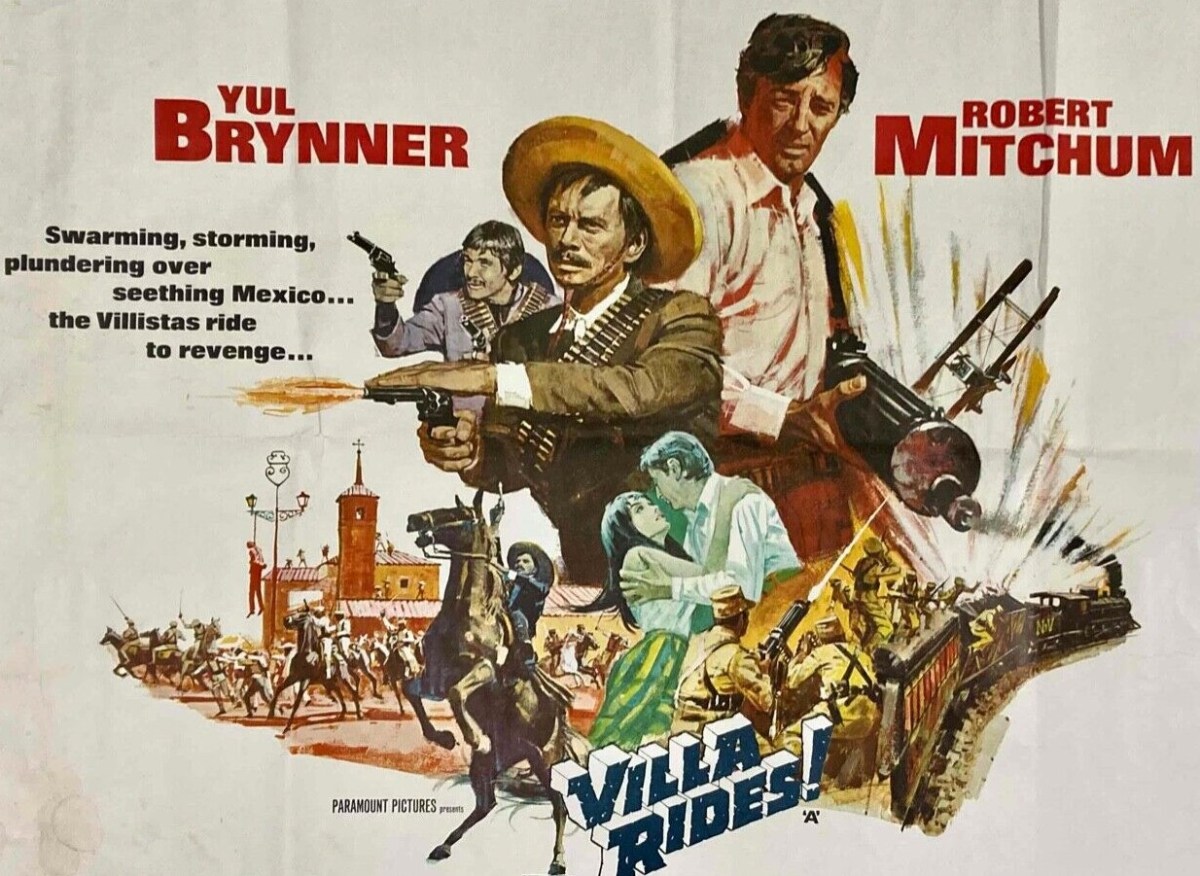
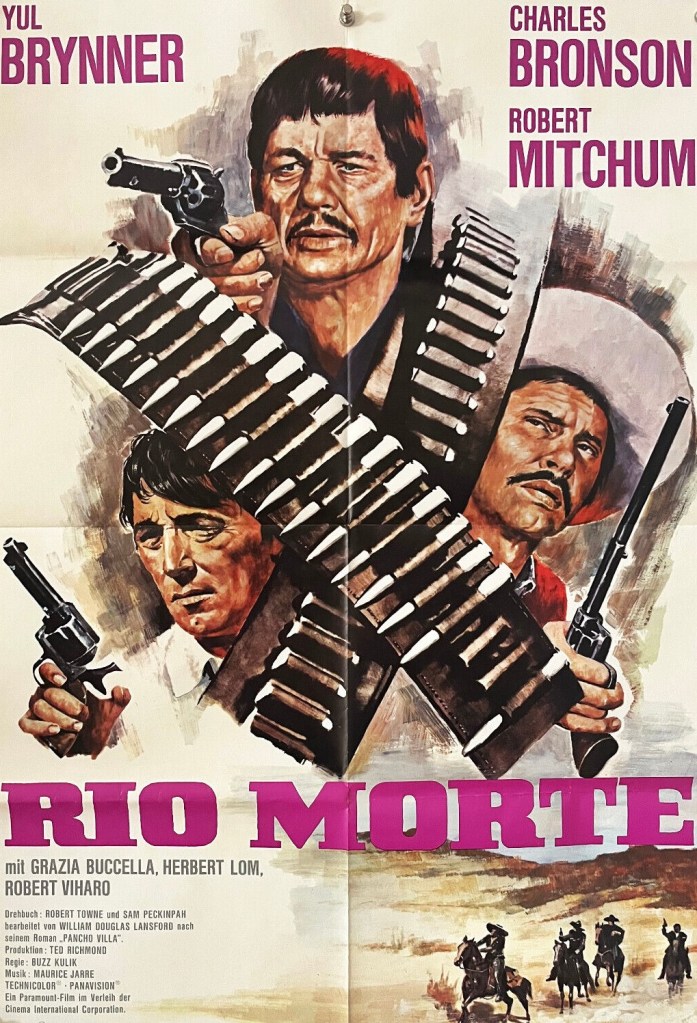
Villa Rides (1968) ***

Best viewed as Charles Bronson’s breakout movie. Yes, he had played supporting roles in The Magnificent Seven, The Great Escape and The Dirty Dozen, but these had all been versions of the same dour, almost monosyllabic, persona. Here, though somewhat ruthless, he steals the show from the top-billed Robert Mitchum and Yul Brynner with many of the best lines and best situations with an extra slice of humor (make that first-ever slice of humor) to add to the mix. He is the most interesting of the three main characters, in part because he does not have to spout any of the “good revolution/bad revolution” dialog that falls to the other two.

Villa (Brynner) is fighting the Colorados but his superior General Huertas (Herbert Lom) is planning to overthrow President Madero (Alexander Knox). Mitchum is an aeronautical gun-runner from El Paso, initially against the revolutionaries, stranded in Mexico when his plane breaks down. He has just about time to romance a local woman Fina (Maria Grazia  Buccello) before the Colorados arrive, take over the village, start hanging the leaders and raping Fina. Villa saves them, Bronson slaughtering the Colorados with a Gatling gun on the rooftop. Faced with the one-man firing squad that is Bronson, Mitchum turns sides. His plane comes in handy for scouting the enemy, then bombing them.

The actions sequences are terrific especially Villa’s attack on a troop train. To get Villa out of the way, Huertas puts him in the front line in a suicidal attack on a heavily-defended stronghold which turns into another brilliant set-piece with cavalry charges.  The plot is constantly interrupted by politics of one kind or another and comes to dead stop when Villa is arrested by Heurtas and Villa demands a proper trial. It’s kind of hard to take when a murdering bandit, no matter how legendary, decides that he has been hard done by.

That aside, there are interesting attempts to build up his legend. He doesn’t want power for himself, but to give it to the people, although he has sat back and let the first village be attacked so that the people there learn to hate the Colorados enough to join the fight. There’s not really any good guys – Brynner and Bronson are stone-cold killers, Mitchum a mercenary. But Brynner does marry Fina in order to prove that a raped woman should not be treated with dishonor, though he has a tendency to marry other women as well.

Bronson’s unusual one-man firing squad involves him laying on the ground with a pistol in each hand and giving prisoners the opportunity to escape before he shoots them. After all that hard work, he bathes his hands. Then he decides he can kill three men with one bullet, lining them up exactly so he can drill them all in the heart. But he’s also the one who shoots a molester in a cantina, then delivers the classic line: “Go outside and die, where are your manners?” He is at the heart of some well-judged comedy – continually sending back his meals and trying to get out of getting into a plane with Mitchum. Without him, there would be too much justification of slaughter (Brynner) and arguments against (Mitchum). This is the first time in the kind of action role that suits him that he has an expanded characterization.

Brynner did not like Sam Peckinpah’s original script so Robert Towne (Chinatown) was brought in to present Villa in a more appealing light. Bronson (Adieu L’Ami/Farewell Friend, 1968) shows hints of the screen persona that would so appeal to the French. Yul Brynner (The Double Man, 1967) adorns his character with many shades of grey, but Robert Mitchum (Secret Ceremony, 1969) has less to do.  Buzz Kulik (Warning Shot, 19660 has great fun with the action, less fun with some of the turgid dialog-ridden scenes.   

Good for action and Bronson.

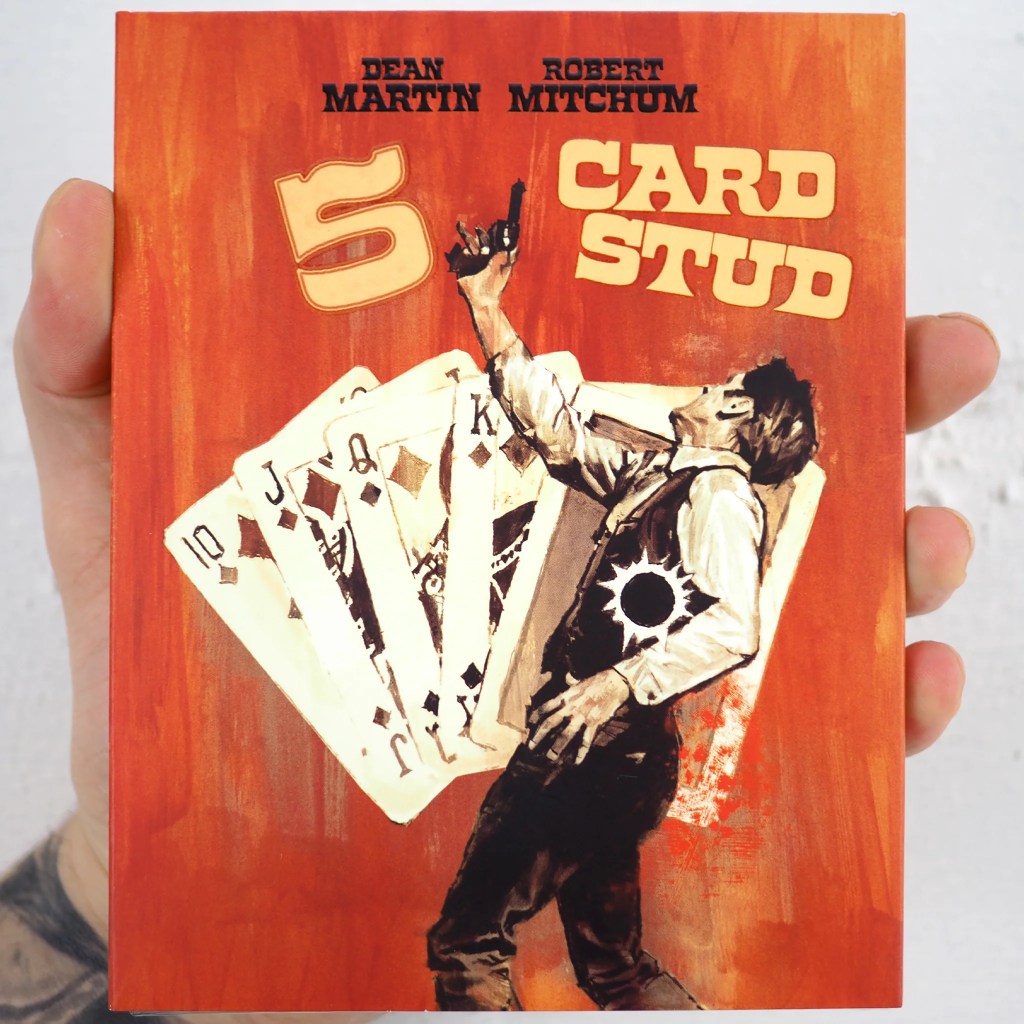
Behind the Scenes: “Five Card Stud” (1968)

Every now and then in the writing of my blog an event occurs which comes as a great surprise. Last year, I was contacted from Los Angeles by Claudia Pretelin, a producer working for DVD specialist Vinegar Syndrome. They were planning  a 4K restoration of Five Card Stud (1968) and, alighting on my review of the movie, Claudia asked if I would do the audio commentary, especially as I had detected the strong feminist undercurrent that runs through the western.

Five years ago, McFarland had published my book The Gunslingers of ’69: The Westerns’ Greatest Year. But if I had been writing about 1968, Five Card Stud would be one of the standouts. For whatever reason, it’s so under-rated it’s almost been completely forgotten, overshadowed by the three other westerns Henry Hathaway made either side of it, most importantly True Grit (1969) and The Sons of Katie Elder (1965) . Overshadowed because it wasn’t made by John Ford or Howard Hawks. Together with Sergio Leone, Sam Peckinpah and Clint Eastwood they were the directors most admired by critics. Overshadowed because it didn’t star John Wayne or James Stewart, both considered essential elements to any great western. Overshadowed because nobody gave a damn about Dean Martin (Rough Night in Jericho, 1967) as a serious actor.

But from the outset, this is distinctive with recurrent motifs and a visual symmetry – overhead camera, water, strangulation, the card table – that seems to have gone unnoticed, unlike The Searchers.  Given the testosterone on display – Robert Mitchum (Secret Ceremony, 1969) in addition to Dean Martin – this is unusually an extremely feminist western. The three female leads are far from docile and screenwriter Marguerite Roberts has changed the source book, Glory Gulch by Ray Gaulden, to exploit those elements.

 Entrepreneur Lily (Inger Stevens) runs an upmarket barbershop – generally a male monopoly – with an interesting sideline, but when it comes to romance she’s in charge, choosing – and dumping – the men. Nora (Katherine Justice) is a rancher’s daughter so smart and effective that her father has already decided that he’s going to leave her a half-share in his business rather than, as would be the norm, leaving it all to his son Nick (Roddy McDowell). Mama Malone (Ruth Springford) owns the eponymous saloon and takes no sass from anybody.

Van (Dean Martin) likes to think he has the measure of women, when in fact they have the measure of him. The story avoids the obvious lure of a love triangle, of jealous women competing for Van’s affections. Both the young Nora and the more mature Lily are pretty well grounded and judge their men by the standard of their kissing – that’s equality for you.

The movie was one of the fastest ever made, just five months from the start of shooting to release – that’s efficiency for you. And for many critics that was how they regarded director Henry Hathaway. He wasn’t considered a stylist, but a studio workhorse, apt  to take what was offered, work in too many genres. But this is one of his most stylish films. In some ways it harks back to film noir. The story is a mystery. And his extensive use of overhead camera would be considered innovative had it been made now.

This is in fact about a serial killer, a treatise on law and order, almost acting as a conduit between the decade’s previous westerns when the good guys and the bad guys are easily distinguished to the end of the decade when such distinctions were muddied. Here, we don’t know who the bad guy is. He’s not a hero saving a town or enforcing law and order. Not a detective either, trying to nail down a killer. He’s only trying to save his own skin. The whodunit is really a MacGuffin, an opportunity to examine the hypocrisies of the West.

The Sons of Katie Elder, Nevada Smith (1966) and Five Card Stud are all about revenge, justified in you like in the first two. Play this another way and the vengeful preacher Rudd (Robert Mitchum) would be the hero, vindicated as much as characters in Hang ‘Em High (1968), Once Upon a Time in the West (1969) or True Grit.

Producer Hal B. Wallis (True Grit) bought Ray Gaulden’s western Glory Gulch in May 1967, three months after  publication by Berkeley Medallion as a paperback original. (Reprinted a year later, it was re-titled Five Card Stud). It came cheap. Nobody else was bidding. Robert Redford (Downhill Racer, 1969) turned down the role of Rudd – he thought the character too obvious and didn’t like the way the narrative developed – so Robert Mitchum was actually second choice.  

Filming was due to start in October 1967 but was delayed till February 1968. It was shot in Durango – a popular locale also utilized for Guns for San Sebastian (1968), Shalako (1968) and The Scalphunters (1968) – and Churabasco Studios in Mexico City. There were 22 actors and 52 crew. The main location was 8,000ft up on the Sierra Madre mountains. The actors were billeted in a motel, but Mitchum, demanding peace and quiet, had the end room so got more of the cold and required a portable oxygen tank. Instead of privacy he was frozen. The boilers didn’t work and allocated a single blanket he ended up piling all his clothes on the bed. Roddy McDowell wasn’t hired until after shooting began and he modelled his somewhat hippie sideburns after George Harrison. Mitchum was nearly crushed to death by a falling 18th high camera pedestal. While the two stars didn’t particularly hit it off there was no animosity either.

Some of those involved scarcely needed to work. Dean Martin was one of the richest men in the business. At a time when the very top stars took home $750,000 a picture, say $1.5 million if they made two movies a year, Martin took home closer to $5 million a year when you totted up fees from his television show, movies, records and performing. McDowell was the co-owner of a thriving disco franchise. Hathaway had just sold his stake in an oil business for $18 million.

Marguerite Roberts had been one of the top-earning screenwriters in the Hollywood

Golden Age. Starting out in 1933, her credits included Honky Tonk (1941) with Clark Gable and Lana Turner, The Sea of Grass (1947) starring Spencer Tracy and Katharine Hepburn and MGM’s big-budget blockbuster Ivanhoe (1951) teaming Robert Taylor and Elizabeth Taylor. Around the time of Five Card Stud she had two other projects on studio slates, Hero Suit and Flight and Pursuit, though neither was made and it was perhaps ironic that her next assignment concerned a lawman who took the same no-holds-barred approach to the criminal fraternity, namely True Grit, as the killer in this picture.

Filming began on February 7 and finished on April 14. It opened on July 12. That was a phenomenal turnaround for the period. A Time for a Killing/The Long Ride Home (1967),  also starring Inger Stevens, took 16 months to reach the screen. In 1967 there were 125 films in studio backlogs – movies completed but no release date set as yet as yet, studios in no hurry, and often first run cinemas in the major cities clogged up by roadshows or long-running hits.

The western from mid-1960s had become the default for many stars. Where earlier in the decade stars might mix western and war with comedy and drama now for many top names for a period of three, four or five years they appeared either exclusively or almost exclusively in westerns. From 1965 to 1968 except for Matt Helm and one comedy Dean Martin had tackled five westerns. In the same period for James Stewart four out of five were westerns. For Mitchum it was four straight westerns from 1966 to 1968. In two years starting in 1967, four out of five Inger Stevens pictures were westerns. In three years, Glenn Ford made five straight westerns and after Battle of the Bulge (1965) Henry Fonda made four straight westerns. It was the same for directors: between 1965 and 1971 Andrew V. McLaglen made nothing but, and Burt Kennedy, in one year less, seven out of eight.

DVD with 4K restoration and audio commentary by yours truly available to pre-order and comes out in a few days.

https://vinegarsyndrome.com/products/5-card-stud

Behind the Scenes: “The Sons of Katie Elder” (1965)

The property had been bouncing around Hollywood for over decade. It had its origins in the true-life tale of the five Marlow brothers involving murder, revenge, and jailbreak, the story making national headlines when the case was heard at the U.S. Supreme Court in 1892. Based on the book The Fighting Marlows by Glenn Shirley,William H. Wright (Assignment in Brittany, 1943) shopped around a screenplay, jointly written with Talbot Jennings (Northwest Passage, 1940), that was purchased by Paramount in 1955.

Alan Ladd (Shane, 1953), who owed the studio a movie, was cast in the lead and the script went through rewrites by Frank Burt (The Man from Laramie, 1955) and Noel Langley (Knights of the Round Table, 1953) with shooting scheduled for 1956. John Sturges (The Magnificent Seven, 1960) was set to direct until Ladd quit, having bought his way out of his contract. Burt Lancaster (The Train, 1966) was brought in as his replacement.

When Lancaster dropped out, producer Hal Wallis took over the movie in 1959 and considered replacing him with James Stewart (Shenandoah, 1965) or Charlton Heston (The Hawaiians, 1970) with Dean Martin (Rio Bravo, 1959) as the second lead. But still the movie stalled for another five years before Wallis settled on John Wayne who signed on for $600,000 plus a one-third share of the profits and one-third ownership of the negative (a bounty that would continue to pay off through reissues and leasing to television). Henry Hathaway was paid a flat $200,000.

Wayne and Hathaway had history dating back to The Shepherd of the Hills (1941) based on the million-copy bestseller by Harold Bell Wright, and groundbreaking in its use of Technicolor, then in its infancy. They didn’t work again until desert treasure hunt Legend of the Lost (1957) which teamed Wayne with Sophia Loren. A few years later came North to Alaska (1960) followed by Circus World / The Magnificent Showman (1964).

Despite this long-term relationship, the most the director could offer about his star was that “Wayne is more particular about the pants he wears than anything in the world…unless he gets the thinnest kind of material it drives him crazy.”

When the script was finally knocked into shape, the Marlow siblings had been trimmed from five to four, and that family had been replaced by the Elders, a nod to western aficionados who would recognize the name Katie Elder (“Big Nose Kate”), occasional companion of Doc Holliday whose story Wallis had previously filmed as Gunfight at the O.K. Corral (1957). Even though Elder wasn’t dead enough – she lived till 1940 – to conform to this picture, it seemed an odd decision to choose that name unless resonance was expected.

But it was still far from a done deal because Wayne’s cancer threatened to scupper the picture. Start of shooting scheduled for October 20, 1964, was shuttered when the disease was diagnosed on September 13 following the completion of Otto Preminger WW2 epic In Harm’s Way (1965). Aware surgery might jeopardize the picture, Wayne suggested Wallis replace him with Kirk Douglas (Cast a Giant Shadow, 1966).   

Hathaway rejected the notion, but while neither star nor producer had any idea whether the operation would be successful, and whether Wayne would be even fit enough to work, or – God forbid, that the actor might already have made his last picture – Wallis took an optimistic approach and announced the picture would be delayed for a month and “even a little later.” Hathaway’s optimism was based on the fact that he had survived colon cancer a decade before.

At least the surgeon moved fast, operating four days after diagnosis, and again five days later. As well as fighting the damage surgery and pain had done to his body, Wayne found himself slipping into depression, convinced the operation would render him unemployable. “I’ll never work again if they find out how sick I am. If they think an actor is sick, they won’t hire him,” he said, a legitimate observation given the cost of shutting down a picture should the actor be unable to play his role.

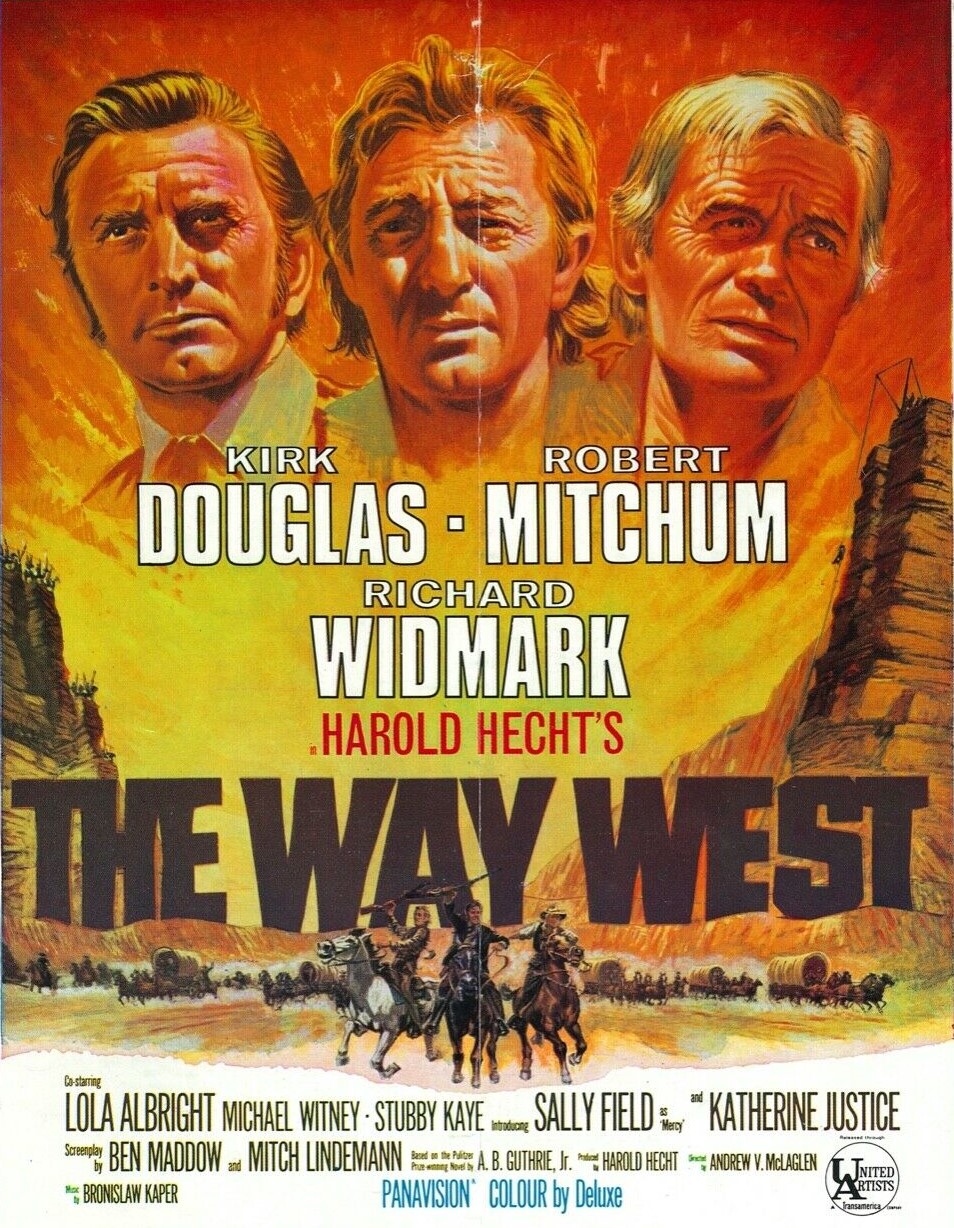
Wallis’s business partner Joseph Hazen shared Wayne’s pessimism and urged the producer to recast with either William Holder (The 7th Dawn, 1964) or Robert Mitchum (The Way West, 1967). Paramount, too, fretted about insurance, the studio couldn’t risk hiring an uninsurable actor. Wallis refused to abandon Wayne and the studio finally agreed to tough conditions from the insurance company. So, on January 6, 1965, the principals gathered in Durango to commence the 46-day shoot on a production budgeted at $3.19 million.

The high elevations – 8,500 ft in places – were not conducive to someone recovering from a lung cancer operation and Wayne found it difficult to breathe. It didn’t help that on the fourth day of shooting Wayne was expected to jump into icy water for the sequence where the brothers were ambushed by the villains. It didn’t help, either, that Wayne was too big to wear a rubber suit to stave off the cold like his fellow actors.

Wayne never complained that Hathaway “worked me like a damn dog.” He realized that it “was the best thing ever happened to me. It meant I got no chance to walk around looking for sympathy.” The star put on a brave front, publicly acknowledging his battle with cancer as a way of giving hope to others while privately terrified not so much of dying but of being helpless. “I just couldn’t see myself lying in bed…no damn good to anybody.”

“He had to be the macho man,” commented Earl Holliman (The Power, 1968), a late substitute for original star Tommy Kirk (Swiss Family Robinson, 1960) who was sacked after being caught smoking marijuana, “he had to have more drinks than the next guy.” And despite the severity of his condition, and although publicly pretending he had given up tobacco, he continued smoking cigars.

Recalled Dean Martin (Rough Night in Jericho, 1967), “He’s two loud-speaking guys in one.” George Kennedy (Cool Hand Luke, 1967) asserted, “If you put him in a group with other movie stars, the eye went to him and that is the ultimate marker of respect. He was John Wayne. He was very real. It didn’t matter if he wasn’t Olivier; Olivier wasn’t John Wayne.”

But there were outward signs of the effect the illness had upon him. He was less sure of himself on a horse, riding with a shorter rein out of fear a horse would get away from under him, trying to minimize the chances of falling or being bucked from the animal. And as the film wore on, an oxygen inhaler was set up beside him on set.

Dennis Hopper (Easy Rider, 1969) was wary of working again with Hathaway after a difficult experience with him on From Hell to Texas (1958) starring Don Murray and Diane Varsi where the actor suffered the indignity of endless takes. Hopper quit three times and for good measure the director put the word around and virtually grounded the actor’s career. Hopper only made one movie in six years. In the interim he had married Brooke Hayward, daughter of actress Margaret Sullavan whom Hathaway respected, and peace was brokered.  

Although on his best behavior on the shoot, Hopper was no less impressed. “He was a primitive director, he rarely moved his camera, the movement came from the actors.”

“Westerns are art,” declared Wayne. “They’ve got simplicity and simplicity is art…There’s simplicity of conflict you can’t beat…Westerns are our folklore and folklore is international…In Europe they understand that better than we do over here. “

Whether it was public sympathy for an ailing star and his resolve to fight cancer, or audience delight that he was back in a western after a gap of a few years, The Sons of Katie Elder was a huge hit with $5 million in initial rentals (what studios were left with after cinemas had taken their share). It earned more later in reissues but that initial sum was enough for thirteenth spot in the annual box office rankings though beaten by both Shenandoah and Cat Ballou. Its foreign earning would probably match domestic, to make it one of Wayne’s biggest earners for the decade.

SOURCES: Scott Eyman, John Wayne: His Life and Legend (Simon and Schuster Paperbacks, 2014) p111, p387-396 ; Ronald L. Davis, Duke: The Life and Image of John Wayne (University of Oklahoma Press, 1998) p266; Hal Wallis Collection, Margaret Herrick Library; Hedda Hopper, “Ladd To Star in Film of Pioneers’ Reunion,” Chicago Daily Tribune, November 9, 1955, p16; Thomas M. Pryor, “Hecht-Lancaster Obtains 2 Novels,” New York Times, January 12, 1956, p22; Oscar Godbout, “TV Movies Extras Get Salary Rises,” New York Times, July 3, 1956, p17; John Wayne, “Me? I Feel Fine,” Los Angeles Times, January 18, 1965; James Bacon, “Wayne’s Biggest Bout vs. Killer Cancer,” Los Angeles Herald Examiner, March 14, 1965; Roderick Mann, “John Wayne – A Natural as The Shootist, Los Angeles Times, March 7, 1976.

Mister Moses (1965) ***

The “lost” Robert Mitchum picture, never seen on VHS or DVD, but now turning up on YouTube.

Elephants have little proven appeal for audiences. From Dumbo (1941), Hannibal (1960), Billy Rose’s Jumbo (1962) and Hannibal Brooks (1968) through to Dumbo (2017) and Babylon (2022), the story is one of negative impact on box office. Baby elephants are maybe a different story – see Hatari! (1962)  – but there’s very little that’s cuddly about the adult version and their main purpose appears to be to annoy a major stars initially and then go on a rampage that either hinders or helps said star. If you’re acquainted with elephants, you’ll notice this is of the tameable Asian variety rather than the untamed African.

The unnamed beast here would fall into the former category except the eponymous Mister Moses (Robert Mitchum) – real name Joe – can talk to the animal in a language it understands and persuade it to show off its parlor tricks, enhancing Moses’s status among a small  community in Kenya. Moses is a con-man-cum-diamond smuggler, rescued from a river, specifically the reeds growing there that offer a Biblical connection to the natives.

The Bible plays a significant role here, though the natives don’t fall for the Noah story as explained by missionary (Alexander Knox). They are, like Native Americans, being driven off their land by the arrival of a dam which will flood their traditional grounds. Their cattle have not been included in the grand plan to airlift the entire community. So they refuse government help, hence the need to embark on a 300-mile trek.

Moses, a dodgy character with “an allergy to badges of authority”, is blackmailed by the missionary’s daughter Julie (Carroll Baker) and ends up doing the job of her fiancé, district commissioner Robert (Ian Bannen), to shift the natives off their land. He’s got some parlor tricks up his sleeve, too, including a flame-thrower which, again the old Biblical touch, he can employ to burn a bush, thus endearing himself as a leader.  

Naturally, enough, though staid, Julie finds herself attracted to Moses, a somewhat laid-back character with quite a line in hip patter. But it’s quite a stretch for Julie to be seduced by his knowledge of classical literature, namely the Andromeda-Perseus tale. Not everyone takes to Moses’ leadership, saboteurs steal the map and the compass.  And it’s no surprise when someone finds another purpose for the flame-thrower. There’s a bad witch doctor Ubi (Raymond St Jacques) to be put in his place, and Joe rises out of his lethargy long enough to dispose of a couple of villains.

With the emphasis on the Biblical, Joe is called upon to “part the waters” Exodus-style. Disappointingly, this is a bit of a parlor trick. It had me wondering how the heck he was going to do that,  with just a flame thrower and an elephant at his disposal, and also given that the sole purpose of rivers in African movie vernacular is so that the leading lady can bathe in one. Since the aforementioned river is nothing more than the outcome of another dam, Moses is clever enough to simply persuade the dam superintendent to – miracle of miracles – to turn off the water.

There’s enough going on to maintain interest and the will-she-won’t-she element is well-handled and there’s a good final line, “What’ll I do for laughs?”

Robert Mitchum has been here before (Rampage, 1963) but this time is on the side of the animals. Of course, the main interest is not how well he gets on with the elephant but whether he strikes sparks with a Carroll Baker (Harlow, 1965) eschewing her normal sexy persona. A cross between Hayley Mills and Deborah Kerr, Baker doesn’t quite suggest bottled-up sexual energy fizzing to get out, but then that wouldn’t be in character. It’s not in The African Queen league in terms of screen partnerships but it’s certainly workable enough.

Ian Bannen (The Flight of the Phoenix, 1965) is at his scowling best although Raymond St Jacques (Uptight, 1968) gives him a run for his money. Director Ronald Neame (Gambit, 1966) proved as adept at handling the big-name stars as the animals without it being acclaimed as a famous “lost” work of Mitchum. The screenplay by Charles Beaumont (Night of the Eagle/Burn, With, Burn, 1962) and Monja Danischewsky (Topkapi, 1964) was based on the novel by Max Catto (Seven Thieves, 1960).

A pleasant enough diversion.

Rampage (1963) ***

A more misleading title you’d struggle to find. There’s no sign of a rampage until the last 20 minutes, and even then it plays out on a rooftop in a city. Not a patch, action-wise, on Howard Hawks’ Hatari! the previous year, but sharing the female lead Elsa Martinelli. More romantic drama than jungle adventurer, and not much Malaysian jungle at that given Hawaii was the stand-in.

Big on metaphor, women viewed as trophies to boost the male ego or requiring male protection. Surprisingly contemporary with reference to the grooming of young women. Though Hatari! went down the same line, hunting animals for zoos rather than sport, this again take  contemporary approach, animal conservation seen as a battle of cultures, between men for whom shooting an elephant or a rhino reinforces their macho tendencies, and those who want to preserve rare wildlife for future generations.  

Trapper Harry (Robert Mitchum) and hunter Otto (Jack Hawkins) team up to capture for a German zoo two tigers and a legendary panther-like creature known as “The Enchantress.” From the outset, sexual tension sizzles between Harry and Otto’s young partner Anna (Elsa Martinelli). Although Otto is possessive, he permits Anna to take male companions on the assumption that she will always return to him.

Anna’s not quite as submissive as Otto would like to believe and she puts Harry in his place more than once. There’s a 35-year age difference between Otto and Anna. But Harry is disturbed at how they became lovers, persistently asking how soon, after the older man saved the orphaned girl from poverty, he seduced her.

The love triangle is set against a more primitive background where women have no rights and are as likely to be offered up to any passing male. Native guide Talib (Sabu) feels duty-bound to pass his wife onto to Harry. The wife not only acquiesces, but is insulted when the American refuses.

The men represent different cultures, Otto a marksman who prefers to bring his trophies back dead, hanging his virility on every scalp, Harry more emancipated for whom capture is enough. There’s a stand-off with a local tribe when Otto is too hasty with his rifle.

Martinelli does better here in terms of panther, the creature in the film was
more of a leopard with some red marks.

Given the lack of budget and the consequent lack of action, it’s no surprise that the drama revolves around whether Anna will betray her lover. Despite his apparent laid-back approach, Otto watches Anna with an obsessive eye, her potential loss deemed a blow not just to his esteem but a sign of approaching death.

What sets this aside from the submissive female trope is that the decision rests with Anna. Harry certainly doesn’t push his luck and until his pride is dented Otto allows the situation to play out. The shift in Anna’s feelings is discreetly rather than dramatically handled. The traditional bathing scene is used to reveal that Anna is not actually married and therefore neither committing adultery nor under legal obligation.

When we finally get down to some action, the build-up is interesting, Harry using beaters to nudge tigers towards his traps, but, unfortunately the majority of these animals are a disgrace to their wild forefathers, on the whole appearing pretty obliging if not outright dumb. There’s one charging rhino and, heaven forfend, Otto commits the cardinal son of requiring two bullets to finish it off.

The movie picks up when they encounter “The Enchantress,” by a long way the smartest beast in this particular animal kingdom, who enhances her mythical status by hiding in a cave, clash of personalities between the alpha males triggering the movie’s final, more dynamic, phase, Anna coming into her own not just as a crack shot but as an independent woman, Otto making Harry his prey.

More interesting as an examination of contemporary mores, not quite as sexist as initially it appears, and nudging in the direction of a woman attempting to attain independence, and in discussing the issues surrounding conservation. Just as bold is the questioning of Otto’s motivation is saving Anna from poverty, an act of kindness or grooming? You might wonder how much better off Anna would be with a man two decades older rather than one three decades older, but nobody goes there.

The acting is uniformly under-played. Elsa Martinelli is given a better showcase for her talents here than in Hatari! and this is Robert Mitchum (Five Card Stud, 1968) at his laid-back best while Jack Hawkins (Masquerade, 1965) keeps his simmering under control until the end.

Without the budget to ape Hatari! director Phil Karlson (The Secret Ways, 1961) has no option but to focus on characters rather than animals, but finds interesting ways to put various messages across. Marguerite Roberts (Five Card Stud) and Robert I. Hope (White Commanche, 1968) based their screenplay on the novel by Alan Caillou a.k.a Alan Lyle-Smith.

Discover WordPress

A daily selection of the best content published on WordPress, collected for you by humans who love to read.

The Atavist Magazine

by Brian Hannan

WordPress.com News

The latest news on WordPress.com and the WordPress community.