Behind the Scenes: “Wild Rovers” (1971)

Director Blake Edwards shouldn’t have been anywhere near Wild Rovers in November 1970 when filming of the western kicked off in Arizona. He should have been making a musical – his second successive one following Darling Lili (1970).  

Versatility had become something of a watchword for Edwards who had segued apparently effortlessly from the gentle romance of Breakfast at Tiffany’s (1961) to thriller Experiment in Terror/Grip of Fear (1962) to alcoholic drama Days of Wine and Roses (1962) to wild comedy The Pink Panther (1963) to slapstick The Great Race (1965) – in 70mm roadshow no less – to the satirical What Did You Do in the War, Daddy (1966). So Hollywood wasn’t enormously surprised when he decided it was time he tackled a musical, Darling Lili, especially when it starred “sure thing” Julie Andrews.

And before the figures for Darling Lili came in, and everyone thought they were onto a winner, small surprise that he was in the front line to direct She Loves Me, the movie adaptation of a 1963 Broadway musical that was the second musical reincarnation – the first being The Good Old Summertime (1949) with Judy Garland – of romantic comedy The Shop around the Corner (1940) starring James Stewart.

But in 1969 – before Darling Lili slumped at the box office – a takeover of MGM by Kirk Kerkorian was imminent and in anticipation of some drastic action studio executives canned its three biggest projects, Fred Zinnemann’s Man’s Fate, the $10m She Loves Me – also to star Julie Andrews (now Edwards’ wife) – and the $12m-$15m Tai Pan. Edwards sued for $4.6 million.

Edwards had other fish to fry – his company Cinema Video Communications had purchased the latest Harold Robbins’ novel The Betsy plus The Peacemaker, the first novel by war historian Cornelius Ryan (The Longest Day). Edwards had plans to film Svengali with Jack Lemmon and Julie Andrews and Kingsley Amis’s novel The Green Man with Richard Burton.

Despite having informed MGM that he would not accept any substitute for She Loves Me, he capitulated when the studio agreed to back his pet project, a buddy western with a serious theme, Wild Rovers. Paul Newman was initially sounded out with the younger character looking a good fit for Michael Witney, expected to be the breakout star of Darling Lili.
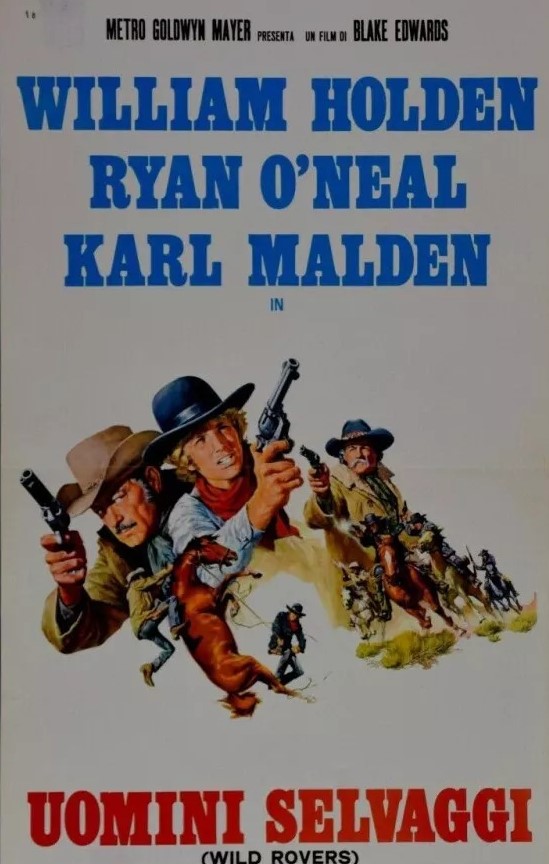
William Holden was picky about his projects. He complained that most scripts he received were “aimed at exploitation or titillation.” Though he had not had a hit since the start of the previous decade with The World of Suzie Wong (1960), his global investments had paid off and he was happier spending seven months of the year on his 1,260-acre ranch in Kenya. He was impressed enough with the Blake Edwards script for Wild Rovers and, possibly optimistic about its commercial prospects, to defer part of his salary against a percentage of the gross (he had made a fortune from his percentage on Bridge on the River Kwai). Apart from Wild Rovers, the only movie which had caught his attention was The Revengers co-starring Mary Ure (after it was delayed due to his illness, she pulled out).

Even so, MGM held Edwards on a tight rein financially. While trying to extricate itself from a sticky corner, it had no wish to find itself in the kind of lack of budgetary restraint that had afflicted Darling Lili. And to some extent, Edwards had to prove he was more fiscally responsible. The budget for the below-the-line cast was restricted to $1.5 million. There was considerable physical commitment to the project from the two stars, training for six weeks so the scene taming the wild horse could be completed without stunt men.

MGM had high hopes for the western, backing it with a substantial promotion campaign. In the trades there were three-page ads and a separate advert paying homage to the studio’s “writer cats.” The studio had weathered the Kerkorian storm and the massive write-offs at the end of the previous decade. The mood was buoyant. The first quarter of 1971, bolstered by an unexpectedly good showing by Ryan’s Daughter (1970). While not hitting the highs of Doctor Zhivago (1965) it had done much better than the industry predicted, especially after being savaged by critics. It looked as if MGM had turned a corner. In the first three months of 1971 the studio made $2.5 million profit and was confident that summer offerings Shaft, The Last Run and Wild Rovers would maintain the good run.

After the box office fallouts of recent years, it looked as though the entire industry was on the verge of bouncing back. Released by other studios around the same time as Wild Rovers were the likes of Klute, The Anderson Tapes, Summer of ’42, Willard, and Carnal Knowledge

The reviews weren’t promising. Variety tabbed it “uneven”, only one of the top five New York critics gave it a favorable review. An opportunity to gain some critical headway was spurned when the studio pulled the movie from the annual Atlanta Film Festival in favor of an appearance by the two stars on the Dick Cavett Show.

The version released ran 110 minutes. There was no critical outcry at the film being savagely edited by the studio – nobody cared sufficiently about the picture to be up in arms about it.

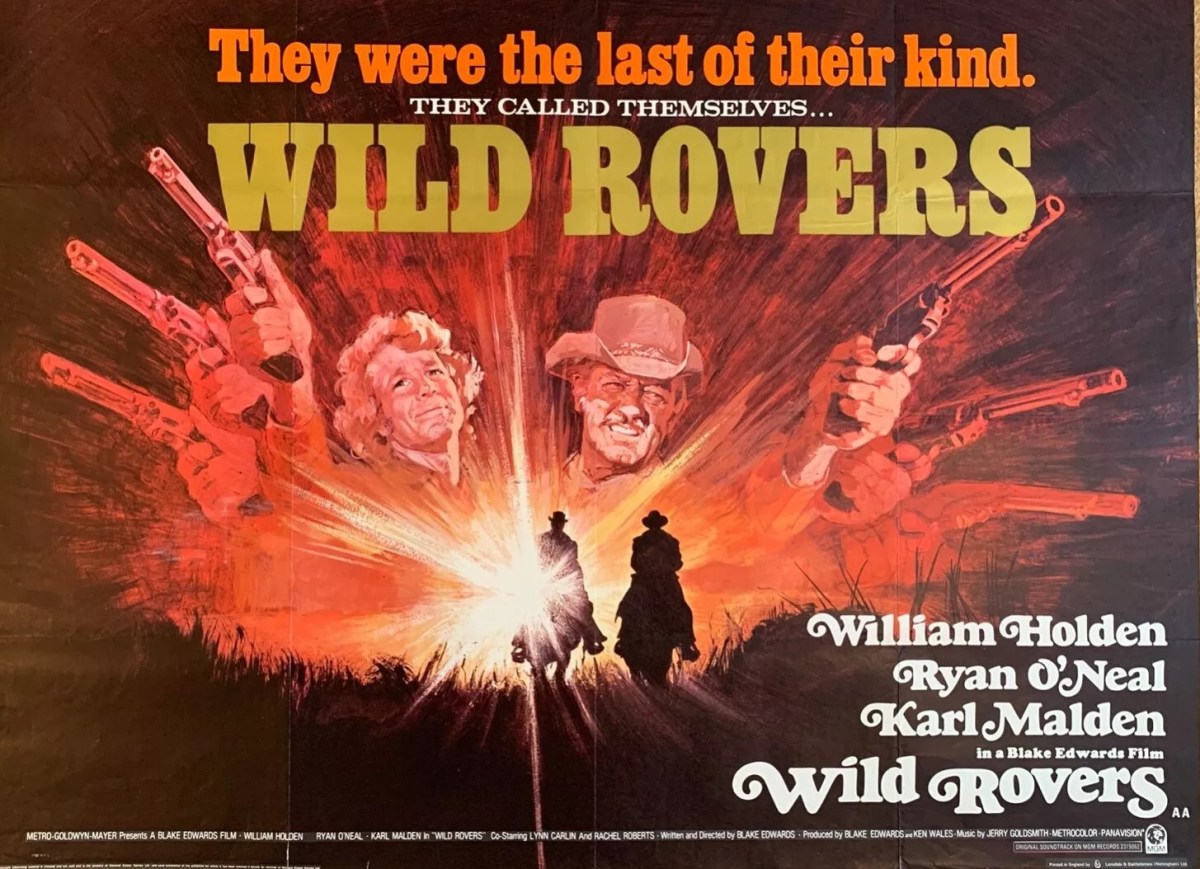
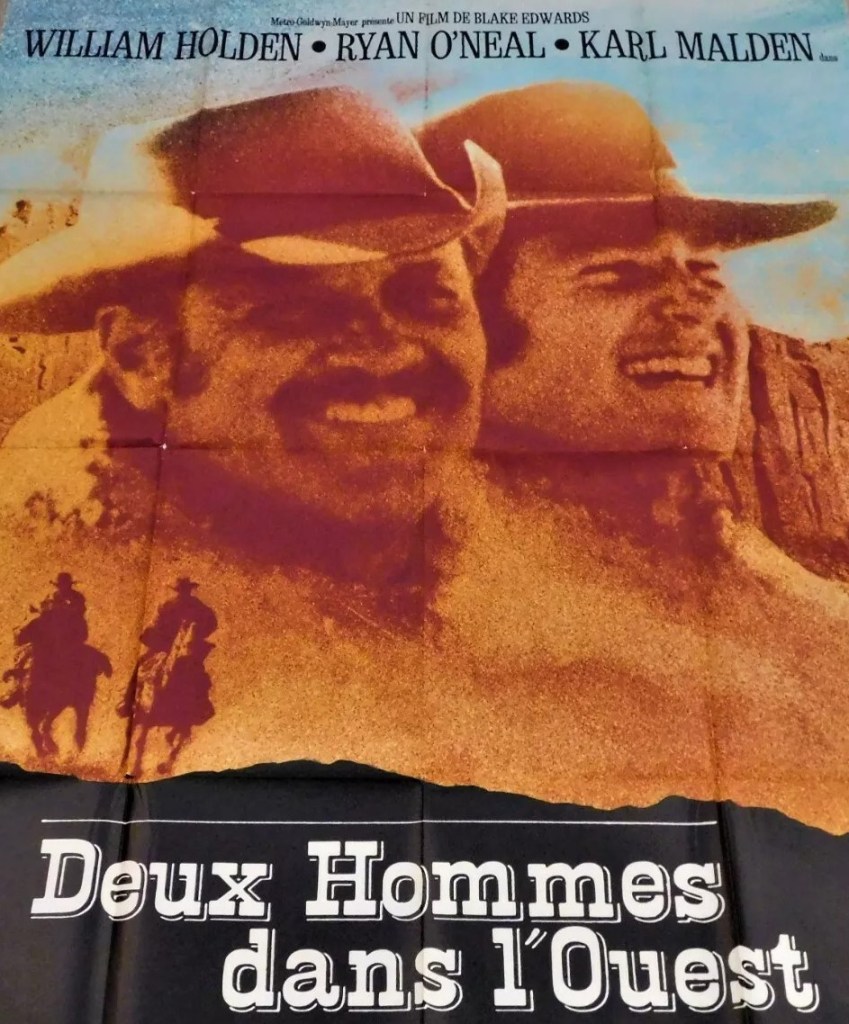
Worse, the marketing campaign was widely derided. The image of William Holden and Ryan O’Neal astride the same horse, the youngster grinning, leaning into the older man’s back, gave off, unintentionally, homo-erotic undertones. Audience dismissal of the advert only became clear to MGM at the end of the movie’s first six days at the first run Grauman’s Chinese in Los Angeles which registered less than $20,000 at the box office. Shocked at the low result, MGM “scrapped its entire pre-release and opening campaign” shifting the emphasis from the “man-to-man image” to “guns, horses and adventure” suggesting an old-fashioned shoot-em-‘up.

The new advertisement was accompanied by anonymous quotes, comparing Holden and O’Neal to Clark Gable and Spencer Tracy – though as Variety acidly noted, without identifying which was which – and describing the shootout as “so electrifying your impulse is…to run for cover.” Phantom quotes had been used before by Avco Embassy for De Sica’s war drama Sunflower (1970) starring Sophia Loren and Marcello Mastroianni. But while Hollywood was fond of editing reviews to find an often-misleading quote, studios generally drew the line at making them up.

The New York release in a trio of first run houses coincided with the showcase outing of Love Story (1970). That movie had played for months in first run and this was the first time it was generally available. Love Story, the hit of the decade so far, would open in 80 suburban cinemas on the same day in June, 1971, as Wild Rovers. In the era before “Barbieheimer”, there was still an expectation of cross-over, that the fans of a new star coming good like Ryan O’Neal would automatically seek out his latest picture. And it may have been that the advertising campaign was specifically designed to ensure his fans did not go to the western expecting another romantic drama.

They weren’t tempted at all. Love Story cleaned up – a gross of $1.25 million from 80 outlets and another $750,000 the following week. Compared to that, Wild Rovers scarcely got out of the gate – a “less than roaring” $20,600 from the three. At the 1,096-seat Astor it was on a par with the fourth week of Escape from the Planet of the Apes (1971) which had just completed its run there.

There was a little solace elsewhere. Its $15,000 in Baltimore was deemed “tall” and $12,500 in Boston “slick” but more reflective of the general interest was a “dim” $65,000 from eight theaters in Detroit, a “mild” $7,500 in Denver and “moderate” $8,500 in Minneapolis. By the end of the year it had amassed $1.8 million in rentals, languishing in 59th place.   

MGM took a different tack in Europe. It wasn’t unusual for movies released in 35mm in America to be shown in 70mm roadshow in Europe – The Dirty Dozen (1967), Where Eagles Dare (1968) and The Wild Bunch (1969) enjoyed up to a year in roadshow before fanning out into general release, getting two substantial bites of the commercial apple. The latter two had done better abroad than at home, in large part due to the roadshow release which turned a movie into an event rather than a routine outing. So MGM sent Wild Rovers out in roadshow. At 110 minutes, even puffed out with a 15-minute interval, it was a mighty slim offering for roadshow.

In London, half the critics came out against it, but only a quarter were favorable, the others having “no opinion.” The consensus was that it would “not survive the rough critical handling.” It opened on October 21, 1971, at the ABC2 in London’s West End. And lasted two weeks, whipped off the screen after generating an opening week of $6,200 and a sophomore of $4,100, replaced by The Last Run starring George C. Scott, another flop.  MGM persevered with the roadshow. It played for five weeks at the Coliseum in my home town of Glasgow.

In the U.S. it shifted quickly to television, part of the CBS program, finishing a lowly 85th for the year in the tabulations of the movies attracting the biggest television audiences.

SOURCES: “Metro’s Loves Me As A Substitute for Former Say It With Music,” Variety, August 6, 1969, p3; Army Archerd, “Hollywood Sound Track,” Variety, October 20, 1970, p6; Army Archerd, “Hollywood Cross Cuts,” Variety, August 5, 1970, p23;  “Holden Pushes for Conservation,” Variety, August 12, 1970, p25; Army Archerd, “Hollywood Sound Track,” Variety, November 4, 1970, p20; “Hollywood Production Pulse,” Variety,  November 18, 1970, p54; Advert, Box Office, March 28, 1971, p3-5;  “Profitable Quarter for MGM,” Kine Weekly, April 24, 1971, p3; Advert, Variety, May 17, 1971, p23-25; Advert, Variety, May 19, 1971, p12; Review, Variety, June 23, 1971, p20; “Col Delivers Atlanta Festival,” Variety, June 23, 1971, p6; “New York Critics,” Variety, June 30, 1971, p7; “Metro Scraps Rovers Campaign,” Variety, June 30, 1971, p27; “London Critics,” Variety, November 17, 1971, p62; “Big Rental Films of 1971,” Variety, January 5, 1972, p9. Box office figures from Variety June 30-August 18, 1971, and November 10-17, 1971.

Wild Rovers (1971) ****

An unlikely candidate for redemption. Savaged by studio MGM, thoroughly trashed by critics, and ignored by audiences. MGM, having just called time on Fred Zinneman’s big-budget Man’s Fate and alarmed by the budgetary excesses on Ryan’s Daughter (1970), wasn’t in the mood for a three-hour elegiac western about nothing much. Reputedly, there was a first version that went out at two hours seventeen minutes, but the trade critics reviewed the version that went out on  general release and came in 30 minutes shorter.

Scorn was the most common reaction. It seemed excessively indulgent to allow director Blake Edwards (The Great Race, 1965) anywhere near a western when his forte was gentle or slapstick comedy and the one time he had ventured out of his comfort zone – for musical Darling Lili (1970) –  he had turned in a commercial and critical disaster. The first poster for Wild Rovers, the stars cuddled up on a single horse, suggesting home-erotic overtones, was widely derided.

Hollywood was fearful of pictures without a female prominent in the cast. And while William Holden had revived his career with The Wild Bunch (1969), there wasn’t exactly a long queue for his services, not after the disaster that was The Christmas Tree (1969). By the time he had another hit, five years later, it was in a supporting role in Towering Inferno (1974).

There were question marks also over co-star Ryan O’Neal. Despite the commercial success of Love Story (1970), and an Oscar nomination to boot, it seemed insane to opt for what was in some regards a buddy picture sorely lacking in the crackling dialog and hip approach to the nascent genre that made Butch Cassidy and the Sundance Kid (1969) such a success.

This is a very small story on a not-much-bigger canvas. Sure the scenery is splendidly shot, but close-ups are scant, most of the movie filmed in long shot, faces covered by beards and hats pulled down. Unless you were familiar with his distinctive voice, you wouldn’t, for example, recognize Karl Malden. We’re back in the cowboy realism of Will Penny (1968) but where that narrative helped Charlton Heston by transforming him into a stand-up good guy coming to the aid of a widow and subtle romance thrown in, this just about has the dumbest plot ever conceived. 

What makes this work is that the characters ring true, no matter how dumb they appear. These are generally people at the end of the line, or at the beginning of one and realizing it’s going nowhere, or with their small patch in danger of being overrun.

The local sheriff holes up in the whorehouse, there’s a range war brewing – sheep farmers invading valuable pastures –  a cowboy could be killed in a flash, not from a rampant gunfighter, but from a spooked horse trampling him to death, the upstanding turn out to be corrupt.

Fifty-year-old Ross Bodine (William Holden), no wife or family to berth him, has hooked up with Frank Post (Ryan O’Neal), half his age. They live on a ranch, eating and sleeping in a communal bunkhouse, and when one of their colleagues suddenly accidentally dies, they take to brooding on the unachievable future, one that seems to be drifting fast away from the older man, still a brass ring within potential grasp for the younger.

They decide to rob a bank. But not in the normal fashion of bursting in with guns blazing in the middle of the day. Instead, they do it at night, Frank holding bank manager’s wife Sada (Lynn Carlin) hostage while her husband Joe Billings (James Olsen) fills Bodine’s pockets to the tune of $36,000. They should get away with it. By daybreak they should have put an enormous distance between themselves and any pursuers and once over the state line would be out of the jurisdiction of local sheriff or marshal. Probably, they’d throw a chunk of it away in gambling, women and booze but they still reckon on having enough left to stake themselves to a small ranch, hiring a manager to do the dirty work.

Not wanting to leave their employers out of pocket, Bodine hands the bank manager back £3,000 to return to ranch owner Walter Buckman (Karl Malden). But the money is diverted along the way by Sada. So Buckman attaches sons Paul (Joe Don Baker) and John (Tom Skerritt) to the posse with the instructions not to turn back at the state border. Walter remains behind waiting for the sheepmen to trespass.

Except for the elegiac scenery, the tone appears uneven at the start, and you might think this is going down comedy lines, what with our heroes being drenched with buckets of ordure and generally being knocked around slapstick fashion. But it quickly settles and you realize you’re watching a couple of losers every bit as believable as the pair in Midnight Cowboy (1969). They’ve got nowhere to go and in making the most of what they have liable to make a hash of it. They don’t win saloon brawls, are on the wrong end of a shoot-em-up, squeal like a pig, to coin a phrase, when called upon to be manly and stoical when a bullet needs dug out of a wound, stare into space after making love because they can sense the inevitable. I found myself warming to them much more than I expected.

Frank may be a mean shot and a heck of a gambler but he’s a little boy at heart, picking up a stray puppy while on ransom duty. There’s a fabulous scene – and my guess what attracted Holden to the picture – when Ross talks to his friend about their friendship. Hell, you think, that’s sailing close to the wind, don’t tell me these guys are getting all emotional. Until you realize the only time Ross could ever speak so openly is if his pal is beyond hearing. Because he’s dead.

Beautifully shot, as I mentioned, boldly envisioned with the emphasis on long shot, and in the end more moving than I expected. I’ve no idea what kind of masterpiece lurked in the lost three-hour version, but MGM may have done Edwards a service because this edited version hits the mark.

Written and directed by Edwards. Both Holden and O’Neal, who was generally panned, have never been better. Host of new talent in the wings includes Tom Skerritt (Top Gun, 1986), Joe Don Baker (Walking Tall, 1973), James Olsen (The Andromeda Strain, 1971), Moses Gunn (Shaft, 1971), and Victor French (Little House on the Prairie, 1974-1977). Unexpected appearances from British pair Rachel Roberts (Doctors Wives, 1971) and Charles Gray (The Devil Rides Out, 1968). 

Check this one out. Reassessment urgently required.

Behind the Scenes: The Circuit Breaker Busts the Release System

Every country followed a similar system. Unlike nowadays, new movies would first be released on the biggest cinemas in the biggest cities. Only after the hullabaloo of premieres and publicity in national newspapers did the films move into the bread-and-butter of the release pattern, appearing for a given week on the circuits. Britain had two main circuits, ABC and Odeon, both of whom, unlike their counterparts in the USA, were permitted not just to exhibit movies but to make and distribute them.

In the UK at the start of the 1960s, regardless of how well new movies had done in their opening salvos at the super-cinemas, they were allocated just one week on the circuit. In retrospect, it seemed a weird notion that a big-budget Hollywood movie would be given the same amount of time to sell tickets as a cheaper home-grown product. Even more basic, that demand was automatically limited. Unlike now, a cinema could not hold onto a hit film for as long as it wanted, because the print was already assigned another cinema in another locale. And there was no way of bringing back a hit for a second go-round until years later.

The release system began to change with the introduction of the roadshow, when 70mm movies showing twice a day at increased prices would run for at least a “season” (13 weeks) and could respond to demand by playing for much longer. Following their roadshow run, such films would be fed, at a later date, into the circuit system.

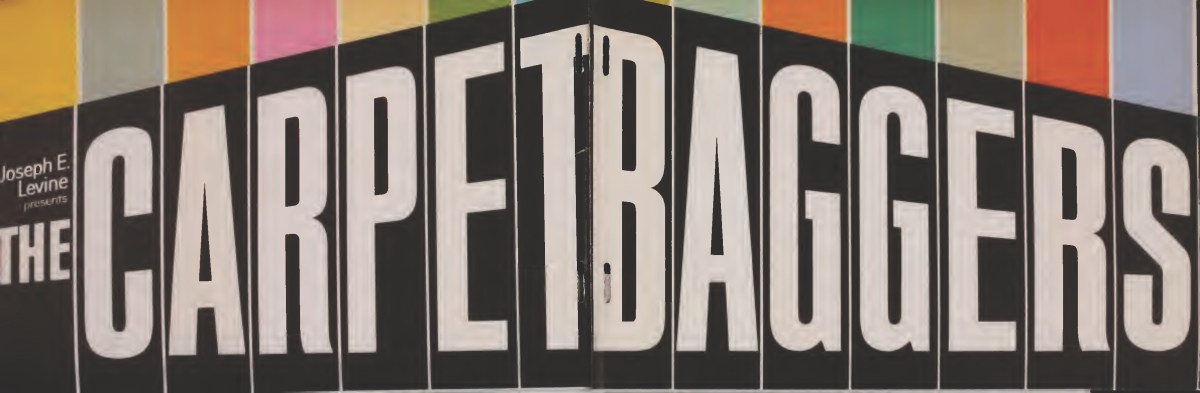
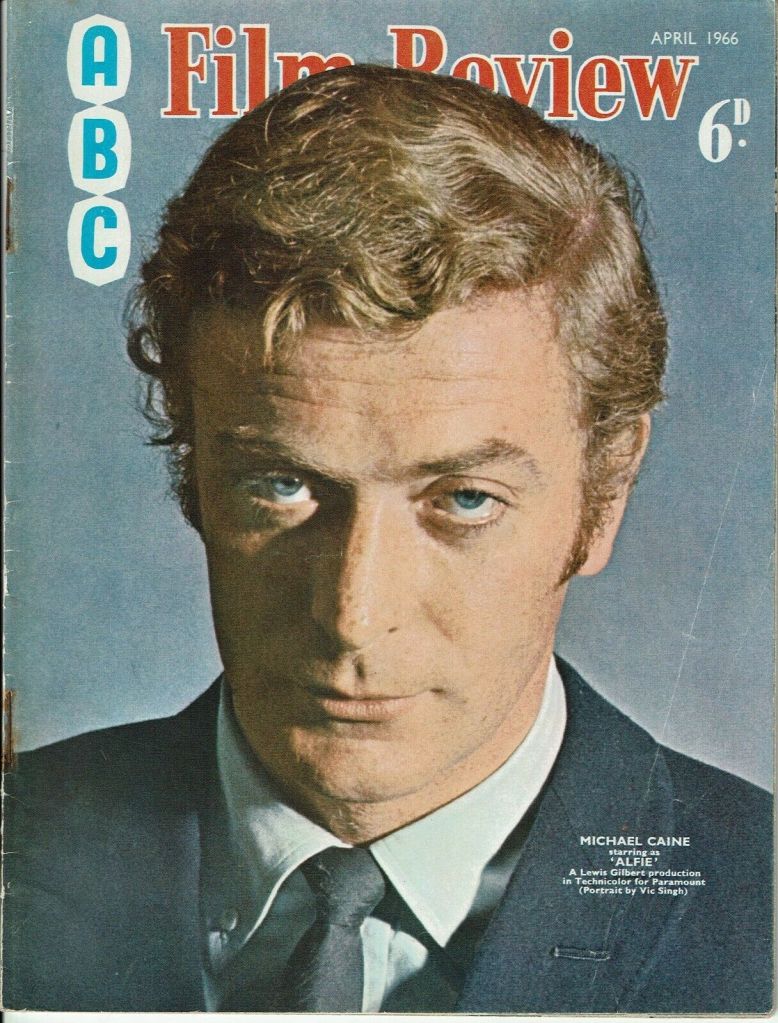
But in 1964, there was the beginnings of a shift on the ABC circuit. Towards the end of the year, instead of the traditional one-week circuit run, The Carpetbaggers, not a contender for roadshow despite its 150-minute running time, was shown for two weeks.  But that proved an isolated incident. It was another two years before ABC repeated the experiment, courtesy of  Alfie starring Michael Caine.

The following year the first two months saw four films go down the same route, Oscar-winning musical My Fair Lady which had been road-shown a couple of years before, Hayley Mills drama The Family Way, The Dirty Dozen, also a roadshow hit, and Bonnie and Clyde (a flop in the USA).

In addition, the circuit had learned to re-evaluate earlier hits. At that point a revival/reissue only made a second showing in the UK about 7-10 years after initial release. But in 1967, just three years after it proved to be a colossal box office success in the UK (it flopped in the USA despite an immense marketing campaign), Zulu was given another week on the circuit, this innovation adding a new dimension to the circuit release system.

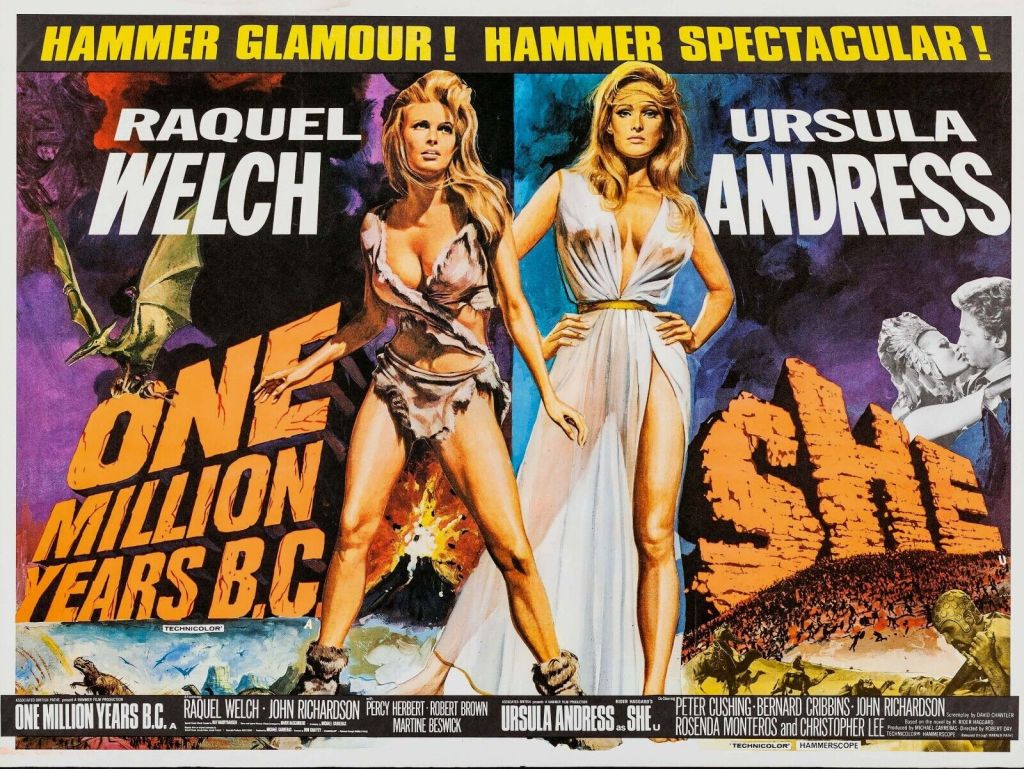
In fact, The Dirty Dozen was afforded yet another week on the circuit in 1968 – in effect, counting the roadshow and the initial circuit release, the public was accorded three opportunities in a very short space of time, The following year One Million Years B.C. (1966) starring Raquel Welch and She (1966) starring Ursula Andress were double-billed in a reissue.

But whether the two-week window had proved a complete success was open to doubt because such clear-cut hits as Bullitt and The Italian Job were only granted one week to make an impact on the circuit box office. In 1969, the circuit had so misjudged the box office potential of Till Death Us Do Part, a movie version of the popular British television comedy series, that it was initially scheduled for a one-week run. But it was such a blockbusting success that ABC tore up its release calendar and slotted it in for a further week two weeks later.

Growth of the multiplex meant big films could be retained for much longer on the biggest houses, switching between two or three or four individual cinemas until demand was deemed fully drained. No longer did a circuit release mean that release dates for the suburban part of the release were set in stone, an approach guaranteed to force the main city center cinemas to remove from its screens a movie that still had pulling power and at higher prices.

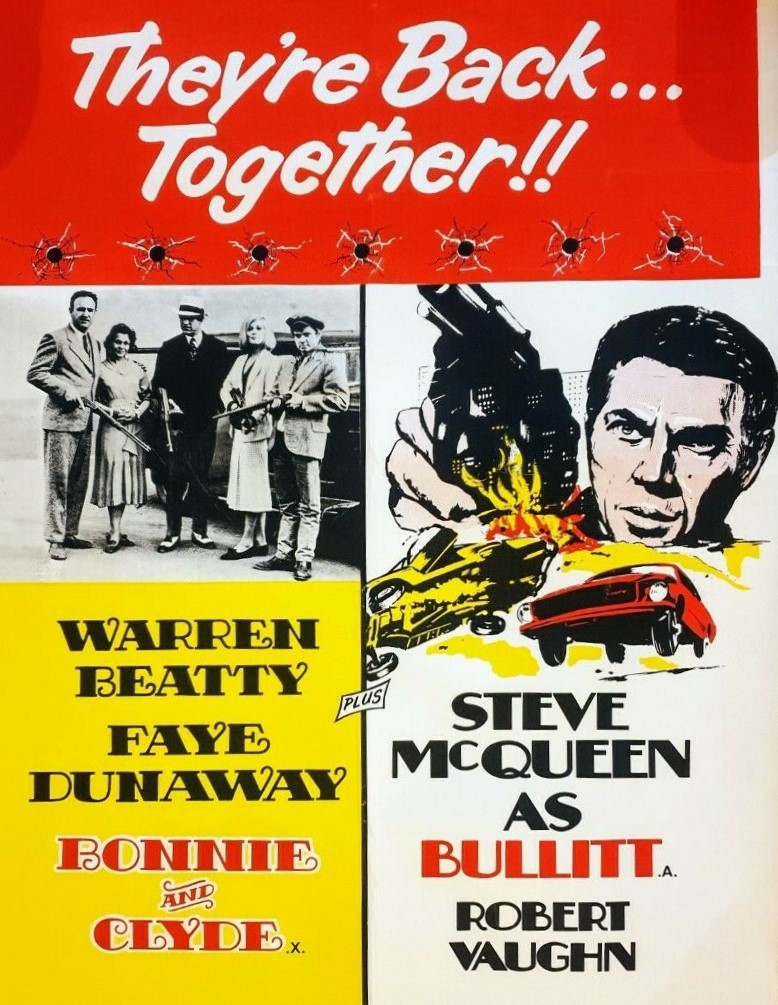
But any kind of change to the circuit release system remained minimal. In 1970, only two movies, Where Eagles Dare, a monumental success when road-shown (a release option denied in the USA), and the home-grown Women in Love were provided with a two-week circuit platform though Bullitt doubled with Bonnie and Clyde made a speedy return as a reissue.

In 1971, a pair of British comedies Percy and Up Pompeii, both made by EMI which had taken over the ABC circuit, were given the two-week treatment. But like Till Death Us Do Part, revisionist western Little Big Man was allocated another week over a month after its initial showing. The Dirty Dozen returned yet again.

In 1972, the circuit introduced unveiled another release strategy called variously a “selective release” or a “pre-release.” This meant, in effect, that in major suburban cinemas, the biggest new pictures would be given two bites of the cherry. A Clockwork Orange and The Godfather were both deemed worthy of a one-week “selective” release with a second week factored in for the following year in what was deemed a “full release.”  A version of roadshow was already in place for both these movies and in the main cinemas in big cities these were retained for a considerable amount of time.

In 1972 there were also re-runs for There’s a Girl in My Soup, Zulu and Paint Your Wagon (a bigger roadshow success in the UK than the USA). But the following year saw a whole wave of reissues beginning with The Ten Commandments (1956) followed by Dirty Harry/Klute (both 1971), The Wild Bunch (1969), Love Story (1970), Coogan’s Bluff (1968)/ Play Misty for Me (1971) while Gunfight at the OK Corral (1957) supported the new Friends of Eddie Coyle.

In 1974, The Sting and Airport 1975 went down the new “selective” plus normal release pattern, enjoying one week in each phase, while Blazing Saddles and The Exorcist received a two-week send-off from the start, Fear Is the Key (1972) was revived to support another television spin-off Holiday on the Buses.

Towering Inferno in 1975 ran for three weeks, the first qualifying as “selective” system but the others two weeks shortly after. But there was another development with Jaws which went out first as “selective”, then a week in “pre-release”  and its third appearance on the circuit deemed a “full release” turned into an extended run. But the “selective”/”full release” of Death Wish, Mandingo,  and Murder on the Orient Express comprised only two weeks. Lisztomania looked set to join the exclusive club but instead of going out on the full release some weeks later it was restricted to a single “selective” week, suggesting it had not fulfilled expectations first time round.  The Godfather Part II also managed two weeks but not sequential, the second week deemed a “re-run” six weeks later. Where Eagles Dare and David Essex duo That’ll Be the Day (1973)/Stardust (1974) were reissued while Uptown Saturday Night (1974) was revived in support of Inside Out. Gone with the Wind (1939) enjoyed another reissue in 1976 as did Zulu and Freebie and the Bean (1974)

In 1977 “pre-release” replaced “selective” as the preferred jargon and was applied to King Kong, Airport 77 and Rollercoaster but in these instances amounted to a total of two weeks counting the later full release. By contrast, When the North Wind Blows and The Eagle Has Landed  enjoyed a straight two-week release.  Ben-Hur (1959) was reissued as were Jaws (1975), The Sting (1973), The Godfather (1972), Clint Eastwood double bill The Outlaw Josey Wales (1976)/Magnum Force (1973) and television spin-off duo All Creatures Great and Small (1977)/It Shouldn’t Happen to a Vet (1976).

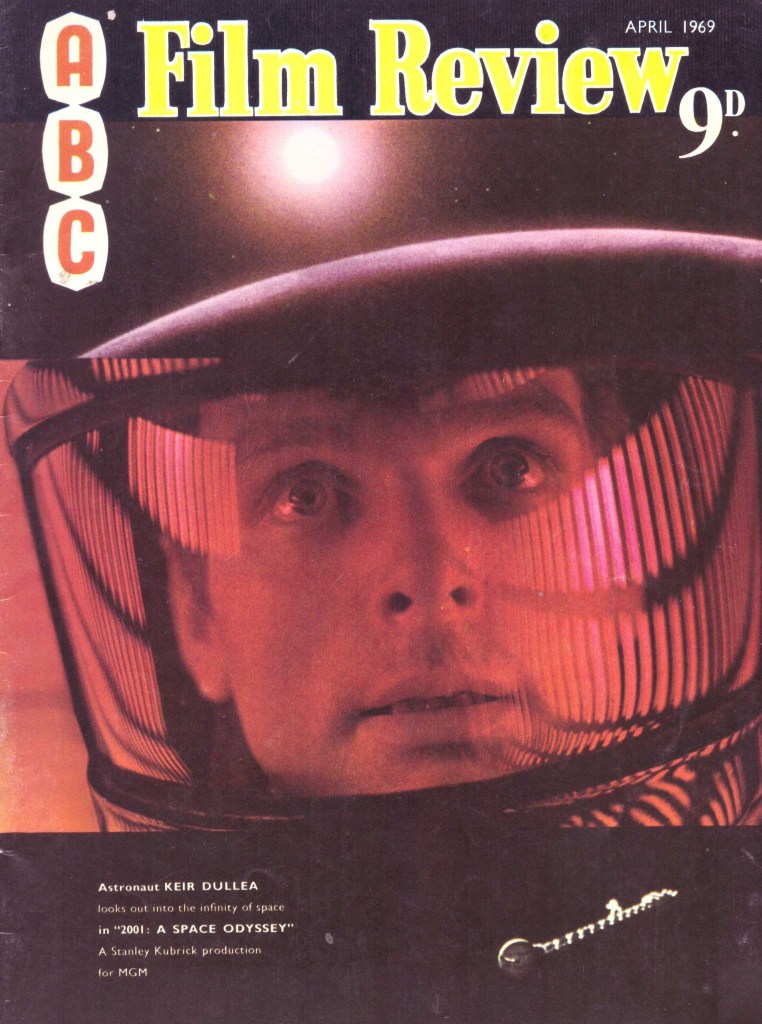
In 1978, 2001: A Space Odyssey (1968) and Jesus Christ Superstar (1973) entered the reissue market along with  revivals of Enter the Dragon (1973)/Death Race 2000 (1975). Charles Bronson western Breakheart Pass (1976) returned  in  support to Michael Caine thriller The Silver Bears, The Car (1977) to Full Circle, Paper Moon (1973) to House Calls and the ribald Adventures of a Taxi Driver (1976) to The Other Cinderella.

However, by this time, the big city center cinemas had begun holding on to major releases for such inordinate lengths of time that they were virtually played out by the time they reached the suburban circuit houses so there was little reason to insist on those cinemas retaining them for two or three weeks. None of the ABC chain’s top hits of the year – including the likes of Saturday Night Fever, Grease and Watership Down – played more than one week when they entered the circuit release.

By 1979 the “selective” and “pre-release” idea and the two-week booking was gone. But the following previous hits were re-cycled: Superman: The Movie (1978), The Goodbye Girl (1977), The Getaway (1972),  The Towering Inferno (1974), the inspired pairings of Blazing Saddles (1974)/Monty Python and the Holy Grail (1975) and Convoy (1978)/Sweeney 2 (1978). More obvious was the dualing of Peter Cushing duo The Ghoul (1975) and Legend of the Werewolf (1975).  Clint Eastwood was back on support duty, The Enforcer (1976) helping out new Boulevard Nights, The Eiger Sanction (1975) bolstering John Travolta romance Moment to Moment while The Land That Time Forgot (1974) boosted to The Brink’s Job.

But by the start of the new decade,  there was little differentiation between a major cinema in a city center and the rest, a new movie, in order to take advantage of advertising, either running for months in the one locale, and sucking the commercial meat out of a movie, or going much wider from the off rather than settling down in any one place for an exclusive run. Though the saturation that’s common today was still a long way off, movies still inclined to be released in regional bursts to save on prints, the circuit business had come a long way in two decades.  

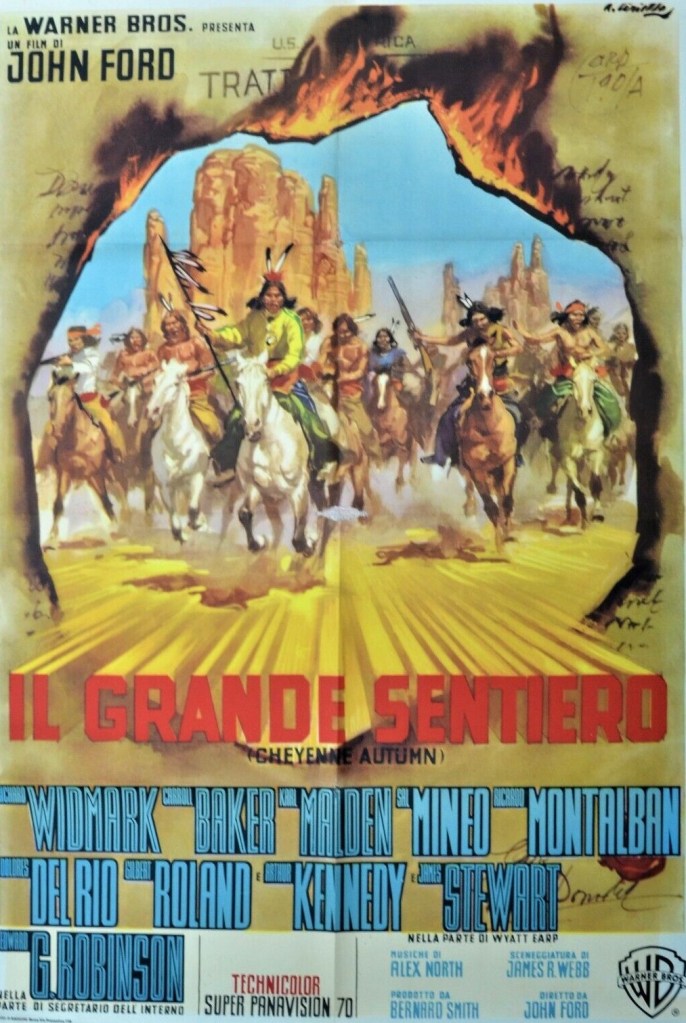
Cheyenne Autumn (1964) ***

Lack of narrative energy and focus sabotages well-meaning atonement epic. John Ford’s final western, made half a decade before Dee Brown’s seminal Bury My Heart at Wounded Knee was published, is not the epitaph he might have envisioned. For a start, it’s just not rigorous enough. You might accept there’s no mention of the word “genocide” since until Vietnam the United States was hardly capable of mea culpa.    

But that we learn very little about the Native Americans trekking 1500 miles from their Oklahoma reservation to their Wyoming homeland beyond that it’s an exhausting trek. Although the Native Americans are treated in a positive manner, and the U.S. Cavalry and Government are seen as inefficient and corrupt, little has been invested in the Native American characters.

The crux of their story is that the two brothers – Dull Knife (Gilbert Roland) and Little Wolf (Ricardo Montalban) leading the journey – eventually go their separate ways, and that a younger headstrong Native American steals one of the brother’s wives. Instead, more attention is paid to a young do-gooding Quaker teacher Deborah Wright (Carroll Baker) who opts to join them on their quest in order to look after the children attending her classes.

Caustic Captain Archer (Richard Widmark), either in person or through voice-over, is the most notable character, fighting his superiors to allow the wanderers unrestricted passage and eventually winning over Secretary of the Interior Carl Schurz (Edward G. Robinson) to ease the last stages of their journey.

The plot diverges from the Exodus-style mission for a totally irrelevant sequence set in Dodge City featuring a gambling Wyatt Earp (James Stewart) and Doc Holliday (Arthur Kennedy) and a spurious bunch of townspeople getting over-excited at the prospect of being attacked. More to the point, when Little Wolf splits from Dull Knife and heads for the sanctuary of Fort Robinson in Nebraska they are imprisoned by authoritative Captain Wessels (Karl Malden), gunning for promotion and in an echo of German apology for the Holocaust “only obeying orders,” with savage consequence.

The couple of action sequences show the fighting skills and tactical ability of the Native Americans but this is undermined by also showing them as sly and cunning, hiding weaponry under campfires and in baby’s clothing.

You might also be asking just how big is Monument Valley for it seems to be the location for about half the picture.  Sure, it’s a terrific backdrop and possibly never been better utilized but it’s an example of the creative lethargy not to follow in more authentic manner the actual route of the Cheyenne. Adding to that disgruntlement you might also note the omission of any Native Americans in the leading roles, those parts being taken by Mexicans or dark-skinned Americans.

While John Ford clearly had his heart in the right place, his fans weren’t ready for this kind of revisionist approach – the movie, a 70mm roadshow, was a big flop at the box office – and the result just doesn’t do the subject justice. And in fact a corrective correlative to How the West Was Won (1962) perhaps entitled How the West Was Stolen has yet to be made.

For a long time Bury my Heart at Wounded Knee was considered the landmark historical work depicting the ruthless conquering of the Native Americans but the more recent The Earth Is Weeping by Peter Cozzens, which I read a couple of months back, offers a more authoritative look at the sorry saga, but, without, I hasten to add, a mention of the scary word “genocide.”

I wouldn’t normally be in favor of editing the work of a director as legendary as John Ford but the omission of the Dodge City sequence would have considerably shortened the movie and retained the focus and perhaps improved the picture.

As it stands, a valiant effort. None of the stars is provided with sufficient narrative to make their acting stand out and it feels like they have all stumbled into a documentary.

When Roadshow Didn’t Rule

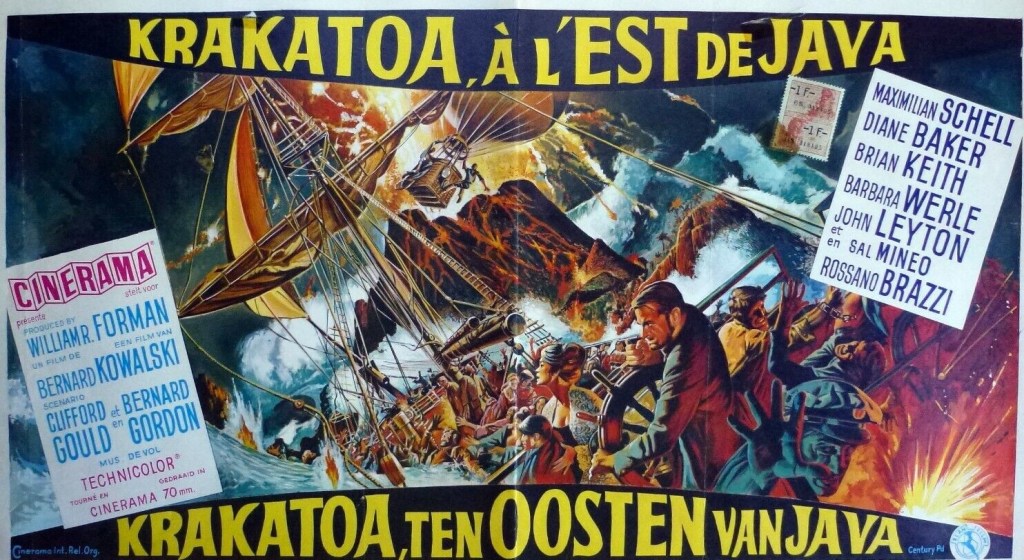
When two pictures made in the Cinerama process – Custer of the West (1967) and Krakatoa East of Java (1968) – didn’t make it onto the U.S. roadshow circuit, the industry was in shock.

There were two reasons for the unexpected decision – distribution logjam and cash flow. For a start you needed deep pockets not just to launch a movie in roadshow but to keep it there bearing in mind the ongoing outlay in interest costs for the production and the longer advertising schedule. That is, if you could find enough available cinemas.

Although there was still a production shortage as far as the general cinema marketplace went, that was not the case for first run. By 1967, studios were not dependent on roadshow for hits. In 1966, only one roadshow featured in the box office top ten. In 1967, the number rose to three. But that still meant the vast majority of first run movie theaters never ran short of product, especially when, should all the regular roadshow houses be already taken, they might be called upon to host a roadshow for a month or two.

Some movies – The Blue Max (1966), for example – which had not been made with roadshow in mind, were launched in a handful of cinemas as roadshow for prestige purposes. Conversely, other movies, produced with the express aim of being released in the roadshow format, skipped that element of the distribution chain and went straight into general release. The Great Race (1965) was shown in hard-ticket only in the Pantages in Los Angeles, but first run general release elsewhere. In Harm’s Way (1965) lasted just one day in roadshow.

But neither had been made in Cinerama which was considered the bedrock of the advance-booking separate-performance high-ticket-priced roadshow. There were two problems with that format and that company. The first was that cinemas equipped to show Cinerama were far fewer than those who could accommodate roadshow, so if they were full to capacity with existing pictures, opportunities to open elsewhere were not only limited but undesirable.

The second was that while in the past major studios had lined up to use the Cinerama format for their movies – Warner Brothers for Battle of the Bulge (1965), MGM for Grand Prix (1966), for example – now Cinerama had decided the company was best served by it taking control of output rather than sharing potential profit with anyone else.

Rather than simply licensing its film-making and projection equipment to studios and cinemas, respectively, and taking a small percentage of picture grosses and a fee for every ticket sold, Cinerama embarked on a bolder strategy. It would turn into a major production outfit – the dozen movies in its first tranche included, as well as the two roadshows, Charly, Shalako, The High Commissioner/Nobody Runs Forever, Candy and Stiletto. It also aimed to virtually double the number of cinemas equipped to show Cinerama, so there would be no shortage of roadshow outlets for its most prestigious pictures productions, and set up its own global distribution system.

But since Cinerama no longer had alliances with major studios, and in fact was now hellbent on competing with them, it lost those studios’ relationships with the big roadshow cinemas in New York and Los Angeles. There were only two houses in New York equipped with Cinerama, and Warner owned one and MGM had an almost symbiotic partnership with the other – Loews. That meant no place initially for Custer of the West.

But there was another option. Open it overseas. Roadshows often played for longer in European capitals than they did in New York or Los Angeles and those cities were often inclined, when demand was at its highest, to switch a big first run house into a roadshow theater.

And there was precedent. MGM had opened How the West Was Won (1962) in the Casino Cinerama in London ahead of its Stateside roadshow release. The Cinerama western had cleaned up, record takings, a massive run into the bargain, all serving to heighten expectation across the Atlantic. So, Cinerama opened Custer of the West in that cinema with top seats costing $3.50 and separate performances (two a day, three at the weekend) and to initial public and critical success.

The much-touted “record” opening week disguised the fact that the only record it took down, and then only by $200, was that of How the West Was Won five years previously; Battle of the Bulge’s opening salvo of $41,608 remaining intact. In any case ticket sales soon tailed off and Cinerama had second thoughts about the cost and wisdom of opening it in roadshow in the U.S. especially when the lack of theaters would produce further delay.

So it took another strategic, possibly perilous, route in deciding to miss out New York and Los Angeles – and Boston and Chicago for that matter – from its initial roadshow roll-out. The assumption was that big box office elsewhere would soon have New York and LA houses queuing up. The film’s U.S. premiere took place in Dallas and Houston on January 24 and it managed another 15 roadshow bookings in the months following.

Except for a “big” $15,000 in Detroit, the other opening week results were so soft – “fairish” $8,500 in Cincinnati, “just okay” $7,000 in Kansas City, $4,000 in Portland which was less than the previous week’s run-of-the-mill picture – the studio called for a rethink. “Due to spotty out of town dates thus far it seems an unlikely bet for New York roadshowing,” opined Variety. And so it proved. Cinerama promoted its general release as “direct from reserved-seat engagements” but it fared little better, a “thin” $171,000 from 34 houses in its first New York salvo.

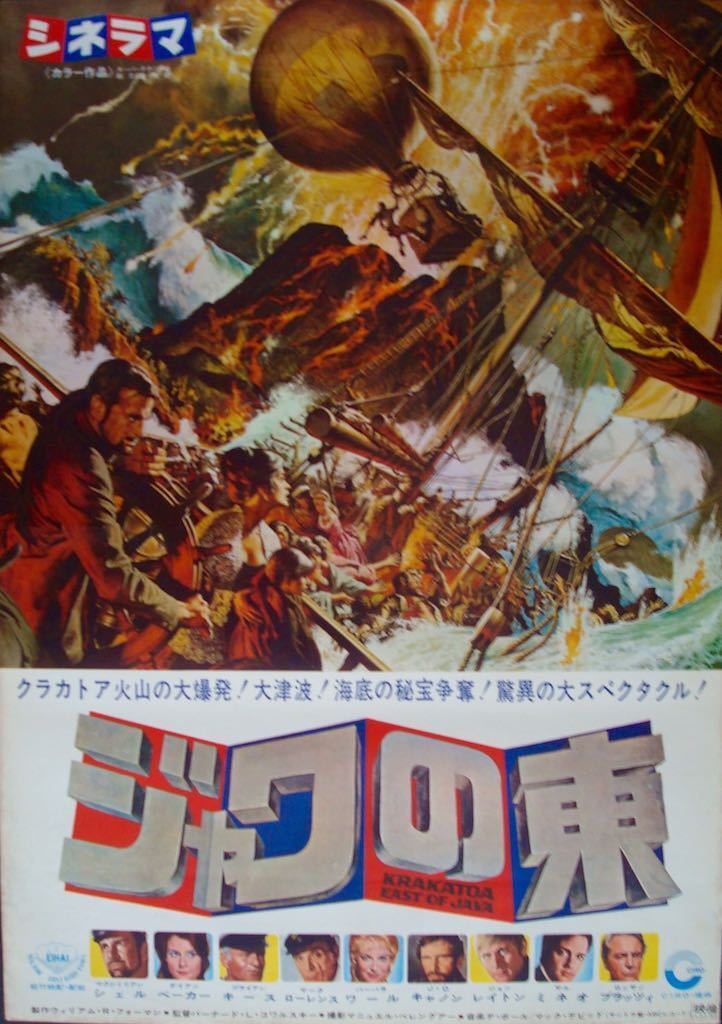
With none of its ambitious slate beyond Charly striking box office gold, Cinerama tore up the rule book for Krakatoa East of Java. In some respects it followed the launch template of Custer of the West with the movie being seen first overseas, world premiere this time in Japan, six months ahead of the May 1969 U.S. opening. But the London launch, at the Astoria – where it ran for nearly six months – came after, on July 31, not before.

But there was clearly an unwillingness to risk all in roadshow. So, Cinerama came up with a clever compromise. While not strictly speaking entering roadshow in that it abandoned advance booking and high ticket prices, it stuck to separate performances but, to compensate for potential loss in box office receipts, operated on four performances daily rather than two. Cinerama called this “scheduled performances” and it was somewhere between roadshow and general release. But it was initially screened in Cinerama in those houses equipped with the projection equipment and only after those semi-hard-ticket bookings were complete did it enter general release.

Even without roadshow, the movie exploded onto screens on opening weeks – a “big” $60,000 in New York (and $55,000 in the second week), a record-breaking $31,764 (and $36,345 in week three) at the Pacific Cinerama Dome in Los Angeles, a “giant” $50,000 in Cleveland, “hotsy” in Detroit with $36,000, $22,000 in Denver and a “mighty” $18,000 in Washington.

Between the Dome (a genuine roadshow with 14 performances a week) in Los Angeles and the Broadway Cinerama (the hybrid with double the performances per week) in New York it grossed $1.2 million. Overall, the various hard-ticket strands kept the movie on screens for most of the summer and into the autumn before a general release targeted for Thanksgiving and Xmas kept up the box office heat.

The studio put an unusually hefty marketing push behind the general release. Having gone round the houses, literally, once with promotional ideas, the company rejigged the best ideas and brought in new suggestions. But, basically, the word to new exhibitors was to learn from successful strategies used in the semi-hard-ticket release. “Rather than rest on its laurels,” the studio packaged the best ideas into a six-page A4 advert and stuck in in Box Office magazine. It knew what worked and just wanted to repeat and expand the process.

One of the marketing coups for the New York launch had been a giant outdoor sign in Times Square, at 265ft long and 62ft high the largest ever designed. The film’s artwork employed in this fashion attracted the attention of thousands of passers-by and served as an example of how the marketing material could work, even if on a smaller scale.

Exhibitors were instructed to target department or chain stores. The launch had found ready cooperation not just from Macy’s but discount store White Front, specially chosen to promote the “price reduction” idea, of a big movie at low prices. It was standard practice for roadshows going into general release to be advertised as “now at regular prices” but the idea of harnessing the mindset of a discount chain, associated with low prices, set a precedent.

There were the obvious routes – tie-ups with record stores and bookshops for the soundtrack and the Signet paperback – but the studio had also made available a reprint of an article on the Krakatoa eruption from Reader’s Digest magazine in 1946, and provided a Teacher’s Guide for schools. Educational avenues were heavily explored, and what teacher would not have an eager audience of young kids to be taught a lesson about volcanoes.

Where the semi-hard-ticket launch had secured the presence of Miss Java, it was suggested that local exhibitors should try and find someone of Indonesian origin, perhaps an exchange student at a local college, to participate in the local screenings. Pearls and balloons, intricate parts of the movie’s narrative, had been used in a big way for the launch, but still lent themselves to simpler exploitation, fake pearls could be given away and colorful balloons if a weather balloon could not be located nearby. The extra effort that went into the general release paid off.

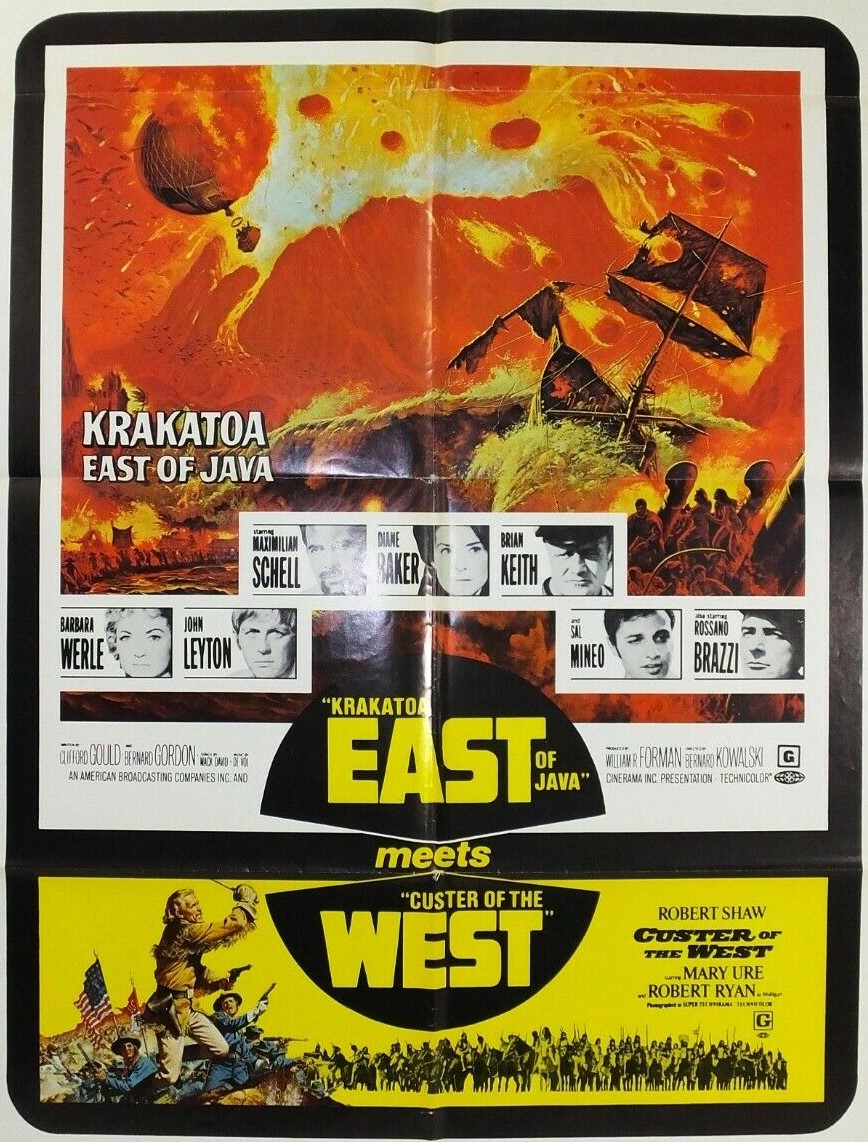
The New York showcase popped a “smash” $430,000 from 31 houses. The company reissued Krakatoa East of Java and Custer of the West in a giant “East Meets West” double bill in 1971 in advance of the television prmeiere of the former two years later.

Overall, while Custer of the West was considered a flop in the U.S., Krakatoa East of Java qualified as a hit of modest proportions, and both movies did well globally. But by 1969, setting aside the $18 million it cost to turn Cinerama into a genuine studio with its own distribution arm, the company had turned a financial corner, and in 1970 income had soared to $46 million – up from $12 million – and there was at last a profit ($3.2 million) instead of a loss ($660,000).

Exactly how much Custer of the West and Krakatoa East of Java contributed to the overall turnaround is impossible to determine because for some arcane reason the studio refused to reveal rental figures even though it had been happy to supply them for other movies which had contributed to the uplift such as Candy, Charly and The Killing of Sister George.

Most film historians point to the flop of several big-budget pictures as the reason for the demise of the roadshow, but just as likely was the move by Cinerama to shift away from the roadshow format in favor of its hybrid, which retained some of the “special event” aspects of the roadshow release while pushing ahead on the more commercial approach of lower prices matched by more daily performances, effectively attempting to bring in revenue at a faster speed, which would be the determined aim of studios in the following decade. The Godfather (1972) might be considered the classic imitator.

SOURCES: Kim R. Holston, Movie Roadshows, A History and Filmography of Reserved-Seat Limited Showings 1911-1973 (McFarland, 2013) p266-267; “Custer Pulls a Record $33,245 in London Bow,” Variety, November 22, 1967, p13; “Cinerama Sanguine on Custer After London; Gets U.S. Roadshowing,” Variety, November 22, 1967, p13; “New York Sound Track,” Variety, February 14, 1968, p18; “N.Y. Roadshow Problem for This & Next Season with Theater Map Torn Apart,” Variety, March 29, 1968, p5;  Advert, Box Office, April 29, 1968, p1;  “Krakatoa – 3-Site Premiere in Tokyo,” Box Office, January 20, 1969, pE1; “Krakatoa in Paris,” Variety, January 29, 1969, p4; Advert, Variety, May 21, 1969, p35; Advert, Variety, June 11, 1969, p31; “Krakatoa Shuns Roadshow,” Variety, July 9, 1969, p15; “Krakatoa London Bow,” Variety, July 2, 1969, p34; “Picture Grosses,” Variety, July 2-16, 1969; “General Release Set for CRC’s Krakatoa,” Box Office, November 3, 1969, p9; “Merchandising The Picture, ” Box Office, November 17, 1969, p13-18; “New York Showcases,” Variety, December 3, 1969, p9; “West End,” Kine Weekly, January 3, 1970, p9;“Cinerama’s Big Year,” Variety, March 25, 1970, p4.

Custer of the West (1967) ****

Far grittier than I expected for a portrayal of one of America’s greatest, if flawed, western heroes. Far darker, with a two-fisted take on the endemic corruption at the highest level that fuelled the Indian Wars. Revisionism with a punch. And bold enough to turn Cinerama tropes on their head.

We should deal with the last first because that reveals the extent of the bitterness that seeps through a biopic in which a soldier’s great skills are put to unwarranted use. You may recall that from its earliest days, Cinerama relied on thrills of a specific nature, one that like 3D put  viewers in the driver’s seat, only to scare the pants off them. You were always racing towards danger, whether that be down the rapids in How the West Was Won (1962) or downhill along twisting roads in The Battle of the Bulge (1965). There always seemed a runaway train to hand. Whatever, it was just a thrill ride, occupants escaping unhurt.

Not so here. The men on the runaway wagon have been tied to it. It careens downhill all right, at one point from an upside down point-of-view, but it ends up over the cliff, no escape for the men. A soldier rides a log river to escape Native Americans. He manages that but is killed on dry land by an arrow all the same. A runaway train falls into a burning bridge. The normal thrills, then, with a realistic edge.

The reward for the great hero, Custer (Robert Shaw), gallant leader of sixty dashing cavalry charges during the Civil War, is a commission with the 7th Cavalry in the Dakotas on a mission described by General Sheridan (Lawrence Tierney) as “plain robbery,” the blatant theft of land from Native Americans.

That’s virtually the first scene, a brutal analysis on the American West, greedy land-guzzling settlers requiring protection, a soldier in obeying orders tacitly agreeing to wage an unholy crusade, not a justified war against slavery.

And Custer doesn’t inherit your John Ford cavalry unit, where every drunk has redeeming features, if only to provide some comedy. His second-in-command, Major Reno (Ty Hardin) is an alcoholic, nearly an entire battalion of malingerers on sick parade. Although later spouting chivalrous nonsense about hating machines, it’s the cannon Custer brings to bear on the enemy that provides initial victory, permitting the boast that 255 men conquered the Cheyenne nation. But, of course, such triumphalism proves premature, the Cheyenne and Sioux taking revenge on defenceless towns.

Custer is presented with ambivalence, but granted something of a free pass given his intolerance of alcohol, antipathy to the war and whistleblowing that points the finger at government officials and corrupt businessmen. On the other hand he is the chief marketeer of his own image, vainglorious, not least in his determination to win the Battle of the Little Big Horn on his own, arriving a day ahead of other assigned forces.

He is both ruthless and comforting. Instead of upbraiding a mutinous soldier for stealing water during a trip over the desert, he tells him to wait till sundown when his thirst will be quenched. But, despite repeated broken treaties, he lacks sympathy for Native American chief Dull Knife (Kieron Moore) for failing to comprehend that a superior power will always win. There’s a bit too much crammed into a relatively short running time. A Russian appears to point out that the United States is negotiating to buy Alaska. Railroads enter the equation and an early version of a tank. An anonymous prospector has gold teeth because he likes “the taste of gold.” Robert Ryan makes a cameo appearance as a deserter.

All that is redundant when the venality confronting Custer is dealt with in one brilliant scene when gold prospectors start digging up the fort in the hope of finding the precious mineral.

I’m no expert on the historical accuracy but by and large whether this portrayal of the life and times of General Custer is actually true it certainly rings true.

British actor Robert Shaw (Battle of the Bulge), with his mean shifty eyes and trademark tight-lipped side-of-the-mouth delivery, doesn’t quite bring enough shade to the characterisation, but possibly that’s the fault of the screenplay, which has cast him, outside of the final calamitous engagement, as even more heroic in the political arena than on the battlefield. As his wife, Mary Ure (Where Eagles Dare, 1968) appears only fitfully and has little to do. Lawrence Tierney (Reservoir Dogs, 1992) is excellent as the self-serving Sheridan. Just like the later Cinerama epic Krakatoa East of Java (1968) this suffers from lack of recognizable stars.

Director Robert Siodmak (The Crimson Pirate, 1952) creates a literate, revisionist, western that ensures intelligence is not swamped by action. Bernard Gordon (Krakatoa East of Java) and Julian Zimet (Circus World/The Magnificent Showman, 1964) are credited with the screenplay.

A worthy attempt to use a legend to explore the greater issues of the day.

Becket (1964) *****

Two stars in impeccable form, an intriguing tale of betrayal and redemption, and a sharp reminder that Britain was once a conquered nation. Given the original play was written by a Frenchman, Jean Anouilh, I wondered how much of the experience of France being occupied by Germany during World War Two informed the work.

Becket (Richard Burton) is dabbed a collaborator for having anything to do with King Henry II (Peter O’Toole), not just in his gainful employ and rising to positions of enormous power, but in accepting his friendship being viewed as a traitor to his countryman. England then, 100 years after the invasion of William the Conqueror, was divided into Normans, who ruled, and Saxons, the indigenous population, who obeyed. The only source of rebellion was through the Catholic Church which could claim, in its prime allegiance to God, to place religion above ruler.

Initially, it’s the story of two unprincipled men, who drink and lust to their heart’s content, until Henry, misreading his friend’s personality, appoints him Archbishop of Canterbury, the most important religious leader in the country, assuming that Becket would continue in his hypocritical ways and bring the clergy to heel. Unfortunately, in taking on the position, Becket takes to heart everything it stands for and instead of extending his power Henry finds it challenged.

It’s classic narrative, fast friends turned bitter enemies, the American Civil War in a nutshell. The more Becket sticks to his guns, the more his life is imperilled. Since the story is based on historical actuality, anyone who saw it at the time would be aware of the famous outcome, but the teaching of history and English history at that, either having fallen in abeyance or being given the revisionist treatment, viewers coming at afresh will be surprised at the political and moral twists and turns.

Nor is it of the “thee” and “thou” school of historical drama. The language is modernised, it is filled with humor, and spiced through with irony. Caught in a downpour during a hunt and sheltering, wet and bedraggled, in a peasant hut in a wood, Becket explains to the king that anyone who dared light him a fire would be hanged for taking precious wood out of the forest, a law laid down by Henry to make more money from his forests.

Likeable though Henry is, full of energy and fun, he is also sly and mean. On the basis of what’s mine is yours, he passes on a peasant lass to Becket, but in demanding the favour returned insists that Becket allow him to have sex with his fiancee, who promptly commits suicide rather than submit.

Henry wheedles as much as he demands, needing to keep his nobles in line if they are to fund his lifestyle and wars. There is always the tricky business of making alliances with untrustworthy rivals. This almost a template for Game of Thrones, the business of ruling as much about the velvet glove as the iron fist, negotiation and concession as important as outright demonstrations of strength.

Even when in an inferior position, there is always diplomatic recourse. The French king (John Gielgud), deliberately keeping waiting a British contingent, explains that the delay will allow them time to be measured for some fashionable French clothing. Now that is a barb served in silk.

It’s possibly as big a surprise to Becket, as indulgent in drinking and whoring as the king, to discover that he has principles. The clergy was known for abusing its power and, despite taking a vow of poverty, living high on the hog. So he stuns both his fellow priests and bishops as much as the king when he gives away all his possessions to fulfil that basic vow. There’s almost an element of naivety. Having played the game so far, suddenly he refuses, to the consternation of everyone in power.

For a time it becomes a battle of wills and that eternal question of who is more important, the invisible God or the human king, and Becket to some extent becomes a pawn.

And it’s brilliantly acted. In his first role since coming to global attention with Lawrence of Arabia (1964) Peter O’Toole creates a more down-to-earth conniving ruthless character. Richard Burton (Cleopatra, 1963), trying to prove he can attract an audience without the help of Elizabeth Taylor, matches him every step of the way. The fiery oratory is replaced by introspection.

Director Peter Glenville (The Comedians, 1967) resists the temptation to open up the stage play, which he also helmed on Broadway (where it won the Tony for Best Play), and for a historical picture set in warring times it’s surprisingly lacking in battles. But it’s easily one of the best historical pictures ever made and it’s a travesty that the Oscar for Best Actor went to neither O’Toole nor Burton, both nominated who split the vote, but to Rex Harrison for My Fair Lady. John Gielgud (The Charge of the Light Brigade, 1968) was a whimsical quirky delight, so different to his normal screen persona.

Out of 12 Oscar nominations, it won only for screenplay, by Edward Anhalt (The Satan Bug, 1965).

Does what historical movies so rarely accomplish: thoughtful, stylish, brilliantly structured with superb acting and direction.

There Is Nothing Like a Flop

The only thing Hollywood liked better than whooping with delight over a hit was crowing with delight over a flop. In the 1960s you couldn’t move for hindsight. And far from it being the end of the decade that Hollywood was kicked in the financial teeth, mostly from over-investment in musicals, there was also a sea of red ink at the start.

Comparing budget with rentals returned to the studios (i.e. their share of the takings once cinemas had taken their cut of the box office gross) produced a league table that nobody wanted to scale.

Atop the pillar of shame, sitting on a monumental $18.1 million loss (reached by comparing budget to U.S. rentals – see Note below) was  the last of the Samuel Bronston epics, The Fall of the Roman Empire (1964), directed by Anthony Mann and starring Alec Guinness, Sophia Loren and Stephen Boyd.

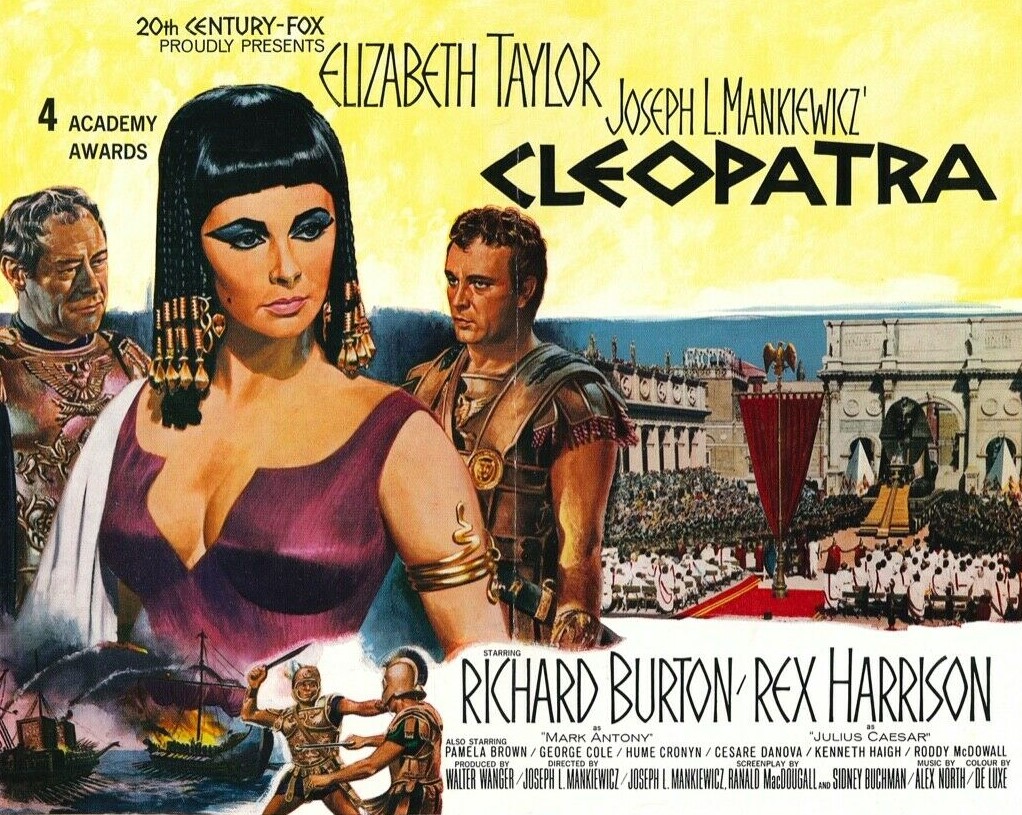
You won’t be surprised to find Cleopatra (1963), driven to publicity heights by the ruckus over the adulterous affair of stars Elizabeth Taylor and Richard Burton, in second place. If it hadn’t cost so much – $44 million – it might have easily turned a profit since box office rentals were a massive $26 million. But you can’t deny the arithmetic that meant this showed an $18 million shortfall, and therefore on paper a staggering flop.

Not far behind was Doctor Dolittle (1967), one of the biggest musical fiascos in an era of musical disasters. Although Oscar-winning Rex Harrison was the star, audiences couldn’t be persuaded it was anything more than a glorified Disney-style picture for children, and it lost $15.8 million.

The Greatest Story Ever Told (1965) should have been the greatest box office story ever told had director George managed to inject a bit more humanity into the sanctimonious retelling. Without a box office miracle this came in short by $13.1 million.

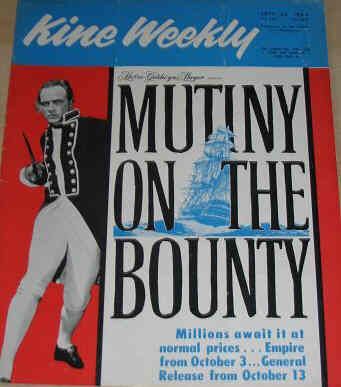
And no prizes for guessing that Mutiny on the Bounty (1962), with Marlon Brando stranded on an island by Trevor Howard, found income did not go far enough to offset cost. It underperformed to the tune of $12.6 million..

Star! (1968) must have seemed like a safe bet given Julie Andrews’ last three musicals had turned hefty profits. But it was so off the pace that it fell $10.8 million shy of break-even.

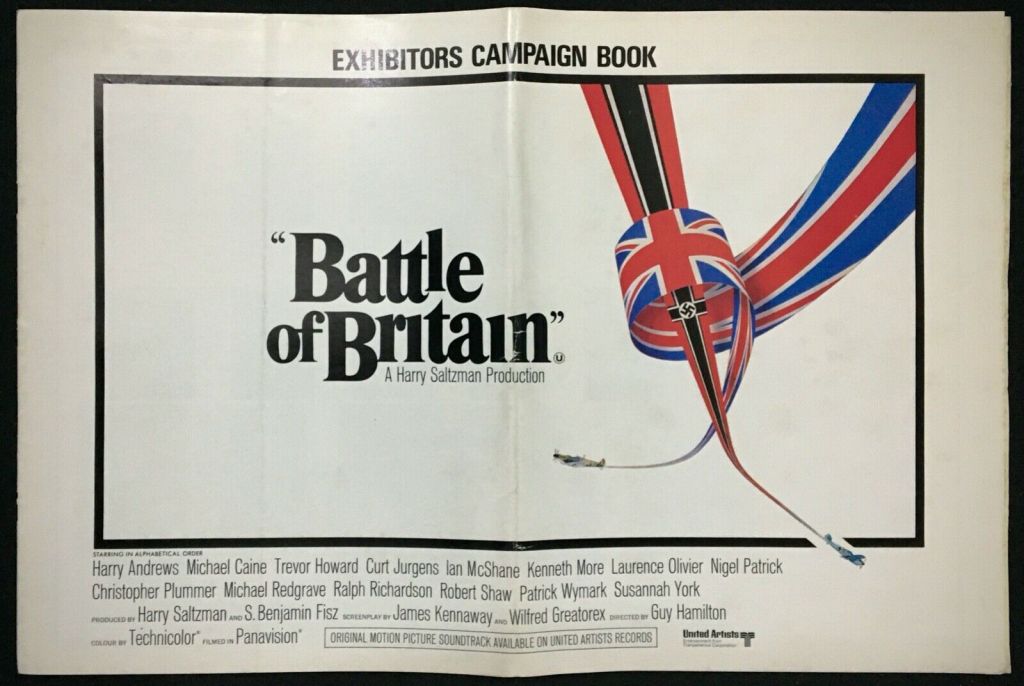
Bond producer Harry Saltzman was astonished, not to say humiliated, to discover there was such little appetite Stateside for an all-star version of how The Battle of Britain (1969) was won. Hadn’t every Hollywood movie insisted that war pictures only succeeded with a prominent Yank in the cast?  One of the biggest hits of the year in Britain, it would still have to go some to overcome a $10 million discrepancy.

The problem with Hollywood was it was greenlighting projects that had to do phenomenal business just to reach a profit. And although Barbra Streisand’s debut Funny Girl (1968) had struck box office and critical gold, even she could not save Hello, Dolly! when it racked up such high costs. The downside was $8.8 million.

The unlikely casting of three non-singers – Lee Marvin, Clint Eastwood and Jean Seberg – in the principal roles of Paint Your Wagon (1969) seemed an act of incalculable hubris, but surprisingly, the musical did better than expected, not enough to turn the corner into profit, but losses limited to $5.5 million in the U.S. part of the course.

In tenth place was a second Samuel Bronston miscalculation, 55 Days at Peking (1963). Why would American audiences be interested in an obscure war in China even if Charlton Heston took top-billing? Such disinterest ensured it fell $5 million short of the target.

Overruns on John Wayne’s pet project The Alamo (1960) meant he ended up in debt. His fans were disinclined to line up for a roadshow, which put the dampers on the launch. Hollywood was stunned that a John Wayne movie lost money – $4.1 million – it was such a career rarity.

Another Bond alumni Albert Broccoli took the financial tumble this time when Dick Van Dyke failed to work his Mary Poppins magic in another musical aimed more at children than adults, Chitty, Chitty, Bang, Bang (1968).

Three other pictures ended up in the red as the result of over-expenditure. The Bible (1966) missed break-even by $3 million, Spartacus (1961) by $1.7 million, and another musical, Camelot (1967) starring non-singer Richard Harris and Vanessa Redgrave by $1 million.

But if Hollywood thought it had weathered the worst of the financial storm it was in for a shock the following year when top-heavy star vehicles hit the skits. Waterloo with Rod Steiger and Christopher Plummer lost $23.6 million, The Molly Maguires with Sean Connery and Richard Harris $9.9 million and The Only Game in Town toplining Elizabeth Taylor and Warren Beatty $8.5 million

NOTE: It’s entirely possible that once you calculated a movie’s long tail all these films turned profit. The foreign performance of films on initial release often out-grossed their domestic revenues, especially if roadshown in Europe. Revenue from half a century’s worth of countless television sales in countless countries followed by satellite, VHS, DVD, satellite, syndication, Blu-Ray and streaming had the potential to turn any loss into profit.  

But there was a proviso. Generally, what a television station paid for a movie depended on its initial gross, box office seen to be indicative of public demand – and of advertising interest . The leasing of Cleopatra first time round to U.S. television, for example, added an extra $3 million to the coffers but that small screen executives were willing to pay such a record sum was driven by the vast numbers that had seen it at the cinema. And, to a large extent, future response to these movies still appeared to depend of how well they had done or how well they were known – a long-term version of word-of-mouth – at the time of their initial release..

On initial global release Cleopatra probably closed the gap between profit and loss but I doubt that would be the case for The Fall of the Roman Empire or The Greatest Story Ever Told or Doctor Dolittle or Mutiny on the Bounty. While The Battle of Britain was a huge success in Britain and in countries belonging to the British Commonwealth, I doubt it went into the black. But something like Spartacus or Camelot or The Alamo or Paint Your Wagon, which ran for a year in roadshow in London, most certainly turned a profit on overall worldwide receipts.

SOURCE: “Big-Buck Scorecard 1956-1987,” Variety, January 20, 1088, p64, 66.

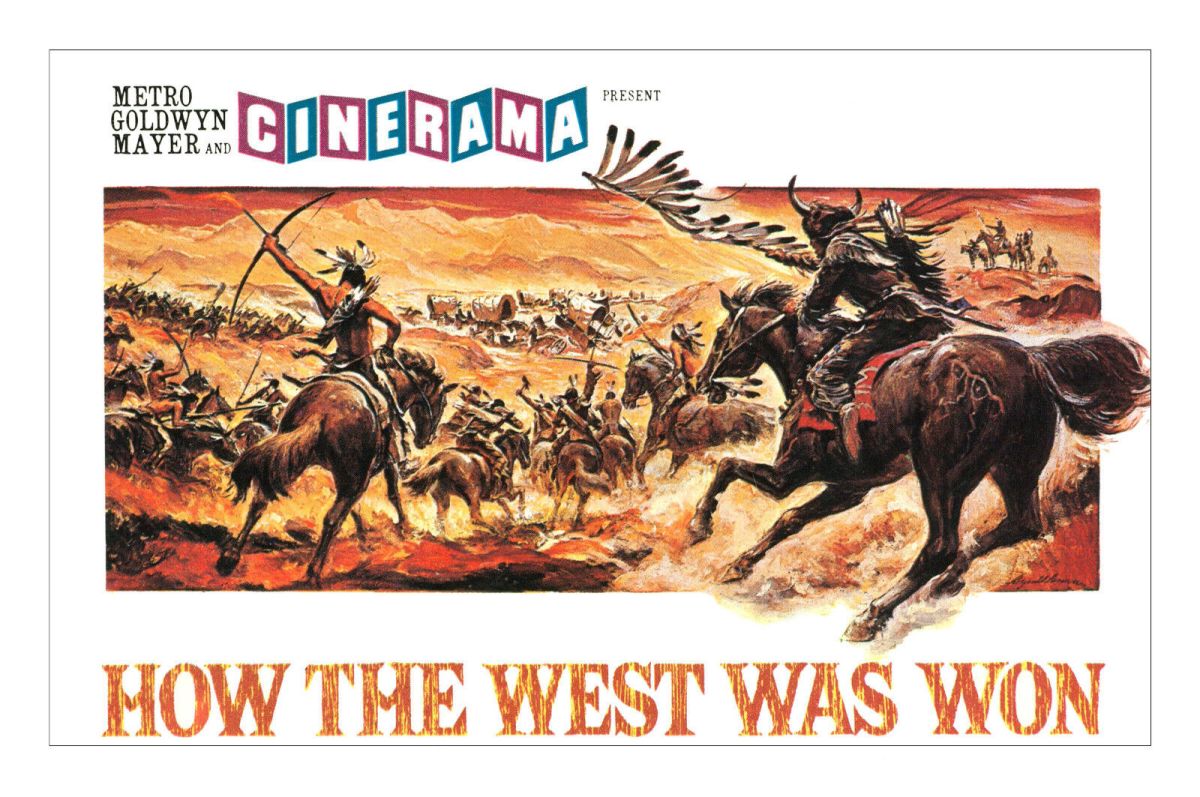
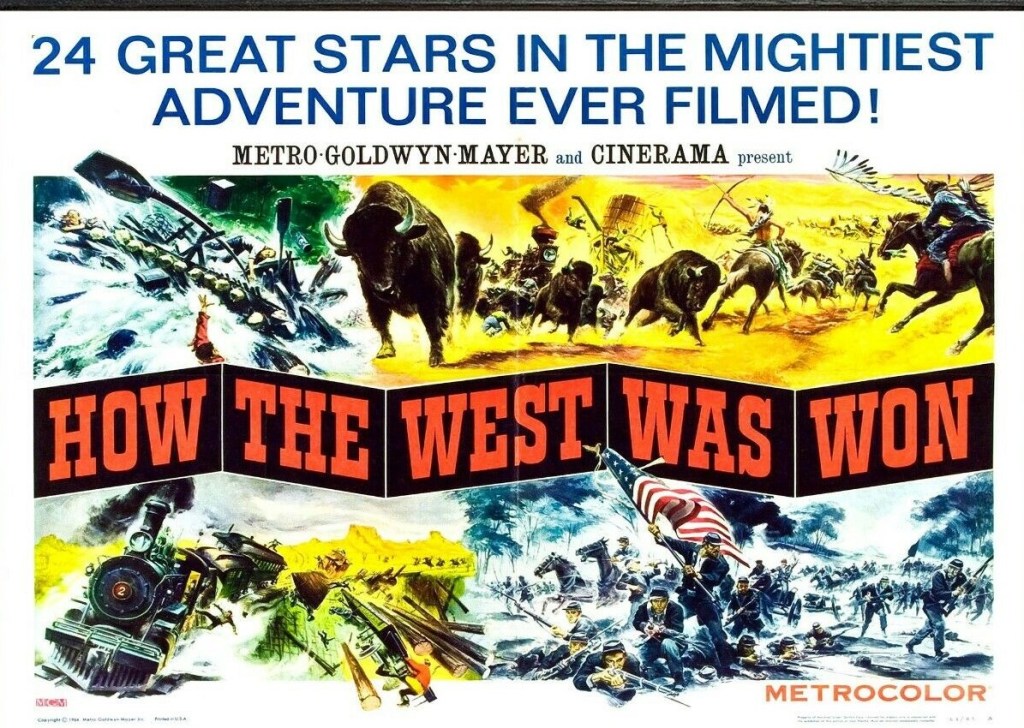
Behind the Scenes: “How The West Was Won” (1962)

These days fact-based magazine articles commonly spark movies – The Fast and the Furious (2001) was inspired by a piece in Vibe, A Beautiful Day in the Neighborhood (2019) started life in Esquire – but it was rare in the 1960s (see Note below).

However, a series of seven lengthy historical articles in the multi-million-selling Life magazine in 1959 about the Wild West, extensively illustrated with material from the time, captured the attention of the nation. Bing Crosby acquired the rights, not as a potential movie, but for a double album recorded in July 1959 on a new label Project Records set up specifically for the purpose – two months after the series ended – and a proposed television special.

When the latter proved too expensive, the rights were sold to MGM which then linked up in a four-film pact with Cinerama to create the first dramatic picture in that format, the three-screen concept that had taken the public by storm in 1952 with This Is Cinerama. Since then, Cinerama had focused exclusively on travelogs and coined $115 million in grosses from just 47 theaters, including $9 million in seven years at the Hollywood theater in Los Angeles. Eight years in its sole London location had yielded $9.4 million gross from a quartet of pictures, Cinerama Holiday (1955) leading the way with (including reissue) a 120-week run, followed by 101 weeks of Seven Wonders of the World (1956), 86 for This Is Cinerama and 80 weeks for South Seas Adventure  (1958).

Box office was supplemented with rentals of the projection equipment. But the novelty had worn off, lack of product denting consumer and industry interest, many of the theaters set up for  the project returning the equipment, so that by the time of this venture there were only 15 U.S. theaters still showing Cinerama. The company went from surviving primarily on equipment royalties to becoming a producer-distributor-exhibitor. Ambitiously, the company believed it could generate $5,000 a week profit for each theater, and, assuming growth to 60 houses, that could bring in $15 million a year.

Crosby initially remained involved – crooning songs to connect various episodes – but that idea was soon abandoned. Director Henry Hathaway (North to Alaska, 1960), claimed he came up with the movie’s structure. “The original concept was mine,” he said, “The first step in the winning of the West was the opening of the canal, then came the covered wagon, next the Civil War which opened up Missouri and the mid-West then the railroads, and finally the West was won when the Law conquered it instead of the outlaw gangs; which was the theme I worked out for the picture.

“So I conceived the whole idea and then got writers to work on the five episodes. Each episode was about a song originally. Then I travelled all over the country to find locations.”

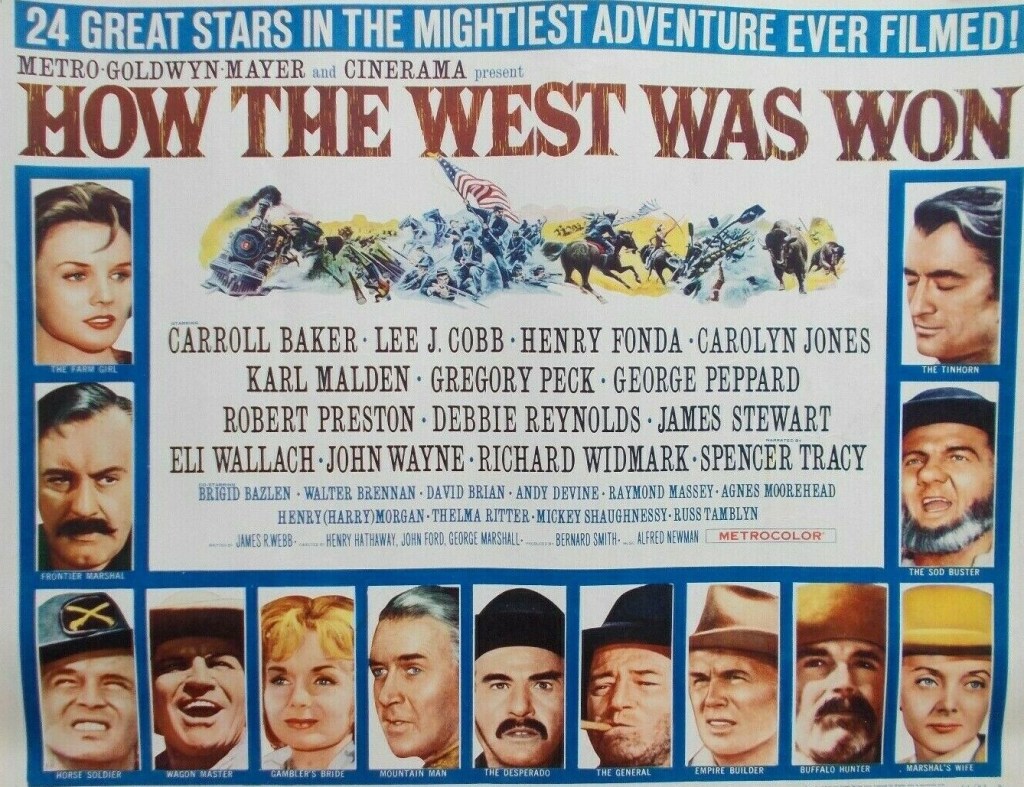
For once this was a genuine all-star cast headed up by actors with more than a passing acquaintance with the western: John Wayne (The Man Who Shot Liberty Valance, 1962), Oscar-winner Gregory Peck (The Big Country, 1958), James Stewart (Winchester ’73, 1950), Richard Widmark (The Alamo, 1960) and Henry Fonda (Fort Apache, 1948) with Spencer Tracy (Broken Lance, 1954) as narrator plus George Peppard (Breakfast at Tiffany’s, 1961) in his first western.

The two strongest female roles were given to actresses playing against type, Carroll Baker (Baby Doll, 1956), who normally essayed sexpots, as a homely pioneer and Debbie Reynolds (The Tender Trap, 1955), more at home in musicals and comedies, as her tough sister. The impressive supporting cast included Lee J. Cobb, Eli Wallach, Walter Brennan, Robert Preston, Carolyn Jones and Karl Malden.

Glenn Ford and Burt Lancaster were unavailable.  Frank Sinatra entered initial negotiations but ultimately turned it down. Gary Cooper, also initially considered, died before the film got underway.

Initially under the title of The Winning of the West screenwriter James R. Webb (The Big Country, 1958) was entrusted with knocking the unwieldy non-fiction story into a coherent fictional narrative. In effect, it was an original screenplay at a time when Hollywood was turning its back on bestsellers, “the pre-sold theory less compelling.” His first draft accommodated various montages covering the journey from the Pilgrim Fathers to the building of the Erie Canal and the Civil War and it was only in subsequent drafts that the tale of Linus Rawlings (James Stewart) emerged with surprising focus on female pioneers.

Webb’s initial ending had involved a father-son conflict, presumably a fall-out between the Rawlings played by James Stewart and George Peppard, but that was rejected in order not to finish on a “note of bitterness” out of keeping with the spirit of the movie. Although he did not receive a credit, John Gay (The Happy Thieves, 1961) also contributed to the screenplay.

Given the film’s episodic structure it is amazing how well the various sequences fit together and the narrative thrust maintained. The story covers a 50-year stretch beginning in 1839 with the river sequence bringing together James Stewart and Carroll Baker. After Stewart is bushwhacked by river pirates, he marries Baker and they set up a homestead. The next section pairs singer Debbie Reynolds with gambler Gregory Peck whose wagon train is attacked by Indians on the way to San Francisco. Later, Stewart and son George Peppard enlist in the Civil War (featuring John Wayne as an unkempt General Sherman).

Stewart dies at the Battle of Shiloh. Peppard joins the cavalry and later as a marshal in Arizona meets Reynolds and prevents a robbery that results in a spectacular train wreck. It took a superb piece of screenwriting to pull the elements together, ensure the characters had just cause to meet and to create solid pace with a high drama and action quotient.

The undertaking was too much for one director. Initially, it was expected five would be required but this was truncated to three – John Ford (The Searchers, 1956), Henry Hathaway  and George Marshall (The Sheepman, 1958) although Hathaway carried the biggest share of the burden and Richard Thorpe (Ivanhoe, 1952) handled some transitional historical sequences. 

The directors broke new ground, technically. The Cinerama camera was actually three cameras in one, each set at a 48 degree to the next and when projected provided a 146-degree angle view. Each panel had its own vanishing point so the camera could, uniquely, see down both sides of a building.

But there were drawbacks. The cumbersome cameras required peculiar skills to achieve common shots. Directors lay on top of the camera to judge what a close-up looked like. Sets were built to take account of the way dimensions appeared through the lens, camera remaining static to prevent distortion. When projected, the picture was twice the size of 65mm and before the invention of the single-camera lens led to vertical lines running down the screen. Trees were built into compositions to hide these lines.

“You couldn’t move the camera much,” recalled Hathaway, “or the picture would distort. You have to shove everything right up to the camera. Actors worked two- and three-feet away from the camera. The opening dolly down the street to the wharf was the first time it had ever been done.

He added, “Over 50 per cent of the stuff on the train was made on the stage (i.e. a studio set) and 60 per cent of the stuff coming down the rapids. I never took a principal up north to the river, the principals never worked off the stage. We never photographed the scenes with transparencies in three cameras with Cinerama – we photographed them with one camera in 70mm and then split the negative.

“I wouldn’t shoot close-ups in Cinerama – I shot the close-ups in 70(mm) and then separated the negative because in Cinerama it distorted their arms. When (George) Stevens shot The Greatest Story Ever Told he used only 70mm and split it all. So from then on they never used the three cameras again. Now they’re actually shooting it in 35(mm).”

Rui Nogueira, “Henry Hathaway Interview,” Focus on Film, No 7, 1971, p19.

After a year spent in pre-production, an eight-month schedule due to start on May 28, 1961, and a completion date of  Xmas 1961, MGM anticipated a 1962 launch, Independence Day pencilled in for the world premiere. The original $7 million budget mushroomed to $12 million and then to £14.4 million, $1 million of that ascribed to adverse weather conditions, hardly surprising given the extent of the location work. A total of $2.2 million went on the 10 stars and 13 co-stars, virtually talent on the cheap given the salaries many could command, transport cost $1 million and the same again in props including an 1840 vintage Erie canal boat.

Rain and overcast skies added $145,000 to the cost of shooting the rapids sequence in Oregon and another $218,000 was required when early snowfall scuppered one location and required traveling 1,000 miles distant. Nearly 13,000 extras were involved as well as 875 horses, 1,200 buffalo, 50 oxen and 160 mules. Thousands of period props were dispersed among the 77 sets. Over 2,000 pairs of period shoes and 1500 pairs of moccasins were fashioned as well as 107 wagons, many designed to break on cue.

Virtually 90 per cent  of the picture was shot on location to satisfy Cinerama customers accustomed to seeing new vistas and to bring alive the illustrations from the original Life magazine articles. Backdrops included Ohio River Valley, Monument Valley, Cave-in-Rock State Park, Colorado Rockies, Black Hills of Dakota, Custer State Park and Mackenzie River in Oregon.

The picture, including narration, took over a year to make. Cinerama sensation was achieved by shooting the rapids, runaway locomotive, buffalo stampede, Indian attack, Civil War battle and cattle drive. Motion was central to Cinerama so journeys were undertaken by raft, wagon, pony express, railroad and boat, anything that could get up a head of steam.

Initially, too, the production team had been adamant – “rigid plans for running time will be met” – that the movie would clock in at 150-155 minutes (final running time was 165 minutes) and there was some doubt, at least initially, on the value of going down the roadshow route in the United States. Roadshow was definitely set for Europe, a 15-minute intermission being included in those prints, for a continent where both roadshow and westerns were more popular than in the States.

Big screen westerns in particular in Europe had not been affected by the advent of the small-screen variety. Some films received substantial boosts abroad. “The Magnificent Seven and Cimarron (both 1960) took giants steps forward once they made the transatlantic crossing.” British distributors also reported “striking” success with The Last Sunset (1961) and One-Eyed Jacks (1962) which had toiled to make a similar impression in the U.S.

In the end the decision was made to hold back the release in the U.S. in favor of another Cinerama project The Wonderful World of the Brothers Grimm, which had begun shooting later and ultimately cost $6 million, double its original budget. Rather than bunch up the release of both pictures, MGM opted to kick off its Cinerama U.S. launch with Grimm in 1962 and shifted How the West Was Won to the following year. MGM adopted the anticipation approach, holding the world premiere in London on November 1, 1962, and unleashing the picture in roadshow in Europe.

A record advance of $500,000 was banked for the London showing at the 1,155-seat Casino Cinerama (prices $1.20-$2.15) on roadshow separate performance release. Before the advertising campaign even began in October, a full month prior to the world premiere, over 62,000 reservations had been made via group bookings. Critics were enamored and audiences riveted. The cinema made “unusually large profits” and after two years had grossed $2.25 million from 1722 showings.

Dmitri Tiomkin (The Alamo, 1960) was hired to compose the music, but an eye condition prevented his participation though he later sued for $2.63 million after claiming he was fired before the assignment began. Alfred Newman (Nevada Smith, 1966) wrote the thundering score but uniquely for the time MGM shared the publishing rights with Bing Crosby. In the U.S. Bantam printed half a million copies of a paperback tie-in, sales of the soundtrack were huge and there was a massive rush to become involved by retailers and museums with educational establishments an easy target. 

Audience response was overwhelming, a million customers in the first month, two million by the first 10 weeks at just 36 houses, some of which had only been showing it for half that time. But it failed to hit ambitious targets – predictions that it would regularly run for three years in some situations “based on the star roster and the fact the pic offers more natural U.S. vistas than anything yet done on the screen” proving wildly over-optimistic. Still, it had enjoyed 80 roadshow engagements including eight months at the Cinerama in New York and grossed $2.3 million in 92 weeks in L.A, $1.14 million after 88 weeks in Minneapolis and $1.5 million after one week fewer in Denver.

By 1965, as it began a general release 35mm roll-out with 3,000 bookings already taken, it had already passed the $9 million mark in rentals including a limited number of showcase breaks the previous year.

Nominated for a Best Picture Oscar, it won for screenplay, sound and editing. The movie became MGM’s biggest hit after Gone with the Wind and Ben-Hur. In my recent book The Magnificent ‘60s, The 100 Most Popular Films of a Revolutionary Decade I placed it twelfth on the chart of the decade’s top box office films.

It provided a popularity fillip for most of the big stars involved, none more so than James Stewart who, prior to shooting, had been on the verge of retirement. Box office appeal diminishing, work on his next picture Take Her, She’s Mine postponed by the Actor’s Strike, after the death of his father he had “quietly begun to make plans to get out of his Fox contract, retire, and move his family out of Beverly Hills.” He had spent $500,000 on a 1,100-acre ranch and was already well set to quit acting having accumulated a large real estate portfolio in addition to oil well investments.

NOTE: Robert J. Landry (“Magazines a Prime Screen Source,” Variety, May 30, 1962, 11) pointed to Cosmopolitan as the original publication vehicle for To Catch a Thief (1955) by David Dodge in 1951 and Fannie Hurst’s Back Street (1932), serialized over six months from September 1930.  Frank Rooney’s The Cyclist’s Raid – later filmed as The Wild One (1953) – first appeared in Harpers magazine. Movies as varied as Edna Ferber’s Ice Palace (1960) and The Executioners by John D. MacDonald, later filmed as Cape Fear (1962), were initially published in Ladies Home Journal. The Saturday Evening Post published Alan Le May’s The Avenging Texan, renamed The Searchers (1956), and Donald Hamilton’s Ambush at Blanco Canyon, renamed The Big Country (1958) as well as Christopher Landon’s Escape in the Desert which was picturized under the more imaginative Ice Cold in Alex (1958). 

SOURCES: Brian Hannan, The Magnificent ‘60s, The 100 Most Popular Films of a Revolutionary Decade (McFarland, 2022) p168-170; Marc Eliot, James Stewart A Biography (Aurum Press, paperback, 2007) p350-351; Rui Nogueira, “Henry Hathaway Interview,” Focus on Film, No 7, 1971, p19; Sir Christopher Frayling, How the West Was Won, Cinema Retro, Vol 8, Issue 22, p25-29; Greg Kimble, “How the West Was Won – in Cinerama,” in70mm.com, October 1983;  “Reisini Envisions Cinerama Leaving Travelog for Fiction Pix,” Variety, December 14, 1960, p17; “Metro in 4-Film Deal with Cinerama,” Variety, March 1, 1961, p22; “Cinerama Action Awaits Plot Tales,” Variety, March 8, 1961, p10; “Fat Bankroll for How West Was Won,” Variety, May 24, 1961, p3; “Return to Original Scripts,” Variety, June 28, 1961, p5;“MGM-Cinerama Set 3-Hour Limit For West Was Won,Variety, August 23, 1961, p7; “Hoss Operas in O’Seas Gallop,” Variety, August 23, 1961, p7; “Coin Potential As To Cinerama,” Variety, September 20, 1961, p15; “Changing Economics on Cinerama,” Variety, October 11, 1961, p13; “Bantam’s 22 Paperback Tie-Ups in Hollywood,” Variety, October 25, 1961, p22; “How West Was Won for July 4 Premiere,” Box Office, December 11, 1961, p14; “Crosby Enterprises Holds West Cinerama Songs,” Variety, January 24, 1962, p1; “Grimm First in U.S. for Cinerama but Abroad West Gets Priority,” Variety, April 4, 1962, p13; “Cinerama Fiscalities,” Variety, April 11, 1962, p3; “Cinerama Story Pair Burst Budgets,” Variety, May 16, 1962, p3; “Tiomkin’s $2,630,000 Suit Vs MGM et al,” Variety, June 27, 1962, p39; “Hathaway a Pioneer,” Variety, July 25, 1962, p12; “Bernard Smith Clarifies Fiscal Facts,” Variety, August 8, 1962, p3; Review, Variety, November 7, 1962, p6; “London Critics Rave Over West,” Variety, November 7, 1962, p19; “Brilliant World Premiere in London for West,” Box Office, November 12, 1962, p12; “West in Cinerama the Big Ace,” Variety, November 14, 1962, p16; Feature Reviews, Box Office, November 26, 1962; Bosley Crowther, “Western Cliches; How West Was Won Opens in New York,” New York Times, March 28, 1963; “Big Book Aid for West,Box Office, April 1, 1963, pA3; “West Was Won Seen By 2,000,000 in 10 Weeks,” Box Office, June 3, 1963, p15;  “How West Was Won for 19 Showcase Theaters,” Box Office, June 15, 1964, pE1; “West End,” Variety, November 11, 1964, p27; “How West Was Won Ends Roadshowing,” December 9, 1964, p16; “3,000 Bookings Expected for How the West Was Won,” Box Office, May 3, 1965.

How the West Was Won (1962) ***** – Seen at the Cinerama

I’ve got Alfred Newman’s toe-tapping theme music in my head. In fact, every time I think of this music I get an earworm full of it. Not that I’m complaining. The score – almost a greatest hits of spiritual and traditional songs – is one of the best things about it. But then you’re struggling to find anything that isn’t good about it. But, for some reason, this western never seems to be given its due among the very best westerns.

Not only is it a rip-roaring picture featuring the all-star cast to end all-star casts it’s a very satisfying drama to boot and it follows an arc that goes from enterprise to consequence, pretty much the definition of all exploration.

Given it covers virtually a half-century – from 1839 to 1889 – and could easily have been a sprawling mess dotted by cameos, it is astonishingly clever in knowing when to drop characters and when to take them up again, and there’s very little of the maudlin. For every pioneer there’s a predator or hustler whether river pirates, gamblers or outlaws and even a country as big as the United States can’t get any peace with itself, the Civil War coming plumb in the middle of the narrative.

Some enterprising character has built the Erie Canal, making it much easier for families to head west by river. Mountain man fur trader Linus Rawlings (James Stewart) on meeting prospective pioneers the Prescotts has a hankering after the young Eve (Carroll Baker) but as a self-confessed sinner and valuing his freedom has no intention of settling down. But he is bushwhacked by river pirates headed by Jeb Hawkins (Walter Brennan) and left for dead, but after saving the Prescotts from the gang changes his mind about settling down and sets up a homesteading with Eve.

We have already been introduced to Eve’s sister Lilith (Debbie Reynolds) who has attracted the attention of huckster Cleve Van Valen (Gregory Peck) and they meet again in St Louis where she is a music hall turn and widow. Her physical attraction pales in comparison with the fact she has inherited a gold mine. He follows her, unwelcome, in a wagon train which survives attack by Cheyenne, but still she resists him, not falling for him until a third meeting on a riverboat.

Zeb Rawlings (George Peppard) wants to follow his father to fight in the Civil War. Linus dies there, but there’s no great drama about it, he’s just another casualty, and the death is in the passing. In probably the only section that feels squeezed in, following the Battle of Shiloh a disillusioned Zeb saves General Sherman (John Wayne) and Ulysses S. Grant (Harry Morgan) from an assassin.

Returning home to find Eve dead, Zeb hands over his share of the farm to his brother and heads west to join the U.S. Cavalry at a time when the Army is required to keep the peace with Native Americans enraged by railroad expansion. Zeb links up with buffalo hunter Jethro Stuart (Henry Fonda), who appeared at the beginning as a friend of his father.

Eve, a widow again, meets up in Arizona with family man and lawman Zeb who uncovers a plot by outlaw Charlie Gant (Eli Wallach) to hijack a train. Zeb turns rancher once again, looking after her farm.

But the drama is peppered throughout by the kind of vivid action required of the Cinerama format, all such sections filmed from the audience point-of-view. So the Prescotts are caught in thundering rapids, there’s a wagon train attack and buffalo stampede, and a speeding train heading to spectacular wreck. There’s plenty other conflict and not so many winsome moments.

Interestingly, in the first half it’s the women who drive the narrative, Eve taming Linus, Lilith constantly fending off Cleve. And there’s no shortage of exposing the weaknesses and greed of the explorers, the railroad barons and buffalo hunters and outlaws, and few of the characters are aloof from some version of that greed, whether it be to own land or a gold mine or even in an incipient version of the rampaging buffalo hunters to pick off enough to make a healthy living.

And here’s the kicker. Virtually all the all-star cast play against type. John Wayne (Circus World, 1964) reveals tremendous insecurity, Gregory Peck (Mirage, 1965) is an unscrupulous though charming renegade, the otherwise sassy Debbie Reynolds (My Six Loves, 1963) is as dumb as they come to fall for him, and for all the glimpses of the aw-shucks persona James Stewart (Shenandoah, 1965) plays a much meaner hard-drinking hard-whoring version of his mean cowboy. Carroll Baker (Station Six Sahara, 1963) is an innocent not her usual temptress while George Peppard (The Blue Max, 1966) who usually depends on charm gets no opportunity to use it. .

Also worth mentioning: Henry Fonda (Madigan, 1968), Lee J. Cobb (Coogan’s Bluff, 1968), Carolyn Jones (Morticia in The Addams Family, 1964-1966), Eli Wallach (The Moon-Spinners, 1964), Richard Widmark (Madigan), Karl Malden (Nevada Smith, 1966) and Robert Preston (The Music Man, 1962).  

Though John Ford (The Man Who Shot Liberty Valance, 1962) had a hand in directing the picture, it was a small one (the short Civil War episode), and virtually all the credit belongs to Henry Hathaway (Circus World) who helmed three of the five sections with George Marshall (The Sheepman, 1958) taking up the slack for the railroad section.

And though you might balk at the idea of trying to cover such a lengthy period, there’s no doubting the skill of screenwriter James R. Webb (Alfred the Great, 1969) to mesh together so many strands, bring so many characters alive and write such good dialog. Bear in mind this was based on a series of non-fiction articles in Life magazine, not a novel, so events not characters had been to the forefront. Webb populated this with interesting people and built an excellent structure.

I’m still tapping my toe as I write this and I was tapping my toe big-style to be able to see this courtesy of the Bradford Widescreen Weekend on the giant Cinerama screen with an old print where the vertical lines occasionally showed up. Superlatives are superfluous.

Discover WordPress

A daily selection of the best content published on WordPress, collected for you by humans who love to read.

The Atavist Magazine

by Brian Hannan

WordPress.com News

The latest news on WordPress.com and the WordPress community.