The Reckoning (1969) ****

Fans of Succession will love the boardroom battles and fans of Get Carter the gritty violence. Michael Marler (Nicol Williamson) is a thug whichever way you cut it. He’s a business hard-ass, at his nicest he’s obnoxious, at this worst brutal. He drives like a demon. Even in love, he’s fueled by hate, sex with wife Rosemary (Ann Bell) infernal. And all of this made acceptable, according to the left-wing tenets that underwrite the film, because he is a working-class man battling upper-class hypocrisy, never mind that his upper-class wife was hardly foisted upon him, nor that he was forced to live in luxury.

Unexpectedly, the film also explores other themes which have contemporary significance. Computers play a pivotal role and so does honor killing. The picture’s original title – A Matter of Honor – was ironic given that in the upper-class worlds in which he moved, courtesy of his job and marriage, he is considered to have little in the way of chivalry. But in the working-class world he has escaped he must avenge his father’s death in this manner.   

The sudden death of his father sends him back to Liverpool where he discovers the old man was killed in a pub brawl. But the local doctor and police, disinterested in complicating what must be a regular occurrence, view his death as accidental. So Marler takes it upon himself to uncover the culprits and wreak revenge, any kind of revenge on any kind of culprit, regardless of the fact that from the outset it is clear they will hardly be gangsters.  While contemplating violence, he strikes up a sexual relationship with the married Joyce (Rachel Roberts).

The story jumps between the back-stabbing corporate world to a scarcely less violent working class environment. The combination of charm and brute energy holds a certain appeal for Rosemary (Ann Bell) and helps keep him in the good books of his boss. He is otherwise a bully, targeting the weak spots of anyone who stands in his way on his climb to the top, and while heading up the sales division of a company in trouble blaming everyone else for his own failings. And while scorning his wife’s upper-class friends is quite happy to enjoy the benefits of her lifestyle, the flashy car might be the result of his endeavors but not the huge posh house. Marler stitches up another associate with the assistance of another lover, secretary Hilda (Zena Walker), and his long-suffering wife finally takes umbrage at his venomous manner.

Marler hides his hypocrisy behind the façade of a left-wing class-struggle. John McGrath’s screenplay clearly intends Marler’s working-class background to provide him with a get-out-of-jail-free card as well as to launch an attack on an upper classes seen as namby-pamby except when it comes to putting the poor in their place. The anti-class polemic has somewhat eroded over time but in its place can be found an accurate portrayal of social history.  For  ordinary people, alcohol, the drug du jour, plays a massive part.  The endless terraces, houses without a single car parked outside, the vast pub which hosts wrestling matches and is a tinder spark away from erupting in a brawl, a culture where the first graspings at sex are likely to take place up a close or in a car, are in stark contrast to the high-life Marler enjoys in London.

He has no desire to go back home, hasn’t visited in five years, escaping there deemed a sign of success, and mostly returns metaphorically to draw on memories with which to scourge the upper-class and excuse his own behaviour. 

Nicol Williamson (Inadmissable Evidence, 1968) delivers a tour de force, his screen presence never so vibrant, exhibiting the same raw appeal as Caine in Get Carter. At this point in is career, with a critically-acclaimed Hamlet on stage, he was perceived as the natural successor to Laurence Olivier and Columbia held up the release of The Reckoning to allow the Tony Richardson film of the stage production, in which he starred, to pick up critical momentum. Oddly enough Rachel Roberts had not capitalized on her Oscar-nominated role in This Sporting Life (1963) and this was only her second movie in seven years. Initially coming across as brassy, she soon softens into a surprisingly wistful character. Both Ann Bell and Zena Walker bring greater dimension to their characters rather than as adoring doormats. You can catch Paul Rogers (Three Into Two Won’t Go, 1969) and Tom Kempinski in supporting roles.

Director Jack Gold, who had worked with both Williamson and McGrath on his movie debut The Bofors Gun (based on the writer’s play), does a great job of capturing a particular period of British social history as well as Williamson stomping around in his pomp. Written by john McGrath (The Bofors Gun, 1967) and, in his debut, Patrick Hall.

Terrific performance stands up well.

Bitter Harvest (1963) ****

Anyone claiming to be gaslighted will have unwittingly invoked the memory of an English writer who died over 60 years ago. Alfred Hitchcock paid tribute to him in adapting his fiendish play, Rope (1948). Hangover Square (1945) starring Linda Darnell was another of his novels to hit the screen. In all there have been over 50 film and television adaptations of his works.

One of his most famous publications was a trilogy focusing on a London barman and a barmaid in love with him whom he casts aside. I had read it, as I had all of Patrick Hamilton’s novels, with enormous pleasure. The trilogy was published in 1935 under the title Twenty Thousand Streets under the Sky. So it was with some trepidation that I realized Bitter Harvest was based on the middle novel of the trilogy. The DVD had sat, unwatched, in my collection for a couple of years because I was put off by the title, the no-name cast and journeyman director, assuming some routine tale with a sad ending.

Now I’m kicking myself I ignored it for so long. It’s a little gem that packs a punch, climaxing with a stylistic twist, and held together by a virtuoso performance by Janet Munro, one-time Disney ingenue in pictures like Swiss Family Robinson (1960), as she twists the audience and her lover round her little finger. And all the way through, despite the self-imposed travails, she manages to evoke sympathy.

Virgin Jennie (Janet Munro) escapes humdrum life in Wales, running a small shop in a run-down village, looking after her ungrateful father, and about to be dumped as a full-time carer onto a pair of aunts, when she meets smooth salesman Andy (Terence Alexander). He gets her drunk on champagne, whisks her back to his flat where he rapes her. Shame prevents her going home. Friendly barman Bob (John Stride) takes pity on her when she reveals she’s pregnant and lets her sleep, untouched by him, in his bed. Naturally, the relationship progresses, though she makes no move to find a job. But she wants her “share” of the good things in life and a barman isn’t going to provide them.  

Bob soon realizes she isn’t quite the docile waif delighted to be looked after. “When have I taken orders from you?” she snaps. He’s shocked when she reveals that her pregnancy was a ploy, and taken aback when she rejects his marriage proposal. Instead, she’s out on the town with actor neighbor Charles (Colin Gordon) who takes her to a showbiz bash where she wangles an introduction to impresario Karl (Alan Badel). “I’ve got something they want and they can have it and they’ll pay for it,” shows Bob which way the wind is blowing.

The movie begins with a drunken smartly dressed Jennie, long red hair cut in a more fashionable bob, returning to her upper mews apartment. She’s so sozzled she drops her handbag on the steps, only stopping to retrieve her keys before kicking the bag down the staircase. Opening the door, she tosses the key into the street. Inside, she sets about destroying the chintzy apartment, pours whisky over a photo of man later revealed as Karl, smashes bottles, upends furniture, tosses dresses out the window, scrawls something in lipstick on the mirror.

Then we’re into flashback telling the story I’ve just outlined. When she sets herself up to become Karl’s mistress, you think there’s a third act to come. But the movie cuts instead to the mews apartment and the by now dead Jennie.

What distinguishes it is the set-up. Jennie appears initially as the victim until she exerts control, using Bob, and presumably intending to work her way up. Quite how her life came to end in suicide is never revealed. But director Peter Graham Scott (Subterfuge, 1968) has the foresight to realize he doesn’t have to go into the degradation and shame, just show consequence.

And it’s framed with excellent performances. Bob, determined to improve himself, buys a book a month. Barmaid Ella (Anne Cunningham), in love with him, has to endure a scene where he tells her all about Jenny. Bob’s landlady isn’t going to get on a moral high horse about him having a woman in his room when she can rook him for increased rent. You can tell, even if Jenny ignores the obvious, what kind of life she will have as Karl’s mistress when in their first moment of intimacy he slaps her face and rips her expensive dress to make a bandage.

There’s another scene just as shocking and if it was not edited out by the censor at the time it still came as a surprise to see fleeting glimpse of a naked breast, a good year before the U.S. Production permitted similar in The Pawnbroker.  

As I said, the transition of Janet Munro (Hide and Seek, 1964) from victim to predator is exceptionally well-done, her iron fist cleverly concealed for most of the film. And it’s admirable, too, that John Stride, whose career was mostly in television, doesn’t come across as a hapless suitor, though obviously he is gullible. Alan Badel (Arabesque, 1966) only has a couple of scenes but makes a huge impact. Barbara Ferris (Interlude, 1968) has a small part.

Highlight of Peter Graham Scott’s directorial career, well-paced, measured, drawing out good performances all round, especially in the boldness of the closure. Ted Willis (Flame in the Streets, 1961) does an excellent job of updating the novel, though one flaw is that while the early section is set in Wales there’s no sign of a Welsh accent.

Recommended.

The Crimson Cult / The Crimson Altar/ Curse of the Crimson Altar (1968) ***

Horror is a small world and at any moment you are likely to bump into stars of the caliber of Christopher Lee, Boris Karloff and Barbara Steele – or in this picture all three. Investigating his missing brother Peter sends antiques dealer Robert Manning (Mark Eden) to a remote country mansion where he encounters owner Morley (Christopher Lee), his seductive niece Eve (Virginia Weatherall), the wheelchair-bound authority on witchcraft Professor Marsh (Boris Karloff), deaf mute Elder (Michael Gough) and a centuries-old mystery.

Morley can legitimately deny that Peter has ever set foot on the premises since it was common for the brother to adopt an alias when seeking out significant antiques. By the time Robert amasses sufficient clues to challenge Morley on this particular issue, it appears that further ideas of more sinister goings-on may be illusory. On his first night Robert observes an annual celebration of the Black Witch but although an effigy is burned this festival appears to have more to do with the innocent consumption of alcohol and heady bouts of sex than satanism.

And after a while, Robert indulges in carnal delight with Eve. However, he is plagued by a nightmare that involves a grotesque trial by a jury wearing animal heads. Gradually, he learns Morley, meanwhile, is such a congenial host, and his niece delightful and sybaritic company, that the finger of suspicion points at Elder, who does take a pot shot at Robert, and the professor who has a collection of instruments of torture.

Were it not for veteran director Vernon Sewell (Urge to Kill, 1960) beginning proceedings with some kind of black mass complete with floggings and female sacrificial victim, the audience might have been kept in greater suspense. As it is, the non-violent annual celebration throws us off the scent as does the seduction of Eve and the prospect that Robert’s nightmare is little more than psychedelic hallucination. The denouement is something of a surprise. The ritualistic aspects of the picture are well done and given this is a Tigon film rather than Hammer you can expect harsher treatment of the S&M element, especially for the period.  

The eerie atmosphere and well-staged witchcraft scenes are a plus, but, despite the involvement of a handful of horror gods, the movie’s reliance on lesser players to drive the narrative is a minus. Lee, Karloff and Steele (though in a more minor role) are all excellent as is the demented Michael Gough but Mark Eden (Attack on the Iron Coast, 1968) is too lightweight to carry the picture although Virginia Wetherall in her first big part suggests more promise.  More of Lee, Karloff and Steele would have definitely added to the picture but since this type of film often requires the young and the innocent to take center stage that was not to be.

Directed by Vernon Sewell (The Blood Beast Terror, 1968) from a script by Dr Who writers Mervyn Haisman and Henry Lincoln and Jerry Sohl (Die, Monster, Die, 1965).

Worth a watch.

The Arrangement (1969) ***

It might have been better if director Elia Kazan had handed over the screenwriting chores for this adaptation of his bestseller about the midlife crisis of advertising man Eddie Anderson (Kirk Douglas). As director he over-angsts the pudding. Anderson’s attempts to juggle wife Florence (Deborah Kerr) and mistress Gwen (Faye Dunaway) coupled with growing disgust at selling a new brand of cigarettes, Zephyr (“The Clean One”), in a way that pointedly avoids their cancer potential, leads to a suicide attempt. 

During convalescence he determines to quit the advertising world and go back to his first love, writing, but in fact he ends up sabotaging his career. Florence represents impossible seduction and conscience. Slinky, in dark glasses, hot-tempered rather than submissive or demure, she accuses him of self-deception in his job. The picture flits back and forth between his various choices – different job, return to wife, settle down with mistress, or what seems his ideal world, cossetted by both Gwen and Florence.

Gwen is an excellent study of the modern woman (of that fast-changing period, I hasten to add), who needs a man for sex but not necessarily love, and can use the opposite sex as ruthlessly as any man. What she actually requires in her real life is quite different to what she seeks in the fantasy love she enjoyed with Anderson, sex on the beach, the buzz of controlling a high-powered man. Florence could be seen as an old-fashioned portrait of the adoring wife except for capturing so well the bewilderment of betrayal.

Kazan conjures up some wonderful images: the tension before the suicide attempt as Anderson plays chicken between two trucks, Gwen emerging wet from the pool to eat dangling grapes or with her legs up on Anderson’s desk, Anderson’s mother lighting votive candles in her house before using the same match for her cigarette, Kerr’s futile attempts to win back her fallen husband, Anderson flying solo.

In parts well-observed and directorially savvy, quick cuts between the present and the past, however it sinks beneath its own self-indulgence. My guess is that author Kazan could not bear to kill off a single one of the characters he had created for his acclaimed novel and the upshot is a vastly over-populated picture, few of whom cast any real light on Anderson’s predicament. So we are not only introduced to mother, dying father, brother, sister-in-law and  analyst but priest and a bucket of clients and guys from the office. And there are some plot oddities – Anderson gets time off apparently to write journalistic pieces – and what is clearly intended as hard-hitting satire of the advertising world does not come off.

Dunaway (Bonnie and Clyde, 1967) is the standout as Gwen, living life according to her own rules, and with an unexpected vision of domesticity but Deborah Kerr (Prudence and the Pill, 1968) does pain like nobody else and is extremely convincing. Strangely enough, I didn’t go much for Douglas (Seven Days in May, 1964). He could have been leading a cavalry charge for all the range of emotions he exhibited. Douglas is no Montgomery Clift (Wild River, 1960), James Dean (East of Eden, 1955) or Marlon Brando (On the Waterfront, 1954) who was Kazan’s first choice. Kazan had not made a picture in six years and it had been eight years since his last hit Splendor in the Grass (1961). Not quite out-of-touch in concept and delivery, nonetheless it was shunned by the Oscar fraternity.

An odd one distinguished by Deborah Kerr and Faye Dunaway.

A Black Veil for Lisa (1968) ***

John Mills ventures back into Tunes of Glory (1960) territory as a top official coming apart at the seams. This time it’s not the British Army but the Italian Police where, as Franz Buloff, he heads up the narcotics squad. And this time he’s not the complacent victim but decides to take action against his tormentor.

Closing in on drugs kingpin Scheurermann, he finds that one witness after another is being silenced by an assassin with a deadly knife. He suspects a leak in his department, unaware the traitor is much closer to home. And despite the usual dissatisfied boss Ostermeyer (Tillio Altamura) breathing down his neck, he would be making more headway if it wasn’t for the fact that his head is constantly filled with images of his wife Lisa making love to another man.

For her part, Lisa seems determined to unhinge her husband, eliciting jealousy at every turn, by never answering the phone at night and always an excuse, when he tracks her down, for not being where was supposed to be. Rather than calming him down, her occasional seduction of her husband only serves to ramp up his fury.

In any case, it’s an odd set-up, he’s much older and the security he offers is not just financial. She was once a suspect herself and being married to a top cop has put a force field between her and suspicion. There’s clearly an unspoken assertion that somehow she has duped the cop, making him fall in love with an apparently innocent woman. They couldn’t be more opposite. “I like danger,” is her mantra.

He breaks open the case after following up a clue dropped at the scene of the crime. After arresting Max (Robert Hoffman), he strikes a deal with the killer. In return for his freedom, the murderer has to take out Lisa. But, of course, it’s not as simple as that. When Buloff realizes the deep water he is treading, he calls off the assassination. But then when he discovers that Max has helped himself to a bonus – beginning an affair with Lisa – he recants and puts the man back on the spot.

So, now, it’s Max who faces the quandary of having to kill his lover. And that puts up square in cat-and-mouse territory.

This isn’t quite giallo, the genre was still in the process of being born, in part because there’s no mystery about the killer, in part because the murders aren’t bloody enough, and in part because the dead aren’t sexy young women. So it’s more a series of character studies, each driven to an edge by an action that otherwise would be out of character.

A top cop like Buloff should have been a better judge of character than to fall for Lisa’s wiles in the first place. Lisa, too, should have recognized her penchant for the seedier side of life rather than being as she puts it “too young to be buried alive” in a stifling marriage to a jealous husband. But, she, too, is a poor judge of character, expecting to win back the favor of the drug overlord after she had so openly crossed the tracks to the other side of the law.

And Max, one of the first of a series of killers in movies who wanted out (see The Brotherhood, 1968, and Stiletto, 1969), is trapped into more killing because nowhere is safe. Getting rid of Buloff was never in his plans, as that would draw even more unwelcome attention. But then neither was falling in love with the cop’s wife. There’s still a few twists to go not least when Lisa discovers that the husband she felt she had under control had broken free and was intending to have her killed.

John Mills, a surprising addition to the Brits heading for Italy, is excellent especially as the big flaw in Tunes of Glory was his inability to find the cunning to strike back at his chief tormentor. Here, he might have second thoughts about dispatching his wife, but revenge is always the best weapon.

Luciana Paluzzi (Chuka, 1967, which, incidentally, also featured Mills) gets her teeth into a decent role rather than been saddled in lightweight fare since swanning around in swimwear in Thunderball (1965). Austrian Robert Hoffman (Assignment K, 1968) is given a surprising range of emotions to deal with.

Massimo Dallamano (Venus in Furs, 1969) handles the material well and gets the best out of his cast without taking the bloodier route of the later giallo. He was one of four writers contributing to the screenplay. This was one of the feature films made by new American mini-major Commonwealth United, one of the stack of “instant majors” popping up around this time.

John Mills is always watchable and the twists make this one play.

The Chairman / The Most Dangerous Man in the World (1969) ****

The sci-fi elements in this tidy paranoia thriller set in Communist China are not the only issues overlooked at the time and worthy of reconsideration now. Anyone who blasted it for supposedly political jingoism conspicuously failed to read a subtext that chimed with young left-wingers for whom Chairman Mao was not, as now, perceived as a tyrant du jour but as a political god. There’s a distinct whiff of Philip K. Dick in the implanting in a spy’s head of not just a tracking/listening device but one laced with explosive that can be remotely triggered for suicidal or murderous gain. Needless to say, the spy, ignorant of this fact, was a de facto sacrificial lamb. And a key plot thread about genetically modified crops as a means of solving world hunger came about four decades too early.  

Widowed Nobel prize winning scientist Dr Hathaway (Gregory Peck) is despatched into China via Hong Kong to contact a missing scientist with a revolutionary formula for an enzyme. A series of crisp flashbacks set up the scenario of the tracking device and a reverse echo of Marooned (1969) where Army chiefs back at base, led by one-eyed Shelby (Arthur Hill,) can listen in but are helpless to intervene – except in sinister manner. Shelby considers Hathaway “the wrong brilliant man” for the task and that they have sent in “a civilian to do a soldier’s job.”

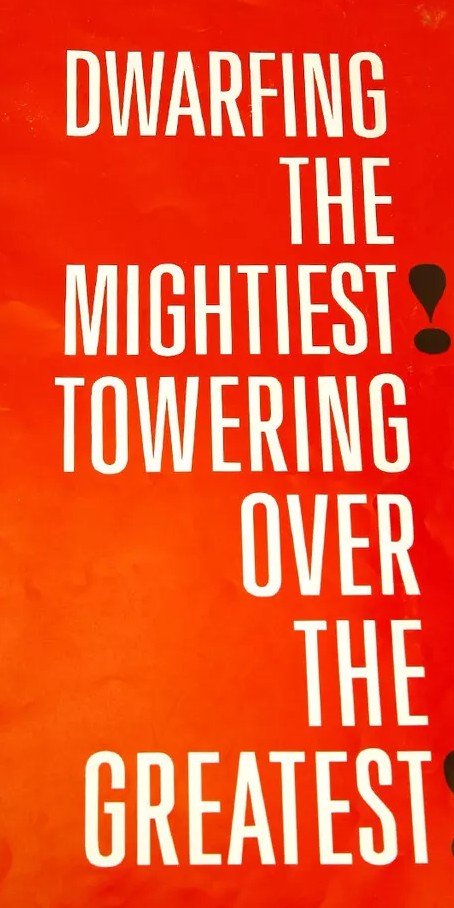
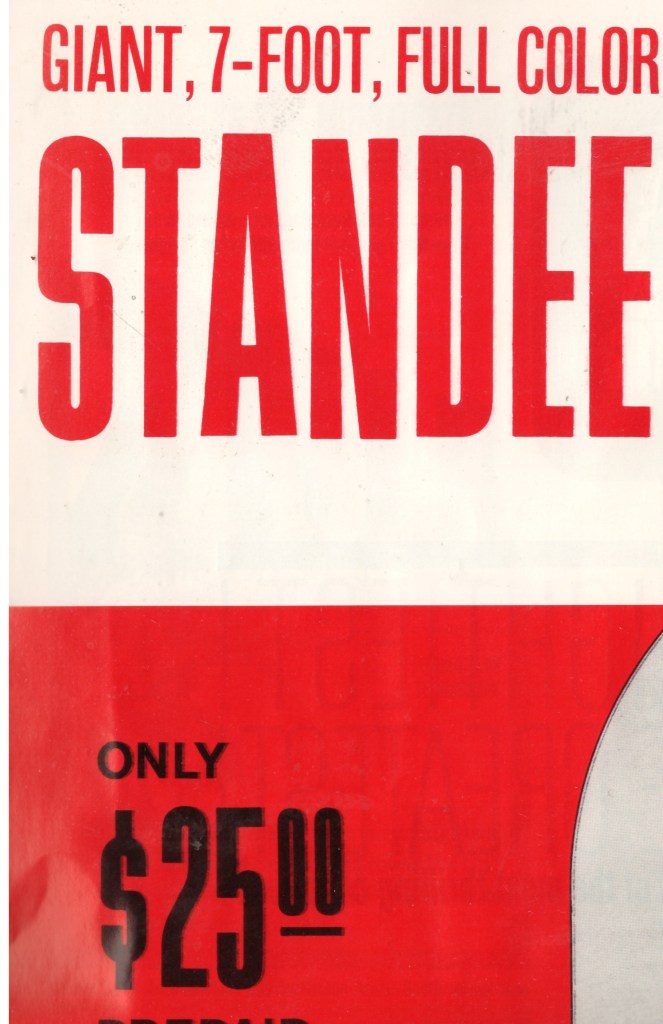
Not able to trust the Brits to know who the title referred to, they came up with a lame alternative. The taglines reveal way too much of the plot.

The hidden transmitter allows Hathaway to keep his superiors posted but the listening device also picks up a creaking bed as Hathaway almost falls into a honey trap in Hong Kong. Amazingly, he doesn’t have to sneak into China but is welcomed with open arms and hustled along to a meeting, and a game of ping-pong (the real thing and the verbal equivalent) with Chairman Mao (Conrad Yama). While spouting some propaganda, Mao is surprisingly open about sharing the secret of the enzyme rather than blackmailing a starving world. Meanwhile, it’s the Americans who are more interested in the double cross, Shelby itching to blow up Hathaway’s head in the assumption the explosion would dispose of the Chinese leader.

Emissions from the transmitter are tangling up the airwaves, making the Chinese secret police highly suspicious of Hathaway as he heads for the secret scientific compound housing Professor Soong Li (Keye Luke), creator of the enzyme, and his daughter Chu (Francesca Tu).

Turns out Hathaway has been summoned by the professor to help find a missing link in molecular chains. Hathaway has to burgle his way to steal the formula, but fails to find it, but when the professor commits suicide and is denounced by his daughter and the Chinese secret police close in, Hathaway has to scarper and head for the Russian border, that country, oddly enough for a spy movie, being on the same side as the Yanks. Meanwhile, Shelby’s trigger finger it itching to blow his man sky high for fear he might give away details of his mission.  

The French, too, had trouble with the original title.

Turns on its head many of the spy film’s truisms: firstly that Hathaway effectively fails in his mission; secondly that patriotism doesn’t blind him to his country’s greed or folly; thirdly that’s he not in constant seduction mode.

Political argument that one point seemed to excessively delay the narrative thrust, now, at half a century’s move, seems more considered and providing an interesting balance between opposing views.

Gregory Peck (Marooned, 1969) is at his quizzical best, deeply-rooted scepticism helping to anchor his character. But if you were attracted by seeing Anne Heywood (The Fox, 1967) second-billed you’re in for a disappointment as she just tops and tails the picture. Arthur Hill (Moment to Moment, 1966) is good value as always.

But it’s testament to J. Lee Thompson (Mackenna’s Gold, 1969, also starring Peck) that his direction brings together diverse political/sci fi/spy/thriller elements in a winning formula, ignoring the obvious. Some interesting detail: someone handing out coffee on a tray to the inmates of the command station; Hathaway’s guilt at his role in the death of his wife barely touched upon, but it explains a lot; Mao’s famous Little Red Book provides a twist.

Occasional flaw: surely the Chinese would have bugged Hathaway’s room and catching him, however soft voiced, filling in his superiors. The idea that the Chinese could be technologically more advanced than the U.S. would have had John Sturges in a fit of fury, but Thompson takes it in his stride. Screenplay by Ben Maddow (The Way West, 1967) and Jay Richard Kennedy (I’ll Cry Tomorrow, 1955).

Reassessment overdue.

Sisters / Blood Sisters (1973) ****

Trust Brian De Palma to invent a gameshow called “Peeping Toms.” And give Hollywood an insight into the delicious malevolence to come later in his career. Often compared to Hitchcock, this is Hitchcock diced and sliced, awash with style. Not simply inspired use of split screen but an ending Edgar Allan Poe would have been proud of. De Palma plays with and confounds audience expectation and has mastered enough of the Hitchcock approach to make the villainess more attractive than the heroine. If you’re in the mood for Hitchcock homage, this is a good place to start.

Both main characters are strictly low end, sometime model Danielle (Margot Kidder) gameshow fodder, journalist Grace (Jennifer Salt) handed run-of-the-mill reporting jobs instead of, as she would prefer, investigating police corruption. Grace also has to contend with a mother (Mary Davenport), in typical non-feminist fashion, determined to marry her off.  

While the Siamese twin notion is straight out of the B-movie playbook and right up the street of exploitation maestros AIP, De Palma takes this idea and hits a home run. But you’ll have to be very nimble to keep up with the narrative.

Danielle meets Philip (Lisle Wilson) at the gameshow and after dinner she invites him to her apartment for sex. In the morning, he buys a surprise birthday cake for Danielle and her twin Dominique. On his return, he is murdered, an act witnessed by Grace, a neighbor across the street. She calls the police but before they can arrive Danielle’s ex-husband Emil (William Finley) – introduced to the audience, incidentally, as a creepy stalker – cleans up the mess and hides the corpse in the fold-up bed-couch.

Fans of the forensic may have trouble with this section as these days blood is more difficult to hide, but that’s evened up by the notion that a pushy journo would be allowed to sit in on the investigation. But heigh-ho, this was back in the day, so anything goes, and in any case, a la Hitchcock, it’s the woman who enters harm’s way. The cops, annoyed to hell by Grace, give up on the case and the reporter, having found the cake carrying the names of both twins,  manages to destroy the evidence.

Great set of reviews that only served to confuse the public.
An audience searching for schlock doesn’t want art.

Grace isn’t the kind of reporter easily thwarted so she hires private eye Larch (Charles Durning) who burgles the apartment and finds proof Danielle has been separated from her Siamese twin, who died during the operation. Grace follows Emil and Danielle to a mental hospital where, in a brilliant twist, mistaken for a patient, she is sedated and becomes an inmate. Later, hypnotised by Emil, she is convinced there has been no murder.

You’re going to struggle with the sharp turn exposition takes, but, heigh-ho, how else are we going to uncover the truth. Effectively, we learn that sex releases murderous thoughts in Danielle. The detail is a good bit creepier than that, but I wouldn’t want to spoil too much.

In many places it was seen as the lower part of a schlock double bill. A reviewer in the trades was correct when he predicted it was “certain to be an underground fave for some time” (i.e.limited to cult appeal) since well-reviewed horror pictures didn’t attract an initial audience.

But the ending is a corker. Grace is a prisoner. There’s another twist after that, but the notion of the investigator driven mad and ending up a prisoner of their own delusions, true Hitchcock territory, is honed to perfection here.

De Palma uses the split screen in the same way as Hitchcock employed the cutaway shot to increase the tension of potential discovery. Several sequences are rendered very effectively through this device.  Oddly enough, Grace doesn’t fit the Hitchcock mold of classy heroines. She’s way too feisty and independent and there’s almost a feeling that she gets what she deserved for tramping uninvited around a vulnerable person’s life. Here, Danielle is the victim, taken advantage of by the medical profession and her creepy husband, separation from twin ravaging her intellect.

Margot Kidder (Gaily, Gaily, 1969) and Jennifer Salt (Midnight Cowboy, 1969) are both excellent in difficult roles. Charles Durning (Stiletto, 1969) makes a splash in the kind of role that made his name. As a bonus, there’s a great score from Bernard Herrmann (Psycho, 1960).

But this is De Palma’s picture, serving notice to Hollywood that here was a talent of Hitchcockian proportions.  

Darling (1965) ****

Amorality tale. Compulsive opening but contradictory ending. Nobody comes out of this well as male and female alike use each other with little compunction shown. British film making that at one point appeared to be disappearing down the kitchen sink explodes into life with an exploration of just how far the Swinging Sixties can swing. Julie Christie picked up the Oscar for her portrayal of the impulsive, wilful, yet vulnerable model sleeping her way to the top, an unpopular theme in today’s climate.

The credits open with a striking image. A poster for global hunger relief being pasted over by one advertising model Diana (Julie Christie), the face of the decade. There are various other potshots at the hypocritical rich, fawned over for deigning to distribute some of their wealth to the poor, but it doesn’t quite complete the circle, because it’s exactly this kind of virtue-signalling philanthropic society to which Diana, with no sense of judgement, aspires.

It would be more convenient to view Diana as exploited, but, in fact, once she loses her puppy innocence, she is as good at the exploitation game as anyone else. First port of call is dull BBC arts journalist Robert (Dirk Bogarde) who provides her with an opening into the fashionable London set. Both, I should mention, are married, but ditch partners (and children in Robert’s case) and set up home together, she in demand as a hostess at charity events.

Trading sexual favors with advertising executive Miles (Laurence Harvey), she wins a role in a B-picture and his backing to make her the face of a campaign advertising chocolates, that commercial filmed in a palazzo in Italy owned by uber-wealthy but older Cesare (Jose Luis de Vilallonga), a prince, from whom she eventually accepts a marriage proposal, only to find she’s just as bored in Italy as elsewhere. There’s a speedy return to London and Robert’s bed, but he dumps her. Theoretically, she’s so powerless and vulnerable, poor lamb, that she submits to his plan to send her back to Italy, rather than, by now considerably more powerful, starting all over again with someone else.

Possibly the morality of the time or in keeping with some movie dictat required an unhappy ending (of sorts). But this seems to contradict her personality. Bear in mind she had already shown how readily she traded men, and you could already see her running off with a wealthy playboy in Italy and dumping  the prince.

At the remove of over half a century, the wild goings-on would be viewed as tame by contemporary standards, and the flashiness of the style, which attracted criticism, would be ignored in favor of the stunning performance by Julie Christie and her empowered female. Sure, she’s emotionally immature, shallow and all the rest of it, and as likely to become a member of the hypocritically rich, but she’s managed to finesse a life as a model into a high-flying princess with the world at her feet and sure as heck she would soon learn how to manipulate that world as easily as Swinging London.

The only dated aspect is the sexuality, much of which was sneaked in under the censor’s nose (though I would imagine would be considerably cut for U.S. audiences) but that acts as a time capsule for a period when homosexuality was still in Britain punishable by law. Nonetheless, there are fleeting references to cross dressing, an orgy, a threesome and oral sex. (Although a cynic might observe how effective courting controversy was for publicity purposes). In some senses, the obsession of director John Schlesinger with thumbing his nose at the censor gets in the way of the central section which is meant to show how far, in terms of decadence, Diana has fallen when in reality she seems to enjoy exploring the wilder and more sensual parts of her personality.

There’s a clever role-reversal. Usually, it’s the man who plays away from home but expects to still be accepted back by a resigned partner. Here it’s Diana. If the men in her life are to be blamed at all it’s for being dumb, not recognizing her ambition and demanding nature. A lover who continues to tap away at his typewriter while Diana exhibits signs of restlessness is as dumb as they come. Miles and Cesare are more her type, the sexually voracious former switching partners at the drop of a hat, while the older man probably already has a mistress stashed away and expects his trophy wife to pick up a discreet lover in the way of aristocracy the world over.

So, at the remove of several decades, a different Diana emerges, one very much in control of her own destiny, picking up men as it suits her purpose, yes still some emotional growing-up to do, but you could easily see her turning into one of the dowager duchesses who run these fundraising balls with young bucks like Miles lionising her and leaving a few other husbands and/or lovers in her wake, possibly still unhappy, but the rich rather than the poor version.

Not sure if she’d qualify as a feminist icon, but she certainly navigated the world of the male gaze and used it to her advantage.

Turned director John Schlesinger (Midnight Cowboy, 1969) into a brand name. Nominated for five Oscars including Best Picture and winning for three, Julie Christie as Best Actress, Frederic Raphael (Two for the Road, 1967) for the script and Julie Harris for costume design. Bogarde, as well as Christie, reigned supreme at the Baftas. Commercially, one of the most successful British films ever, on a budget of around $1 million earning over $4 million in U.S. rentals alone.

Ending doesn’t ring true, but the rest does.

Twisted Nerve (1968) ***

Another rich kid with mental health issues though without Orson Welles to offer expiation. The cause of this character’s illness is undetermined but it’s easy enough to spot the trigger to violence. The lad’s father is dead and his mother’s new husband, a wealthy banker, wants him out of the way, or at least out of the house, or at least, given he’s twenty-one, out working rather than mooning about the house all day.

And this was certainly the year for the movies exploring split personality – if such shallow treatment could be deemed investigation – what with Tony Curtis and Rod Steiger in serial murderous form in, respectively, The Boston Strangler (1968) and No Way to Treat a Lady (1968). And for movie fans it was an unexpecteldy speedy reteaming for Hayley Mills and Hywel Bennett after the humungous success of The Family Way (1967) in which the actress shed her child-star persona in no uncertain manner and the British film industry was, apparently, suddenly blessed with a duo with marquee appeal.

A poster that gives the game away. And an apostrophe issue.

This takes the Rod Steiger route of charming killer rather than a Tony Curtis puzzled and horrified by the demands of his ulterior personality. Given the emphasis on mental illness these days, Twisted Nerve is the hardest of the trio to take, since it’s effectively a play on an old gimmmick, deviousness concealed inside appeal.

Martin (Hywel Bennett) faced with expulsion from his house by overbearing substitute father Henry (Frank Finlay) pretends to scoot off to France but instead inveigles himself into the boarding house run by Joan (Billie Whitelaw) after tricking her librarian daughter Susan (Hayley Mills) into extending a sympathetic hand to his alter ego, the childish Georgie, whose behavior falls only a little way short of sucking his thumb and clutching a teddy bear.

Joan’s initial cynicism gives way to maternal feelings when he clambers into her bed in the middle of the night after a supposed nightmare. (And not with sexual intent.)

Occasionally, Martin cannot control his true feelings, despite Susan rebuffing his romantic overtures. Father is the first victim, substitute mother Joan the second and it’s only a matter of time before Susan becomes a target either for his stifled sexuality or his inner venom.

This would probably work just as well minus the schizophrenic element. In fact, there’s too much of tipping the nod to the audience. Eventually, Susan’s suspicions are aroused but  director Roy Boulting (The Family Way) is no Alfred Hitchcock able to manipulate an audience. So, mainly, what we are left with is Hywel Bennett’s ability to pull off a double role rather than his victims’ susceptibility to his charms.

Hayley Mills’ character could do with fattening up, otherwise she’s just the dupe, bright, bubbly, self-confident and attractive though she is, although her mother, in passing, is given more depth, a lonely attractive widow prone to sleeping with her attractive guest Gerry (Barry Foster) and, unnerved to some extent by her daughter’s growing independence, wanting a son to mother.

It’s only un-formulaic in the sense that the director is playing with an audience who were not expecting anything like this as a story fit for their two newest adult stars so hats off especially to Bennett for considering a role that could as easily have typecast him for the rest of his career. As I said, setting aside the mental illness elements, Bennett is good fun, as he toys with both aspects of his character, adeptly dealing with those who would patronise him, and like Leopold and Lowe convinced he can get away with the perfect crime, whose planning and attention to detail is noteworthy.

As with the Chicago killers it’s only accident that gives him away, although the policeman here (Timothy West) is less dominant than his American counterpart.

Clearly filmmakers of the 1960s were beginning to grapple with mental illness but either lurching too far towards romance as a way of instigating tragedy as with Lilith (1964) or to the most violent aspects of the condition as with virtually anything else beginning with Psycho (1960).

Worth a look for Hywel Bennett’s chilling performance – template for Edward Norton’s turn in Primal Fear (1996) – and Hayley Mills fans won’t want to miss it. Strong performances by Billie Whitelaw (The Comedy Man, 1964), Barry Foster (Robbery, 1967) and Frank Finlay (The Shoes of the Fisherman, 1968) help enormously. There was quite an input into the screenplay. Along with Boulting, Leo Marks (Sebastian, 1968) doing the heavy lifting adapting work by Roger Marshall (Theatre of Death, 1967) and, in his only movie credit, Jeremy Scott. Great score by Bernard Herrmann.

Well done with misgivings.   

Behind the Scenes: “Barbarella” (1968)

Two trends came together to create the ideal climate for the movie. The first was a fashion for filming comic books. By the mid-60s, Italy was at the forefront of this development thanks to the fumetti craze.

Mandrake, created in 1934 and first filmed in 1939, was being prepped by Duccio Tessari (My Son, the Hero, 1962). Though that stalled on the starting grid Dino De Laurentiis had bought the rights to Jean-Claude Forest’s Barbarella. He was also prepping Diabolik – at that point to be directed by Brit Seth Holt (Station Six Sahara, 1963) and fronted by Catherine Deneuve (Belle de Jour, 1967). Monica Vitti was being lined up to play Modesty Blaise (1966). For Barbarella De Laurentiis initially favored Franco Indovina (The Oldest Profession, 1967) in the director’s chair and Brigitte Bardot as the star.

The other element driving forth the venture was the involvement of Hollywood major Paramount in European production. Paramount had turned to Europe to “replenish its dwindled film vaults.” Formerly almost exclusively committed to U.S. production, by 1967 the studio was in the middle of a $60 million European spending spree, the cash spread over 30 movies made in the U.K. or mainland Europe where Italy took the lion’s share. Paramount struck a deal with De Laurentiis for Barbarella and Danger: Diabolik (1968) – eventually helmed by Mario Bava with John Philip Law and Marisa Mell – plus Arabella (1967) and Anzio (1968).

Paramount’s involvement should have excluded Vadim. He was persona non grata with the studio, having reneged on a previous three-picture deal, which he was paying off in $20,000 instalments. The budget of $3 million should have put the picture out his league. The Game Is Over had cost only $900,000 and none of his previous work suggested he might have the necessary skill to handle the special effects. And he was well known for declaring his opposition to studio interference.

But in terms of delivering sexy fare Vadim was in a class of his own. And God Created Women (1956) was the top-earning foreign picture in the U.S. He had made stars of Brigitte Bardot and Annette Stroyberg (Dangerous Liaisons, 1959) and he was in the process of turning the earnest Jane Fonda (In the Cool of the Day, 1963) into a sex symbol after plastering her nude body over billboards promoting La Ronde/ Circle of Love (1964) and stills from La Curee/The Game Is Over in Playboy.

Still, she was far from first choice. Following Bardot’s refusal, De Laurentiis approached Sophia Loren, but she was pregnant, and he did a screen test of Ira von Furstenberg (Matchless, 1967). Fonda was not as nailed-down a star as you might expect. Her affair with Vadim kept her out of the country, making the kind of picture that was generally perceived as salacious arthouse material and not likely to raise her marquee value in the U.S. Cat Ballou (1965), which should have propelled her to the very top, instead performed that trick for Lee Marvin after he won an Oscar for the dual role. After meaty roles in The Chase (1966) and Hurry Sundown (1967) and top-billed in comedy hit Barefoot in the Park (1967), she should have been able to write her own ticket. But she did demonstrate independence in choosing to align with Vadim for Barbarella and though it didn’t win her any acting accolades it smoothed the path towards They Shoot Horses, Don’t They (1969) and Klute (1971), for which she won the Oscar.

Vadim was smarting from damage done to his reputation by censors and the authorities. “I have become a black sheep for censors and I’m paying the penalty in everything I make. Anything I direct is automatically suspect. I believe I’m the only director who must get censor clearance before I can begin filming.” He wasn’t – technically, this applied to every director working Hollywood since all scripts had to be cleared in advance of filming by the Production Board. But in Italy even when films like The Circle of Love (1964) and The Game Is Over (1966) cleared censorship obstacles, the films were seized by the police and threats laid of obscenity charges.

However, he believed this time round he would be immune from threat since the film would contain “no reference whatsoever to moral concepts as we know them. We’re dealing with life in the year 40,000. It would be difficult in the realm of science fantasy for any censor to discover objectionable scenes.” Clearly, he assumed mere nudity would not raise eyebrows.

Vadim admitted, “When I made Barbarella, I found the most difficult thing was the detail.”

Attracted by the “wild humor and impossible exaggeration” of the original material, he “wanted to make something beautiful out of eroticism” and intended to film it as if “a reporter doing newsreel…as though I had just arrived on a strange planet.” And had a camera on his shoulder. He viewed the character as a “lovely average girl” though not so average in that she possessed “a lovely body.”

Fonda was determined to keep her character “innocent,” rejecting the idea of playing her as a vamp, “her sexuality was not measured by the rules of our society,” and neither “promiscuous” or “sexually liberated.”  Vadim interpreted her role somewhat differently, viewing it through the prism of a “shameless exploitation of her sexuality.”

With multiple writers on the project, the question of who wrote what has been open to argument. Impressed by their work on Danger: Diabolik – which employed a total of eight screenwriters – De Laurentiis parachuted in British pair Tudor Gates and Brian Degas. Original writer Terry Southern (Candy, 1968) claimed responsibility for the opening striptease and the doll robots.  Uncredited screenwriter Charles B. Griffiths (The Wild Angels, 1966) came up with the notion of the millennia of peace, Barbarella’s clumsiness and the suicide room. Even co-star David Hemmings got in on the act, claiming he inspired the nonsense Fonda spouted during their sex scene.

Southern suggested Anita Pallenberg for the role of the Black Queen after encountering her while working with The Rolling Stones – her voice was dubbed by plummy English actress Joan Greenwood. Jane Fonda brought John Philip Law into the equation after working with him on Hurry Sundown (1967).

The director employed some sleight-of-hand. Just like the later Ridley Scott on Alien, he didn’t inform his actors in advance what was about to happen in some critical scene, such as those involving the Excessive Pleasure Machine. Vadim wanted a natural response from Fonda and Milo O’Shea so omitted to tell them “what a big explosion there would be. When the machine blew up, flames and smoke were everywhere, and sparks were running up and down the wires.” Fonda was “frightened to death” and O’Shea was convinced he “was being electrocuted.

And Vadim summoned his inner Hitchcock for the scene when Fonda was attacked by the hummingbirds (actually, substitute wrens and lovebirds). Not getting the effect he wanted,  Vadim used a powerful fan to blow the flock onto the actress whose outfit was peppered with birdseed.  There was an unexpected two-week hiatus between filming the bird attack and the striptease. Fonda contracted a fever, forcing the movie to shut down halfway through its 12-week schedule. On her return, Vadim filmed the striptease to be shown over the credits which was intended to “camouflage censorable flesh.” The set for the strip was upside down, Fonda performing on a pane of glass facing a camera in the ceiling.

The sensational aspects of the movie had attracted exceptional media interest. Over 200 journalists visited the set including representatives from Vogue, Playboy, Time, Life, McCall’s, Seventeen, Paris Match and UPI and AP. Paramount kept the pot boiling with some advertisements that were exceptionally full-on for the times: “It’s the year 40,000 A.D. A scantily-clad space adventuress battles 2,000 hummingbirds who rip off her clothes, two dozen shark-toothed dolls who rip off her clothes, 100 purple rabbits who don’t rip off her clothes and an army of leather giants who attempt to whip her to death. In between she makes love a lot.”

By the time the movie appeared, Paramount had invested in another development. It was the first studio to set up a marketing department, not just a catch-all under which promotional and advertising efforts were undertaken, but a unit that took a systematic, research-based, approach to release strategy. As a result Barbarella was one of the first movies to achieve a global simultaneous release, the bulk of movies taking a step-by-step approach, U.S. first and then major countries overseas, following a pattern that could take up to 18 months to complete.

According to research undertaken by the marketing department it was “judged as a picture which would have a sensational first few weeks everywhere it played because of the impact of the subject matter, star (Jane Fonda) and promotional pizzazz. But research indicated word-of-mouth might be poor. The decision was made to open the picture everywhere at once – and that meant worldwide since there was fear that any ‘bad word’ on such a highly-touted pic could spread from country to country. Here, too, the prognosis proved letter-perfect. As any exhibitor will confirm, Barbarella was the film this fall which started out great then dropped off. In view of this Paramount is thought to have maximized its gross via the global saturation playoff pursued.”

In the U.S. Paramount ordered a record number of trailers and space age fashion shows, like one at Alexanders Department Store in New York, were the order of the day. In Britain, there was a phenomenal ad spend (the second-highest ever), Mary Quant boots, tie-ins with shoe stores, and both a hardback and paperback book.

But Barbarella proved to be a slow-burn at the box office. Initially, it was deemed to have ranked a lowly 46th in the annual U.S. rentals chart with just $2.5 million in the kitty, falling far short of Paramount’s box office smashes that year – The Odd Couple (ranked fifth) with $18.5 million in rentals and Rosemary’s Baby (ranked seventh) on $12.3 million. But, in fact, it more than doubled its rentals the following year and ended up with a highly-respectable $5.5 million at the U.S. box office. (And I hereby apologize to anyone whom I challenged on these figures).

The global release paid off. It ranked eighth in France, seventh in Switzerland, third in  Britain, 14th in Hong Kong and a big hit in Italy. However, the content denied it a sale to U.S. television. The movie was reissued in 1977 in the wake of Star Wars, and took a “handsome” $175,000 gross from 65 houses in New York. It was revived again after Flash Gordon (1980) and the following year when Paramount entered the laserdisk business among the first 30 oldies released it was the only one from the 1960s.

A sequel’s been on the cards since the film opened. Possibly rather tongue-in-cheek and with an element of the risqué sauce of the times, Paramount’s Robert Evans planned to trigger a second episode called Barbarella Goes Down, the title apparently relating to underwater adventures. Terry Southern was asked to write a sequel in 1990 while in the aftermath of Sin City (2005) director Robert Rodriguez came close to an $80 million version and Nicolas Winding Refn toyed with a television series. As of now, Sydney Sweeney (Anyone But You, 2023) appears most likely to hit the sequel button.

SOURCES: Patrick McGilligan, Backstory 3: Interviews with Screenwriters of the 60s, (University of California Press, 1997); Lisa Parks, “Bringing Barbarella Down to Earth”. In Radner, Hilary; Luckett, Moya (eds.). Swinging Single: Representing Sexuality in the 1960s, (University of Minnesota Press, 1999); Gail Gerber,and Gail Lisanti, Gail (2014). Trippin’ with Terry Southern: What I Think I Remember. McFarland, 2014);  Roberto Curti,  Diabolika: Supercriminals, Superheroes and the Comic Book Universe in Italian Cinema (Midnight Marquee Press, 2016); .Brian Hannan, Coming Back to a Theater Near You, A History of Hollywood Reissues 1914-2014 (McFarland 2016) p252; “Comic Strip Character Film Trend,” Variety, June 9, 1965, p23; “Vadim’s Autonomous Views,” Variety, August 24, 1966, p2; Gerald Jonas, “Here’s What Happened to Baby Jane,” New York Times, January 22, 1967;  “Paramount Getting 6 Pix from Italy in Bid to Build Prod,” Variety, February 1, 1967, p16;  “Par O’Seas Hatch By Dozen,” Variety, April 26, 1967, p5; “Italo Film Boom,” Variety, June 7, 1967, p20; “Barbarella Laid Low By Jane Fonda Virus,” Variety, August 16, 1967, p2; “I’ve Been A Black Sheep To Censor,” Variety, July 19, 1967, p22;  Marika Aba, “What Kind of Supergirl Will Jane Fonda Be as Barbarella?” Los Angeles Times, September 10, 1967; Roger Ebert, “Interview with Jane Fonda,” October 15, 1967; “Paramount Stressing Sex and Visual Fantasy,” Variety, October 18, 1967, p26; “Space Age Fashion Show,” Box Office, September 2, 1968, pA2; “Record Teaser Trailer,” Box Office, September 9, 1968, p13; “Eyebrows Up – Here’s Barbarella,” Kine Weekly, October 19, 1968, p23; “Big Box Office Winners of 1968,” Kine Weekly, December 14, 1968, p6; “What Makes a Director?”, Variety, January 8, 1969, p26; “Big Rental Films of 1968,” Variety, January 8, 1969, p15; “Swiss B.O. Race,” Variety, January 15, 1969, p41; “Shaws Dominate HK,” Variety, January 15, 1969, p41 “Par Puts the Science into Sell,” Variety, February 5, 1969, p33; “Int’l Filmgoing Tastes Tres Complex,” Variety, February 5, 1969, p35; “CBS Bid for Baby Doll,” Variety, October 29, 1970, p78; “All-Time Film Rentals,” Variety, January 7, 1970, p27; “New York Showcases,” Variety, November 2, 1977, p8; “Paramount’s Home Video to Market Viddisks,” Variety, April 29, 1981, p54.

Discover WordPress

A daily selection of the best content published on WordPress, collected for you by humans who love to read.

The Atavist Magazine

by Brian Hannan

WordPress.com News

The latest news on WordPress.com and the WordPress community.