Villa Rides (1968) ***

Best viewed as Charles Bronson’s breakout movie. Yes, he had played supporting roles in The Magnificent Seven, The Great Escape and The Dirty Dozen, but these had all been versions of the same dour, almost monosyllabic, persona. Here, though somewhat ruthless, he steals the show from the top-billed Robert Mitchum and Yul Brynner with many of the best lines and best situations with an extra slice of humor (make that first-ever slice of humor) to add to the mix. He is the most interesting of the three main characters, in part because he does not have to spout any of the “good revolution/bad revolution” dialog that falls to the other two.

Villa (Brynner) is fighting the Colorados but his superior General Huertas (Herbert Lom) is planning to overthrow President Madero (Alexander Knox). Mitchum is an aeronautical gun-runner from El Paso, initially against the revolutionaries, stranded in Mexico when his plane breaks down. He has just about time to romance a local woman Fina (Maria Grazia  Buccello) before the Colorados arrive, take over the village, start hanging the leaders and raping Fina. Villa saves them, Bronson slaughtering the Colorados with a Gatling gun on the rooftop. Faced with the one-man firing squad that is Bronson, Mitchum turns sides. His plane comes in handy for scouting the enemy, then bombing them.

The actions sequences are terrific especially Villa’s attack on a troop train. To get Villa out of the way, Huertas puts him in the front line in a suicidal attack on a heavily-defended stronghold which turns into another brilliant set-piece with cavalry charges.  The plot is constantly interrupted by politics of one kind or another and comes to dead stop when Villa is arrested by Heurtas and Villa demands a proper trial. It’s kind of hard to take when a murdering bandit, no matter how legendary, decides that he has been hard done by.

That aside, there are interesting attempts to build up his legend. He doesn’t want power for himself, but to give it to the people, although he has sat back and let the first village be attacked so that the people there learn to hate the Colorados enough to join the fight. There’s not really any good guys – Brynner and Bronson are stone-cold killers, Mitchum a mercenary. But Brynner does marry Fina in order to prove that a raped woman should not be treated with dishonor, though he has a tendency to marry other women as well.

Bronson’s unusual one-man firing squad involves him laying on the ground with a pistol in each hand and giving prisoners the opportunity to escape before he shoots them. After all that hard work, he bathes his hands. Then he decides he can kill three men with one bullet, lining them up exactly so he can drill them all in the heart. But he’s also the one who shoots a molester in a cantina, then delivers the classic line: “Go outside and die, where are your manners?” He is at the heart of some well-judged comedy – continually sending back his meals and trying to get out of getting into a plane with Mitchum. Without him, there would be too much justification of slaughter (Brynner) and arguments against (Mitchum). This is the first time in the kind of action role that suits him that he has an expanded characterization.

Brynner did not like Sam Peckinpah’s original script so Robert Towne (Chinatown) was brought in to present Villa in a more appealing light. Bronson (Adieu L’Ami/Farewell Friend, 1968) shows hints of the screen persona that would so appeal to the French. Yul Brynner (The Double Man, 1967) adorns his character with many shades of grey, but Robert Mitchum (Secret Ceremony, 1969) has less to do.  Buzz Kulik (Warning Shot, 19660 has great fun with the action, less fun with some of the turgid dialog-ridden scenes.   

Good for action and Bronson.

The Road to Salina (1970) ***

I thought I’d taken a stab at finding out what happened to Mimsy Farmer after More (1969) and by chance stumbled upon Rita Hayworth (The Happy Thieves, 1961), also persona non grata in mainstream Hollywood.

Pivots on the tricky trope of mistaken identity. Or, rather, someone who insists on believing that a stranger turning up is actually a long-lost son / lover / whatever. Jodie Foster was the too trusting wife in Sommersby (1993), for example, but it’s hard to pull this off once suspicions are aroused. Unless, of course, the potential dupe is determined to believe because it fills an emotional hole, thus providing sufficient narrative undercurrent.

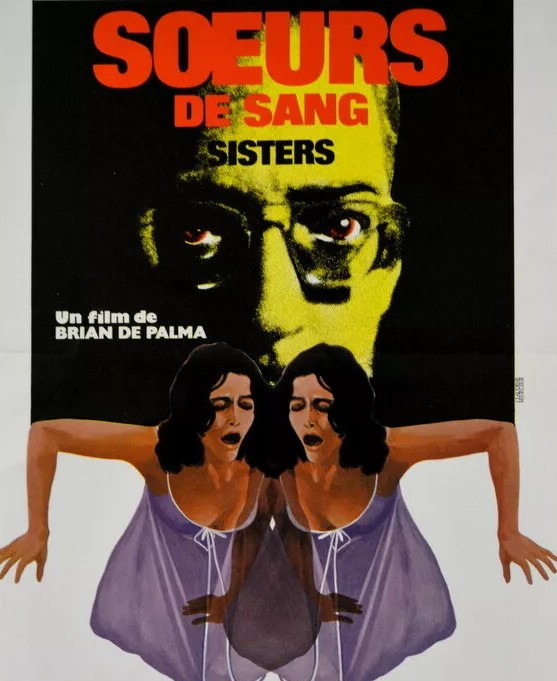
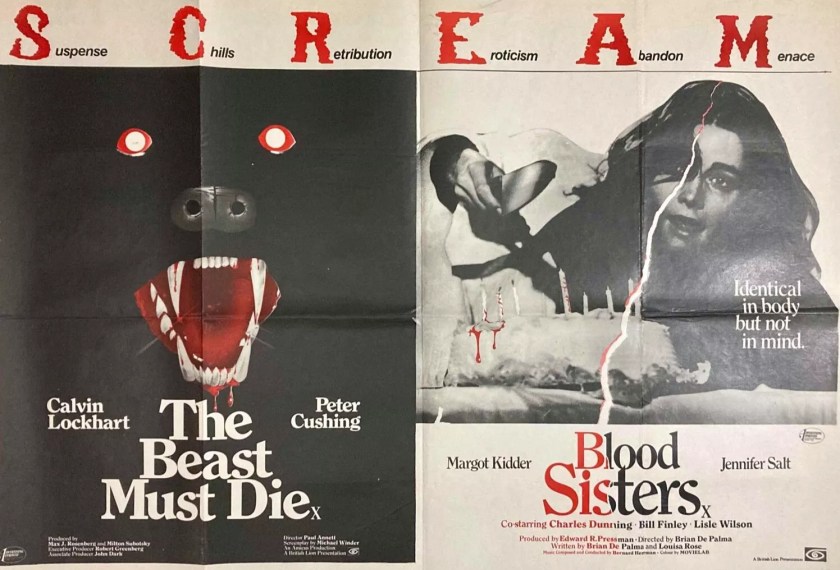
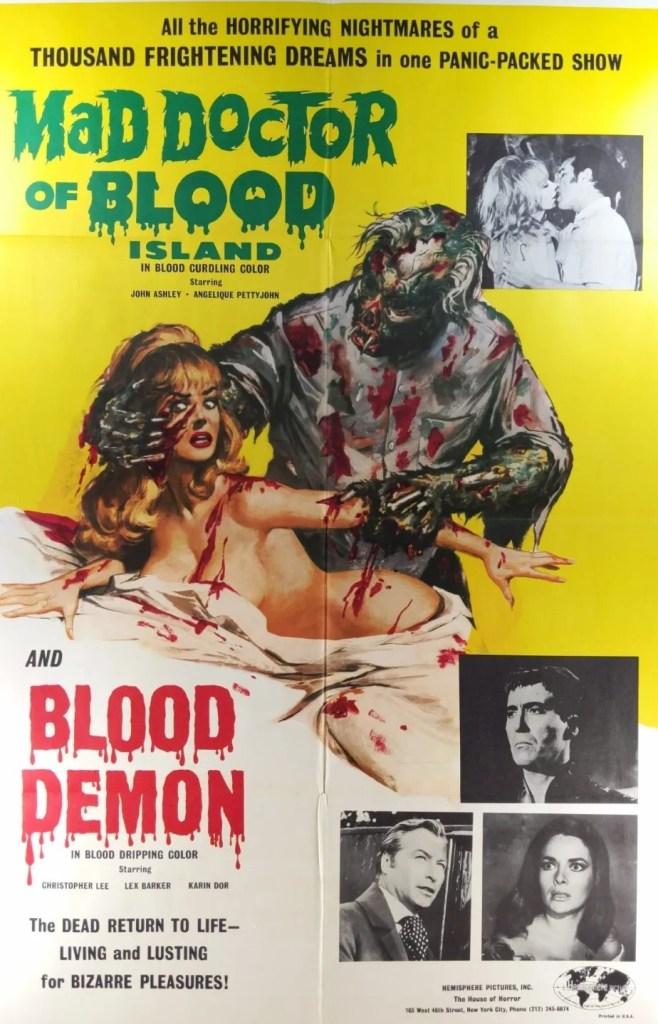
Double bill of creepiness.

That’s the case here, when drifter Jona (Robert Walker Jr) turns up at the roadside service station run by Mara (Rita Hayworth) his resemblance to her dead son Rocky (Marc Porel) is so uncanny she believes it is the child returned. Just to be clear, Rocky died in mysterious circumstances, corpse never found, so there’s some foundation to her belief beyond maternal madness. Seizing the opportunity for a warm bed and some decent grub and the chance to be spoiled, Jona plays along – especially after Rita’s neighbour Warren (Ed Begley) supports her delusion – and soon he’s invited into another bed, that of Rocky’s sister Billie (Mimsy Farmer). The savvy daughter has her own reasons for going along with it. Then we’re into flashbacks within the flashback as the mystery unfolds and we dip in and out of incidents around the gas station and the somewhat unusual relationship between brother and sister.

As with most slow-burn dramas, you wouldn’t really call it a thriller, it depends on atmosphere, but in the same way as, for example, Don’t Look Now (1973), there’s definitely something insidious here and noir-ish if you don’t mind a story played out away from that genre’s physical darkness. It digs deep into the worst emotion of all, loneliness, and how the hankering after relationship, and an inability to steer clear of the psychosexual, anything to stop you from being alone, can bring torment and tragedy. Dangling fantasy in front of a woman incapable of dealing with reality is a dangerous temptation.

While some of the elements verge on the bizarre, and the narrative threatens to tip into confusion, the viewer is nonetheless kept on pretty much an even keel by the direction, which doesn’t play hard and loose with the facts, but just takes its own slow way heading towards resolution.

The main younger characters aren’t anything we’ve not seen before and the impetuous immoral Billie could easily be a cousin to Estelle in More (1969) while Jona is just every dopehead drifter with an eye on the main chance, except he turns patsy under the femme fatale wiles of Estelle. Rita Hayworth (The Money Trap, 1965), by now a Hollywood back number, brings a healthy dose of reality, and it’s worth the admission just to watch the former sex symbol fry eggs and dance around with the equally middle-aged and frumpy Ed Begley (Hang ‘Em High, 1968) while tacitly acknowledging the bolder elements of the counter culture.

Robert Walker Jr (The Happening, 1967) doesn’t bring much to the party but Mimsy Farmer sizzles. The movie trips easily through the decades, contemporary 1970s buzz undercut by old-fashioned  1940s sensibilities.

French director George Lautner’s stylish concoction – this begins with a downpour, character trapped in torrential rain, an unusual image for the times, and unwinds in flashback – forces you to suspend disbelief long enough to guide the endeavour to a satisfactory conclusion.

Under-rated, this should appeal beyond the Farmer and Hayworth fan clubs.

Girl with a Pistol (1968) ****

Off-beat Oscar-nominated comedy-drama that is both a marvelous piece of whimsy and a slice of social realism set in the kind of Britain the tourist boards forget, all drizzle and grime. It zips from Edinburgh to Sheffield to Bath to London to Brighton to Jersey as if the characters had been dumped from an If It’s Tuesday It Must Be Belgium sketch. If your idea of Italy was Fellini’s glorious decadence or Hollywood romance amid historic ruins and fabulous beaches, then the upbringing of Assunta (Monica Vitti) is the repressive opposite.

All women in her small town wear black. Men are not allowed to dance with women and must make do with each other. A man like Vincenzo (Carlo Giuffre) desiring sex must kidnap a woman, in this case Assunta, to which she will consent as long as he marries her. When instead he runs off to Scotland, she is dishonored and must kill him, armed with the titular pistol.

Pursuit first takes her to Edinburgh and a job as a maid, has a hilarious encounter with a Scottish drunk, and various other cross-cultural misinterpretations – in a bar she cools herself down with an ice-cube then puts it back in the bucket. Then it’s off   to Sheffield where she falls in with car mechanic Anthony Booth (television’s Till Death Do Us Part) because he is wearing Italian shoes.

She can’t imagine he can watch sport for two hours. “You’re a man, I’m a woman, nobody in the house and you look at the television.” Although tormented by images of being attacked back home by a screaming mob of black-robed women, she begins to shed her inhibitions, wearing trendier clothes, although an umbrella is essential in rain-drenched Britain and given the Italian preference for shooting exteriors.  

In between sightings of Vincenzo there are episodes with a suicidal gay man (Corin Redgrave) and a doctor (Stanley Baker). She becomes a nurse, then a part-time model, sings Italian songs in an Italian restaurant, drives a white mini, wears a red curly wig and more extravagant fashions. It turns out she can’t shoot straight. Gradually, the mad chorus of home gives way to feminist self-assertion as she becomes less dependent on men and a world run by chauvinists. It’s a startling mixture of laugh-out-loud humor and social observation. And while the narrative that at times verges on the bizarre, Assunta’s actions all appear logical given her frame of mind.

Vitti was Italian director Michelangelo Antonioni’s muse (and companion) through  L’Avventura (1960), La Notte (1961) and L’Eclisse (1962) to Red Desert (1964). She had a brief fling with the more commercial, though still somewhat arty, movie world in Joseph Losey’s Modesty Blaise (1966) and the nothing-artistic-about-it comedy On the Way to the Crusades (aka The Chastity Belt, 1968) with Tony Curtis. Director Mario Monicello had two Oscar nominations for writing but was best-known for Big Deal on Madonna Street (1958) and Casanova ’70 (1965). Girl with a Pistol was nominated in the Best Foreign Language film category at the Oscars.

Cold Sweat (1970) ***

One great scene doesn’t make a great movie, but I’ll tell you about it anyway and we can all wonder what went wrong with the rest of the picture. Through a swinging louvre door we catch glimpses of Joe (Charles Bronson) putting a headlock on a thug. The motion of the door  slows down as the villain is slowly choked to death. As the door closes we cut to Joe’s terrified wife Fabienne (Liv Ullman) and watch her reaction as she hears the neck snap.

Pretty good, eh? If only the rest of the movie were in that class. Except for a rollicking good car chase, it’s hampered by an over-complicated plot, kidnappings in retaliation for kidnappings, a dippie hippie (Jill Ireland) and one of the worst accents you will ever hear – quite why director Terence Young (Mayerling, 1969) wasn’t able to tell James Mason that his American South impersonation didn’t cut it is anybody’s guess.

Made before Bronson was a major global star, there’s a fair chance
the kung fu picture was a stronger attration.

Joe charters out a yacht in the south of France, but prefers gambling and drinking to spending evenings with his wife. But then his past catches up with him. Cue complicated backstory – he was a soldier who got mixed up in a robbery but ran away from the theft when the going got tough and was the only one who escaped a jail term. Now his old buddies want revenge but will accept instead Joe doing another job for them.

Joe doesn’t agree so Captain Ross (James Mason) kidnaps his wife and child. So Joe kidnaps the captain’s girlfriend Moira (Jill Ireland), stashing her away in a remote cabin filled with creepy-crawlies where she has “nothing to eat but money.” So they do a trade, except Ross reneges, and then gets shot, potentially leaving wife and child at the mercy of his creepy sidekick.

There’s a fair bit of action, and when Joe is beating people up or driving like crazy over inhospitable terrain, it makes like a thriller but when he’s left to try and lift a flare gun up with his foot it’s on shakier territory. The two elements of the story split too quickly and while wife and daughter make the most of being scared out of their wits, terrified women aren’t what people come to see a Bronson picture for.

So it’s too much of a mixed bag. To compensate for the dire Mason (A Touch of Larceny, 1960), Liv Ullman offers a fresh perspective on the female lead in a Bronson picture, an actress who can actually act, her extremely expressive features meaning she doesn’t need to over-act. In her first mainstream picture, Ullman junks the Ingmar Bergman angst and comes across as a normal wife and mother thrown into a desperate situation. Her presence lightens up Bronson, though at this stage in his career, as evidenced by Someone Behind the Door (1970), Violent City / Family (1970) and Red Sun (1971), he presents quite a different screen persona to the grimacing/growling that was his post-Death Wish (1974) trademark.

Young seems caught between the action of his James Bond trilogy and the emotion-led drama of Mayerling and falls between two stools and hadn’t quite worked out how to get the best out of Bronson, a problem he rectified in Red Sun. Based, theoretically, on a novel by Richard Matheson (The Devil Rides Out, 1968), the screenplay has gone through too many hands, four at the last count, which probably accounts for the dodgy plot.

Not Bronson at his best, probably not a highlight of Ullman’s career either, and definitely a low point for Mason.

For Bronson completists only.

NOTE: There’s a vicious rumor going round, spread on Imdb, that this movie ended up on television only three days after cinematic release. Total nonsense of course. It was released in Britain in July 1973, gaining a two-week London West End run at the ABC-2 (“West End Soars, Variety, July 25, 1973, p19) and going out on a circuit release. It failed to find a U.S. distributor until 1974 in the wake of the success of Death Wish whne it was given a PG certificate by the Motion Picture Code and Rating Program and subsequently distributed by independents like Marcus Film and Emerson. It premiered in Denver – seen as a testing ground for difficult pictures, the city viewed “as a good barometer” of how movies will perform nationwide – in May 1974 (“Denver Used As Testing Ground For New Movies,” Box Office, May 20, 1974, pW4). Total rentals were estimated at around $250,000 (“Variety Chart Summary,” Variety, May 7, 1975, p134) and it placed 247th in the chart. It made its U.S. television debut on ABC in February 1975. (“Only ABC Enters Second Season With Quantity of First-Run films,” Variety, January 29, 1975, p43) but didn’t score highly with viewers finishing in 119th place for the year (“Theatrical Movie Rankings 1974-1975,” Variety, September 17, 1975, p40).

Machine Gun McCain (1969) ***

Armed robbers lack the finesse of a jewel thief or burglar when it comes to pulling off a major heist. Rather than resorting to the weaponry of the title, they are more inclined, as John Cassavetes does here, to plant bombs, both as a diversionary tactic and within the target building, in this case a Las Vegas casino.

Although boasting Hollywood leads in Cassavetes and Peter Falk and rising Swedish leading lady Britt Ekland (The Double Man, 1967) and wife of star Peter Sellers, this was an Italian-made gangster thriller with the usual abundance of location work. Without the romantic complications of A Fine Pair (1968) it concentrates on the machinations of the central characters.

And it is a pretty lean machine. The robbery takes place against the background of warring Mafia chieftains, West coast boss Charlie Adamo (Peter Falk) trying to muscle in on a Vegas casino without being aware it is controlled by the New York hierarchy. Hank McCain (John Cassavetes) does not realize the robbery has been set up by his naïve son Jack (Pierluigi Apra) on behalf of Adamo. Irene Tucker (Britt Ekland) is on board as a kind of mostly mute magician’s assistant, helping out Hank.

Little dialogue comes Cassavetes’ way, either, which plays to his strength, that glowering intense unpredictable weasel-face, whose reactions are less likely to be emotional than violent. Falk gets the dialog and little help it does him, his goose is cooked when he has the temerity to shout at the New York kingpin. 

Yet this slimmed-down documentary-style hard-nosed picture in the vein of Point Blank (1967) manages several touching moments, even more effective for completely lacking sentimentality. When Hank’s son is knifed in the back, the gangster finishes him off with a burst from the titular machine gun rather than see him suffer. His old flame Rosemary (Gene Rowlands), making too brief an appearance, has a wall covered in newspaper headlines of herself with Hank celebrating her life as his moll and she accepts without enmity the new woman in his life and she proves the toughest moll of all when confronted with Mafia gunslingers.. 

The planning of the heist is well done, no explanatory dialog, just action on screen; there’s a car chase; and the gangster dragnet is unexpectedly powerful. Gabriele Ferzetti (the railroad baron in Once Upon a Time in the West, 1968) is excellent as the calm authoritative New York boss, Falk a bit too excitable, and Florinda Balkan (The Last Valley, 1971), in her third screen role, has a small part as a traitorous moll. Ekland is surprisingly good with not much to play with, a couple of lines here and there but still emoting with her face.

Cassavetes, who always claimed he was only acting to fill in the time between directing  (Faces, 1968), and as a means of financing them, was at a career peak, Oscar-nominated for The Dirty Dozen (1967) and male lead in Rosemary’s Baby (1968). He had just appeared in another Italian gangster movie Bandits in Rome (1968). Cassavetes and Falk would go on to have a fruitful partnership over another five films. Falk and Ekland had played opposite each other in Too Many Thieves (1967). Falk also had an Oscar nod behind him for Murder Inc. (1961) but his career was about to go in a different direction after the TV movie Presciption: Murder (1968) that introduced Columbo.

Trivia trackers might also note a score by Ennio Morricone. Though not one of his best, a few years later he would deliver one of his most memorable themes for Sacco and Vanzetti (1971) for the same director Giuliano Montaldo.

Myra Breckenridge (1970) ***

Proof that time can be kind to even the unholiest of unholy messes. Previously only appreciated/mocked for its camp values, the thin story this has to tell suddenly carries contemporary weight. Not so much the transgender elements but now revealed as the first picture to bring the MeToo agenda to light.

While it’s still terrible, with a tendency towards the really really obvious and, when that doesn’t work, bombard the audience with a That’s Entertainment smorgasbord of sexual innuendo. In fairness, even in those more feminist-awakening times, you probably still had to batter the viewer over the head to get them to accept any of the points being made.

Candy-striped oufit pure invention of the poster designer.

The first, while theoretically in a theoretical twist tranposed to the female, was the sexual predator, closely followed by the notion that every woman wanted “it”, regardless of them expressing otherwise. Even the dumbest cinemagoer could not have failed to see that putting an exclusively male casting couch at the disposal of Hollywood agent Leticia (Mae West) was actually a clever way of showing just how the movie business at its worst worked, though in reverse, the females queuing up (apparently) for the kind of sexual transaction that could give them a shot at stardom.

That it’s Myra (Raquel Welch) herself who spends most of the movie degrading men (anal rape anyone?), and women indiscriminately (I’m surprised the posters didn’t scream “Raquel Goes Lesbian”), it’s again just a play on what went on in the virtually exclusive male enclave of Hollywood. Just as pointedly it points the finger at the way Hollywood has destroyed the American Dream, snaring thousands of hopefuls who spend fortunes, whittle away their lives and prostitute themselves (and still do) in the vain hope that taking acting lessons for an eternity will somehow provide them with a talent they weren’t born with.

The narrative – what narrative? – concerns Myron (Rex Reed) having a sex-change operation to become the aforesaid Myra and then claiming an inheritance, on exceptionally spurious grounds, from her kinky uncle Buck (John Huston). And trying to part hunk wannabe Rusty (Roger Herren) from his wannabe girlfriend (Farrah Fawcett, the Major came later). You might argue that the continuous loitering presence of Myron is a distraction but occasionally it’s welcome as the movie runs out of punchbags.

And in case you didn’t get the message in what passes for dialog, Myra takes to just delivering straightforward lectures on the male-dominant Hollywood that posited the notion that women were there for the taking if you were just male enough to take them and that any women who showed the slightest ounce of onscreen intelligence and the ability to swat away predatory males was just a predatory male in disguise.

Nobody comes out of this with any dignity and though it destroyed the career of director Michael Sarne (Joanna, 1969) and Roger Herren, John Huston (The Cardinal, 1963) was inclined to self-indulgence on-screen if not restrained by a strong director, while Farrah Fawcett and, in a bit part, Tom Selleck survived to become television legends. The less said about wooden Rex Reed the better.

Quite where this left Raquel Welch is anyone’s guess. While she held the narrative together in convincing fashion, as an actress she wasn’t provided with enough material beyond the sensational to convince as a dramatic actress of anything more than middling caliber. Yet, it was an incredibly brave career decision. The contemporary likes of Joanne Woodward, Jane Fonda, Maggie Smith et al would have balked at the thinness of the material, and would have run a mile from expressing themselves in such sexual terms, despite probably recognizing what the movie was attempting to achieve.

It needed someone larger than life to play the part and, possibly with higher expectations than seemed plausible, the bold Raquel stepped up to plate. Perhaps the element that appeared most to her was that she took revenge on Rusty because (shock, horror) he didn’t fancy her at a time when she was presented as the most fanciable woman on the planet.

So discretion left at the door, blunderbuss in full operational mode, but even now it’s that approach that is wakening the industry up to the sexual misbehavior of many of its to male personnel. What was once top of the so-bad-it’s-good tree is now revealed as not too bad after all, if you swap the phantasmagoria for the stinking reality underneath.

East of Sudan (1964) ***

Remembering this picture as a summer holiday matinee of stiff-upper-lip entangled in all sorts of Khartoumery, I came at this film with low expectations. Given producer Charles H. Schneer’s (First Men in the Moon, 1964) involvement, there were no Ray Harryhausen magical special effects. I was only aware of star Anthony Quayle as a bluff supporting actor in epics like Lawrence of Arabia (1962) and The Fall of the Roman Empire (1964) and Sylvia Syms as a willowy supporting actress (The World of Suzie Wong, 1960).

So I was in for a pleasant surprise. Take away the back projection, stock footage and the unlikely zoo of wild animals and there is a fairly decent action film set in the Sudan on the fringes of the Mahdi uprising (that story filmed as Khartoum the following year).

Baker (Anthony Quayle), former army sergeant awaiting court martial, escapes from a battle near Khartoum, saving governess Miss Woodville (Sylvia Syms), her charge Asua (Jenny Agutter making her debut), officer Muchison (Basil Fowlds) and a wounded soldier. The motley crew flees down the Nile in a boat. You know you are in for something quite different when the soldier dies and Baker wants to toss him overboard. Overruled by prim Miss Woodville and by-the-book Murchison, this good deed is rewarded by losing their beached boat while burying the dead.

A picture like this only survives on twists. Burning the remainder of their boat to attract the attention of the British relief force only brings in their wake a mob of Arabs, who we are informed, in a spicy exchange, don’t know the ten commandments, especially “thou shalt not kill.” 

The movie turns into a battle of the sexes, with Woodville’s innocence and good breeding quickly eroded in the face of danger, her natural antipathy towards a scallywag like Baker softening. Lacking due deference, said scallywag is given some choice lines which spark up proceedings. It being Africa, the animals have nothing better to do than torment them, so cue snakes, crocodiles, charging rhinos, hippos, elephants without even a decent monkey to lighten proceedings. Baker sets his ruthless tendences to one side to take a tender, paternal interest in young Asua. Ongoing action prevents the usual male-female meet-cute African Queen-style banter and it’s all the better for it.

Capture by African tribesman takes the story on an interesting detour. Baker, attempting to make friends, shouts out despairingly, “Don’t any of you even speak English?” only for chieftain Kimrasi (Johnny Sekka) to stride out of the bushes with the reply, “I speak, English, Arabic and Swahili.” Baker explains, “We come in peace.” The chief retorts, “With gun in hand?”

Game on! The plot goes offbeat for w while when we become involved in Kimrasi’s life. A former slave, his village presents an unusually realistic alternative world not least for Asua, ill by this time, saved by an African witch doctor.  There are further surprises, clever ruses to foil the enemy, revelations about Woodville and a surprising but very British ending.

Quayle is convincing, reveling in the opportunity to create a fully-formed character rather than confined to a small chunk of a picture. Syms, too, with more on offer than normal, Agutter (Walkabout, 1971) not a precocious Disney cut-out, and Fowlds revealing what did for all those years before turning up on television as puppet Basil Brush’s sidekick. As a British B-picture making do on a small budget, it overcomes this particular deficiency with some sparkling dialog and attitudes that go against both the time in which it was set and the era in which it was made. Directed by Nathan Juran (First Men in the Moon) from a screenplay by Jud Kinberg (Siege of the Saxons, 1963).

Action the old-fashioned way.

Raise the Titanic (1980) ****

Another tricky one because, of course, I’m supposed to mock this colossal box office flop. Not least because, as later events proved, you couldn’t lift the Titanic off the seabed in one piece since it had actually broken in two. And there’s the dumb maguffin to end all dumb maguffins that kicks it all off in the first place, but you did need some excuse for the exercise. And, in fairness, in theory at least, it’s more cinematic to show the ship going down, and having lovelorn lovers to lament, than to see it coming up with no passengers to root for.

That said, the actual hunt for the lost vessel and the raising is stupendous stuff, even on the small screen, and with a director with greater visual flair than Jerry Jameson (Airport ’77, 1977) it could have been even better. But there can’t be a more iconic climactic shot than the Titanic steaming into New York, missing its scheduled arrival by a mere six decades.

Question is, does the technical stuff, the underwater photography, the raising, the impeccable model-work, make up for the lack of smarts elsewhere? Heck, who cares? No one is interested in whatever storyline the makers come up – and, let’s face it, not even DiCaprio and Winslet, good though they are, were the driving force for the James Cameron version – all they are interested is the recreation of the mythical ship, probably the only one everyone in the world can name. So get the nautical elements right and you’re pretty much there.

Critics, and crucially audiences, back in the day didn’t think so. But I disagree. I couldn’t begin to tell you much about the hare-brained narrative – some item so crucial to the present-day (1980, that is) ongoing Cold War between the U.S. and the U.S.S.R – and I couldn’t care less. Nor would you find many takers for a love triangle involved explorer Dirk Pitt (Richard Jordan), journalist Dana (Anne Archer) and all-purpose politico Gene (David Selby). And although an occasional acting heavyweight like Jason Robards (as an Admiral) and Alec Guinness (as a Titanic survivor) hoves into view, it’s the character actors like J.D. Cannon and M. Emmet Walsh who have more to do.

But that’s not much either, because anyone involved in the underwater stuff is required only to show two emotions, shock and awe, and to be honest they do a good job because really all we need are witnesses to the amazing. The picture tickles along for a bit while the principals argue about the right way to go about their task and where, specifically, to concentrate the search, and then about the actual mechnics of the raising, that aspect suddenly given the kind of self-imposed deadlines that seemed de facto for disaster pictures (they are always running out of time) because some guys are now trapped in the ship.

But just as James Cameron awed audiences with his reimagining of the interior of the mighty ship, it’s no less imposing here in its impoverished state, stripped of its glory, nothing but the naked façade of the still-amazing below decks. And when it finally does surface carries magical visual splendor.

In truth, I found I was tuning out of the human goings-on, waiting with bated breath for the next sighting – or the first – of the ship. And we’re spared the endless wittering-on about how the ship sank and who was responsible and you could argue the narrative trigger in Titanic (1997) of the old lady’s brooch is every bit as dumb as the rare mineral secretly stashed on board here.

Jerry Jameson’s cinematic career was sunk by the poor box office and he didn’t receive another movie credit for over a decade. But he does a decent enough job here in the absence of a genuine all-star cast and those sequences depicting the hunt and the triumph work very well indeed. None of the acting is awful, but the stars have been hired for obvious reasons – being inexpensive might have been the starting point – and neither Jason Robards (Hour of the Gun, 1967) nor Alec Guinness (The Quiller Memorandum, 1966) attempts anything you’ve not seen before. While Richard Jordan (Logan’s Run, 1976) is too freshfaced for his character, Anne Archer (Fatal Attraction, 1987) suggests vivacity on legs.

Screenplay credited to Adam Kennedy (The Domino Principle, 1977) and Eric Hughes (Against All Odds, 1984) in reality went through a hatful of different hands. Based on the Clive Cussler bestseller.

Don’t believe the critics – and possibly not even me – on this one but I found it a surprisingly good watch.

The Gallant Hours (1960) ***

A curiosity. Something of vanity project for star James Cagney (One, Two, Three, 1961) – in his penultimate leading role – who doubled up as producer. But more of a documentary than a war picture. Witness, no scenes of actual World War II combat for a start. And going down the same annoying route as The St Valentine’s Day Massacre (1967) where the voice-over pretty much tells you what everyone had for breakfast and in that vein goes on to tell you whether or not they survived the conflict and maybe became a relatively famous politician thereafter.

Basically recounts the turnaround in U.S. fortunes at the Battle of Guadalcanal in the South Pacific in 1942-1943. The Americans had invaded the island but were coming under increasing pressure from the Japanese. In case you don’t know your Second World War history, this was the first major American land offensive following Pearl Harbor. Though the Americans had thwarted the Japanese at The Battle of the Coral Sea and the Battle of Midway, these were nautical triumphs. Guadalcanal was the first objective in the American island-hopping strategy.

Here, I’m getting all information-overload myself, because all you really need to know is that the Americans parachuted in (actually, he landed by flying boat) Admiral “Bull” Halsey (James Cagney) at a critical moment to revitalize their operation and prevent the expected Japanese attack.  The Japanese were so convinced that victory was imminent that they had drawn up operational details of the surrender ceremony they planned to impose on the vanquished Americans.

The Yanks managed to intercept and decode Japanese radio transmissions and in the only real dramatic moment, after capturing the surrender document, Halsey pins it to a tree so his troops can read it and stiffen their resolve.

But mostly this is a bunch of guys in a bunch of rooms talking about what they were going to do and how difficult, what with lack of support and casualties and low morale, their challenge was going to be. There’s no shortage of detail but every time a scene starts to become dramatically interesting up pops our resident voiceover (director and co-star Robert Montgomery if you want to know) to provide us with some unnecessary detail about some character in the room.

On the debit side, this is pretty irritating. On the plus side, it’s fascinating, a potted history of various personnel without having to resort to the usual sub-plots, often inane in themselves, often of the romantic persuasion, that crop up in an otherwise intriguing war picture so as to provide the audience with people to root for. If you were American, you would recognise some of the characters depicted, some true-life heroes (ace pilots, courageous soldiers) who made their name on the field of battle or contributed to the victory off it.

Of course, if you’re from anywhere else you won’t have a clue who anybody is – and not that much interested either, preferring the old-fashioned approach of sub-plot and romance – but stick with it because, once you realize this is a determinedly novel approach for the genre, it does become pretty interesting especially as Cagney, despite his character being nicknamed “Bull,” dispenses with his usual acting tricks, the strangulated voice and the aggressive demeanor, in favor of a more rounded personality.

Nobody tends to hold up a critical mirror to battles that end in victory, unlike Pearl Harbor, so it’s never going to degenerate into verbal fisticuffs, and much of the pressure the audience might detect comes from the other side, the cocky Japanese, who are presented in a very even-handed manner, despite, or perhaps because, their leader Admiral Yamamoto (James T. Goto), who led the attack on Pearl Harbor, was highly respected by the Americans. This is where maybe Violent City (1970) got the idea of ignoring subtitles, but at least here we can rely on Mr Voiceover to keep us posted on what the Japanese were actual up to.

Cagney holds it all together and you might spot Dennis Weaver (Duel, 1971)  and Richard Jaeckal (The Dirty Dozen, 1967) among the supporting cast. Sixth and final directorial outing for star Robert Montgomery (though he limits his onscreen involvement here to just the narration) who had experimented with voiceover in Lady in the Lake (1945). Whether you fall in with his take on this one, he pretty much delivers what he intended, a semi-documentary account of leaders in battle. Screenplay by Beirne Lay Jr (The Young and the Brave, 1963) and Frank D. Gilroy (The Subject Was Roses, 1968).

Not compelling, but interesting enough.

Mackenna’s Gold (1969) ***

The Treasure of the Sierra Madre (1948) set in the West – men driven mad by gold fever. Straightforward plot, however, complicated by an avalanche of characters. And  for a two-hour running time it seemed perverse to waste the first six minutes on scenery, narration – explaining the Apache legend of a fabulous hidden seam of gold – and theme song.

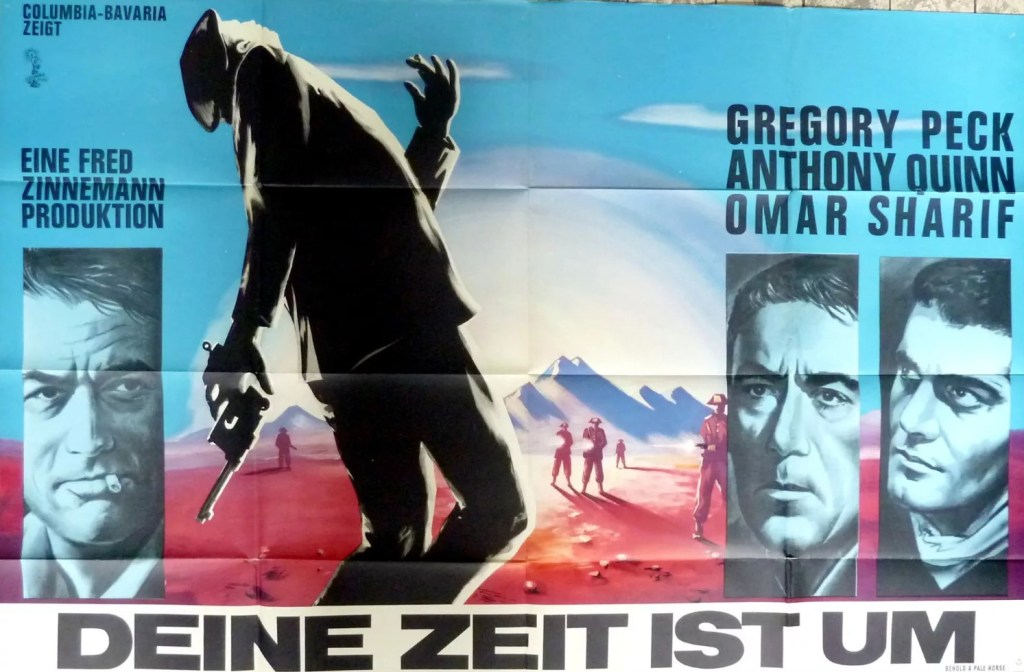
The real film begins with a shoot-out between Marshall Mackenna (Gregory Peck and an Indian. “You will wish you never saw this map,” says the Indian before he dies, but Mackenna burns the map. That doesn’t go down well with villain Colorado (Omar Sharif), whose gang has taken Inga (Camilla Sparv) hostage. Convinced the lawman has memorized the map, Colorado adds Mackenna to his hostage quotient.

At Colorado’s hideout Hesh-Ke (Julie Newmar) has a hostile reaction to Mackenna. Like Colorado, they have history. Mackenna and Inga bond when he fends off an Indian intent on raping her. As if this isn’t a pretty straightforward set-up, old foes reunited, potential romance brewing, a treasure hunt, further complications arise in the shape of a posse led by Ben Baker (Eli Wallach), not hunting renegades but also chasing gold. As if that wasn’t already a complication too far now we have a Cavalry troop, who confuse the posse with outlaws thus mostly eliminating a complication before it gets too complicated – the pursuing Apaches finish them off.  

And in a nearby pool, we get a deadly twist on the naked attraction, as Hesh-Ke, first trying to lure Mackenna then trying to drown the woman she views as her romantic rival. When the Cavalry reappear, they have turned rogue, led by Sgt Tibbs (Telly Savalas). So now we’ve got the narrative ironed out it’s three separate groups – outlaws, Cavalry and Apaches – searching for gold with various individual old scores to be settled. And, just in time, they’ve arrived at Shaking Rock, the tall pillar visualized in the poster, and a sunrise worth waiting for. It is a glorious scene.

After a close-up of the rising sun and the pillar, and the screen changing color, the shadow of the pillar creeps across the canyon floor and points to a crack in the canyon wall. The crack is a tunnel entrance and on the other side the sun is shining on a seam of bright gold. And that leaves only the various denouements to be played out. And some surprises – straightlaced Inga succumbing to gold fever, the supposedly barbarous Apaches revealed as good guys –  treating pillar (and gold) with reverence – and (would you believe it) an earthquake.

The earthquake might just have been too big a temptation given this was filmed in Cinerama. But it’s the least effective use of the process. A fairly standard western trope, crossing a dodgy bridge, is heightened in Cinerama but it’s still a cliché. Much better is the river crossing, the camera’s dizzying effect echoing the rollercoaster ride in This Is Cinerama and the rapids and runaway train of How the West Was Won (1962), audiences pitched headlong into camera point-of-view, racing water, oncoming rapids, thundering waterfall. The final section is triggered by the Cinerama camera racing for two minutes down the  twisting track leading to the gold. So, in Cinerama terms, the audience got its money’s worth.

And there should have been enough conflict to keep the narrative on track – Mackenna vs. Colorado, Hesh-Ke vs. Inga, Inga vs Colorado, Calvary vs. outlaws vs. Apaches, plus various fist, gun, knife and belt fights. The individual conflicts, Inga’s genuine fear over her fate, the romantic triangle and especially ruthless Colorado revealed (ditto Butch Cassidy) as a dreamer, imagining life in faraway lands (swap Butch’s Bolivia and Australia for Colorado’s Paris) were more than enough to be going on with without being drowned out by a simplistic message about greed. This is nothing more – or nothing worse – than a decent western wrapped up in the bloated shadow of a roadshow.

Gregory Peck (Arabesque, 1966) and Omar Sharif (Mayerling, 1969) are both pretty good in roles that play against type, both female roles are well-written and well played by Camilla Sparv (Downhill Racer, 1969) and Julie Newmar (The Maltese Bippy, 1969) but the film is overloaded with way too many cameos. As he had proven in The Guns of Navarone (1961) J. Lee Thompson was excellent at handling large casts especially in scenes featuring a host of characters and his visual and aural skills are superb but not so good at putting writer-producer Carl Foreman in his place.

Take away the Cinerama effects and the roadshow elements, and trim another 20 minutes off the picture, and you would have had a tight character-driven picture.

Discover WordPress

A daily selection of the best content published on WordPress, collected for you by humans who love to read.

The Atavist Magazine

by Brian Hannan

WordPress.com News

The latest news on WordPress.com and the WordPress community.