Burke and Hare (1972) **

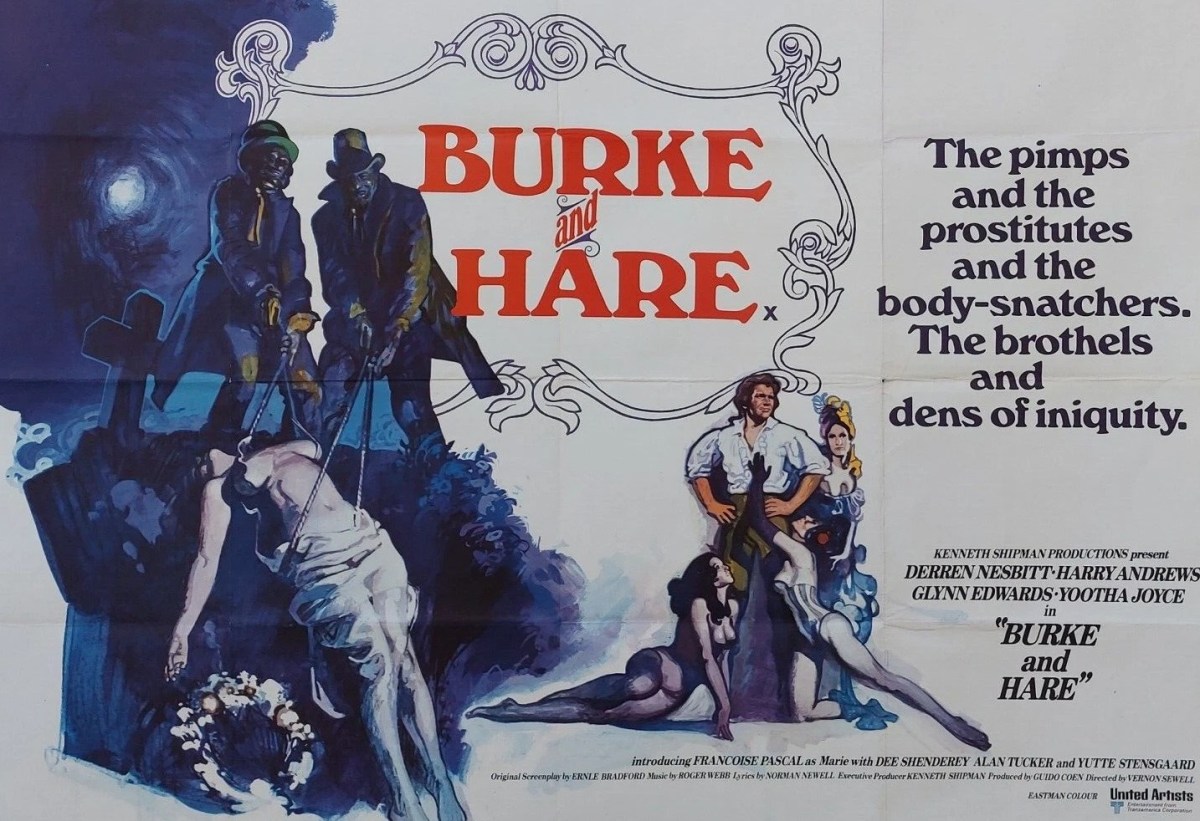
There’s probably a thesis to be written about how Hammer subverted the traditional horror picture by inserting lashings of nudity. The studio’s female vampire trilogy, beginning with The Vampire Lovers (1970), was presumably made with an eye on attracting bigger box office rather than upending the status quo and taking the exceptionally feminist approach of making females the predators. Although in the first of the series, men were the eye candy, for the second and third it appeared to make more sense for the prey to be disrobed females, a double whammy, if you like, of female nudity.

That formula then appeared to be applied to any movie roughly in the horror genre, sometimes, as here, with just awful results. Young starlets who might previously have been expected to restrict their titillation to cleavage, were now going all-in. It helps if for no apparent narrative function you can set half the tale in a brothel and also ensure part of the attraction of such premises is voyeurism, peep-holes through which the clientele can view a couple having sex.
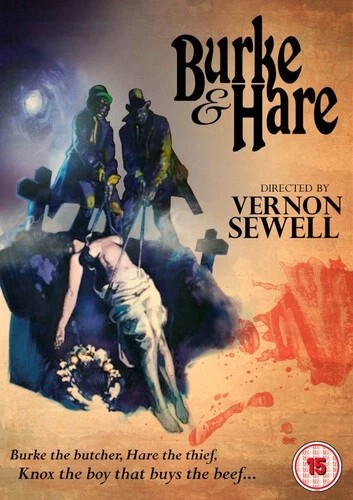
Two of the damsels on ample display were Francoise Pascal, hitherto one of those trapped into risque roles such as School for Sex (1969), and Yutte Stensgaard, who’s marquee value appeared to have been terminated despite all her nudity in Lust for a Vampire (1971) and now reduced to a supporting role.

Apologies for concentrating on the licentious, but the movie has little more to offer. Burke and Hare preceded Dr Jekyll as Edinburgh’s most famous villains, but it’s hard to get worked up about their activities. Audiences were inured to grave-robbing since without an steady  supply of body parts Frankenstein would have struggled to make his monsters.

The idea of people donating their bodies to medical science was hardly a hidden secret in the 1970s and the idea that you could build a movie exposing the hypocrisy of doctors seeking to use corpses for anatomy lesson seems far-fetched. There was no law against using corpses. As eminent surgeon Dr Knox (Harry Andrews) explains in supercilious tones it was not a crime to cut open a dead body.
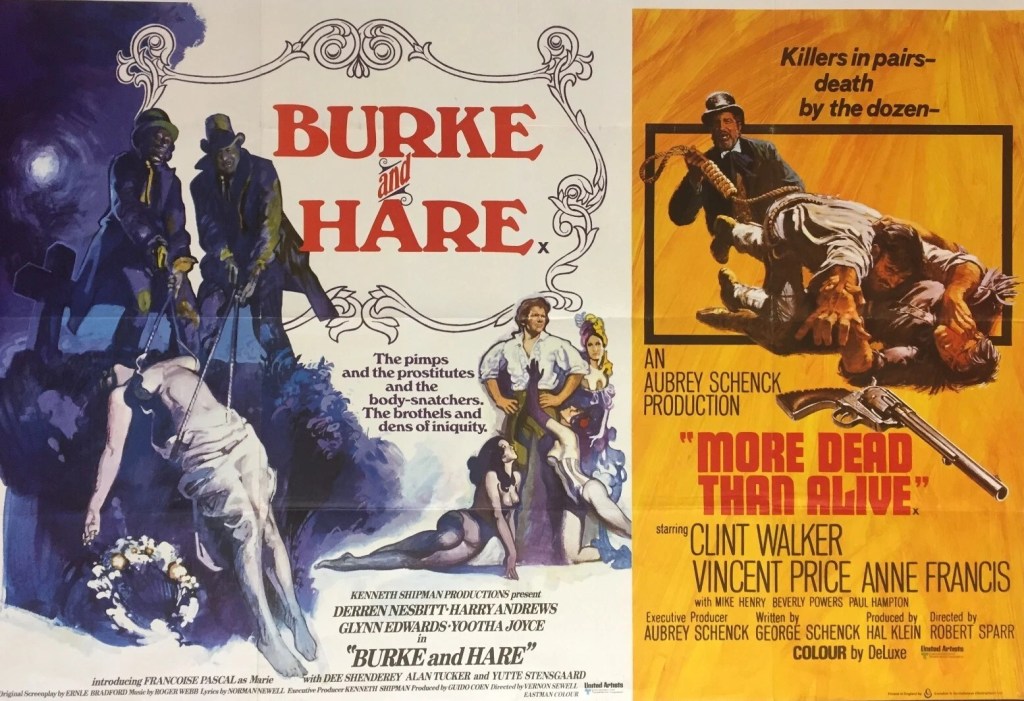
It was more customary to pair one horror film with another but since the producers didn’t have another one to hand they latched onto a western.

So we are left with our graverobbing tag team of Burke (Derren Nesbitt) and Hare (Glynn Edwards) and various other low lifes in Edinburgh in the 1820s whose main preoccupation seems to managing a Scottish accent. There’s little that’s particularly gruesome about the graverobbing and given the victims are all dead a complete lack of gore. Even the one legitimate opportunity to add frisson, the extraction of a  heart by Dr Knox during a class, is ignored.

Graverobbing, however, doesn’t supply all the needs of Dr Knox, so our pair resort to murder. That has the specific advantage of delivering fresher corpses. Suffocation is the murderer’s tool, since already slashed bodies might suggest even to Dr Knox that the corpses had met a different kind of end.

Where does the brothel fit into all this you might wonder? Is Dr Knox a regular? ‘Fraid not. For our entrance to the brothel we have to rely on sketchily-drawn medical students. Sex worker Marie (Francoise Pascal) ends up on Dr Knox’s slab after an unwelcome encounter with Burke. At some point, a little bit of detective work takes over, as Marie’s medical student lover is not satisfied with the post mortem declaring she died of alcohol poisoning.

But since you hardly care about any of these characters, it’s more like a documentary with sex and nudity thrown in.

Derren Nesbitt (Where Eagles Dare, 1968) didn’t enhance his reputation but Glynn Edwards rolled out another of his sneaky characters that provided a lifetime of supporting roles.

Directed by Vernon Sewel; (Curse of the Crimson Altar, 1968) from a script by historian Ernle Bradford making his debut.

A bit better than Orgy of the Dead (1965) but not by much.
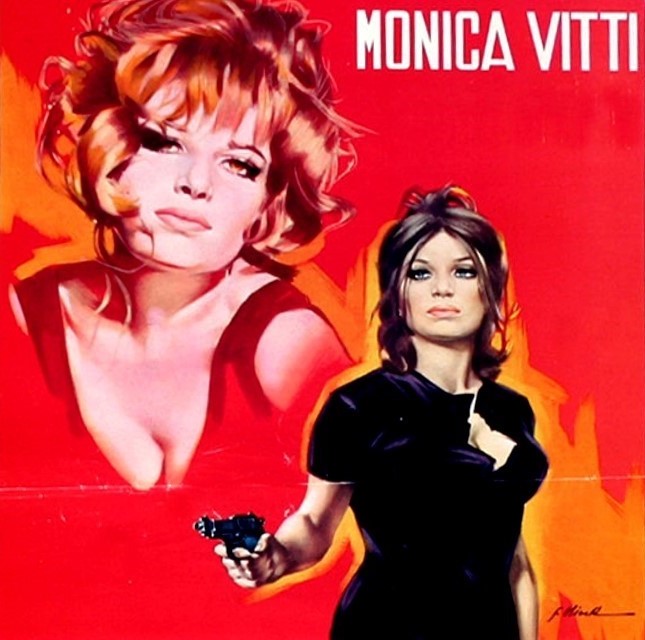
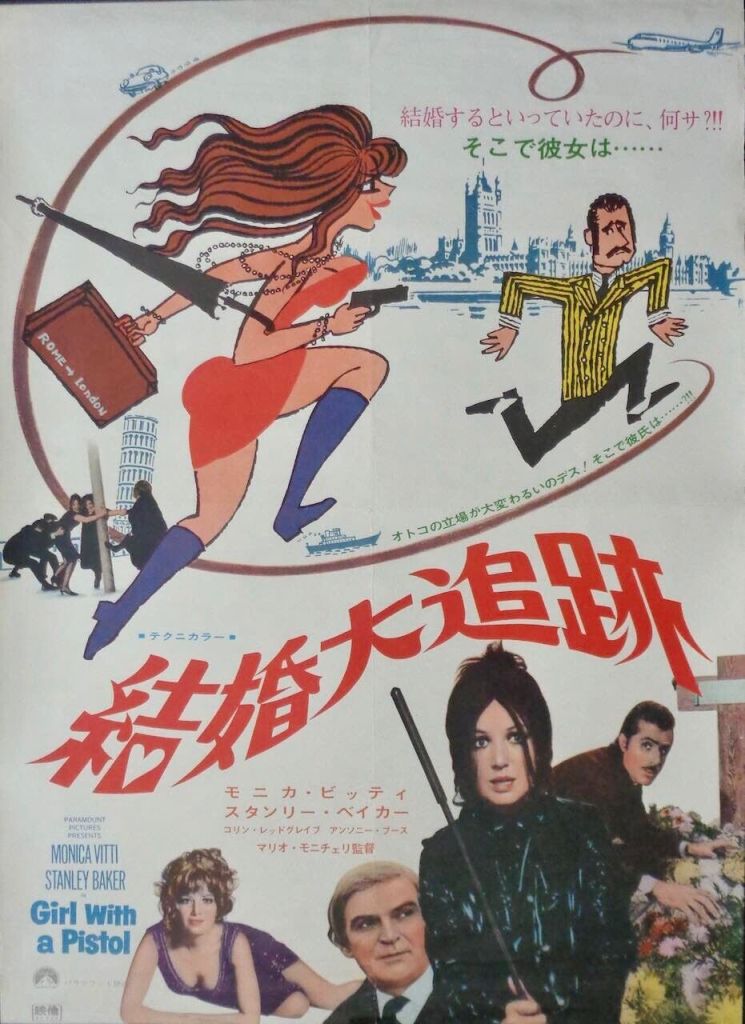
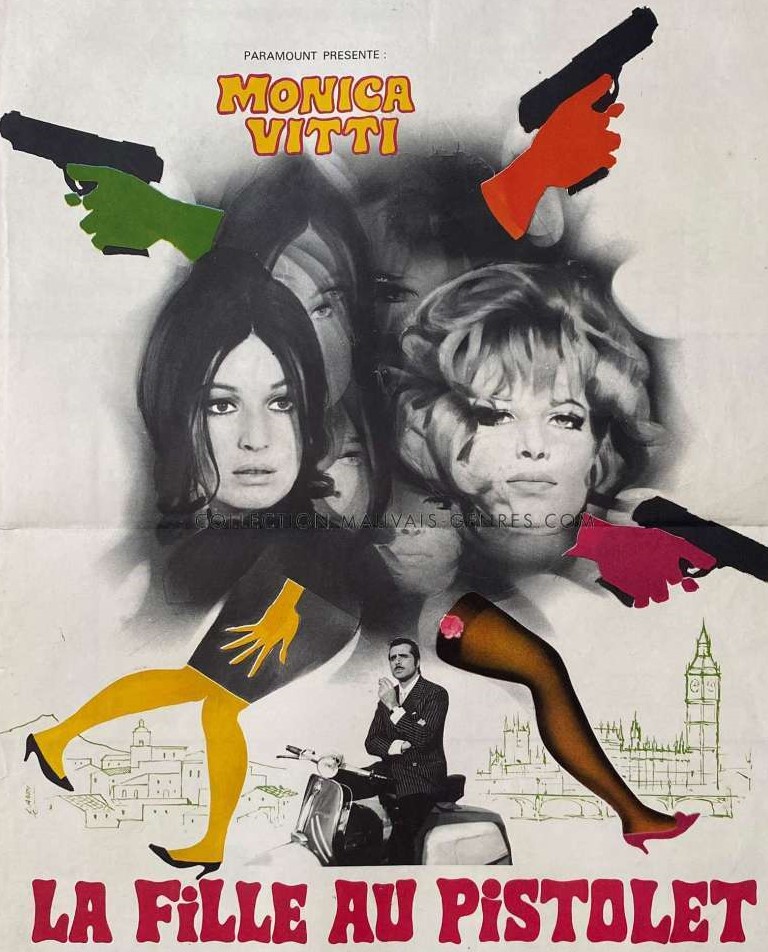
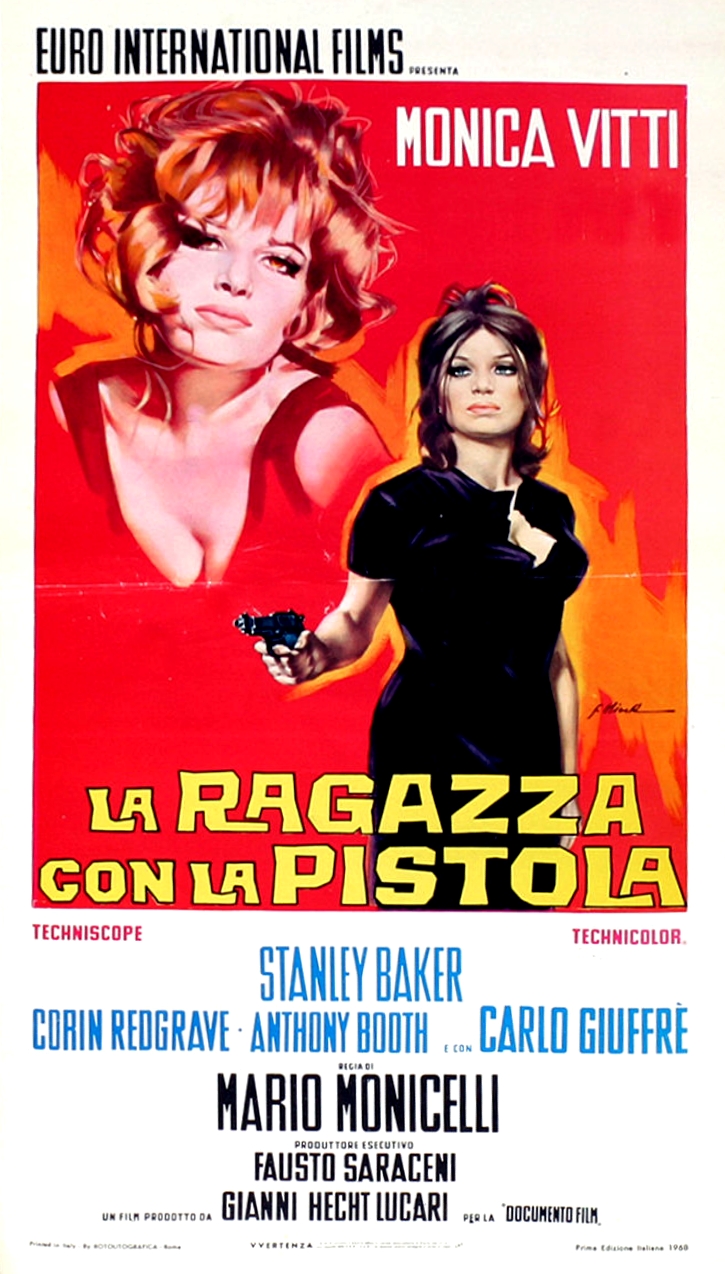
Girl with a Pistol (1968) ****

Off-beat Oscar-nominated comedy-drama that is both a marvelous piece of whimsy and a slice of social realism set in the kind of Britain the tourist boards forget, all drizzle and grime. It zips from Edinburgh to Sheffield to Bath to London to Brighton to Jersey as if the characters had been dumped from an If It’s Tuesday It Must Be Belgium sketch. If your idea of Italy was Fellini’s glorious decadence or Hollywood romance amid historic ruins and fabulous beaches, then the upbringing of Assunta (Monica Vitti) is the repressive opposite.

All women in her small town wear black. Men are not allowed to dance with women and must make do with each other. A man like Vincenzo (Carlo Giuffre) desiring sex must kidnap a woman, in this case Assunta, to which she will consent as long as he marries her. When instead he runs off to Scotland, she is dishonored and must kill him, armed with the titular pistol.

Pursuit first takes her to Edinburgh and a job as a maid, has a hilarious encounter with a Scottish drunk, and various other cross-cultural misinterpretations – in a bar she cools herself down with an ice-cube then puts it back in the bucket. Then it’s off   to Sheffield where she falls in with car mechanic Anthony Booth (television’s Till Death Do Us Part) because he is wearing Italian shoes.

She can’t imagine he can watch sport for two hours. “You’re a man, I’m a woman, nobody in the house and you look at the television.” Although tormented by images of being attacked back home by a screaming mob of black-robed women, she begins to shed her inhibitions, wearing trendier clothes, although an umbrella is essential in rain-drenched Britain and given the Italian preference for shooting exteriors.  

In between sightings of Vincenzo there are episodes with a suicidal gay man (Corin Redgrave) and a doctor (Stanley Baker). She becomes a nurse, then a part-time model, sings Italian songs in an Italian restaurant, drives a white mini, wears a red curly wig and more extravagant fashions. It turns out she can’t shoot straight. Gradually, the mad chorus of home gives way to feminist self-assertion as she becomes less dependent on men and a world run by chauvinists. It’s a startling mixture of laugh-out-loud humor and social observation. And while the narrative that at times verges on the bizarre, Assunta’s actions all appear logical given her frame of mind.

Vitti was Italian director Michelangelo Antonioni’s muse (and companion) through  L’Avventura (1960), La Notte (1961) and L’Eclisse (1962) to Red Desert (1964). She had a brief fling with the more commercial, though still somewhat arty, movie world in Joseph Losey’s Modesty Blaise (1966) and the nothing-artistic-about-it comedy On the Way to the Crusades (aka The Chastity Belt, 1968) with Tony Curtis. Director Mario Monicello had two Oscar nominations for writing but was best-known for Big Deal on Madonna Street (1958) and Casanova ’70 (1965). Girl with a Pistol was nominated in the Best Foreign Language film category at the Oscars.

The Girl with a Pistol (1968) ****

Off-beat Oscar-nominated comedy-drama that is both a marvelous piece of whimsy and a slice of social realism set in the kind of Britain the tourist boards forget, all drizzle and grime. It zips from Edinburgh to Sheffield to Bath to London to Brighton to Jersey as if the characters had been dumped from an  If It’s Tuesday It Must Be Belgium sketch. If your idea of Italy was Fellini’s glorious decadence or Hollywood romance amid historic ruins and fabulous beaches, then the upbringing of Assunta (Monica Vitti) is the repressive opposite. All women in her small Sicilian town wear black. Men are not allowed to dance with women and must make do with each other. A man like Vincenzo (Carlo Giuffre) desiring sex must kidnap a woman, in this case Assunta, to which she will consent as long as he marries her. When instead he runs off to Scotland, she is dishonored and must kill him, armed with the titular pistol.

Pursuit first takes her to Edinburgh and a job as a maid, has a hilarious encounter with a Scottish drunk, and various other cross-cultural misinterpretations – in a bar she cools herself down with an ice-cube then puts it back in the bucket. Then it’s off   to Sheffield where she falls in with car mechanic Anthony Booth (television’s Till Death Do Us Part) because he is wearing Italian shoes. She can’t imagine he can watch sport for two hours. “You’re a man, I’m a woman, nobody in the house and you look at the television.” Although tormented by images of being attacked back home by a screaming mob of black-robed women, she begins to shed her inhibitions, wearing trendier clothes, although an umbrella is essential in rain-drenched Britain and given the Italian preference for shooting exteriors.  

In between sightings of Vincenzo there are episodes with a suicidal gay man (Corin Redgrave) and a doctor (Stanley Baker). She becomes a nurse, then a part-time model, sings Italian songs in an Italian restaurant, drives a white mini, wears a red curly wig and more extravagant fashions. It turns out she can’t shoot straight. Gradually, the mad chorus of home gives way to feminist self-assertion as she becomes less dependent on men and a world run by chauvinists. It’s a starling mixture of laugh out loud humour and social observation. And while the narrative at times verges on the bizarre, Assunta’s actions all appear logical given her frame of mind.

Vitti was Italian director Michelangelo Antonioni’s muse (and companion) through  L’Avventura (1960), La Notte (1961) and L’Eclisse (1962) to Red Desert (1964). She had a brief fling with the more commercial, though still somewhat arty, movie world in Joseph Losey’s Modesty Blaise and the nothing-artistic-about-it comedy On the Way to the Crusades (aka The Chastity Belt, 1968) with Tony Curtis. Director Mario Monicello had two Oscar nominations for writing but was best-known for Big Deal on Madonna Street (1958) and Casanova ’70 (1965). The Girl with a Pistol was nominated in the Best Foreign Language film category at the Oscars.

Discover WordPress

A daily selection of the best content published on WordPress, collected for you by humans who love to read.

The Atavist Magazine

by Brian Hannan

WordPress.com News

The latest news on WordPress.com and the WordPress community.