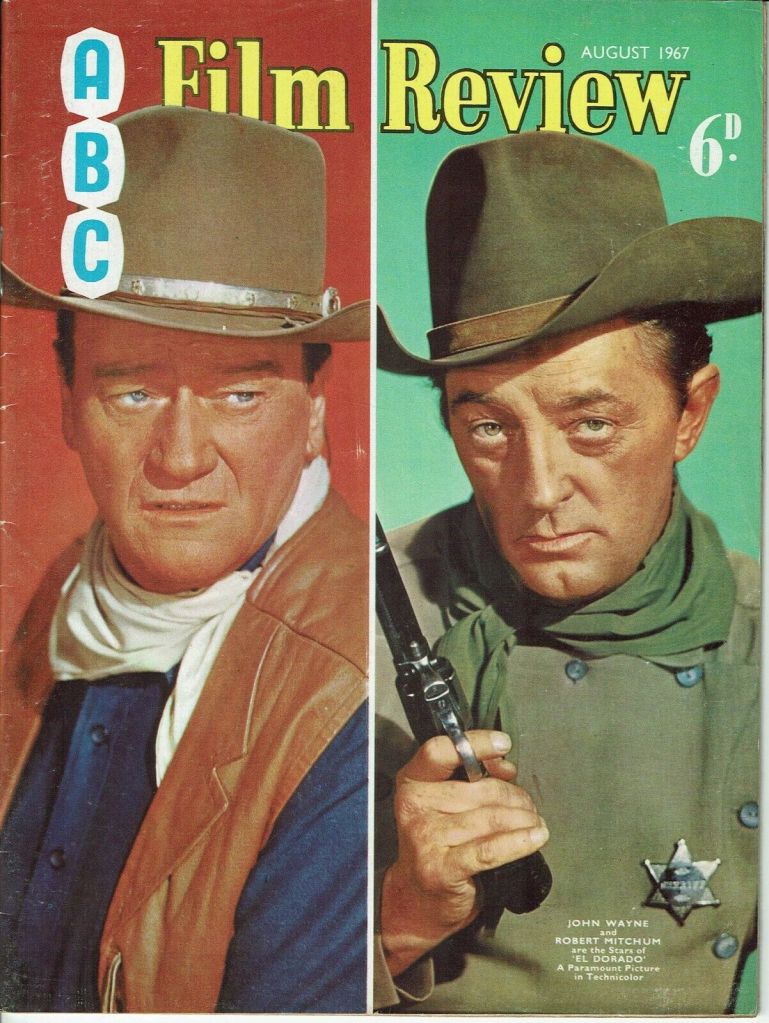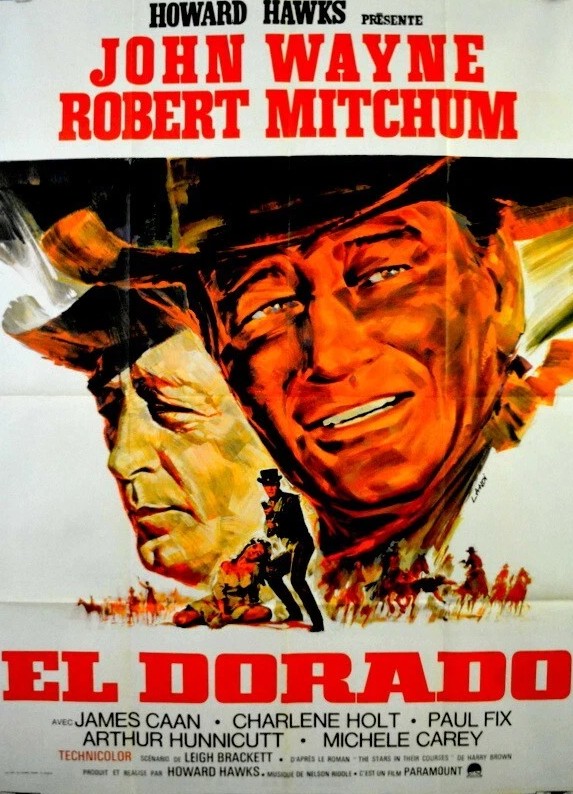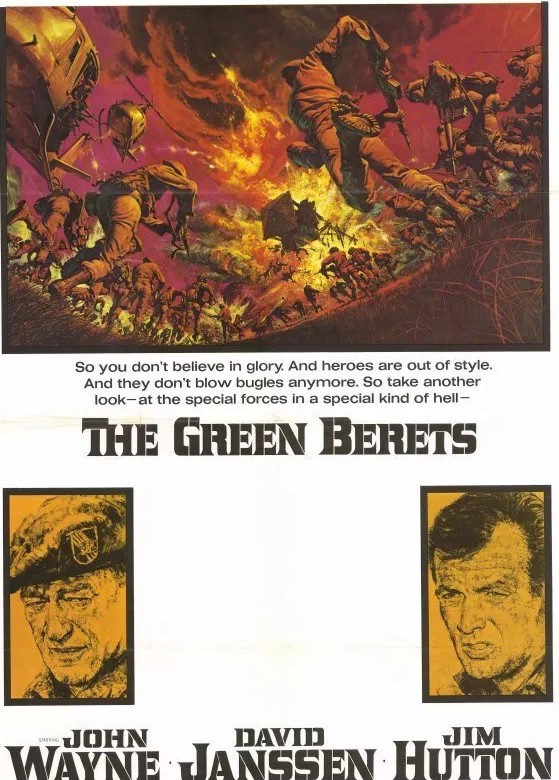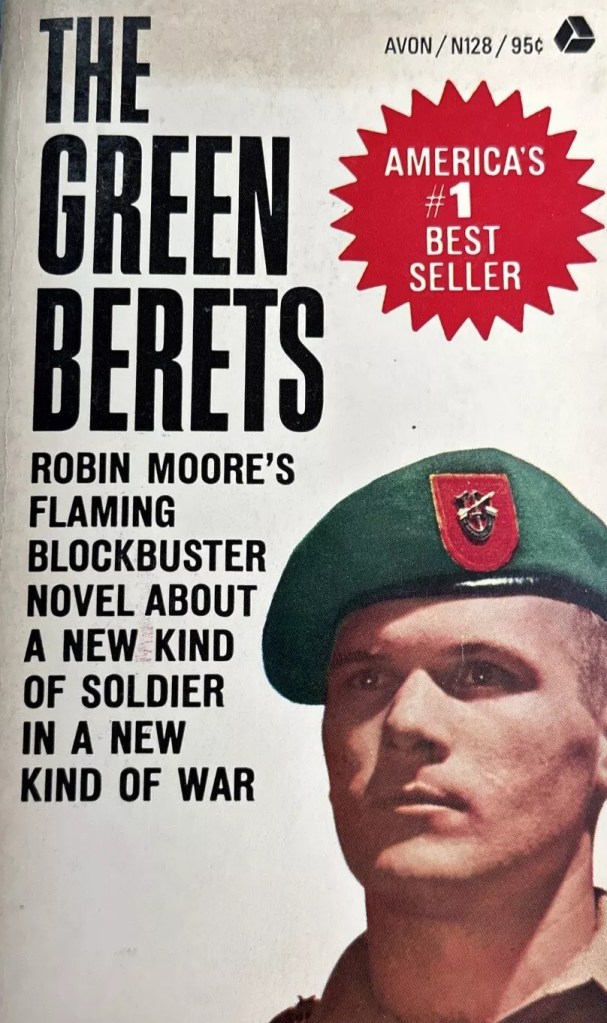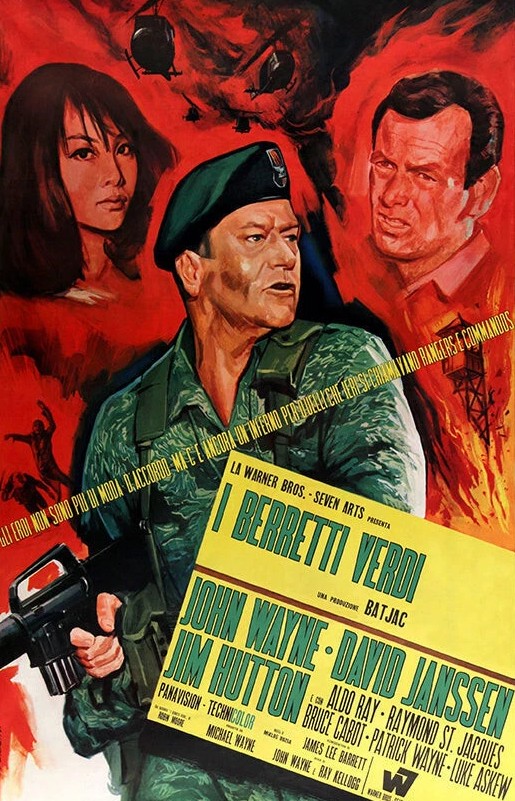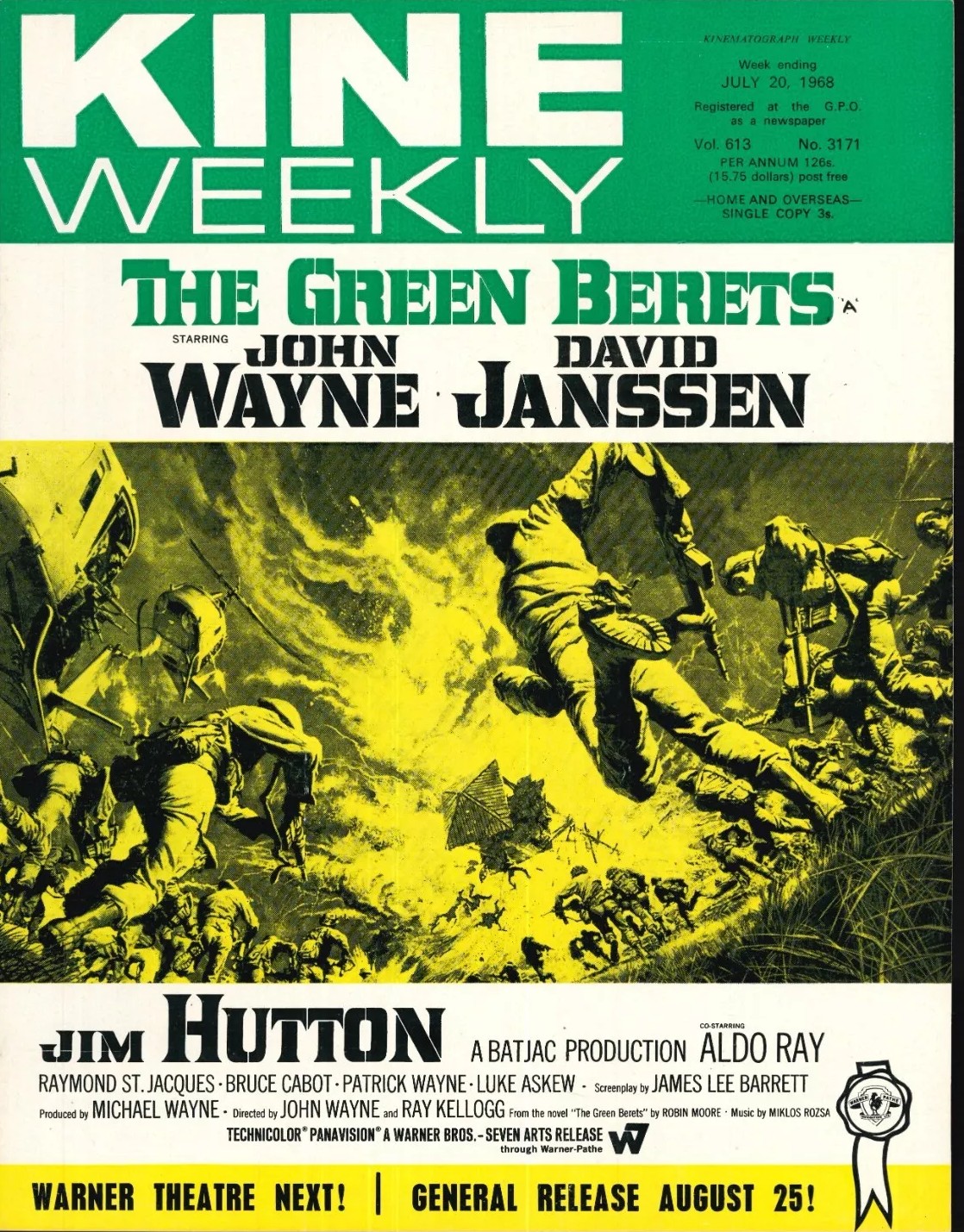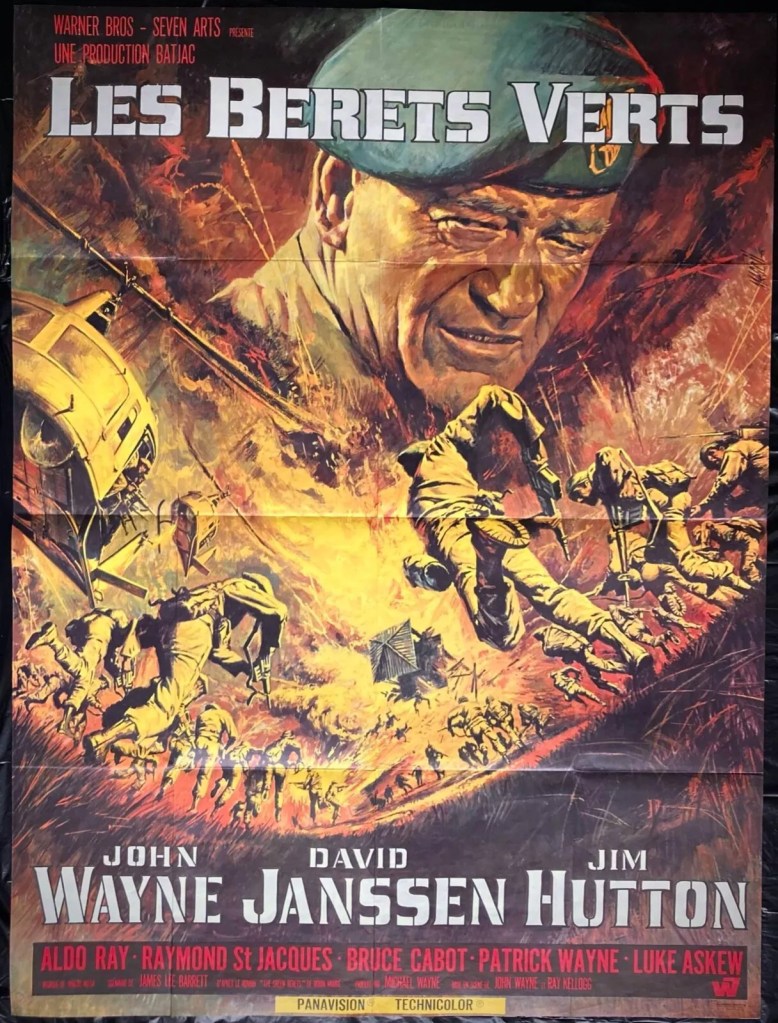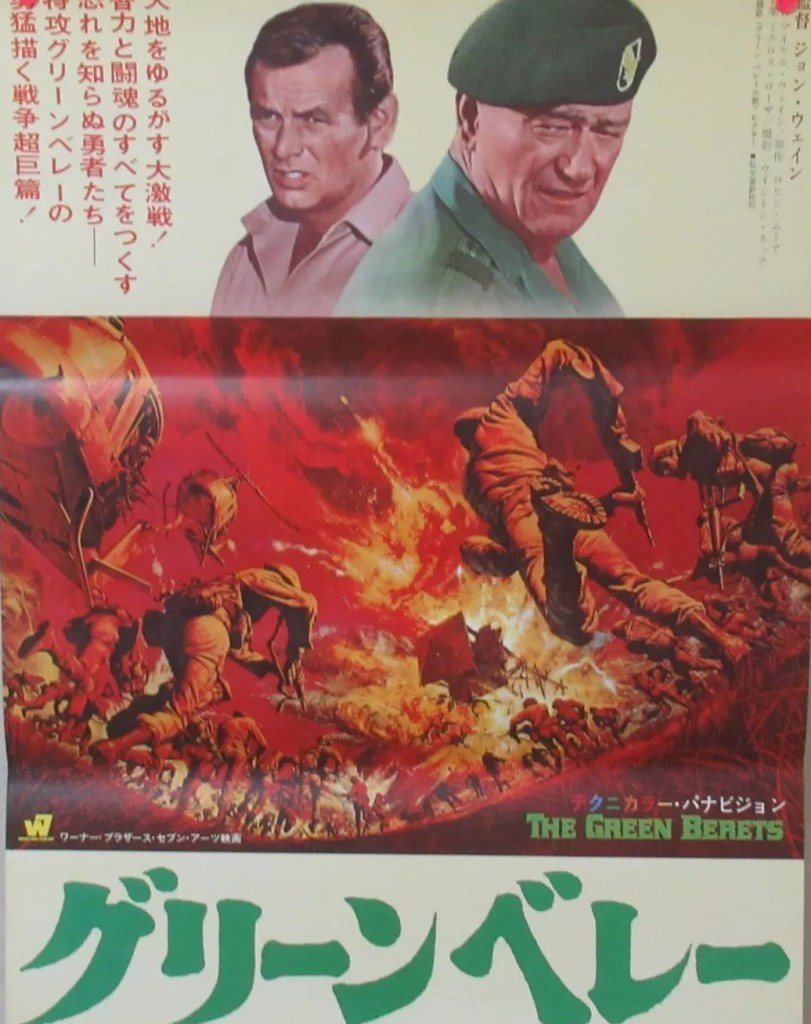
The Green Berets (1968) ***

Apart from attempts to justify the Vietnam War and a hot streak of sentimentality, a grimly realistic tale that doesn’t go in for the grandiosity or self-consciousnesss of the likes of Apocalypse Now (1979), The Deer Hunter (1978) and Platoon (1978). It’s been so long since I’ve watched this that my DVD is one of those where you had to turn the disc over in the middle.

The central action sequence is a kind of backs-to-the-wall Alamo or Rorke’s Drift siege. There’s no sense of triumphalism in the battle where the best you can say is that a reasonable chunk of the American soldiers came out alive but only after evacuating the staging post they were holding, more like Ridley Scott’s Black Hawk Down (2001) where survival is all there is to savor. It’s all pretty brutal stuff, the Americans handicapped by having to also look after the fleeing Vietnamese villagers taking refuge in their camp.

There are plenty grim reminders of how war has become even more devastating in the aftermath of World War Two. The Vietcong take, literally, no prisoners, seen as killing civilians as easily as soldiers. The Americans, for their part, have no compunction in using more sophisticated weaponry, with the addition of targeted air strikes.

Into the mix, somewhat unnecessarily, comes left-wing journo George (David Janssen) whose main job is to change his mind about the work the soldiers are doing, though admitting that to report the truth will lose him his position. He’s slung into the middle of a defensive action headed up by Col Kirby (John Wayne) to hold a position under threat against superior (in numbers) forces. There’s a fair bit of the detail of war but virtually zero about the strategy, whether that’s the U.S. Army’s plan to defeat the enemy or this individual unit’s method of defending this position. Apart from extending the perimeter of the camp to create a more effective killing zone, it’s hard to work out what the heck is going on, no matter how often orders are barked through field telephones or walkie talkies. There are squads out in the field and units in the camp and how the whole operation is meant to mesh is beyond me.

There’s not much time to flesh out the characters, save for “scrounger” Sgt Peterson (Jim Hutton) who adopts an orphan, Vietnamese soldier Capt Nim (George Takei) and Sgt Provo (Luke Askew). The rest of the motley bunch are the usual crew of monosyllabic tough guys and friendly medics and whatnot.

Though the emotional weight falls on Lin (Irene Tsu), fearing shame and being ostracized by her family for befriending the Vietcong general who killed her father and for whom she now lays a honeytrap, Kirby expresses guilt at having to kill anybody.

Despite being sent out to reinforce the position, the Americans are forced to retreat and enjoy only a Pyrrhic victory when the cavalry, in the shape of an airplane, arrives to mow down the enemy after they have captured the position.

The fighting is suitably savage, and there is certainly the notion that the Americans are not only being out-fought but out-thought and that no amount of heavy weaponry is going to win the day.

Possibly to prevent the idea of defeat destabilizing the audience, the movie shifts into a different gear, more the gung-ho commando raid picture that the British used to do so well, where Kirby heads up an infiltration team to capture the Vietcong general who has been seduced by Lin. This sets up a completely different imperative, all stealth and secrecy, the kind of operation that in the past would have been a whole movie in itself rather than the tag-end of one.

While the prime aim of this is to have the audience leave the cinema happier than if they had just witnessed the retreat from the camp, in fact it also serves two purposes. One is worthwhile, to emphasize the sacrifices made by the Vietnamese. Lin, having agreed to prostitute herself, fears being cast out as a result. But the other outcome of this mission is to kill off Sgt Peterson thus leaving the little Vietnamese lad even more orphaned than before.

John Wayne (The Sons of Katie Elder, 1965) doesn’t attempt to gloss over the weariness of his character. Jim Hutton (Walk, Don’t Run, 1966) shifts with surprising ease from comedy to drama. Even as a cliché David Janssen (Warning Shot, 1966) is underused. Watch out for Aldo Ray (The Power, 1968), George Takei (original Star Trek series), Raymond St Jacques (Uptight, 1968), Luke Askew (Flareup, 1969) and Irene Tsu (Caprice, 1967).

Three hands were involved in the direction: John Wayne, veteran Mervyn Leroy (Moment to Moment, 1966) and Ray Kellogg (My Dog, Buddy, 1960). Written by James Lee Barrett (Bandolero!, 1968) from the book by Robin Moore. Worth pointing out the score by triple Oscar-winner Miklos Rosza (The Power, 1968) especially the low notes he hits to provide brooding tension.     

Certainly a mixed bag, the central superb action sequence weighted down by the need to find something to shout about.

The Man Who Shot Liberty Valance (1962) *****

A mighty cast headed by John Wayne (True Grit, 1969), James Stewart (Shenandoah, 1965), Lee Marvin (The Dirty Dozen, 1967) and Vera Miles (Pyscho, 1960) with support from Edmond O’Brien (Seven Days in May, 1964) Woody Strode (The Professionals, 1966), Strother Martin (Cool Hand Luke, 1967) and Lee Van Cleef (The Good, the Bad and the Ugly, 1967) do justice to John Ford’s tightly-structured hymn to liberty and equality and reflection on the end of the Wild West. So tight is the picture that despite a love triangle there are no love scenes and no verbal protestations of love.

The thematic depth is astonishing: civilization’s erosion of lawlessness, big business vs. ordinary people and a democracy where “people are the boss.” Throw in a villain with a penchant for whipping and a lack of the standard brawls that often marred the director’s work and you have a western that snaps at the heels of Stagecoach (1939), Fort Apache (1948) and The Searchers (1956).

The story is told in flashback after Senator Ransom Stoddard (James Stewart) and wife Hallie (Vera Miles) turn up unexpectedly in the town of Shinbone for the funeral of a nobody, Tom Donovan (John Wayne), so poor the undertaker has filched his boots and gun belt to pay for  the barest of bare coffins. Intrigued by his arrival, newspapermen descend, and Stoddard explains why he has returned.

Now we are in flashback as, arriving on stagecoach, novice lawyer Ransom is attacked, beaten and whipped by outlaw Liberty Valance (Lee Marvin). He is found by horse-trader Donovan (John Wayne) and taken to a local boarding- house-cum-restaurant where Hallie (Vera Miles) tends his wounds. With a young man’s full quotient of principle, Stoddard is astonished to discover that local marshal Link Appleyard (Andy Devine) has ducked out of responsibility for apprehending Valance on the dubious grounds that it is outside his jurisdiction and that Valance has so mean a reputation he has the town scared witless. When Valance turns up, he humiliates Stoddard and only Donovan stands up to him, rescuing an ungrateful Ransom, who detests violence and any threat of it.

Stoddard soon turns principle into action, setting up his shingle in the local newspaper office run by Dutton Peabody (Edmond O’Brien) and on learning that Hallie is illiterate establishing a school for all ages. In the background is politics, but the push for statehood is inhibited by big ranchers who employ Valance to intimidate. Despite his aversion to violence and insistence that due legal process will eliminate the law of the gun, Stoddard practices shooting. When Donovan gives him a lesson and, to point out his unsuitability to confront such a mean character as Valance, covers him in paint, Stoddard floors him with a punch. 

That principle I mentioned has something in common with Rio Bravo (1959) – Howard Hawks’ riposte to High Noon (1952) – in that Stoddard, determined to fight his own battles, refuses to ask for help when targeted by Valance. The inevitable showdown is extraordinary, not least because it takes place at night and Ford, a la Rashomon (1951), tells it twice from different points of view.  

Precisely because it retains focus throughout with no extraneous scenes, as was occasionally John Ford’s wont, the direction is superb. As in The Searchers, to suggest emotional state-of-mind, the director uses imagery relating to doors. This time the humor is not so broad and limited primarily to one incident. Both main male characters suffer reversals, in the case of Stoddard it is physical but in the instance of Donovan it is emotional. Either way, action is character. In the romantic stakes, they are equals, dancing around their true feelings.

Upfront there is one storyline, the upholding of law and order whether against an individual such as Valance or against the attempts of big business to thwart democracy. But underneath is a subtly told romance. Donovan and Stoddard are allies but in terms of Hallie they are rivals. Neither has an ounce of sense when it comes to women. Neither actually protests their love for Hallie. Although Donovan brings her cactus roses and is, unknown to her, building an extension to his house to accommodate what he hopes is his future bride, his idea of romance is to mutter, in patronizing manner, the old saw of “you look pretty when you’re angry.”  He would have been wiser to have taken note of her spunk, because she can more than direct if need be.

Stoddard isn’t much better. Despite her growing feelings towards him being obvious to the audience, he assumes she prefers Donovan. Action drives the love element, the need to save or destroy.

All three principals are superb. This may seem like a typical Wayne performance, a dominant figure, comfortable with a gun and his abilities, but awkward in matters of the heart. But he shows as great depth as in The Searchers and the despair etched on his face at the possibility of losing Hallie eats into his soul. Stewart combines the man-of-the-people he essayed for Frank Capra with some of the toughness he showed in the Anthony Mann series of westerns. Vera Miles tempers genuine anger with tenderness and practicality. Unlike many Ford heroines she is not a trophy wife, but a worker, mostly seen running a kitchen. Lee Marvin cuts a sadistic figure, with an arrogance that sets him above the law, his tongue as sharp as his whip.

As well as Woody Strode, Strother Martin, Edmond O’Brien and Lee Van Cleef, you will spot various members of the John Ford stock company including Andy Devine (Two Rode Together, 1961) as the cowardly gluttonous marshal, John Carradine (Stagecoach), John Qualen (The Searchers) as the restaurant owner and Jeanette Nolan (Two Rode Together) as his wife.

Written by James Warner Bellah (X-15, 1961), Willis Goldbeck (Sergeant Rutledge, 1960) and Dorothy M. Johnson (A Man Called Horse, 1970).

SPOILER ALERT

Despite its five-star status, I am dubious about the famous “print the legend” conclusion and for two reasons. You could subtitle this picture The Good, the Bad and the Politician. In the first place, what Stoddart tells the newspapermen in the flashbacks is in fact a confession. He did not kill Liberty Valance. Donovan did. By this point in his life Stoddart has served two terms as a Senator, three terms as a governor and been the American Ambassador to Britain. And yet his career is based on bare-faced fraud. He took the glory for an action he did not commit. That is a huge scoop in anybody’s book. And I just can’t imagine a newspaperman turning a blind eye to it.

The second element is that Stoddart does not show the slightest sign of remorse. He built his entire career on this violent action, the antithesis of his supposed stance on the process of law.  He takes all the plaudits and fails to acknowledge Donovan, except when it’s too late, and Donovan has died a pauper, his rootless life perhaps engendered as a result of losing Hallie. Hallie’s character, too, is besmirched. She chose Stoddart precisely because he was a man of principle who risked his life to tackle – and kill – Donovan. Those two elements are indistinguishable. Had she known Stoddart had failed and was only saved by the action of Donovan it is questionable whether she would have chosen the lawyer.  

There are a couple of other quibbles, not so much about the picture itself, but about other quibblers, commonly known as critics.  Alfred Hitchcock famously came under fire for the use of back projection, not just in Marnie (1964) but other later films. That spotlight never appeared to be turned on the at-the-time more famous John Ford. The train sequence at the end of the film uses back projection and the ambush at the beginning is so obviously a set.

Don’t let these put you off, however, this is one very fine western indeed.

Behind the Scenes: From Cinerama to Imax

Given I’m on my annual Cinerama binge, it’s interesting to see how current giant-screen format Imax developed from the previous king of the giant screens, Cinerama.

Quiz question: what connects King Kong (1933) to Cinerama? Follow-up quiz question: what connects Lawrence of Arabia (the man not the film) to Cinerama? Tie-breaker: what connects Cinerama, which had its heyday in the 1960s, to the current Imax.

Merian Cooper, the producer behind King Kong, and Lowell Thomas, the broadcaster whose fame was built on the dramatic footage he took of Lawrence of Arabia during World War One, were both vital to the development of the new screen sensation Cinerama, which made its debut two years before Twentieth Century Fox unveiled Cinemascope.

Both Cinerama and Imax began as vehicles for documentaries, the cinematography they involved initially considered too cumbersome for Hollywood directors to use. Initially, also, both formats were presented in cinemas specifically designed for showing films made in the process.

But, effectively, both Cinerama and Imax followed the same business model, one that Hollywood only too readily appreciated. They were premium priced products. Whereas most items you buy are the same price wherever you make the purchase, movies followed an extended version of the way publishers sold books. Readers had to pay extra to be first in the queue for a favorite author’s latest work, the hardback version of a novel appearing about a year in advance of the cheaper hardback.

In the silent era, Paramount instituted a food chain for movie presentation. Pictures opened first in the big city center theaters at top dollar prices ($2 – the equivalent to $35 now – not unusual in the 1920s) before working their way down a dozen different pricing levels until they reached the cheapest cinemas. As the business developed, although the U.S. cinema capacity grew to around 20,000 outlets, Hollywood reckoned that 70 per cent of a movie’s income came from a fraction of those houses, primarily from the more expensive first- or second-run cinemas.

Treatment of audiences is more democratic now. All tickets cost the same and the food chain is long gone, but in the 1950s and 1960s when Hollywood was battling the beast of television it appeared that audiences could be wooed back to the movies by giving them something bigger and better – and they were happy to pay the price. Imax follows the same pricing strategy.

Cinerama was not just the ultimate in widescreen but it offered visceral thrills. Given camera point-of-view audiences raced down a rollercoaster in This Is Cinerama (1952) and were astonished to see different global vistas presented in their full glory rather than as mere backdrops to actors. And while audience response was astonishing even by industry standards, and receipts tumbled in hand over fist, the concept soon lost popularity as audiences moved on to the more dramatically-accessible Cinemascope and its imitators and by the 1960s the format was more or less dependent on the company spinning out its back catalog in endless reissues.

Hence, the move towards dramatic storylines as instanced by How the West Was Won (1962) and The Wonderful World of the Brothers Grimm (1962), both initially presented in the premium-priced roadshow, separate performance, format. In quick fashion, too, Cinerama dispensed with the cumbersome three-lens camera and invented a single-lens alternative which made it much easier for directors.

During the 1960s Cinerama presented another eleven big Hollywood pictures ranging from It’s a Mad, Mad, Mad, Mad, World (1963) and Grand Prix (1966) to Ice Station Zebra (1968) and Krakatoa, East of Java (1969). But as the industry hit the financial buffers at the end of the decade, the writing was on the wall, and although Cinerama invested in 35mm movies like Straw Dogs  (1971) the game was over for the format by 1972.

Imax was pretty soon positioned as its natural successor, unveiled in 1970 in Japan with Tiger Child, the first purpose-built cinema opening in Toronto in 1971 with North of Superior. The screen was much bigger than anything Cinerama or 70mm had offered. It was over three times the size of Cinerama. But it was of different dimensions; where Cinerama went wider, Imax went taller.

But again, the camera was an obstacle for Hollywood use. And like Cinerama, the format’s attraction was sheer spectacle. All the initial output was documentary-based, often with an educational purpose, though soon progressing to what was termed “entertainment” (Everest, 1998) and the movies were short by Hollywood standards, often less than an hour, which permitted Imax theater operators to present a greater number of daily screenings than an ordinary cinema.

Initially, they were not specifically premium-priced, but potentially more profitable because of the number of daily showings. Theaters typically kept 80 per cent of the box office which limited entrepreneurial interest since budgets for these movies were in the $6 million-$12 million range, not low enough to easily turn a profit. The movies could run for months, but there was the same problem as before – shortage of new product.

By 1990 Imax had largely pulled out of exhibition, ownership limited to nine theaters, and out of production.

Oddly enough, it was reissue that revived Imax. Disney planned a reworked version of its classic Fantasia (1940) as a method of generating more money from a picture that had already grossed $184 million on video. Traditionally, Fantasia got its best results from limited release, its previous revival outing shown in a maximum of 500 houses. Nor did Disney agree to the usual financial terms, demanding a 50 per cent share of the box office, rather than the normal 20 per cent.

Fantasia 2000 (2000) was released in 54 cinemas willing to commit to an 18-week run. While every Imax record was smashed, the picture, at a cost of $90 million, didn’t break even. But it did usher in Imax as a reissue vehicle. Disney used Imax for the 10th anniversary relaunch of Beauty and the Beast (1992), bringing in an extra $25 million in rentals. Two years later The Lion King (1994) in Imax brought in $15.6 million and Apollo 13 (1995) $1.7 million.   

Naturally enough, Disney recognized the potential for Imax for new films and made Treasure Planet (2002) in an Imax version. But the big boost came with The Matrix sequels. Both The Matrix Reloaded (2003) and The Matrix Revolutions (2003) were digitally remastered for Imax, the latter the first to be shown simultaneously with the ordinary print.

Nowadays, Imax is part of the release mix, bringing a hefty chunk of premium-priced box office to the overall gross and also, as witness the current Interstellar (2014) a hyped-up reissue vehicle.

SOURCES: Brian Hannan, Coming Back to a Theater Near You, A History of Hollywood Reissues (McFarland, 2016) p5, 10, 12, 295, 297-298; Kim R. Holston, Movie Roadshows (McFarland, 2013 )p 112-113; James B. Stewart, Disneywar (Simon and Schuster, 2008), p346-347; “A Decade of Limited Release,” Variety, February 18, 1998, p23; “Eric J. Olson, “Fantasia Signs Up Increase,” Variety, May 24, 1999, p32; Joseph Horowitz, “A Fantasia for the MTV Generation,” New York Times, January 2, 2000; “Fantasia Hits Imax Record,” Variety, January 4, 2000, p7; “Top 125 Worldwide,” Variety, January 15, 2001, p24; “The Top 250 Worldwide,” Variety, January 6, 2003, p26.

Behind the Scenes: The All-Time Top 20

The “Behind the Scenes” articles have become increasingly popular in the Blog. As regular readers will  know I am fascinated about the problems incurred in making certain movies. Perhaps one of the more interesting aspects of this category is that every now and there is out of nowhere massive interest in the making of a particular movie and it shoots up the all-time tree. Most of the material has come from my own digging, and sources are always quoted at the end of each article, but occasionally I have turned to books written on the subject of the making of a specific film. 

As with the All-Time Top Movies section, the top 20 comprises the choices of my readers. Alistair MacLean still exerts an influence, which is reassuring because my next book is about the films made from his books.

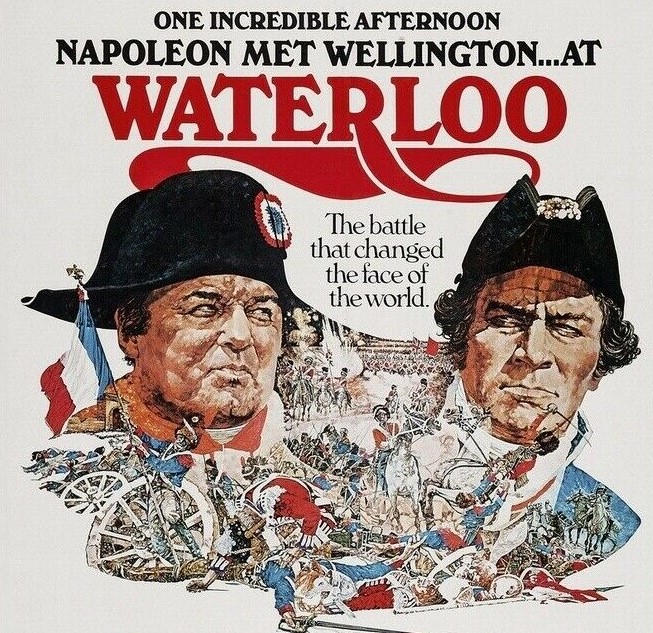
While Waterloo remains firmly out in front there are some interesting new entries such as The Cincinnati Kid, The Appointment, Mackenna’s Gold, The Train, The Sons of Katie Elder and The Trouble with Angels while Man’s Favorite Sport has made a steady climb upwards.

  1. (1) Waterloo (1970). No doubting the effect of Ridley Scott’s Napoleon in racketing up interest in this famous flop.
  2. (2) Ice Station Zebra (1968). A complete cast overhaul and ground-breaking  special effects are at the core of this filming of an Alistair MacLean tale.
  3. (3) In Harm’s Way (1965). Otto Preminger black-and-white epic about Pearl Harbor and after.
  4. (7) The Guns of Navarone (1961). Alistair MacLean again, setting up the template for the men-on-a-mission war picture with an all-star cast and enough production jeopardy to qualify for a movie of its own.
  5. (6) The Satan Bug (1965). The problems facing director John Sturges in adapting the Alistair MacLean pandemic classic for the big screen.
  6. (9) Man’s Favorite Sport (1964). Howard Hawks back in the gender wars with Rock Hudson and Paul Prentiss squaring off.
  7. (4) Battle of the Bulge (1965). There were going to be two versions, so the race was on to get this one to the public first.
  8. (5) Cast a Giant Shadow (1965). Producer Melville Shavelson wrote a book about his experiences and this and other material relating the arduous task of bringing the Kirk Douglas-starrer to the screen are told here.
  9. (10) The Girl on a Motorcycle (1968). Cult classic starring Marianne Faithful and Alain Delon had a rocky road to release, especially in the U.S. where the censor was not happy.
  10. (8) Sink the Bismarck! (1962). Documentary-style British WW2 classic with Kenneth More with the stiffest of stiff-upper-lips.
  11. (11). Tora! Tora! Tora! (1970). Richard Fleischer dispenses with the all-star cast in favor of even-handed verisimilitude.
  12. (New Entry) The Cincinnati Kid (1965). Once Sam Peckinpah was fired from the poker epic, Norman Jewison took over. Steve McQueen, Ann-Margret and Edward G. Robinson are top-billed.
  13. (New Entry) The Trouble with Angels (1966). Hayley Mills causes trouble at a convent school where Rosalind Russell tries to rein her in.
  14. (13). The Bridge at Remagen (1969). John Guillerman WW2 classic with George Segal and Robert Vaughn
  15. (17). The Collector (1963). William Wyler’s creepy adaptation of John Fowles’ creepy bestseller with Terence Stamp and Samatha Eggar.
  16. (New Entry) The Train (1964). Another director fired, this time Arthur Penn, with John Frankenheimer taking over in this cat-and-mouse WW2 struggle between Burt Lancaster and Paul Schofield.
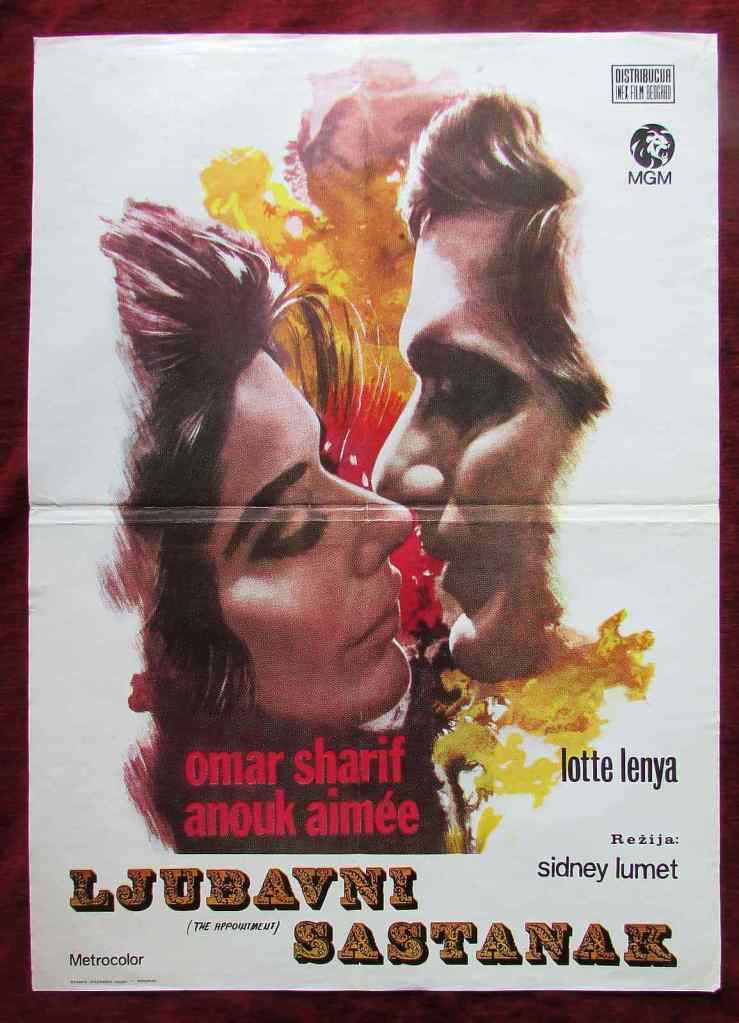
  17. (New Entry) The Appointment (1969). Sidney Lumet has his hands tied in Italian drama with Omar Sharif and Anouk Aimee.
  18. (20) The Way West (1967). Kirk Douglas and Robert Mitchum face off in pioneer western.
  19. (New entry) Mackenna’s Gold (1969). Producer Carl Foreman has his work cut out bringing home western Cinerama epic starring Gregory Peck and Omar Sharif.
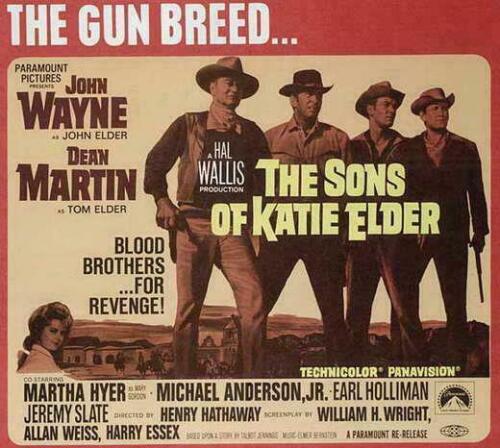
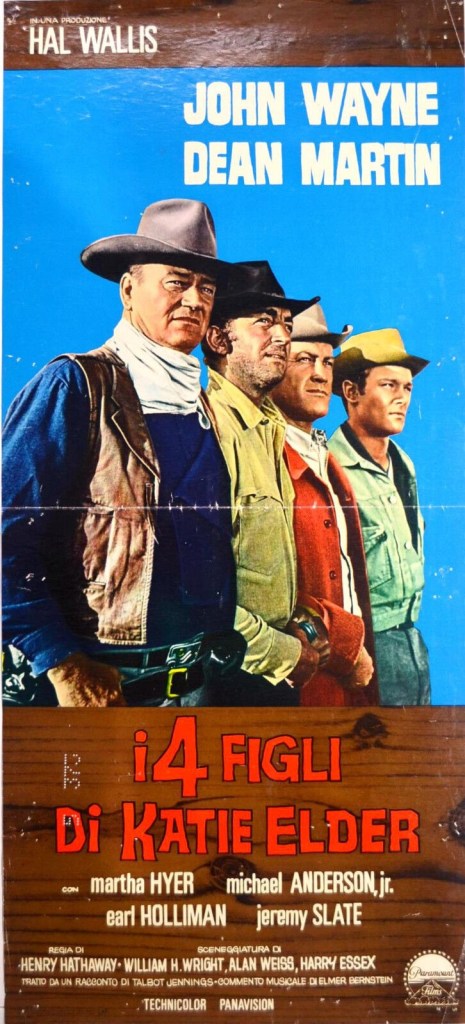
  20. (New entry) The Sons of Katie Elder (1965). Long-gestating Henry Hathaway western with John Wayne and Dean Martin as brawling brothers.

The All-Time Top 40

Traditionally, this is an opportunity for me to blow the trumpet on behalf of my loyal and growing band of readers. But this time out I’m also taking the opportunity to blow my own trumpet or in the patois of my home city “bum ma load.” I began this blog in June 2020 and my monthly viewing figures scarcely topped a few hundred in the first year. Now I’m hitting 10,000 views a month. Being a self-effacing kind of guy, I thought the world should know.

Now, back to the main task in hand. It’s been a major aspect of the Blog to see which films are most favored by my readers.  As regular readers will know, I run this feature every six months.

It’s worth pointing out that for such a testosterone-driven decade the Top Ten is dominated by female stars with Ann-Marget and Angie Dickinson in the ascendancy.  Raquel Welch, Hayley Mills and Jean Seberg also make a splash. As well as top male figures like Frank Sinatra, John Wayne, Robert Mitchum and Dean Martin readers have been highly appreciative of underdogs like Alain Delon, Richard Johnson and Alex Cord.

Surprisingly high number of new entries include Young Cassidy, Fathom, The Appointment, Diamond Head, The Family Way and The Venetian Affair.

The figures in brackets represent the previous year’s position.

  1. (1) The Swinger (1966). Queen of the Blog Ann-Margret in bouncy sex comedy that manages a sprinkling of innocence. 
  2. (2) Stagecoach (1966). Double whammy from Ann-Margret in this more than acceptable remake of the John Ford western with the male lead taken by Alex Cord, another star in need of reassessment.  
  3. (4) Fraulein Doktor (1969). German spy Suzy Kendall out-foxes Kenneth More in this World War One adventure with surprisingly grisly battle scenes and a superb score from Ennio Morricone.
  4. (3) Jessica (1962). Angie Dickinson as a young widow incurring the wrath of wives in a small Italian town.
  5. (7) Once Upon a Time in the West (1969). For many, including myself,  the greatest western ever made. Sergio Leone fashions a masterpiece from a stunning cast of Claudia Cardinale, Henry Fonda and Charles Bronson and that fabulous Morricone score.
  6. (6) Fireball XL5. (1962) The height of a television cult. Famous British series from Gerry and Sylvia Anderson, now colorized. “My heart will be a fireball…”
  7. (5) The Sins of Rachel Cade. (1961) Angie Dickinson (again) as African missionary falling foul of the natives and commissioner Peter Finch. Roger Moore in an early role.
  8. (10) Vendetta for the Saint. (1968) More television cultism. Movie made by combining two episodes of the series featuring the immortal Simon Templar. Roger Moore tackles the Mafia.
  9. (12) The Sisters (1969). Complicated French love triangle featuring Nathalie Delon and Susan Strasberg.
  10. (11)  Baby Love (1969). Controversy was the initial selling point but now it’s morphed into a morality tale as orphaned Linda Hayden tries to fit into an upper-class London household.
  11. (13) Pharoah (1966). Sensational Polish epic set in Ancient Egypt centering on the battle between the country’s ruler and the religious hierarchy.
  12. (9) Moment to Moment (1966). Hitchcockian-style thriller set in the south of France with Jean Seberg caught out in illicit love affair. Co-starring Honor Blackman.
  13. (21) Go Naked in the World (1961). Steamy drama with Gina Lollobrigida discovering that her profession (the oldest) and true love (with rich Anthony Franciosa) don’t mix. Great turn from Ernest Borgnine as a doting father.
  14. (8) The Secret Ways (1961). The first of the Alistair MacLean adaptations to hit the big screen features Richard Widmark trapped in Hungary during the Cold War. Senta Berger has a small role.
  15. (36)  In Harm’s Way (1965). Otto Preminger’s Pearl Harbor epic sets John Wayne and Kirk Douglas at each other’s throats.
  16. (20) The Golden Claws of the Cat Girl (1968). Genuine French cult film with Daniele Gaubert as a sexy cat burglar.
  17. (14) Can Heironymus Merkin Ever Forget Mercy Humpe and Find True Happiness? (1969) Self-indulgence reaches new heights as singer Anthony Newley invokes his inner Fellini that somehow involves bedding lots of women. Then-current wife Joan Collins co-stars.
  18. (New Entry) Young Cassidy (1965). Rod Taylor and Julie Christie in Jack Cardiff’s Irish drama. He took over from an ill John Ford.
  19. (22) Pressure Point (1962). No escape for racist patient Bobby Darin when psychiatrist Sidney Poitier is around.
  20. (New Entry) The Appointment (1969). Complete change of pace for Omar Sharif in unusual Italian drama directed by Sidney Lumet. Anouk Aimee is the tantalizing female lead.  
  21. (New Entry) Fathom (1967) Raquel Welch swaps her skydiving kit for the more comfortable environs of a bikini in thriller. Anthony Franciosa co-stars.
  22. (22) Pendulum (1969). Cop George Peppard accused of murdering unfaithful wife Jean Seberg.
  23. (New Entry) The Family Way (1966). Hayley Mills grows up – and how – in marital drama with new British star Hywel Bennett.
  24. (New Entry) Diamond Head (1962). Ruthless hypocritical land baron Charlton Heston causes chaos in Hawaii. With Yvette Mimieux and George Chakiris.
  25. (26) A Dandy in Aspic (1968). Cold War thriller with Laurence Harvey as a double agent who wants out. Mia Farrow co-stars.  
  26. (New Entry) The Venetian Affair (1966). Robert Vaughn turns in a terrific performance as an ex-alcoholic spy dealing with former lover Elke Sommer in slippery Venice-set thriller.
  27. (21) The Best House in London (1969). That’s a euphemism for a brothel, let’s get that straight. David Hemmings tries to do right by the sex workers.
  28. (25) Lady in Cement (1969). Frank Sinatra reprises private eye Tony Rome with mobster’s moll Raquel Welch as his client.
  29. (31) The Girl on a Motorcycle / Naked under Leather (1968). Heavily-censored in the U.S., erotic drama with singer Marianne Faithfull as the titular fantasizing heroine. Alain Delon co-stars.
  30. (New Entry) Genghis Khan (1965). Omar Sharif as the all-conquering Mongol chieftain. Stephen Boyd, James Mason, Eli Wallach, Telly Savalas and Francoise Dorleac lend support.
  31. (New Entry) The Chalk Garden (1964). Hayley Mills again, being brought to heel by governess Deborah Kerr with a hidden secret.
  32. (New Entry) Plane (2023). Gerard Butler channels his inner Bruce Willis as he attempts to avoid dying hard on an island inhabited by rebels.  
  33. (23) Oceans 11.  Frank Sinatra heads the Rat Pack line-up, inspiring an industry of  remakes and with everyone starting with Tarantino ripping off one scene.
  34. (New Entry) Five Card Stud (1968). Surprising mix of feminism and noir in revenge western. Dean Martin, Robert Mitchum and Inger Stevens topline.
  35. (34) The Misfits (1960). Last hurrah for Clark Gable, fabulous turns from Montgomery Clift and Marilyn Monroe in John Huston tale of losers. 
  36. (28) Once a Thief (1965). Change of pace for Ann-Margret as working mother whose ex-jailbird husband Alain Delon is forced into another job.
  37. (27)  Deadlier than the Male (1967). Espionage with a sting in the tale as venomous female villains including Elke Sommer and Sylva Koscina target Bulldog Drummond
  38. (35) Rage (1966). Glenn Ford and Stella Stevens combat pandemic in Mexican town.
  39. (New Entry) Blonde (2022). Ana de Armas in stylized biopic of Marilyn Monroe
  40. (33) She Died with Her Boots On / Whirlpool (1969). Sleazy British film from cult Spanish director Jose Ramon Larraz sees kinky photographer Karl Lanchbury seduce real-life MTA Vivien Neves.  

Behind the Scenes: “The Sons of Katie Elder” (1965)

The property had been bouncing around Hollywood for over decade. It had its origins in the true-life tale of the five Marlow brothers involving murder, revenge, and jailbreak, the story making national headlines when the case was heard at the U.S. Supreme Court in 1892. Based on the book The Fighting Marlows by Glenn Shirley,William H. Wright (Assignment in Brittany, 1943) shopped around a screenplay, jointly written with Talbot Jennings (Northwest Passage, 1940), that was purchased by Paramount in 1955.

Alan Ladd (Shane, 1953), who owed the studio a movie, was cast in the lead and the script went through rewrites by Frank Burt (The Man from Laramie, 1955) and Noel Langley (Knights of the Round Table, 1953) with shooting scheduled for 1956. John Sturges (The Magnificent Seven, 1960) was set to direct until Ladd quit, having bought his way out of his contract. Burt Lancaster (The Train, 1966) was brought in as his replacement.

When Lancaster dropped out, producer Hal Wallis took over the movie in 1959 and considered replacing him with James Stewart (Shenandoah, 1965) or Charlton Heston (The Hawaiians, 1970) with Dean Martin (Rio Bravo, 1959) as the second lead. But still the movie stalled for another five years before Wallis settled on John Wayne who signed on for $600,000 plus a one-third share of the profits and one-third ownership of the negative (a bounty that would continue to pay off through reissues and leasing to television). Henry Hathaway was paid a flat $200,000.

Wayne and Hathaway had history dating back to The Shepherd of the Hills (1941) based on the million-copy bestseller by Harold Bell Wright, and groundbreaking in its use of Technicolor, then in its infancy. They didn’t work again until desert treasure hunt Legend of the Lost (1957) which teamed Wayne with Sophia Loren. A few years later came North to Alaska (1960) followed by Circus World / The Magnificent Showman (1964).

Despite this long-term relationship, the most the director could offer about his star was that “Wayne is more particular about the pants he wears than anything in the world…unless he gets the thinnest kind of material it drives him crazy.”

When the script was finally knocked into shape, the Marlow siblings had been trimmed from five to four, and that family had been replaced by the Elders, a nod to western aficionados who would recognize the name Katie Elder (“Big Nose Kate”), occasional companion of Doc Holliday whose story Wallis had previously filmed as Gunfight at the O.K. Corral (1957). Even though Elder wasn’t dead enough – she lived till 1940 – to conform to this picture, it seemed an odd decision to choose that name unless resonance was expected.

But it was still far from a done deal because Wayne’s cancer threatened to scupper the picture. Start of shooting scheduled for October 20, 1964, was shuttered when the disease was diagnosed on September 13 following the completion of Otto Preminger WW2 epic In Harm’s Way (1965). Aware surgery might jeopardize the picture, Wayne suggested Wallis replace him with Kirk Douglas (Cast a Giant Shadow, 1966).   

Hathaway rejected the notion, but while neither star nor producer had any idea whether the operation would be successful, and whether Wayne would be even fit enough to work, or – God forbid, that the actor might already have made his last picture – Wallis took an optimistic approach and announced the picture would be delayed for a month and “even a little later.” Hathaway’s optimism was based on the fact that he had survived colon cancer a decade before.

At least the surgeon moved fast, operating four days after diagnosis, and again five days later. As well as fighting the damage surgery and pain had done to his body, Wayne found himself slipping into depression, convinced the operation would render him unemployable. “I’ll never work again if they find out how sick I am. If they think an actor is sick, they won’t hire him,” he said, a legitimate observation given the cost of shutting down a picture should the actor be unable to play his role.

Wallis’s business partner Joseph Hazen shared Wayne’s pessimism and urged the producer to recast with either William Holder (The 7th Dawn, 1964) or Robert Mitchum (The Way West, 1967). Paramount, too, fretted about insurance, the studio couldn’t risk hiring an uninsurable actor. Wallis refused to abandon Wayne and the studio finally agreed to tough conditions from the insurance company. So, on January 6, 1965, the principals gathered in Durango to commence the 46-day shoot on a production budgeted at $3.19 million.

The high elevations – 8,500 ft in places – were not conducive to someone recovering from a lung cancer operation and Wayne found it difficult to breathe. It didn’t help that on the fourth day of shooting Wayne was expected to jump into icy water for the sequence where the brothers were ambushed by the villains. It didn’t help, either, that Wayne was too big to wear a rubber suit to stave off the cold like his fellow actors.

Wayne never complained that Hathaway “worked me like a damn dog.” He realized that it “was the best thing ever happened to me. It meant I got no chance to walk around looking for sympathy.” The star put on a brave front, publicly acknowledging his battle with cancer as a way of giving hope to others while privately terrified not so much of dying but of being helpless. “I just couldn’t see myself lying in bed…no damn good to anybody.”

“He had to be the macho man,” commented Earl Holliman (The Power, 1968), a late substitute for original star Tommy Kirk (Swiss Family Robinson, 1960) who was sacked after being caught smoking marijuana, “he had to have more drinks than the next guy.” And despite the severity of his condition, and although publicly pretending he had given up tobacco, he continued smoking cigars.

Recalled Dean Martin (Rough Night in Jericho, 1967), “He’s two loud-speaking guys in one.” George Kennedy (Cool Hand Luke, 1967) asserted, “If you put him in a group with other movie stars, the eye went to him and that is the ultimate marker of respect. He was John Wayne. He was very real. It didn’t matter if he wasn’t Olivier; Olivier wasn’t John Wayne.”

But there were outward signs of the effect the illness had upon him. He was less sure of himself on a horse, riding with a shorter rein out of fear a horse would get away from under him, trying to minimize the chances of falling or being bucked from the animal. And as the film wore on, an oxygen inhaler was set up beside him on set.

Dennis Hopper (Easy Rider, 1969) was wary of working again with Hathaway after a difficult experience with him on From Hell to Texas (1958) starring Don Murray and Diane Varsi where the actor suffered the indignity of endless takes. Hopper quit three times and for good measure the director put the word around and virtually grounded the actor’s career. Hopper only made one movie in six years. In the interim he had married Brooke Hayward, daughter of actress Margaret Sullavan whom Hathaway respected, and peace was brokered.  

Although on his best behavior on the shoot, Hopper was no less impressed. “He was a primitive director, he rarely moved his camera, the movement came from the actors.”

“Westerns are art,” declared Wayne. “They’ve got simplicity and simplicity is art…There’s simplicity of conflict you can’t beat…Westerns are our folklore and folklore is international…In Europe they understand that better than we do over here. “

Whether it was public sympathy for an ailing star and his resolve to fight cancer, or audience delight that he was back in a western after a gap of a few years, The Sons of Katie Elder was a huge hit with $5 million in initial rentals (what studios were left with after cinemas had taken their share). It earned more later in reissues but that initial sum was enough for thirteenth spot in the annual box office rankings though beaten by both Shenandoah and Cat Ballou. Its foreign earning would probably match domestic, to make it one of Wayne’s biggest earners for the decade.

SOURCES: Scott Eyman, John Wayne: His Life and Legend (Simon and Schuster Paperbacks, 2014) p111, p387-396 ; Ronald L. Davis, Duke: The Life and Image of John Wayne (University of Oklahoma Press, 1998) p266; Hal Wallis Collection, Margaret Herrick Library; Hedda Hopper, “Ladd To Star in Film of Pioneers’ Reunion,” Chicago Daily Tribune, November 9, 1955, p16; Thomas M. Pryor, “Hecht-Lancaster Obtains 2 Novels,” New York Times, January 12, 1956, p22; Oscar Godbout, “TV Movies Extras Get Salary Rises,” New York Times, July 3, 1956, p17; John Wayne, “Me? I Feel Fine,” Los Angeles Times, January 18, 1965; James Bacon, “Wayne’s Biggest Bout vs. Killer Cancer,” Los Angeles Herald Examiner, March 14, 1965; Roderick Mann, “John Wayne – A Natural as The Shootist, Los Angeles Times, March 7, 1976.

The Sons of Katie Elder (1965) ****

The rocking chair motif in this underrated film is ignored while the door opening and closing in The Searchers (1956) is hailed as one of cinema’s greatest images. Welcome to the world of director Henry Hathaway (Nevada Smith, 1966). Way down the pecking order when it comes to the makers of great westerns, below Sergio Leone (Once Upon a Time in the West, 1969) who only made four and Howard Hawks (Rio Bravo, 1959) only three.

Closer inspection, too, of The Wild Bunch (1969) might reveal cinematic ideas that turned up here first. Closer inspection of John Wayne (The Commancheros, 1961) might reveal a mighty fine, very touching, performance.

The genre was chock-full of vengeance, but here that is tempered by mystery over the death of their father, a drunken gambler, that has led to the loss of the family ranch, leaving the mother, for whose funeral the titular sons return, living hand-to-mouth, supplementing the usual sewing and mending with giving guitar lessons.

Hastings (James Gregory),  a businessman with big ideas, has taken over the ranch and pretty much the local town of Clearwater. And he’s just hired extra muscle, notorious gunslinger Curley (George Kennedy), to swell his already-growing army.

Only the youngest son, Bud (Michael Anderson Jr), a reluctant college student, is clear of the taint of wrong-doing. John Elder (John Wayne) has a reputation as a gunfighter but unlike shifty younger brother Tom (Dean Martin) doesn’t have a wanted poster following him around. The other son Matt (Earl Holliman) takes after John, some shady action but no legal consequence.

This is certainly not a great fraternal union. When they’re not engaged in low-level investigation or trying to prevent themselves being lynched, they’re bickering and fighting. The only thing that unites them, beyond love of the deceased woman, is determination to continue paying for Bud’s education.

Apart from the ranch, one of Hastings’ other lucrative investments is a firearms business, which allows him to tote around a telescopic rifle which, of course, ensures he can bump off those who get in his way from a distance, without fear of discovery. The easiest way to get rid of the brothers is to have them arrested for murder and to kill off the one man, Sheriff Wilson (Paul Fix), who might have the brains and experience to work out something fishy was going on.

John Wayne is more emotional here than in any picture since The Searchers, though, as you’ll be aware, his emotion is registered through his eyes or bits of business rather than a lengthy speech. And given double duty of looking after the youngest while holding back the more tempestuous Tom.

Dean Martin’s (Five Card Stud, 1968) charm runs thin, as is intended, no woman to gull, and no cliché alcoholism a la Rio Bravo to fall back on. It’s a part he plays completely against type, although you can sense he’s bursting out of those confines in the false eye con. He’s pretty much always brought to heel by Wayne. The one time he defies big brother ends in personal calamity. Imagine a marquee name as big as Dean Martin taking on a role where the part sets him up to be walking in the Duke’s shadow, despite his efforts to break loose.

In fact, unusually for a western, until Butch Cassidy and the Sundance Kid (1969) came long, it’s replete with reversals. Hathaway plays with expectations from the outset, the opening sequence of big beast of a train puffing through fabulous scenery doesn’t bring John, instead, unknown to the waiting brothers, Curley disembarks. Katie Elder’s friend Mary (Martha Hayer) cuts off at the pass any idea the audience might have of incipient romance when she gives John both barrels.

Thanks to the screenplay, Michael Anderson Jr.(Major Dundee, 1965) and Earl Holliman (The Power, 1968) are given more bite than their roles might suggest and James Gregory (The Manchurian Candidate, 1962) makes his villain meaty though you suspect the presence of George Kennedy (Cool Hand Luke, 1967) is another lure, creating audience expectation that is not fulfilled. Martha Hyer (The Chase, 1966) is more conscience than glamor,  spending most of the time on the sidelines.

You’d be surprised just how lean a production this is, and equally how deftly Hathaway avoids cliches. Just because there’s a kid you don’t need to teach him how to be a man. A huge herd of horses doesn’t need to stampede. Beautiful woman in the vicinity doesn’t necessarily call for a heated love affair. Ending up in jail doesn’t necessitate a bust-out. Villainous gunslinger doesn’t set up obligatory shootout in an empty street.

Hathaway’s unusual, too, in the way he anchors his pictures in reality. Here it’s a funeral director washing the wheels of his hearse, a blacksmith applying shackles.

You’d marvel, too, at just who was involved in fashioning the terrific screenplay: veteran William H. Wright, his first in two decades, Harry Essex (Creature from the Black Lagoon, 1954) in his first in eight years, and Allan Weiss whose six other movies were all Elvis Presley vehicles. Hardly the pedigree to produce one of the best westerns of the decade. This is the kind of screenplay where no line is wasted, not when a retort can be used to define  character.

Most people remember the rousing theme by Elmer Bernstein (The Scalphunters, 1968), but actually there are also some very innovative musical passages worth listening out for.

Curiously, it was Andrew Sarris,  hardly a John Wayne fan, who recognized the movie’s attributes, though in niggardly fashion, “The spectacle of people in Hollywood trying to do something different in a western at this late date is reassuring.”

It’s about time those differences and the picture’s excellence were recognized.

Behind the Scenes: “The Comancheros” (1961)

The making of this could have been a movie in itself. The novel, published in 1952, suffered from a long gestation involving four directors with seven actors at various points either signed up or mooted for the two top main roles.

Journalist-turned-author Paul Wellman specialized in westerns and historical non-fiction with a western bent. The Comancheros was the last of the half-dozen of his near-30 novels to reach the screen, following Cheyenne (1947) with Jane Wyman, The Walls of Jericho (1948) with Cornel Wilde and Linda Darnell, Alan Ladd as Jim Bowie in The Iron Mistress (1952), Burt Lancaster as Apache (1954) and Glenn Ford as Jubal (1956).

Originally earmarked by George Stevens as a follow-up to his Oscar-nominated Shane (1953), it was scheduled to roll before the cameras on completion of Giant (1956) in a Warner Bros production that contemplated re-teaming Vera Cruz (1954) pair Gary Cooker and Burt Lancaster.  When that failed to gel, next up were Gary Cooper and James Garner. That was kind of a tricky proposition given that Garner had taken on the might of Warner Brothers in a lawsuit in a bid to extricate himself from his contract.

But the producer didn’t seem to care as the day the actor won the lawsuit he received the script. “I didn’t like it, I didn’t want to do it,” recalled Garner, “but a couple of days later I heard Gary Cooper was going to do it,” resulting in a speedy change of heart. However, despite his verbal acceptance, no contract appeared and never hearing from Fox again assumed foul play from Warner studio head Jack Warner.

Meanwhile, Stevens’ interest had cooled and after settling on The Diary of Anne Frank (1959) he sold the film rights off to Twentieth Century Fox for $300,000, more than he had originally paid the author. Fox hired Clair Huffaker (Hellfighters, 1968) to write the script with Cooper’s sidekick role assigned to the up-and-coming Robert Wagner (Banning, 1967). But Cooper’s ill-health prevented that version going ahead.

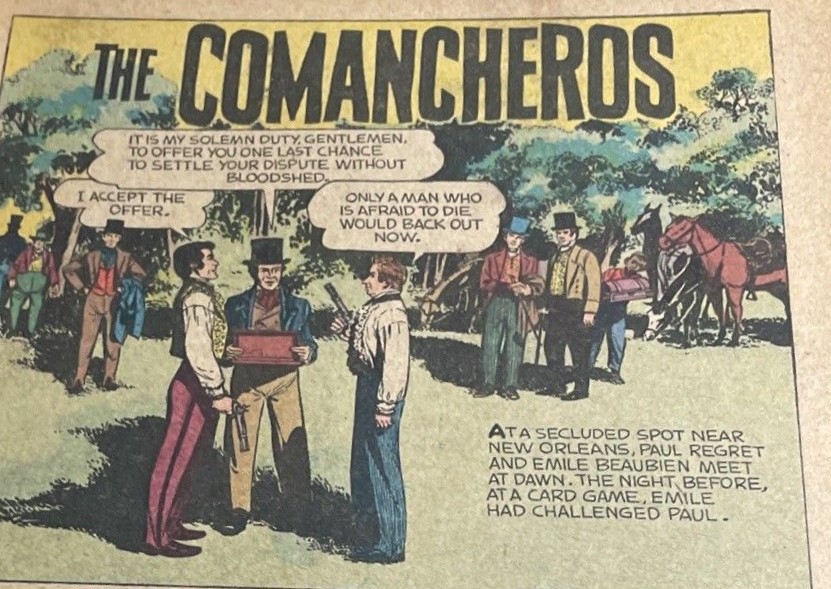
Comic specialist Dell was a bit slow on the uptake, it’s tie-in copy (Issue 1300)
not appearing until three months after the movie opened.

Television director Douglas Heyes (Beau Geste, 1966) was set to make his feature film debut with the plum cast of John Wayne and Charlton Heston, fresh off global monster hit Ben-Hur (1959). Ironically, Wayne could have made this movie years before, in 1953 having been sent the novel by then-agent Charles Feldman (who had clearly also contacted Stevens).

Wayne had come back into the equation after signing a three-picture deal with Fox. But Heston,  on reflection, decided it would not be in the interests of his career at this point to take second billing and dropped out.

Wayne’s involvement meant re-shaping the script. In the novel the main character was Paul Regret, the Louisiana gambler wanted for murder for killing a man in a duel. Wayne was too old to play him so to puff up his part the Huffaker script was rewritten by James Edward Grant, better known originally as a short story writer, who had begun working for Wayne on The Angel and the Badman (1947) and would continue to do so for another 11 projects ending with Circus World (1964). 

Another newcomer, Tom Tryon (The Cardinal, 1963), was lined up to play Regret. Then Heyes dropped out leaving the way clear for the final teaming of Hungarian director Michael Curtiz (Casablanca, 1942), now a freelance after decades with Warners, and John Wayne.  

Stuart Whitman (Murder Inc, 1960) arrived from left field. While starring as Francis of Assisi (1961) he was shown the script by that film’s director, Curtiz. Tryon was eased out after Whitman managed to secure an interview with Wayne and the pair hit it off.

That Curtiz was already suffering from cancer was obvious to Whitman. Whatever sympathy his illness might have attracted was scuppered by the director’s rudeness. He had a predilection for sunbathing in the nude and blowing his nose on tablecloths, the actions of a powerful figure letting everyone know he could get away with it. His illness meant he restricted working to the mornings. After lunch he fell asleep in his chair, the crew placing umbrellas over his head to protect him from the sun.

While the director dozed, Wayne took over the directorial reins. When Curtiz was hospitalized, the actor finished the picture. It is estimated that he filmed over half of it, including the climactic  battle.

Ina Balin, a Method actor, found her acting style cut little ice with Wayne. When she demanded rehearsals and long discussions about her character, he simply shot the rehearsal. “Cut. Print. See how easy this is,”  explained the actor after wrapping her first scene with him using the rehearsal take.

“Duke was a terrific director,” observed Stuart Whitman, “as long as you did what he wanted you to do. Shooting with him was very easy although Ina Balin…pissed him off. Before each shot, she’d dig down and get emotional and he was a little impatient: get the goddam words out, he’d mutter to himself.”

Jack Elam, playing one of the heavies, had won in a poker game with their handler a pair of camera-trained vultures. The daily fee for the birds to sit on a branch was $100. Elam thought he’d get cute and ramp up the price to $250. That notion didn’t sit well with Wayne and he soon reverted to the original price.

While on the set, Curtiz fired third assistant Tom Mankiewicz, later a screenwriter, but currently  just a lowly nepo, owing his job to the fact he was son of director Joseph L. Mankiewicz. Tom’s downfall was arguing with Curtiz over his plans for the stampede scene for which he had rented dozens of Wayne’s prized longhorns. Asking the cattle to go over a 5ft drop and scramble up the other side was a good way of breaking their legs. Having informed Wayne of the director’s proposal, he was told by the star to turn up for work the next day, by the time the actor had finished chewing out the director that would be the least of his problems.

Despite friction with Curtiz, Wayne was surrounded by old friends and colleagues, including producer George Sherman, cinematographer William Clothier and screenwriter James Edward Grant. “Duke and George Sherman grew up together working at Republic for $75 a week and all the horses you could ride,” explained Clothier. “They were old friends. Duke didn’t understand old Mike Curtiz very well and I must say he didn’t try very hard. Mike was just plain out-numbered and I felt sorry for him.”

Although set in Texas in 1843, parts of the film were shot in Utah and the cast used weapons such as the Winchester lever-action rifles and the Colt Peacemaker which were not in production for another three decades.

Michael Curtiz, after nearly half a century directing movies, died shortly after the film’s release. The Comancheros, a box office smash, helped balance Wayne’s finances after the financial hit of The Alamo and solidified the notion that as far as is career went he was better concentrating on westerns than anything else.

For some reason, U.S. box office figures are sketchy but it was a huge hit around the world, finishing seventh for the year at the British box office for example, and re-emphasizing the Duke’s resounding global popularity.

SOURCES: Scott Eyman, John Wayne, His Life and Legend, (Simon and Schuster paperback, 2014) p352-357; Howard Thompson, “Wagner Steps Up Work In Movies,” New York Times, January 21, 1961, p18; Lawrence Grobel, “James Garner, You Ought To Be in Pictures,” Movieline, May 1, 1994

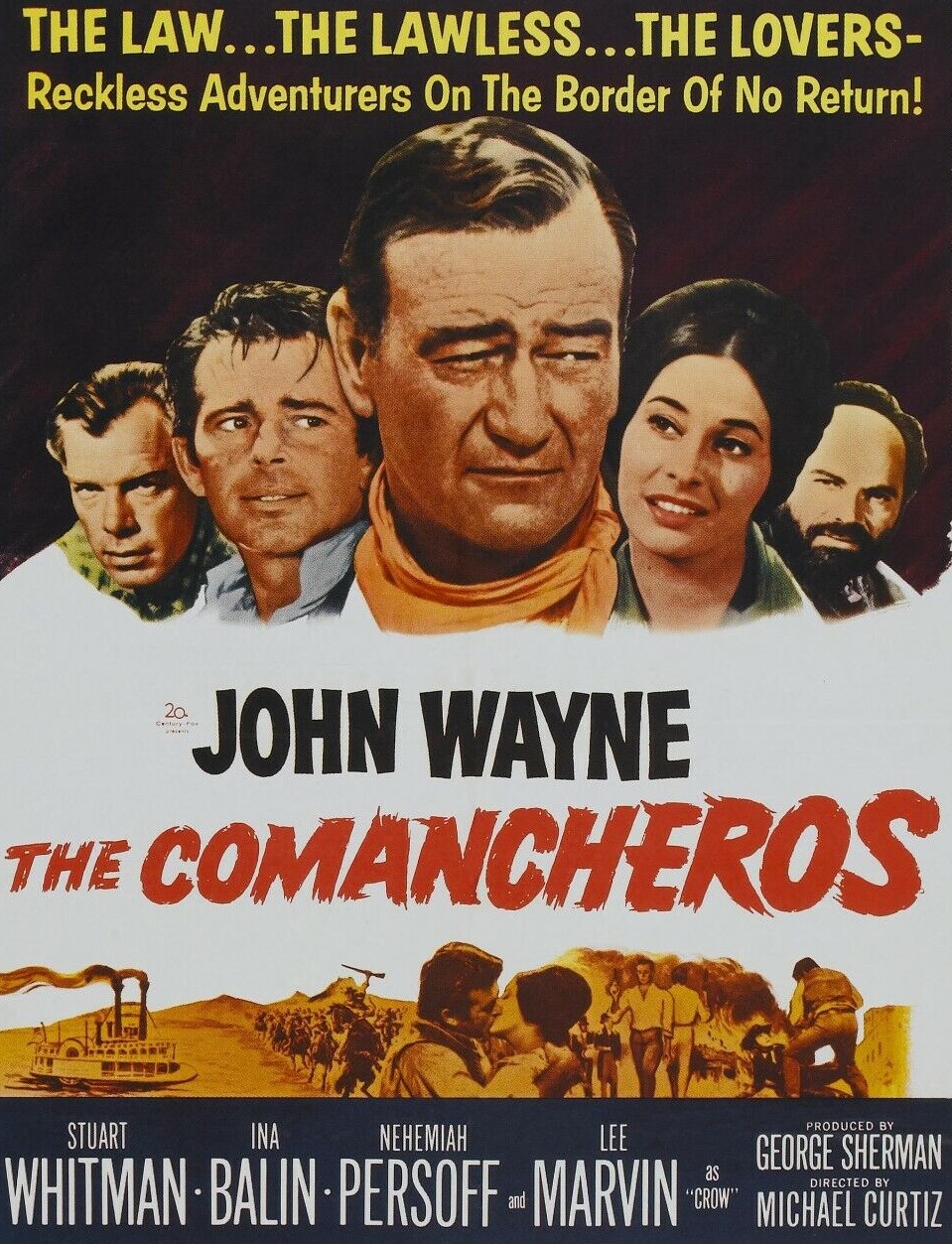
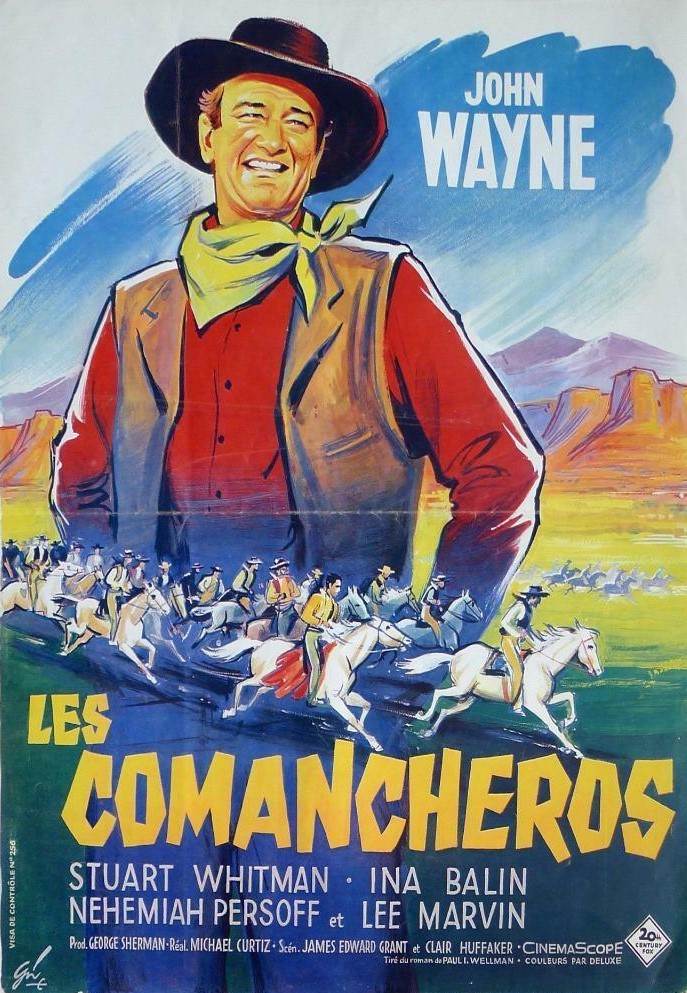
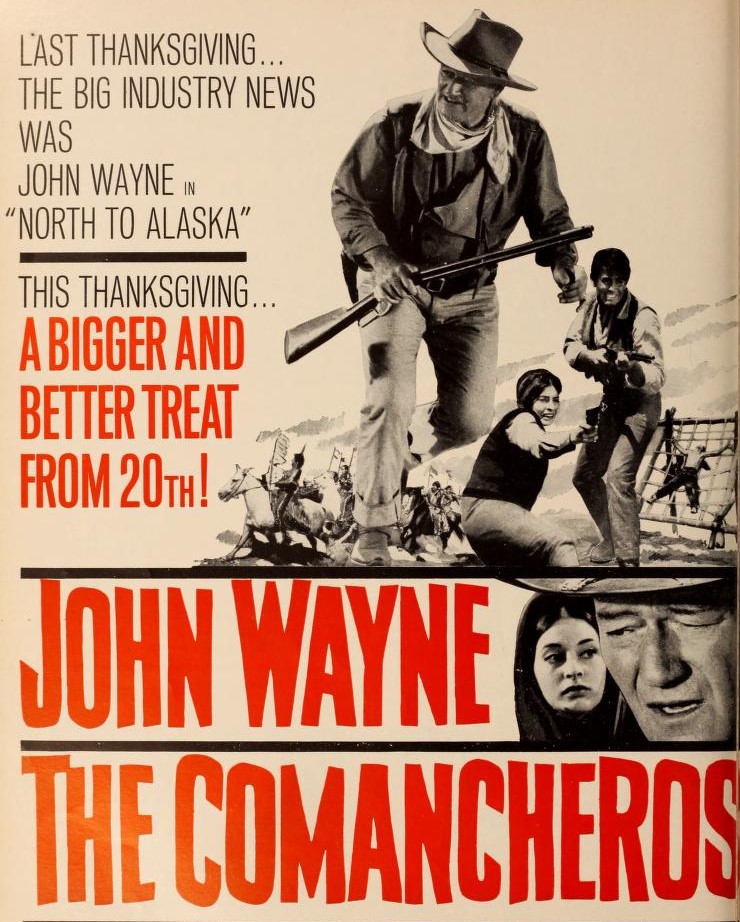
The Comancheros (1961) ****

You can always tell a studio is piling a lot behind a rising actor when the top-billed star is absent, except for a fleeting moment during the credits, for the first 10 minutes. In this case, Twentieth Century Fox was showcasing two new talents, Stuart Whitman (Murder, Inc. 1960) and Ina Balin (From the Terrace, 1960).

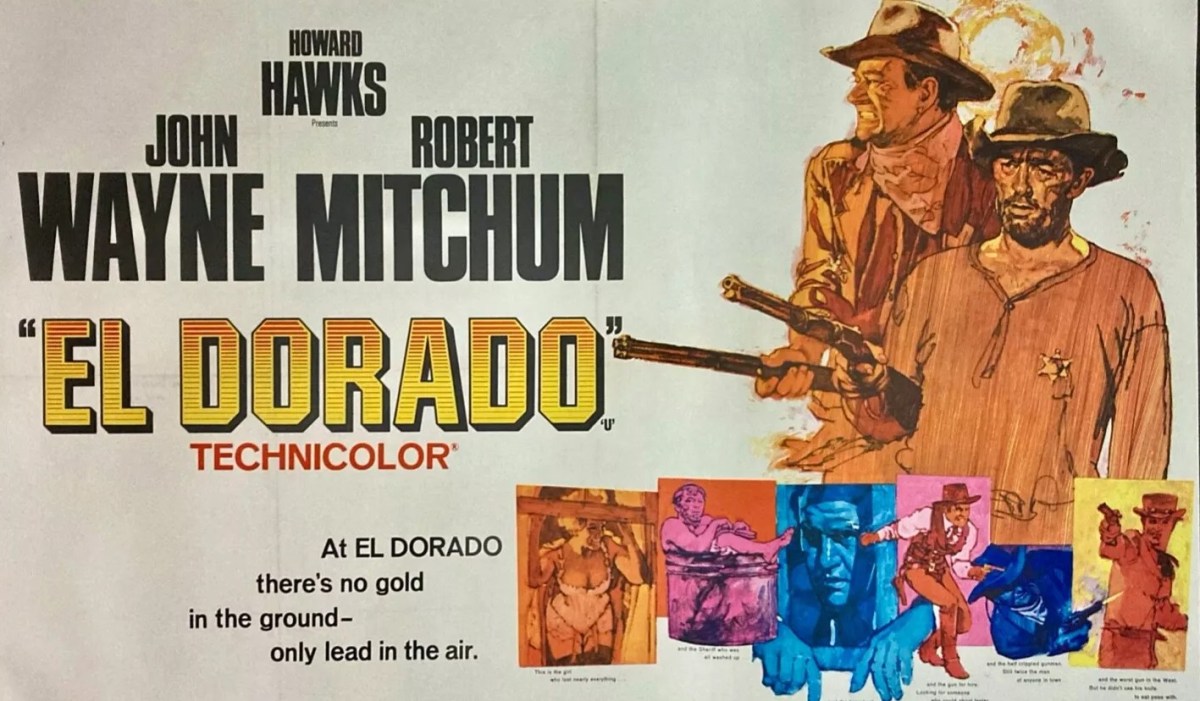
I’m sticking my neck out a little on this one, not considered as top-notch as Duke’s other great westerns of the decade – The Man Who Shot Liberty Valance (1962), El Dorado (1967) and True Grit (1969) – but it’s an unusual story, hardly following a standard narrative, has a great score by Elmer Bernstein but most importantly because it’s real old-school film-making with the emphasis on the classic long shot and the horizon line.

And it takes a surprisingly feminist approach with gypsy Pilar (Ina Balin) making the running in the seduction stakes. Indeed, should she be willing to surrender an iota of her hard-won independence for a long-term relationship sticks to the view that in love there is always a dominant one and a subservient one, with no question about which she is. Plus, although the nickname “Pilgrim” became a famed element of The Man Who Shot Liberty Valance this is where the nickname notion began when lawman Jake (John Wayne) assigns prisoner Paul Regret (Stuart Whitman) the appellation “Monsoor” because he’s of French heritage.

Meshes effortlessly three storylines – Jake taking prisoner Regret back to base, Regret turning from western tenderfoot to accomplished hand, and Jake and his captive infiltrating the Comancheros of the title, a secret society of white men who utilize Comanche power to its own ends. You could argue this is ushered in the “buddy” movie, the repartee between the two principals a delight. Plus, you would have to take note that legendary director Michael Curtiz (Casablanca, 1942), in his final picture, has done something remarkable in getting the Duke to speak proper, not hi-hat English, but without that Wayne trick of breaking up his sentences so it appears he’s thinking.

Curtiz is pretty nifty when it comes to setting up scenes, interrupting gentle moments with elements of stunning ferocity. When Jake arrives at a ranch, the camera tracks back from his arrival to reveal the corpses hanging upside down under the ranch gateway. Later, Jake is tucking into a meal at the home of another rancher when that man’s pregnant wife in the background suddenly sits up and from her point-of-view we see through a window as big as the entire screen a band of renegades in attack mode charging through a river.

Regret isn’t one to hang around either when he can escape during the ensuing melee, but no sooner has he gone than he returns with a bunch of Texas Rangers, thus redeeming himself in Jake’s eyes. And there’s a great cut between Jake being knocked unconscious in the blazing sun and waking up in the pouring rain.

And it’s chock-full of reversal, not just that Pilar dumps her pick-up Regret when their riverboat docks at Galveston, but Regret, forced to ride a mule in handcuffs to prevent his escape, gets the jump on his captor at the saddest scene in the picture, the burial of a family killed by Comanches. Later, after taking on the alias McBain, he encounters Regret at a poker table and the wanted man does not give him away.

After a bit of legal chicanery, Regret is a free man, although with the proviso he teams up with Jake to go undercover into the Comancheros camp. This doesn’t work out too well, the pair strung up by suspicious crippled leader Graile (Nehemiah Persoff) until rescued by, surprise, Pilar. Love works its mysterious way and soon Pilar is on Regret’s side, resulting in a classy finale.

Along the way we encounter Lee Marvin (Raintree County, 1957) having another scene-stealing ball as the Comancheros contact.  Clever screenwriters James Edward Grant (Circus World/The Magnificent Showman, 1964) and Clair Huffaker (Hellfighters, 1968) find an entirely believable method of getting him out of the way. And in passing we learn that Jake’s wife died “two years, two months and 13 days” ago and without an ounce of revealing dialog between them that Jake would like to take up with widow Melinda (Joan O’Brien). Meanwhile, initially presented as a man of such honor that he will fight a duel to protect such notions of nobility, Regret goes from gambler, wanton lover, and prisoner to revert to his original state.  

Expect chunks of western lore – don’t give a hot horse water until it has cooled down is one takeaway. And men who swear by an unwritten code. Here, it’s “words are what men live by.” What’s so refreshing is that lore and code alike arequickly punctured. The follow-up to the code annoncement to which Regret shows indiference is a pronouncement from Jake: “You must’ve had a real careless upbringing. ” that’s not forgetting characters remembering to be characters in the midst of all the uproar as with the bedridden pregnant wife instructing her husband to make sure Jake eats off the “best china.”

It’s not only a well-structured movie but it’s filled with moments that reveal character and even when Curtiz feels duty bound to include standard tropes such as the bar-room brawl or the drunk there are enough twists to have you believe the clichés have been bitten in half.

A superb ending to Curtiz’s career, terrific performances all round, great double act from Wayne and Whitman, with the latter afforded considerably more leeway acting-wise than any time in his career, and Ina Balin in a prize role.

Behind the Scenes: “Lawrence of Arabia” (1962) – 60th Anniversary

As unlikely as it sounds, John Wayne was once the leading contender to play Lawrence of Arabia. On January 14, 1953, the trade newspaper Variety reported that Cinerama, only known at the time for travelogs, was planning to move into feature filmmaking with productions of the hit Broadway musical Paint Your Wagon and Lawrence of Arabia, the latter with Wayne in the frame. Cinerama, as discussed in a previous Blog, was the sensation of the 1950s, the saviour of a movie industry eroded by television, prompting the boom in big-budget widescreen movies that were the hallmark of the next two decades.

It was a three-screen process, which meant filming with three cameras, somewhat unwieldy for working with actors. But This Is Cinerama, its first film, was the top earning film of 1952, even though it only played in a handful of cinemas. The driving force behind the idea was assistant board chairman Lowell Thomas, who, more than 30 years before, had single-handedly created the legend of Lawrence of Arabia.

Thomas had been a journalist covering the Middle East during the First World War. He had photographed the triumphant entry into Jerusalem in 1918 of the British forces led by General Allenby. The following year Thomas spun this event into a lecture that was launched in August in London to sensational results. Originally it was entitled ‘With Allenby in Palestine’, but after sensing the public was more interested in the unknown T E Lawrence, who he had photographed in Arab headdress, he changed the name to ‘With Allenby in Palestine and With Lawrence in Arabia’.

The show was so successful that when it came to the end of its run at the Covent Garden theatre, the owners offered 70% of the box office receipts to keep it on. Eventually, over five million people in Britain and the United States paid to see the lecture. And the Lawrence of Arabia industry was born. Thomas turned his lecture into a book which appeared in 1924 followed three years later by A Boy’s Life of Colonel Lawrence. Lawrence himself contributed to the legend with the publication of The Seven Pillars Of Wisdom (1926) and a shortened, easier-to-read, version called Revolt In The Desert (1926). Various best-selling biographies followed including Lawrence Of The Arabs (1928) by Robert Graves (Goodbye To All That), two tomes by military historian Capt Basil Liddell Hart, T E Lawrence: In Arabia And After (1934) and Colonel Lawrence, The Man Behind The Legend (1934) and Reginald H Kiernan’s Lawrence of Arabia (1935).

The first film on the subject was announced in 1929 by director Sydney Olcott for Supremacy Films, but the project came to nothing. In 1933 there was a US four-part serial by Jock Lawrence (no relation) called Flying Lawrence In Arabia, based on the exploits of Lawrence’s pilot during the war, Capt John H Norton. Two full-length feature films were announced the same year. First out of the gate was The Uncrowned King from RKO to feature top Hollywood star John Barrymore. Director Ernest Schoendanck spent several months in Mesopotamia shooting background material and by the time he returned the film had a new name, Fugitive From Glory.

In Britain movie magnate Alexander Korda’s London Films put Lawrence Of Arabia into production with Walter Hudd in the lead. Korda had acquired the rights to the biographies by Graves, Liddell Hart and Kiernan as well as Revolt In The Desert and an agreement from Lawrence’s trustees to use incidents from The Seven Pillars of Wisdom. After seeing British actor Walter Hudd in the George Bernard Shaw play The Apple Cart, Lawrence had declared Hudd was his personal choice for the part. But Korda agreed to delay production until after Lawrence’s death.

That came sooner than anyone expected, in a motorcycle accident in 1935 and generated such enormous public demand in the adventurer that publisher Doubleday Doran printed a limited edition of only a dozen copies of Lawrence’s last unpublished 76,000-word book The Mint for sale at an astonishing $500,000 each. U.S. producer Sherman S. Krellberg planned a serial based on Lawrence and a play was written by Mary K. Brookes. Korda moved quickly, getting financial backing from the Bank of America, acquiring the rights to the Thomas book and taking on the author as a technical adviser. The film was to be directed by Korda’s brother, Zoltan, who spent months in Jerusalem scouting locations, with a $400,000 budget. It was going to be momentous for another reason – it was planned as the first British film in color. In preparation, Korda sent to Hollywood for 8,000 items of color make-up and Natalie Kalmus of Technicolor was dispatched from the U.S. to supervise the process.  

But it took another two years before Korda received the go-ahead from the UK government to film in Palestine, where there was political unrest. In the meantime, the first British color film had been released, Wings Of The Morning starring Henry Fonda. Hudd had been replaced by movie star Leslie Howard and Zoltan by U.S. director William K. Howard and the film was now being produced for Paramount. By then The Uncrowned King, produced now by Transamerica, had reached the screen, but only as a 10-part serial starring Lionel Atwill and with a 16-voice choir instead of an orchestra supplying the music. More importantly, the delay also allowed other U.S. studios to catch up.

Twentieth Century Fox dispatched director Otto Brower to Britain to begin a rival production and MGM was planning a film to star either Clark Gable or Paul Muni. In the end a Fox subsidiary New World became involved in the Korda film, but the project was called off after, it was rumored, severe government pressure. In 1938, the situation changed again. The sensation of the year was a claim by an Egyptian woman Nour Dahabi in Cairo to have found 3,500ft of film showing Lawrence on maneuvers in Arabia.  MGM teamed up with Gaumont-British. And it was all change for Korda. His Paramount deal hit the rocks and he switched to United Artists, returned later in the year to the original studio, only to go back to UA who promised an increased budget. But, of course, in 1939 the beginning of the Second World War scuppered everyone’s plans.

After the war. Korda’s rights to Revolt In The Desert lapsed and he did not renew them. The American studios also gave up. John Sutro, who had helped found London Films, took over and, resurrected the project in 1947 at Rank under the banner of his Ortus Films. Although Rank was the biggest film company in Britain, involved in film production and exhibition, the film languished in development hell until 1953 when Cinerama appeared on the scene. Lowell Thomas had been instrumental in setting up the company in conjunction with Michael Todd. Thomas was the public face of the process and when projectors broke down in the middle of a Cinerama film, a short starring Thomas would fill the screen until the problem was solved.

But, as ever, the minute one company announced a Lawrence project, more popped up. David Rose claimed he was close to concluding a deal for the rights to Revolt In The Desert. British-based Anatole De Grunwald had a script by top British playwright Terence Rattigan who had written David Lean’s The Sound Barrier (1951).  

In 1953 De Grunwald did a deal with Paramount who wanted Gary Cooper or Gregory Peck, who bore a likeness to Lawrence, in the lead, while De Grunwald pressed for Richard Burton. In the end the John Wayne project was shelved.  By 1956 De Grunwald had approached American director King Vidor, and the film was due to roll in March 1957 but Vidor pulled out, Rank re-entered the equation, investing £2 million in a De Grunwald production with Anthony Asquith as directing Dirk Bogarde. In April 1958, Rank pulled the plug. Re-enter Twentieth Century Fox with Mark Robson helming.

But in July 1959 Columbia made a deal with Sam Spiegel and David Lean who had turned  Bridge On The River Kwai (1957)  into the studio’s biggest hit. Meanwhile, Rattigan had turned his screenplay into the play Ross with Alec Guinness in the title role. Spiegel targeted Marlon Brando for Lawrence with a start date of summer 1960.

Spiegel had hired blacklisted screenwriter Michael Wilson, incurring the wrath of Columbia. Lean hired playwright Robert Bolt (A Man For All Seasons) to rewrite it.  Meanwhile, Rank announced it had Alec Guinness for the lead.  

In July 1960 Brando pulled out. While Spiegel scoured Hollywood for a replacement, British producer Herbert Wilcox spent $364,000 on the rights to Ross with Laurence Harvey (Butterfield 8, 1960) to star. Lean went after British actor Albert Finney (Saturday Night And Sunday Morning, 1960) but the actor baulked at a long-term contract.  His replacement was unknown Irishman peter O’Toole.  Just as unknown, Omar Sharif was fifth choice for the pivotal role of Sherif Ali.

Filming was delayed until April 1961.  Oscar-winner Alec Guinness, albeit in a supporting role, was crucial to bring cachet to the picture. The presence of two other Oscar winners, Jose Ferrer and Anthony Quinn, bolstered the marquee.

Finally, filming got underway in May in Jordan, despite an incomplete script. But conditions were horrific. Swarms of locusts hampered transport, temperatures hit 116 degrees Fahrenheit,  the nearest water was 150 miles away. After a break, filming resumed in Spain on December 15 but Seville, chosen for its distinctive Arabian heritage, had just suffered the worst floods in a century, delaying production. The final location was Morocco and in July 1962 four planes flew 104 cast and crew there. Conditions there were as bad as in Jordan. After a few weeks in England, filming on the 313-day schedule ended on September 21, 1962. But with the world premiere set for December 10, it was panic all the way, especially after original composer Richard Rodgers of South Pacific fame quit.

Worse, ticket sales for the roadshow were poor, in part caused by the absence of a female in the cast. By mid-October sales for the U.S. opening stood at a paltry $11,424, compared to an advance of $700,000 for Exodus and $500,000 for How the West Was Won.

 The world premiere of Lawrence Of Arabia took place in front of Her Majesty the Queen on December 10 at the flagship Odeon Leicester Square in London’s West End. The American premiere occurred on December 16 at The Criterion in New York.

But the public and the critics responded. On its first Saturday in London with only two performances, it set a new one-day record of $7,200. The Criterion’s opening week in New York was $46,000 which Variety described as ‘little short of amazing.’ The film was edited shortly after  launch, the original prints cut by 20 minutes.

In the end it was both a box office and critical powerhouse, winning seven Oscars including Best Picture and Best Director, making stars out of O’Toole and Sharif, and for the past 60 years being acclaimed as one of the greatest films ever made.

Discover WordPress

A daily selection of the best content published on WordPress, collected for you by humans who love to read.

The Atavist Magazine

by Brian Hannan

WordPress.com News

The latest news on WordPress.com and the WordPress community.