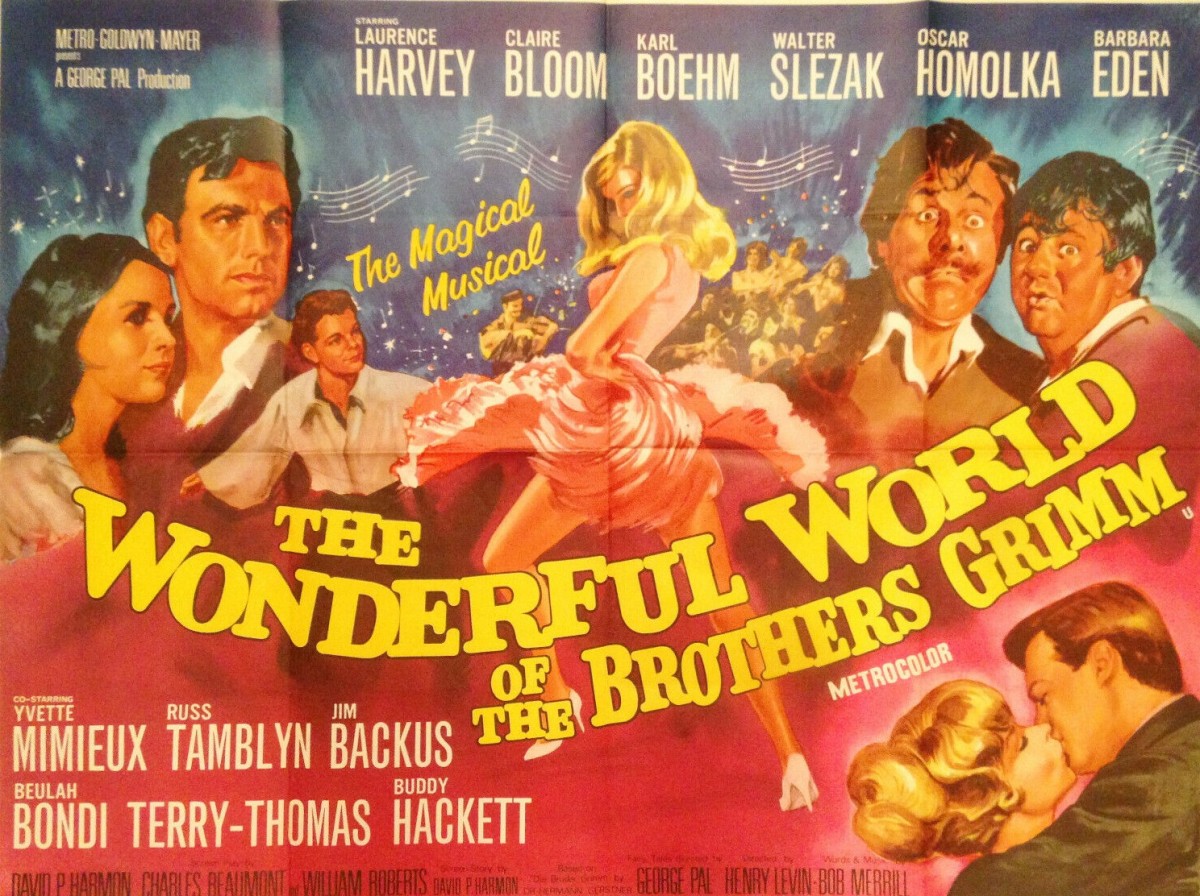
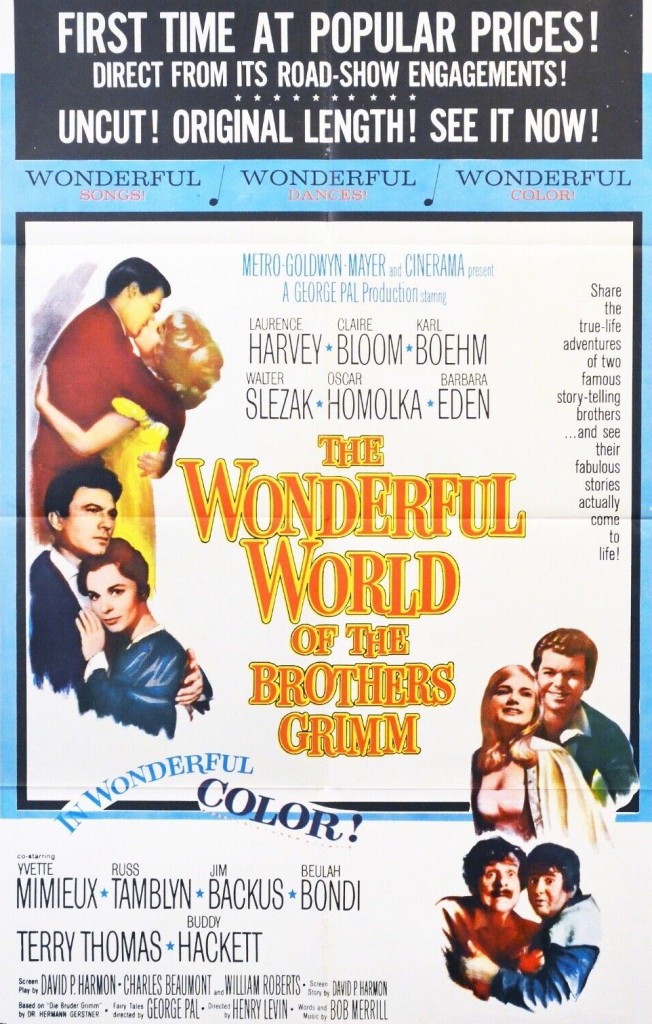
The Wonderful World of the Brothers Grimm (1963) *** – Seen at the Cinerama

With Hollywood already snagging the best characters of the Grimm inventory – Snow White, Cinderella, The Sleeping Beauty and Tom Thumb – and others like Rumpelstiltskin not deemed cute enough, George Pal (The Time Machine, 1960) had a battle on his hands to come up with a decent enough second string. Spurning for no obvious reason contenders like Hansel and Gretel and The Frog Prince, he plumped for a strange hybrid.

He incorporated three fairy stories – The Dancing Princess, The Elves and the Shoemaker and The Singing Bone – in a drama about the authors. Both sides of this tale had a common background, 19th century Germany with its rich vein of fairy castles and cobbled streets where kings ruled. The Grimms are posited as wannabe writers but with warring personalities.
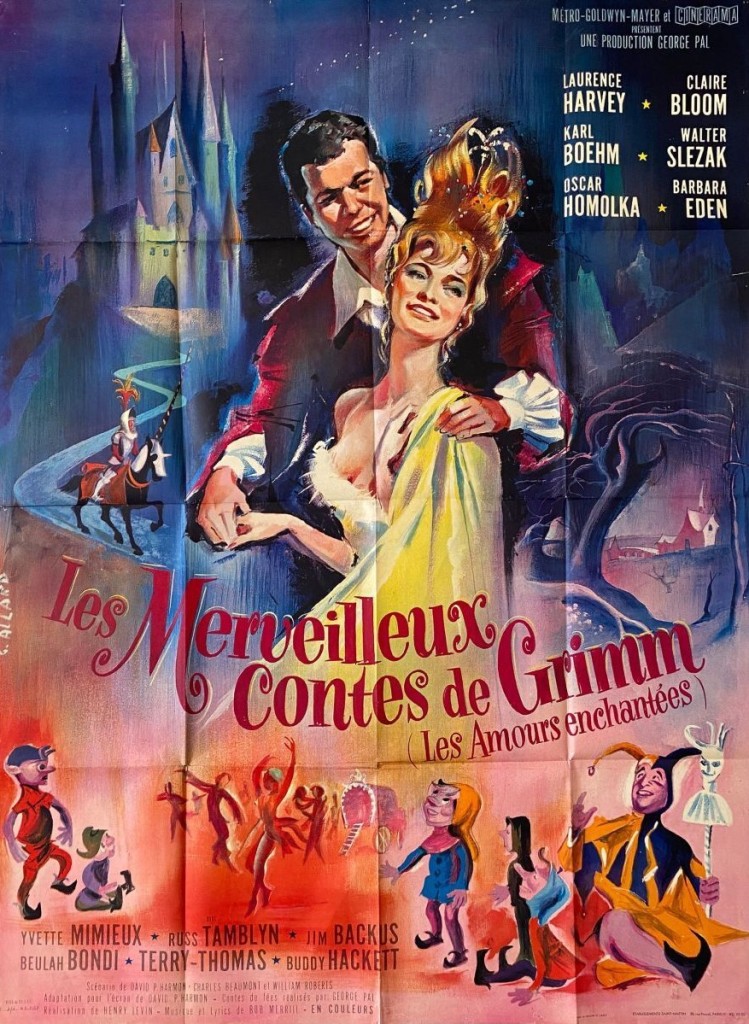
Unmarried Jacob (Karl Boehm) wants to stick to the knitting and complete the work, a biography of the Duke (Oscar Homolka), they are being paid for while married Wilhelm (Laurence Harvey) prefers to use that time instead to write down the stories he has collected from a variety of sources.

The stories Pal chooses to bring to life pop into the narrative by the simple devices of telling kids a bedtime story or overhearing the tale. Jacob is actually more interested in academic writing; books on law and grammar are what capture his imagination. The narrative switches between the brothers falling out, enduring poverty and Jacob falling in love with Greta (Barbara Eden) but lacking the romantic touch mostly making heavy weather of it.

The first tale in the triptych – The Dancing Princess – is simple enough. A King (Jim Backus) promises the hand of his daughter (Yvette Mimieux) in marriage to whoever can find out what she does at night which a humble woodsman (Russ Tamblyn) manages with the help of a cloak that makes him disappear. In the second story elves come to life to save the skin of a shoemaker more interested in helping orphans than his rich clients.  
The third, demanding the biggest special effects, less successfully translates to the screen since it involves the creation of a dragon to be slaughtered. However, it is saved by humor, since the knight (Terry-Thomas) is too cowardly to do the job and relies on servant Hans (Buddy Hackett) for the actual slaying, and by the most gruesome of endings.

Plus, since it is in Cinerama, something speeding is required seen from the audience point-of-view or a hero who could fall into a canyon. And in the best fairy tale tradition the heroes are unsung and under pressure.

Laurence Harvey (A Dandy in Aspic, 1968), Karl Boehm (The Venetian Affair, 1966) , Claire Bloom (Two Into Three Won’t Go, 1969) and Barbara Eden (I Dream of Jeannie television series, 1965-1970) are just about buoyant enough to keep the main story ticking along and carve out a piece of Disney territory without so much as a decent song to help proceedings. Three unexpected twists – four if you count a miraculous recovery from serious illness – nudge this in unexpected directions.

The first is the solidity of brotherly love, with one having to choose wife over his close bond with his sibling – the kind of emotional hit that would be more common in an adult picture, though kids obviously couldn’t care less. The second is the appearance of virtually all the famous Grimm characters in what amounts to a cameo. Last is a proper fairy tale ending where it’s the kids who elevate the brothers to literary success.

Laurence Harvey hides his snide side and does his best Dirk Bogarde impression as the errant brother whose imagination brings his family to near-ruin. Despite being offered love on a plate, Karl Boehm remains steadfastly dour, while Claire Bloom as Wilhelm’s wife has little to do. Scene stealing honors go to Oscar Homolka (The Happening, 1967) while Terry-Thomas (How to Murder Your Wife, 1965) just about shades it in the comedic duel with Buddy Hackett (The Love Bug, 1968).
George Pal concentrated on the fantasy elements with Henry Levin (Genghis Khan, 1965) directing the drama so it’s a mixture of very grounded and very flighty. It’s not really long enough for a true Cinerama roadshow movie but with an overture and intermission it stretches enough.

It was filmed with the traditional three Cinerama lenses and would have been projected with three projectors but at the Bradford Widescreen Weekend  I saw a new restoration that does away with the vertical lines. For contemporary audiences who only view fairy stories through the microcosm of animation and for whom live-action means Ray Harryhausen, the special effects here will come as something of a disappointment. But on the other hand it is still George Pal, so enjoy.

William Roberts (The Magnificent Seven, 1960), Charles Beaumont (Mister Moses, 1965) and David P. Harmon (Dark Purpose, 1964) cobbled up the screenplay.

As I said I saw this in the magnificence of the big screen and in widescreen Cinerama to boot so I am bound to be a shade benevolent but this still holds up, the drama dramatic enough, as a biopic interesting, and kids who might be taken with the fairy stories are way too young to complain about the effects.
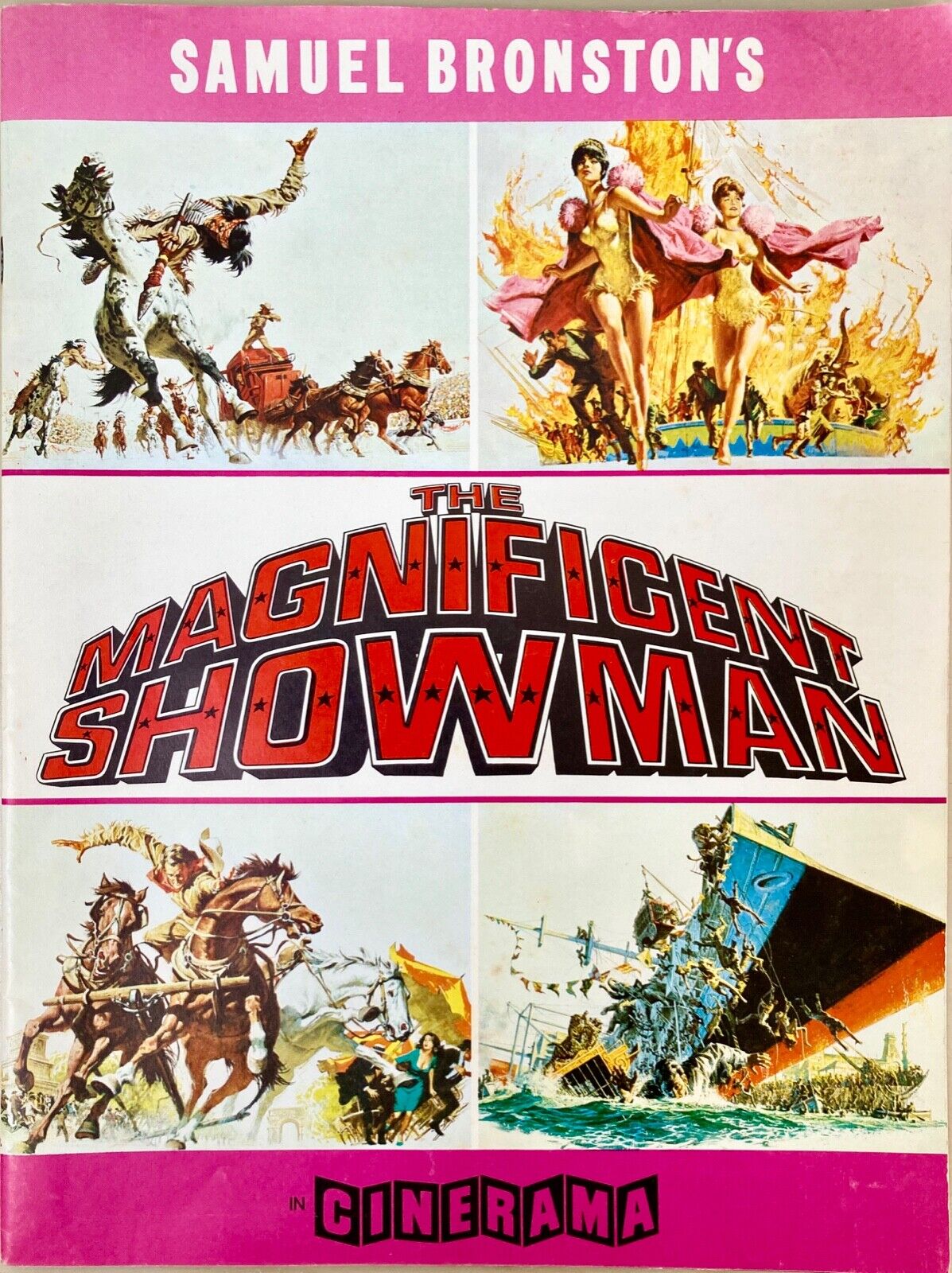
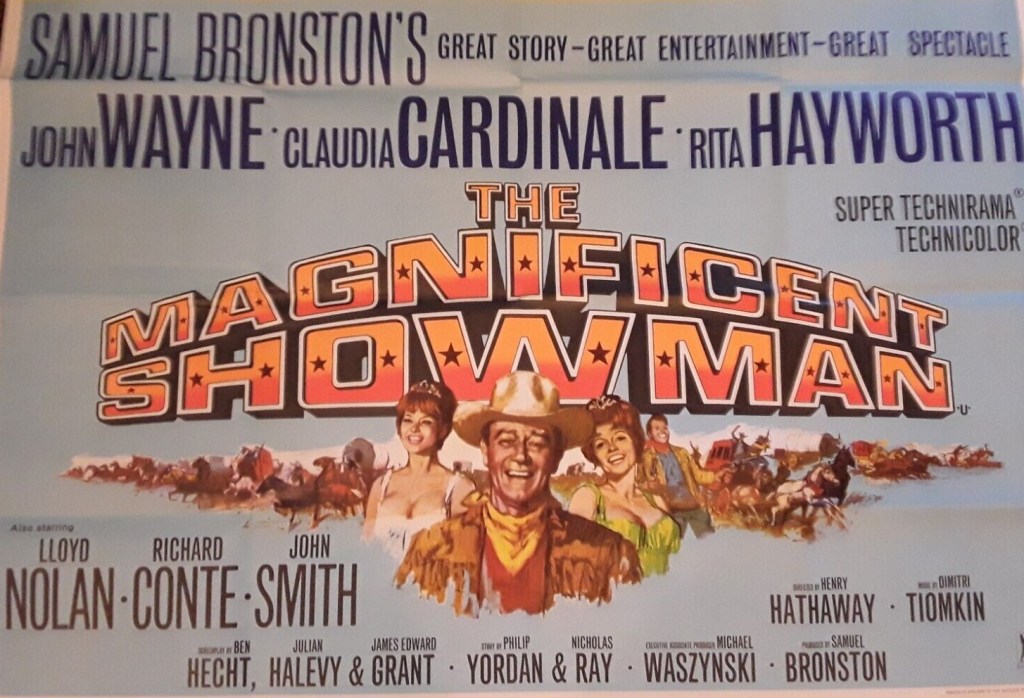
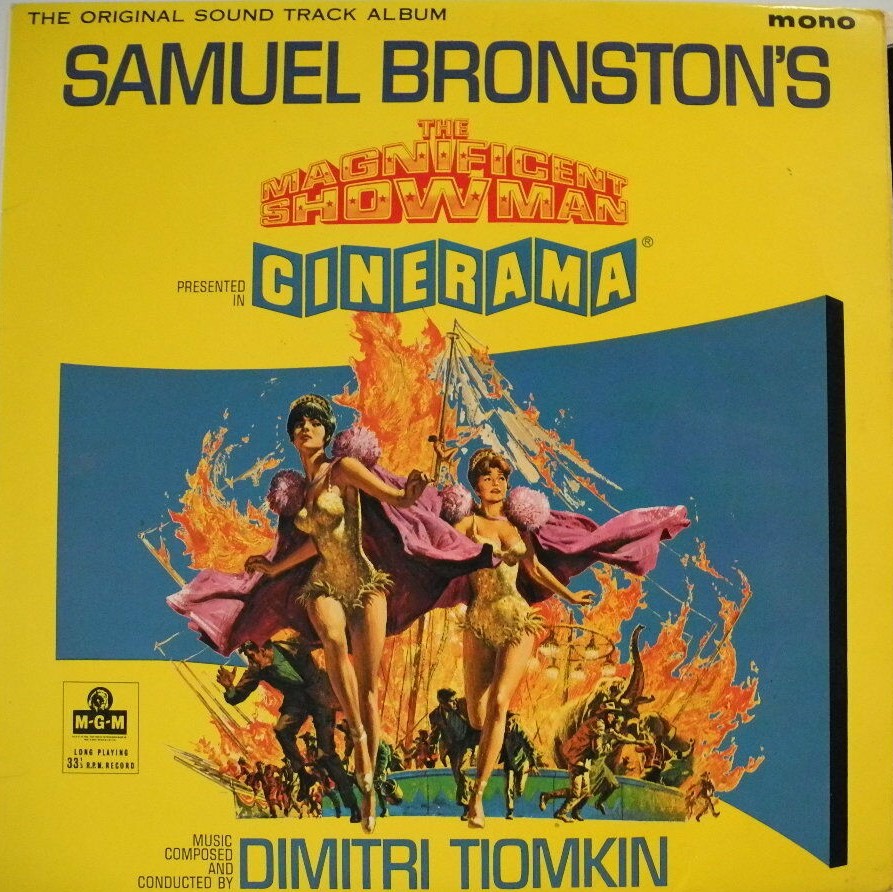
Behind the Scenes: “Circus World / The Magnificent Showman” (1964)

For John Wayne it was the best of deals and the worst of deals. He had signed a six-picture seven-year contract with Paramount. On the plus side the studio paid the entire amount  upfront, wiping out the accumulated debts from the debacle of The Alamo (1960). On the debit side, he received only $500,000 per picture, well below his standard price of $750,000. In fact, Paramount could recoup some of its expense by hiring him out at his previous going rate.

Wayne was coming off hits McLintock (1963), Hatari! (1962) and How the West Was Won (1962) but other movies The Man Who Shot Liberty Valance (1962) and Donovan’s Reef (1963) – the first in the multi-picture deal – had punctured a hole in his supposed box office supremacy. But for maverick producer Samuel Bronston (El Cid, 1961), getting his hands on a star of the magnitude of Wayne was a coup. Originally entitled Those Were the Days, the title switched to the more appealing Circus World.

Bronston was a new-style producer. Apart from a $2.5 million injection by Paramount he  financed his pictures by country-by-country advances, and backed by DuPont, hardly the first big company to be seduced by the prospect of becoming a big Hollywood player. Distributors who advanced money in this fashion made hay if the film hit the bull’s eye, but if it flopped they didn’t get their money back. And a flop made it more difficult for an independent producer to raise the dough for his next picture. So Wayne’s involvement was viewed as a guarantee.

Nicholas Ray (King of Kings, 1961) was initially hired to direct followed by Frank Capra (It’s a Wonderful Life, 1946), also made a Bronston partner, who tried to sabotage the script, planning only to shoot the sections he had rewritten. Bernard Gordon (55 Days at Peking, 1963) was credited with the original idea, but when Wayne came on board he brought with him James Edward Grant (The Commancheros, 1961).

Grant was only tempted by the promise of a three-picture deal. The tussle ended with Capra evicted at a cost of $150,000 and Henry Hathaway (North to Alaska, 1960) at the helm. Hathaway instigated a week of rewrites with Ben Hecht (Spellbound, 1945) before settling down to more serious work with Grant.

Initial casting envisaged Rod Taylor (Dark of the Sun, 1968) in the role of Wayne’s partner and would-be lover of Cardinale, but he took the job without reading the script and on realizing it was little more than male romantic lead he bowed out. David Niven (55 Days at Peking, 1963) was initially signed as Wayne’s old buddy Cap but he, too, quit over the script. (Wayne and Taylor got on very well and should have teamed up for The War Wagon, 1967, until Kirk Douglas muscled his way in, later doing so for The Train Robbers, 1973. )

Their replacements John Smith (who had made his debut in Wayne picture The High and the Mighty, 1954) and the veteran Lloyd Nolan were hardly in the same box office league, but shaved cash off the budget.

A bigger concern than hiring a supporting cast was the circus. Bronston recruited famed European outfit Althoff Circus, whose 400 performers ensured the ringside element was authentic. For further realism Bronston added Bob Dover from Ringling Bros. There was no need for specialist horses, Bronston already having 125 trained from The Fall of the Roman Empire to pull circus wagons and for bareback riders.

The entire circus had to be transported by rail on 51 freight cars through the Brenner Pass to Germany and via Switzerland and France to Spain, halting at the Spanish border to unload the whole shebang onto a different train because the gauges didn’t match.

For the picture’s most spectacular scene, the capsizing of the ship transporting the circus, Bronston bought the 250ft long S.S. Cabo Huertas which was heading for the breaker’s yard. Repainted, decorated with circus posters and renamed S.S. Circus Maximus it was all set for a sinking overseen by special effects expert Alex Weldon (El Cid, 1961).

Three hundred tons of water were pumped into the half of the hold furthest away from the dock. The additional weight of 600 extras was enough to flip the ship on its side. Four 50-ton steam winches with steel cables kept the ship upright until it was time for action.

Female extras who were going to end up in the drink were fitted with corsets made of cork while the men wore cork belts hidden under their costumes. The Spanish Coast Guard cleared the harbor of debris and a local fleet of boats, just out of camera view, stood by for rescue. Seven divers patrolled the harbor bottom in case the cork failed to keep actors and extras afloat. Three sets of costumes were created for each participant so they would be kept dry as long as necessary.

Hathaway completed the scene without a single injury. He called it “the greatest job of its kind I have ever been involved in.” Bronston, who was as much a detail man as Cecil B. DeMille, ensured the band played instruments from the period

The picture went in front of the camera in September 1963 with Wayne due to end his commitment on December 18. But severe flooding in Spain knocked the movie off schedule and it went way over budget, running on until March 1964, the finishing touches added in London, the budget hitting $9 million.

Rita Hayworth, who hadn’t made a picture in two years, proved a handful, usually late on set, committing the cardinal sin of not learning her lines and, probably as worse, being rude to everyone

At  just 135 minutes long, Circus World  wasn’t originally envisaged as a roadshow until Cinerama put an estimated $2.5 million into the project, which defrayed the costs. By the time that partnership was announced, it was too late to shoot it in the Cinerama process. The 35mm Super Technirama footage was blown up to 70mm for showing in 60 U.S. theaters boasting the iconic Cinerama curved screens. Everything in Cinerama at that point was roadshow. And they had two more projects lined up with Bronston, Vittorio De Sica’s Paris 1900 and Jack Cardiff’s Brave New World, neither of which were made. Bronston also had another two movies in preparation with Paramount: The Nightrunners of Bengal to be directed by Richard Fleischer and Suez, neither made either.

Roadshow suited Paramount which had not used that method of premium release since The Ten Commandments (1956). In 1963 it had set up a roadshow department to handle the forthcoming Becket (1964) and The Fall of the Roman Empire, which were proper roadshow length of, respectively, nearly 150 minutes and over three hours. But, initially, Circus World did not fall into the roadshow category as far as Paramount was concerned. Only the arrival of Cinerama as an investor made it imperative.

To avoid a title clash with the ultra-successful It’s A Mad, Mad, Mad, Mad World (1963), British distributor Rank changed the title to The Magnificent Showman. That alteration did little to improve its box office, opening at London’s Coliseum for a “NSG” (not-so-good in Variety parlance) $11,200, not much more than The Fall of the Roman Empire in its 17th week, How the West Was Won (90th week) and Cleopatra (51st). Nonetheless it ran there for seven months, followed by a mass general release in the U.K. with a record number of prints. In the U.S., on the eve of general release in April 1965, Paramount considered a title change to Wild Across the World and a switch of marketing emphasis to John Wayne and action.

Audiences didn’t bite, certainly not enough to recoup the budget, and far from enough to prevent Bronston’s operation sliding into liquidation.

SOURCES:  Scott Eyman, John Wayne, The Life and Legend (Simon & Schuster, 2014) p379-385; Mel Martin, The Magnificent Showman (Bear Manor Media, 2007), p153-168; Sheldon Hall, Introduction to Circus World, Bradford Widescreen Festival, 2022; “Rank To distribute New Bronston Pic,” Variety, September 26, 1962, p15; “Althoff Circus Logistics for Bronston’s Film,” Variety, September 25, 1963, p4;“New Roadshow Dept at Paramount,” Variety, November 13, 1963, p3; “Bronston and Paramount in 4-Picture Deal,” Box Office, December 9, 1963, p7; “Circus World Filming in London,” Box Office, February 17, 1964, p14; “Bronston’s Circus Goes Cinerama,” Variety, February 19, 1964, p4; “Bronston-Cinerama Unite on 2 Films,” Box Office, February 24, 1964, p5; “Special Mass Release for Showman,” Kine Weekly, May 28, 1964, p3; “Paramount Retains Circus World Title,” February 24, 1965, p3.

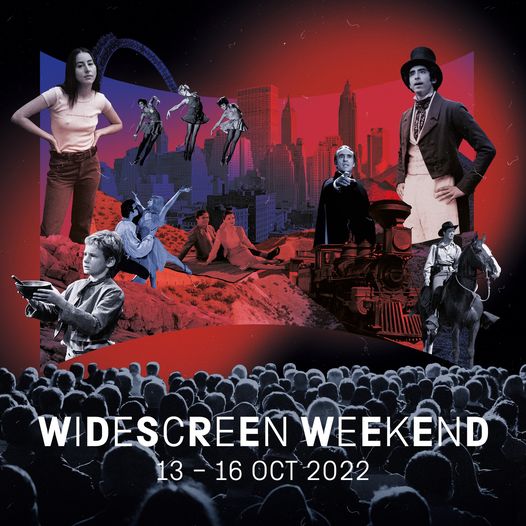
Widescreen Weekend 2022

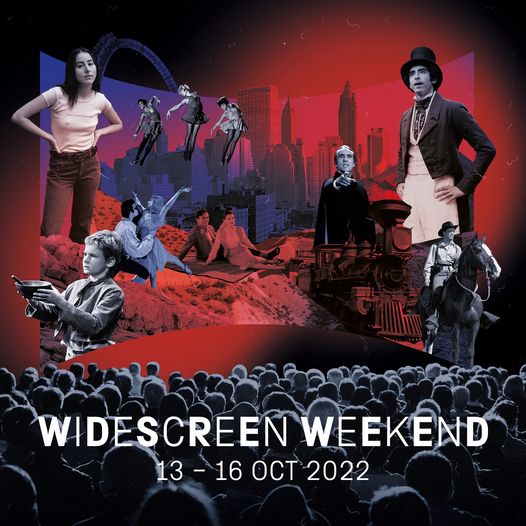
We are so conditioned to watching old movies on tiny screens it comes as something of a primal shock to see them in all their original glory. Most festivals lean towards the arthouse end of the cinema business so it’s all the more delightful to find an event that without apology concentrates on the mainstream. Widescreen Weekend takes place at the National Science and Media Museum in Bradford, England, and mostly in its Pictureville Cinema, the only venue in the country equipped to show Cinerama pictures in the original three-strip version which requires three projectors.

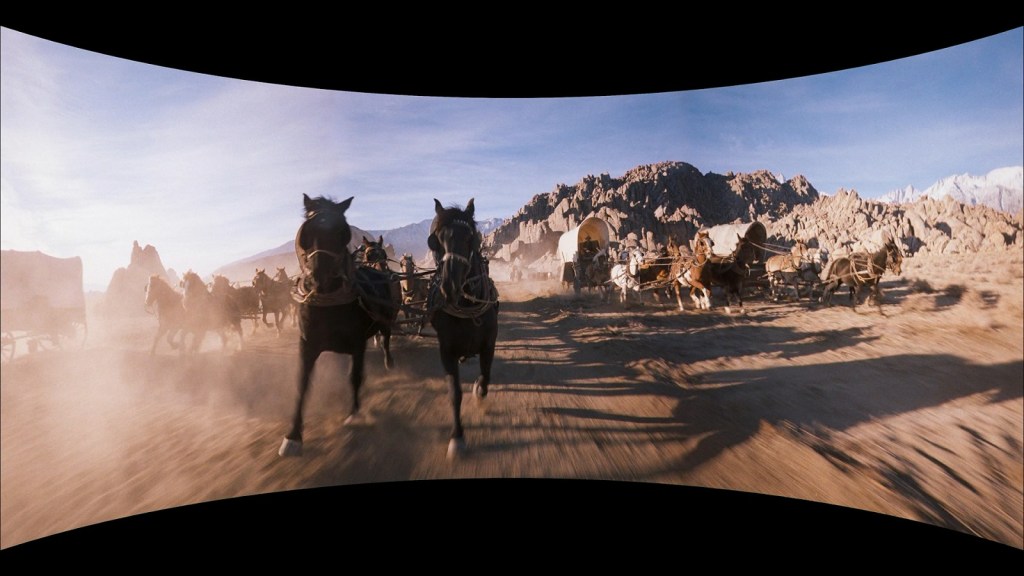
Wagons race to escape attack in “How the West Was Won.”

And while most other film festivals attract general movie lovers, this one appears to appeal in large part to those who have had something to do with the movie-making business or its technical side. Speakers might include, for example, Cinerama restoration specialist Dave Strohmaier or Kevin Brownlow, editor turned director, and among the audience you might find people like Keith Stevens from Australia, a former operations executive with Village Roadshow there, but who started out as a projectionist and regaled me with tales of projecting The Sound of Music (1965) in its original roadshow run.

There’s a limited number of movies that were made, mostly in the 1960s, either in Cinerama or 70mm, so the event has expanded to take in the earlier Cinemascope and the other versions of widescreen technology on which Hollywood depended as the marketing hook to bring back audiences from the all-encompassing maw of television in the 1950s. Later films whose directors understood the cinematic impact of 70mm are also added to the mix.

You are transported back to a time when screens were just enormous – this one is 51ft wide – and were curtained, and those curtains would not open (to the sides) until in typical roadshow fashion, a lengthy musical Overture, highlighting aspects of the movie’s music, had run its course. There is something quite sumptuous about sitting in a movie theatre staring at huge red curtains and waiting for the house lights to dim and the music to begin.

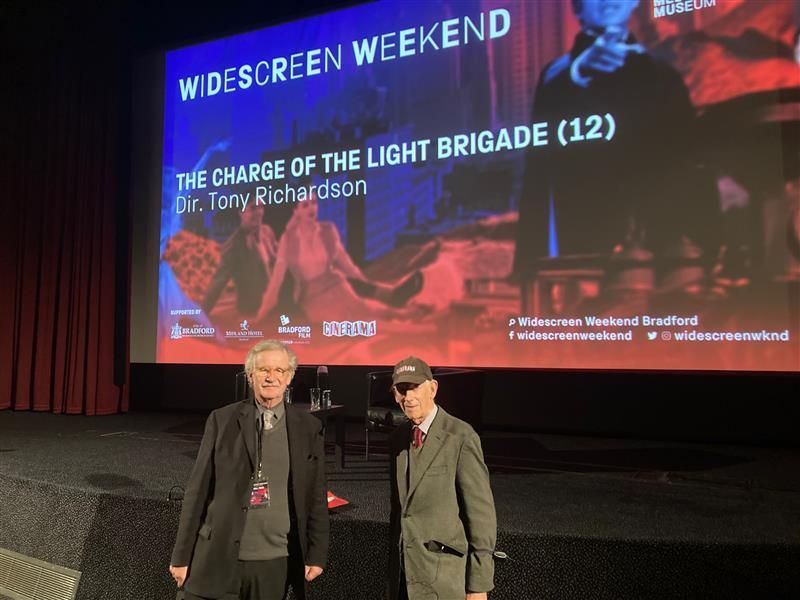
Christopher Frayling and Kevin Brownlow getting ready to introduce “The Charge of the Light Brigade.”

Roughly half-way through the movie itself, the curtains would close for an intermission, and before the picture restarted there would be more music, what was termed the Entr’Acte. Some DVDS of roadshows contain both Overture and Entr’Acte but there is a lightyear of difference between hearing them in your lounge and being exposed to them in a picture house built to bring out their best sound.

This is a homage not just to old movies but the old way of seeing a movie.

In previous years the programs have included Ice Station Zebra (1968), West Side Story (1961), 2001: A Space Odyssey (1968), the David Lean trilogy of Lawrence of Arabia (1962), Doctor Zhivago (1965) and Ryan’s Daughter (1970),a pair from William Wyler that could not have been more diverse – Ben-Hur (1959) and Funny Girl (1968) – This Is Cinerama (1952), Carol Reed’s  The Agony and the Ecstasy (1965), John Frankenheimer’s split-screen Formula One epic Grand Prix (1966) and of course the mother of all roadshows The Sound of Music (1965). Throw in a healthy helping of 1950s Cinemascope features and more contemporary pictures which embraced 70mm and you have the makings of an always satisfying weekend.

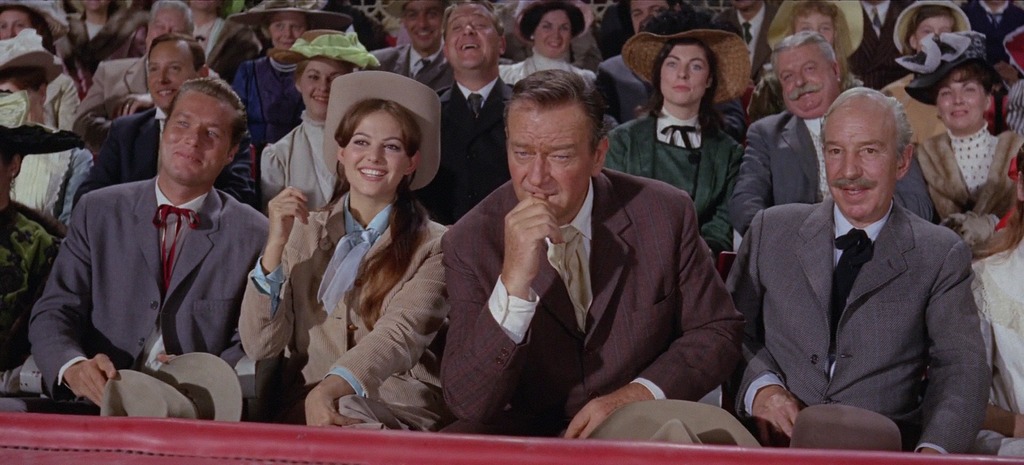
A thoughtful John Wayne next to Claudia Cardinale in “Circus World.”

So one of the highlights is to see old favorites. This year we were treated to the three-strip version of How the West Was Won (1962), your feet tapping immediately at the sound of the driving Alfred Newman score, and a restored The Wonderful World of the Brothers Grimm (1962), the first two movies made in the Cinerama process that had dramatic purpose and were not mere travelogs.

But there was also an opportunity to watch old movies that have never been screened in their original version since their initial release, such as Circus World / The Magnificent Showman (1964) shown in Super Technirama 70. Also on the program was Carol Reed’s Oscar-winning Oliver! (1968), Bob Fosse debut Sweet Charity (1969), The Charge of the Light Brigade (1968) and Douglas Trumbull’s Brainstorm (1983), Natalie Wood’s last picture and one that experiments with screen size. Extending the program into non-70mm widescreen there was a screening of Dracula, Prince of Darkness (1966) and A Star Is Born (1954). Every screening was introduced by an expert and there were occasional surprise guests like Kevin Brownlow, the editor of The Charge of the Light Brigade.

The event takes place in October every year and I’m already looking forward to the next. Kathryn Penny, who has organized the event these past few years, is moving onto a post in academia, and she will be sorely missed.  

Ice Station Zebra (1969) ****

John Sturges’ Alistair Maclean Cold War thriller, released within months of the more action-oriented Where Eagles Dare, twists and turns as Americans in a nuclear submarine and the Soviet Union race to the Arctic to retrieve a fallen space capsule containing a deadly secret. Thoroughly enjoyable hokum filmed in Cinerama 70mm with an earworm of a booming theme from Michel Legrand and mostly outstanding special effects.

Nuke sub Commander Ferraday (Rock Hudson), despatched from Scotland, and believing he is only on a last-gasp mission to the save scientists at a stricken weather station, is somewhat surprised to be forced to carry as passengers arrogant British secret service agent David Jones (Patrick McGoohan) and Russian defector Boris Vaslov (Ernest Borgnine), the former refusing to divulge the reasons for being on board. From the outset the vessel is afflicted by sabotage and the cruel ice. Tensions mount further as they reach the Ice Station Zebra weather station. Since so much depends on mystery in a MacLean thriller, any other revelations would amount to significant plot spoilers.

So while there’s more than enough going on among the various characters and a plot that shifts like a teutonic plate, it’s the submarine section that proves the most riveting, the dives exhilarating. The underwater photography is superb in part thanks to an invention by second unit cameraman John M. Stephens which could film for the first time a continuous dive. Whether the sub is submerging, surfacing, puncturing the ice or in danger of being crushed to smithereens, it’s the nuke that takes centre stage, a significant achievement in the days before CGI.

Not all the effects are quite so top-notch, there’s some dodgy back projection, and the Arctic rocks look fake, but in general, especially with streamlined control panels, jargon spat out at pace, and sub interiors that appear realistic, the result of two years research, it’s a more than solid job, delivering the core of a Saturday night action picture.

The absence of a giant Cinerama screen does not detract from the movie – though if you get the chance to see it in 70mm, as I once did, jump at it – because the Super Panavision cameras capture in enormous detail the bow spray, the massive icebergs, the gleaming intricacy of the controls, and even the sea parting under the weight of the sub creates astonishing visuals. And there’s something inherently dramatic in the commander slapping down the periscope.

Rock Hudson (Tobruk, 1967) is back to straightforward leading man duty after his departure into paranoia in Seconds (1966) and he is burdened with both a chunk of exposition and having to develop a stiff upper lip in response to the secret agent’s reluctance to take him into his confidence. He comes more into his own in the action sequences. The tight-lipped brusque provocative McGoohan (Dr Syn, 1963) clearly has a ball as mischief-maker-in-chief, keeping everyone else on tenterhooks. Ernest Borgnine (The Wild Bunch, 1969) invests his character with wide-eyed charm at the same time as the audience doubts his credentials. Jim Brown (The Split, 1968) has little more than an extended cameo as the Marines’ chief and in smaller roles you can also spot future Oscar-winning producer Tony Bill (Castle Keep, 1969) and veteran Lloyd  Nolan (The Double Man, 1967).

This was the second MacLean adaptation for John Sturges (The Satan Bug, 1965) and he keeps a tighter grip on proceedings, a $10 million budget ensuring he could make the movie he envisaged, part-thriller, part-high adventure with well-orchestrated slugs of action.

What Was On – London’s West End – Week Ending October 11th 1969

A total of 23 cinemas – comprising 22,000 seats – made up the roster for London’s West End, the most important cinemagoing location in the United Kingdom. All films had their British (occasional European or World) premiere here. Eleven cinemas could accommodate over 1,000 patrons, the biggest being the Odeon Leicester Square with 1,994 seats. At the other end of the scale and just round the corner from that Odeon was the Cinecenta, a multiplex of four tiny screens, highly unusual in Britain where the doubling and tripling of cinemas was in its infancy.

Although the roadshow was beginning to die the death in the United States, it remained very big business in London. the longest-running film was The Lion in Winter (1968) still taking £4,803 at the 600-seat Odeon Haymarket in its 40th week, equivalent to $11,046 (taking inflation into account that would amount to a colossal $83,248 at today’s prices). So you can see the advantage of letting films run and run in one location rather than shifting them out as soon as possible onto the circuits. Although roadshow tickets were more expensive than continuous performance, there were substantially fewer showings, a roadshow might be screened 15 times a week compared to 35-40 in continuous.

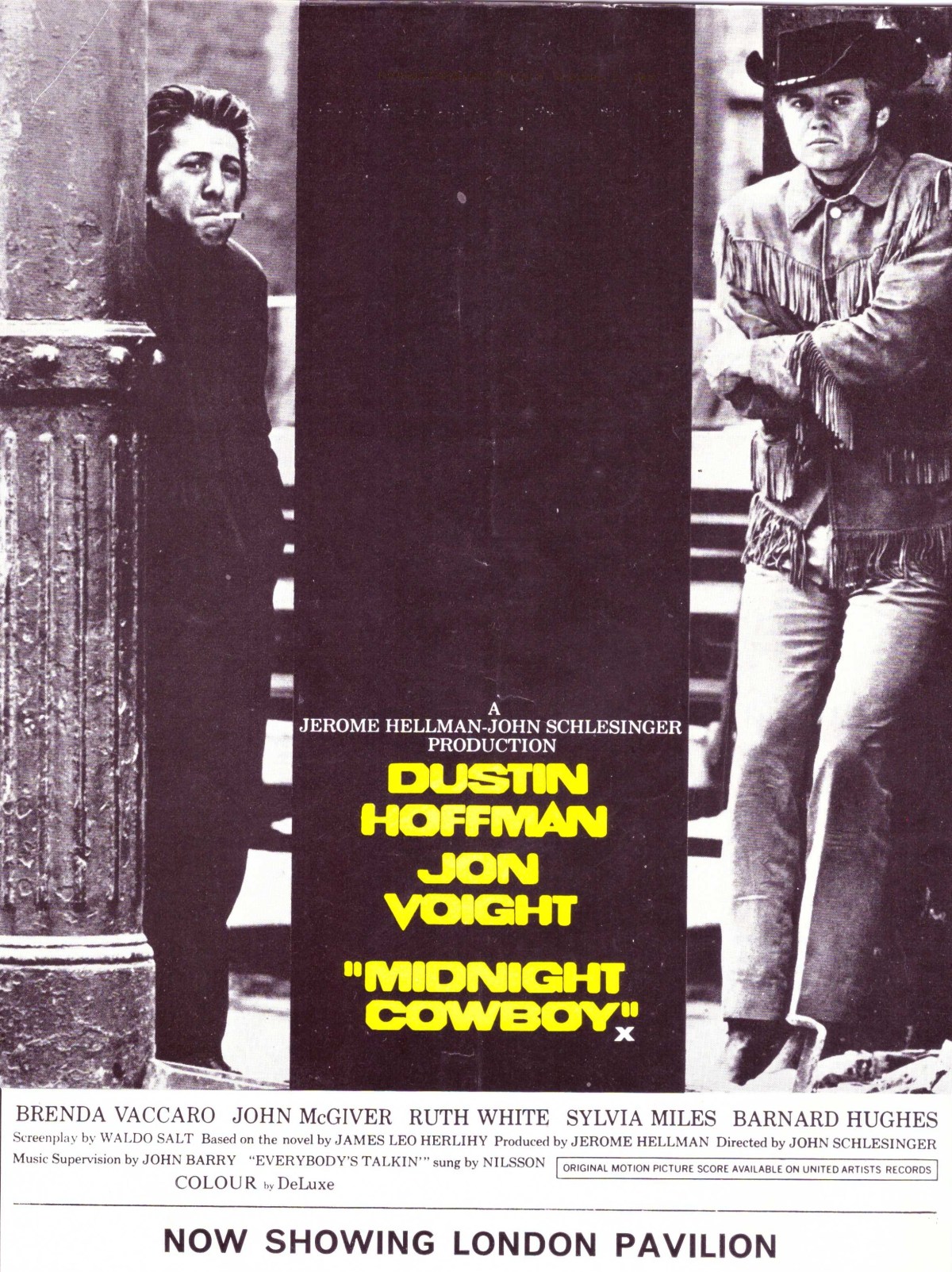
Top film of the week was aerial spectacular roadshow The Battle of Britain (1969) with an all star cast which took in £17,104 ($39,339) in its third week at the 1,654-seat Dominion. Setting a house record in its debut, Midnight Cowboy (1969), going down the continuous performance route at the 1,004-seat London Pavilion, knocked up £11,577 ($26,627).  Third, with £8,255 ($18,986) was Oscar-winning musical Oliver! (1968) in its 38th week at the 1,407-seat Leicester Square Theatre.

Sam Peckinpah’s controversially violent The Wild Bunch (1969), blown up to 70mm, came fourth at the 1,568-seat Warner Theatre with £8,091 in its seventh week. The sophomore outing at the Odeon Leicester Square of John Wayne and Rock Hudson in The Undefeated (1969) rammed home £6,094. Holding down sixth spot was the 70mm Cinerama disaster epic Krakatoa-East of Java (1968) with £5,091 in its tenth week at the 1,121-seat Astoria.

The Lion in Winter placed seventh. Eighth was a surprise package, Easy Rider (1969), racking up an extraordinary £4,493 in the tiny 272-seat classic Piccadilly. Omar Sharif as revolutionary Che! (1969) was next, first week at the 1,159-seat Carlton bringing in £4,475. Rounding out the top ten was The Fixer with £4,460 in its second week at the 1,366-seat Empire. The last three movies were all in continuous performance.

Reissues were surprisingly popular. Gone with the Wind (1939), also showing in 70mm, was in its 12th week – after a long run at the Empire – at the 1,360-seat Odeon Marble Arch while The Jolson Story (1946) starring Larry Parks played separate performances at the 1,394 Metropole in an eight-week run.

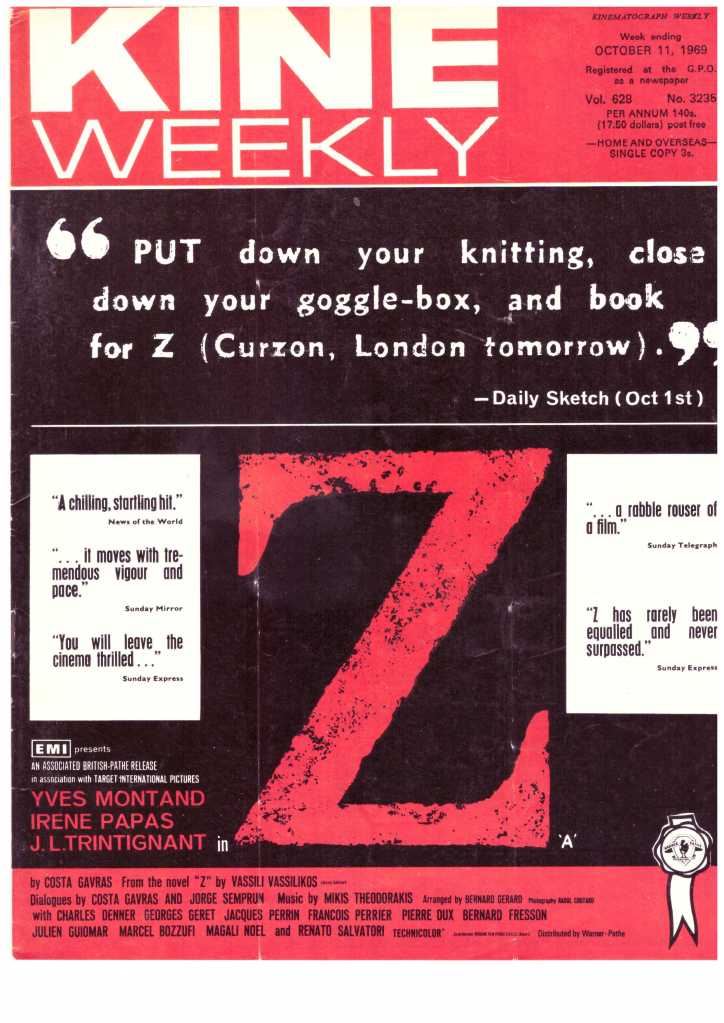
Also making their debuts were Cannes Award Winner Z (1969) at the 546-seat Curzon, The Royal Hunt of the Sun at the 713-seat Odeon St. Martin’s Lane, documentary Footprints on the Moon – Apollo 11 at the 570-seat Rialto, and in move-over The Prime of Miss Jean Brodie at the 550-seat Studio One.

Other long-runners were: Barbra Streisand giving an Oscar-winning performance in musical Funny Girl (1968) in its 38th week at the 760-seat Columbia; Where Eagles Dare (1968), also in 70mm, in its 30th week at the 412-seat Ritz, after a long run at the Empire; Ice Station Zebra (1968), filmed in 70mm Cinerama, in its 28th week at the 1,127-seat Casino Cinerama; Robert Aldrich’s The Killing of Sister George (1968) also in its 28th week at the 648-seat Prince Charles; and Oh! What a Lovely War (1969) in its 26th week at the 972-seat paramount.

Other films still showing include The Graduate (1967) in week fourteen at the 154-seat Cinecenta 4 and Goodbye, Columbus (1969)  in week five at the 820-seat Plaza.  

In those days the length of run a film racked up in the West End impacted on when it would go into general release. So if a film ran for six months in the West End, it could delay its circuit release for that length of time.

Movies were judged as much by length of run as box office. Except in the case of specialize product, a film achieving “legs” was seen as indicative of its future performance. There was  subtle marketing going on here – West End films were advertised every day in the London evening newspapers so if a film ran for six months that was six months of daily exposure of that picture for the rest of the city’s inhabitants who, unable to afford West End prices, were desperate for it to appear at their local cinema.

SOURCE: “Box Office Business,” Kine Weekly, October 11, 1969, p8.

In the News Sixty Years Ago: April 1961

HOLLYWOOD CASHING IN ON EICHMANN TRIAL  

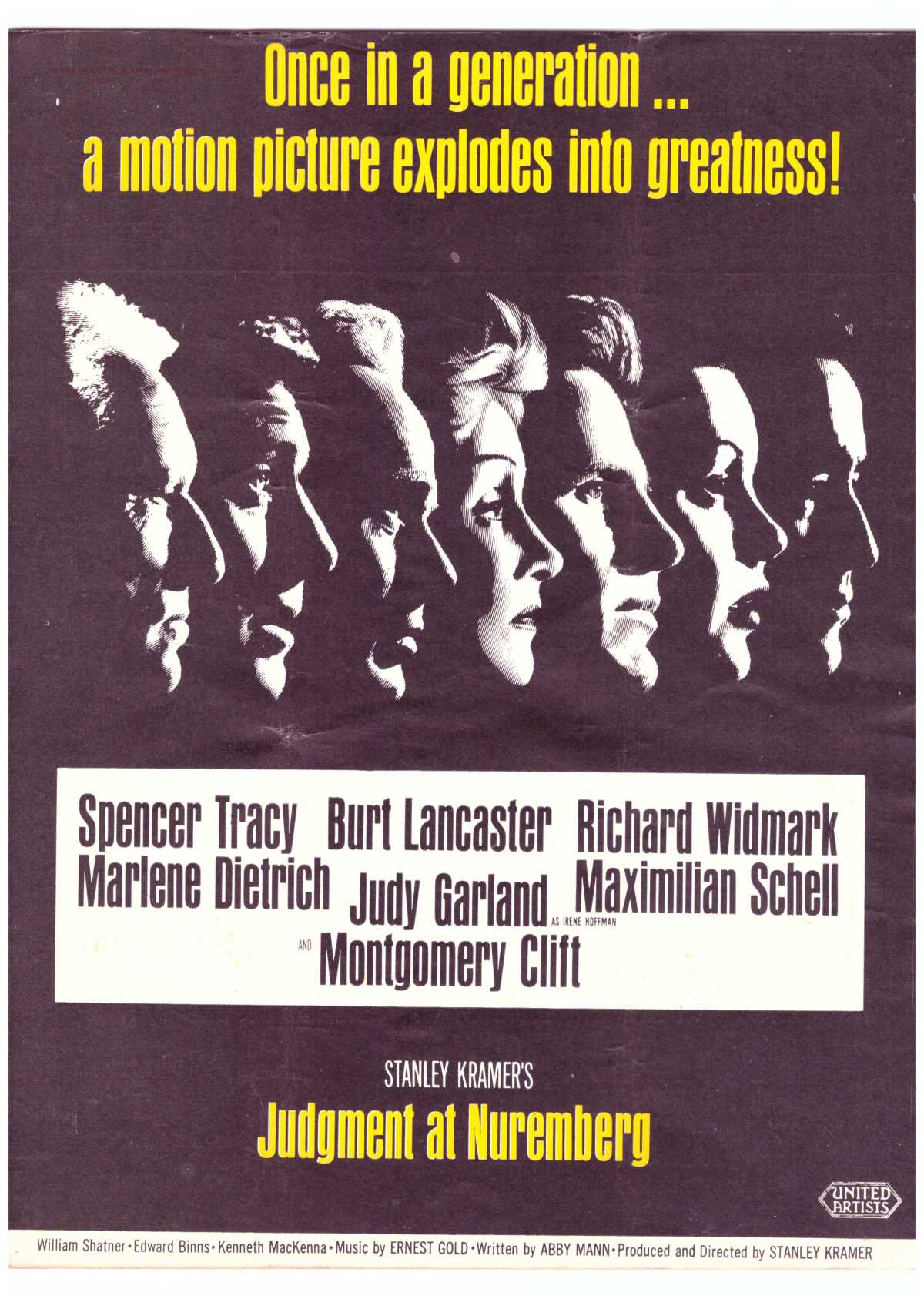
With the upcoming trial of Nazi Adolf Eichmann dominating the media for weeks, and publishers enjoying a boom with titles on Eichmann and Hitler, and with Life magazine’s biggest issue so far in the year being one with Hitler on the cover, movie studios had at last wakened up to the opportunities. A Swiss documentary Mein Kampf was due to open as was Operation Eichmann and Stanley Kramer’s big-budget Judgement at Nuremberg with Spencer Tracy and Burt Lancaster heading an all-star cast. Also in the offing were a Hitler biopic from Allied Artists, Hitler’s Women, a movie based on John Hersey novel The Wall and French director Roger Vadim with an idea to update De Sade as a Nazi.

BRITISH STARS MAKE ‘EM LAUGH

At a time when the Steve Reeves musclemen pictures had dominated the foreign film market, nine British comedies had taken the U.S. by storm. While their box office figures were not colossal by U.S. standards, they were extremely hot compared to the numbers normally racked up at the American ticket wickets by British films. For the 1960 season the British beat all other foreign film contenders. A total of 135 British movies released generating $22.9 million in rentals, well ahead of the nearest rival Italy whose 116 pictures took in $12.2 million (rentals being what the studios received from the overall box office gross). Carry On Nurse was one of the hottest British comedies as well as The Mouse That Roared and I’m Alright, Jack both starring Peter Sellers, Alec Guinness in Our Man in Havana, and Ted Ray in Please Turn Over. Brigitte Bardot was single-handedly the biggest foreign attraction with eight movies on show.

KING AND I REISSUE FLOPS

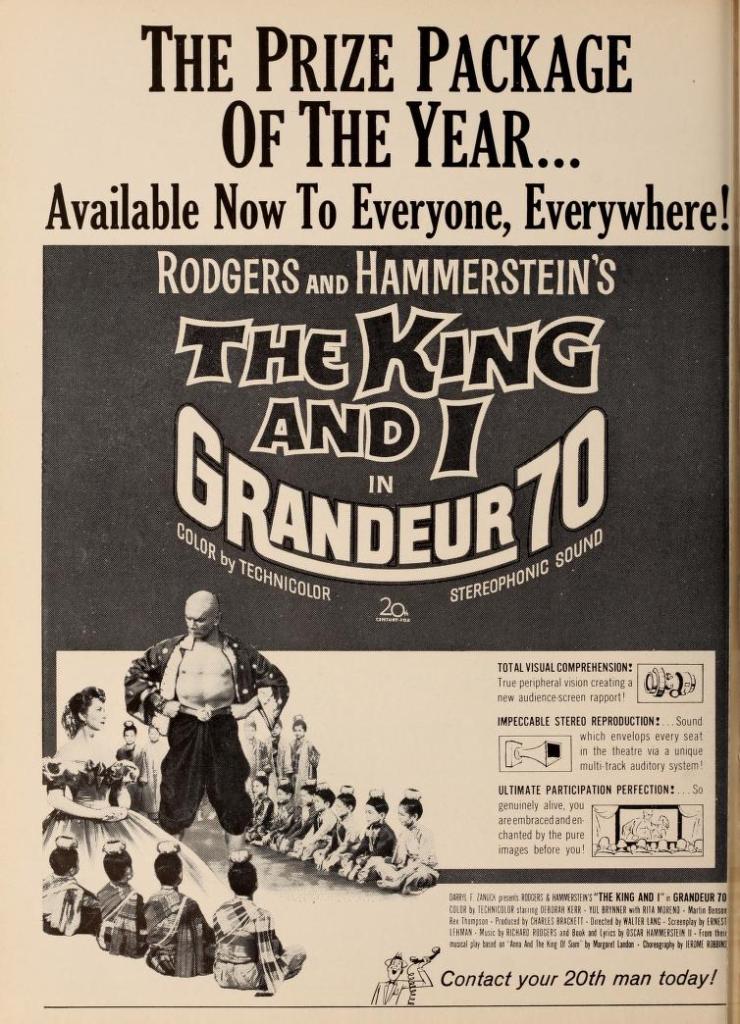
Twentieth Century Fox had brought back The King and I (1956) in 70mm in its Grandeur format as a two-a-day roadshow at the upscale Rivoli in New York on March 23 only to discover that audiences would not bite and a week later it was shifted to “grind” (continuous performance). Meanwhile, Columbia was backing a revival of Picnic (1955) starring William Holden and Kim Novak, promising a new campaign and artwork.

FIRST PURPOSE-BUILT CINERAMA THEATER OPENS

Although the Cinerama phenomenon had been all the rage for nearly a decade, the movies had always been shown in specially-converted cinemas. Now the first purpose-built theater had opened, the Cooper, in Denver, Colorado, at a cost of $1 million with seating for 814.

TRIPLE NAME CHANGE FOR THE HUSTLER

The Robert Rossen movie featuring Paul Newman as a poolroom shark had already started filming in New York when it changed its title first to Stroke of Luck and then quickly to Sin of Angels and under that title – to confuse potential moviegoers – had snagged considerable coverage in Time, the New York Times and the New York Herald-Tribune before reverting back to the original title.

BARDOT BIOPIC

Although the French sex symbol had barely been a star for half a dozen years, she was already lining up a biopic to be directed by one of the leading New Wave exponents 28-year-old Louis Malle. Co-starring Marcello Mastroianni, it appeared as A Very Private Affair in 1962.

WB SHELLS OUT FOR CAMELOT

Six years before the Lerner and Loewe musical finally hit the screens, Jack Warner paid $1.5 million for the screen rights plus 25% of the net profits.

Sources: “New Nazi Beast Film Cycle” (Variety, April 5, 1961, p1); “British Humor Scores in the U.S.” (Variety, April 26, 1961, 1); “Hard Ducat Not For Reissue?” (Variety, April 5, 1961, p3); “Advert, Picnic” (Box Office, April 3, 1961, 10); “World’s First Theater Built Specially for Cinerama Opens in Denver” (Box Office, April 3, 1961, p28);  “Brave Young Director Faces Bardot Playing Herself in Her Own Biopic” (Variety, April 12, 1961, p1); “WB’s Camelot Buy” (Variety, April 12, 1961, p1).

Easy Rider (1969) *****

You could be forgiven for thinking that the movie’s main influences were the early Cinerama pictures that focused on extensive tracking shots of scenery (in this case, the open road) and unusual customs (ditto, alternative lifestyles, dope-taking etc) and Mike Nichol’s use of contemporary pop music in The Graduate (1967). But it also drew on the assumption, as did Hitchcock in Vertigo (1958) and Kubrick with 2001: A Space Odyssey a decade later, that a camera doing nothing can be hypnotic.

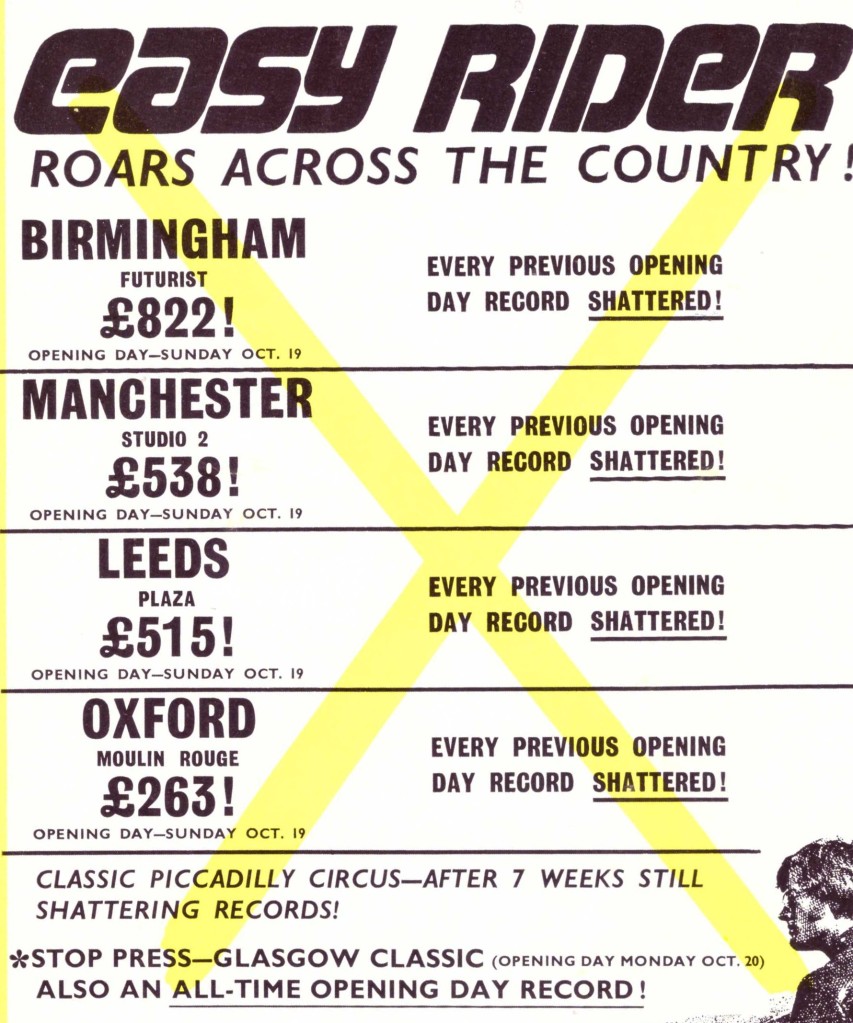
Selling a picture to the public and selling it to cinemas were two separate marketing skills. The easiest way to guarantee bookings for any film was to promote the box office figures through the trade press – as here in the British “Kine Weekly.” Columbia had cleverly booked the movie into one of the smallest cinemas in London’s West End where it was almost certainly guaranteed to break the box office record. But even the studio must have been taken aback by the way Easy Rider pulverized the previous record.

Message pictures were the remit of older directors like Stanley Kramer and Martin Ritt and films that had something to say about the human condition generally emanated from Europe and not low-budget efforts coming out of Hollywood. Easy Rider has a European sensibility, an almost random collection of unconnected episodes with no narrative connection to the main story, itself incredibly slight, of two mild-mannered dudes heading to New Orleans to see the Mardi Gras.

Road trips were not particularly unusual in American cinema but the form of previous locomotion was horse-related – westerns. The journey has been a central theme to movies. This is an 80-minute picture masquerading as a 95-minute one, a good fifteen minutes of screen time taken up with endless shots of Peter Fonda and Dennis Hopper on bikes passing through the landscape, with a contemporary soundtrack as comment.

Unusually, it’s also a hymn to ancient values, heads bowed in prayer at meals as different as you could get, the Mexican family and the commune, a marching band playing “When the Saints Go Marching In” and the recitation of prayers in the cemetery.

Success in London was no guarantee that a movie would perform as well all over the country. Columbia continued to book it into smaller venues in the hope it would repeat the London experience of breaking box office records. When it did the studio took out another advert in Kine Weekly to let exhibitors know.

What marks the film out stylistically, perhaps enforced by the lean financing, is the sparing way it is told. The most dramatic scenes – the three murders – are filmed in shockingly simple fashion. There are often long pans along groups of characters. While innovative, the flash-cut flash-forward editing adds little to what is otherwise a very reflective film. Inspired use is made of natural sound, the muffled thumping of oil derricks at the cemetery, the soundtrack to one death is just the battering of unseen clubs by unseen assailants.

The dialogue could have been written by Tarantino, none of the confrontation or angst that drives most films, but odd musings that bring characters to life. At the beginning of the trip, Hopper and Fonda are welcomed wherever they travel, but towards the end resented, treated as though a pair of itinerant aliens. They entrance young girls but are vilified by authority, jailed for no reason except the threat to traditional values they apparently represent.

Elements not discussed at the time of release make this more rounded than you would imagine. The excitable Hopper, a nerd in hippie costume, is driven by the American dream of making money. The more reflective Fonda senses something is not only missing from his life but has been lost forever. He has the rare stillness of a top actor, face reflecting unspoken inner turmoil.

It remains an extraordinary film, a series of accumulated incidentals holding up a mirror to an America nobody wanted to acknowledge and the brutal climax no less powerful now.   

Of course, the Easy Rider soundtrack itself summons up memories of the era and it is worth listening to just by itself and you might even want to go all the way and listen to it in the original vinyl.

Below is a link for the DVD.

   https://www.amazon.co.uk/Easy-Rider-DVD-Peter-Fonda/dp/B00LTK2Z44/ref=sr_1_1?crid=YSG6SCL8QQF9&dchild=1&keywords=easy+rider+dvd&qid=1596660339&s=dvd&sprefix=easy+rider%2Caps%2C153&sr=1-1

Khartoum (1966) ****

You don’t have to look far for contemporary parallels in this absorbing drama.

A charismatic and clever military strategist the Mahdi (Laurence Olivier) inspires a holy war in the Middle East. Ruling global power Britain wants to avoid  “policing the world” and instead of sending in the army despatches in an unofficial capacity its hero of the day, the equally charismatic “Chinese” Gordon (Charlton Heston).

He is the do-gooder as man-of-action having quelled an uprising in China and destroyed the slave trade in Sudan, of which Khartoum is the capital. Offered £6,000 by local interests to become Governor of Sudan, he takes £2,000, “that’s all I need.”

But where a similar kind of hero, Lawrence of Arabia, was politically naive, Gordon is politically adept and much of the joy of this picture is seeing him out-maneuver British prime minister Gladstone (Ralph Richardson – compare this performance to his bumbling bore in The Wrong Box out the same year). Gordon’s ostensible task is to evacuate Egyptians from Khartoum. If he succeeds, Britain saves face, if he fails he takes the rap. Directed by British stalwart Basil Dearden (The Blue Lamp, 1950; Victim, 1961), the pictures cleaves closer to drama than spectacle.

I remember being quite bored by all the talk when I saw this as a twelve-year-old, but this time round found it completely absorbing, a battle of wits between Gordon and the Mahdi on the one hand and between Gordon and Gladstone on the othor. The action, when it comes, is riveting without the aplomb of Lawrence of Arabia, but audience interest is focused on the main characters.

Richard Johnson, removed from his Bulldog Drummond persona (Some Girls Do), is excellent as Gordon’s aide or, as he acknowledges, “Gladstone’s spy.”

This is a Cinerama picture (cue spectacular widescreen scenery) without the distracting Cinerama effects (a race downhill, a runaway train), a bold political drama poorly received at a time when Cinerama meant spectacular effects and much more action. Definitely worth a second – or first – look.    

https://www.amazon.co.uk/Khartoum-DVD-Charlton-Heston/dp/B000089AUD/ref=sr_1_1?crid=2WXSB64ZF7PIT&dchild=1&keywords=khartoum+dvd&qid=1592640053&sprefix=khartoum%2Caps%2C147&sr=8-1

Discover WordPress

A daily selection of the best content published on WordPress, collected for you by humans who love to read.

The Atavist Magazine

by Brian Hannan

WordPress.com News

The latest news on WordPress.com and the WordPress community.