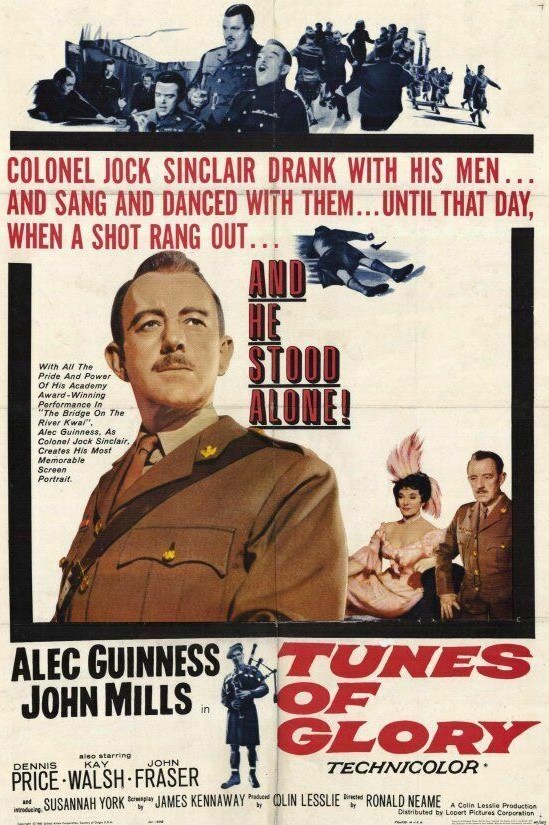
Fans of Succession will appreciate this power struggle in a Scottish army regiment set in 1948. In a reverse of The Godfather (1972) where the Corleones complain about needing a “wartime consigliore,” here the powers-that-be have decided this unnamed distinctly Highlander company requires a commanding officer with skills more appropriate to peace time.
Major Jock Sinclair (Alec Guinness) has been in charge of the battalion since the North Africa campaign in World War Two when the original commander was killed. But he has never been promoted to full Lt. Col. Naturally, having been in charge for six years, he feels the job should be his. At a time when the currency of command was wartime experience he’s less than pleased when he loses out to Col. Barrow (John Mills) who spent most of the war as a Japanese POW.
It doesn’t help that they are complete opposites. Sinclair is a tough, hard-drinking, attention-seeking Scotsman who enlisted as an ordinary soldier and rose through the ranks winning two medals for courage during the conflict. Barrow is Oxford-educated English upper-class, a lecturer at Sandhurst Military Academy, and recalls his war experience with terror rather than the braggadocio of Sinclair. Worse, he doesn’t drink.
It doesn’t take long for the pair to clash. Sinclair, who has ruled as much by preying on weakness as force of personality, is quick to start to look for flaws in his opponent’s make-up. Barrow feels discipline has been slipping and enforces tougher measures. That might make him unpopular but an army is built on discipline so soldiers can hardly complain.
But Barrow slips up by misreading the men. He chooses the worst of all issues to make a stand. For the first post-war official barracks party, Barrow insists the soldiers embark on traditional Highland dancing in regulation fashion rather than in their normal exuberant, not to say rowdy, manner. The soldiers are infuriated when Barrow insists they take lessons.
He has just lit the fuse. Naturally, nothing goes according to plan. Barrow is humiliated, Sinclair triumphant. But victory does not turn out the way Sinclair expected.
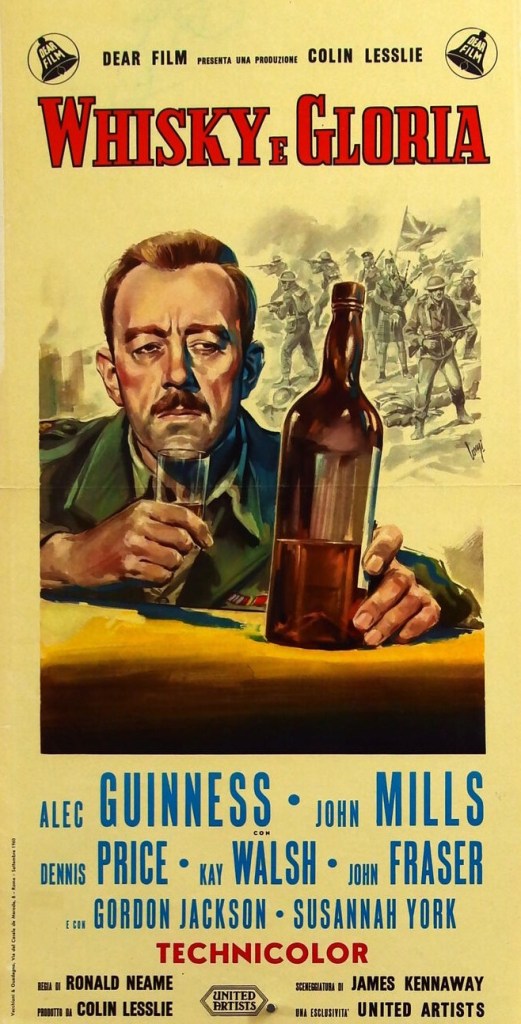
Somewhat cynical rebranding of the film in Italy as “Whisky and Glory,” possibly trying to cash in on the success of “Whisky Galore” and also misleading in suggesting actual conflict with the fighting in the background.
The main thrust of the narrative, as you might expect, is the stand-off between Sinclair and Barrow and the tensions felt all round, as would be the case in any business (Succession, now, of course the classic example) when a new boss takes control. While everyone might expect, and perhaps fear, change, in the military (as in the navy) there is always the danger, should the new broom try to sweep too clean, of mutiny.
This might not amount to a raising of arms. But there are other effective methods of mounting opposition – laxity, questioning or outright refusal to obey orders – or giving the new chief the cold shoulder. Here, in the background, are other simmering tensions. Not everyone is comfortable with Sinclair’s very laddish approach to command, the back-stabbing and double-dealing Major Charles Scott (Dennis Price) ready to pounce at any opportunity.
Sinclair is also having to deal with his daughter Morag (Susannah York) asserting her independence, having the temerity not just to take a boyfriend, Corporal Fraser (John Fraser), but one from the ranks rather than the officer class. And he feels the harsh tongue of his own paramour Mary (Kay Walsh).
Emotional isolation is rarely commented upon in matters of the armed forces and yet it is so much a driving force. If not adequately compensated by camaraderie, a man at the top can be very lonely indeed, and prone to the most vicious self-torment.
Director Ronald Neame (The Prime of Miss Jean Brodie, 1969) superbly invokes an army atmosphere away from the more usual battleground backdrop. The picture is anchored by brilliant performances all round and a roll-call of strong supporting characters. An unflinching look at power, especially leadership and the personal toll it takes. And it was astonishing that the movie could hit the target so well without relying on the usual round of sex, violence or that old stand-by the comic subordinate. It also probes the issues of what happens – in any industry – when the wrong person is put in charge. No less an authority than Alfred Hitchcock called it “one of the best films ever made.”
The sparring between Oscar-winning Alec Guinness (The Quiller Memorandum, 1966) and John Mills (The Family Way, 1966), who won the Best Actor Award at the Venice Film Festival for this role, is of the highest quality. Dennis Price (The Comedy Man, 1964) is the pick of the support while Susannah York (Sands of the Kalahari, 1965) makes an auspicious debut.
Few films could boast a better supporting cast: former British leading lady Kay Walsh (A Study in Terror, 1965), Gordon Jackson (The Ipcress File, 1965), Duncan Macrae (Best of Enemies, 1961), John Fraser (Tamahine, 1963), Gerard Harper (Adam Adamant Lives!, 1966-1967, TV series) and Peter McEnery (The Moon-Spinners, 1964).
James Kennaway (The Shoes of the Fisherman, 1968) wrote the screenplay based on his own novel.
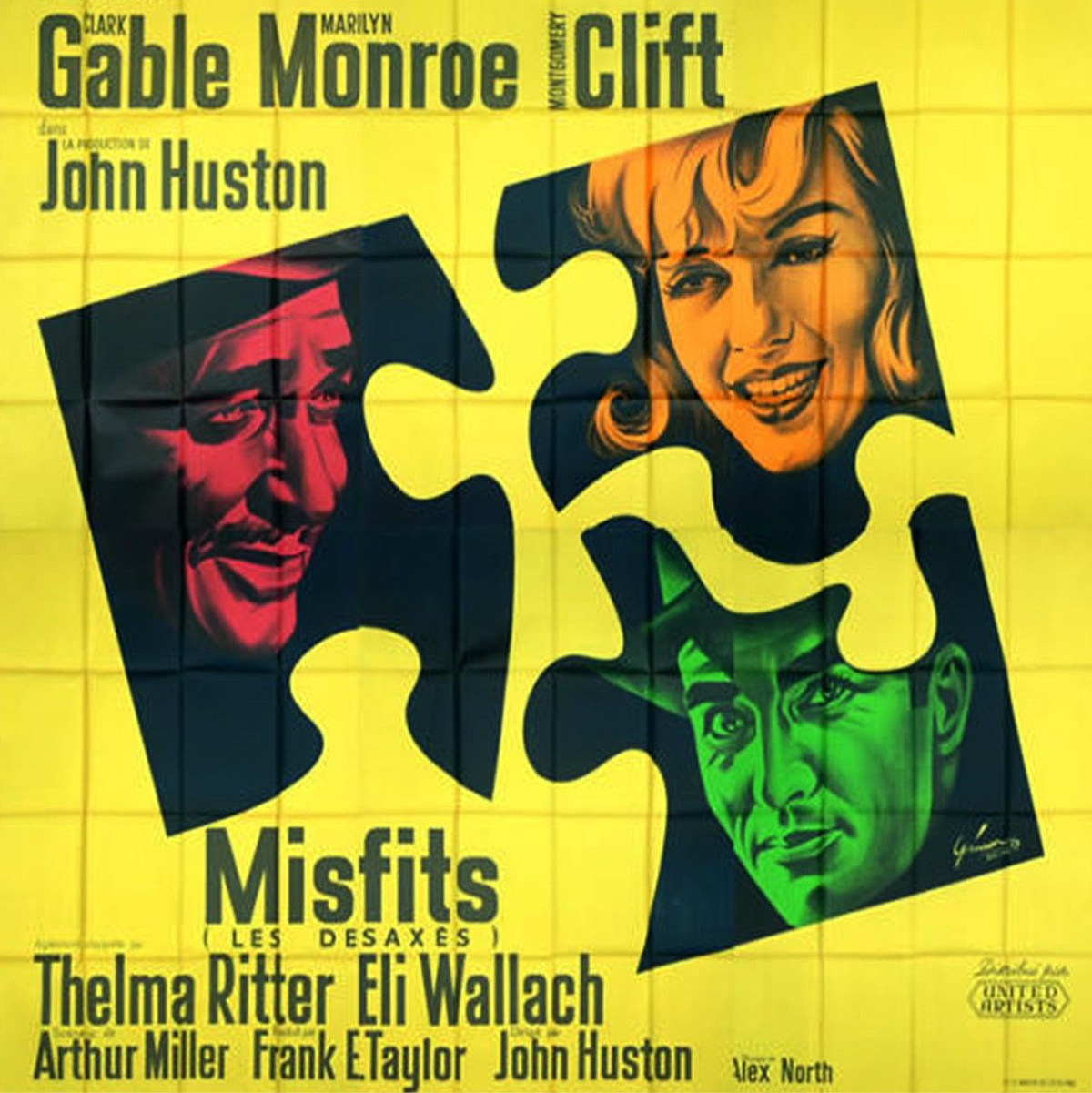
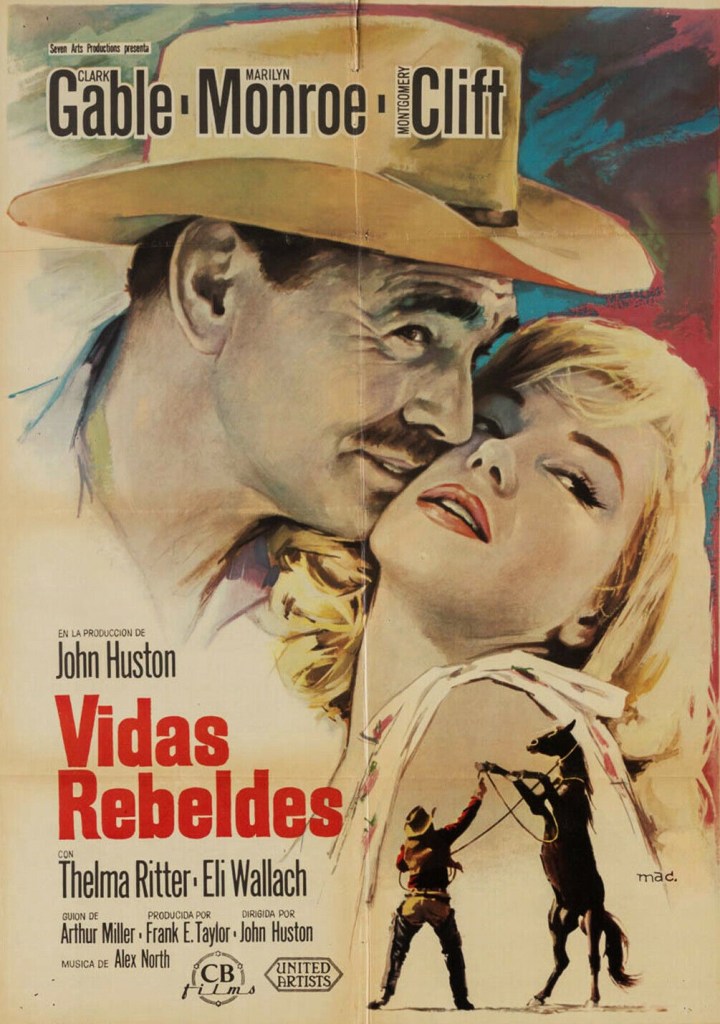
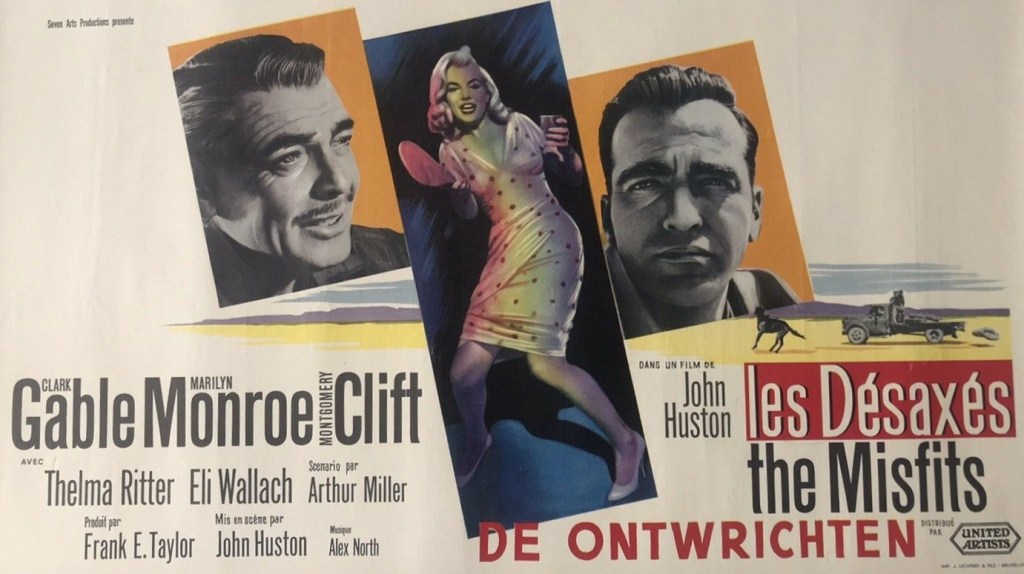
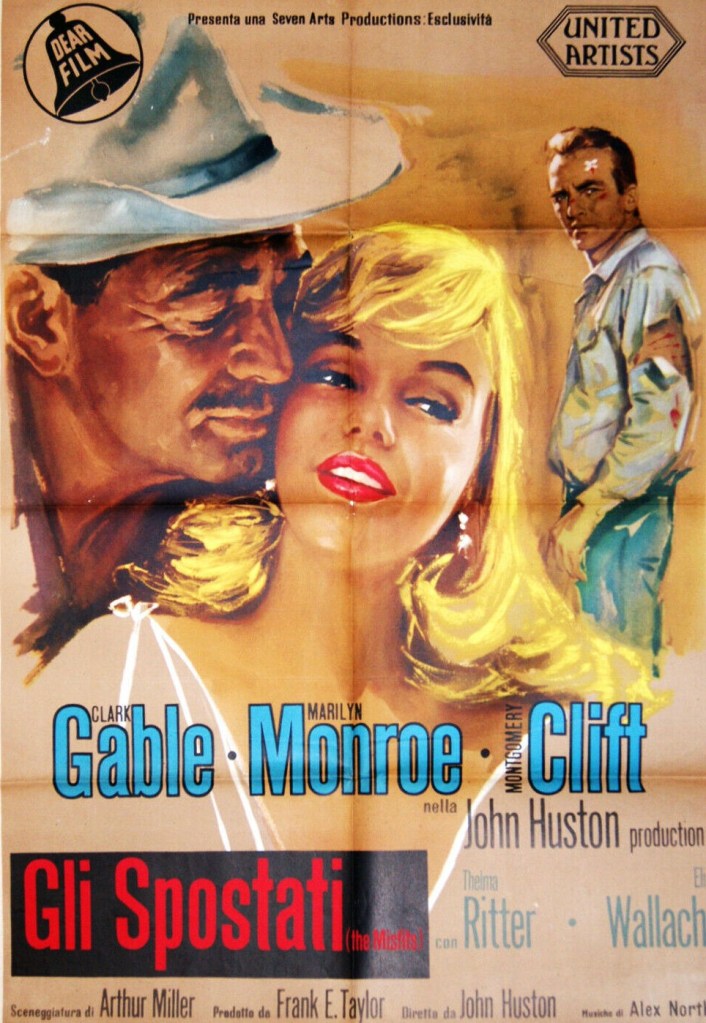
Arthur Miller, author of arguably the greatest play of the 20th century, Death of a Salesman, had gone to Reno to get a divorce so he could marry Marilyn Monroe. While there, he befriended some cowboys who took him with them while they caught horses. He turned the experience into a short story The Mustangs, published in Esquire (October 1957 issue). It provided the basis for the screenplay The Misfits. While the character of Roslyn, played by Monroe, was based on another woman, Miller explained, “I had written it to make Marilyn feel good.”
In July 1958 he sent it off to director John Huston, not just on account of a body of work that included The Big Sleep (1946) and The Treasure of the Sierra Madre (1948), but because he had nursed Monroe through her debut on The Asphalt Jungle (1952) calming her nerves by telling her “if you’re not nervous you might as well give up.” Miller felt Huston would “present Marilyn with the bracing challenge, her fighting her problems through to a fine performance.”
Huston was enthusiastic – he saw the story as representative of a “dog-eat-horse-society” – and called the writer over to his house in Ireland where they spent two weeks putting the finishing touches to the screenplay, except for the last 15 minutes. Originally, it was a lengthy piece, almost an epic, production executives timing it at two hours 47 minutes, too unwieldy for a standard drama, so inevitably compromise would be required.
For tax reasons, Huston wanted to film in Mexico but relented and agreed to shooting it in Nevada. Talent agency MCA, which represented Huston, effectively put the film together as a package. Although Robert Mitchum was initial first choice, when he didn’t respond the screenplay went to Clark Gable, another MCA client, who accepted immediately. Eli Wallach was next on board. At this point, with only six films under his belt and better known for his work on Broadway, Wallach would not have expected to see his name above the title. But he was told that his name would be second to appear on the credits, after Gable.
But as the weeks went by and first Monroe then Montgomery Clift – both MCA clients – signed up his name slipped further down the credits. He consoled himself that his name would be “first position under the title” as that billing position was technically known. That proved an illusion. Thelma Ritter, apparently, boasted greater box office wattage so in the final credit rankings he placed fifth.
Although Monroe was viewed as the most mentally fragile, Clift and Gable also had issues to overcome. Due to the injuries suffered in a car crash and his well-known dependency on drugs, nobody would insure Clift but eventually an agreement was reached. Gable failed the medical, having gained 35lb while filming It Happened in Naples (1960) in Italy, ballooning his weight to 230lb. But two weeks later he was cleared.
The producer for such a heavyweight production was an industry lightweight. Frank E. Taylor’s main claim to fame was that he had been Miller’s publisher before he achieved fame as a playwright, working for the small company that published the author’s non-fiction work Situation Normal (1944) and the novel Focus (1945). Taylor had some Hollywood experience, but after four years employed there managed only one credit, John Sturges’ film noir Mystery Street (1950).
The original plan to start filming in September 1959 was scuppered by the incompletion of It Happened in Naples so it was shelved until the next spring. The next start date – March 3, 1960 – was an unexpected casualty of the Actors Strike which had delaying shooting on Monroe-starrer Let’s Make Love by five weeks. So when that film finished on July 1, there was little of a break for Monroe what with costume and wig fittings and test photographs before reporting on July 18, 1960, for what was expected to be a 50-day shoot, for The Misfits.
The budget was set at $3.5 million – a substantial amount for a black-and-white picture – with $1.6 million going to the principals. Clark Gable was down for $750,000, Marilyn Monroe and John Huston $300,000 apiece – although a generous profit participation scheme could see the actress earn as much as Gable – and Arthur Miller on $225,000. It was shot mainly on location in Nevada at Reno, Dayton and Pyramid Lake (a misnomer because it was all dried out) with a couple of weeks’ studio work at the end. Unusually, it was being filmed in chronological order to assist Monroe achieve her characterization.
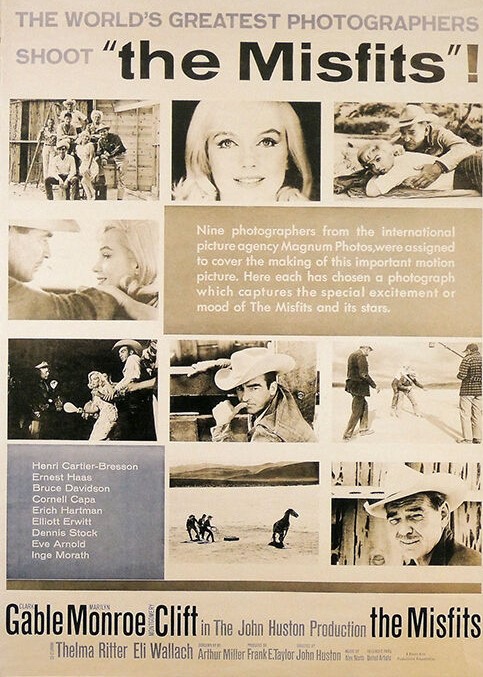
Taylor had achieved a publicity coup by convincing famed photographic cooperative Magnum to cover the shoot in depth. Photographers of the calibre of Henri Cartier-Bresson, Inge Morath and Eve Arnold worked in teams of two, each for a 15-day stint. Bresson would say of Monroe’s ethereal beauty: “I was struck as by an apparition in a fairy tale.”
Before a foot of film was exposed, the movie was in crisis. The script had been refused approval by the Production Code, the self-censorship system to which all studios subscribed. Code head honcho Geoffrey Shurlock complained that “the illicit relationship involving Roslyn and Gay seems to lack effective compensating moral values…(with the) difficulty that your story readily accepts illicit sex rather than condemning it.”
While there was publicity value to be gained from a tussle with the Production Code, it would not sit well with the distributors. The lack of a rating would inhibit many cinemas from risking a booking, despite the box office appeal of the cast.
Everyone had known going into production that getting Monroe on the set at all never mind in a condition to work would be a considerable achievement. Aware of her inability to rise early, Huston had shifted the daily start time by an hour to 10am. Sometimes shooting was restricted to only a couple of hours per day and since she was in most scenes there was a limit to how much the director could shoot around her.
Among the cast nobody knew her better than Eli Wallach. He had met the actress several years before when she had popped backstage after his performance in Teahouse of the August Moon on Broadway. He recalled: “She looked nothing like the movie star I’d seen onscreen; she wore a simple dress and had short blond hair. She was pale, shy, and wore no lipstick.” They became friends and would go out dancing. He introduced her, gradually, to The Actors Studio where she met Lee Strasberg, husband to Paula who became her acting coach.
“By the time we began to work on The Misfits in 1960,” said Wallach, “she seemed to have become a different Marilyn than the one I had known in New York, and the action that happened off-screen during the making of the film seemed to rival what was happening onscreen.”
Even so, the early part of the shoot went well. Commented Wallach, “Her mood waned and she began to lose her self-confidence.” For one scene where she was to do nothing more difficult than cross the road, she kept stopping halfway through. She had forgotten her motivation. Huston advised, “Your motivation comes from your need to cross the street without getting hit by any of the cars.” The next take was perfect.
But the signs of trouble were there from the outset. The evening before her first scene a nervous Monroe nearly took an overdose of Nembutal. Her unpredictability meant that on some days she only managed an hour or two, other days nothing at all. On August 27 she collapsed and was sent to Westside Hospital in Los Angeles for treatment, where she could be weaned off her addiction to barbiturates under the care of her analyst, not returning until September 6. On September 12, 13 and 19, she was indisposed and didn’t turn up for work.
If this was a case of life imitating art – her marriage to Miller was falling apart – she seemed to react to some lines as if the words were intended for Marilyn and not the character she was playing. In one scene Gable says, “You’re the saddest girl I ever met. What makes you so sad?” Monroe burst into tears. Wallach surmised, “Marilyn seemed to feel that the camera could detect her innermost thoughts.” In another scene, where Monroe and Wallach dance she “seemed upset and unhappy.”
Apart from casting her in The Asphalt Jungle, Huston had “saved her from the casting couch” by prior to that film setting up a proper screen test for her opposite John Garfield, providing her with a calling card that would reduce the requirement for her to jump into bed with a producer to get a part. But even on The Asphalt Jungle, she seemed dependent on her acting coach, at this point Natasha Lytess. “At the end of a take,” recalled Huston, “Marilyn would look to her for approval. The coach would nod her head.”
Monroe was taking pills to go to sleep and pills to wake up in the morning. The doctor on location eventually refused to give her any more, but of course she found them elsewhere. After visiting her in hospital, Huston was convinced the worst was over. But her renewed effervescence didn’t last.
“Marilyn returned to her old ways as though she’d never had a break,” recollected Huston. “One Sunday afternoon I visited her in her suite to get an idea of what to expect in the week ahead. She greeted me euphorically – then went into a kind of trance. She was the worst I’d ever seen her. Her hair was a tangle; her hands and feet were grubby; she was wearing only a short nightgown which wasn’t any cleaner than the rest of her.”
Despite her personal problems, Monroe was an extremely skilled actress. Observed Huston, “She could be marvelously effective. She wasn’t acting – I mean she was not pretending to an emotion. It was the real thing. She would go deep down within herself and find it and bring it up into consciousness.”
Huston, not necessarily known for accommodating actors, turned on the charm, always agreeing to another take if Monroe or Paula Strasberg (paid $3,000 a week) asked for it. Although most people disparaged Paula’s presence on the set or, more correctly, Monroe’s dependence on her, Huston acknowledged that without her his job would have been more difficult and he called a halt to crewmen nicknaming her Black Bart after her choice of clothing, habitually a black sack dress and black hat. So integral was Strasberg to Monroe’s life that the actress later moved from a hotel room shared with her husband to Strasberg’s apartment.
When even Strasberg failed to control her client, her husband Lee, the inventor of the Method School of acting which had revolutionised American drama, was flown in from New York. He had a different take on the situation. The problem wasn’t with Monroe but Huston. The director’s – refusing to deal directly with Paula. Raged Lee: “I will not tolerate this treatment of her, she is an artist,” threatening remove his wife from the picture.
Miller saw it differently: “Coach (Strasberg) was a little crazy, she was an opportunist I thought and not competent to help.” However, there was a very real issue to be addressed. Monroe had never come to terms with her fame and could not cope with the pressure of being the screen character with whom the world was infatuated.
Monroe’s technique was very individual. “I don’t want to discuss the Method. I don’t believe I have the experience. I try to use Method to the best of my ability. It makes working more possible…The writer has done the words then it’s up to the actor…I can’t work unprepared, I’d shoot myself. I can’t memorize words by themselves. I have to memorize the feeling.”
Clark Gable was on a career high, at least in terms of remuneration, earning $750,000 a picture, on a par with John Wayne and William Holden, the highest-earning stars at the time. Gable had the privilege of being paired with some of the top female stars – But Not For Me (1959) with Carroll Baker, Doris Day in Teacher’s Pet (1958) and Sophia Loren on It Happened in Naples, the title a twist on his star-making picture It Happened One Night (1934), and more than holding his own against Burt Lancaster in war picture Run Silent, Run Deep (1958).
Despite his commercial appeal he held to a particular ethos when choosing a role. “If I hadn’t liked this story I wouldn’t have done it no matter how much money they offered me,” he said. “I have to like the story or I won’t do it…I never select a part for the part itself. I always look at the overall story first.” Of his character, Gable observed: “He’s the same man but the world has changed. Then he was noble. Now he is ignoble.”
The press was salivating over the prospect of The King falling for The Blonde Bombshell. But regardless of her physical attractions, Gable was put off the actress by her untidiness and her lack of personal hygiene. But he was not perturbed by her behavior. “I’m just unhappy about her problems, her fears, her personal life, but if I were to chastise or criticize her it would only deepen her despair,” he said. When, largely thanks to Monroe’s hospitalization, shooting continued past the original completion date he was compensated to the tune of an extra $48,000.
With the male actors, Gable had a tendency to get off on the wrong foot. Initially annoyed with Montgomery Clift for fluffing lines, they became good friends after trading insults. But it took John Huston to end an unexpected rift between Gable and Eli Wallach.
Prior to their first day working together, Eli Wallach was surprised to answer a knock on his hotel room door to find Gable’s assistant Bama Davis who asked him to read to the visitor the scene they would perform the next day. Somewhat puzzled by this behavior and worried this approach was indicative of the actor, Wallach did not speak to Gable when they first met. It fell to Huston to break the ice by handing both actors a shot of Jack Daniels.
Gable was more sensitive to his own performance than you might imagine. He asked Huston to reshoot the scene where he wakens up Monroe because he “didn’t think he showed the love that was necessary.” He refused a stunt double for the scene where Gable, Wallach and Clift try to throw the mustang. In the film the mare dragged Gable and Wallach around the lake floor. In reality, in long shot it was stunt double Tom Palen being dragged by an actual horse. For close-ups of Gable while there were no horses in sight, the star was still dragged at 35mph for 400ft behind a truck. It took 28 cuts of Gable for the stallion fight to be matched with second unit footage.
Gable was angry at the way the second unit treated Tom Palen. After the stuntman had already endured two injuries Gable drew the line on hearing that he was called upon to be smashed on the face by hooves.
Gable was immensely proud of his work. “I have two things to be proud of in my career – Gone with the Wind and this one.” He later amended that to, “This is the best thing I did in my life.”
John Huston and Reno, where the film crew were housed, were a match made in heaven. The director was an inveterate gambler. He lost $25,000 one night but won it back the next and some. Overall, he left with less than when he arrived.
But he had an artist’s instinct when it came to film. He was not one for giving much direction. Huston expected “actors to be themselves, he didn’t interfere very much with their interpretation.” He prided himself on telling an actor as little as possible. “When I have to step in, I feel defeated.”
But he knew what he wanted and how, technically, to get the best out of an actor. At first Wallach played his drunk scene with rage until Huston pointed out that drunks always try to pretend they’re sober. And Huston knew what he didn’t want. Which was unwanted advice from an actor. For one scene with Monroe, Wallach expected a close up and committed the cardinal error of pointing this out to the director. “Never,” growled Huston, “never tell a director where to set up the camera.”
For Montgomery Clift’s first scene where he is seen talking to his mother in a callbox, Huston wrapped it after the first take, ignoring Clift’s pleas for another shot. ‘You’ll never do it better,’ said Huston, ensuring he did not fall prey to Clift’s lack of self-confidence either.
Monroe seemed to instinctively understand – and approve of – Huston’s technique. “He watches for the reality of a situation and he leaves it alone and he waits until he needs more or less before he comes in.”
Monroe wasn’t the only one whose illness shut down the set. Shooting on October 3 was cancelled because Huston came down with a recurrence of bronchitis due to the alkali dust on the dry lake. He was missing again the following day.
But if the actors in general appreciated Huston’s technique, Arthur Miller did not. It was unusual for a screenwriter to be present during the entirety of a shoot. For all that he brought certain extra intensity to scenes he re-wrote and his improvisation resulted in at least one great scene – Monroe’s paddle-boarding was not originally in the script but incorporated after watching her play with the toy between takes – Miller was generally a pain in the butt.
With no experience of moviemaking he clearly regarded himself as something of an authority and failed to recognise the distinction between the production of a play – where the writer was top dog – and a movie, where he was not.
Miller complained to Huston and Taylor about the lack of atmosphere, calling for more long shots “to constantly remind us how isolated these people are.” He had the temerity to criticize Gable’s performance. For one scene he observed that the actor had not “shown sufficient expression in his eyes.” Gable patiently explained that actions had to be minimized because they would be magnified a hundred times on the screen. “He turned out to be right,” conceded Miller, “he had simply intensified an affectionate look that was undetectable a few feet away.”
“I learnt from John,” said Miller, “ that he would pack the lens with material and let the camera choose…he put a lot of elements in front of the camera and let it find its way. So there’s not a lot of cutting from one face to the other ion conversation.” (In fact, this was old-school filmmaking where characters were grouped together rather than filmed apart). But he complained vociferously about the director’s positioning of Monroe fifty yards from the camera for her “Murderers! Murderers!” scene.
Miller thought such distance would ensure she wouldn’t be heard. But when Miller saw the rushes he realised the director was right. Huston wanted to portray Monroe at this point “as if she were a voice lost in the wilderness.”
Miller also wanted one scene which fades to darkness. Huston had to explain the practicalities. “You can only have one light in any given scene. In plays you can dim the light through a scene but not in a motion picture. You’re asking for values that aren’t there.”
His presence certainly wasn’t doing his wife any good. It might have been better if he had been absent, since the marriage appeared to disintegrate under their noses. He was being prophetic when he said of her first scene: “I couldn’t help feeling her disappointment not only in her character’s marriage but in her own…I had sensed something withdrawn in her, not merely in the character she was playing.”
He was prone to rewriting, in part with what he believed were better ideas, but also to emphasize developments he perceived in the characters as their screen personalities unfolded. By October 6 Gable had enough of the constant script changes and refused to film anything that had been written after September 20. Luckily, he relented and agreed to shoot the much-revised final scene. But even Miller received his come-uppance on a personal level. One day on location miles into the desert, Huston came upon a stranded Miller, abandoned by Monroe and her entourage.
Four-time Oscar nominee Montgomery Clift had an extraordinary success rate in pictures. Up till now he had appeared in only thirteen pictures but at least half were gems – Red River (1948), A Place in the Sun (1951), I Confess (1953), From Here to Eternity (1953), Raintree County (1957), The Young Lions (1958) and Suddenly, Last Summer (1959). But a bad car accident in 1956 exacerbated his drug and sexuality issues and he was considered an unexploded grenade. “He’s the only person I know who’s in worse shape than me,” said Monroe.
In fact, perhaps encumbered with helping nurse Monroe, he was able to put his own problems to one side. Apart from the early tiff with Gable, his most difficult point was when he received rope burns during his part in the mustang chase. He had forgotten to put on gloves at the start of the scene and he couldn’t suddenly appear with them on when he had to haul on the rope.
The longest scene lasting all of five minutes. The longest Huston had ever shot and one of the longest ever committed to camera was shot “day for night,” the effect achieved by a red lens opening and using red and green filters. The shooting area was covered by a black tarpaulin to kill the direct rays of the sun. Big 10k lights were hauled in to give the effect of moonlight on Monroe and Clift. Second unit director Tom Shaw was on standby with insect spray to keep insects off the actors.
But the long stretches of dialog defeated the actors and finally to save film on wasted takes Huston sent them off to rehearse by themselves. After several takes they completed the scene without missing a line. But there had been a problem with Clift’s bandage so the scene required reshooting. First Clift fluffed a line, then Monroe, then Huston interrupted, objecting to the camera position, “that’s a most unflattering angle.” After Clift fluffed a line once again, it was done.
For another scene at the lake also shot “day for night,” the cowboys did not actually build a camp fire, that was artificial, lit underground using gas, while trees and bushes were planted for the occasion.
If you ever wondered how movie crews get the bashes in bashed cars, the answer is they put them there. Monroe’s new Cadillac was battered by sledgehammers to represent a vehicle dented by admirers wanting to attract Monroe’s character’s attention by bumping into her.
It wasn’t just Monroe who caused problems. Two forest fires on August 20 saw Reno covered in black smoke with 200 firemen attending the blazes. Within a day the fire had consumed 35,000 acres and caused $200 million in damages and cut the power lines to Reno. However, the crew reacted by bringing a lighting truck and generator from Dayton.
On October 24, the crew was shipped back to Hollywood for scenes and footage requiring back projection. Landscape scenes of Pyramid Lake, for example, were screened behind the aeroplane and for scenes taking place in cars. Huston had commissioned 360-degree stereopticon shots of the lake so that single head shots could be used with rear projection.
Among the reshoots was the dance sequence at the Stix house “to show more joy and abandon” and the scene on the truck bed between Gable and Monroe in which Miller had complained “there was a lack of interaction between the two players.”
The scene where Gable was trampled by the horse was reshot with artificial hooves. Buckets of actual alkali from the lake were spread on a wooden platform, the artificial legs in the end manipulated by Huston. The last scene shot was a retake of Gable and Monroe in the station wagon. “For the first and last time on the picture,” observed journalist James Goode, “Huston didn’t ask for another take.”
Final scene was shot on November 4 – 40 days behind schedule and $500,00 over budget. One week later, Miller and Monroe announced their separation. Twelve days after shooting ended Clark Gable was dead.
Although the general impression given was that Taylor was a competent producer, in fact he saw his role in a different light. “I have this absurd Machiavellian function…the screenplay here has been a vindictive instrument which Arthur and John are using to attack each other.” He noted: “All the energy is going downhill when it should be going up,” adding, “the writer is blaming the director and the director is blaming the writer.”
Taylor was enthusiastic about the completed film. He told his Max Youngstein of United Artists, “It’s like an express train. It has a pace, a speed you don’t see in the screenplay itself. The script will get an Academy Award and Clark…this is a major-size hero we have on our hands.” But Youngstein was disappointed, concerned it lacked the Huston touch.
In post-production the Production Code situation was exacerbated by the fact that the completed film could, conceivably, contain a scene where Marilyn Monroe showed her right breast. This appeared to have come about by accident.
Nudity was certainly not in the script as no mainstream studio at that time would greenlight a film showing naked breasts. For the bedroom scene on September 21, as Monroe rises from the bed to put on her bathrobe, nine takes in all were filmed. In Take 7 she revealed her right breast. That was the one originally printed.
There were arguments that the nude scene should be included at least for the overseas market where censorship was seen to be less onerous. But Frank Taylor argued that Take 7 should be included for the domestic market. Since the movie was on course anyway to be denied the Seal of Approval from the Production Code there seemed little to lose by including the nudity.
Although Arthur Miller was undecided, Marilyn Monroe was happy enough. “Gradually, they’ll let down censorship” and she suggested that nudity was one way of pulling viewers away from television. Max Youngstein of United Artists was enthusiastic. It was Huston who nixed it, commenting, dryly, “I have always known girls have breasts.” And finally Taylor gave ground after realising that the film would be forever remembered as the one where Monroe revealed a breast rather than for its artistic merit.
The distribution approach was risky. Usually, at that time, big films went out slowly, launched in one or two cinemas in the major cities, and held over there for weeks at a time until ready to slip down the food chain. Instead, UA planned to make available 1,000 prints simultaneously, a distribution technique known then as “saturation” – what today we would term “wide release.” But that was traditionally reserved for low-budget offerings of the here-today-gone-tomorrow variety where the movie had vanished before bad word of mouth could spread. UA had precedent for taking this route. It had used saturation for The Magnificent Seven (1960). But that had been a flop. In the end The Misfits did decent enough business, though not at the level you would have expected from the cast.
In writing this article I delved deeply into the James Goode book, which I can highly recommend, on the making of the film, especially as he goes in for the kind of detail normally excluded from “making-of” books.
For example, he provides a complete breakdown of costs. Apart from the $1.6 million already mentioned, other costs include $200,000 for production, $85,000 for sets, $45,000 for lighting, $39,000 for sound, $150,000 for transportation, $32,000 for negative film (200,000 feet at 0.454 cents a foot), and $25,000 for positive prints. There was $750 per week to rent the generator, $225 per week for the small camera dolly, $400 per week for the motorized camera crane, $200 per week for folding chairs and $200 per month for Monroe’s trailer.
Hiring Boots the stunt horse cost $150 a week against a 10-week guarantee. There was a $10,000 bill to build the rodeo ground, $500 to rent the saloon, $15,000 went on renting the Stix house and $1,000 for use of the lake. The production paid for 17,570 lunches at $2.75 a head. There was $6,000 for hotel accommodation and $2,000 for the Dodge truck used in the lake scenes.
As many as 1,500 extras were called up and paid immediately. Stunt doubles, whether on contract or salary, were paid a base sum plus a bonus according to how much work they did on a given day. Sometimes the media was given a daily meal allowance, but other times not, the same being true for accommodation.
The final cost of the picture was $3.995 million. I found that a fascinating figure. Sure, it was nearly $500,000 over budget. But the film shot for 90 days instead of 50. In other words, shooting the extra 40 days cost proportionately little. Yes, Clark Gable accounted for another $48,000 in overtime but did this really mean that contracts were so tight that it effectively ensured that everyone, once signed up, could not leave until the movie was finished and not receive compensation on a pro-rate basis?
SOURCES: James Goode, The Story of The Misfits (Bobbs Merrill, 1963); Arthur Miller, Timebends, A Life (Grove Press, 1987); Eli Wallach, The Good, the Bad and Me (Houghton Mifflin Harcourt, 2005); David Bret, Clark Gable, Tormented Star (JR Books, 2010); Arthur Miller, Serge Toubiana, The Misfits (Phaidon, 1963); John Huston, An Open Book (Macmillan, 1981); Arthur Miller, “Monroe Miller Magnificent Misfits,” Washington Post, December 13, 1987.
A knockout. Stone cold five-star gold label classic. It’s rare for a non-western to turn into one of the greatest westerns of all time. Forget The Wild Bunch (1969) and Once Upon a time in the West (1969) and every other paean to the dying of the Old West. This is all you need. A true insight into just what is left for the cowboy once civilization and modernization have run their course.
What’s perhaps most astonishing is that three major Hollywood stars plus a top director and one of the three greatest American playwrights of all time combined to make an indie. There’s no high drama of the kind Hollywood usually requires, no love dashed, no death or murder, nothing dramatic enough to be called narratively gripping. Made today, it would be the kind of picture that would traipse from film festival to film festival, hoping for a break at Sundance. The cast would be no-namers unless a star, fed-up with actioners, wanted to gain some artistic credibility.
This is as misleading a tag line as you could get. Admittedly, selling the movie’s core sadness in the early 1960s would have been tough.
By some freak of Hollywood magic this was greenlit. There’s plenty good dialog but nothing that’s going to make it into the Classic Line Hall of Fame and there’s only a handful of finely wrought scenes. So beyond the astonishing mustang sequence, what reverberated was the acting, with each big star producing a scene of the highest quality, for pure emotional impact possibly unsurpassed in their entire careers.
The story itself is pretty slim. Roslyn (Marilyn Monroe) in Reno to get a divorce hooks up with washed-up cowboy Gay (Clark Gable) and grieving car mechanic Guido (Eli Wallach). They repair to Guido’s cabin in the country, unfinished after his pregnant wife died because he didn’t have a spare tire. They are joined by hard-drinking man-hungry Isabelle (Thelma Ritter). Roslyn shacks up here with Gay, brightening up the place with decorative ideas and planting vegetables.
At the rodeo they stake drunken Perce (Montgomery Clift), a tough guy with mother issues, self-destructing one rodeo at a time. At various times the trio nurse and console each other, but mostly they get drunk. The three men take Roslyn along to show off their cowboy skills, catching wild mustangs. This is less old-fashioned than you might imagine. It’s more like tracking down the great white shark in Jaws (1975), a primeval battle between man and beast. Man has the advantage of being able to use Guido’s biplane to drive the horses down to Gay and Guido waiting with lassoes.
And tires.
What are the tires for you might well ask? Well, they fulfil the same function as the barrels in Jaws, to weight down the animals so they are easier to track, perhaps exhausting them so much they might just topple over and die. So the odds are not exactly even.
The guys are further disadvantaged by Roslyn’s presence. When she learns of the horses’ fate – not as you might expect to become working horses on a ranch like current television series Yellowstone – she is horrified. The critters will end up as pet food. So much for the Wild West.
This is an absolutely fantastic sequence and I’m surprised it doesn’t turn up on critical lists at all as one of the great western segments of all time. It says more about the end of the West than all the violence of The Wild Bunch or operatic fervour of Once Upon a Time in the West. And it’s a companion piece to The Old Man and the Sea, man, for all his endeavors, ending up with virtually nothing.
There’s a few twists and turns to this sequence so I won’t spoil it for you except to say it is one of the very few sections in movies where character plays out in action.
And this isn’t even Gable’s greatest scene. The moment when, drunken out of his skull already, he bleats in the street about his kids carries awesome power. What he’s saying doesn’t even make a great deal of sense, which is the beauty of it, because what drunk ever makes sense, most of the time he’s effectively addressing the demons inside.
Clift has a horrifically comic scene. His brain is as washed away as his body. He wakes out of a drunken stupor and can’t remember why he has a huge bandage round his head and proceeds to unravel it, again with a monologue that reveals his inner catatonic state.
Monroe is mute in her best scene. She just stares in horror at the mustang incident unfolding. And she has another terrific scene, probably the most ordinary thing she ever did in her screen career, battering a ping-pong.
The title is actually a rodeo term apparently for, unsurprisingly, a horse that was too small or weak to work. I would have preferred something less obvious because it’s quite clear from the outset all the characters are misfits.
This is probably the closest Monroe got to playing a character who reflected her inner turmoil. Roslyn’s beauty brightens up lives but mostly she is depressed, thinking that even when you win you lose, too fragile to cope with reality, and inclined to need consoled as much as she is willing to nurse the others. Gay is a superb creation, who despises men who earn “wages,” that is have a regular job and lose their freedom. Even if freedom means no female companionship and being reduced to catching horses for the few bucks they will bring in from pet food manufacturers, he would rather do that. Perce is just so battered by life he hasn’t a clue what he’s doing. The self-serving Guido whines.
Put all these characters together and they still live in world of their own, and although they occasionally cross the border into another’s existence by and large it is without understanding.
Without John Huston’s empathetic direction it would be unbearably sad, but with virtually nothing in the way of real plot he draws us inexorably in to their small lives. Given its budget and the box office potential of the stars, it was a flop on release. Now it’s a masterpiece.
However tragic or premature, few Hollywood stars could have gone out at the top with a picture of this quality as did Gable and Monroe. Possibly as a result of his exertions on the film, Gable died a few days after shooting completed, Monroe eighteen months later, but what a final legacy.
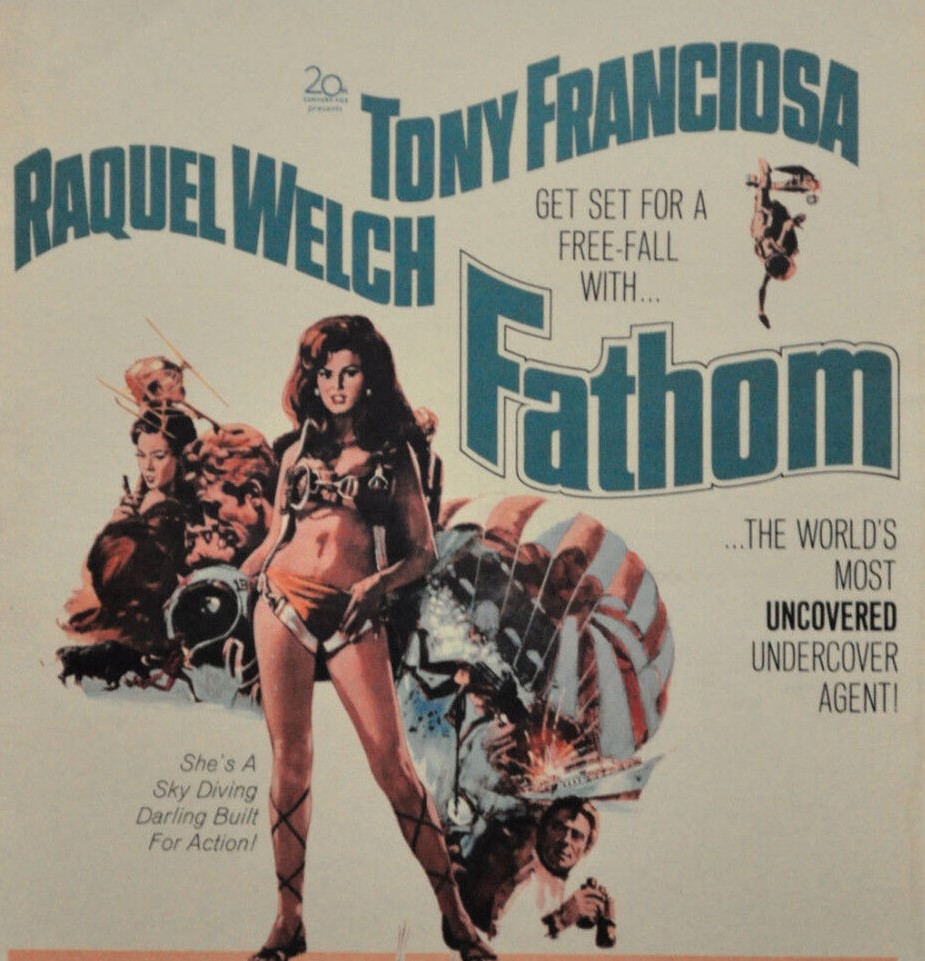
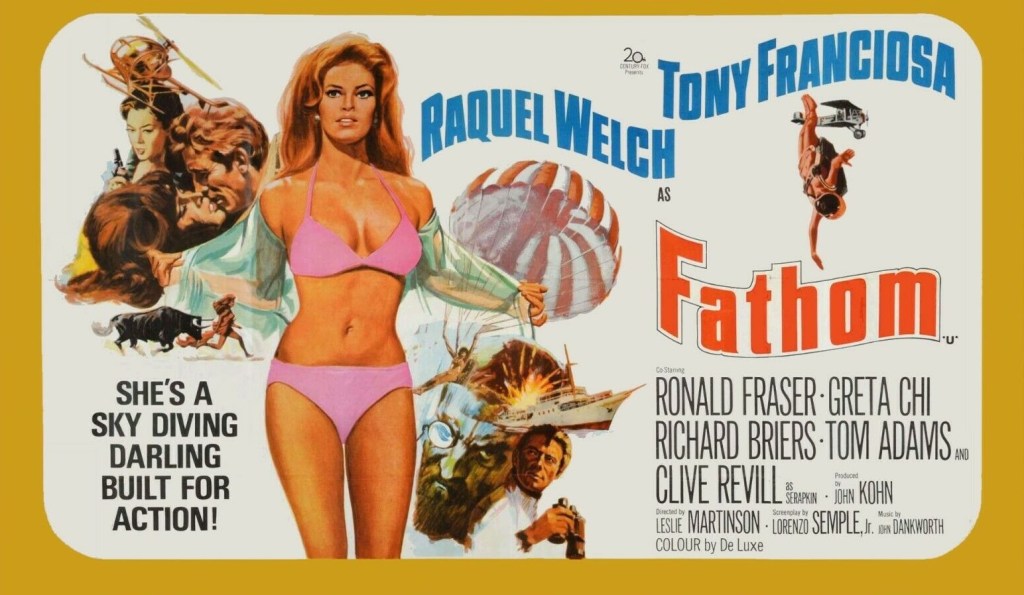
If audiences rallied to the sight of Raquel Welch wearing nothing more than a fur bikini for the entirety of One Million Years B.C. (1966) and a skin-tight suit in Fantastic Voyage (1966) Twentieth Century Fox must have reasoned they would surely return in droves were the star to spend most of Fathom in a succession of brightly-colored bikinis.
Given such a premise who would care that a sky-diving expert was named after a nautical measurement? Or that Fathom (Raquel Welch) came nowhere near the height indicated by her name? Or that the character as described in the source material (a novel by Scottish screenwriter Larry Forester) had a distinctly harder edge; murder, sex and drugs among her proclivities.
With Our Man Flint (1966), the studio had successfully gatecrashed the burgeoning spy genre and spotted a gap in the market for a female of the species, hoping to turn Modesty Blaise (1966) starring Monica Vitti and Fathom into money-spinning series. The Fathom project was handed to Batman, The Movie (1966) co-conspirators, director Leslie H. Martinson and screenwriter Lorenzo Semple Jr. (Flash Gordon, 1980).
Female independence was hard-won in the 1960s and there were few jobs where a woman was automatically at the top of the tree. Burglary was one option for the independent entrepreneur (see The Golden Claws of the Cat Girl) and sport was another.
Welch plays an innocent bystander recruited for her top-notch sky-diving skills (her aptitude demonstrated in the opening sequences) to help Colonel Campbell (Ronald Fraser) of British intelligence recover the “Fire Dragon,” a trigger that could explode a nuclear bomb. Her sky-diving skills are required to land in the courtyard of playboy Peter Merriwether (Anthony Franciosa).
That turns out to be baloney, of course, a MacGuffin to point her in the direction of a valuable Chinese heirloom. And then it’s case of double-cross, triple-cross and whatever cross comes next.
There’s an intriguing mystery at the heart of this picture and a couple of top-class hair-raising moments. In one she is trapped in a bull ring and stunt double Donna Garrett had a few very definite close calls trying to avoid the maddened beast. In another she is stalked at sea by a circling motor boat while being peppered with harpoons. There is also an airplane duel and a ton of great aerial work. A couple of comic sequences are well wrung – Campbell pins his business card to one of the prongs of a pitchfork being brandished with menace by Fathom while Peter delivers a classic line: “The only game I ever lost was spin the bottle and that was on purpose.”
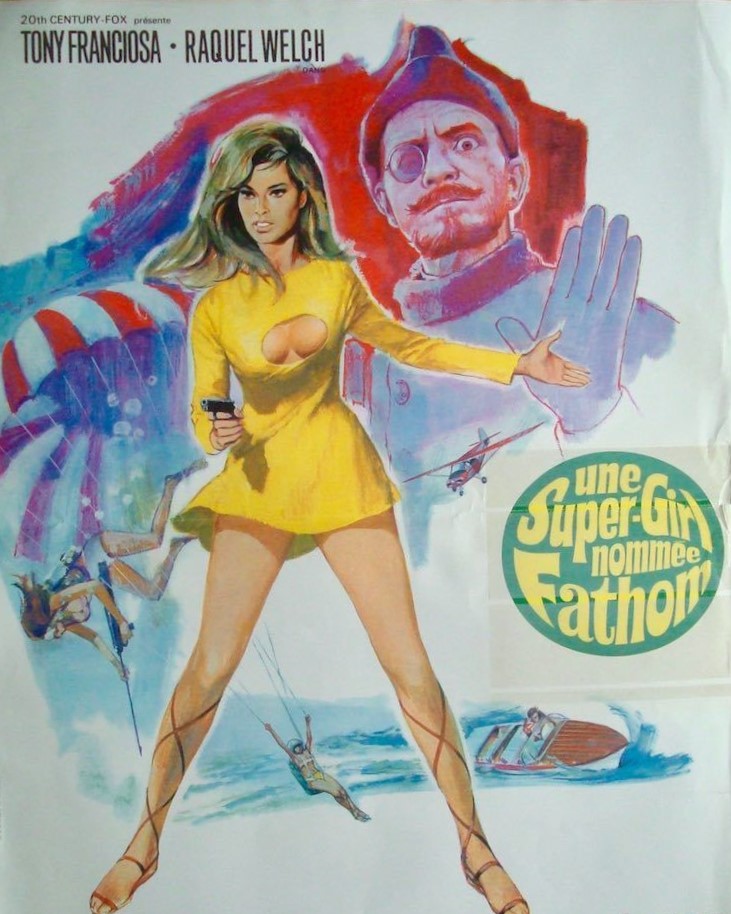
You could probably determine something about national character from the color of costume different countries chose to show Raquel Welch in.
The biggest problem is that the film veers too far away from the source material which posited the heroine as a much tougher character, one who can despatch bad guys with aplomb. Instead, Fathom is presented almost as an innocent, bundled from one situation to another, never taking charge until the very end. Minus karate kicks or a decent left hook, she is left to evade her predators by less dramatic means. She has a decent line in repartee and by no means lets the show down. However, the idea, no matter how satisfactory to fans of the actress, that Fathom has to swap bikinis every few minutes or failing that don some other curve-clinging item, gets in the way of the story – and her character. Into the eccentric mix also come a millionaire (Clive Revill) and a bartender (Tom Adams).
There’s no doubt Welch had single-handedly revived the relatively harmless pin-up business (not for her overt nudity of the Playboy/Penthouse variety) and had a massive following in Europe where she often plied her trade (the Italian-made Shoot Loud, Louder…I Don’t Understand in 1966 and the British Bedazzled in 1967) but she was clearly desperate for more meaty roles. Those finally came her way with Bandolero (1968) and 100 Rifles (1969) and Fathom feels like a lost opportunity to provide her with that harder edge.
She’s not helped by the odd tone. As I mentioned she gets into plenty of scrapes and proves her mettle with her diving skills. In the hands of a better director and with a few tweaks here and there it could have been a whole lot better and perhaps launched a spy series instead of languishing at the foot of the studio’s box office charts for that year.
Anthony Franciosa (Rio Conchos, 1964) , still a rising star after a decade in the business, who receives top billing, doesn’t appear for the first twenty minutes. And then he behaves like a walking advert for dentistry, as though his teeth can challenge Welch’s curves. And some of the supporting cast look like they’ve signed up for a completely different movie. Richard Briers (A Home of Your Own, 1965) – Ronald Fraser’s intelligence sidekick – looks like a goggle-eyed fan next to Ms Welch while Clive Revill (The Double Man, 1967) thinks it’s a joke to play a Russian as a joke. Ronald Fraser (Sebastian, 1968) provides decent support.
But it is certainly entertaining enough and you are unlikely to get bored.
Book into Film: A Girl Called Fathom by Larry Forrester (1967)
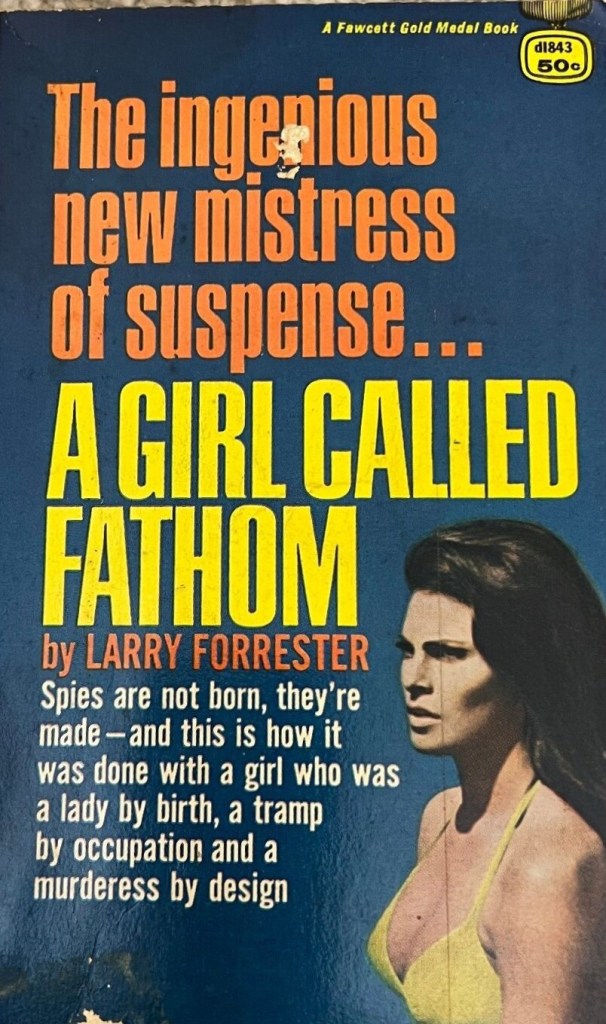
The blurb gives the game away. The British paperback published by Pan went: “She was blonde. She was beautiful, she was six foot tall. She’d killed the man who had dragged her to the lowest depths of addiction and lust.” The American Fawcett Gold Medal paperback was more succinct: “lady by birth, tramp by occupation and murderess by design.”
If any of that rings a bell, it was not from the film Fathom (1967) starring Raquel Welch which chose to ignore her background and her venomous skillset. The novel opens with the heroine killing a man in cold blood. He had promised her a film career but turned her into a call girl and heroin addict. Her father, now dead, was in the British secret service. Once she has committed her first murder, she is immediately kidnapped by a secret organization (C.E.L.T.S. – Counter Espionage Long-Term Security) and trained to become an even more ruthless government-sanctioned killing machine.
Larry Forrester was a Scottish television scriptwriter who had worked on a stack of British series such as Whirligig (1953), Ivanhoe (1958) and No Hiding Place (1960-1964) before publishing his first novel A Girl Called Fathom. His sole screenplay was Tora! Tora! Tora! (1970) after which he concentrated on U.S. television including episodes of Fantasy Island (1980-1983) and Hart to Hart (1983-1984).
A Girl Called Fathom is split into two. Comprising roughly two-fifths of the book, the first section concentrates on her brutal training and on getting her off drugs. There’s a fair amount of sexual intrigue not to mention sex. But also a lover’s betrayal. For the final part of her training she is abandoned in the middle of nowhere in scorching heat and barely makes it home. “She had passed over a great divide. She was empty, hard – dehumanized. Alone. She would always be alone.” And then she is forced to kill again.
As was common with this kind of book in the 1960s, it was fast-moving and globe-trotting with plenty of realistic detail to offset the preposterous plot. For the remainder of the book, which shifts location to Europe, Fathom is up against an organization called W.A.R. (World of Asian Revolution) which aims to destabilize the existing world order. Her arch enemy is an American-born Soviet agent (and whip and knife expert) Jo Soon (who turns up in the film Fathom in slightly different form as Jo-May). Fathom’s team must protect French elder statesman Paul-Auguste Valmier whose playboy son Damon (who fantasizes about burning people alive), a friend from her past, is her main contact.
The book is peopled by interesting and occasionally outrageous characters – for example Tin (shades of Iron Man), who has hardly a human bone left in his body; the far-from-harmless Aunt Elspeth; and a sadistic colleague who loves her but dare not let his emotions out lest he loose on her his love of pain. The central plot is driven by a mass of twists and turns, heroine endangerment, fights with knife and gun and fist, traitors (naturally) and the clever idea of killing off the leaders of the free world with a bomb hidden in the coffin of a man worthy of a state funeral being held in Paris.
At the end she is counting the human cost of victory and sees herself as one of the walking wounded, a reject, driven from the herd. The film was apparently based on an unpublished sequel so it’s conceivable that the plot concerning the Chinese heirloom was pulled from that in its entirety. But even so the film’s heroine was neutered, not a patch on the ruthless killer with a sordid past outlined in A Girl Called Fathom.
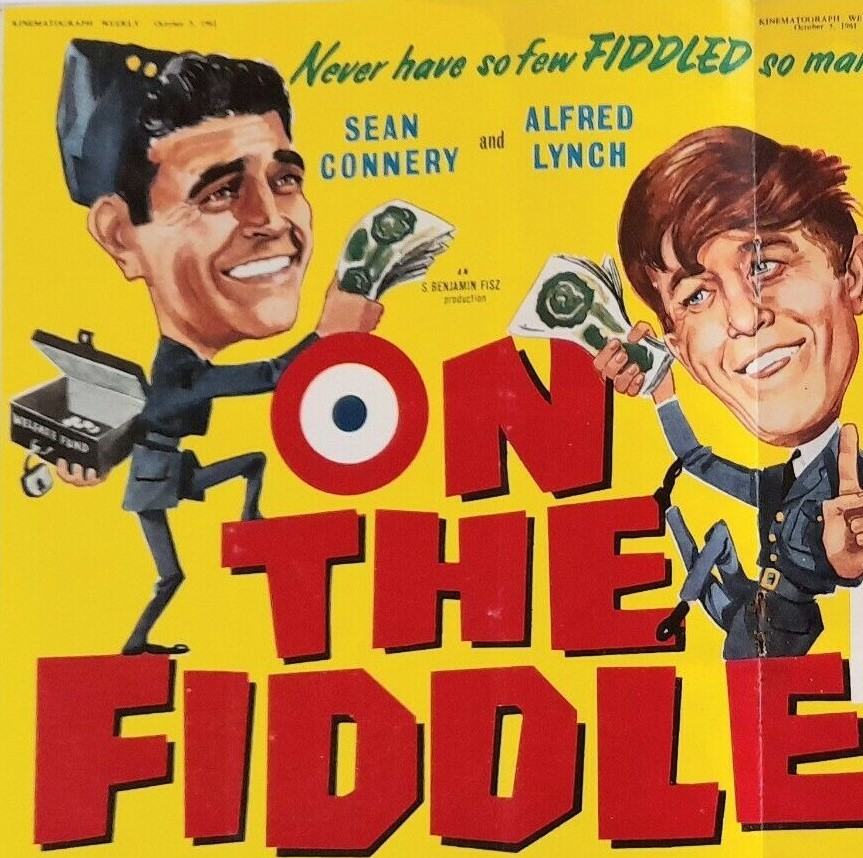
Unassuming but undeniably charming British World War Two comedy denied U.S. release until four years later when a savvy distributor jumped on the James Bond bandwagon. Primarily of interest these days for the opportunity to see a pre-Bond Sean Connery (Dr No, 1962) in action its merit chiefly lies in ploughing the same furrow, though with a great deal less pomposity and self-consciousness, as the later The Americanization of Emily (1964), of the coward backing into heroism.
Horace Pope (Alfred Lynch) is a scam merchant who only dodges prison by enlisting. Assigned to the RAF he teams up with Pedlar Pascoe (Sean Connery) and they embark on a series of schemes designed to keep them as far away from the front line as possible. It’s hardly an equal partnership, Pope dreams up the fiddles while Pascoe just falls in with them. It’s not dumb and dumber but a collaboration that goes no further back in the annals of movies than brain and brawn.
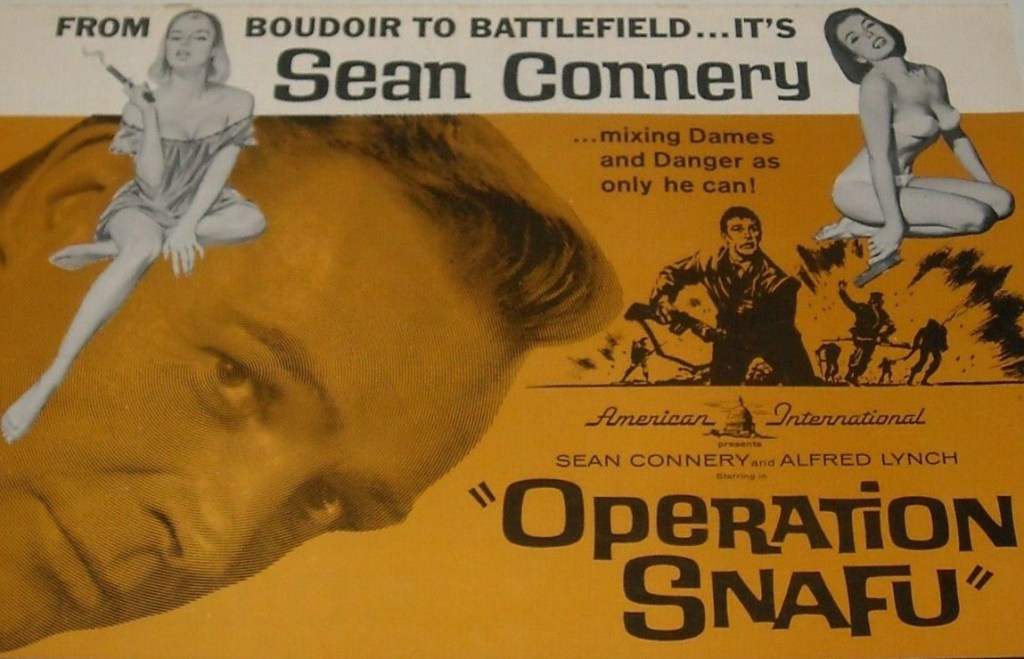
Needless to say, the movie lacks the the damsels in bikinis which were a prerequisite of the Bond pictures. Sean Connery takes top billing Stateside where he was originally behind Lynch.
It’s certainly a cynical number, reflecting the boredom experienced by many of the Armed Forces backroom staff, the administrators whose inefficiency turns them into easy dupes, and the determination of soldiers to take advantage of every opportunity to bend the rules. It takes the unusual position of presenting the ordinary soldier as smart and every officer as a numbskull, an approach that would only have been possible 15 years after the war ended and in marked contrast to the determined heroism of other British war films – such intrepid stiff-upper-lip behavior a hallmark of the British version of the genre.
First stop is to run an operation issuing leave passes – for a price – and the sheer effrontery exhibited by Pope is a joy to behold. Next up is selling stolen meat on the black market.
While Pedlar is the wide-eyed camp follower, and more likely to forever sit on the sidelines, cheerful but shy, and only a few pratfalls away from being a bumbling idiot, they do make a good team. Being sent to France is more of a heaven-sent opportunity to increase their bankrolls than a hazardous wartime mission as Pope sells rations to the French. Eventually, of course, their various scams are rumbled and they are forced into battle.
The only thing better than one pre-Bond Connery picture is two.
The movie switches a bit more deftly into serious mode than the aforementioned The Americanization of Emily mostly because these are actual soldiers trained to be soldiers rather than an officer who landed a cushy number and whose main effort is to avoid combat. War is presented as horrific rather than comedy and it must have been the same experience for an ordinary soldier at the time, after months of inactivity suddenly thrust into the cauldron.
The picture moves at a brisk pace and is continually amusing if not particularly laugh-out-loud. You’ve probably seen most of the set-ups before but they are reinvented with an appealing freshness and briskness As a bonus there’s reams of British character actors and comedians – plus token American Alan King (who would appear in Connery starrer The Anderson Tapes, 1971) – along the way. The term “snafu” in case you’re interested, has a similar meaning to the “fubar” of Saving Private Ryan (1998).
Alfred Lynch (The Hill, 1965) doesn’t milk the Cockney patter overmuch and he’s got a greater international screen appeal than the likes of the more English Sid James (Carry On films) or Norman Wisdom. Think a shiftier Sgt Bilko, if the Phil Silvers creation could be any more untrustworthy.
Connery’s performance is well worth a watch as a prelude to what was to come once his roles were tailor-made. He is an effortless scene-stealer, gifted in expressing emotion through his eyes, and although verbally Lynch dominates it’s difficult to take your eyes off Connery.
The roll-call of character actors includes Cecil Parker (A Study in Terror, 1965), Stanley Holloway (My Fair Lady, 1964), John Le Mesurier (The Moon-Spinners, 1964), Graham Stark (The Wrong Box, 1966) and Victor Maddern (The Lost Continent, 1968).
Cyril Frankel (The Trygon Factor, 1966) comfortably cobbles this together from a screenplay by Harold Buchman (The Lawyer, 1970, and who had ironically enough penned the picture Snafu in 1945) based on the novel Stop at a Winner by R.F. Delderfield.
When the box office supremacy of the Bond pictures was underscored by the reissue of the Dr No/From Russia with Love double bill in 1965, distributors, as had been their wont, racked the vaults for anything featuring Connery that could be re-sold to a willing public.
While there is a readily available DVD, this turns up on a regular basis, in Britain at least, on television.
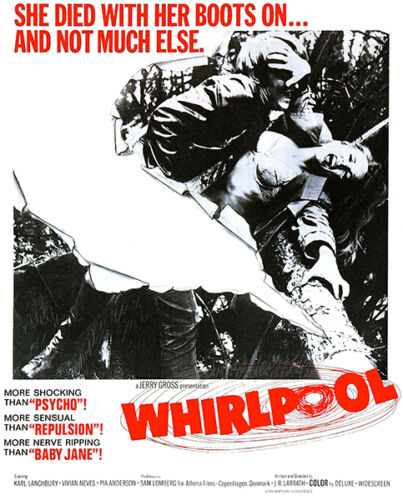
Sexual adventuress takes trip to the country with disastrous results. Best described as an early British venture in the giallo mold it lacks some of the style of that genre but is notable for the debut of Spanish cult director Jose Ramon Larraz (Vampyres, 1974). Perhaps as interesting is that it details a nascent killer warming to his task and climaxes in a nihilistic ending. Scoring so high on the sex/nudity quotient in the U.S., it was considered an out-and-out exploitationer.
Wealthy older woman Sarah (Pia Andersson) brings home model Tulia (Vivian Neves) for her protégé Theo (Karl Lanchbury), a budding photographer. Sarah’s proclivities are apparent from the start, preferring young women though young men will also suffice, a switch in the normal power play of the era (and now for that matter) of rich old men chasing younger women.
Tulia is no innocent, lured or straying into the big dark house, and she’s game for anything, happily participating in a game of strip poker that ends in sex with Theo. However (and striking a contemporary note), he is unable to perform – for reasons that might be similar linked to young people today who suffer from the same condition due to over-exposure to porn – and in Theo’s case because he prefers watching.
Quite how far he is willing to go to achieve his kicks is shown in a scene where he drives Tulia to the woods where she is almost raped by his friend Tom so that Theo can photograph the act. Quite how far Tulia is willing to go is indicated by the fact that, while upset at this incident, she doesn’t run a mile and instead continues to enjoy games of seduction, this time with Sarah, with Theo at first limiting his participating to recording the action but later taking part in a menage a trois.
Meanwhile, a Scotland Yard Detective Inspector (Barry Craine) interrogates businessman Mr. Field (Edwin Brown), sugar daddy to missing Irishwoman Rhonda (Johanna Heger), and Field takes it upon himself to pay Theo a visit. Quite how he knows of Theo’s involvement with Rhonda is unclear but he doesn’t accept the explanation that the girl has gone home and hangs around to do a bit of spying. Not such a good idea, because he pays the penalty.
Although it’s a pleasant detached cottage and far from an old dark house, Tulia takes it upon herself to take a look at Theo’s studio where she finds various items of female clothing and photos of an unsavoury nature. A flashback reveals the death of Rhonda, seduced by Tom, then, following the arrival of Theo and his trusty camera, raped by a tramp. But it’s not Theo who kills her. It’s Tom, and largely by accident.
So what’s being set up really is how far beyond his normal games Theo will go, with Tulia providing the test case.
A chunk of the tension comes from having no idea what’s going on beyond Sarah indulging Theo. She appears ignorant of the depth of his perversion. And with Tulia being so complicit initially in the sex it appears to be going down a different route to the slasher pictures like Scream and more in keeping with the giallo which had yet to get into its stride. Tulia is a modern girl for the times, certainly not sexually repressed, which was refreshing, and being a model comfortable with her body. But she would not have been expecting something like this.
Karl Lanchbury (What’s Good for the Goose, 1969) looked like he was perfecting the creepy persona that would carry him through a few more Larraz pictures. Vivian Neves was a model, famous two years later for featuring in the first nude advertisement in The Times, but also a glamour model with pictorials in Penthouse and The Sun, and known as “The Body” a quarter of a century before that title was appropriated by Elle Macpherson, and later set up her own modelling agency. Pia Andersson only made this one picture.
Given he was dealing with so much inexperience and was himself a debutant, Larraz does a pretty good job. He would go on to make another 25 films mostly in the exploitation vein.
I came across this on YouTube while looking for the Otto Preminger film noir Whirlpool (1950). The version I saw is taken from a very ropey VHS with time codes but there’s a better print on the channel under the title of Perversion Flash.
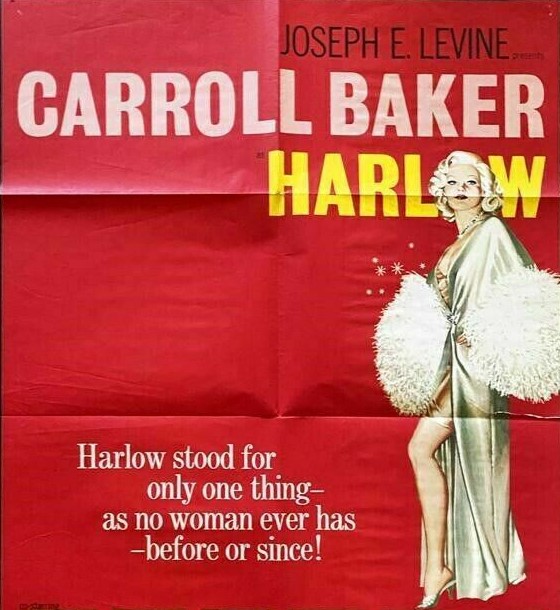
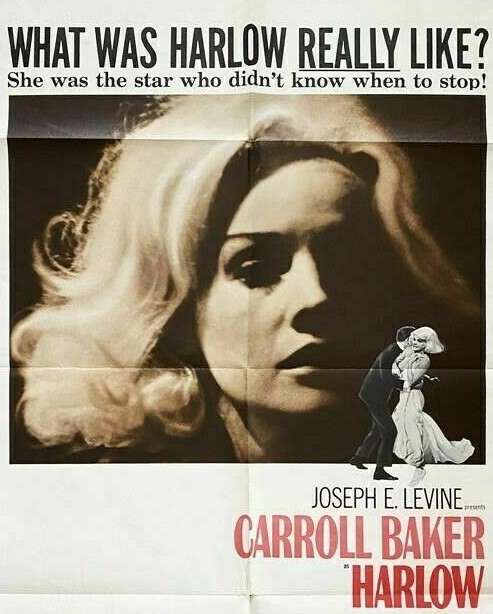
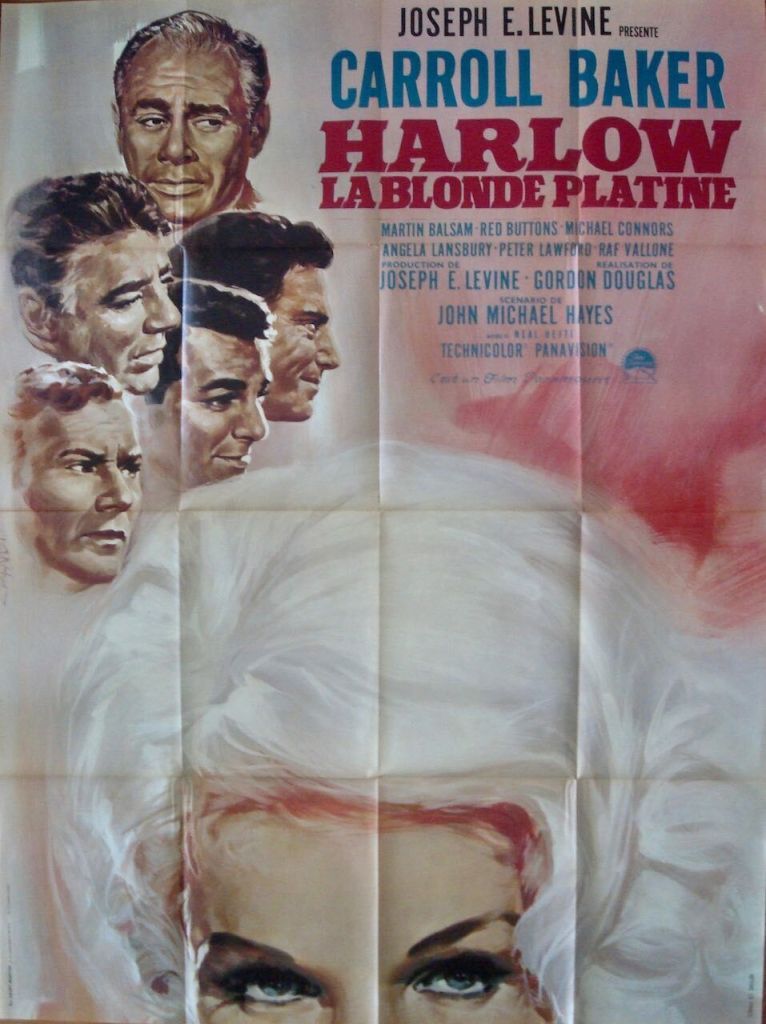
Harlow presents such a convincing picture of Hollywood abuse that I was astonished to discover that it was not entirely truthful where the title character was concerned.
Jean Harlow was a hugely popular star in the 1930s before her untimely death at the age of 36. This film depicts her as a virgin (not true) who turns neurotic (not true) after her impotent husband commits suicide (debatable) on their wedding night (not true) leading to her go off the rails and die from pneumonia (not true). But in terms of the Hollywood system a great deal rings true and if the Me Too movement had existed in the late 1920s the finger would be pointed at a huge number of men.
The film is at its best when dissecting the movie business. A five-minute opening sequence demonstrates its “factory” aspect as extras and bit players clock in, are given parts and shuffle through great barns to be clothed and made up, often to be discarded at the end of the process.
No sooner has this version of Jean Harlow (Carroll Baker) been given a small part than she encounters the casting couch, operated by a lowly assistant director, who bluntly offers five days’ work instead of one if she submits to his advances. When she turns him down, work is hard to come by and she resorts to stealing lunch before rescued by agent Arthur Landau (Red Buttons). After tiny parts that mostly consist of her losing her clothing, receiving pies or eggs in the face and displaying her wares in bathtubs, she geta a big break only for that producer to demand his pound of flesh – “I’ve already bought and paid for you.” Here she has “the body of a woman and the emotions of a child” and ends up choosing the wrong suitor which leads to a calamitous outcome.
However, the pressures of stardom are well-presented: she is the breadwinner for her unemployed mother Jean (Angela Lansbury) and lazy stepfather Marino (Raf Vallone) and soon box office dynamite for studio chief Everett (Martin Balsam) who sees in her the opportunity to sell good clean sex. The negotiations/bribery/blackmail involved in fixing salaries are also explored.
But the film earns negative points by mixing the real and the fictional. The agent and husband Paul Bern (Peter Lawford) existed but most of the others are invented or amalgamations of different people. MGM is represented as “Majestic” and among her films there is no Red Dust (1932) or China Seas (1935) but lurid inventions like Sin City.
Director Gordon Douglas was a versatile veteran, with over 90 films to his credit, from comedies Saps at Sea (1940) and Call Me Bwana (1963) to westerns The Iron Mistress (1952) and Rio Conchos (1964) and musicals Follow That Dream (1962) and dramas The Sins of Rachel Cade (1961) and Sylvia (1965) which also starred Baker. The opening scene apart, which is a seamless construction, he is adept at this kind of helter-skelter drama. John Michael Hayes (Rear Window, 1954) has produced a punchy script based on the book by Arthur Landau and Irving Shulman.
In the title role Carroll Baker (Sylvia) has probably never been better, comedian Red Buttons (Stagecoach, 1966) excellent in a straight role while the smarmy Raf Vallone (Nevada Smith, 1966) is the stand-out among an excellent supporting cast that also includes Angela Lansbury (In the Cool of the Day, 1963), Peter Lawford (Sylvia), Leslie Nielsen (Beau Geste, 1966), Martin Balsam (Seven Days in May, 1964) and Mike Connors (Stagecoach, 1966).
Except that virtually none of the movie is true, I would have given it four stars for its portrayal of Hollywood but I have come to expect that biopics, while moving facts around for dramatic purposes, are required to be good more faithful to their subjects than this.
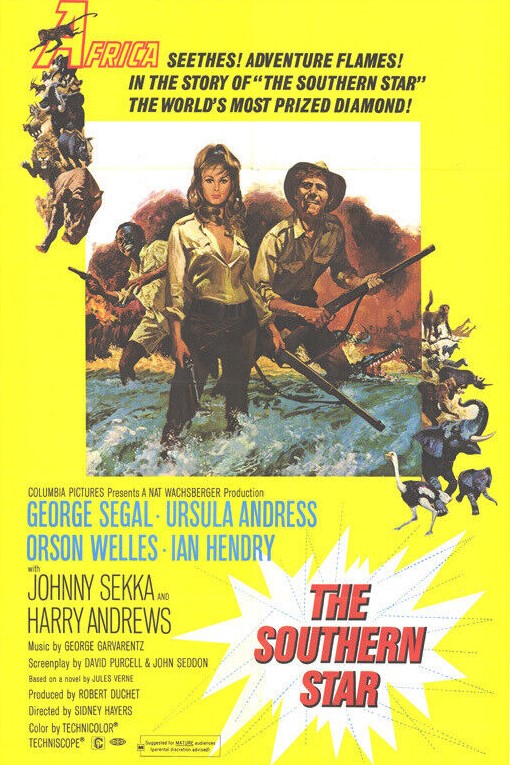
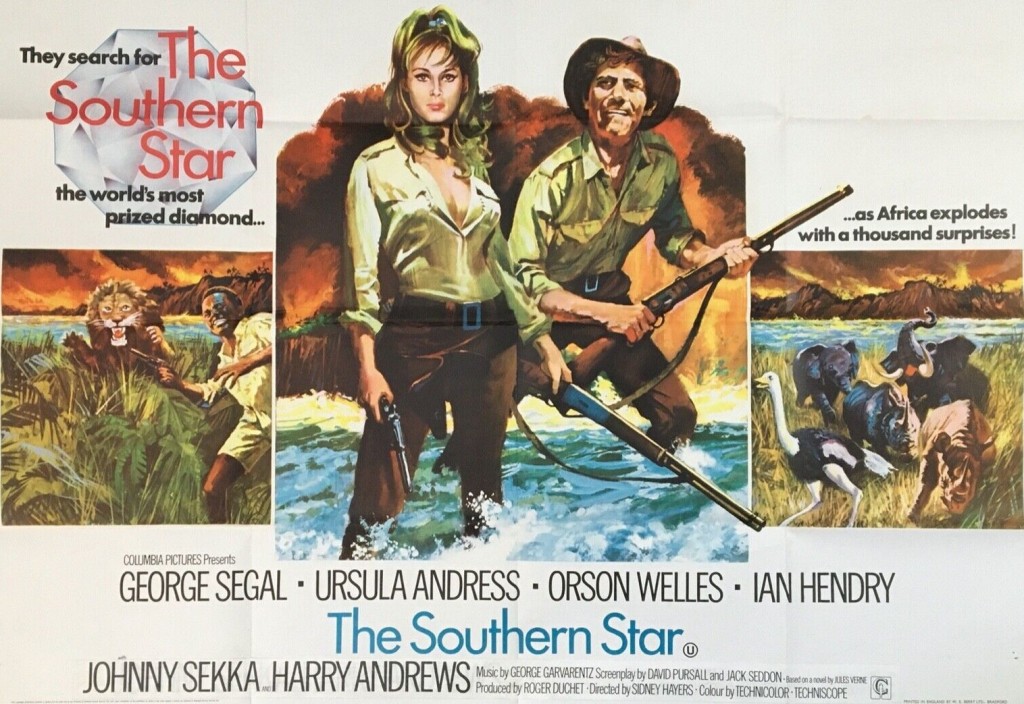
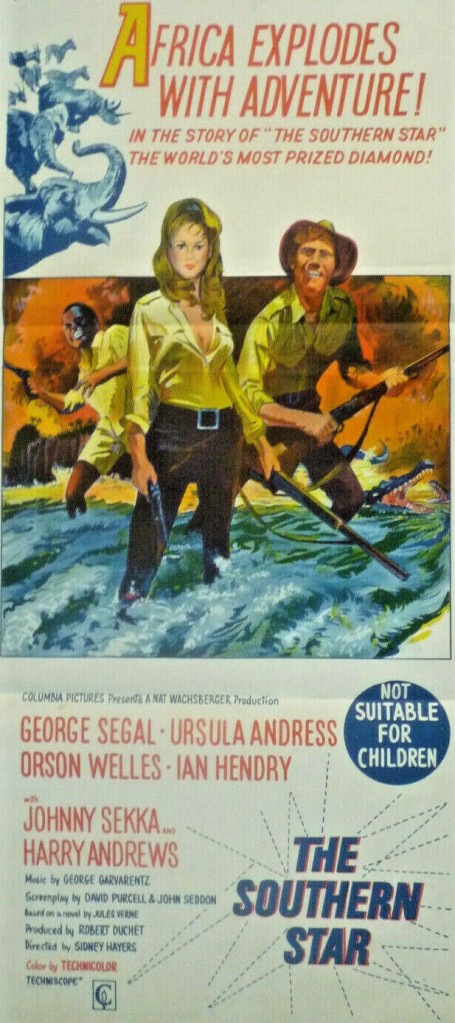
There’s a surprisingly good movie here once you strip out the cliché jungle stuff and the racist elements. The diamond of the title is actually a MacGuffin, just enough to get you started on two parallel tales of revenge.
Dan (George Segal) is a mining engineer-cum-adventurer and Erica (Ursula Andress), daughter of mine owner Kramer (Harry Andrews), as far from the traditional jungle heroine (except in one regard) as you could get. She saves him from crocodiles, rescues him from jail and quicksand, swims across a hippo-infested river and is a better shot than him (or anybody for that matter) with a rifle. This is female empowerment with a vengeance.
Suspected of stealing the diamond, he is hunted by ranger Karl (Ian Hendry), Dan’s love rival, who intends to win Erica back using the simple expedient of killing the thief. Lying in wait is all-purpose rogue Plankett (Orson Welles) who seeks revenge on Karl. The second unit had a whale of a time filming anything that moved – lions, leopards, zebras, giraffes, buffaloes, monkeys, antelopes, the aforementioned hippos and crocodiles and what looked like a cobra – and at one point everything does move in coordinated fashion if you can call a stampede coordinated.
But the main focus is an Erica who constantly confounds Dan’s sexist expectations. Docility is her disguise. Anytime she appears to be doing what she’s told you can be sure she’s planning the opposite. While Dan does have his own specific set of jungle skills, he often looks a fool. But they do make a good screen partnership and their dialogue is lively.
Hollywood spent millions of dollars trying to create screen chemistry between various stars and although it seemed to work very well in the industry’s golden age with Clark Gable and any number of MGM female stars, Bogart/Bacall and Tracy/Hepburn and I guess you could chuck John Wayne-Maureen O’Hara into that particular mix, the formula seemed to have gone awry by the 1960s discounting the Doris Day/Rock Hudson combo, big budget romances like El Cid (1961) and Doctor Zhivago (1965) and an occasional home run with whomever Cary Grant was romancing on screen. So it was usually hit-or-miss whether any sparks flew between the stars.
Andress had certainly been a European femme fatale par excellence as seen in Dr No (1962) and The Blue Max (1966), but it was certainly not a given that she would more than hold her own for an entire picture. Segal was nobody’s idea of a romantic leading man although the notion had been given a tryout in The Girl Who Couldn’t Say No (1968) with Virna Lisi. But here the whole enterprise works in an It Happened One Night vein with the supposedly superior male recognizing that perhaps his companion was more than a match.
Harry Andrews and Orson Welles both try to steal the picture, with polar opposite characterizations, Andrews loud and menacing, Welles soft and menacing. You can tell Scottish director Sidney Hayers (The Trap, 1966) was an editor because he cuts for impact and mostly does an efficient job of sticking to the story. Supposedly, Orson Welles directed his own scenes, but that might be to make sure he got to hog the camera. He has enough choice lines and bits of business to keep him happy and gives his venomous character a camp edge. Matakit (Johnny Sekka), Dan’s buddy, who actually has the diamond, is separately pursued and subjected to racism and being whipped.
Despite my reservations, this is well constructed and keeps one step ahead of audience expectation with plenty twists to subvert those, although the music by Johnny Dankworth gets in the way, offering musical cues opposite to what is required.
As it is a jungle picture there is the obligatory heroine’s bathing scene – and to balance the books on that score Segal does whip off his shirt at one point. Except for the clichés and the racism, it would have gone higher in my estimation for by and large it is well done and Andress is once again (see The Blue Max) a revelation.
What if redemption isn’t enough? When shame is buried so deep inside the psyche it can trigger no release? That’s the central theme of Richard Brooks’ adaptation of Joseph Conrad’s classic novel.
The title character’s shame comes from, as a young officer, abandoning a ship he believed was sinking only to later discover it had been rescued with a cargo of pilgrims who point the finger of blame. He is branded a coward and kicked out of the East India Trading Company, plying his trade among the debris of humanity.
You might think he later redeemed himself by foiling a terrorist plot at great risk to his own life. But that cannot erase his shame. Nor can helping revolutionaries overthrow a despotic warlord (Eli Wallach), enduring torture and again at great risk. What other sacrifice must he make to rid himself of the millstone round his neck?
Writer-director Brooks had a solid pedigree in the adaptation stakes – The Brothers Karamazov (1958), Cat on a Hot Tin Roof (1958), Elmer Gantry (1960) and The Sweet Bird of Youth (1962) – but sometimes you felt the writer got in the way of the director. That’s the case here. There was enough here to satisfy the original intended roadshow customers, great location work, grand sets, length, a big star in Peter O’Toole, but there is no majestic camerawork. There are good scenes but no great sweep and the result is a slightly ponderous film relieved by stunning action, some moments of high tension, the occasional twist to confound the audience and ingenious ways to mount a battle.
Hired killer Gentleman Brown (James Mason) has many of the best lines – “heroism is a form of mental disease induced by vanity” and “the self-righteous stench of a converted sinner” – all in reference to Jim. Everybody has great lines except Lord Jim, as introverted as Lawrence of Arabia, face torn up by self-torture, fear of repeating his original sin of cowardice and convinced he will be cast out again should people discover he had abandoned hundreds of pilgrims.
Apart from the storm at the outset, the central section in the beleaguered village is the best part as Jim finds sanctuary, love and purpose, and conjures up the possibility of burying the past.
Part of the problem of the film is the director’s need to remain faithful to the source work which has an odd construction and you will be surprised at the parts played by the big-name supporting cast of James Mason, Jack Hawkins and Curt Jurgens. Many of the films made in the 1960s were concerned with honor of one kind or another and, despite my reservations about the film as a whole, as a study of guilt this is probably the best in that category, in that this character’s conscience refuses to allow him an easy way out.
Peter O’Toole (Lawrence of Arabia, 1962) is chock-full of anguish but finds it difficult to create a character of similar heroic dimensions to the David Lean picture. James Mason (Age of Consent, 1969) is surprisingly good in an unusual role. Eli Wallach (The Magnificent Seven, 1960) as The General plays a variation of a character he has essayed before.
This may have been a step up the Hollywood ladder but it was backward move in acting terms given Daliah Lavi’s performance in The Demon (1963) – reviewed here some time ago. Her talent is somewhat wasted in an underwritten part. Also in the supporting cast: Curd Jurgens (Psyche ’59, 1964), Akim Tamiroff (TheLiquidator, 1965), Andrew Keir (Quatermass andthe Pit, 1967) and Jack MacGowran (Age of Consent).
Director Richard Brooks was also on screenwriting duties.
Although the weekly computerized box office system covering the Top 50 pictures and drawing on information supplied by nearly 1,000 cinemas in the United States did not appear, courtesy of Variety magazine, until 1969, there still existed a weekly tabulation, based on receipts from a smaller base from which the magazine produced a weekly Top Ten. And although box office watching was not yet a recognized leisure activity, what movies made and their rankings on the weekly box office chart were compulsive reading for the thousands of cinema owners hoping to snap up the next big one and the Hollywood studios gambling they had released the next big one.
So I thought it might be fun to track box office throughout the year, based on that weekly chart.
By 1963 Hollywood had turned into a casino. To beat the growing threat of television, the movie industry was committed to bigger pictures with, unfortunately, bigger budgets, heralding in the roadshow era, the 1960s equivalent of 3D or Imax with premium prices and reserved seats and two shows a day. Despite John Wayne’s 1960 epic The Alamo proving such gambles could spectacularly backfire, studios had a slate of movies that, if failures, could clean them out. Already fears were mounting that Brando’s Mutiny On The Bounty, opened in October 1962, would never recover its $19m cost.
Cinerama staked a fortune on its first story-led movie How The West Was Won and Columbia Pictures had bet the house on a 3-hour 20-minute opus Lawrence of Arabia that starred a complete unknown. The latter had opened at Xmas 1962 and if it was to make its money back had to play well night through most of 1963 on the roadshow circuit. If that wasn’t enough, blizzards mashed up the country and a three-month newspaper strike in New York meant – in the days before television marketing – there was nowhere to promote big new movies, delaying the U.S. opening of How the West Was Won. .
But Lawrence was monumental, playing to capacity crowds for a dozen weeks at the Criterion in New York, clearing $43,000 – equivalent to over $400,000 now – every week. In in the fifth week, by dint of adding an extra show, it broke its own record.
Roadshows opened in a handful of cinemas – knocking up revenues today’s exhibitors would envy – and playing seemingly forever (in the UK, for example South Pacific was being readied for general release four years after its premiere).
So big movies were slow-burners and Lawrence didn’t top the charts till week six of the 1963 box office calendar . Its reign lasted only two weeks, replaced by Gregory Peck’s To Kill A Mockingbird which in one cinema alone, New York’s legendary 6,000-seater Radio City Music Hall, had taken $160,000 (about $1.5 million now). That was knocked aside by the season’s first surprise hit, Disney’s Son of Flubber which went on to become the year’s seventh top grosser – ahead of Mockingbird. It wasn’t the only surprise. Biblical tango Sodom and Gomorrah went to number one in its first week, a rarity, although it quickly faded. The third surprise chart topper, in March, gave comic mainstay Jack Lemmon his first serious role in Days of Wine and Roses. Hitchcock’s The Birds took over the perch in mid-April before How The West Was Won which reigned for weeks.
Over the January-April period, other hits, that is enjoying some weeks in the Top 12 chart, in their opening stanzas were Charlton Heston’s Hawaiian movie Diamond Head, Yul Brynner and Tony Curtis squaring up in Taras Bulba, Laurence Olivier drama Term of Trial, Anthony Quinn in Barabbas, Dean Martin comedy Who’s Got The Action, small-budget David and Lisa and the pairing of Robert Mitchum and Shirley Maclaine (sparking their affair) in the adaptation of Broadway hit Two For the Seesaw. Bear in mind, however, that initial success was no guarantee – what played to packed houses in New York or Los Angeles might empty theatres in Arkansas.
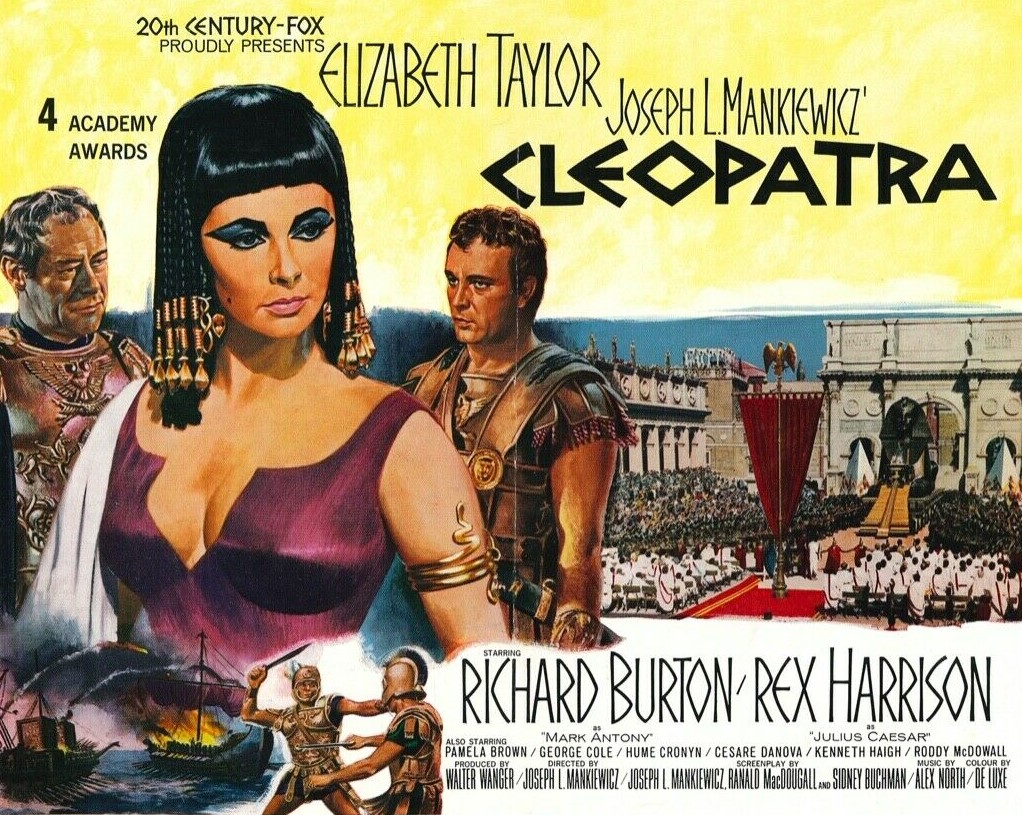
But the year’s biggest gamble appeared to be already paying off. Cleopatra had sold out its first 19 nights six months ahead of its June premiere and taken $8m in cash advances from cinemas in 20 cities. And there was also the little matter of the forthcoming release of the British box office sensation Dr No.
The summer period – May through to the end of August – was marked by three enormous gambles as How The West Was Won,Cleopatra and 55 Days At Peking took center stage. The western boasted John Wayne, James Stewart and Debbie Reynolds. Cleopatra was the most expensive film ever, at four hours nearly the longest and, thanks to Burton-Taylor’s shenanigans the most scandal-ridden.
Summer as we know it – with Memorial Day and Independence Day massively important – did not exist in the 1960s. Until the roadshow, opening dates were not juggled, movies simply released as soon as made. The importance of advance bookings for roadshows altered the pattern. Unlike now when saturation screening means nobody is turned away on opening weekend, the definition of a hit was being made to wait . Epics like El Cid, Lawrence of Arabia, and How The West Was Won were publicized months ahead and Cleopatra set the marketing bar at insane levels.
That’s Irma, by the way, of “Douce” fame.
How the West Was Won was No 1 in the Variety chart for eight weeks, notching up fabulous returns, but nothing to match Cleopatra which peaked for nine weeks and grossed $3.1 million in 33 days – faster than any roadshow before. 55 Daysat Peking, Samuel Bronston’s follow-up to El Cid, surprisingly not roadshown, grabbed No 1 in its opening week but tumbled fast. Dr No, pulverizing the UK box office the previous year, suffered by going on release too fast. Unable, like roadshows, to groom an audience, it didn’t hit number one and lasted only four weeks in the Top Ten. In his last hit for a decade, Brando did better – The Ugly American managing eight weeks, again not a chart-topper..
Others featuring in various slots in the Top Ten were a mean Paul Newman in Hud, Frank Sinatra in Come Blow Your Horn, the Jack Lemmon-Shirley Maclaine non-musical adaptation of the Broadway musical Irma La Douce,The Great Escape (charting for 13 weeks), and Doris Day in The Thrill of It All. Surprise appearances included Ray Harryhausen’s Jason and the Argonauts, Peter Sellers’ The Wrong Arm of the Law, Hayley Mills in Summer Magic, Sandra Dee in Tammy and the Doctor and teen dreams Frankie Avalon and Annette Funicello in Beach Party. Biggest disappointment was John Wayne’s Donovan’s Reef which only lasted one week at in the chart and then on its lowest rung – No 10.
But taboos were broken that summer, changing cinema forever. Sneaking into the Top Ten were the original ‘shockumentary’ Mondo Cane, adult fare like Lillian Hellman’s Toys in the Attic, the first of the British kitchen-sink dramas The L-Shaped Room (“Sex Is Not A Forbidden Word!” the catchy catchline) starring Leslie Caron as an unmarried mother, Joanne Woodward in The Stripper and most, astonishingly of all, Fellini’s 8½.
How studios must have loved the release system in those days. Instead of movies being whipped off screens after three or four weeks or to fit into a preconceived streaming showing, big hits, especially roadshows, could hold onto their screens for months and months.
For the September-to-December period of 1963, the biggest stars were Elizabeth Taylor and Richard Burton. Cleopatra spent another seven weeks at No 1 in the Top Ten, The VIPs three weeks. But Jack Lemmon ran them close as star of the year. Just after Irma La Douce ended a 21-week Top Ten run, Under The Yum Yum Tree snapped top spot in December. Cleopatra was hardly innocuous, and Irma was a prostitute, but Yum Yum went much further with Lemmon playing a lascivious landlord renting rooms to nubile girls.
Bubbling under the American psyche was a desire for the illicit. What else explained the appearance in the Top Ten of films about mental illness – Sam Fuller’s Shock Corridor and The Caretakers starring Robert Stack. Even Paul Newman’s latest hit A New Kind of Love pivoted on Joanne Woodward being mistaken for a call-girl. The Top Ten seethed with ‘Adult’ or ‘Continental’ themes – ‘shockumentary’ Women of the World, children as feral monsters in Lord of the Flies, the title of the Italian Cannes-winner The Conjugal Bed said it all while In The French Style with Jean Seberg only hinted at it. Fellini’s 8½ paved the way for arthouse break-out Visconti’s The Leopard starring Burt Lancaster which, incredibly, peaked at No 5. Sophia Loren led a star-studded European cast in The Condemned of Altona based on the Jean-Paul Sartre book. Robert Wise’s seminal horror film The Haunting spent a week in Top Ten. More significantly, Sidney Poitier broke through the glass ceiling to become the first African American actor to have a significant hit with Lilies of the Field.
Back in the mainstream, Debbie Reynolds’ Mary Mary, based on the Broadway hit, spent two weeks at No 1. Hollywood stalwarts charting successfully included Kirk Douglas in For Love Or Money, James Stewart (with Sandra Dee) in Take Her She’s Mine, Robert Mitchum (plus sexpot Elsa Martinelli) in African adventure Rampage, John Wayne in spanking good form with Maureen O’Hara in McLintock and Elvis in Fun in Acapulco. . Surprise successes were The Incredible Journey and television’s Dr Kildare Richard Chamberlain in courtroom drama Twilight of Honor plus two Disney reissues – Fantasia and Kirk Douglas in 20,000 Leagues Under The Sea.
The year’s blockbusters showed astonishing legs – How The West Was Won playing 52 weeks in the Top Ten, Lawrence of Arabia 41.
The Top Ten grossing films of the year were (in order) – Cleopatra, The Longest Day, Irma La Douce, Lawrence of Arabia, How The West Was Won, Mutiny On The Bounty, Son of Flubber, To Kill A Mockingbird, Bye Bye Birdie and Come Blow Your Horn.