Machines get in the way of this tale of men under pressure. Often viewed as a PR exercise for the Strategic Air Command to counter complaints about competence, and signally out of tune with a Hollywood faction that was beginning to view investment in nuclear weapons as a serious mistake, as epitomized by Fail Safe (1964), Dr Strangelove (1964) and The Bedford Incident (1965).
Not helped by action being under the auspices of simulation and not genuine war, filmmakers lacking the later bravura that just invented a side event, Top Gun, 1986, for example, to give audiences something to root for. Nor by a warehouse of info dumps.
That said, once it comes to the usual turf wars besetting any element of the military, the tension ponies up and there’s a real film underneath. There’s a surprising contemporary element to the narrative, two actually, firstly the arguments over leadership, and, secondly, the impact of PTSD, the endless deadline-based simulations as tough as being at war.
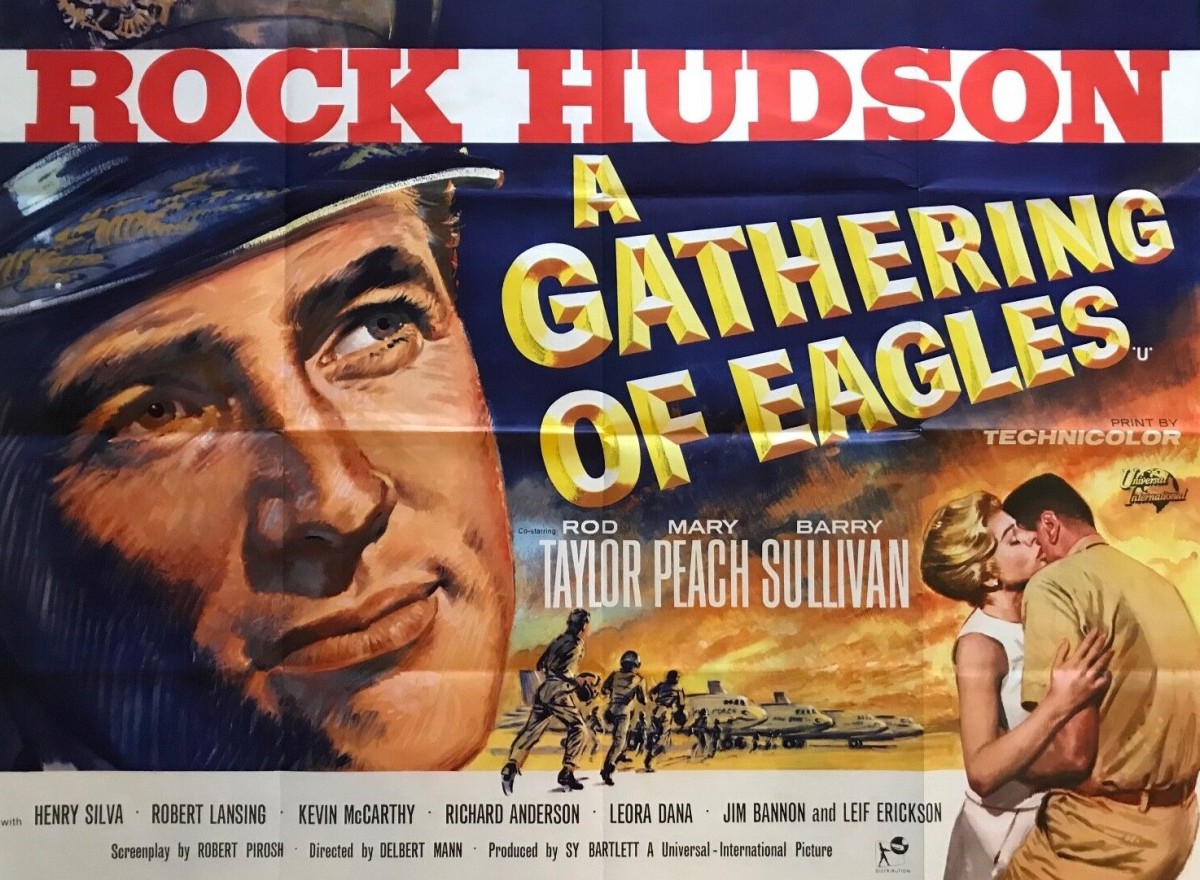
Hard-line efficiency expert Col Caldwell (Rock Hudson) is parachuted into a front-line B-52 Cold War command to toughen up sloppy procedure, bringing him into conflict with second-in-command Col Farr (Rod Taylor), a Korean War buddy. Caldwell rules by the book, Farr allows his men greater leeway. It comes down to the question of whether morale should be an issue or if men are expected to do their utmost even if they hate their leader. This debate about leadership style is prevalent today.
Caldwell is so tough he will sacrifice his buddy to get the job done better. And if people can’t handle the pressure they are better off out of the firing line. But since asking for a transfer to a less arduous berth would be viewed as a shameful admission of weakness, the only option for those who can’t cope is suicide. But since attempted suicide would not, as today, be viewed as a cry for help, anyone such attempt reduces the airman,, such as Col Fowler (Barry Sullivan) to a hospital bed where pity rains down on him.
The pressure comes in the shape of not just keeping on top of everything should the Russians suddenly decide to launch a missile attack, but dealing with intense simulations which appear out of the blue and require everyone to spring into battle stations. And in another prescient element, everyone is analysed to within an inch of their lives, marked down for the tiniest deviation from protocol, or not reaching the correct flight level or going too fast or too slow.
Caldwell is further hampered by English wife Victoria (Mary Peach) who fails to understand the pressure under which her husband, and all men in the base, operate, the kind of ground crew whose first question, on recovering from an operation, will not concern wife and kids but an airplane or a mission.
To add emotional heft, she is meant to have potentially fallen for Farr, and although rumors reach Caldwell’s superiors there’s no evidence of that. In the original script, the affair is spelled out, and such material was filmed, but it disappeared in the editing room. Perhaps because it proved that emotion was the Achilles heel of even the most efficient operation. In the actual movie, Victoria denies an affair and we believe her, but if an audience was shown her – and Farr – to be lying that casts a different complexion and at some level suggests betrayal.
In the air, despite assistance from the Strategic Air Command, the hardware is now out-dated, so of historical interest only, and while the movie fails to capture the tenor of the times, the situation of men under pressure has not changed.
Rock Hudson (Tobruk, 1967) is intensity on fire, Rod Taylor (Chuka, 1967) more laidback than in later films. Mary Peach (No Love For Johnnie, 1961) doesn’t have much of a filter between adoration and fury. Look out for Henry Silva (The Manchurian Candidate, 1962), Barry Sullivan (Harlow, 1965) and Kevin McCarthy (Hotel, 1967).
As you might expect, director Delbert Mann (Buddwing / Mister Buddwing, 1966) is more at home on the ground than in the air. Responsible for the screenplay were Sy Bartlett (Che!, 1969), also the producer, who had covered similar ground in Twelve O’Clock High (1949), and Robert Pirosh (Hell Is for Heroes, 1962)
The Top Gun of its day, bettered remembered now for the debate on leadership.
Somewhere between SBIG (So Bad It’s Good) and WAL (Worth a Look), The Wrong Box is a black comedy in the wrong directorial hands. Better known for thriller Seance on a Wet Afternoon (1964) and POW drama King Rat (1965) Bryan Forbes struggles to bring enough comedy into the proceedings or to wring sufficient laughs out of what he has.
Neither the wit nor the slapstick is sharp enough. But it does exhibit a certain charm. Essentially an inheritance story, it pivots on the notion that the two potential inheritors are on their last legs and putting one, Joseph Finsbury (Ralph Richardson), out of action will benefit dastardly nephews Morris Finsbury (Peter Cook) and John Finsbury (Dudley Moore) of the sole survivor Masterman Finsbury (John Mills).
It turns out Joseph Finsbury is not dead. That does not cue as much hilarity as it should., as the nephews plot to send him to his grave. Given the idea was dreamed by none other than Robert Louis Stevenson of Dr Jekyll and Mr Hyde fame, you can imagine it was written less with comedy in mind.
With so much dependent on set-pieces, it’s rather a hit-and-miss affair, with the conspirators’ failures not matching the humor of watching potential victims escape their proposed doom. Only occasionally does it sparkle.
Surprisingly, the film relies on affecting performances from the shy, retiring Michael Finsbury (Michael Caine), a gentle soul, who enjoys a very innocent romance with Julia Finsbury (Nanette Newman), a young woman terrified of being murdered, which condition provides ample opportunity for her to be rescued/consoled. who enjoy a very innocent romance.
Ralph Richardson steals the movie as a dotty pedant, weighted down with erudition and a knack, equally, for boring the pants off anyone within earshot and for escaping from the jaws of death including a massive train pile-up and several murderous attempts.
Michael Caine, in a follow-up to The Ipcress File (1965) and Alfie (1966) convincingly plays against type. John Mills (The Family Way, 1966) also plays against type as a villain rather than Hitherto, I had been rather sniffy about Nanette Newman (Deadfall, 1968),wife of the director, but here she is delightful.
Peter Cook (A Dandy in Aspic, 19680 and Dudley Moore, in his movie debut, let the show down by being so obviously the personalities from their comedy series Not Only…But Also (1964-1970), a partnership that works so well on television just frittered away here from what looks like characterization with nowhere else to go. But there is a nice cameo from Peter Sellers (The Millionairess, 1960) as an inebriated doctor.
Hard to say whether the blame lies with Larry Gelbart (The Thrill of It All, 1963) for his screenplay or Bryan Forbes for his direction.
Michael Caine got it spot-on when pointing out in his autobiography that it was a “gentle success in most places except Britain” precisely because to foreigners it represented an acceptably stereotypical view of a country full of eccentrics while to Brits it was all too stereotypical. So if you’re from America or other points global you might like it and if you are British you might not. On the other hand, the score by John Barry is one of his best with a wonderful theme tune.
Minimal violence and no sex was the wrong recipe for this Mafia picture – as proven at the box office – but this is an absorbing, underrated drama nonetheless.
It bears a surprising number of parallels to The Godfather (1972). Pure coincidence, extraordinary though that may appear, because The Brotherhood premiered in December 1968 while the Mario Puzo novel was printed in March 1969 (and delivered to the printers long before), so no opportunity at all for plagiarism.
The two films could be opposite sides of the same coin. For a start, both begin with a wedding. Vince Ginetta (Alex Cord), brother of Mafia kingpin Frank (Kirk Douglas), is marrying Emma (Susan Strasberg), daughter of another Mafia chief Dominick (Luther Adler). Like Michael (Al Pacino) in The Godfather, Vince is just out of the army, well-educated and primed for a life outside the business. And like Michael is called upon to commit an act of supreme violence. There’s even a hint of Tom Hagen (Robert Duvall) in the relationship between the brothers, Frank having brought up the much younger Vince after his father’s premature death.
And just as Don Corleone (Marlon Brando) refuses to join the other Mafia families in a new business venture (in that case, drugs) so Frank bows out of an incredibly high risk (but amazingly prescient) scheme to invest in electronic firms involved in military work for the government, a deal that not only promises huge profits but a potential hold over the powers-that-be.
Frank’s wife Ida (Irene Papas) is like Don Corleone’s wife, not wanting to know anything about the business, but both Emma and Frank’s daughter Carmela (Connie Scott) are thematic cousins to Kay Adams (Diane Keaton) as initial implicit trust is wiped away. When Frank dances with Carmela at the wedding, that is reflected in Don Corleone dancing with his daughter at her wedding. Like The Godfather our first sight of the other Mafia chieftains – including Jim Hagen (Murray Hamilton) and Don Peppino (Eduardo Cianelli) – is at the feast where they are viewed with suspicion by Frank’s clan. And the scene where Frank uses a banana to tease his nephew will remind you of Don Corleone spooking his grandson with an orange.
However, the twist, if you like, is that, unlike Michael, Vince is desperate to join the Family and is instrumental in developing legitimate enterprises, which is echoed by Michael Corleone’s strategic shift to Las Vegas. In some respects, Frank is more like Sonny (James Caan), happy to take personal command of murders which the other Mafia chiefs now scrupulously delegate to “mechanics” in Los Angeles. He is more old-school whereas the others have assumed the personas of respectable businessmen.
And then it becomes a question of loyalty. Which side the ambitious Vinnie will take is crucial to the story. Frank is under pressure on all sides, from the other Mafia leaders, a government investigation, Vinnie, and the need to exact revenge on the man who caused his father’s death.
There is authentic detail here as well – religious procession in Sicily, Frank playing boccia (the Italian version of the French boules) with his old pals, family dinner, canary stuffed in the mouth of a stool pigeon, but it is less spaghetti-drenched than The Godfather. Screenwriter Lewis John Carlino (The Fox, 1967), also listed as technical adviser, claimed to be drawing on his intimate knowledge of organized crime.
There are only three moments of violence – four if you count a shocking moment of someone spitting on a corpse at a wake – a pair of straightforward murders that bookend the film, plus a scene of Godfather-style brutality in which a man slowly strangles himself to death after being hogtied. Everyone is happily married, Ida very old-school to the extent of removing her husband’s clothes (and shoes) when he returns home drunk, Vince in a good relationship.
Kirk Douglas (Cast a Giant Shadow, 1966) is excellent in a difficult role that presents a fully rounded character, playful with his daughter, loyal to his wife, holding his own against the other mob bosses, enjoying the company of the old-timers who resemble his father, and the changing nature of his relationship with brother Vince. Alex Cord, whose work I initially dismissed (Stiletto, 1969), I have come to more fully appreciate, especially here, where he makes the transition from adoring brother to threat. It is a masterpiece of restraint.
The supporting cast is terrific, a rare Hollywood sojourn for Irene Papas (The Guns of Navarone, 1961), Luther Adler (Cast a Giant Shadow, 1966) as one of the hoodlums exasperated by Frank’s recalcitrance, Murray Hamilton (The Graduate, 1967) but, except at the start, Susan Strasberg (The Trip, 1967) is underused.
While director Martin Ritt (Hombre, 1967) is at times guilty of melodrama, his rendering of family life is much more nuanced than Coppola’s. There are very tender moments between Frank and his wife and Frank and his daughter, as well as moments where Ida plays a more maternal role.
For nearly half a century, The Brotherhood has lain in the shadow of The Godfather simply because they both deal with the Mafia. But this is an excellent movie in its own right.
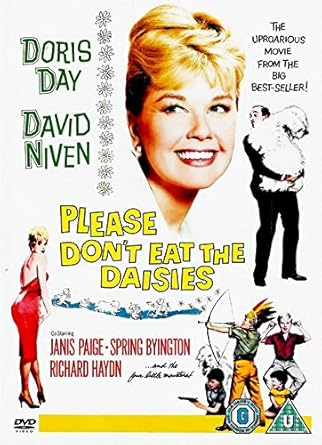
This shouldn’t work at all. The episodic structure breaks all the narrative rules. Doris Day fans should be disappointed as she’s not in typical prim rom-com mode (Pillow Talk, That Touch of Mink), but a mother – and with four kids for goodness sake. And, beyond for some reason a sotto voce rendering of “Que Sera Sera,” she doesn’t sing until late on. Worse, she hardly qualifies as the main character. That privilege falls to David Niven.
But it has charm in buckets, it plays around with the rules, breaking all narrative conventions, setting up traps for the viewer, and the four siblings are superbly realistic, little cute or adorable about them, given their main occupation is dropping water bombs on unsuspected passers-by and, even adopting sedentary positions, can’t help but cause mischief.
Initial focus is on academic Laurence (David Niven), promoted to Broadway critic, making mincemeat of a play produced by best friend Alfred (Richard Haydn), in the process savaging its star Deborah (Janis Paige). He quickly becomes front page news when Deborah’s revenge is captured by a photographer. Fame goes to his head and wife Kate (Doris Day) feels she is losing him.
But then suddenly we switch to the countryside after they swap their New York apartment for a huge house. Cue the usual slapstick caused by holes in floors and the inevitable paint. Laurence’s lofty attitudes rile the locals. But before you know it we’re onto the third storyline, Kate reviving her dancing career by putting on a show with the local dramatic society.
By now we’re also knee-deep in sub-plots. Taxi driver Joe (Jack Weston), budding playwright friend of Kate’s mother Suzie (Spring Byington), weaves in and out of the tale. You are led to expect that his Biblical musical script, initially dismissed by Laurence, is going to play a part, perhaps turning up at the dramatic society, or being reworked by Alfred into a hit. You are almost certainly going to be convinced that Laurence will end up in Deborah’s bed. And you are even more certain that Alfred is going to get his revenge by bringing a huge squad of critics and celebrities to the first night of Kate’s play. Unknown to Laurence, Alfred has passed to Kate a rejected early embarrassingly bad effort by her husband when he harboured ambitions to be a playwright.
That all these set-ups are brilliantly confounded turns the entire movie on its head. And the reversals don’t involve cheating. It’s not a question of bait-and-switch, red herrings or sleight-of-hand, but down to the believable reactions of the characters.
In the middle of this, romance would be taking a back seat except both Kate and Laurence are aware of the growing distance between them so it’s more of a middle-aged love story, marriage on the rocks, but both parties making the same type of mistakes in trying to rectify the situation as in the usual will-she-won’t-she romantic template.
The central focus could not be more topical – sudden fame, its impact on the lucky person and on those around. And I suppose the newspaper stunt that kicks off Laurence’s sudden notoriety is even more common today.
And I have to mention the kids. One of them gets his head stuck in a chair because “nobody told me not too.” That’s the kind of infuriating children they are, parents driven bonkers trying to anticipate their next unexpected venture. There’s a marvellous scene that pinpoints exactly why this whole picture works – by taking reality as its benchmark: Kate, trying to get ready to go out, is surrounded by apparently docile kids. But one, lying on the couch, has lifted his feet, unseen by her, so that he can tap the bottom of a painting on the wall, swaying it gently from side to side behind her head, just waiting for it to fall off.
Doris Day (With Six You Get Eggroll, 1968) digs a bit deeper than normal into her characterization. David Niven (Guns of Darkness, 1962) acts as if he is in a drama, not a comedy, never playing a scene for laughs, which is why he gets so many. When he does turn on the charm it’s not to seduce but to defuse a situation.
Janis Paige (Welcome to Hard Times, 1967) has a ball as the over-the-top star, posterior a matter of public interest, who is rewarded as much as the rest of the cast with deeper characterization than her initial shallowness could expect. Jack Weston (Mirage, 1965), too, goes through various shades before discovering that he has something unexpected to offer.
There’s a bunch of belly laughs, a joke dog, high-class bitchiness among the cocktail set, and a raft of reversals, but mostly it gets by on charm.
Veteran Charles Walters (Walk Don’t Run, 1966) looks as if he’s having a ball too, pulling the audience in different directions, turning up trumps with every reversal. Isobel Lennart (Fitzwilly / Fitzwilly Strikes Back, 1967) created the cunning screenplay from the book by Jean Kerr.
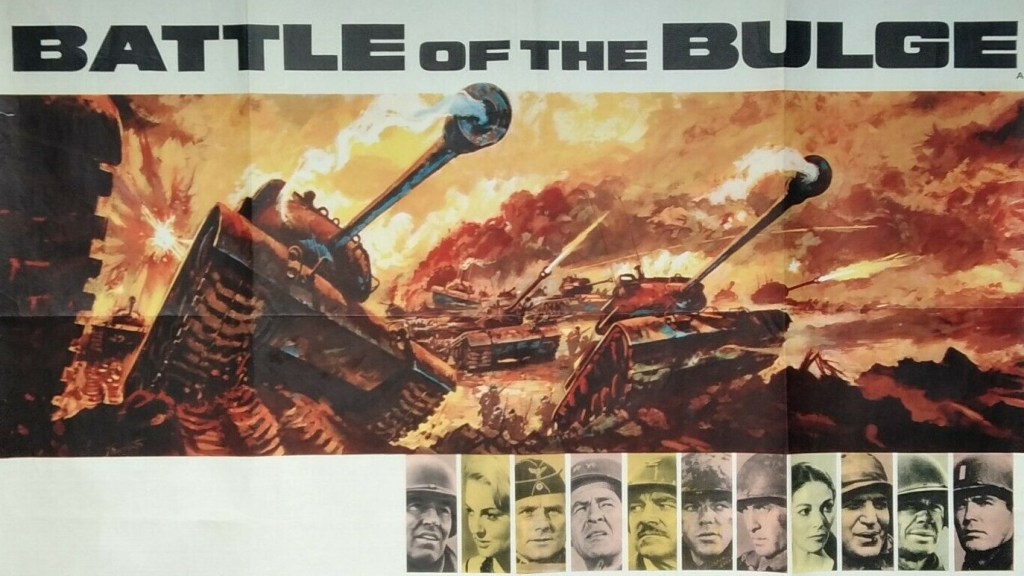
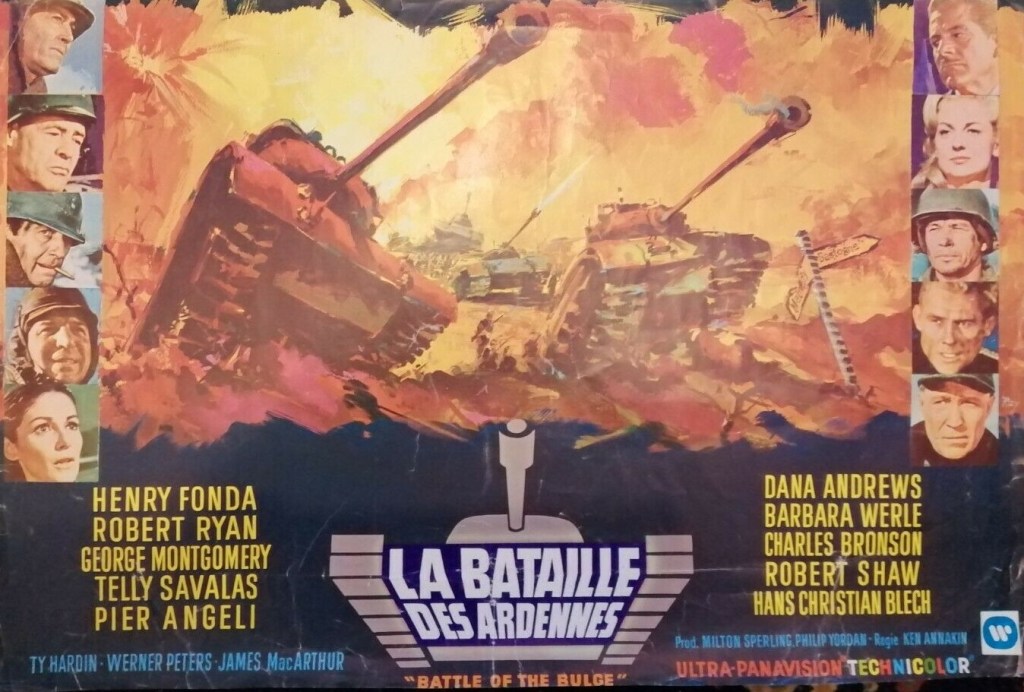
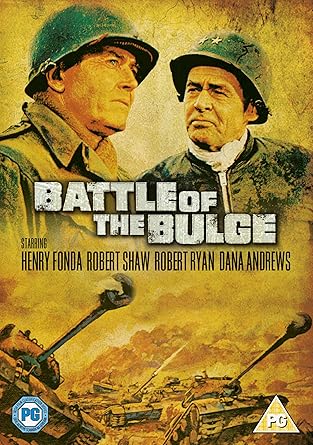
It was Hollywood’s worst nightmare. Two major studios – Columbia and Warner Brothers – were competing to make films about the Battle of the Bulge, one of the most famous episodes of the Second World War. Rival movies on similar or the same subject – classic examples You Only Live Twice (1967) vs Casino Royale (1967) or Deep Impact (1998) vs. Armageddon (1998) – risk cannibalising each other, each entry eating into the prospective audience of the opposition.
At first it seemed like the Columbia entry had the upper hand. Writer-producer Anthony Lazzarino had spent four years preparing The 16th of December: The Story of the Battle of the Bulge (the date referring to the start of the battle). Lazzarino’s project was endorsed by the U.S. Department of Defense which offered exclusive cooperation. Advisors were of the top rank – General Omar Bradley, General Hasso E. von Manteufel who had commanded the Panzers during the battle, British generals Sir Francis de Guingard and Robert Hasbrouck and Colonel John Eisenhower plus the cooperation of Eisenhower himself and Field Marshal Montgomery.
With a budget in the $6 million – $8.4 million range, and shooting was set to start in winter 1965, William Holden was lined up to play General Eisenhower and Kirk Douglas for General Hasso. Although initially intending to film in the Ardennes and Canada, ultimately the producers settled for the cheaper option of Camp Drum, one of the largest military installations in the U.S, a remote area in upper New York where the buildings could stand in for Bastogne, around which much of the real battle revolved, production there feasible because the Camp closed for winter. .
But that meant it would already be behind the eight-ball since Battle of the Bulge intended opening at Xmas 1965. Richard Fleischer (The Boston Strangler, 1968) was originally signed to direct. But he had become embroiled in a lawsuit with producer Samuel Bronston (El Cid, 1961, The Fall of the Roman Empire, 1964) whose production outfit had gone bust, killing off a deal for Fleischer to make The Night Runners of Bengal. The director was seeking g $910,000 in compensation.
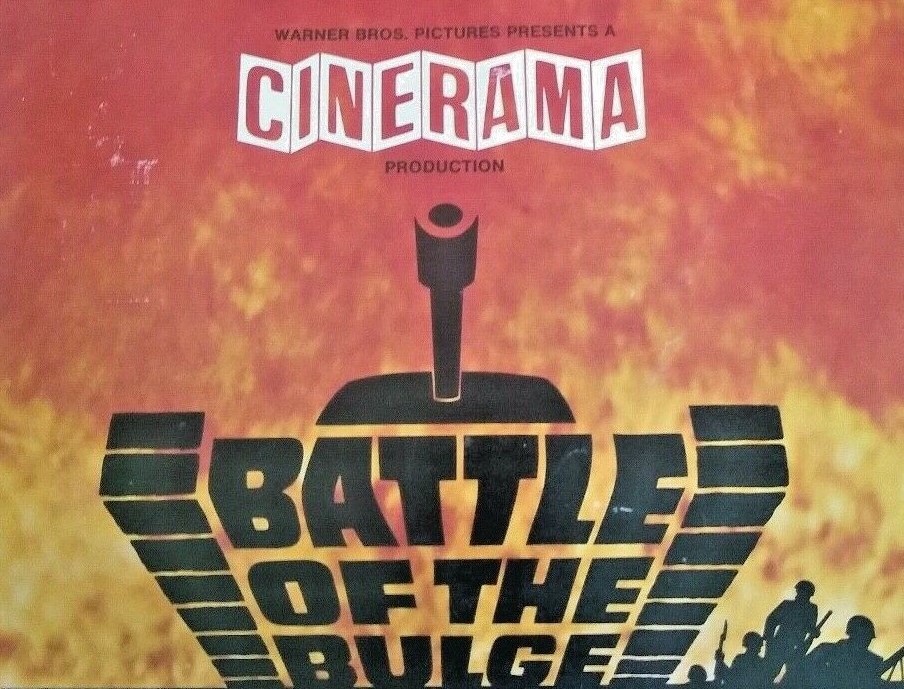
Warner Brothers had enlisted Cinerama as co-producer, the studio’s first involvement in the stunning widescreen process and the first time war was considered a subject. The process had been utilised in other Hollywood pictures most notably MGM How the West Was Won (1962), but that has been as a supplier of the equipment, and taking a small share of the profits. But now Cinerama planned to enter the production business and had contracted with WB to shoot the film in the single-lens process instead of the more complicated three-camera approach which had led to vertical lies on screens.
Neither company was in great shape. Cinerama had posted a $17.9 million loss in 1964, WB $3.8 million. But whereas WB had My Fair Lady on the horizon, Cinerama was less reaons for optimism. Its income stream relied on sales of its equipment, either for filming or projection, and a levy from every cinema using the process. Expansion was seen as key to renewal. With only 67 cinemas equipped to show Cinerama in the U.S. and only 59 overseas, a major program was underway to reach 230 by 1967. Setting up a production division would ensure there were enough films to feed into Cinerama houses, and since such films were intended as roadshows, they would keep the cinemas product-secure for months on end.
Cinerama planned to spend $30 million on five films – John Sturges western The Hallelujah Trail (1965) budgeted at $5 million, Battle of the Bulge ($.75 million) while $6.5 million had been allocated to an adaptation of James Michener bestseller Caravans, $6 million for Beyond the Stars which became 2001: A Space Odyssey (1968) and $7 million for Grand Prix (1966). Added to the list was epic William the Conqueror, due to film in England in early 1966 with Robert Shaw taking top billing.
The WB-Cinerama project, which had taken a year to negotiate, was to be filmed in Spain under the aegis of producer Philip Yordan, one time associate of Bronston who had built a mini-Hollywood there. Yordan, Bronston’s chief scriptwriter, had written the screenplay along with his co-producer Milton Sperling. Instead of seeking official support or reproduce the battle in documentary detail, Yordan and Sperling aimed for a fictional account that took in the main incidents. The cast would include “ten important stars.”
Just what constituted an “all-star cast,” one of the key ingredients of the roadshow phenomenon of the 1960s, was open to question. While The Longest Day (1962) boasted stars of the pedigree of John Wayne, Robert Mitchum, Richard Burton and Sean Connery, it was also liberally sprinkled with actors of no marquee value. David Lean in Lawrence of Arabia (1962) had loaded his film with the likes of Oscar winners Alec Guinness, Anthony Quinn and Jose Ferrer to offset unknowns Peter O’Toole and Omar Sharif as the leads. While The Great Race (1965) could boast Jack Lemmon, Tony Curtis and Natalie Wood, It’s A Mad, Mad, Mad, Mad World (1963) only had Spencer Tracy amid a host of television comedians.
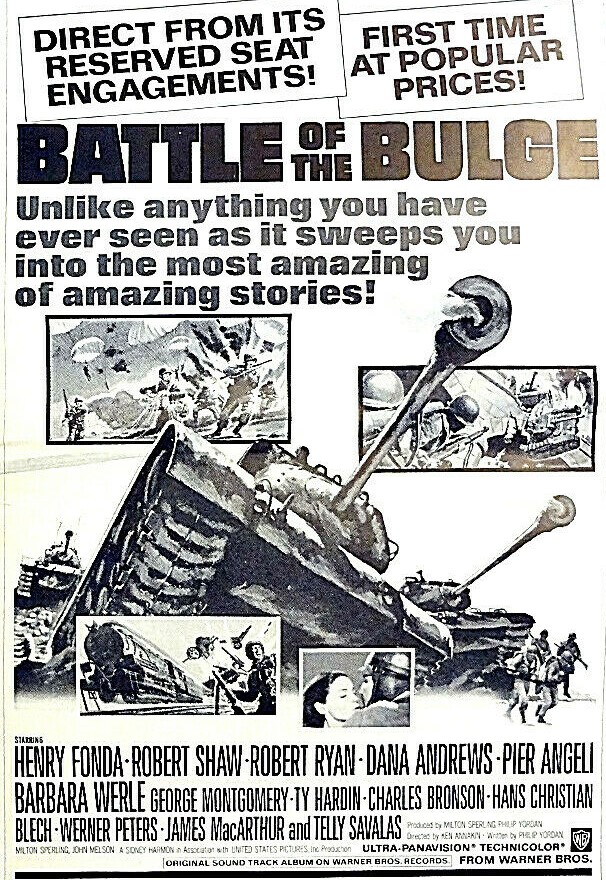
But none of the stars of Those Magnificent Men in Their Flying Machines (1964) had successfully opened a major picture. Of the Battle of the Bulge contingent only Henry Fonda could truly be called a current star, although his box office star had considerable dimmed since the days of The Grapes of Wrath (1939) and Fort Apache (1948). Former stars Robert Ryan and Dana Andrews were now supporting actors, Ty Hardin was best known for television, Charles Bronson (The Great Escape, 1963) had not achieved top billing and while James MacArthur had done so that was in youth-oriented movies. Initially, Italian prospect Pier Angeli (Sodom and Gomorrah, 1962) was announced as “the only principal female role” – playing a Frenchwoman – for a touching scene showing the effect of war on innocent women caught up in the conflict.
Just before filming was about to start, Fleischer pulled out, citing differences of opinion with the producers. Yordan turned to British director Ken Annakin, who had helmed the British sequences in The Longest Day and Those Magnificent Men in Their Flying Machines. There was soon a double whammy. Realizing he was losing ground, and hoping to sabotage its progress, Larrazino sued WB for $1 million, claiming that “another film, less accurate, would be confused with his picture.” Just as filming of the Battle of the Bulge got underway in January 1965, it was hit by a temporary restraining order. While failing to shut down the production, it imposed a marketing blockade. WB was prevented from publicising its picture, a potentially major blow given how dependent big budget roadshows were on advance bookings which could only be generated by advance publicity.
Annakin’s immediate response to the opportunity was delight. He commented that he had a “lot of toys to play with.” He found inspiration for his approach from an unusual source, the Daleks (“an apparently irrevocable onslaught of metal monsters”) from the BBC television series Dr Who. He decided he would use Cinerama as “a kind of 3D, shooting in such a way that the tanks would loom up as monsters against humans whom I would make small and puny.”
Although he had no influence in the casting, Annakin was already familiar with some of the actors, James MacArthur from Swiss Family Robinson (1960) and Werner Peters and Hans Christian Blech from The Longest Day. He did not receive such a warm welcome from Robert Shaw whom he had rejected for a role in The Informer.
He found Fonda “a remarkable professional…always on time, patient, eager to get to work, and always knew his lines.” He confessed to being a reluctant movie actor, preferring the stage, and had not been a big office draw since his work with John Ford in the 1930s and 1940s. Even critical successes like Twelve Angry Men (1957) had lost money, some of it the actor’s own, and prestige movies like The Best Man (1964) and Fail Safe (1964) failed to attract sufficient audiences. “In the theatre,” he said, “the actor achieves fulfilment from beginning to end. But on a picture you create a minute here and a minute there over a twelve-week period. When it’s finished there’s no recollection of what you did…Films are a director’s medium.” Battle of the Bulge was his 59th picture, after completing a supporting role in Otto Preminger’s In Harm’s Way (1965) and taking second billing to Glenn Ford in modern western The Rounders (1965).
There was a stand-off with Bronson on his first day after the actor kept the crew waiting while fiddling too long with his costume. Ty Hardin (television’s Bronco, 1958-1962) was accident-prone, tumbling into a frozen river in full kit, and whacking the director’s wife in the face with his helmet. Dana Andrews had a drink problem so that in some scenes Fonda and Ryan would be surreptitiously holding him up. But such veteran actors could improvise their way round scenes and “give me hints and lead me into changes.”
Andrews was enjoying career resurgence. His movie career was at a standstill, a ong way from a peak like Laura (1944). But his last significant top-billed parts were over a decade gone. “I was starting to get nothing for a while but offers came swarming in when I told my agent to go ahead and try from Walter Huston parts.” After only televisions roles in the four years since Madison Avenue (1961), Battle of the Bulge would mark his eighth role in 1965, including The Satan Bug and In Harm’s Way.
Winter in Spain was cold which meant it provided the ideal backdrop for the WB version. The chosen location, 4,500ft high in the mountains of Segovia provided identical conditions to the actual battle. Spain had provided 80 tanks including Tigers mounted with 90mm guns and Shermans. Half of the 20-week shoot would be spent in Segovia with interiors filmed at studios in Seville and the Roma facility in Madrid. The WB adviser was General Meinrad von Lauchert, a divisional tank commander during the battle. He hoped the picture would show the German solider “as he was, brave and good” rather than clichéd presentation and not give the “impression that the American Army had nothing to do but walk into Germany.”
He wanted the film to reflect the truth that the “Americans had to pay a high price for every yard.
Extras were drawn from the Spanish village of El Molar, with a population of just 2,400, which specialised in that supply. Locals could earn 200 pesetas a day. A pair of tavern owners had established this lucrative side-line, demand so high at this point that “they can play Russian World War One Deserters for Doctor Zhivago (1965) one day and shipped to World War Two the next for Battle of the Bulge.” Whenever Annakin found himself in trouble with the script he turned to the senior actors, Fonda, Ryan and Andrews who could improvise their way round scenes and “give me hints and lead me into changes.”
For the first scene, a week’s worth of white marble dust, representing snow, had been spread over the ground before 40 tanks emerged from a pine forest. But just as the cameras begun to turn, unexpectedly, against all weather forecasts, it began to snow. While initially a boon, when it continued to fall for five weeks the snow turned into a liability. Nobody was prepared for snow, not to the extent of snowploughs or even salt and it was a three-mile hike uphill to reach the tank location until army vehicles could be used to transport the crew. The tanks churned up so much mud that three or four cameras were required to catch the action.
“It was a director’s feast,” recalled Annakin, salivating about the prospect of a “vast panoramic” employing the entire array of tanks. To speed production, he had two units one hundred yards apart and jumped from one to the other, thus achieving 30-40 set-ups a day while the effects team exploded tubes and burned rubber tyres to create a fog of black battle smoke. A small town, already wrecked and shelled from the Spanish Civil War, added an air of realism when standing in for Bastogne.
Midway through shooting the producers realised the movie lacked a theme and from then on Annakin was faced with daily rewrites as new scenes were added to bring out the humanity implicit in war. Then Cinerama boss William Foreman arrived and demanded the insertion of the type of shot he believed his audiences were expecting, the equivalent of the runaway train and the ride through the rapids in How the West Was Won. He angled for a jeep racing downhill or a plane spinning and diving and happy to stump up any extra costs.
Such a request was more easily accommodated than his insistence that a role be found for his girlfriend Barbara Werle. a bit part actress Tickle Me (1965). While Yordan, wearing his producer’s hat, was willing to keep one of his main funders happy, the director and Robert Shaw were not. Shaw refused to do the scene until Foreman pleaded with both, explaining that in a vulnerable period of his personal life – when, in fact, he had been imprisoned – Werle had helped him out and he owed her a favour.
In Annakin’s opinion Werle was “willing but completely dumb…as though you had picked a girl straight from the cash desk of a supermarket.” Her one scene, as a courtesan offered to Robert Shaw by a grateful superior, was used to mark out the German commander as a man of honour when he rejection such temptation out of hand.
To overcome problems of matching earlier Panzer footage with the climactic battle to be shot on the rolling hills of Campo – in the earlier shots the ground was covered in snow, but now it was summer and the ground was scorched by the sun – Annakin relied on aerial shots, shooting downwards, “keeping as close as possible so as not to reveal what the terrain actually looked like” while on the ground two units shot close-ups of the action. The action was augmented by 30 model shots with miniature explosions.
When shooting was completed, there was a race to get the movie ready for its schedule launch, on December 16, 1965, the 21st anniversary of the start of the battle. There were ten weeks left to do post-production. Four editors had already been working on the material but Yordan asked Annakin, who had not been near a moviola for two decades, to personally edit the climactic battle scene. The director found the experience exhilarating: “matching my location footage with miniature shots; a four-foot helicopter (i.e. aerial) shot cut with a couple of feet of a U.S tank rounding rocks to face a Panzer; a shot of Telly Savalas at his gun site yelling ‘Fire’ intercut with a miniature tank blowing up.” But all his intricate work never made it into the final cut. Another editor fiddled around with the material and since no one had thought to make a dupe of Annakin’s original it was lost.
Although the challenge from Lazzarino had died away, the Pentagon was unhappy with the amount of time allocated to the German perspective. Yordan had the perfect riposte, pointing the finger at Annakin and saying “see what happens when you get a limey director.”
Werle had the last laugh. She was billed sixth in the credits (Angeli came fifth) but in the same typeface as Fonda, Shaw, Ryan and Andrews, and above the likes of Bronson, MacArthur and Hardin who not only all had substantially greater screen experience but had a bigger impact in the movie.
With the smallest part of all the listed stars, nonetheless she managed to turn the experience to her advantage, introduced to the press part of the marketing campaign and attending the world premiere at the Pacific Cinerama on December 16, 1965 in Los Angeles and the New York premiere the following day, brought forward four days, at the Warner Cinerama. In Los Angeles she arrived in true style at the head of a marching brigade of 100 service men.
SOURCES: Ken Annakin, So You Wanna Be A Director (Tomahawk, 2001) p167-181; “Du Pont, Bronston, Co-Defendants,” Variety, July 22, 1964, p4; “Schenck-Rhodes Roll Battle of Bulge at Camp Drum in U.S.” Variety, July 22, 1964, p42; “German Military Sensitivity,” Variety, September 23, 1964, p32; “Columbia Will Distribute Battle of Bulge Film,” Box Office, September 28, 1964, p18; “Plan Battle of Bulge As Cinerama Film,” Box Office, November 23, 1964, p4; “Tony Lazzarino To Produce The 16th of December,” Box Office, December 16, 1964, p4; “Rival Battles of Bulge; Bill Holden Up for Ike in Lazzarino Version,” Variety, December 16, 1964, p5; “Warner Reports Loss of £3,861,00,” Variety, December 23, 1964, p5; “L.A. Court Has Its Battle of Bulge Hearing, 27th,” Box Office, January 25, 1965, pW-2; “Dana Andrews Strategy: Regain Momentum,” Variety, March 10, 1965, p3; “Battle of Bulge Now Being Lensed in Spain,” Box Office, March 15, 1965, pNE2; “Winter in Spain Cold But Correct for Bulge Pic,” Variety, March 17, 1965, p10; “Cinerama Plans Five Films to Cost $30 Mil,” Box Office, April 19, 1965, p13; “For Actor Satisfying Legit Still Beats Pix, Reports Henry Fonda,” Variety, May 3, 1965, p2; “London Report,” Box Office, May 3, 1965, p8; “One Girl in WB Bulge,” Variety, May 5, 1965, p20; “Battle of Bulge Pic May Roll Next Winter,” Variety, May 5, 1965, p29; “El Molar, Spain’s Village of Extras,” Variety, May 12, 1965, p126; “Cinerama Report Loss,” Variety, May 13, 1965, p15; Advert, Box Office, July 12, 1965, p22; “WB To Film Cinerama Epic in England,” Box Office, October 11, 1965, p11; “Introduce Barbara Werle,” Box Office, October 18, 1965, pE3; “Battle of Bulge Opens N.Y. Now Dec 21,” Box Office, October 18, 1965, p10; “Actress To Attend Bows of Bulge in L.A., N.Y.,” Box Office, December 6, 1965, pW4.
Cinerama was the IMAX of the day and far superior in my view in many aspects not least the width of the screen. IMAX goes for height but I’m not convinced that compensates for lack of the widest screen you could imagine. So the chance of seeing this in the original Cinerama print, 70mm and six-track stereo, at the annual Bradford Widescreen Festival yesterday was too good to miss. And so it proved. A thundering experience. Much as I enjoyed it on DVD, this was elevated way beyond expectation.
Superb even-handed depiction of war, far better than I remembered. Most war films of this era and even beyond showed the action primarily from the view of the Americans/British – even the acclaimed The Deer Hunter (1978) and Apocalypse Now (1979) show nothing of the skills of the Vietnam forces that would prove victorious. And while The Longest Day (1962) shows reaction to the invasion, the Germans are revealed as caught on the hop. Given the basis for this picture is the unexpected German offensive in the Ardennes, France, in December-January 1944-1945, you might expect the Germans to be accorded some attention. But hardly, given as much of the picture as this, so that in the early stages the Germans are portrayed as powerful, clever and patriotic while the Americans are slovenly and complacent, their greatest efforts expended on preparing for Xmas.
With tanks the main military focus, Cinerama is deployed brilliantly, the ultra-wide screen especially useful as the unstoppable vehicles rampage through forests and land and allowing true audience involvement when opposing armies meet head-to-head. Of course, it being Cinerama, there are a couple of scenes that play to the strength of this particular screen, a car careening round bends and a train racing along twisting tracks, the kind of scenes that previously would have had the audiences out of their seats with excitement, but here mainly used to raise the tension in the battle.
It’s to the film’s benefit that the all-star cast doesn’t feature a single actor who is truly a star in the John Wayne/Gregory Peck/Steve McQueen mould so that prevents the audience rubbernecking to spot-a-star that afflicted The Longest Day. The biggest name, technically, is Henry Fonda, and although he received top billing in many pictures, you would have to go back to The Wrong Man (1956) to find an actual box office hit. The only previous top billing for Robert Shaw (From Russia with Love, 1963) had been in The Luck of Ginger Coffey (1964), a flop few had seen. And the top-billing days of Robert Ryan (Horizons West, 1952) and Dana Andrews (Laura, 1944). In fact, the actor with the biggest string of hits was Disney protégé James MacArthur (Swiss Family Robinson, 1960). Anybody who had seen The Magnificent Seven (1960) and The Great Escape (1963) would recognise Charles Bronson in a supporting role. So fair is the movie that it’s the blond-haired Shaw who steals the show with a dynamic performance.
So it helped the almost documentary-style of the film that it was filled with familiar faces rather than dominant stars and the director was not bound to give a star more screen time or provide them with one brilliant scene after another, or establish a redundant love story in order to provide them with more emotional heft. In fact, the only romance goes to a sly black marketeer who views his relationship more as a business asset.
Initially, the role of Lt. Col. Kiley (Henry Fonda), a former cop, seems only to be to rile his superiors General Grey (Robert Ryan) and Colonel Pritchard (Dana Andrews), his pessimistic view contrasting with the accepted notion that the Germans are well and truly defeated and the war would be over soon. On airplane reconnaissance he takes a photograph of an officer later identified as Panzer tank genius Colonel Hessler (Robert Shaw). While Grey and Pritchard over-ride his conclusions, the movie concentrates on the German build-up, their discipline, efficiency, leadership and determination juxtaposed to the American inefficiency and sloppiness.
Where the Americans just want to get home, Hessler – more charismatic than any of the dull Yanks – is in his element, wanting the war to never end, convinced at least that a tank-driven assault would drive a wedge between the Allied forces, and reaching the target Antwerp in Belgium in the north would extend the war by another year by which time Germany’s V2 rockets would give them greater firepower. The Germans also have a clever idea, the type that the British were always coming up with and would make a film of its own, of parachuting American-born Germans behind enemy lines, dressed in American uniforms to carry out vital sabotage and hold crucial bridges across the River Meuse.
In one of the best scenes in the film, his tank commanders spurt spontaneously into a patriotic song with much stamping of boots. And while Hessler’s immediate superior (Werner Peters) , ensconced in a superior bunker, can enjoy a comfortable lifestyle, no more illustrated by the fact that he has courtesans to hand, one of whom, offered to Hessler, is furiously dismissed. And the clock is ticking, the Germans have limited supplies of fuel and must reach the enemy’s supply dumps before they run out of gas.
The maverick Kiley manages to be everywhere – the River Meuse bridge, in the air in the fog determinedly hunting for the panzers he believes are hidden, is the one who realises how critical the fuel situation is for the enemy, and at the fuel depot for the movie climax. Otherwise, the picture uses its cast of supporting characters to cover other incidents, the massacre of prisoners of war at Malmedy, the chaos as the Germans over-run American-held towns.
Best of all is the human element. It would be easy on a picture of this scope to lose emotional connection, as you would say was the prime flaw of The Longest Day. Not only is Kiley the outsider trying to beat the system, but we have the cowardly Lt Weaver (James MacArthur) who would rather give up without a fight than lose his life, the weaselly Sgt. Guffy (Telly Savalas) representing the worst instincts of the grunts, the confused General Grey can’t make up his mind how to respond to the sudden attack, and Hessler’s driver Conrad (Hans Christian Blech) who is fed up with paying the price of war.
The action scenes are outstanding. If you’ve never been up against a tank in full flight, you will soon get the idea how fearsome these metal battering rams are, as the rear up, crash over trees, race across open fields, and either with machine gun or shells wreak havoc. As with the best war films, you are given very precise insights into the battles, the tactics involved, the ultimate cost. Wolenski (Charles Bronson) is in the thick of the fighting.
While Robert Shaw is easily the biggest screen personality, Henry Fonda is solid, and holds the various strands of the picture together, while Charles Bronson enjoys a further scene-stealing role. But the pick of the acting, mostly thanks to bits of improvisation, is Telly Savalas (The Slender Thread, 1965) as the thieving Guffy. In one memorable scene he kicks out in resentment at his collection of hens and in another shakes his body at the tanks. No one else, beyond Shaw, comes close to his infusing his character with elements of individual personality.
Pier Angeli (Sodom and Gomorrah, 1962) as Guffy’s mistress and Barbara Werle (Krakatoa, East of Java, 1968) as the courtesan are inexplicably billed above Charles Bronson, Telly Savalas and James MacArthur perhaps in a ploy to deceive audiences into thinking there was more female involvement.
Full marks to British director Ken Annakin (The Biggest Bundle of Them All, 1968) for visual acumen and for simplifying a complicated story and peppering it with human detail. His battles scenes are among the best ever filmed. Credit for whittling down the story into a manageable chunk goes to Philip Yordan (The Fall of the Roman Empire, 1964), Milton Sperling (The Bramble Bush, 1960) and John Melson (Four Nights of the Full Moon, 1963).
A genuine classic, with greater depth than I ever remembered.
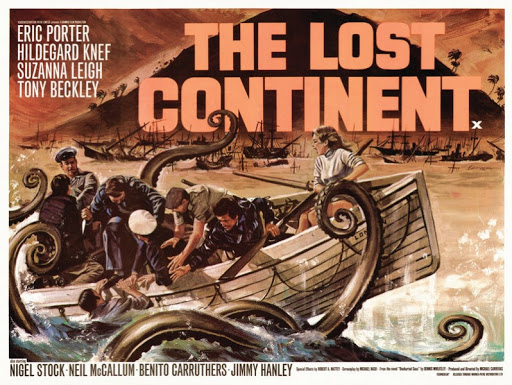
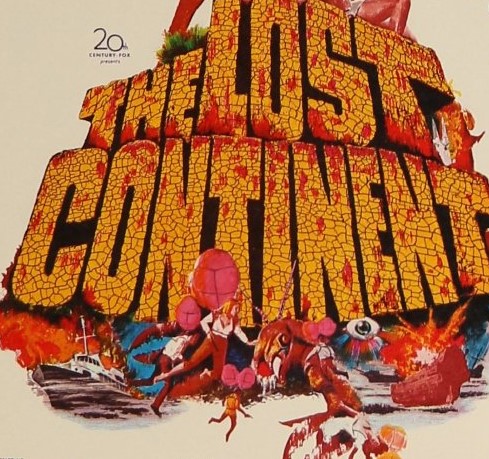
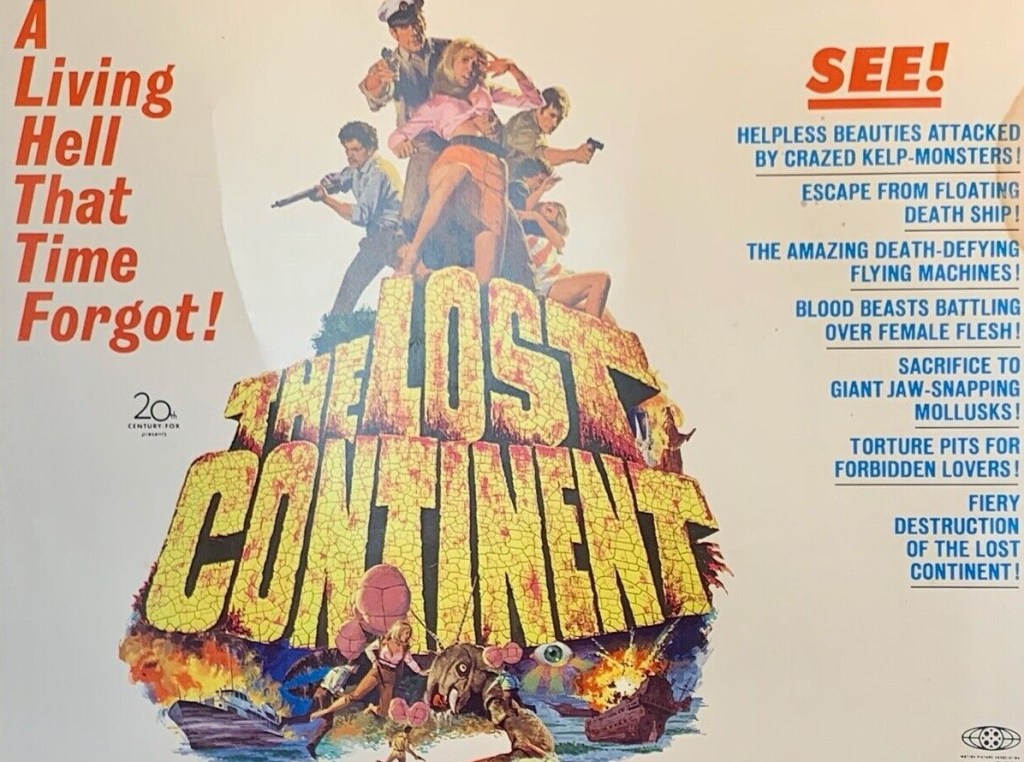
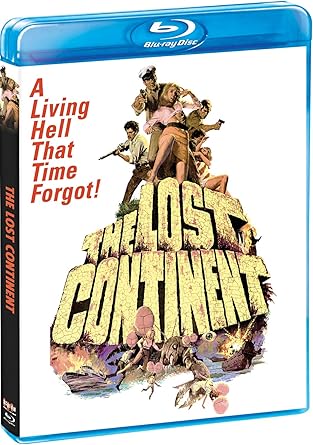
Hammer had struck gold revisiting ancient civilization in One Million Years B.C. (1966) and with its adaptation of Dennis Wheatley’s The Devil Rides Out (1967). The Lost Continent was another Wheatley number (source novel Uncharted Seas) mixing dangerous voyage, hints of the legendary Atlantis, and monsters. While the first half could have been marketed as The Wages of FearAt Sea the second half would come under the heading “The Greatest Oddball Film Ever Made.”
It boasts one of the most intriguing setting-the-scene openings not just of a Hammer picture but of any film – a camera pans along a steamship on whose deck are: people dressed in furs, others in modern clothing and – Conquistadors. Attention is focused on a coffin. How and why they got there is told in flashback. A first half of taut drama, mutiny, sharks, a ferocious octopus, and lost-at-sea a thousand miles from land segues into sci-fi with carnivorous weeds, monsters, and a weird, weird world.
It’s hard to know what’s worse, Captain Lansen (Eric Porter) with a cargo of toxic chemicals made combustible when touched by water or the equally combustible passengers all with murky pasts, so determined to escape their previous lives that they refuse to turn back in the face of a hurricane. Heading the Dodgy Half-Dozen is dictator’s mistress Eva (Hildegarde Knef) with two million dollars in stolen securities and bonds. Dr Webster (Nigel Stock), a back-street abortionist, is at odds with daughter Unity (Suzanna Leigh), who has cornered the market in backless dresses. Harry (Tony Beckley) (The Penthouse, 1967) plays a conman while Ricaldi (Ben Carruthers) is trying to recover the pilfered bonds.
But the arrival of cleavage queen Sarah (Dana Gillespie) as an escapee from the weird world signals a shift to Planet Oddball. The only way to navigate the weeds trapping the ship is with a primitive version of snowshoes with balloons attached to the shoulders. Soon they are trapped in the past, not as prehistoric as One Million Years BC (1966), just a few centuries back to the Spanish Conquistador era. The film steals the idea from the Raquel Welch picture of giant creatures locked in battle but without going to the necessity of hiring Ray Harryhausen.
You couldn’t legislate for the movie’s logic and you shouldn’t even try, just go with the weird flow. It’s on safe enough territory until like The Hangover (20090 it has to explain the bizarre opening sequence. If ever a film has bitten off more than the special effects can chew, it’s this, but it’s still fun watching it try.
The casting relied heavily on actors best known from television or rising stars. Eric Porter was straight from BBC television mini-series mega-hit The Forsyte Saga (1967). Nigel Stock essayed Dr Watson in the BBC Sherlock Holmes series (1964-1968). Falling into the emerging-star category were: Tony Beckley (The Penthouse, 1967), Suzanna Leigh (The Pleasure Girls, 1965) Neil McCallum (Catacombs / The Woman Who Wouldn’t Die, 1965), and Dana Gillespie (Secrets of a Windmill Girl, 1966). Hildegarde Knef (Mozambique, 1964) was just about the most experienced.
In this kind of picture, without being sexist about it, if a woman is required to do more than just scream, it often indicates she has the better part. And so it is here. Leigh and Knef hog the dramatic highlights while Gillespie, courtesy of her outfit and footwear, can’t help but steal the show.
On board ship, director Michael Carreras, fresh from Prehistoric Women (1967), does well, the characters are all solidly presented with decent back stories, but once he enters weird world budget deficiencies sabotage the picture. Even so, it’s worth a look just to see what you’re missing. If you’re looking for a genuine freak show, this ticks the boxes.
Assessing foreign potential was a dicey business. A decent run abroad could save a picture or at least ease the bottom line. But global box office statistics were not as easily generated or understood as now. As in the U.S., television had sapped the cinema-going habit in other countries, variations in exchange rates could cripple revenue expectation, and most countries imposed some limitation on the importation of Hollywood films.
It would have been a very bold industry analyst who predicted exactly how any film – even a big U.S. hit like The Sound of Music (1965) – would perform on foreign screens. In the previous article, I was able to assess the results for 107 movies, but the sources for overseas revenues are more limited and figures, using the Aubrey Solomon digest, are only available for 49 of those
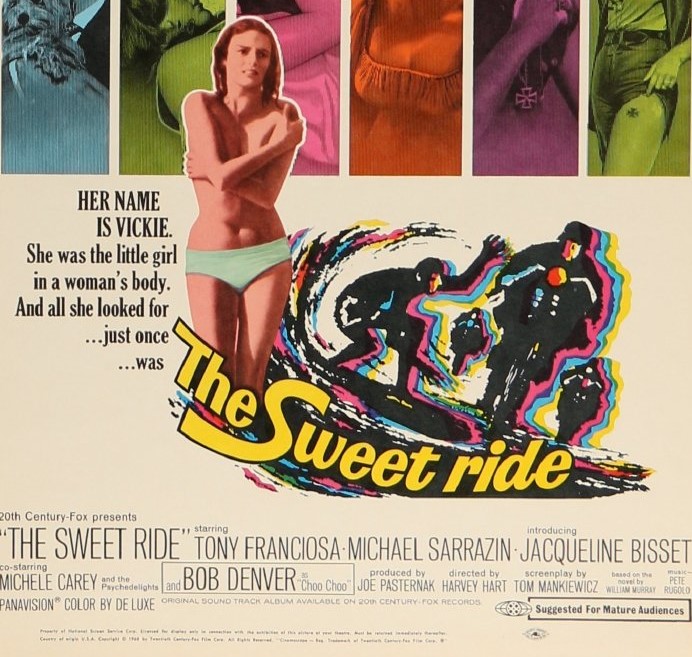
The good news, I would guess, is that 14 pictures released by Twentieth Century Fox improved on their U.S. rentals. One (The Sweet Ride, 1968) did exactly the same business abroad as at home. On the gloomier side, 34 movies did worse. For movies that had already turned a profit on home territory, any extra revenue from overseas would be viewed as icing on the cake. But for movies that had struggled or been outright flops on U.S. release, foreign distribution offered an opportunity to correct the financial imbalance.
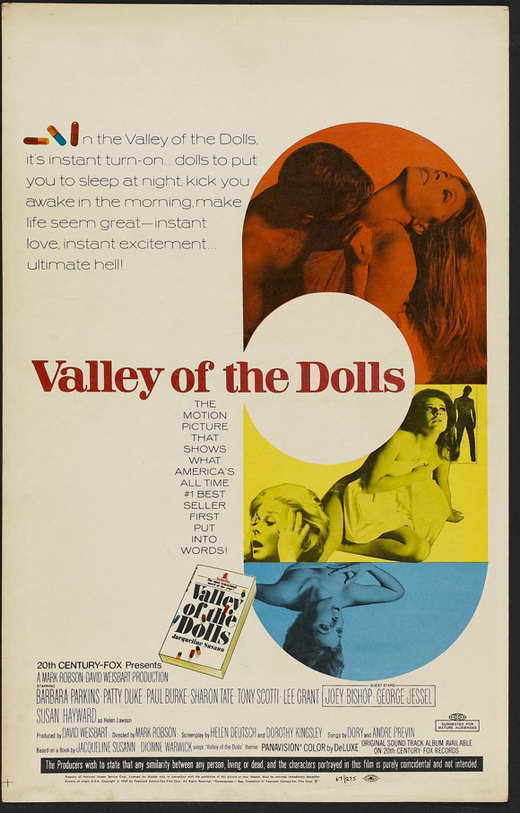
And anyone trying to forecast the outcomes would have very little chance of getting any correct. How can you come to terms with a business where Doctor Dolittle (1967) one of the biggest flops of the decade on home soil turned into one of the biggest hits of the decade in foreign cinemas. Or that one of the biggest U.S. hits of the decade, Valley of the Dolls (1967), managed to generate a fraction of the rentals received at home. In terms of failing to match up to expectation you could only categorize its overseas performance as a flop.
No surprises for guessing that the studio’s biggest hit overseas was The Sound of Music. What did take the industry’s breath away was that the move came nowhere near matching its U.S. results. The $37.6 million in rentals was less than a third of the amount taken at home. Valley of the Dolls, a juggernaut at home with $20 million, brought in a paltry $2.92 overseas. Other domestic big hitters to come nowhere near emulating their domestic results were: Planet of the Apes (1968), $5.8 million overseas, $15 million at home; The Sand Pebbles (1966), $7.1 million overseas, $13.5 million at home; The Bible (1966), $8.35 million overseas, $15 million at home; and The Boston Strangler (1968), $3.12 million overseas, $8 million at home.
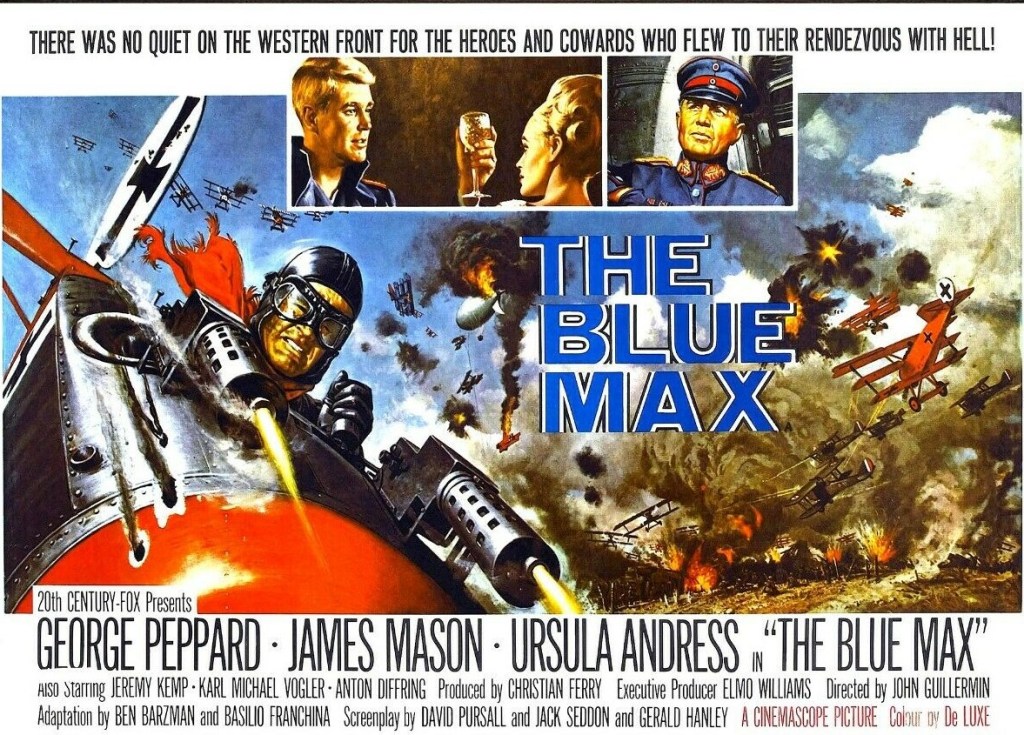
Against all expectations given the size of its failure in the U.S., just $6.2 million in rentals on a budget of $17 million, Doctor Dolittle knocked up $10.1 million abroad. World War One picture The Blue Max (1966) also astonished, $8.5 million overseas (where it often qualified as a roadshow) compared to $8.4 million at home.
By comparison another roadshow, Those Magnificent Men in Their Flying Machines (1965), improved on its U.S. figures, producing $15.9 million overseas against $14 million at home. Audrey Hepburn was a bigger star overseas than in the U.S. which went some way to correcting the disappointing rentals incurred Stateside by How to Steal a Million (1966) and Two for the Road (1967). The former took $6.05 million on foreign screens compared to $4.4 million at home and the latter $4.3 million compared to $3 million at home.
Other films for whom foreign was better than domestic included: The Prime of Miss Jean Brodie (1969) – $3.65 million vs $3 million; The Chairman / The Most Dangerous Man in the World (1969) – $2.92 million vs $2.5 million; Caprice (1967) – $2.58 million vs $2 million (conversely for Do Not Disturb, 1965, it was $1.27 million vs $4 million); The Flim Flam Man / One Born Every Minute (1967) – $2.32 million vs $1.2 million; Batman (1966) – $2.1 million vs $1.8 million; and The Magus (1968) – $1.45 million vs $1 million.
While not beating their American scores, a number of films achieved quite decent results abroad. For Our Man Flint (1966) foreign attracted rentals of $5.7 million vs $7.2 million in the U.S; In Like Flint (1967) $4.12 million vs $5 million; and The Undefeated (1969) – $4.27 million vs $4.5 million.
Some of the biggest flops on the U.S. domestic scene had no chance of redemption abroad. Possibly their Stateside performances put off distributors in foreign countries. Despite Richard Burton and Rex Harrison, Staircase (1969) earned only $360,000 abroad. George Cukor’s Justine (1969) managed only $570,000. James Stewart comedy Dear Brigitte picked up only $720,000. Tony Curtis-Debbie Reynolds romantic comedy Goodbye Charlie (1964) ended with $800,000. Shirley MacLaine comedy John Goldfarb, Please Come Home was limited to $880,000. Robert Aldrich’s Hush, Hush, Sweet Charlotte starring Bette Davis and Olivia De Havilland was a complete misfire – $4 million rentals at home, less than $1 million abroad.
Just as at home, Frank Sinatra was a relatively safe bet. Von Ryan’s Express (1965) brought in a further $6.27 million abroad to add to the $7.7 million coughed up in rentals by U.S. cinemas. The Detective (1968) added another $3.77 million from foreign ticket wickets compared to $6.5 million at home. Tony Rome (1967) brought in another $2.25 million to add to the existing $4 million.
Raquel Welch had more admirers abroad than at home. Foreign results for controversial western 100 Rifles (1969) nearly match domestic income, $3.4 million vs $3.5 million. Fathom (1967) out-earned domestic, $2.27 million overseas against $1 million at home. Bandolero (1968) pulled in $3.3 million vs $5.5 million. Fantastic Voyage (1966) slammed home another $3.38 million on top of $5.5 million at home. Bedazzled (1967), which only cost Fox $770,000, brought in $1.32 million abroad and $1.5 million at home.
Note: my two sources shown below, while presumably using the same figures, used them in different ways. Solomon employed only domestic rentals (and excluded I would guess pictures for which Fox acted more as the distributor than the maker) while Silverman took a global rental approach so it was down to me to subtract domestic from global to unravel foreign rentals. Any mistakes, of course, are mine.
SOURCES: Stephen M. Silverman, The Fox That Got Away, The Last Days of the Zanuck Dynasty at Twentieth Century Fox (Lyle Stuart Inc, 1988) pp323-328; Aubrey Solomon, Twentieth Century Fox, A Corporate and Financial History (The Scarecrow Press, 2002) pp 228-231, 252-256.
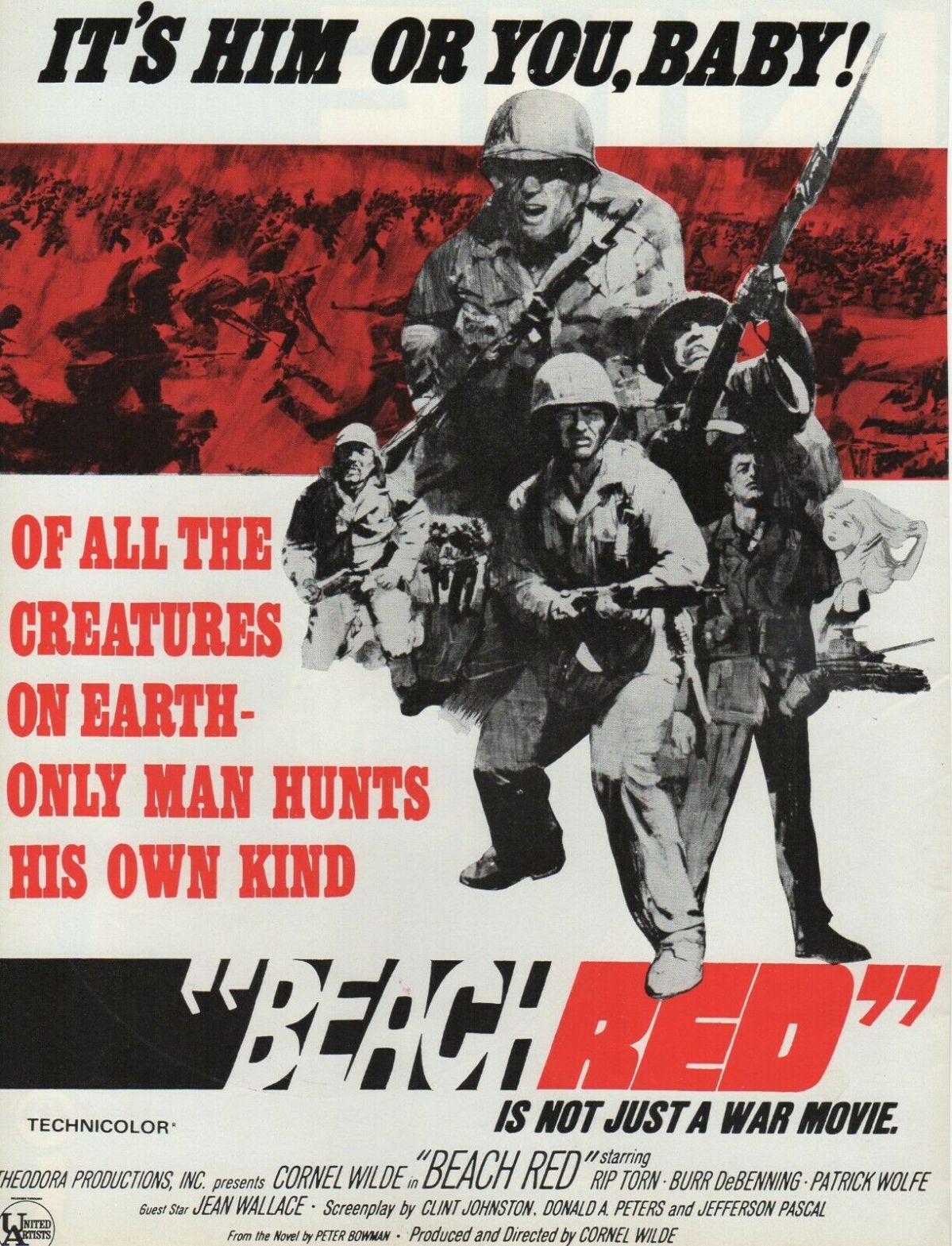
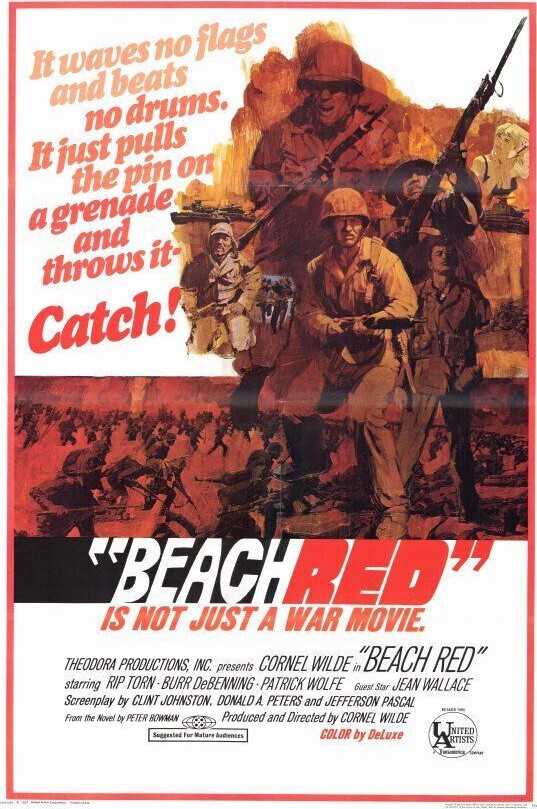
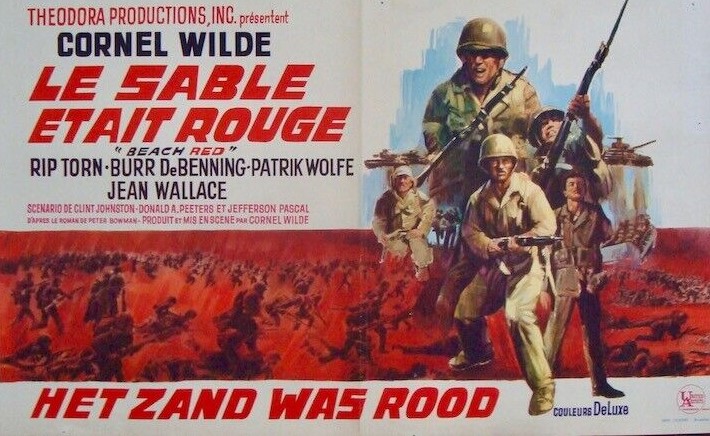
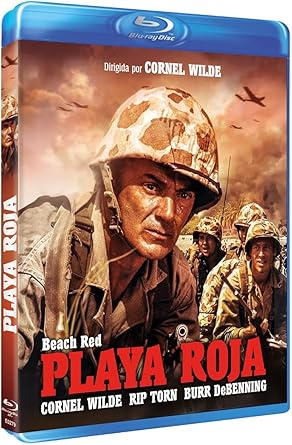
Strangely neglected in part I guess because the violence is countered by humanity. Despite the visceral images it lacks the narrative drive of a World War Two picture like The Dirty Dozen (1967), Cross of Iron (1977), Saving Private Ryan (1998) or Inglorious Bastards (2009). But the violence removes it from arthouse consideration when, in fact, the unusual combination and the cinematic techniques involved suggest it is ripe for reassessment.
There’s nothing particularly different about the storyline. Bunch of U.S. grunts land on a Philippine island occupied by the Japanese. The rookies are caught between caring commander Capt MacDonald (Cornel Wilde) and the uncaring tough Sgt Honeywell (Rip Torn). Some live, some die.
What was unusual for the time was the intensity of war. You can just imagine Steven Spielberg watching this to see how to out-do its 30-minute opening sequence when he came to film the D-Day section of his film. Where Spielberg placed more emphasis on sound and had the budget for more gruesome special effects, nonetheless director Cornel Wilde serves up the most brutal conflict of the decade.
From the outset, however, Wilde gets inside the head of the terrified soldiers. Some are just so scared they collapse on the sand and are unable to move. Told to fix bayonets, Cliff (Patrick Wolfe) is traumatised at the fear of being bayoneted himself. But, intriguingly, most of what we learn about the soldiers comes not from dialogue but internal monologue, as their minds are bombarded with memories of better times, wives, girlfriends and children left behind.
There’s also the stupidity of the inexperienced. The hapless Cliff shoots a Jap without realizing he had just been captured by Sgt Honeywell who had been sent on a mission to secure an enemy soldier for Capt MacDonald, with the aid of a Japanese-speaking soldier, to interrogate.
The captured soldier’s arms have been broken by Honeywell, not simply to incapacitate him, but out of brutal intent. The sergeant has no struck with MacDonald’s humanity, it’s kill or be killed, “It’s him or you, baby,” is his mantra.
But for director Wilde, the enemy is not faceless. And he spends far more time than any other even-handed director of the era in ensuring the Japanese are seen as first and foremost as human beings with the same feelings as the Americans, staring at photos of their beloved, or accorded brief flashbacks where they are shown laughing with their children, loving their wives, one caught in such a reverie being humiliated by a furious commanding officer.
What in a more ordinary war picture would be deemed a piece of flagrant sentimentality, wounded rival soldiers sharing water and cigarettes, here takes on another dimension, as each recognizes in the other their common humanity.
Nor are the women window dressing. Cliff desperate to lose his virginity before going off to war has to contend with a frightened girlfriend. MacDonald recalling an intimate moment with wife Julie (Jean Wallace) remembers mostly her fear that she will be left a widow.
And the director is not above irony. The Japanese, initiating a clever rearguard maneuver to catch the Americans off-guard, are slaughtered on the same beach as had originally been taken by the landing troops.
In some respects, the director’s vision is compromised by critical reaction. Less of the violence, concentrating more on the thoughts and memories of the soldiers on both sides, and it would have been hailed as visionary. But the violence was viewed in many quarters as driven by commercial imperative, this being the year when screen violence (the spaghetti westerns, The Dirty Dozen, Bonnie and Clyde) ignited controversial debate.
Because of that, Wilde’s many stylistic innovations went unnoticed. He makes superb use of stills, flashbacks detailed in a series of photographic montages rather than moving images. And there’s a technique I’ve never seen before where the director focuses on a face only for it to dissolve within the frame, rather than the whole frame dissolve as would be the norm to indicate transition. And life goes on even as soldiers rampage, every now and then insects are shown in close-up going about their ordinary business regardless of the conflagration all around, their worlds too tiny to be overly disturbed.
In his directorial capacity Wilde (Sword of Lancelot / Lancelot and Guinevere, 1963) indicates intention with the theme song. Rather than the stirring music to which we are usually accustomed, this is a lament (sung, incidentally by his wife, Jean Wallace).
As well as acting and directing, Wilde had a hand in the screenplay along with previous collaborators Clint Johnson and Don Peters who both worked on Wilde’s earlier The Naked Prey (1965)
As much as we are struck by the intensity of the performances by the thoughtful and often glum Wilde, the rapacious Rip Torn (Sol Madrid, 1968) and the bewildered Patrick Wolfe (his only movie appearance and, incidentally, son to Jean Wallace from her first marriage to Franchot Tone), this is a director’s picture and easily stands comparison with the quartet of classics mentioned above.
The title, while indicative of slaughter, had in reality a much more prosaic meaning. The U.S. Army had the habit of assigning colors to differentiate between certain sections of beaches scheduled for invasion. This could as easily have been entitled Beach Blue or Beach Yellow but you have to concede Beach Red has a certain ring to it.
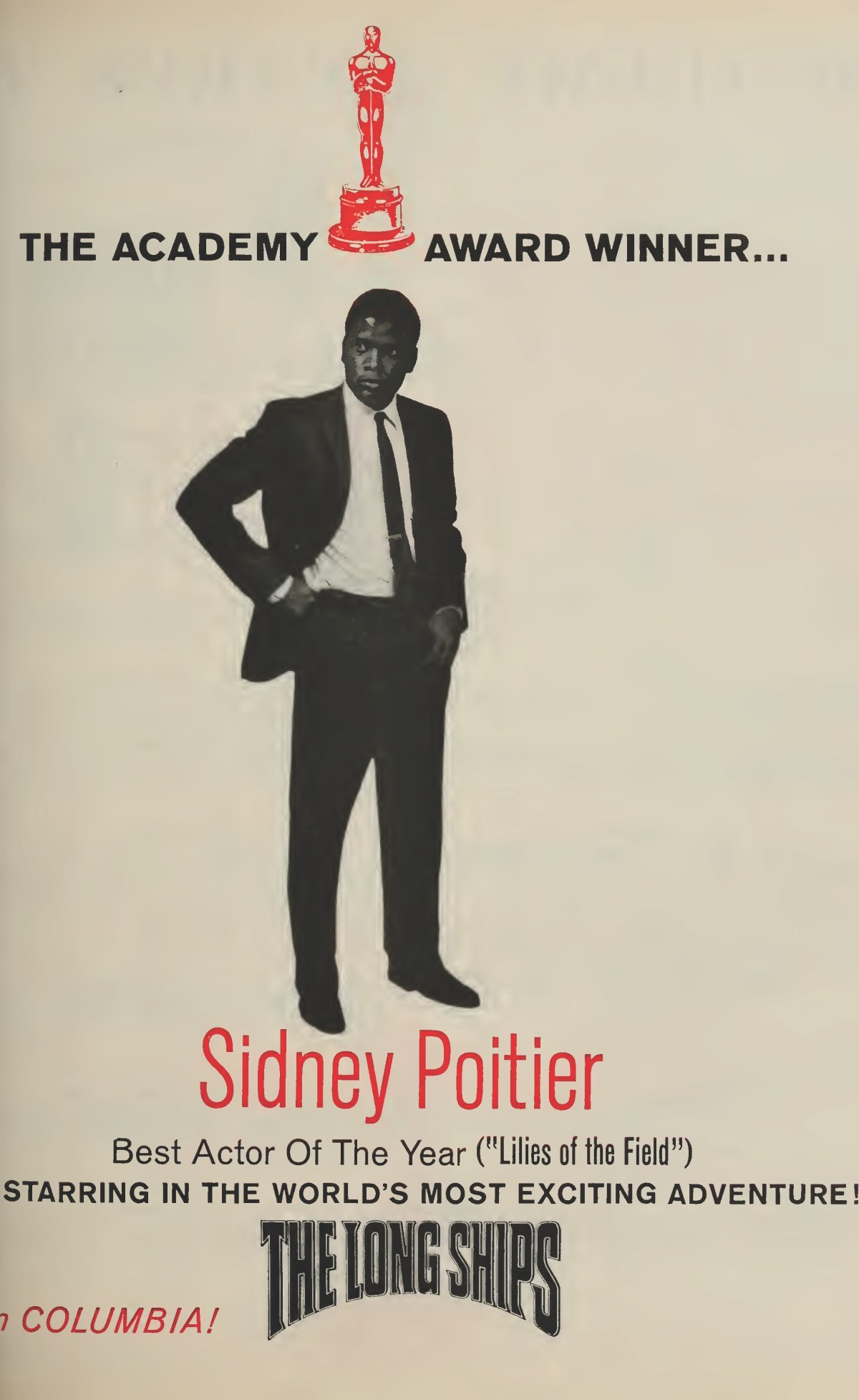
Decent hokum sees Vikings ally with Moors to seek a mythical giant bell made of gold, “the mother of voices.” There are stunning set-pieces: a majestic long ship coming into port, superior battles, the Mare of Steel, the discovery of the bell itself, while a clever ruse triggers the climactic fight. There’s even a “Spartacus” moment – when the Vikings declare themselves willing to die should their leader be executed.
Rolfe (Richard Widmark) is the wily Viking, second cousin to a con man, demonstrating his physical prowess although he does appear to spend an inordinate amount of time swept up ashore after shipwreck. Moorish king Aly Mansuh (Sidney Poitier) is his rival for the legendary bell. The diminutive Orm (Russ Tamblyn), Rolfe’s sidekick, appears to be in a constant athletic duel with the Viking.
Although handy with a sword, both are equally adept at employing seduction, Aly Mansuh making eyes at Viking princess Beba Loncar (in her Hollywood debut) while Rolfe targets Poitier’s neglected wife Rosanna Schiafffino (Two Weeks in Another Town, 1962). The story is occasionally put on hold to permit the Viking horde to pursue their two favorite pastimes – sex and violence – and they make the most of the opportunity to frolic with a harem.
One of the marks of the better historical films is the intelligence of the battle scenes. Here, faced with Muslim cavalry, the Vikings steal a trick from The 300 Spartans by lying down to let the horses pass then rising up to slaughter their riders. But there is also an unusual piece of intelligent thinking. Realising, as the battle wears on, that they are substantially outnumbered and have their backs to the sea, Widmark takes the sensible option of surrendering.
Richard Widmark (The Secret Ways, 1961) makes the most of an expansive role. Instead of seething with discontent or intent on harm as seemed to be his lot in most pictures, he heads for swashbuckler central, with a side helping of Valentino, gaily leaping from high windows and engaging in swordfights. Sidney Poitier (Duel at Diablo, 1966), laden down with pomp and circumstance rather than immersed in poverty as would he his norm, is less comfortable as the Islamic ruler. (Widmark and Poitier re-teamed in The Bedford Incident, 1965, also reviewed in the blog.)
The puckish Tamblyn (The Wonderful World of the Brothers Grimm, 1962) almost steals the show. Both Loncar and Schiaffino have decent parts.
Director Jack Cardiff, Oscar-nominated for Sons and Lovers (1960), brings to bear his experience of working on The Vikings (1958) for which he was cinematographer. He is clearly at home with the action and equally there is some fine composition. However, the story in places is over-complicated, and he fails to rein in the mugging of one of the industry’s great muggers Oscar Homolka (Joy in the Morning, 1965) and there is a complete disregard for accent discipline. Edward Judd (The Day the Earth Caught Fire, 1961), Scotsman Gordon Jackson (The Great Escape, 1963) and Colin Blakely (The Private Life of Sherlock Holmes, 1970) have supporting roles.
Berkely Mather (Dr No, 1962), Beverly Cross (Jason and the Argonauts, 1963) and, in his sole movie credit, Frans G Bengtsson, collaborated on the screenplay.
Good fun and great to see Widmark and Poitier turning their screen personas upside down.





 The Magnificent 60s