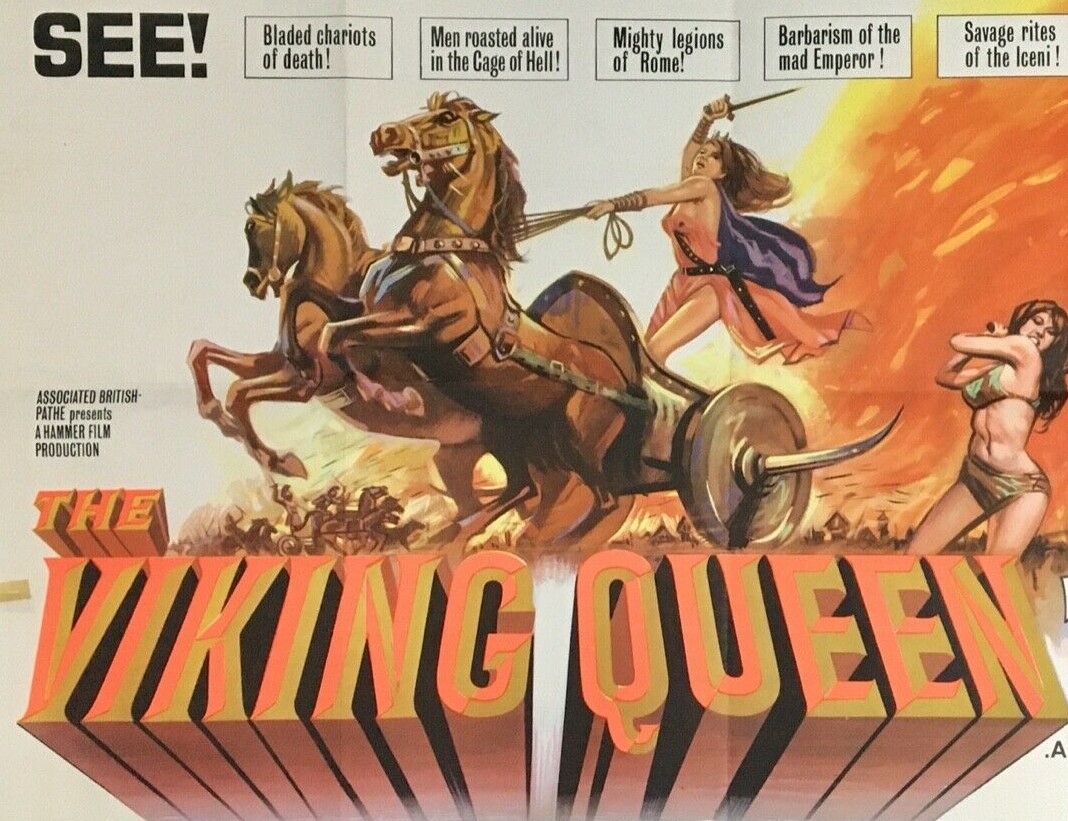
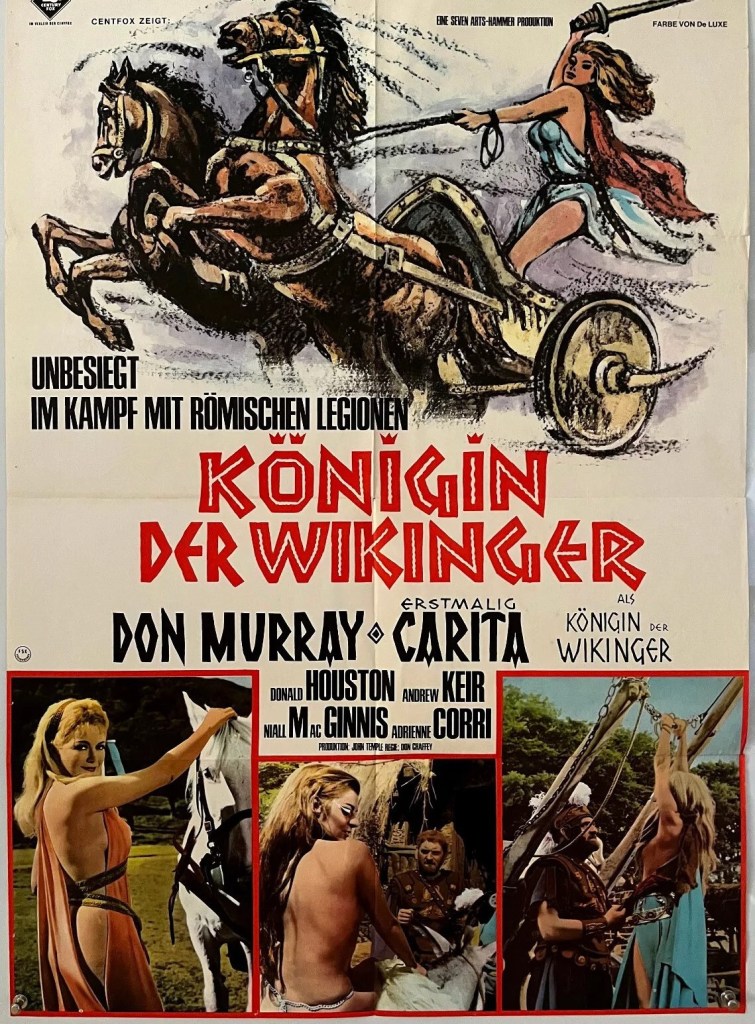
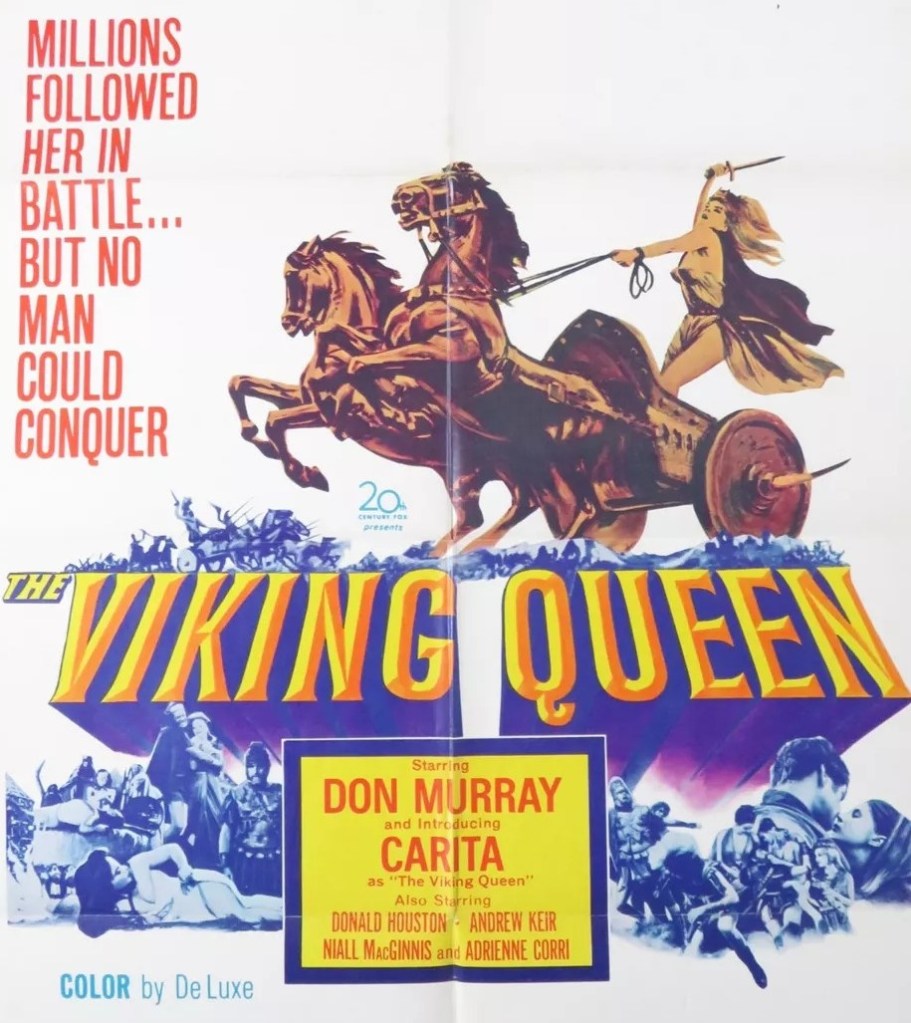
Politics, conspiracy, thwarted romance and historical inaccuracy take center stage in this Hammer romp that attempted to create another sex symbol to follow in the footsteps of Ursula Andress (She, 1965) and Raquel Welch (One Million Years B.C., 1966) in the shape of Finnish model Carita. Let’s put the dodgy historical elements to one side given Hollywood trampled over history all the time, but the title is a misnomer, the story owing more to folk heroine Boadicea than anyone who came from longship land.
On his deathbed British tribal king (Wilfred Lawson), against the wishes of powerful Druid chieftain Maelgan (Donald Houston), signs a peace treaty with Roman governor general Justinius (Donald Murray) against the wishes of his lieutenant Octavian (Andrew Keir). In different ways, the Druid and Octavian conspire to end the peace. Had new queen Salina (Carita), after falling in love with Justinius, been permitted to marry him that would have created a peaceful bond, but that is also prevented.
There’s a lot more sex and violence than you would have expected for the period, plenty scantily-clad slaves administering to the rich and the Romans, an extended brutal flogging sequence involving Salina, an offscreen rape, a cageful of Roman prisoners dropped into a burning pit, and when the British strap scythes onto the wheels of their chariots it’s a bloodbath. (Quite why the Romans never thought of importing their own chariots, given their popularity in the Colosseum, is never explained.) The chariots, whether in a race or battle, are the best thing about the picture, adding tremendous energy.
It takes quite a while for Salina to take up arms but when she does the film catches fire. She leads from the front, tearing through the Roman legions, and handy too with a sword. Ambushes appear the order of the day so any marching column or peaceful village soon ends up in a spot of bother.
There’s some of “what did the Romans ever do for us” with a snatch of Robin Hood thrown in – Justinius takes from the rich to give to the poor – plus religious fanaticism to stir the pot into a heady brew. But mostly it’s hokum, if rather plot-heavy. Quite how the Oscar-nominated Don Murray (Advise and Consent, 1962) was talked into this is anybody’s guess. Carita, of course, would have believed she was on a surefire route to stardom but in fact this was her last picture. The two stars don’t really have that much to do and do it well enough. In supporting roles you will spot Patrick Troughton (a BBC Dr Who), Nicola Pagett making her movie debut and Adrienne Corri (Africa – Texas Style, 1967). Director Don Caffey (One Million Years B.C., 1966) is better at action than drama.
Directed by Don Chaffey (Jason and the Argonauts, 1963) from a screenplay by Clarke Reynolds (Genghis Khan, 1965) and the movie’s producer John Temple-Smith.
King Arthur (plus Excalibur) meets Robin Hood (minus Merrie Men). I wouldn’t have been surprised to see Billy the Kid put in an appearance in this kind of history-defying picture. In case you were unaware, or less of a pedant than myself, there were at least two centuries (possibly eight, depending on your sources) between monarch and outlaw. There’s a princess, but going by the more prosaic name of Katherine, rather than the legendary Guinevere, and for that matter Lancelot and Galahad are excused duty, though the wizard Merlin pops up.
I hate to break it to you, but there is no siege. But there is, as if this more than makes up for that omission, marauding Vikings. Or at least marauders pretending to be Vikings, or that might just be my fault, assuming that those helmets with the rounded pointy bits were the preserve of the Norsemen.
And, presumably, for legal reasons (“passing off” in the jargon and there being a British television series and Hammer film to contend with) Robin Hood isn’t called Robin Hood even though he’s an outlaw in a forest who robs the rich to give to the poor. His moniker is Robert Marshall. You’d need to be well up on your history to work out why the Saxons would be considered bad guys when England was populated by Anglo-Saxons.
But when I explain this is made by the same duo that plundered a stock footage hypermarket for East of Sudan (1964) you’ll probably agree that accuracy was not their strong suit. Which is a shame, because it’s a half-decent tale of treachery and revenge and gives the underrated Janette Scott (Paranoiac, 1963) a strong role.
They couldn’t be bothered with all that Saxon confusion in France and just hyped it as a King Arthur gig, even though far from having an adventure he dies.
Anyways, Edmund (Ronald Howard), dastardly lover of Katherine (Janette Scott), daughter of an infirm King Arthur (Mark Dignam), sets up Robert (Ronald Lewis) to take the fall for his murder of the sovereign via his anonymous henchman known as The Limping Man (Jerome Willis). Katherine is reluctant, naturally, to head off into the unknown with the outlaw, especially when he insists on disguising her (none too cleverly it has to be said) as a boy while they seek out Merlin (John Laurie) in the hope that his wizardry can muck things up for the imposter.
It’s a wasted journey, not because he’s not filled with the requisite wisdom, but if they’d just left things to Excalibur in the first place all would be sorted. You see, the villain hasn’t worked out there was a good reason that Arthur managed to yank said sword out of the stone in the first place. Edmund can pull at the sword until he’s blue in the face but it’s not going to shift out of its scabbard, because, well, he ain’t Arthur. Just as well Edmund deprived Arthur of the bedside dying scene beside the lake where the king could chuck it in to ensure nobody of the dastardly persuasion could take advantage of its magical powers.
But, aha, genetics enter the equation. You could have made an entire new film out of chasing down the King Arthur Code, but luckily we are too many decades away from that kind of malarkey. So – feminist alert – it’s Katherine who’s inherited the genes. And – woke alert – who should ascend to the throne alongside her but the outlaw.
So it’s fairly straightforward stuff, swordfights, chases, a battle or two, bad guys and good guys and resolutely old-fashioned except for the feminist climax. Just a shame that nobody can match Janette Scott’s screen charisma, so though Ronald Lewis (Nurse on Wheels, 1963) can deliver a one-liner with aplomb and cut a swathe through bad guys, he’s not in her league. This is B-picture stuff without the redemptive features of noir or general nastiness or maybe a future star director making an impact.
Nathan Juran (First Men in the Moon, 1964) directed from a script by Jud Kinberg (East of Sudan) and John Kohn (The Collector, 1965) loosely based on the work of Thomas Malory who dreamed up the Camelot repertoire.
I come at this with a disadvantage since I’m all Napoleoned-out what the various Abel Gance projects and that of Stanley Kubrick. So I suffer from over-familiary with the subject matter. Most of the audience won;t have viewed a Napoleon movie in their lifetime, but I’ve already sat through six-seven hours of this material.
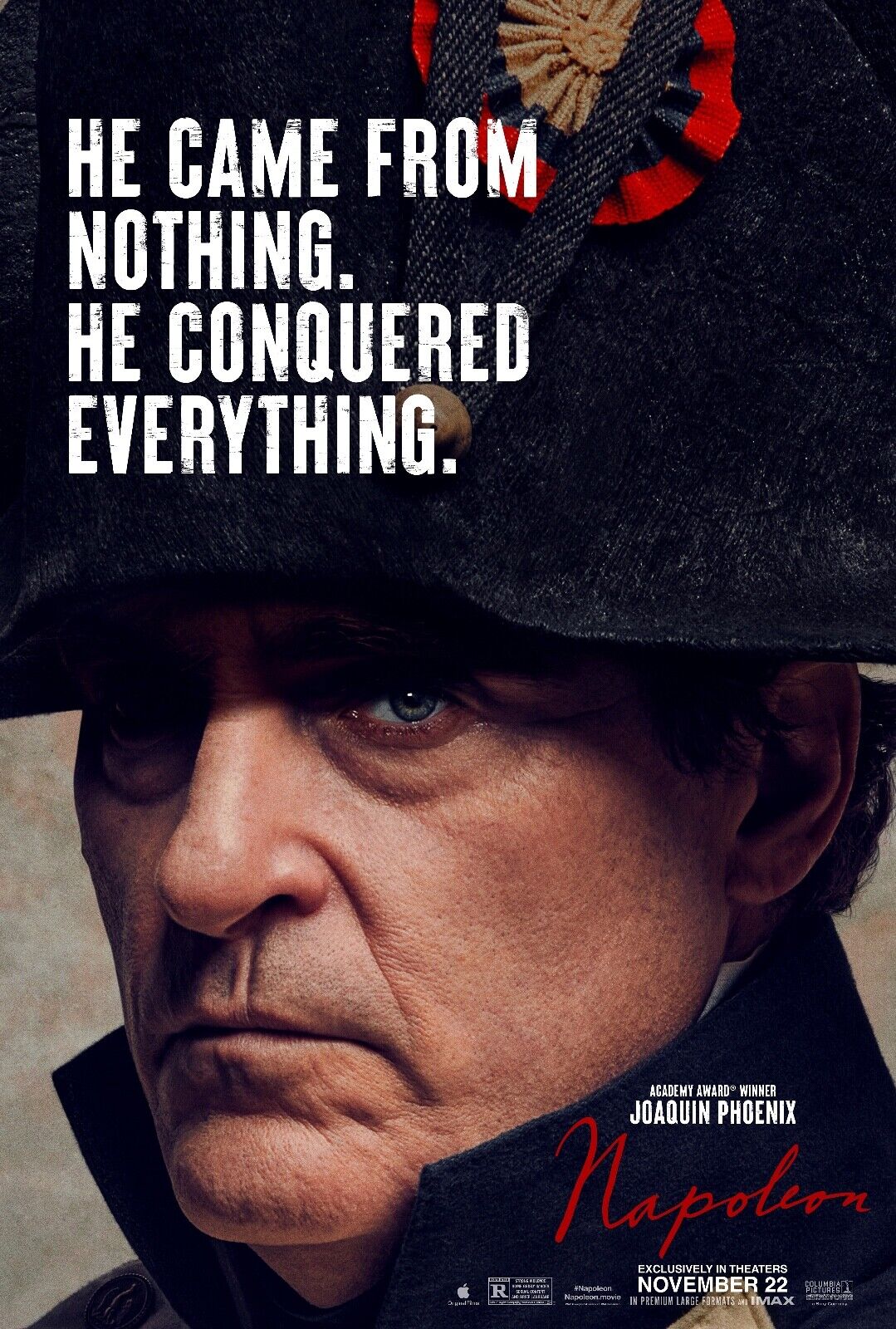
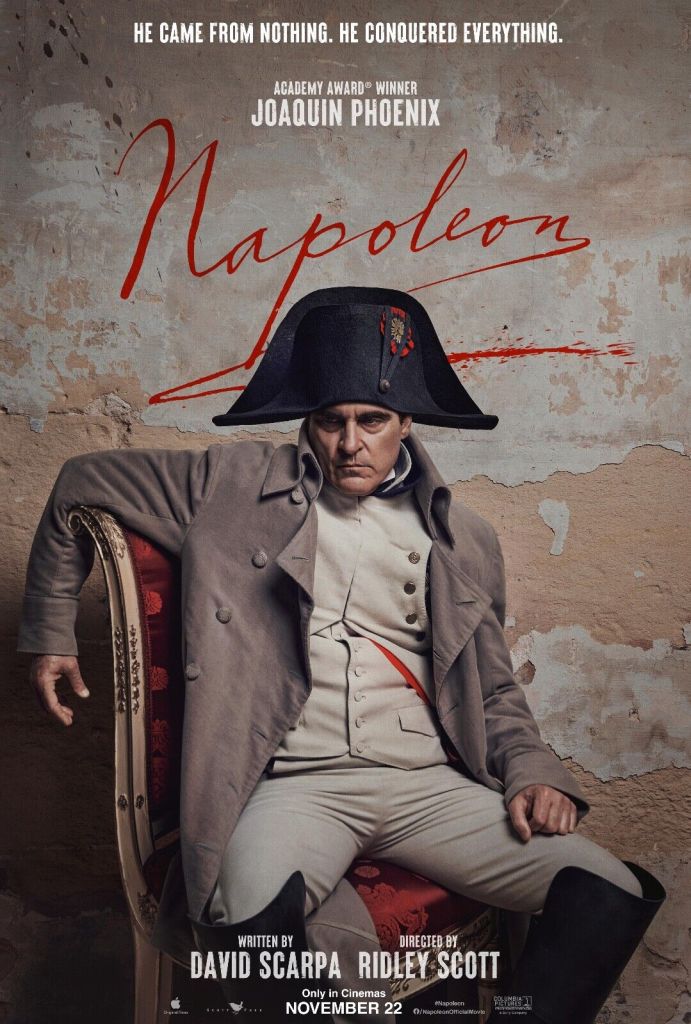
In the end length defeats them all, the magnitude of the task of encapsulating an extraordinary career ends up as a mad dash through history. Setting any deliberate distortions aside, those scenes fictionalized for dramatic effect providing directors with a free pass, it’s just too much to find a central thread on which to encompass the man. Here, Ridley Scott makes a good stab at using romance as that glue, but it’s hampered by the great emperor (Joaquin Phoenix) being such an oaf in terms of seduction. Although he is as ruthless as any dictator whose risen from poverty to the absolute heights.
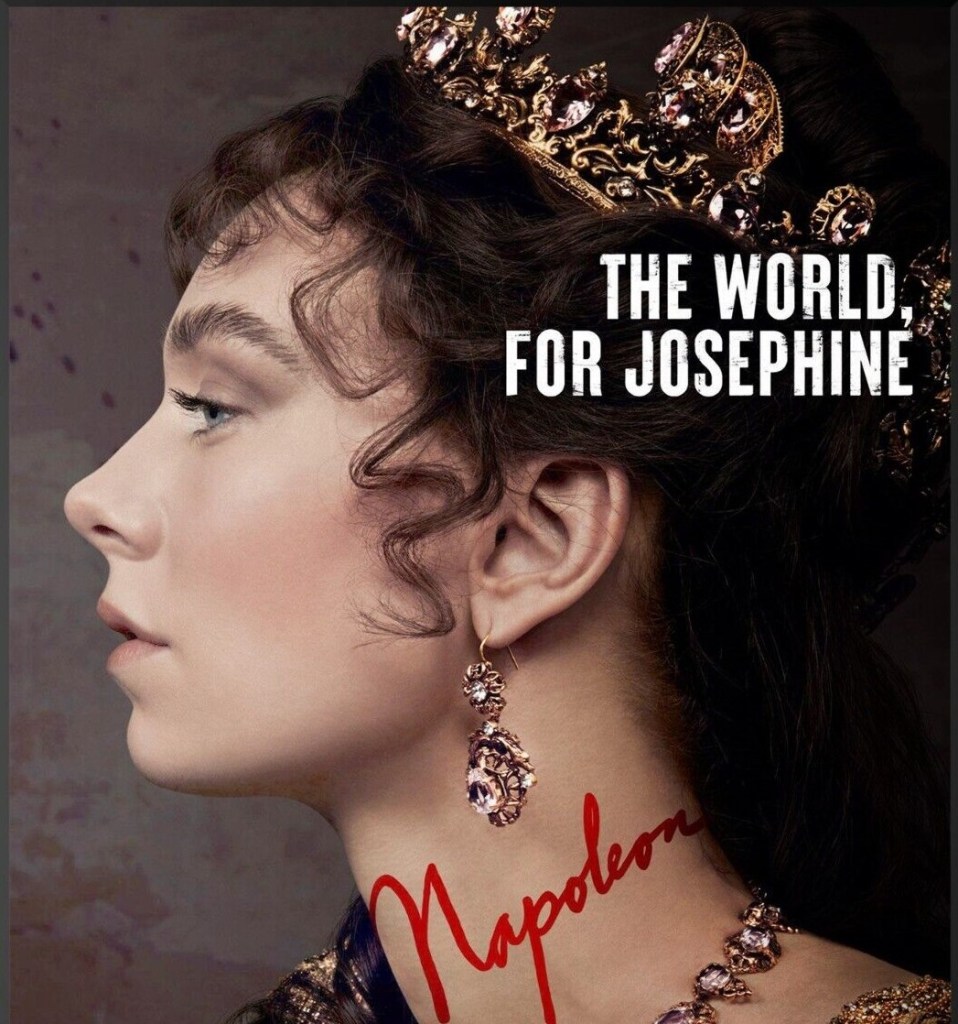
On the other hand, Josephine (Vanessa Kirby) is shown as a more complex character in more complex times, effectively taking up with this oaf for mercenary reasons, her clever plan only coming adrift because she cannot provide him with an heir. I doubt if that many among the audience are looking for an actual history lesson, which is just as well, because it feels, in part because of length restrictions, that this is inevitably going to come up short.
Little is made of the political situation in a world terrified of the revolution that changed France seeping into the countries of Europe. Theoretically, Britain was a democracy, but in reality it was ruled by an elite land-owning cabal, with poverty as rife as in France. Every other country in Europe had an unelected monarch. So Napoleon didn’t so much intend to conquer Europe from power lust but prevent his country being attacked by those who feared an end to the status quo.
Of course, if you had included more history you would have to accommodate an endless stream on one-line characters trying to explain the situation. Scott makes more use of subtitles to provide the audience with its historical bearings but still isn’t afraid to simply fall back on the Austerlitz trick of using protocol to announce a new one-line character.
In terms of actors, this has more the feel of a mini-series than a movie. Hardly anyone of box office significance and being weighed down with British character actors, virtually nobody is on screen long enough to make a mark. Certainly, none command the screen the way the veterans of the old-style all-star cast like Ralph Richardson (Khartoum 1966) or John Gielgud (Becket, 1964), and I’m sorry but Rupert Everett as the Duke of Wellington is sorely miscast.
Anyway, you could go through this entire picture pulling it to pieces, instead of concentrating of what does work. Napoleon’s insecurities contrast nicely with his rampant ambition and arrogance and every now and then someone delivers a historical bon mot. As annoying as it is, I doubt if many males of the period gave any thought to female pleasure during sex, so Napoleon’s amateur love-making can be ignored.
Except for the verbal sparring with Josephine, it’s the military duels that bring this up to scratch at least within the Ridley Scott canon. The taking of Toulon, the bloody putting down of the royalist revolt and Austerlitz are the outstanding scenes, though anybody who has dared to sit through Abel Gance’s Austerlitz might not come out thinking the frozen ice splintering is quite as novel as it might appear.
I’m guessing that the four-hour version planned for streaming might fill in some of the holes, but I’m worried that, like Austerlitz, it will be more of the boring stuff, a potted history filled out with more balls and costume-heavy scenes. If this is all the insight into the life of Napoleon that $200 million buys, then it will take another streamer with even deeper pockets to make a serious dent at tackling the full story of Napoleon.
I usually go back to see a Ridley Scott film at least once – I saw The Martian (2015), Gladiator (2000) and American Gangster (2007) four times each in the cinema – but I’m not sure this holds the same attraction. The director’s cut of Kingdom of Heaven (2005) even with a miscast Orlando Bloom totally transformed that movie so I’m hoping the longer version here might achieve the same. But the latter had a marvellous score, which I had bought as a CD and was a virtual earworm for me, whereas the music here is an uneven as the picture.
I’d love to give this a better score, especially as it may be the director’s last cinematic outing, but it’s too disappointing.
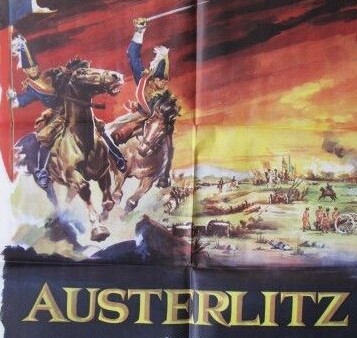
If I’d seen this first, I might well have resisted the publicity tsunami that welcomed in 1981 the restoration reissue of Abel Gance’s silent epic Napoleon (1927). It’s the equivalent of John Ford following up The Searchers (1956) with something as clunky as Cannon for Cordoba (1970).
Oddly enough, the first few minutes are outstanding in telegraphing the French leader’s myriad insecurities. He forces a flunkey not only to break in his stiff new shoes – for fear the master of all he surveys be seen limping along – but also his new hat and then cheats when he undergoes the self-imposed ritual of being measured, pushing up on his toes to elevate his height by two inches from its genuine five foot two inches.
After that splurge of exquisite exposition, it goes not so much downhill as up and down ever narrative pathway possible. No wonder Ridley Scott felt that encompassing this particular life required at least four hours (the length of the planned streaming version) and that Steven Spielberg aims to devote seven hours to the subject when he revisits Stanley Kubrick’s script for HBO.
Mercifully, this part of the Napoleon legend is truncated to just three years, from the Treaty of Amiens in 1802, which purportedly brought peace to Europe, to the Battle of Austerlitz in 1805 when the French commander-in-chief demonstrated his military genius and shredded his opponents. But that battle is an almighty time coming.
In between, we have to put up with endless balls and endless characters shuttling through doors, although following the protocol of the time at least we have a clue who they are since they are announced by another flunkey in advance of their appearance. You would need Google open to check out who exactly they all are and what part they play.
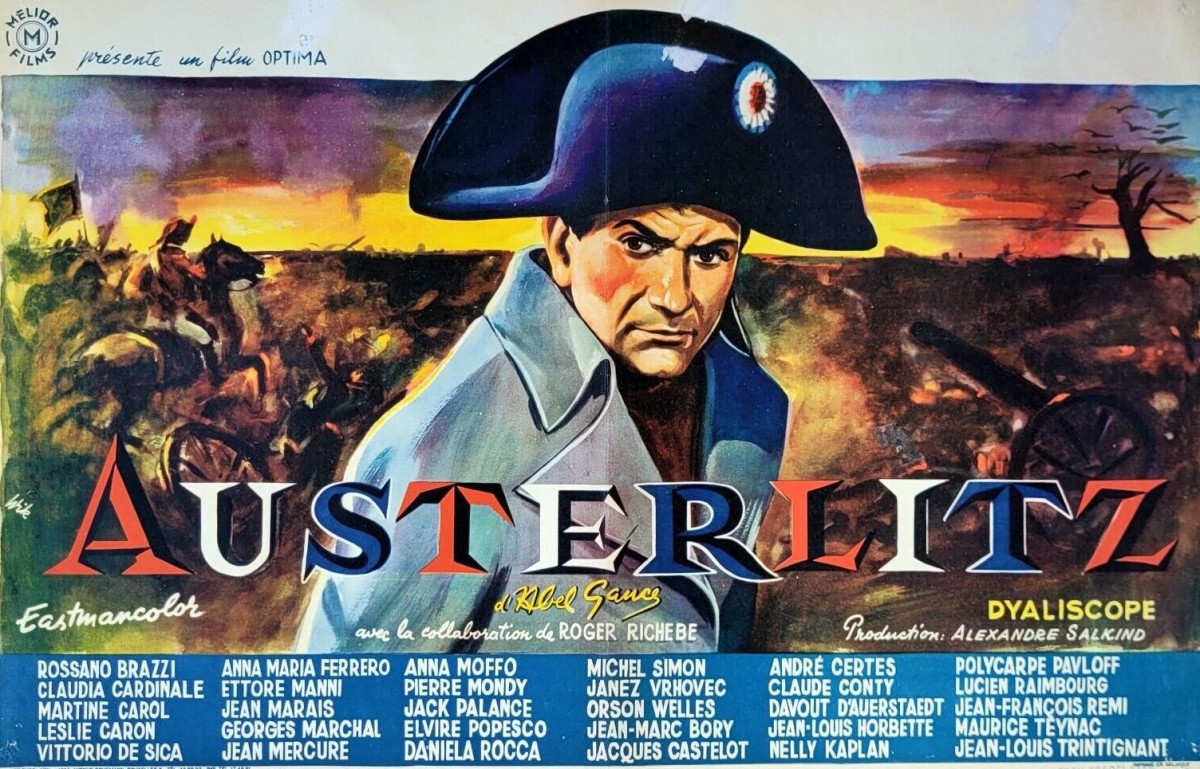
Roughly, the story goes: Napoleon (Pierre Mondy) is attempting to achieve the “unification of Europe” (as would occur by more peaceful means over a century and a half later). The rest of Europe, naturally, isn’t in agreement so when foreign countries are not despatching assassins or reneging on treaties they’re lining up armies against him. Things are just as tough domestically. Even though, by overwhelming public vote, he has been named Consul for Life, he hankers after reviving the old title of Emperor, despite the last owner having his head chopped off.
Plus, there are problems on the romantic front, wife Josephine (Martine Carole) has taken a lover and is jealous of the imminent arrival of his former Italian lover. All in all, it’s a pretty busy affair with countless sub plots, including an attempt to dupe the English into thinking he plans to invade their country via Ireland, and American inventor Robert Fulton (Orson Welles) trying to sell him on the notion of an ironclad steamship and submarine. Even when he gets to war, it’s nothing but chatter and subterfuge, various underlings almost rebelling at his, according to them, lack of military skill and troops disobeying orders.
The battle also lacks that essential ingredient, of the audience being told exactly what’s going on and understanding just how clever a maneuver might be, and although there are thundering horses aplenty it comes nowhere near the scale and grandeur he achieved with Napoleon, nor, it has to be said, the later Waterloo (1970), except for the horses and men disappearing under the frozen lake.
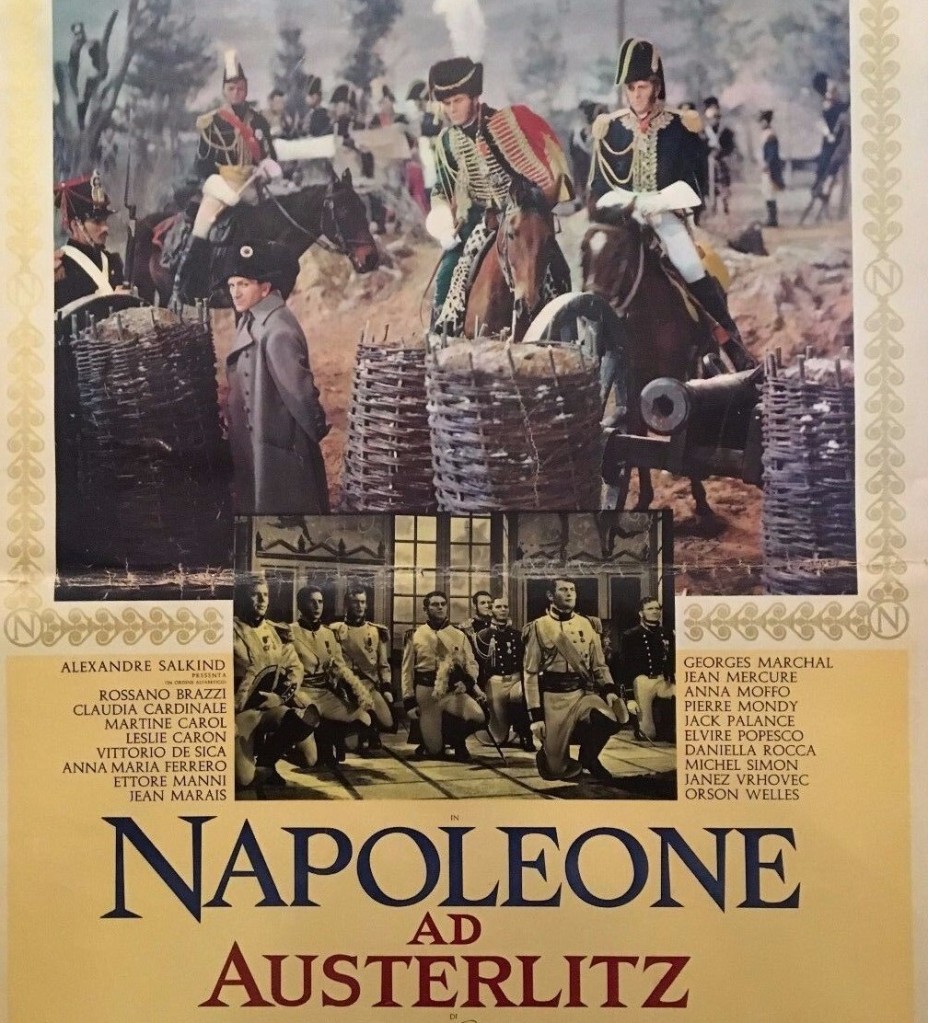
It was the fate of Abel Gance to be ruthless edited, his monster Napoleon chopped by two-thirds for original U.S. release, this one losing one-third of its running time, though I suspect what was cut out was no great loss, assuming it was just more rigmarole and costume drama set around his court, although it might have helped in working out what part his sister Pauline (Claudia Cardinale) and Mlle de Vaudey (Leslie Caron) play in the proceedings. Though we could have done with less of the Austrian General Weirother (Jack Palance with an execrable accent). Pauline has the best line in the whole endeavour, refusing to sit on a couch because its color clashes with her outfit.
Nestling among the all-star cast you’ll find – or not, depending on which version you view – names like Vittorio De Sica (The Shoes of the Fisherman, 1968), Rossano Brazzi (The Battle of the Villa Fiorita, 1965) and Jean-Louis Trintignant (Les Biches, 1968).
Nobody does much to earn their crust and Pierre Mondy (The Night of the Generals, 1967) just looks irritated beyond belief that he got mixed up in this.
Far from director Abel Gance’s finest moment. Little more than an elongated information dump.
That Fritz Lang’s Metropolis (1927) dominated the foreign film scene in the silent era was only because Abel Gance’s majestic Napoleon the same year was butchered on release and rarely seen outside its native France. Audiences who might fancy waiting for streaming to view Ridley Scott’s new epic on the grander four-hour scale might prefer to test their stamina against this early masterpiece that broke incredible new cinematic ground.
You could easily get the impression from the vast amount of innovation on display here that one man – and a Frenchman at that – had single-handedly decided to revolutionize the entire medium. Of course, France had been instrumental in the birth of cinema. Alice Guy was key to the development of narrative cinema although the world being male-dominated that singular achievement was erroneously handed over to George Melies.
Here’s the list of Abel Gance’s innovations: split screen (in fact, triple images), underwater shots, tinting, fast cutting, hand-held shots, extensive close-ups, point-of-view shots, superimposition, use of multiple cameras, mosaic shots and multiple exposure. Perhaps even more astonishing was that at the time the bulk of movie cameras were static. Even if the result had been, dramatically speaking, as dull as ditch water, it would have been of historical cinematic importance, possibly on a par with This Is Cinerama (1952) or House of Wax (1953), the first 3D.
And it if had been as visually striking and cinematically interesting as The Robe (1953), Twentieth Century Fox’s first demonstration of Cinemascope, it would have more than passed muster as a cinematic footnote.
Instead, it is just stunning. You couldn’t ask for a bolder storyline, the biopic of one of the most fascinating characters who ever lived, Napoleon Bonaparte, who resurrected France after the Revolution of 1789, conquered most of Europe, and rose from defeat and captivity to rally his troops for one final battle at Waterloo in 1815. Wisely, Abel Gance doesn’t attempt to cover all that territory, only going as far as the invasion of Italy, which marked the Little General’s rise as a battle master.
Unlike other directors such as Orson Welles who scarcely made another movie after one of his first efforts was butchered on release, Gance kept plugging away despite the debacle of Napoleon. “Venus of Paris” was shown in 1941.
Which version you see – the most common one comes in at around the four-hour mark but if you have the stamina there’s enough in the longer version to keep you engrossed for another couple of hours – will inform your assessment of the authenticity of the narrative and attest to the compelling nature of the tale.
Beginning with a young Napoleon revealing his military skills just to engage in a snowball fight, it moves with narrative focus and cinematic flair through his difficult time at school to the invasion of Italy. Some of the imagery is haunting, a freed pet eagle returning out of choice to his side, the French flag used as a sail, lightning illuminates hand-to-hand combat (that battle taking place in the kind of driving rain Kurosawa would employ in Seven Samurai, 1954), scenes change color, and the final unfurling of the triptych (three connected screens a la Cinerama) is one of the most visual climaxes in cinema.
But even the shortest version contains the bulk of the innovation, perhaps proving that dialog was the most redundant of all the cinematic developments. The trailer, which you can catch on YouTube (see link below), is almost jukebox cinema, a compilation of many of the greatest scenes. Unless you are familiar with silent cinema style, you might recoil at some of the acting, but, once you get into the swing of it, that seems to jar less.
Much as I am a huge fan of Ridley Scott (the extended version of Kingdom of Heaven, 2005, a long-time fave), I doubt if his version (even the longer one promised for the Netflix screening) will come anywhere close to the almost cinematic perfection of Abel Gance.
Don’t take Stanley Kubrick and martin Scorsese’s word for it, this is a must watch.
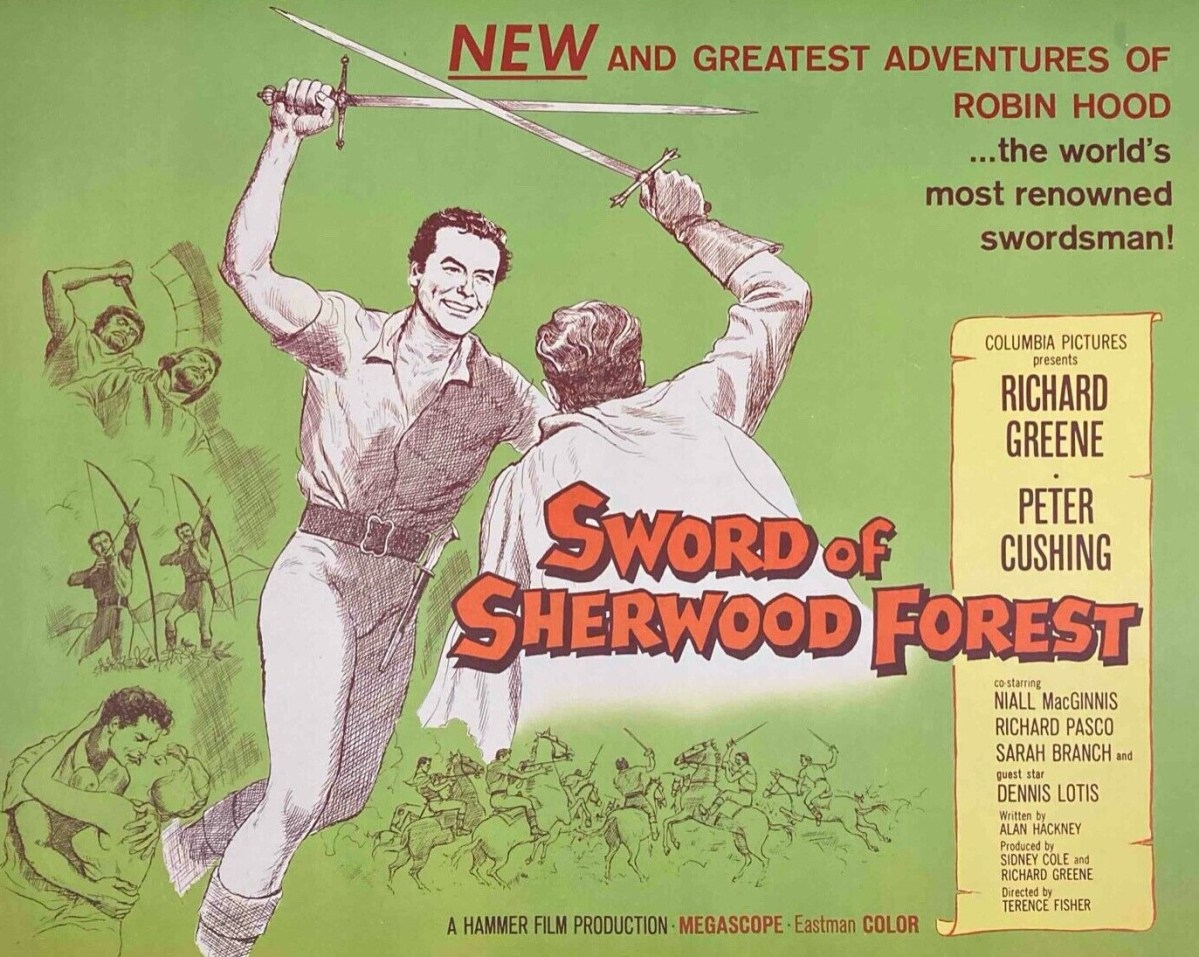
The last swashbuckler to cut a genuine dash was The Crimson Pirate (1952) with an athletic Burt Lancaster romancing Virginia Mayo in a big-budget Hollywood spectacular. The chance of Hollywood ponying up for further offerings of this caliber was remote once television began to cut the swashbuckler genre down to small-screen size. Britain’s ITV network churned out series based on Sir Lancelot, William Tell and The Count of Monte Cristo and 30-minute episodes (143 in all) of The Adventures of Robin Hood. So when Hammer decided to rework the series as Sword of Sherwood Forest their first port-of-call was series star Richard Greene.
And to encourage television viewers to follow the adventures of their hero on the big screen, Hammer sensibly dumped the small screen’s black-and-white photography in favour of widescreen color and then lit up the canvas at the outset with aerial tracking shots of the glorious bucolic greenery of the English countryside. Further temptation for staid television viewers came in the form of Maid Marian (Sarah Branch) bathing naked in a lake. Robin Hood is soon hooked.
Two main plots run side-by-side. The first is obvious. The Sheriff of Nottingham (Peter Cushing) is quietly defrauding people through legal means. The second takes a while to come to fruition. Robin Hood is hired by for his archery skills by the Earl of Newark (Richard Pasco) – he shoots a pumpkin through a spinning wheel, a moving bell and a bullseye through a slit – before it becomes apparent he is being recruited as an assassin. Oliver Reed and Derren Nesbitt put in uncredited appearances and the usual suspects are played by Niall MacGinnis (as Friar Tuck) and Nigel Green (as Little John).
There is sufficient swordfighting to satisfy. Director Terence Fisher (The Gorgon, 1964), more at home with the Hammer horror portfolio, demonstrates a facility with action. Richard Greene (The Blood of Fu Manchu, 1968) makes a breezy hero and Peter Cushing (The Gorgon) resists the tmeptation to camp it up. Screenplay honors went to Alan Hackney (You Must Be Joking! 1965).
Six years on from Sword of Sherwood Forest, the challenge of reviving a moribund genre proved too much for A Challenge for Robin Hood but this second Hammer swashbuckler is a valiant and enjoyable attempt. More in the way of an origin story, this explains how a nobleman turned into an outlaw and how the merry band was formed. For in this tale Robin Hood (Barry Ingham) is a Norman nobleman framed for murder, Will Scarlet (Douglas Mitchell) and Little John (Leon Greene) are castle servants – also Normans – while Maid Marian (Gay Hamilton) is in disguise. Some liberties are taken with the traditional version – there is no fight with Little John, instead, as noted above, they are already acquainted.
There are a couple of excellent set pieces and although the swordfights are not in the athletic league of Errol Flynn they are more inventive than the previous Hammer outing and there is enough derring-do to keep the plot ticking along. Robin’s cousin Roger de Courtenay (Peter Blythe) is the prime villain this time round, the sheriff (John Arnatt), although involved up to the hilt at the end, content to offer acerbic comment from the sidelines.
When Robin and Friar Tuck escape the castle by jumping into the moat, Will Scarlet is caught and later used as bait. Meanwhile Robin’s archery prowess and leadership skills have impressed the Saxon outlaws hiding in the forest and he takes over as their head. But there are clever ruses, jousting, Robin disguised as a masked monk, torture, and a pie fight.
Director C. M. Pennington-Richards had some swashbuckling form having helmed several episodes of The Buccaneers and Ivanhoe television series but his big screen experience was limited to routine films like Ladies Who Do (1963) with Peggy Mount. This was a departure for scriptwriter Peter Bryan, more used to churning out horror films like The Brides of Dracula (1960) and The Plague of the Zombies (1966), and he has invested the picture with more wittier lines and humorous situations than you might expect.
It’s certainly an escapist holiday treat and unless compared to the likes of the Pirates of the Caribbean or the classic Errol Flynn adventure it stands up very well on its own.
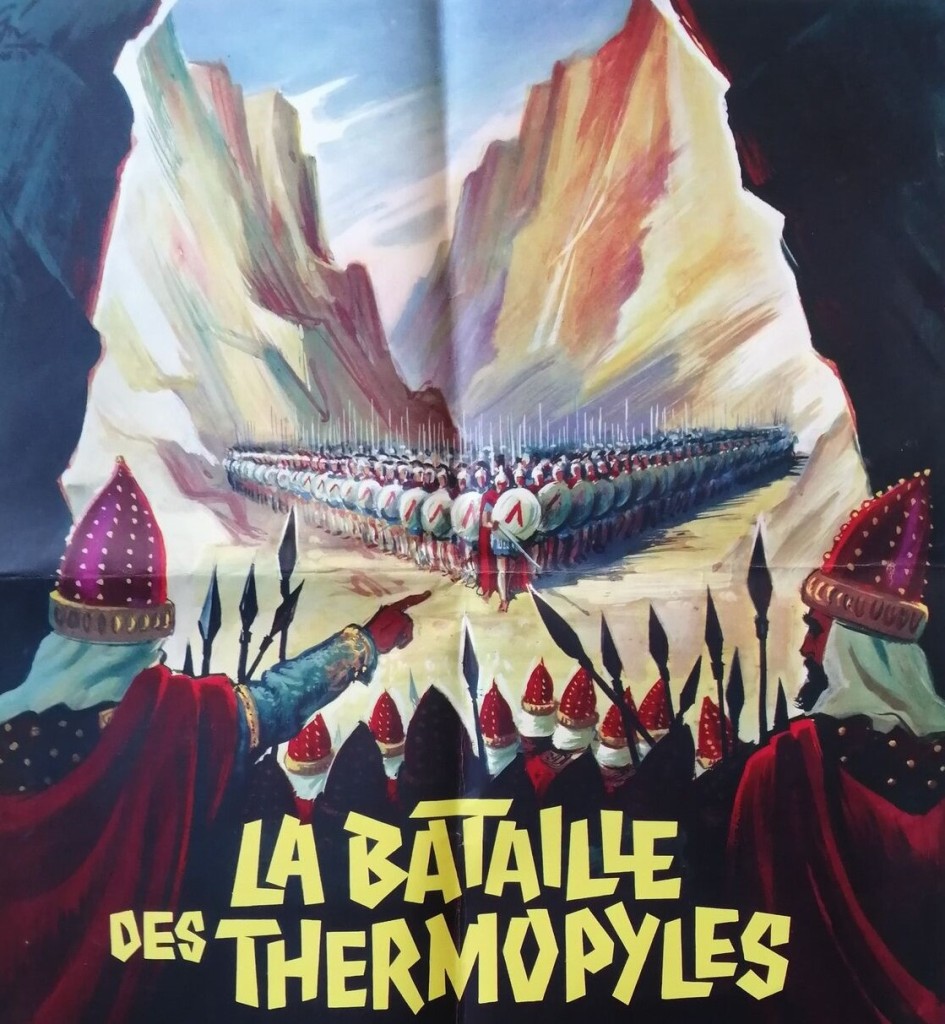
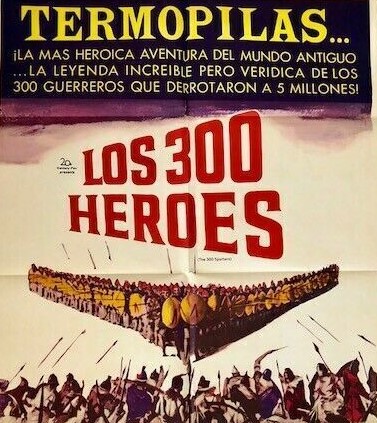
Doomed for half a century to be seen as Saturday television matinee material and then purportedly put into the shade by the Zack Snyder’s stylish 300 (2006), The 300 Spartans is in sore need of re-evaluation. Lacking the big budget of an El Cid (1961) or Lawrence of Arabia (1962) and released during an era when historical drama – Barabbas (1961), The Mongols (1961), Sword of the Conqueror (1961), The Trojan Horse (1961), and The Tartars (1961) – was at a peak, this is a stripped-down version of the famous Battle of Thermopylae in 480 B.C. and none the worse for it.
Clever camerawork suggests thousands of warriors involved and there is little sign of scrimping the wardrobe department, and there is more than enough action. But this is a surprising literate picture, with great lines for cynical politicians as much as for warriors and peasants. Themistocles (Ralph Richardson) comments: “Some day, I may enter religion myself. It’s better than politics. With the gods behind you, you can be more irresponsible.”
Told that the invading Persian army has “arrows that will blot out the sun,” Spartan King Leonides (Richard Egan) retorts, “then we will fight in the shade.” And there’s sexist banter typical of the period between a peasant couple: wife – “goats have more brains than men”; husband – “who can understand the ways of the gods, they create lovely girls and then turn them into wives.”
Quite how Leonides ends up fighting the massive army on its own is down to a mixture of politics and religion. Oracles foretell doom. The various Greek states refuse to join together, although Athens lends Sparta its fleet (“Athens’ wooden wall”). Even Sparta officially refuses to participate on the grounds that battle would interrupt a major religious festival. Leonides’ “army” of 300 men is comprised of his bodyguard.
A romantic subplot involving a young couple results in catastrophe. Just how ruthless is the opposition is shown when Persian king Xerxes (David Farrar) slaughters all his soldiers’ wives to make the men more determined to get to Greece where doubtless they will enslave the female population. When his archers fire, he doesn’t care if the arrows hit his own men.
What marks out the best historical action pictures is the intelligence behind the battle. Strategy is key. The first weapon, of course, surprise, so the Spartans sneak into the Persian camp from the sea and burn their tents. During battle, to counteract the Persian cavalry, the front row of the Spartan army lies down and allows the horses to jump over them, then rising up, trap the cavalry and drive them into the sea. (A ruse later employed by Richard Widmark in The Long Ships, 1964).
Other wily measures are used deal with the Persian crack infantry regiment, The Immortals. Even at the end, the Spartans continue to confound the enemy with clever ruses.
Richard Egan (Pollyanna, 1960) is effective as Leonides, Ralph Richardson (Woman of Straw, 1964) excellent as the crafty but honorable Themistocles while Alfred Hitchcock protégé Diane Baker (Mirage, 1965) – “glaringly miscast” according to Variety – has the female lead though Anne Wakefield (The Singing Nun, 1966) as a Persian queen the more interesting role. Former British matinee idol star David Farrar (Beat Girl / Wild for Kicks, 1960) Meet Sexton Blake, 1945), in his final movie, proves a handful as the intemperate Xerxes.
Five-time Oscar-nominated cinematographer Rudolf Mate delivers the directorial goods, his handling the dramatic scenes as confidently as the action and masking the holes in his budget by making clever use of trees as the invaders march, suggesting an army far bigger than he could afford to put on the screen. Color-coding the Spartans – they were in red – made the action clearer to follow. George St George (Invasion 1700, 1962), doubling up as producer, wrote the script with his usual collaborators Ugo Liberatore (A Minute to Pray, A Second to Die, 1967) and Remigio del Grosso (Wanted, 1967).
Originally titled The Lion of Sparta, the film could not have been made without the wholesale cooperation of the Greek army which supplied over 2,000 soldiers. Those playing Spartans had to be over six foot tall. Since the Greeks had no cavalry and few knew how to ride, around 200 were given a crash course. It was a bonanza for the soldiers – their normal wage of $2 was supplemented by $5.50.
Thermopylae no longer looked like the area immortalised by the battle, so the action was shot at Loutraki, near Corinth and 80 miles from Athens.
Thoughtful drama with striking action deserves reassessment.
Contemporary audiences will gib at a narrative that relies on legalised rape. Audiences at the time had the same response but since then it has picked up considerable critical acclaim on account of its down-and-dirty portrayal of a medieval era far removed from the knight in shining armour. But it still pivots on the distasteful notion of “droit de seigneur”, the right of any noble to take the virginity of any female underling on their wedding night – it was motivation for William Wallace’s rebellion in Braveheart (1995).
The idea that this was pervasive or even occurred at all has been proven to be historically inaccurate. Logic tells you that any ruler wanting to keep his subjects in check would scarcely resort to wholesale rape that could spark disloyalty among his subjects. Or that any no one would be unaware of the dangers of inbreeding should the nobleman’s seed result in pregnancy.
What of course the movie does get right is that women were treated as chattels – “she’s mine” / “you’re mine” a recurrent refrain – or were makeweights in deals uniting the vested interests of kings or dukes.
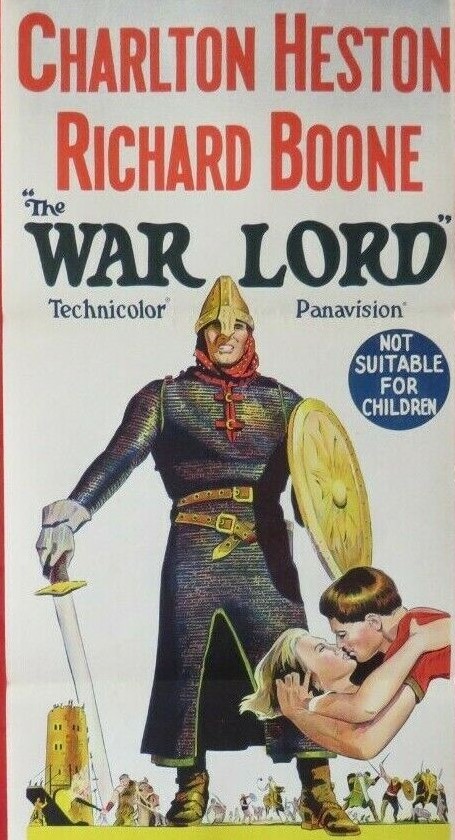
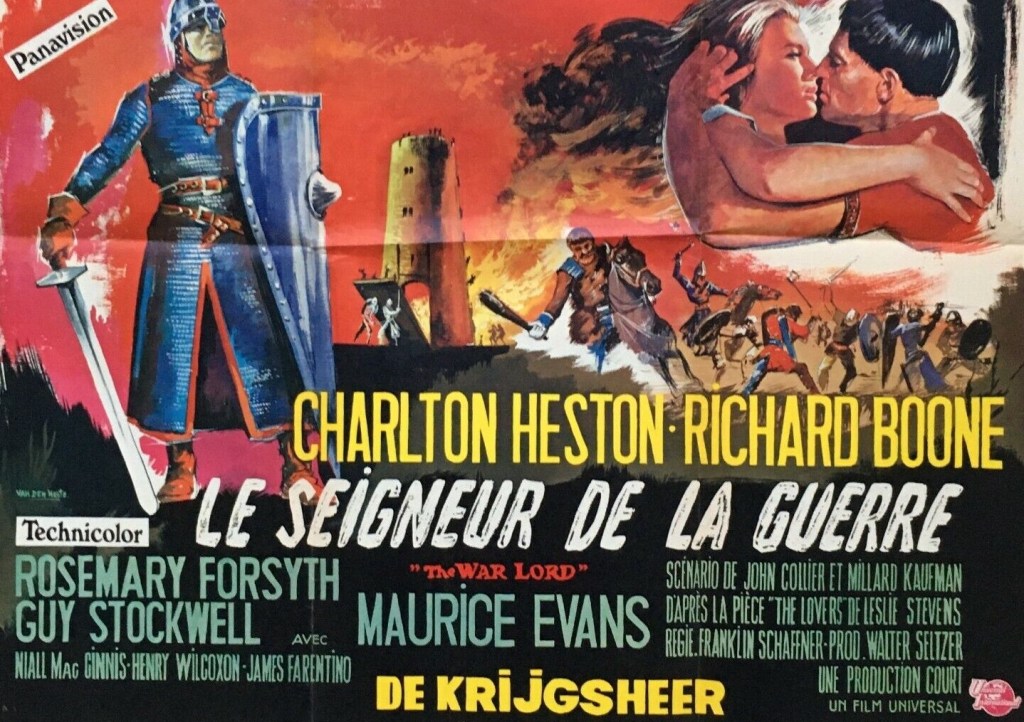
As reward for years of service to the Duke of Ghent, Chrysagon (Charlton Heston) is handed a fiefdom in Normandy, prone to attack by Frisian raiders from the neighbouring Netherlands. In interrupting such an assault, Chrysagon captures the enemy chief’s son without being aware of it, prompting a later battle.
While the area boasts vestiges of normality, a priest and a strong tower, the inhabitants are inclined to the pagan rather than Christianity with rites (reminiscent of Game of Thrones) involving stone and trees while anyone using herbs for medicinal purposes is likely to be accused of witchcraft. Chrysagon takes a fancy to Bronwen (Rosemary Forsyth) already bethrothed to Marc (James Farentino). Egged on by his brother Draco (Guy Stockwell), Chrysagon decides to take up the option of droit de seigneur, but refuses to return the bride after the allotted time period (before dawn), incurring the wrath of the villagers who recruit the Frisians to their cause.
So it’s siege time although it seems unlikely that the attackers would be capable of producing such dangerous siege weapons in such a short time or that they wouldn’t simply resort to starving out the beseiged. Chrysagon’s troops engage the attackers in time-honoured fashion from the top of the tower by arrow, boulders and boiling oil. Chysagon slides down a rope like Errol Flynn to prevent the raised drawbridge being lowered and uses a boat anchor to dislodge the siege tower. Battering rams and catapults soon enter the equation.
The only question-mark (unspoken) against Chrysagon’s employment of the “droit” privilege comes when the Duke demotes him and appoints Draco in his stead, prompting various endgame twists.
The battle is interesting enough, threat repeatedly countered, but there’s only so many times a director can cut to a soldier tumbling to his death. The ending is an anomaly, Chrysagon showing more respect to the son of his enemy than the wife of his villagers, and it seems odd that Draco is suddenly revealed as a bad guy, despite not being the one who triggered the conflict.
Chrysagon might have easily have fallen into the Martin Scorsese category of characters with “no redeeming features” – who are exempt apparently from the need for decency because of war – and it’s hard to summon up the necessary audience sympathy to make this picture work, especially given its starting point. Had Chrysagon merely fallen in love with Bronwen who reciprocated his feelings and that caused enmity among the villagers it would have been one thing but to start out from an historically inaccurate base is another.
One of the problems is that Bronwen doesn’t evolve. Her transition is from interesting to passive. She has actually gone through a marriage ritual (of the Druid kind, but still binding as far as the villagers are concerned) and is therefore embarking on an adulterous relationship once the cock crows. It seems ludicrous, without allowing the woman dialog to express her feelings and acknowledge the peril of her actions, that she would believably take this route.
So, if you like, accepting the droit de seigneur, in some ways it becomes a bolder picture, a major Hollywood star risking his reputation by playing a rapist, and in the way of all rapists justifying his action. And, like the characters in the recently-reviewed Play Dirty (1969) or Judith (1966), it becomes a question of individuals as pawns, the powerful taking advantage of position to abuse the weak. And it wouldn’t be the first time the innocent have suffered through a superior taking an indefensible approach.
Franklin Schaffner (Planet of the Apes, 1968) directed. Charlton Heston (Diamond Head) performs as if he’s the French equivalent of a Brit constantly biting on that stiff upper lip. Richard Boone (Rio Conchos, 1964) is wasted. Guy Stockwell (Tobruk, 1967) essays another weasel. It’s a picture of two halves for Rosemary Forsyth (Where It’s At, 1969) – while being wooed she’s good but then she’s pretty much dumped as far as the narrative goes.
Screenwriter John Collier, who later wrote the even creepier Some Call It Loving (1973) – an early Zalman King production – and Millard Kaufman (Raintree County, 1957) adapted the screenplay from an unusual source, a Broadway play by Leslie Stevens (Incubus, 1966) called The Lovers. The play had a different perspective, the bride ultimately committing suicide, while the War Lord and husband killed each other in a duel. Needless to say, there are no Frisians, so no siege, and no brother.
Before the arrival of Ridley Scott, this would been viewed as the best depiction of genuine medieval siege, so that part certainly still holds up. But the rest of it will only stand the test of time if you are willing to view it as an expression of the corruption of power.
Hollywood was never reined in by the strictures of history, much preferring fiction to fact for dramatic effect, and that’s largely the case here, although the titular hero’s real life remains shrouded in myth.
If you do catch this surprisingly good feature, make sure it’s not one of the many pan-and-scan atrocities on the market. I watched this in the proper Panavision ratio which meant it occupied only one-third of my television screen, but in that format it’s terrific. It’s a bit of an anomaly for a decade that churned out high-class historical epics like El Cid (1961) because this clocks in about a hour short of other films in the genre and there’s no star actor or director to speak of and no Yakima Canutt to handle the second unit action scenes.
Omar Sharif’s marquee value at this point was so low that if you check out any of the original posters you’ll note that his name hardly rates a mention and he also comes at the very end of the opening screen credits. Although this is post-Lawrence of Arabia (1962), it’s pre-Doctor Zhivago (1965), suggesting nobody had a clue how to market his talents.
Director Henry Levin was a journeyman, fifty films under his belt, best known for not a great deal except for, following this, the second and third in the Matt Helm spy series. Given this film was critically ignored on release and since, and a flop to boot, it definitely falls into the “Worth a Look” category. Although there are few stand-out scenes of the artistic variety such as pepper Lawrence of Arabia or El Cid, this is still well put together and Levin shows an aptness for the widescreen.
The narrative breaks down into three parts – the first section describing enslavement of Genghis Khan (Omar Sharif) by nemesis Jamuga (Stephen Boyd – the picture’s star according to poster and screen credits) – before banding together rival tribes in revolt; the second part a long trek to China; and the third encompassing a final battle and hand-to-hand combat with Jamuga. For a two-hour picture it has tremendous sweep, not just the scenery and the battle scenes, but political intrigue, romance, a rape scene and even clever comedy. Genghis Khan believes his glory is predestined, but he has very modern ideas about the role of women.
The best section, oddly enough, is set in China where Genghis engages in a duel of wits with the distinctively contradictory Emperor (Robert Morley), but that’s not to detract from the film’s other qualities, the action brilliantly handled, especially the chaos of battle, the romance touching, and the dialog intelligent and often epigrammatic.
Unlike James Mason (Age of Consent, 1969) who makes a calamitous attempt at a Chinese accent, Robert Morley (Some Girls Do, 1969), costume apart and looking as if he has just walked out of an English country house, but his plummy tones belie a very believable character. Stephen Boyd (Assignment K, 1968) shines as the villain of the piece. Telly Savalas (Battle of the Bulge, 1965) and Woody Strode (The Professionals, 1966) have decent parts as Khan’s s sidekicks, the former unexpectedly bearing the brunt of the film’s comedy. French actress Francoise Dorleac (Billion Dollar Brain, 1967) is effective as Sharif’s wife.
Hitchcock stole one of his most famous ideas from Genghis Khan. About the only scene in Torn Curtain (1966) to receive universal praise was a killing carried out to a soundtrack of nothing more than the grunts of assailant and victim. But, here, where the score by Yugoslavian composer Dusan Radic was extensively employed, the rape scene is silent and just as stunning. If the only prints widely available are of the pan-and-scan variety I’m not surprised the film has been for so long overlooked, but if you can get hold of one in the preferred format you will be in for a surprise.
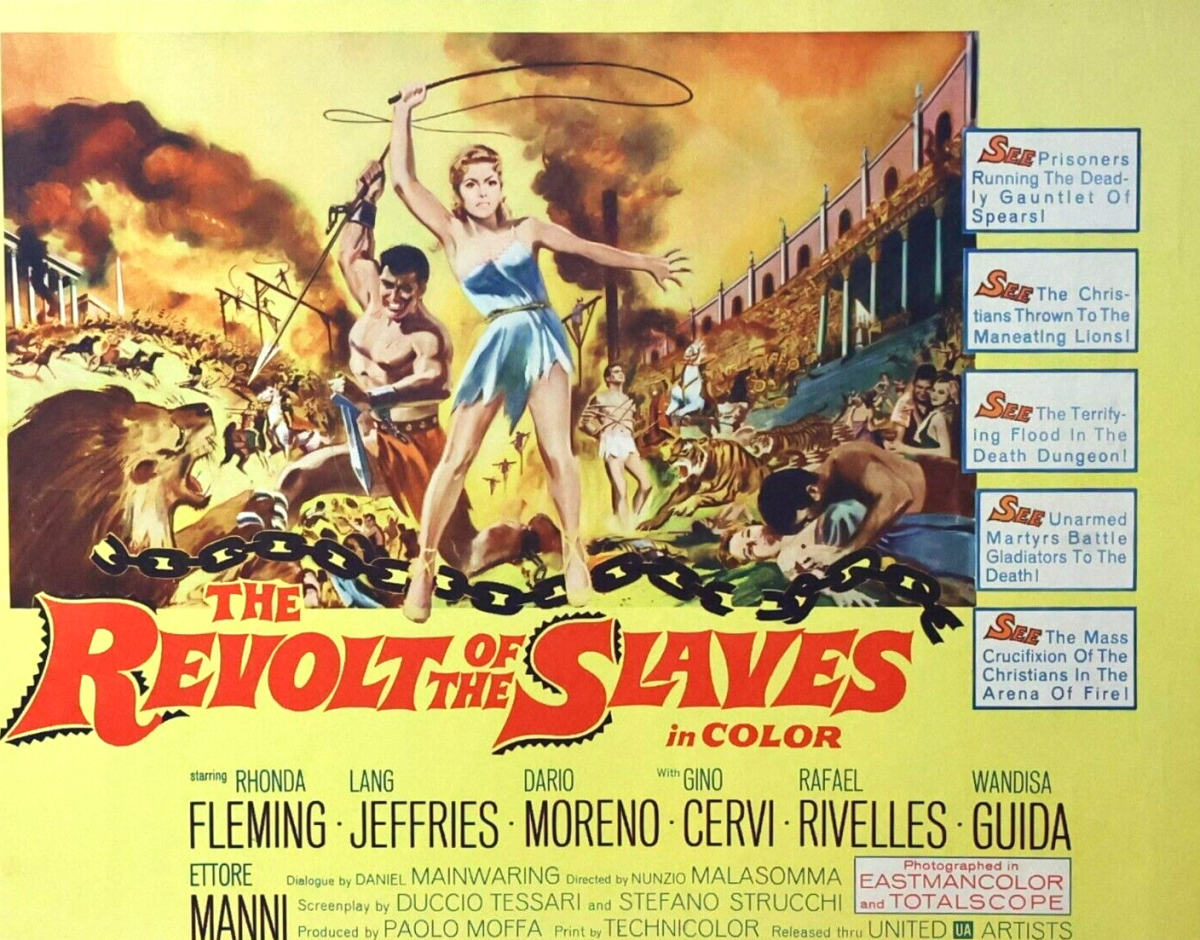
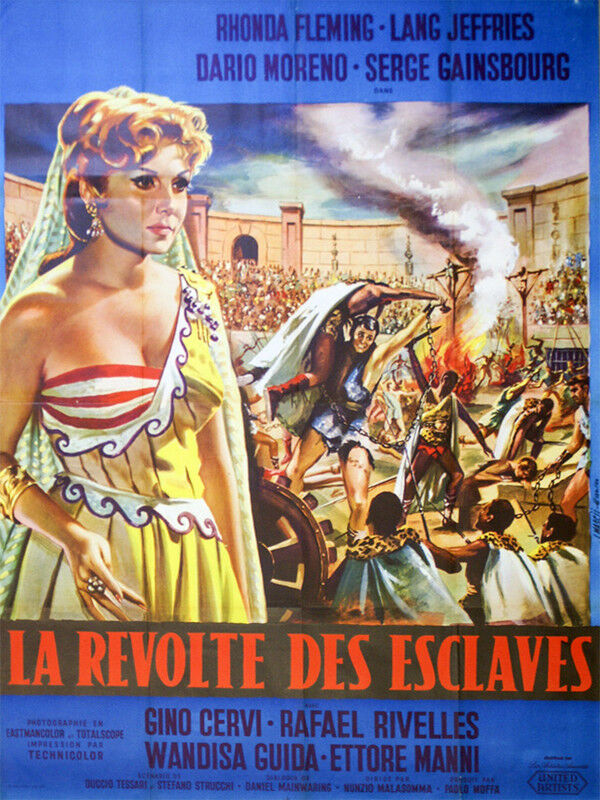
Time has been very kind to this underrated handsomely-mounted hugely enjoyable historical romp about victimised Christians in ancient Rome. Virtually a last hurrah for 1950s redhead Rhonda Fleming (Gunfight at the OK Corral, 1957), known as The Queen of Technicolor and here gifted lines like “the whip will do him good.” Fernando Rey (The French Connection, 1971) is thrown into a pit of ravenous hounds. Singer and serial lothario Serge Gainsbourg, immortalised by late Sixties bedroom anthem “Je t’aime,” plays a sadistic villain.
Despite the occasional over-the-top religious references – a character called Sebastian (Ettore Mane) is pinioned to a tree by arrows because the overseer (“don’t aim for the heart”) wants to prolong his agony, a prisoner facing death is baptised in a convenient flood – the piety is largely kept under wraps because these Christians refuse to turn the traditional cheek and inflict considerable damage on their masters. A voice that sounds like the Voice of God is revealed as an ordinary mortal. And there are nods to modern politics, the powers behind the throne.
Cool Hand Luke couldn’t have come up with better plans for escape, filling a cell with water from the sewer till inmates, except the aforementioned late convert, float to the hatch in the ceiling. A sojourn along a river is enough to put the pack of chasing hounds off the scent. Pursuers are trapped in the catacombs by the simple device of bringing down the roof.
After wealthy patrician Claudius (Gino Cervi) saves the life of escaped slave Vibio (Lang Jeffries) his arrogant daughter Claudia (Rhonda Fleming), introduced driving a chariot along packed streets with little regard for public safety, finds every excuse to humiliate him.
The plot is triggered when Claudia’s cousin/niece (the English translation is unclear) Agnese (Wandisa Guida) is followed by spy Corvino (Serge Gainsbourg) to a Christian hideout. Claudia becomes implicated when Agnese seeks refuge and for a good while she’s on the run, eventually committing her first act of unselfishness after falling for Vibio. But, to save her family, Claudia denounces the Christianity she has begun to accept, only to become involved in the finale in the arena where Christians are killed one by one, not by the waiting lions, but by spear.
It’s mostly heady and bloody action, the driving narrative only pausing now and then to make a religious point. The Emperor, like any leader in Game of Thrones, is afflicted with illness which makes his face burst out in spots. There’s some excellent use of music. In one sequence the hunters with a soundtrack of barking dogs are contrasted with a peaceful scene of the Christians not realising their pursuers are so close until the barking infuses their scene.
Fair bit of poetic license here. No tigers!
Star of the show is undoubtedly Rhonda Fleming. A huge post-war marquee idol, she starred opposite the likes of Bing Crosby (A Connecticut Yankee in the Court of King Arthur, 1949), Glenn Ford (The Redhead and the Cowboy, 1951), Dana Andrews (While the City Sleeps, 1956) and Burt Lancaster (Gunfight at the OK Corral). But she was equally well-known as the top-billed star of adventures like The Golden Hawk (1952), Serpent of the Nile (1953) and Those Redheads from Seattle (1953). It was once said of her by a cinematographer that her beauty was so flawless she was stunning from any angle.
Quite why roles had dried up so much that she headed across the Atlantic to Italy for this is anybody’s guess. It certainly failed to revive her career, possibly because the religious aspects would have been more grating for audiences of the period whereas now they are less dominant.
Oddly enough, it was virtually a last hurrah also for veteran Italian director Nunzio Malasomma (The White Devil, 1947) who didn’t make another picture – his last – for seven years. But he handles the whole venture with aplomb, interspersing humor with action, moving along at a terrific pace, and making the most of a dream cast. In his debut Lang Jefferies (Don’t Knock the Twist, 1962) shows some acting talent among the flash of muscle. But it’s Rhonda Fleming’s picture.
Note: dubbing into English has changed some names. In the Italian version Claudia is named Fabiola – it’s a remake of the earlier Fabiola (1949) starring Michele Morgan – and her father Fabio, so stand by for confusion on imdb.
Certainly a cut above the sword-and-sandals epics flourishing at the time. I’d add that it’s an ideal matinee feature except I watched it late at night and it was just as entertaining. Highly recommended as an easy watch or just to see Rhonda Fleming at her best. The rating might err a little on the high side but every now and then we are allowed our guilty pleasures.









 The Magnificent 60s