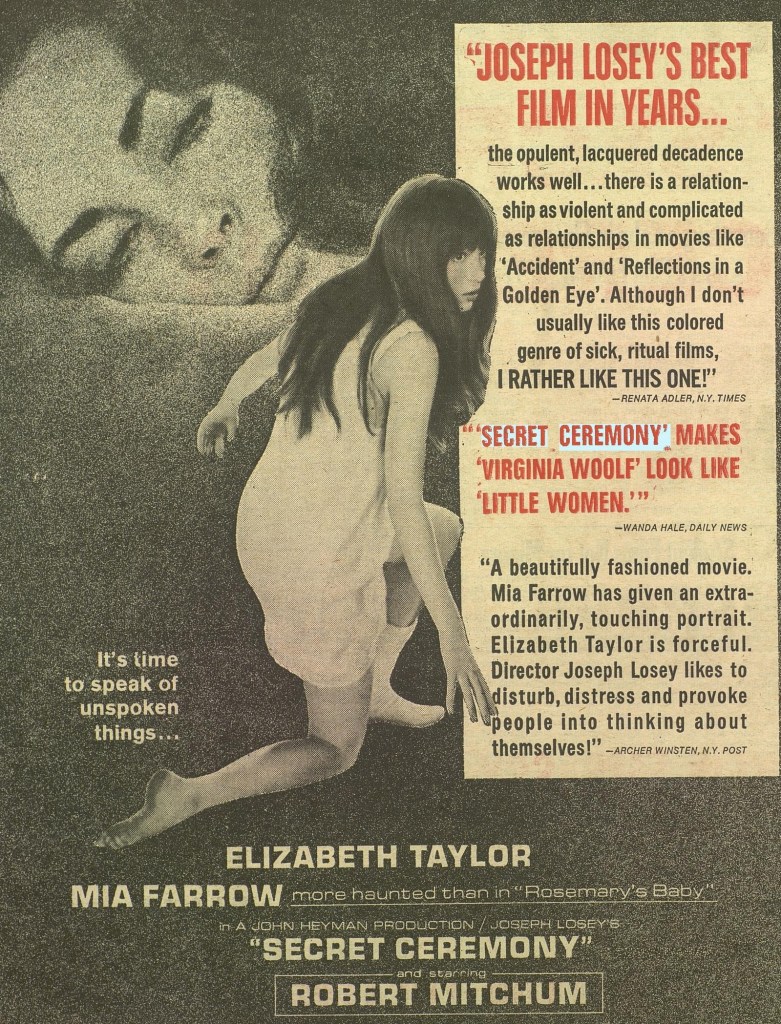
Behind the Scenes: “Secret Ceremony” (1968)

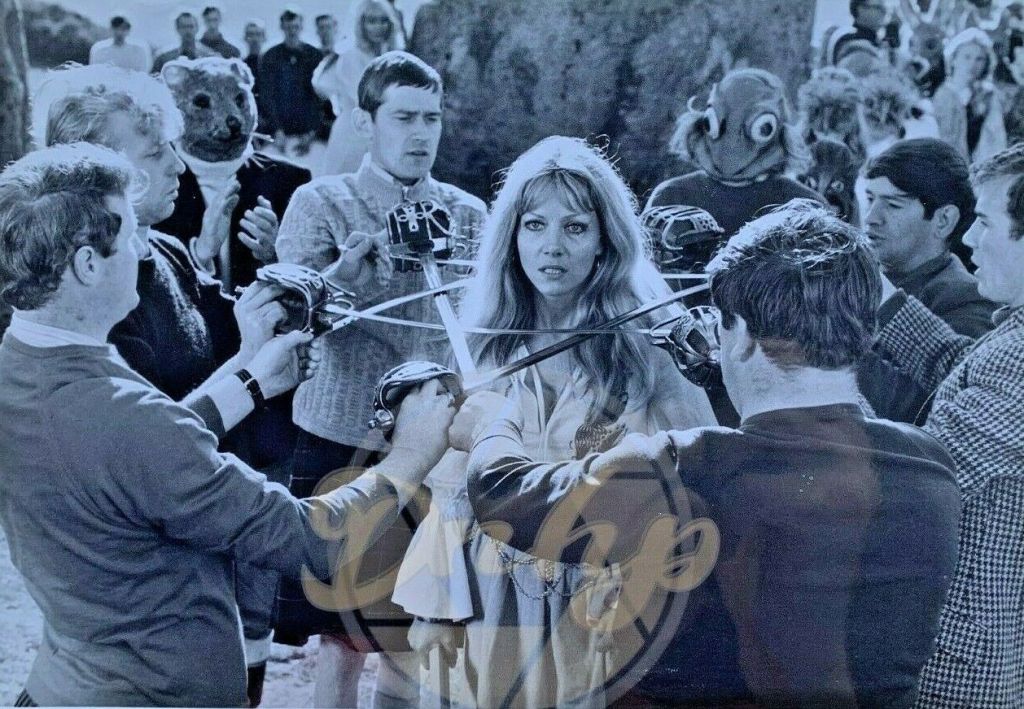
I was probably as surprised as anyone to discover that far from being a flop, Secret Ceremony was in fact a hit, taking $3 million in rentals in the  U.S., ranking among the Top 20 foreign movies at the French box office, and hitting the target in Italy, Germany and Australia. Yet, outside of France, it was universally derided by the critics.

Joseph Losey (The Servant, 1964) held the unusual position of being a cult director working in Britain. He was the “object of a vociferous cult….his following grown in scope and size with each new film” and, conversely, as his popularity among the arthouse fraternity increased, he attracted more critical ire. Courting popularity by entering the spy genre with Modesty Blaise (1966) and linking up with the Elizabeth Taylor/Richard Burton box office colossus for Boom! (1967) seemed to go against the critical grain. Losey ascribed the critical coruscation Boom! received as less to do with the merits of the film itself than “people using the opportunity to launch personal attacks on the Burtons.”

Boom! had been packaged John Heyman, who coupled acting as agent for Burton and Taylor with being the producer, not necessarily a good combination. Universal was convinced it had “Virginia Woolf in color,” a reference to the previous enormous hit, although the box office told a different story. Jay Kanter, Universal’s London production chief who greenlit the project, commented: “When the Burtons were involved a lot of my judgement was colored by the magnitude of the star she (Taylor) was considered to be.”

So it was something of a surprise to find Losey and Taylor teaming up again for Secret Ceremony. Of course, it may have been the money, Taylor at this point still holding out for a million-dollar purse. Heyman said, “We were regarded as whizz-kids just for making two consecutive films with Elizabeth Taylor and bringing them in under budget.”  

Losey’s world reflects a “highly selective form of naturalism.” Except for Accident (1966), from Sleeping Tiger (1954) through to Secret Ceremony, Losey worked with the same design consultant/production designer Richard MacDonald whom the director treated as a sounding board, to “test (ideas) and reject them in the telling.” This is a director for whom “patterned exoticism is extraordinarily precise.” A more important collaborator had been playwright Harold Pinter who had fashioned The Servant (1963) and Accident, bringing to both films his distinctive ear for dialogue. He was hardly required for Boom! whose screenwriter was the even more famous playwright Tennessee Williams (A Streetcar Named Desire, 1951) and for Secret Ceremony Losey went elsewhere for his screenwriter.

Losey was among the string of American talent who taken refuge in Britain in the wake of the anti-Communist hysteria of the late 1940s/early 1950s – others included producer Carl Foreman (The Guns of Navarone, 1961), and directors Cy Enfield (Sands of the Kalahari, 1966) and Edward Dmytryk (Mirage, 1965). By the time of Secret Ceremony, Losey had been working in Britain for nearly a quarter of a century and established himself as a director of distinctive vision, a critical fave in his adopted homeland, wildly appreciated by the French, with an occasional box office home run.

But although regarded as a British film-maker, Losey made Secret Ceremony – and Boom! for that matter – exclusively with Hollywood money, the budget 100 per cent supplied by Universal, that studio having decided that anything coming out of Britain would appeal to younger audiences. There was an untapped pool of talent available in British television who could be hired for substantially less than their U.S. counterparts. In three years Universal’s London production unit, headed by Jay Kanter, spent $30 million on a dozen projects. The biggest budget was allocated to Boom! with $3.9 million followed by $3.5 million to The Countess from Hong Kong (1967) starring Marlon Brando and Sophia Loren.  The Night of the Following Day (1968) cost $1.5 million as did Fahrenheit 451 (1967) and Three into Two Won’t Go (1968). Secret Ceremony came in at $2.45 million.

Robert Mitchum and Joseph Losey went way back to a time in Hollywood when both were working their way up the RKO ladder. As well as Losey, Mitchum had been friends with many who would fall foul of the blacklist including screenwriter Dalton Trumbo, Dmytryk and Howard Koch (Casablanca, 1942). When Mitchum’s dalliance with drugs brought him a jail sentence, Losey visited him and brought him chilli from a famed restaurant.

Mitchum was recommended for the role in Secret Ceremony by Roddy McDowell, a friend of Taylor, who had been working with the actor on Henry Hathaway western Five Card Stud (1968). Mitchum received the job offer while on holiday in Mexico. For two weeks’ work he would earn $150,000. The role itself was scarcely onerous, drawing on aspects of the loathsome character he had created for Night of the Hunter (1955), but it did require an English accent of some kind and to his amusement Mitchum found himself on the telephone, like a salesman listing available product, going through the variety of accents he bring to the part.

Whether it was almost having to sell himself to the director or some previous incident, Mitchum and Losey did not resume their friendship. In fact, their relationship was the polar opposite. “He was very unpleasant,” recalled the director, “it was extremely hard for me to work with him.” Losey never found the source of Mitchum’s contempt. “In some curious way I must have made some mistake with him; I don’t know what it was.” Even attempts to recall Mitchum’s collaboration with Charles Laughton on Night of the Hunter failed to break the ice. Losey believed that Mitchum played tough to mask “an intense sense of failure.”

Mitchum wasn’t above sneaking away from the set. On one occasion taking himself off to visit old friend Robert Parrish, he knocked back some tequila and complained about the movie. On the Holland section of the shoot, Mitchum got into a food fight with a hotel diner. In the end, Losey was so disturbed by Mitchum that he was grateful when he departed as per contract despite the fact that some scenes had not been shot, including, according to the actor, the bathtub sequence, which would have accentuated the incest theme rather than the hint of lesbianism. Mitchum’s epitaph to the movie was that he talked Mia Farrow out of True Grit (1969) claiming Hathaway was a terror to work with.

The bath scene turned out to be the cause of some marital anguish. The set was cleared for its shooting of the scene after Taylor froze on emerging from her dressing room to see so many people gathered. But this was hardly Taylor at her beautiful best as she had been gaining weight. Even so Losey filmed her at times as though she was the grand Hollywood star with hair framing her face and the camera glimpsing her cleavage, but at other times her weight was a source of determining her character, when she eats with her mouth full and belches.

Halfway through filming Taylor was afflicted by severe physical pain and she was rushed to hospital for a hysterectomy, an operation that lasted over three and a half hours. Complications followed the surgery and she was given drugs that caused her to hallucinate. Writing in his diaries, Richard Burton noted: “This is the first time I’ve seen a loved one in screaming agony for two days, hallucinated by drugs, sometimes knowing who I was and sometimes not, a virago one minute, an angel the next.” She went from commanding him to leave the room to crying out for him to return. Sometimes she believed she was on board their yacht, other times that a film was playing on the switched-off television set.

The loss of her uterus may have affected her performance since in the film she plays a mother who has lost a child and in reality was a woman who had lost the ability to have another child.

The film exacerbated the tensions in the Burton-Taylor marriage. It was usually Taylor who was the one who had to keep a watchful eye on her partner in case he strayed. In this case, ironically, it was Burton who exhibited the jealous streak. The way Losey had whispered in the actress’s ear to build up her confidence during the bath scene while getting rid of extraneous crew found its way back to Burton who misinterpreted the action as intimacy.  “My wife and Joe Losey are having a professional love affair,” he claimed. He spent a lot more time than usual on the set of his wife’s film. He even offered to take on the Mitchum role.

Losey had long been fascinated by a strange-looking house in West Kensington, London, and managed to hire it for the shoot. Debenham House in Addison Road, between Holland Park Avenue and High St Kensington, is one of a handful of truly Gothic London buildings. The church used was in Little Venice, St Mary Magdalene in Rowington Close, also in London, and the antique shop was located at the corner of St Stephen’s Mews and Westbourne Green. When the production shifted to Holland it was to the coastal town of Noordwjik with use made of the Grand Hotel there.  

By the time the film opened, Taylor found herself in the middle of a storm over foul language (“gutter talk” in Variety parlance) for which she was seen as the “chief exponent.” It was an ironic position for Taylor to find herself in given her expletive-ridden performance in Who’s Afraid of Virginia Woolf (1966) had not only been critically acclaimed and a huge box office hit but seen as helping to break down the censorship barriers. However, it appeared that the “urination expression” and a word that was prefixed by “bull” were beyond the pale and Variety proclaimed that it was “evidently assumed that if a star of her (Taylor’s) magnitude can be gotten to speak the words, everyone else – actors, actresses, distributors, exhibitors and the public – will be accustomed to strong lingo in pix.” It was hardly coincidence that on the same day that this article was the leading story on the trade paper’s front page that inside six out of seven New York critics gave Secret Ceremony a drubbing, the exception being Renata Adler of the New York Times who called it Losey’s “best film in years.”

Even producer Heyman had his doubts about the material. “It should have been the story of two people who need and trust each other,” he said, “until one leans on the other a little bit more than she should. Unfortunately, the kind of sympathy which Losey shows for people in real life was absent from the relationship which is what I think made it unacceptable.” He summed up, “A cold picture.” (This has the taint of someone trying to work out why the film was a critical failure because otherwise I think Heyman got it exactly right for the movie I saw I did not view as cold nor unacceptable.)

And neither, strangely enough, did the public. Although making a poor showing in Britain, it was not a box office disaster. That was averted by astute marketing, the potency of the stars and a public who, not for the first time, ignored the critics.  The movie broke records when it opened at the New York arthouse pair, the Sutton and the New Embassy, and further afield in cities like Dallas. Arthouse success would have been anticipated but nobody would have expected that when it went wide in New York the second week improved upon the first. As well as a decent showing in the States, it hit the ground running around the world, and “ought to be credited” as one of Universal’s “most successful pictures from either domestic or foreign source.” In the French box office rankings, it placed above The Detective (1968) and Hang ‘Em High (1968) and just below The Thomas Crown Affair (1968). Acclaimed by that country’s critics, the Academie du Cinema named it best foreign film with Taylor and Farrow taking the gongs for best foreign actresses.

When Universal sold the movie to television for $1.25 million, a fee which certainly provided the picture with a decent extra profit margin, fourteen minutes were cut out and replaced by a 500 lines of extra dialog and a filmed discussion of the psychological issues raised, prompting Losey to demand his name be removed, claiming it “exactly reversed the meaning an intention of my film.”

SOURCES: Lee Server, Robert Mitchum, Baby I Don’t Care, (Faber and Faber, 2001) p169, 232, 509-512; Sam Kashner & Nancy Schoenberger, Furious Love, (JR Books, 2011)p240, 242-243,2; Alexander Walker, Hollywood England, (Orion Books, 2005) p200, 345, 354-257; “Screen: Secret Ceremony,” New York Times, October 26, 1968; “Joseph Losey Following Has Grown,” Box Office, October 28, 1968, pE1;   “No End to Gutter Talk,” Variety, October 30, 1968, p1; “N.Y. Critics This Week: Ouch,” Variety, October 30, 1968, p12; “Secret Ceremony Sets House Mark at Sutton, New Embassy,” Box Office, November 4, 1968, pE2; “Secret Ceremony Setting New Records in Dallas,” Box Office, January 13, 1969, pSW1; “This Week’s N.Y. Showcases,” Variety, February 5, 1969, p9; “Jay Kanter,” Variety, February 26, 1969, p78; “Kanter No Martyr,” Variety, March 19, 1969, p26; “Ceremony, Z Nab Kudos,” Variety, May 7, 1969, p107; “French Filmgoing,” Variety, January 28, 1970, P27; “Paris First Runs,” Variety, April 29, 1970, p76;  “Losey Wants His Credit Blipped from Vidversion of U’s Secret Ceremony,” Variety, September 16, 1970, p70; “All-Time Film Rental Champs,” Variety, October 15, 1990, pM184.

Behind the Scenes: “The Way West” (1967)

As you might expect with a title like this John Wayne was in the frame, at least at the start. But when Burt Lancaster’s production outfit Hecht-Lancaster bought the property that was the end of that casting idea. Hecht-Lancaster was at its peak in 1956, each of its first 11 pictures turning a profit, and just signed up to a $40 million three-year deal with United Artists. Biggest project on the table: $5 million for The Way West with a dream team of Lancaster, James Stewart and Gary Cooper and a script from Clifford Odets (The Sweet Smell of Success, 1957). But by 1959 the dream had soured, with $545,000 already shelled out on the western with no sign of a start date. A year later the project was shelved. When Harold Hecht split from Lancaster, the rights reverted to United Artists.

Hecht’s initial efforts as a solo producer had not paid off, Taras Bulba (1962), Flight from Ashiya (1964), both starring Yul Brynner, and Tony Curtis comedy Wild and Wonderful (1964) all covered in red ink, before suddenly resurfacing with the hit Cat Ballou (1965), making him imminently more bankable than before. However, given the impact music had in Cat Ballou, Hecht hankered after something in the same vein, except bigger, and bought the rights to Finian’s Rainbow, a Broadway hit from 1947. When casting issues caused delay, Hecht signed a one-picture deal with United Artists for The Way West. The studio had such high hopes for the movie that plans were made for its world premiere to be held at the Houston Astrodome, a first, and it was considered a natural for roadshow treatment.

A substantial rejig was required of the source material, the Pulitzer-Prize-winning novel by A.B. Guthrie, by screenwriters Ben Maddow and Mitch Lindemann, not least to ensure that the character played by Kirk Douglas remained with the wagon train until the end of the trail, unlike in the book. Andrew V. McLaglen, with three box office western hits behind him in McLintock (1963) starring John Wayne and Maureen O’Hara, Shenandoah (1965) with James Stewart and The Rare Breed (1966) co-starring Stewart and O’Hara, was first choice to sit in the director’s chair.

Charlton Heston (El Cid, 1961) was approached to play the lead of Senator Tadlock. When he turned it down, Kirk Douglas signed on for his first western in five years – although his next would also be a western, The War Wagon (1967) with John Wayne – Robert Mitchum (Villa Rides, 1968) was offered the choice of either scout Dick Summers or firebrand Life Evans. At the end of a long lunch with Hecht and McLaglen, Mitchum could not make up his mind and the producer and director assigned him the role of the scout.

“I’m awfully glad it worked out the way it did,” recalled McLaglen, “because Widmark was perfect for the other part and Mitchum was perfect for the scout.” It might not have been Widmark because Max von Sydow was also reputedly offered a part. Von Sydow was too big a star to play any of the other supporting parts and the part assigned to Widmark was Scandinavian so in that sense an ideal fit.

While Widmark did not attempt a Scandinavian accent, Mitchum spoke Lakota, apparently with a decent accent, in several scenes where he had to communicate with Native Americans. He didn’t learn the language, as modern actors might do, but simply recited the words spoken to him off-camera.  Mitchum and Douglas had acted together in Out of the Past (1947), where the former had the larger role, and, while not sharing scenes, appeared in The List of Adrian Messenger (1963), where the billing was reversed. Although not in a directorial capacity McLaglen had worked with Mitchum on Blood Alley (1956) before the actor was fired.

It was an arduous shoot, virtually the whole picture shot as exteriors, in Tucson, Arizona, and in various locations in Oregon including Bend, Christmas Valley and the Crooked River Gorge. Around 400 members of cast and crew made the trek. In the absence of CGI, everything seen on the screen was achieved for real without any recourse to blue screen. The desert was real. When the river was forded, it was with real wagons and the cast. The wagons were raised and then lowered from the tops of cliffs using the old-fashioned methods that would have been available at the time, that is by rope-and-tackle.

In order to begin filming or play less arduous scenes on top of the cliffs, cast and crew went up in a ski lift. “You’re up there, hundreds of feet up, nothing but rocks to call on,” Jack Elam remembered. “If you had to go to the bathroom it was a matter of half an hour down and half an hour up.” When the wagons were lowered down the cliff all the actors at some point had to participate and according to Elam “some people landed in the hospital.” The river crossing was no less dangerous, with the potential for drowning a constant hazard.

“Andy McLaglen…was wonderful through the whole thing. Stayed calm through thick and thin,” said Elam. Added assistant director Terry Morse, “Nothing intimidated him…for all the difficulties he kept it right on schedule.”

Given three stars with reputations, it was not surprising there were flashpoints, Kirk Douglas, apparently, at the heart of most, accused of snatching newspapers out of the hands of supporting players and trying to usurp the director. Commented Harry Carey Jr., “He tried to take over the thing at some point. Widmark got furious at it, very agitated. He screamed, ‘You’re not directing this goddam movie.’ Really raised hell with Douglas.”

Said McLaglen, “Somebody like Kirk Douglas and somebody like Mitchum, they were poles apart in personality. Bob was an easygoing guy and Kirk was more volatile. But there was never a feud.” Just how easygoing Mitchum was – a production assistant was assigned to keep an eye on him just in case he got carried away with his predilection for fishing and was wading in the water when it was time for his next scene.

Kirk Douglas thought so little of the picture there’s not a single mention of it in his autobiography The Ragman’s Son.

The movie wrapped on August 29, two days ahead of schedule, which was quite remarkable given how tough the shoot had been. The fact that it took almost a year to reach screens suggested UA had problems with the finished product. Andrew McLaglen asserted that it had been shorn by nearly 30 minutes after the first round of cinema screenings, but that memory seems faulty given that the film Variety reviewed the movie in mid-May 1967 – a month before its world premiere in Eugene, Oregon, on June 13 – ran 122 minutes, the stated running time. Critics were not kind but the director thought it was “a terrific picture” and “one of the things I dream about today.”

SOURCES: Kate Buford, Burt Lancaster, An American Life (Aurum Press, 2000) p171,192, 194; Lee Server, Robert Mitchum, Baby I Don’t Care, (Faber and Faber, 2002), p491-495; Kirk Douglas, The Ragman’s Son (Simon & Schuster, 2012); “Largest Independent Motion Picture Deal,” Variety, April 13, 1956;  “Hollywood Report,” Box Office, November 15, 1965, p20; “Hecht’s Oncer for UA,” Variety, March 30, 1966, p5; “Astrodome May Show Hollywood’s Way West,” Variety, May 4, 1966, p12; “Hecht Finishes Production of UA’s The Way West,” Box Office, September 5, 1966, pW5; “Review,” Variety, May 17, 1967, p6.

“The Godfather” Steal And Other Stories

It was the heist of the century – the biggest steal in Hollywood history. Movie rights to The Godfather should have cost in the region of $1 million – i.e. boosting the original budget by around 20 per cent – given that Twentieth Century Fox shelled out a million bucks plus add-ons for The Love Machine published the same year and even Portnoy’s Complaint, a difficult book to transfer to the screen, went for $400,000. It was quite extraordinary that the movie rights to a bestseller which outsold the Jacqueline Susann novel and virtually everything in sight arrived at Paramount for the measly sum of $85,000. In other words, the greatest film of all time, according to the current 50th anniversary publicity splurge and notwithstanding Vertigo, had one of the cheapest starts.

Initially, around 1966, the studio had optioned a 20-page treatment entitled Mafia and paid small sums in the region of $5,000 and $7,500 and then $25,000 on publication and another $25,000 when hardback sales reached 150,000 copies, but its maximum exposure was $85,000. Had there been a Hollywood bidding war at the time of publication or shortly after it would easily have overtaken the sum paid for Portnoy’s Complaint or more likely that matched or bettered The Love Machine.

The movie tie-in edition appeared after the paperback had already shifted eight million copies. interestingly, it had already reached saturation point, only another couple of million sales added after the release of the film, though future instalments of the series brought in further sales. So you could easily argue that the book benefitted the movie far more than the other way round.

To add fuel to the fire, Puzo was paid only $100,000 for the screenplay at a time when William Goldman had received $400,000 for Butch Cassidy and the Sundance Kid (1969) and The Godfather was an hour longer than the western.  And as if that wasn’t enough it was quite clear by the time the movie appeared that the tail was wagging the dog. Puzo had laid the groundwork for public hysteria about the movie by his book selling a staggering eight million copies.

In theory, Puzo enjoyed some largesse when Fawcett paid a record $410,000 for the paperback rights. However, paperback rights were split with the publisher of the hardback and were essentially an advance on sales. And in any case that sum was easily topped by the amount paid for Papillon published the same year. Paperbacks would bring in a royalty of about 15 cents a copy whereas the author’s share of hardback revenues would be five times that amount. So in some respects it was better for Puzo that the book remained in hardback, especially as, one year on from publication in March 1969, it was still topping the New York Times hardback bestseller chart. The Putnam hardback had sold close on one million copies split between bookshop sales and book club deals, netting the author around $700,000.

The problem with such a big hardback sale was that it invariably ate into the paperback revenues so it was in the author’s financial interest, especially for a novel still flying so high, to keep it in hardback for as long as possible. Conversely, for Fawcett, the paperback house, the longer it remained in hardback, the greater the risk of not getting its money back. So Fawcett enforced its contract and insisted the paperback appear one year after hardback publication. Although Fawcett’s initial print run for the paperback was a record 3.5 million copies that would bring Puzo less in royalties than he had accumulated from the hardback. Luckily, it didn’t work out that way.

Two years later the paperback, priced at $1.50 had sold eight million copies. In February 1972, Fawcett upped the price of the paperback to $1.65 and brought out a movie tie-in edition with 32 pages of stills. In addition, Mario Puzo, who had been paid $100,000 for The Godfather screenplay, and felt, overall, that he had been chiseled, was publishing The Godfather Papers, which was less than fulsome about his employers Paramount. But it was still extraordinary, even by Hollywood standards, that the biggest beneficiary of this publishing fairy story was the studio itself.  

When the rumor mill started working overtime about who would play Don Corleone, it was reported that Puzo was dining with Ernest Borgnine and that studio production chief Robert Evans favored John Marley from Love Story. The situation at all studios towards the end of the 1960s was dicey and it was symptomatic of the continuing financial crisis that when Robert Evans passed the five-year mark as head of production at Paramount in September 1971 he was the industry’s longest-running production chief. Even so, the glory days of huge roadshow budgets were long gone. The Godfather was the most expensive project, topping out eventually at $6 million. But given its length and complexity – 102 New York locations for a start – it was surprisingly inexpensive given that Love Story had cost £2.1 million and less prestigious projects like Plaza Suite and Such Good Friends came in at $2 million.

The film was initially set to be released at Xmas 1971 – publication of The Godfather Papers was to coincide with that. But in summer 1971 Paramount changed its mind. It already had 85-100 cinemas lined up for the movie in its first big release splash. And now it was considering holding back the picture until May-June 1972. Despite perceived pressure on the director, the message Paramount’s Frank Yablans gave to the media was one of total support. “We will not sacrifice one-tenth of one per cent of quality just to hit a release date…(we are) not locked into any kind of release pattern.” And despite later reported concerns about Coppola’s production, in July 1971, while filming was not complete, Yablans commented: “the rushes have a fantastic look.”

Although it was intended as a wide release – a fraction of the 3,000 theaters that would constitute a wide release these days – Yablans was careful to distinguish the release from “saturation.” He defined saturation, wrongly as it happened, as a concentrated release in one specific area, the 50 or 100 houses in a “Showcase” strand in New York for example. He explained the difference – two or three cinemas per city across the entire country. There was nothing revolutionary about this apparently revolutionary approach. Hollywood had a habit of playing fast and loose with its own history and day-and-date releases of movies into 500-plus theaters all at once had been going on for decades. In fact the 300-odd cinemas making up the first run of The Godfather was about the same as for Billy Jack a year earlier.   

What in fact was more significant was the length of the run. A really successful Showcase saturation might run four or five weeks but that was dependent on the week-by-week performance of the picture at the box office. A film that was “retained by public demand” was effectively that, it had punched so high that it was foolish to let it go. Paramount effectively fell back on the roadshow device of insisting on a cinema agreeing a specific length of run before the movie opened. Paramount specified this as twelve weeks – the original roadshow “season” was 13-15 weeks. In other words this was the “Box Office Un-Equalizer,” everything in revenue terms favoring the studio.

Then Paramount pulled the film forward from its projected May-June slot to Easter 1972 – which meant effectively Good Friday, March 31. Three months before opening, the studio had a trio of Loew’s first run theaters lined up – Loew’s State 1 and 2 and Loews’ Orpheum, all in Manhattan. Finally, it opened a fortnight before Easter, on March 15, in five top houses in New York. The first five days brought in a record $410,000 and it was another two weeks before the picture opened anywhere else. Limiting release proved highly successful in profit terms. Out of an initial gross of $101 million, Paramount received $64 million, an exceptionally high ratio for the times.

I hope you got the chance like I did this week to marvel all over again at The Godfather on the big screen. I can hardly add anything to the critical tsunami that greeted this picture 50 years ago and again in the last week so I’m not going to try. instead, I’ve rummaged through my files to uncover these few nuggets of information and look forward to next week’s episode of the saga.

SOURCES:  Brian Hannan, In Theaters Everywhere, A History of the Hollywood Wide Release, 1913-2017 (McFarland, 2019), p179, 187-188; “Puzo’s Jackpot,” Variety, February 26, 1969, p76; “Paramount’s Bargain Price (80G) for Godfather Rights,” Variety, September 17, 1969, p1; “Record Paperback Order,” Variety, February 11, 1970, p58; “As To That Godfather,” Variety, May 20, 1970, p30; “Peak 600G Paperback deal,” Variety, August 26, 1970, p53; “Paramount’s Bargain on Godfather,” Variety, October 7, 1970, p21; “Godfather Not on Paramount Christmas Tree,” Variety, July 21, 1971, p3; “Bestsellers As Trailers,” Variety, Jul 21, 1971, p5; “Egomania Equals Fiscal Lunacy,” Variety, July 28, 1971, p18; “Record 451G Paperback Deal,” Variety, August 4, 1971, p54; “Five Years in Hot Seat Makes Bob Evans Coast’s Longest Running Production Chief,” Variety, September 29, 1971, p2; “Yablans Strategy on Godfather,Variety, November 17, 1971, p4; Puzo Books Tells About Godfather Experiences,” Variety, December 15, 1971, p2; “Godfather at Easter,” Variety, December 22, 1971, p65; “Godfather at $1.65,” Variety, February 2, 1972, p70; Advert, Variety, February 2, 1972, p13; Advert, Box Office, March 27, 1972, p4.

Behind the Scenes: “The Biggest Bundle of Them All” (1968)

Films that reach the screen two years after filming was completed are generally stinkers. Ken Annakin caper movie The Biggest Bundle of Them All wrapped production in summer 1966 and was not released until January 1968. But the reason was not the usual.

The cause of the unseemly delay was a temper tantrum by Oscar-winning uber-producer Sam Spiegel (Lawrence of Arabia, 1962) who had been working on a similar project about incompetent amateurs kidnapping a gangster kingpin – The Happening (1967) starring Anthony Quinn (previously reviewed in the Blog). After bringing a charge of blatant plagiarism, Spiegel was mollified by being permitted to bring his movie out first, with an inbuilt eight-month gap  between both releases, the deal sweetened by a 15% cut of The Biggest Bundle’s profits and the right to vet the script.

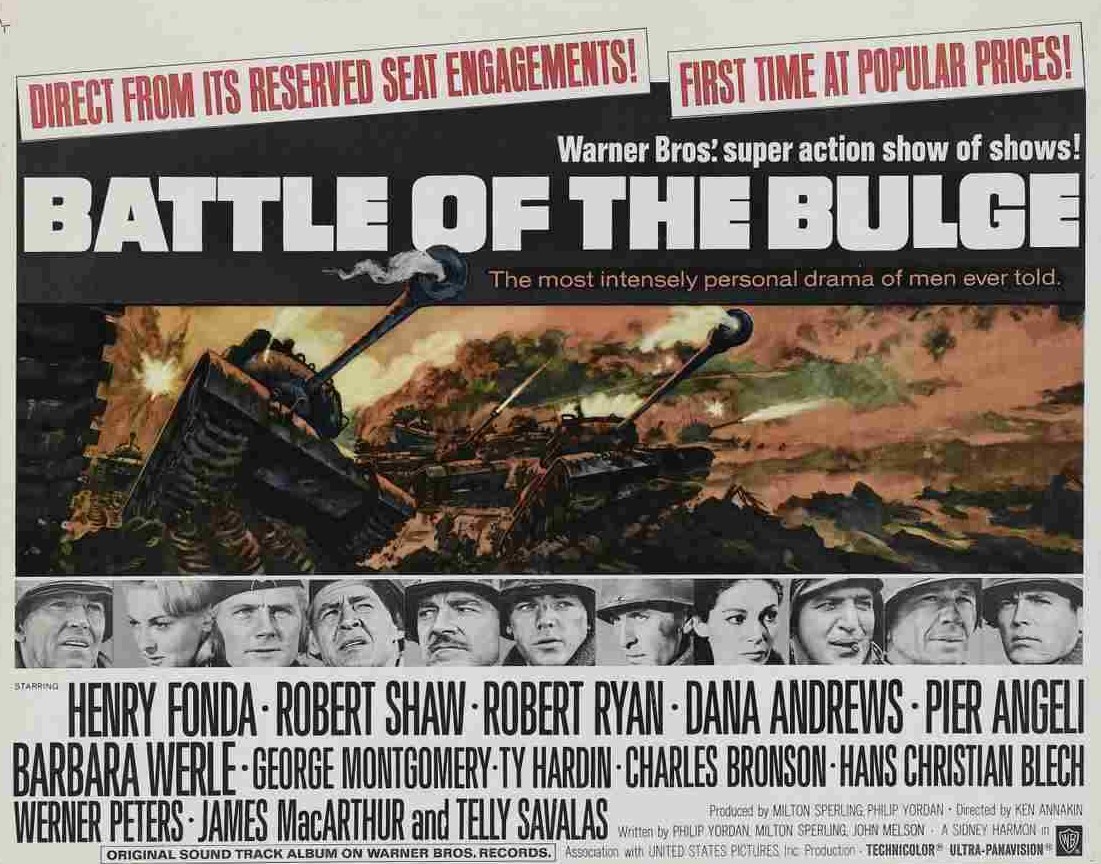
Despite success with Those Magnificent Men in Their Flying Machines (1965) and Battle of the Bulge (1965) British director Annakin was at a career impasse. The Fifth Coin written by Francis Ford Coppola and starring George Segal failed to get off the ground. He turned down western Texas Across the River (1966) at a time when Catherine Deneuve and Shirley Maclaine were slotted in for the female roles and was fired from The Perils of Pauline (1967). The Italian Caper as it was then known, recalled Annakin, “did not seem a world-shattering movie but I found the caper fascinating and the cast irresistible.” 

Let them eat cheesecake.

It marked the movie debut for producer Josef Shaftel of The Untouchables television fame and for screenwriter Rod Amateau (The Wilby Conspiracy, 1975), also then a television regular although the final script was attributed to another neophyte Sy Salkowitz. The film made the most of Italian locations, Naples and Rome, as well as the South of France and Provence. Annakin caught pneumonia just as shooting was to commence. Shaftel took over for five days only for his material to prove unusable.

Both veteran actors proved easy to direct. “Robinson was like putty in my hands, completely trusting.” And while Vittorio De Sica was every bit as amenable he was inclined to fall asleep on the set as the result of entertaining his mistress the night before. Di Sica was also a compulsive gambler and at one point lost half his salary in a casino.

Raquel Welch, in only her second picture after One Million Years B.C. (1966) – which contained minimal dialogue – was initially a handful. Primarily, this was due to inexperience and her desire to present herself in as alluring a fashion as possible, with impeccable hairstyles and make-up. After she had kept the crew waiting once too often Annakin threatened to eliminate her close-ups unless she respected the shooting schedule.

“On the whole I was quite pleased with the results because she really applied herself and so long as one broke up the scenes into a couple of lines at a time she became able to handle them quite adequately…I was getting along excellently with Raquel – even to the extent of trying to find another picture with her,” Annakin noted in his autobiography. Since this was written three decades after the movie was made, it would have given him ample time to get rid of any latent hostility to the actress. This reaction, it has to be said, is contrary to much of what has been written about Welch’s behavior on the picture. At the time of filming he reported that “she has a marvelous flair for comedy.”

But it appeared that Annakin was the only one who spotted her star potential. “The rest of the cast, especially Bob (Robert Wagner), regarded her as a pin-up girl on the make…none of them thought she was particularly sexy at this time.”

Otherwise, the only other trouble came from Godfrey Cambridge who “had a chip on his shoulder” and from Robert Wagner’s insistence on wearing false eyelashes. Problems arose over the cinematographer’s determination to employ powerful lights even at the height of a Mediterranean  summer and a massive dust storm interrupted filming of the final scenes.  Annakin also benefitted from the locations and using his experience was able to shift 35 pages of script from interiors to outdoors, completely altering the look of the picture. This made the $2 million movie “look like it cost three or four million,” according to Annakin. 

At this point Welch, best known for having been sued by her publicist, was in the process of turning herself into a star in demand. In 1966 Welch was something of a Hollywood secret. She had three pictures in the bank, was working on a fourth and had signed up for a fifth before any of her movies had been released. On the other hand, she was fast becoming one of the most famous faces (and bodies) in the world, on the cover of of hundreds of magazines in Europe, many for the fourth or fifth time.

Having set up a company, Curtwel, managed by husband Patrick Curtis, she would earn $15,570 a week on loan to MGM for a second film Italian movie Shoot, Loud…Louder, I Don’t Understand (1966), considerably more than through her contract with Twentieth Century Fox. A year later she collected £100,000 for two weeks on portmanteau picture The Oldest Profession (1967).

Curtwel was also moving into the production arena, in 1965 attempting to set up No Place for the Dead and the following year optioning the musical comedy The Opposite Sides of the Fence and taking a quarter share in the mooted The Devil’s Discord to star Peter Cushing and Edd Byrnes under the direction of Michael Reeves (Witchfinder General, 1968). None of these ventures materialzed.

As well as having to contend with audience disinterest in the clumsy crook scenario as witnessed by the flop of The Happening, the enforced time gap allowed a second picture featuring bungling criminals called Too Many Crooks (1967) to reach cinemas prior to The Biggest Bundle. However, by January 1968, Welch was a much bigger name on movie marquees, having appeared on 400 international magazine covers and selected by U.S. exhibitors for the International Star of the Year Award while The Biggest Bundle had been preceded by another seven pictures including hits One Million Years B.C. and Fantastic Voyage (1966).

SOURCES: Ken Annakin, So You Wanna Be a Director, (Tomahawk Press, Sheffield 2001), pages 187-194; “Raquel Welch and Manager Form Curtwel Co,” Box Office, May 3, 1965, pW3; “Raquel Welch, Pat Curtis Form Curtwel Prods,” Box Office, October 5, 1965, pSE6; “Toutmasters Sue for 5% of Raquel Welch,” Variety, October 6, 1965, p14; “Raquel Welch in Rome,” Box Office, April 25, 1966, page SE1; “MGM’s Bundle Wrapping at Nice, Orders On Set in 3 Languages,” Variety, July 6, 1966, p7; “8 Pix for 2 Unseen Actresses,” Variety, August 17, 1966, p5; “Businesswoman Side of Raquel Welch,” Variety, November 2, 1966, p20; “Oldest Profession Gets New Locale in West Berlin, Raquel Welch’s 100G Job,” Variety, January 18, 1967, p24; “Columbia-Spiegel Holds 25% Share of MGM’s Bundle,” Variety, December 6, 1967, p3.

Behind the Scenes: “They Shoot Horses, Don’t They” (1969)

Dream Team Number One: Clark Gable and Jean Harlow. This was of course a good 30 years before the movie actually got made. The Horace McCoy novel was purchased in 1935 by MGM as a big-budget project teaming Clark Gable and Jean Harlow. This was despite Variety proclaiming it was “not screen material.” The premature death of Harlow put paid to the idea. Next, actor Wallace Ford (Freaks, 1932) bought it with Broadway in mind. A production was scheduled to open in 1939, but never did.  

Dream Team Number Two: Charlie Chaplin and Marilyn Monroe. When the comedian purchased the rights in the early 1950s he intended Marilyn Monroe to play the leading female. Although she was a mere starlet Chaplin had form in building up newcomers. Author McCoy had by that point become an accomplished screenwriter with over 30 credits including Gentleman Jim (1942), film noir Kiss Tomorrow Goodbye (1950) and The Lusty Men (1952) That concept fell by the wayside when Chaplin was effectively banished from America while launching Limelight (1951) in Britain.

It was another 14 years before interest in the novel was revived by screenwriter James Poe, who purchased the rights from the McCoy estate. Although most famous within the trade for being accused of fraudulent behaviour in relation to his screenplay for Around the World in 80 Days (1956). Despite an Oscar for the film he was sued for $250,000. However, he had a sterling body of work including Cat on a Hot Tin Roof (1958), Sanctuary (1960), Lilies of the Field (1963), The Bedford Incident (1965) and Riot (1969) and two other Oscar nominations.

In 1965 he had signed a multi-picture writer-director deal with Columbia. He was either going to make his directorial on The Gambler or They Shoot Horses, Don’t They. It turned out to be the latter. Failing to get the movie off the ground with Columbia or under his own steam, he turned to new studio Palomar, which was a production entity set up by the ABC television network, which bought over his rights as well as his script but kept Poe on as director.

Dream Team Number Three: Faye Dunaway. Yep, one big star, not two. Poe’s screenplay, while not eliminating the male lead, spun on a female star. Dunaway, hot after Bonnie and Clyde (1967), was offered $600,000 to play the role. Mia Farrow was also in contention, for $500,000. The only problem was, the budget could not remotely stretch to that. As helmed by Poe, it was to cost no more than $900,000. The film was scheduled to begin shooting in spring 1968 but a month later the start date shifted to June.

Two relative newcomers Robert Chartoff and Irwin Winkler were brought in as producers to move the project along. Later they would be responsible for such classics as Rocky (1976), The Raging Bull (1980), The Wolf of Wall Street (2013) and The Irishman (2018), but at this point they had just three pictures under their belt, although that included Point Blank (1967), Their first task: persuade Poe to rewrite the script. They felt the third act needed work with restructuring elsewhere to make the pay-off work.

But Poe, believing his position was sacrosanct, refused to discuss a rewrite. He refused to discuss anything, period, treating the producers as his assistants rather than people with some power within the studio. According to Irwin Winkler, “Poe seemed unaware of the of the normal process of preparation, even though he’d been around movie sets for decades.”

Realising that getting a star on their budget was impossible, Chartoff and Winkler changed tack and talked to good actors, but even then few were interested. A less dramatic star than Jane Fonda you could not imagine, her resume filled with light comedies, French films that utilised her sexuality or the extravaganza that went by the name of Barbarella (1968). But the pregnant Fonda was keen on change. The film was delayed until after she had given birth. Michael Sarrazin should have been out of the equation. John Schlesinger had lined him up for the Jon Voigt role in Midnight Cowboy (1969) but Universal, to whom he was under contract, asked too much to send him out on loan.

With no sign of the rewrites, the producers became antsy about the director. However, they showed their true mettle as producers, convincing Palomar there was no way the original budget would cover the ballroom set, huge number of extras, live orchestra and salaries. It would need to at least triple.

In a picture of one predicament following another, there was one crisis the producers had not foreseen. They were going to be fired. Apart from anything else, they were only executives on the picture with any experience, it being not only Poe’s first movie but that of Chartoff and Winkler’s superiors at the studio. The outcome – the guy who had told the pair they were being fired was shown the door instead.

Susannah York was cast after the producers saw a sneak of The Killing of Sister George (1969) at the Robert Aldrich studios. She had committed to Peter O’Toole vehicle Country Dance/Brotherly Love (1970), written by her cousin James Kennaway (Tunes of Glory, 1960). After too many delays on They Shoot Horses she planned to pull out in favour of the other film. Although Sally Kellerman (Mash, 1970) was set as a last-minute replacement, the issue was resolved by asking MGM to delay the start on the rival picture.

Believing Poe was in no position to helm such a big-budget picture enterprise, Chartoff and Winkler began the process of removing him only for Jane Fonda to dig her heels in. She changed her mind after witnessing first-hand Poe’s directorial skills – or lack of them – when she took part in a screen test for Bonnie Bedelia. Winkler recollected, “On the set Jane asked Poe questions about the blocking of the scene, why she moves in one direction rather than another, why in front of a sofa rather than behind it etc. He couldn’t answer her questions and told her to talk to the cameraman.” Exit Poe.

In terms of a replacement, Chartoff and Winkler set their sights of Sydney Pollack (The Scalphunters, 1968) with whom they had previous dealings, and William Friedkin, then being hailed for The Homecoming (1968) – luckily The Night They Raided Minsky’s (1968) had yet to be released. But studio executives had a third director in mind, Jack Smight (No Way to Treat a Lady, 1968). Friedkin should have been in pole position, having only received $75,000 for The Homecoming. His agent, sensing an opportunity, demanded $200,000. Jack Smight’s agent also got greedy and wanted $250,000. Pollack’s agent was happy with the $150,000 on offer.

When Poe was eased out, filming was announced as beginning on February 17, 1969, the budget having now increased to $3.2 million – including $400,000 for extras. However, acoustic issues – seawater had eaten away the bottom of the pier – prevented use of the old Aragon ballroom in Santa Monica. That set was constructed on the Warner lot.

Pollack then turned it down. He had reservations about the script, which had still never been rewritten. When Robert E. Thompson, a television writer but “a Horace McCoy expert,” was mooted, Pollack changed his mind. The new script contained the “flash forward” scenes that prepared audiences for the shock ending. However, the new scenes and delays in starting increased the budget which now ballooned to $4.7 million.

It turned out the director was the best actor of all. “I was impressed with Sydney Pollack’s ease on the set,” recalled Irwin Winkler. “He never seemed to be working hard and yet was able to get marvelous performances out of the actors. Everybody in the company adored him.” Asked by Winkler how he remained so calm dealing with the actors and all the extras and the complicated camera set-ups, he replied, “it was really quite easy.” That same afternoon he collapsed on set and was diagnosed with “nervousness.”

The studio, the stars, the producers, all seemed confident about the picture. All they had to do was convince the audience. But at the first preview in San Francisco the audience roared with laugher at the climactic scene. That shocked the studio to the core until the producers were able to reassure the head honchos that the “fast forwards” would smooth over that problem. Which they did.

It was nominated for nine Oscars – Best Director, Best Screenplay, nods for Jane Fonda, Gig Young and Susannah York among others. Only Gig Young won.  

SOURCES: Irwin Winkler, A Life in Movies, (Abrams Press, New York, 2019) p34-47;  “Tough Stuff,” Variety, August 7, 1935, p59; “Ford Buys for B’Way,” Variety, September 11, 1939, p42; “Dance Marathon Reprise,” Variety, August 3, 1966, p24;  “IT&T In No Way Slowing Down Theatrical Feature Program of ABC,” Variety, January 10, 1968, p4; “Crowded Slate for Palomar,” Variety, February 28, 1968, p18; “Bob Evans Chips-Service To Writers As Stars At Paramount,” Variety, May 1, 1969, p19; “Jane Fonda Gets Top Role in Palomar’s Horses,” Box Office, July 22, 1968, pW1; “Palomar Horses on W7 Space,” Variety, October 23, 1968, p3; “Jan 6 Filming Date for They Shoot Horses,” Box Office, December 16, 1968, pW5; “Cheery Side of Delay on Horses,” Variety, January 15, 1969, p21; “Winkler Wants Films With Social Comment,” Box Office, January 19, 1970, pW1.

Behind the Scenes – “Hour of the Gun” (1967)

Blame Robert Wise for falling behind on The Sand Pebbles (1966), otherwise John Sturges  would have pressed ahead with Steve McQueen pet project Day of the Champion (later resurrected as Le Mans, 1970, though minus Sturges). Needing another hit after the consecutive box office failures of The Satan Bug (1965) and The Hallelujah Trail (1965), Sturges fell back on an equally favoured project, The Law and Tombstone, a revisionist and darker look at the Wyatt Earp legend, with “a few liberties taken so it doesn’t become a documentary.” Despite the failings of the last two films, Mirisch had just re-signed Sturges, expanding his current deal from two to four pictures.

“It seemed like a first-rate idea,” recalled producer Walter Mirisch, who had worked with Sturges on The Magnificent Seven (1960) and The Great Escape (1963). In his memoir he said, “If there was still a market for Western pictures, John Sturges was certainly the ideal director to test it.” (Mirisch’s memory is a bit hazy here regarding the commercial prospects for westerns – 1966 had seen box office success for El Dorado, Nevada Smith, The Professionals and The Rare Breed while 1967 would usher in The War Wagon and Hombre among others). The initial idea was to re-team Burt Lancaster and Kirk Douglas from Gunfight at the O.K. Corral, to which this was a sequel, but Paramount, which had made the original picture, nixed the notion.

The image for the Japanese poster was taken from the initial shootout at the O.K. Corral that opened the picture.

James Garner came on board in the main because he still owed Mirisch, marking a decade in the business, a picture. He had originally worked for Mirisch in The Children’s Hour (1961). He was hired for “not much,” a straight salary, but credited Mirisch with kick-starting his career after his battle with Warner Brothers. Mirisch had also funded By Love Possessed (1962) in which Sturges had directed Jason Robards, “a brilliant actor though one with problems” (something of an understatement).

There was some surprise in Hollywood when Sturges returned to Mexico after the difficulties – censorship, threats to boycott the film, union issues – he had encountered shooting The Magnificent Seven there. Having vowed “never to make another picture” in that country, “one of the reasons we’re back here is because they’ve eased up on regulations.” Having expected to import most of the cast from Hollywood, the producers were delighted that “six of the ten other featured parts” went to Mexicans, as a result of extensive auditions. Although Lucien Ballard (The Wild Bunch, 1969) remained director of cinematography, a Mexican camera crew was hired with Jorge Stahl in charge.

James Garner takes the stand in court defending himself against allegations of murder.

Shooting began on November 9, 1966, at Torreon, “a quiet little agricultural town with a single hotel and bar,” where a fake town had been built at a cost of $100,000. Filming shifted to Churusbusco Studios in Mexico City on December 20 and four weeks later production wrapped after exteriors at a hacienda near San Miguel de Allende for the face-off with Ike Clanton (Robert Ryan in the film).

James Garner (The Great Escape, 1963) was keen to be reunited with Sturges. “I was happy to play the character,” reminisced Garner, “because John always knew what he was doing. He would take five, six, seven factions in a story and bring them together.” Garner saw Earp as “a guy taken with his own power, who nobody could defy.” 

Jason Robards, as Doc Holliday, with a well-known wild side, was difficult to manage. Assistant directors were dispatched every morning to find out where, bar or brothel,  the actor had ended up the night before. Sturges rounded on him when Robards turned up at lunch for a scheduled 8am start. He was perfect after that. Unusually, Sturges would invite the cast to watch the dailies. Producers Mirisch were not happy with the title which was eventually changed to Hour of the Gun.

“My mistake,” rued Sturges, “was that I thought people would be fascinated by the real story about the quarrel between the Earps and the Clantons. You didn’t just shoot people, there were trials, lawyers, citizens’ committees…I got preview cards that said of all the stories told about Earp and Holliday this was the dullest. They (the audience) considered them fictional characters. They couldn’t have cared less that that’s the way it really was.”

As Variety pointed out in its review: “Probing too deeply into the character of folk heroes reveals them to be fallible human beings – which they are of course – but to mass audiences …such exposition is unsettling.”

Edward Anhalt’s screenplay was based on this book published in the late 1950s.

There were clearly reservations about the project. Mirisch announced it was “ready for release” at the end of March 1967 but it did not see the light of day for another seven  months. Although the film was budgeted at just over $3 million – $1 million more than In the Heat of the Night (1967), another Mirisch project – and received tremendous support from the industry-wide “Fall Film Fair” promotional campaign (“commended…for excellence in entertainment”) it was a huge flop in the U.S. bringing in a miserable $900,000 in rentals (the amount studios receive once the cinemas have taken their share of the gross). It did better abroad with $1.5 million but the total was nowhere near enough to recoup the costs.

“Also playing a large role in the reaction to the picture was the continued loss of interest by audiences in Western pictures,” said Mirisch. “I was again guilty of thinking that this trend would reverse and that Westerns, led by a hit picture, would return to favour stronger than ever. I was wrong. As a new generation arose, their interest in westers had been satiated, probably by television, and they now embraced the so-called Easy Rider era of movie-making.”

This is another piece of faulty memory. The year after the release of Hour of the Gun   commercial success was enjoyed by Bandolero!, Hang ‘Em High and The Scalphunters to name a few and Will Penny and The Stalking Moon, both revisionist westerns, won critical favour. And, apologies for harping on about it, but, as I showed in my book The Gunslingers of ’69, that year proved a box office bonanza for westerns despite Easy Rider.

SOURCES: Glenn Lovell, Escape Artist (University of Wisconsin Press, 2008) p257-262; Walter Mirisch, I Thought We Were Making Movies, Not History (University of Wisconsin Press, 2008), p259-260; United Artists Archive, Appendix II, University of Wisconsin; “Mirisch, Sturges Revamp Pact for Two More Films,” Box Office, July 25, 1966, W-1; “James Garner Moves from Actor To Future Producer Status,” Variety,  October 5, 1966, 5; “Director John E. Sturges Returns to Mexico for Law and Tombstone,” Box Office, November 7, 1966, pW-2; “Mirisch Schedules Five Major Films,” Box Office, March 13, 1967, p10; “Film Title Changes,” Box Office, April 24, 1967, p18; Advert, Box Office, Aug 28, 1967, p4-5; Review, Variety, October 4, 1967, p16.

Behind the Scenes – “The Picasso Summer” (1969) Crisis

The making of The Picasso Summer was an odyssey in itself but what happened to the picture on completion generated a crisis in Hollywood.

Pablo Picasso in the early 1960s had apparently given “an enthusiastic endorsement” to American layout artist Wes Herchendson to animate some of his paintings. Some time afterwards, Hershendson came across sci-fi writer Ray Bradbury’s short story In a Season of Calm Weather about an American tourist meeting Picasso on a beach. Developing the scenario with the author, the pair turned the idea into an American couple attempting to meet the artist in the south of France.

Originally, the project was modest. It would run only an hour and be shown on television, sponsored by an airline company to promote foreign travel. But once the idea attracted the likes of British star Albert Finney (Tom Jones, 1963) , who had recently filmed Two for the Road (1967) in France, and Yvette Mimieux (The Time Machine, 1960), who had a percentage of the picture, it became bigger. It was the first film for a fledgling production company part-owned by Bill Cosby and when Warner Brothers-Seven Arts stumped up $1.6 million – a reasonable budget since a WB picture three years averaged just $1.75 million – it turned into a full-length feature intended for theatrical release. Filming began in November 1967 in San Francisco and France without a finished screenplay, working in almost improvisational style to a sketchy 20-page treatment.

Herchendson took care of the animated sequences with  the “live-action” section in the hands of Oscar-winning French director Serge Bourguignon. Although making his name with the French arthouse-oriented Sundays and Cybele (1962) he had also made mainstream western The Reward (1965) starring Mimieux and Max von Sydow and romantic drama Two Weeks in September (1967) with Brigitte Bardot, so his credentials appeared strong enough.

But something went very badly wrong. “The resulting footage was completely unsatisfactory,” went one report. Another claimed it was “incomprehensible.” So WB-7 Arts scrapped the first version and, because the movie, often filmed outdoors, had taken  advantage of the seasons, the film was pushed back a year to ensure footage matched. WB hired a new director Robert Sallin to salvage the picture with the principals returning for reshoots.

Initially, that appeared to have done the trick. WB announced it was considering launching the film as part of a big junket aimed at journalists in February 1969, and then screening it “in whole or in part” at a major conference in June with a view to a late 1969 release. A launch date was pencilled in for December 1969 – the original “X”-certificate issued in the same week as Easy Rider by that time had been amended to an “M” – with the intention of “finally getting it on the market.” And there was the signs of some promotional tie-ins with Barbra Streisand recording the theme tune “Summer Me, Winter Me.” But it didn’t appear. Officially, it was on the shelf.

The shelf, at that time, was not necessarily a bad place to be. Many pictures had been held back for a more convenient release spot during the 1960s, even more had been forcibly delayed when successful movies ate up preferential first run movie theatre space. It was nothing, for example, for The Biggest Bundle of Them All (1968) to wait eight months to be released.

But there was waiting and there was waiting. It soon became apparent that The Picasso Summer was not going to find a release date any time soon and that it was, officially, in limbo. Which was an astonishing state of affairs at the end of one troubled decade and the beginning of another. The hundreds of millions lost in big budget roadshows had seen a dramatic cutback in production. Cinemas were crying out for product, anything with a star, rather than being forced to make do with a flood of imports, spaghetti westerns of the here-today-gone-tomorrow variety and sexploitation vehicles featuring unknowns.

Hollywood had been known for routinely throwing stinkers into the marketplace and while exhibitors might complain about poor quality generally they had little option but to screen what was available because there was nothing else. But the harsh financial climate facing studios meant that every dollar spent had to be weighed up. Releasing a bad movie cost as much as releasing a good one with no guarantee that further expenditure in advertising, promotion and prints would generate profit. No point throwing good money after bad.

So Warner Brothers did the unthinkable. Even as Albert Finney recovered his box office status after Scrooge (1970) and Yvette Mimieux starred in hit sex comedy Three in the Attic (1969) and The Delta Factor (1970) the studio kept The Picasso Summer in the vaults. Even throwing it out in a wide release with no premiere or a trial run in an arthouse was considered too risky.

The number of movies that were completely unrelease-able, as opposed to being withdrawn after failing to attract an audience or turning into big flops during their run, was actually very small – Fade In (1967) coming closest to achieving that notoriety even though it had been occasionally shown in cinemas, and it was also low-budget.

But, suddenly, at the end of the 1960s that number started growing. MGM’s The Appointment (1969) was also shelved. And that had more apparent box office cachet with  Oscar-nominated director Sidney Lumet (The Pawnbroker, 1964) and featuring Oscar-nominated Omar Sharif (Doctor Zhivago,1965), an even bigger star than Albert Finney, and Anouk Aimee (Justine, 1969) also Oscar-nominated with greater box office clout than Yvette Mimieux. After it was booed at Cannes, MGM cancelled the American release after one U.S. test date .

But the trickle of shelved movies was becoming a flood. Into that category fell John Frankenheimer’s The Extraordinary Seaman (1969) starring Faye Dunaway (Bonnie and Clyde, 1967) and Oscar-winner David Niven fresh from hit comedy The Impossible Years (1968). Courtroom drama Hostile Witness (1969) starring another Oscar-winner Ray Milland (Dial M for Murder, 1954) was denied a release as was comedy western A Talent for Loving (1969) with Richard Widmark, on a career high after Madigan (1968), and Adam’s Woman (1970) with Beau Bridges, who would strike a box office mother lode with Gaily, Gaily (1969) and John Mills (The Family Way, 1967). Swelling out the list was Crooks and Coronets / Sophie’s Place (1969) starring Telly Savalas (The Heroin Gang, 1968) and Hammer sci-fi Moon Zero Two (1969).

At a 1970 press conference, questioned about the shelving of The Picasso Summer, a Warner Brothers executive admitted: “We don’t know what to do with it, but not in the sense marketing is a problem; completion into a releasable form would seem to be the nub.”

By 1971, The Picasso Summer was not alone in failing to meet expectations. Some 80 movies funded by the majors had either still to be screened or had already been yanked off screens after poor test showings or minor playoffs failed to garner an audience. A year later Warner Brothers alone had ten completed movies on its books that would never see the light of theatrical day.

There had been one get-out clause for under-performing movies – television. A sale to the networks could bring in a substantial amount, sometimes enough to balance the books. But television was beginning to look askance at product that, in subject matter and in relation to violence and nudity, did not suit the Big Three channels. It was soon obvious that the networks had “lost their omnivorous feature film appetite.”

But there a light on the horizon. One network was interested in more unconventional fare and pictures that it could present as U.S. “premieres.” The CBS  “Late Night Movie” slot airing on a Thursday aimed to attract an adult audience seeking more adult material. The conventions of television would still minimize nudity but the films themselves would have an adult theme. Thus, in 1972 The Picasso Summer, The Appointment, The Extraordinary Seaman and Adam’s Woman were shown on CBS.   

The version of The Picasso Summer shown on American television was not the completed version. Herchendson complained to CBS about the “massacre of my film.” The network had deleted the entire bullfight sequence, the entire animated Eroica sequence and “chopped up the War and Peace” section. In fact it was well known in advance that one of the four animated sequences, the one considered “more sensual than erotic,” would go.

But there was one big plus for Warner Brothers. CBS paid $1.6 million for the movie, making it, according to one wag, the most expensive made-for-television movie. That turned a potential loss into break-even.

SOURCES: Quentin Falk, Albert Finney in Character, (Robson Books, 1992) p122-124; “WB Pacts Cosby Company,” Variety, January 17, 1968, p7; “Yvette Mimieux: Many-Phased Career,” Variety, February 5, 1969, p24; “W-7 Bahamas Junket,” Variety, February 26, 1969, p3. “WB-7 Arts First Global Sales Conference in LA June 8-14,” Box Office, April7, 1969, pW1; “Not Just Passing, WB Bets,” Variety, November 5, 1969, p7; “No “X” for Xmas,” Variety, December 3, 1969, p7; “Press Peek at Calley,” Variety, April 22, 1970, p7; “Unsalvageable Cupboard Item Lucky for WB,” Variety, August 19, 1970, p[3; “Pix in the Shortage Era,” Variety, December 22, 1971, p21; “TV-Bearish WB Cupboard,” Variety, March 29, 1972, p3; “Cannes Jeered Pic Recut By MGM,” Variety, July 19, 1972, p7; “Picasso Summer Twice Shelved  Will Be Seen AT Last, CBS Aug 4,” Variety, August 2, 1972, p22.

Year-End Round-Up Part Two: “Other Stuff” Top 20

Regular readers will know that this blog occasionally turns its attention to what comes under the generic title of “Other Stuff.” In the main and still covering movies I’ve reviewed this comprises behind the scenes looks at movies, examines pressbooks or marketing materials and analyses how books were shaped into films. I also focus from time to time on important issues that shaped Hollywood in the 1960s and write book reviews.

  1. Behind the ScenesThe Guns of Navarone (1961). The ultimate template for the men-on-a-mission war picture with an all-star cast and enough jeopardy to qualify for a movie of its own.
  2. Book ReviewThe Gladiators vs Spartacus Vol 1. Stupendous research by Henry MacAdam and Duncan Cooper explains how close Yul Brynner’s version of the Spartacus legend came to beating the Kirk Douglas movie into production.  
  3. Behind the ScenesThe Satan Bug (1965). The problems facing director John Sturges in adapting the Alistair MacLean pandemic classic for the big screen.
  4. Box Office Poison – 1960s Style. Actors and actresses who had been big box office draws at the start of the decade were floundering by its end. This examines which stars while pulling down big salaries were not pulling their weight.
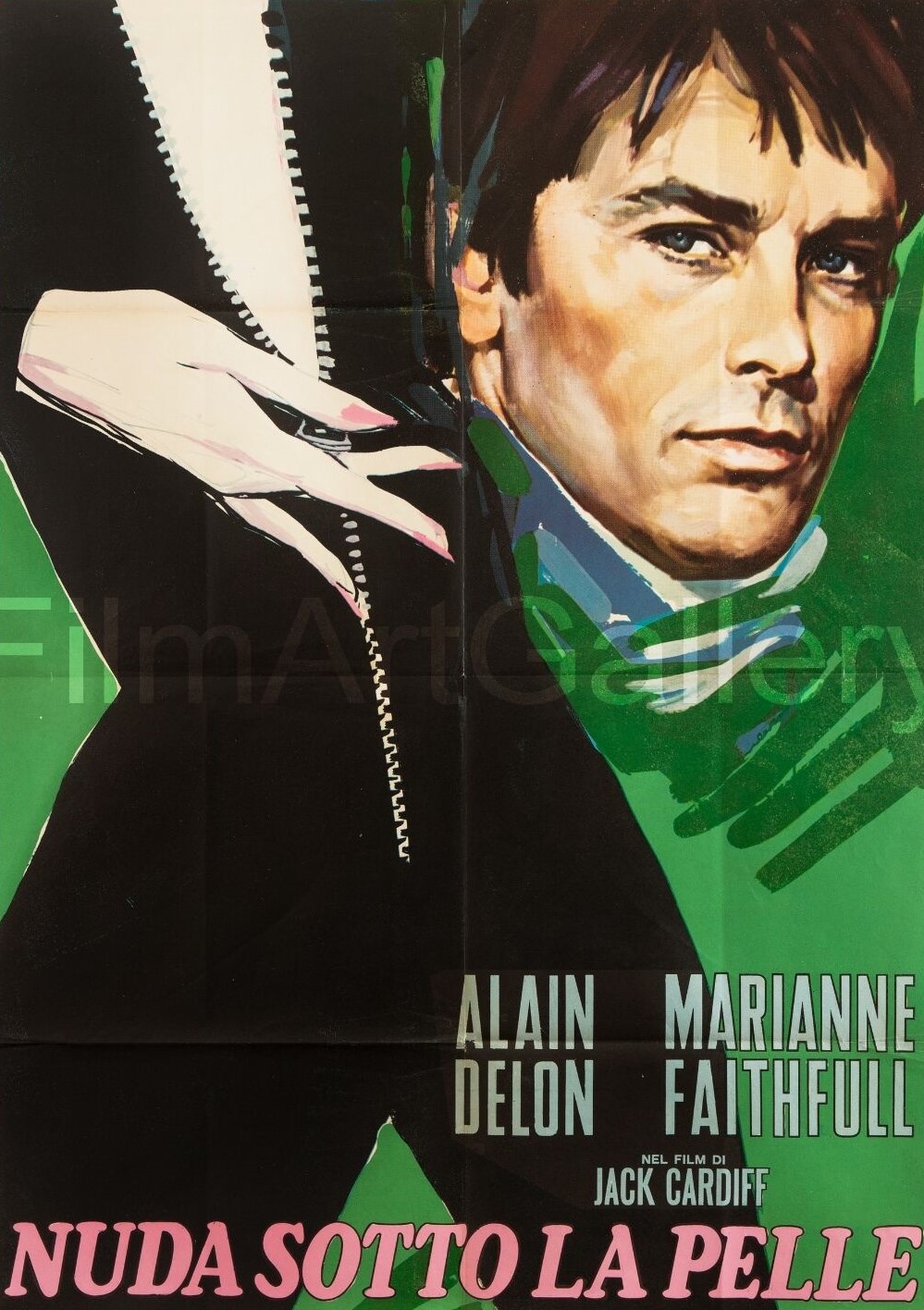
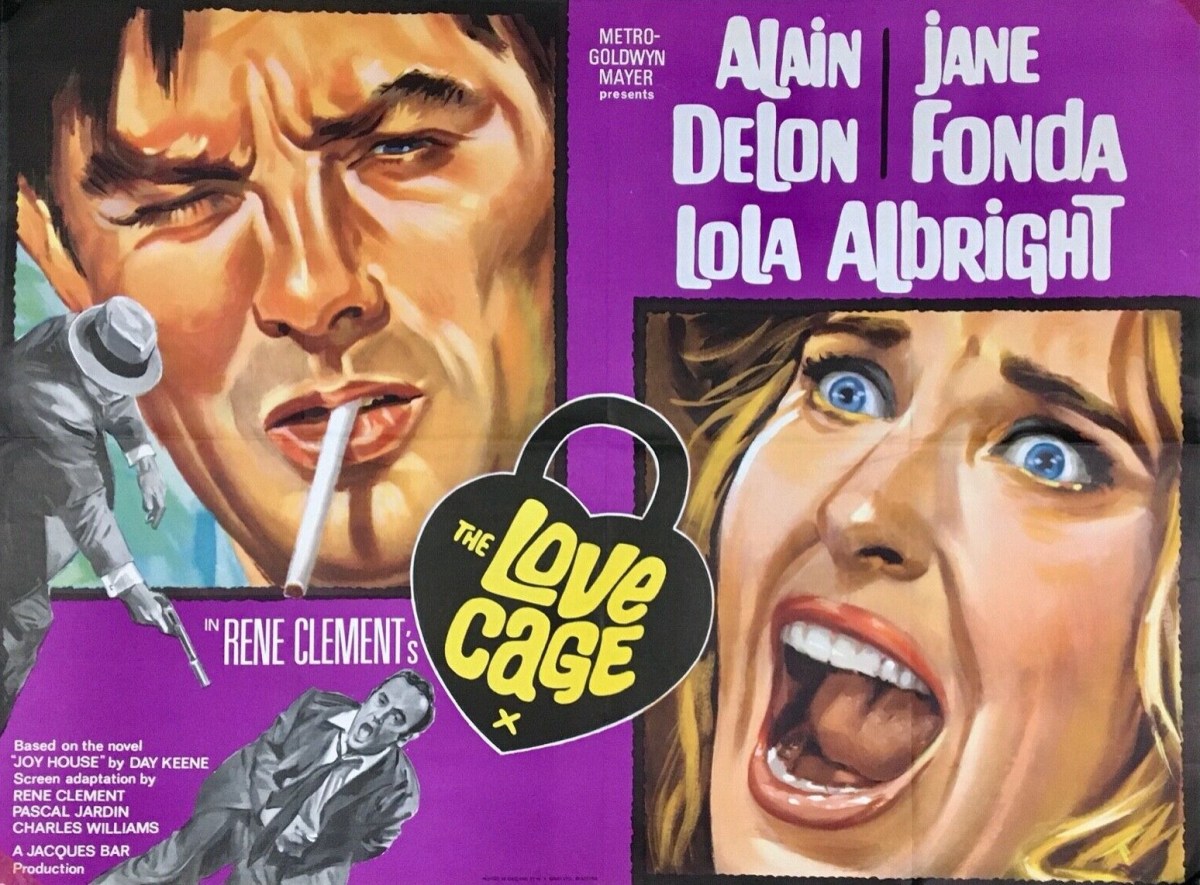
  5. Behind the ScenesThe Girl on a Motorcycle (1968). Cult classic starring Marianne Faithful and Alain Delon had a rocky road to release, especially in the U.S. where the censor was not happy.
  6. The Bond They Couldn’t SellDr No (1962). Despite the movie’s later success and the colossal global box office of the series, American cinema owners were very reluctant to spend money renting what was perceived as just another British film.
  7. When Alistair MacLean Quit: Part One. Rankled by his treatment by his publishers, the bestselling author gave up his bestselling career. And not once, but twice (see When Alistair Quit: Part Two).
  8. Book ReviewDreams of Flight: The Great Escape (1963) in American Film and Culture. Dana Polan’s definitive book on the making of the POW classic starring Steve McQueen.
  9. Behind the ScenesGenghis Khan (1965). A venture into epic European filmmaking with an all-star cast led by Omar Sharif.
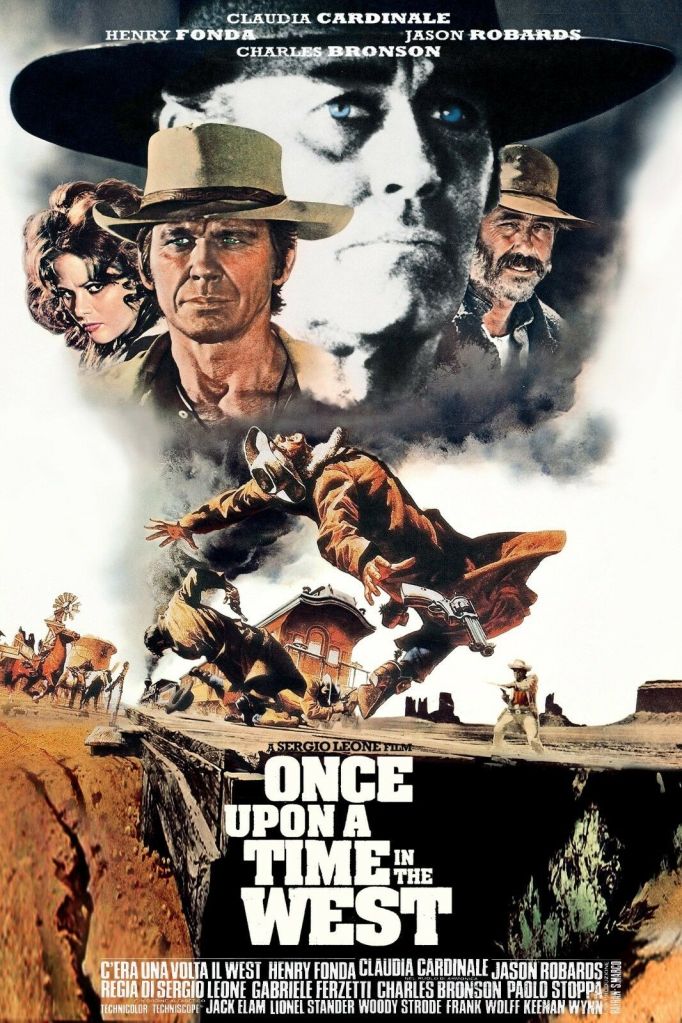
  10. Bronson Unwanted. By the end of the 1970s Charles Bronson was one of the biggest stars in the world, but at the end of the 1960s, although highly appreciated in France, his movies could not get a box office break elsewhere.
  11. PressbookDark of the Sun (1968). How MGM sold the action picture starring Rod Taylor and Jim Brown. Fashion anyone?
  12. Selling Doctor Zhivago (1965). MGM’s efforts to create huge audience awareness of the David Lean epic prior to its British launch.
  13. Behind the ScenesThe Night They Raided Minskys / The Night They Invented Striptease (1968). The convoluted background to the attempts by neophyte director William Friedkin to make a movie celebrating America’s vaudeville past.
  14. Advance Buzz. How Hollywood began to take on board the need for publicity long before the opening of a picture.
  15. Behind the ScenesTopaz (1969). Detailing the problems facing Alfred Hitchcock in turning the Leon Uris bestseller into an espionage classic featuring a non-star cast.
  16. Book ReviewThe Gladiators vs Spartacus Vol 2.  Abraham Polonsky’s longlost screenplay about Spartacus is brought to light.
  17. The Miracle of Mirisch. The Mirisch Bros were the top independent producers in the 1960s – the first of the mini-majors – and while releasing classics like The Magnificent Seven and The Great Escape were also responsible for a pile of turkeys.
  18. Book into FilmDr No (1962). How the filmmakers adapted the Ian Fleming original to create the James Bond template.
  19. Behind the ScenesCast a Giant Shadow (1965). Producer Melville Shavelson wrote a book about his experiences and this and other material relating the arduous task of bringing the Kirk Douglas-starrer to the screen are related here.
  20. Book into FilmA Cold Wind in August (1961). The novel was a lot sexier than the film, since publishing did not face the same restrictions as Hollywood, and this examines how far the movie went to retain the spirit of the book.

Behind the Scenes – “Ice Station Zebra” (1968)

Director John Sturges was not flying quite as high as when he had greenlit The Satan Bug. Since then two films had flopped – big-budget 70mm western The Hallelujah Trail (1965) and Hour of the Gun (1967). Two others had been shelved – Steve McQueen motor racing epic Day of the Champion and The Yards of Essendorf. But his mastery of the action picture made him first choice for Ice Station Zebra.

Independent producer Martin Ransohoff (The Cincinnati Kid, 1965) had snapped up the rights in 1964, initially scheduling production to begin the following spring. He financed a screenplay by Paddy Chayefsky (The Americanization of Emily, 1964). Judging by later reports MacLean appeared happy with the screenwriter’s approach, especially after being so annoyed with the way Carl Foreman had appropriated The Guns of Navarone. Ransohoff put together a stellar cast – The Guns of Navarone (1961) alumni Gregory Peck and David Niven plus George Segal (The Quiller Memorandum, 1966). But each wanted to act against type. Peck, having played a submarine commander in On the Beach (1959), wished the role of an American secret agent, Niven to play his British equivalent with Segal left to pick up the role of skipper. Then Peck objected to the way his character was portrayed.

Sturges, paid a whopping $500,000 to direct, was unhappy with the Chayefsky script commissioned by the producer so he hired Harry Julian Fink (Major Dundee, 1965) and W.R. Burnett (The Great Escape, 1963). But he hated the results so much he suggested MGM drop the entire project. That was hardly what Ransohoff, after forking out $650,000 on screenplays and $1.7 million on special effects, needed to hear. As a last resort, Sturges turned to Douglas Heyes (Beau Geste, 1966) who beefed up the Alistair MacLean story, completely changing the ending, introducing the U.S. vs U.S.S.R. race to the Arctic,  and a bunch of new characters including those played by Jim Brown and Ernest Borgnine, who had previously worked together on The Dirty Dozen (1967).

Six months after its roadshow engagement in New York, the picture went into
general release in continuous performance.

After a string of flops, Hudson, celebrating his 20th year in the business, chased after the role of sub commander. Although it has been reported that Laurence Harvey briefly came into the frame for the part that went to Borgnine, I could find no record of that. Confusion may have arisen because in 1964 Harvey was prepping another MacLean picture, The Golden Rendezvous, which he planned to direct in the Bahamas. Having landed the major supporting role in Who’s Afraid of Virginia Woolf (1966), Segal was the casting coup before he, too, jumped ship.

British star Patrick McGoohan (Dr Syn, 1963) who had not made a movie in five years, was an unlikely candidate for the second lead. Sturges saw him as the next Steve McQueen. But his inclusion only came about because of the sharp increase in his popularity Stateside after fans had bombarded the networks to bring back the Danger Man (1964-1967) television series (renamed Secret Agent for American consumption) after it had initially underwhelmed.  Increased public demand for the “old-fashioned hero with morals” became a feature of an advertising campaign. McGoohan received the accolade of a write-up in the New York Times. It seemed a cinch to have a denoted television secret agent star to play another spy in the film.

The all-male cast prompted the director to consider adding a hallucinogenic dream sequence involving women. Despite his penchant for action pictures, Sturges was a gadget nut and particularly interested in the space race, tracking by ham radio the launch of the Russian Sputnik 1, concerned that the Americans had been beaten. While moon landings remained some way off, the next battle for supremacy was nuclear submarines, of which Sturges was in awe.

Principal photography began in mid-June, 1967 and finished 19 weeks later. The $8 million budget topped out at $10 million. The non-nuclear U.S.S. Ronquil stood in for the book’s sub with U.S.S. Blackfin doubling in other shots. The vessel’s interiors dominated MGM’s soundstages with a 16ft superstructure as the centerpiece with hydraulics creating the tilting and rocking effects. Art director Addison Hehr’s commitment to authenticity saw his team buying real submarine effects from junk yards to fit out the interiors. The conning tower was almost as tall as a five-storey building and the submarine, built in sections, measured 600ft. The Polar landscape was created by draining the MGM tank, at the time the largest in Hollywood, of three million gallons of water and then mounted with snow and rocks and the burnt-out weather station.

While aerial shots of Greenland ice floes and fjords doubled for Siberia, to capture the wild ocean Sturges and cameraman John Stephens took a helicopter ride 30 miles out from the coast of Oahu where a 45-knot wind created “monumental” seas. A 10ft miniature in a tank permitted shots underwater and cameras attached to the Tronquil’s deck and conning tower achieved the unique sub’s-eye-view. The unconvincing Arctic landscape was shot on a sound stage.

Early trade double-page advertisement (hence the lines in the middle).

Not only did screenwriter Douglas Heyes alter the original ending, but Sturges claimed improvisation was often the order of the day.  “We made it up as we went along,” he said, “adding a whole bunch of gimmicks – the homing device, the capsule in the ice, the blowtorch…I don’t think it had any political significance. It just dealt with an existing phenomenon in an interesting way.” (Note: the homing device was in the original novel.)

A major hitch hit the planned roadshow opening in New York, essential to building up the brand. MGM proved reluctant to whisk 2001: A Space Odyssey out of the Pacific East Cinerama theater while the Stanley Kubrick opus was still doing so well. So it opened in the Big Apple on December 20, over two months after its world premiere at the Cinerama Dome in Los Angeles, where MGM had decked out the lobby with a submarine measuring 20ft long and 12 ft high.  From the publicity point-of-view the delay was a drawback since New York critics – who attracted the biggest cinematic readership in the country – would not review the film until it had opened and should they take a positive slant their quotes would come too late for the national advertising campaign.

SOURCES: Glenn Lovell, Escape Artist, The Life and Films of John Sturges (The University of Wisconsin Press, 2008) p262-268; “Film in Focus, Ice Station Zebra,” Cinema Retro, Vol 17, Issue 51, 2021, p18-27; “Harvey Huddles with Maugham on Bondage,” Variety, May 15, 1963, p25; “New York Sound Track,” Variety, April 29, 1964, p18; “Ransohoff-Metro Prep Zebra Via Chayefsky,” Variety, January 20, 1965, p4; “Novelist, Producer Meet On Ice Station Zebra,” Box Office,  April5, 1965, pNE2;“George Segal,” Variety, April 28, 1965, p17; Advertisement, Variety, April 20, 1966, p44-45; William Kirtz, “Out To Beat Bond,” New York Times, Jun 23, 1966, p109;  “Ponti Seeks David Niven,” Variety, October 26, 1966, p3; “Cinerama Process for Metro’s Zebra,” Variety, May 17, 1967, p24;   Advertisement, Variety, June 21, 1967, p8-9;“26 Probable Roadshows Due in Next Two Years,” Variety, January 17, 1968, p7; “Poor Ratings But Film Plums Going To Pat McGoohan,” Variety, July 3, 1968, p3.”Premiere Display Built for Ice Station Zebra,” Box Office, October 14, 1968, pW2; “Ice Station Zebra Frozen, No N.Y. Cinerama Booking,” Variety, October 23, 1968, p12; “Ice Station Zebra in World Premiere,” Box Office, Oct 28, 1968, pW1; “No Zebra Shootout in N.Y. , Gets 2001 Niche, Latter Grinds,” Variety, October 30, 1968, p3; “Filmways Stake in Ten Features for $55m,” Variety, November 20, 1968, p7.

Behind the Scenes – “The Secret Ways” (1961)

Since this is the most popular review on the Blog, I thought I might delve into the background to the picture.

“The reason I made The Secret Ways,” Richard Widmark told British film monthly Films and Filming, “is that I like spy thrillers. I’ve been in this business quite a long time and to survive you have to do all kinds of pictures, you can’t just specialize on just one kind.”

Widmark wasn’t just branching out into a different genre, he was developing a completely new set of skills – turning producer. His Heath Productions had cut its teeth on Time Limit (1957), a Korean war drama in which he starred with a strong supporting line-up in Richard Basehart, Dolores Michaels, Martin Balsam and Rip Torn. For a neophyte producer, Widmark went out on a limb in his choice of director, Karl Malden, better known as an Oscar-winning actor. So he had no problem taking chances. He had bought the property from Warner Brothers at a time when big studios were running shy of doing small pictures.

Widmark purchased the rights to The Secret Ways in March, 1959, one month after American publication by Doubleday, with the intention of beginning production before the year was out, putting him on target to produce three films in a year. Also on his production schedule were The Seven File for United Artists and bullfighting drama Wounds of Honor which he would direct but not star. Budget for The Secret Ways was set at $1 million.

“I enjoy production,” Widmark later claimed. “I like to act but over the years I find that I can do more and I enjoy setting things up and seeing them through.” But he could have hardly have been happy with his experience on The Secret Ways. Screenplay issues prevented Widmark meeting his initial start date. Peter Viertel (The Old Man and the Sea, 1958) had first crack followed by Scotsman William Templeton who having written the film adaptation of 1984 in 1956 was expected to understand the Cold War elements. But it was left to Widmark’ s wife Jean Hazelwood to take the screenwriting credit, even though this would be her movie debut and she never made another film.

Finalizing roles proved equally last minute. Female lead Sonja Zieman signed up only a few weeks before production rolled, Senta Berger a couple of weeks after. Obstacles arose once filming finally got underway on August 1, 1960. Rather than importing crews from Britain or America, Widmark chose the budget-conscious idea of utilizing a German-only team. Problems proved as much psychological as a culture clash of working principles.

Widmark recalled that it was “like fighting World War Two all over again – you have the Austrians and the Germans fighting like mad with the English and the Americans, they hated us.” Added to that were language barriers, technical obstacles and cultural difficulties, one example being that the foreign crews were not accustomed to going out into the street and shooting all night for five consecutive weeks. Nor, presumably, were they so keen to be filming so close to the borders. Much of the filming, according to assistant producer Euan Lloyd in a six-minute documentary, was “done directly under the guns of communist guards only yards away.”

Worse, star and director Phil Karlson were soon at odds, not helped by the fact that Widmark had little regard for directors. “There are to me about eight to ten efficient directors in the world,” he declared, not counting Karlson among that figure. When the director took ill for a week with a virus, rather than shutting down the production, the star took over the directorial reins. Three weeks later, the director quit, over creative differences regarding the ending. Widmark took up his seat again in the directorial chair.  

Release was delayed due to Widmark’s other commitments. Once he had completed his role in the film he was away from mid-October shooting John Ford’s Two Rode Together and not able to return to post-production until December

The biggest problem was avoiding making an overt political statement. “I was trying to make an adventure story, a sheer adventure story. But some of it (politics) just creeps in.” Hungarians in Detroit complained the movie did not go far enough in depicting the reign of terror. “They had been in contact with the Hungarian Secret Police,” said Widmark, “had gone through this torture, which seems corny with the dope, the needle and the steam room. But it’s not incredible, it goes on every day of the week there.”

Despite tepid box office, Widmark ploughed ahead with plans to make The Tiger’s Roar from the Jack Davies novel as a vehicle for Trevor Howard. But this and his other two features did not come to fruition and the star did not climb back into the producer’s chair until The Bedford Incident in 1965, which proved his last stab at production.

Working with Widmark inspired Zieman to set up her own production arm, announcing Next Stop Paradise, based on husband Marek Hlasko’s novel, in which she would star. But that did not get off the ground either.

SOURCES: “Widmark to Star Self in Secret Ways,” Hollywood Reporter, March 20, 1959, p18; “Viertel Secret Plottter,” Hollywood Reporter, October 2, 1959, p11; ”Widmark Projects Three Heath Prod’ns Next Year,” Hollywood Reporter, November 11, 1959, p2; “Bill Templeton Plots Secret Ways for U-I,” Hollywood Reporter, December 17, 1959, p1; “Widmark Signs Fem Lead,” Hollywood Reporter, July 11, 1960, p2; “ “Widmark Film Rolls,” Hollywood Reporter, August 1, 1960, p3; “Viennese Actress Set,” Hollywood Reporter, August 9, 1960, p3; “Phil Karlson resumes,” Hollywood Reporter, September 6, 1960, p2; “Karlson Exits Widmark Picture Over Different Endings,” Hollywood Reporter, September 22, 1960, p1; “Widmark Reports,” Hollywood Reporter, October 11, 1960, p3; “Widmark Back to U-I,” Hollywood Reporter, December 15, 1960, p2; “Crew Hazards Under Red Guns As Documentary for U’s Secret Ways,” Variety, March 1, 1961, p19; “New Role for Sonja,” Box Office, May 8, 1961, W2; Richard Widmark, “Creating Without Compromise,” Films and Filming, October 1961, p7-8.

Discover WordPress

A daily selection of the best content published on WordPress, collected for you by humans who love to read.

The Atavist Magazine

by Brian Hannan

WordPress.com News

The latest news on WordPress.com and the WordPress community.