Fly Me to the Moon (2024) *** – Seen at the Cinema

Reversal of roles from Twisters, which I saw on the same day. Here it’s the gal who’s loud, locked and loaded and the fella who’s the introvert laden down with guilt. But here it’s also the female who’s top-billed. The good news is that with some reservations the pairing of Scarlett Johansson (Asteroid City, 2023) and Channing Tatum (Dog, 2022) works quite well. But any screen chemistry is killed off by the dumbest story you’ve ever heard.

I’m assuming that the only reason they’ve taken this tack, of ramming a top female star  into a tale of the lunar landing lunacy, is that, consistent with gender issues of the period, no woman would be high up enough in the space industry job rankings to become a foil for the launch director. What’s really quite bizarre is that the crux of the story – faking the moon landing – has been done before in Capricorn One (1977) and that Apollo 11 must have encountered a bucket of vital issues requiring to be solved rather than one that necessitated the stealing of a television from a store on launch day.

It’s true the same guy was in charge of Apollo 1 – where the crew perished – as on Apollo 11 but it seems an awful stretch to fictionalize this character, though maybe because Gene Kranz is still alive that was essential. I doubt if he’d have lent his name to this half-assed storyline that sees ad exec Kelly (Scarlet Johansson) detailed by shady black hat Moe (Woody Harrelson) to pep up NASA PR to stop Government finance draining away and to turn the astronauts into heroes before they’ve undertaken anything heroic. Launch director Cole (Channing Tatum) gets in her way at every turn so in some senses it’s typical rom-com, irritating individual coming to be loved by the irritated one.

So, excepting that Kelly is decked out in skin-tight 1950s/early 1960s Mad Men outfits and channels her inner Marilyn Monroe – all the men here excluding Moe and  Cole fall like ninepins for her obvious charms – this should have been at least an interesting duel in the way of most rom-coms. She is certainly sassy, bright, cute, clever and manipulative and in any other orbit her tangle with Channing Tatum would probably have worked, especially given he’s got form in this genre – though admittedly The Lost City (2022) was a bit of genre mash-up.

I’m no screenwriter but even I could see it would make more sense if she continually tried to spike Moe’s fake landing notion rather than be blackmailed into it because (shock horror) she was once an unconvicted grifter. It wouldn’t have taken much either to come up with a better meet-cute than this lame effort. If the best stab a screenwriter can take is to label advertising a “legal scam” then you’re in serious trouble.

Theoretically, this had a ton more star power going for it than Twisters, which just goes to show how little marquee value has to do with box office success. So, mostly, I was watching this lamenting what could have been. Two very talented actors with plenty hits in their slipstream and dovetailing well together lost in an absolute farrago of nonsense. Occasionally, given the leaden premise, the director Greg Berlanti (Love, Simon, 2018) showed touches of finesse, the way, for example, Kelly’s assistant was set up with a weedy engineer.

From today’s perspective when everything is marketable, it might have seemed logical that the Government would have sought marketing tie-ins with major corporations – except that didn’t happen. A black cat running across the set of the fake landing ruined the fake landing gig, and this tower of babel collapsed with much less.

This has done worse than summer’s other $100 million turkey, Horizon. Probably not the death knell for rom-coms after unexpected hit Anyone but You (2023) relit that moribund genre and probably won’t stop Apple flashing the cash for other ill-considered vanity projects, but this was out of most cinemas after a week and will most likely make a quicker dash to streaming than originally intended.

It’s all very well for streamers to wise up to the fact that a cinema release is a clever marketing ploy, creating more public awareness through a gazillion reviews, and to take advantage of the product shortage, but it’s self-defeating in the end as anyone tempted to switch on to the streamer version will already have read the gazillion reviews.

Really, this plot is so stupid that it deserves no more than two stars and I’m only giving it three because I thought the pairing of Johansson and Tatum did work. 

On a brighter note, I saw a trailer for Megalopolis which has finally won a cinema release, and in Imax too, despite poor critical reception and I have to say the visuals looked great. Though, as we’ve seen here, visuals and stars won’t make up for a terrible story.

Twisters (2024) **** – Seen at the Cinema

Now we’re talking. The summer blockbuster has arrived. The high octane movie bringing more carnage and destruction than two teams of superheroes duking it out thanks to stunning special effects that will have you gasping at the awesome power of a tornado. Forget the flying cow in the 1996 original. When you see how easily a tornado sucks out people hidden in the tightest spot then you’ll know how foolish it is to tangle with twisters, either for the hell of it or for purported scientific reasons.

On top of this and if it hadn’t been for those tornadoes racing around all over the place, we’d be watching the cutest romance this side of Anyone But You (2023) and blow me down if this doesn’t feature the fella from that, Glen Powell, in full-on cocky arrogant mode and the kind of shit-eating smile we haven’t seen since Josh Lucas in his prime.

But here’s the kicker: no matter how much Powell’s character nearly steals the show, it’s not his picture.

Daisy Edgar-Jones (When the Crawdads Sing, 2022) is not only billed ahead of him, and therefore the denoted star, but the movie follows her narrative arc. She’s in the stunning opening sequence and she’s the one – on her own – to tackle the killer twister at the end. She’s the one with the guilt – friends died following one of her plans – she can’t shift, not him. He merely tucks in alongside as she leads the way, gently, and initially rebuffed at every turn, trying to woo her.

And here’s another kicker. It’s sodden with science. The kind of information that has audiences looking for the exit. But the scientific psychobabble is delivered so well that you hardly have a moment to object and I’m sure if you held a pop quiz for moviegoers coming out I’m sure they’d be able to tell you exactly how twisters formed and what they needed to not only survive but grow.

The save-the-planet element is miniscule, hardly gets a breath, the idea that climate change is causing more twisters. And instead, we get a more cunning subplot, entrepreneur financing tornado research because he can move in on survivors and snap up land on the cheap. And if that’s not a poke at the greedy big business coming under fire for unwelcome philanthropy, I don’t know what is.

So Kate (Daisy Edgar-Jones) is out of the game after causing the death of friends and lover until former buddy Javi (Anthony Ramos) winkles her out of her safe New York job to help him better test her pet theory – that there’s a way to tame twisters. Sure, that’s malarkey but it’s interesting malarkey. So she gives him a week and pitches in with his team, financed to the hilt by a businessmen to whom they feed tips about where the next twister will land.

She’s immediately put in charge of twister detection, demonstrating her instinctive knowledge of where a tornado might head or which cloud formation is most likely to turn nasty. These are the PhD po-faced professionals, all working, apparently, for the benefit of mankind.

Into their world charges Tyler (Glen Powell), YouTube broadcaster with a million subscribers, dressed like a cowboy who has his own line in merchandise and chases after twisters like Lt Killgore (Robert Duvall) in Apocalypse Now (1979), music blasting, though rock rather than classical. For entertainment value, he’s got on board weedy English journalist Ben (Harry Haden-Paton) whose job is to look terrified when the seasoned pros head into harm’s way with little concern. As I mentioned, mostly Tyler gets rebuffed when he tries his equally seasoned moves on Kate until her mum (Maura Tierney) comes to the rescue in a sequence that allows him to become better acquainted with her revolutionary tornado-taming theory.  

There’s a heck of a lot of the will-she-won’t-she palaver that you could get in a genuine rom-com but it’s very gently done and it’s more old-fashioned than Anyone but You, more like Sleepless in Seattle (1993) where kindred spirits take a heck of a long time to decide they might be suited. Mostly the business of chasing after those darned tornadoes keeps them apart, beyond the initial dislike that’s par for the course, and luckily the screenwriters haven’t tried to shoehorn in a scene of them having to snuggle up together in the middle of nowhere after a tornado’s blown the world apart.

The stars exude screen chemistry and if the question after Anyone but You was when were the two principals there going to make another film together the question here will be just the same. Daisy Edgar Jones is a dead ringer for a young Helen Mirren, the same innoent intensity, and brings the kind of acting skills to a blockbuster that sets it apart while Powell shines once again with studios already acclaiming him the next new big male star.

Shout-out for Anthony Ramos (In the Heights, 2021) and Downton Abbey find Harry Hadden-Paton who looks like he’s set for a career’s worth of interesting character acting.

Director Lee Isaac Chung (Minari, 2020) takes the leap from arthouse to blockbuster in his stride, that previous background helping flesh out characters, and he lands this behemoth in style. Screenplay by Mark L. Smith (The Boys in the Boat, 2023).  

My only disappointment is that I didn’t catch this in Imax. But that will be rectified soon.

Go see.

Behind the Scenes: “The Chairman / The Most Dangerous Man in the World” (1969)

Had things run according to the original plan, we could have seen Frank Sinatra return to a Communist country for the first time since The Manchurian Candidate (1962). But if you had wanted to write a script about the guy who wrote The Chairman, you couldn’t have invented a more interesting character than Samuel Richard Solomonick. He was one of those guy who held every job under the sun before reinventing himself as an anticommunist going by the name of Jay Richard Kennedy and subsequently entering the fields of real estate, radio and brokerage, then landing a gig managing Harry Belafonte and writing the screenplay for I’ll Cry Tomorrow (1955).

By the time he ended up as an executive at Sinatra Enterprises he had a couple of ideas to sell. Forming Jade Productions in 1966 with director Richard Quine (How To Murder Your Wife, 1965), the pair hooked Sinatra’s interest in two projects, Follow the Runner (which would have co-starred Sammy Davis Jr) and The Chairman plus William Holden eyeing the lead in The Wordlings about the population explosion.

That’s Gregory Peck trapped on the wrong side of the Russian border with Chinese soldiers closing in.

Sinatra was known for falling out with directors, shunting Mark Robson off The Detective (1968), so whether Quine would have lasted the pace is anybody’s guess. After success with Tony Rome (1967), Twentieth Century Fox briefly toyed with the prospect of pairing Sinatra and new wife Mia Farrow in The Chairman. Originally scheduled to begin shooting on January 1967, that later shifted to early 1968. The notion that the movie also had parts for Spencer Tracy and Yul Brynner was one of those puff pieces that some journalists swallowed.

Despite some enticing projects – he was first name down to direct Catch 22, after Columbia had spent $150,000 buying the novel, and to helm the screen translation of Broadway hit The Owl and the Pussycat – Richard Quine’s career teetered after the flop of Hotel (1967). Making no headway with Sinatra he made instead another flop, Oh Dad Poor Dad (1967) and was effectively put on furlough for three years after failing to finance a movie to star Alex Guinness and Lee Radziwill.

Quine exited The Chairman in May 1967 when former PR bigwig Arthur P. Jacobs took over the production and with Sinatra in absentia turned to British director  J. Lee Thompson who had helmed the producer’s debut picture What a Way to Go (1964).  And that proved a lucky break for Thompson who had yet to match the success of The Guns of Navarone (1961).  

The book cover.

After successive flops – Return from the Ashes (1965) and Eye of the Devil (1966) – Thompson had plenty projects on the boil including a musical remake of Alexander Korda’s The Private Life of Henry VIII (1933) with a score by Richard Rodgers and Peter Ustinov playing the lead. Also on his slate was High Citadel based on the Desmond Bagley bestseller; The Harp That Once for Columbia; an adaptation of James Clavell bestseller Tai Pan; a sequel to The Guns of Navarone called After Navarone that would reunite the director with star Gregory Peck and writer-producer Carl Foreman; and Planet of the Apes (1968) to which he and Jacobs held the rights.

While none of these projects – except Planet of the Apes and minus Thompson – came to fruition, the Navarone connection would lead to Mackenna’s Gold for Foreman. In the meantime he had helmed a modest drama, Before Winter Comes (1968) starring Broadway star Topol. When Arthur P. Jacobs greenlit The Chairman, he hired Thompson who looked no further than Peck, connection re-established via the Navarone sequel.  They were a four-time pairing – Cape Fear (1962) and Mackenna’s Gold and The Guns of Navarone. Peck was a controversial choice from the Twentieth Century Fox perpsective given he had broken a contract with the studio in 1960 to star in Let’s Make Love. But Jacobs smoothed ruffled studio feathers and paid his star $500,000 plus a percentage. With Jacobs on hands-on duty with Planet of the Apes (1968) –  Mort Abrahams oversaw the production of The Chairman  and immediately engaged in a budget dispute with the director. Jacobs had initially stipulated $4 million, Thompson believed he required another million. They didn’t quite split the difference, Fox had the film come in at $4.9 million.

Thompson recognized the problems of the script, pointing out that “the hardest thing for Americans about the film’s concept is accepting that China has some competent scientists.” Rather ingenuously, he averred that the movie would have “no political overtones,” while Abrahams retorted that it might have “some political overtones.” It would been obvious to anyone that a picture featuring Mao was bound to have political repercussions, his Little Red Book a massive bestseller on the campus, an album cut of recitations from the book and Edward Albee in 1968 premiering a play called Quotations from Chairman Mao Tse-Tung.

Denied access to China, the production team spent four months “reading everything we could get our hands on.” At one point they considered dropping the scene featuring Chairman Mao and lengthening the sequence relating to Peck’s arrival in Hong Kong. In any case, different versions of the Hong Kong environs were shot, some with nude shots of girls in a house of pleasure.

The British Colonial Office in Hong Kong blocked filming there after fears of riots due to the production daring to portray Mao Tse-Tung on screen. Taiwan substituted for China although the locals there were also incensed, so much so they burned an effigy of Peck. Wales, funnily enough, was another location as was London University. Filming began on August 28 and finished on December 3.

Although it might appear that Ben Maddow (The Way West, 1967) wrote his script based on Jay Richard Kennedy’s novel, in fact the novel appeared after the screenplay with Kennedy writing the novelizaton, and it’s more likely that what Maddow adapted was the original Kennedy screenplay. Interestingly enough, around this time Maddow had first crack at the Edward Naughton western novel that became McCabe and Mrs Miller (1971).

It wasn’t the first time Variety got a prediction wrong: “powerful box office attaction” fell far short of the actual results. This proved an annus miserabilis for Gregory Peck. In fact, he had four films, not three, released in 1969. By release date The Stalking Moon technically belonged to the previous year, but it only played a handful of cinemas in 1968, its general release taking place in 1969.

Despite pocketing a total of over $2 million, Peck’s marquee value was in clear decline. Of the Peck quartet, Marooned did best, placing 33rd on the annual box office chart, with $4.1 million. Mackenna’s Gold (31st) took $3.1 million in rentals (the amount returned from the gross once a cinema has taken its cut), The Stalking Moon (38th) on $2.6 million, and The Chairman (41st) with $2.5 million.

SOURCES: Gary Fishgall, Gregory Peck (Scribners, 2002) p267; James Caplan, Sinatra: The Chairman, (Doubleday, 2015), p724;  “7 from 7 Arts,” Variety, March 3, 1965, p4; “Richard Quine,” Variety, July 7, 1965, p20; “Return of Advances,” Variety, October 6, 1965, p7; “Form Jade Prods,” Variety, December 15, 1965, p4; “J Lee Thompson Nearly Finished on 13,” Variety, February 2, 1966, p28; “Catch As Catch 22 Can,” Variety, February 23, 1966, p4; “Rodgers and Hammerstein’s Musical Henry VIII,” Variety, Mar 16, 1966, p1; “Inside Stuff – Pictures,” Variety, March 30, 1966, p22; “Lee Thompson Busily Blueprints His Musical Version of Henry VIII,” Variety, April 27, 1966, p17; “Jay Kennedy Script,” Variety, July 6, 1966, p5; “After Navarone,” Variety, April 19, 1967, p14; “Scripting Red Chinese,” Variety, May 21, 1967, p4; “”Personality Chemistry,” Variety, May 24, 1967, p4; New York Soundtrack,” Variety, Sep 20, 1967, p27; “Pat Hall Noel to Col,” Variety, December 27, 1967, p5; “N.Y. Indie Label Grooves Chairman Mao’s Thoughts,” Variety, April 10, 1968, p56; “Man About Town,” Variety, July 17, 1968, p68; “Jas Clavell to Roll Siege,” Variety, August 21, 1968, p7; “Thompson Wraps Up,” Variety, August 28, 1968, p29; “New York Soundtrack,” Variety, October 23, 1968, p18; “British Bar Fox’s Chairman,” Variety, December 4, 1968, p17; Big Rental Films of 1969,” Variety, January 7, 1970, p15; “Big Rental Films of 1970,” Variety, January 6, 1971, p11.

The Chairman / The Most Dangerous Man in the World (1969) ****

The sci-fi elements in this tidy paranoia thriller set in Communist China are not the only issues overlooked at the time and worthy of reconsideration now. Anyone who blasted it for supposedly political jingoism conspicuously failed to read a subtext that chimed with young left-wingers for whom Chairman Mao was not, as now, perceived as a tyrant du jour but as a political god. There’s a distinct whiff of Philip K. Dick in the implanting in a spy’s head of not just a tracking/listening device but one laced with explosive that can be remotely triggered for suicidal or murderous gain. Needless to say, the spy, ignorant of this fact, was a de facto sacrificial lamb. And a key plot thread about genetically modified crops as a means of solving world hunger came about four decades too early.  

Widowed Nobel prize winning scientist Dr Hathaway (Gregory Peck) is despatched into China via Hong Kong to contact a missing scientist with a revolutionary formula for an enzyme. A series of crisp flashbacks set up the scenario of the tracking device and a reverse echo of Marooned (1969) where Army chiefs back at base, led by one-eyed Shelby (Arthur Hill,) can listen in but are helpless to intervene – except in sinister manner. Shelby considers Hathaway “the wrong brilliant man” for the task and that they have sent in “a civilian to do a soldier’s job.”

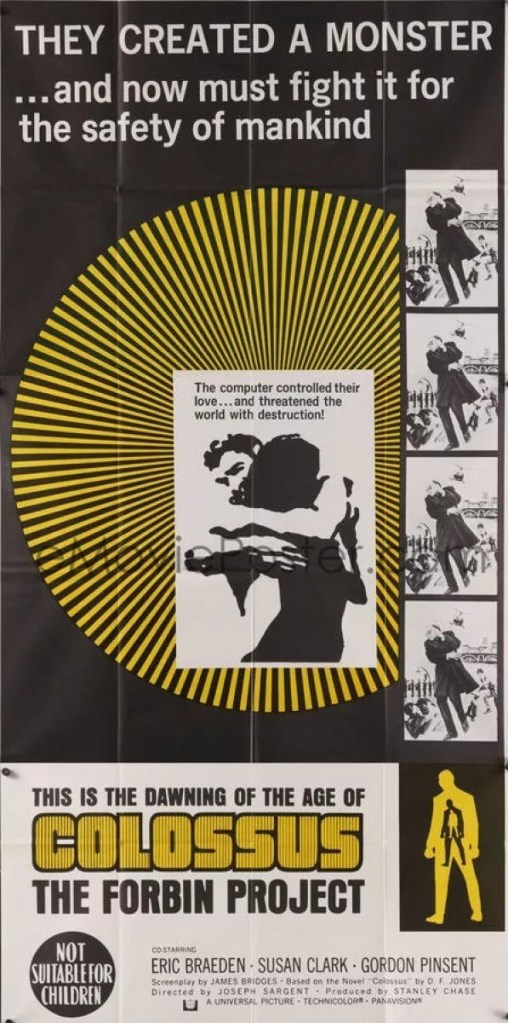
Not able to trust the Brits to know who the title referred to, they came up with a lame alternative. The taglines reveal way too much of the plot.

The hidden transmitter allows Hathaway to keep his superiors posted but the listening device also picks up a creaking bed as Hathaway almost falls into a honey trap in Hong Kong. Amazingly, he doesn’t have to sneak into China but is welcomed with open arms and hustled along to a meeting, and a game of ping-pong (the real thing and the verbal equivalent) with Chairman Mao (Conrad Yama). While spouting some propaganda, Mao is surprisingly open about sharing the secret of the enzyme rather than blackmailing a starving world. Meanwhile, it’s the Americans who are more interested in the double cross, Shelby itching to blow up Hathaway’s head in the assumption the explosion would dispose of the Chinese leader.

Emissions from the transmitter are tangling up the airwaves, making the Chinese secret police highly suspicious of Hathaway as he heads for the secret scientific compound housing Professor Soong Li (Keye Luke), creator of the enzyme, and his daughter Chu (Francesca Tu).

Turns out Hathaway has been summoned by the professor to help find a missing link in molecular chains. Hathaway has to burgle his way to steal the formula, but fails to find it, but when the professor commits suicide and is denounced by his daughter and the Chinese secret police close in, Hathaway has to scarper and head for the Russian border, that country, oddly enough for a spy movie, being on the same side as the Yanks. Meanwhile, Shelby’s trigger finger it itching to blow his man sky high for fear he might give away details of his mission.  

The French, too, had trouble with the original title.

Turns on its head many of the spy film’s truisms: firstly that Hathaway effectively fails in his mission; secondly that patriotism doesn’t blind him to his country’s greed or folly; thirdly that’s he not in constant seduction mode.

Political argument that one point seemed to excessively delay the narrative thrust, now, at half a century’s move, seems more considered and providing an interesting balance between opposing views.

Gregory Peck (Marooned, 1969) is at his quizzical best, deeply-rooted scepticism helping to anchor his character. But if you were attracted by seeing Anne Heywood (The Fox, 1967) second-billed you’re in for a disappointment as she just tops and tails the picture. Arthur Hill (Moment to Moment, 1966) is good value as always.

But it’s testament to J. Lee Thompson (Mackenna’s Gold, 1969, also starring Peck) that his direction brings together diverse political/sci fi/spy/thriller elements in a winning formula, ignoring the obvious. Some interesting detail: someone handing out coffee on a tray to the inmates of the command station; Hathaway’s guilt at his role in the death of his wife barely touched upon, but it explains a lot; Mao’s famous Little Red Book provides a twist.

Occasional flaw: surely the Chinese would have bugged Hathaway’s room and catching him, however soft voiced, filling in his superiors. The idea that the Chinese could be technologically more advanced than the U.S. would have had John Sturges in a fit of fury, but Thompson takes it in his stride. Screenplay by Ben Maddow (The Way West, 1967) and Jay Richard Kennedy (I’ll Cry Tomorrow, 1955).

Reassessment overdue.

Sisters / Blood Sisters (1973) ****

Trust Brian De Palma to invent a gameshow called “Peeping Toms.” And give Hollywood an insight into the delicious malevolence to come later in his career. Often compared to Hitchcock, this is Hitchcock diced and sliced, awash with style. Not simply inspired use of split screen but an ending Edgar Allan Poe would have been proud of. De Palma plays with and confounds audience expectation and has mastered enough of the Hitchcock approach to make the villainess more attractive than the heroine. If you’re in the mood for Hitchcock homage, this is a good place to start.

Both main characters are strictly low end, sometime model Danielle (Margot Kidder) gameshow fodder, journalist Grace (Jennifer Salt) handed run-of-the-mill reporting jobs instead of, as she would prefer, investigating police corruption. Grace also has to contend with a mother (Mary Davenport), in typical non-feminist fashion, determined to marry her off.  

While the Siamese twin notion is straight out of the B-movie playbook and right up the street of exploitation maestros AIP, De Palma takes this idea and hits a home run. But you’ll have to be very nimble to keep up with the narrative.

Danielle meets Philip (Lisle Wilson) at the gameshow and after dinner she invites him to her apartment for sex. In the morning, he buys a surprise birthday cake for Danielle and her twin Dominique. On his return, he is murdered, an act witnessed by Grace, a neighbor across the street. She calls the police but before they can arrive Danielle’s ex-husband Emil (William Finley) – introduced to the audience, incidentally, as a creepy stalker – cleans up the mess and hides the corpse in the fold-up bed-couch.

Fans of the forensic may have trouble with this section as these days blood is more difficult to hide, but that’s evened up by the notion that a pushy journo would be allowed to sit in on the investigation. But heigh-ho, this was back in the day, so anything goes, and in any case, a la Hitchcock, it’s the woman who enters harm’s way. The cops, annoyed to hell by Grace, give up on the case and the reporter, having found the cake carrying the names of both twins,  manages to destroy the evidence.

Great set of reviews that only served to confuse the public.
An audience searching for schlock doesn’t want art.

Grace isn’t the kind of reporter easily thwarted so she hires private eye Larch (Charles Durning) who burgles the apartment and finds proof Danielle has been separated from her Siamese twin, who died during the operation. Grace follows Emil and Danielle to a mental hospital where, in a brilliant twist, mistaken for a patient, she is sedated and becomes an inmate. Later, hypnotised by Emil, she is convinced there has been no murder.

You’re going to struggle with the sharp turn exposition takes, but, heigh-ho, how else are we going to uncover the truth. Effectively, we learn that sex releases murderous thoughts in Danielle. The detail is a good bit creepier than that, but I wouldn’t want to spoil too much.

In many places it was seen as the lower part of a schlock double bill. A reviewer in the trades was correct when he predicted it was “certain to be an underground fave for some time” (i.e.limited to cult appeal) since well-reviewed horror pictures didn’t attract an initial audience.

But the ending is a corker. Grace is a prisoner. There’s another twist after that, but the notion of the investigator driven mad and ending up a prisoner of their own delusions, true Hitchcock territory, is honed to perfection here.

De Palma uses the split screen in the same way as Hitchcock employed the cutaway shot to increase the tension of potential discovery. Several sequences are rendered very effectively through this device.  Oddly enough, Grace doesn’t fit the Hitchcock mold of classy heroines. She’s way too feisty and independent and there’s almost a feeling that she gets what she deserved for tramping uninvited around a vulnerable person’s life. Here, Danielle is the victim, taken advantage of by the medical profession and her creepy husband, separation from twin ravaging her intellect.

Margot Kidder (Gaily, Gaily, 1969) and Jennifer Salt (Midnight Cowboy, 1969) are both excellent in difficult roles. Charles Durning (Stiletto, 1969) makes a splash in the kind of role that made his name. As a bonus, there’s a great score from Bernard Herrmann (Psycho, 1960).

But this is De Palma’s picture, serving notice to Hollywood that here was a talent of Hitchcockian proportions.  

Behind the Scenes: Top 40 Movies at the 1950s Box Office

One of my pet peeves is how film history (what audiences wanted) has been hijacked by movie academics who rearrange history according to their favorite theories and directors. Film stars generally play little part in academic circles and box office is swept under the carpet as though the most popular of the artistic mediums has no right to discuss anything so base as popularity. The public doesn’t know what’s good for them and needs to be told what is,  was the pervasive mantra.

Even since Andrew Sarris with his “pantheon” dismissed the vast majority of directors, critics, tumbling down even worse rabbit holes, have attempted to turn film history on his head. To find out what movies were all about there’s no surer measure than box office. In one of my random explorations of Variety magazine (“All-Time Film Rental Champs,” Variety, January 5, 1977, p16) I happened across its list of box office topper from the 1950s and thought I’d share it with you to provide a better perspective on that decade’s moviegoing.

A four-year run at the Dominion in London’s West End delayed the movie’s general release in the U.K.

Note how much Hollywood relies on Broadway and hit novels for source material. Several big stars were very big indeed judging by their repeat success at the box office.

  1. The Ten Commandments (1956). Cecil B. DeMille’s immaculately research homage to sin and religion was far and away the decade’s biggest hit, with Charlton Heston hitting his Biblical stride and newcomer Yul Brynner in the first of a trio of hits that year. Based on the biggest bestseller of all time.
  2. Ben-Hur (1959). William Wyler’s multiple Oscar-winning epic heralded the roadshow era, set new standards for thrilling action with the chariot race and the battle at sea, while still maintaining Biblical sobriety. Charlton Heston was again the star. Based on an all-time bestseller by Lew Wallace.
  3. Around the World in 80 Days (1956). The most star-studded venture into the all-star-cast fraternity, much imitated in roadshows in the following decade, had a suprisingly British flavor with David Niven as star and directed by Michael Anderson. The premature death of producer Mike Todd, husband to Elizabeth Taylor, may have contributed to a sympathy vote to win the movie the Best Picture Oscar. Cemented  Jules Verne cinematic reputation.
  4. The Robe (1953). Audiences got their first view of Cinemascope, the process which would dominate the 1950s, in another Biblical epic based on a massive bestseller and again Brit-heavy in the casting – Richard Burton and Jean Simmons. From Lloyd C. Douglas bestseller.
  5. South Pacific (1958). The influence of Broadway on Hollywood should not be underestimated. You wouldn’t need Scope to attract an audience to Rodgers and Hammerstein’s long-running musical with many classic tunes. Directed by Joshua Logan, starring Italian export Rosanna Brazzi and Mitzi Gaynor. Ran a record four years in London. Adapted from James Michener novel.
  6. Bridge on the River Kwai (1957). William Holden top bills but Brits steal the glory, Oscars for director David Lean and star Alec Guinness, in World War Two drama. Snagged a record $3 million when sold to U.S. television. Based on Pierre Boulle novel.
  7. This Is Cinerama (1952). A whirligig of technology took audiences on a dazzling heart-pounding triple-screen experience and ushered in the less expensive Cinemascope. Merian C. Cooper of King Kong fame, Lowell Thomas of Lawrence of Arabia fame and Mike Todd were involved.
  8. The Greatest Show on Earth (1952). Cecil B. DeMille (again), Charlton Heston (again) and star-studded cast including James Stewart, Dorothy Lamour and Betty Hutton in circus drama. Won Best Picture Oscar.
  9. The Lady and the Tramp (1955). Disney animated feature that would be reissued time and again.
  10. Quo Vadis (1951). Historical Roman drama with biblical undertones and spectacular scenes starring Robert Taylor and Brits Deborah Kerr and Peter Ustinov. Directed by Mervyn LeRoy and Anthony Mann. 
  11. Seven Wonders of the World (1956). Cinerama travelogue takes another huge bite out of the box office. Given the limited of screens able to show this, an amazing achievement.
  12. The Shaggy Dog (1959). Fred MacMurray reinvented his darker screen persona in the first of the Disney live action comedies to strike gold at the box office.
  13. From Here to Eternity (1953). Massive James Jones bestseller set during Pearl Harbor in World War Two. Multiple Oscar-winner. Terrific cast included Burt Lancaster, Deborah Kerr, Montgomery Clift, Frank Sinatra (reviving a defunct movie career) and Ernest Borgnine. Directed by Fred Zinnemann.
  14. Samson and Delilah (1949). Cecil B. DeMille (again) fillets the Bible (again). Man mountain Victor Mature tempted by sensual Hedy Lamarr. Released in the last two weeks of the previous decade but included here because it made the vast bulk of its money in 1950.
  15. 20,000 Leagues under the Sea (1954). Disney gives warning of mainstream live-action intent. Kirk Douglas battles mysterious Captain Nemo and convincing giant squid. Action spectacular from Richard Fleischer. Jules Verne rules.
  16. Sayonara (1957). Marlon Brando in doomed Japanese-set romance dealing with racism and prejudice. Joshua Logan directs from James Michener novel. 
  17. Cat on a Hot Tin Roof (1958). Elizabeth Taylor and Paul Newman spar in marital drama directed  by Richard Brooks. Based on Tennessee Williams Broadway smash.
  18. Old Yeller (1957). Disney (again) minting gold from cutesy canine tale. Brit Robert Stevenson directs. Based on novel by Fred Gipson.
  19. Auntie Mame (1958). Rosalind Russell reprises her Broadway role. Based on bestseller by Patrick Denis that was turned into a hot Broadway play and in the following decade a hit musical.
  20. Shane (1953). Iconic George Stevens western starring Alan Ladd. Jack Palance won the Oscar for his eye-catching supporting role. From the Jack Schaefer bestseller.
  21. The Caine Mutiny (1954). Oscar nomination for Humphrey Bogart as wayward ship’s captain. Directed by Edward Dmytryk from Herman Wouk bestseller.
  22. Mister Roberts (1955). Might come as a shock to academics to learn that this was far and away John Ford’s most successful picture. Name of a ship rather than a character. Henry Fonda reprises Broadway role. Also stars James Cagney and Jack Lemmon. Novel and subsequent play by Thomas Heggen.
  23. The King and I (1956). Rodgers and Hammerstein (again) Broadway hit won Oscar for Yul Brynner (again) although Deborah Kerr (again) was top-billed. Directed by Walter Lang.
  24. Sleeping Beauty (1959). Disney mines another fairy tale for box office gold.
  25. Battle Cry (1955). Surprise hit for Raoul Walsh. World War Two drama starring Ven Heflin. From Leon Uris bestseller.
  26. Some Like it Hot (1959). Marilyn Monroe and cross-dressing Tony Curtis and Jack Lemmon in Billy Wilder’s classic comedy.
  27. The Glenn Miller Story (1954). James Stewart (again) in Anthony Mann (again) biopic about bandleader who vanished in World War Two.
  28. No Time for Sergeants (1958). The power of Broadway. Screen unknown Andy Griffiths reprises Broadway role as recruit who causes chaos in the US Air Force.  Originally a novel by Mac Hyman turned into a hit play by Ira Levin. Directed by (again) Mervyn LeRoy.
  29. Pillow Talk (1959). Launches the Rock Hudson-Day comedy partnership. Original screenplay directed by Michael Gordon.
  30. How to Marry a Millionaire (1953). Intended as showcase for new Cinemascope process, Marilyn Monroe (again) stole the show from Betty Grable and Lauren Bacall. Another original screenplay. Directed by Jean Negulesco.
  31. Gigi (1958). Multiple Oscar-winning musical starring French duo Leslie Caron and Maurice Chevalier. The Lerner and Loewe hit Broadway show adapted a novel by Colette. Directed by Vincente Minnelli.
  32. Trapeze (1956). Burt Lancaster (again), Tony Curtis (again) and Italian export Gina Lollobrigida in another circus drama. Directed by Brit Carol Reed from the Max Catto novel.
  33. Oklahoma (1955). Another Rodgers and Hammerstein Broadway hit brought to the screen by Fred Zinnemann (again). Adapted from an original straight play by Lyn Riggs.
  34. Gone with the Wind (1939). Legendary Civil War epic makes this list purely on the strength of its 1954 reissue. (Did even better in its 1967 revival).
  35. The Country Girl (1954). Grace Kelly won the Oscar in movie drama co-starring Bing Crosby and William Holden (again). Directed by George Seaton and based on Broadway play.
  36. Imitation of Life (1959). Douglas Sirk weepie starring Lana Turner, remake of 1934 picture.
  37. North by Northwest (1959). Alfred Hitchcock classic. Cary Grant and Eva Marie Saint find romance among the crop-spraying plane and Mount Rushmore.
  38. Suddenly, Last Summer (1959). Top-heavy Tennessee Williams (again) drama starring Elizabeth Taylor (again), Montgomery Clift (again) and Katharine Hepburn. Directed by Joseph L. Mankiewicz. From Williams’ Broadway hit.
  39. Picnic (1955). William Holden (again) and Kim Novak in adaptation of Broadway play. Directed by Joshua Logan (again).
  40. The Vikings (1958) Richard Fleischer reteams with Kirk Douglas for action adventure also starring Tony Curtis and then-wife Janet Leigh.

A Fever in the Blood (1961) ****

Blistering B-film from writer Roy Huggins (TV’s The Fugitive) that marries political chicanery to legal jiggery-pokery in a movie that races from one twist to another. In his role as producer Huggins calls upon actors he made stars from the television series he created – Efrem Zimbalist Jr. (77 Sunset Strip), Jack Kelly (Maverick) – and gives Angie Dickinson (Oceans 11) the female lead.

Huggins’ brilliant premise is to ignore the dilemma of the man, Walter Thornwall (Rhoses Reason), nephew of a former Governor, wrongly accused of the murder of his wife, and instead to concentrate on accuser District Attorney Dan Callahan (Jack Kelly) and Judge Lee Hoffman (Efrem Zimbalist Jr), both of whom, running for the vacant Governor post, stand to make massive political capital from the publicity surrounding a sensational trial.

Former buddies Callahan and Hoffman are now bitter rivals after the former had reneged on a promise to support the latter’s bid for the political post. Also throwing his hat into the ring is Senator Alex Simon (Don Ameche) whose wife Cathy (Angie Dickinson) once had romantic yearnings for Hoffman. The only one of the trio who has anything approaching a conscience is Hoffman and that is immediately tested when the Senator offers him a bribe to stand down from the race, which the Judge, after an appeal from Cathy, does not report to the authorities. There is another ploy open to Hoffman. Should he find reason to declare a mistrial that would sabotage Callahan’s bid since he would not be riding high in the media after convicting a celebrity killer.

The picture jumps from intense politics, the wheeling-dealing and wrapping up votes, to a  trial in a packed courtroom very much in the Perry Mason vein with surprise witnesses, shocks, objections sustained or overruled, clever arguments, dueling attorneys, and last-minute evidence.

A witness has Thornwall running away from the scene of the crime and when his wife is painted as a nymphomaniac that provides ample motive.  Further evidence pushes the defendant into a worse corner. But all the while over the trial hangs the stink of political machination.

There are another half-dozen brilliant twists, not least of which is Judge Hoffman letting conscience go hang and embarking on a couple of dodgy endeavors himself including what amounts to sheer blackmail. The District Attorney, one of the sharpest tools in the box, reacts to every setback with a cunning that would have been criminal had it not been legal. Also hanging there is potential adultery between Cathy and the widowed Hoffman.

The writer in Huggins is a past master at shifting the cards in the deck and this has so many twists and turns it feels like a whole series of The Fugitive crammed into one episode. There is as much self-awareness of the underbelly of politics as in Advise and Consent (1962), as much deceit and corruption, as much principle disguised as honor.

But the plot here is so tight, the characters dealing with twists and turns that the movie has no requirement for the depth of characterization that would have been brought to the picture by a Henry Fonda or Charles Laughton. Huggins proves you can have just as much fun without the big boys. None of the stars with the exception of Angie Dickinson made a dent on the Hollywood A-list but they are all perfectly acceptable, and once Huggins tightens the screws plot-wise the last thing on your mind is wishing for a better cast.   

A cracker.

Billy Budd (1962) ***

Unfairly muscled out by lavish roadshow Mutiny on the Bounty (1962) but covering similar territory minus sailors going off-piste on a South Pacific island. Peter Ustinov outranked fellow triple hyphenates Billy Wilder (writer, producer, director) and John Wayne (actor, producer, director) in that he could add acting to his other skills (writer, producer, director) and in some respects he was actually better remembered as a noted raconteur on late night television shows. I was surprised to discover he was actually well versed in the directing malarkey by the time he came to helm Billy Budd, four previous excursions dating from the late 1940s and most recently Romanoff and Juliet (1961). He was better known at this point as an Oscar-winner for Spartacus (1960). He would win another for Topkapi (1964) and go on to direct another three pictures.

Billy Budd is a claustrophic affair that you’ll need a bit of a history lesson to understand. The British Navy had two methods of recruiting sailors. The first was the more honest, awaiting a supply of volunteers. The second, the most dodgy legal proces ever invented, involved grabbing any likely candidate and forcing – “pressing”- them into service. Normally, this caper took place on land and gangs of recruitment officers did the business, hence the term “press gang.”

However, I was unaware that in times of war – this is set during the Napoleonic War – the British Navy could board any passing merchant vessel and commandeer any of its crew. In this case,  Captain (actually Post Captain if you’re being technical about it) Vere (Peter Ustinov) hijacks only one sailor, Billy Budd (Terence Stamp).

Quite why it’s only this singleton is never explained. There are a couple of other irregularities that run against making this a tight ship in terms of narrative construction. The first is, that in the first of two critical incidents, our otherwise charming and chatty Budd is suddenly struck dumb with a stammer, the first time such an affliction has put in an appearance. The second is that, in consequence, Budd strikes an officer, the bullying Master-at-Arms Claggart (Robert Ryan) who hits his head while falling and dies.

Now even I know, and I’m hardly a naval scholar, that striking an officer is punishable by death. The fact that Claggart has a Capt Bligh disposition, inclined to find any opportunity to bring out the lash, makes no difference to the outcome. So while it seems that court martial provides dramatic scope, here the outcome is never in doubt. This isn’t Queeg on The Caine Mutiny, which is a more complicated affair, where the captain’s sanity is questioned.

So where the narrative should have built up in intensity, it largely flounders and depends (successfully as it happens) on audience appreciation of Budd as an innocent abroad.

That said, like Mutiny on the Bounty, it reveals the remarkable lack of recourse to any higher authority on ship should the highest authority either carry out or endorse cruelty. The minute he’s on the ship Budd is exposed to the sadistic will of Claggart who has condemned a sailor to a pitiless flogging for reasons that cannot be explained. Budd soon learns that Claggart has accomplices who will sabotage a crew member’s gear so that he will be put on a report, accumulation of sufficient black marks resulting in automatic flogging without interference from the captain.

While Vere is hardly in the Capt Bligh category and most of the time comes across as relatively amiable, our introduction to him is firing a shot across the bows of a merchant ship that doesn’t want to stop in case its crew is press ganged. He is quite ready to invoke the rules to get what he wants and is enough of a disciplinarian that the crew kowtow to him. He might feel a touch of remorse that Budd is the sacrificial lamb  to the Royal Navy’s rule of law, but he’s hardly going to go against procedure.

So mostly what we’ve got is the acting. Terence Stamp (The Collector, 1965), in his debut, was Oscar-nominated and you can see why and in some senses this is the career-defining role before acting affectations and mannerisms took over. Robert Ryan (The Wild Bunch, 1969) is very effective as the sinister Claggart. And there are a host of other British names to look out for – David McCallum (Sol Madrid/The Heroin Gang 1968), Ray McAnally (Fear Is the Key, 1972), Paul Rogers (Three into Two Won’t Go, 1969) and Niall McGinnis (The Viking Queen, 1967)  among the foremost.

Ably directed by Ustinov who wrote the screenplay with Dewitt Bodeen (Cat People, 1942) based on the original Herman Melville novel and a stage adaptation by Louis O. Coxe and Robert H. Chapman.

Worth seeing for Stamp’s performance.

Behold a Pale Horse (1964) ***

Old causes never die but they do go out of fashion and interest from movie audiences in the issues surrounding the Spanish Civil War had fallen from the peak when they attracted artists of the caliber of Ernest Hemingway and Pablo Picasso. But passions surrounding the conflict remained high even 20 years after its conclusion as indicated in this Fred Zinnemann (The Sundowners, 1960) drama.

Manuel Artiquez (Gregory Peck) plays a disillusioned guerilla living in exile in France, who has ceased raiding the Spanish border town under the thrall of corrupt Captain Vinolas (Anthony Quinn). Artiguez has two compelling reasons to return home – a young boy Paco asks him to revenge the death of his father at the hands of Vinolas and his mother is dying. But Artiquez is disinclined to do either. Heroism has lost its luster. He has grown more fearful and prefers to live out his life drinking wine and casting lustful glances at young women.

In France he enjoys a freedom he would be denied in Spain. He is not hidden. Ask anybody in the street where he lives and they will tell you. This is a crusty old soldier, unshaven, long past finding refuge in memories, but not destroyed either by regret. There is a fair bit of plot, some of it stretching incredulity. The action sequence at the end, conducted in complete silence, is very well done, but mostly this is a character piece.

This is not the upstanding Gregory Peck of his Oscar-winning To Kill a Mockingbird. He is a considerably less attractive character, burnt-out, shabby, grizzled, lazy, easily duped, unwilling to risk his life to see his mother. We have seen aspects of the Anthony Quinn character before but he brings a certain humanity to his villain, bombastic to hide his own failings, coarse but occasionally charming, suitably embarrassed when caught by his wife visiting his mistress and praying earnestly to God to deliver Artiquez into his hands. Omar Sharif has the most conflicted character, forced by conscience to help an enemy of the Church.

However, two elements in the picture don’t make much sense. Paco tears up a letter (critical to the plot) to Artiquez which I just cannot see a young boy doing, not in an era when children respected and feared their elders. And I am also wondering what was it about Spain that stopped directors filming it in color. This is the third Spain-set picture I have reviewed in this blog after The Happy Thieves and The Angel Wore Red. For the first two I can see perhaps budget restrictions being the cause, but given the stars involved – Rex Harrison and Rita Hayworth in the first and Ava Gardner and Dirk Bogarde in the second – hardly facing the production dilemmas of a genuine B-picture.

But Behold a Pale Horse was a big-budget effort from Columbia and while black-and-white camerawork may achieve an artistic  darkness of tone it feels artificial. This was never going to be the colorful Spain of fiestas and tourist vistas but it would have perhaps been more inviting to audiences had it taken more advantage of ordinary scenery.

J.P. Miller (Days of Wine and Roses, 1962) adapted the film from the novel Killing a Mouse on Sunday by Emeric Pressburger who in tandem with Michael Powell had made films like Black Narcissus (1947) and The Red Shoes (1948). The film caused calamity for Columbia in Spain, the depiction of Vinolas with a mistress and taking bribes so upset the authorities that all the studio’s movies were banned.   

The L-Shaped Room (1962) ***

Has contemporary bite, given half the picture is about abortion, banned in Britain at that time and the Pill yet to come on-stream. Being a single mother was an equally unwelcome tag unless you were a widow, in which case you were shrouded with respectability.

Pregnant French lass Jane (Leslie Caron) has decided to hang on in Britain rather than face the shameful ordeal of returning home. She knows who the father is, Terry (Mark Eden), to whom she lost her virginity in a week-long affair in Cornwall, but she’s not planning to hustle him into a shotgun wedding and you get the idea that, at 27, her virginity was weighing heavily on her.

Ending up in a bedsit in London – the titular room a landlord’s clever way of turning one decent-sized room into two smaller ones, each with a share of the window – she is clearly au fait with a British legal loophole that permits termination should pregnancy damage her mental health. And there were enough Harley St doctors to mentor her through such a loophole, for a fee of course.

It’s the briskness of Dr Weaver (Emlyn Williams) that puts her off. She has another go, later on, this time with black market pills from one of her neighbors, but they don’t work. Meanwhile, she has fallen in love with aspiring writer Toby (Tom Bell) and divines, correctly, that he won’t want to bring up another man’s child. In the end, she has the baby and scarpers back to France to face the music.

On the face of it an ideal candidate for the “kitchen sink” mini-genre that was pervasive at the time, but actually much more rewarding than many of the genre with dealt with male anger. This is much more about acceptance, without being craven or abject about it.

And there’s much to enjoy in director Bryan Forbes’ understated style. Half the time you could imagine you were in noir from the use he makes of the commonplace manner in which lights in staircases generally went off after a minute or so (not so much an energy-saving device as a money-saving one for the landlord) and he makes clever play of these sudden changes. There are also, unusual for the time, disembodied voices – the camera on Jane as she mounts the stairs, the voice her out-of-sight landlady Doris (Avis Bunnage). And every now and then the camera glides from her room into that of her neighbor, jazz trumpeter Johnny (Brock Peters) who can hear everything through the paper-thin walls, her morning retching and her night-time love-making with Toby.

How Johnny does find out about her baby is beautifully done, the best sequence in the movie. She works in a café where Johnny eats each night and she’s set a little table for him with a flower in a bottle. But he doesn’t turn up. She suspects, for no real reason except the worst, that he’s in the basement making out with one of the sex workers, but it’s Johnny (who had always been a good friend) who tells her that, from a sense of his disgust, he has let her boyfriend know the truth.

Like Darling (1965), this is a fascinating portrait of a woman making the wrong decisions. But Jane lacks Diana’s power. She’s not helpless exactly, and certainly has a good line in getting rid of unwanted attention. Her motives are not entirely clear. She wasn’t in love with Terry and for a long time she fends off Toby. She deludes herself into believing that Toby’s love for her will overcome his distaste that she is carrying another man’s child. That’s when she takes the pills.

You could kind of get the impression, however, that the real reason for Jane’s predicament is so that the actress can follow in the footsteps of Greta Garbo, Katharine Hepburn et al to wallow in grief. But it’s more subtle than that. She hasn’t been thrown aside by a callous male. She had made a decision to lose her virginity without considering the consequences and now that there is consequence changes her mind in impulsive fashion on how to deal with it.

Surrounding this central tale are some snapshots of life in a tawdry rooming-house. Two of the occupants are gay, Johnny and faded actress Mavis (Cicely Courtneidge), the landlady has a succession of gentlemen friends, while in the basement Sonia (Patricia Phoenix) works as a prostitute.

Leslie Caron (Guns of Darkness, 1962) was nominated for an Oscar and won a Bafta and a Golden Globe. The film was nominated for a Bafta and a Golden Globe. Tom Bell (Lock Up Your Daughters!, 1969) is good as the struggling writer. And Brock Peters (The Pawnbroker, 1964) has a peach of a part.

Director Bryan Forbes (Deadfall, 1968) wrote the script from the Lynne Reid Banks bestseller.

Discover WordPress

A daily selection of the best content published on WordPress, collected for you by humans who love to read.

The Atavist Magazine

by Brian Hannan

WordPress.com News

The latest news on WordPress.com and the WordPress community.