The Last Safari (1967) ***

Producer Hal Wallis was known as a star maker. He had launched the careers of Burt Lancaster, Kirk Douglas, Lizabeth Scott, Dean Martin, Jerry Lewis and Shirley MacLaine and was instrumental in shaping Elvis Presley’s screen persona. Continually on the lookout for new talent and with a roster of pictures to cast, he had swooped in the mid-60s on Suzanna Leigh (Boeing Boeing, 1965), Broadway rising star Tanya Everett and on the basis of a television pilot Lithuanian-born Kaz Garas.

So if The Last Safari appears both overcooked and undercooked, put that down to Wallis saddling director Henry Hathaway with the untried Garas as his star, billed ahead, much to his fury, of veteran Stewart Granger (The Secret Invasion, 1964). The film’s way too long as the producer keeps finding ways to insert the youngster into the older man’s tale of hunting an elephant that killed his buddy. In fact, it’s another youngster, Gabriella Licudi (The Unearthly Stranger, 1965) who, with a fraction of Garas’s dialog, steals the show.

The safari picture was by now fast out of fashion, the days of glorifying hunting, even just to supply zoos as in Hatari! (1962), losing its appeal especially with the softer conservationist approach of Born Free (1966) and Africa, Texas Style (1967). So while issues regarding poaching, native self-determination, tribal tradition and colonial interference are given more coverage than you might expect, it still boils down to great white hunter Gilchrist (Stewart Granger) setting out to kill an elephant. That millionaire playboy Casey (Kaz Garas) keeps getting in his way is down to an odd screenplay and the top-billing error that seems determined to find more space for the younger irritant than for the older guy coming to terms with himself.

By the time Casey lands in Kenya in a zebra-striped private plane with native guide Grant (Gabriella Licudi), Granger has already torn up his hunter’s license. Much of the initial narrative is simply Casey pursuing him and being turned down, until the American simply decides to tag along, despite inexperience of the bush.

It’s unclear whether Grant is a guide-with-benefits but she milks him at every turn and filches anything she can, including a lucky charm belonging to Gilchrist. But where Casey drones on, the camera is kind to her, showing her character in tiny snippets, concealing the lucky charm at Gilchrist’s approach, for example, or not being at all perturbed at being excluded from dinner on the grounds that’s she’s a servant and astonished that Casey gets himself so wound up at what he sees as an injustice. She’s perfectly happy dancing the Watusi on her own away from the boring grown-ups. And she puts him in his place, “You want a trophy…I’m not for sale.”

Quite why Gilchrist is obsessed with this particular elephant is never satisfactorily explained. There’s guilt of course since he was the protector but any observer would see that the buddy had stupidly put himself in harm’s way for the sake of getting a better photo of a charging elephant. You get the impression that Gilchrist is just finding a long slow way to die, now he has little else to live for, and his profession is being swamped by idiots, and the work involves dealing with entitled nincompoops like Casey.

Every now and then the movie takes a different, occasionally cute, turn, like watching the baby hippos clamber all over their parents in the water, repetition of this item explained by Gilchrist’s preference for that animal rather than that someone dug up some interesting library shots. But, more likely, it’s dangerous intrusion on tradition. Both Grant and Casey take it upon themselves to participate in a tribal dance, which leads to fisticuffs after a native, following her response to his moves, takes a fancy to the woman. Another time Gilchrist has to rescue some white people trapped in a village because they had violated tradition or were upholding tradition (the reason was unclear). Another chap is trampled to death because his watch alarm went off at the wrong time.

Once the movie settles down to what Hathaway is expert at, old men heading off on quests, long vistas, unwanted traveling companion, it picks up though audiences were probably let down by the ending, not the expected savage slaughter. By the time Casey admits he has learned humility you’ve long lost interest in him.

Howard Hawks would have swung in with a gender switch to make this work, turning Grant into an annoying female, introducing a romantic tussle, hoping the age gap wouldn’t act as too much of a deterrent. Frustratingly, this is excellent in patches, primarily when Gilchrist gets to demonstrate tradecraft and understanding of tribal tradition.

Stewart Granger, in festering in his guilt far removed from the traditional hero, is surprisingly good. Kaz Garas’s career told its own story, this being his only top-billed movie. He’s been thrown in at the deep end and sunk not swam. I was surprised to see Gabriella Licudi not popping up elsewhere because she makes a good stab at the self-sufficient sassy heroine. Hathaway looks overburdened with Wallis’s star-making. John Gay (Soldier Blue, 1970) adapted the Gerald Hanley novel.

Despite the flaws, still interesting.

Period of Adjustment (1962) ***

You want angst, frustration, tragedy, Tennessee Williams is your man. Comedy? Not so much. He had pretty much supplied Hollywood with an unending stream of hits. From The Glass Menagerie (1950), quadruple Oscar-winner A Streetcar Named Desire (1951), triple Oscar-winner The Rose Tattoo (1955) and four-time Oscar nominee Baby Doll (1956) to Cat on a Hot Tin Roof (1958) with six nominations, Suddenly, Last Summer (1959) three nominations, The Fugitive Kind (1960), Summer and Smoke (1961) four nominations, and Oscar-winner Sweet Bird of Youth (1962) his movies attracted the cream of Hollywood.  The likes of Marlon Brando (twice), Elizabeth Taylor (twice), Montgomery Clift, Vivien Leigh, Paul Newman (twice) and Katharine Hepburn stood in line for the honor of participating.

Tennessee Williams was, unusually for a writer, a marquee name. He promised sensation, sex, scintillation. Audiences in need of a few laffs didn’t look towards his work.

So what to make of his first comedy? He was the biggest name by far involved. And the marketeers made sure audiences were aware this was a comedy and not a searing drama. But absence of the kind of big-name star generally associated with the playwright’s adaptations might have made them leery. Director George Roy Hill making his debut. Anthony Franciosa in his first top-billed role, fourth movie for Jane Fonda, Jim Hutton downgraded to second male lead from being star of his previous picture, Lois Nettleton in her debut. But who knows? It might make stars of them all.

The story itself is slight. A couple with different expectations of each other coming to terms with marriage. There’s a racy element, too. New husband George (Jim Hutton) is suffering from stage fright, can’t deliver in the bedroom department on their honeymoon. Wife Isabel (Jane Fonda) is a bit too ditzy, far removed from the efficient nurse he fell, too fast, in love with. He’s got some odd ideas of his own, a hearse his notion of acceptable transportation.

Anyway, they end up in the home of his Korean War buddy Ralph (Anthony Franciosa) whose marriage to Dorothea (Lois Nettleton) is in tatters. It’s a soft soap version of Who’s Afraid of Virginia Woolf as the newly-weds get a glimpse of what can happen way down the line when marriage is out of control.

Luckily, it’s built as a comedy not as drama, so nothing gets that much out of control and if anything it’s heading in the direction of warm-hearted as the newly-weds find ways to patch up their differences while the warring couple discover exactly what’s gone wrong with their relationship, primarily that good old Ralph married his wife for her money.

But, mostly, instead of trying to fix their own marriages, the couples are more intent on offering advice to the other. The pal’s in-laws take the brunt of the blame. Dysfunctional family and potentially dysfunctioning family have to suck it up and change.

There’s some obvious comedy thrown in to lighten the load, this taking place at Christmas, a bunch of choristers, going door to door, get drunker with every stop-off. But the movie doesn’t quite go in the direction you expect. There’s no easy fix, though there is a fix, but each character goes through a definite change rather than just flipping a switch.

Though Jane Fonda (Barbarella, 1968) is the one who became a star, it took her quite a few acting iterations to achieve it, and this sees her going down the Marilyn Monroe route of  blatant sexiness so in a sense hers is the least interesting character because she’s so shallow to begin with. Anthony Franciosa (Fathom, 1967) is the pick, in part because he’s playing a more genuine character rather than the schemer or matinee idol that he essayed in so many later movies. Jim Hutton (The Hellfighters, 1968) is still in lightweight mode.

George Roy Hill (Butch Cassidy and the Sundance Kid, 1969) is occasionally stagey in his direction but manages to pull out the performances required to make this work. Isobel Lennart (Funny Girl, 1968) does the adaptation.

Not just for Tennessee Williams or Jane Fonda completists.

The Angel Wore Red (1960) ***

Given that this is filmed in black-and-white, it seems a curious title. So I’m assuming the color is a reference to a scarlet woman which, indeed, Ava Gardner (Mayerling, 1968) is, working in a “cabaret” in an unnamed town at the start of the Spanish Civil War. Strangely enough, the decision to shoot in black-and-white works in the actress’s favor. She was one of the last relics of the Hollywood Golden Age when brilliant cinematographers used innovative lighting to capture on screen not so much great beauty but tantalizing emotion.

The close-up was almost exclusively the preserve of actresses who could convey deep feeling with minute changes of expression or simply through their eyes. Here, a couple of joint close-ups prove the point: Gardner’s face illuminated, even in repose struggling to contain passion; that of lover Dirk Bogarde (Victim, 1961) merely the same as always.  

This Italian-American production is a curiosity, part homily, part reverential, part brutal. Arturo (Dirk Bogarde) is a priest on the run from the invading Communist forces. He takes refuge in a cabaret (code for brothel) where he is sheltered by Soedad (Ava Gardner). He has just denounced his faith so when captured is not executed as an enemy of the state, thus allowing him to begin a relationship with her.

They share an unusual type of innocence, Soledad because, as what was known in those days as a woman of easy virtue, she has never known true love, Arturo, for obvious reasons, denied such an emotion. Their trembling acceptance of this wondrous state of affairs is the beauty of the film.

The love story which would surely in any case have a tragic outcome unfortunately too often plays second fiddle to a subsidiary tale of safeguarding a sacred relic – about whose importance, strangely enough, both sides are agreed – and of arguments between various other political elements over the conflict. Hawthorne ( Joseph Cotton), a cynical journalist – are there any other kind? – bears testimony to the opposing perspectives while no-nonsense General Clave (Vittorio de Sica) deplores the “dirty” war. Neither side comes out well in the conflict the Communists, like a mob storming Dracula’s castle, destroy the cathedral, the Republicans committed to killing all prisoners so as not to hold up their advance. Only the clergy retain their principles even when tortured. 

No one can portray a fallen woman like Gardner, but even as a mature woman her steps towards true love are hesitant, almost believing it is tucked away beyond the rainbow way out of reach, while inner conflict had become central to the Bogarde screen persona.

Writer-director Nunnally Johnson (The Three Faces of Eve, 1957), in his final movie in the hyphenate capacity, had good reason for choosing to film in black-and white – it permitted use of newsreel footage of diving Stuka bombers and more importantly since much of the story takes place at night it creates a haunted background of dark alleys. Color would have destroyed such a vision. You could argue there is artistic purpose here, filming a country which has fallen into a state of spiritual darkness. But that would not be true of the star – black-and-white allows rare opportunity to show what the camera adores in Ava Gardner, her face, even in repose, absorbing the light, as if she were, indeed, redemption. 

A film that doesn’t take sides with characters caught in the middle can’t quite make up its mind where it wants to go.   

Garner rather than Bogarde is the reason to see it.

Victim (1961) ****

Blackmail remains an odious and, unfortunately, booming area of criminal activity, especially targeting youngsters for perceived sexually inappropriate behavior. Politicians still fall into honey traps and I’m sure there are  Hollywood stars who dare not risk coming out for fear of jeopardising their careers. Too often, people pay up or commit suicide rather than endure what they view as a shameful transgression. Seventy years ago, it was a crime in Britain to be a homosexual so anyone with that particular inclination was open to blackmail.

This picture tied the British censor in knots just for daring to use the word “homosexual” never mind “queer” (in the old slang). The Americans were less sympathetic, refusing to allow it to be shown.

It remains surprisingly powerful, not just for the dealing with a subject that had ruined as brilliant career as that of Oscar Wilde over half a century before and had the power to continue to do so. While the wealthy might be able to hush up such criminal acts, the less well-off endured spells in prison.

It’s structured as a triple-edged thriller. Top London barrister Farr (Dirk Bogarde), a fast rising star, determines to root out a vicious blackmailer, while keeping from wife Laura (Sylvia Syms) his own submerged inclinations,  and all the time paying the price in emotional terms for denying his true feelings.

The police are surprisingly sympathetic so this isn’t full of tough cops beating up poor gay men but a community turned inside out trying to retain its sanity. The movie makes various open pleas to the British government to change its mind, but such agitation for change takes place within the context of an enthralling narrative.

It opens like a conventional thriller. A man on the run, Barratt (Peter McEnery), one step ahead of the law, seeking help from a variety of acquaintances, one of whom is Farr. We don’t know what this chap has done except he lugs around a precious suitcase. Not filled, it transpires, with compromising photos, as you might expect, but with a scrapbook.

Eventually, we find out Barratt has embezzled a large stash of cash in order to pay off blackmailers. When caught, he refuses to fess up, instead taking the suicidal way out. Farr, feeling guilty, decides to hunt down the blackmailers. This takes him through a gay underground, populated by characters who are being similarly fleeced: upmarket hairdresser Henry (Charles Lloyd-Pack), upmarket car salesman Phip (Nigel Stock), West End actor Calloway (Dennis Price). Some victims are not only complicit but implicate others (exactly as happened recently in Britain when a Tory MP was blackmailed). Eventually, the trailer leads to the vicious Sandy (Derren Nesbitt) and vile accomplice Madge (Mavis Villiers).

That it avoids falling into the exploitation sector is thanks to a story that focuses on human torment rather than pointing the finger. Prior to his marriage, Farr himself has owned up to a previous indiscretion and promised never to go astray. He can allow himself to fall in love, as with Barratt, but take it no further than giving the young man a lift home. Laura, meanwhile, refuses to just be his alibi, his “lifebelt,” her belief that she is in a proper marriage torn asunder by her husband’s admission that his career is under threat.

Inadvertently, Farr has wrecked other lives, small, dumpy bookseller Doe (Norman Bird) rejected by Barratt for unrequited love with the handsome lawyer. Laura’s brother cuts ties with her over the stain such a scandal would cast over the family. Friendship with Farr throws  suspicion onto married friend Eddy (Donald Churchill). Not everyone can hide their sexuality, Henry having endured four prison sentences for being caught.

And as with your normal thriller, there are red herrings, a newcomer to a pub possibly being in league with the blackmailer, and audience suspicion is directed to the camp pair whispering in the pub. As with the best red herrings, these are transformed into different narrative pegs.

Farr is far from your usual detective, what with his upper class lifestyle, and the danger – physical, marital and emotional – he puts himself in, but he is dogged and principled and in the end gets his man, knowing full well that he will pay a price. Eliminating stereotypes helps. Nobody minces around and there’s no vicious gossip or sarcastic observer on the sidelines.

I’d already been very impressed by the work of the underrated Basil Dearden whose portfolio includes lean thrillers The Secret Partner (1961) and The Man Who Haunted Himself (1970), grander affairs such as Khartoum (1966) and The Assassination Bureau (1964), and fistfuls of sub-Hitchcockian twisted complication in The Mind Benders (1963), Woman of Straw (1964), Masquerade (1965) and Only When I Larf (1968). This sits high on his list. But he is very much aided by a superb screenplay by Janet Green (The Clouded Yellow, 1950) and John McCormick (Seven Women, 1965).

Excellent performance by Dirk Bogarde (Our Mother’s House, 1967) and a very rounded one by Sylvia Sims (East of Sudan, 1964). A shout out for Derren Nesbitt (The Blue Max, 1966) as the creepy smug villain and John Cairney (Jason and the Argonauts, 1963), who recently died, and was a relation of my mother.

Recommended. Blackmail has an ominous contemporary ring.  

Stiletto (1969) ***

The bursting of the B-movie bubble dealt a death blow to the careers of the two stars here. In the past, rising talent who failed to make the marquee grade could find almost a lifetime of contentment in low-budget westerns, neo-noir thrillers and down’n’dirty exploitationers with the hope of an occasional supporting role in a bigger picture to ease their path. By the end of the decade, just about the only option were Roger Corman biker flicks or spaghetti westerns. Especially if they had gone down the tough guy route, B-pictures might have provided an exemplary move for both Alex Cord and Patrick O’Neal. As it was, this was their last shot at the big time. And it was lean pickings.  

Retirement can be a tough call any time for a high-flying businessman. But when you’re at the top of your profession in the Mafia, loosening such ties can prove problematic. Count Cesare (Alex Cord) is a part-time assassin, spending the rest of his time as a fun-loving playboy with a string of women, fast cars and racehorses. Only problem is, he wants to retire from the Family – and not in normal fashion, weighted down by a block of cement. Unfortunately, his dilemma doesn’t solicit sympathy from boss Matteo (Joseph Wiseman).

Adding to his problems is tough cop Baker (Patrick O’Neal) on his tail who fastens onto illegal immigrant Illeana (Britt Ekland), Cesare’s girlfriend when he’s not pursuing Ann (Barbara McNair). A strictly by-the-numbers thriller it’s enlivened by two underrated tough screen hombres. Alex Cord (The Brotherhood, 1968) isn’t given enough of a character here to  tug at audience heartstrings although elsewhere he had proved better-than-expected value. If anything, he’s an existential kind of hero.

Cord made a brief splash as an action hero in the monosyllabic Clint Eastwood/Charles Bronson mold after debuting in the John Wayne role of the Ringo Kid in the remake of Stagecoach (1966) and didn’t have more than half a dozen stabs at making his name on the big screen before disappearing into the television hinterlands. So he’s something of an acquired taste, maybe the small output enough to qualify him for cult status. Here, he’s a decent fit for the violence but saddled with a role that makes little sense.

Patrick O’Neal (El Condor, 1970) followed a similar career trajectory, swapping television with the occasional movie and even managing a screen persona as a snarky type of villain/supporting character. A few more tough-guy roles and he might well have built a stronger footing in the business.

This is another thankless role for Britt Ekland (Machine Gun McCain, 1969), there to add glamor, but, surprisingly, she manages to bring pathos to the part. Barbara McNair (If He Hollers Let Him Go, 1968), always worth watching and who had made an auspicious debut the year before, hardly gets any screen time. 

Director Bernard L. Kowalski (Krakatoa, East of Java, 1968) proves better at the action than the characterization, though, luckily nobody needs to be anything other than tough. Three scenes, in particular, are well handled – the opening murder in a casino, a shoot-out a penthouse and the climax on a deserted island which has more than a hint of a spaghetti western. Joseph Wiseman (Dr No, 1962) rustles up another interesting performance and collectors of trivia might note Roy Scheider (Jaws, 1975) putting in an appearance.

This old-style tough-guy thriller would have been better off had the Cord vs. O’Neal set-up taken center stage, with the assassin on murderous overkill hunted down by the zealous cop. As it is, it’s a missed opportunity for Cord to develop an Eastwood/Bronson persona and enter the action star hall of fame.

Based on a thin Harold Robbins bestseller, the screenplay by W.R. Burnett (The Great Escape, 1963) and A.J. Russell (A Lovely Way to Die, 1968) doesn’t take any prisoners.

Doesn’t quite deliver what it says on the tin, but interesting to see Cord and O’Neal battle it out.

The Sicilian Clan / Le Clan des Siciliens (1969) *****

Absolutely cracking, brilliantly structured, gangster thriller featuring two fabulous heists and three legendary French stars in Jean Gabin, Alain Delon and Lino Ventura. Roger Sartet (Delon) is a trigger-happy robber whose terrific prison escape is organized for a hefty fee by French-based Mafia chieftain Vittorio Manalese (Gabin). Le Goff (Ventura) is the rugged cop hunting down the escapee which brings him into the orbit of Manalese, about whose existence he is completely unaware, the gangster having kept an extremely low profile, never engaging in violence, hiding behind the legitimate front of a pinball machine business.  Veteran French director Henri Verneuil (Guns for San Sebastian, 1968) dukes between the twin storylines with ease.

Sartet brings Manalese the opportunity to pull off the most audacious jewel robbery in history, even though the older man despises Sartet’s penchant for violence and sex. We often see Manalese at family gatherings, head of the dinner table, the family watching television together, frowning on one son’s liking for alcohol, playing with his grandson. He is not just a calm and clever businessman, but very quick-thinking, his sharp mind in a couple of instances preventing disaster. Sartet, on the other hand, will happily endanger his life and freedom by consorting with prostitutes and breaking an unspoken code of honor in an affair with Manalese’s son’s wife (Irina Demick).

The result combines dogged detective work by Le Goff and the inspired planning and execution of the jewel robbery until the two worlds collide. The investigation alone would have made this an outstanding picture. Le Goff, always seen with an unlit cigarette in his mouth although he is trying to give up smoking, concentrating initially on Sartet, sets up surveillance on the thief’s innocent sister and begins an involved – and engrossing – process of tracking down every potential lead and when at last he has Sartet in his sights it brings him up close to Manalese.

Le Goff’s professionalism is matched by that of Manalese and the picture develops into an absorbing battle of wits and the latter’s family values and moral compass puts him at odds with loner Sartet. There is some brilliant invention, the sacrificial watch, for example, and the unexpected appearance of a faithful British wife, although you do guess just how long Le Goff will go before lighting his ever-tempting cigarette. 

The ultra-cool Alain Delon (Once a Thief, 1965) excels in this kind of amoral part, but Jean Gabin (Any Number Can Win, 1963) and Lino Ventura (Army of Shadows, 1969) as old-style gangster and cop, respectively, steal the show. Irina Demick (Prudence and the Pill, 1968) thrives as the bored wife of a dull gangster who is attracted by the violent Delon, at one point deliberately putting herself in the line of his potential fire for the thrill. Actually, it’s the jewel heist that steals the show. Unlike other heist pictures where you have fair idea in advance of the details of the theft, here the audience is kept completely in the dark. Just as important in any heist is that the thieves get away with their plunder and the plan in this instance is breath-taking.

As proved by The Burglars (1971) director Henri Verneuil has the nose for a heist, but this tops that for sheer audacity and elan. Verneuil, Delon and Gabin had worked together on Any Number Can Play. Written by Verneuil and Jose Giovanni (Rififi in Tokyo, 1963) from the novel by Auguste Le Breton (Rififi, 1965).

Preceding The Godfather (1972) in its exploration of family and Mafia code of conduct, it offers plenty in the humanity department while dazzling with ingenuity in the criminality stakes.

Unmissable.

Murder a la Mod (1968) ***

Take all the best elements of the Brian De Palma canon – conflicting perspective, stylish camerawork, complex narrative, diffuse sexuality, a sense of a director on the prowl, what you think you see not actually what is taking place. Take all the worst elements of the Brian De Palma oeuvre – conflicting perspective, stylish camerawork, complex narrative, diffuse sexuality, a sense of a director on the prowl, what you think you see not actually what is taking place. Yep, the very elements that make his movies work are usually what make them not work at all.

Here, in embryo, is the director of the future – the one whose understanding of cinema, excess, and willingness to take chances delivered such gems as Sisters (1972), Obsession (1976), Carrie (1976), Blow Out (1980), Dressed to Kill (1981), Scarface (1983) and The Untouchables (1987). And such misfires as The Fury (1978), Home Movies (1979), Body Double (1984), Bonfire of the Vanities (1990) and Femme Fatale (2002).

File this under “lost movie,” too self-conscious for arthouse, not enough narrative drive to be commercial, but sufficient experimentation to make it interesting.  Setting aside the director’s  penchant for showing off, this is as full of twists as many of his later films. As in Dressed to Kill the purported heroine is killed off, as in Body Double the narrative is on the sleazy side, extremely sleazy if you consider the snuff movie section, as in Blow Out we’re not sure who or what to believe, and in homage to Psycho (1960) the good girl turns bad in order to smooth out a relationship with a married man.  

Ironically, the opening is an unintended ironic homage to Me Too as an off-camera director tries to get a succession of girls to take off their clothes – and perhaps someone will do a study of just how many starlets were led to the casting couch in this fashion or convinced that nudity was the only way to advance their career. Each of the women have but one line to speak, about only doing this to finance a divorce. For one unfortunate, this is the last screen test she’ll undertake as she is slashed to death.

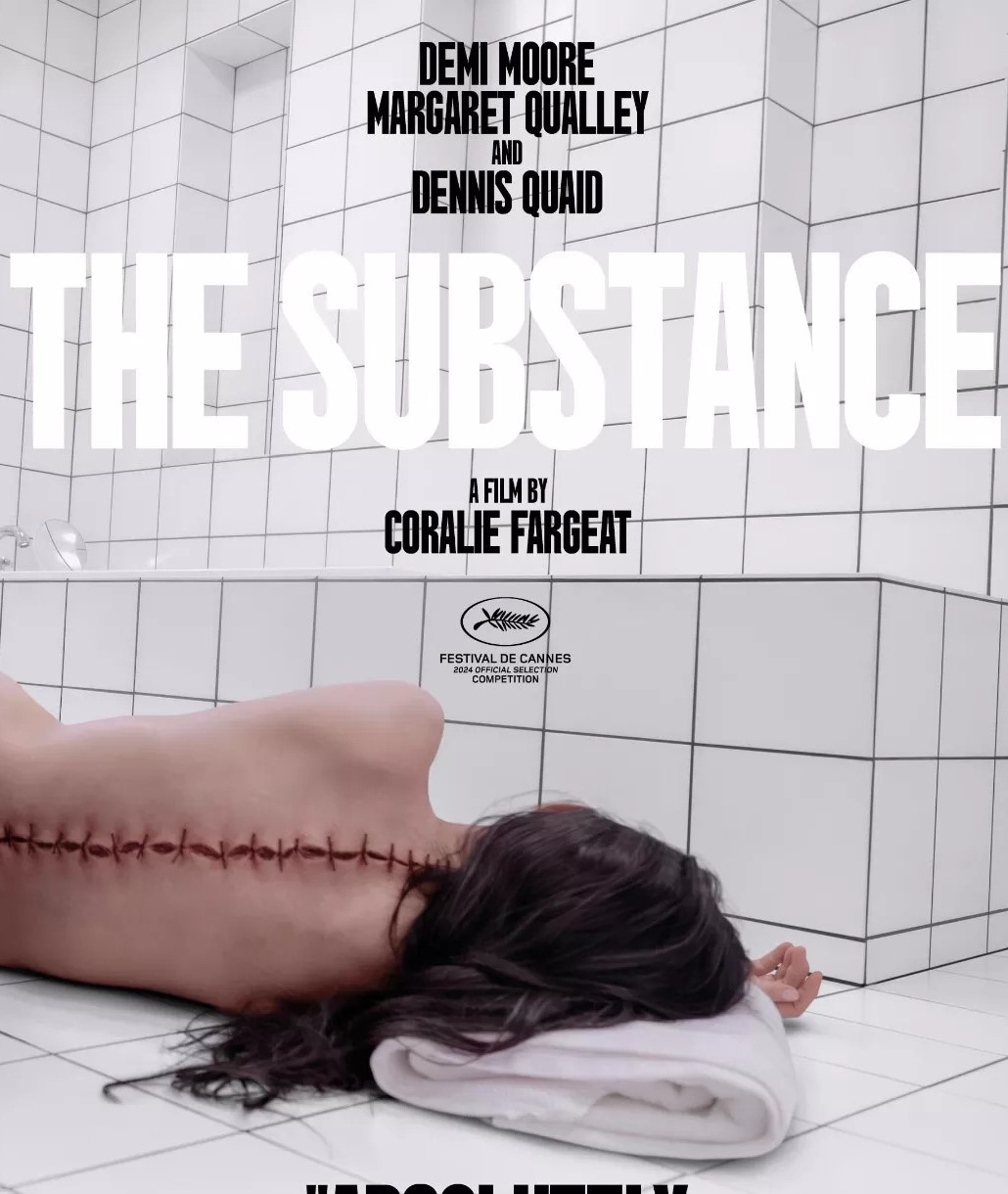
Yep, I couldn’t find any more posters of the movie I’m reviewing so I’m making do with something else from the De Palma back catalog.

Karen (Margo Norton) discovers her lover Chris (Jared Martin), who she believed to be a widower, is in fact not only married but a director of sexploitation films and complicit in a peeping tom scam. He is only doing this, he says, to finance a divorce. She is so in love that, apparently in keeping with the times, she accepts being slapped around. And so in love that, to prevent him wasting his talent by demeaning himself on such shoddy goods, she steals cash from socialite pal Tracy (Ann Ankers) to fund the divorce.

After a fake attack by nutcase Otto (William Finley) with a prop ice-pick, Karen is done to death by a real assailant with a real ice-pick. So then the tale shifts into Rashomon territory as we follow the perspective of different characters in different time periods, each time uncovering a bit more of the truth – or perhaps the fiction, who knows.

It’s quite a bold statement of directorial confidence to play bait-and-switch with the narrative, as characters who seemed resolutely in the background lurch into the foreground and at times the camera jiggery-pokery gets in the way of the narrative jiggery-pokery.

But there’s enough going on to maintain audience interest, even if sometimes the novelty of direction seems an indulgence too far. Possibly, from the contemporary viewpoint, this is better viewed as a historical document, a condemnation of the lure of cinema, how the male hierarchy believed that females were so submissive that they could easily be persuaded, with the offer of very little in the way of a concrete career, to disrobe, and almost taking the attitude that should someone object it mattered little because there were plenty others willing to put ambition before principle.

One of the best scenes is a creepy ogling bank manager, the kind of ugly male who assumes that from his position of authority he is superior to a woman who is way out of his league and far wealthier than he’ll ever be. Though why she is dumb enough to leave her valuables in an unlocked car is anybody’s guess, except for narrative convenience and the opportunity to rack up some Hitchcockian tension when a cop suddenly appears and begins to interrogate the woman the audience knows is a thief.

There’s a DVD around somewhere plugging this as the “lost” De Palma movie, but you can catch it for nothing and judge just how indicative of De Palma’s talent it might be – and how much he was served later by hiring better actors – on Youtube.

The Ballad of Josie (1967) ***

What was viewed as an oddity by the star’s legion of fans has turned out to have considerable contemporary appeal, situating Doris Day as an unlikely feminist icon. It was almost the opposite of her current template. She didn’t sing and the narrative was not driven by romantic mishap. It didn’t endear director Andrew V. McLaglen to his fans either after the tough-guy heroics of Shenandoah (1965). And you might also ask the question – was the feminism watered down by slapstick in order to make it more acceptable to the general audience.

One issue extremely relevant today is pretty much skated over. Josie (Doris Day) kills her drunken husband after setting about him with a pool cue. His death was largely misadventure, he fell down the stairs escaping her intended blow rather than as the result of it. What’s the world coming to, muse the men of the town, if a woman could get away with defending herself against a brute of a husband in such a fashion, given it’s accepted that a wife needs knocked about once in a while.

That she gets off seems less to do with understanding than narrative convenience. It turns her into a widow, and deprived of her son (removed by the threat of legal action by her father-in-law) that means she will come in handy for married men fancying an affair. Unable to find respectable work, she has one catastrophic shift as a waitress. In narrative terms this is intended to act as the ultimate humiliation but in terms of screen treatment it’s convenient excuse for slapstick.

For some reason best known to screenwriter Harold Swanton (Rascal, 1969), she appears best placed to influence the female townspeople on a delicate political point. Whether such influence is due to her getting away with bumping off her husband is never made clear. Turns out that women in Wyoming have the vote and in their battle for statehood the men believe that will count against them and want Josie to get them to agree to drop that right. (History tells us that the good folks didn’t enforce that and allowed women to keep the vote, so three cheers for Josie.)

Those two elements – wife-beating and voting – would make a darn good movie right there but they seem to just dip in and out of proceedings unless in some lame humorous instance. What does take center stage though is Josie’s battle for independence,  not wishing to “be taken care of” by some man. She argues that “you can’t kick under the rug that women are also people” and agin the notion that a woman is “a species of idiot kept in the back closet and spoon-fed three times a day.”

So she decides to become a cattle rancher. That inflames the ire in equal measure of suitor Jason (Peter Graves) and deadly enemy Arch (George Kennedy). And pretty much she is setting herself up for failure until she comes up with the notion of raising sheep rather than cows. The sheep vs. cows argument has been surprisingly well covered in the western – witness The Sheepman (1958), Heaven with a Gun (1969) and, in more recent times, 1923 (2022) – and here they decide the two animals are best kept apart by geographical divide. The sheep are really another narrative device, cue for more slapstick-style sequences, and as you know a sheepdog will tear the britches off anyone foolish enough to get in its way.

It’s somewhat astonishing that within this unwieldy set of confounding narratives that this works at all. And mostly that is down to Doris Day (With Six You Get Eggroll, 1968)  junking her previous persona of feisty female willing to be wooed by ardent or cunning male. While her anger often comes over as more like petulance and you would never mistake her for an Elizabeth Taylor or Maureen O’Hara as a woman not to cross, she does comes out of this with some credit. Peter Graves (Sergeant Ryker, 1968) and George Kennedy (The Pink Jungle, 1968) are merely adequate. Andrew V. McLaglen doesn’t show much gift for comedy apart from the most obvious but presumably he’s to be thanked for even venturing into such difficult territory.

Whether it was, as I said, a deliberate attempt to bring feminist issues to the fore, or to sneak them in under the guise of comedy, is a moot point. The star always claimed she was duped into the role, finding her husband Martin Melcher had signed her up for it without her knowing.

Frankenstein Created Woman (1967) ***

Custom-made for a contemporary audience. How can you fail with a tale about a male brain taking over a female body. Male soul if you want to be strictly correct and metaphysical about it or if you are Martin Scorsese for whom discussion about whether the soul leaves the body after death and exists on some other plane was of the greatest interest. But, yes, so although our hero/villain Baron Frankenstein (Peter Cushing) does create a female instead of a male, and not just with the misogynistic purpose of supplying a monster with a mate, unfortunately in the act of creation the poor woman is saddled with the soul/brain of a man, and, even worse, one with  bloody revenge on his mind.

These days for sure audiences would not have any trouble with female stars carving a swathe through any populace and nobody would require transplanting of  male hormones-soul-brain-whatever to take off on a rampage. But, back in the day, before Hammer went full-tilt-boogie down the lesbian vampire route, it was rare, outside of film noir and exploitationer pictures, for a woman to be so savage. So her actions are viewed with regret rather than roars of approval. But, for once, nobody is taking a torch or axe to the good old Baron.

That’s not all that takes the audience by surprise. The use of a guillotine, ideal for a post-task  dripping of blood, turns out to be widely used in central Europe in the 19th century, hardly surprising since it was a German invention. The movie opens with a young boy, Hans, witnessing his father’s execution on such a device, a point that seems arbitrary but proves pivotal.

The grown-up Hans (Robert Morris) assists Dr Hertz (Thorley Walters) assisting the Baron in some kind of resurrection experiment, the guinea pig being Frankenstein himself. Naturally, for purely metaphysical purposes you understand, the Baron would like to experiment on as barely-dead a cadaver as possible to prove his theories. That this takes a good while to materialize is largely because the narrative has to go all around the houses.

Hans’s lover, disfigured and lame innkeeper’s daughter Christina (Susan Denberg), is taunted by a trio of young swells that results in Hans attacking them. Later, for no particular good reason, the toffs kill the innkeeper, but Hans gets the blame and is sentenced to death. After he is  guillotined, Christina commits suicide by drowning. Both bodies turn up in Frankenstein’s lab at roughly the same time. Complication of course being that a guillotine doesn’t deliver a body intact. Quite how Frankenstein achieves his soul-body transplant is left up to your imagination – the scene promised in the poster is a marketing fiction.

And there’s a touch of Poor Things about the result as Christina wakes up minus scars and disfigurement but with no recollection of her past and needs to be taught who she is. Not that she requires much education in the feminine wiles department and is soon stalking the three young toffs, seducing them with hints of sexual promise before taking savage revenge.

There also a Curse of the Undead element when villagers discover her grave is empty. In fairness to the Baron, he soon realizes what fate had befallen her and tries to ensure that, once her revenge is complete, she can live a different life, although in the way of horror films a happy ending is rarely an option. And in fairness to the Baron the villagers aren’t queueing up to set him alight.

With various subplots to get through, this leaves the Baron out of the picture for considerable periods of time. From a contemporary perspective, there’s a freshness here that will appeal, especially the creation’s desire to discover her purpose in life, her not being bred to fulfil a romantic purpose, and the battle of the male-female will.

Peter Cushing (The Skull, 1965) is as usual splendid, Thorley Walters (Sherlock Holmes and the Deadly Necklace, 1962) presents as an inebriated and impecunious assistant while Austrian Susan Denberg (An American Dream, 1966) does well in the dual role.

Fourth outing in the Hammer series, directed with occasional verve by the reliable Terence Fisher (The Devil Rides Out, 1968) from a screenplay by Anthony Hinds (The Mummy’s Shroud, 1967).

Contemporary appeal and can never go wrong given that it is purportedly one of Martin Scorsese’s favorite films.

Behind the Scenes: Sean Connery, Robert De Niro, Kings of the Flop

Big names were rarely immune to box office upset. Top stars like Sean Connery, Robert Redford, Jack Nicholson, Meryl Streep, Al Pacino and Sylvester Stallone had their fair share of clinkers while the careers of the likes of the much-touted Mickey Rourke fizzled out in the face of audience indifference. Of course, it was the supposed marquee pull of big stars that got them attached to sometimes dodgy projects in the first place, the idea that their presence would be sufficient to generate box office heat.

You’ll probably be surprised to discover that Highlander (1986) – especially given its cult status and the various sequels – was an out-and-out flop in the U.S., rentals of just $2.8 million on a budget of $17 million. But that was a comparative hit compared to other Connery items, Fred Zinnemann’s Five Days One Summer (1982) with only $100,000 in the kitty on a $15 million budget. The Red Tent (1969) was covered in so much red ink it could have qualified as a horror picture, a return of $900,000 on a $10 million cost. Martin Ritt’s mining saga The Molly Maguires (1968) dug out only $1.1 million, around 10 per cent of its budget. Comparatively speaking, Meteor (1979) was a success, $6 million taken in on a $20 million budget.

Connery wasn’t the only big name cashing in on the disaster picture only to encounter disaster at the box office. Income from When Time Ran Out (1980), another in the $20-million range, barely covered Paul Newman’s fee. Other than a big fat check who knows what Jack Nicholson saw in an octet of calamities. The Border (1982) generated just $4.6 million rentals from a $22 million investment, the joke was on Martin Scorsese for King of Comedy with $1.2 million from $19 million, and even the $30 million Midnight Run (1988) failed to cross the line with just $18 million. Prayers and good reviews couldn’t save The Mission (1986) its $8.3 million take barely one-third of its cost, Angel Heart (1987) took about the same level of hit, $6.5 million from an $18 million expenditure.

A dream teaming with Oscar fave Meryl Streep proved a nightmare, not once but twice, Ironweed (1987) smoking out $3.5 million from $27 million, Falling in Love (1984) marginally better with $5.8 million out of $14 million, but all hope dashed on Once Upon a Time in America (1984), $2.5 million retrieved from $30 million spent. Streep on her own, and even with a dark wig, could do little to save A Cry in the Dark (1988) from picking up a paltry $2.5 million from a $15 million undertaking.

When you realize Angel Heart was one of Mickey Rourke’s better performers you can guess at the scale of his problem. The heavily-touted 9½ Weeks (1986) went straight down the plughole, recovering a distant $2.5 million from hot $17 million. Crime didn’t pay either, Michael Cimino’s Year of the Dragon (1985) flamed out at $7.3 million, less than one-third of cost.

Few were exempt. Richard Gere might as well have worn a crown of thorns in King David (1985) – $2.5 million return on $22 million forked out. And he was impotent to revive Sidney Lumet’s Power (1986), $1.7 million from a $14 million handout. Al Pacino served up $200,000 for Revolution (1985), a $28 million turkey. Burt Reynolds was stuck on $3.4 million for his directorial debut the $22 million Stick (1985). Steve Martin billed just $2.3 million for Lonely Guy, a $14 million no-hoper.

Even Clint Eastwood could not always work his box office magic, The Dead Pool (1988), his fifth iteration on Dirty Harry, coming up $1 million shy of its $20 million budget. Bruce Willis in Sunset (1988) lost $17 million. Sylvester Stallone was down $30 million for Rambo III (1988) and $16.7 million for Over the Top (1987).

Michael Keaton in The Squeeze (1987) lost $21 million, Sidney Poitier and River Phoenix in Little Nikita (1988) lost $14.3 million, The Adventures of Baron Munchausen (1988) lost a colossal $48 million hit, Heaven’s Gate (1980) $34.5 million, Honky Tonk Freeway (1981) $23.5 million, Bette Midler in the appropriately-named Jinxed (1982) $13.1 million. The Big Town (1987) starring Matt Dillon lost virtually all its $17 million budget, as much as prehistoric drama Clan of the Cave Bear (1986). Sheena (1984) roped a $23.1 million loss, Supergirl (1984) $24 million, the original Dune (1984) $25.4 million

Francis Coppola will be hoping his forthcoming self-financed $120 million Megalopolis doesn’t go the way of The Cotton Club (1984) – $12.9 million in rentals from $51 million – or One from the Heart (1981) – $400,000 back out of $26 million.

Of course, the best stars have longevity, a bad run doesn’t always spell the end. Connery bounced back big style with The Untouchables, The Hunt for Red October, Indiana Jones, Rising Sun and The Rock. Stallone went back to basics and drew on more Rocky and Rambo and flexed his muscles with The Expendables franchise.

SOURCE: “Film Costs vs Rentals,” Variety, February 21, 1990.

Discover WordPress

A daily selection of the best content published on WordPress, collected for you by humans who love to read.

The Atavist Magazine

by Brian Hannan

WordPress.com News

The latest news on WordPress.com and the WordPress community.