The Union (2024) ****

Wahey! At long last Netflix gets it right (almost). Admittedly, the narrative depends on a very slippery MacGuffin, the kind that would take gold at the MacGuffin Olympics and still come back for more. That aside, it’s got pretty much what audiences are looking for in a fresh take on the hoary old espionage combo. Mark Wahlberg has been long under-rated, can do action (Planet of the Apes, 2001, Uncharted, 2022), caper (The Italian Job, 2003), comedy (Ted, 2012) and drama (Father Stu, 2022). Half the time he’s the driving force behind his projects, 44 credits as producer, which means he’s pretty independent and often turns in the type of picture you think he shouldn’t do or won’t work and sometimes it does and sometimes it doesn’t.

He’s wearing the producer’s jacket for this one and you’d be surprised how well it spins because this is a team effort, very much dependent on the chemistry created with Halle Berry, who you have to agree you wondered where the hell she had gone beyond the lead in the financially disastrous Moonfall (2022), supporting parts in the likes of John Wick 3: Parabellum (2019) and Kingsman: The Golden Circle (2017) and some worthy but ignored pictures.

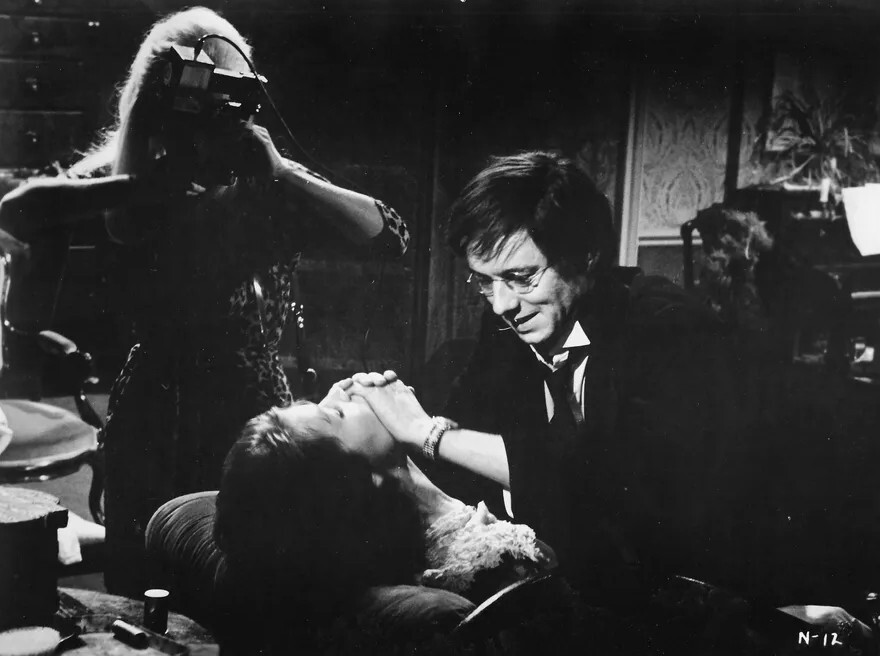
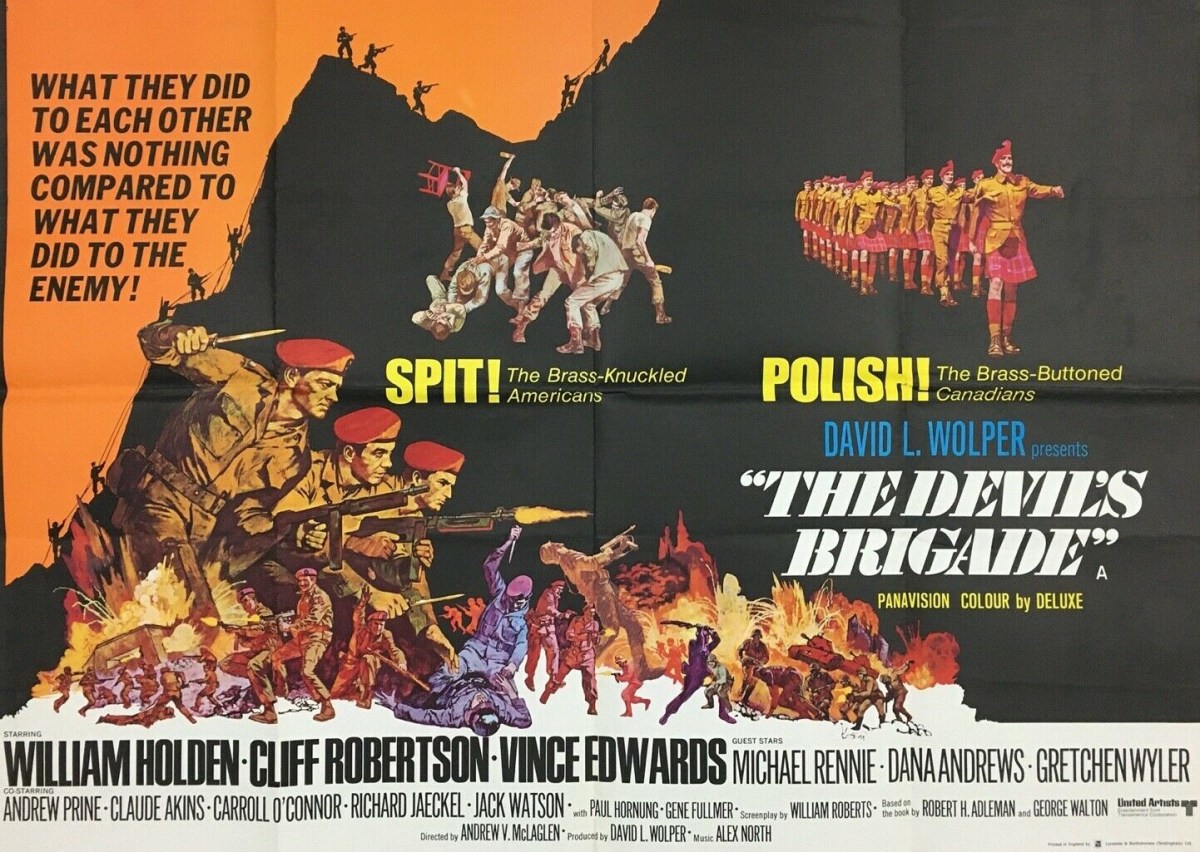
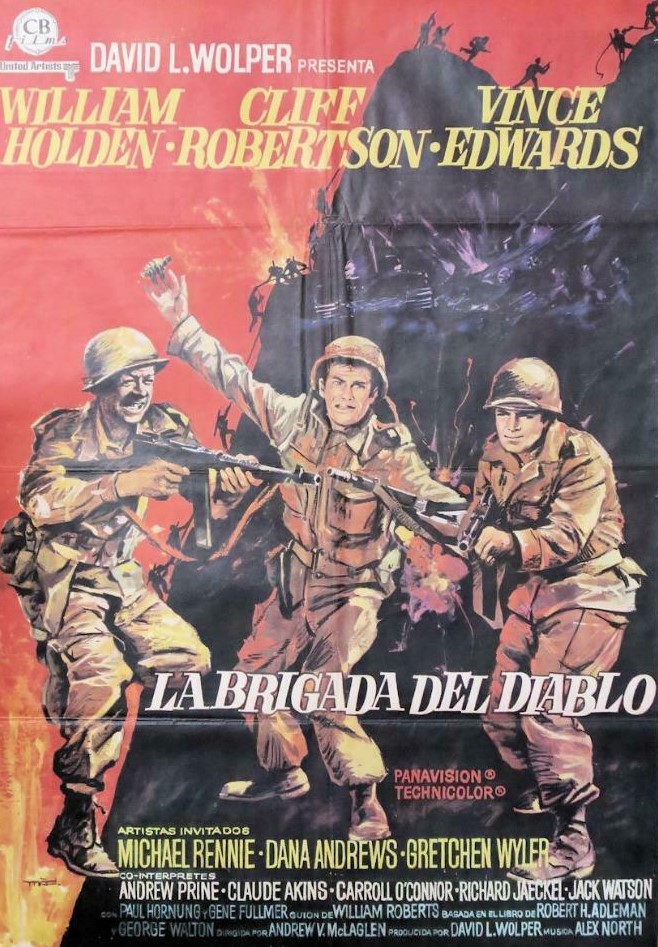
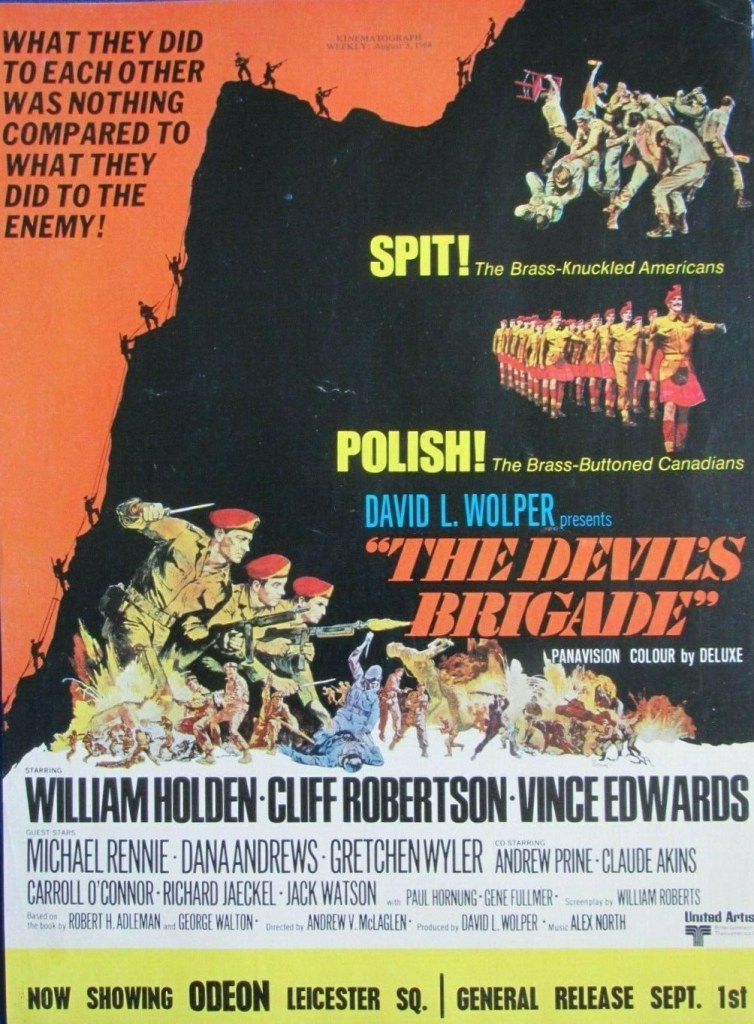
Netflix is pretty mean when it comes to posters so here’s another with Mark Wahlberg
that I reviewed before.

Well, she’s back and yes she’s kicking ass, but that’s not what makes this movie tick any more than Mark Wahlberg punching and shooting. What makes it sizzle is their chemistry, every bit as solid as Glen Powell and Sydney Sweeney in Anyone But You (2023). And if you recall, that worked because Powell and Sweeney bickered all the way through it. Maybe this is what contemporary romance has come to: a quarrelsome couple.

It certainly keeps this pair on their toes. There’s been any number of fish-out-of-water action scenarios that have sunk like a stone (Argylle, anyone?) because the director didn’t hit the correct tone. Here, English director Julian Farino, best known for television, strikes exactly the right tone between incipient romance, action and comedy.

Middle-aged Mike (Mark Wahlberg) isn’t exactly hero material or Brad Pitt. He goes for the cougars, and we first come upon him in the bed of his Seventh Grade school teacher while his mother (Lorraine Bracco) is always one step ahead of her cocky son. We meet secret agent Roxanne (Halle Berry) in the middle of a disastrous operation of which she’s the only survivor.

You have to pass over the logic of how ultra-secret Government agency The Union comes to recruit construction worker Mike, setting aside that Roxanne once had the hots for him. Anyway – MacGuffin alert – the Government has lost the biggest MacGuffin of All Time and have to get it back by way of lots of things that don’t make much sense, but we’ll let that go as well. Anyways, Mark gets trained up in a mighty peculiar and highly entertaining fashion and becomes her sidekick as they hit the MacGuffin trail which takes them to foreign spots.  

I was one of the few people who liked “Moonfall” with Hally Berry so I don’t mind giving it another plug.

There’s supposedly a mole in the Union and the finger points at their boss Tom Brennan (J.K. Simmons) but there’s a whole bunch of other secrets and twists in the mix and not much time what with the frenetic action to work out what exactly is going on beyond said MacGuffin running riot.

But there are some terrific set pieces and Mike’s girder-balancing skills come in handy when there’s even a moment when the action stays relatively still because most of the time it’s hurtling all over the place, chase upon chase, and normally that would spell the kiss of death, as we discovered with Argylle et al, except somehow here, with the chemical interplay between the two leads and supporting characters more interesting than most – look out for Jackie Earle Haley and Jessica De Gouw – and some zingy lines, it’s just dandy.

The ending sets up a sequel so bring it on. Top marks to Mark Wahlberg in his producer’s capacity for seeing this over the line and also, as with Uncharted, not trying to hog the picture and happy to accept that even as the denoted hero he’s going to be outfought and outsmarted a good chunk of the time and better not think he’s ever going to get the better of the Halle Berry character.

Wahlberg is as good as I’ve seen him and this is Halle Berry back on top form, with a lot more to do than in previous action outings where her character got stuck in first gear. As I said, super chemistry between the pair. J.K. Simmons (Spider-Man: No Way Home, 2022) tones it down from his normal over-acting to splendid effect. Jessica De Gouw is one to watch. Joe Barton (Girl/Haji TV series, 2019) and David Guggenheim (Safe House, 2012), in places with their tongues firmly in their cheeks, knocked out the screenplay.

Highly entertaining, even if the MacGuffins are a bit rampant.

Bedtime Story (1964) ***

Con men at opposite ends of the grifter divide face off in a duel over territoriality in the French Riviera. Freddy Benson (Marlon Brando) is a low-level scam artist who is happy to scrounge a meal or talk his way into an innocent damsel’s bed. Lawrence Jameson (David Niven) is his polar opposite, posing as an impoverished aristocrat to relieve gullible women of their wealth, seduction an added extra.

Initially, Jameson gets the better of their encounters until Benson realizes just what a killing the Englishman is making. Initially, too, Benson is happy to pair up with Jameson, although that involves demeaning himself as a supposed mad brother kept in a dungeon, until the Englishman dupes him out of his share. Eventually, they agree a winner-take-all battle – whoever can swindle heiress Janet Walker (Shirley Jones) out of $25,000 shall inherit the shyster kingdom.

Benson takes the sympathy route to the woman’s heart, turning up in a wheelchair, while James adopts a psychological approach, persuading Ms Walker that Benson’s illness is psychosomatic for which he has the cure for the small consideration of $25,000. And then it’s one devious twist after another as the pair attempt to out-maneuver, out-think and generally embarrass the other. Both have a despicable attitude towards women, whom they view as dupes, but it is woman who proves their undoing.

Most comedies rely on familiar tropes and you can usually see the twists coming, but this is in a different imaginative league and once the pair are in their stride I defy you to work out what they will come up with next. It is full of clever quips and small dashes of slapstick and because neither actor chases the laughs but plays their roles straight it is a very effective and entertaining morsel.

Director Ralph Levy in his movie debut knows more than where to just point a camera since he had decades of experience extracting laughs in television with top comedians like Jack Benny and Bob Newhart. Brando (The Chase, 1966) free of the shackles of the angst he normally incorporates into his dramatic performances, looks as if he is having a ball and while teetering occasionally on the edge of mugging never quite overplays his hand.

David Niven (Prudence and the Pill, 1968) was born with a stiff upper lip in his mouth and while this kind of aristocratic character is a doddle for an actor of his stature the portrayal here is much more like the sharpest tool in the box. While oozing charm, Niven exhibits deadly spite.

Screenwriters Stanley Shapiro and Paul Henning had previously collaborated on Lover Come Back (1961) and Shapiro particularly made his bones on the Doris Day-Cary Grant-Rock Hudson axis so it is interesting to see him shift away from the romantic comedy cocoon into something that is a good deal sharper.

Enjoyable and original with excellent performances from the two principles and great support from Shirley Jones (The Music Man, 1962) as the mark and Egyptian Aram Stephan (55 Days at Peking, 1963) as an only too congenial French policeman.

Good fun, stars in top form.

The Lion (1962) ***

For such a harmless picture The Lion raises a couple of troubling issues. The first concerns the titular beast. Doubt if you’d get the authorities these days to greenlight a movie where a pre-pubescent girl was in such close proximity to a full-grown lion. Having as a safety measure two sharpshooters on the sidelines out of camera range, as director Jack Cardiff did here, might not cut it.

Secondly, we’ve got censor double standard. I remember my shocked parents forbidding me from seeing Zulu (1964), a massive hit in Britain, on account of the toplessness of the indigenous females. The censor didn’t slap an X-certificate on that sequence on the assumption that such nudity, in the context of tribal tradition, wouldn’t apparently incite the lewd male gaze. Had this been white breasts on show, in whatever tradition, the censor would not have been so lenient, signifying an inherent racism. Here, surprisingly, we’ve also got female toplessness, somewhat more discreet than Zulu, but coming as a surprise to your reviewer.

Perhaps the oddest feature of the picture is the contradictory message: Africa is wonderful but it’s not the place to bring up a young girl. Certainly not one who embraces the wildness with considerably more conviction than a passing wildlife tourist. As the imdb stub puts it: the young girl Tina (Pamela Franklin) must be brought “back to civilization.”

And there’s a distinctly old-fashioned tint to a storyline that demands the appearance of her father Robert (William Holden), long divorced from wife Christine (Capucine), as the firm male hand required to drag his estranged daughter back to said civilization. Christine’s current partner John (Trevor Howard), grizzled poacher-turned-gamekeeper, former big game hunter now eking out a living as a game warden, appears more sanguine about the girl’s lifestyle but less welcoming to the visitor. Tina has raised the wild lion King from a cub and as their bond is intense she is reluctant to give him up.

Disney would have taken a different approach, buffing up the cuter aspects. That the studio could show adult and child perspective in tandem is instanced by Pollyanna (1960) and in the later The Jungle Book (1967) solved the problem of a young boy becoming too involved with his wild playmates by having an intriguing young girl tempt him away. Or a touch of the Born Free (1966) playbook might have seen Tina simply mutate from childhood to an adult job in the animal preservation business

Instead, playing out in almost literal fashion, are two human male beasts battling it out (though not physically, unfortunately) over the mother with the needs of the child seemingly swept to one side as the love triangle takes hold.

The best scenes concern Robert and Tina, especially her early disinterest in his presence, and her later delight at leading him a wild dance through the jungle and seeing how his terror of her lion pal equates with her complete lack of fear. While John’s role is to keep a grip on poaching, he’s not so friendly to the animals, almost determined to torment them by running his jeep recklessly at or around them to elicit maddened response and alarm the visitor with their wildness rather than their apparent, at a distance, docility.

Perhaps the lack of a punch-up ensures this movie never catches fire. There’s quite a perplexing sub-plot that dictates the outcome. The son  of the local tribal chief has his eye on Tina and during the aforementioned tradition it’s clear the young girl wants to participate in the frenzied dance courtship ritual.

But this kind of tradition is at the polar opposite of civilization as is the tradition that an old man, succumbing to fatal illness, should be left out in the wild to die. Christine intervenes to save him. Meanwhile, believing his father dead, the son sets out to achieve manhood by killing the lion and in the ensuing tangle John kills both young man and lion. The tribal response to the death of their new chief goes unrecorded but Bullit’s action drives Tina towards her parents. With the lion dead, it’s a lot easier to winkle the girl away from Africa and back to civilization.

Plenty of wildlife for your buck, but plot and characters are not a patch on Hatari! (1962) or The Last Safari (1967). William Holden, whose yen for making movies as far away from the U.S. tax authorities as possible was destroying his career, is good value as the estranged father and if you are looking for smouldering then Trevor Howard (The Long Duel, 1967) is your man. Capucine would tee up with Holden – the pair had an affair – again in The 7th Dawn (1964) but she was more effective in the later picture than here.

Jack Cardiff (Girl on a Motorcycle, 1968) directs from a script by Irene and Louis Kamp (The Sandpiper, 1965) based on the bestseller by Joseph Kessel (L’Armee des Ombres/Army of Shadows, 1969).

Might have preferred the Disney version.

The Arrangement (1969) ***

It might have been better if director Elia Kazan had handed over the screenwriting chores for this adaptation of his bestseller about the midlife crisis of advertising man Eddie Anderson (Kirk Douglas). As director he over-angsts the pudding. Anderson’s attempts to juggle wife Florence (Deborah Kerr) and mistress Gwen (Faye Dunaway) coupled with growing disgust at selling a new brand of cigarettes, Zephyr (“The Clean One”), in a way that pointedly avoids their cancer potential, leads to a suicide attempt. 

During convalescence he determines to quit the advertising world and go back to his first love, writing, but in fact he ends up sabotaging his career. Florence represents impossible seduction and conscience. Slinky, in dark glasses, hot-tempered rather than submissive or demure, she accuses him of self-deception in his job. The picture flits back and forth between his various choices – different job, return to wife, settle down with mistress, or what seems his ideal world, cossetted by both Gwen and Florence.

Gwen is an excellent study of the modern woman (of that fast-changing period, I hasten to add), who needs a man for sex but not necessarily love, and can use the opposite sex as ruthlessly as any man. What she actually requires in her real life is quite different to what she seeks in the fantasy love she enjoyed with Anderson, sex on the beach, the buzz of controlling a high-powered man. Florence could be seen as an old-fashioned portrait of the adoring wife except for capturing so well the bewilderment of betrayal.

Kazan conjures up some wonderful images: the tension before the suicide attempt as Anderson plays chicken between two trucks, Gwen emerging wet from the pool to eat dangling grapes or with her legs up on Anderson’s desk, Anderson’s mother lighting votive candles in her house before using the same match for her cigarette, Kerr’s futile attempts to win back her fallen husband, Anderson flying solo.

In parts well-observed and directorially savvy, quick cuts between the present and the past, however it sinks beneath its own self-indulgence. My guess is that author Kazan could not bear to kill off a single one of the characters he had created for his acclaimed novel and the upshot is a vastly over-populated picture, few of whom cast any real light on Anderson’s predicament. So we are not only introduced to mother, dying father, brother, sister-in-law and  analyst but priest and a bucket of clients and guys from the office. And there are some plot oddities – Anderson gets time off apparently to write journalistic pieces – and what is clearly intended as hard-hitting satire of the advertising world does not come off.

Dunaway (Bonnie and Clyde, 1967) is the standout as Gwen, living life according to her own rules, and with an unexpected vision of domesticity but Deborah Kerr (Prudence and the Pill, 1968) does pain like nobody else and is extremely convincing. Strangely enough, I didn’t go much for Douglas (Seven Days in May, 1964). He could have been leading a cavalry charge for all the range of emotions he exhibited. Douglas is no Montgomery Clift (Wild River, 1960), James Dean (East of Eden, 1955) or Marlon Brando (On the Waterfront, 1954) who was Kazan’s first choice. Kazan had not made a picture in six years and it had been eight years since his last hit Splendor in the Grass (1961). Not quite out-of-touch in concept and delivery, nonetheless it was shunned by the Oscar fraternity.

An odd one distinguished by Deborah Kerr and Faye Dunaway.

Do Not Disturb (1965) ***

Takes a good while to come to the boil, perhaps as a result of trying to find the right chemistry between Doris Day and her latest 1960s partner Rod Taylor, after her highly successful pairings with Rock Hudson in three films. Her turn with Cary Grant (That Touch of Mink, 1962) was also successful, but finding another pairing proved dificult. There was a single outing with David Niven (Please Don’t Eat the Daisies, 1960),  a pair with James Garner (The Thrill of It All and Move, Over Darling, both 1963) plus a couple of ventures outside the comedy genre, thriller Midnight Lace (1960) with Rex Harrison and musical Billy Rose’s Jumbo (1962).

One of the curiosities was her billing status, credited below Rock Hudson and Cary Grant, but above all the others. Hudson, Grant, Garner and Niven demonstrated a clear knack for comedy, less so the rest. So one of the elements facing any screenwriter or director was how to make a pairing fizzle. With the top-billed stars, there was more of a guarantee of equal playing time so that they could spark off each other. In the remainder, more reliance on the actress’s pratfalls and slapstick and being some kind of fish out of water.

Here, the Ameican fish is let loose in London waters and good chunk of the opening section is taken up with the oddities of England from an American perspective. First of all, it’s the coinage. A simple transaction with a cab driver soon involves a policeman what with her difficulty in getting to grips with “too many coins”, most of which to add to the confusion often have a nickname, resulting in her paying eight shillings and sixpence for every subsequent ride since that’s the one amount she’s mastered.

Then it’s the problems of driving on the wrong side of the road, using a different gearbox, and the peculiar nature of village names, that either result in a crash or getting lost or both. The difference between electrical plugs lends itelf to electrocution jokes, and the inefficiency of the British telegram system tops off a scene. There’s not much magic even a Doris Day in her prime can add to such standard situations.

She comes into her own somewhat by standing up to the masters of a fox hunt and their snarling hounds. But somehow sheltering a fox appears to give her some affinity with animals and before you know it her country house is awash with unsuitable beasts such as goats.

Still with me? That’s kind of the feeling I had about a third of the way into the picture. So here’s the set-up: businessman Mike (Rod Taylor) and wife Janet (Doris Day) have moved to London. He details her to find an apartment, meaning in central London close to his office. Instead, she lands them in a country cottage, and he immediately resents being so remote from the city and with the extra travelling time plus the evening functions (held in the company flat) in his schedule soon the couple are heading towards estrangement.

He has a pretty secretary Claire (Maura McGiveney) in tow and the functions are meant to be wife-free zones, and when Janet tests out her suspicions she is initially brought down to earth with a thump.

But, of course, suspicion grows horns and with the encouragement of interfering  landlady Vanessa (Hermione Baddeley) she decides to play him at his own game. Once handsome Frenchman Paul (Sergio Fantoni) hoves into view she pretends to take up with him to bring her husband to heel. This involves a romantic trip to Paris where, of course, Doris Day is in her comedic element, desperately trying to avoid the advances of her suitor and getting drunk in the process. Day makes an excellent drunk and inebriation cue for many of her best sequences.

Much of the seduction is driven by the foreigner and the secretary so husband and wife find themselves in one compromising position after the other. However, this narrative ploy means the two stars are often apart and the success of the picture depends on two separate individuals rather than the teaming as with the Hudson and Grant movies. To use the old cliché, it’s game of two halves, three-thirds really since the opening section is mostly the fish out of water stuff. They’re an odd combination from the outset, a wife who does the opposite of what her husband wants then complains when, tied down with business, he doesn’t want to live in the country.

There’s an occasional belly laugh but it seems such routine fare that you wonder why Day got involved in the first place – blame husband Martin Melchior for signing her up.

After original director Ralph Levy (Bedtime Story, 1964) – you could view this as a reversal of Bedtime Story with the principals target for seducation rather than doing the seducing – took ill, George Marshall (Advance to the Rear, 1964) finished it off. Written by Milt Rosen (movie debut), Richard L. Breen (Captain Newman M.D., 1963) and William Fairchild (Star!, 1968)

For completists only.

The Thief Who Came to Dinner (1973) ****

Very unusual entry into the cat burglar subgenre since it plays like a bromantic version of The Thomas Crown Affair (1968), investigator and investigated striking up some sort of relationship, though with an elegant dame on the sidelines to take care of the jewel thief’s sexual needs. Might be surprised to see Bud Yorkin – better known at the time for comedy – helming this classy thriller and Walter Hill, not yet known for tough thrillers, relegated to screenplay duties.

Webster (Ryan O’Neal) quits his job as a computer geek to go into the thieving business. He’s pretty business-like about it, too, setting up a deal with fence Deams (Ned Beatty) before he gets started, and none of this no honor among thieves nonsense. The first break-in, to the house of politician Henderling (Charles Cioffi),  delivers a handy bonus of uncovering documents relating to corruption so Webster’s able to blackmail the victim into providing him with an entrée into high society where he can scope the jewellery on show at various parties, and where he meets Laura (Jacqueline Bisset) who appears to be in the same line of work, if at a much lower level.

We never see Laura at work and mostly she hovers in the background, there’s no angst in this relationship, she’s the kind of thief who steals because she’s the bored kind of rich gal looking for kicks. Most of the thieving is interesting one way or another. On his first gig, though Webster had invested in one of those devices that hold onto the glass once you’ve nefariously released it from the frame, he’s so inexperienced the glass breaks.

Instead of quieting guard dogs with doped meat, he sends in a bitch to distract them. He has to deal with illicit lovers turning up in the middle of a robbery. And, of course, with an amazing diamond on show, he just has to organize a way of stealing it.

So with Laura not providing any of the tension, not the usual refusal to become entangled with a criminal, not just the normal lovers’ tiffs, it’s left to insurance investigator Dave (Warren Oates) to provide the friction. He’s not the confident, cocky, kind of detective and it’s diligence that leads him to consider Webster his main suspect. And so begins the cat-and-mouse element, the cat often subverted since Webster knows when he’s being tailed and can lead Dave a merry dance. But, mostly, Webster seems to enjoy the battle of minds.

Webster, and a psychiatrist would have a field day here, leaves a calling card at every robbery in the shape of a chess move, guaranteed to get him the headlines he presumably craves of “The Chess Burglar Strikes Again” variety, which only serves to ratchet up the pressure on the supposed incompetence of his pursuers.

Dave has the bright idea of getting a chess expert Zukovsky (Austin Pendleton) to take the thief up on the game, thus introducing a splendid subsidiary character primarily for comic effect, Zukovsky unaware that Webster’s moves are plotted by computer.

Dave and Webster do spend a lot of time together one way or another, Webster even visiting the detective when he’s hospitalized, and an element of mutual respect evolves. Once their relationship is established, Laura has less to do than be an accomplice, arranging ingenious escapes and so forth, so she’s not entirely out of the picture.

But the most interesting relationship is certainly between thief and ersatz cop. There are some excellent individual scenes, most of the thefts contain some unique element, the confrontations between the two principals play out like a low-key chess game, while the originally cocky Zukovsky, initially relishing the publicity, is reduced to fury at being beaten by an amateur. Webster’s ex-wife (Jill Clayburgh) relishes the change in his personality.

But mostly this is Ryan O’Neal (The Big Bounce, 1969) at the top of his game. No smirking and no screwball comedy. He’s given a well-developed character to play – physically fit, able to hold his own in the boxing gym, capable of cutting a deal with underworld figures – and the screenplay cleverly withholds the one element that all crime movies fall down on, the explanation of why anyone would turn to crime, so Webster weaves a sense of mystery. Jacqueline Bisset (The Detective, 1968) makes an excellent partner. And this is a stripped-down Warren Oates (The Wild Bunch, 1969), eliminating the meanness or exuberance that were his screen trademarks. Jill Clayburgh (An Unmarried Woman, 1978) has a cameo.

Bud Yorkin, who at the time was producer of the top three television comedies on U.S. television, foregoes comedy for tension and thrills. Walter Hill (48 Hrs, 1982) sneaks in some of the elements that would later become trademarks.

Great watch.

Inherit the Wind (1961) ****

As timely as ever with America seemingly always on the brink of dictating what freedoms people can enjoy. At the time the target was the oppression engndered by McCarthysim, rather than the more basic tale of whether State law could forbid its citizens to talk about evolution. It was set almost a century ago, based on a real-life case, and even now fundamentalists reject Darwin’s theories. Setting aside the context, the principle contested is still the same – not just free speech but the right to be different. You could even argue that scientists and fundamentalists are all agreed these days, that out of nothing came the universe, whether created by a Deity or someone operating a contraption called the Big Bang.

Setting aside the various arguments for and against Darwin’s theory, what we have, nonetheless, is an acting highpoint, a fabulous courtroom battle, of the kind adored by audiences, full of objections sustained, attorneys being warned by the judge, inadmissible evidence, smart remarks and witty rejoinders. This all takes place in a sweltering courtroom, temperature so high that the judge agrees to depart from court procedure and permit the verbal duellists to shed their jackets.

Given further depth because the antagonists, Henry Drummond (Spencer Tracy) and Matthew Harrison Brady (Fredric March), were once the best of pals, political allies, on the same side in the latter’s failed bid for the Presidency, and willing to accept the other’s personal foibles. Probably the first legal drama to accept that outside the courtroom the participants could be friends.

Luckily, most of it isn’t long speeches, but sharp comebacks, plus the detours, twists and turns that come about from concentrating more on the court than on any surrounding action, though there is forbidden romance, pastor’s daughter Rachel (Donna Anderson) defying her father over her love for the accused, schoolteacher Bertram (Dick York) whose teaching is in conflict with the Bible.

The most outraged denizens of the town get into a right tizzy, marches, religious songs, protest, but that’s leavened by commercial interests, a bank manager worrying that the town being ridiculed by those cleverer folks back east will harm his business, hoteliers, sideshow operators licking their lips at the financial bounty of reporters and gawkers descending on the town.

This is as you’d like to see Spencer Tracy, not the silent judge of Judgement at Nuremberg (1961), personality reined in by the weight of his decisions and the need to do right by those accused of even the most heinous of crimes, but the exuberant character, confident, up for battle, able to fend off any criticism and come back to any witticism at his expense with stinging repartee.

Fredric March, too, has a ball with a loudmouth character, convinced of his infallibility (except of course in terms of the Presidential Race), apt to stuff his face at dinner, but still with an intellectual thrust capable of parrying anything Tracy can throw at him. Tucked somewhere in between is weaselly reporter E.K. Hornbeck (Gene Kelly) whose newspaper has hired Drummond to defend Bertram in the hope of filling the front pages for days with the Trial of the Century (taking the prize from Leopold and Loeb the year before – both cases in real-life handled by Clarence Darrow).

Harry Morgan (The Flim-Flam Man/One Born Every Minute, 1967) plays the snipppy judge trying to maintain order while Claude Akins (Claudelle Inglish, 1961) the hellfire preacher. With so many interesting characters on parade, there’s never a dull moment, especially with each actor trying to wring every ounce of drama and/or pathos from their part.

Director Stanley Kramer (Judgment at Nuremberg) looks as if early on he made up his mind to give the actors their sway. There’s no reining in, even in the early scenes, with the populace up in arms and carrying very professionally-made signs and banners (no handwritten scrawls here, no sirree). And once Tracy and March hit their stride, it’s all an audience can do to sit back and admire. Sentiments expressed will still strike a chord, but, mostly it’s a testament to two great actors at the top of their game.

If you only remember March from the likes of The Condemned of Altona (1962) or Seven Days in May (1964) you should know he was a huge marquee attaction in his day, double Oscar-winner (and three nominations besides), as at home in swashbucklers like The Buccaneer (1938) as drama and comedies, leading man who could more than hold his own against top female stars – Greta Garbo (Anna Karenina, 1935), Katharine Hepburn (Mary of Scotland, 1936), Merle Oberon (Dark Angel, 1935) and Janet Gaynor (A Star Is Born, 1937).

Written by Nedrick Young (The Train, 1964) and Harold Jacob Smith (The McMasters, 1970) from the play by Jerome Lawrence and Robert E. Lee.

A terrific watch.

The Dark at the Top of the Stairs (1960) ****

Surprisingly frank, for the times, exploration of a failing marriage that tackles sexuality, racism, bullying, teenage angst. In those days there was no such concept as midlife crisis, so the general attitude of grin-and-bear-it results in a melancholy that suffuses the picture. Adapted from the Broadway hit by William Inge (Splendor in the Grass, 1961), provides more insight into American family life than the more souped-up soap operas of the Peyton Place variety. Except for crisis escalating action, could well have been misery memoir.

Opens with a surprisingly tender scene that’s again pretty raw for the period. In the morning, salesman husband Rubin (Robert Preston) strokes the arms and face of waking wife Cora (Dorothy McGuire), clearly hoping to initiate sex, when she abruptly rebuffs him. Before he sets off on a week-long business trip he tries to toughen up bullied friendless overly-mothered son Sonny (Robert Eyer), afraid of the dark, and bolster the flagging confidence of inhibited teenage daughter Reenie (Shirley Knight), only succeeding in inadvertedly punching his son in the face and triggering a row with his wife.   

But, without warning, he’s fired from his job and not equipped to compete in the employment arena with a flood of younger people with college degrees and greater stamina. Pride prevents him owning up to Cora, rejection sends him to the bottle and a lady friend, hairdresser Mavis Pruitt (Angela Lansbury) who scandalizes the town by (and this dates it) always leaving the top button of her blouse open. Cora plans escape, hoping to go and live, temporarily until she can find a job, with bossy sister Lottie (Eve Arden) in Oklahoma City.

Meanwhile, following an accidental meeting, the hesitant shy Reenie strikes up a rapport with the more outgoing confident Sammy (Lee Kinsolving). Lottie isn’t so keen to help out her beleaguered sister. When Rubin finally returns after a four-day absence it’s to a welter of home truths.

He still can’t bear to admit the loss of his job. The uneasy truce is shattered when Sammy is chucked out of a party he attends as Reenie’s escort at the country club for being a Jew. Subsequently, he attempts suicide and dies, leaving Reenie in shock. Cora determines to find out for herself the rumors concerning Rubin’s affair. But it turns out, although Mavis is deeply in love with Rubin, they’ve never slept together, providing Cora with a second chance to make her marriage work.

What distinguishes the movie is the revelatory dialog you’d expect from an award-winning playwright like Inge. Characters reveal their inner selves, not always with prompting, and not always in argument, and such lines often bring characters to life. Included in that are some of the subsidiary characters.

For example, Ralston (Ken Lynch) whom Rubin openly dislikes because he successfully got away with an insurance scam that turned him into a millionaire, hides away in the back room of a pharmacy, drinking away his guilt. “I know what I am. Who I am,” says Ralston, “the town scandal.” And you think this is maybe just a passing character, but this is the guy, guilt or no guilt, who enforces the country club ban on admitting Jews.

The controlling Lottie suspects her husband’s need for a long walk in the evening is to get away from the sound of her voice. Unusually, the sisters broach the subject of intimacy. Lottie confesses, “I never enjoyed it the way most women say they do.”

What’s keeping Cora and Rubin apart is their lack of intimacy, caused by their battles over money, the husband refusing to get into debt to satisfy his wife’s yearnings not necessarily for the finer things of life, but to avoid the endless scrimping and saving, getting maximum wear from a dress for the growing Reenie by turning it into a skirt.

Rudin laments, “Was a time you liked what I had…If you can’t remember sowing all those wild oats with me, I just plain give up.” Finally, they get to the crux of the matter (again bold language for the times). Rubin asks, plaintively, “How come you don’t enjoy sleeping with me any more?” Retorts Cora, “I can’t fight with you all day and then go to bed with you at night.”

If there is a flaw it’s some attitudes that will jibe with contemporary audiences. “If I had a real wife,” argues Rubin, “I wouldn’t have to go high-tailing it to Mavis Pruit.” And I winced at this particular line: “I wished someone loved me enough to hit me,” says a wistful Lottie hearing that, for the first time in his life, Rubin slapped his wife. Lottie clearly equates manliness and ardor with such violence.

But on the whole, the dialog is a cut above. I’m not sure how much came directly from the play itself and how much was added by screenwriters Harriet Frank Jr and Irving Ravetch (Hud, 1963). The opening certainly, such a situation might be mentioned in the play but a bedroom scene like that would never be staged.

More at home in the theater than on screen Robert Preston (he only appeared in five pictures the whole decade including The Music Man, 1962) exudes such energy as the salesman that you can see how denial of sex would destroy his self-confidence. Dorothy McGuire (Swiss Family Robinson, 1960) is excellent as the wife trying her best not to end up as a put-upon stereotype. Shirley Knight (Petulia, 1968) was Oscar-nominated, Angela Lansbury (The Manchurian Candidate, 1962) came across as too wise to be a loose woman, and Eve Arden (in her only movie of the decade) impresses as the bossy sister.

With such terrific material and an excellent cast, Oscar-winning director Delbert Mann (Buddwing/Mr Buddwing, 1966) doesn’t need to do much to guide this one home.

Well worth a look.

Africa – Texas Style / Cowboy in Africa (1967) ***

Falling into the unusual category of Saturday afternoon matinee with a message, American cowboy Jim Sinclair (Hugh O’Brian) and sidekick Jim Henry (Tom Nardini) hightail it across the Atlantic to help the wildlife conservation efforts of game rancher Wing Commander Hayes (John Mills) who faces sabotage at every turn by another rancher Karl Bekker (Nigel Green). It combines Hatari!-style action and interesting storylines with Disney-animal-cuteness (a domesticated zebra called Pyjama Tops).

To get the conservation element out of the way – Hayes is concerned that letting animals roam free will result in overgrazing, turning the countryside into a dustbowl and endangering a variety of species. That Hayes is already talking about animals becoming extinct is way ahead of the common perception of Africa at the time. His plan is to round up the wild animals and fence them in, this kind of ranching preventing foodstocks becoming depleted. Bekker’s objection is that wild animals could carry infections such as East Coast Fever that will endanger his herd.   

Romantic interest is supplied by the already-engaged nurse Fay Carter (Adrienne Corri) while orphan Sampson (Charles Malinda) tugs at the heart strings. There is a fair measure of authenticity, glorious aerial shots of elephants and buffalo and other species, tribal dances by the Masai while the Sinclair/Henry rodeo-style method of catching the wild animals, with lasso rather than giants nets as in Hatari!, ramps up the excitement quotient, not least when Sinclair goes one-on-one with an enraged rhino. As you might expect, there is also ample opportunity for Sinclair to encounter a deadly snake and crocodile and it wouldn’t be an African picture without a stampede. 

Although villainous, Bekker is not without logical argument, not just the fear of infection which would decimate wildlife as much as soil erosion, but his own fears that taming wild animals would upset the balance of nature, and, on a personal level, the lack of respect for territorial rights. Of course, when push comes to shove, he resorts to rifle and fist to settle arguments.

Atmospheric, well-made, engaging and at times exciting, there is enough going on here to keep the picture ticking along – a hunt for a lost and bewildered Sinclair, questions about home, and the spectacular wildlife rodeo show. Unlike Born Free (1966) and any other animal picture for that matter although wildlife takes narrative center stage we are not subjected to countless cute four-legged specimens.

Hugh O’Brian (Ambush Bay, 1966) could be a latter-day Tarzan (or more correctly Jungle Jim since he is never in loincloth) but Scottish actress Adrienne Corri (The Viking Queen, 1967) is not a jungle adventuress but a principled counter to his easy manner. With every chance to rely on the stiff-upper-lip of an English war hero, John Mills (A Black Veil for Lisa, 1968) does anything but and turns in another engaging performance and if you are looking for a decent chap to deliver a conservation message he is definitely your man without being obsessively annoying. Nigel Green (The Skull, 1965) adds to his portfolio of interesting characters as a smooth-talking rough-edged bad guy while Tom Nardini (Cat Ballou, 1965) impresses. Look out for a fleeting glimpse of Hayley Mills at the start.

Director Andrew Marton, who had been involved in helming The Longest Day (1962) and second unit director of Ben-Hur (1959) and Cleopatra (1963), was something of a wild animal specialist with Clarence, the Cross-Eyed Lion (1965) in the kitty as well as a dozen episodes in total of television series Flipper (1965) and Daktari (1966). But he is at home as much with the human aspects of the story as with the animal. Producer Ivan Tors was a sometime rival to Walt Disney in the family film market with Flipper (1963) and Zebra in the Kitchen (1965) as well as small-screen Flipper and Daktari.

Mistakenly described on imdb as a TV pilot, this was a genuine feature film that happened to produce a television spin-off series Cowboy in Africa. It was screened for the trade on May 5, 1967, reviewed in the feature film section of Variety on May 17, and its box office figures can be tracked through Variety – opening in San Francisco and Kansas City in June, for example, Baltimore in July, Detroit in August and Boston and Louisville in September. In some situations it was double-billed with El Dorado (1967).

If only all message pictures were this much fun.

The Long Goodbye (1973) **** – Seen at the Cinema

Indulge me. Perhaps the quirkiness that runs through The Long Goodbye is infectious. Here’s my question: can you buy matches loose in America? Do they sell them in bags and not boxes? If boxes, I’m assuming there’s no striking surface on one side of the box. Because here’s the niggling thought that was running through my mind all during the picture. I imagined the pockets of private eye Philip Marlowe (Elliott Gould) bulging with loose matches. Because if they were in a carton, like the cigarettes he appears to chain-smoke, wouldn’t he have to take them out of the box and empty them into his pockets or take them out one at a time from the box but not use the striking edge because, apparently, it’s just a lot easier to strike the match off any solid surface that’s handy – walls, tables, floors. Just asking.

I’m also asking; is he a lush? Or is the celebrated chasing after cat food opening just an attempt to find something as quirky as the credit sequence in Harper (1966) where a hungover Paul Newman re-uses his coffee grounds. Because Marlowe wakes up at half past three in the morning fully dressed and I’m guessing that’s not because he fell asleep reading a book.

It’s rammed full of “characters,” Dr Verringer (Henry Gibson) has a very curious running gait,  there’s a gateman who can’t let a car pass without lapsing into an impression of a movie star and for neighbors Marlowe has the “Goodbye Girls” – as they’d be marketed in a Bond or spy film – a bevy of stoned topless yoga-loving females whose friendly overtures Marlowe has clearly resisted, providing him with some kind of moral rectitude.

Of course, this isn’t noir and you could argue this updated version doesn’t come close to the character author Raymond Chandler envisioned. There’s no mean streets here, not unless they’ve been tucked away somewhere between the very sunny side of Los Angeles and the upscale Malibu beach houses.

What is it is – is original. Set aside Marlowe’s mumbling and the menagerie of animals assembled, not just the cat but a fierce guard dog that scares Marlowe to death and mutts  trained, presumably, to walk into the middle of a highway and ignore the honking horns, or to shag each other as if auditioning for porn.  

Once the movie gets going, Marlowe is a proper detective in an immoral world where corruption doesn’t even have the decency to slink under the surface and self-indulgence is all. He’s got a case to crack – initially tracing missing Hemingwayesque alcoholic writer Roger Wade (Sterling Hayden) – but he’s not on the clock when he decides to investigate the supposed suicide of old buddy Terry Lennox (Joe Boulton) accused of the murder of his wife.

He’s a pretty clever snoop, finding ways into places he’s barred from entering, following suspicious people he’s not being paid to follow and, in the end, delivering his own kind of justice. There’s betrayal a-plenty, misbehaving wives and husbands, cops inventing their own rules. But mostly he’s a good guy adrift in a different wealthy immoral world. And there’s more humor than you’d expect. Some pretty good lines and sight gags. The hood who’s meant to be keeping his eyes on Marlowe fetching the binoculars so he can spy on the topless girls, a gangster whose preferred mode of apology is to strip stark naked.  

And there’s a restless camera. It can’t stop moving, prowling around the characters who are mostly static, as if everyone has something to hide And just when you think, missing man found, this is all too aimless for words, there’s an exceptionally sharp crack of violence as gangster Marty (Mark Rydell) smashes a bottle across the face of his girlfriend (Jo Ann Brody) in the hunt for his missing loot. Contrapuntal is the suicide of Roger Wade, sucked into the surf, wife (Nina van Pallandt) and Marlowe not just helpless, but in trying to save him, in danger of drowning themselves.

If it wasn’t for people roughing him up, cops and gangsters alike, Marlowe might well have spent his time hunting for cat food. As it is, his antenna are up, he’s sniffing around, and pretty capable, as a solid private dick should be, of putting two and three together and working out what the hell has been going on. There’s a noir twist. Usually it’s the dame pulling a fast one on the hero, he’s it’s an old buddy.

There’s enough quirkiness to get you hooked and keep you thinking you’re watching an offbeat detective story, when, really, the quirkiness is some kind of stylistic MacGuffin to lure you into a more straightforward and very satisfying sleuth picture. You could be fooled into thinking director Robert Altman (M*A*S*H, 1970) had tossed away the detective story rule book, but he’s not, he’s just reframing the character for a different era.

There was a trend for movie directors to act – John Huston (The Cardinal, 1963) a repeat offender, Roman Polanski going in for a bit of nose-slitting in the same year’s equally stylistic Chinatown, and here we have Mark Rydell (The Reivers, 1969) who had been an actor in the 1950s.  

But he doesn’t build his character from the inside as neatly as Sterling Hayden (The Godfather, 1972), adrift on a sea of booze, and one-time folk singer Nina van Pallandt who keeps her femme fatale credentials close to her chest. Admittedly, Elliott Gould (Bob & Carol & Ted & Alice, 1969) can sometimes be an acquired taste, but here he fits the groove perfectly. Don’t let the exterior, the mumbling, the self-absorption, fool you, this is the classic detective re-born.

Leigh Brackett (Hatari!, 1962), who had a hand in the original The Big Sleep (1946), wrote the script with an occasional improv. But this is very much a director’s picture.

These days, this would be called a re-boot, and it set a standard for the re-boot that’s never been matched, taking a much-loved screen character and refashioning him in a way that not only works but makes you think Humphrey Bogart could have done a better job.

A flop at the time – a paltry $1 million in rentals at the U.S. box office, less (barely $800,0000) abroad with the $1.5 million from television not enough to keep the red ink at bay – this has now, rightly, has come into its own as a majestic directorial triumph. Some credit due , too, to producer Elliott Kastner who made Harper and backed Altman’s singularly alternative vision.

I saw this at the cinema not for some kind of anni reissue (it’s year late for that) but just because reviving old pictures is what arthouses do.

Terrific.

Discover WordPress

A daily selection of the best content published on WordPress, collected for you by humans who love to read.

The Atavist Magazine

by Brian Hannan

WordPress.com News

The latest news on WordPress.com and the WordPress community.