I am a published author of books about film - over a dozen to my name, the latest being "When Women Ruled Hollywood." As the title of the blog suggests, this is a site devoted to movies of the 1960s but since I go to the movies twice a week - an old-fashioned double-bill of my own choosing - I might occasionally slip in a review of a contemporary picture.
These days you need the impetus of an anniversary or the accompaniment of a live orchestra for an old movie to do the rounds on the big screen apart from perennials like It’s a Wonderful Life (1946) at Xmas and Casablanca (1942) on St Valentine’s Day. In attempting to turn a revival into an “event” these are mostly treated as one-screening-only affairs such as was the case with Dr No (1962) on the occasion of its 60th anniversary. While that milestone marked the birth of the Bond phenomenon, it ignored another landmark, one that played a significantly more important role in the 1960s than virtually any other picture – the rebirth of the reissue/revival.
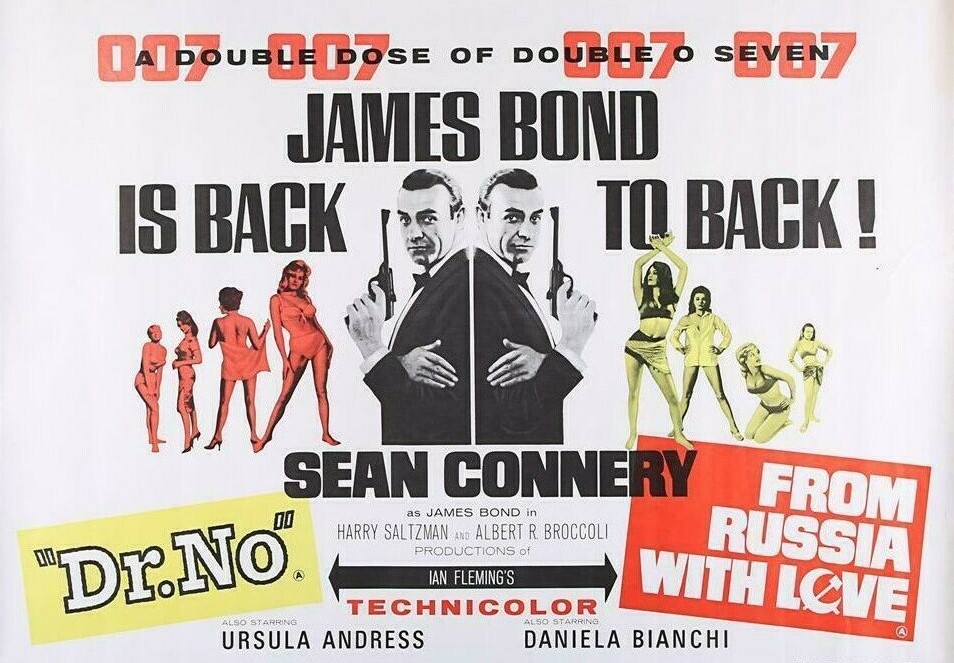
For the first James Bond double bill Dr No/From Russia with Love which appeared in 1965 in the wake of Goldfinger (1964) created a new market for old pictures, triggered the “threeissue” bonanza, boosted the coffers of virtually every studio in Hollywood and saved many an exhibitor from the perennial product shortage.
Quite how momentous this particular double bill was can be seen from the fact that no reissue beyond Gone with the Wind (1939), irregularly revived, had ever featured in the annual top ten at the box office. Dr No/From Russia with Love was the first oldie ever to reach fifth on the annual rankings, beaten in the 1965 year-end chart only by Mary Poppins (1964), The Sound of Music (1965), Goldfinger (1964) and My Fair Lady (1964). It earned more than Peter Sellers-Peter O’Toole smash What’s New Pussycat (1965), James Stewart in Shenandoah (1965), Richard Burton and Elizabeth Taylor in The Sandpiper (1965), Cary Grant comedy Father Goose (1965), Frank Sinatra war picture Von Ryan’s Express (1965) and comedy western Cat Ballou (1965).
Reissues had come to rescue of beleaguered studios in a major fashion several times before, most recently in 1948 and 1952 but in the 1960s exhibitors were wary of giving old movies a big-screen berth for fear that this was a mere prelude to an appearance on television and being faced with angry moviegoers duped into paying for a film they could have seen a few months later for nothing. So except for the umpteenth revival of Gone with the Wind in 1961, and Bridge over the River Kwai (1957) re-released in the wake of Lawrence of Arabia (1962) in 1964, few reissues had been welcomed by the marketplace.
In fact, there was no solid reason to bring back either of the first two Bond pictures in the United States, if judged by their initial box office. The sensational figures achieved in Britain were not repeated across the Atlantic, Dr No bringing in just $2 million in rentals, From Russia with Love double that, but neither in the box office ballpark that might automatically justify a rerun. In fact, both pictures had already been re-booked in cinemas, and as double-bills, though not with each other, but engagements of From Russia with Love/The Definat Ones, Dr No/The Manchurian Candidate and Dr No/Toys in the Attic elicited such low response the experiments were quickly terminated.
Nor was the idea precipitated by Goldfinger hitting the mother lode on its U.K. launch. What made United Artists executives in Hollywood sit up were not Goldfinger’s whopping figures. In the same week, however, that Goldfinger opened in London’s West End at the Odeon Leicester Square, Dr No was re-booked into the Leicester Square Theatre across the street and From Russia with Love into the Pavilion just around the corner. Neither oldie impinged on the audience for the new Bond, instead attracting their own avid moviegoers, desperate for a second chance to see the films that kicked off the whole phenomenon. In due course, Dr No and From Russia with Love were shunted onto the Rank circuit where they played as a double bill to great success.
When the double bill was announced as a prospective program in the United States, exhibitors were beating down UA’s door, despite the stiff terms demanded, a 60 per cent share of the receipts. That was an extraordinarily high sum for a reissue, especially one that would allow exhibitors time for only one showing every evening rather than the two showings afforded a single bill.
Unlike Britain, UA was disinclined to run the risk of the two oldies cannibalising demand for Goldfinger. So the double bill was held back until April 1965, five months after Goldfinger had opened, long enough for that picture to have been milked in first run, and long enough also for it to act as an effective trailer for the new pairing.
The double roared out of the traps, collaring, in first-run single-cinema opening-week debuts, $57,000 in Chicago, $42,000 in Philadelphia, $40,000 in Dallas, and $36,000 in Cleveland. The Bond reissue bandwagon proved unstoppable. These were the kind of figures attained by box office home runs. Second weeks drops were relatively small. The double bill grossed $1.3 million (equivalent to $11.9 million today) from 103 cinemas in its first week. When it entered multiple run in New York, the only film that did better over the course of the whole year was Goldfinger. From 26 houses Dr No/From Russia with Love gobbled up $649,000 – an incredible per-theatre-average even at 1965 prices – and the second week was $264,000. Total gross over four weeks: £1.29 million. Demand was so high that in June UA ran out of prints – 400 were in circulation. The Los Angeles showcase (multiple run) produced $647,000 in three weeks from a maximum of 30 houses.
The double bill notched up $8 million in rentals, virtually solid profit, since costs had long since been covered and the movies sold themselves. As much as UA realized that each new Bond film was a potential goldmine, so they also quickly understood the rich seam available from bringing back the older movies.
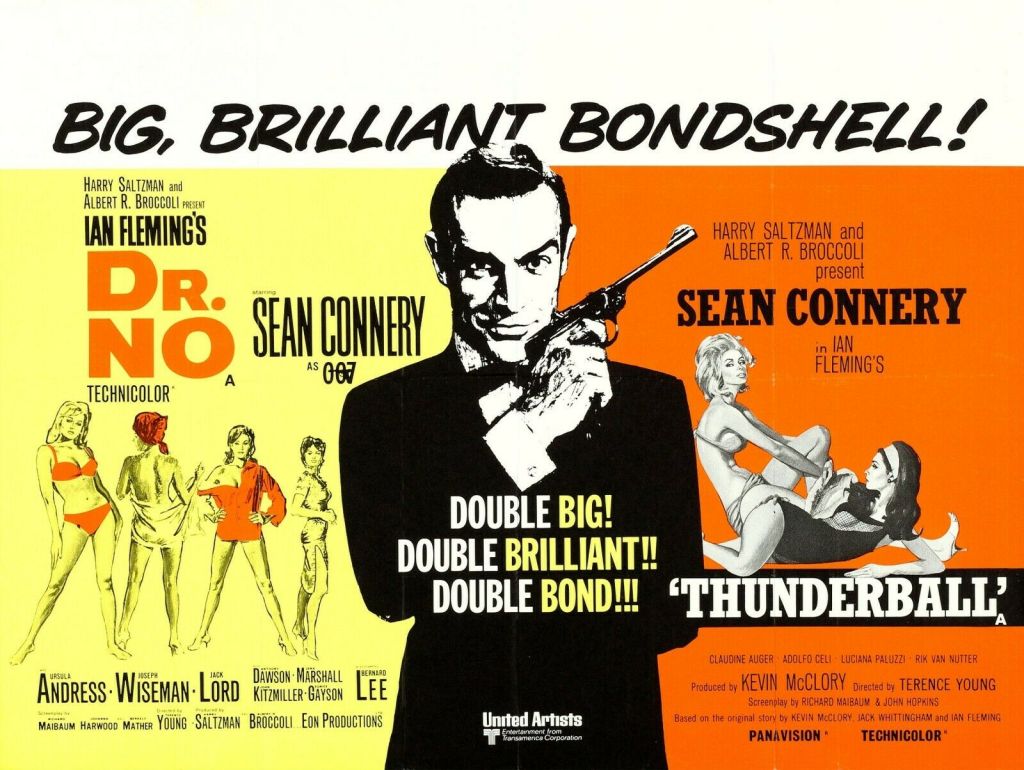
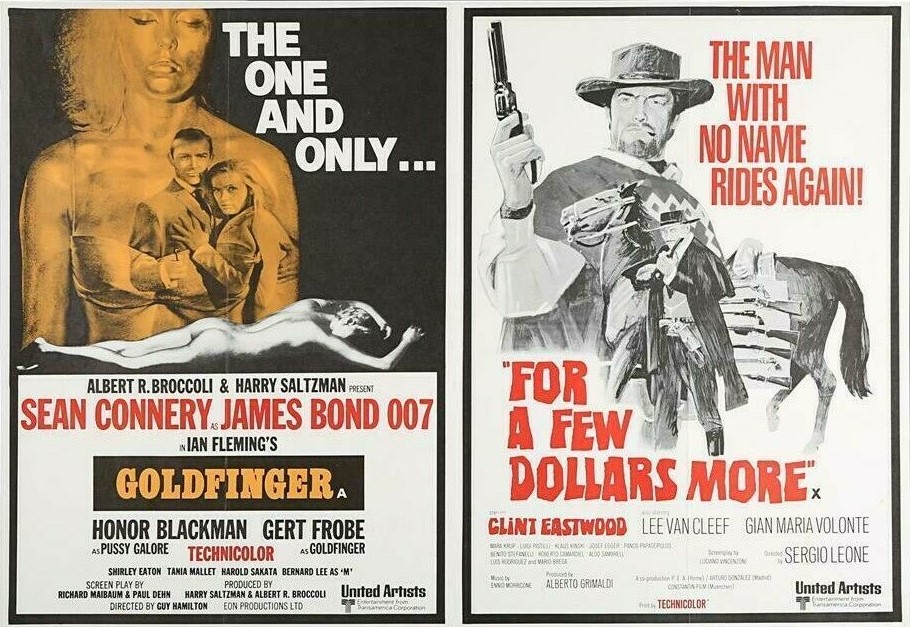
UA tested out the new idea the following year, this time with Goldfinger/Dr No. The result was $4.6 million in annual rentals, enough for seventeenth spot in the annual chart. Further pairings appeared – Thunderball (1965)/From Russia with Love and Goldfinger/Dr No in the wake of You Only Live Twice (1967). UA took the double bill reissue to its logical conclusion by dualing the “Dollar” features – A Fistful of Dollars/For a Few Dollars (both released in the U.S. in 1967) followed by Hang ‘Em High (1968)/The Good, the Bad and the Ugly (U.S release 1967). UA took the idea in a different direction by doubling up You Only Live Twice and The Good, the Bad and the Ugly. In fact, in 18 months between April 1968 and September 1969, UA sent its entire portfolio of Bond and ‘Dollar’ films back into the marketplace. The “threeissue” – a movie returning three times to cinemas in a short space of time – was born.
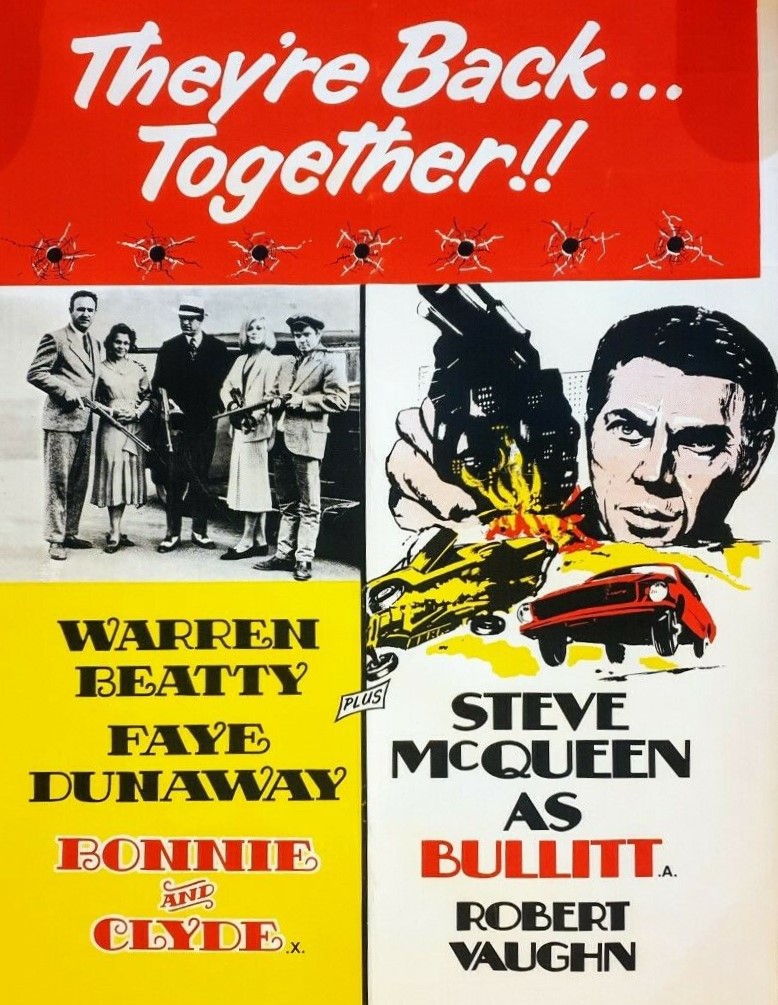
UA’s bounty created a new template for Hollywood, the opportunity to pair known winners not long after the originals had first been seen, rather than the traditional delay of seven-to-ten years. For some studios this was films with an Oscar link – Columbia’s Cat Ballou and Ship of Fools (1965) combo racked up $1.3 million in rentals, Warner Brothers with Cool Hand Luke (1967) and Wait until Dark (1967). For others the twinning was an attempt to prolong box office as with Bonnie and Clyde (1967)/Bullitt (1968) or arthouse breakouts like Belle de Jour (1967)/A Man and a Woman (1966).
In the 1970s when there was an even greater product famine the UA speedy reissue experiment was vital to studio finances. After initial release, Butch Cassidy and the Sundance Kid (1969) generated $24.8 million in rentals from two separate reissues. Brought back three times were Billy Jack (1971) with an extra $25.2 million, The Exorcist (1973) with a bonus of $21.4 million and Blazing Saddles (1974) with $26.4 million.
In other words around $100 million in extra revenues from just four pictures in the 1970s thanks to studios adopting the speedy reissue template initiated by United Artists for James Bond. At a rough estimate additional rentals (i.e. the money paid straight into studio coffers) from reissues in the 1960s and 1970s could easily have reached the half a billion mark.
SOURCE: Brian Hannan, Coming Back to a Theater Near You. A History of the Hollywood Reissue 1914-2014 (McFarland, 2016). Over 250,000 words devoted to the only history of the reissue.
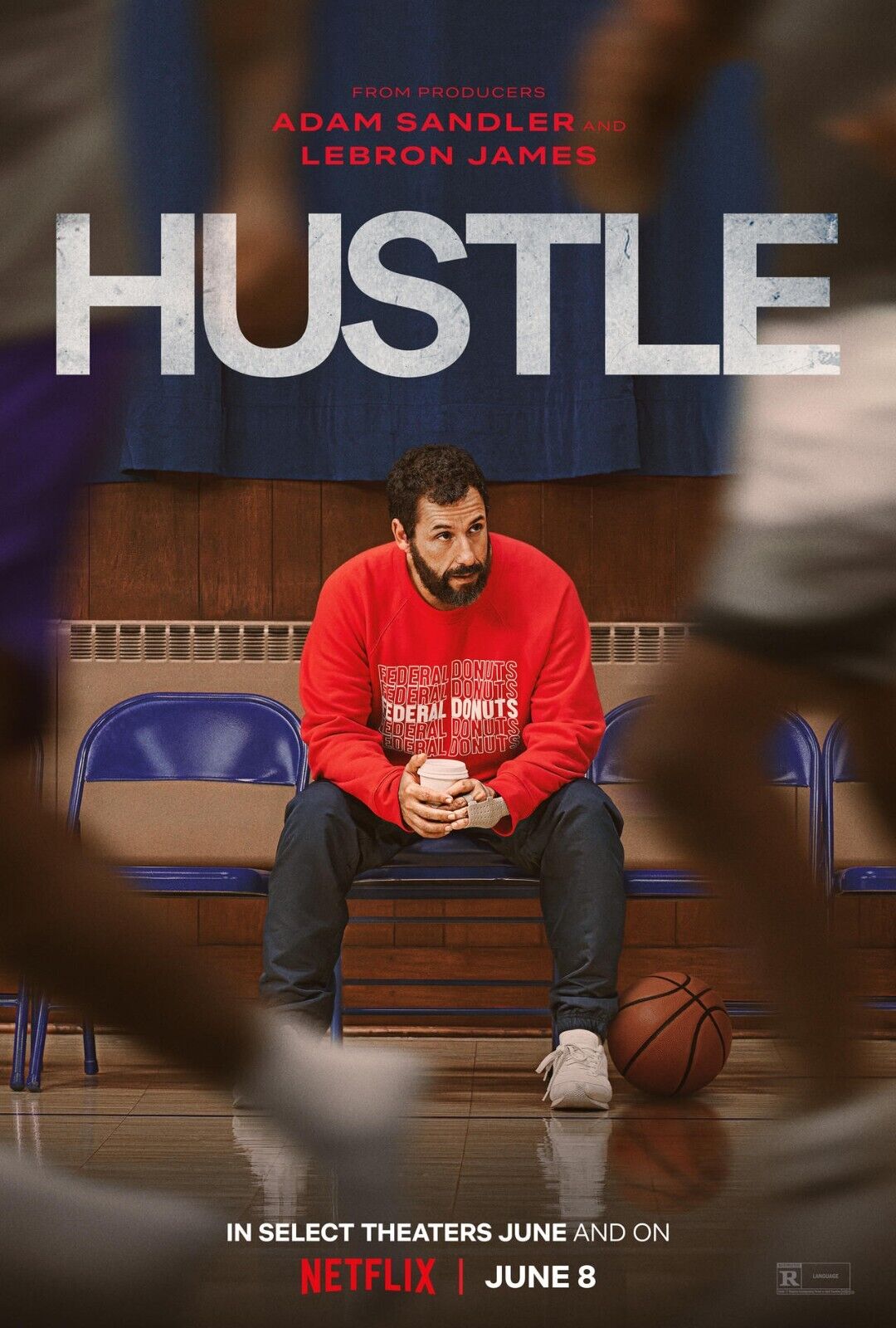
Never thought I’d be praising the acting of Adam Sandler – or lasting to the end of a Netflix movie (yep that includes The Irishman). Except that this effort which appeared to be very off-message for the sports genre suddenly veered back on course towards the finishing line I thought it had the makings of a genuine five-star movie, almost the prequel to all those Kevin Costner-type picture where the washed-up sports star/coach ends up working with a team from Nowheresville.
For a long time the movie’s tension derives from it looking as if the career of wannabe basketball star Bo Cruz (Juancho Hernangomez) is going south before it has even begun, partly from self-inflicted issues and partly from the shenanigans of the all-powerful, and in so doing exposes the rough and dirty underbelly of basketball.
Scout Stan Sugarman (Adam Sandler) achieves his lifetime ambition of being promoted by ageing owner Rex Merrick (Robert Duvall) to assistant coach of the Philadelphia 76ers. But Merrick’s sudden death sends Stanley back on the road where he discovers hustler Bo playing in an ordinary outdoor court. Having incurred the enmity of Vince (Ben Foster), Rex’s son and new team boss, and with Bo being denied a contract, Stan quits and tries to get Bo accepted into the national trials (known, for the uninitiated, as the Combine Draft).
But Bo, who has a conviction for assault, blows his chance, loses his potential breakthrough spot and except for Stan’s herculean efforts would be on a fast track back to Nowheresville. Which would have been an interesting picture in itself, there being far more losers in sport than winners, and always room in some lower league for a washed-up coach.
Sure, there’s the usual unusual training regime (this is the home of Rocky after all), and plenty one-to-one scrimmaging and amazing shots, but mostly it moves at a slower pace, a character study more than anything, as Stan learns to mentor his pupil and his pupil learns to cope with mental pressures. Opportunities to widen the picture’s scope – a potential romance with Stan’s daughter Alex (Jordan Hull) or crisis in the Sugarman home – are ignored in favour of a sharper character focus.
I’m no fan of basketball, never watched a game, couldn’t name a single player unless they starred in an animated feature, and yet I was fascinated by the way the game was played, the ins-and-outs of on-field play. Having watched it, I wouldn’t say I was any more educated, couldn’t even tell you how many people were in a team or even how long as game lasted, but for sure it kept my interest.
There’s contrasting use of social media – one that triggers the young man’s downfall, another that prompts his comeback. But in the main, especially if like me you are unfamiliar with the game, you are mostly gripped by the tension, the consequences of failure for Stan far greater than failure for Bo, and the eventuality that there is no way this can work out. And in that respect it’s not like Rocky or Any Given Sunday where the steps to success are more readily pinpointed.
Like Brad Pitt, Adam Sandler (Uncut Gems, 2109) is entering potentially the “last leg” of his career. He’s lost the annoying nasal whine and the manic comedic energy and transitioned the loser persona into a more recognisable human being. Denied the need to strive for laughs, his delivery is more conversational and realistic. Juancho Hernangomez, a basketball player, making his acting debut, sensibly restrains himself. Queen Latifah (The Tiger Rising, 2022) has also stepped away from comedy although she enjoys some good riffs with Sandler. Jordan Hull (The L Word: Generation Q, 2019-2020) also makes her movie debut. Ben Foster (Hell or High Water, 2016) plays the mean boss. SNL graduate Heidi Gardner is another stepping out of her comfort zone.
There are some anomalies, most notable being that Sandler seems a few inches short of being a former basketball player. Also, you would have to imagine that a young man who came from a tough background and hustled for a living was unlikely to be deterred by a few insults coming his way and equally unlikely to throw away so much food. And also, I never knew the basketball find actually came from Spain, the location work confusing to say the least, I thought he just spoke Spanish, hardly a rare language in America. And who is this guy called “Himself” who appeared to be played by over a dozen people?
Jeremiah Zagers (We The Animals, 2018) does an excellent job or reining in Sandler and the fact that the ending turns this into a warm-hearted drama does not lessen the fact that for most of the time it felt like anything but is testament to his skill.
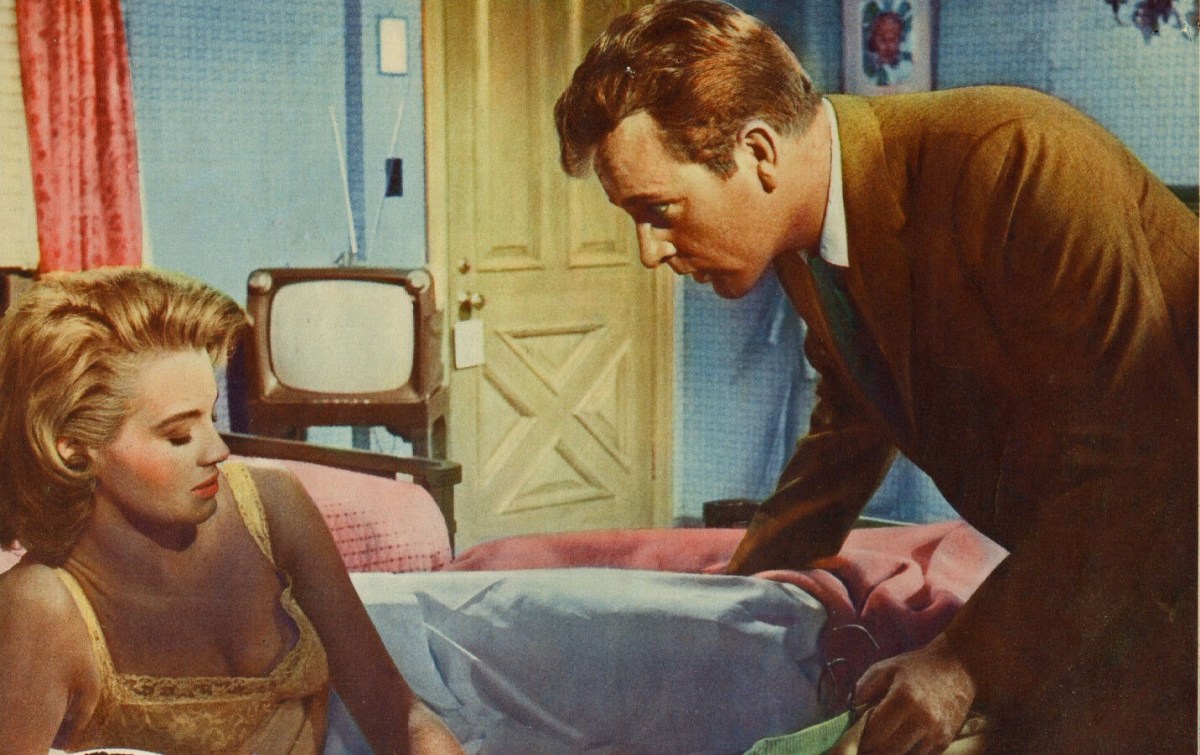
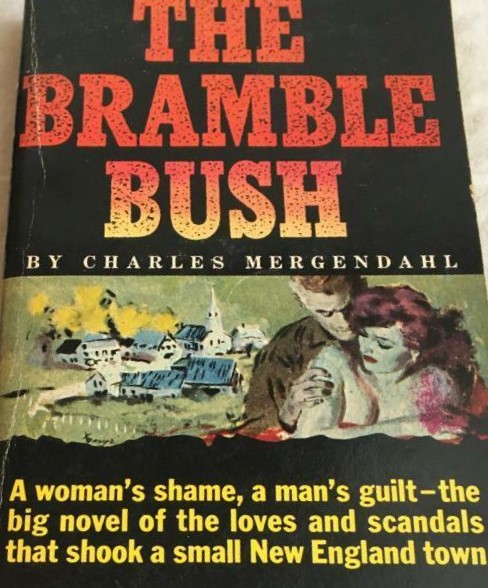
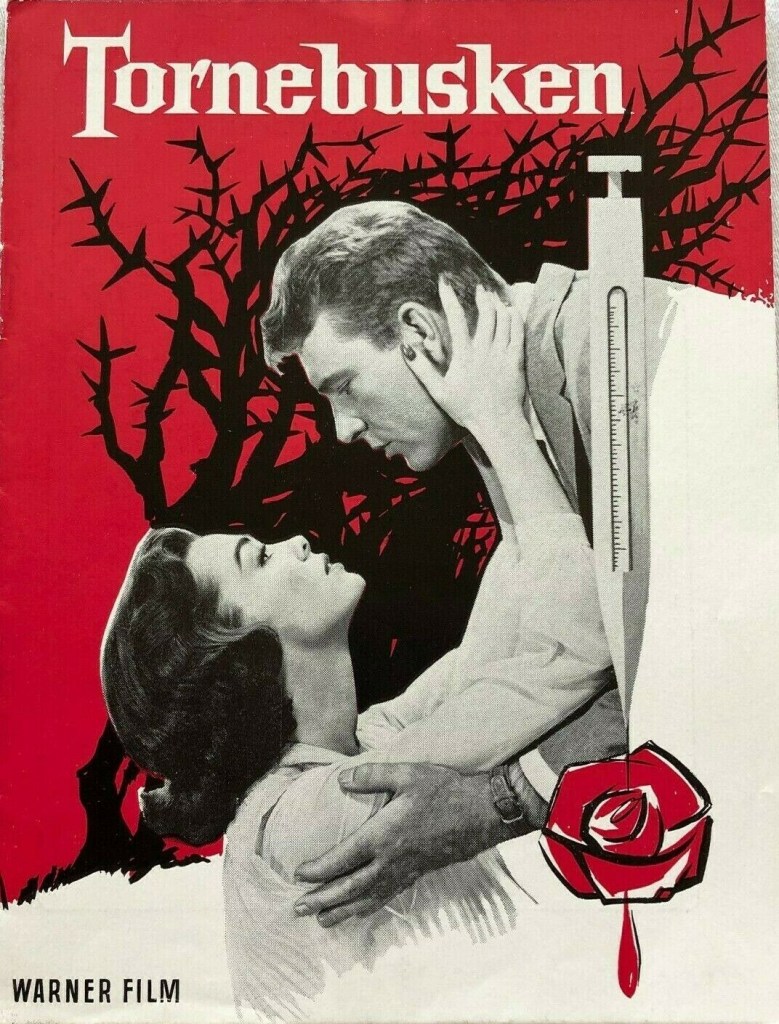
Few novels have been as abruptly shorn as Charles Mergendahl’s massive bestseller – seven million copies sold – The Bramble Bush. The last quarter of the original story was just dumped. For screenwriters seeking to heighten every emotion this was a very strange decision for it is in the last section that the book delivers huge dramatic punch.
The film – SPOILER ALERT – ends with Guy (played in the film by Richard Burton) judged not guilty of the murder of dying best friend Larry. Guy’s one-night stand with Larry’s wife Margaret (Barbara Rush) has made her pregnant but now widowed she leaves him on the grounds that he will be unable to live with what he has done. It’s a sad enough ending but it’s nothing compared to the book.
The trial section takes place three-quarters of the way through the novel. In the film, it is placed much closer to the end so there are only five minutes or so to tidy up in a rather ho-hum manner, nothing highly dramatic, no floods of tears, just Margaret leaving him behind.
Following the trial in the book, however, Margaret’s departure is much more sudden. There is no goodbye. She just vanishes. While judged innocent of murder, Guy has lost his license to practice so in the absence of professional commitments is free to spend months hunting for her. And find her he does.
The dramatic point you would have thought would be simply whether she can ever accept as a lover the man who has injected her husband with a fatal dose of morphine regardless of whether this was done with the best of intentions and could be construed as a mercy killing. But the author isn’t finished with these characters yet. Yes, they are reconciled and in fact get married.
But it’s too late. Margaret has tuberculosis – a considerably more dangerous condition in those days than now, and in some cases as untreatable as the incurable Hodgkin’s Disease that afflicted her husband. That puts both her life and that of her unborn child in danger. Guy faces another dilemma, just as he did with her husband. If he has to choose, whose life would he want to save.
The baby is born, and both survive. But only for the time being. Margaret’s TB has not abated. Since Guy’s license has by now been restored, they return to the town. But he’s in for a shock. The town is outraged. The public which had stoutly defended him and the jury which had set him free now turn against both, aware through the arrival of the child that they must have had an affair while the husband was still alive, which therefore clouds the issue of exactly why Guy committed euthanasia.
But before Guy can decide to move elsewhere and nurse his sickly wife and care for his newborn child – called Larry after the dead husband – Margaret dies.
That turns the book into a three-handkerchief tragedy that the film never was. Except for running time, you wonder why the screenwriters elected to miss all this out. Maybe the movie would have run over the two-hour mark, perhaps two hours fifteen minutes, but that would hardly make it so undesirable to exhibitors nor so offensive to the public given the ending was so much more dramatic.
Even then, the author isn’t finished. He provides an ironic ending The rejected Fran – dumped also by this point by Bert, Guy’s lawyer– determines that she will look after the child, allowing Guy to recover from his ordeal. And there is the hope – although she would not press her love for Guy on him – that in due course he will come to appreciate her and reciprocate her love.
Quite a different ending indeed from that foisted on moviegoers. Hard to say whether readers were disappointed, but when a novel is such a huge success it is generally because the public likes the story the author has devised. So to rob them of that seems extremely odd.
The novel had raced to the screen. The book was published in September 1958 and the film opened in February 1960, barely seventeen months later. When the gap between novel and movie is so short, it generates feverish public anticipation. And it seems almost perverse to deny the waiting audience the movie they expected.
Naturally, in the transition from book to screen there are other eliminations – and additions. And there is also the usual welter of changes made for no particular reason, for example the town of East Dereham becomes East Norton in the film.
Certainly, the aim of a movie being to heighten drama and combine disparate elements into a more cohesive whole, you can see why in the film it raises the stakes for the lawyer Bert Mosley (Jack Carson) to already be campaigning for district attorney rather than, as in the novel, only dreaming about it. Although both his parents are dead, Guy came from far more prosperous stock in the film than the book, the hospital named after his father in the film but not the novel.
Some of the changes must have seemed to create more drama, but I’m not so sure. What difference did it make whether it was Guy or the dying Larry (Tom Drake) to be the one returning home? In the film it’s Guy, in the book Larry. In the book Guy is kind to the town drunk Stew (James Dunn) but it’s the opposite in the book, hostile and physical abusive to him from the outset. In the book we learn why – Stew was Guy’s mother’s lover and their affair triggered the suicide of his father – from an internal monologue, but in the film this plays out in more dramatic fashion when Margaret confronts Guy about what she sees as his unfair treatment of the older man.
There’s an elimination that’s so shocking you can’t understand why it was left out by the screenwriters. In the book we discover that Stew is in fact Guy’s father, a fact ignored in the film. And in the last section of the book when Guy is tracking down Margaret in different towns he takes Stew’s surname as his own. And one core element of the film – Larry pushing Guy and Margaret together – is the screenwriters’ invention. (Perhaps audiences would view Guy in a lesser light if he simply took advantage of his friend’s illness to sleep with his wife). And to tie things up more neatly, it’s Guy in the film who prescribes sedatives for Margaret whereas in the book that’s not part of his role.
On the other hand Larry’s father Sam is hostile to Guy for reasons that are kept from us in the film – but in the book we find out it’s because Sam blames Guy’s father (also a doctor) for his wife dying in childbirth, an incident that caused him to lapse into the insanity mentioned in the trial scene in the film.
You can see why some elements of the book are not included. The creepy newspaperman Welk (Henry Jones) who blackmails Fran (Angie Dickinson) into posing nude for him later dupes his assistant into doing the same. Bert falls for a tough Boston reporter Sylvia for whom he quits town and dumps Fran. On discovering she is pregnant by Guy, Margaret’s initial reaction is to seek an abortion. And there’s a section where hospital chief Dr Kelsey and Fran discuss the various ethical ways doctors have of letting exceptionally ill babies die. The judge suggests to the jury that Guy could be acquitted due to temporary insanity. And there is a bunch of peripheral characters whose main purpose is to highlight the jealousies inherent in small-towns.
But there are two character turnarounds the screenwriters choose to ignore. The first is that the drink-sodden Stew becomes a recovering alcoholic after discovering he is a grandfather. The second is more touching. After Fran was rejected early on by Guy and later dumped by Bert she had resigned herself to a life of “doing terribly immoral things.” But the book ends with, as mentioned above, her taking a huge emotional leap by giving herself the task of nursing both motherless child and widowed father.
It’s always fascinating to see how screenwriters tee up a book for the big screen treatment, deciding what to leave in and what to take out, occasionally (as in Mirage, for example) using little more than the title and the original idea and jettisoning the rest. Of course, limitations may be imposed on the screenwriters of which we are unaware, star demands or budget impositions and other factors. Here, I felt that screenwriters Milton Sperling (also the producer) and Philip Yordan did not get the best out of the book.
My formative years in terms of movies coincided with the rise of the critic and the auteur theory, promoted by Andrew Sarris, which valued directors far higher than actors, dramatically changing the existing status quo. Critics like Sarris developed their own pantheon of artists who could be considered great and routinely ridiculed those actors or directors who did not come up to the mark or whose works occasionally fell short of the lofty standards thus set.
Critics liked nothing better than to hail a new unknown talent – and be the first to do so – and regularly found fault with films that had big budgets. In short, they set out to pulverize popularity. In a separate endeavor academics found a new way of looking at films, deciphering in movies particular previously unforeseen aspects, epitomized by Peter Wollen’s seminal Signs and Meaning in the Cinema (1969). If ever a small picture turned into a big hit it was always, it was claimed, down to the efforts of critics who championed the movie. More importantly, critics were a law unto themselves. Movies the public loved were often the very ones that critics and academics disdained. As a consequence, the universal question on critical lips was how could the public be so foolish and why were they so gullible?
That meant I was often a puzzle to myself. How could I enjoy a picture that apparently lacked critical merit? Or had no redeemable features according to those who knew best? It was a paradox that I have enjoyed to this day. I am not talking here of films “so bad they are good,” a category invented to accommodate a particular guilty pleasure such as the Ed Wood portfolio, or of films deemed “camp classics” like Valley of the Dolls (1968).
In fact, Valley of the Dolls is a good place to start in the critic vs. public divide. Here was a film based on a novel the literary critics of the period derided (although more recently its merits have been reassessed from a feminist perspective) and turned into a big-budget film with an Oscar-nominated director that the film critics of the period also vilified. The book was a bestseller and movie a huge hit. Public and critics were at an impasse. Were the public misconceived or, worse, duped, into devouring book and movie?
When I wrote my book on the making of The Magnificent Seven (1960 version) I discovered that that movie had not been generally well received either by the critics or the public but that it had turned into the most popular western of all time, courtesy of endless repeats on television and a considerable number of reissues, where other movies in the genre termed classics fell far short of such universal appeal and adoration – except as far as critics and academics were concerned.
So when I came to look at the best films of the 1960s – a period of which I am inordinately fond – I decided I would in a sense ask the public. After all, box office is nothing more than a public thumbs up or thumbs down. My concept would mean cutting out the middle man.
I would go going straight to the public vote, determining popularity from box office receipts. We are not talking here about people who watched a movie for free on television years after it first came out and saw a version reduced in size, scale and sound and which in some cases had been trimmed for censorship reasons or to fit in with the advertisements. Instead, I am referring to this decade’s moviegoers willing to slap down their hard-earned bucks, take time out of their schedule, their effort maybe involving hiring babysitters or shelling out for transportation and parking and whatever.
In a sense there is something supremely egalitarian in that approach in that the people who pay to see movies are the ones whose box office dollar ends up funding new pictures and without whom there would be neither popular not unpopular films. So this assessment of the Top 100 Movies of the 1960s is based purely on the public’s response to a given film through the simple act of paying to go and see it. That act turns into the movie’s box office and that underpins this book.
This was the decade of legend. It spawned many of the greatest films ever made. Studios made more money than ever before, movie budgets ballooned and stars received record sums. As the auteur theory grew in influence, directors were feted. Businesswise, it bridged the old studio system where high numbers of movies were cranked out every year and the new approach where production was reduced in the expectation of creating the equivalent of today’s “tentpoles.”
Films made on a scope not conceived since Gone with the Wind (1939) became routine, arriving in theaters nearly every month, some so spectacularly successful they set the template for the future blockbuster. New genres such as the spy picture, driven by the James Bond phenomenon, came out of nowhere. Other moribund genres, previously restricted to low-budget or B-picture status, such as horror and sci-fi, reached new heights thanks to bigger budgets and top-name directors.
While every genre thrived, the decade will be remembered particularly for musicals like The Sound of Music (1965) and historical epics like Lawrence of Arabia (1962) and an explosion of British movies. It was also the era of “the little films that could,” low-budget pictures such as Lilies of the Field (1963) and Charly (1968) whose success far exceeded expectation. This epoch of dramatic change saw the industry embrace different attitudes to sexuality, violence and racism, adopt alternative release strategies and reassess movies’ ancillary value.
A new generation of stars emerged. Steve McQueen, Paul Newman, Sidney Poitier, Jane Fonda, Barbra Streisand, Sean Connery, Peter O’Toole, Natalie Wood, Faye Dunaway, Peter Sellers, Clint Eastwood, Julie Christie, Dustin Hoffman, Warren Beatty, Michael Caine, Raquel Welch, Omar Sharif and Lee Marvin formed the new elite. But that was not at the expense of existing stars. The post-war and 1950s generation retained – and in some instances expanded – their appeal.
Into that category fell Elizabeth Taylor, Burt Lancaster, Audrey Hepburn, Doris Day, Richard Burton, Sophia Loren, Rock Hudson, Tony Curtis, Charlton Heston and Frank Sinatra. And although Gary Cooper and Clark Gable died early in the decade, studios still counted on the box office prowess of pre-war contemporaries like John Wayne, Bette Davis, James Stewart, Joan Crawford, Spencer Tracy, James Stewart, Henry Fonda, and Katharine Hepburn and until his retirement in 1966 Cary Grant.
However, the “star system” had vanished and studios no longer invested millions annually on training new talent. Although in the 1950s Yul Brynner, Audrey Hepburn, Tony Curtis and Rock Hudson had graduated from smaller-scale new talent programs, by the 1960s they were largely defunct although occasional attempts were made to revive the concept. Occasionally, television might throw up a new prospect – a Steve McQueen or James Garner – but most new stars, as far as the public was concerned, came from nowhere. One minute you had never heard of them, the next they were everywhere, Sean Connery and Clint Eastwood in particular falling into this category. Where the previous system had relied on steady grooming, now stars were born in an instant. One picture was all it took.
Behind the camera was a parallel situation. The old-stagers like John Ford, Howard Hawks, Henry Hathaway, Fred Zinnemann, Billy Wilder, William Wyler, David Lean and Carol Reed were joined by post-war debutants such as Robert Aldrich, Robert Wise, Stanley Kramer and Stanley Kubrick.
The newer crop graduating from television included John Frankenheimer, Robert Mulligan, Sam Peckinpah, George Roy Hill, Franklin J. Schaffner, Sidney Lumet, Arthur Penn, Norman Jewison and Sydney Pollack. They were augmented by the British New Wave of Karel Reisz, Tony Richardson, John Schlesinger and Lindsay Anderson and by later additions like Peter Yates.
European directors welcomed into the Hollywood mainstream included Michelangelo Antonioni (Blow Up, 1966) and Roman Polanski (Rosemary’s Baby, 1968) while foreign-made pictures like Federico Fellini’s La Dolce Vita (1960) and Costa-Gavras’s Z (1969) made massive inroads into the box office and helped create a different artistic sensibility. While French New Wave films were mostly confined to arthouses, many of their techniques in storytelling and especially editing were embraced by Hollywood directors.
Studios began the decade in financial turmoil, MGM and Twentieth Century Fox on the verge of bankruptcy, production decimated and attendances in terminal decline. As had occurred at the start of the 1950s, studios gambled on a bigger throw of the dice, this time with 70mm big-budget roadshow, movies that paid little heed to budget strictures. The roadshow aimed to woo audiences away from the encroaching maw of television, to give big-screen lovers something that small-screen producers could not match, and at the same time reinvigorate the moviegoing experience.
First run big city theaters already generated far greater revenues than cinemas further down the food chain and now studios intended increasing the box office take further by hiking prices. Big city center cinemas would offer an experience unparalleled in the modern cinemagoing age. Roadshows were shown in the separate program format so you could not just slip in and out to suit yourself. And the movie started with a fanfare, an overture that could last up to ten minutes, giving you time to take your seat, and there was an intermission to let you stretch your legs, use the facilities or refuel.
The whole experience, what with souvenir programs on sale and babysitters to be hired, and maybe cocktails or dinner beforehand, was an event. And movies had never been events of any regularity. The prior moviegoing ethos was that it was a habitual part of your life. You popped into your neighborhood theater as you might go bowling or visit a bar. There was nothing fancy about it. It was just what everybody did. Or had done – until television became the way you spent your evenings, staring at a tiny box in the corner which lacked widescreen or color or 3D or any of the other gimmicks that for a time in the 1950s stopped the decline in theater attendance.
This book defines this decade in an entirely new way, not with reference to the critics, but as viewed by the public. Although you may find many critical faves here, you will find as many films that defined the public/critical divide.
Sherlock Holmes vs Sherlock Holmes was the initial tantalizing casting prospect. Basil Rathbone, the most venerated actor to don the distinctive deerstalker, and Peter Cushing, just signed up by the BBC for a new 16-episode series, the former signed to play the villain, the latter his nemesis in a film that started out with the title of The Death’s-head Vampire, the first film by a new production shingle Tigon Films.
While Tigon was new, with a distinctive logo, its driving force was well-known British producer Tony Tenser who with partner Mike Klinger had initially specialized in exploitation pictures with titles such as Naked as God Intended (1961) and London in the Raw (1964). The pair split after the artistic and commercial success of Roman Polanski’s Cul de Sac, Tenser initially setting up under his own name for Mini-Weekend/Tomcat (1966), mining the exploitation vein as before, and The Sorcerers (1967) a new venture into the horror market. Expanding the business with fresh capital and new partners, Tigon was born.
Supporting feature to “Witchfinder General” on ABC circuit release in Britain.
Explaining the new departure, Tenser said, “Films needs to be inexpensive. They need to sell, they need to appeal to an international audience, and one subject that always finds a market is horror.” Horror budgets were low, the genre did not require big stars, and the films had a surprisingly long shelf life.
First movie on the new company’s agenda was not The Death’s-head Vampire. Instead, Tenser had hooked Raquel Welch for a ghost story The Devil’s Discord to be produced by her husband Patrick Curtis, who had performed a similar task on The Sorcerers, and star Peter Cushing (The Skull, 1965). When that fell through, he held onto Cushing for a proposed Horror of Frankenstein and when that also bit the dust turned to him for The Death’s-head Vampire on a budget of just £40,000 (about $100,000). Offered the choice of playing villain Dr. Mallinger or Detective Inspector Quennell, the actor plumped for the “goodie,” Basil Rathbone lined up for the other role. The concept of older man/younger woman with action concentrated on an isolated house and the surrounding countryside was a horror trope.
Vernon Sewell (Strictly for the Birds, 1964), entering his third decade as a director, had worked with Cushing on Some May Live (1965) and was primarily known for low-budget and B-movies, and more importantly from Tenser’s perspective, sticking to a budget without any artistic pretensions or improvisation. He didn’t waste time on anything that would not be captured by the lens. He was calm on set, “nothing fazed him.” Cushing was a kindred spirit, never complaining, except famously, on this picture, when he told Sewell it was the “worst picture” he had ever made. The pair, however, had a very good working relationship to the extent that Sewell never offered Cushing any advice on the role –“he didn’t need my input.”
The Sherlock Holmes connection is promoted in this poster.
Just over two weeks before the August 1967 start date, Basil Rathbone died of a heart attack. Robert Flemyng, the last-minute replacement, was Cushing’s opposite, complaining all the time. The cast was rounded out by 32-year-old Doctor Who star Wanda Ventham (mother of actor Benedict Cumberbatch) and 18-year-old Vanessa Howard whose career highpoint thus far had been a duet with Cliff Richard for a television presentation of Aladdin (1967).
Interiors were shot at Goldhawk Studios, a converted three-story building in London’s Shepherd’s Bush, with exteriors at Grims Dyke, the former home of W.S. Gilbert, in north-west London. The 19th century manor house had lain empty since 1963.
Roger Dickens, who had cut his teeth on Thunderbirds Are Go! (1966) and worked on 2001: A Space Odyssey (1968) and would be later lionized for the mini-beast bursting out of John Hurt’s stomach in Alien (1979) was responsible for creating the monster. The model for the giant larvae was a much simpler task than creating a believable female giant insect. He took a mold of Ventham’s face, giving the features a repellant slant, using costume jewelry for the eyes, adding a furry cap and two-foot long antennae, a representation that would only really work if you scarcely saw the creature. For art designer Wilfred Woods his woods set turned into a disaster when the trees wilted and lost their leaves.
Opinions differ as to whether Tenser interfered with production. He saw his role during the film process to ensure that the project followed the script. “Sometimes you can put something in a film which will hinder the selling, sometimes you need to put something in which will help the selling.”
Comedian Roy Hudd, playing the morgue attendant, thought the script so awful he was delighted to work with Cushing on improvements.
When John Ford’s boast that he never shot an extra foot of film in order to prevent a producer turning in a different film has resulted in many a masterpiece, the same did not hold true for Sewell. Sticking so close to the script, not filming anything that was not absolutely necessary meant that the movie was too short. Editor Howard Lanning commented: “I put in everything that was available. Even with expanding the lecture scene and the amateur dramatics as long as possible, to the detriment of pace, the picture clocked in at just 81 minutes, not the length expected of a main feature.
To ensure the movie came in at the required length, Tenser added the African sequence at the beginning (an extra five minutes) and re-shot the morgue material (two more minutes), encouraging Cushing and Hudd to improvise. The final product was over-budget and a week late. The version shown to the censor was 87 minutes though the official running time was a minute longer.
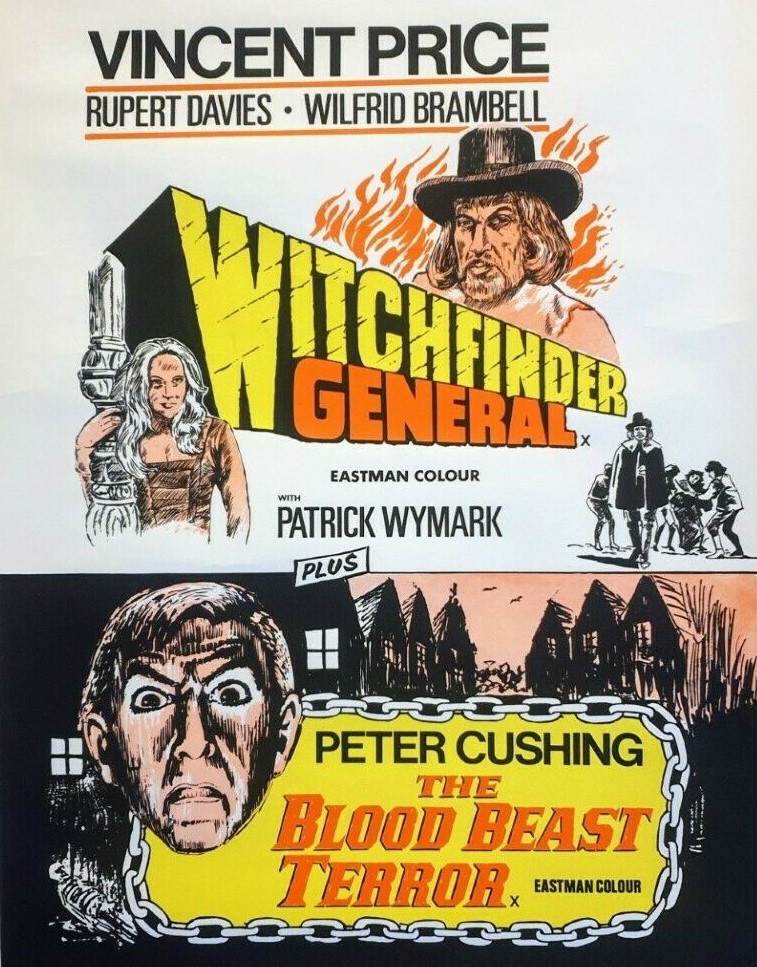
Tenser now deemed the working title as insufficient, preferring “something catchy and something that told people what you were selling.” His first stab at a new title was Blood Beasts from Hell. But in the final analysis it was altered to The Blood Beast Terror. Hoping to sell it to a circuit as a main feature it was originally shown in a double bill with Castle of the Living Dead, but despite the supposedly attractive title, audiences were not interested. To cut his losses, the film was repackaged as the support to another Tigon production Witchfinder General (1967) which meant Tenser would not have to share receipts with another distributor.
The Blood Beast Terror did not prove so sellable overseas either. It was shelved in France until 1971, although, sold for a flat fee, it did well in South America. A.I.P. who had U.S. distribution rights to Witchfinder General – title altered to The Conqueror Worm – had no interest in The Blood Beast Terror but it was picked up by Pacemaker Pictures who were also in title-changing mood and released it in summer 1969 as Vampire Beast Craves Blood on a double bill with Curse of the Blood Ghouls (1964).
Tenser’s predictions of long shelf life were correct. In Britain, the movie was reissued on a late night double bill with The Secret of Blood Island (1961), and then was revived with The Devil’s Hand (1961) before being re-teamed with Witchfinder General on a Sunday’s-only screening. Although none of these would be circuit releases in the sense of a nationwide day-and-date opening, they were nonetheless likely to get reasonable bookings to fit specific engagement profiles. In the States where there was endless demand for horror triple- and quadruple bills and all-nighters, The Blood Beast Terror received ongoing bookings.
SOURCES: John Hamilton, “The Making of the The Blood Beast Terror,” Little Shoppe of Horror, Issue No 43, p67-91; John Hamilton, “Regretting Nothing: John Sewell, Little Shoppe of Horror, Issue No 43, p92-98.
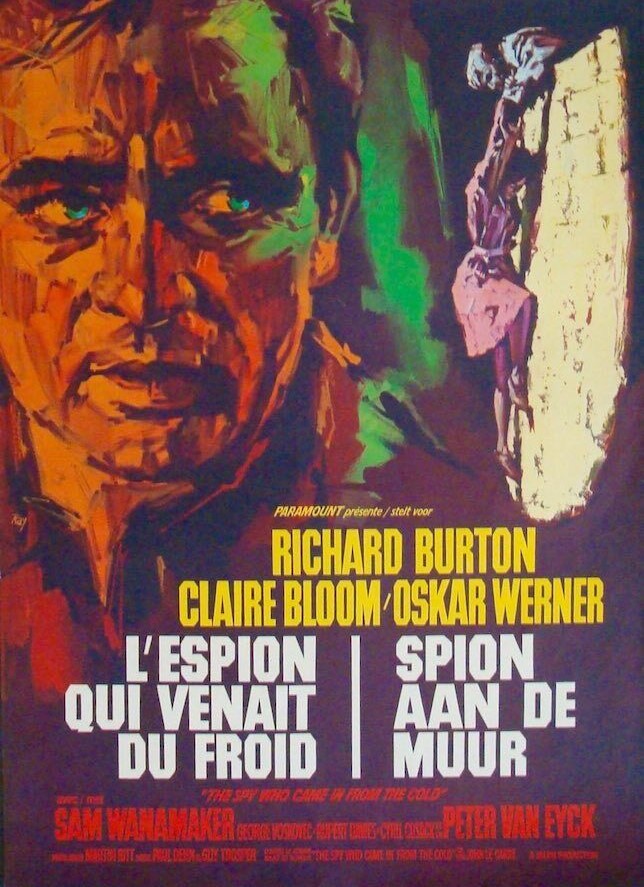
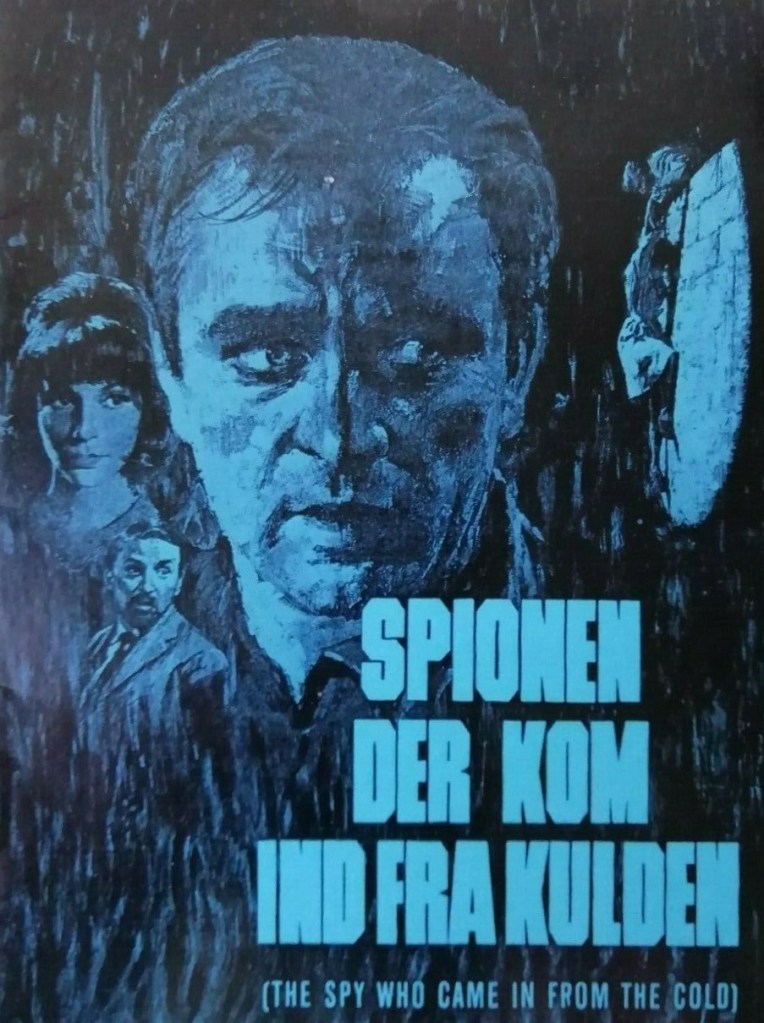
Shooting might have been less stressful and cheaper if director Martin Ritt had stuck to his initial schedule but when the shoot start-date was pushed back from late fall 1964 to January 1965 he lost original star Burt Lancaster (planning to play the original Englishman as a Canadian). At relatively short notice, Richard Burton stepped in, but for an eye-watering fee of $750,000, at that time the biggest salary paid in Hollywood. (Due to Ritt’s involvement there had been rumors Paul Newman would star.) And although Burton pushed for his wife Elizabeth Taylor for the small role of Nan, he was overruled on the issue of cost, and that audience expectations would be unfairly raised.
It didn’t matter, though, if Ritt refused to cast Elizabeth Taylor. He got her anyway, and her vast entourage, generally happy to remain out of the way but occasionally arriving on location in the middle of Dublin in her white Rolls-Royce sending fans into convulsions. There were two schools of thought as to which woman caused more disruption: the jealous wife exerting 24-hour surveillance on a husband with a wandering eye or one of his previous lovers, Claire Bloom, who was playing Nan. (The name changed from Liz in the book.)
“It was not a happy picture and the central reason fort that was: Claire Bloom,” averred Burton’s biographer Melvyn Bragg. “The real problem was not from Bloom but from Elizabeth Taylor’s jealousy,” claimed Sam Kastner. That Burton incurred Bloom’s wrath was not without doubt. But it wasn’t the first time. Prior to Taylor, but while he was married to Sybil, Burton and Bloom had been lovers.
Burton was “not prepared for Bloom and found it very difficult to handle.” The pair had met on a touring production of The Lady’s Not for Burning in the 1940s but their romance remained unconsummated. A few years later in the early 1950s the affair began in earnest and continued on and off for five years. When both were cast in Look Back in Anger (1959), Bloom expected them to pick up where they had left off. But that notion was dashed when Burton appeared, still married, on the arm of Susan Strasberg (Sisters, 1969).
The other elephant in the room was, of course, Burton’s alcohol intake. A very heavy drinker, verging on the alcoholic, his hand had begun to tremor until he received liquid sustenance. If Burton had an equally boisterous co-star as in Peter O’Toole in Becket (1964) or a very indulgent director as with John Huston in The Sandpiper (1965), his drinking would not attract comment. But “Martin Ritt did not approve of Burton’s heavy drinking and Burton resented that.”
Never mind Burton’s issues with ex-lover and wife, he was having difficulty delivering the performance Ritt demanded. The director wanted a stripped-down character, minus the oratory which had made the actor famous, the acting so flattened as to “make him anonymous.” Author John le Carre would have preferred James Mason or Trevor Howard for the “embattled” personas they presented, and which would have fit more into the director’s perception of the character. “For Burton this time there would be no strong sex, no oratory, no action, no charm.” The director wanted that Burton intensity, but coiled, not sprung. As the production wore on, director and star were barely speaking. “Ritt had come to despise Burton whom he saw as a spoiled and self-indulgent actor who had dissipated his talent.”
The initial screenwriter Guy Trosper made changes that seemed out of kilter with the book, for instance sending Leamas to psychiatric hospital rather than jail for punching the grocer. When he became ill he was replaced by Paul Dehn who did not veer so far from the book. Le Carre was brought in at the last minute at Burton’s insistence to do rewrites. But that merely added to the existing aggravation. While waiting for nightfall to shoot the escape sequence, Le Carre was obliged to keep the actor company, trying to consume most the available whisky so that Burton did not go on set drunk. While little of Le Carre’s rewrites found their way into the finished product, he did provide a new scene for Fiedler (Oskar Werner).
Ritt had a revolutionary picture in mind, not just filming in black-and-white to downplay the glamor of the espionage business as evidenced by James Bond, but to employ “a point of view that’s never been found before.” He was not a believer in the end justifying the means nor of depicting the enemy as rabid. “Most of the time,” he explained, “you have actors playing Communists as if they’d just switched over from playing Nazis in World War Two pictures…the Communists in this picture are people and one of them at least …is an honest, ethical man.”
While the decision to film in black-and-white was a creative decision, intended to give the film a realistic edge, he knew it would not necessarily go down so well with the end user, the exhibitor. “The needs of creative people and the needs of exhibitors are completely different. Exhibitors want pictures and creators want to express themselves and those two factors don’t always satisfy each other.” Although the movie was Oscar-nominated and critically well-received and did well in key city first-run, it was condemned by exhibitors in small towns, one of whom discouraged others from booking it and complained that the black-and-white aspect made the film impossible to view on old projectors.
Author John le Carre was an unknown, two previous books published to no great sales. But The Spy Who Came in from the Cold proved a phenomenon. Debuting in the number spot in February 1964, the book spent 35 weeks topping the hardback bestseller chart. It ended up the hardback number one title in the U.S. during 1964, a quarter of a million copies sold, winner of the Edgar Award for Best Mystery, initial paperback order topping two million copies, five million books in print by the time the film appeared. So it seemed all the more astonishing that the movie rights had been snapped up for a mere $21,000 (with escalating clauses based on sales that took it up to $38,000). Martin Ritt claimed glory for that astute purchase, making a bid to a hard-up author when the book was in galley form. “When I bought it nobody else was running to buy it,” claimed Ritt. But it turned out the real star was Kay Selby, a Paramount story editor, who had dug it out of a pile of novels submitted. Le Carre did not make the same mistake again, movie rights for his next book The Looking GlassWar were sold for $400,000 and the paperback rights for the same
When the film had still been a relatively low-budget production, Paramount planned to film exteriors in London and interiors in Hollywood. But Ritt wanted “to capture the full brunt of the winter atmosphere for dramatic emphasis” and there was very little Hollywood could bring to the party to recreate an actual bleak British weather.
The bulk of the film was shot in Ireland at the defunct Ardmore studios in Bray – Ritt rented them from the Official Receiver, the first production there since November 1963 – and on location in Dublin, the historic Cornmarket standing in for Checkpoint Charlie while with the addition of breezeblock, barbed wire and an iron ladder, Dublin Square was transformed into the Berlin Wall, though some scenes set in East Berlin were shot in the London Docklands.
However, shooting kicked off in London, at Shepperton studios on January 9, 1965, before switching for two months to Ardmore, wrapping up there a week early, heading for location filming in Amsterdam (briefly) and 9-10 days in Garmisch (Germany) before returning to Shepperton in April. Ritt brought the picture in under budget.
Paramount launched a teaser campaign in November 1965 New York – the idea stolen by United Artists for A Fistful of Dollars the following year – with a 1,000-strong two-sheet poster campaign in the city’s subway, promoting the film but missing out the opening date and the cinemas it would play, that information supplied closer to the launch which took place over the lucrative Xmas period in 1965, coincidentally just in time to qualify for Oscar consideration.
And also in time to face a spy box office tsunami called Thunderball and the roadshow epic Doctor Zhivago among the 20-plus movies launched for the festive season. In fact, the Bond films had triggered a resurgence of spy pictures. As the Ritt picture got underway, others on the starting grid include “The Matt Helm Project,” The Ipcress File, James Garner in Welcome Mr. Beddoes (A Man Could Get Killed) and Masquerade starring Cliff Robertson. In addition the potential line-up also included female spy Christy O’Hare, Aaron Rosenberg’s Smashmaster and Strangers on a Bridge; the first two were never made, the last one taking over half a century to hit the screen as Steven Spielberg’s Bridge of Spies.
Burton was Oscar-nominated, but in the year when Thunderball (1965), Torn Curtain (1966), The Silencers (1966) and Our Man Flint (1966) all featured in the top ten films of 1966, The Spy Who Came in from the Cold did not prove a counter-programming smash, sitting at 32nd in the annual chart with $3.1 million in rentals. Although the movie was critically well-received and did well in key city first-run, it was a bust in smaller towns. Don Stott of the Calvert Drive-In in Prince Frederick, Md, complained “it was one of the lousiest pictures I’ve ever had my displeasure to exhibit and lose my shirt on…the print was so dark…it was barely visible.” Added Arthur K. Dame of the Scenic Theater in Pittsfield, N.H., “it comfirms the fact that we are not going to do well with spy films.”
SOURCES: Adam Sisman, John Le Carre, The Biography (Bloomsbury, 2013) p258, 266, 273, 277-280; The Richard Burton Diaries (Yale University Press, 2012), p79-80; Melvyn Bragg, Rich: The Life of Richard Burton, (Hodder and Stoughton, 2012) p200-203; Sam Kashner, Furious Love (Harper Perennial, 2019) p120-131; “Burt Lancaster Plans More Pix Of His Own,” Variety, January 1, 1964, p27; “Bestseller at $20,000,” Variety, March 25, 1964, p15; “Broadway,” Box Office, April 20, 1964, pE5; “Director Martin Ritt: Big Dig Is Scripts You Can Sell to Producers,” Variety, May 13, 1964, p13; “Six for Paramount in Alien Locales,” Variety, July 15, 1964, p18’“Richard Burton Receives Role in Spy by Martin Ritt,” Box Office, August 24, 1964, pW1; “Voices in the Diplomatic Pouch,” Variety, December, 9, 1964, p7; “Ritt Starts Spy Who Came in from the Cold in London,” Box Office, January 18, 1965, pE5; “Spy Success Sires Speedy Sequel, Le Carre Learning Loot Lesson,” Variety, February 17, 1965, p3; “Martin Ritt May Wind Berlin Wall Episodes on Spy This Month,” Variety, February 24, 1965, p28; “Paperbacks Up their Covers and Advance $,” Variety, March 3, 1965, p1; “Burton Winds Irish Shooting Spy Film,” Variety, April 14, 1965, p20; Maxwell Sweeney, “Harassed Irish Studio Revives,” Variety, May 12, 1965, p54; “Kay Selby’s Coup,” Variety, August 11, 1965, p3; “Subway Posters First Step in Promoting The Spy,” Box Office, November 29, 1965, pA2; “Review,” Box Office, December 20, 1965, 1965, pA11; “Three Paramount Pix To Open in N.Y. Dec 23,” Box Office, December 20, 1965, pE16; “Martin Ritt Is Promoting His Spy for Paramount,” Box Office, December 20, 1965, pE12; “Espionage Shown in Its Dirty Clothes,” Variety, December 22, 1965, p4; “The Exhibitor Has His Say,” Box Office, June 13, 1966, pA4 and October 10, 1966, pB4; Big Rentals of 1966,” Variety, January 4, 1967, p8.
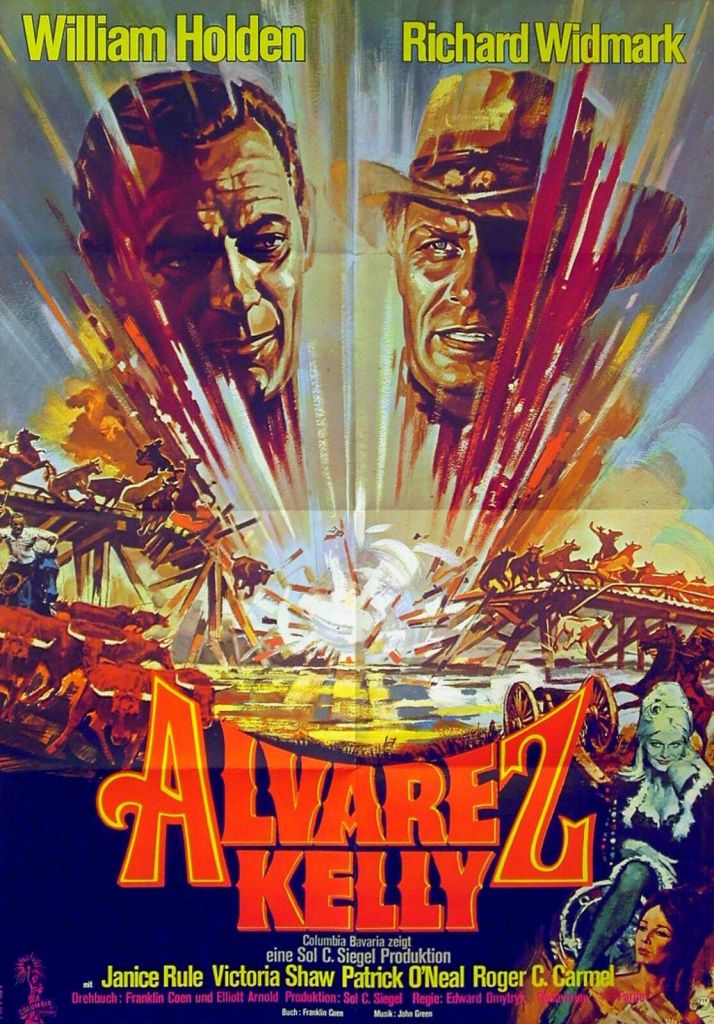
True stories do not always make good films. It says a lot about stardom that Oscar-winner William Holden virtually single-handedly redeems Edward Dmytryk’s Civil War western. And this was at a time when the actor’s career was in freefall, not having had a hit since The World of Suzie Wong (1960). Although his good looks personified him as a matinee idol, many of his best performances came when he was playing against type, as a shady character, such as in this instance
The essential narrative is that Holden has driven a couple thousand head of cattle from Mexico to deliver to Union troops. Holden plays an “Irish senor” (as defined in the title song) whose Mexican origins provide an excuse to consider the United States an enemy, positioning him as a neutral in the conflict, allowing him to justify his profiteering. Confederate colonel Richard Widmark plans to steal the herd. Had Holden been a patriot the story would have knuckled down to him trying to thwart such plans, but since he’s a free agent with no allegiance except to himself the film has to take another route. So this involves Holden being captured by Widmark in a bid to turn the Confederate soldiers into cowboys capable of driving the stolen herd.
That would set the film down a fairly standard narrative route of training raw recruits such as Holden would follow in The Devil’s Brigade (1968). But this film evades such a simple format. All we ever learn about the intricacies of handling cattle is that you need a hat and have to be able to sing. Instead, this is a more thoughtful picture about honor versus self-interest, about the human casualties of war. Unlike most westerns it’s not about shoot-outs and fairly obvious good guys and bad guys. In the main it’s a drama about conflicting interests and often how good guys will do bad things in the name their beliefs.
The film doesn’t take sides. Do we root for the Union soldiers fighting to free slaves or the romantic version of the Confederacy? Do we root for the immoral selfish Holden because he’s had a finger shot off as a way of bringing him to heel or do our sympathies lie with the upstanding one-eyed Widmark who has given so much for his cause?
Dmytryk whose career encompassed The Caine Mutiny (1954) and The Young Lions (1958) was on an opposite career trajectory to Holden after box office hits The Carpetbaggers (1964) and Gregory Peck thriller Mirage (1965). Between them, Holden and Dmytryk just about save what was a misconceived project, an original screenplay by Franklin Coen (The Train, 1964). That it was based on a true story did not make it any better an idea.
Holden is excellent, easing into the world-weary character he would project more fully in The Wild Bunch (1969). And I like his delivery, the pauses between words as if they are occurring to him for the first time rather than rattling them off as is the way of so many stars. Janice Rule (The Chase, 1966) is good as the errant girlfriend who feels let down by Widmark’s honor – and who is open to seduction by Holden – and has her own ideas about what she deserves from the war. Although it’s tempting to say we’ve seen this craggy Widmark (The Secret Ways, 1961) characterization too many times before, here he adds a further emotional layer as a man who eventually faces up to the personal sacrifices he has been forced to make.
A man convinced he is doing the right thing versus a guy who couldn’t care less about principle turns out to be an interesting concept though perhaps weighed in favor of the latter by the casting.
Had Widmark played the profiteer I doubt if we would have had such a balanced notion of right and wrong. Holden has the screen charm to get away with playing complicated characters, sometimes (The Counterfeit Traitor, for example) eventually tuning heroic. The idea that, in westerns, it’s not all black-and-white, and that bad guys could provide a moral core would be central to the genre a few years later when Butch Cassidy and the Sundance Kid (1969) and The Wild Bunch (1969) made heroes of outlaws and the lawman in True Grit (1969) sailed close to the wind.
Action fans will be amply rewarded by the ending as Holden attempts to outwit Widmark.
CATCH-UP: William Holden films reviewed so far are The Counterfeit Traitor (1962), The 7th Dawn (1964) and The Devil’s Brigade (1968); Richard Widmark films featured so far are The Secret Ways (1961) – the Blog’s top-ranked film according to our readers – The Long Ships (1964), Flight from Ashiya (1964) and The Way West (1967).
Bizarre movie seeks cult audience! You might as well have stuck that on the poster. When I tell you the film climaxes like a Monty Python sketch with four successive men giving birth – from a variety of orifices – the first three to emerge different versions of the same character, the last the dead husband James (Paapa Essiedu) of Harper (Jessie Buckley). And that men also appear fully naked, in the form of some kind of vegetation, and can survive despite having an arm spliced from elbow to fingers. And that James desperately wants her to feel guilty about his suicide, triggered by her demanding a divorce.
Of course, all this could be taking place in her tormented mind except that she steadfastly refuses to admit to torment over the suicide even though she does scream her head off in church. If any of this is remotely realistic it points to someone with a severe downer on men, since there is not a single likeable one in sight. Men, in fact, are just four-letter words (choose your own) whose sole purpose is to accuse women of not loving them enough. And women – cue symbolism – are all born of Eve and inclined to eat a forbidden apple.
None of this would be so bad if in attempting a psychological thriller and/or horror film (I am assuming horror because of the births and arms sliced in two) there was actually a shock or two or even a general sense of creepiness. On the plus side, should this ever achieve cult status – “makes Titane look like Paddington” (1 or 2, you choose) – then I am sure director Alex Garland will only be too happy to turn up for a tenth anniversary Q&A and explain his intentions and/or symbolism and if he’s very lucky find an audience composed of students who have written a thesis on the film.
So the story – or did you think there wasn’t one – sees Harper repair to a village in the country to a fantastic country house with all the trimmings including an Aga and a baby grand for two weeks holiday to recover from the suicide, her mind still so muddled that she’s not thought to change her married name. It’s the kind of village where there appears a considerable amount of inbreeding. The letting agent (Rory Kinnear) looks suspiciously like the long-haired vicar (Rory Kinnear) and the rude schoolboy (Rory Kinnear) and the policeman (Rory Kinnear) and the bollocks-naked stalker (Rory Kinnear).
Harper gets lost in the unfamiliar countryside and happens across a tunnel where the echo effects could have been created by Robert Fripp and is then chased by a man (Rory Kinnear anyone?) and then catches sight of the naked man who later appears in her garden looking like an rewilded exhibit from the Chelsea Flower Show. The various versions of the man appear at different points and even when the letting agent appears good (and brave) actually he is just as bad.
I felt sorry for the Oscar-nominated Jessie Buckley (The Lost Daughter, 2021) for having to put up with this script. I also felt sorry for Rory Kinnear (No Time to Die, 2021) with a movie career so far consisting of supporting roles who must have been convinced that the chance to channel his inner Alec Guinness/Peter Sellers and play multiple characters would have been his breakthrough.
I did not in the slightest feel any sympathy towards Alex Garland (Ex Machina, 2014) for dreaming up this pile of tosh. This is one those films that strides the critic/moviegoer divide. Around 70 per cent of critics on Rotten Tomatoes gave it a positive review but moviegoers disagreed and, as surveyed by Cinemascore, gave it a D score (on a rank from A to F).
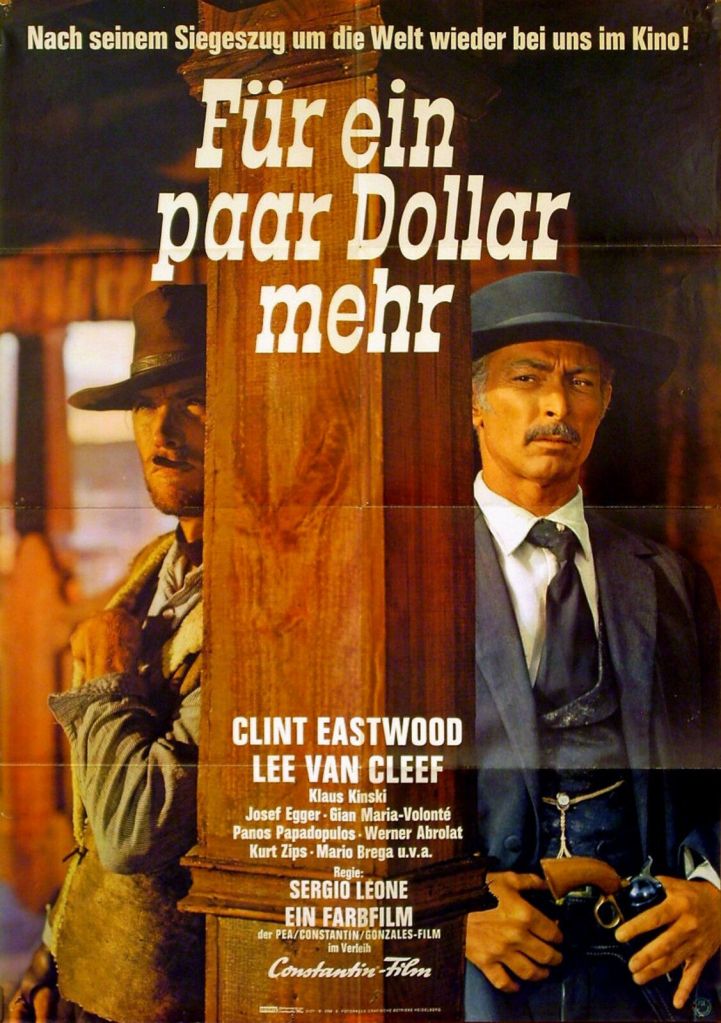
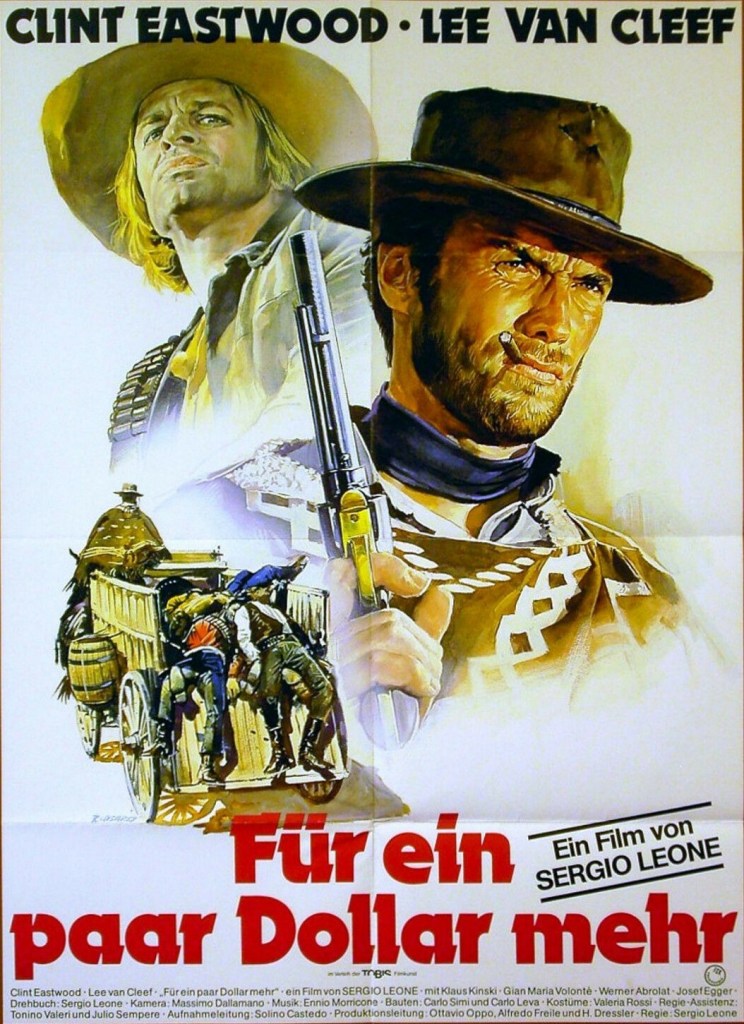
The prospective casting was tantalizing. How about Clint Eastwood and Lee Marvin, a pairing for the ages, two of the toughest guys in screen history? Failing that, Eastwood and Charles Bronson, The Man With No Name vs The Monosyllabic Man? The role of Colonel Mortimer could also have gone to Henry Fonda or Robert Ryan before in one of the movie business’s oddest tales it ended up with Lee Van Cleef.
In due course Bronson and Fonda would work with Sergio Leone in the director’s best film, Once Upon a Time in the West (1969). Fonda’s agent had already dodged Leone’s entreaties once, having rejected A Fistful of Dollars (1964). Marvin was, in fact, all set, an oral agreement in place until a few days before shooting began on For a Few Dollars More he suddenly opted instead for Cat Ballou (1965), a decision that won him an Oscar and turned him into an unlikely star.
When none of his first choices proved available or interested, Leone turned to Van Cleef. Or, more correctly, a photo of the actor pulled from an old casting catalog. Although a western buff like Leone remembered Van Cleef from his debut in High Noon (1952) plus Gunfight at the O.K. Corral (1957), The Tin Star (1957) and a dozen other bit parts and supporting roles in westerns, Van Cleef had not been credited in a movie since The Man Who Shot Liberty Valance (1962).
He proved virtually impossible to track down. No small surprise there because he earned a living mostly as a painter now, a car accident having left him with a limp. He couldn’t run, much less ride anything but a docile horse. He required a stepladder to get mounted. Leone flew to Los Angeles and his first sight of Van Cleef, older than his photograph, proved his instincts correct, Van Cleef’s face “so strong, so powerful.” The salary on offer, for a down-on-his-luck actor scarcely able to pay a phone bill, was a fat purse of $10,000. (Eastwood’s salary was $50,000 plus a profit share compared to just $15,000 for the first film).
Leone put him to work right away, the day he arrived in Italy filming reaction shots. It was just as well his input that day was so simple because, as Clint Eastwood had discovered, the language barrier was a problem. Equally disconcerting was that Van Cleef had no idea why he had been chosen, and since A Fistful of Dollars had not been released in the U.S., no inkling of the kind of western the director had in mind. At Eastwood’s urging, he nipped out to a local cinema and returned with the understanding that the script was “definitely second to style.” Van Cleef was easy to work with, and although he could put away a fair amount of liquid refreshment it never interfered with his work. He came ready for direction.
Leone had not wanted to make a sequel. His original plan was a caper picture called Grand Slam or a remake of Fritz Lang’s classic M to star Klaus Kinski or an autobiographical drama – Viale Glorioso – set in the 1930s. Jolly, the producers of A Fistful of Dollars, offered him a 30 per cent profit share on that film if he made a sequel, as they felt he was legally obliged to do. Instead, furious with his treatment at their hands, the director hit upon the title of a sequel For a Few Dollars More, the actual storyline only coming to fruition when he came across a treatment called The Bounty Killer by Enzo dell’Aquilla and Fernando Di Leo, who in exchange for a large sum, surrendered their screen credits. Luciano Vincenzoni completed the screenplay in nine days, leavening it with humor, after the director and his brother-in-law Fulvio Morsella had produced a revised treatment, Leone also involved in the final screenplay.
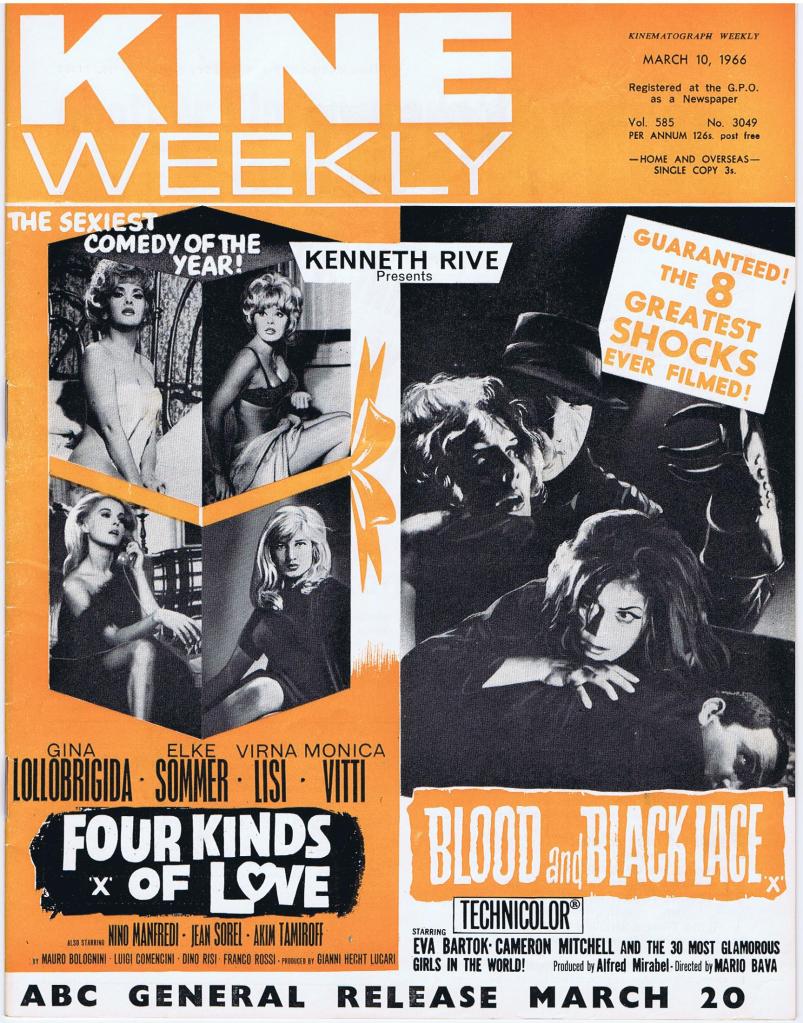
Jolly Films, the makers of “A Fistful of Dollars” already had experience of selling its films abroad. But as with Mario Bava’s “Blood and Black Lace” they were usually sold outright with no share of the box office and in turn sold as a supporting feature for a fixed price to an exhibitor.
Leone found a new backer in Alberto Grimaldi, an Italian entertainment lawyer who worked for Columbia and Twentieth Century Fox and had produced seven Spanish westerns. He promised to triple the first film’s budget to $600,000, with the director on a salary and 50 per cent profit share.
Success bred artistic confidence. A Fistful of Dollars had broken all box office records in Italy, grossing $4.6 million, and so Leone sought to improve on his initial offering and develop an “authorial voice.”
Thematically, with two principals, initially rivals who end up as “argumentative children,” it took inspiration from westerns like The Bravados (1958) – the photo and the chiming watch – and Robert Aldrich’s Vera Cruz which pitched Burt Lancaster against Gary Cooper. While bounty hunters had cropped up in Hollywood, they were not ruthless killers, actions always justified, rather than merely professionals doing their job. So in some sense Leone was drawing upon, and upending, films like Anthony Mann’s The Naked Spur (1953) and The Tin Star, Andre De Toth’s The Bounty Hunter (1954) and Budd Boetticher’s Ride Lonesome (1959). Just as Clint Eastwood’s bounty hunter underwent change, gradually the character played by Gian Maria Volonte evolved from a straightforward outlaw called Tombstone to a stoned, sadistic bandit named El Indio.
With artistic pretension came attention to detail. Leone required historical exactitude not just relating to weapons used, but their ballistics and range. Lee Van Cleef’s arsenal included a Buntline Special with removable shoulder stock, Colt Lightning pump action shotgun, Winchester ’94 rifle, and a double-barreled Lefaucheux. Carlo Simi’s town, constructed near Almeria, contained a two-storey saloon, undertaker’s parlor, barbershop, telegraph office, jail, hotel and an adobe First City Bank. And there was nothing pretty about it. The saloon was dirty and overcrowded, machines belching so much smoke it “looked as if a man could choke in there.” Filming took place between mid-April and the end of June 1965.
Perhaps the biggest area for improvement was the music. Ennio Morricone had scored another nine films since A Fistful of Dollars. Both director and composer had ambitious ideas about how to use the music. The score was not recorded in advance, nor was Morricone given a screenplay, instead listening while Leone told him the story and asked for individual themes for characters. Morricone would play short pieces for Leone and if met with his approval compose longer themes. Each character had their own leitmotif, sometimes the same instrument at different registers, the flute brief and high-pitched for Monco (Eastwood) but in a low register for Mortimer, church bells and a guitar representing El Indio. In a very real sense, they were experimenting with form. Bernardo Bertolucci regarded Morricone’s music as “almost a visible element in the film.” Musical ideas regarding El Indio’s watch, however, were developed at the rough cut stage, its repetitive melody becoming “sound effect, musical introduction and concrete element in the story.”
As well as creating music for audiences, Leone’s films are punctured with music that holds particular meaning for characters, here the watch and in Once Upon a Time in the West the harmonica, in both films flashback used to assist understanding.
The myth of why it took so long for either film to reach the United States was based on two misconceptions, firstly that Japanese director Akira Kurosawa, whose Yojimbo (1961) A Fistful of Dollars closely resembled, had blocked its progress, secondly that it relied on screenwriter Vincenzoni to make the breakthrough via a contact working for United Artists.
In fact, there were more obvious reasons for resistance from American distributors. In the first place, you could not discount snobbery. The notion that the country that had invented the western should now be reliant on importing them from Italy seemed a shade abhorrent. Although For a Few Dollars More was sold to 26 countries in a day at the annual Sorrento trade fair in 1965 – at the same fair a year earlier there had not been a single taker for A Fistful of Dollars – the United States was not among the buyers, distributors perhaps even more daunted by the prospect of introducing so much violence to American audiences reared on the traditional western.
Foreign movies that made the successful transition to the United States arrived weighted down with critical approval and/or awards or garlanded with a sexy actress – Brigitte Bardot, Anna Magnani, Sophia Loren among the favored – and risqué scenes that Hollywood dare not include for fear of offending the all-mighty Production Code.
But sex was a far easier sell in the U.S. than violence. And an actor with no movie marquee such as Clint Eastwood did not fill exhibitors with delight and even the notion that A Fistful of Dollars was a remake of Akira Kurosawa’s Yojimbo (1961) failed to stir the critics (as with The Magnificent Seven being a remake of Seven Samurai, most viewing the notion as repellent). So both the first and second pictures in the “Dollars” trilogy were stuck in distribution limbo for three and two years, respectively, before being screened in America.
And, initially, it had appeared that Italian audiences shared the same distaste for a cultural intruder such as A Fistful of Dollars. One cinema chain owner refused to book the film on the grounds that there were not enough female characters. A Fistful of Dollars was released in Italy in August, a dead period, since the month is so hot and everyone has abandoned the city for the beach. It opened – only in Florence and with neither publicity nor advertising – on August 27th 1964, a Friday, and did poor business that day and the next. But by Monday, it was a different story, takings had doubled and over the following two days customers were being turned away. New films typically played first-run for 7-10 days in Florence, A Fistful of Dollars ran for three months, triggering a box office story of Cinderella proportions.
But my research indicated there had been ample opportunity for an American distributor to snap up the rights to A Fistful of Dollars in 1965, two years before it was finally released there. In the first place, the music rights had already been purchased by New York firm South Mountain Music in March 1965 in expectation the film would acquire release that year. In December 1965 Arrigo Colombo, partner in Jolly, flew to the United States for the specific purpose of lining up a major distributor for A Fistful of Dollars. The company had previously secured U.S. distribution for horror product like Castle of Blood (1964) and Blood and Black Lace (1964) but those were outright sales.
With the movie already sold to Spain, West Germany, France and Japan, Colombo aimed to conclude a deal for the English-speaking market, “purposely holding back” from releasing the picture in those countries as he sought an all-encompassing contract. At that point, Kurosawa no longer stood in the way, that issue “now cleared up” settled in the normal fashion by financial inducement, in an “amicable settlement” Toho snagging the Japanese and Korean rights, the deal sweetened with a minimum $100,000 against a share of global profits. But Colombo went home empty-handed, unable to secure any deal and his temerity ridiculed by trade magazine Variety
Although Sergio Leone had one other legal obstacle to surmount that would not have got in the way of a U.S. distribution deal, the worst that could happen being that a contract might be struck with a different company. Italian companies Jolly Films/Unidis, which had backed the original, took umbrage at Leone going ahead with the sequel without their financial involvement, cutting them off from the profit pipeline. So in April 1966 they took Leone to court in Rome arguing that For A Few Dollars More “represented a steal as well as unlawful competition for its own Fistful.” Four months later the judge denied the claim on the grounds that “the character played by Clint Eastwood in each film is not characterized to such a degree that a likeness exists” (even though to all intents and purposes it was the same character, cigar, poncho, gun, bounty hunting!). Ironically, Italian laxity in such matters counted against Eastwood when he failed to prevent the distribution of a film based on two segments of Rawhide stitched together.
It would also be highly unusual if United Artists was not aware of both A Fistful of Dollars and For A Few DollarsMore since, in keeping tabs on the foreign performance of both Goldfinger (1964) and Thunderball (1965) the studio could scarcely fail to notice the Italian westerns close on their box office tail, the second western outpointing Thunderball in daily averages in Rome.
But the story still, erroneously, goes that it was the intervention of writer Vincenzoni which proved decisive. He had contacts in U.S, namely Ilya Lopert of United Artists. Grimaldi was, meanwhile, trying to sell U.S. and Canada rights relating to the second picture. Vincenzoni arranged for UA’s representatives to view A Fistful of Dollars in Rome and cut himself in for a slice of the profits when the distributor surprisingly purchased the entire series.
Since A Fistful of Dollars had already been sold to most major territories, UA could only acquire the North American rights – for a reported $900,000 – but for the other two films gained a considerably larger share of global distribution
United Artists was an unusual company among the Hollywood hierarchy, and not primarily due to recurrent Oscar success, but because it had, completely unexpectedly, hit box office gold with James Bond. There was nothing particularly odd about a series, as Tarzan, Sherlock Holmes etc (still flourishing in the 1960s) testified. What was distinctive about the Bonds was that each picture – the four so far had earned close to $150 million worldwide, not counting merchandising – had done better than the last, which went against the standard rule of sequels of diminishing returns and higher costs. Given the opportunity to buy into a ready-made series (two films in the can, the third in production) UA made an “attempt to calculatedly duplicate the (Bond) phenomenon” and in so doing “create a trend.” Assuming the movies would follow the Bond formula of increased grosses with each successive picture, the studio was prepared to spend “many hundreds of thousands” of dollars to establish the first picture.
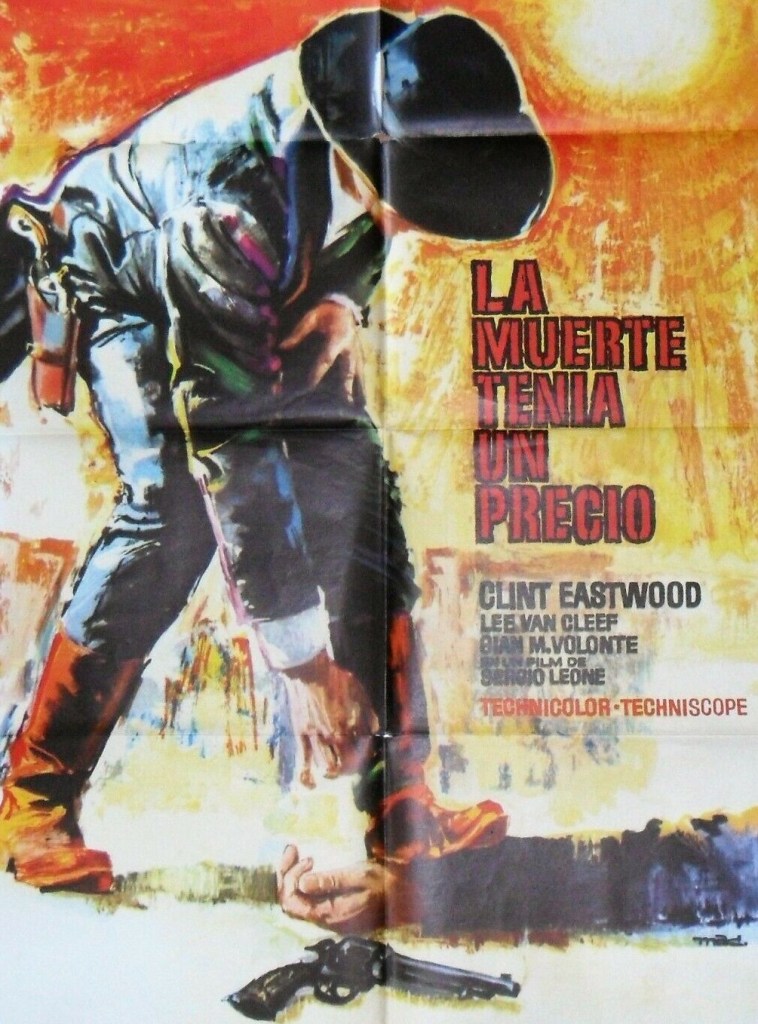
United Artists embarked on an unusual sales campaign to the trade. Instead of marketing the pictures one at a time, they started to promote the series with the tagline “A Fistful of Dollars is the first motion picture of its kind, it won’t be the last.” The advertising campaign was unusual in that it was based entirely around introducing the character rather than the story (much in the same way as James Bond had been), three separate slivers of the poster devoted to visual aspects, the cigar, gun and poncho, each carrying mention of “The Man With No Name,” such anonymity one of the talking points of the movies.
Cinema managers were briefed on release dates, A Fistful of Dollars in January 1967, the sequel for April and The Good, the Bad and the Ugly for Xmas that year. Like the Bonds, it was expected that box office would progressively, if not explosively, increase. The studio unveiled a “hard-hitting campaign” designed to “intrigue the western or action fan.”
However, the North American premiere was held not in the United States but Canada, at the Odeon-Carlton in Toronto. Having committed to a four-week engagement, a risky prospect for an unknown quantity, the cinema started advertising a teaser campaign three weeks in advance. During the first week, posters were not just focused on the “man with no name” but also “the film with no name” and the “cinema with no name,” all those elements removed from the artwork until the second week of the campaign. UA allocated $20,000 in marketing, up to four times the usual amount spent on a launch there, and was rewarded with strong results – “bullish but not Bondish” Variety’s verdict.
However, the UA gamble did not pay off, especially when taking into account the high cost of buying the rights allied to huge marketing costs. Initial commercial projections proved unrealistic. Despite apparently hitting the box office mark in first-run dates in key cities, the film was pulled up short by its New York experience. Shunted straight into a showcase (wide) release rather than a first-run launch, it brought in a pitiful $153,000 from 75 theaters – even The Quiller Memorandum (1966) in its second week did better ($150,000 from 25). As a consequence when For a Few Dollars More was released in April/May, UA held off boking it into New York until “a suitable arrangement” could be made, which translated into hand-picking a dozen houses famed for appealing to action fans plus 600-seat arthouse the Trans-Lux West.
United Artists predicted $3.5 million in rentals (the amount returned to studios after cinemas take their cut of the gross) for A Fistful of Dollars and $4.5 million with For a Few Dollars More. Neither came close, the latter the marginally better performer with $2.2 million in rentals (enough for a lowly 41st on the annual chart) with the first film earning $2.1 million in rentals (46th) way behind more traditional performers like Hombre ($6.5 million for tenth spot), El Dorado ($5.9 million in 13th) and The War Wagon ($5.5 million in 15th).
The vaunted Bond-style box office explosion never materialized and it might have helped if UA had kept closer watch on the actual revenues posted in Italy for the series. While For a Few Dollars More increased by $2 million the takings of A Fistful of Dollars, the final film in the trilogy, The Good, the Bad and the Ugly produced lower grosses than even the first.
However, it did look as if The Good, the Bad and the Ugly would come good. UA opened it in two first-run cinemas in New York where each house retained it for six weeks. But although the final tally of $4.5 million (24th spot in the annual rankings) was the best of the series, it did not herald returns that made it anywhere near comparable to the Bonds.
It’s possible the movies did better in terms of admissions than the box office figures show. Distributors pushing foreign product into arthouses were generally able to achieve a high share of the rental – 50 per cent the going rate – because they were able to set rival arthouses against each other and movies with a sexy theme/star had inbuilt box office appeal, La Dolce Vita (1960) and And God Created Women (1956) the classic examples. But that would not be possible when trying to interest ordinary cinemas with a film lacking in sex.
When I researched the early Bonds for a previous Blog, I found that United Artists had only managed to achieve bookings for Dr No (1962) by lowering its rental demand. Exhibitors paid the studio just 30 per cent of the gross. And I wondered if perhaps the same occurred with A Fistful of Dollars given the star, like Sean Connery, was completely unknown. Of course, it would not explain why the series did not grow as expected.
Of course, there was a surprising winner and an unexpected loser in the whole ‘Dollars’ saga. Clint Eastwood emerged as the natural successor to John Wayne with a solid box office – and later critical – reputation for American westerns starting off with Hang ‘Em High (1968) which beat The Good, the Bad and the Ugly at the box office, while Sergio Leone’s Once Upon a Time in the West (1969) proved a huge flop in the U.S.
Christopher Frayling, Sergio Leone, Something To Do With Death (Faber & Faber, 2000), p160-162, p165-200; “Italo’s Own Oater Leads Box Office,” Variety, December 2, 1964, p16; “South Mountain Buys Dollar Score,” Variety, March 10, 1965, p58; “Jolly’s Colombo Discovers N.Y.C. Busy at Xmas,” Variety, December 22, 1965, p3; “Tight Race for Box Office Honours in Italy Looms as Thunder Leads Dollars,” Variety, January 65, 1966, p15; “Dollars World Distribution for UA,” Variety, March 22, 1966, p22; “Clint Eastwood Italo Features Face Litigation,” Variety, April 13, 1966, p29; “UA Cautious on Links to Italo Fistful; Faces Slap from Kurosawa,” Variety, July 13, 1966, p7; “Rome Court Rejects Plea for Seizure of Few Dollars Made By Fistful Film,” Variety, August 3, 1966, p28; “Clint Eastwood vs Jolly on 2 Segs of Rawhide ‘Billed’ New Italo Pic,” Variety, September 7, 1966, p15; “Italy Making More Westerns, Spy Films Than Star Vehicles,” Box Office, October 31, 1966, p13; “Hemstitched Feature,” Variety, November 23, 1966, p22; “UA Division Holds Screenings of Westerns,” Box Office, December 12, 1966, pE2; Advertisement, Variety, December 21, 1966, p12-13; “UA Gambles Dollars As Good As Bonds,” Variety, December 28, 1966, p7; “Fred Goldberg Shows Ads on UA ‘Dollar’ Films,” Box Office, January 2, 1967, pE4; “Review,” Box Office, January 9, 1967, pA11; “Fistful of Dollars: Male (and Italo) B.O.,” Variety, January 18, 1967, p7; “Fistful of Dollars: The Glad Reaper,” Variety, February 1, 1967, p5; “This Week’s N.Y. Showcases,” Variety, February 8, 1967, p9; “Fistful’s Weaker N.Y. B.O. Clench,” Variety, February 8, 1967, p7; “Methodical Campaign Kicks Off Ideal Fistful Ballyhoo in Toronto,” Box Office, May 1, 1967, pA1; “Few DollarsMore Runs 30% Ahead of First Dubbed Italo-Made Western, So Bond Analogy Makes Out,” Variety, May 31, 1967, p4; “N.Y. Slow to Fall Into Line,” Variety, May 31, 1967, p4; “B’way Still Boffo,” Variety, July 12, 1967, p9; “Carefully Picked,” Variety, July 12, 1967, p4; “B’way Biz Still Big,” Variety, July 19, 1967, p9; “Big Rental Films of 1967,” Variety, January 3, 1968, p25; “B’way B.O. Up,” Variety, January 31, 1968, p9; “Big Rental Films of 1968,” Variety, January 8, 1969, p15.
Sergio Leone played the numbers game – one hero/anti-hero for debut A Fistful of Dollars (1964), doubling down in For a Few Dollars More, bad guys in triplicate for The Good, the Bad and the Ugly (1966) and virtually an entire spread – Charles Bronson, Henry Fonda, Jason Robards and Claudia Cardinale (not quite fitting the anti-hero mold) – for his masterpiece Once Upon a Time in the West (1969), upping the artistic ante with every episode. For a Few Dollars More is part sequel, part caper and part dress rehearsal.
Looking back on this Leone venture now you can’t help but be influenced by what followed in particular Once Upon a Time in the West, and the way in which themes, ideas and characters introduced here are more fully developed. You could start with the musical motif. Here a fob watch that plays a little tune, as important to its owner, the outlaw El Indio, as Bronson’s harmonica and coming complete with revelatory flashback. Oddly enough, you can find comparison between El Indio and railroad baron Morton from the later film in their almost orgasmic expressions (El Indio is stoned half the time, possibly the first western villain to be hopped up on marijuana) to what they perceive as a dream (water in the case of Morton). As with Once two enemies team up, here Eastwood and Lee Van Cleef, there Bronson and Fonda, and there’s an almost identical sequence when the pair, working in tandem, clear a street of gunmen. Although there’s no revolving camera, the final shoot-out takes space in a space marked out as a circle.
Revenge here is triggered by a murdered sister rather a brother. And Indio is at least as clever as Fonda, matching him in grandiose ambition and treachery. And there’s even an irritating insect, and a railroad, but that’s just a nuisance. Perhaps the most telling moment in Once, the one where Leone took command of his artistry was in the massacre at the ranch, a child brutally dispatched on screen whereas here when a child is murdered it is off-screen.
The story’s an unusual one for a sequel. Having established the Man with No Name (Clint Eastwood) – actually given a name here, Monco – as a gunslinger par excellence, the new film pits him against Colonel Mortimer (Lee Van Cleef) not just a rival bounty hunter but in some senses smarter. If it came to a shootout, the longer range of the Colonel’s weaponry would challenge Monco’s skills. When they discover they are both seeking the same wanted man, El Indio (Gian Maria Volonte), they decide to join forces. Monco, however, is tasked with being the inside man and must join the gang.
Halfway through, the picture switches tack and becomes a caper movie. El Indio plans to knock off the “fortress” of a bank in El Paso to the tune of half a million dollars. So, unexpectedly perhaps for a western, we get the usual heist preparation and logistics. El Indio’s cunning plan pivots on creating a diversion by robbing a bank elsewhere, Monco part of the small group tasked with that job. Turns out El Indio is disinclined to share the spoils, making the job of the bounty hunters easier by arranging for his own bunch to be killed off.
The twists and turns of the plot, El Indio trying to outwit everyone, Colonel Mortimer not easily duped, gives this more zip than you might expect. Sure in the first 20 minutes the body count is exceptionally high, but once it settles down becomes more character-driven.
There’s a surprising amount of humor, a boy huckster ripping off Monco, a trio of gunslingers turning tail after a demonstration of Mortimer’s marksmanship, a rapacious wife lusting after a “tall” man since, in a visual punch line, her husband is revealed as short.
The German poster eliminated Lee Van Cleef in favor of local box office hero Klaus Kinski.
And, of course, there is Leone’s visual splendor, his unrivalled ability to create scenes, build tension, not quite to the baroque levels of Once but getting there, the “hat” shoot-out, Mortimer standing tall nonplussed as bullets zing along the ground coming closer and closer. Supporting characters are well observed, El Indio’s sidekicks Nino (Mario Brega) and Groggy (Luigi Pistilli), though in the scene-stealing stakes nobody can beat the glowering scene-stealer-in-chief, Juan Wild (Klaus Kinski), who scarcely needs to be saddled with a hunchback to steal a scene.
It was a rehearsal for Ennio Morricone too, as he developed individual themes from individual characters. It took a posse of writers to nail this down – Leone, sometime producer Fulvio Morsella (My Name Is Nobody, 1973), Luciano Vincenzoni (The Good, the Bad and the Ugly), Sergio Donati (Once Upon a Time in the West), Fernando Di Leo (Kiss, Kiss, Bang, Bang!, 1966) and Enzo Dell’Aquila (Seven Guns for the MacGregors, 1966).
Note: although movies could often take a while to work their way round the world, the first two “Dollars” pictures, despite their success in Continental Europe, took forever (in Hollywood terms) to reach the U.S. and Britain, not reaching either country till 1967, hence the oddity of the release date.