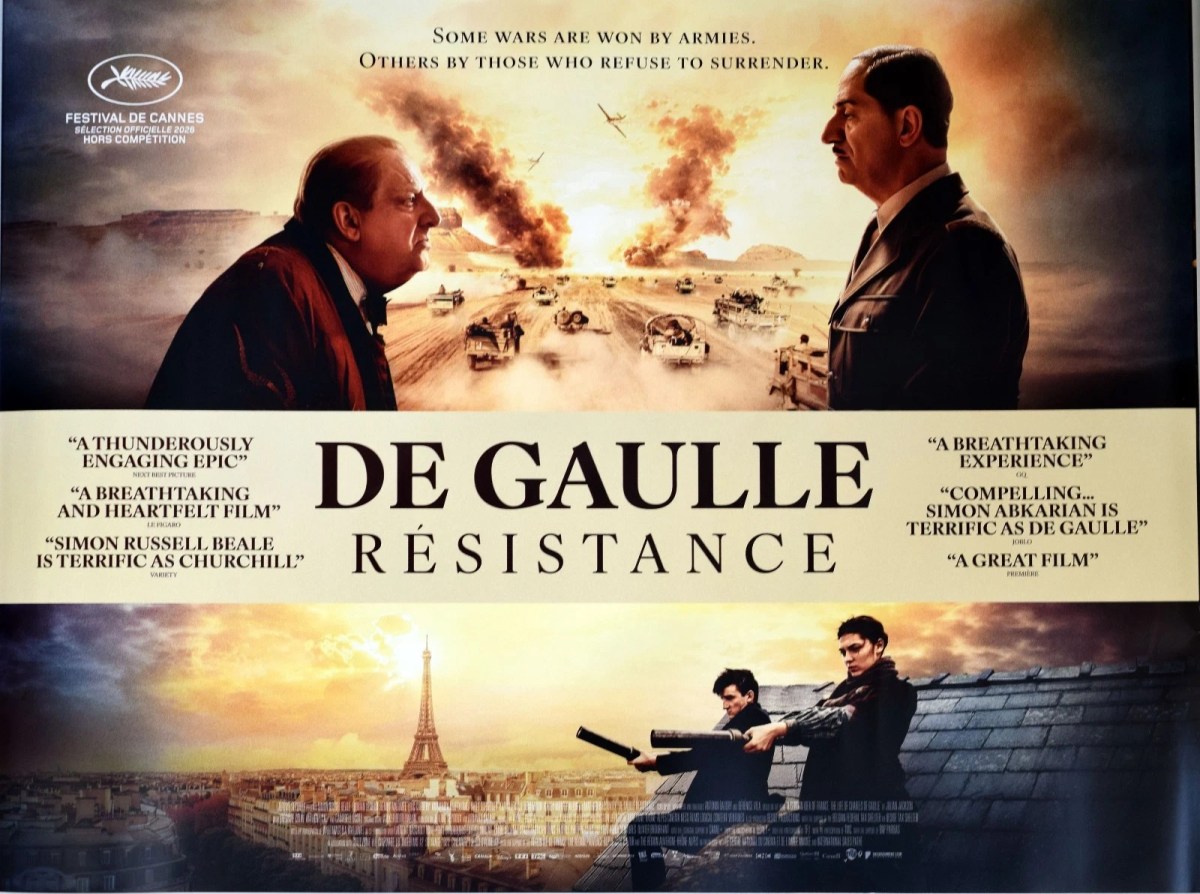
As far as the Brits and Americans were concerned the North African campaign of World War Two consisted of the former’s Field Marshal Montgomery knocking hell out of German General Rommel at El Alamein and the latter’s General Patton demolishing Panzer divisions at will. The fact that the British victory would not have occurred except for one largely forgotten battle has been completely ignored. The Brits were holed up in Tobruk with even less chance of escaping the combined German and Italian armies than at Dunkirk, no fleets of small boats likely to come to the rescue in the Mediterranean.
It took an incredible stand-off at a tiny desert post called Bir Hakeim to buy the British enough time to escape to Tobruk and regroup and eventually conquer Rommel at El Alamein.
Who inhabited this outpost and sacrificed thousands of lives? The nascent Free French Army of around 4,000 men, commanded by veteran General Koenig (Benoit Magimel,) with neither tanks nor airplanes holding out against the vastly superior forces of Rommel fully equipped with both tanks and airplanes.
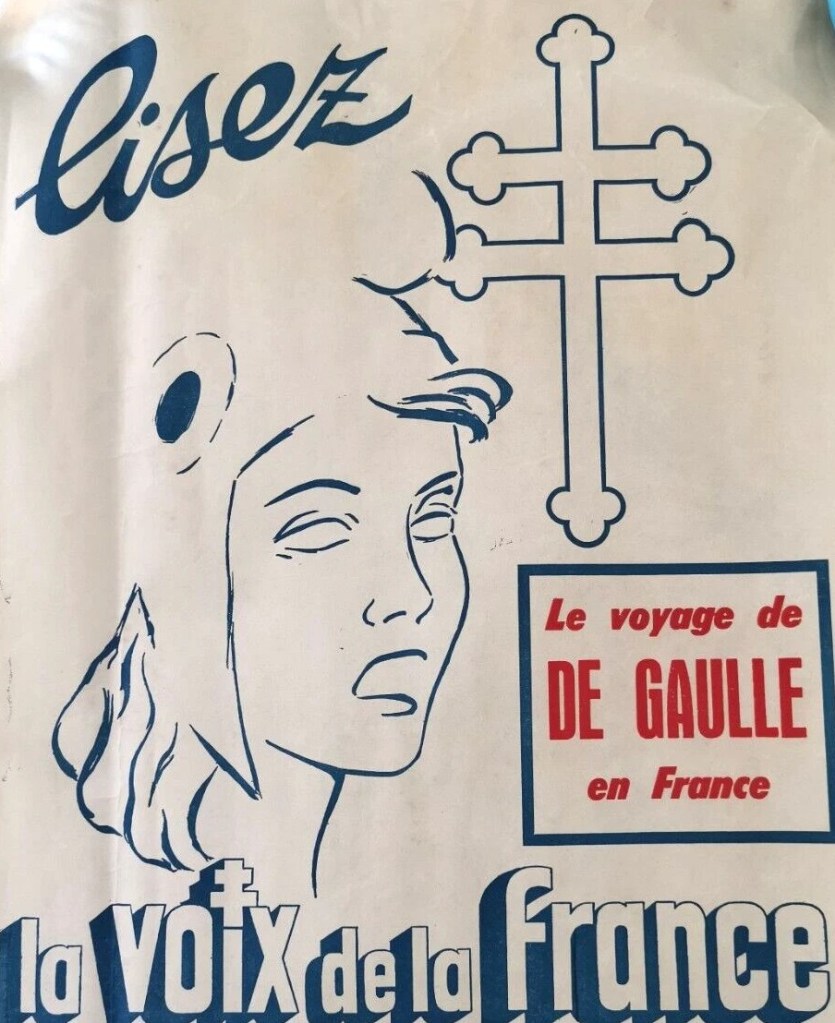
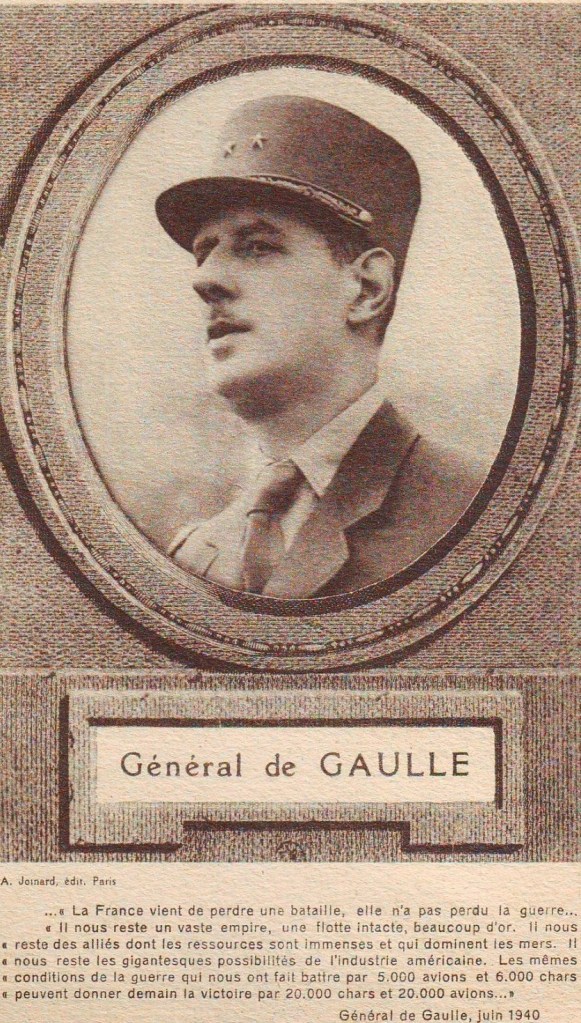
Just one of the many nuggets in this totally absorbing film about the titular French general, exiled in London, who became the voice of French Resistance after Marshall Petain had surrendered to the invaders and set up the collaborative Vichy government.
It was a heck of a feat for De Gaulle because even in France nobody had a clue who he was. At the start of the war he was an insignificant colonel way down the pecking order and I doubt if any of the French people knew of his courageous counter-attack against the Germans. The Brits had even less of a clue about him and his arrogance certainly didn’t endear him to the British upper classes who were running the country.
Support for him among the various French officials living in London was negligible and for a good while he looked like a raving madman with his insistence that France had not surrendered. After the war, he was famously a thorn in the British side, and from this film you can see why as he was subjected to personal humiliation and betrayal by his supposed Allies. But he did have panache, chutzpah, and that was something Churchill, an old soldier himself, admired.
He launched what appeared the most bizarre offensive against the Germans, aiming to set off a tinderbox of revolt among the French colonies in Africa, beginning with Chad and Cameroon, hoping that such insurrection would spread to Dakar and Algiers on the North African coast and thus make it easier for the Allies to attempt a landing. Given that his forces on the ground numbered between one and six, this was either strategic genius or the work of a deluded lunatic.
Luckily, the colonies, thousands of miles away from the Germans, could ignore Petain and raise up the French flag in defense. The plan fell to pieces, however, when De Gaulle shot himself in the foot by refusing to allow the British Navy to attack Dakar since it was being held by French troops and he didn’t want to kill his own countrymen, as the British had done when it destroyed the French fleet to avoid it falling into German hands.
At various points, De Gaulle is stabbed in the back by Churchill and his own group in England, betrayed, exiled even in his exile, routinely treated as a nobody. He should have salvaged his reputation at Bir Hakeim, given the murderous action permitted the Brits to escape Tobruk, and while he was feted in the streets and praised in the British newspapers, he was still distrusted by the Allies and when Algiers was liberated it was collaborator Admiral Darlan (Mathieu Kassovitz) who was put in charge of all the French forces in Africa.
Luckily, there was a deus ex machine to hand, a young man called Fernand (Florian Lesieur), who appeared to interrupt general proceedings in the movie from time to time and whose sole role, it would appear, was to prove that there was resistance on the ground in Paris although at that point it merely took the form of demonstrations. Fernand was in many ways an echo of De Gaulle. When he first called upon Parisians to rise up in civil disobedience, only a handful responded. Later, he, too, entered exile, in Algiers. Fortunately, he was at hand to assassinate the French commander, leaving the way open for De Gaulle to regain command.
You’ll have to wait till Part Two of this epic epic (we’re talking nearly six hours in total) to discover what happened next.
You’ll find me in that audience. We’re familiar with Churchill’s struggles in World War Two, but although I knew De Gaulle was the self-proclaimed leader of the Free French, I had no idea who he was and what he actually did. In truth, the image most fixed in my mind about the man who later became the French President was that he was the guy who ducked to avoid an assassin’s bullet but that was merely a fiction – The Day of the Jackal.
A ton of this is just politics, but it’s the nerve-shredding politics of trying to hold your ground when you’re being hammered on all sides.
Simon Abkarin (Casino Royale, 2006) is superb in the title role, given the opportunity to express all sides of the General’s character – petulance, arrogance, cunning, loyalty, stoicism, determination, willpower, self-belief – and the moments when he realizes he is condemning his valiant Free French troops to death by insisting they do not attempt to escape Bir Hakeim, but fight a rearguard action to the bitter end (or until the British evacuated Tobruk), is immensely moving.
Simon Russell Beale (The Magic Faraway Tree, 2026) portrays the hard-drinking British leader, perplexed by De Gaulle’s behavior that threatens to ruin his relationship with the President Roosevelt (Campbell Scott). Florian Lesieur (Cassandre, 2024) has to touch on as many emotions as Abkarin. With Abkarin and Lesieur hogging the dramatic high notes, there’s not much room for another breakout performance but I suspect we’re going to see more of Anamaria Vartolomei (The Count of Monte Cristo, 2024) who plays Livia, the Jewish friend of Fernand.
Superbly directed by Antonin Baudry in only his second movie after The Wolf’s Call (2019). As much as we are looking in the direction of young bucks who can turn a million-dollar budget into sheer gold in horror pictures like Backrooms (2026), we should also be acknowledging someone who can handle a bigger-budgeted effort with such aplomb. He co-wrote the screenplay with Berenice Vale in her movie debut based on a book by Julian T. Jackson.
Exceptional. Highly recommended.

 The Magnificent 60s
Seeing this on the weekend.
LikeLiked by 1 person
Hope you enjoy it.
LikeLiked by 1 person