Template for The Godfather (1972) and Succession. King Henry II (Peter O’Toole) has to choose an heir from Richard (Anthony Hopkins), Geoffrey (John Castle) and John (Nigel Terry). Helping set the Machiavellian tone are Henry’s wife Eleanor (Katharine Hepburn), his mistress Alais (Jane Merrow) and French King Philip II (Timothy Dalton). Cue plotting, confrontation, double-crossing, rage and lust.
Some other complications: the queen is actually a prisoner, the result of organising a failed coup against her husband, the sons participating in this attempt to overthrow their father, and with Henry willing to sacrifice his mistress in order to achieve an alliance with Philip, relations are less than cordial all round. Eldest son Richard, strong and aggressive, would be the obvious choice, and should be the only choice I would guess by law, but Henry prefers the youngest son John, who is weak, while the middle son Geoffrey is the most savvy (see if you can guess how easily these characters fit The Godfather scenario, or Succession for that matter). Geoffrey reckons that even if passed over for the top job, he will rule from behind the scenes as John’s chancellor.
This is not your normal historical picture with battles, romance and, let’s be honest, costumes, taking central stage. And there’s little in the way of rousing speeches. Virtually all the dialog is plotting. And, like Succession, there are elements of vitriol and pure comedy. In five crisp opening scenes we know everything we need to know. The King brings his family together for Xmas, the Queen freed for the occasion, to decide the succession. Richard is shown in hand-to-hand combat, the wily John leading a cavalry attack, the whiny John pouting and complaining, Alais realizing just how much a pawn she is in the game as Henry explains she is to be married off to Richard.
And if you are not the chosen one, your only chance of gaining the throne is by the back door, by having a powerful ally in your pocket, one whose armies would threaten the King, which is where Philip comes into the equation as potential kingmaker. Let the intrigue begin, especially as those who ought to be little more than bystanders – the women – have ideas of their own. “I’m the only pawn,” says Alais, “that makes me dangerous.” Despite her current status, Eleanor still owns the French province of Aquitaine and taunts her husband by revealing that she slept with his father.
The plot twists and turns as new alliances are formed between the conspiring individuals. The overbearing Henry will certainly remind you of Logan Roy, “When I bellow, bellow back.” And there is a Hitchcockian element in that we, the audience, know far more than the participants and wait for them to fall into traps. Richard is revealed as homosexual, having had an affair with Philip.
The dialogue is superb, brittle, witty, and it could have been all bombast and rage except that emotion carries the day. Henry clearly could not have wished for a better Queen than Eleanor, more than capable of standing up to him, more capable than any of his sons, and he probably wishes she was by his side rather than confined, as by law, to prison. Eleanor still retains romantic notions towards him, even as she forces him to kiss his mistress in front of her – only the audience sees the truth revealed in her eyes, not Henry who is too busy kissing. The uber-male Richard complains to Philip that he never told him he loved him.
Maternal and paternal bonds ebb and flow and throughout it all is the dereliction caused by power. A father will lose the love of the children he rejects. Or, realizing they are more powerful together than as individuals, they could turn against him. The mother faces the same fate – she risks losing the love of the ones she does not back.
Unlike Alfred the Great, the monarchs have stately castles, so the backdrops are more commanding, but once an early battle is out of the way, it is down to the nitty-gritty of plot and counter-plot. A truly satisfying intelligent historical drama.
Peter O’Toole (Lawrence of Arabia, 1962) had played Henry II before in Becket (1964) and is in terrific form. Katharine Hepburn (Guess Who’s Coming to Dinner, 1967) won her second successive Oscar – and her third overall – in a tremendous performance that revealed the inner troubles of a powerful woman, Anthony Hopkins (When Eight Bells Toll, 1971) gave an insight into his talent with his first major role.
John Castle (Blow Up, 1966), Nigel Terry (Excalibur, 1981), Jane Merrow (Assignment K, 1968) and future James Bond Timothy Dalton, in his movie debut, provide sterling support, Dalton and Castle especially good as a sneaky, conniving pair.
This was an odd choice for a roadshow – at just over two hours considerably shorter than most of the genre. But the 600-seat Odeon Haymarket in London’s West End was an ideal venue for building word-of-mouth and it ran for over a year.
Modern audiences might bristle at the idea of woman as commodity, but women in those days were the makeweights in alliances of powerful men, though the fact that they bristle at the notion as well evens up proceedings, Eleanor in particular happy to jeopardize Henry’s ambitions in favor of her own, Alais warning Henry to beware of the woman scorned.
Director Anthony Harvey (Dutchman, 1966 ) was deservedly Oscar-nominated. James Goldman (Robin and Marian, 1976) won the Oscar for his screenplay based on his Broadway play which had not been in fact a runaway Broadway hit, only lasting 92 performances, less than three months. John Barry (Zulu, 1963) was the other Oscar-winner for his superb score.
In theory a cult film in the making. In reality, how is it even possible for a film to achieve cult status these days? Back in the day, there were a variety of routes. Reissue, for example, saved The Magnificent Seven (1960) from box office oblivion in the United States – but as a tool for building cult from a genuine revival wide release that’s gone. When was the last time you saw an arthouse event revival as epitomized by Metropolis (1927) or Abel Gance’s Napoleon (1927)? Does anyone even run midnight screenings any more – the way The Rocky Horror Picture Show (1975) wormed its way into huge profit? Could a DVD release work its magic the way it did for box office flop The Shawshank Redemption (1994).
The “long tail” that kept movies in circulation for decades is long gone. How long do movies even survive on streaming? No streamer has the technology to literally keep thousands of movies available online for the time it would take for an underrated movie to pick up the head of steam necessary for reassessment.
For sure, this isn’t the greatest film ever made and it could certainly due with trimming, lop off the 15-20 minutes devoted to tedious exposition and cut down on the need to get reaction shots from each of its main characters any time anyone says something interesting. But it has certainly misfired at the box office, in part I guess because it was set up as Valentine’s Day counter programming but is so wacky that it didn’t stand a chance against the romantic box office powerhouse of Wuthering Heights.
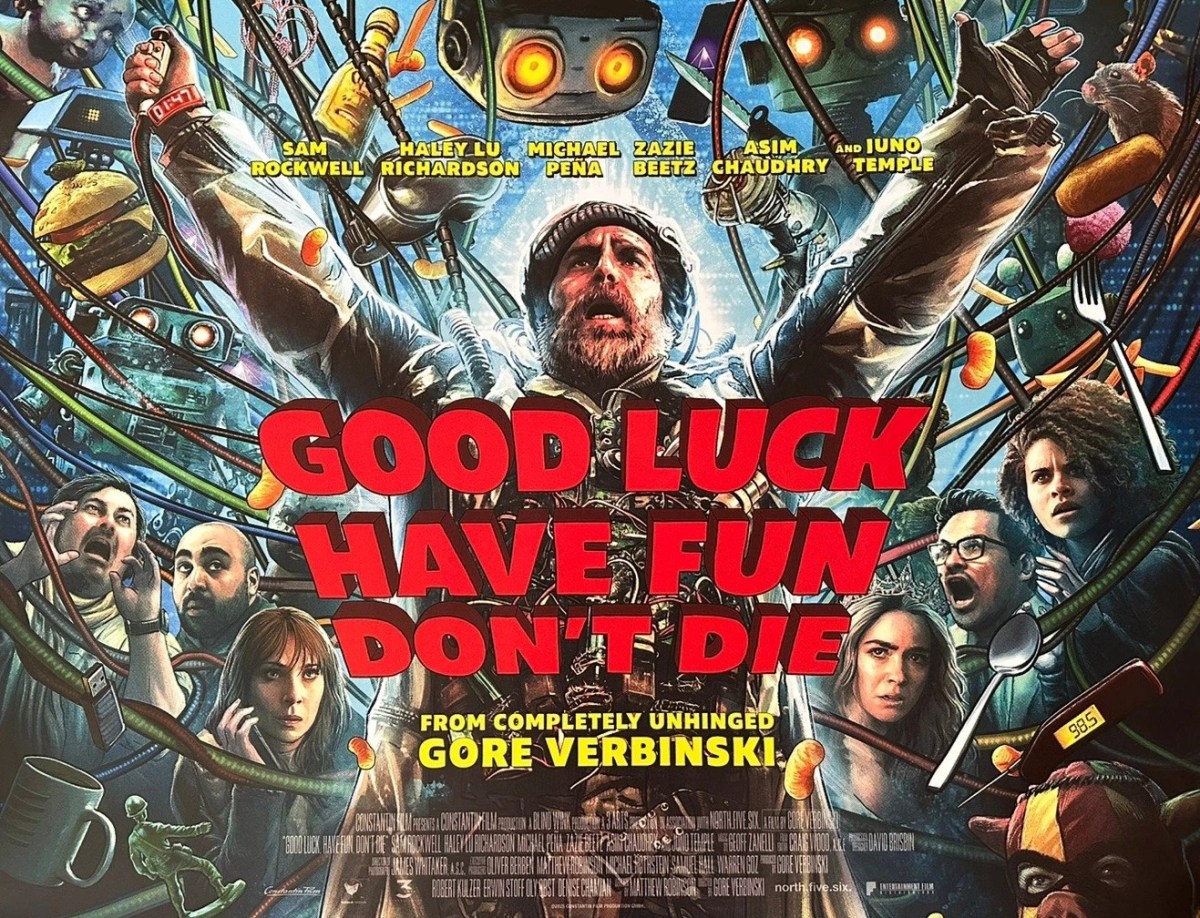
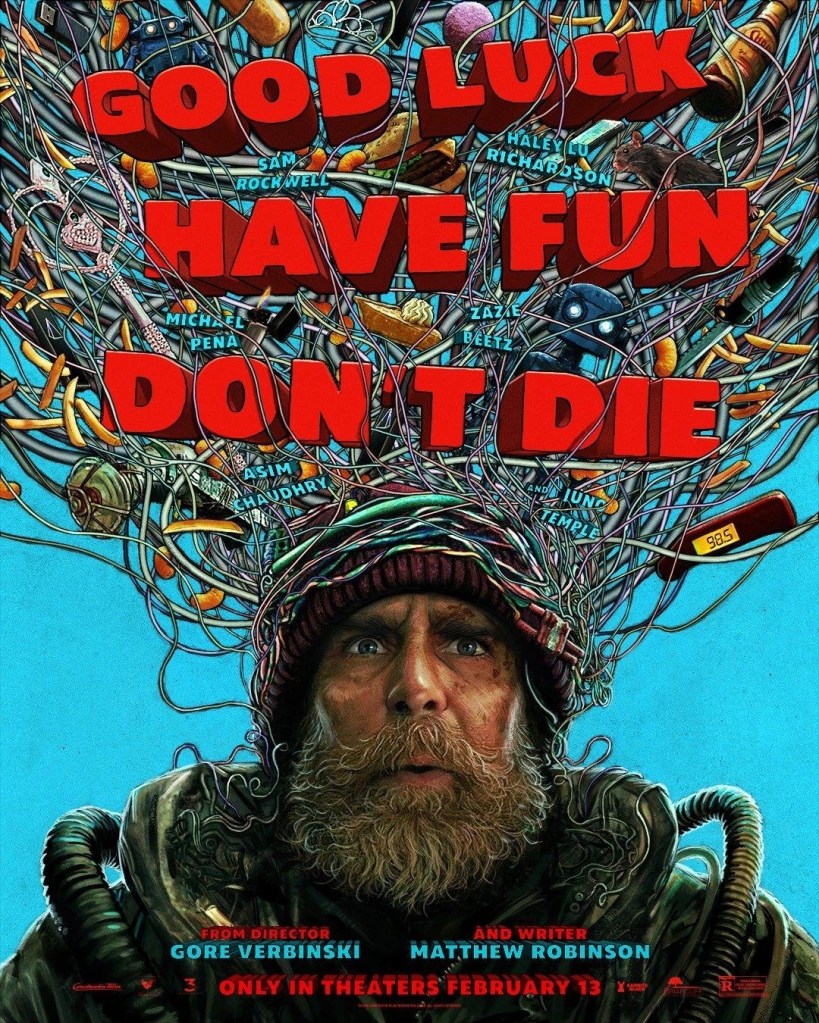
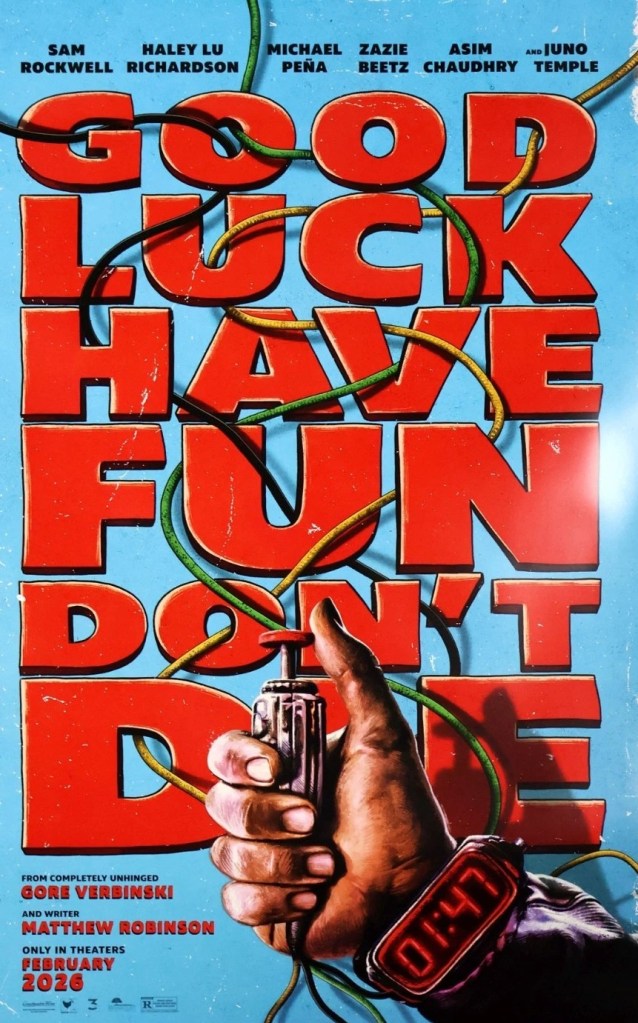
Forget about the main storyline of AI taking over the world and concentrate on the other aspects which make this an enticing number. Its antecedents are appealing. For a start it draws on Groundhog Day (1993), The Twilight Zone (1959-1964), The Magnificent Seven (1960), 2001: A Space Odyssey (1968) – twice I should add, once in technological rebellion and once in a version of the “star child”- the cover art from Pink Floyd album Dark Side of the Moon, Interstellar (2014), Back to the Future (1985), reimagines the zombie movie if you imagine the zombies as a horde without the slime and teeth, and finishes with the kind of stinger that the best sci fi movies deliver – think the original Planet of the Apes (1968) or the original Carrie (1976).
Intrigued? You should be. Some of the concepts here are just terrific especially when it slips into flashback and we discover what kind of world the characters inhabit. School shootings are so common that the U.S. Government helps finance clones to replace your dead child. Dare switch off any teenager’s mobile phone and they come after you in a predatory pack. You can choose to live in virtual reality over the real world.
Someone being sent back from the future to save the world from apocalypse is a fairly straightforward sci fi trope. But this time, the threat emanates from a nine-year-old child. In any other picture, especially in this genre, you would just send a crack military outfit to eliminate the kid. But people here have principles. So instead The Man from the Future (Sam Rockwell), decked out like a homeless dude except with a bomb, has to recruit a team of individuals, most of whom you wouldn’t trust to form a community baseball team, from a diner.
So we’ve got grieving mother Susan (Juno Temple), lovelorn Ingrid (Haley Lu Richardson) decked out in a princess outfit who’s medically allergic to mobile phones, ineffective substitute teacher Mark (Michael Pena) and potential girlfriend Janet (Zazie Beets), and your standard grumpy guy Scott (Asim Chaudry). Their mission doesn’t look that complicated – they’ve hardly got to cover a mile to reach their destination – which is just as well because you wouldn’t trust any of them to get your back much less expect them to clamber over a fence. Not all are going to make it. The Man from the Future has done this before – 117 times it transpires – but never achieved his mission.
It does need to get quicker to the brilliant climax and the stinger scenes that follow. The truth vs reality vibe is a bit over complicated. And I doubt if anyone has been waiting with bated breath – that would be a nearly decade-long wait – for the latest effort from director Gore Verbinski (Pirates of the Caribbean franchise).
Sam Rockwell (Argylle, 2024) is covered in a beard and all sorts of stuff which conceals all his annoying acting tics, Juno Temple (Roofman, 2025) has the most emotional part and Michael Pena the most baffled and Zazie Beets (Bullet Train, 2022), Haley Lu Richardson (Love at First Sight, 2024) and Asim Chaudry (People Just Do Nothing: Big in Japan, 2021) do well and in his movie debut creepy kid Artie Wilkinson-Hunt is in the top bracket of creepy kids. Written by Matthew Robinson (Love and Monsters, 2020).
Not as wacky as it sounds, especially when all the apparently random themes start adding up and connect into terrifying logic.
It was much better than I expected. And probably the first potential cult film denied such status by the onset of streaming.
Not cut out for the musicals, comedies, historical adventures (let’s not count The Greatest Story Ever Told, 1965), thrillers, dramas, and spy pictures that dominated that 1960s the western was John Wayne’s default. After his initial battle with lung cancer, he enjoyed an extended period of success in Henry Hathaway’s The Sons of Katie Elder (1965), Howard Hawks’ El Dorado (1967) and Burt Kennedy’s The War Wagon (1967) before diversifying in Vietnam war picture The Green Berets (1968), which he directed and was also a hit, and Andrew V. McLaglen oil drama Hellfighters which did, however, fall short of his high box office standards. So when any big western picture was mooted, it was either Wayne or James Stewart to whom producers first came calling. But when the actor particularly wanted a part, he usually got it.
Charles Portis was a journalist with one modern novel, Norwood published in 1966, to his name when he wrote True Grit, published in 1968, which, unusually for a western, spent 22 weeks in the New York Times bestseller list. The main attraction for a reader was the equally unusual first-person narrator, Mattie Ross, towards the end of her life telling the tale of how as a 14-year-old in Arkansas she sought bloody revenge for the death of her father. The narrative voice was highly individual with colorful phrases, punchy dialogue, and a taut storyline.
Producer Hal Wallis snapped it up for $300,000, beating out Wayne’s Batjac operation. Wallis had been making his own pictures for over two decades, having originally overseen films as varied as swashbuckler Captain Blood (1935) and Casablanca (1942). He also had a western pedigree, having set up John Sturges’ Gunfight at the O.K. Corral (1957), The Sons of Katie Elder and Five Card Stud (1968) with Dean Martin and Robert Mitchum.
The movie went into speedy production, barely a year from the novel’s publication to the world premiere. From the start Wallis had Wayne in mind for Rooster Cogburn, with Robert Mitchum as back-up. Mia Farrow turned down the role of Mattie Ross when she found out the director was to be Henry Hathaway. Genevieve Bujold turned it down because she didn’t want to work with Wayne. Wayne favored Katharine Ross (The Hellfighters, 1968) or Michele Carey (El Dorado) or his daughter Aissa whom Hathaway ruled out. Sally Field from the television series The Flying Nun was also considered, but the part finally went to 21-year-old Kim Darby.
She had been in the movies since 1963 (an uncredited role in Bye, Bye, Birdie) and, excepting small roles in Bus Riley’s Back in Town (1965) starring Ann-Margret, fourth-billing in both the low-budget The Restless Ones (1965) and Arthur Penn television movie Flesh and Blood (1968), confined to guest roles in routine television series such as The Fugitive, Star Trek, Gunsmoke and Bonanza.
Elvis Presley was touted for the role of Le Boeuf but manager Col. Parker insisted his client receive top billing and the role went to another popular singer Glen Campbell, who had made his movie debut in The Cool Ones (1967). Robert Duvall, filling the boots of Lucky Ned Pepper, was also a refugee from television (The Outer Limits, The Fugitive, Combat) although he had delivered a memorable performance as Boo Radley in To Kill a Mockingbird (1962) and had risen to third-billing for Francis Ford Coppola’s The Rain People (1969).
Henry Hathaway, a former child actor, had directed 60 movies beginning in 1932. But he had learned about direction at the feet of Josef von Sternberg and Victor Fleming, both hard taskmasters, and only made the move into megging at the third attempt. First of all, he had spent nine months touring India with the idea of making a film in the style of silent documentaries Grass: A Nation’s Battle for Life (1925) or Chang: A Drama of the Wilderness (1927). He managed to attract the interest of Irving G. Thalberg but the producer died before funding materialized. Next, Paramount planned to hire him when the studio planned an early 1930s investment in color but got cold feet and the idea was dropped. Finally, when Paramount decided it was going to make its own westerns, rather than buying them in, he was hired to direct Heritage of the Desert (1932) starring Randolph Scott but after six more in that genre – being paid $100 a week for the first two and then $65 a week for the next two after the Depression bit – he hit pay dirt with adventure The Lives of a Bengal Lancer (1935) with Gary Cooper and comedy Go WestYoung Man (1936) with Mae West.
When Paramount finally embraced three-color Technicolor they chose Hathaway to direct adventure The Trail of the Lonesome Pine (1936) starring Sylvia Sidney and Fred MacMurray. “It cannot be merely accidental that he was selected,” commented historian Kingley Canham, arguing that Hathaway had “more than just an aptitude for freshening familiar material through technical resourcefulness.”
And like John Ford he was economical with the camera. “I only shoot what can be used so the producer has no choice…I always cut in the camera, the cutter just has to put the ends together,” he said. Determined to achieve verisimilitude, instead of using studio hand-made locusts for biopic Brigham Young (1940), he travelled to Nevada where had been a big invasion of the insects. Except for this film and The Shepherd of the Hills (1941), starring Wayne, he steered clear of westerns, preferring action and drama. However, he was instrumental in helping Wayne extend his acting style. For Shepherd of the Hills, Hathaway “added new subtleties to the already characteristic western hero persona – the roiling gait and economy of dialog were still very much in evidence but his acting was more mature, more sensitive, and more assured.”
He was called upon to demonstrate further technical mastery in the first of Twentieth Century Fox’s semi-documentary dramas The House on 92nd St (1945) followed by film noir Dark Corner (1946) and Kiss of Death (1947). He made his first western in a decade with Rawhide (1951) toplining Tyrone Power and Susan Hayward and only two other westerns in the 1950s – Garden of Evil (1954), teaming Cooper and Hayward, and Hell to Texas (1958) with Audie Murphy, the twist in this one being the hero rather than the villain subjected to a manhunt. Another technical innovation came with The Desert Fox (1951), where he “did the whole raid before the titles,” the first time any action had been shown prior to the rolling of the opening credits.
He was so impressed with the acting skills of Marilyn Monroe in Niagara (1953) that he purchased Somerset Maugham’s Of Human Bondage intending to team her with Montgomery Clift, but nothing came of the concept. He worked with Wayne again in Legend of the Lost (1957) co-starring Sophia Loren.
But, like Wayne, he returned in triumph to the western in the 1960s, all bar two of his movies in this decade in this genre, the first four of the decade starring Wayne – North to Alaska (1960), How the West Was Won (1962), Circus World (1964) and The Sons of Katie Elder. He had finished up on Five Card Stud when Hal Wallis invited him to direct True Grit. He had only received one Oscar nomination, four decades previously, for The Lives of a Bengal Lancer, and no avant garde French film critic was reassessing his work, but he was known to bring movies in on time, and had his own distinct style if anyone could be bothered looking for it.
Certain themes did reappear, revenge for one, which was central to The Trail of the Lonesome Pine, Kiss of Death, historical adventure The Black Rose (1950), Prince Valiant (1954) with James Mason, The Sons of Katie Elder and Nevada Smith (1966) starring Steve McQueen. He also focused on disruption within the family, and situations where an older man aids an impetuous youngster, both instrumental to True Grit. “He is the only director I know,” observed Kingsley Canham, “to have specialized in films about backwoods and mountains.”
Screenwriter Marguerite Roberts was also old-school, born in 1905, with over 30 screen credits. She sold her first script while working as a secretary at Fox, had her first screen credit in 1933 for Sailor’s Luck. By 1939 she was earning $2,500 a week at MGM and turned out Honky Tonk (1941) with Clark Gable and Lana Turner, Sea of Grass (1946) with Katharine Hepburn and Spencer Tracy, Gunga Din remake Soldiers Three (1951) and big-budget historical adventure Ivanhoe (1951) with Robert Taylor and Elizabeth Taylor.
Like Abraham Polonsky she fell out of favor with Hollywood for her left-wing sympathies and was blacklisted for nearly a decade until Daniel Petrie’s The Main Attraction (1962) with Pat Boone and Nancy Kwan, Guy Green’s Diamond Head (1962) with Charlton Heston and Rampage (1963) with Robert Mitchum. She, too, had been working for Hal Wallis on Five Card Stud before receiving the commission to adapt the Portis book.
Roberts was familiar with the Old West, since her father had been a lawman in Colorado. Screenwriter Wendell Mayes, who wrote From Hell to Texas, commented that “Henry Hathaway is very easy for a writer to work with.” “When a screenplay is finished,” said Hathaway, “I go through it and work on it. I worked on True Grit with Marguerite Roberts because there was a great deal of repetition in the book and I eliminated a lot of things.” John Wayne felt Hathaway “never got the creative credit I think is due him…He was sort of a story doctor…a fine, instinctive, creator.”
Her first problem was how to translate the book’s distinctive first-person style onto the screen without the entire movie sounding too archaic and although many speeches were lifted verbatim from the book it was Roberts who established Mattie Ross as an authority figure from the outset by introducer the teenager as her father’s “bookkeeper” and inventing the argument about the type of horses he intended to buy.
The result is an unusual composite of tight storyline, exuberant characterization and wonderful dialog. The movie was filmed mainly in Colorado – Ouray, Owl Creek Pass, Ridgway, Canon City, Montrose, Bishop, and Gunnison – as well as Durango in Mexico and Inyo National Park in California where Hot Creek was used for the outlaw’s cabin and also Sherwin Summit.
The critics, who had slaughtered The Green Berets the previous year, and been largely indifferent to many of his previous westerns during the 1960s, virtually gave him a standing ovation. Variety called it a “top adventure drama…Wayne towers over everything in the film – the actors, script and even the magnificent Colorado mountains.”
Vincent Canby of the New York Times called it “a triumph…one of the major movies of the year.” The New York Daily News claimed it was “John Wayne’s finest moment.” The New York Post came closest to defining its appeal: “Few westerns will come along this or any other year that can be as fully enjoyed by as many people of varying ages and sex.” Vernon Scott of United Press was not alone in predicting “Wayne should win the Oscar.”
Joyce Haber of the Los Angeles Times said, “come Oscar time Wayne will be a leading contender.” Norma Lee Browning of the Chicago Tribune informed readers that “there’s already talk that he may, at long last, get an Oscar nomination.” Charles McHarry of the New York Daily News held the same view. Time opined “a flawless portrait of a flawed man.” International Motion Picture Exhibitor found it “the perfect vehicle for Henry Hathaway’s directorial style. He approached the simple western story in the most straightforward manner…garnished it with a delightful humor that springs right out of the vagaries of the homespun characters…and giving it a rhythm that carries the viewer along despite its lengthy running time.”
Allen Eyles in Focus on Film summed up the film’s appeal: “That True Grit could end up being the best western of the year is a tribute to old Hollywood – to a producer, director, star, cameraman and others who’ve been at the top of the film business for more than three decades. Their solid, unpretentious professionalism enables them to meet the challenge of filming a first-rate novel with pleasing assurance and directness…it is far superior to…the poorly-shaped but occasionally striking The Wild Bunch from Peckinpah…(it) is not innovatory in style but the details are communicated with a freshness that is appealing.”
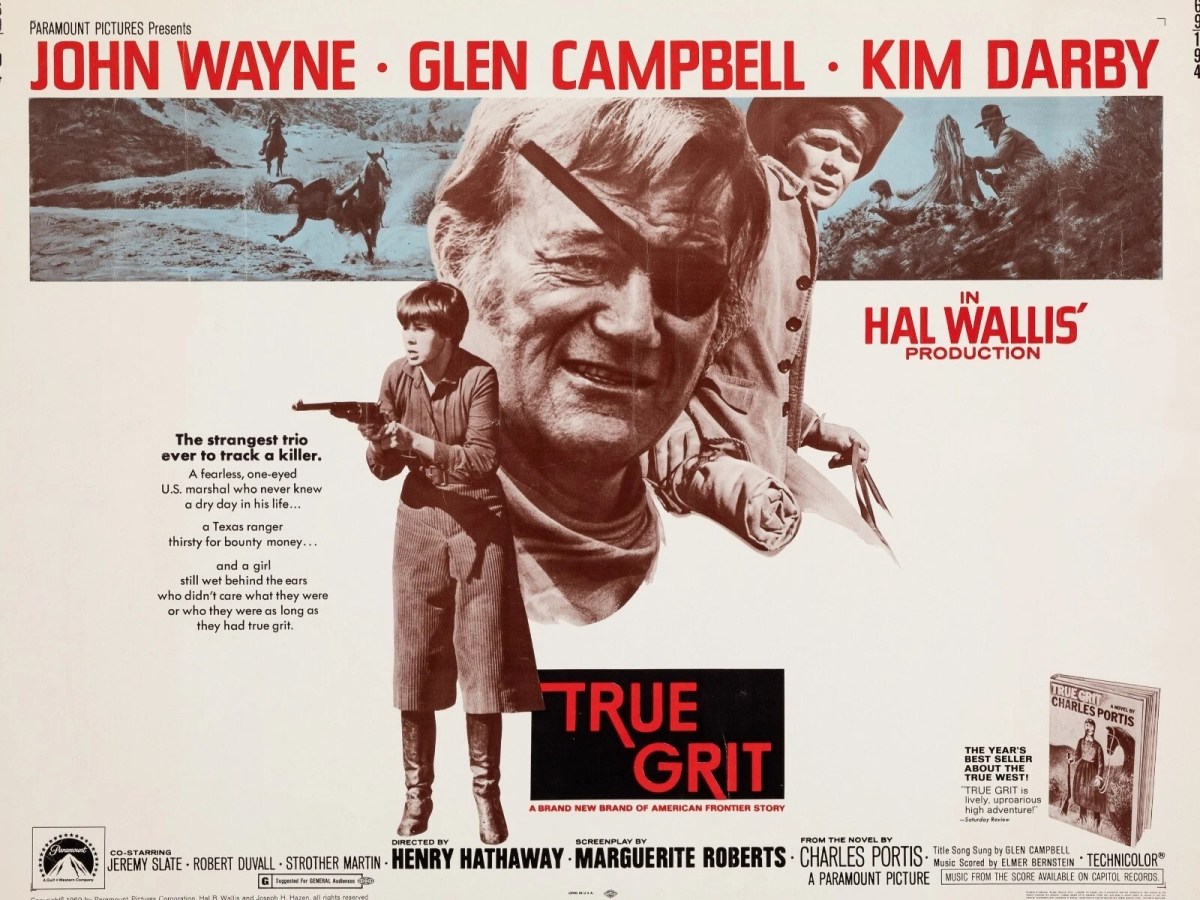
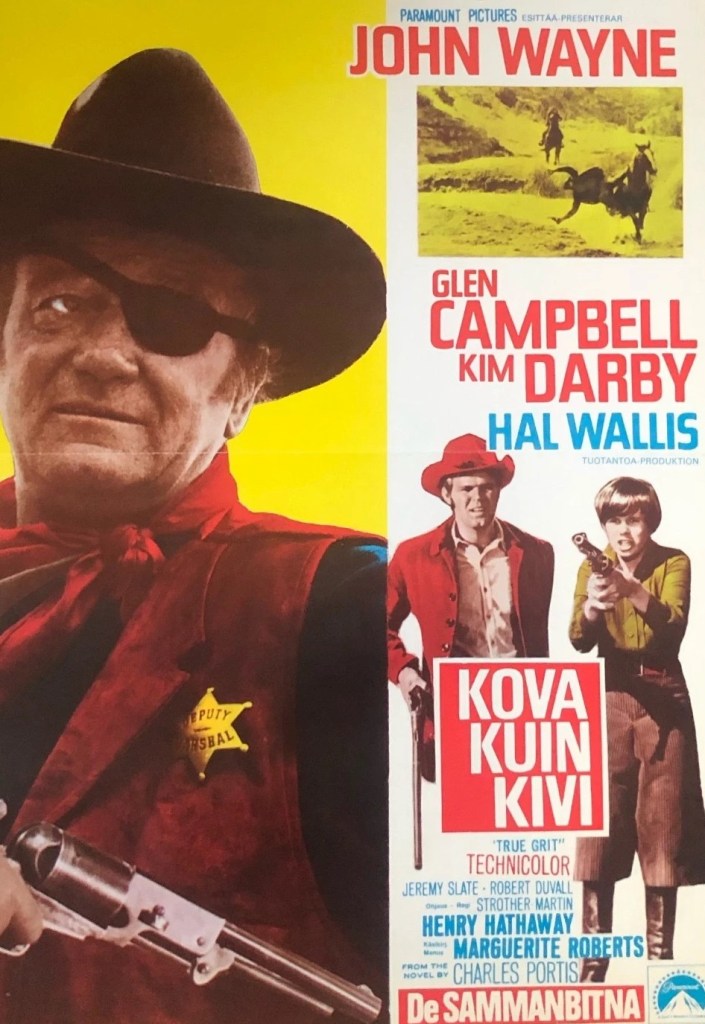
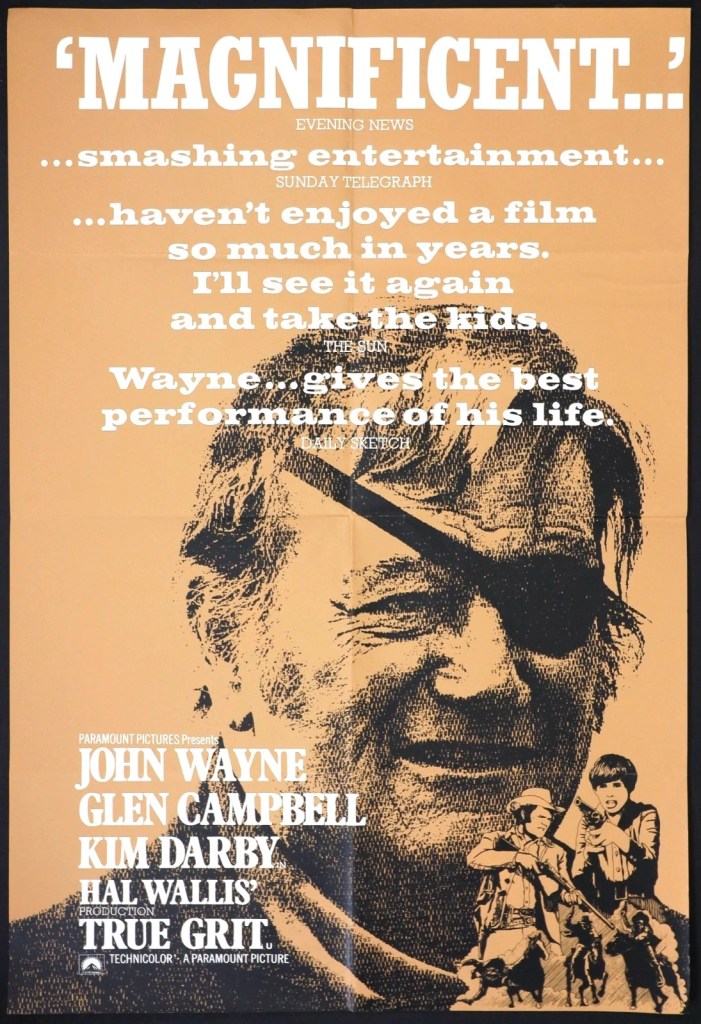
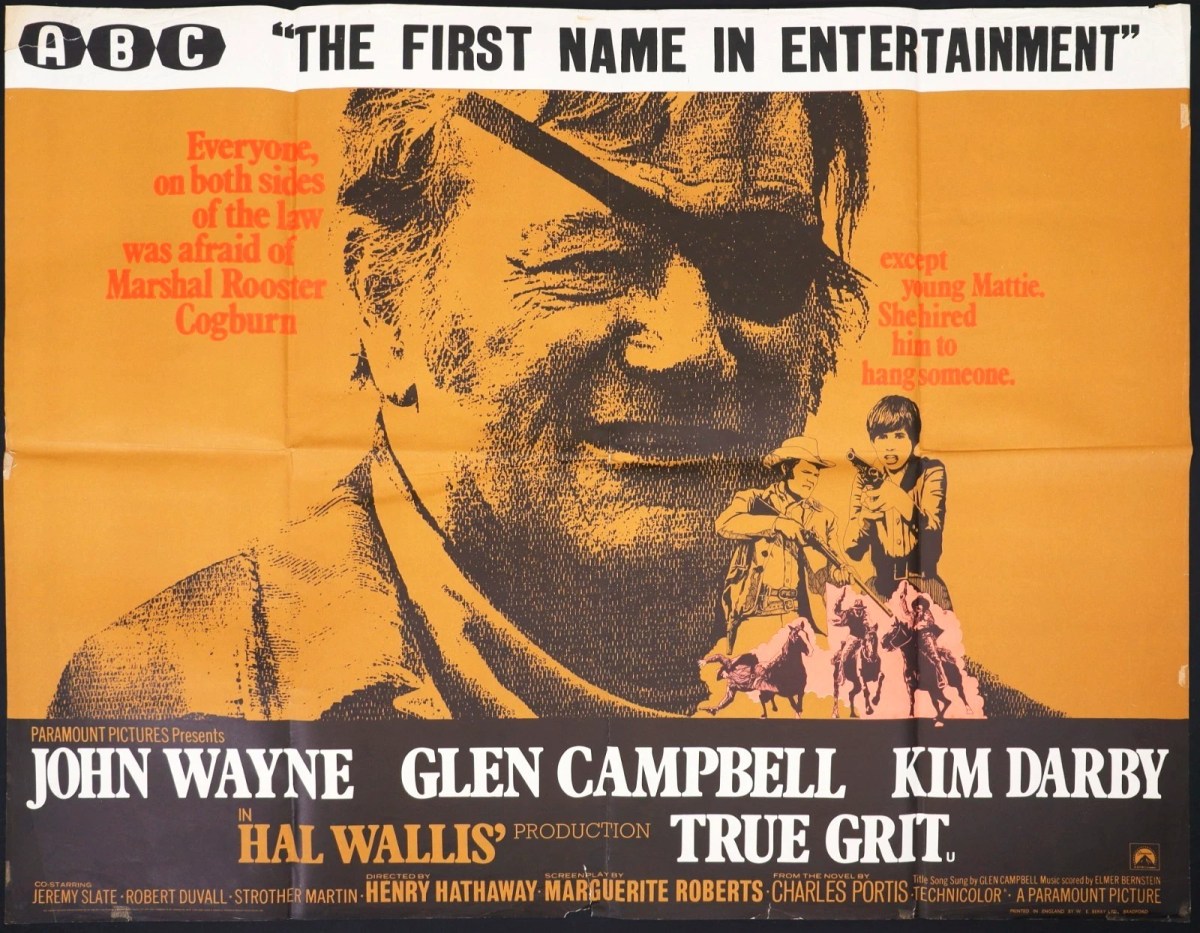
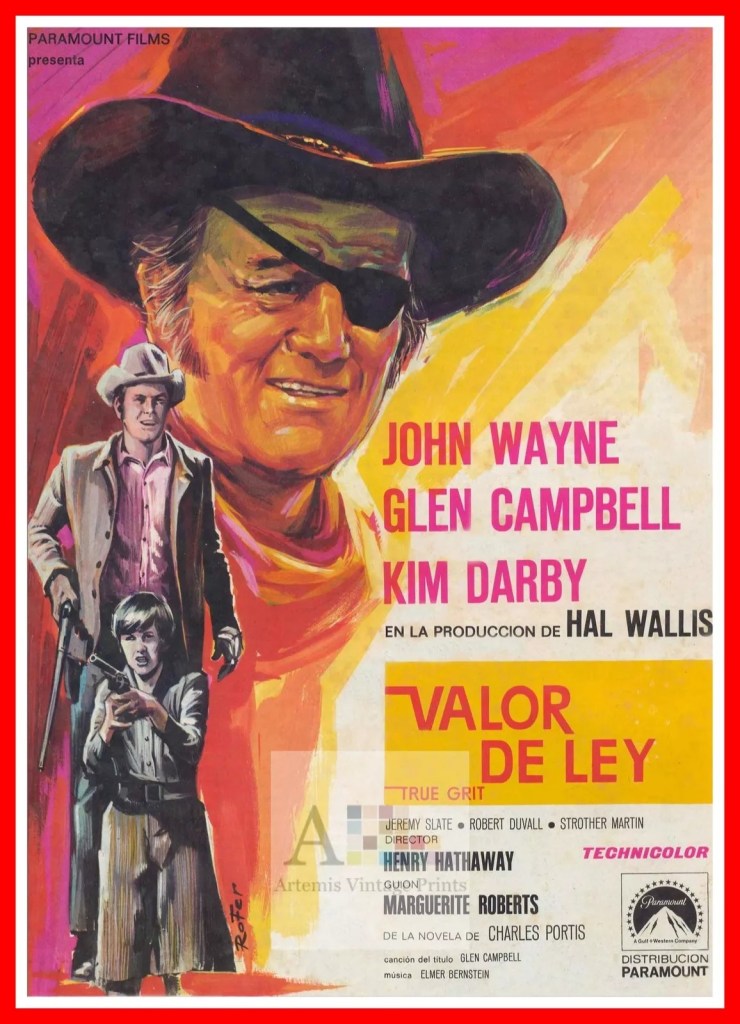
Unusually, for a film of the period, the movie repeated a single image in all of its advertising, Wayne’s face dominating the composition, with below him Mattie Ross standing gun in hand and Glen Campbell behind him. That Campbell sang the title song over the credits led to the release of a record, and there was a New American Library book tie-in. Ancillary promotional items included a t-shirt embellished with the words “This Man Has True Grit,” and buttons announcing “I Have True Grit” and, alternatively, “Give Me a Man with True Grit.” Stetson created a special hat called “The Duke,” with a special one costing $1,500 to be presented to Johnny Carson on his show, with an advertising campaign that included Playboy and Esquire while Aramis created a special line of “Grit Soap.”
Time magazine had raised expectations for the picture by putting John Wayne on the front cover, on August 8, although this was in part retaliation to Life’s joint cover story on Wayne and Dustin Hoffman which ran in the Jul 11 issue, and Paramount took a gamble opening it in New York at the Radio City Music Hall, partly a ploy to boost European revenues, the first western to be so honored, although the theater covered itself by claiming the movie was an “outdoor adventure” rather than a western per se. The picture broke all sorts of records there and went on to conquer America, shattering Dallas records, for example, and then helped along by the Time cover story. For a few months it looked set to become the best performing western of all time, but was soon overtaken by the release of Butch Cassidy and the Sundance Kid. Even so, it took $11.5 million in rentals to finish sixth in the annual chart. It was reissued after Wayne’s Oscar triumph the following year in an unlikely double bill with Oscar-nominated The Sterile Cuckoo and grossed $3.7 million in the twelve days. But Paramount, trying to offset calamitous losses, prematurely sold off the western to television so its reissue value was sharply curtailed.
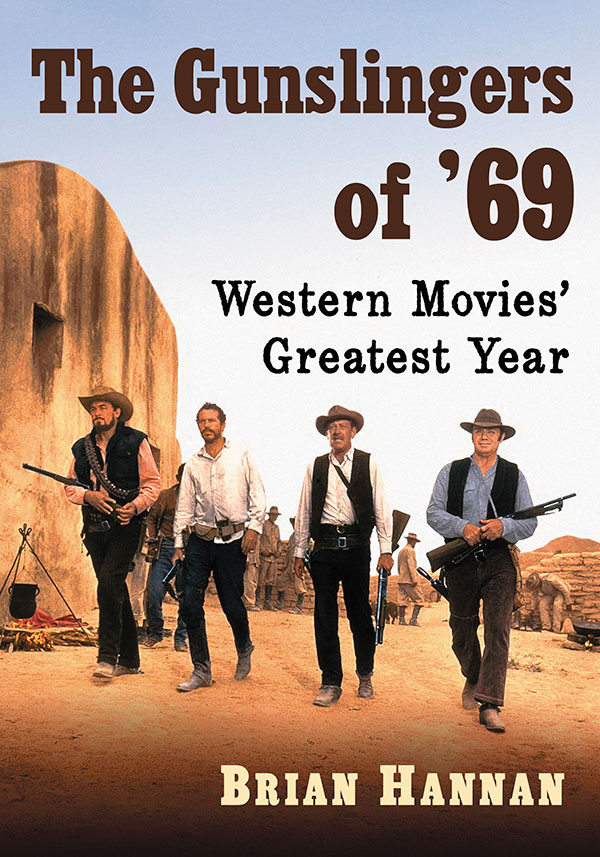
SOURCE: Brian Hannan, The Gunslingers of ’69: Western Movies’ Greatest Year, (McFarland, 2019).
An old-style western with a modernized anti-hero in Rooster Cogburn (John Wayne), nearly as “rapaciously brutal” as the same year’s The Wild Bunch, a script with language that captured the period, a heroine Mattie Ross (Kim Darby) who falls into the robust Barbara Stanwyck/Maureen O’Hara mold, humor and action in equal measure, and an unfussy director (Henry Hathaway) who loved the panorama even more than John Ford.
Although still critically rated as not as good as The Wild Bunch, and still mostly disdained by academics, I would argue that it has been grossly under-rated and fully deserving of a re-evaluation. In the first place, despite direction very much in the old school, Hathaway exhibits many stylistic flourishes, not least the very long shot which has rarely been used to such effect. He also utilizes the shaky-camera point-of-view in a much more effective manner than Mackenna’s Gold (1969) to record Cogburn’s charge at the outlaws and there is even a zoom, to pick out the villain Tom Chaney.
Also, you know exactly where you are in a Hathaway picture, not just in the narrative sense, but in terms of how people lived and where the towns and farms were in relation to each other (the Ross farm is 70 miles from Fort Smith, the hamlet of McAllister 60 miles from the villains’ hideout). He liked to show many aspects of a town, so we see where the courthouse is in relation to the jail and the stable by the simple expedient of having the characters walk past them. And the movie is littered with sound effects of the most ordinary kind (blacksmith’s hammer, train whistle, footsteps). The film is as much about progress as Once Upon a Time in the West and The Wild Bunch, the name of the town, Fort Smith, where much of the initial action takes place, indicates it was once a frontier town.
Rooster Cogburn feels crowded out by a new generation of lawyers challenging swift justice, and Mattie Ross, hunting the killers of her father, is well schooled in argument, winning many a confrontation with apparently more experienced and wily men by being more adept at negotiation and like a chess player always one move ahead. The aftermath of the Civil War lingers in the background, demonstrated by Mattie’s weapon and Cogburn’s antipathy to Texas Ranger LaBeef (Glen Campbell). But the story strikes an even balance, no matter how assured Mattie Ross comes across in civilization she almost comes apart in the wilds and without the protection of Cogburn would have met the kind of fate at the hands of men undergone by female characters in The Stalking Moon (1969), Mackenna’s Gold and The Wild Bunch.
It should be said here that the movie is full of audience direction, we are always told where Mattie will go next or where Cogburn is intending to go, with accompanying plausible reason, especially when later Cogburn calls off the hunt for the outlaws. There is no exploration of mystery, the characters are always upfront, and where characters express regret is it minus the self-pitying of The Wild Bunch. Nobody is defined by something they should have done instead, so, in that respect, the narrative is as clear as the overall direction.
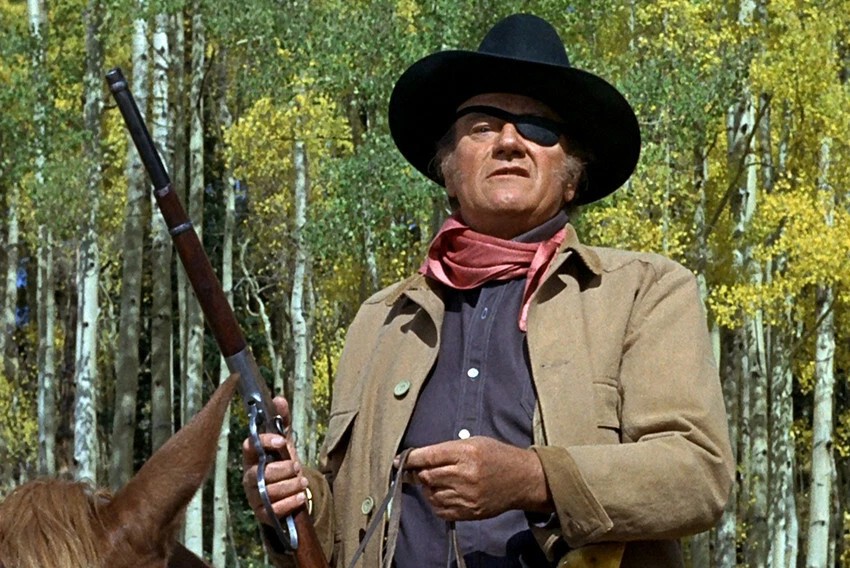
We hear Cogburn’s voice before we see him, as if the director is preparing us for a different John Wayne. This is the actor in a new timbre, the usual slow drawl replaced by a raucous bark. And it is a different Wayne, one eye covered in a black patch, giving him a piratical look. He hustles the prisoners out, kicking one straggler viciously in the butt. Wayne walks differently, too. Instead of the famous slow walk, Cogburn is a man in a hurry, pushing forward with purposeful stride, ignoring Mattie as she comes racing after him, slamming the basement door in her face.
LeBeef is another dreamer, “nobody yet” but aiming to “marry well”, in this case “a well-placed young lady in Waco” who would “look with favor” on him for bringing back Chaney who has also killed a senator. His charm fails to convince Mattie to join forces. She sees right through him: “I have no regard for you but I’m sure you have enough for yourself to go around.”
Then comes a four-minute Mattie tour de force as she confronts Col Stonehill (Strother Martin) and demands $300 in reparation for the loss of her father’s saddle and for selling him dodgy horses. She threatens him with the law in the shape of Daggett, her secret weapon, and she knows enough about legality to beat Stonehill at his own game. Even better, this is no meek woman. It is one thing to be able to score points off an old lawman like Cogburn, who would have been putty in the hands of any capable woman of the Stanwyck/O’Hara variety, but another to outwit a wily old horse-dealer like Stonehill (his title a hangover from the Civil War and one which ensures a measure of respect). Even better again, she knows she will win, so confident that she has already drawn up the papers to sign.
Now neither Cogburn nor LeBeef are witness to this demonstration of her capability, so they will, naturally, treat her as a young girl, “baby sister” in Cogburn’s dismissive term. But Hathaway is setting a trap for the audience. Having witnessed this display, we think she will be able to hold her own in the wilderness, mistaking her willfulness for sagacity, and so are on her side in her attempts to win over the two men, when, in fact, she will prove to be so out of her depth as to endanger herself and others.
The pursuit is dogged, and everyone at some point is found wanting. Cogburn smokes the villains out from their cabin and would kill the others without warning except LaBeef objects out of principle and Mattie wants Chaney alive.
At Mattie’s prompting, we hear Cogburn’s mostly unvarnished, but never maudlin, history, he lost his eye in the war, committed a robbery to fund the purchase of an eating place that had a billiard table, married a grass widow, until she left him for her first husband, taking their son, Horace, hiding his sorrow at the boy’s departure in a grumpy “he never liked me anyway” and berating him as “clumsy.” When she lies down to sleep, he gazes at her fondly for the first time, perhaps prompted by memory of his loss.
In the climactic shoot-out, in the most famous John Wayne image since his character’s introduction in Stagecoach (1969), first in long shot then from his point-of-view with a shaky camera, he grasps the reins in his teeth and fires two-handed. He kills two but Pepper shoots his horse from under him and Cogburn, in a sign of his age when otherwise traditionally cowboys leap free of a falling horse, is trapped on the ground under the weight of the animal, unable to reach his gun or to shift. The wounded Pepper advances. He towers over Cogburn until LaBeef, whose marksmanship had previously been in question, saves his life.
And that should pretty much have been the end of the picture, roll credits with Chaney being hung, but there is still nearly 15 minutes to go. Returning to collect Chaney, LaBeef is ambushed, cracked on the head by a rock. Mattie shoots Chaney but the recoil sends her into the snake pit. Cogburn arrives in time to kill the wanted man, also sending him into the pit. She has damaged her shoulder and cannot pull herself up on a rope so Cogburn has to descend. He shoots a rattlesnake but another bites her.
She still had enough presence of mind to demand he first collect her fallen gun and her father’s gold piece from Chaney’s corpse. As he hauls himself up, a dazed LaBeef, mounted on a horse, pulls on the tope to ease their ascent, but the effort is too much, and he keels over and dies.
Mattie strokes his head, the first sign of her changed feelings towards him. Alternatively, this could be guilt because it was her wrong-headedness that caused his death, but that seems unlikely, she is not one to covet regret. Cogburn slaps saliva on the wound (rather than, as we might expect from watching other westerns, sucking out the poison), puts her arm in a sling, and sticks her on Blackie, her horse, despite her protests about the little horse carrying such a weight. Cogburn is ruthless, riding the horse so hard it dies. Then he carries her and finally steals a buggy.
Where previously most of the journey had been rendered in long shot, now Hathaway reverts to medium shot and close up of the haggard Cogburn racing desperately to save the girl’s life. When we cut to Cogburn and Chen Lee instinctively we know she has been saved. The lawyer Daggett appears to pay Cogburn what he is owed plus $200 for saving her life, though, typically, she has prepared a receipt for him to sign.
Then she is home. It is winter. Snow lies on the ground. Cogburn explains there was no woman waiting for LaBeef, though the marshal has collected the reward. She shows him her father’s grave and wants Cogburn, the father she has adopted, to be buried in the same burial ground. She gives him her father’s gun and in a final triumphant moment the “fat old man” gloriously rides over a four-bar fence waving his hat in the air.
John Wayne received just reward with his Oscar, Glen Campbell (The Cool Ones, 1967) does better than we might expect from a singer. Kim Darby (Bus Riley’s Back in Town, 1965) was ignored by Oscar voters but she certainly holds her own. Terrific direction by Henry Hathaway (5 Card Stud, 1968) from a script by Marguerite Roberts (5 Card Stud) based on the bestseller by Charles Portis (Norwood, 1970).
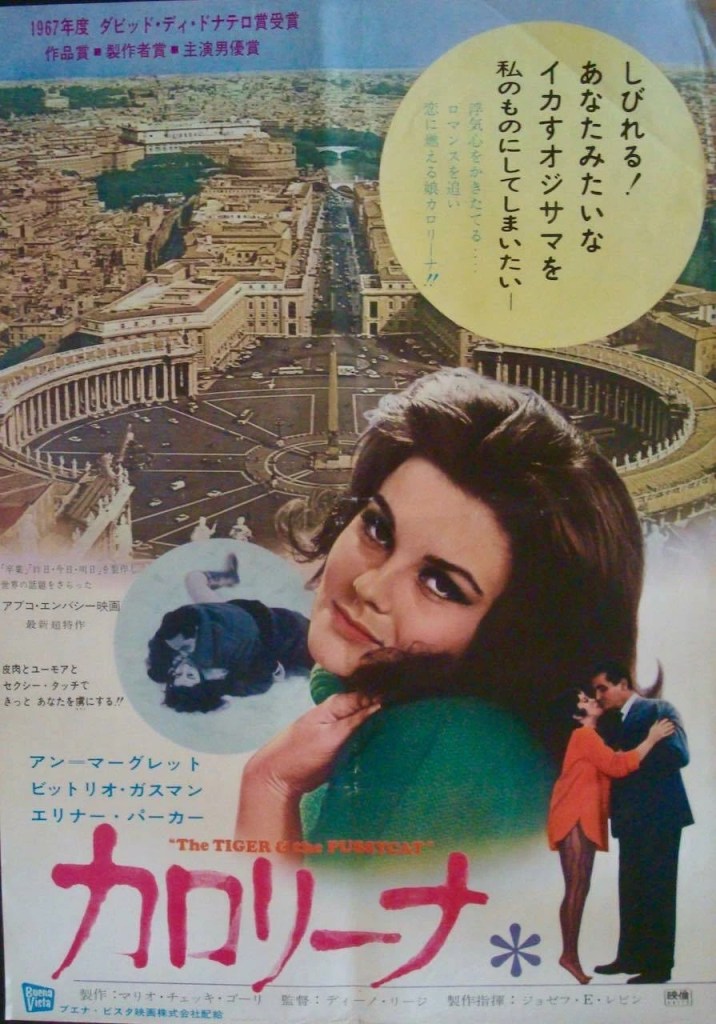
Ann-Margret was taking a leap into the unknown when she decided, temporarily, to turn her back on Hollywood and revive her fading fortunes – and buttress her bank account – by heading to Italy. By the time she made that decision, Clint Eastwood would not have been deemed to set a sparkling template since his spaghetti westerns were not released in the USA until after she had departed for Italy. She may well have had her head turned by such critically acclaimed fare as the Oscar-nominated Marriage Italian Style (1964) or perhaps the prospect, like Burt Lancaster in The Leopard (1963), of being taken up by critically-acclaimed director.
At one point she had easily been the fastest-rising star in Hollywood, with contracts for movies from rival studios, at one time balancing the demands of around a dozen movies. Had she been born in the previous decade she would have headlined any number of pieces of fluff that attracted box office. Even so, after making a number of pictures that scarcely challenged her – from Bye, Bye Birdie (1963) to The Swinger (1966) by way of a couple efforts that stretched her screen person (Once a Thief and The Cincinnati Kid, both 1965) – she had discovered that she was still perceived as little more than a Bond Girl, or the Matt Helm equivalent in Murderers’ Row (1966).
Quite what she expected to find in Italy is anybody’s guess. Probably not a standard Italian comedy. Nor to be playing second banana to Italian star Vittorio Gassman (A Virgin for the Prince, 1965) – three-time winner of a David (the Italian equivalent of the Oscars) – who knew how to frame his performance for an Italian audience. But while a huge star in his homeland he had not crossed-over like Marcello Mastroianni to win international favor.
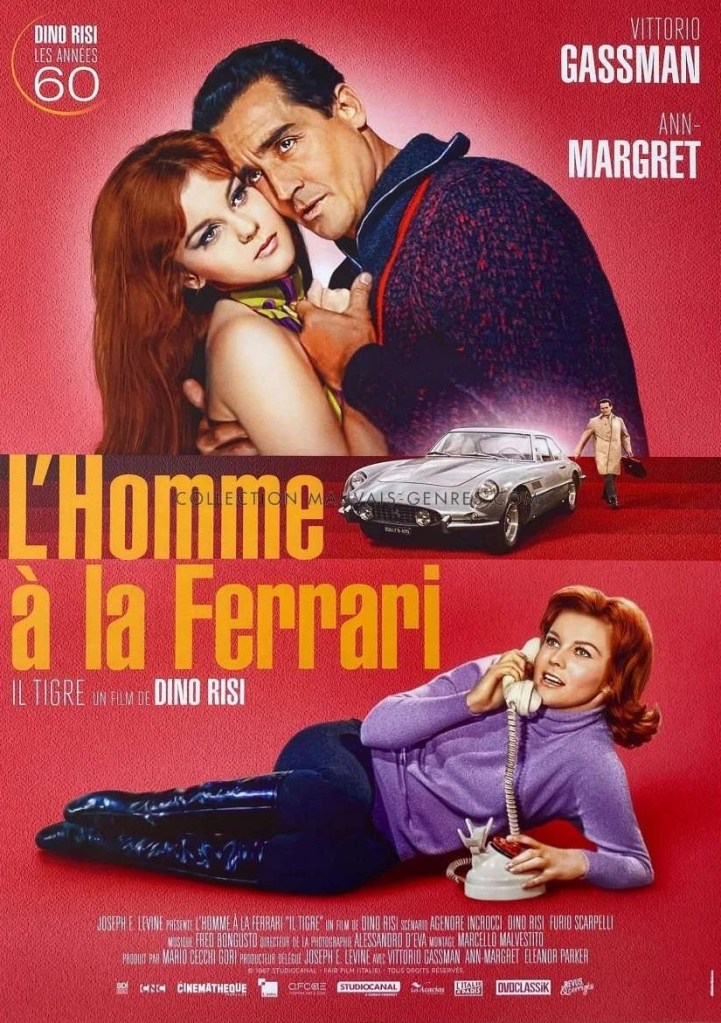
Top executive Francesco (Vittorio Gassman), alarmed at becoming a grandfather at the age of 45, and believing life has now passed him by, begins a relationship with Carolina (Ann-Margret), an art student less than half his age. She makes a good bit of the running, being attracted to older men.
So a fair chunk of the picture is Francesco unable to make up his mind, or then suffering guilt from an illicit affair, worrying that his wife will find out and at the same time considering running away with the decidedly energetic girl.
The scenario will be more familiar to Italian audiences than American. Affairs were often seen as opportunities for comedy rather than, as in Hollywood, drama and angst. Francesco has the example of his friend Tazio (Fiorenzi Fionrentina), brought to financial ruin by an affair, and all the friends of his wife Esperia (Dorothy Parker) are divorcees after their husbands have run off with younger women.
Despite his excuses for being away from home mounting up, Esperia is not suspicious. You would have thought his colleagues would have more of an inkling given the number of times he dodges work commitments.
If you are a fan of Italian comedy, this will be right up your street, a number of sequences where Gassman falls back on physical comedy or stretches his features every which way but loose and gives the impression of not being able to follow his dreams at the same time as being suffocated by them.
If you’re here for Ann-Margret, you’ll be baffled. Sure, she has the occasional opportunity to shake her trademark booty, and she has lost none of her screen presence, but the role, effectively of second banana to the male lead, could have been played by a dozen other actresses, and Ann-Margret doesn’t bring anything particularly innovative or exciting to the role.
She went into Italian exile for three years and the movies she made all bombed at the American box office so in effect, as far as Hollywood and American audiences were concerned, she had inexplicably disappeared and there wasn’t exactly a long queue seeking her signature when she returned.
Directed by Dino Risi (Treasure of San Gennaro, 1966) from a script by himself, Enni De Concini (A Place for Lovers, 1968), Adriano Baracco (Treasure of San Gennaro) and Nino Manfredi (Treasure of San Gennaro).
A decent enough comedy. Gassman runs off with the picture but Ann-Margret completists will find little to enjoy.
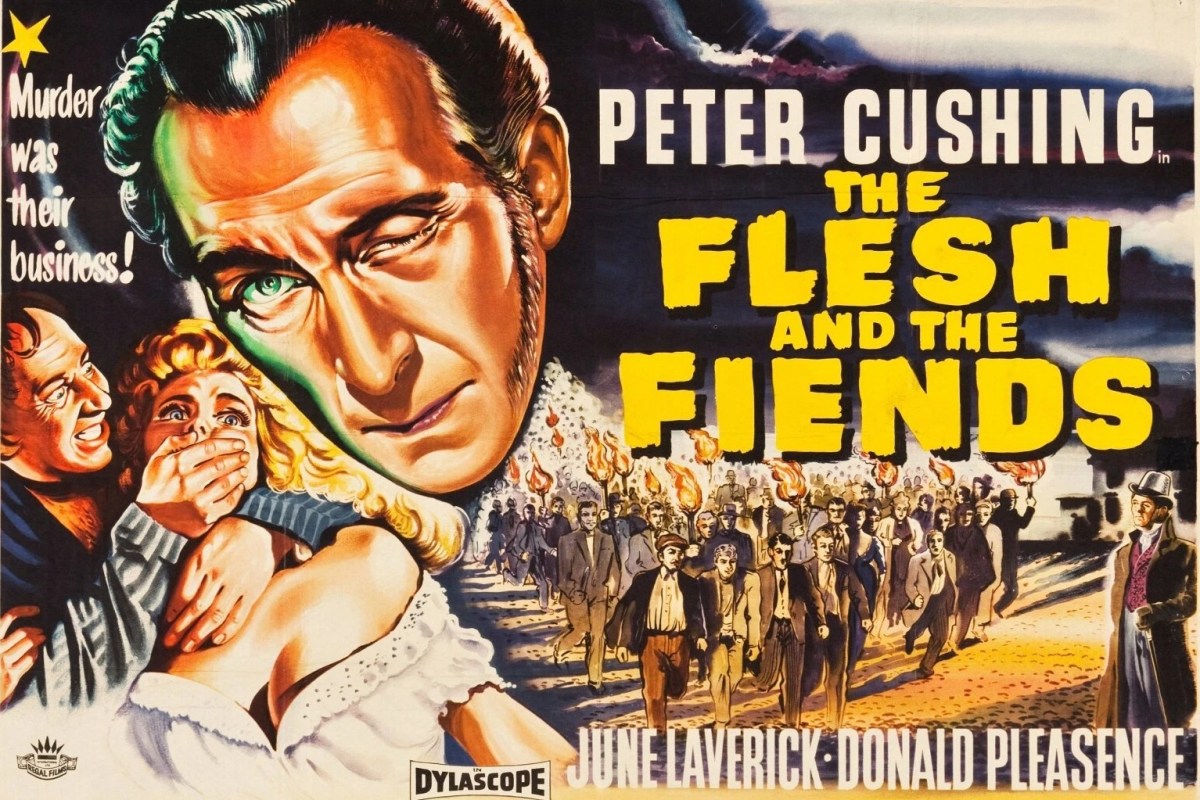
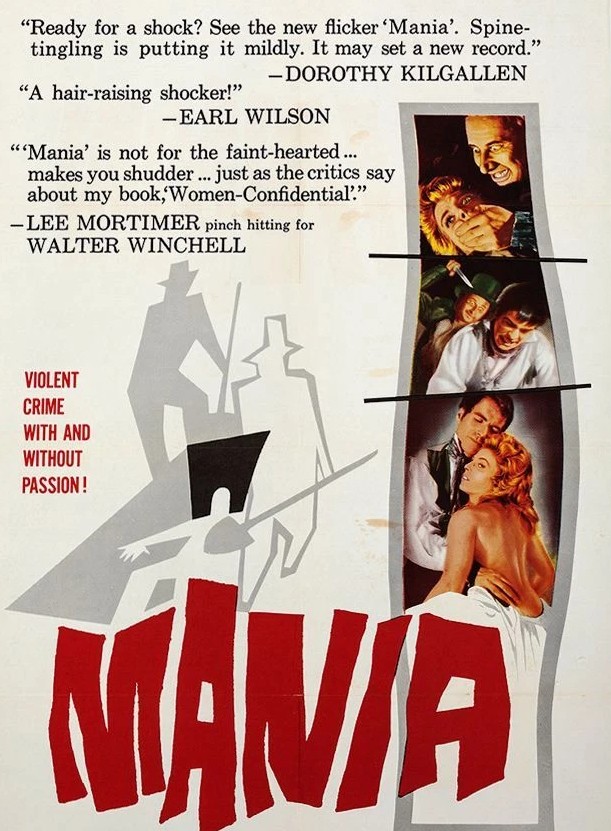
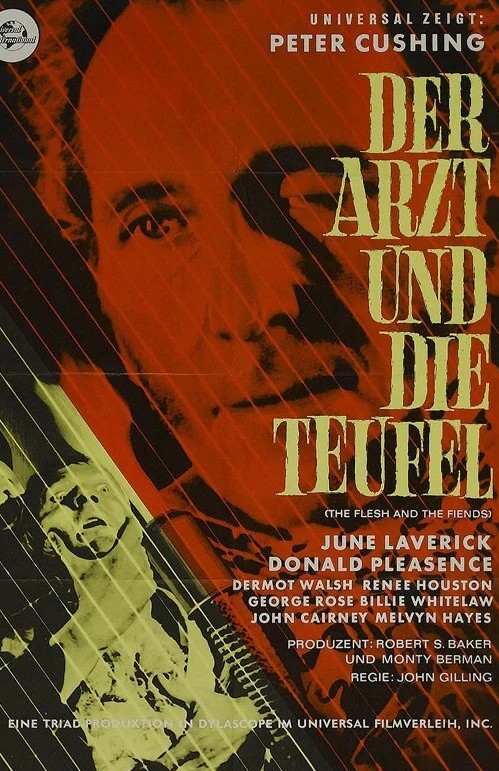
Hypocrisy runs rampant as an entitled medical hierarchy effectively condones vile practice. Of course it wouldn’t do to have Peter Cushing, who generally hounded demonic fiends like Dracula, to be tabbed a villain so with a little bit of jiggery-pokery he gets off scot-free and, in fact, is considered so much above other mortals that he receives a standing ovation at the end.
The self-justification, or deification if you like, of Edinburgh surgeon Dr Knox (Peter Cushing) is promoted on the back of primitive medicine, whereby, through sheer ignorance and laziness surgeons were more apt to kill than to cure.
Dr Knox is an advocate of using recently interred corpses to teach his students the real fundamentals of anatomy. However, his colleagues feel that the use of fresh corpses goes against the grain and there was no such thing in the early 19th century of donating your body to medical science. Grave-robbing was a crime.
Enterprising duo Burke (George Rose) and Hare (Donald Pleasance) get round that problem by skipping the burial aspect, murdering assorted drunks and vagabonds and delivering fresh meat to the good doctor, who turns a blind eye to their actions, determined as he is to improve teaching standards. He’s not the only one who believes that a streetwalker, killed in this fashion, has achieved more in death than life.
The good doctor has a conscience in the shape of Dr Mitchell (Dermot Walsh) who is wooing his daughter Martha (June Laverick), but he eventually comes round Knox’s way of thinking. The hierarchy in the shape of the Medical Council would get their claws into Knox were it not for the fact that in their incompetence they inflict more damage than good.
As a sub-plot, and as a way of weaselling into the lower classes who provide the bulk of Burke and Hare’s supply chain, earnest medical student Chris Jackson (John Cairney) falls for drunken goodtime girl Mary (Billie Whitelaw) who spends as much time making fun of him as she does sharing his bed.
You would have thought the high mortality rate of the period would not have made the local populace suspicious of a few extra deaths, but when Burke and Hare kill too close to home – Mary, Jackson and Daft Jamie – townspeople like a regular Transylvanian village mob light their torches and head off in pursuit.
The question of whether Knox was in collusion with Burke and Hare becomes the crux. But given the medical profession does not want to bring itself into disrepute, he is given a free pass and declared not guilty.
The high-mindedness which Peter Cushing (The Skull, 1965) usually brings to a role works in his favor here and, until the death rate mushrooms, audiences may be inclined to go along with his thesis that fresher corpses should be made available as a matter of course to doctors. His pinpoint arrogance brooks no quarter. He’s in entitlement heaven. And that his superiors back off informs you that hierarchies were as good at closing ranks and defending themselves then as now.
This was the first venture of Donald Pleasance (Soldier Blue, 1970) into the sleazy characterizations which would become a trademark. The nervous tics were a later addition. Here’s he’s mostly sweaty.
I should profess an interest. John Cairney was a relative of our family but acknowledging his work in our household was limited to such less contentious material as Jason and the Argonauts (1963). Along with Billie Whitelaw (The Comedy Man, 1964), he was in the rising star category. Both deliver solid performances. You might also spot Melvyn Hayes of the It Ain’t Half Hot, Mum series (1974-1981).
Dodgy accents abound, Pleasance and Rose affect Irish accents and Whitelaw makes a stab at a Scottish one. I was surprised, given the date, to see a deal of nudity, but it transpires I was watching the “continental version.”
Directed by John Gilling (The Reptile, 1966) from a screenplay by himself and Leon Griffiths (The Hellfire Club, 1961).
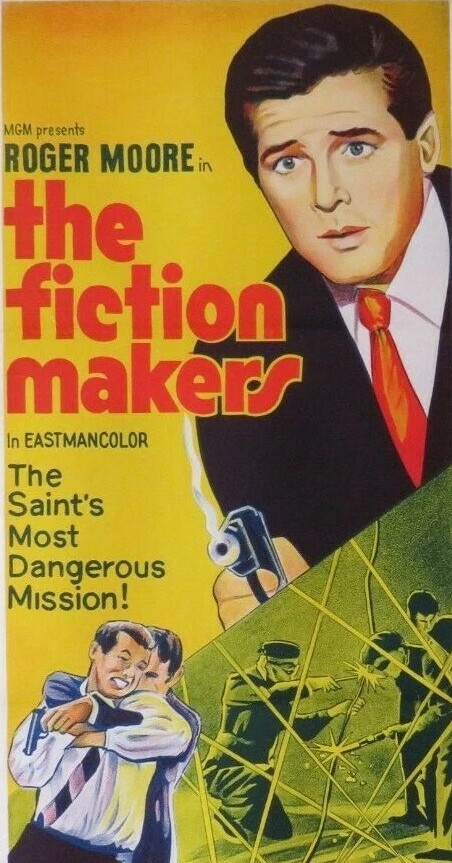
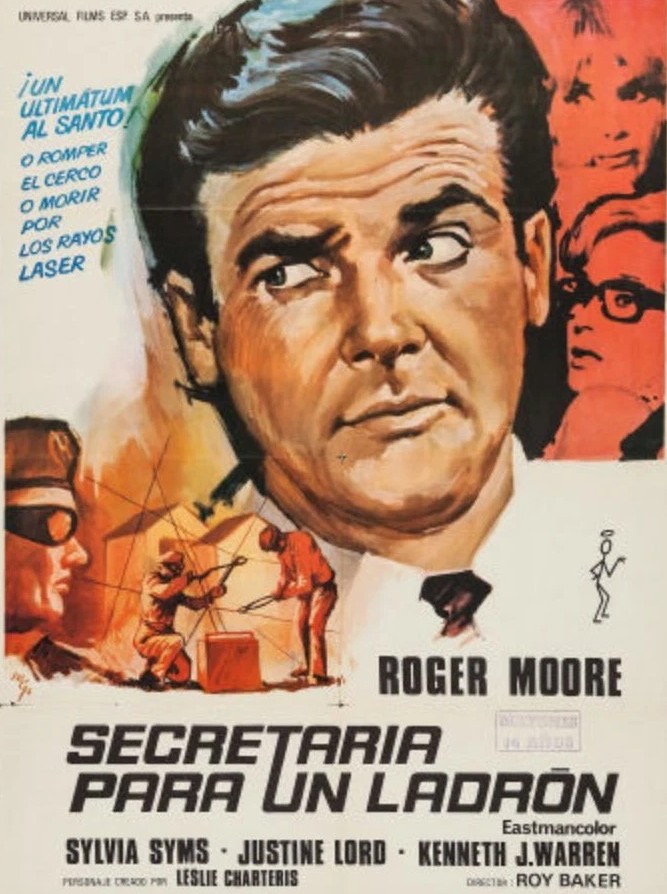
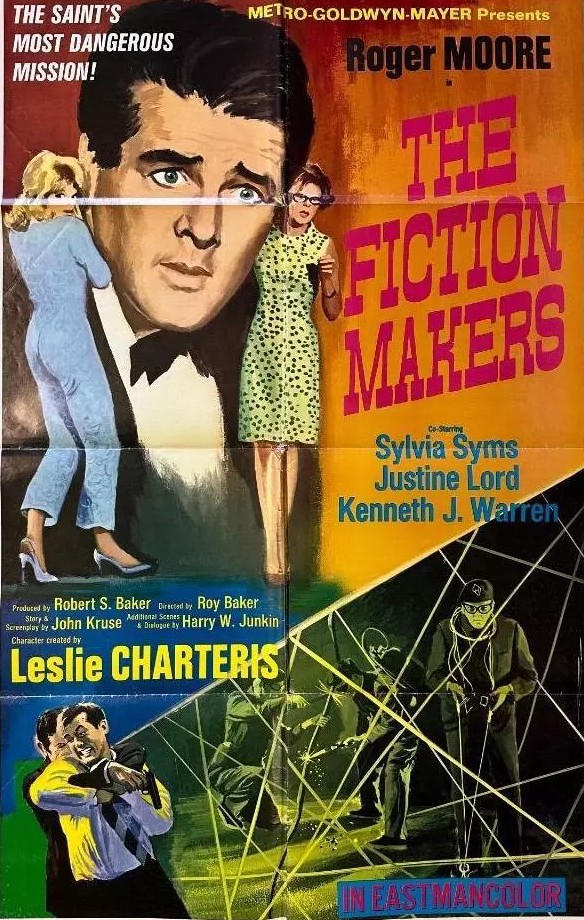
Hugely enjoyable. Takes high concept to the Moon and back. Deliriously wild idea that, as with the best of movies that riff on the imagination, sticks to its own internal logic. The notion sounds so barmy it shouldn’t work – but it does. I enjoyed it even more than Vendetta for the Saint (1969), which it preceded, because it’s a lot more fun.
A criminal mastermind has taken the work of mysterious bestselling thriller author Amos Klein and not only adopted the characteristics of the author’s characters but follows the plot of the books and utilizes many of the clever ideas. For example, the author has invented a second ignition starter button for cars. And also invented a way to stop cars by fitting them with a technological device. People are so taken with being characters in these books that they want to know what happens to them next. I know, shouldn’t have worked, but it does, and it’s not even really set up as fitting into the sci-fi genre any more than James Bond with all its out-of-this-world machines and gadgets is.
Simon Templar (Roger Moore), aka The Saint, is hired to protect Amos Klein whose publisher believes the author is in danger. It doesn’t help that Klein lives in such anonymity that nobody knows the real name, not even the publisher. Turns out she’s a woman (Sylvia Syms), presumably adopting a male name because she writes such male-oriented books, filled with ingenious ideas.
She nearly shoots Templar because he arrives in the middle of her testing out scenarios for her new book – everything she writes has to work and she’s the one that tries them out. Anyway, Templar proves to be little defense against Warlock (Kenneth J. Warren), who has adopted the main villain of her book who runs a criminal organization called S.W.O.R.D. Warlock assumes Templar is Amos Klein and that she is his secretary.
The members of Sword, excepting Warlock, are an indifferent bunch apart from femme fatale Galaxy Rose (Justine Lord) who not only, following the premise of the books, intends to seduce Templar but believes that he, as the author, can alter her future, by making it a plot point in an as-yet-unwritten book that they fall in love that she will then marry him and live happily ever after.
Using Klein’s imaginative brain, Warlock wants the author’s help to plot a major heist from Hermetico, a giant secret vault which is to diamonds what Fort Knox is for gold. Hermetico is thief-proof, packed with amazing security devices including infra-red beams.
Although watched via CCTV cameras, Templar and Klein make a decent attempt at escape from Warlock’s mansion, tunneling upwards if you like, through the ceiling and the roof, clambering down a drainpipe and escaping in the car containing the second starter button, but also the one, it transpires, with the tech device that can stop it.
When they turn up at a remote cottage covered in mud and seeking help, the inhabitants think they are lunatics and delay them long enough till Warlock and his gang arrive to sedate them. Klein is kept prisoner, threatened with laser extinction, so Templar is coerced in assisting in the heist. In fact, Klein has come up with an ingenious method of ensuring they can find their way through the maze of infra-red beams.
This sequence is really well done, especially the method of getting all the gang through once Templar has negotiated it. Using an oxy-acetylene torch, they cut the top off an extractor vent and enter the vault, overcome the guards, and using another clever device one person manages to do something that usually requires two people.
Naturally, Templar is intent on spoiling the operation, which he does, but then has to get back to the mansion before the alarm is raised and Klein is incinerated. There’s a fisticuffs climax and a very fitting payoff for the villain.
I never thought this would work. It seemed such an improbable idea. But then Hollywood’s full of those. The fact that the S.W.O.R.D. gang are entirely believable as physical incarnations of Klein’s imagination is what makes it work. Plus Klein herself. Instead of being the standard moll or helpless heroine of so many spy pictures, she’s central to the story, and halfway between slinky and sensible.
Roger Moore (Vendetta for the Saint) – and his raised eyebrows – is, as usual, excellent in a role that very much suits his screen persona, and Sylvia Syms (Run Wild, Run Free, 1969) has a ball. Kenneth J. Warren (A High Wind in Jamaica, 1965) is given a more varied character than the normal villain while Justine Lord (Night after Night after Night, 1969) exerts a winsome appeal outside her overt sexiness.
Directed by Roy Ward Baker (Moon Zero Two, 1969) from a script by John Kruse (Vendetta for the Saint) and Harry W. Junkin (Vendetta for the Saint) adapting a novel by Leslie Charteris.
This was originally conceived as a two-parter for television that was then released as a movie instead of someone just editing together two random episodes as was usually the case with The Man from U.N.C.L.E.
Television hadn’t produced the goods in terms of furnishing Hollywood with an abundance of new talent. We were still only talking about Steve McQueen (Bullitt, 1968) and James Garner (Buddwing/Mister Buddwing, 1966) in the 1960s as having made a successful transition from small-screen to big-screen stardom with occasional brief flurries from the likes of Clint Walker (The Dirty Dozen, 1967). Though Hollywood kept trying – Universal had tossed thirty-two of its contracted players into Airport (1970) in the hope one would catch audience attention.
But it turned out Hollywood had been looking in the wrong direction. Expecting to unearth actors who could carry dramas or thrillers or westerns, Hollywood had, in general, not considered comedy as a source of new talent. Dick Van Dyke (Chitty, Chitty, Bang, Bang, 1968) was considered an anomaly because he could morph into a song-and-dance man and his comedy was based on the physical.
So the industry was astonished when Goldie Hawn emerged from what was essentially a comedy skit show, The Rowan and Martin Laugh-In, to become a genuine screen box office comedienne and over the next decades there would be an excellent harvest from television comedy including Robin Williams, Chevy Chase and a whole troupe of others.
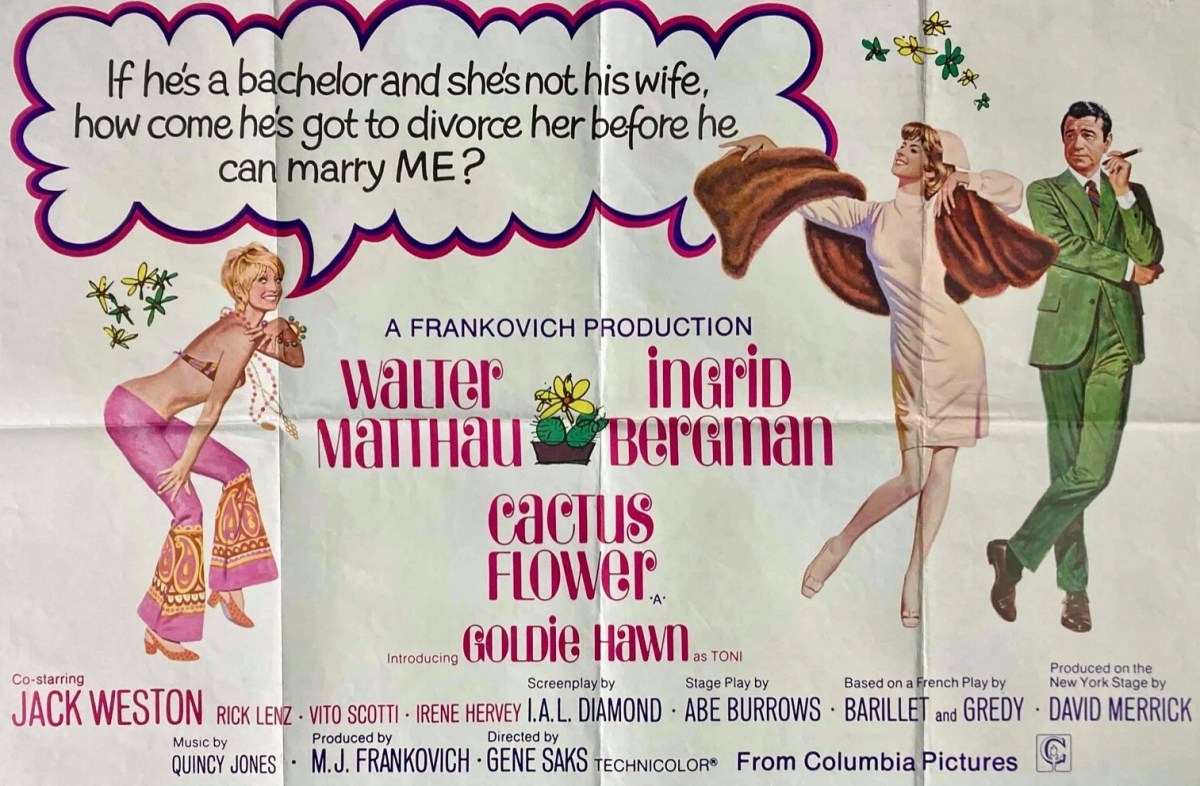
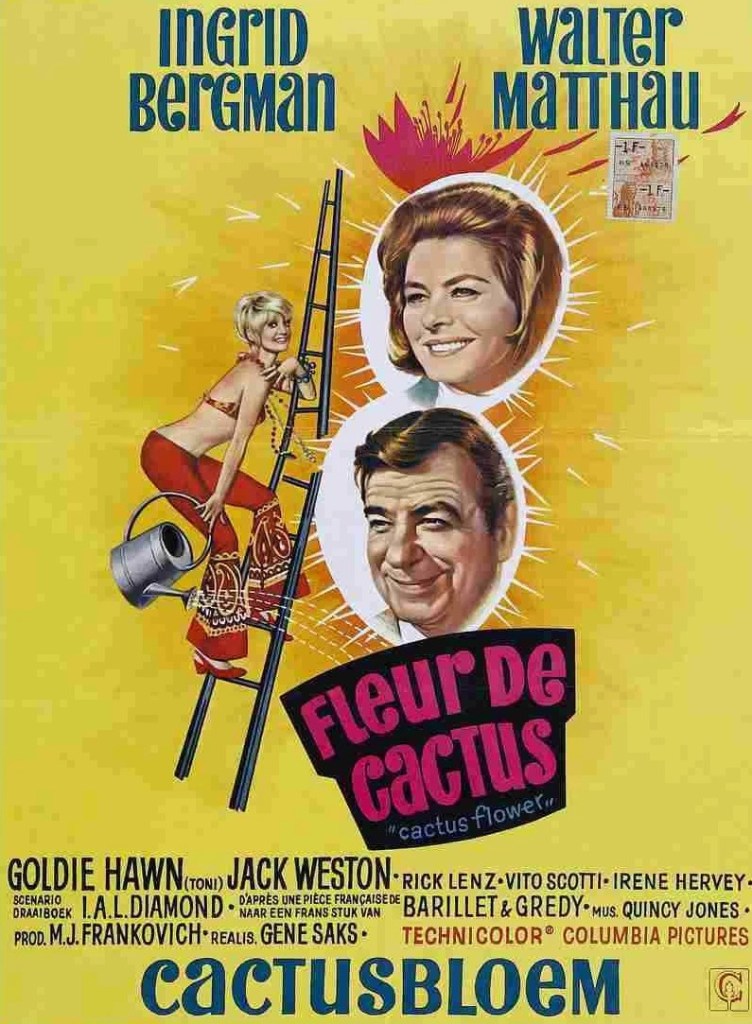
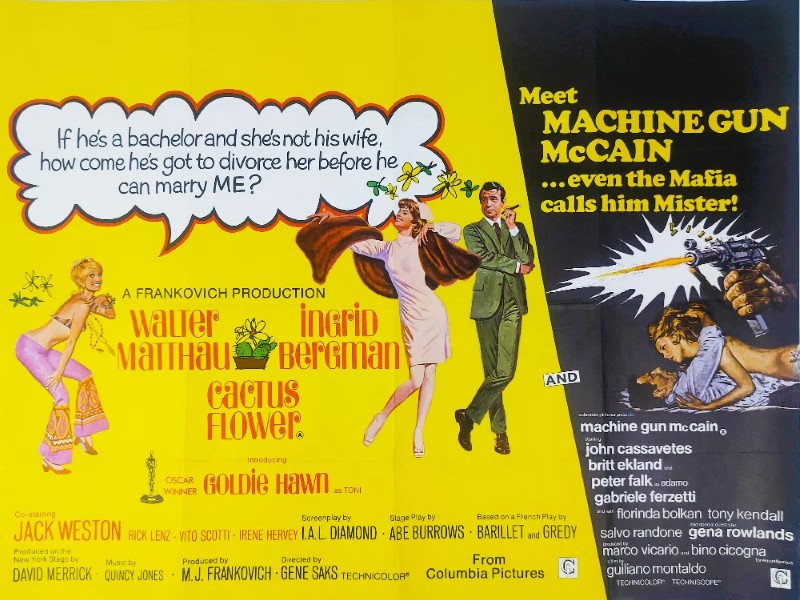
But it’s a shame that Goldie Hawn got all the glory – she won an Oscar – because this was the picture that established Walter Matthau as a genuine star as opposed to part of a double act with Jack Lemmon (The Fortune Cookie, 1966, and The Odd Couple, 1968). John Wayne once made the point that most acting is actually reacting to what someone else has said and in that regard there’s a masterclass from Ingrid Bergman (The Visit, 1964), playing determinedly against type.
Deceit drives the narrative. Just like Dean Martin in Airport (1970), upscale dentist Dr Julian Winston (Walter Matthau) has cottoned onto the fact that he can keep marital interest from mistress Toni (Goldie Hawn) at bay by the fact that he’s married. Except he isn’t and has to rustle up a fake wife to keep Toni on the hook. So he turns to spinster nurse Stephanie (Ingrid Bergman), a Swede cut from the repressed Bergmanesque cloth rather than the free loving spirit of popular (male) imagination, who has been carrying a torch for him for years, so, despite the notion that it’s not real, she goes full-tilt-boogie into the pretense. She’s even got a couple of nephews in tow who can masquerade, unknowingly, as Winston’s own kids.
Meanwhile, Winston rethinks his position, realizes he doesn’t want to lose Toni and reckons the only way he can get himself out of the sticky situation of his own creation is to pretend that his imaginary wife is also having an affair, so he has to set Stephanie up on dates with some of his customers so Toni can get a peek at them.
Assuming from its stage origins – France before being adapted for Broadway – this had more farce in the original production, that aspect has been trimmed back to concentrate on the various degrees of deceit. Instead of trying to force laffs from opening and closing doors and men being caught with their trousers down, this follows the simpler plotline of maintaining the deceits while inserting a potential twist when Toni develops an interest in her neighbor, author Igor (Rick Lenz).
The three principals are excellent, all bringing something fresh to the table, Walter Matthau as a lothario rather than a crafty conniver a distinct change of pace, Goldie Hawn a refreshing new face who was soon able to carry pictures on her own, and, especially, to my mind Ingrid Bergman. She has two absolutely marvelous reactions to information received – in the first her elbow literally falls from a table, in the second she is overwhelmed at the thought of receiving a gift, and she has the best scene of all, cutting loose on the dance floor.
As you might expect, the romantic entanglements are resolved.
Director Gene Saks (A Thousand Clowns, 1965) sticks to the knitting, extracting weighted performances from the cast without resorting to insipid extras. I.A.L. Diamond (The Fortune Cookie) adapted the Broadway play by Abe Burrows (Can-Can, 1960) who in turn had borrowed the French play by Pierre Barillet and Jean-Pierre Gredy.
Most 1960s comedies have lost their verve but this still plays exquisitely.
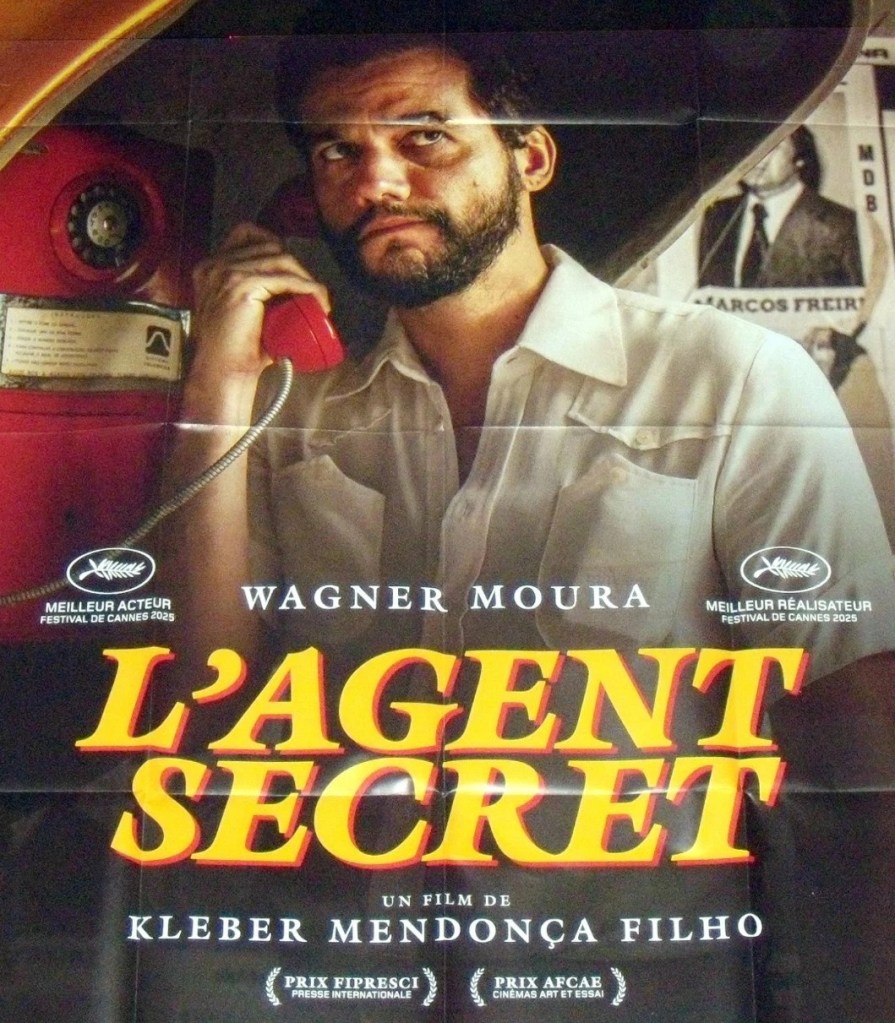
Now that publicists have hijacked film festivals in an effort to sell the public an unending stream of over-praised self-indulgent rubbish, it’s refreshing to come across a foreign film that is innovative, interesting and not over-acted. This meshes a thriller-like quality with the kind of surreal diversions that used to indicate movies not following the Hollywood dictat.
And while the storyline concentrates on brutal regimes and people persecuted for no reason except the authorities can get away with it, the potentially somber tone is undercut by homages to La Dolce Vita (1960) and Cinema Paradiso (1988). With time jumps, the movie takes its sweet time coming to a conclusion and when it does so, there’s an unexpectedly emotional twist.
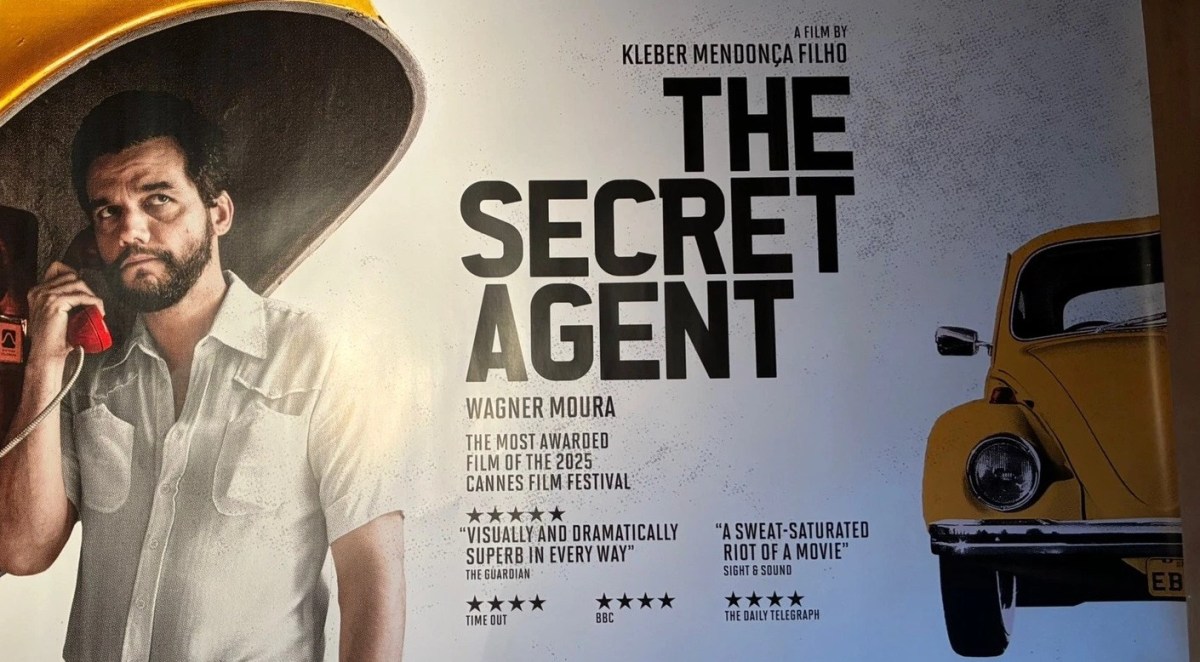
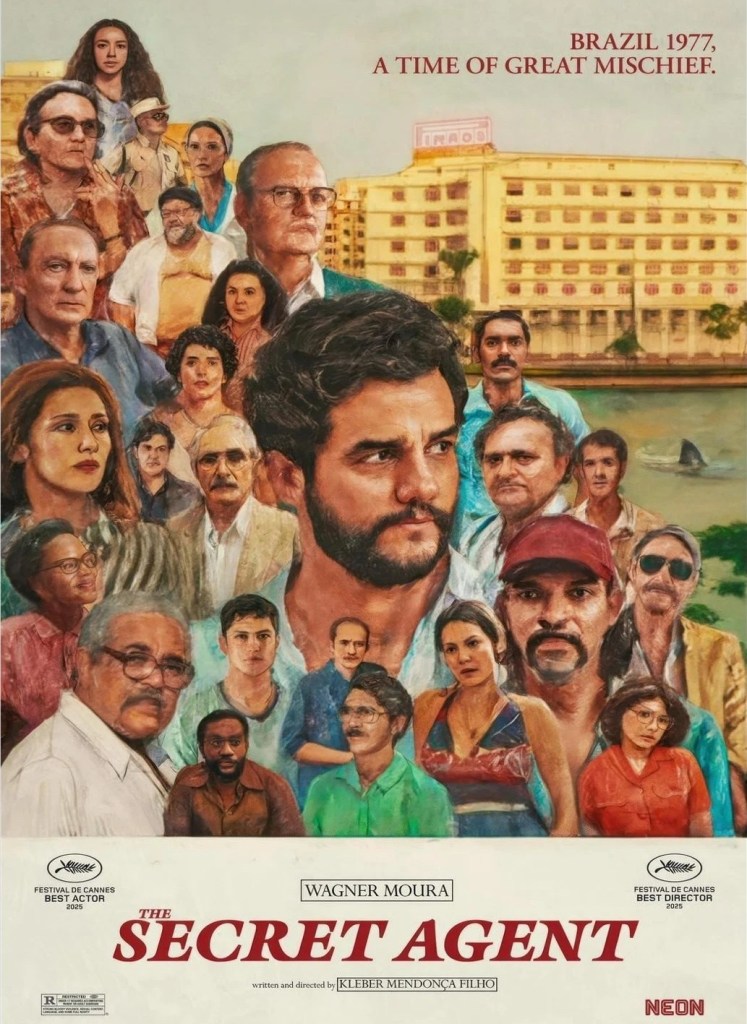
It’s set in Brazil in 1977, but I have to confess I know little about the politics of the period except, judging by what goes on here, corruption is rife and justice is compromised. We begin with our hero, college professor Marcelo (Wagner Mauro) being shaken down at a petrol station by a pair of cops, who eventually are happy with just a packet of cigarettes as their booty. The cops pointedly ignore the corpse rotting in the sunshine.
The widowed Marcelo, on the run and using a pseudonym, is driving to Recife to reunite with his son who is living with his grandfather. Marcelo hides out in a house full of refugees, who are equally in danger. Marcelo has fallen foul, it eventually transpires, of an industrialist who wants to steal his research. Said businessman has despatched two hitmen to deal with this “transgressor” and the hitmen in turn hire a cheaper hit man to carry out the deed.
The surreality emerges when a human leg found in the belly of a shark attracts greater headlines than normal because the country is in the grip of Jaws-fever. The leg takes on a life of its own when it’s stolen from the mortuary and used to terrorize gay men making out in a public park. Attitudes to death are equally morbid, the cops taking bets on how high the death toll will run at the annual carnival.
The grandfather is a projectionist in the local cinema so we are treated to mentions of Jaws (1975), The Omen (1976) and King Kong (1976). Marcelo makes contact with the resistance who are trying to help him get out of the country. But he’s also landed a job in an ID unit where, on the side, he can hunt for information about his mother.
The title is ironic. There’s nothing dangerous about Marcelo and he doesn’t have secrets that can topple a regime, nor is he spying for a foreign power. But he does have to behave like a secret agent just to survive, dodging about, hiding in plain sight, making contact via codes and signals.
You are led to believe also that his every word is being taped and that there are collaborators only too ready to hand him over. But in fact, the story jumps around to the present day and a student doing research on the period.
Marcelo isn’t much of a hero in the normal Hollywood manner. He might be something of a lothario in the James Bond manner but he’s just trying to survive and get on better terms with his young son. His father-in-law, with some justification it appears, accuses Marcelo of hypocrisy – he’s grieving for a wife to whom he was serially unfaithful.
And it’s very honest on the emotional scale. Marcelo discovers that his mother, who was little more than a slave, was impregnated by a landowner when she was 14. When the present-day student confronts Marcelo’s grown-up child with information about his “heroic” father, hounded by a brutal regime, the son doesn’t want to know – he was brought up by his grandfather and that’s more important than a man he rarely saw and to whom he has little emotional connection.
So on the one hand it’s the kind of political thriller that many critics have viewed as holding up a light on brutal regimes around the world, but it’s not that kind of political thriller. It’s at its best when exploring ordinary life, and the way that ordinary people are treated by bad actors.
Wagner Moura (Civil War, 2024) is deservedly up for an Oscar but the movie is people with highly believable characters. Writer-director Kleber Mendonca Filho (Pictures of Ghosts, 2023) makes no sweeping political points but by concentrating on the small scale he more than compensates.
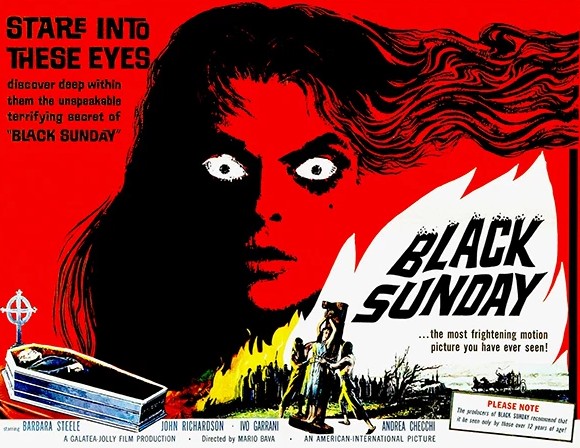
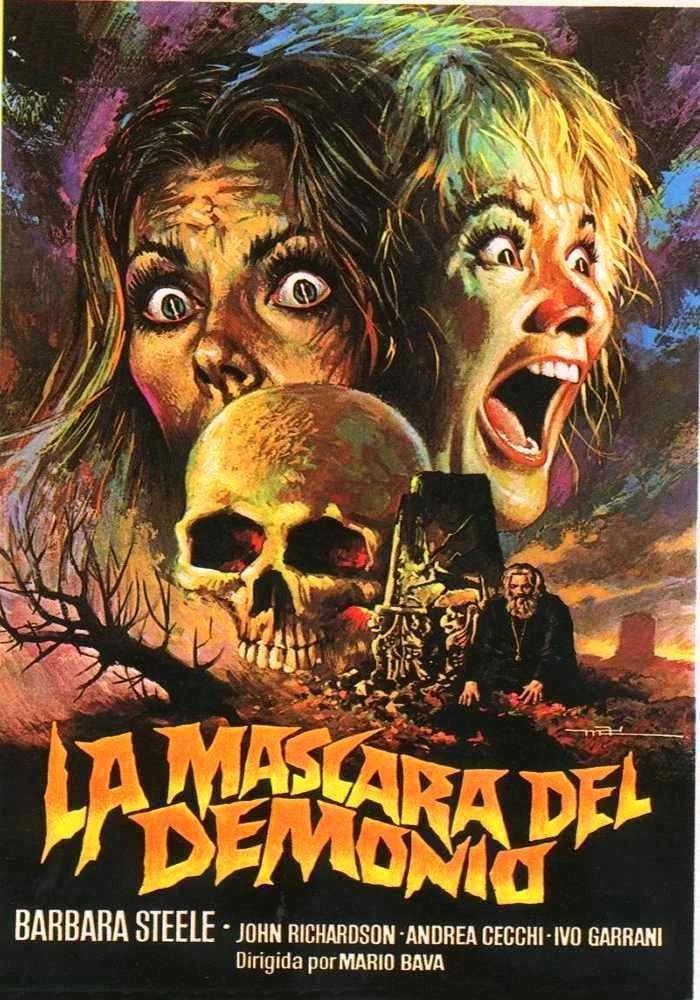
Impressively atmospheric. Cast in a cloud of fog and immersed in sound effects – bells, door swinging shut, echoing footsteps, screams, howls – and conspicuously devoid of the blood that was a Hammer hallmark. Effectively invents the Scream Queen but with a twist. With the likes of Christopher Lee, Peter Cushing and Vincent Price to accommodate, for the decade’s major purveyors of horror – Hammer, AIP and Tigon – women played a subsidiary role, mainly there to be helpless victims and scream. Here, as Hammer would later emulate, the female of the species took central stage and, therefore, screaming was at a minimum.
For that reason although Hammer sold Veronica Carlsen (Dracula Has Risen from the Grave, 1968) and Caroline Munro (Dracula A.D. 1972, 1972) as Scream Queens, they were not in the same league as Barbara Steele, who added mystery to glamor, and who took center stage rather than operating on the periphery, driving the narrative rather than required to be constantly rescued. Hammer took the Black Sunday template, more or less filched the story, and translated it into its Karnstein trilogy (The Vampire Lovers, 1970, Lust for a Vampire, 1971, and Twins of Evil, 1972) that allowed women to run rampant, and swapped relatively tame cleavage for nudity and sex.
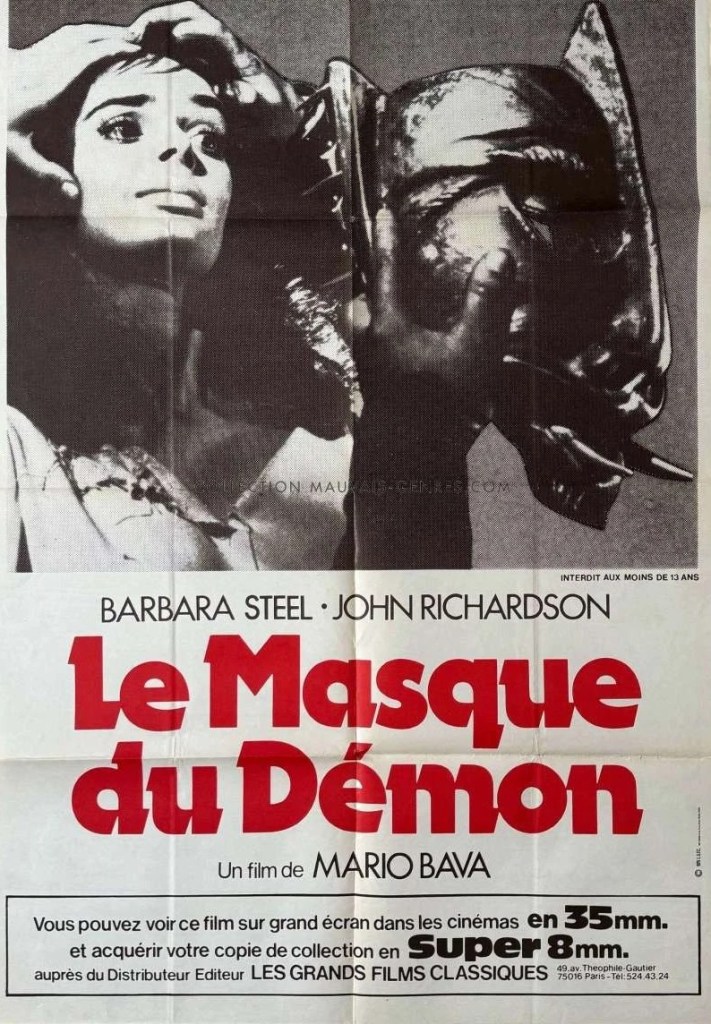
As a showcase for the horror talents of British actress Barbara Steele (Castle of Blood, 1964) – in a dual role as both predator and victim – and Italian director Mario Bava (The Whip and the Body, 1963) we are entering horror masterpiece territory. Bava brings more imagination to the table than Hammer. The steel needles of the mask affixed to witches is a fabulous invention. Victims are not drained of blood but surrender through a gentle kiss. The contents of paintings change. Rising from the dead is an explosive business rather than the traditional slow entrance.
Dr Kruvajan (Andrei Cecchi) , traveling through Moldavia with assistant Dr Gorobec (John Richardson), inadvertently triggers the resuscitation of the corpse of Princess Asa (Barbara Steele), a witch executed two centuries previously, but, crucially, avoiding being burnt to death when a sudden thunderstorm extinguished the pyre. She is able to revive, telepathically, her lover Javutich, also condemned as a witch, and together they prey on the descendants of those who put them to death, namely Prince Vadja, his daughter Katia (Barbara Steele) and son Constantin. A crucifix saves the prince first time round but soon he is slaughtered.
Kruvajan, smitten by the beauty of Asa, submits to her power and becomes her willing accomplice assisting Javutich in his killing spree. Gorobec, meanwhile, has fallen for Katia, and together with Konstantin is on hand to initially prevent the worst. But Asa has her eyes on Katia, planning to drain her of her blood and take over her body.
There are plenty close calls and the usual quota of violence, though the cleavage quotient is almost nil. That the movie climaxes in a terrific twist and an awesome visual demonstrates that Bava was a cut above the usual directors working in the genre. By the time Gorobec traces the missing Katia to the haunt of Ava, the damage has been done, although the audience doesn’t realize it. The now revived and stunningly beautiful Ava points out Katia as the witch who requires killing. And it’s only when Gorobec notices the crucifix on Katia’s neck that he realizes the bodies have been switched. Beneath her robes, Asa is a skeleton. Horror specialists spent a decade trying to top that image and it took the big-budget The Exorcist (1973) to come close.
Barbara Steele is mesmeric, exuding an exotic mysterious appeal that no other Scream Queen could match. Screenplay by Ennio De Concini (A Place for Lovers, 1969) and Mario Serandrei, better known as an editor, based on the story by Gogol.
The AIP redubbed and recut version released in the U.S. in 1961 differs significantly from the original. It was banned in Britain until 1968.
Brilliant opening, brilliant finish, all hail the two new stars of the genre


 The Magnificent 60s