Let’s Make Love (1960) ***

Despite a luminous performance by Marilyn Monroe (Some Like it Hot, 1959) , in revealing outfits half the time, this backstage musical drama barely staggers over the line. Whatever relationship the actress enjoyed off-screen with co-star Frenchman Yves Montand (Grand Prix, 1966) fails to register here. In this fish-out-of-water tale of the Broadway intrigue involved in putting a musical together, watching klutz billionaire Jean-Marc Clement (Montand) getting his act together as neophyte actor-cum-singer fails to fly.

It’s always difficult observing a good actor trying to be bad. If he’s a really good actor, it’s going to be an awful watch. And unless he’s got the comedic chops to trigger a bucketload of laughs it’s painful to observe. Gregory Peck reportedly quit this role in favour of The Guns of Navarone (1961) because there was too much Marilyn Monroe in it, and possibly an awkward Peck would have been more fun to watch though comedy was scarcely his forte, but without Monroe the movie would have been virtually unwatchable.

The story’s familiar, a twist on Cinderella with Clement being the ugly duckling in terms of talent. The billionaire businessman, notorious for his love life, attends a rehearsal of a show intending to register outrage at its veiled portrayal of him. Instead, he is mistaken for an auditioning actor and offered a role. He falls for Amanda (Monroe) but she shows little interest, either obsessed with her knitting or trying to improve her education at night class, and appears far more interested in her stage co-star Tony (Frankie Vaughan).

In order to sharpen up his act, Clement hires a bunch of well-known thespians: Milton Berle, Bing Crosby and Gene Kelly.

This is where the show could be get interesting. Genuinely learning the secrets of a great comedian, singer and dancer should at the very least provide a fascinating insight into their skills. Of these, Crosby is the pick, demonstrating the importance of raising or dropping your voice at various points in order to maximize the emotion in a song, in other words a singing masterclass. Berle has too much screen time and does little to justify it.

Whatever, regardless of what the script says, Clement seems to take on board little of what he is taught. Montand was a gifted crooner in any case, having begun his career as Edith Piaf’s protégé, and it just seems like he switched instantly from being a bad singer to a good one. In contrast, when Amanda has to take direction, she immediately shows how simple it is to improve a number by adding some actions.

Luckily, Monroe is such a mesmeric screen quality that she can rescue any indifferent movie.  This would work better with a more charismatic leading man – and the prospect of Peck teaming with Monroe was intriguing – but regardless of who she acts opposite Monroe will always blow them away. This is a different kind of role for her because in a sense she is neither the girl adored nor the victim of romance gone wrong. For the most part she’s just a career girl focusing all her attention on getting on. She’s almost just the foil in the dramatic sequences for Montand. But once she has the stage or screen or to herself she dazzles.

Riding the Bond Reissue Bandwagon

The 60th Anniversary celebration of the James Bond phenomenon in British cinemas that has been running for a few months now sent me back to examine the extent of the James Bond Reissue Double Bill.

As I mentioned a few weeks back, the Dr No (1962)/From Russia with Love (1963) revival in 1965 kicked off the biggest-ever demand for a screen character, one of whom the public never seemed to grow tired, certainly for the next decade until the first of the series were sold to television. Prior to United Artists’ approach with the Bonds, unless a picture had Oscar-driven box office power it would not even be considered for revival for around seven years, considered a generation in audience terms.

In Britain, the movies were guaranteed circuit releases on the Odeon chain. However, contrary to the approach in the United States, the movies were not thrown back into circulation right away and it wasn’t until three years later that the next double bill – Goldfinger (1964)/Thunderball (1965) – put in an appearance. But thereafter, there was no stopping the Bond bandwagon. In 1969 You Only Live Twice (1967) went out with either From Russia with Love or Dr No (cinemas could choose their preferred pairing).

In 1970, United Artists took a break from the Sean Connery reissue business by concentrating on the studio’s other big male star Clint Eastwood, doubling up For A Few Dollars More (1965) with A Fistful of Dollars (1964).  But by 1971 it experimented with playing Connery and Eastwood together, first pairing You Only Live Twice/A Fistful of Dollars and later the same year Goldfinger/For a Few Dollars More. But in 1972 the studio reverted to type with Thunderball/Dr No and the following year Diamonds Are Forever (1971)/From Russia with Love.

In 1974 it was You Only Live Twice/Thunderball and  few months later Dr No/Goldfinger. Come 1975 it was time for two of the later offerings to enter the revival business – Live and Let Die (1973) and On Her Majesty’s Secret Service (1969) followed at the end of the year by The Man with the Golden Gun (1974) and Live and Let Die. The next year brought a programme change – Diamonds Are Forever teamed up with new Bond Roger Moore in the non-Bond adventure Gold (1974).

In 1977, for the first time in nearly a decade the Bond reissue was absent from British cinemas although the following year saw a re-teaming of Live and let Die and The Man with the Golden Gun. But that pretty much spelled the end of the annual James Bond double bill, television by now too quickly eating up new product.

The British approach was almost conservative compared to the way the Bond revivals were handled in the US. After the sensational performance of Dr No/From Russia with Love in 1965 U.S. exhibitors had to wait only a year for Goldfinger/Dr No. United Artists showed little restraint, following a policy of “play them till they drop,” and launching the Connery/Eastwood combo in 1968 with You Only Live Twice/The Good, the Bad and the Ugly (1967) plus a straightforward Connery item Thunderball/From Russia with Love the same year followed by Goldfinger/Dr No in 1969.

In the U.S. the year of the missing Bond reissue was 1970. But in 1971 United Artists reissued two Bond dualers six months apart. First out was Thunderball/You Only Live Twice and then Dr No/From Russia with Love. Ahead of the television premiere of Goldfinger in September 1972, UA brought back Goldfinger/From Russia with Love and then the triple bill (“Spend a Night with James Bond!”) of Goldinger/Dr No/From Russia with Love plus a double bill of Thunderball/You Only Live Twice, the last program incidentally knocking up a colossal gross of $122,000 – equivalent to $853,000 now – from 14 houses in New York in its opening week.

But the bonanza came to an end when television ponied up $17.5 million – equivalent to $126 million today – for the first seven pictures in the series. And this was before residuals kicked in from VHS, television resale and syndication, DVD, cable and streaming. Even when the MCU can guarantee billion-dollar revenues from many of its movies it’s doubtful if any one of its blockbusters made as much money as the best of the Bonds in their lifetime, much of that extra revenue coming from the way the revivals proved the enduring popularity of the series.  

SOURCES: Allen Eyles, Odeon Cinemas 2: From J. Arthur Rank to the Multiplex (Cinema Theatre Association, 2005) p211-220; Brian Hannan, Coming Back to a Theater Near You (McFarland, 2016) p147-151, 175-177, 227.

The Gray Man (2022) ** – Seen at the Cinema

I could have seen this for nothing on Netflix, but instead, hoping to do an action picture justice by seeing it on the  big screen, I shelled out my bucks for the privilege. Bourne Ripoff is as much as you need to know. Lazy writing with a bundle of the incongruities you can get away with within the MCU because as long as there’s the requisite action nobody bothers too much about logic.

Don’t be fooled into thinking this is John Wick gone wild. It’s many things gone wild, including a heap of overacting, and a pair of the biggest villainous klutzes you will ever come across. It’s vaguely redeemed by an explosions/ shootout/ tram chase in Vienna but that’s only enough to shift it up from one-star to two. And it’s a shame because Ryan Gosling (First Man, 2018) in his first movie for four years is a believable tough guy in the Bourne tradition and Ana de Armas delivers on the action chops she displayed in No Time to Die (2021).

A poster straight out of the Joseph E. Levine playbook. He used to dream up these kind of posters which characters were assigned titles that bore no resemblance to the part they played on screen.

It should be an action romp, but instead it’s a mess. A C.I.A. black ops unit – inventively called the gray department – is hiring convicted killers to knock off anyone they want. Six (Ryan Gosling) got jailed for an insane amount of time, would you believe (nope!) for, as a teenager, killing his dad who was domestically abusing both his sons (trying to drown Six, for example). Six’s latest mission is to kill a guy who turns out to be an assassin in the same line of work but who is blackmailing C.I.A. boss Carmichael (Rege-Jean Page).

There’s nothing cool about Carmichael, he throws coffee at windows when he’s cross, and that sets an awfully bad example because his underling Suzanne (Jessica Henwick) is also prone to getting very cross. But that’s nothing compared to complete nutjob Lloyd (Chris Evans) who enjoys a bit of torture and gives psychopaths a bad name, but if I got this right attended Harvard with Carmichael so that’s okay then. Lloyd is hired to kill Six because he knows too much. And Lloyd calls in other assassins.

Now we’ve had that template in Bourne so what’s going to make it different? I know, let’s ramp it up. Instead of individual assassins, who might display some kind of finesse, let’s have teams of rampaging assassins. You can’t really wreck Vienna with just an assassin or two, you need a whole army.

Danush (Avik San) is an unusual assassin in that he operates on his own, not needing a huge team, but he is also cursed by – remember he’s a ruthless assassin – being suddenly conscience-stricken.

Oh, I forgot to mention Fitzroy (Billy Bob Thornton), the guy who sprung Six from jail but is now retired. Luckily, he happens to have a young niece Claire (Julia Butters). And that comes in handy when Lloyd needs to bring him to heel – and can kidnap the girl. But wait, two years before, Six was assigned to protect Claire and saved her life twice.

Twice? Yep, once from assassination and once when he rushed her to hospital after something went wrong with her pacemaker. Yep, she has some terrible heart disease. But not enough apparently to prevent her being the world’s pacemaker poster girl. Guess what? She can race along the top of a castle and jump 100 feet off a castle wall into a moat.

After being blame-shamed by Carmichael, Six’s C.I.A. sidekick Dani (Ana de Armas) switches sides to help him and can be counted on to turn up to shoot darts at Lloyd and appear with a fast car in time to save Six from assassins on the aforesaid tram. But she’s one of the victims of the lazy writing. She has two clear chances to save the day by marksmanship and fails each time. The first excuse is just so dumb. Thrown a sharpshooting rifle by Six, she discovers this comes minus ammunition. “Never throw a loaded gun,” must be one of the stupidest lines ever written, a lame joke that clearly makes reference to No Time to Die. Armed with another sharpshooting device and with clear line of sight on Lloyd, for reasons that are never made clear she doesn’t shoot.

Did I mention that Six is the kind of tough guy who, armed with little more than a penknife, can saw through a water pipe because the directors want to do some kind of riff on Kingsman: The Secret Service (2014) or that this this is the thriller version of If It’s Tuesday It Must Be Belgium (1969) with a different country about every ten minutes. And if people aren’t losing digits, it’s fingernails.

Ryan Gosling and Ana de Armas come out of this well but Chris Evans (Avengers: Infinity War, 2018), with a Tom Selleck moustache, is just awful, a joke villain, the only surprise being he doesn’t twirl said moustache. It’s almost as if he’s doing his utmost to make people forget he was ever Captain Marvel, but this is to the utmost and beyond. Stick to Bridgerton would be my advice to Rege-Jean Page. Billy Bob Thornton (Bad Santa 2, 2016) plays one of his more restrained characters.

The Russo Brothers (Avengers: Infinity War) throw every trick in the book at the movie without starting from the obvious point – a decent script.

Heavens Above! (1963) ***

Surprisingly topical – food banks a key element – social satire. And a surprising box office smash – among the top 12 films of the year – in Britain, although the Boulting Brothers (I’m Alright Jack, 1959), often viewed as inheriting the Ealing mantle, had both commercial and critical form.  

In a case of mistaken identity, simplistic prison chaplain Rev Smallwood (Peter Sellers) is sent to rich parish Orbiston Parva, virtually endowed by the Delpard family, owners of the Tranquillax business nearby. Smallwood, an advocate of the meek inheriting the earth and making it his mission to ensure the rich can enter the kingdom of Heaven other than through a needle, convinces Lady Delpard (Isabel Jeans) to spread her wealth. This takes the form of the Good Neighbour Fellowship, whereby she sets up a food bank whose popularity soon endangers the town’s retailers and merchants, the public, naturally enough, preferring to do their shopping at the free church outlet than spend money on a butcher or baker (possibly candlestick makers escaped the impact).

Meanwhile, to show he is up to scratch in the poverty ranks, Smallwood invites into his palatial manse the Smith family who are being evicted from their plot of ground to make way for an expansion of the Tranquillax factory. Despite ruffling feathers in the ministry, Smallwood can’t be turfed out, since religious law dictates he effectively owns the manse. However, once shops have to close for lack of trade and factories, for lack of goods being sold, make thousands redundant, Smallwood’s do-gooding backfires.

While Harry Smith (Eric Sykes) is an archetypal welfare swindler (taking home £90 a week) and inclined to siphon off items from the food bank for his own entrepreneurial purposes as well as stealing lead from the church roof, the rest of his enormous brood, led by the redoubtable Rene (Irene Handl) are converted to the joys of Christianity, enough so much so that baptism and marriage (between the couple) beckon.

Most of the humour is gentle, the biggest laughs – Smallwood inadvertently eating dog biscuits, a dog peeing on his leg, choirboy reading a dirty book, the butler initiating a miraculous intervention – are straight out of the Charlie Chaplin joke book. And the timing for many lines appears out of kilter, as though the laughs were not intended.

British films around this time often received rave reviews from U.S. critics which ensured reasonable business at the arthouses while not striking a box office chord with the general public. there.

Apart from Smallwood, his assistant Matthew (Brock Peters) and the converted Lady Despard you are hard put to find any Chistians. As one character observes “not enough decent Christians to feed one lion.” And the townspeople are generally shown as scroungers of one kind of another with the Smiths typical sex-obsessed chip-guzzling working class. The business owners, bishops, aristocrats and assorted politicians are similarly pilloried for greed and inefficiency so you could say the Boultings are being fair straight down the line.

The best scene, and the one that makes the most out of a comic situation, is when the real Rev Smallwood (Ian Camrichael) turns up, is treated as an imposter and locked up for displaying psychotic tendencies. And there’s a clever, even more topical ending, involving space exploration, which equally cleverly mimics an earlier scene. Actually, there are two scenes that echo earlier activities, and both are intelligently used.

The satire retains some of its bite. There are even more rich people around now who hold onto their wealth and there are more poor people in clear need of help, assistance that would extend far beyond food banks, a relatively recent phenomenon. You can be sure selfish big business will be as self-interested.

Peter Sellers, complete with regional accent, in pre-Pink Panther mode shows dramatic skills that he would rarely be allowed to exhibit until much later in his career and although I think he should have been permitted more leeway in his lines he doesn’t deliver them as though he is milking a joke which means dramatic intent is not diluted. He is perfectly believable as the quietly-spoken forgiving vicar surrounded by more grasping colleagues who appear to have forgotten the basics of Christianity, his immediate boss, for example, on holiday in Monte Carlo.

British television comedian Eric Sykes (The Liquidator, 1965), barely recognisable after abandoning his trademark stance and voice, is the standout as the conniver-in-chief. Brock Peters (The Pawnbroker, 1964) is effective as the bin lorry driving protégé and Isabel Jeans (A Breath of Scandal, 1960) a delight as Smallwood’s slightly dotty benefactor – her look as she realizes he has scoffed the dog biscuits worth a couple of laughs. The others, good as they are, are called upon to play little more than stock characters: Cecil Parker (The Comedy Man, 1964), Ian Carmichael (The Amorous Mr Prawn, 1962) and Irene Handl (The Wrong Box, 1966). Look out for Roy Kinnear (Lock Up Your Daughters!, 1969), the first Doctor Who William Hartnell and the future Miss Marple Joan Hickson.

Ably directed by Roy and John Boulting who easily hit all their targets, the screenplay is by Frank Harvey (I’m Alright, Jack), John Boulting and critic Malcolm Muggeridge.  

Firecreek (1968) ****

Unfairly overlooked intelligent western with terrific performances from the two male stars and thematically prefiguring both Once Upon a Time in the West (1969) and The Wild Bunch (1969). Granted it appears slow but it’s the slow-burn kind of slow that works exceptionally well. Too often under-stated means under-rated while subtlety rarely attracts critical plaudits. And if you see the role of the screenwriter as probing personality and uncovering self-delusion rather than merely devising pithy lines then this is one for you.

Johnny (James Stewart) is a two-bit (“honorary”) sheriff  in a two-bit town stuffed full of losers. Into his patch comes a gang of hired killers fresh from range wars led by the wounded Bob (Henry Fonda) and including cocksure trigger-happy Earl (Gary Lockwood), mean Norman (Jack Elam) and dumb Drew (James Best). With Bob side-lined with his injury, it’s not long before the gang kicks off, Earl half-drowning a man, smashing up the saloon and nearly killing a pompous preacher (Ed Begley) while Norman attempts to rape Native American squaw Meli (Barbara Luna). They think a few dollars will repair the damage and nullify hurt feelings.

But for the most part tensions just simmer, it looking like the outlaws are temporary visitors, Johnny using diplomacy to settle matters, and none of the townspeople inclined to get into a shooting match. And there’s a rich seam of characters who even when they skirt cliché seem to offer if not necessarily something new but not shop-worn either and with emotional depth.

Headstrong teenager Leah (Brooke Bundy) is attracted to dangerous Earl even though he would as soon rape as romance her, level-headed Evelyn (Inger Stevens) finds solace in a man she knows is a killer and midwife Dulcie (Louise Latham) is so dry her language could cut you with a knife. Johnny’s too trusting wife Henrietta (Jacqueline Scott)  bewails “why did we settle for less than we wanted,” storekeeper Whittier (Dean Jagger) would be a knife-whittling charming elder statesmen except for his habit of going for the jugular,  and hero-worshipping stable boy Arthur (Robert Porter), too old to be just cute and verging on a calamity, “couldn’t tell you what day it was.” And there’s a hint that the upstanding Johnny ain’t quite so perfect, the question of Meli’s white child left dangling in the air.

It’s the kind of “cemetery” town people end up when they’ve nowhere else to go, the inhabitants discomfited “because today didn’t turn out like yesterday.” Johnny’s the worst offender, stopping here on his way to a better life further west because all he “saw here was land nobody wanted and ground that nobody would be challenging me for.” The only person who will stand up for law and order is the witless Arthur who unwittingly triggers trouble. The townspeople mirror the villagers in The Magnificent Seven (1960) who require the assistance of mercenaries before they can stand on their own two feet except in this case nobody is rushing to the rescue.

The initial stand-offs between Johnny and Bob are under-stated, serving to stoke up tension, and the twist is that it’s Bob who tries to avert a showdown, feeling sorry for the sheriff, knowing he will be no match for a proven gunslinger, while the climax provides a surprising saviour. In fact, Bob is the most self-aware of all the characters. He tells Evelyn “you are living even more in the past than I am” and that “I don’t have your temperament to accept another empty day.” And even though he doubts the quality of his gang, he can’t give them up, or the power of being in charge. “I’ve been alone, didn’t like it…I can’t gamble with being a nobody, I’ve been that, doesn’t work for me.”

Among the ton of great touches are Johnny’s badge, made by his kids, title misspelled, the climax in a dust whirlwind, the pompous preacher whose bluster can’t save him, and the most terrible wake you will ever witness.

It’s quite astonishing that a film with such a high quotient of characters – except Johnny at the end – lacking redeeming features could work so well. Director Vincent McEveety was the epitome of a journeyman, best known for television and Disney (Herbie Goes Bananas, 1977) go-to guy. This was his debut feature – if you exclude Blade Rider, Revenge of the Indian Nations (1966) stitched together from episodes of television’s Branded – and it sank at the box office despite the presence of Stewart and Fonda, admittedly at the tail end of their marquee power.

Outside of the wake and the climax, the best scenes are under-played. McEveety lets the words do the talking, a good choice given the exemplary writing (as indicated above) and three principal actors who can be relied upon to ignore the temptations of over-acting. He handles the action well and there’s a growing sense of terror as the townspeople realize what their cowardice has let them in for.

There’s a nod here and there to High Noon (1952) with the town full of cowards but from today’s perspective it’s as a precursor that the movie is perhaps more interesting. Henry Fonda’s (The Best Man, 1964) performance, complete with pitiless stare and thick stubble, seems a rehearsal for Once Upon Time in the West (1969) while his gang, like The Wild Bunch (1969), complete with squabbling outlaws and leadership challenge, are “running out of borders.”  You might notice how Fonda’s death here – the movement to the side when shot, the shock in his eyes – while markedly less operatic closely resembles a similar scene in Once Upon a Time in the West. And if you want further reference to Sergio Leone’s epic, how about a nearby town called Sweetwater.

You might think you’ve seen this James Stewart (The Rare Breed, 1966) performance  before but it’s a subtle variation on the hapless character of Mr Hobbs Takes a Vacation (1962) and far removed from the take-charge characters of this decade. This is man who has fooled himself into thinking he is something he is not, a man of the west in name only.

Inger Stevens (House of Cards) again delivers, like the other townspeople acting tough to hide the weak interior. There’s a terrific supporting cast. Gary Lockwood (2001: A Space Odyssey) is given more rein than anybody else outside of Ed Begley (Warning Shot, 1967). Look out also for Dean Jagger (Elmer Gantry, 1960), Richard Porter (Mackenna’s Gold, 1969), Jay C. Flippen (Hellfighters, 1968), Louise Latham (Marnie, 1964), James Best (Shenandoah, 1965), Brooke Bundy (The Gay Deceivers, 1969) making her movie debut, Barbara Luna (Che!, 1969) and Jack Elam (Once Upon a Time in the West).

Credit for the intelligent screenplay goes to Calvin Clements (Kansas City Bomber, 1972), also making his first picture.

Coogan’s Bluff (1968) ***

Almost a curiosity in the Clint Eastwood canon from the later perspective, this modern western concerning a maverick Arizona cop pursuing a fugitive in New York could also be interpreted as a riposte to the violent avenger of the “Dollars” trilogy and Hang ‘Em High (1968). Like Rio Conchos (1964) there’s an action-packed start and finish and not much in between unless you count Coogan (Clint Eastwood) being beaten up, and like Firecreek, made in the same year but less of an audience attraction, a slow burn with little of the depth of the Vincent McEveety effort.

It fits more neatly into the “victim” niche of The Beguiled (1970) and Play Misty for Me (1971) with Eastwood, while attempting to present a macho image, set upon by predatory women. Here, although led into a trap by the girlfriend Linny (Tisha Sterling) of the wanted Ringerman (Don Stroud), the victim elements are mostly humorous, Coogan a fish-out-of-water taken advantage of by cab drivers and hoteliers and by a justice system that takes more note of due process than he is accustomed to. Otherwise, it’s pretty much a romance as Coogan, for whom persistence pays off, beds probation officer Julie (Susan Clark).

Coogan is a paid up member of the wham-bam-thank-you-ma’am fraternity, frolicking with an adulterous lover in Arizona, and displaying no qualms about getting it on with Linny. In the hands of Jack Lemmon this would be a comedy, so it’s a strange choice for Eastwood unless for experimental purposes, trying to set himself up more as Steve McQueen than John Wayne.

The picture opens with Coogan tracking down a Native American, and manacling him to a pole outside a house while he repairs inside for sex. Interrupted by a sheriff frustrated by his ways, he is despatched to New York where he manages, through a bluff, to have Ringerman removed from Bellevue mental hospital. On the way home, he is ambushed by Linny and some thugs, losing consciousness and his gun, neither going down well with the more bureaucratically-minded Lt. McElroy (Lee J Cobb) whose undercover stake-out plans he has also ruined.

Luckliy, Coogan has chanced upon probation officer Julie who can’t quite manage to deter his amorous advances and at an appropriate moment he sneaks a look at her files for his next lead. Not quite as sharp as he imagines, and clearly not much good at assimilating painful lessons, after a dalliance with Linny, he is astonished to be led into yet another trap. In the end, of course, he gets his man, courtesy of a motorbike chase. But there’s a curious ending. Not only does Julie, who he has betrayed with Linny, turn up to wave him off, but, as if he has now turned into a kinder, more humane specimen, he affords his prisoner a smoke, something he pointedly refused to do with the Native American.

It’s not dated particularly well and modern audiences will have trouble accepting domestic abuse and rape as comedic situations and eyebrows are scarcely going to be raised at the drug-addled Linny nor the club where naked women fly overhead on trapezes. The idea that intelligent women like Julie, weighed down with psych jargon and over-concern for offenders, just need a big hunk in their lives doesn’t fly either.

But if you accept the out-of-towner trope, and are happy to see Clint practising his squint and double take , you will find in between the action  and “victim” agenda, a quite tolerable romance. It was a bold choice for a star best known for killing people. Tough guy that he is, he is flummoxed by the big city and has a hell of a job getting his man. On the other hand Eastwood and Clark have excellent chemistry. This is embryo Eastwood, almost as if he is trying on a variety of screen persona to see what will fit. After Dirty Harry (1971) there was little truck with romance except for The Bridges of Madison County (1995) and In the Line of Fire (1993) so it’s interesting to see his moves, albeit that the best romantic work he did was in the director’s chair with Breezy (1973).

Susan Clark is superb, all the professional confidence of Tell Them Willie Boy Is Here (1969) but the romantic cynicism replaced by an appealing hesitancy. Lee J. Cobb (Exodus, 1960) has little to do except be grumpy, Don Stroud (Madigan, 1968) doesn’t feature prominently enough while Tisha Sterling (Journey to Shiloh, 1968) makes the bigger impact.

Don Siegel (Dirty Harry) would become an Eastwood long-time confederate, directing him in six movies, of which this was the first. He had just made a Hollywood comeback after six years in the feature film wilderness with Madigan (1968), a tougher cop picture. I would be inclined to lavish more critical plaudits on the idea of playing around with the tough guy persona, but I’m not sure that was the intention.

Thor (2022) **** – Seen at the Cinema

It was time someone took the piss out of the MCU. Just as well Marvel decided to do it for themselves. The result is a hoot.

Finding gainful employment for the universe’s dumbest superhero is no joke, but in a welter of visual and verbal gags the studio celebrates his stupidity. I was laughing from the outset and I didn’t stop and from the mad recaps to the giant goats, Thor (Chris Hemsworth) treating his weapons as if they had the power to upset him, his ignorance of the devastation he wreaks, and non-PC references to orgies and the size of his manhood, the inevitable Marvel save-the-world plot takes second place to humor.

Asgard has been turned into a tourist attraction, terrible actors perform sagas in tacky productions to entertain visitors, until Gorr (Christian Bale) the god-killer, having been allocated in normal mysterious fashion and in Excalibur-style the Necrosword, comes calling, kidnapping children, packing them off to the Shadow Realm as a means of luring Thor. Fortunately, lost love Jane Foster (Natalie Portman), unfortunately dying of cancer, reappears in his life, though, on the debit side, she steals his hammer, causing him to turn to his axe. There’s hammer hocus-pocus, the usual lengthy daft exposition, but that’s offset by Thor, sensitive soul that he is, feeling he has to woo the discarded axe.

Also recruited are Asgard king Valkyrie (Tessa Thompson) and stone-man Korg. First port of call, naturally, is Omnipotence City where all the top gods hang out, including Zeus (Russell Crowe), the top god of all. Unwilling to help them out when there are delectable maidens hanging on his every word and orgies to enjoy, Zeus foolishly picks a fight and loses his lightning bolt.

But that’s enough of the madcap fun. Now it gets serious in the usual annoying way, redemption and its alter-ego sacrifice required at every turn, as you try to keep up with the new ideas suddenly introduced, the Bifrost and Eternity, and have to remind yourself of the rules regarding the axe and sword and the various pitfalls awaiting the characters. But the first half has given the movie sufficient energy to woosh you through the second half.

I’m not sure of The Avengers recruitment policy and how Thor ever fitted in and it’s just as well his cohorts in this adventure, part of the way at least, are the equally demented Guardians of the Galaxy phalanx led by the vain and vainglorious Star Lord (Chris Pratt). I always felt the rest of the MCU mob, albeit they occasionally deliver a good quip or two, were just too serious a bunch, what with all the saving-the-universe-and-beyond malarkey whereas Thor and Star Lord are blood brothers, daft specimens, useless at romance and anything serious, good for nothing except a good scrap.

There are a whole bunch of stand-out comic scenes – Thor looking to Star Lord of all people for advice on matters of the heart, the goats leading the space craft crash-landing into a planet. Admittedly, excepting the serious bits at the end, this is far more light-hearted than anything else in the MCU and thankfully sticking to the one universe rather than the multi-universe departures of late.

Chris Hemsworth (Thor: Ragnarok, 2017) as usual is superb, just the right bombast and imbecility coupled with vulnerability and sweetness, his clipped delivery at odds with his befuddlement, his eve-of-battle speeches would have Churchill turning in his grave. But Russell Crowe (Unhinged, 2020), with his mangled Greek accent, matches him in the dumb stakes. Natalie Portman (Lucy in the Sky, 2019) makes a welcome return and Tessa Thompson (Passing, 2021) proves a good side-kick to both. Christian Bale (Ford vs. Ferrari, 2019) bring his malevolent A-game as a memorable villain. Watch out for cameos from Matt Damon (The Last Duel, 2021), Melissa McCarthy (Superintelligence, 2020), Luke Hemsworth (Death of Me, 2020) and Sam Neill (Jurassic World: Dominion, 2022).

Director Taika Waitiki (Thor: Ragnarok , who also voices Korg, does a quite brilliant job of combining action and comedy. He also takes credit for the screenplay along with Jennifer Kaytin Robinson (Unpregnant, 2020).

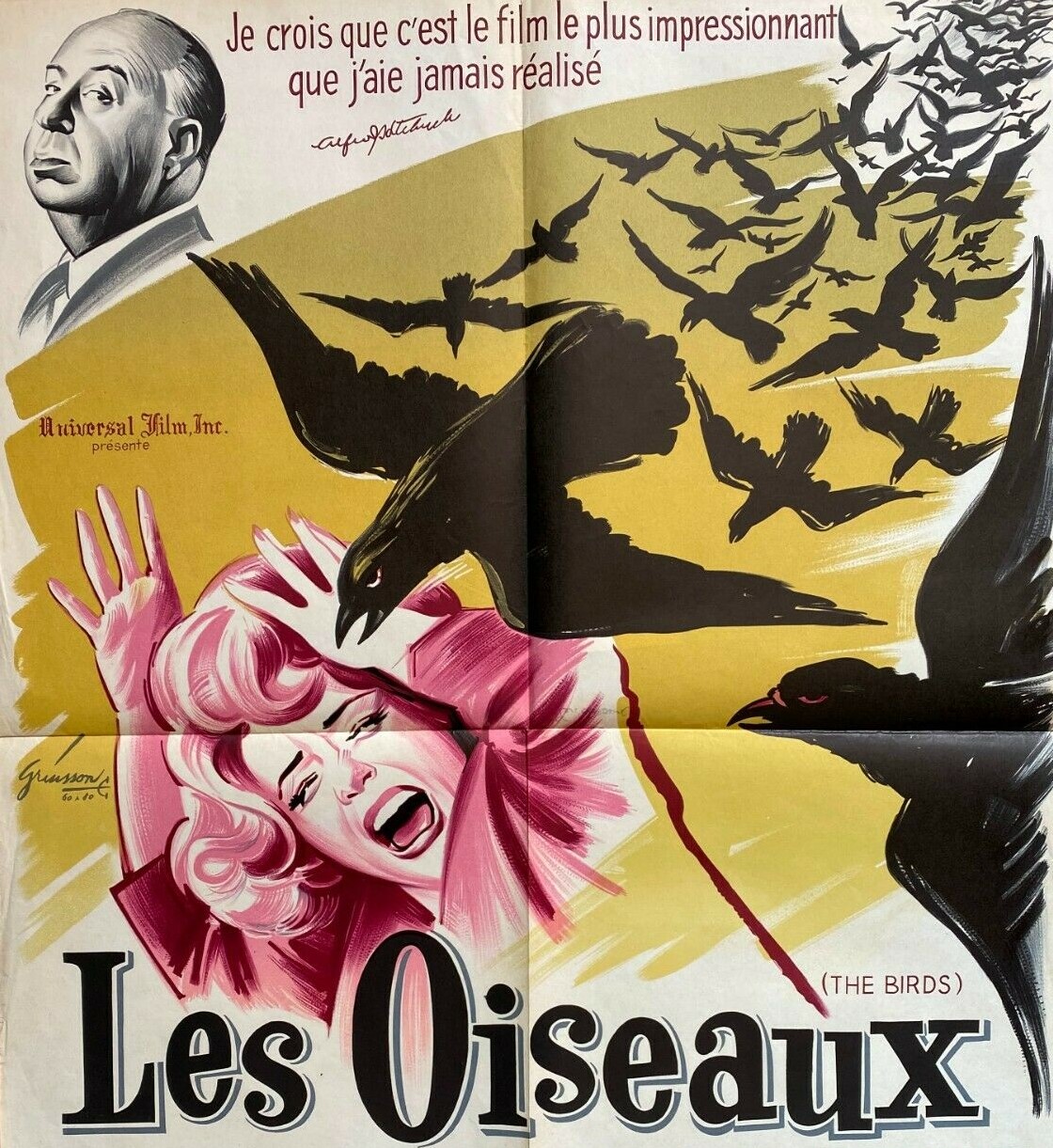
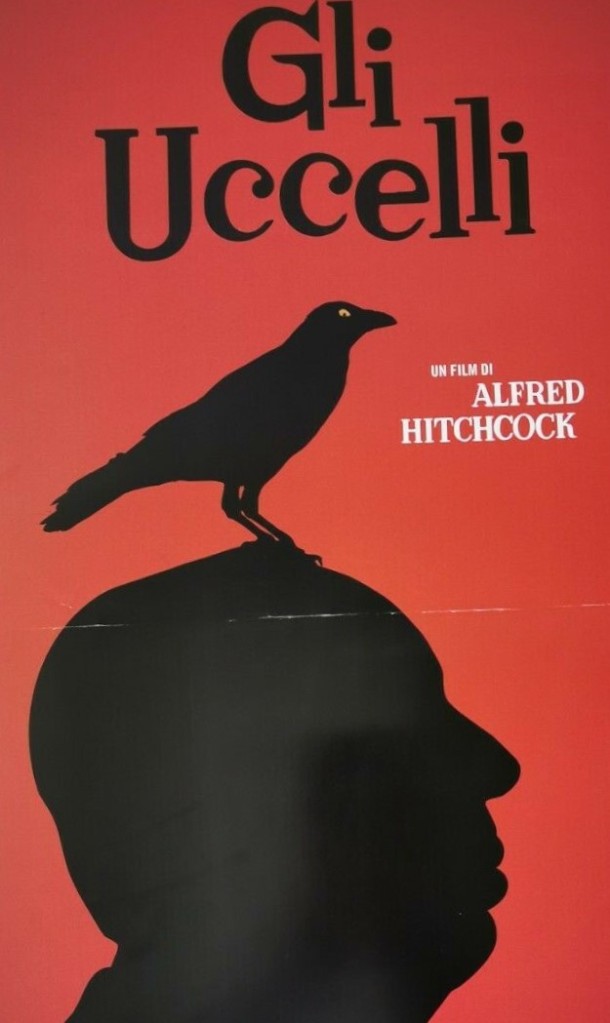
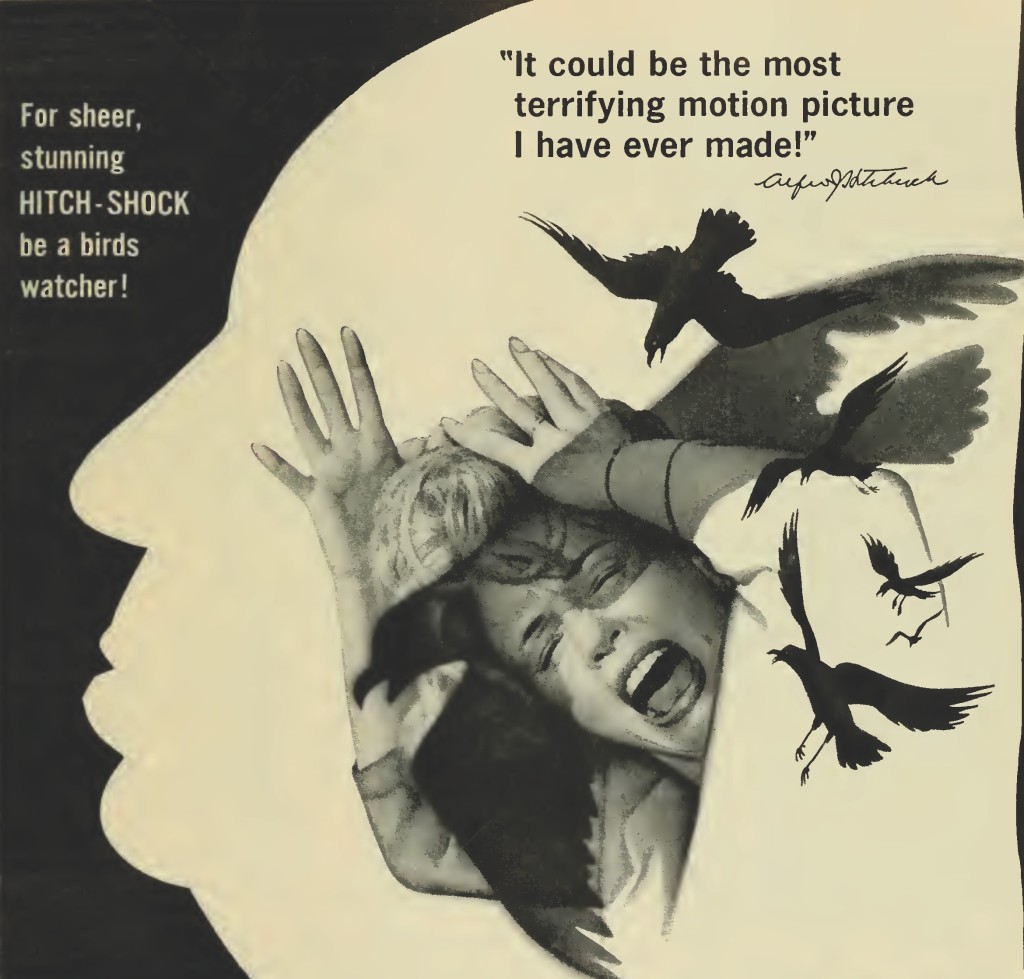
Behind the Scenes: “The Birds” (1963)

Alfred Hitchcock had a different picture – in fact, several movies – in mind as the follow-up to Psycho (1960), the biggest hit of his career. In pole position was Marnie to star Grace Kelly (“she voluntarily offered to do the picture after reading the story”), the woman he had made a star, in a sensational return to the screen after her marriage to Prince Rainier of Monaco. Her participation would bring her around $1 million. He worked on a script during 1961 but Kelly’s schedule meant the film would have to be postponed to 1963-1964 at the earliest.

A close second came No Bail for a Judge to star Audrey Hepburn. When those projects failed to get off the ground in the gap between Psycho and The Birds (1963), Hitchcock also considered reuniting with James Stewart (Vertigo, 1958) for Blind Man. The original idea came from a visit by the writer to Disneyland where he had an idea for a blind man given an eye transplant who subsequently remembers things he could not have witnessed. This was then transposed to an ocean liner, with Ernest Lehman signing on for script duties in December 1960. For almost a year he worked on a movie called Frenzy, no relation except for serial killing, to the later picture. But there was also Trap for a Solitary Man, Cold War thriller Village of Stars and The Mind Thing.

When Hitchcock finally settled on The Birds, based on a short story published in Good Housekeeping magazine in 1952 and reprinted in a Hitchcock anthology in 1959, he first turned to Scottish author James Kennaway (Tunes of Glory, 1960). That collaboration lasted until Kennaway decided the only way the movie would work would be if the birds were never seen. He considered Wendell Mayes (Von Ryan’s Express, 1965) and Ray Bradbury (The Picasso Summer, 1969) before in August 1961 turning to Evan Hunter (Last Summer, 1969). Wearing his Ed McBain (Fuzz, 1972) hat, Hunter  was a crime aficionado so it was no surprise he suggested adding a murder to the mix.

But Hitchcock’s first act was to shift the location from Cornwall to Bodega Bay, sixty miles away from San Francisco. While the screenplay was being worked upon, an extensive proce3ss that would include last-minute changes once filming had begun, Hitchcock considered a potential female star.

He screen-tested Pamela Tiffin (One, Two, Three, 1961) and examined footage featuring Yvette Mimieux (The Time Machine, 1960), Carol Lynley (Return to Peyton Place, 1961) and Sandra Dee (Tammy Tell Me True, 1961). He also considered two actresses he already had under contract Joanna Moore (Walk on the Wild Side, 1962) and Claire Griswold (Experiment in Terror, 1962).

Both the women already under contract had proved disappointing. Of Moore, John Russell Taylor wrote: “no one could have been less cooperative in the required making-over process, she did not like the clothes, she did not like the hair styles and she did not seem to like anyone she came into contact with at the studio.” Griswold, more compliant, “seemed to have little professional ambition and was quite content with what she was, Mrs Sydney Pollack.”

But then he spotted model Tippi Hedren in a television commercial. She was signed up to a seven-year $26,000-a-year ($254,000 at current prices) contract before she even met Hitchcock, one of the director’s modus operandi to ensure fees did not increase when his name was mentioned. Although actors, once successful, tended to complain they were hired at unfair salaries, this was in fact a pretty good amount for an untrained actress who would automatically become a star by the very fact of being in a Hitchcock picture. Of course, Hitchcock hoped to profit by keeping her salary low for any future movie. But it was still a gamble; if her career fizzled out, as did occur, he would lose out.

However, given his reputation for treating actors as cattle and expecting them to know what to do with little direction, he went to extreme pains to ensure Hedren was prepared for the role. He encouraged her to sit in on script conferences, meetings with set designers, and other essential collaborations like the director pf photography and the music supervisor and went into considerable detail about her motivation and how the film would move from periods of intensity to relaxation. Nobody ever received a more complete education in the Hitchcock method.

Hitchcock admitted he would have preferred to cast more experienced stars with guaranteed box office marquee such as Cary Grant and Audrey Hepburn  but the long shooting schedule and the time required for trick photography would render them too expensive.  

For this picture, Hitchcock switched studios from Paramount to Universal. At $3.3 million, very little going to the stars, this was his most expensive movie date especially in comparison to the $800,000 of Psycho. After a tortuous screenplay process, Hitchcock also sought input from others like famed short story writer V.S. Pritchett whose several notable suggestions the director accepted, much to the ire of Evan Hunter.  According to Taylor, Hitchcock found himself “nervy and oppressed” possible due to the film’s Day of Judgement elements, and abandoned his normal shooting routine.

He was famous for shooting the picture he already had in his head. Instead, here “he started studying the scenario all over again while shooting it…(and) began to do something he never normally did – improvising on set.” He went deeper into characterizations – making  the viewpoint far more subjective than initially conceived, in particular “keeping the audience much closer to the Tippi Hedren character”

At the last minute he dropped several pages of dialogue and the original Hunter ending. He edited out a love scene between Hedren and Taylor and detailed a script for the sound, specifying what kind he wanted for every scene. While Bernard Herrmann was involved, it wasn’t in the usual sense, and instead they worked out musical scenario of “evocative sound and silence” which was created by Remi Gassman and Oskar Sala who specialized in electronic music.

It was by far the most complicated shoot Hitchcock had ever attempted. The birds were a mixture of trained birds, dummies and optical illusions. When the gull attacked Hedren as the boat docks that was a dummy on a wire pulley, the blood a pellet implanted on her clothes. But as filming intensified, the blood seen on the screen was real blood. Anchovies and ground meat were spread on the actors’ hands at attract the gulls. 

But when it came time to shoot the scene in the attic Hedren was not warned the birds would be real. Hitchcock believed terror would be better expressed by an untrained actress if it was real. While propmen wore thick leather gloves to protect their skin, the actress was permitted no such luxury. When the birds avoided Hedren, the propmen simply picked them up and threw them at the actress. Filming took a week, by the end of which, after getting her eye clawed, Hedren broke down in tears. It would be impossible for a director to take such liberties today although young, impressionistic actors tend to fall prey to such actions.

The proposed ending was jettisoned in favor of a lengthy shot of Hedren and co-star Rod Taylor driving through a bird-infested landscape that the director called the “single most difficult shot I’ve ever done.”

Hitchcock got into trouble with the authorities over unauthorized use of birds. His permit allowed for the use of 20 dead and 30 live birds but an investigation by the U.S. Wildlife and fisheries found 40 dead gulls and 54 live ones as well as 60 songbirds for which no license had been given. He was fined $400. The movie was of course a boon for exhibitors planning promotional stunts. A thousand pigeons were released in a shopping center in Albany, carrier pigeons carried a message from Los Angeles to Memphis, birds trainers were in full flight, 200 exotic birds were displayed in the lobby of the Stanton in Baltimore, while the director attracted notoriety by making birds singular rather than plural when the tagline became “The Birds Is Here!

Much has been written of Hedren’s reactions to the birds, but it’s worth having a look at Roar (1981), a famous disaster of a picture, which she and husband Noel Marshall financed, where she appeared to be quite happy to be bitten and clawed by lions, a lot less tame than was suggested. The mauling was so bad Hedren required 50 stitches, required plastic surgery and nearly lost an eye. In one unscripted scene that ended up in the picture a lion grabbed her hair and would not let go. Most of the lion attacks resulted in injury to someone, actors and crew, including cinematographer Jan de Bont who required 120 stitches to sew his torn scalp back in place.  By such standards, her treatment by Hitchcock was relatively tame.

SOURCES: Patrick McGilligan, Alfred Hitchcock, A Life in Darkness and Light (Regan Books, 2003), p608-629; John Russell Taylor, Hitch, The Authorised Biography (Faber and Faber, 1978) p262-270; Brian Hannan, Darkness Visible, Alfred Hitchcock’s Greatest Film (Baroliant, 2013); “Princess Grace’s Take Per Hitchy Estimate,” Box Office, April 4, 1962, p2; “Fine Hitchcock $400,” Box Office, April 18, 1962, p17; “Pigeons Blaze a Trail,” Box Office, April 8, 1963, pB3; “Pigeons for Birds,” Box Office, May 6, 1963, pB3; “The Birds Is Here,” Box Office, May 13, 1963, pA1; “Bad Girls Bird House,” Box Office, May 27, 1963, pA3.

The Mad Room (1969) ***

Tight little thriller lifted by excellent performances from Stella Stevens and Shelley Winters focusing on murders a dozen years apart. Mandy (Barbara Sammeth) and older brother George (Michael Burns), incarcerated in a mental institution after the murder of their parents, the twist being nobody can discover which child was responsible, are released into the custody of big sister Ellen (Stella Stevens), secretary to wealthy widow Mrs Armstrong (Shelley Winters) and betrothed to her son Sam (Skip Ward).

While concealing the children’s past, Ellen persuades Mrs Armstrong to offer them lodgings, that arrangement coming unstuck when the kids demand a room where they can go “to work things out.”  Armstrong is a bit barmy, engaged on building beside her home a museum to her husband, hence contractors and construction workers on site, and a horde of “ladies who lunch” involved in fundraising. She has also appropriated masseur Armand (Lou Kane), husband of alcoholic Mrs Racine (Beverly Garland), to fulfil her sexual needs.

Don’t worry – the poster doesn’t give the game away.
The blood comes from Stella Stevens discovering the corpse.

When Mrs Armstrong threatens to chuck the kids out, she comes to a sticky end, and the question is raised again of whether Mandy or George are responsible. Mandy is the more highly-strung, stubborn and likely to challenge authority. George appears predatory, stalking the maid. Both are convinced the other is guilty.

Meanwhile, Ellen undertakes to remove the body and pretend Armstrong met her death by accident at a beauty spot, no mean feat given the palaver caused by the builders outside and the constant need for construction decisions and the unexpected arrival of a posse of ladies including the alcoholic Mrs Racine intent on raising merry hell.

It’s part whodunit, part nutcases-on-the-loose, part film noir, part slasher picture,  and part grand guignol. Hands are severed and blood is used to daub flowers on the walls. It’s tense enough even before Armstrong’s demise. She’s not only a loony, but untrustworthy, selfish, capricious and demanding, and it’s as much as Ellen can stand to constantly iron out all the loose ends in her employer’s life. But she sounds believable, an earnest do-gooder even while conspiring against what she sees as Ellen’s gold-digging.

Ellen, life thrown into turmoil after the death of her overbearing impoverished parents and only now building a new identity removed from the shadow of the children, faces the prospect of losing her ideal future. While it would have suited her for the children never to be released, she exhibits surprisingly a strong emotional attachment to her siblings, willing to both shelter and protect them, and conceal again their crimes.

Initial tension revolves around a chase, savage dogs, a shifty maid and Ellen dealing with the manipulative Mrs Armstrong, holding her own long enough until she is safely married, while further pressure builds with the necessity to cover up the murder, explain Mrs Armstrong’s absence, cope with the sudden influx of people and ascertain who has the murderous tendencies. There are some excellent scenes and twisty payoffs, and quite a bit of misdirection – the chase, rabid dogs, a childish song – and some inspired drama such as Mrs Racine letting rip, and Mrs Armstrong’s growing puzzlement.

Stella Stevens (Sol Madrid, 1968), normally eye candy or in a supporting role, is a revelation as Ellen, creating a grounded personality, with several changes of emotion and except for being a little pop-eyed on occasion carries off the part tremendously well and not falling prey to the temptation of grandstanding. Shelley Winters (A House Is Not a Home, 1964), who knows all about playing larger-than-life characters, tones it down here, even the obvious nuttiness reined in.

Michael Burns (That Cold Day in the Park, 1969) is the better of the two younger actors, while Barbara Sammeth’s (Foul Play, 1978) stiffness could be put down to inexperience – this was her debut. Otherwise former horror queen Beverly Garland (Stark Fear, 1962), one-time horr

In the Cool of the Day (1963) ***

Jane Fonda tagged this the worst film of her career but that’s a bit harsh and I suspect it owed a lot to the actress being dressed up Audrey Hepburn-style in outfits that scarcely suited her. While it’s certainly overheated, melodramatic moments indicated by thundering music, a marvellous supporting cast, including a quite bitchy Angela Lansbury, provides ample compensation.

It’s  romance in the Love Story vein, rich young flighty heroine Christine (Jane Fonda) at death’s door half her life, but feeling smothered by understandably over-protective husband Sam (Arthur Hill). When she falls for married publisher Murray (Peter Finch) and sets off on a trip to Greece, chaperoned it turns out by Murray’s bitter wife Sybil (Angela Lansbury), it takes a while for romance to physically bud. That it does at all is only because   Sybil has taken off with suave traveling salesman Leonard (Nigel Davenport).

The movie takes a long time to heat up because, as in The Bramble Bush fashion, there’s overmuch character filling-in to do. Part of the interest in this picture is how the bad guys are effectively good guys, more victims of their partner’s behaviour than anything else, though for story purposes, the audience has to be persuaded otherwise.

So besotted Sam, having dealt with umpteen bouts of his wife’s pneumonia and lung operations, a “slave” to her illnesses, is deemed as treating her like a child rather than a wife, preferring her ill rather than well, and denying her the adventure to which she feels entitled. When she meets Murray she has run away. Murray’s wife has a downer on her husband because, wait for it, he killed her child and left her facially scarred (hidden now by hair but she’s still very sensitive about it) in a car accident he caused.

But she’s portrayed as over-sensitive, worried about her appearance, snippy, blaming him for her distraught life, and worse, a philistine, hating being dragged around ancient Greek monuments. Aware of her husband’s proclivities, she mocks, “You’d be an idiot to fall in love with her.” And any time she ventures out, the music rises to a crescendo as if she is a character straight out of film noir.

When she goes off with Leonard, her love affair is viewed as sneaky rather than redemptive, even though he restores her faith in herself. Triumphantly, she tells Christine, “He’s all yours” and her husband “nobody need feel sorry for me any more.”Admittedly, she does take revenge by informing Christine’s husband, who has entrusted his wife to Murray’s care, of their affair. And you would be hard put to argue, although the film wants you to believe otherwise, that Sybil and Sam have been ill-treated by their partners, Sam, in particular, funding her trip to Greece in the hope that allowing her the freedom she needs will save their marriage.

Of course, the characters of both partners, even if their self-pitying is the result of circumstance, do mean that Christine and Murray are presented as people trapped in bad marriages and for whom love, however brief, provides sanctuary from tortured lives, her physical, his more mental, since he is not averse to guilt. 

Sybil’s lack of interest in tourist Greece handily gives the prospective lovers plenty time to fall in love, amid gorgeous scenery, and breathing in air rich in culture. With all film made in the 1960s and set in foreign parts – Pretty Polly (1967) another example – sometimes the story takes second place to the scenery, so it’s lucky that the romance is played out against such an interesting background, an ideal combination, killing two birds with one stone if you like. Given this is prior to Zorba the Greek (1964), the filmmakers have even managed to sneak in some traditional Greek dancing, albeit on the deck of a ferryboat.

Dress-wise, the lovers are ill-matched, Murray plodding around in a suit while Christine parades the latest often clingy fashion. When Sybil departs the scene, that leaves one happy character of the happy couple free of marital encumbrance, but still leaves open the question of how Christine will rid herself of Sam and, more importantly, will Murray wish to take on the all-consuming job of nursing Christine. He never gets the chance to find out. When she does fall ill – as the result of Murray recklessly keeping her out in a thunderstorm – her mother Lily (Valerie Kendrick) swoops in to rush her to hospital.

Spoiler Alert – I’m telling you that she dies because it seems to me that the ending the filmmakers hoped for is not how the audience will perceive it. Beautiful young woman dies too young, yep that’s there, but the man, now free and able to shake off his dull life and start afresh as a writer, seems a long shot. Given he has now, thanks to the thunderstorm episode, killed two people, I would surprised if guilt was not uppermost in his mind.

Not so-good-it’s-bad, and despite the complications, and perhaps because of the Sybil-Leonard romance, it’s certainly an interesting picture as much, perhaps, because it fails to send the audience in the desired direction.

In only her fifth movie, Jane Fonda (They Shoot Horses, Don’t They, 1969), exhibiting the nervous friskiness that would become a hallmark, does pretty well with a febrile, spoiled, character. If she falls down at all it’s that she appears uncomfortable wearing Orry Kelly’s fabulous gowns and it would take Hollywood some time to work out she was not a natural successor to Audrey Hepburn. Peter Finch (The Pumpkin Eater, 1964) is perfectly at ease with the illicit.

But Angela Lansbury (Harlow, 1965), a hoot as the wife who turns rejection into triumph, steals the show. Throw in Arthur Hill (Moment to Moment, 1966), Nigel Davenport (Sands of the Kalahari, 1965), for once neither smug nor snippy, Alexander Knox (Khartoum, 1966), veterans Constance Cummings (The Criminal Code, 1930) and Valerie Taylor (Went the Day Well, 1942), John Le Mesurier (The Liquidator, 1965) and Alec McCowan (Frenzy, 1972) and you have a movie where hardly a moment goes by without admiring a performance.

Robert Stevens (I Thank a Fool, 1962) directed from a screenplay by Meade Roberts (Danger Route, 1967) based on the novel by Susan Ertz.

Discover WordPress

A daily selection of the best content published on WordPress, collected for you by humans who love to read.

The Atavist Magazine

by Brian Hannan

WordPress.com News

The latest news on WordPress.com and the WordPress community.