Night of the Generals (1967) ****

Impressive vastly underrated whodunit that breaks all the rules. Take the length for a start – just stopping short of two-and-a-half hours. The investigation covers multiple time periods – 1942, 1944 and 1965. The killer outwits the detective. Most important of all, the murder is clearly a MacGuffin to examine politics among the German officer class.

A Polish woman who turns out to be a German agent is viciously stabbed to death in Warsaw in 1942 during a period of staunch resistance by the inhabitants. General Tanz (Peter O’Toole), sent in to quell a potential uprising, is one of three generals on the suspect list compiled by Major Grau (Omar Sharif), the others being the alcoholic General Khalenberge (Donald Pleasance) and the philandering General von Seidlitz-Gabler (Charles Gray).

But Grau is no ordinary detective or, put another way, this not an ordinary investigation.

Grau lacks any of the powers we associate with an investigator. Yes, we expect obstruction, perhaps collusion, as the murderer tries to avoid detection. But Grau might well have been a sergeant for the disdainful treatment and lack of cooperation he receives. And there’s a fair chance he’s going to be shot at as he prowls the streets, and resistance fighters in tenement exchange fire with the invaders. None of the generals can account for their whereabouts on the night in question.

While Tanz is benign to children, ordering a hungry bunch fed from his own supplies, he is ruthless with adults, willing to employ flamethrowers (Phase Two of his plan) to drive snipers out of buildings and if that fails move onto Phase Three which simply uses tanks to obliterate everything. Like some knight of old, Tanz stands upright in his jeep directing operations in full view of the enemy, almost taunting them to kill him.

The most powerful image in the film – the one used in the posters – has Tanz standing (on the right of the screen) upright in his jeep with the world on fire behind him. What’s edited out of the poster is that Grau occupies the left side of the screen, standing like a servant awaiting his master’s orders.

That Grau makes no progress at all is down to the power of his superiors. Since he commits the cardinal sin of getting in the way, he is just shuttled out of Warsaw, promoted to Colonel and given other duties in Paris. So the scene shifts to the Parisian capital in 1944 after D-Day. The same three generals are on duty in the French capital, not supervising, as you might expect, the defence of the city against the encroaching Allies, but planning an attempt on the Fuhrer’s life (Operation Valkyrie). This time it’s Tanz, returning from the Russian front where his regiment has been decimated, who is shuttled to one side, ordered to take two days leave so he doesn’t get in the way of the saboteurs.

At this point, the movie boldly switches perspective, in part to encompass the assassination subplot, in part to focus more closely on Army politics, in part to follow Tanz, not just an alcoholic but a poster boy for OCD, as he tries to enjoy some downtime. He is accompanied on his tourist trip through the city and jaunts to visit museums by his chauffer/butler Corporal Hartmann (Tom Courtenay) whose other duties include spying on the general on behalf of the plotters. Grau, meanwhile, recruits French Inspector Morand (Phillippe Noiret) to assist in his investigation, which is otherwise being obstructed on all sides.

I won’t reveal the shocking ending which shows just how clever the murderer is because that’s not actually the ending and the story shifts to 1965 when the generals have been rehabilitated after the war, the case still open because a third woman has been killed in the same fashion.

I may have seen this back in the day and certainly remember it vaguely from a pan-and-scan version edited for television, but I had generally avoided it because of the poor reviews. I wonder how many critics just found it in poor taste, to be spending big Hollywood bucks on a story that treated German generals as pretty well ordinary human beings, the war itself so much in the background you would think it non-existent. Plenty critics sniped at the performance of the principles, perhaps because Peter O’Toole (Becket, 1964) and Omar Sharif (Genghis Khan, 1965) played so much against type. The image I mentioned of O’Toole with the world ablaze is an ironic one, not charged with the glory of David Lean’s vision of the actor in Lawrence of Arabia (1962). Similarly, not once does director Anatole Litvak (Five Miles to Midnight, 1962) rely on Omar Sharif’s soulful brown eyes the way Lean did in Doctor Zhivago (1965), in fact there is no such shot here at all. Sharif looks weary and jaded, kept going in the face of obstruction by his own convictions about justice. O’Toole is so wound up he likes like he’s about to explode and at times certainly teeters off-balance.

Critics seemed so intent on dishing out barbs that they missed two excellent performances, Sharif , in particular, unable to call on his romantic side, delivering very fine work. Donald Pleasance (Soldier Blue, 1970), devoid of his usual physical tics, is also memorable. And there is so much to enjoy from the direction. Litvak, in particular, makes superb use of the tracking shot. Often a scene begins with a close-up, tracks back to reveals others, allows them to deliver their lines, then tracks back into the original character, usually the one with most to lose at this moment. He allows time to develop the other characters. Without ever appearing drunk in the way of Tanz, Khalenberg is always pouring or drinking a shot of alcohol. Seidlitz-Graber is inhibited by family politics as his wife (Coral Browne) attempts to ease their daughter Ulrike (Joanna Pettet) into high society.  

I must also mention the brilliant score and the pithy lines that shoot out from cynical mouths. “Making up one’s mind is one thing,” observes Seidlitz-Graber acidly, “speaking it is another.” On hearing of the assassination plot, Grau points out, “when things were going well, the generals enjoyed the war as much as Hitler.” Music came courtesy of Maurice Jarre (Doctor Zhivago) and the screenplay was a joint effort between Joseph Kessel (Army of Shadows, 1969) and Paul Dehn (The Spy Who Came in from the Cold, 1965) who hacked away at the H.H. Kirst novel, retaining only the opening.

Well worth watching.
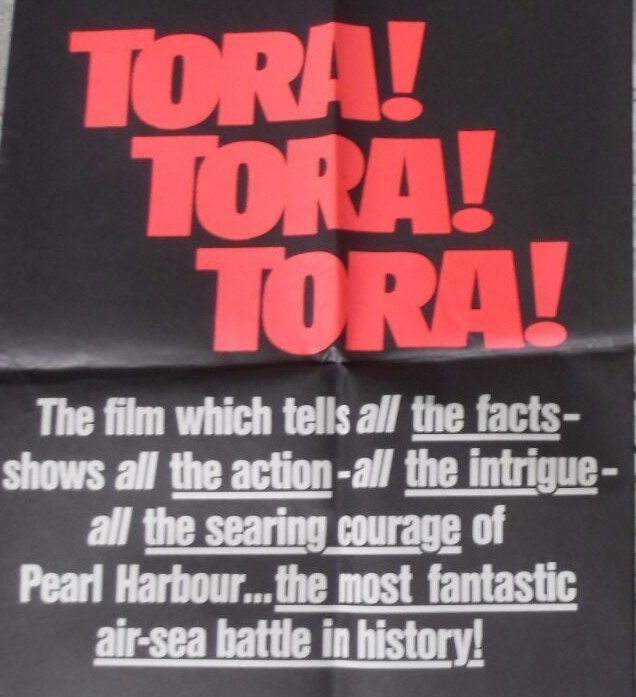
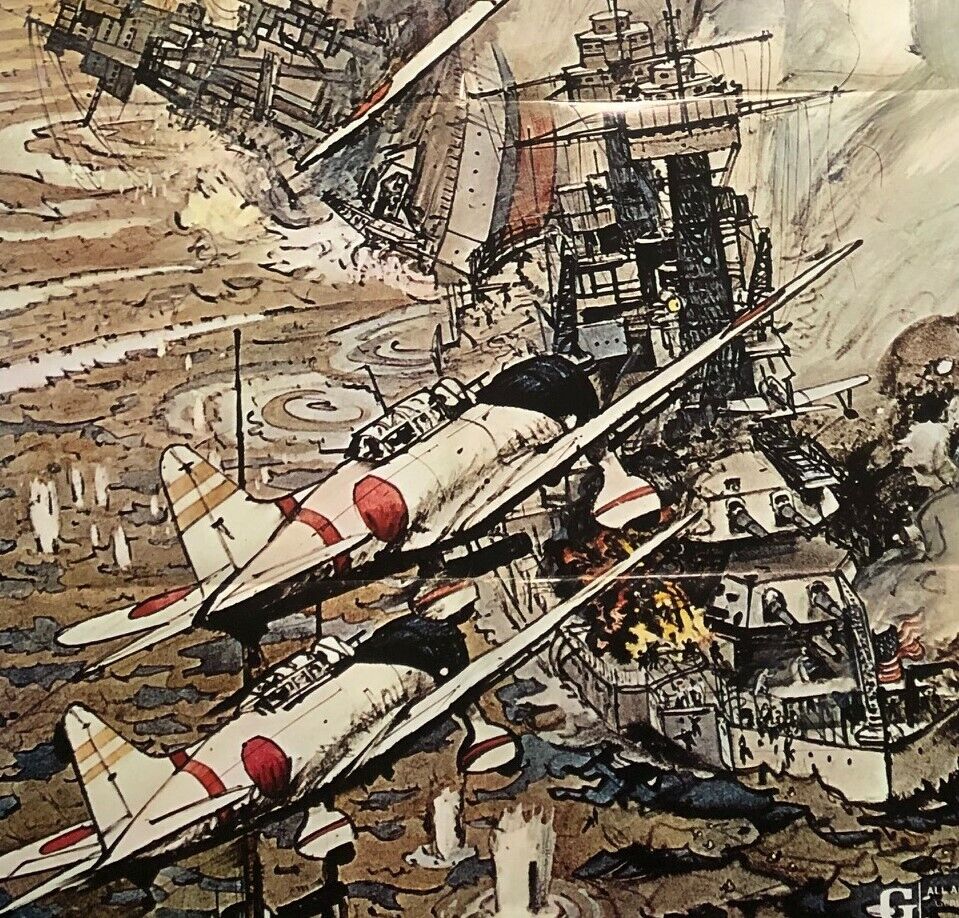
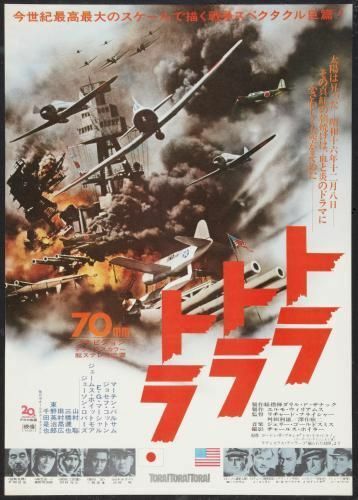
Behind the Scenes: “Tora! Tora!” Tora!” (1970)

In cinematic terms director Richard Fleischer’s work on a Pearl Harbor project had begun in 1962, for a proposed movie called Zackary, the true story of an American spy living in Japan prior to the infamous attack. Fleischer signed a one-year contract with Dino de Laurantiis, the Italian producer behind the director’s previous movie Barabbas (1962). Italian screenwriters had a crack at the tale, then, in a foretaste of things to come, de Laurentiis turned to a Japanese writer whose idea of a screenplay was restricted to a document less than two pages in length. And so began one of the director’s periods in movie purgatory.

After Zackary was abandoned, Fleischer was put to work on four other concepts, none of which made their way to the screen. Worse, the pay-checks stopped coming and Fleischer sued Dino for a million dollars. Next up was The Nightrunners of Bengal from the bestseller by John Master for Samuel Bronston (El Cid, 1961). That, too, ended up in the courts.

If those rollercoasters weren’t enough, Fleischer revived his career with Fantastic Voyage (1966) and nearly sunk it with the financially disastrous Doctor Dolittle (1967), resuscitated his standing again with The Boston Strangler (1968) and dug another commercial hole with Che! (1969).

But he was the first port of call when producer Elmo Williams and his paymaster Darryl F. Zanuck, for whom Fleischer had made The Big Gamble (1961), decided on the biggest gamble in Hollywood history outside of Gone with the Wind (1939) and Cleopatra (1963).  In some respects Fleischer was on board as makeweight. For the undeniable directorial star of the show was intended to be legendary Japanese helmsman Akira Kurosawa (Seven Samurai, 1954). Never mind that the vast bulk of the global paying public had never heard of him, let alone pronounce his name, Kurosawa undoubtedly represented a critical coup. American critics responsible for building appreciation of him in academic circles were unlikely to lambast him for working with Hollywood, especially as, in the even-handed manner of this project, Kurosawa would be telling the story of the attack on Pearl Harbor from the Japanese point-of-view.

In fact, it wasn’t so much one epic, as two parallel films, telling the tale from opposing perspective, edited together.

But just getting to the filming stage had required research of Cecil B. DeMille proportions. Dr Gordon Prang of Maryland University had spent years on the subject, interviewing every participant on either side. He broke down the research into a daily accounting of the year prior to December 7, 1961, and a second-by-second analysis of the day before the attack. Every incident used in the film came from this research.

The bigger problem was assembling a Japanese fleet. Only one destroyer remained of the Japanese World War Two taskforce. The rest had been sunk. To do the movie justice, Twentieth Century Fox had to someow conjure up – just from the Japanese side – six aircraft carriers and the 353 aircraft they transported plus another 27 vessels that made up the escort. Whether the U.S. Navy would have been keen on lending a hand, it wouldn’t be much help either in providing the necessary material since most of its fleet from that period had long since been mothballed.

A million dollars was spent on a set that comprised half a battleship that could float and be towed. The rest was miniatures, but given the scale, most of these would come in around the 40-foot mark. There were 19 Japanese miniatures and 10 American.  

There were no Japanese Zero planes either. So 28 Vultee AT-6 aircraft were stretched six feet and adapted to resemble the Japanese plane. The production team raided the country for Flying Fortresses, P-40s and VT-13s that could serve the purpose if reconditioned. Dozens of vehicles from the era period were rescued from junkyards and repaired, restored and repainted.

Coordinating the work of the two directors was always going to be the main problem. How would the styles fit? For the scheme to work did one of Fleischer or Kurosawa have to assume supreme commander status? It didn’t help that neither could speak the other’s language. The few meetings held between the two directors were entirely about the Kurosawa section of the screenplay. To Fleischer’s astonishment, at the rather aggressive nudging of Elmo Williams, Kurosawa made concessions.

Fleischer came up with the practical solution to melding the two separate movies. His suggestion was: don’t do it. He intended showing the Americans as sloppy and overly-relaxed while Kurosawa wanted to emphasize the spit and polish of the Japanese Navy. The contradictory approaches would make each section appear such opposites as to make the entire production seamless.

Surprisingly, the studio won some cooperation from the U.S. government in the shape of the loan of an aircraft carrier. But such goodwill did not go unnoticed and the studio was forced to repay the Defense Department $515,000 for its use. But, in general, the Government was not inclined to cooperate, wanting paid for everything they supplied.  Off-duty soldiers and sailors were received standard Hollywood fees to act as extras. Every piece of machinery had to be rented. Tugs, Elmo Williams soon discovered, were available only at extortionate cost.

Water explosions were not only time-consuming but if the production encountered too much delay they become waterlogged and didn’t explode. Extras found it hard not to react to the explosions all around and just as difficult to wait for cues.

The biggest, most expensive and most spectacular, scene was the one battleship, the USS Nevada, that somehow managed to escape the harbor only to be attacked by dive-bombers. As mentioned, the only battleship constructed was only half-built. Part of what was missing were the engines. So it needed to be towed into position and allowed to drift on the current past five strategically-placed cameras with dozens of waters explosions synchronized to split-second timing. There were explosions on the deck, too, and stuntmen ready to be blown overboard. The planning and choreography required to show all hell breaking loose was staggering. The sequence was so expensive it would be impossible to re-stage.

Disaster on a movie set does not require everything possible to go wrong. Just one thing. In this case the ship got underway sooner than expected. With everyone on set working to sight cues, naturally they just did what was expected. Except it was unexpected. And the worst kind of unexpected. The water was ripped apart by explosions, the stuntmen were diving into the water, bullets and bombs were raining everywhere.

And the cameras had not turned an inch. The battle was half over before anything was photographed.

Fleischer and Williams had no alternative but to send their footage to the labs anyway. It would be processed overnight and screened the next morning to studio bosses. Fleischer expected to be fired. Luckily, they had filmed sufficient action for Zanuck to send a congratulatory telegram.

But the Fleischer experience – his section of the movie came in ahead of time – was nothing as bad as the Japanese one.  Kurosawa hired business tycoons with no acting experience for “all but the leading roles” in the hope they would finance his next picture. He was as obsessive over detail as David Lean, shutting down production to repaint the set or replace a set of books on a wall. Kurosawa’s production also required a fake battleship, at a cost of $1.6 million. He built it wrong. The rate of filming was catastrophically slow. An unhappy atmosphere turned disastrous when the director turned on an assistant. The upshot was the most feted Japanese director of all time was fired.  

Fleischer blamed the studio for forcing Kurosawa to work in the Hollywood manner, interfering with the work of a director who had achieved his fame by being autonomous. The only scene filmed by Kurosawa that ended up in the picture was that of the American ambassador in the US embassy in Tokyo.

Unsurprisingly, many took issue with the notion of making the film at all. In the U.S., Representative John M. Murphy called it “an affront to americans fighting in vietname…every ethical standard is besmisrched by the Hollywood-Pentagon hook-up to produce a film glorifying the Japanese attack on Pearl Harbor.2  

One of the last 70mm roadshows and erroneously viewed as a financial disaster on account of its performance in the United States, in fact the movie made a reasonable profit from its global release and, of course, a fortune in the course of its lifetime, counting television, DVD and streaming.

SOURCES: Richard Fleischer, Just Tell Me When To Cry, (Carroll and Graf, 1993) p227-233, 273-287; “Controversy Boils Up As Tora! Opens,” Desfret News, September 25, 1970, p8C.

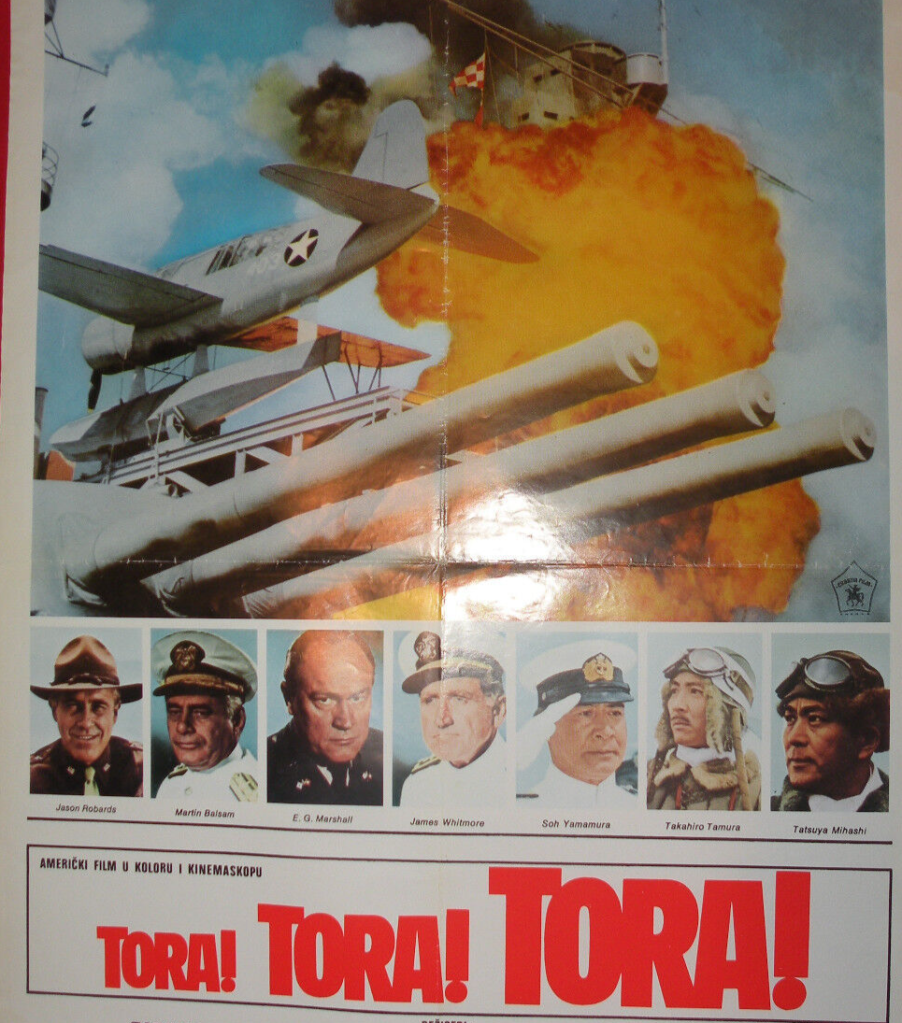
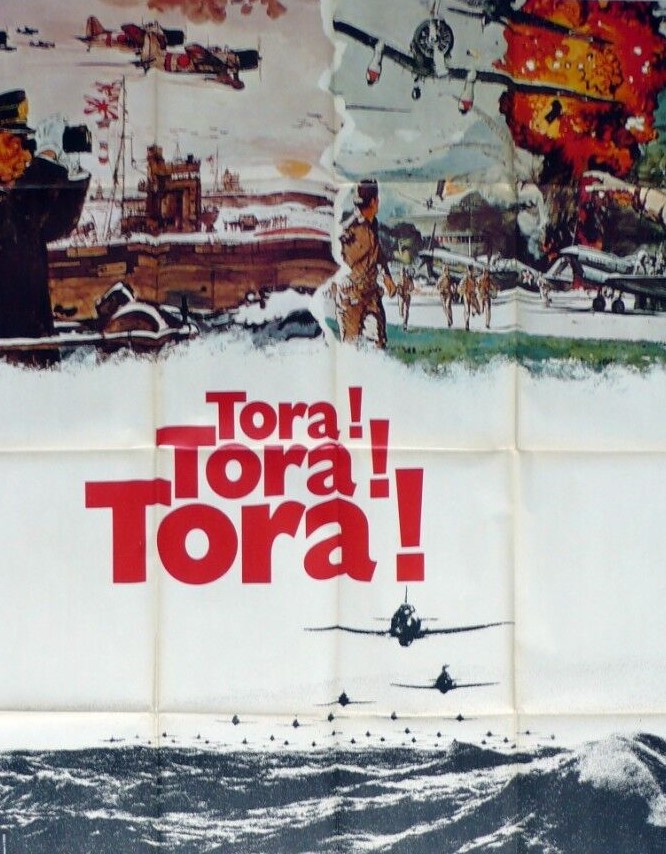
Tora! Tora! Tora! (1970) *****

Thankfully devoid of the empty triumphalism that marred In Harm’s Way (1965) and Pearl Harbor (2001) and the gritty backs against the wall heroism and snatching some kind of victory from the jaws of defeat of The Alamo (1960) and Zulu (1964), and with a documentary-style approach much more acceptable these days than then, there is an immense amount to appreciate and absorb in this last-gasp 70mm roadshow from a financially flailing Twentieth Century Fox.

Shorn, too, of the traditional all-star cast bar Jason Robards (Hour of the Gun, 1967) – who might not count – nor the regiment of rising talent stuffed into such epics in the hope one might catch the eye and float to the top. And there’s no room to ram in a distracting romance such as in the previous and future films focusing on the military disaster. Instead, stuffed with dependable supporting players like Martin Balsam (Harlow, 1965), E.G. Marshall (The Chase, 1966) and James Whitmore (The Split, 1968) stops audience rubber-necking in its tracks, unlike producer Darryl F. Zanuck’s previous The Longest Day (1962), in favor of forensic analysis of what went wrong in the defence and what went so brilliant right in the attack.

Like most of the best war epics – The Longest Day, Battle of the Bulge (1965), taking an even-handed approach in presenting both sides of the battle, except here you could argue considerably more time is spent with the Japanese, beginning with the opening credits where the camera floats in and around a giant battleship.  Despite the sudden attack which went against all the traditions of war – a timing error apparently – the Japanese are presented as honorable and even arguing against going to war as well as worrying about the consequences of poking the tiger.

And there is none of the endless owing and scraping and not attempting to rise above your station in the traditional Western-view of the Japanese. Here, from the outset, superior officers are questioned possibly in manner that would be permitted among the opposing forces.

The first half is given up to the superb organisation of the attack, including the bold use of using aerial torpedoes – proven to work by the British in an earlier assault on a harbor without the apparent depth of water required – and contrasting it with the general U.S. ineptness, bureaucracy, interdepartmental battles and overall lack of preparation even though several personnel believed an attack imminent. The Yanks had even broken the Japanese codes so could easily have taken heed of obvious omens, had working radar on site though its employment was handicapped by being limited to three hours a day and initially lacking a means of communicating findings. Someone had even worked out that the Japanese would need six aircraft carriers to mount an attack and that the ideal time would be early morning on a weekend, someone even predicting an attack down to the exact time except a week out.

Of course, the U.S. at this point was not at war and so could be excused switching off in the evening or being uncontactable in the morning because they were still out carousing from the night before or sedately riding a horse. While there is a growing sense of alarm, the chain of command is woefully stretched often in the wrong direction and at one point stops before it reaches the President.

Fearful of sabotage, the Americans shift planes away from the perimeter of airfields smack bang into the runway where they can be more easily destroyed. Perhaps the greatest irony is that in shifting the U.S. fleet from its home base in San Diego, the Americans made such an attack possible.

When it gets under way, the battle scenes are superb, especially given none of the CGI Pearl Harbor could call upon, and yet with the U.S. aircraft carriers by luck still at sea failed to deliver a killer blow for the Japanese.

It’s handled superbly by director Richard Fleischer (The Boston Strangler, 1968), Kinju Fukasaku (Battle Royale, 2000) and Toshio Masuda (The Zero Fighter, 1962).  The American flaws are dramatized rather than being dealt with by info-dump. Larry Forester (Fathom, 1967) and long-time Akira Kurosawa confederates Hideo Oguni (Ikiru, 1952) and Ryuzo Kikushima (Yojimbo, 1961) fashioned a sharp screenplay from mountains of material.

Long rumored to be a box office flop it turned out to have made a decent profit, albeit not in the U.S.

The documentary approach adds immensely to the movie and it remains one of the all-time greats precisely because of the lack of artificial drama.

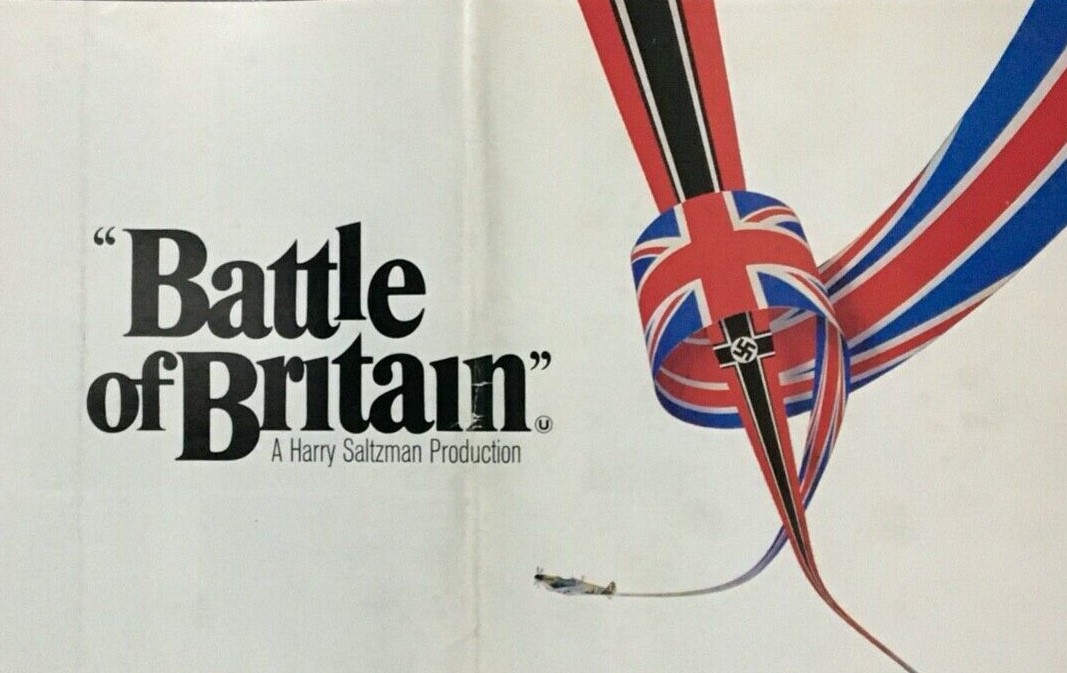
The Battle of Britain (1969) *****

Fabulous aerial sequences countered by grim reality. Like The Longest Day (1962) and Battle of the Bulge (1965) even-handedly doesn’t treat the Germans as the evil enemy, but unlike those films victory is somewhat obscure, no rattling of spears as in Zulu (1964) to announce opposition departure, just clear skies indicating an absence of foe. Anyone going into this – persuaded by Dunkirk (2017) that this retreat was a triumph – and with little knowledge that after Hitler had overrun Europe invasion was imminent might be surprised to discover that this was a campaign lasting over three months rather than one conclusive battle.

That’s to the benefit of the movie, allowing it space to breathe, for characters to develop, rather than everything crammed in pell-mell. Given the situation changed from day-to-day, the one constant, which we’re scarcely allowed to forget, is that the British are heavily outnumbered in the sky. It’s a war of attrition. The Germans can lose hundreds of planes, the British nary a one.

But it’s far from gung-ho, the British coming in for criticism for their unpreparedness, surprised when the Germans bomb airfields, even more astonished when the opponent starts dropping bombs on London. Perhaps, given the relatively short running time for an epic – 46 minutes shorter than The Longest Day, 35 minutes down on Battle of the Bulge – it might have been better to avoid slipping in a section on the impact of the Blitz on Londoners, though that is counteracted by panic in Berlin when that city is also bombed.

But, by and large, it’s an engrossing tale. And bold, too, in the version I saw no subtitles for German dialog, leaving audience reliant on facial and body expressions. To slow down the action, I guess, and add some class, several scenes involve people walking down long corridors.

All the salient points are covered, pilots thrown into battle with barely a few hours experience of flying a Spitfire, the lack of pilots, in-fighting at the top, checkers moved across the board at mission control indicating German aerial advance, the inability of getting aircraft up quick enough or repaired quick enough. Above all, the reality of death is shown in astonishing detail; once the pilot was shot or the airplane destabilized, there was almost no escape, fire enveloped anyone inside, hatches failed to open, planes burst into flame or crashed into the sea. And it was the same death, regardless of nationality. And there were no scenes of  callous Germans shooting down a British pilot parachuting to safety.

The aerial sequences are quite astonishing. I’ve seen this on big screen and small, but even on a small screen, the camerawork is quite extraordinary, even getting this number of workable planes in the air must have been some feat, then flying in formation and peeling off in attack. It is kind of hard from time to time to work out who is shooting at who since the planes are all the same grey color and only distinguished when the camera is close enough to identify  them by RAF roundel or Nazi swastika. But the overall effect is a sense of sorrow rather than triumphalism, young lives of any nationality brought to a brutal close. There is no scene, as in Battle of the Bulge, of the over-zealous Nazi, the singing that made them appear such an implacable foe. Here, there’s no need to play up implacable. Unless they abandon the fight, the Germans, courtesy of superior numbers, will inevitably win. All the British can do is stave off defeat for as long as possible.

The all-star cast is only an all-star cast if you’re British. Without a Hollywood star in the vein of John Wayne, Robert Mitchum and Henry Fonda, and in the absence of British superstars like Sean Connery and Peter O’Toole, it’s an all-star cast by default. The biggest name, Michael Caine (Deadfall, 1968), has one of the smallest parts. But the equality of the cast works in its favor, there’s none of the rubbernecking that got in the way of The Longest Day.

Christopher Plummer (The High Commissioner/Nobody Runs Forever, 1968) has the biggest role as a squadron leader determined to force his wife out of the front line working on the airfields and into a safer position. But the best acting comes from Laurence Olivier as the dry Air Chief Marshal Sir Hugh Dowding who has no truck with interfering politicians. Accused of inflating figures of German casualties he replies that if he is wrong the Germans will be in London in a week.

But it’s a close-run thing between him and Susannah York (They Shoot Horses, Don’t They, 1969) as the aforesaid wife with a growing streak of independence and Ian McShane (The Pleasure Girls, 1965) as a lowly pilot called upon to express grief more than most. There’s certainly a sense of solidarity among the cast, no show-boating from the usual scene-stealing culprits like Trevor Howard (Von Ryan’s Express, 1965) and Robert Shaw (Battle of the Bulge) whose normal determination to bristle at the slightest opportunity is dropped for the good of the cause.

The great and the good appeared to be happy with the slightest role just to take part. The roll-call includes Ralph Richardson (Khartoum, 1966), Michael Redgrave (The Hill, 1965), Kenneth More (Dark of the Sun/The Mercenaries, 1968) and a hatful more.

Guy Hamilton (Goldfinger, 1964) directs with some distinction, his biggest achievement to concentrate on fact rather than flag-waving, no better demonstrated than by my realization that the stirring theme tune that I remembered so well by Ron Goodwin (Where Eagles Dare, 1968) does not make an appearance until the very end. The screenplay by James Kennaway (Tunes of Glory, 1960), Wilfred Greatorex (The High Commissioner) and, in his only movie work,  Derek Dempster, displays more finesse than you might expect.

Almost documentary in tone, a classic.

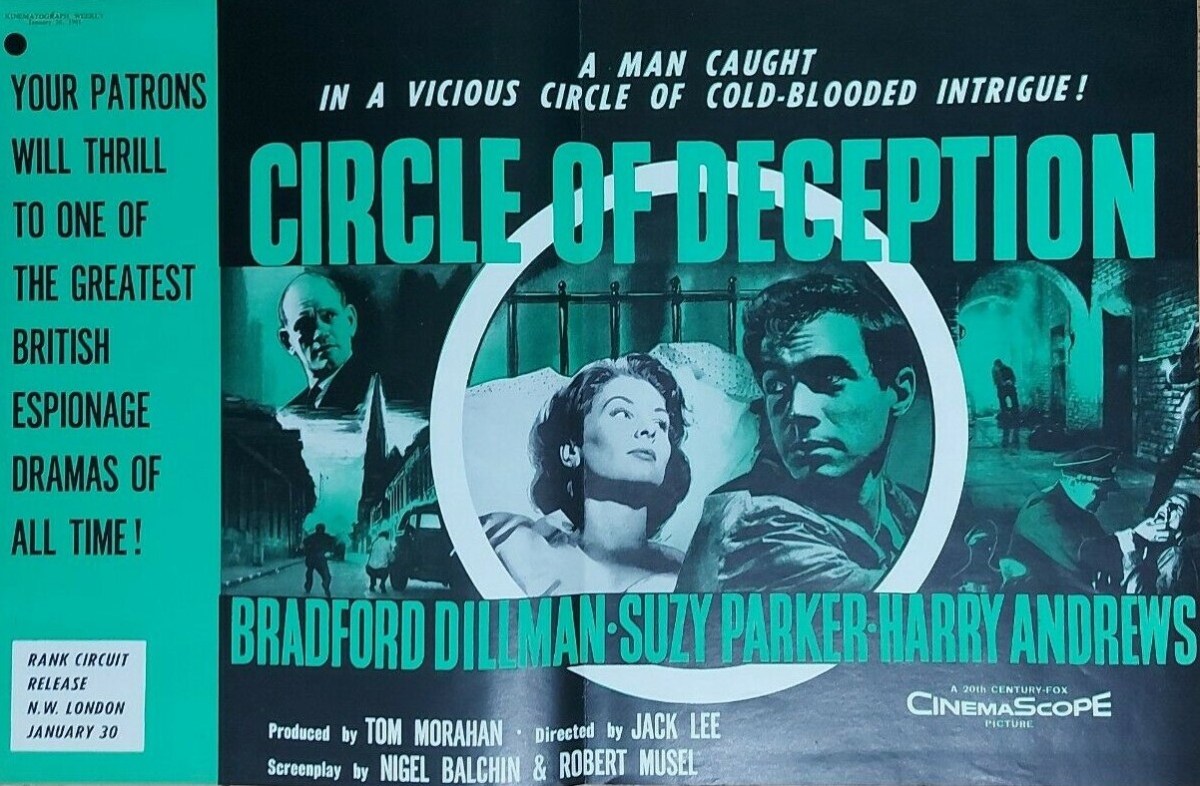
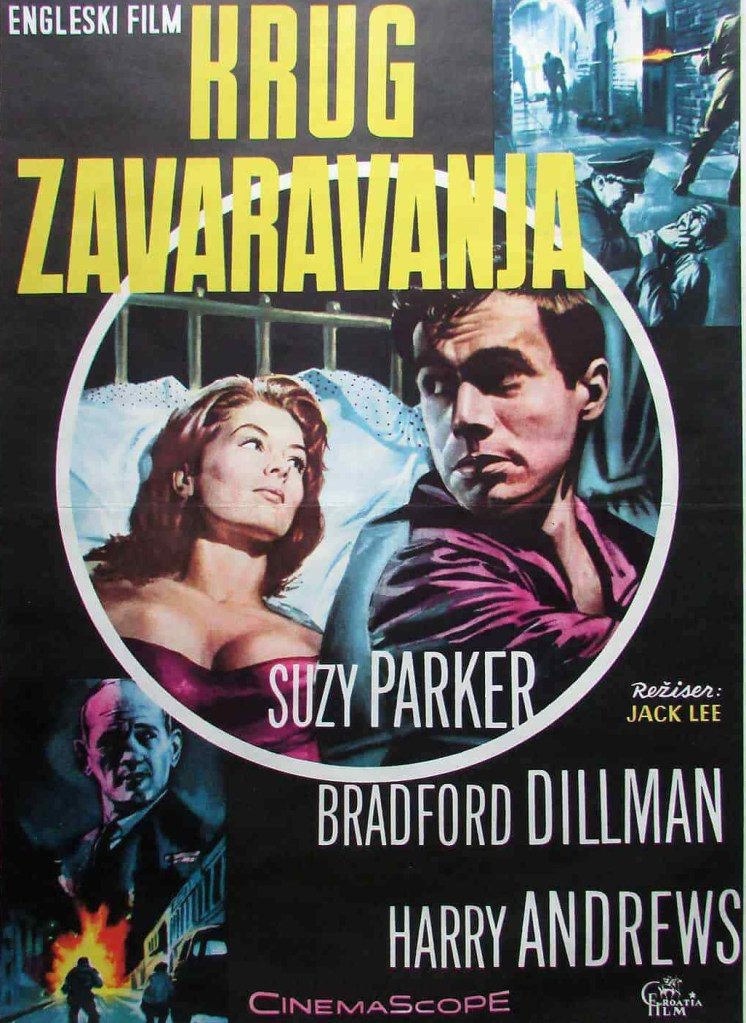
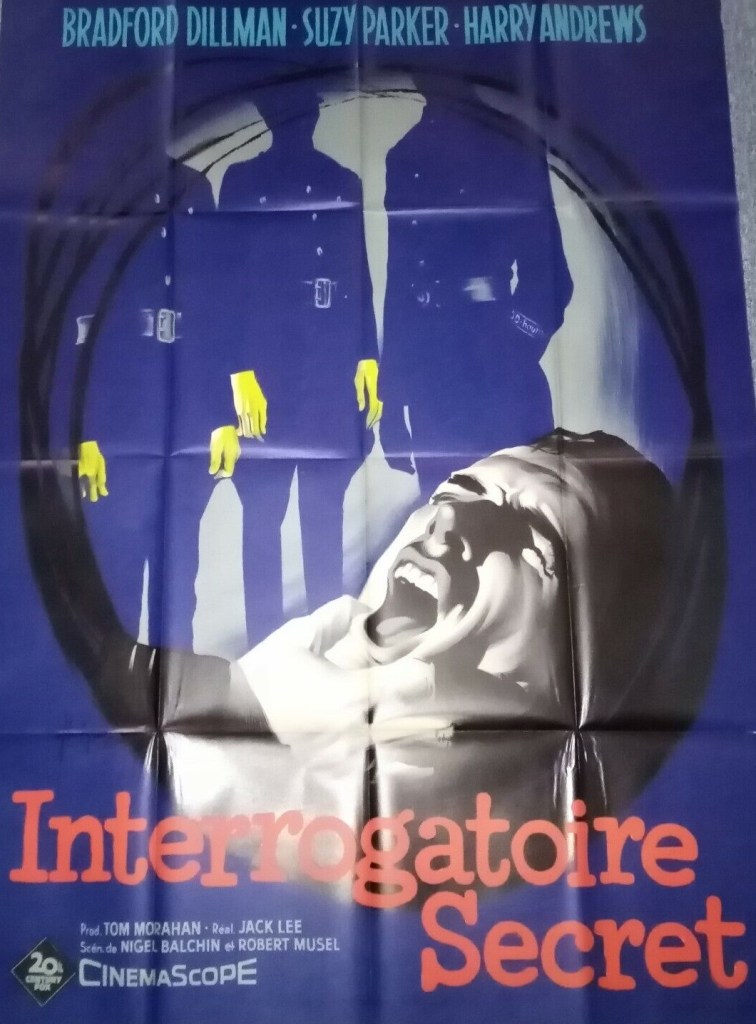
Circle of Deception (1960) ***

What the enemy do to an Allied spy is nothing compared to his friends. Blood brother to The Spy Who Came in from the Cold (1965) and The Quiller Memorandum (1966) where agents are mere pawns in a bigger game, this is set on the eve of D-Day. The old trope of sending a spy in with misleading information is turned upside down in that this isn’t a corpse as in The Man Who Never Was/Operation Mincemeat, but live bait.

Except the agent doesn’t know he’s being used and has been chosen because he is deemed to have sufficient courage to stand up to initial torture but not hold out forever so that when he inevitably breaks the secrets he spills are believable.

As you might expect, being accustomed now to misleading posters, Suzy Parker, given top-billing here, is nothing like as wanton, nor for that matter as bosomy.

Ruthless Capt Rawson (Harry Andrews) who devises the cunning plan employs psychiatric assessment and the romantic wiles of his secretary Lucy (Suzy Parker) to select the correct victim, Paul Raine (Bradford Dillman). “A perfectly good man is exactly what we don’t want,” expounds Rawson.

War is gender-neutral. Although from the off, Rawson is unscrupulous, with only a modicum of conscience, Lucy is more human, and when she is drawn into the deception, initially just to report on Raine’s qualities, she proves as ruthless, though afflicted more by conscience, a factor her boss dismisses as making women “singularly unsuited” for war, despite the fact that she is making greater sacrifice, having fallen in love with Raine.

Orphaned, Raine covers up the emotional instability detected by psychiatrists with derring-do, battling through terror out of fear that he will be consumed by fear. A Canadian who speaks French he is the right “wrong man” for the job. 

Considerable effort goes into ensuring he won’t be caught out by detail. His French-bought watch has an English strap, for example. And although, once on enemy territory, his innate skills mean he evades capture for longer than intended. He slips off a train, passes himself off as a woodcutter’s temporary assistant.

Unaware of the plot against him, when captured and brought before “good” German Capt Stein (Robert Stephens), who respects a gentleman officer, he refuses to give up his secrets, undergoing a whipping, electrocution and a primitive though equally effective form of water-boarding. At the very last, courage long gone, he aims to deprive his captors of victory by biting on a cyanide pill hidden in his tooth only to discover this is missing.

After that, all that is left is irony. He is treated as a hero, officially accorded a medal, but post-war hiding behind a bottle in Tangiers because he can’t face the truth. Lucy, scarred by her experience, knowing she is as guilty as her superior in destroying a man, tries to retrieve an irretrievable situation.

After only really knowing Bradford Dillman as often a one-note supporting actor, I’ve been surprised to discover he has a greater range of acting skills to offer. A Rage To Live (1965) provided one insight and Sgt Ryker (1968) another but this is on a different plane, mean-budgeted B-picture though it is.  It’s a difficult part to pull off, afraid that his bold exterior hides a cowardly personality, and that in the final analysis his soul will be laid bare. There’s not much help in the script. He doesn’t get to explore his fears with Lucy except in the most basic fashion. He has to rely on facial expression, rather than screaming his head off, to get across the rest of it. And he is pretty exemplary on that score. And since he’s Canadian that can hardly be put down to having learned the British stiff-upper-lip.

Suzy Parker (The Interns, 1962) , formerly the world’s highest-paid model (and soon to be Mrs Dillman), has mastered her stiff-upper-lip as well as a passable British accent. She’s not permitted much in the way of anguish script-wise, and lacks Dillman’s acting skills in presenting interior feelings. But, equally, her character is a subordinate and a well brought-up English lass, as she would need to be to qualify for such a post, would not make her feelings known too forcefully to her commanding officer.

A Richard Burton or a Peter O’Toole might have injected more into the part, but Dillman does more than enough. It’s a shame Hollywood failed to recognize his talent. In his final picture Jack Lee (A Town Like Alice, 1957) directs admirably, though I could have done without the flashback structure, it might have added more tension to not know the outcome, and the rescue sequence seemed an anomaly.

Otherwise, crisply told and a precursor to the cold-blooded spy stories to come. 

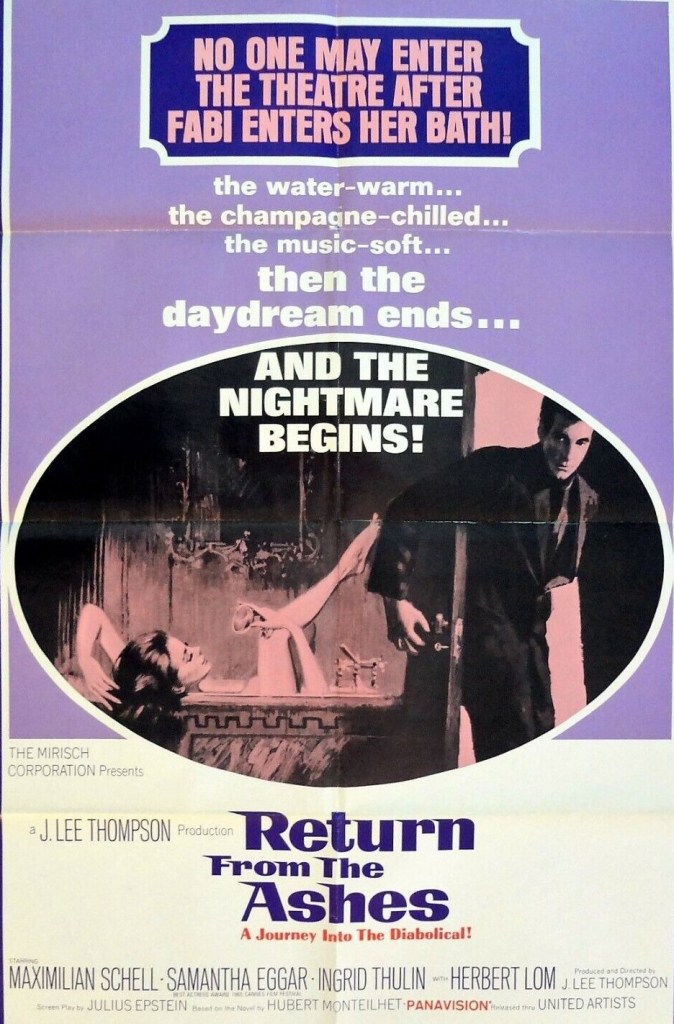
Return from the Ashes (1965) ****

When your starting point is an arcane French inheritance law and the plot revolves around swindling a concentration camp survivor you are immediately on “icky” ground. Throw in a relationship between an adult male and the step-daughter of his deceased wife and the audience might already be backing off.

So it’s a tribute to the acting and that each character is not so much unlikeable as both vulnerable and predatory that this turns into a very involving drama. On the eve of World War Two in Paris Dr Michele Wolf (Ingrid Thulin) buys the love of penniless Polish chess player Stanislaus (Maximilian Schell) but at the cost of abandoning her step-daughter Fabi (Samantha Eggar). For him, love is contingent on wealth, but he marries Michele, a Jew, in a (failed) bid to save her from the clutches of the Nazis. Fabi, shorn of maternal love finds turns to a paternal variation, but is capable of coming up with an ingenious murder plot.

Just quite how hollow Michele has become is demonstrated in a brilliant opening scene set after the end of the war. In a railway carriage, a bored small boy endlessly kicks a door. Pretty much for 90 seconds we either see or hear that door being kicked. Foolishly, his hands wander from the window to the door handle. Next thing, he has fallen out. Cue screams, chaos, shocked passengers racing out of the carriage.

But when the conductor turns up to investigate the incident he finds Michele still sitting in her seat, oblivious to any death, even that of a child. When she returns to Paris, she takes a room in a hotel under a pseudonym, fearing that her ravaged looks make her unattractive, guilty at surviving (by volunteering to work in the camp brothel) when all her relatives were wiped out, unaware that she has unexpectedly inherited all their combined wealth.

So the story begins in a different way. When Stanislaus meets her accidentally under her false name, he immediately assumes she is just a dead ringer for his deceased wife and enrols her in a scheme to win the millions currently held in escrow under this inexplicable French law.

Since she continues to play the part of a different woman, she hears the truth about her relationship with Stanislaus, that although he committed the only unselfish “gallant act” in his life in marrying her nonetheless his prime reason was money. Already Fabi, in full femme fatale mode, is planning to rid the couple of Michele once the money has been legally acquired.

To his credit, Stanislaus initially balks at this notion, but when Michele reveals her true identity and scuppers his relationship with Fabi while at the same time trying to win back the affection of her step-daughter, matters take a deadly turn.

For the most part what we have is a menage a trois, equal parts driven by money and love, but in each instance propelled by innermost desire. Stanislaus is adept at pulling the wool over Michele’s eyes, she only too willingly blinding herself to his sexual deception. But Michele is equally willing, even when she knows his true feelings, to use her money to win him back while Fabi, aware that for her lover money will always trump romance, is determined to use her body to achieve the same effect.

What makes this so compelling is that, unusually, it avoids sentiment. It would have been easy to load each character up with such vulnerability that an audience would not condemn them. Instead, in addition to their individual weaknesses, we are shown their inherent predatory natures.

What makes it so enjoyable is the acting. So often Maximilian Schell is called upon to play stern characters, often typecast from his accent as a villainous German of one kind or another (Judgement at Nuremberg, 1961, The Deadly Affair, 1967), rather than allowing him to invent a more rounded character as he did in Topkapi (1964). This is a wonderfully involving performance,  the wannabe chess grandmaster who uses his considerable charm to buttress his fears of poverty, and is only too aware of his failing, full of joie de vivre, bristling at being a kept man yet at the same time only too ready to financially exploit the situation.  

Where in The Collector (1965) Samantha Eggar was constrained by circumstance and in Walk, Don’t Walk (1966) saddled with an initially cold character, here she is permitted greater freedom to develop a conflicted personality, loving and deadly at the same time, drawn to and hating her step-mother, attracted by the thought of the money that would secure Stanislaus but repulsed by the cost.  

Ingmar Bergman protégé Ingrid Thulin (Wild Strawberries, 1957) is given the least leeway, another of the tormented characters in her intense portfolio. Herbert Lom (Villa Rides, 1968) puts in an appearance as a friend trying to warn her off Stanislaus.  

Director J. Lee Thompson (The Guns of Navarone, 1961) takes the bold approach of allowing characters and situation to develop before moving into thriller mode. There are a couple of quite superb scenes, running the opening segment close is the much-vaunted scene of Fabi in the bath (“No one may enter the theater once Fabi enters her bath” was a famous tagline). It is brilliantly filmed in film noir tones, bright light slashed across eyes rather than through windows, and Johnny Dankworth provides an interesting score. Julius J. Epstein (Casablanca, 1942) wrote the screenplay based on the bestseller by Hubert Monteilhet.

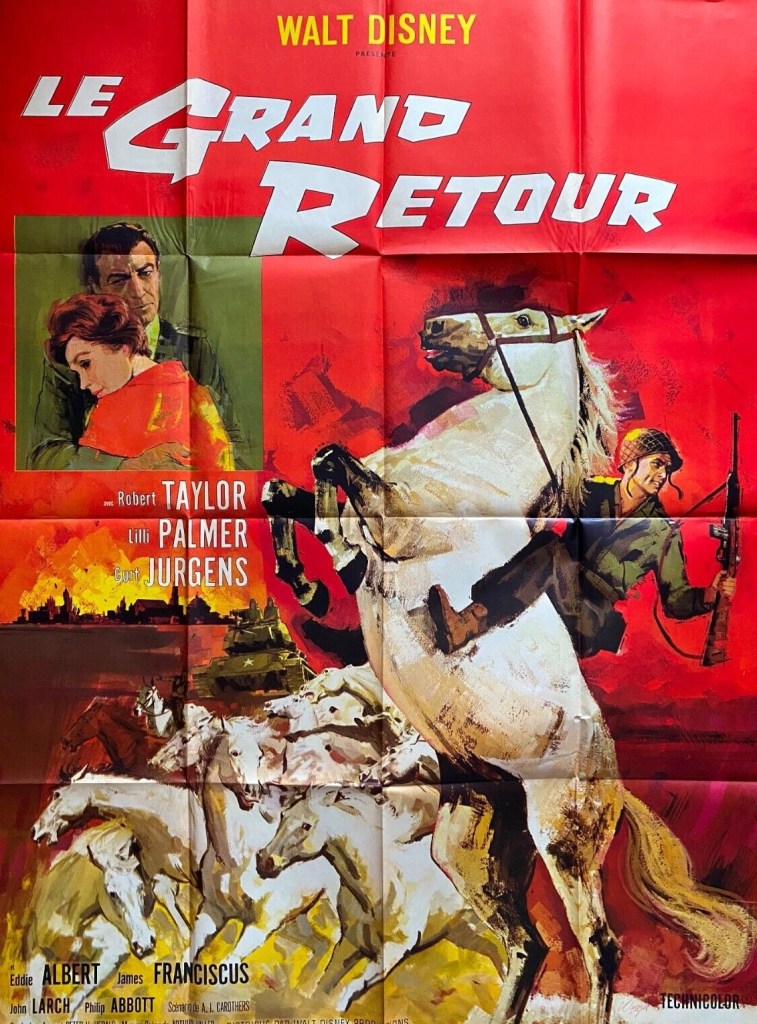
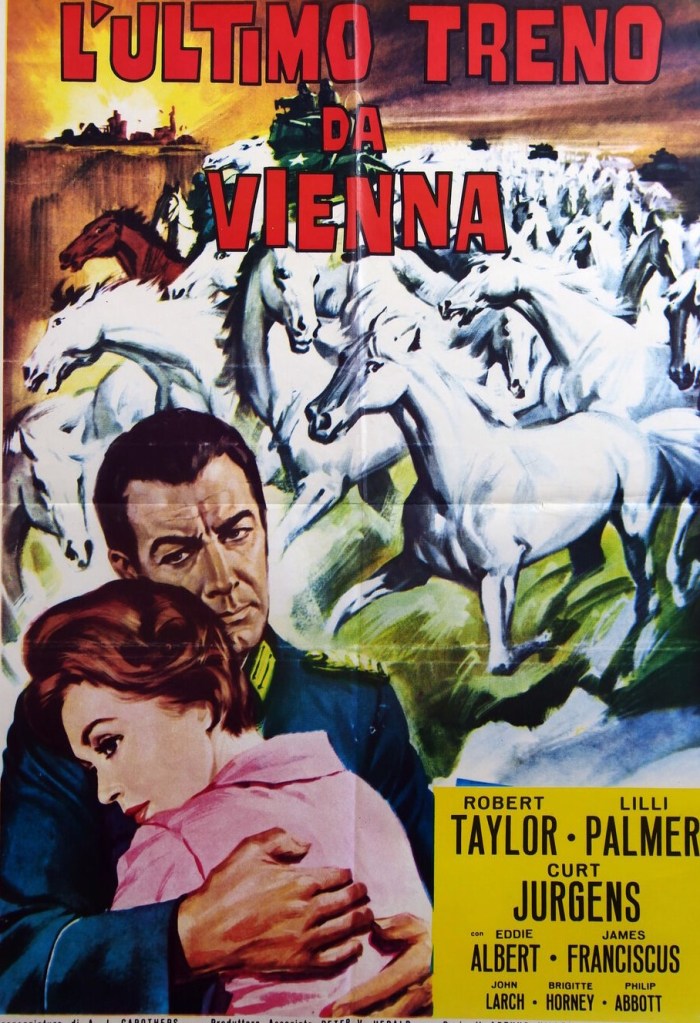
Miracle of the White Stallions (1963) ***

You wouldn’t look to Walt Disney in the 1960s to provide a tyro director with a calling card when so much of that studio’s output was saccharine. But this beautifully-mounted World War Two drama showed there was a new kid in town worth watching, name of Arthur Hiller. And if you always wondered why the later biopic of General Patton showed him in riding gear, that penchant is more clearly explained here.

You might balk, however, at the idea of a bunch of horses being considered in the same category as an art treasure worth protecting from the worst predations of war. And just as with the Von Trapp family, Austrians, despite welcoming the annexation of their country by Hitler in 1938, are given a free pass here.

In case you’re unfamiliar with the subject matter, the Spanish Riding School in Vienna was a celebrated nearly 200-year-old institution in which the famed Lipizzaner white “dancing” horses were put through their paces. With the Second World War coming to a close it was threatened on three fronts: the German Army poached its instructors to man the front line, the invading Russians wanted to appropriate the horses and starving refugees focused on the potential horse meat.

School chief Col Alois Podhajsky (Robert Taylor) and wife Pedena (Lili Palmer) organise an evacuation under the guise of using the horses to draw cartloads of legitimate art treasures. They hole up in the castle of Countess Arco-Valley (Brigitte Horney) but the mares are stolen by the Russians and hidden in Czechoslovakia. (Only the stallions perform, but without the females as breeding stock, the line would become extinct.)

The colonel ditches his German uniform on the arrival of American forces and puts on a performance in a makeshift arena in an attempt to convince Patton (John Larch) to mount a rescue of the captured horses. Patton, we learn here, is a renowned horseman, competed in the equestrian section of the 1912 Olympic Games, and if anyone considers a fabulous horse more valuable than a work of art it’s him. As it happens, there are prisoners to be freed in Czechoslovakia so the horses are included in that mission.

What’s unusual about this animal tale, given Disney’s predilection for anthropomorphising animals, is that it’s not told from the point-of-view of the horses. Nor, as you might have expected, given the studio’s plethora of young talent, turned into  the story of a young girl or boy attached to the horses. Instead, the focal point is the impact of the creatures on those around them.

Of course the colonel is bound to be obsessed. But for the ordinary soldiers, who might never appreciate a work of art, they represent a kind of majesty,  a grandeur, rising above the horror of war, something well worth the effort of rescue.

What’s even more unusual in saccharine-town is the script’s recognition of the effect of war on humanity. At one point Pedena laments that men are asked to possess “the strength and fury of giants…and then be again the men they were before.” And in some respects acknowledging the beauty of the horses is a step in the right direction. The Yanks are neither celebrated as brave nor foolhardy, in fact mostly they are just working grunts, cleaning out the castle, fixing up the arena, cracking jokes.

Hiller is the big find here. There’s a brilliant scene, all of 40 seconds long (I timed it) that would have been cut out of any other Disney picture. In a chiaroscuro of light, the colonel walks from one end of the deserted Vienna riding hall to the other and his wife, entering the frame, goes to join him. Nothing more is needed to indicate loss. Hiller clearly recognised opportunity and while the film itself is no masterpiece every single frame reveals a talented mind at work, his use of colors and costume, movement within the frame, employing Pedena and the Countess to comment on the action, allowing the inbuilt tension to carry the story without extraneous drama.

You’re mostly likely to remember the performing horses, the balletic choreographed movements, the “airs above the ground,” and indeed Hiller wisely devotes a good 15 minutes to this, but without his input this would either be overly sentimental, saccharine or little more than a documentary. This is a very grown-up picture for Disney.

Robert Taylor (A House Is Not A Home, 1964) was at the tag-end of his career, his first film in four years, but he still has the charisma to carry the film and the gravitas to see it over the line. Lili Palmer (The Counterfeit Traitor, 1962) is well cast as a voice of reason and offering commentary on humanity. Curt Jurgens (Pysche ’59, 1964) has an interesting role, lamenting, as he picks out a classical tune at the piano, how Hitler outlawed famous composers.

There’s a stronger supporting cast than you might expect: Eddie Albert (Captain Newman M.D., 1963) , James Franciscus (Valley of Gwangi, 1969) and German actress Brigitte Horney (The Trygon Factor, 1966).

Somebody certainly took notice of Hiller’s talent because his next films were The Wheeler Dealers (1963) with Lee Remick and James Garner and The Americanization of Emily (1964) with Julie Andrews and Garner.  A.J. Carothers (The Happiest Millionaire, 1967) based the screenplay on the book by Alois Podhajsky.

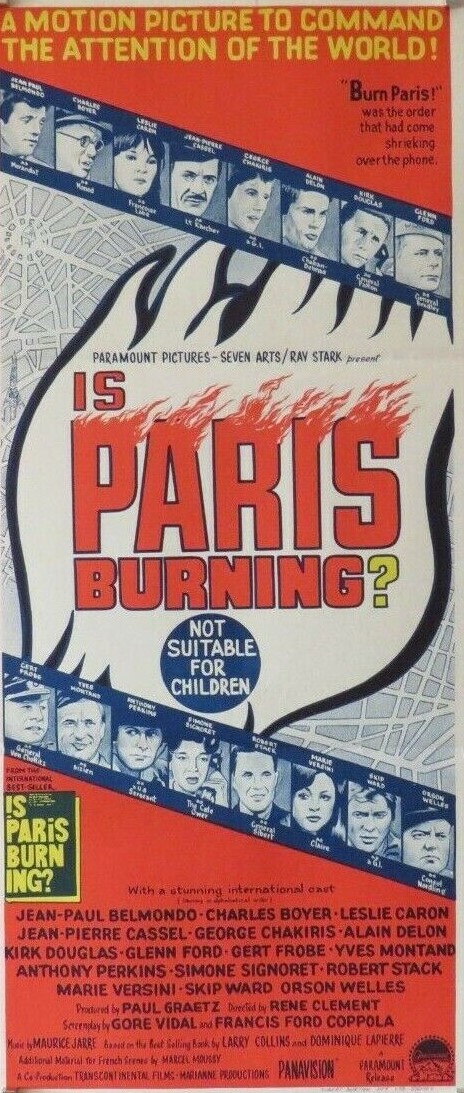
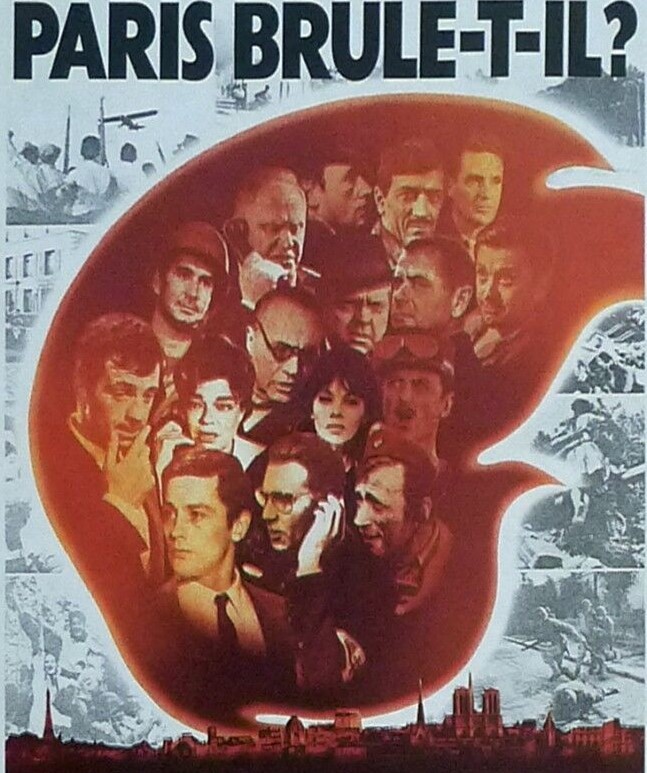
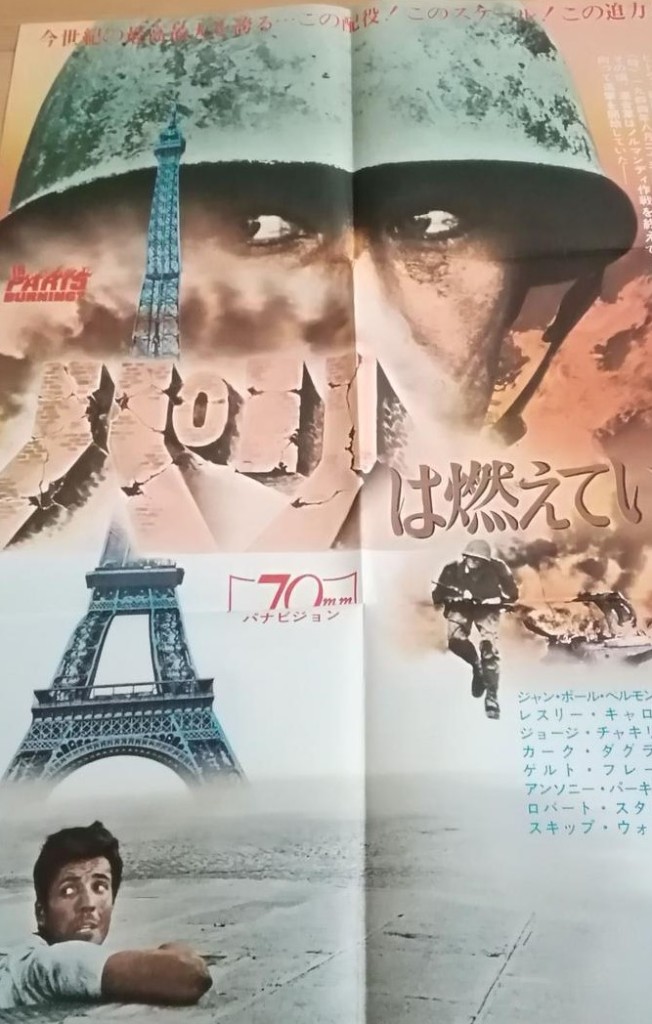
Is Paris Burning (1965) ****

Politics don’t usually play a part in war films of the 1960s but’s it’s an essential ingredient to Rene Clement’s underrated documentary-style picture. Paris has no strategic importance and after the Normandy landings in 1944 the Allies intend to bypass the German-occupied French capital and head straight for Berlin.

Meanwhile, Hitler, in particular vengeful mood after an attempt on his life, orders the city destroyed. Resistance groups are splintered, outnumbered and lacking the weaponry to achieve an uprising. Followers of General De Gaulle, the French leader in exile, want to wait until the Allies send in the troops while the Communists plan to seize control before British and American soldiers can arrive. 

When the Communists begin the fight by seizing public buildings, the Germans retaliate by planting explosives on the Eiffel Tower, the Louvre, and other famous buildings and all the bridges across the River Seine. German commandant Von Choltitz (Gert Frobe), no stranger to slaughter having overseen the destruction of Rotterdam, holds off obeying his orders because he believes Hitler is insane and the war already lost.

The Gaullists dispatch a messenger to persuade General Omar Bradley to change his mind and send troops to relieve the city. Director Clement, aware how little tension he can extract from the question of whether von Clowitz will press the destruct button (history tells us he did not) so he takes another route and documents in meticulous detail the political in-fighting and the actual street battles that ensued, German tanks and artillery against Molotov cocktails and mostly old-fashioned weaponry.

The wide Parisian boulevards provide a fabulous backdrop for the fighting. Shooting much of the action from above allows Clement to capture the action in vivid cinematic strokes. Like The Longest Day (1962) the film does not follow one individual but is in essence a vast tapestry. Scenes of the utmost brutality – resistance fighters thrown out of a lorry to be machine-gunned, the public strafed when they venture out to welcome the Americans – contrast with moments of such gentleness they could almost be parody: a shepherd taking his flock  through the fighting, an old lady covered in falling plaster watching as soldiers drop home-made bombs on tanks.

This is not a film about heroism but the sheer raw energy required to carry out dangerous duty and many times a character we just saw winning one sally against the enemy is shot the next. The French have to fight street-by-street,  corner-by-corner, bridge-by-bridge,   enemy-emplacement-by-enemy-emplacement, tank-by-tank.

And Clement allows as much time for humanity. Francophile Sgt Warren (Anthony Perkins), an American grunt, spends all his time in the middle of the battle trying to determine the location of the sights he longs to see. Bar owner Simone Signoret helps soldiers phone their loved ones.

Like The Longest Day and In Harm’s Way (1965), the film was shot in black-and-white, but not, as with those movies for the simple reason of incorporating newsreel footage, but because De Gaulle, now the French president, objected to the sight of a red swastika.

Even so, it permitted the inclusion of newsreel footage, which on the small screen (where most people these days will watch it) appears seamless. By Hollywood standards this was not an all-star cast, only fleeting glimpses of Glenn Ford (Fate Is the Hunter, 1964), Kirk Douglas (A Lovely Way To Die, 1968), Robert Stack (The Corrupt Ones / The Peking Medallion, 1967), Orson Welles (House of Cards, 1968) and George Chakiris (West Side Story, 1961).

But by French standards it was the all-star cast to beat all-star casts – Jean-Paul Belmondo (Breathless, 1960), Alain Delon (Lost Command, 1966), Yves Montand (Grand Prix, 1966), Charles Boyer (Gaslight, 1944), Leslie Caron (Gigi, 1958), Michel Piccoli (Masquerade, 1965), Simone Signoret (Room at the Top, 1959) and Jean-Louis Trintignant (A Man and a Woman, 1966).  Director Rene Clement was best known for Purple Noon (1960), an adaptation of Patricia Highsmith’s The Talented Mr Ripley starring Alain Delon

At $6 million, it was the most expensive French film ever made, a six-month shooting schedule, shot on the streets of the city including famous locations like Etoile, Madeleine and the Louvre. Big hit in France, it flopped in the United States, its box office so poor that Paramount refused to disclose it.

The Long and the Short and the Tall / Jungle Fighters (1961) ****

The Brits were onto something in wartime Malaysian jungles in 1942 – sonic warfare. Imagine the franchise possibilities for comic-book or spy villains (The Brides of Fu Manchu, 1966, or Some Girls Do, 1969, anyone?). Fortunately, this ignores such temptations and takes a long hard raw look at the reality of conflict, courage and cowardice, the desire and reality of killing.  

Beginning as a fairly stock examination of men in combat, the usual clash of personalities, bullying loudmouths, and it being British elements of class distinction. But it quickly moves on to something much deeper, initially tough guys worrying about what their wives are getting up in their absence back home, but on capturing a Japanese soldier what exactly to do with him once his usefulness is over. Treat him according to the Geneva Convention as a prisoner-of-war and escort him back to base or just get rid of him and save yourself the trouble.

Five main characters make up this squad. Sgt Mitchem (Richard Todd) is the ruthless leader under pressure. He was busted down to corporal for losing a previous patrol, has got his stripe back and wants to prove his worth. But he appears to be from a different generation to his troops, his stiff upper lip only too evident while the others just give lip.

Corporal Johnstone (Richard Harris) likes to remind him of his previous misdemeanor and question his judgement. Racist Private Bamforth (Laurence Harvey) riles everyone, especially picking on Lance Corporal Macleish (Ronald Fraser) who is as likely to reply with his fists. Radio operator Private Whitaker (David McCallum) is over-keen on the spoils of war, kitbag stuffed with enemy mementoes.

After apprehending Jap soldier Tojo (Kenji Takaki) Johnstone is inclined to bayonet him right away (a bullet would attract attention). Others, more squeamish than principled, balk at the deed. At first Bamforth makes fun of the captive, belittling him, but then views him as a human being caught up in a war not of his making, giving him cigarettes, trying to make him more comfortable. When Macleish starts slapping the prisoner around, Bamforth defends him, though it’s obvious Mitchem and Johnstone have no intention of taking him back.

Then the tide turns. They are surrounded by Japs and it’s battle for real with an enemy who can defend itself. Action determines character. Some are revealed as complete cowards, others will abandon colleagues to save their skin, others are instinctively courageous, others yet again with a bit more cunning.

But the firefight when it comes is nothing like any other battle you have seen where Allied forces invariably triumph. There’s none of the clever ruses more typical of the genre.

This is by far the rawest depiction of British soldiers on the battle. The characters and conversation hit home. Tough guys are nothing but vulnerable. Although it appears that way, none of the characters actually change, it’s more that their real personalities emerge.

This is Laurence Harvey’s (The Running Man, 1963) best performance. In other pictures, his clipped delivery hid an edge of malevolence, and especially to retain audience sympathy he restrained an inner nastiness, even when ruthless as in Room at the Top (1958), this aspect more important if the male lead in a romance or essaying a decent character. Here, the real Harvey is let loose in the sense that his delivery is more normal, as if he delights in taking pleasure in using language to gut his victims. Sure, it’s an ideal central role, the guy who starts off one way and ends another, but he really brings it to life.

Richard Harris (This Sporting Life, 1963) was a rising star at this point. And it shows. He’s always trying to steal scenes, an unnecessary gesture, a roll of the eyes, forceful delivery. He turns out to be nastier than everyone else. Richard Todd (Subterfuge, 1968) also plays against type, no longer the heroic figure of The Dam Busters (1955) but fighting not just the enemy and his fellow soldiers but his internal demons.

Ronald Fraser (Fathom, 1967), often condemned to humorous supporting parts, also has a meatier role as does David McCallum (The Spy in the Green Hat, 1967).

Apart from a heavy dose of rain and some stock shots of animals, it betrays its stage roots, based on a play by Willis Hall, but that hardly matters when the dialog is so sharp, the characters so well-drawn and the drama so intense.

Leslie Norman (Dunkirk, 1958) does an excellent job of focusing on character and making the action believable. Wolf Mankowitz (The Day the Earth Caught Fire, 1961) was credited with the screenplay.

High-quality stuff.

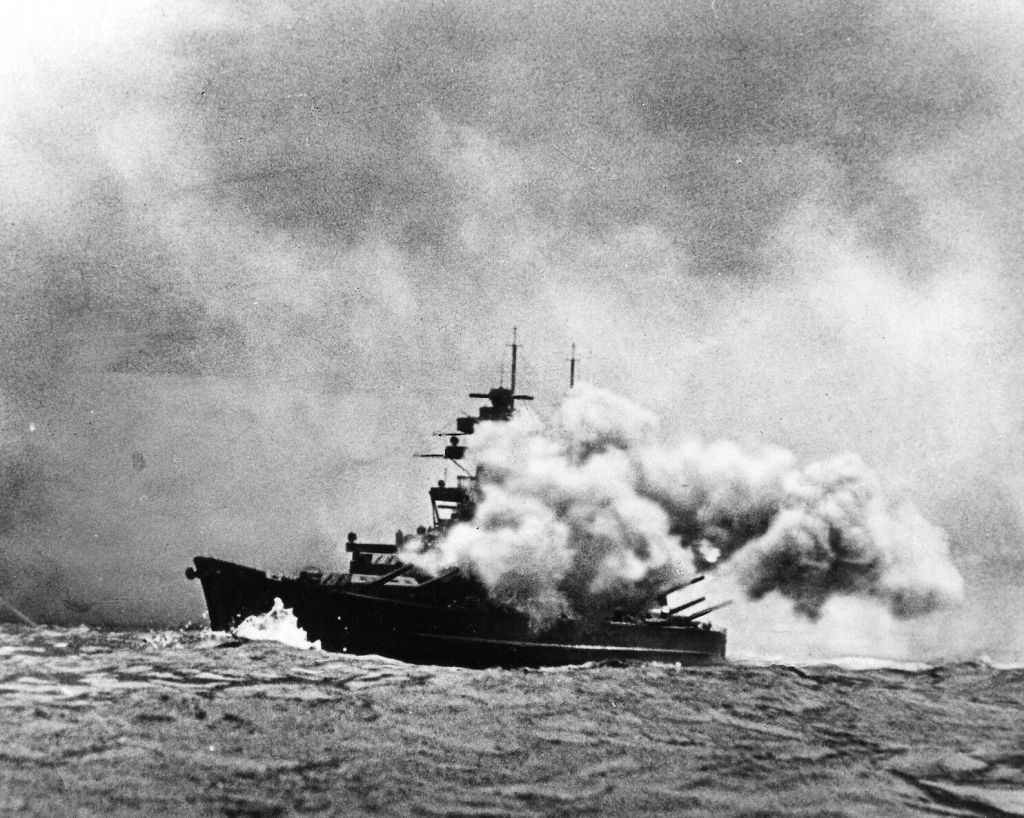
Sink The Bismarck! (1960) ****

Hard to believe but outside of the Hollywood big-budget Bridge on the River Kwai (1957), this was the biggest British film at the U.S. box office in the previous decade. In fact, the British war films that did so well in the home territory, The Cruel Sea (1953) and Reach for the Sky (1956), sank like a stone when exported to in America while earnings for Ealing comedies,  limited to arthouses, hardly made a dent in the box office.

What makes this so appealing is the very lack of Britishness and the intrusion of a Yank, famed reporter Edward  R Morrow (playing himself), interrupting the action at various points to keep audiences up to speed. The fact that the sinking of the Bismarck, the biggest battleship ever built, was one of the few British actions at the start of the Second World War to be counted a success probably helped. Watching the Brits being lionized for defeat was not an attractive notion for global audiences.

But in the main it is a thrilling docu-drama, very much a departure for the genre, with every nuance of potential consequence spelled out. Dialog and models being moved across maps announce the risks inherent in the British attack: the superiority of the newly-built German battleship, the multiple options the Germans had in 1941 to escape, the difficulties in pinpointing the German vessel in the fog-bound waters of the North Sea, and the devastation the battleship could inflict on the beleaguered convoys on which Britain depended to stay afloat. In addition, even when targeted the Germans could flee to occupied France or potentially summon U-boats or air support.

So in the manner or Operation Crossbow (1965) or Day of the Jackal (1973) the audience is primed for a minute-by-minute enterprise, the battleship deemed so dangerous that the Admiralty is willing to risk its own scarce supplies of battleships, destroyers, cruisers and aircraft carriers in a bid sink the enemy. It is so much a documentary that the beyond the thrill of the hunt there is little room left for drama and certainly little of the stirring kind that had become such a byword for the British version of the genre – and such a turn-off for foreign audiences who could hardly make out what the actors were saying never mind work out why such-and-such a mission they had never heard of was so important.

In any case emotion is forbidden in the subterranean claustrophobic Admiralty War Office where new operational commander Capt Shepherd (Kenneth More) holds sway. A martinet, “cold as a witch’s heart,” on arrival he rids staff of what he sees as the rank indiscipline of addressing colleagues by forename rather than surname, eating sandwiches at a desk to which the workforce have been chained for hours  and various minor offences against the strict code of a uniform.

It was inherent in this type of picture that the land-based unit suffer the casualties of war, husbands dead or missing in action, wives and children killed by German bombs. But the tightening of the stiff-upper-lip ensures that when such revelations become known, they appeared like emotional depth-charges on this otherwise staid ocean. And Capt Shepherd, through his choices, as would be true of many high-ranking officers, might be sending his own son to is death.

This is also one of the first instances in war pictures where the Germans are not treated as stock villains, but intelligent people, like Admiral Lutyens (Karel Stepanek) with his own vanity and a hunger for redemption, and Capt Lindemann (Carl Mohner), as valiant an opponent in the cat-and-mouse duel where outwitting the British enemy could wreak untold carnage and hasten – unusually from the German point-of-view rather than from the Allies – the end of the war.

A few months after launch the Bismarck is spotted leaving its home port, destination North Atlantic to feast on convoys travelling from America with invaluable supplies. There are four possible routes open to get round the top of Britain. To prevent the Germans reaching any of them British ships must be sacrificed, including HMS Hood – three survivors out of a crew of 1400.

It’s David vs Goliath except David is a terrier capable of inflicting tiny wounds that drain the battleship of some of its power, loss of fuel and rudder problems limiting movement. It’s a different kind of war picture, as well as the big guns blasting at each other over huge distances, the British employ biplanes loaded with torpedoes, a weapon also used in some instances by its ships.

To keep audiences more heavily involved, there are snippets of dialog involving characters on board the various ships, some in distinctly un-stiff-upper-lip mode, and montages of the various vessels getting ready for action, as well as shots of devastation should a shell find its target.

But basically it’s  brilliantly-told tactic-heavy war picture that shows the shifting battleground, how the various ships are deployed, with no shortage of telling the audience how crucial success is and how crushing defeat. There’s no reliance on individual heroism, no snappy soldier defying authority, no hunch being played out, none of the usual cliches of the genre, instead, as with The Longest Day (1962) a clear explanation of what’s going on with superb battle scenes for the action-inclined.

It’s fair to say that even on the small screen, the models look a bit iffy, but this is more than compensated by other scenes on real warships, the use of newsreel footage, and fast cutting.  That action never takes place under a clear blue sky but always in murky waters also adds to the realism.

In a role that would have been custom-made for Kenneth More (The Comedy Man, 1964), king of the stiff-upper-lip, rather than simply spouting his lines, he adds considerable emotional depth. Dana Wynter (Something of Value, 1957) is excellent as his equally buttoned-up assistant.

There’s a full crew of supporting British character actors including Michael Hordern (Khartoum, 1966), Laurence Naismith (Jason and the Argonauts, 1963), Geoffrey Keen (Dr Syn, Alias The Scarecrow, 1963) and Maurice Denham (Some Girls Do, 1969) while the Czech-born Karel Stepanek (Operation Crossbow, 1965) and Carl Mohner (Assignment K, 1968) inject humanity into the Germans.

Lewis Gilbert (The 7th Dawn, 1964) does a brilliant job of bringing this all together, adding touches of emotion and humour to what could have been a too-dry concoction, drawing on a screenplay by Edmund H. North (HMS Defiant/Damn the Defiant, 1962) which was based on the book by C.S. Forester of Hornblower fame.

Discover WordPress

A daily selection of the best content published on WordPress, collected for you by humans who love to read.

The Atavist Magazine

by Brian Hannan

WordPress.com Blog

News, Tips & Website Tutorials